A Review of Russia’s Climatic Initiatives in BRICS
By Ekaterina Bliznetskaya | Russia International Affairs Council | June 13, 2024
In April 2024, Russia announced its proposals for the BRICS Contact Group on Climate Change and Sustainable Development. The priorities for the year of Russia’s chairmanship included: issues of a just transition, adaptation to climate change, natural solutions, carbon markets and carbon pricing. Initiatives to share experience in the development of carbon markets and implementation of adaptation measures, as well as a proposal to foster scientific climate cooperation sparked considerable interest.
The discussion of climate agenda within BRICS already has a certain background. With its proposal, Russia took an important step towards institutionalizing the dialogue by establishing the Contact Group on Climate Change and Sustainable Development. In 2015, during the period preceding the adoption of the Paris Agreement, at the 7th BRICS summit in Ufa the countries emphasized in their final declaration their readiness to address climate change at both the global and national levels. Despite this declaration, the climate issue has long remained an element of dialogues and cooperation on sustainable development rather than a stand-alone item on the BRICS agenda. The climate issue came out of the “environmental” canopy after the BRICS High-Level Meeting on Climate Change, held remotely in the year of China’s presidency on May 13, 2022.
All of Russia’s initiatives refer to different areas of international climate cooperation – from a just transition, carbon markets and pricing to mitigation of climate change mainly by reducing greenhouse gas emissions. The interest in carbon markets can be explained by the willingness shared by the BRICS nations to ensure the inflow of foreign investment in renewable energy projects, energy efficiency, and energy infrastructure.
The same argument is generally applicable to climate change adaptation. It is known that international climate finance (from developed to developing countries) is accompanied by a serious imbalance towards the financing of greenhouse gas emission reduction projects, while adaptation measures attract much less financial resources. Even within the Green Climate Fund (GCF), overseen by the UNFCCC, there is a skew in the ratio of financial assistance channeled in favor of mitigation over adaptation. The benefits of reducing greenhouse gas emissions are global, as greenhouse gases are well mixed in the atmosphere, while the benefits of adaptation are largely local and depend entirely on a country’s ability to build a climate risk management system and integrate it with urban planning, emergency response and prevention policies, sectoral regulation.
For a long time, the motives for developing climate cooperation among the “old” BRICS members were driven by political rather than economic interests. Therefore, discussions and references to climate in the summary documents did not go further than that. The BRICS platform was not even used by countries to hold consultations during important processes under the UNFCCC, as is usually the case in the G20.
The events in Ukraine and the expansion of BRICS in membership are likely to change this situation. It is quite unlikely that all priorities will be worked out equally well with partners during Russia’s presidency, so it makes sense to analyze the documents to understand the existing groundwork in this area.
Adaptation to climate change
Climate change adaptation is a relatively new item on the BRICS climate agenda. The BRICS Economic Partnership Strategy 2025 mentioned that many nations were ready to raise climate change awareness risks and open a financial window for adaptation projects in the BRICS New Development Bank (NDB). Indeed, the NDB’s Overall Strategy 2022-2026 contains a target to use 40% of the financial resources raised for projects that address climate change and adaptation (without specifying the fund allocation ratio). The same document stated that the NDB “will, to the extent possible, consider disaster resilience in the preparation and implementation of its projects.” However, the NDB made this decision in line with the general policy of international development banks to strengthen their compliance with the Paris Agreement goals rather than with the BRICS strategies.
BRICS member states (except Iran), as parties to the Paris Agreement, are obliged to provide information on adaptation activities within nationally determined guidelines. In addition, as a result of the Conference of the Parties to the FCCC in 2010, a process was launched for developing countries to prepare and submit National Adaptation Plans (NAPs), which is now linked to Green Climate Fund grants and, as it was before, to UN development agencies and the World Bank providing support. Among the BRICS nations, it is Brazil, China, India, Russia and South Africa that report adaptation policies in their Nationally Determined Contributions (NDCs) to the Paris Agreement. Brazil, Ethiopia and South Africa are devising national plans to receive funds from international development agencies. Egypt, Iran, the UAE and Saudi Arabia have not yet formulated climate change adaptation policies. Thus, of all the BRICS+ nations that have an adaptation policy, only Russia and China do not link its implementation to the receipt of international aid.
Clearly, in the BRICS context, adaptation financing can only be disbursed on a South-to-South basis, i.e. voluntarily. Meanwhile, finance is an important—but not the only—component of adaptation cooperation. The availability of tools for integrated assessment of the climate change impact on the BRICS economies and, conversely, the climate policies and measures taken by countries that could be used for adaptation planning, are of paramount importance. Such tools are now actively developed by some of the BRICS nations, such as China or South Africa. Other members of BRICS, like India, are working with these countries to develop the said tools. Given that all BRICS states are highly exposed to both physical and transition risks, the contribution of risk assessment tools to adaptation planning cannot be overemphasized. In addition, businesses, municipalities (especially cities) and local communities may be interested in developing climate risk assessment tools that are tailored to the needs of different sectors based on their geographical location.
The 6th coordinated BRICS multilateral project competition within the BRICS Science and Technology Framework 2023 focused on climate change adaptation and mitigation, but among the research priorities there was none that would be directly linked to ensuring adaptation-related decision-making. This is surprising if one considers the current interest in climate risk management among BRICS central banks and financial institutions in general, which perceive climate change risks as a serious threat to their resilience and sustainability.
In the contact group discussions on adaptation in the year of Russia’s chairmanship, it is important to raise the issues of creating climate risk assessment tools accessible to a wide range of users and stimulating applied research on adaptation planning – for example, in cities. It will be equally important to link the results of projects and studies to NDB priorities and policies, to discussions within the interbank cooperation mechanism, and to support them with bilateral agreements on the development of monitoring and natural disaster risk mitigation systems.
A Just Energy Transition and BRICS Carbon Market Perspectives
Fully in line with the ideas of common but differentiated responsibilities actively supported by the new and old BRICS members and seeking to avoid climate measures imposing serious burdens on developing nations, Russia has proposed to discuss a just transition to a low-carbon economy. The very notion of a “just transition” has been extensively used by the European Union since its Green Deal was announced.
A just transition has a very broad meaning, but the main component is the need to mitigate the negative impact of an accelerated transition to a carbon-free economy on the poor, the fossil fuel labor market, and to “ensure that the substantial benefits of the transition to a green economy are widely shared.” But what is meant by a just transition in the framework of the association?
South Africa’s 2023 Chairmanship Program contained a paragraph on “developing partnerships for a just transition,” but this idea did not go any further in the final declaration of the summit. It was noted that the bloc’s member states:
– welcome increased cooperation and investment in supply chains for the energy transition and recognize the need to fully participate in the global clean energy value chain,
– recognize the role of fossil fuels in supporting energy security and energy transition and call for cooperation among BRICS nations on technology neutrality, as well as the adoption of common, efficient, clear, fair and transparent standards and rules for assessing emissions, developing compatible taxonomies of sustainable projects, and carbon accounting.
Thus, “equity” is understood in the BRICS context as the problem of global inequality of benefits gained from the energy transition and the right of nations to determine their own means of achieving the goals set in the Paris Agreement, politically neutral standards and rules for reporting emissions and generating carbon units from climate projects, rather than supporting people and industries in decarbonization programs.
To succinctly describe the emerging consensus on a just transition within BRICS, a short formula would be enough: “more investment in energy”. It describes grid construction, production of renewable energy equipment, modernization of fossil fuel-fired power generation capacity, etc. It is still premature to say whether there’s been an unambiguous political choice of the BRICS member states in favor of green energy.
Currently, BRICS comprises countries with opposite strategic orientations in the field of energy. Importing countries such as China, India, South Africa, Ethiopia and Egypt are interested in reducing their dependence on foreign energy supplies, while Russia, Saudi Arabia and the UAE seek to jump on the last train of the fossil fuel era and establish channels of energy trade for decades to come.
The BRICS nations are now looking for additional sources of financing to address energy poverty and reduce their carbon footprints. Besides, representatives of commercial circles have recently proposed on various platforms of the association to discuss a voluntary carbon market, which could become a source of investment. The initiative can be launched through agreeing on a common methodology for climate projects, approaches to their implementation and verification of results (carbon units) with subsequent mutual recognition of standards for disclosure of information on greenhouse gas emissions.
Of all BRICS member states, only China has a national carbon market, and Russia has only recently created the requisite infrastructure. Therefore, the discussion of the carbon market should be preceded by an exchange of views on approaches to carbon pricing, the role of compensation mechanisms (climate offsets) in achieving each country’s national climate goals. After all, the proposed initiative should take into account the international voluntary market for carbon units that has already existed for many years, as well as the emerging market under Article 6.4 of the Paris Agreement. How should companies from BRICS nations be “locked in” on the association’s carbon market is another difficult question.
Finally, a key obstacle to the BRICS carbon market, including a common registry and methodology for climate projects, lies in the very nature of the climate goals that the countries set for themselves. At present, only Russia, Brazil, Iran and Ethiopia have set economy-wide targets for reducing greenhouse gas emissions.
This factor predetermines a significant difference in the supply and demand of carbon units, and most importantly – in their “cost”. Companies from countries that do not have quantitative commitments to reduce emissions will be in an obviously more favorable position, while there’s not much clarity on the motive for establishing an external pool of BRICS carbon units instead of stimulating the implementation of climate projects within jurisdictions. Given the existing commitments under the Paris Agreement, the BRICS carbon market is at risk of being left without buyers.
***
The BRICS climate agenda cannot and should not be considered in isolation from the strategic guidelines of its members in terms of trade and investment, energy, and technology. It is not another “sphere” of interaction among the BRICS members, nor is it a continuation of the climate policy that the member states pursue by other means. The climate agenda of any intergovernmental association is a dense tangle of agreements and compromises reached in dialogues on trade and economic issues. The presiding country may propose a specific pool of topics for the climate track, but this is not what sets the dynamics of the relationship. The real driving force will be converging interests—not necessarily national interests, but sectoral and private interests, as well as available resources and opportunities, coupled with the political will to use and/or exchange them.
A serious limiting factor for the climate agenda in the BRICS context is the institutional “laxity” of the association. Since Russia took over BRICS chairmanship in 2024, more than 50 events of various levels have already been held on a wide range of issues, but there is no mechanism for aggregating the results of dialogues, tracking the implementation of agreements and no channel for “spillover” between different formats of meetings. There is no mechanism to account for the results of discussions within the thematic tracks in the final documents of BRICS summits. For example, it would be productive to discuss climate change adaptation issues around recommendations for the NDB, as the results of applied research could be linked to the work of the Interbank Cooperation Mechanism and other platforms with financial institutions participating.
Amid the serious pressure of anti-Russian sanctions on the global energy market and the accelerated transit of the EU and China to carbon-free energy, Russia is now considering the nations of BRICS as important partners in energy trade. There is already ample evidence of this dynamic. In recent years, Russia has significantly increased its natural gas supplies to China and coal supplies to India. Russia and India have started to cooperate in the nuclear industry. The volume of China’s energy trade transactions with BRICS has been growing in 2024, although it accounts for less than 15% of the country’s total trade.
In the meantime, individual BRICS members are actively developing mutual trade in renewable energy technologies, and companies within BRICS, especially Chinese, are expanding access to critical raw materials (lithium, bauxite, cobalt, etc.) needed for the energy transition. Nevertheless, it remains far from clear how the expansion of BRICS might affect green energy technology markets. Meanwhile, this is precisely one of the key issues on the BRICS climate agenda.
Specific initiatives are to be preceded by dialogue on approaches to the relevant policies in both climate change adaptation and a just transition to a low-carbon economy. Even a cursory analysis of the current situation shows that these approaches are still too diverse. At the same time, the experience of the pandemic, EU and U.S. sanctions policies have shown how quickly and easily global supply chains, whereon the developing economies of BRICS heavily depend, can be disrupted. Thus, the threat of de-globalization emerges as the main driver for the rapprochement of countries. Yet, common interests of the BRICS nations can be short-term or long-term. BRICS climate agenda could be essential for building longer-term common interests. To do so, it must be consistent with national goals for low-emission sustainable development, the basis for which has to be established now.
Ekaterina Bliznetskaya is a lecturer at Moscow State Institute of International Relations under the MFA of Russia, Environment and Natural Research Studies.
Lavrov reveals BRICS expansion stance
RT | June 27, 2024
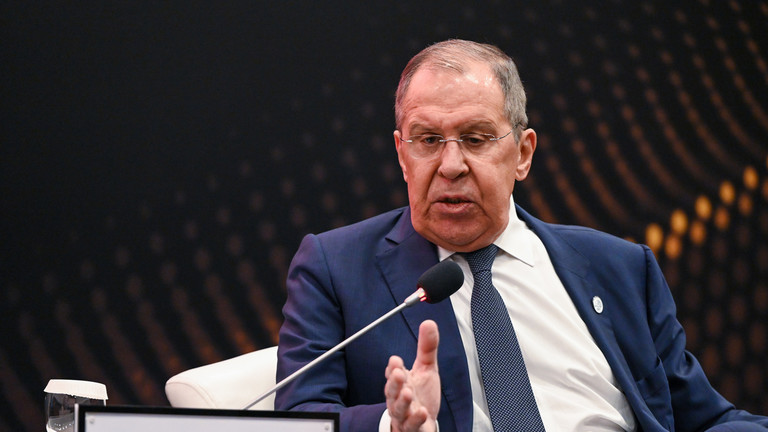
The BRICS group of nations has voted to temporarily suspend new membership applications and focus on integrating the countries which have joined most recently, Russian Foreign Minister Sergey Lavrov announced on Wednesday.
In a statement published on the ministry’s website, Lavrov revealed that the Group of Ten BRICS members had decided to “take a break with the accession of new members in order to process the new arrivals, who have doubled the composition of the group.”
BRICS was initially founded in 2006 by Brazil, Russia, India, and China, with South Africa joining the group in 2010. This year, five more countries officially joined the organization, including Egypt, Iran, Saudi Arabia, Ethiopia, and the United Arab Emirates.
In his statement, Lavrov said that while the new arrivals are being integrated into the group, a new category of “partner countries” would be formed as a “stepping stone” to full BRICS membership.
“We will certainly promote our Belarusian friends as well as a number of other like-minded allies,” the minister said.
This year, Russia holds the rotating chairmanship of BRICS and has announced a “special mission” to identify new members. According to Yury Ushakov, Russian President Vladimir Putin’s foreign policy aide, more than 30 countries have formally applied, including Thailand and Malaysia, the latest to have submitted bids. Earlier this month, Zimbabwe also announced a desire to join the group.
Russian Deputy Foreign Minister Sergey Ryabkov outlined that Moscow’s primary criteria for all aspiring BRICS members is “non-participation in illegal sanctions policies, [and] illegal restrictive measures against any BRICS participant, first of all of course against Russia.”
He said that all current members had expressed their “full understanding” of that position, which Moscow considers essential as the group’s growth continues.
NATO member declares intent to join BRICS
RT | June 4, 2024
Türkiye will seek to join the BRICS group of nations and intends to bring up the issue at an upcoming meeting of the economic bloc’s foreign-ministers in Russia, Ankara’s chief diplomat Hakan Fidan announced on Tuesday.
Speaking to reporters while on a three-day visit to China, Fidan stated that Türkiye has long been waiting to become a member of the European Union, but has for years faced opposition from some of that bloc’s members. In this context, Ankara is now considering BRICS as an alternative platform for integration, the minister explained.
”We cannot ignore the fact that BRICS, as an important cooperation platform, offers some other countries a good alternative,” Fidan said, noting that while the group still has “a long way to go,” Ankara sees the “potential in BRICS.”
During an event at the Center for China and Globalization (CCG) in Beijing, Fidan said he was looking forward to attending the meeting of group’s foreign ministers, which will include representatives from Brazil, Russia, India, China, South Africa, Iran, Egypt, Ethiopia, Saudi Arabia and the UAE. The event is set to take place next week in the Russian city of Nizhny Novgorod.
Moscow has welcomed Ankara’s interest in joining BRICS. Kremlin spokesman Dmitry Peskov has stated that the topic of Türkiye’s membership in the group will be featured on the agenda of next week’s summit, which this year is being chaired by Russia.
Peskov noted, however, that the economic bloc may not be able to fully satisfy the interests of all the numerous countries that have expressed a desire to join BRICS. Nevertheless, he stated that “such an active interest” is welcomed and that the group will do everything within its power to maintain contact with all interested nations.
Last week, Russian Foreign Minister Sergey Lavrov also noted that the doors of BRICS are open to the representatives of the most “diverse economic and political systems and macro-regions.”
The only condition to join the group is a commitment to work on the basis of the key principle of the sovereign equality of states – something Russia’s Western colleagues appear to be struggling with, Lavrov commented.
Putin’s Middle East Trip Deals a Blow to Washington
By Salman Rafi Sheikh – New Eastern Outlook – 11.12.2023
Russian President Vladimir Putin’s recent visit to the Middle East – and the 21-gun salute welcome he received there – shows the failure of Washington’s consistent attempts to ‘isolate’ and defeat Russia. The visit also points to the Middle East’s increasing shift away from, and sole reliance on, Washington. Ever since the beginning of the Gaza War on October 7, the Middle East has been keeping contact with China, rather than the US, its first priority. The reason for this is not simply the fact that the US is supporting, militarily and diplomatically, Israel against Palestine, but also because the Middle East is strategically realigning itself with the realities of what is increasingly – and undeniably – a multipolar world. To the extent that the Middle East, a region where the US remained the most dominant extra-regional force for many decades, has made this shift also reflects the ongoing demise of US dominance more generally in the world. To the extent that China and Russia are two major proponents of multipolarity, connect the dots of this anti-US but pro-China and pro-Russia shift.
Putin’s trip to the UAE and Saudi Arabia has many dimensions. One of these dimensions is bilateral. Between 2017-2022, the trade turnover between Russia and the UAE has grown by almost six times. In 2022, the overall trade increased by almost 68% amounting to US$9 billion. The UAE is Russia’s largest trading partner in the Gulf Region, accounting for 55% of Russia’s total trade with the Persian Gulf.
It, therefore, makes sense for Washington to pressure the UAE government to drastically limit their trade ties with Moscow. Earlier in September, several Western officials from the United Kingdom, EU and US visited the UAE to persuade the UAE to review its trade ties with Russia. Western officials have been assuming that, in the wake of the threats of the Israel-Gaza war spreading to other parts of the Middle East, the UAE would go back to its ultimate security guarantor: the US. This would, however, happen only if the UAE has good ties with the US. Good ties, under the present context of the Russia-Ukraine conflict, mean the UAE ending its trade ties with Russia, especially the ones that may have military implications.
The UAE has been resisting these pressures. In fact, its decision to welcome Putin himself means that the UAE is considering an alternative means of protecting itself in the wake of a wider war in the region. It is ensuring Russian (and Chinese support), and it is using this (possible) source of support to send a message to Washington, i.e., multiple options are possible in a multipolar world. The message is quite similar to the message that the Saudis have been giving to the Americans since the beginning of the Russia-Ukraine military conflict.
If the Americans have been doing their best to convince the Saudis to break out of the OPEC+ deal and increase the production of oil to help reduce its prices and consequently help control the inflation in the West, the Saudis have not submitted. In this context, Putin’s visit to Saudi Arabia sought to reinforce the ‘oil alliance’ – which is also a major dimension of Russia-Saudi bilateral ties – at a time when the burden of wars (supporting Ukraine plus Israel) on the West is increasing manifold. For Putin, an appropriate message to the Middle East in particular and the Global South in general is this: the West supports aggression against all states, regardless of whether it is Russia or Palestine, and it expects other states (e.g., the Middle East) to support that aggression.
Russia understands that the West is fighting two wars, and it does not have any narrative to justify them both simultaneously. As even the US-based Carnegie Endowment said in one of its recent reports, “Washington’s pro-Israel stance undermines the legitimacy of the West’s broader reasons for supporting Ukraine in the eyes of many in the Global South. The moral argument against Russia’s invasion of Ukraine now looks like empty words, particularly in Middle East nations”. In this sense, the timing of Putin’s visit was far from coincidental. It aimed to tap into the opportunity to wean powerful states in the Middle East, who are also keen to expand ties with the non-Western world via BRICS, away from the US as much as possible.
Therefore, the purpose of Putin’s visit, as some Western media analysed and sought to trivialise, was not simply to “discuss” the Gaza war. It was part of Moscow’s wider outreach to the Middle East at an appropriate time to reorient the Middle East’s strategic priorities. Soon after coming back, Putin hosted Iran’s president in Moscow to build on the success of his visit and deepen Russia’s foothold in the region, a region that allows Russia to fight the West in the economic field by, for instance, coordinating the production of oil.
Still, the Gaza war was discussed. But that discussion was underpinned by the strategic failure of Washington’s plans to create a new Middle East. The failure of the US in the Middle East becomes yet another opportunity for Moscow to present itself as a potential peace broker rather than, and unlike the US, a troublemaker. If it was simply a war of narratives, Russia (and China) are clearly winning it in the Middle East.
West’s ‘500-year dominance’ ending – Lavrov
RT | December 11, 2023
The 500-year-long dominance of the West is coming to an end, being replaced by “a new polycentric world,” Russia’s foreign minister, Sergey Lavrov, said Sunday in a video address to the Doha Forum.
The minister expressed regret that certain “circumstances” prevented him from coming to the Qatari capital in person and hearing the discussions at the annual high-profile event.
“But I assume that you were discussing the multipolar world, which is emerging after 500 years of domination of what we call the ‘collective West,’” Lavrov said.
This hegemony of the US and its allies had been “based on a diverse history, including ruthless exploitation of peoples and territories of other countries,” he said.
According to the minister, the West suggested that it could use the model of globalization, which it had been building for centuries, to maintain its dominance. “However, other countries, using exactly the principles and instruments of the Western globalization, managed to beat the West on its own turf, building the economies on the basis of national sovereignty, on the basis of balance of interests with other countries.”
New centers of economic growth and political influence have been emerging, “changing the balance of power in the world, and not to the West’s liking,” he said.
“In order to suppress this kind of development,” the US and its allies have in recent years “sacrificed” globalization in favor of the so-called ‘rules-based world order,’ Lavrov continued.
“The rules were never published, were never even announced by anyone to anyone, and they are being applied depending on what exactly the West needs at a particular moment of modern history,” he added.
The FM said that such an approach is most seen “in various conflicts, which the West ignites all over the world,” including the one in Ukraine. “Everything goes to keep the hegemony. Intervention in domestic affairs, sanctions against all the principles of competition, regime change, and of course direct military interventions, like we have seen in Yugoslavia, Iraq, Libya, Syria, and elsewhere.”
“Is there a single place where the US intervened with military force, where life has become better? I think you know the answer,” Lavrov told the forum participants.
According to the diplomat, new formats like BRICS, the Shanghai Cooperation Organization, ASEAN, African Union, and others will become “the bricks of the new polycentric world.”
It should be recognized, including by those in the West, that “the objective course of history… is the evolution of a multipolar world,” Lavrov insisted.
How Russia Strategically Counters Western Economic Pressure
Sputnik – 08.12.2023
Russia has confounded the West’s sanctions strategy to outstrip Europe in economic growth, pundits say.
Speaking at the plenary session of VTB Bank’s investment forum “Russia Calling!”, Putin highlighted that Russia’s gross domestic product (GDP) had grown by 3.2% in the first 10 months of this year and is expected to reach 3.5% by the end of the year.
“Despite Western sanctions against Moscow over the conflict in Ukraine, the Russian economy manages to stay afloat due to various factors, including the restrictive economic policy of the EU and strategic alliances Russia has formed around the world,” Imelda Ibanez, a specialist in the history of Russian diplomacy and foreign policy at St. Petersburg State University, told Sputnik.
When the United States and its European allies decided to impose sanctions on Moscow, commodity prices rose significantly, resulting in an increased trade deficit for those countries.
“One factor [influencing the strengthening of the Russian economy] is the monetary policy of the European Union and the United States, as well as high commodity prices,” Ibanez said.
However, she emphasized that “Russia is one of the world’s leading producers of raw materials, including hydrocarbons, coal and even diamonds.”
“Russia has been able to strategically resist sanctions because it has relied on a geopolitical strategy that is aligned with its allies,” she added.
Isela Valdez, a lecturer in economics at the National Autonomous University of Mexico (UNAM), also speaking to Sputnik, noted that although European countries were strong partners for Moscow before the Ukrainian crisis, they were not the only ones.
“They are not Russia’s only trading partners; yes, they are obviously among the strongest, but there are also the Middle East, Asia, Latin America, and even parts of Africa, which are alternative markets with which [Moscow] can develop trade relations,” she noted.
According to Ibanez, Russia’s strategic, commercial and economic link is China, a country with which it shares a common space in BRICS, the group of developing nations founded in 2009 that currently represents more than 31.5 percent of the world’s GDP and 42 percent of its population.
What will happen if the conflict in Ukraine drags on for even longer?
Western countries will find themselves in an even more difficult position in 2024, as another conflict between Israel and Palestine has burst onto the geopolitical chessboard, Valdez warned.
“It is more of an economic containment mechanism that we are beginning to see [in the West]. Next year, the situation for Europe will be very complex because it is on the central axis of the conflicts, almost acting as a mediator, and this will affect its production levels,” the expert noted.
Ibanez noted that Russia has managed to build bridges and alliances with the Global South through BRICS and the Shanghai Cooperation Organization — and these are platforms where Moscow could stand out.
Raisi Calls on BRICS Leaders to Use Economic, Political Opportunities to Pressure Israel
Sputnik – 21.11.2023
TEHRAN – Iranian President Ebrahim Raisi on Tuesday called on BRICS leaders to use all economic and political opportunities to put pressure on Israel.
Amid escalating horrors in the Gaza Strip during the “second phase” of Israel’s conflict with Hamas, the former has intensified its actions, resulting in a rise in civilian casualties. Iranian President Ebrahim Raisi, in response, has called on BRICS leaders to leverage economic and political avenues to exert pressure on the Israeli government.
“The United States has made all international organizations faceless. Iran wants BRICS members and governments to stand up for security, establish justice and fight racial discrimination in the world, as well as use all their political and economic opportunities and power to exert pressure on Israel and its supporters from Western countries,” Raisi at the BRICS extraordinary summit on the Middle East.
Raisi urged the BRICS countries to recognize the Israeli government as a “terrorist regime.”
“Israel’s continuous attacks on hospitals, medical centers and religious sites, as well as the murder of women and children, doctors, nurses and journalists are acts of terrorism, and it is necessary to recognize the Israeli regime as a terrorist regime and its army as a terrorist organization,” Raisi said.
BRICS countries must adopt a resolution at the UN to stop Israel’s crimes in the Gaza Strip, Raisi said.
A Second Geo-Strategic Shoe (Other Than Ukraine) Is Dropping
By Alastair Crooke | Strategic Culture Foundation | August 28, 2023
Whilst it has become clear to increasing numbers of people in the West that something has gone terribly wrong with the élites’ Ukraine project, and that the exaggerated predictions and expectations of Russian forces being ‘knocked for six’ by an armoured ‘fist’ have proved spectacularly wrong, those same élites are going wrong again – on another strategically decisive issue: They again largely ignore ‘reality’ – for the sake of control of the ‘narrative’. In this case, the West prefers to sneer at the implications of the new accessions to BRICS (let alone the other 40 states ready to join): ‘Nothing to see there’.
The BRICS is just a jumble of states lacking any cohesion, or common thread, western MSM proclaims. It can never challenge the U.S. global power, nor the sheer financial weight of the dollar sphere. However, China’s Global Times explains in mild tones, a different backdrop:
“The reason why the BRICS mechanism has such great appeal … reflects a general disappointment of many developing countries with the global governance system dominated and interfered by the U.S. and the West. As China has repeatedly emphasized, the traditional global governing system has become dysfunctional, deficient and missing in action, and the international community urgently expects the BRICS mechanism to strengthen unity and cooperation”.
Others in the Global South say it more starkly: The BRICS mechanism is seen as a means to slough off the last vestiges of western colonialism and to acquire autonomy. Yes, of course, BRICS 11 initially will be more cacophony than smooth opera, but nonetheless, it represents a profound shift of global consciousness.
BRICS 11 establishes a pole of influence and global heft that has the potential to eclipse in scope that of the G7.
The ‘mess’ in Ukraine is commonly attributed to mere ‘miscalculation’ by the western élites: They did not expect Russian society to be so robust, nor so steadfast under pressure.
Yet this was no minor ‘slip up’ by the West, since the recognition of NATO’s doctrinal contradictions, its second-rate weaponry and its inability to think rigorously – beyond tomorrow’s sound-bite – has (inadvertently) shone the spotlight on the deeper dysfunction within the West – one that runs far deeper than just the situation around the Ukraine project. Many in the West see major institutions of society locked within suffocating orthodoxy; in an intense level of political and cultural polarisation; and with political reform effectively locked-down.
The proxy war on Russia nevertheless was launched through Ukraine, precisely to reaffirm western global vigour. It is doing the opposite.
The financial war (as opposed to the ground war in Ukraine) was the counter-play to generating regime change in Moscow: Financial war was intended to underline the futility of opposing the sheer ‘muscle’ that dollar hegemony – acting in concert – represented. It was the jealous hegemon demanding obeisance.
But this back-fired spectacularly. And this has directly contributed not just to the expansion of BRICS, but to the energy resources of the Middle East and the raw materials of Africa sliding out of western control. Rather than the western scatter-gun threats of sanctions and financial ostracisation creating fear and reaffirming obsequiousness, the threats contrarily, have mobilised anti-colonial sentiments across the globe; fed the understanding that the western financial construct amounted to tutelage, and that any acquisition of sovereignty required the act of de-dollarisation.
And here, again, egregious mistakes were committed: Errors of geo-strategic magnitude were embarked upon almost casually, and without due diligence.
The primordial mistake was that of Team Biden (and the EU) illegally seizing Russia’s overseas reserve assets; expelling Russia from the financial clearing system, SWIFT; and imposing a trade blockade so complete that (it was hoped in the White House) its effects would tear down President Putin. The rest of world understood – they easily could be next. They needed a sphere that was resistant to western financial predations.
Yet, the second strategic error by Biden (& Co.) magnified the error of their initial ‘unprecedented’ financial blitz. This blunder marked the ‘second shoe to drop’ in Biden’s de-fenestration of the American financial imperium: He treated Mohammad bin Salman (and the Saudis generally) with contemptuousness: ordering them to increase oil production (in order to bring down the price of gasoline before the mid-term Congressional elections), and disdainfully threatening the kingdom with “consequences”, were it to fail to comply.
Perhaps Biden, so consumed with his electoral prospects, did not think it through. Even now, it is not clear that the White House understands the consequences of it having treated MbS as some aberrant underling. There is an eleventh-hour attempt to dissuade Saudi from joining BRICS, but it is too late. It’s application to join has been approved and will take effect from 1 January 2024. The West misread the mood.
The shared ethos within Gulf states is one of self-assured, assertive leaders, who are no longer willing to accept binary ‘with us or against us’ U.S. demands.
For the avoidance of mis-understanding, Biden, through the combination of these two strategic mistakes, has launched the West’s financial hegemony onto a slipway leading to incremental unwinding of much of the $32 trillion of foreign investment in fiat dollars which has accumulated in the U.S. system over the last 52 years – with an implicit acceleration towards ‘own currency trading’ amongst the majority of non-western states.
Ultimately this likely will lead to a BRICS trade settlement medium – possibly anchored to gold. Were a trading currency to be anchored in some way to a gram of gold, that currency would, of course, acquire status as a store of value, based on that of the underlying commodity (in this case gold).
The point here is that when inflation was zero-bound, U.S. Treasury bonds were seen as a store of (enduring) value. However, wide de-dollarisation undermines the synthetic (i.e. the imposed) demand for dollars that owed entirely to the Bretton Woods and the Petro-dollar frameworks (that demanded that commodities be traded only in U.S. dollars) and to the implicit understanding that U.S. Treasuries offered a certain store of value.
But what did Team Biden do? They have driven Saudi Arabia – the lynchpin to the Petro-dollar, and one of the pillars (together with other Gulf States and China) underpinning the huge holdings of U.S. Treasury debt – into the arms of BRICS. Put simply, the BRICS 11 incorporates six out of nine of the top global energy producers, as well as the principal energy consumers. OPEC+, in effect, has been swallowed to make a self-enclosed, self-sufficient circle of trading in energy (and raw materials) that does not need to touch dollars. And over time, this will amount to a major monetary shock.
The ‘consequences’ threatened towards Saudi Arabia by the White House have been rendered inconsequential. Saudi and Iran can sell their oil to other BRICS consumers (in non-dollar currencies). Members no longer need to be so concerned at western threats – one of the key provisions of BRICS is the joint refusal of all members to permit or facilitate any ‘regime change’ manoeuvres against BRICS members.
To be clear, what this all means is further price inflation in the West, reflecting the falling purchasing power of fiat currencies as dollar-demand subsides. Inevitably, a weakening dollar will lead to higher interest rates in the U.S. This – simply – will be one major consequence of de-dollarisation. Higher interest rates will impose great stress on the U.S. and European banks.
The first BRICS 11 summit is set for October 2023 in Kazan. By ‘coincidence’, full membership of the new states will coincide with Russia taking the rotating annual presidency of the BRICS on 1 January 2024. Putin already has made clear his determination to move towards resolving the complexities of a separate BRICS currency – “one way or another”.
Xi Says BRICS States Should Step Up as Mediators in Pressing Issues
Sputnik – 23.08.2023
BEIJING – BRICS member states should proactively offer their mediation services for pressing issues and promote their political resolution, Chinese Chairman Xi Jinping stated on Wednesday.
“We should support each other on the issues of interest for each of us, strengthen coordination on main international and regional issues, actively mediate in resolving pressing issues and promote political settlement,” Xi said at a plenary session of the BRICS summit in Johannesburg.
The Chinese chairman also called on fellow BRICS leaders to stand against economic coercion and focus on common development through cooperation.
“We should expand political cooperation, strengthen ties in security, while maintaining peace and stability,” Xi added.
BRICS — the group uniting the world’s largest developing economies, namely, Brazil, Russia, India, China and South Africa — is holding its annual top-level summit in Johannesburg from Tuesday to Thursday.
Saudi Arabia set to join BRICS’ New Development Bank
By Ahmed Adel | May 31, 2023
The strengthening of ties between the BRICS bank and Saudi Arabia, the world’s second-largest oil producer, is undesirable for the West as it again signals another advancement in the de-dollarisation of the global economy. In the last week of May, Saudi Arabia held talks to join BRICS’ New Development Bank as its ninth member, a decision that is not only economic but also with political motive.
Saudi Arabia’s benefit from joining the NDB is clear, given the potential for increased trade, especially Saudi exports. The Kingdom of Saudi Arabia is one of the world’s largest oil suppliers, and BRICS countries produce many different goods. Therefore, such cooperation can be considered mutually beneficial. Saudi membership in the NDB will expand the internal market of the BRICS countries, which means opening new opportunities for economic development in these countries.
As Bloomberg reported on May 30: “The New Development Bank, the lender created by the BRICS group of nations, will widen its membership as it seeks to boost its capital and counter the influence of Western-dominated multilateral banks.”
Saudi Arabia is the biggest economy in the region, and its neighbour, the United Arab Emirates (UAE), is already a member of the NDB. At the same time, Saudi Arabia has also expressed interest in joining BRICS. The BRICS summit in South Africa in August will discuss expanding the grouping, which could open the path for the Arab country to join.
“In the Middle East, we attach great importance to the Kingdom of Saudi Arabia and are currently engaged in a qualified dialogue with them,” the NDB told the Financial Times in a statement.
Talks with Saudi Arabia come as the NDB prepares to formally evaluate its funding options, which were questioned after the West imposed sanctions on Russia following the launch of its special military operation in Ukraine.
Membership will likely be granted as it would strengthen Saudi Arabia’s bonds with BRICS countries, especially when the country is pursuing closer relations with all powers, particularly China. Chinese President Xi Jinping hailed a “new era” in the countries’ ties when he visited Saudi Arabia in 2022. Most importantly, Beijing in March brokered a historic agreement between Saudi Arabia and Iran to resume diplomatic relations, something which irked Washington.
The NDB has lent $33 billion to more than 96 projects in the five founding members — Brazil, Russia, India, China, and South Africa — but the bank has expanded its membership to include the United Arab Emirates, Egypt, and Bangladesh. Although Egypt and Bangladesh represent major emerging markets and economies, Saudi Arabia, like the UAE, would represent another rich shareholder in the NDB.
“[Fundraising options are] the most important thing at the moment,” said Ashwani Muthoo, director-general of the NDB’s independent evaluation office, which was established last year.
Muthoo declined to comment on the Saudi accession talks but said the board wanted to examine alternative instruments and currencies to bring in resources, something that Saudi Arabia can offer.
It is recalled that Mikhail Mishustin said on a visit to China in May that Moscow saw “one of the bank’s main goals” as defending the bloc from “illegitimate sanctions from the collective West”. This fact interests Saudi Arabia as it breaks from servitude to the US to become a sovereign Middle/Regional power instead.
It is recalled that China’s Foreign Ministry Spokesperson Wang Wenbin said in October 2022 that BRICS leaders agreed on expanding the bloc and expressed support for the discussion on the standards and procedures of expansion. Wang also noted that China would work with other BRICS members to jointly advance the expansion process so that more partners will join the BRICS family.
By being first accepted into the NDB, Saudi Arabia’s path to joining BRICS would be opened. As said, Saudi Arabia will likely join the NDB as the banks have a strong will to expand their membership, which will signal the Arab country’s eventual accession into the bloc.
Dilma Rousseff, the bank’s president, said at the NDB’s annual meeting in Shanghai on May 30, “The world is going through a transformation process and it’s not about one currency against any another one. NDB will continue seeking funds in the dollar market but also in the Asian market.”
The fact that the NDB is comprised of the most powerful and richest countries outside of the Western bloc has Washington concerned as it poses the greatest challenge to dollar hegemony. With the current level of the NDB project funding in local currencies at 22%, the bank is well on course to meet its goal of 30% by 2026. This percentage will only continue to grow as the years pass, and the addition of Saudi Arabia will contribute to this effort. Thus, the Middle Eastern country will actively participate in de-dollarisation.
Ahmed Adel is a Cairo-based geopolitics and political economy researcher.
West’s efforts to isolate Russia have failed – Lavrov
RT | April 29, 2023
The West has failed to isolate Russia, with the majority of the world still interested in maintaining good relations with Moscow, Foreign Minister Sergey Lavrov has said. He also argued that the trend toward multipolarity is irreversible, whether former colonial powers like it or not.
Addressing the World Online Conference on Multipolarity on Saturday, Lavrov said that “Washington’s and its satellites’ efforts to reverse history, to force the international community to live by the invented ‘rules-based order’” are proving to be a fiasco, citing the “total failure” of the West “to isolate Russia.”
According to the foreign minister, a number of countries, which combined are home to 85% of the world’s population, have made it clear that they will not do the bidding of the former colonial powers.
The Russian diplomat said the fact that delegates from several dozen nations “from nearly every continent” attended the online forum shows just how much traction the idea of multipolarity has gained.
Lavrov noted that new global centers are emerging in Eurasia, the Indo-Pacific region, the Middle East, Africa, and Latin America, and that these nations are pursuing independent policies guided by national interests.
According to the foreign minister, developing nations have been steadily expanding their share in the global economy over the past three decades, while the role of the G7 nations has been diminishing.
He also hailed the fact that more and more countries have expressed interest in joining international groups “of the new kind,” such as BRICS and the Shanghai Cooperation Organization (SCO).
Russia, Lavrov explained, champions a multipolar world order based on respect for the UN charter, and a “balance of interests” as opposed to a “balance of fear.”
President Vladimir Putin said on Friday that Moscow will not abide by the “so-called rules” invented and imposed by “certain countries.”
Also on Friday, while addressing members of the SCO, Defense Minister Sergey Shoigu claimed that the West is putting “unprecedented pressure” on independent countries to pit them against Russia and China, and undermine the rise of the multipolar world.
On Monday, Lavrov called for the expansion of Asian, African, and Latin American representation in the UN Security Council, arguing that the West is over-represented in the international body.
South Africa’s Neutrality In The New Cold War Is Under Threat From Western Pressure
BY ANDREW KORYBKO | APRIL 26, 2023
South Africa’s recent flipflopping on its membership in the “International Criminal Court” (ICC) proves that its neutrality in the New Cold War is under threat from Western pressure. President Ramaphosa announced on Tuesday that “the governing party has taken that decision that it is prudent that South Africa should pull out of the ICC” due to its “unfair treatment” of certain countries. Shortly after, however, his office claimed that he misspoke and reaffirmed South Africa’s commitment to the ICC.
Nevertheless, there are reasons to suspect that this isn’t the case, especially since Ramaphosa exuded supreme confidence in sharing Tuesday’s announcement about his country’s plans to pull out of that global body. It’s therefore unlikely that he simply misspoke and much more probable that Western diplomats immediately intervened behind the scenes to pressure him into walking back this policy. They presumably acted so swiftly due to the strategic significance of everything that’s at stake right now.
South Africa will host this year’s BRICS Summit in late August, but the ICC’s warrant for President Putin’s arrest complicates his participation in person. Had Ramaphosa initiated the process for withdrawing his country from that organization on the legitimate pretext that he earlier claimed would be employed, then there’d be no ambiguity about the Russian leader’s safety if he showed up there. Since this policy was just walked back, however, there are reasons to suspect a Western provocation if he appears.
Even though South Africa declined to arrest former Sudanese leader Bashir despite the ICC having previously demanded that all members do so if he sets foot on their territory, President Putin’s security can’t in good conscience assume that they’ll make an exception for him too. The most responsible decision amidst that summit host’s latest flipflopping might therefore be for him to participate virtually in order to not take a chance that something terrible could happen.
While the organizational proceedings would still likely unfold as planned in that scenario with only few modifications, very serious and potentially even irreparable damage might be inflicted on BRICS as a result. China and India could conclude that South Africa is an unreliable partner seeing as how it would have capitulated to Western pressure, while they’d also expect Brazil to do the same since it’s a party to the ICC too and its top diplomat earlier implied that his country might arrest President Putin if he visits.
BRICS in its present form can theoretically continue to function as the engine of financial multipolarity in spite of the Russian leader being unable to visit either of those two member states for its summits, but the organization might struggle to attract new members whose countries aren’t part of the ICC. After all, the leaders of Iran, Saudi Arabia, and Turkiye could potentially be served similarly politicized warrants one day too that would preclude their participation in BRICS summits hosted by ICC states.
The US has an obvious interest in dissuading them and others from joining BRICS as official members, and its speculative behind-the-scenes pressure on South Africa to remain committed to serving the ICC’s arrest warrant against President Putin could have a powerful deterrent effect on candidate countries. This year’s summit is supposed to see its incumbents reach a consensus on expanding their organization, which is incredibly urgent to do considering that at least 19 states are vying to join.
The larger context in which South Africa just flipflopped on its ICC commitments is therefore of outsized importance not just for BRICS’ future, but by extrapolation, also for the emerging Multipolar World Order as well due to that group’s function as the engine of financial multipolarity. With this in mind, it can be concluded that the US’ clandestine pressure campaign is a major power play in the New Cold War aimed at impeding BRICS’ ability to collectively challenge the dollar anytime soon.
Featured Video
Yemen joins the war – Red Sea could be blocked next – Saudi regime at risk
or go to
Aletho News Archives – Video-Images
From the Archives
A superpower and “the world’s sickest warrior state”
By Paul J. Balles | March 8, 2010
Living through five or six major wars has hardened me to what I thought were the extremes of inhuman cruelty and brutality.
Two things made those extremes almost bearable: the brutality always revealed – at least according to the media coverage – the viciousness of the enemy. It was therefore quite understandable when our “brave men and women” pulverized the enemy.
Films of Japanese torturing captive Americans somehow justified holding Japanese Americans in internment camps during World War II; and only a small percentage of Americans found the bombing of Hiroshima and Nagasaki unreasonably vengeful at best, at worst, depraved.
The media giants in America portrayed the North Koreans as barbaric beasts with their captives, quite unlike their southern counterpoints – our allies during the Korean War. No one ever felt the need to explain how the South Koreans were a civilized breed while the North Koreans were absolute savages, at least according to the official line.
In Vietnam, our warriors justifiably (or so the media made us believe) dropped napalm on the North Vietnamese who had the gall to hide in villages and tunnels to ravage our invaders. At least it was accepted practice until some rogue photojournalist filmed a young girl screaming down a Vietnamese road in flames. … continue
Blog Roll
 Aletho News
- America Racing to Strategic Defeat in Iran: Lt Col Daniel Davis
- FTC Warns Visa, Mastercard, PayPal, Stripe Over Political Debanking
- Russian tanker approaches Cuba despite US oil blockade
- Marandi: Yemen joins the war – Red Sea could be blocked next – Saudi regime at risk
- Pro-Palestinian French member of European Parliament denied entry to Canada
- Pakistan to Host US-Iran Talks
- How Indonesia’s tilt toward the US left it stranded in the Strait of Hormuz
- US has no choice but to retreat from Iranian borders: Top commander
- Iran Retaliation Strikes Chemical Plant Near Dimona
- AWACS’ Destruction is a Major Loss for US Military – Ex-DoW Analyst
- If Americans Knew
- Israeli police block Catholic cardinal from entering Church of the Holy Sepulchre on Palm Sunday
- Israel is assassinating journalists again, more than any other nation, anywhere, ever – Not a ceasefire Day 170
- Over 300 US service members wounded, majority have brain injuries – Not a ceasefire Day 169
- Researchers at Human Rights Watch Resign Over Blocked Report on Palestinian Refugee Return
- Jewish Groups Are Backing a War Americans Don’t Want
- Eric Fingerhut Thinks He’s the President of the Jews
- Top Jewish Philanthropists, Rabbis Urge Israeli President to Take Action Against ‘Jewish Extremists’
- Don’t Be Fooled. Zionist Leaders Have Always Wanted to Control Southern Lebanon
- Israel’s widespread use of torture is a core element of its genocide against the Palestinian people
- In Israel’s War on Iran, Many Middle East US Bases Rendered “All But Uninhabitable”
- No Tricks Zone
- New Study Finds Warming Saves Lives…Cold Temperatures 12 Times More Deadly Than Excess Heat
- German Science Blog Accuses PIK Climate Institute Of Hallucinating Climate Tipping Points
- Devastating Assessment Of Comirnaty Vaccine By Former Senior Pfizer Europe Toxicologist
- New Study: CO2 Is ‘Effectively Negligible’ As An Explanatory Climate Change Factor Since 2000
- Former Pfizer Toxicologist Dr. Helmut Sterz Tells Bundestag Hearing Pfizer Vaccine Should Have Never Been Approved
- Energy Expert: Germany’s Nuclear Phaseout Was A “500 Billion Euro Mistake”
- New Research: South Australia’s Mid-Holocene Sea Surface Temperatures Were 4°C Warmer Than Today
- Storing Green Energy To Last Germany 10 Days Would Require A 60-Million Tonne Battery
- New Studies: UK Sea Levels Were 4 Meters Higher Than Today During The Mid-Holocene
- Destructive Green New Deal: German Energy And Metal Group Warns Of Drastic Crisis
 Aletho News