Pfizer Steps Up Advertising for Its ‘Blockbuster’ Drug to Treat Heart Conditions…
… Including Those Caused by COVID Vaccines
By Michael Nevradakis, Ph.D. | The Defender | February 24, 2022
Two major pharmaceutical companies chose February, the month of love — or hearts — to launch an advertising campaign urging people experiencing heart issues for the first time to visit their doctors.
Pfizer and Bristol Myers Squibb (BMS) this month revived the “No Time to Wait” ad campaign, spending $1.28 million on TV ads alone.
The campaign warns anyone experiencing palpitations and shortness of breath that they may be at increased risk of developing atrial fibrillation (AF), deep vein thrombosis (DVT), other types of blood clots and strokes — the same types of cardiovascular ailments found among people who have received COVID-19 vaccines.
The campaign urges viewers to seek early medical attention in order to reduce the risk of these serious complications.
“Early medical attention” could include prescription drugs — including Eliquis, developed and marketed by none other than Pfizer and BMS.
According to industry publication Fierce Pharma :
“The aim is to get patients back into their doctors’ offices — and of course, if needed, be diagnosed with any relevant condition that may require them to take a blood thinner, such as Eliquis.”
Eliquis, described as a “blockbuster blood thinner and atrial fibrillation (AF) drug,” is a major revenue generator for the Pfizer-BMS alliance, delivering more than $9 billion in annual revenue — far more than competing drugs such as Xarelto (produced by Bayer in conjunction with Johnson & Johnson), and Pradaxa, produced by Boehringer Ingelheim.
Pfizer and BMS relaunched the “No Time to Wait” campaign in conjunction with several advocacy organizations and medical societies, including World Thrombosis Day, which expressed support for the Pfizer-BMS initiative as a means of “educating” the public.
Characterized as a “surround-sound campaign,” Pfizer-BMS use television, radio and social media to deliver the “No Time to Wait” message to the public.
As part of the campaign, a DVT and pulmonary embolism (PE) television advertisement debuted on Valentine’s Day, Feb. 14. The ad showed two patients describing how they “didn’t wait” to speak to their doctors about the AF, DVT and PE symptoms they had begun to experience while performing everyday activities.
Speaking to the camera, the two actors describe symptoms, such as shortness of breath and a racing heart, which are potential indicators of AF, DVT and PE.
Official campaign literature urges the public to take action:
“Right now, people may be weighing a decision to visit a healthcare provider. However, symptoms like swelling, pain, tenderness or redness in the leg, thigh or pelvis can possibly be related to a potentially serious condition such as deep vein thrombosis (DVT). It’s critical to not brush off these symptoms.”
BMS, via its spokesperson, described the reasons for relaunching the campaign:
“We received so much positive feedback from patients and advocates on the impact this campaign had on patients, we knew it was our responsibility to continue to evolve the program and further get the message out.
“In the middle of 2021, we decided to evolve the campaign, with new insight that symptomatic people at risk for AFib or DVT/PE can often dismiss their symptoms or misattribute [emphasis added] them to other health and lifestyle factors.”
Could “misattribute,” in this instance, actually refer to cases where those who had recently received a COVID vaccine experienced the onset of heart-related conditions, in some cases leading to their deaths?
Is Pfizer benefitting from vaccine-induced ailments?
Could the relaunching of the “No Time to Wait” campaign represent an effort by Pfizer to engage in damage control from the increase in vaccine-induced heart conditions — while benefiting from the sale of a drug used to address those same ailments?
There are several objectives Pfizer and BMS could accomplish with the campaign.
First, by launching an advertising campaign warning people they may be at risk of certain heart conditions, Pfizer and BMS are in a sense “naturalizing” heart ailments in young and/or healthy individuals.
Second, by “naturalizing” the prevalence and likelihood of such heart conditions, these companies may deflect blame for these conditions from COVID vaccines, including the Pfizer-BioNTech vaccine.
Third, by referring patients to their doctors, the Pfizer-BMS alliance may directly benefit financially from the increased prevalence of heart ailments and conditions in the vaccinated public — as doctors prescribe more Eliquis, the top-selling blood thinner and AF drug, to treat their symptoms.
‘Normalizing’ heart conditions in young and healthy
According to Pfizer and the Centers for Disease Control and Prevention (CDC), even “the healthiest athletes” are now at risk for blood clots, as stated in an urgent warning issued this month.
The media and health authorities in recent months have proffered multiple explanations for why healthy people are developing blood clotting and heart conditions, blaming everything from weather and energy bills to cannabis use — but not COVID vaccines.
Here are some examples:
- September 2021: The Times of India ran a story on a “doctors’ reminder” that “nobody is too young for a heart attack.”
- September 2021: A study indicated that cannabis use doubled the risk of heart attacks in young adults.
- October 2021: The New York Post reported on “[t]he little-known heart attack that’s striking ‘fit and healthy’ women as young as 22.”
- November 2021: British tabloid The Sun reported on “[t]he ways cold weather can affect your body — from winter vagina to blood clots.”
- November 2021: A Times of India report asked why heart attacks are “becoming common in ‘seemingly’ fit people.”
- November 2021: Healthline reported e-cigarettes can raise the risk of heart disease and stroke.
- December 2021: Another British tabloid, Express, warned about the “healthy” diet that “may ‘increase’ your risk of having a heart attack.”
- January 2022: Norton Health informed us that “[p]reventing heart disease in children is becoming more urgent as more kids develop heart disease.”
- January 2022: A report is published warning that “sports can break your heart in more ways than one.”
- January 2022: A report by CT (Connecticut) Insider indicated more people were suffering from heart disease and strokes “after COVID.”
- January 2022: The Daily Mail warned the “[r]isk of heart problems could be increased even if you drink less than NHS weekly units,” referring to recommendations made by the UK’s National Health Service.
- January 2022: The Sun ran a report claiming weather can “harm” one’s health, leading to heart attacks, stroke or gout.
- January 2022: Another report by The Sun warned 300,000 Brits were “living with [a] stealth disease that could kill within 5 years.” The “stealth disease” in question is aortic valve stenosis, a condition where the heart’s aortic valve narrows.
- February 2022: Nature magazine reported the risk of heart disease “soars after COVID — even with a mild case.”
- February 2022: A doctor interviewed on the UK’s ITV warned an increase in energy bill amounts may cause heart attacks and strokes.
Mark Crispin Miller, professor of media, culture and communication at New York University and founder of News from Underground compiled a list of reports like those listed above.
In looking at incidents and reports during the week of Feb. 8-14 alone, Crispin told readers:
“Before we note all those whose ‘sudden deaths’ made news just this past week — ‘unexpected deaths’ with no reported cause, or due to heart attacks, strokes, blood clots, cardiac arrest or swift, aggressive cancers (all known to be ‘adverse events’ post-‘vaccination’) — let’s review how this unprecedented global spike in sudden death has been deliberately obscured by ‘our free press.’”
Miller highlighted an ABC News report, “‘Broken heart’ cases surge during COVID, especially among women.”
In another example, Science magazine reported geneticists found the answer to “sudden unexplained child deaths.”
Downplaying of the connection between the COVID vaccines and serious heart conditions often has involved high-profile athletes.
For instance, 33-year-old soccer star Sergio Aguero of FC Barcelona was forced to announce his retirement in December 2021, after suffering chest pains and dizziness during a match in October 2021. He never played again.
According to Aguero’s cardiologist, the vaccine was not the reason for his ailment and retirement.
However, Aguero himself, in a Twitter question-and-answer session earlier this month, did not reject this possibility, stating: “I don’t know if Covid or [the] vaccine caused my retirement.”
Media, however, continue to promote the narrative that vaccines have nothing to do with the surge in sudden illnesses or deaths among athletes.
For example, Miller cited a Feb. 1 Washington Post article describing stories of athletes dying due to COVID vaccination as a “falsehood.”
Miller then compared what he described as the “disgraceful” Washington Post report with a documented timeline of athletes who suffered from heart failure between March 2021 and January 2022.
This string of incidents is further illustrated and detailed by the Real Science blog, which found 707 such incidents as of this writing and demonstrated in graphical form the sharp increase in heart failure incidents involving athletes over the course of 2021 and into 2022, as COVID vaccination uptake increased.
Nevertheless, Politifact, in December 2021, assured the public “[t]here’s no proof athletes collapsed with heart issues because of COVID-19 vaccination,” while in November 2021, U.S. News & World Report warned “COVID may trigger [a] heart condition in young athletes.”
As reports of vaccine-induced heart ailments rise, studies confirm link
Multiple studies and reports have confirmed a link between COVID vaccines and heart ailments.
These reports include:
- September 2021: A report found adolescent boys are at higher risk of hospitalization from the Pfizer vaccine than from COVID.
- November 2021: Renowned cardiologist Dr. Steven Gundry warned the Pfizer and Moderna COVID vaccines “dramatically increase” the risk of heart attacks.
- January 2022: Data from the Vaccine Adverse Event Reporting System (VAERS) indicates myocarditis tops the list of COVID vaccine injuries for 12- to 17-year olds.
Meanwhile, reports continue to grow of previously healthy people who develop heart conditions following COVID vaccines.
Here are just a few examples:
- June 2021: A 13-year-old Michigan boy died three days after receiving the second dose of the Pfizer COVID-19 vaccine.
- June 2021: An athlete who received the second dose of the Pfizer vaccine developed myocarditis, triggered by the vaccine.
- August 2021: A 14-year-old boy developed myocarditis after receiving the Pfizer vaccine.
- October 2021: A 17-year-old developed multisystem inflammatory syndrome and myocarditis after receiving the Pfizer vaccine.
- December 2021: A 26-year-old’s death from heart inflammation was found to have “probably” been caused by the Pfizer vaccine.
- January 2022: An autopsy found the death of another 26-year-old from myocarditis was the direct result of receiving the Pfizer vaccine.
- February 2022: A six-year-old developed vaccine-induced myocarditis, leaving him unable to walk.
- February 2022: Autopsies showed that the deaths of two teenage boys who died soon after receiving the Pfizer vaccine were directly caused by the vaccine.
Reports and studies like those listed above have led to increasing calls for the vaccination of minors to be reassessed or outright halted, including:
- January 2022: More than 30 experts called on UK regulators to reassess COVID vaccination for 12- to 15-year olds.
- January 2022: Data revealed reports of heart disease following COVID vaccines had increased 15,600% in young people under the age of 30, compared to the previous 31 years of heart injuries reported following receipt of FDA-approved vaccines.
They’ve also triggered calls for further scrutiny on the part of health authorities, which appear to have had some effect, at least in certain instances.
For example:
- October 2021: The U.S. Food and Drug Administration delayed a decision on green-lighting the administration of the Moderna vaccine to adolescents, citing heart problems (however, the Pfizer vaccine was nevertheless approved for the same age group).
- October 2021: Health authorities in Denmark and Sweden paused administration of the COVID vaccine to younger age groups, citing reports of myocarditis.
- December 2021: The CDC was monitoring eight cases of heart inflammation reported in 5- to 11-year-olds who received the Pfizer vaccine.
Nevertheless, in January 2022, the Centers for Disease Control and Prevention (CDC) refused to investigate the case of a 13-year-old who died of myocarditis days after receiving the Pfizer vaccine, while in August 2021, doctors “downplayed” the connection between the onset of myocarditis in a 25-year-old, and receipt of the Moderna vaccine.
‘No Time to Wait’ campaign spending indicative of broader Big Pharma marketing expenditures
Big-dollar ad spending is par for the course for Big Pharma companies such as Pfizer, as previously reported by The Defender.
For instance, a 2019 Forbes article reported Pfizer spent twice as much on marketing/selling as it spent on research.
Pfizer’s heavy advertising is also evident in its most recent quarterly report, for the fourth quarter of 2021. The report indicates a 10% increase — a total of $12.7 billion — in 2021 “SI&A expenses,” which include marketing and advertising, as compared to 2020, when there was no COVID vaccine available.
The report also projects Pfizer’s SI&A expenses will range between $12.5 and $13.5 billion in 2022.
BMS, in turn, spent $990 million in advertising and marketing in both 2020 and 2021 — after spending $633 million in 2019.
In sum, pharmaceutical ad spending totaled $6.58 billion in 2020, and was expected to surpass $11 billion by the end of 2021 — including $3.9 billion in spending on television advertisements alone.
In addition to “traditional” advertising and marketing campaigns, pharmaceutical companies adopted some more creative ways to promote their products — and perhaps purchase further goodwill on the part of media outlets.
In an October 2021 article, The Defender highlighted several examples of Pfizer sponsoring television news programs and segments, ranging from “Good Morning America” to “Anderson Cooper 360°” to “CBS HealthWatch.”
For example, an Oct. 4, 2021 tweet posted on CNBC’s official Twitter account portrayed Pfizer in glowing terms, accompanied by the text: “paid post for Pfizer.”
And a March 15, 2021 tweet by Pfizer expressed pride in the release of a National Geographic documentary, “Mission Possible: The Race for a Vaccine.”
Michael Nevradakis, Ph.D., is an independent journalist and researcher based in Athens, Greece.
© 2022 Children’s Health Defense, Inc. This work is reproduced and distributed with the permission of Children’s Health Defense, Inc. Want to learn more from Children’s Health Defense? Sign up for free news and updates from Robert F. Kennedy, Jr. and the Children’s Health Defense. Your donation will help to support us in our efforts.
Johns Hopkins, Bristol-Myers Face $1 Billion Suit For Infecting Guatemalan Hookers With Syphilis
By Tyler Durden | Zero Hedge | January 19, 2019
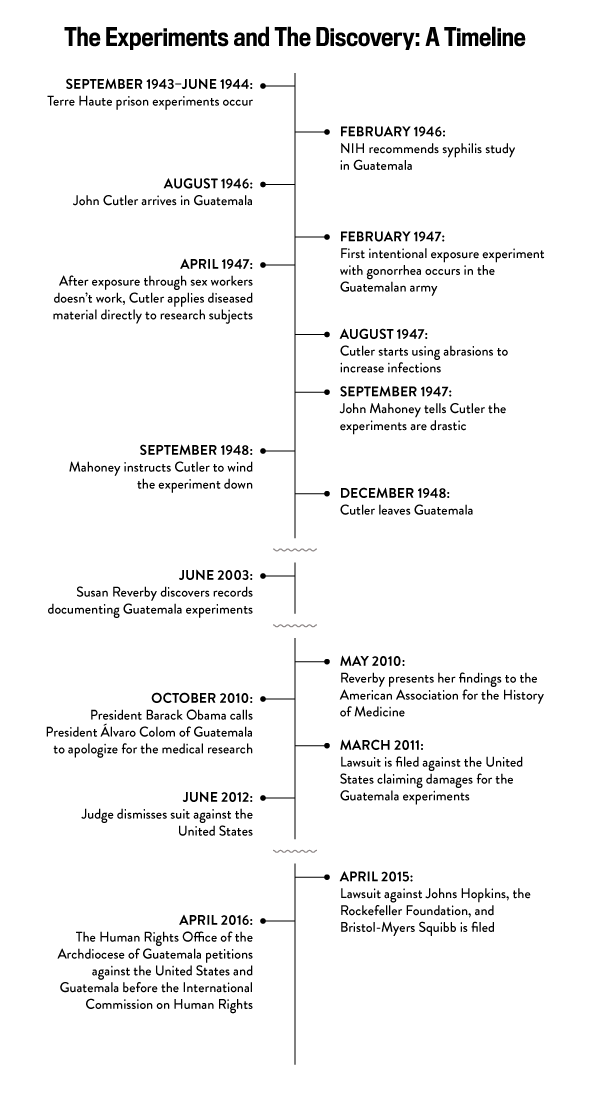
A federal judge in Maryland said Johns Hopkins University, pharmaceutical company Bristol-Myers Squibb and the Rockefeller Foundation must face a $1 billion lawsuit over their roles in a top-secret program in the 1940s ran by the US government that injected hundreds of Guatemalans with syphilis, reported Reuters.
Several doctors from Hopkins and the Rockefeller Foundation were involved in the government program, as well as four executives from Bristol-Myers’ predecessors, Bristol Laboratories and the Squibb Institute, according to the complaint.
“The overall purpose of the study was to test out whether antibiotics could be used to prevent syphilis and other sexually transmitted infections before its symptoms appeared in someone who was exposed to them. So the researchers initially recruited sex workers with syphilis to have sex with prisoners.
Later on, they directly infected volunteers without their informed consent or knowledge of what was really happening.
In many cases, though, infected people were left untreated. In total, 83 deaths were linked to the study, though it’s not entirely certain whether the infections were the direct cause (That said, late-stage syphilis is often fatal),” reported Gizmodo.
In a January 3 decision, US District Judge Theodore Chuang denied the defendants’ argument that a recent Supreme Court decision shielding foreign businesses from lawsuits in US courts over human rights abuses abroad also applied to domestic firms absent Congressional authorization.
Chuang’s decision was a big victory for 444 victims (all mostly dead) and their relatives suing over the experiment.

The experiment was concealed until a professor at Wellesley College in Massachusetts discovered the files in 2010.
Chuang said lawsuits against US businesses under the federal Alien Tort Statute were not “categorically foreclosed” by the Supreme Court decision last April 24 in Jesner v Arab Bank Plc covering foreign corporations.
He said the “need for judicial caution” was “markedly reduced” where US businesses were defendants because there was no significant threat of diplomatic tensions from foreign governments.
The federal judge said letting the Guatemala case proceed would “promote harmony” by giving foreign plaintiffs a chance at a remedy in the American court system.
“Johns Hopkins expresses profound sympathy for individuals and families impacted by the deplorable 1940s syphilis study funded and conducted by the U.S. government in Guatemala,” the university said in a statement. “We respect the legal process, and we will continue to vigorously defend the lawsuit.”
Hopkins, Bristol-Myers, and the Rockefeller Foundation and their lawyers did not immediately respond to Reuters‘ requests for a statement.
Paul Bekman, a lawyer for the 444 Guatemalans, said his clients would proceed with discovery, including the exchange of decades-old documents.
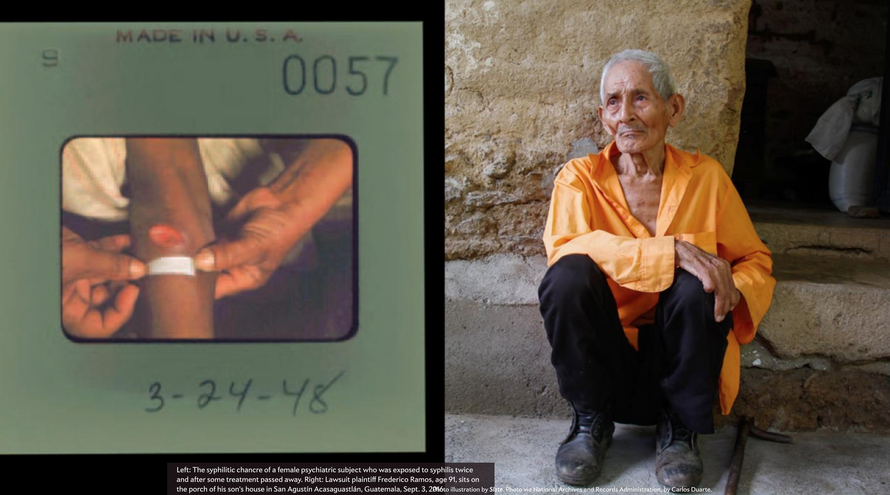
An earlier decision found no statute of limitations arguments could be made since the plaintiffs did not learn about the experiment until 2010.
Infecting Guatemalan hookers with sexually transmitted diseases was one of many eugenic programs the US government conducted during the 1940s and Post–World War II era. Now the academic institutions and corporations involved in these horrific government experiments are being served with massive lawsuits that could be financially devastating.
Two Diseases Big Pharma Hopes You Get in 2014
By Martha Rosenberg | Dissident Voice | February 6, 2014
Most of us have our guard up when it comes to direct-to-consumer drug advertising. We know the butterflies, sunsets and puppies in the TV ads are designed to distract us from words like “blood clot”, “heart attack”, “stroke”, “seizure”, “life-threatening allergic reaction” and “death.” We are aware that more than half the ads tells us why we don’t want to ask our doctor about the new wonder drug.
Unbranded advertising, however, is much more insidious. Instead of selling a drug, it sells the disease driving the drug sales and sometimes doesn’t mention the drug at all.
Unbranded advertising often appears to be from the CDC and can even run free as a public service announcement thanks to its apparently altruistic message. The hallmark of unbranded advertising is it calls the disease it is hawking (whether depression, bipolar disorder or restless legs) “under diagnosed,” and “underreported” and cites “barriers” and “stigmas to treatment” which of course means sales. Sometimes it calls the disease a “silent killer” to scare people who think they’re fine. (Before drug advertising it was the opposite: the medical establishment said you were probably fine despite how you felt.)
Do You Have Non-24 Hour Sleep Wake Disorder?
“You can’t see me because of radio… and I can’t see you because I’m totally blind.” So begins a high saturation radio campaign that launched late last year to boost “awareness” of an obscure circadian rhythm disorder called Non-24 Hour Sleep Wake Disorder in typical unbranded drug marketing fashion. How obscure is Non-24? There are only 146 citations for the disorder in the entire US National Library of Medicine. By comparison, there are 8,463 citations for the plague.
The narrator says his blindness doesn’t “hold me back” but he often “struggles to keep up” because he is not “sleeping through the night.” He then says, “Sound familiar? You’re not alone!” The ads are from the Washington, DC-based drug company Vanda whose drug candidate for people who are blind and have Non-24, Hetlioz, received an FDA Advisory Committee recommendation for approval in January which means the FDA will likely approve it. Hetlioz is said to be chemically related to the sleeping pill marketed as Rozerem (Ramelteon).
Of course the development of “orphan drugs” that treat such a small part of the population (like the blind) they are not commercially viable is laudable. But orphan drugs are not usually accompanied by multimillion dollar ad campaigns and slick websites. (Nor are important messages for the blind usually on the Web.) Is there something disingenuous going on? For example, under “Could You Have Non-24?” on the site, it says “The key symptoms of Non-24 are the inability to sleep or stay asleep and a powerful urge to sleep during the day” with no mention of blindness. A longer list on the site mentions waking up “groggy,” being “less productive than usual at work or at school,” relationships that “are strained,” “sluggishness and forgetfulness,” mood that is “affected” and frustration “because no one seems to understand what you’re going through,” and also doesn’t mention blindness.
You don’t have to be a cynic to wonder if the new disease–and the drug that will treat it if approved– is actually being marketed to the hundreds of millions of adults with sleep problems. When I called the phone number and asked the “health educator” if I could have Non-24 even though I am not blind, I was told “you don’t have to be blind to have Non-24″ though it is more common in blind people. When I asked if there was a pill I could take if I had symptoms, my educator said he was unable to answer that because, “I am not a doctor,” but promised to send me more information.
Getting a pill approved by the FDA so it can be legally sold and then widening its apparent uses through ad campaigns is called off-label marketing and it is strictly illegal. Since the lab tests and clinical trials that would establish safety for a new condition haven’t been done, patients are guinea pigs. Almost all recent major settlements with drug companies revolve around off-label marketing of drugs including Johnson & Johnson’s Risperdal, Bristol-Myers Squibb’s Abilify, Eli Lilly’s Zyprexa, GlaxoSmithKline’s Paxil, Pfizer’s Neurontin, Bextra, Geodon and Lyrica, AstraZeneca’s Seroquel, Ortho-McNeil-Janssen’s Topamax, Forest Laboratories’ Celexa and Lexapro and Abbott’s Depakote.
“15,000 elderly people in nursing homes [are] dying each year from the off-label use of anti-psychotic medications,” testified FDA drug reviewer David Graham, MD, during congressional hearings, adding that Pharma is “laughing all the way to the bank.”
Selling the “disease” of Non-24 is reminiscent of the campaign to sell Shift Work Sleep Disorder two years ago. “Do you work a nontraditional work schedule?” asked the ads for Cephalon’s stimulant Nuvigil . “Do you struggle to stay awake?” You may be suffering from Shift Work Sleep Disorder! Soon there was an unbranded website called the Wake-Up Squad to sell the disease without ever mentioning the drug. The Wake-Up Squad is “on a mission to lead the fight against Shift Work Disorder,” it announced, offering facts and myths about the disease and a big red headline that asked “Are You At Risk?”
Both the hypothyroidism and Non-24 unbranded ad campaigns are so general, they apply to almost everyone. They bring us closer to what comedian Chris Rock predicted drug advertising would become, in a TV special: “Do you fall asleep at night and wake up in the morning? You may be suffering from…”.
Do You Have Undiagnosed Hypothyroidism?
From Joan Lunden and Mike Piazza who sold Claritin to Dorothy Hamill and Bruce Jenner who sold Vioxx, celebrity drug advertising is often phenomenally successful. No wonder the drug company AbbVie has selected actress Sofia Vergara to lead its hypothyroidism campaign.
“Emmy-nominated actress Sofia Vergara is helping to raise awareness about the importance of diagnosing and treating hypothyroidism,” read a press release last spring, “a thyroid condition that affects millions of Americans.” Her campaign, called “Follow the Script,” funded by AbbVie, “aims to educate individuals with hypothyroidism about the importance of being consistent with the treatment their doctor prescribes, and provides a ‘script’ to ensure they consistently receive the medication prescribed by their doctor when they visit the pharmacy.” Ka-ching.
While hypothyroidism certainly exists (as do other kinds of thyroid disorders) Vergara’s campaign capitalizes on the gray areas in its diagnosis and the well-documented human tendency to self-diagnosis, by planting fear and doubt. For example, the AbbVie press release says, “Thyroid conditions affect an estimated 30 million individuals in the U.S.” and “one in every eight women will develop a thyroid condition in her lifetime.” Yet Harvard Health Publications at Harvard Medical School places the figure at 12 million.
Commensurate with unbranded advertising a.k.a. “disease mongering” Vergara’s “Follow the Script” campaign website features “interactive polls, symptom and treatment information,” “stories and videos from other individuals with hypothyroidism,” and a chance for visitors to “share their own experiences.” In classic unbranded pill marketing, the site also provides “helpful ‘scripts’ for speaking with your doctor and pharmacist”–so patients don’t go all the way to the doctor and fail to ring the cash register.
AbbVie was formed in early 2013 when Abbott, located near Chicago, split into two companies, with AbbVie to concentrate on the blockbuster Humira, which made it $2 billion in one quarter of 2013. But Synthroid, the thyroid supplement drug behind Vergara’s campaign, enjoyed almost 25 percent growth last year and accounted for $153 million during the same quarter. Synthroid is the nation’s leading thyroid supplement drug despite going off patent decade ago, because it is widely perceived as more stable than competitor and generic versions of the drug.
Lest no potential customers miss the fact that hypothyroidism is an under diagnosed, under-reported major health problem with barriers and stigmas to treatment, a “National Academy of Hypothyroidism” also now exists. The first thing visitors to the site will see is a slide of an overweight woman on a scale with the brazen headline “Is Your Thyroid Making You Fat”? Visitors will also learn that hypothyroidism could be causing their stress, depression and chronic pain just as lack of hormones or antidepressants caused them ten years ago. There is even a perk for sufferers of hypothyroidism. The Academy tells them how to apply for disability benefits for their hypothyroidism. Just trying to help!

Featured Video
America Racing to Strategic Defeat in Iran
or go to
Aletho News Archives – Video-Images
From the Archives
An Expert Military Analysis of War with China
Actually, None is Necessary
By Fred Reed • Unz Review • December 13, 2020
The Correlation of Armed Forces: U.S. goods and services trade with China totaled an estimated $634.8 billion in 2019. Exports were $163.0 billion; imports were $471.8 billion. The U.S. goods and services trade deficit with China was $308.8 billion in 2019. Trade in services with China (exports and imports) totaled an estimated $76.7 billion in 2019. Services exports were $56.5 billion; services imports were $20.1 billion. The U.S. services trade surplus with China was $36.4 billion in 2019.
There is talk within the Washingtoniat of a possible war with China. Steve Bannon, who apparently was dropped on his head as a child, actually favors such a war. We hear the usual shoo-the-boobs alarm about how the Chinese are doing something terrible and we must gird our loins and American values and show them what for, bow wow, woof. The danger is that the current game of who-blinks-first in Asian waters might actually provoke a shooting war. You know the kind of thing: One warship refuses to get out of the way of another, a collision ensues, some retard lieutenant who signed up on waivers opens fire, and we’re off and running. It is not a good idea to let children play with matches.
The said war is discussed either in emotional terms by idiots or in purely naval terms by those familiar with such things, so we hear of the First Island Chain and the Second Island Chain and whose missiles against the other’s missiles and so on. This would be appropriate if we were fighting World War Two again. Which we aren’t. Let’s take a quick-and-dirty look at how such a war might go.
To begin the war, America would overestimate itself and underestimate China. This is doctrine in the Pentagon. … continue
Blog Roll
 Aletho News
- Poland rules out sending Patriot missiles to US/Israel amid war on Iran
- Tehran approves new Hormuz plan with major restrictions
- No Threat Can Force Iran’s Surrender /Trita Parsi & Lt Cl Daniel Davis
- UK’s New Pandemic Plan Would Turn Big Tech Into a Mass Location Tracking Network
- Growing insecurity, soaring prices fuel protests in north as regime bans evacuation: Sources
- Iran denies responsibility for ‘depraved’ attack on Kuwait desalination plant
- Bring The Troops Back. End This War Now!
- Can we please stop calling Israel the ‘only democracy in the Middle East’ now?
- US should start removing its troops from Germany, proposes AfD co-leader Chrupalla
- Iran Red Crescent: 600 educational centers attacked in US-Israeli ‘war crimes’
- If Americans Knew
- The Line Between Affinity and Conspiracy
- As Iran targets US military bases, will they be relocated to Israel? Not a ceasefire Day 171
- Will Trump Go Kamikaze?
- Is the University of Florida Shutting Down College Republicans over Israel Criticism?
- Jewish extremist arrested over alleged plot to firebomb Palestinian activist Nerdeen Kiswani’s home
- More than half of Palestinian child detainees have no charges
- The More Murderous Israel Gets, The More We Hear About “Antisemitism”
- Land Day and the Palestinian struggle after 30 months of genocide
- The Iran War Is About Palestine
- Israeli soldiers echo settler ideology, talk of revenge after targeting Palestinians and detaining CNN crew in the West Bank
- No Tricks Zone
- New Study Finds Warming Saves Lives…Cold Temperatures 12 Times More Deadly Than Excess Heat
- German Science Blog Accuses PIK Climate Institute Of Hallucinating Climate Tipping Points
- Devastating Assessment Of Comirnaty Vaccine By Former Senior Pfizer Europe Toxicologist
- New Study: CO2 Is ‘Effectively Negligible’ As An Explanatory Climate Change Factor Since 2000
- Former Pfizer Toxicologist Dr. Helmut Sterz Tells Bundestag Hearing Pfizer Vaccine Should Have Never Been Approved
- Energy Expert: Germany’s Nuclear Phaseout Was A “500 Billion Euro Mistake”
- New Research: South Australia’s Mid-Holocene Sea Surface Temperatures Were 4°C Warmer Than Today
- Storing Green Energy To Last Germany 10 Days Would Require A 60-Million Tonne Battery
- New Studies: UK Sea Levels Were 4 Meters Higher Than Today During The Mid-Holocene
- Destructive Green New Deal: German Energy And Metal Group Warns Of Drastic Crisis
 Aletho News