Venezuela Suspends CNN en Espanol Due to Threat to ‘Peace, Democratic Stability’
Sputnik – 16.02.2017
 Venezuela’s National Telecommunications Commission (CONATEL) has suspended the operation of the CNN en Espanol news channel on the territory of the country, the commission said in a statement.
The suspension of CNN en Espanol, which allegedly generates “a climate of intolerance” and threatens “the peace and democratic stability” of the people of Venezuela is effective immediately starting on Wednesday on all “national territory,” CONATEL said on Wednesday, accusing the channel of “aggression” against Venezuela.
The commission also urged other media actors to offer the Venezuelan people timely and impartial information that corresponds to the values of the Venezuelan society and fulfills the constitutional guarantees of free communication.
The Venezuelan government reportedly launched an investigation into the work of the CNN en Espanol channel in August 2015, accusing it of spreading false reports on violence in the country.
The news comes as US President Donald Trump called CNN “fake news” and refused to give their reporter a question at a press event after the broadcaster had helped to fuel false rumors he had hired prostitutes at a Moscow hotel and engaged in lewd behavior.
The network that markets itself as centrist relief from hyper-partisan outlets Fox and MSNBC aired an uncorroborated, unverified report alleging that Russians had obtained compromising information on Trump. The report originated from a former UK intelligence operative, according to CNN and BuzzFeed, the first outlets to publicize the reports.
Following the national and global embarrassment, CNN desperately tried to distance itself from BuzzFeed. CNN claims their reporting of Russia potentially having compromising financial or personal information against Trump is part of its honorable First Amendment duty of “informing the people of the inner workings of their government.”
Russian tech expert sues BuzzFeed over Trump dossier ‘fake news’
RT | February 5, 2017
BuzzFeed and members of its team have been sued by Russian tech expert Aleksey Gubarev over false accusations contained in an unverified story and a dossier that claimed to expose links between President Trump and the Russian government.
Two lawsuits, filed in the state of Florida and in London, UK, seek to collect financial and reputation damages over fake news reporting contained in BuzzFeed’s January 10 story that has been viewed nearly 6 million times.
The story, based on a 35-page dossier, accused XBT Holdings, owned by Russian tech wiz Aleksey Gubarev, of “using botnets and porn traffic to transmit viruses, plant bugs, steal data and conduct ‘altering operations’ against the Democratic Party leadership” in 2016.
To protect his brand from these allegations, which Gubarev called “fake news” in an interview with RT, his team of lawyers filed a defamation suit against Buzzfeed and Buzzfeed’s editor-in-chief, Ben Smith, in Broward County Circuit Court in Fort Lauderdale, Florida, where XBT’s subsidiary Webzilla is headquartered.
“We were shocked to see our good name wrongly included and published in this unsubstantiated report,” a statement by XBT said. “The dossier included libelous, unverified and untrue allegations regarding XBT, Webzilla, and Gubarev. The lawsuits seek yet undetermined compensation for the damages suffered by XBT, Webzilla, and Gubarev as the result of the publication of the dossier.”
The Florida lawsuit has called the January 10 report “one of the most reckless and irresponsible moments in modern ‘journalism,’” because the publication failed to check the facts.
When it published the dossier, BuzzFeed itself noted that it contained errors and that its claims had not been verified. Yet the report was made public.
“Buzzfeed and Smith published these allegations without having even taken the most basic step of contacting the Plaintiffs to ask if the allegations had any merit,” Florida’s court document reads.
Following the publication of the scandalous report, Donald Trump slammed BuzzFeed’s story a “failing pile of garbage.” The information in the report was “false and fake and never happened,” Trump said.
Moscow called the report a “fabrication” not even worth being discussed, with President Vladimir Putin later saying that authors behind the paper “have no moral scruples.”
On Friday, BuzzFeed spokesman Matt Mittenthal told McClatchy that they have issued an apology to Gubarev and that they “have redacted Mr. Gubarev’s name from the published dossier, and apologize for including it.”
Besides going after Buzzfeed and its editor-in-chief, Gubarev also decided to sue the alleged author of the report. Former MI6 spy Christopher Steele and his company Orbis Business Intelligence in London were named as defendants in the UK suit.
Following the publications of Steele’s invention, Gubarev “has found his personal and professional reputation in tatters,” XBT pointed out, adding that his family’s security was compromised as well.
In an interview with RT, Gubarev who has not lived in Russia for 15 years, called the report “fake news,” saying that he still does “not understand why our names [are] there and we do not understand a reason for this report in general.” The XBT chief said he and his company “are open for any investigation” to prove the falseness of these claims, and adds that they have “nothing to hide.”
Trump: ‘Russia Has Never Tried to Use Leverage Over Me’
Sputnik – 11.01.2017
On Tuesday, the CNN and the BuzzFeed news website reported on memos, compiled by an unnamed former intelligence officer from the United Kingdom, which allege that Trump has been groomed and supported by Russian intelligence for at least five years.
The documents, which BuzzFeed admitted were unsupported and which the CNN did not fully disclose due to lack of independent corroboration, also alleged that Russian intelligence had compromising material on Trump related to his “unorthodox behavior” during a visit to Russia.
Donald Trump denied that Russia has ever attempted to use leverage over him and reiterated that he has no business links with Russia.
Trump further pointed out that the “leak” should not have emerged in the mainstream media at all.
Russia has no compromising info on Trump or Clinton, report is ‘total bluff’ – Kremlin
RT | January 11, 2017
Moscow says documents alleging that Russia has compromising information on Donald Trump are a fabrication and a “total bluff.” Russia has never gathered information of this kind on either the US president-elect, or his former rival, Hillary Clinton.
“The Kremlin has no compromising information on Trump. This report does not correspond to reality and is nothing but an absolute fiction,” the deputy head of the Russian presidential administration, Dmitry Peskov, told reporters on Wednesday.
“This is a total bluff, an absolute fabrication, complete nonsense,” he said.
He reiterated that there is no compromising information on Hillary Clinton either, and that the Russian authorities do not accumulate this type of information.
“Of course not. The Kremlin does not collect compromising information. The Kremlin [and] the Russian president are engaged in building relationships with our foreign partners, firstly – in the interests of the Russian Federation, in the interests of the Russian people, secondly – in the interests of global peace, stability and security,” Peskov said.
On Tuesday, CNN published an article stating that US intelligence handed over a two-page synopsis of classified documents, which included claims that Russian operatives have compromising personal and financial information about Trump, to the president-elect and US President Barack Obama.
The information was included as an annex to a classified version of the report prepared by the Office of the Director of National Intelligence on Russian influence on the 2016 presidential election, according to CNN.
Buzzfeed picked up the story, publishing the entire dossier purportedly “prepared for political opponents of Trump by a person who is understood to be a former British intelligence agent.”
The most appalling part of the dossier was the claim that Donald Trump has “personal obsessions and sexual perversion,” including graphic sex acts, and a report that the president-elect once had Russian prostitutes urinate on each other in a hotel bed that the Obamas previously shared.
Apart from sex orgies, the dossier also suggests Russian officials offered the Republican real estate magnate lucrative deals in order to win influence over him ahead of the election.
The story exploded on Twitter with the hashtag #GoldenShowers shooting up the trending charts.
Later in the day, however, an anonymous member of the chatboard on 4chan posted a refutation of the now infamous “golden showers” story, calling it a hoax and “fanfiction.” He or she claimed that several months ago, the story was sent to Republican political strategist Rick Wilson, who proceeded to send it to the CIA, which then put it in their official classified intelligence report on the election.
Moscow considers the scandal a clear attempt to damage relations with Washington and the president-elect personally.
“This is an obvious attempt to harm our bilateral relations,” Peskov said.
“Pulp fiction, that’s what it is called in English. Of course, probably the best way to react would be accordingly – with a certain sense of humor.”
“Although there is a downside – indeed, there are those who are stirring up the hysteria, who go out of their way to maintain this state of a witch-hunt,” he added.
Congressmen Seek To Lift Propaganda Ban
By Amy Sly | BuzzFeed | May 18, 2012
An amendment that would legalize the use of propaganda on American audiences is being inserted into the latest defense authorization bill, BuzzFeed has learned.
The amendment would “strike the current ban on domestic dissemination” of propaganda material produced by the State Department and the Pentagon, according to the summary of the law at the House Rules Committee’s official website.
The tweak to the bill would essentially neutralize two previous acts—the Smith-Mundt Act of 1948 and Foreign Relations Authorization Act in 1987—that had been passed to protect U.S. audiences from our own government’s misinformation campaigns.
The bi-partisan amendment is sponsored by Rep. Mark Thornberry from Texas and Rep. Adam Smith from Washington State.
In a little noticed press release earlier in the week — buried beneath the other high-profile issues in the $642 billion defense bill, including indefinite detention and a prohibition on gay marriage at military installations — Thornberry warned that in the Internet age, the current law “ties the hands of America’s diplomatic officials, military, and others by inhibiting our ability to effectively communicate in a credible way.”
The bill’s supporters say the informational material used overseas to influence foreign audiences is too good to not use at home, and that new techniques are needed to help fight Al-Qaeda, a borderless enemy whose own propaganda reaches Americans online.
Critics of the bill say there are ways to keep America safe without turning the massive information operations apparatus within the federal government against American citizens.
“Clearly there are ways to modernize for the information age without wiping out the distinction between domestic and foreign audiences,” says Michael Shank, Vice President at the Institute for Economics and Peace in Washington D.C. “That Reps Adam Smith and Mac Thornberry want to roll back protections put in place by previously-serving Senators – who, in their wisdom, ensured limits to taxpayer–funded propaganda promulgated by the US government – is disconcerting and dangerous.”
“I just don’t want to see something this significant – whatever the pros and cons – go through without anyone noticing,” says one source on the Hill, who is disturbed by the law. According to this source, the law would allow “U.S. propaganda intended to influence foreign audiences to be used on the domestic population.”
The new law would give sweeping powers to the State Department and Pentagon to push television, radio, newspaper, and social media onto the U.S. public. “It removes the protection for Americans,” says a Pentagon official who is concerned about the law. “It removes oversight from the people who want to put out this information. There are no checks and balances. No one knows if the information is accurate, partially accurate, or entirely false.”
According to this official, “senior public affairs” officers within the Department of Defense want to “get rid” of Smith-Mundt and other restrictions because it prevents information activities designed to prop up unpopular policies—like the wars in Iraq and Afghanistan.
Critics of the bill point out that there was rigorous debate when Smith Mundt passed, and the fact that this is so “under the radar,” as the Pentagon official puts it, is troubling.
The Pentagon spends some $4 billion a year to sway public opinion already, and it was recently revealed by USA Today the DoD spent $202 million on information operations in Iraq and Afghanistan last year.
In an apparent retaliation to the USA Today investigation, the two reporters working on the story appear to have been targeted by Pentagon contractors, who created fake Facebook pages and Twitter accounts in an attempt to discredit them.
(In fact, a second amendment to the authorization bill — in reaction to the USA Today report — seeks cuts to the Pentagon’s propaganda budget overseas, while this amendment will make it easier for the propaganda to spread at home.)
The evaporation of Smith-Mundt and other provisions to safeguard U.S. citizens against government propaganda campaigns is part of a larger trend within the diplomatic and military establishment.
In December, the Pentagon used software to monitor the Twitter debate over Bradley Manning’s pre-trial hearing; another program being developed by the Pentagon would design software to create “sock puppets” on social media outlets; and, last year, General William Caldwell, deployed an information operations team under his command that had been trained in psychological operations to influence visiting American politicians to Kabul.
The upshot, at times, is the Department of Defense using the same tools on U.S. citizens as on a hostile, foreign, population.
A U.S. Army whistleblower, Lieutenant Col. Daniel Davis, noted recently in his scathing 84-page unclassified report on Afghanistan that there remains a strong desire within the defense establishment “to enable Public Affairs officers to influence American public opinion when they deem it necessary to “protect a key friendly center of gravity, to wit US national will,” he wrote, quoting a well-regarded general.
The defense bill passed the House Friday afternoon.
Related articles
Featured Video
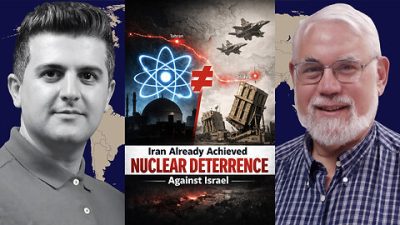
Prof. Ted Postol: Iran Already Achieved Nuclear Deterrence Against Israel
or go to
Aletho News Archives – Video-Images
From the Archives
How the occupied mentality syndrome works
Saudi Arabia on the American chessboard – Part 3
By B. J. Sabri | American Herald Tribune | June 27, 2016
Read part 2: “The occupied mentality Syndrome“
Previously I argued whether Saudi Arabia’s repeated involvements in U.S. interventions and wars stem from free national will or in response to a specific condition. For starters, in Saudi Arabia there is no national will. In Saudi Arabia, the national will is the will of the Al Saud clan. Still, when a major Arab state allies itself with a superpower that committed unspeakable crimes against humanity in almost every Arab country, then something is wrong. This fact alone should compel us to examine the U.S.-Saudi relation for one exceptional reason. As a result of the U.S.-Saudi wars, hundreds of thousands of people in Afghanistan, Iraq, Iran, Libya, Syria, Yemen, and Somalia have lost their lives. Millions became displaced in their own homelands. And millions more rendered refugees.
Attributing the Saudi policies to the bonds of “partnership” with the U.S. is frivolous. There are no bonds between these two thugs except those of business, military deals, secret plots, and wars. Proving this point, bonds such as these have no space for the American and Saudi peoples to share significant cultural or societal exchanges. If partnership is not the reason for the Saudi contribution to the U.S. strategy of empire and imperialism, then another reason must exist.
This leads to three possibilities. … continue
Blog Roll
 Aletho News
- NIAID/NIH and USDA Fund Bioengineered Chimeric Influenza Viruses Built Using Pandemic H1N1 Components: Journal ‘Science Advances’
- Hezbollah hits Israeli warship off Lebanon’s coast, sets it aflame
- Iran slams US strikes on B1 bridge, Mahshahr petrochemical plants as ‘blatant acts of state terrorism’
- In letter to UN chief, Araghchi warns of dire consequences of US-Israeli attacks on Iran’s nuclear facilities
- Why the CIA conspiracy to invade Iran with Kurdish militias failed
- Why Are Upbeat US Claims About Mission to Rescue Pilot ‘Highly Questionable’?
- Aircraft destroyed during US ‘rescue’ of downed F-15 pilot cost more than $100 million each
- Washington University removes professor who condemned US-Israeli war on Iran
- Russia Warns of Retaliation as UK Authorizes Seizure of Vessels
- Serbia thwarts plot to bomb Russia-Hungary gas pipeline – Vucic
- If Americans Knew
- In Iran, Israel-US take aim at “reason, research, and freedom of thought” – Daily Update
- US loses planes over Iran, Israel downgrades Lebanon war goals – Daily Update
- Israel Is Blocking Palestinians from Easter at Church Where Jesus Resurrected
- Plot to assassinate Palestinian activist follows harassment campaign promoted by Zionist groups and elected officials
- Prominent New York synagogue hosts presentation on why U.S. Jews should support the ethnic cleansing of Gaza
- Tapper vs. Piker: Is the CNN Anchor Auditioning for David Ellison?
- Shouldn’t Democrats Be Able to Condemn Genocide?
- Israel-US kill negotiators, destroy civilian structures, but Iran’s military capabilities still largely intact – Daily Update
- ‘War crime’: Global condemnation as Israeli ministers celebrate death penalty law targeting Palestinian prisoners
- 7 Ways Israel Is Turning Lebanon Into Gaza
- No Tricks Zone
- An Inconvenient Tree: Uncovered In Alps… Europe Much Warmer Than Today 6000 Years Ago
- New Study Reports A 60% Slowdown In Greenland’s Ice Loss Rate In The Last Decade
- Low Intensity Tornado Wrecks Major Solar Farm, Creating A Potential Toxic Dump
- New Study Finds Warming Saves Lives…Cold Temperatures 12 Times More Deadly Than Excess Heat
- German Science Blog Accuses PIK Climate Institute Of Hallucinating Climate Tipping Points
- Devastating Assessment Of Comirnaty Vaccine By Former Senior Pfizer Europe Toxicologist
- New Study: CO2 Is ‘Effectively Negligible’ As An Explanatory Climate Change Factor Since 2000
- Former Pfizer Toxicologist Dr. Helmut Sterz Tells Bundestag Hearing Pfizer Vaccine Should Have Never Been Approved
- Energy Expert: Germany’s Nuclear Phaseout Was A “500 Billion Euro Mistake”
- New Research: South Australia’s Mid-Holocene Sea Surface Temperatures Were 4°C Warmer Than Today
 Aletho News