By voiding Hawaii’s law, the court signaled that the fear of deepfakes cannot outweigh the freedom to mock those in power.
A federal judge has struck down Hawaii’s election “deepfake” law, calling it a violation of free political expression. In The Babylon Bee v. Lopez, U.S. District Judge Shanlyn Park ruled that Act 191, which criminalized or penalized the use of certain AI-generated media during elections, infringed on both the First and Fourteenth Amendments.
The ruling permanently blocks enforcement of the statute, which had been set to take effect on February 1. The satirical website The Babylon Bee and Hawaii-based content creator Dawn O’Brien brought the case, arguing that the law threatened parody and political commentary protected by the Constitution.
We obtained a copy of the order for you here.
Act 191 would have made it a crime to share or repost “materially deceptive media” without a disclaimer during election periods if that material could be seen as damaging a candidate’s reputation or influencing voters. It covered any AI-altered image, video, or audio that showed a person “engaging in speech or conduct in which the depicted individual did not in fact engage” and that a “reasonable viewer or listener” might believe was authentic.
Although broadcasters and most online intermediaries were exempt unless they helped create or knowingly distributed such content, the law still applied broadly to individual users and content creators.
Judge Park’s opinion dismantled the measure, describing it as a direct restriction on political speech and creative expression. “Political speech, of course, is at the core of what the First Amendment is designed to protect,” she wrote. The court found that compelled disclaimers would distort the meaning and effect of satirical speech.
“As plaintiffs point out, Act 191’s compelled disclaimer would impermissibly alter the content, intended effect, and message of their speech,” Park wrote. “Put simply, a mandatory disclaimer for parody or satire would kill the joke.”
Supporters of Act 191, including Governor Josh Green, had described it as a necessary defense against misinformation in the era of artificial intelligence. Lawmakers said AI-generated videos or fake audio could mislead voters or inflame tensions during elections. The measure passed with near-unanimous legislative approval in 2024, but the court found that the government’s aims did not justify limiting protected expression.
Judge Park said Hawaii failed to show that its goals could not be achieved through less restrictive means. She pointed to digital literacy education, voluntary counter-speech campaigns, and enforcement of existing laws on defamation and fraud as viable alternatives.
“[State defendants] have failed to demonstrate that existing laws are insufficient to deal with the purported risk of political deepfakes and generative AI technologies on the integrity of Hawaii elections,” she wrote.
The opinion also criticized the statute for vague and subjective language that left unclear what conduct was prohibited. The law’s focus on “risk” rather than concrete harm, Park explained, gave enforcement agencies too much discretion and created a danger of selective prosecution based on viewpoint.
“Rather than require actual harm, Act 191 imposes a risk assessment based solely on the value judgments and biases of the enforcement agency, which could conceivably lead to discretionary and targeted enforcement that discriminates based on viewpoint,” she wrote.
“This decision marks yet another victory for the First Amendment and for anyone who values the right to speak freely on political matters without government interference,” said The Babylon Bee CEO Seth Dillon. “We are grateful to Alliance Defending Freedom for representing us as we continue to challenge laws that treat comedy like a crime.”
By striking down Act 191, the court reaffirmed that satire and parody remain protected forms of political participation even when created with new technology. The decision prevents Hawaii from regulating humor, commentary, or artistic expression under the guise of protecting election integrity.
The ruling leaves Hawaii without a dedicated deepfake election statute as the 2026 campaign season approaches and may influence similar efforts in other states that are considering restrictions on AI-generated political media.
SIMILAR: Judge Strikes Down California Deepfake Censorship Law
February 4, 2026
Posted by aletho |
Civil Liberties, Full Spectrum Dominance | California, Hawaii, United States |
Leave a comment
California lawmakers quietly gutted budget bill AB144 on the last day of session and slipped in sweeping changes to vaccine and parental rights. Amy Bohn of PERK explains how the law signed by Governor Gavin Newsom bypassed the legislative process, hands vaccine decision-making power to the California Department of Public Health, revives HPV recommendations, expands liability protections, and sidelines future ACIP and CDC recommendations.
September 20, 2025
Posted by aletho |
Video | California, Human rights, United States |
Leave a comment
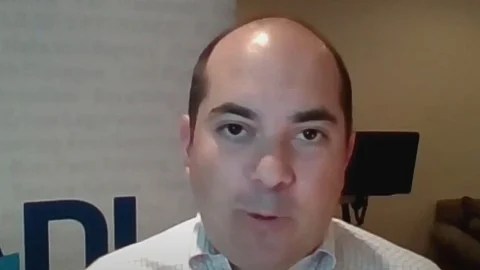
The Anti-Defamation League’s David Goldenberg is demanding a broad overhaul of how speech is governed on the internet, calling for both government intervention and intensified corporate censorship. In a recent appearance, Goldenberg, who heads the ADL’s Midwest operations, expressed frustration over what he sees as declining efforts by tech firms to suppress online content he deems hateful.
Citing Meta’s rollback of its fact-checking team in the United States, he argued that platforms must be forced to take action. “You have a platform like Meta that just gutted its entire fact-checking department… And so what we need to do is we need to apply pressure in a real significant way on tech platforms that they have a responsibility, that they have an absolute responsibility to check and remove hateful speech that is insightful.(sic)”
Goldenberg advocated not just for voluntary moderation, but for legislative and regulatory measures, both at the federal and state level, that would compel platforms to act as speech enforcers. He pointed to efforts in states like California as examples of where local governments are already testing such models.
His concern centers around what he perceives as an ecosystem of radicalization made easily accessible by today’s digital infrastructure. He warned that extremist ideologies no longer require obscure forums or dark web communities to spread. “It used to be you had to fight going into the deep dark web… Now… it’s easier and easier to be exposed in the mainstream,” he said.
Framing the online environment as a catalyst for violence, Goldenberg argued that free access to controversial viewpoints must be curtailed. He called for social media companies to take a stronger stance by excluding users whose views fall outside accepted boundaries, adding that regulation should enforce this responsibility.
He zeroed in on Section 230 of the Communications Decency Act, a critical piece of legislation that shields platforms from legal liability over user-posted content. “Congress needs to amend Section 230, which provides immunity to tech platforms right now for what happens,” Goldenberg said. He dismissed comparisons between modern platforms and telecommunications companies, referencing past remarks by Facebook’s Mark Zuckerberg about how phone providers were not liable for threats made over calls. Goldenberg’s view was blunt: “These tech platforms are not guaranteed under the Constitution. They’re just not.”
From his perspective, private companies should be free to “kick people off, to de-platform,” and if they fail to do so voluntarily, they must be pressured or regulated into compliance. He described accountability as a mechanism for shaping behavior, stating, “Accountability is a tool that can be incredibly effective in changing behavior.”
The position advanced by Goldenberg reflects a broader effort to blur the line between public authority and private platform control. By demanding that companies mirror the goals of activists and lawmakers, his approach seeks to institutionalize censorship and convert digital platforms into engines of ideological enforcement.
But such a vision comes with consequences. By urging the dismantling of legal protections and empowering both governments and corporations to decide which views should be silenced, this framework sets the stage for widespread suppression. What’s framed as protection from harm becomes a template for restricting dissent, and narrowing the range of permissible thought in public discourse.
May 27, 2025
Posted by aletho |
Civil Liberties, Full Spectrum Dominance | California, Human rights, Israel, Palestine, United States, Zionism |
Leave a comment
Governor Gavin Newsom (D-CA) shifted focus to combating “misinformation” during a briefing on the devastating wildfires ravaging Los Angeles. The session included President Joe Biden, Vice President Kamala Harris, and Los Angeles Mayor Karen Bass, with Newsom and Bass addressing concerns over their administration’s preparedness as the fires claimed at least 10 lives and destroyed countless homes.
Conducted in a hybrid format, the meeting saw Biden and Harris in the Oval Office while Newsom, Bass, and FEMA Administrator Deanne Criswell joined via video call. Newsom described the unprecedented destruction fueled by what he called “hurricane-force winds, the likes of which we’ve never imagined in our lifetime.” He then pivoted to warn about the spread of misinformation related to the disaster.
“We’ve got to deal with this misinformation. There were hurricane-force winds of mis- and disinformation — lies,” Newsom stated. “People want to divide this country, and we’re gonna have to address that as well. And it breaks my heart, as people are suffering and struggling that we’re up against those hurricane force forces as well.”
Expressing frustration, Newsom added, “And that’s just a point of personal privilege that I share that with you because it infects real people that are out there. People I meet every single day, people the mayor has been meeting with, and they’re having conversations that are not the typical conversations you’d have at this time be in. And you wonder where this stuff comes from, and it’s very damaging as well, but we’re here to get the job done; to be here for folks to focus.”
California Governor Gavin Newsom is facing a barrage of criticism from various quarters, highlighting several contentious issues, particularly related to a lack of preparation for combatting wildfires under his governance.
Newsom’s timing is ironic as Biden has been criticized heavily today for his previous attempts to police “misinformation” online.
On the same day Newsom appealed to Biden about online “misinformation,” Meta CEO Mark Zuckerberg disclosed on The Joe Rogan Experience that the Biden administration pressured his company to censor COVID-19-related content, including truthful criticism of the vaccines.
Zuckerberg revealed that officials would “call up our team and scream at them and curse” over certain posts. A notable incident involved demands to remove a meme.
Zuckerberg emphasized, “Basically, it just got to this point where we were like no, we’re not going to take down things that are true. That’s ridiculous.”
This revelation, although not new, highlights a troubling pattern of government pressure on tech companies to suppress speech, raising serious concerns about censorship and the erosion of free expression. As wildfires continue to devastate communities, efforts to control narratives under the guise of combating misinformation risk silencing legitimate discourse. The public’s right to transparent and open communication remains more critical than ever in times of national emergencies.
January 11, 2025
Posted by aletho |
Civil Liberties, Full Spectrum Dominance, Progressive Hypocrite | California, Human rights, United States |
Leave a comment
A new legal challenge, spearheaded by Alliance Defending Freedom attorneys, has thrust the state of California into the spotlight once again over allegations of infringing on free speech rights. This federal lawsuit, lodged on behalf of video-sharing platform Rumble, argues that two new California statutes unconstitutionally restrict users’ ability to share political content online.
We obtained a copy of the lawsuit for you here.
Under these controversial laws, specifically AB 2655, platforms like Rumble are coerced into policing and removing content that the state deems harmful. These regulations have been criticized for compelling platforms to censor speech, thereby becoming unwilling agents of government censorship. According to ADF Senior Counsel Phil Sechler, in a press release sent to Reclaim The Net, “California’s war against political speech is censorship, plain and simple. We can’t trust the government to decide what is true in our online political debates.” He emphasized the importance of platforms like Rumble, which resist governmental pressures to curtail free expression.
The complaint details the operational challenges: “The law forces Rumble to undertake the impossible task of training its team to recognize and then remove and label content based on inherently vague and subjective terms on which even pollsters and government officials cannot agree, such as what content may be ‘likely to harm’ electoral prospects or may likely undermine confidence in an election.”
Further, Rumble contends that AB 2655 oversteps by altering and compelling the speech of private entities, thus infringing upon their rights to free speech. It argues that neither the Constitution nor Section 230 of the Communications Decency Act allows California to “alter and compel Rumble’s speech while also mandating that it censor its users’ speech. As such, this Court should enjoin AB 2655 and declare it unlawful.”
The genesis of these laws can be traced back to July when a parody video targeting Vice President Kamala Harris spurred Gov. Gavin Newsom to advocate for making such content illegal. Subsequently, the California Legislature expedited the passage of these laws, which Gov. Newsom signed into action on September 17. AB 2839, in particular, imposes vague criteria to penalize individuals for sharing content related to elections, such as political memes and parodies.
In the detailed legal challenge, attorneys argue that AB 2655 forces Rumble to alter its own speech and police its users’ speech based on arbitrary criteria that even experts cannot uniformly interpret. The law imposes a duty on Rumble to train staff to identify and mitigate content that could potentially damage a politician’s reputation or undermine confidence in elections — criteria seen as inherently subjective.
This lawsuit follows a similar successful defense of free speech by ADF on behalf of The Babylon Bee and attorney Kelly Chang Rickert, leading to a temporary halt on enforcing AB 2839 against them while their legal battle continues.
November 28, 2024
Posted by aletho |
Civil Liberties, Full Spectrum Dominance | California, Gavin Newsom, Human rights, United States |
Leave a comment
Elon Musk’s X has initiated legal action against the state of California, seeking to prevent the enforcement of a new statute mandating that major online platforms either remove or label deepfake election-related content, as a violation of the First Amendment, particularly for its impact on memes and satire.
We obtained a copy of the lawsuit for you here.
The legal challenge was presented in a federal court earlier this week, focusing on legislation designed to curb the influence of artificially altered videos, images, and sounds, collectively known as deepfakes. The legislation is poised to become effective on January 1.
The law in question, Assembly Bill 2655, was signed as part of California’s efforts to safeguard the integrity of the upcoming 2024 US presidential election from the risks posed by technological manipulation. Governor Gavin Newsom, having clashed with Musk following Musk’s sharing of a parody video of Vice President Kamala Harris, aims to mitigate these alleged risks.
The legislation has sparked concerns among tech giants and free speech supporters, who understand that it suppresses user engagement and stifles free discourse and satire under the guise of curbing misinformation.
X’s legal challenge raises critical questions about the boundaries of free speech in the digital age, arguing that the law violates the First Amendment and Section 230 of the Communications Decency Act, which protects platforms from liability for user-generated content. By requiring platforms like X to preemptively label or remove content, the law, as X contends, “will inevitably result in the censorship of wide swaths of valuable political speech and commentary.”
“AB 2655 requires large online platforms like X, the platform owned by X Corp. (collectively, the ‘covered platforms’), to remove and alter (with a label) — and to create a reporting mechanism to facilitate the removal and alteration of — certain content about candidates for elective office, elections officials, and elected officials, of which the State of California disapproves and deems to be ‘materially deceptive,’” the complaint reads.
The complaint also states that “this system will inevitably result in the censorship of wide swaths of valuable political speech and commentary and will limit the type of ‘uninhibited, robust, and wide-open’ ‘debate on public issues’ that core First Amendment protections are designed to ensure.”
It goes on to say, “AB 2655 imposes a prior restraint on speech because it provides, pursuant to Sections 20515(b) and 20516, expedited causes of action under Section 35 of the California Code of Civil Procedure through which political speech can be enjoined before there occurs a ‘final judicial determination’ that the ‘speech is unprotected.’”
Finally, it states, “AB 2655 violates the First Amendment of the United States Constitution and Article I, Section 2, of the California Constitution, both facially and as-applied to X Corp. AB 2655 imposes a prior restraint on speech that forces platforms to censor only certain election-related content of which the State of California disapproves and also directly and impermissibly interferes with the constitutionally protected content-moderation speech rights of covered social media platforms, like X.”
The implications for satire are particularly severe, as highlighted by the case of the parody Harris videos. Although Governor Newsom’s office insists that AB 2655, also known as the Defending Democracy from Deepfake Deception Act of 2024, says it exempts parody and satire, the practical application of this exemption is murky at best since it was a parody video that was the impetus for Governor Newsom to push for the introduction of the law.
November 17, 2024
Posted by aletho |
Civil Liberties, Full Spectrum Dominance | California, Human rights, United States |
Leave a comment
My regular readers know that I have often referred to the huge size of floating wind turbine assemblies. They are much bigger than fixed offshore wind turbine assemblies because there is a big float attached. This makes floating wind far more expensive than fixed wind, which is already far more expensive than reliable fuel-fired electric power.
Simple physics says that if you want to put a 2,000-ton generator on top of a 500-foot tower with three 300-foot wings attached on a boat and have it still stand up in hurricane-force winds, it will have to be a mighty big boat.
Happily, Philip Lewis from strategic analyst Intelatus has put some numbers on this nonsense in Offshore Engineer.
See https://www.oedigital.com/news/504812-addressing-the-challenges-of-developing-floating-wind-at-scale
And https://www.oedigital.com/news/514835-preparing-for-floating-wind-leveraging-the-oil-gas-supply-chain
Of course, these are just estimates based on proposed designs, not measurements. Keep in mind that no one, anywhere, has ever built one of these Titanic monsters. Governments are setting huge targets for a technology that does not exist.
Based on UK permit applications, we are looking at a colossal individual floater footprint of around 160,000 square feet. That is roughly three football fields, so a mighty big float. And the UK does not get anything like hurricane-force winds. Maybe 100 mph, but never 160.
Weight-wise, Lewis suggests up to 5,000 tons of steel or 20,000 tons of concrete per float. Mind you, 5,000 tons of steel floaters will not keep 2,000 tons on a tall pole upright. These designs are what are called “semi-submersible”. This means the Titanic float is something like half full of water. There is enough air to float it but also a lot of water to hopefully weigh it down. I have yet to see the math on all this and have my doubts about its viability, but this is what is reported.
Of course, these huge floaters make floating wind power extremely expensive. The guess is at least three times as much as the already ridiculously expensive fixed-bottom offshore wind power. It could be a lot more.
These enormous numbers are based on 15 MW turbines, which are the biggest built today, although none has yet been installed and operational offshore. But bigger are coming with 18 MW on order and 20 MW advertised. Floater size and weight scale exponentially with turbine weight and height, so the above huge numbers may actually be quite small.
As an engineer, I would build a few of these monster floating assemblies and run them through a few hurricanes to see how they did, especially if they survived. Of course, the hell-bent Biden folks and green States are doing nothing like that.
For example, next month, Biden’s Bureau of Ocean Energy Management is selling 15,000 MW of floating wind leases in the Gulf of Maine. California just announced a 25,000 MW floating wind target with 5,000 MW already leased by BOEM.
Just to play with numbers, this 40,000 MW of floaters would take just under 3,000 of these monster 15 MW floaters. In addition to filling up a lot of surface ocean, each has to be anchored to the sea floor with at least three mooring cables, more likely around eight each. Plus each has a live wire cable transmitting its energy output.
Lewis says the depths involved are like this: “In the U.S., the first commercial-scale projects will be off California (500-1,300 meters). Future activity is planned off Oregon (550-1,500 meters), the Gulf of Maine (190-300 meters), and the Central Atlantic (over 2,000 meters).” A mile is roughly 1,600 meters.
So we have many millions of feet of mooring cables and hot wires filling the ocean between the floaters and the sea floor. This is a whole new form of harassment that needs to be authorized (or not) under the Marine Mammal Protection Act.
What is really funny is I see no plans for building these thousands of Titanic floating wind assemblies. I recently pointed out that the Biden Transportation Dept was illegally diverting almost a billion dollars to build floating wind fabrication facilities in Maine and California. But, neither facility design has what it would take to actually make this stupendous semi-submersible junk, starting with dry docks.
I strongly suggest we put a big hold on leasing and funding floating wind technology. Let’s first see how and if it works and at what cost.
July 22, 2024
Posted by aletho |
Environmentalism | California, United States |
Leave a comment
Covid has claimed about 105,000* lives in the state since 2020.
In that same time period, 82,000 more Californians died from everything else than is typical.
Adjusted for the decline in population, that non-Covid “excess death” figure becomes even more concerning as the state has seen its population drop to about the same it was in 2015.
In 2015 – obviously there was no Covid – 260,000 of the then 39 million Californians died. In 2023, not including November and December, 240,000 people died not from Covid (6,000 additional people died of Covid.).
Extrapolating the year-to-date figures for 2023 creates a final year-end figure of 280,000 – 20,000 more people than died in 2015. That’s a non-Covid, population-neutral jump of 8%.
In other words, despite the protestations of certain officials, the state’s death rate has NOT returned to “pre-Covid” levels – in 2019 the year before the pandemic, 270,000 people died with a population at least 400,000 greater than today.
Why?
Dr. Bob Wachter, medical chair at UC-SF and ardent supporter of tight pandemic restrictions, did not respond to an email from the Globe (away for work the auto-response said) but he did recently tell the San Jose Mercury News that in “(T)he last three years, not only were there a lot of deaths from Covid, there were a lot of additional deaths from non-Covid causes, which are probably attributable to people not receiving the medical care that they normally would have received’ when ERs were overflowing with Covid patients (note – the truth of that ER assertion has not been verified), Wachter noted.”
In other words, the pandemicist Wachter admitted the pandemic response itself at least contributed to a significant number of excess deaths, a fact that was aggressively and roundly denied and – if mentioned – led to censoring and societal ostracization (and in many cases job losses) by the powers that be during the pandemic.
A second admission along these lines was recently made by former National Institutes of Health Director Dr. Francis Collins – Tony Fauci’s boss.
In this video clip, Collins – who once called for a “devastating takedown” (see above) of those who questioned the hard pandemic response – said his DC and public health blinders, well, blinded him to the problems his pandemic response caused and is still causing:
If you’re a public health person, and you’re trying to make a decision, you have this very narrow view of what the right decision is, and that is something that will save a life. Doesn’t matter what else happens, so you attach infinite value to stopping the disease and saving a life. You attach zero value to whether this actually totally disrupts people’s lives, ruins the economy, and has many kids kept out of school in a way that they never might quite recover from. Collateral damage. This is a public health mindset. And I think a lot of us involved in trying to make those recommendations had that mindset — and that was really unfortunate, it’s another mistake we made.
(You can see Collins for yourself here.)
Needless to say there is not even a half-hearted apology involved. And Collins is/was wrong in the approach to public health he apparently subscribes to, as throughout modern history it has involved a cost/benefit analysis and a weighing of the impact on society.
Public health, practiced properly, does not – and never before has – attached “zero value to whether this actually totally disrupts people’s lives, ruins the economy, and has many kids kept out of school in a way that they never might quite recover from.”
“We had the exact wrong people in charge at the exact wrong time,” said Stanford professor of medicine (and one of the people Collins tried to “take down”) Dr. Jay Bhattacharya. “Their decisions were myopically deadly.”
To remind Collins of the ramifications of his decision beyond the excess deaths:
Massive educational degradation. Economic devastation, by both the lockdowns and now the continuing fiscal nightmare plaguing the nation caused by continuing federal overreaction. The critical damage to the development of children’s social skills through hyper-masking and fear-mongering. The obliteration of the public’s trust in institutions due to their incompetence and deceitfulness during the pandemic. The massive erosion of civil liberties. The direct hardships caused by vaccination mandates, etc. under the false claim of helping one’s neighbor. The explosion of the growth of Wall Street built on the destruction of Main Street.
The clear separation of society into two camps – those who could easily prosper during the pandemic and those whose lives were completely upended. The demonization of anyone daring to ask even basic questions about the efficacy of the response, be it the vaccines themselves, the closure of public schools, the origin of the virus, or the absurdity of the useless public theater that made up much of the program. The fissures created throughout society and the harm caused by guillotined relationships amongst family and friends.
The slanders and career chaos endured by prominent actual experts (see the Great Barrington Declaration, co-authored by Bhattacharya) and just plain reasonable people like Jennifer Sey for daring to offer different approaches; approaches – such as focusing on the most vulnerable – that had been tested and succeeded before.
Nationally, pandemic “all-cause” deaths spiked, for obvious reasons, but they remain stubbornly higher than normal to this day.
There could be mitigating factors to California’s numbers, specifically the issue of drug overdoses. Since 2018, the overdose death rate has doubled. The last overall figures available are from 2021 which showed 10,901 people dying of an overdose. While not specifically broken out for which drug, the vast majority are from opioid overdoses and the vast majority of those involve fentanyl. In 2022, there were 7,385 opioid-related deaths with 6,473 of those involving fentanyl.
But the overdose death increase would account for only about 25% of the total increase in “excess deaths,” meaning it has an impact but cannot explain the whole story.
There is also the issue of homeless deaths. Homeless people die at a far higher rate than the rest of the population and California has had a burgeoning homeless population for the last few years, despite the money being spent on the issue. However, at least a portion of that increase can – as with overdoses – be attributed to fentanyl and is therefore difficult to separate out as discrete numbers.
Those two increases, however, may explain the fact that the “all-cause” excess death rate for those in the 25-to-44 year age bracket (it has comparatively higher overdose death and homelessness figures) have remained – except for two very recent weeks – above the typical historical range.
The increase in overdose (and alcohol-related deaths) has been directly tied to the pandemic response previously. In California, there were about 3,500 more alcohol-related deaths during the pandemic response than before: 5,600 in 2019 (pre-pandemic,) 6,100 in 2020, 7,100 in 2021, 6,600 in 2022, and 2023 is on pace to see about 6,000.
That still leaves roughly half of the excess deaths unaccounted for, raising questions about the safety of the Covid shot (a shot, not a vaccine) itself. The CDC lists 640 deaths in California directly from the shot and an increase in “adverse effects” from the shot compared to many other actual vaccines. The Covid shot “ adverse” rate was one in a thousand, while, for comparison, it’s about one in a million for the polio vaccine.
That means a person was more than 9 times as likely to die from the Covid shot as any other vaccine and 6.5 times to be injured by it in some fashion.
Still that is – according to state figures – not enough to explain the increase.
There are three other issues to note: first, many of the counting questions around dying “from” Covid versus “with” Covid remain, meaning the Covid death numbers could be elevated if the “withs” are lumped in with the “froms.”
Second, there is the simmering matter of “iatrogenic” deaths – i.e. deaths caused by the treatment. Early on in the pandemic response, a push was made to “ventilate” patients mechanically. From the above article (no caps in the original):
here’s an unsettling comparison: in NYC area, mortality rate for all COV ICU patients was 78%. in stockholm, the SURVIVAL rate was over 80%. this is a staggering variance. the key difference: ventilators. NYC used them on 85% of patients, sweden used them sparingly
Combined with the placing of Covid patients in nursing homes, the number of actual “only” or “natural” (for lack of a better term) Covid deaths, again, may be elevated.
The state Department of Public Health declined to comment on the matter.
Which brings us back to the Wachter and Collins oblique, nearly accidental admissions that the response itself may have caused significant and ongoing damage across numerous personal and public sectors.
Comparing California to other states also shows a concerning trend, specifically when considering the aftermath of the pandemic response. While increasing in population, for example, Florida’s excess death rate increase was/is lower than California’s as was its Covid death rate, a fact Gov. Gavin Newsom has been lying about for years.
During the pandemic itself, the nation saw an “all-cause” – including Covid – death rate increase of about 16% above normal. Using that metric, as it is clear the response itself had knock-on effects – California’s was 19.4% and Florida’s was 16.7%, despite the wildly different pandemic responses.
Imagine, if you will, you own a baseball team and you have two shortstops, one that earns $10 million a year and one that earns $1 million. And it turns out that both are equally talented – errors, batting stats, etc. – and that maybe the cheaper one is actually even a bit more talented it turns out. Which shortstop was the better deal for the team? The less expensive one, of course.
That is an apt analogy for states choosing how to respond to the pandemic – Florida cut the $10 million player while California kept him. In other words, the two states got the same-ish performance but at wildly different societal costs.
This pattern seems to be borne out by many of the figures. Obviously, various states that ended up lower than the national average took very different approaches: North Dakota and New Jersey saw roughly the same all-cause mortality numbers, as did Washington (state) and South Dakota.
This is true on the “high side” as well: California and Montana, Oregon and Arkansas are two pairs that had similar numbers with different approaches.
All of this raises a deeper question in that there appears to be little if any direct causative resultant difference between a draconian pandemic response and a softer touch.
And that should not at all be the case: the lockdowns, the masks, the shots, the social distancing, the closing of schools and stores and churches and parks, and everything else should have produced a clear and distinct difference – if the pandemicists were right.
If they were right, the difference in results should be stark and obvious to the naked eye. Miami should look like Genoa after the plague ships arrived while Los Angeles should seem like a New Eden. If the much-maligned Swedish “soft” model was as dangerous as the pandemicists said, Stockholm should be a ghost town.
But that’s not at all true and that’s why the pandemicists are/were so evidently wrong: the harshest methods had little impact on the end results.
While there were differences between states, they cannot necessarily be directly tied to a specific policy construct (save Hawaii, which can be discounted considering their isolated geography). Hard or soft pandemic response, in the long run it didn’t seem to matter much in the Covid death tolls.
Where it did – and still does – matter is the immediate and long-lasting damage the more tyrannical responses had on society as a whole.
And – if California’s excess death numbers are an indicator – the pandemic response itself is still killing people.
And that, too, definitely shouldn’t be happening – if the pandemicists were right.
It is even more problematic – and even more ethically abhorrent – if the Covid death figures are inflated; the number of Covid deaths of 105,000 is only about 20% higher than the other non-Covid excess death figure of 82,000.
In other words, the net “from Covid” deaths may not be terribly different from the “from the Covid response” death count.
And that possibility is the most terrifying of all.
* All numbers used are rounded for simplicity and come from state and federal sources.
Thomas Buckley is the former mayor of Lake Elsinore, Cal. and a former newspaper reporter. He is currently the operator of a small communications and planning consultancy.
January 3, 2024
Posted by aletho |
Civil Liberties, Full Spectrum Dominance, Science and Pseudo-Science | California, COVID-19 Vaccine, Gavin Newsom, Human rights, United States |
Leave a comment
A lawsuit has been amended in California against this US state’s medical boards’ “misinformation powers” – based on a law that is soon to be repealed, and which critics – some of them legal plaintiffs – say allowed the government to prevent them from practicing medicine, the way they were trained to do.
It was one of the rules, called Assembly Bill 2098 (AB 2098), introduced to keep medical professionals in check, in case they felt like speaking their minds freely as insights into Covid were developing.
And since the world has now moved on to other crises, the “forgotten pandemic” censorship laws are getting “quietly” repealed.
But not really, the plaintiffs in this case claim – because of the nature of the repeal of the short-lived AB 2098, made null-and-void on September 14 via Senate Bill 815 (SB 815). California Senator Newsom got to sign all three documents.
However, the repeal – which will not be in effect before the start of 2024 – at the same time incorporates Democrat member of California Assembly Evan Low’s provision that doctors who get accused of “misinformation” can still be punished – “held accountable” – regardless of whether the controversial law was actually applicable.
“The Medical Board of California will continue to maintain the authority to hold medical licensees accountable for deviating from the standard of care and misinforming their patients about COVID-19 treatments,” Low said.
How in the world is this political, ideological, pre-election, and legal gymnastics even supposed to work?
The lawsuit against the bill, Hoang et al. v. Bonta et al., has the plaintiffs represented by California attorney Richard Jaffe.
He had this to say: “Because of the repeal of AB 2098, and the board’s position that it can still sanction the speech targeted by the soon-to-be-repealed law, we are pivoting in our lawsuit and arguing to the judge that they can’t do it under their general statute either because the speech does not change just because the legal theory/statute changes.”
The world clearly has moved to other crises – but it seems, not the California Democrats. And so the plaintiffs in the lawsuit’s amended format are also asking to add more to their ranks. One of the original ones is Children’s Health Defense (CHD).
However absurd the “standard of care” argument that supersedes a law may seem to a layperson, Jaffe is obviously taking it seriously.
The court will hear the arguments related to this new development on November 13.
October 12, 2023
Posted by aletho |
Civil Liberties, Full Spectrum Dominance, Science and Pseudo-Science | California, Covid-19, COVID-19 Vaccine, Human rights, United States |
Leave a comment
The California Department of Health (CDPH) is threatening to restrict funding for the more than 600 schools being audited by the state because they reported more than 10% of their kindergarten or seventh grade students were not fully vaccinated last year or because they failed to file a vaccination report with the state, EdSource reported.
“Schools found to have improperly admitted students who have (not) met immunization requirements may be subject to loss of average daily attendance payments for those children,” the CDPH said in an email.
CDPH posted the audit list, which included 449 schools with kindergarten students, 175 schools with seventh graders, 56 schools with both grades and 39 schools that had not filed a vaccination report.
California students are considered “not fully vaccinated” if they have not provided proper immunization records to their school, if they don’t have the vaccinations required by the school system or if they have been admitted to schools conditionally while they are in the process of finishing their school-mandated vaccine series, according to the state audit guide.
If a student behind on the vaccine requirements has not received a first dose of a required vaccine within 10 days of starting school and a second dose of a required vaccine within four months of the first dose, the student must be excluded from school.
The audit guide indicates that to determine whether schools have students behind schedule, auditors check whether kindergarteners have two doses of a varicella (chickenpox) vaccine and two doses of a measles vaccine and whether seventh graders have two doses of varicella and one dose of Tdap (tetanus, diphtheria and pertussis), their sixth pertussis-containing vaccine.
Oakland Unified School District, with 48 elementary schools and eight of the seventh grade schools on the list, has the highest number of schools being audited. Los Angeles Unified has 75 of its non-charter schools on the audit list, while Pomona Unified has 13, San Francisco Unified 14 and San Juan Unified in Sacramento County, eight.
The vaccination audit has been occurring in public schools only since the 2021-2022 school year, when 45 schools made the list.
Schools in violation of the state law must submit corrected attendance reports that reflect the reduction in average daily attendance cited in the audit finding, which will likely reduce their funding, according to CDPH spokesperson Scott Roark.
Sensationalizing vaccine numbers
Over the last year, legacy media organizations such as The New York Times, CNN and The Washington Post along with public health officials across the country have been sounding the alarm over decreasing rates of routine vaccination among U.S. children.
But even at its lowest point — the 2020-2021 school year — the kindergarten vaccination rate only dipped to 94% from 95%, according to the Centers for Disease Control and Prevention (CDC).
Experts cited in these articles blame the drop on pandemic disruptions to U.S. healthcare, “vaccine hesitancy” about the COVID-19 vaccine bleeding over into other vaccines and the availability of non-medical vaccine exemptions.
EdSource reported that vaccination rates in California, which had been climbing since the state eliminated the personal belief exemption in 2015, plunged after schools closed during the COVID-19 pandemic.
Thousands of children in California were unable to start the school year in 2022 because they were behind on their vaccinations, it reported.
But EdSource also reported that the kindergarten vaccination rate was 92.8% in 2020 — down from 95% in 2018 — but went back up to 94% in 2021.
Substack writer and analyst Karl Kanthak told The Defender these numbers are being used to create the appearance of a crisis, which he says is part of a broader attack on vaccine exemptions.
Between the National Childhood Vaccine Injury Act of 1986, which gave vaccine makers immunity for any injuries caused by vaccines, the 1994 Vaccines for Children Program that provides no-cost vaccines to low-income children and the school mandates, Big Pharma has achieved nearly full saturation of the pediatric market, Kanthak said.
But that’s not the case for the adult market, where vaccine uptake is much lower without mandates. “Eliminating school exemptions for children is a major step in making exemptions unavailable for adults,” Kanthak said.
Because the child market was already saturated, “they [pharma] couldn’t use low rates as an excuse” to argue legislators should eliminate access to exemptions, he said.
That has resulted in the misrepresentation of vaccine rates, where it is made to seem as if high numbers of children are missing required vaccines, raising the specter of disease outbreaks, said Kanthak, which is apparent in the audit and EdSource’s reporting on it and most media headlines about vaccines.
“So you get policy influenced by headline,” he said.
Audit numbers are ‘misleading’
For example, Kanthak told The Defender that many shots required for kindergarteners, including the last doses of the MMR, varicella, DTaP and polio can be administered between the ages of 4 and 6, according to the CDC’s childhood immunization schedule.
Doctors or parents planning to complete the course of vaccination may choose to do so later in that time period for any number of reasons related to the child’s development, health condition or previous vaccination.
Because children start kindergarten in that window, many children being counted as unvaccinated are on the CDC schedule, even if they are not yet “fully vaccinated,” he said.
“To count conditional admissions as unvaccinated is misleading,” he said.
“The tracking systems are not designed to track students who are simply still ‘in process’ with pediatricians who are following the medical guidelines and individualizing care to the patient,” he said.
Instead, “The schools are measuring too-young students, too early in the school year, for injections they are not overdue for until second grade.”
Kanthak said the audit numbers themselves are misleading because some of the schools listed have very few students and some of those students are missing something marginal.
“The first two schools on the list have only two seventh grade students, therefore one student missing their Tdap — sixth pertussis injection — gives those schools an only ‘50% fully vaccinated’ measurement.”
The audit lists a significant number of schools with very few students. Sixty-three elementary schools and 53 seventh grade schools have fewer than nine students. Thirty-five elementary schools and nineteen seventh grade schools have fewer than 20 students.
In those schools, having one or two students not “fully vaccinated” places them on the audit list, but it is a small number of overall students. Using a percentage in any population less than 100 is misleading, he added, because each student comprises more than 1% of the total.
Kanthak added that such reports typically exclude these small numbers to protect children’s confidentiality.
Only 61 of the kindergarten schools on the list and 46 of the seventh grade schools on the list had more than 100 students.
Overall, the total number of kindergarten students in the more than 500 schools on the audit list comprises about 5.3% of the total 471,379 kindergarten students in California.
California-based attorney Brad Hakala of the Hakala Law Group told The Defender, “In a state that has in excess of 39 million residents … it seems like statistics are consistently being skewed” to favor the position that dropping vaccine rates is a crisis.
“With that said, and in light of parental rights which more and more parents are attempting to exercise,” he added:
“There certainly seems to be a growing concern among parents … who are avoiding or delaying the vaccination of their child/children for one reason or another. …
“Some parents are not fundamentally opposed to the traditional vaccines being administered to their children, but they just want to space them out in frequency, timing, and volume, especially in light of ongoing concerns of vaccine injuries. Others want a more holistic approach and are opposed to their children having any vaccinations.
“I believe that the pandemic, the emergency use authorized (EUA) shots and the ever-increasing negative health ramifications that we are seeing arise from these untested medications that are still under EUA, are highlighting the already growing concern that parents are having with injecting their children with more and more medications.
“From the requisite number of injections and vaccines significantly increasing over the years, to the way that society has been treated by varying governmental entities since 2020, parents just want to protect their children and have the absolute right to protect their children, and I personally think that is having an overall effect on the current vaccination rates within California.”
Vaccine rights attorney Greg Glaser told The Defender he thinks the rising concerns parents have with vaccination has the potential to pose a real threat to Big Pharma, which is “calling the shots” on these audits to make sure vaccination rates don’t drop at all.
“The pharmaceutical companies fund the politicians and then the politicians put pressure on the Department of Public Health,” he said. “The first lever they’re able to control is these public health officers and public health departments.”
“Vaccine hesitancy scares Big Pharma,” he said.
He added:
“Pharma is very sensitive to trends. They can see when parents are no longer choosing vaccination and they know what a trend looks like. …
“Pharma’s clearly seeing a trend that less parents are vaccinating. So they’re using their levers of power in public health departments to audit schools to stop that trend.”
Ad hoc immunization clinics raise concerns
EdSource reports that schools and districts trying to increase vaccination rates are sending vaccination guidelines home with students and health services teams and reaching out to families to let them know where to get vaccinated.
Also, some schools or school districts are offering immunization clinics.
For example, Sacramento City Unified School District offers weekly free vaccination clinics at its district enrollment center. And Gateway Community Charters offered a clinic at its middle school.
The presence of such clinics also raises concerns, Glaser said, specially given the recent push by the U.S. federal government to rapidly expand the use of school-based health centers across the country.
This push has some critics concerned children will receive, or be pressured into receiving, unnecessary or unwanted medical interventions without their parents’ knowledge or consent.
Dr. Mary Kelly Sutton — an integrative physician whose license was revoked by the California medical board for writing eight vaccine medical exemptions the board alleges were not fully compliant with CDC regulations — told The Defender she saw the clinics as a way to pressure families and children into vaccination in ways that could violate their rights.
“Schools are not medical offices, and the records on vaccines are not complete, so some children will get vaccines they do not need,” she said.
Sutton added, “Many questions must be asked: how is permission obtained? How is the vaccination transmitted to the child’s chart in the real doctor’s office? How are adverse events handled medically and financially?”
Vaccine exemptions: ‘as California goes, so goes the nation’
California has been ground zero for struggles over vaccine mandates for over a decade.
In 2012, California passed Assembly Bill 2109 to restrict the ability of parents to have their children exempted from vaccine requirements based on personal beliefs.
Where before parents simply had to write a letter stating their personal beliefs, the new law stipulated that parents seeking exemption for their children must get the signature of an authorized healthcare provider stating that parents had received information about the risks of not being vaccinated.
In 2015, allegedly prompted by a measles outbreak at Disneyland — that the media blamed on unvaccinated children — and low vaccination rates in many California schools, Democratic State Sens. Richard Pan and Ben Allen authored a controversial bill, Senate Bill 277, that eliminated the “personal belief exemption” altogether.
Pan’s SB 277 passed in 2015 and Gov. Jerry Brown signed it into law, despite significant pushback from parents, hundreds of whom protested at the legislature.
During the COVID-19 pandemic, Pan also proposed legislation mandating the COVID-19 vaccine for all school children, with no personal or religious exemptions permitted — before the full approval of the vaccine for children by the U.S. Food and Drug Administration. The bill did not pass.
He also wrote a 2021 op-ed in The Washington Post likening “anti-vaccine extremism” to domestic terrorism.
The passage of SB 277 in 2015 made California the first state in nearly 35 years to eliminate nonmedical vaccine exemptions. Beginning in January 2016, nonmedical vaccine exemptions were no longer accepted for school entry.
After that, school vaccination rates rose. Parents who don’t want to vaccinate their children can obtain a medical exemption, have their children enrolled in special education services or homeschool them.
California has one of the highest rates of homeschooled children in the country, and those numbers are higher post-pandemic.
But California has also taken an aggressive stance against medical exemptions.
Doctors providing medical exemptions have been investigated by the California Medical Board, with many of them having their licenses revoked.
All medical exemptions for California children issued on or after Jan. 1, 2021, are subject to review by CDPH and can be revoked. All exemptions are automatically reviewed if they are submitted in a school where the immunization rate is below 95% if the school has failed to report its vaccination rates, if the physician writing the exemption has written more than five medical exemptions in a calendar year or if CDPH deems it necessary to protect public health.
As a result, Glaser said, “the number of medical exemptions in California has slowed to a trickle.” And those rules, he said, were put in place by Pan “for political reasons, not for reasons of public health.”
Glaser also said he thought these audits were happening in California because “as California goes, so goes the nation.”
He added, “When something is tried and succeeds in California, according to the metrics set by those in power, then they have a justification to roll it out across the nation.”
Hakala thinks that since 2020, “an increasing portion of the population is growing in their concern for what messages and information the government is putting forth, and the laws that are being passed that affect parental rights, especially in California.”
He added:
“I think there’s a growing distrust for the veracity of the information that is being disseminated, and on the basis of the laws that are being passed — and not just by one side of the political aisle or the other — but all information being disseminated seems to be increasingly scrutinized, as society’s skepticism continues to grow.
“This, in part, I think has a direct effect on the numbers that the audit report exemplifies.
“The public’s trust seems to be consistently evaporating, and it is my belief that a significant amount of work will need to be done to repair that trust.”
Brenda Baletti Ph.D. is a reporter for The Defender. She wrote and taught about capitalism and politics for 10 years in the writing program at Duke University. She holds a Ph.D. in human geography from the University of North Carolina at Chapel Hill and a master’s from the University of Texas at Austin.
This article was originally published by The Defender — Children’s Health Defense’s News & Views Website under Creative Commons license CC BY-NC-ND 4.0. Please consider subscribing to The Defender or donating to Children’s Health Defense.
September 15, 2023
Posted by aletho |
Civil Liberties | California, Human rights, United States |
Leave a comment
In a statement made today on a case concerning Title 42, Supreme Court Justice Neil Gorsuch breaks the painful silence on the topic of lockdowns and mandates, and presents the truth with startling clarity. Importantly, this statement from the Supreme Court comes as so many other agencies, intellectuals, and journalists are in flat-out denial of what happened to the country.
[T]he history of this case illustrates the disruption we have experienced over the last three years in how our laws are made and our freedoms observed.
Since March 2020, we may have experienced the greatest intrusions on civil liberties in the peacetime history of this country. Executive officials across the country issued emergency decrees on a breathtaking scale. Governors and local leaders imposed lockdown orders forcing people to remain in their homes.
They shuttered businesses and schools public and private. They closed churches even as they allowed casinos and other favored businesses to carry on. They threatened violators not just with civil penalties but with criminal sanctions too.
They surveilled church parking lots, recorded license plates, and issued notices warning that attendance at even outdoor services satisfying all state social-distancing and hygiene requirements could amount to criminal conduct. They divided cities and neighborhoods into color-coded zones, forced individuals to fight for their freedoms in court on emergency timetables, and then changed their color-coded schemes when defeat in court seemed imminent.
Federal executive officials entered the act too. Not just with emergency immigration decrees. They deployed a public-health agency to regulate landlord-tenant relations nationwide.They used a workplace-safety agency to issue a vaccination mandate for most working Americans.
They threatened to fire noncompliant employees, and warned that service members who refused to vaccinate might face dishonorable discharge and confinement. Along the way, it seems federal officials may have pressured social-media companies to suppress information about pandemic policies with which they disagreed.
While executive officials issued new emergency decrees at a furious pace, state legislatures and Congress—the bodies normally responsible for adopting our laws—too often fell silent. Courts bound to protect our liberties addressed a few—but hardly all—of the intrusions upon them. In some cases, like this one, courts even allowed themselves to be used to perpetuate emergency public-health decrees for collateral purposes, itself a form of emergency-lawmaking-by-litigation.
Doubtless, many lessons can be learned from this chapter in our history, and hopefully serious efforts will be made to study it. One lesson might be this: Fear and the desire for safety are powerful forces. They can lead to a clamor for action—almost any action—as long as someone does something to address a perceived threat.
A leader or an expert who claims he can fix everything, if only we do exactly as he says, can prove an irresistible force. We do not need to confront a bayonet, we need only a nudge, before we willingly abandon the nicety of requiring laws to be adopted by our legislative representatives and accept rule by decree. Along the way, we will accede to the loss of many cherished civil liberties—the right to worship freely, to debate public policy without censorship, to gather with friends and family, or simply to leave our homes.
We may even cheer on those who ask us to disregard our normal lawmaking processes and forfeit our personal freedoms. Of course, this is no new story. Even the ancients warned that democracies can degenerate toward autocracy in the face of fear.
But maybe we have learned another lesson too. The concentration of power in the hands of so few may be efficient and sometimes popular. But it does not tend toward sound government. However wise one person or his advisors may be, that is no substitute for the wisdom of the whole of the American people that can be tapped in the legislative process.
Decisions produced by those who indulge no criticism are rarely as good as those produced after robust and uncensored debate. Decisions announced on the fly are rarely as wise as those that come after careful deliberation. Decisions made by a few often yield unintended consequences that may be avoided when more are consulted. Autocracies have always suffered these defects. Maybe, hopefully, we have relearned these lessons too.
In the 1970s, Congress studied the use of emergency decrees. It observed that they can allow executive authorities to tap into extraordinary powers. Congress also observed that emergency decrees have a habit of long outliving the crises that generate them; some federal emergency proclamations, Congress noted, had remained in effect for years or decades after the emergency in question had passed.
At the same time, Congress recognized that quick unilateral executive action is sometimes necessary and permitted in our constitutional order. In an effort to balance these considerations and ensure a more normal operation of our laws and a firmer protection of our liberties, Congress adopted a number of new guardrails in the National Emergencies Act.
Despite that law, the number of declared emergencies has only grown in the ensuing years. And it is hard not to wonder whether, after nearly a half-century and in light of our Nation’s recent experience, another look is warranted. It is hard not to wonder, too, whether state legislatures might profitably reexamine the proper scope of emergency executive powers at the state level.
At the very least, one can hope that the Judiciary will not soon again allow itself to be part of the problem by permitting litigants to manipulate our docket to perpetuate a decree designed for one emergency to address another. Make no mistake—decisive executive action is sometimes necessary and appropriate. But if emergency decrees promise to solve some problems, they threaten to generate others. And rule by indefinite emergency edict risks leaving all of us with a shell of a democracy and civil liberties just as hollow.
Justice Neil Gorsuch’s opinion in Arizona v. Mayorkas marks the culmination of his three-year effort to oppose the Covid regime’s eradication of civil liberties, unequal application of law, and political favoritism. From the outset, Gorsuch remained vigilant as public officials used the pretext of Covid to augment their power and strip the citizenry of its rights in defiance of long standing constitutional principles.
While other justices (even some purported constitutionalists) absconded their responsibility to uphold the Bill of Rights, Gorsuch diligently defended the Constitution. This became most apparent in the Supreme Court’s cases involving religious liberty in the Covid era.
Beginning in May 2020, the Supreme Court heard cases challenging Covid restrictions on religious attendance across the country. The Court was divided along familiar political lines: the liberal bloc of Justices Ginsburg, Breyer, Sotomayor, and Kagan voted to uphold deprivations of liberty as a valid exercise of states’ police power; Justice Gorsuch led conservatives Alito, Kavanaugh, and Thomas in challenging the irrationality of the edicts; Chief Justice Roberts sided with the liberal bloc, justifying his decision by deferring to public health experts.
“Unelected judiciary lacks the background, competence, and expertise to assess public health and is not accountable to the people,” Roberts wrote in South Bay v. Newsom, the first Covid case to reach the Court.
And so the Court repeatedly upheld executive orders attacking religious liberty. In South Bay, the Court denied a California church’s request to block state restrictions on church attendance in a five to four decision. Roberts sided with the liberal bloc, urging deference to the public health apparatus as constitutional freedoms disappeared from American life.
In July 2020, the Court again split 5-4 and denied a church’s emergency motion for injunctive relief against Nevada’s Covid restrictions. Governor Steve Sisolak capped religious gatherings at 50 people, regardless of the precautions taken or the size of the establishment. The same order allowed for other groups, including casinos, to hold up to 500 people. The Court, with Chief Justice Roberts joining the liberal justices again, denied the motion in an unsigned motion without explanation.
Justice Gorsuch issued a one paragraph dissent that exposed the hypocrisy and irrationality of the Covid regime. “Under the Governor’s edict, a 10-screen ‘multiplex’ may host 500 moviegoers at any time. A casino, too, may cater to hundreds at once, with perhaps six people huddled at each craps table here and a similar number gathered around every roulette wheel there,” he wrote. But the Governor’s lockdown order imposed a 50-worshiper limit for religious gatherings, no matter the buildings’ capacities.
“The First Amendment prohibits such obvious discrimination against the exercise of religion,” Gorsuch wrote. “But there is no world in which the Constitution permits Nevada to favor Caesars Palace over Calvary Chapel.”
Gorsuch understood the threat to Americans’ liberties, but he was powerless with Chief Justice Roberts cowing to the interests of the public health bureaucracy. That changed when Justice Ginsburg died in September 2020.
The following month, Justice Barrett joined the Court and reversed the Court’s 5-4 split on religious freedom in the Covid era. The following month, the Court granted an emergency injunction to block Governor Cuomo’s executive order that limited attendance at religious services to 10 to 25 people.
Gorsuch was now in the majority, protecting Americans from the tyranny of unconstitutional edicts. In a concurring opinion in the New York case, he again compared restrictions on secular activities and religious gatherings; “according to the Governor, it may be unsafe to go to church, but it is always fine to pick up another bottle of wine, shop for a new bike, or spend the afternoon exploring your distal points and meridians… Who knew public health would so perfectly align with secular convenience?”
In February 2021, California religious organizations appealed for an emergency injunction against Governor Newsom’s Covid restriction. At the time, Newsom prohibited indoor worship in certain areas and banned singing. Chief Justice Roberts, joined by Kavanaugh and Barrett, upheld the ban on singing but overturned the capacity limits.
Gorsuch wrote a separate opinion, joined by Thomas and Alito, that continued his critique of the authoritarian and irrational deprivations of America’s liberty as Covid entered its second year. He wrote, “Government actors have been moving the goalposts on pandemic-related sacrifices for months, adopting new benchmarks that always seem to put restoration of liberty just around the corner.”
Like his opinions in New York and Nevada, he focused on the disparate treatment and political favoritism behind the edicts; “if Hollywood may host a studio audience or film a singing competition while not a single soul may enter California’s churches, synagogues, and mosques, something has gone seriously awry.”
Thursday’s opinion allowed Gorsuch to review the devastating loss of liberty Americans suffered over the 1,141 days it took to flatten the curve.”
May 21, 2023
Posted by aletho |
Civil Liberties, Timeless or most popular | California, Covid-19, Human rights, United States |
Leave a comment
Buy How is This a Thing Mugs here: https://teespring.com/stores/computing-forever-store
Support my work on Subscribe Star: https://www.subscribestar.com/dave-cullen
Support my work via crypto: https://computingforever.com/donate/
Follow me on Bitchute: https://www.bitchute.com/channel/hybM74uIHJKg/
Source video: Living in This Pod Will Cost You $1,000 a Month: https://www.youtube.com/watch?v=WXB5ivW6PbE
A 3D animated short film about not too distant but a dystopian future. It speculates on the potential consequences of the infamous Great Reset, medical tyranny, woke culture, and green agenda. Everything, that World Economic Forum (WEF) is planning for us. If you’d like to buy me a beer, here is my PayPal address: oleg@3depix.com
Spoiler: you will get to see an animated Klaus Schwab.
My Rumble channel: https://rumble.com/c/c-750647
If you’d like to support my work, you can become my Patron at https://patreon.com/3depix
All Rights Reserved 3D Epix 2023 ©
April 13, 2023
Posted by aletho |
Economics, Malthusian Ideology, Phony Scarcity, Video | California, United States |
Leave a comment


 Aletho News