Seven US allies endorse Hormuz ‘coalition,’ offer ‘no commitment’ for military action
The Cradle | March 20, 2026
The UK, France, Germany, Italy, the Netherlands, Japan, and Canada issued a joint statement on 20 March in support of a potential “coalition” to reopen the Strait of Hormuz, while specifying “no commitment” to a concrete military role.
“We express our readiness to contribute to appropriate efforts to ensure safe passage through the strait,” the close US allies announced.
The joint statement did not, however, touch on any military involvement or the commitment of any forces to the initiative.
One political reporter writing for Axios said the statement was “largely a gesture to placate [US] President [Donald] Trump, who has railed against allies for declining to help secure the strait and warned that a failure to do so could undermine the future of NATO.”
The allies condemned attacks on commercial vessels and energy infrastructure, citing “the de facto closure of the Strait of Hormuz by Iranian forces,” and called on Tehran to “cease immediately its threats, laying of mines, drone and missile attacks and other attempts to block the strait.”
Italian Prime Minister Giorgia Meloni said no state is considering “a military mission to forcibly break the Iranian blockade,” adding the EU favors “diplomacy and de-escalation.”
She clarified that any contribution would apply to a “post-conflict phase” and require agreement among all parties.
Other governments echoed this position, with Germany confirming “no military participation,” while France said its deployments remain strictly defensive.
The UK ruled out a NATO mission, focusing instead on negotiations, though it has sent planners to coordinate options.
Despite the political backing and global panic over soaring energy prices , maritime data shows the strait is only partially restricted, as roughly 90 vessels crossed in early March.
Iran has established a controlled “safe” shipping corridor through its territorial waters in the Strait of Hormuz, allowing only approved vessels – mainly from countries like India, Pakistan, China, Iraq, and Malaysia – to transit after IRGC vetting, while ships linked to the US or Israel are effectively excluded.
Access is currently negotiated on a case-by-case basis but is moving toward a formal system requiring detailed disclosures of ownership and cargo, often coordinated through intermediaries and, in at least one case, involving a reported $2-million payment.
So far, at least nine vessels have used the route, which passes near Larak Island for inspection, but traffic remains minimal.
The US remains largely the only country carrying out direct military operations, deploying forces and striking Iranian positions along the strait, as well as conducting offensive strikes inside Iran.
Earlier US-led efforts to secure regional shipping routes followed a similar trajectory, with coalitions struggling to gain meaningful participation as several allies refused or limited involvement, leaving only a small number of naval deployments.
Efforts to secure maritime routes during the Israeli genocide on Gaza in 2024 faced the same constraints, as US and EU resources proved insufficient to deter Yemeni strikes across the Red Sea.
Officials had warned that strikes on Yemen were “not contributing to the solution,” while Yemeni attacks on vessels continued, raising pressure on global trade routes.
Yemeni forces maintained their stance as a support front for Gaza, persisting with attacks until Washington ended its campaign under an Omani-brokered truce, with President Trump claiming Yemeni forces “don’t want to fight anymore.”
Ukraine Given $43Bln in Proceeds From Russian Assets Frozen by G7 Since 2024 – Estimates
Sputnik – 27.02.2026
The G7 nations have issued $3.8 billion in loans to Ukraine in 2026 using proceeds generated by frozen Russian state assets, bringing the total amount of loans given to Kiev since 2024 to almost $43 billion, according to calculations by Sputnik based on data from the Ukrainian Finance Ministry and national agencies.
In 2024, the G7 countries approved a $50-billion loan to Ukraine, funded by revenues from frozen Russian assets. By late February 2026, the countries had allocated $42.7 billion to Ukraine under this scheme.
The first billion was transferred to Ukraine by the United States in late 2024. Since then, Washington has not provided any new funding to Kiev from Russian asset proceeds. The other members of the G7 gave Ukraine $37.9 billion in 2025 and $3.8 billion in 2026.
Overall, the European Union has contributed $32 billion in funding to Ukraine as part of the loan secured by Russian assets. Canada has contributed $3.6 billion, while Japan and the United Kingdom have each contributed approximately $3 billion.
Project Artichoke: 70 Years Ago, CIA Discussed Hiding Mind-Control Drugs in Vaccines
By Michael Nevradakis, Ph.D. | The Defender | February 24, 2026
In the 1950s, the CIA brainstormed ways to secretly perform mind control on humans — including concealing drugs in vaccines and widely consumed food products, a newly unearthed CIA document revealed. The Daily Mail first reported the story on Monday.
The seven-page document, “Special Research for Artichoke,” is dated April 23, 1952. It describes a series of ideas for how to develop chemicals designed to alter human behavior and thought.
The proposals contained in the document were part of the CIA’s top-secret Project Artichoke, which ran from 1951 to 1956, according to the Daily Mail.
The document, declassified in 1983, recently circulated on social media. However, it was not published in the CIA’s online reading room until last year.
“Some of the suggestions are controversial,” the document states. The proposals included administering drugs in secret as part of a “long-range approach to subjects.”
According to the document:
“This study should include chemicals or drugs that can effectively be concealed in common items such as food, water, coca cola, beer, liquor, cigarettes, etc.
“This type of drug should also be capable of use in standard medical treatments such as vaccinations, shots, etc.”
CIA experimented on humans as part of Project Artichoke
The document also included a special field of research for “bacteria, plant cultures, fungi, poisons of various types, etc.,” that are “capable of producing illnesses which in turn would produce high fevers, delirium, etc.”
This included “species of the mushroom” that “produce a certain type of intoxication and mental derangement.”
Also among the proposals was a suggestion to research “diet” or “dietary deficiencies” on prisoners and on people undergoing interrogation, including using “specially canned foods having elements removed.”
The document included proposals for both short-term and long-term use on humans. Drugs deemed most suitable for long-term use would be designed to produce an “agitating effect (producing anxiety, nervousness, tension, etc.) or a depressing effect (creating a feeling of despondency, hopelessness, lethargy, etc.).”
According to The Daily Mail, the CIA experimented on humans as part of Project Artichoke. The experiments often involved “vulnerable subjects, including prisoners, military personnel and psychiatric patients.” The experiments were usually performed “without informed consent.”
According to Ben Tapper, a Nebraska chiropractor who was included in the “Disinformation Dozen” list in 2021 for questioning vaccine safety, the document exposes “a disturbing reality that government agencies have historically explored ways to manipulate human behavior through chemical and biological means, including concepts involving food and medical interventions.”
“This is not speculation or conspiracy, and it should deeply concern every American who values bodily autonomy and informed consent,” Tapper said.
Precursor to the CIA’s MK-Ultra mind control experiments?
The Daily Mail cited CIA documents suggesting that U.S. intelligence agencies were concerned that enemy nations had developed their own mind and behavioral control techniques. This led the agency to prioritize the development of its own methods.
Project Artichoke “served as a precursor” to the MK-Ultra program, which the CIA launched in 1953. That program “broadened mind-altering experiments on a larger scale,” the Daily Mail reported.
Many of the documents related to this type of experimentation were destroyed in 1973, “leaving the full extent of the research and how far it progressed unknown.”
Naomi Wolf, Ph.D., CEO of Daily Clout and author of “The Pfizer Papers: Pfizer’s Crimes Against Humanity,” told The Defender that the documents further confirm a long history of intelligence agency research targeting human thought and behavior.
“Sadly, it’s long been established that our intelligence agencies, and those of our enemies, have sought to alter human consciousness and behavior, often without the subjects’ consent. The existence of MK-Ultra, the clandestine project into which Project Artichoke evolved, is well documented,” Wolf said.
John Leake, vice president of the McCullough Foundation and author of the forthcoming book, “Mind Viruses: America’s Irrational Obsessions,” said, “Researchers have long suspected that the Church Committee’s revelation of the CIA’s notorious MK-Ultra mind control experiments, mostly using LSD, had the effect of obscuring the agency’s much larger Project Artichoke.”
Leake cited evidence suggesting that a 1951 mass poisoning in Pont-Saint-Esprit, France, in which 250 residents experienced severe hallucinations and seven people died, was a Project Artichoke experiment. The outbreak was officially attributed to contaminated bread from a local bakery.
Leake said the 1952 document is “consistent with the suspicion that the CIA was seeking to discover mind control methods for even large populations.”
In 2024, a Reuters investigation revealed that the CIA operated a secret propaganda campaign involving vaccines in the Philippines. The campaign attacked what the agency perceived as China’s “growing influence” in the country by targeting the Chinese-made Sinovac COVID-19 vaccine through the use of phony online accounts spreading “anti-vax” messaging.
Michael Rectenwald, Ph.D., author of “The Great Reset and the Struggle for Liberty: Unraveling the Global Agenda,” said the Project Artichoke revelations “make it clear that the CIA has posed an enormous threat to U.S. citizens, in addition to the horrors it unleashes on non-U.S. target governments and populations.”
Project Artichoke wanted to enlist help from Army’s Chemical Warfare Service
The 1952 Project Artichoke document also included a recommendation to involve the U.S. Army Chemical Warfare Service in the project’s efforts, citing its experience with “exhaustive studies along these lines.”
This proposal bears a resemblance to recent suggestions that COVID-19 — and the response to the pandemic — were coordinated at high levels of government, military and intelligence agencies.
Last year, former pharmaceutical research and development executive Sasha Latypova and retired science writer Debbie Lerman released the “Covid Dossier,” presenting evidence of the “military/intelligence coordination of the Covid biodefense response in the US, UK, Australia, Canada, the Netherlands, Germany, and Italy.”
According to Latypova and Lerman, “Covid was not a public health event” but “a global operation, coordinated through public-private intelligence and military alliances and invoking laws designed for CBRN (chemical, biological, radiological, nuclear) weapons attacks.”
Leake said “it is far from clear” that the Church Committee hearings of 1975 “put a complete end to CIA covert programs.” He cited the possible laboratory development of the SARS-CoV-2 virus as an example.
“The laboratory creation of SARS-CoV-2 with gain-of-function techniques developed at the University of North Carolina-Chapel Hill, and the U.S. military’s involvement in developing and distributing of mRNA COVID-19 vaccines, should … be regarded as possible outgrowths or even continuations of Project Artichoke,” Leake said.
Experts question similarities between Project Artichoke, COVID vaccines
In a Substack post today, epidemiologist Nicolas Hulscher drew a potential connection between Project Artichoke and the development of COVID-19 vaccines. Hulscher cited recent peer-reviewed studies that identified the vaccines’ adverse impact on neurological health and “surging rates of cognitive decline.”
Hulscher wrote:
“Disturbingly, since 2021, over 70% of humanity received a neurotoxic agent masquerading as a ‘vaccine.’ The same goals outlined in the CIA document (vaccines/drugs capable of covertly inducing anxiety, depression, and lethargy) are now being observed in COVID-19 vaccinated populations. …
“… If the CIA was secretly discussing covert methods to alter human behavior in the 1950s, it would be no surprise if similar classified projects emerged in the decades that followed.”
A 2024 paper published in the journal Molecular Psychiatry investigated psychiatric adverse events among over 2 million people in South Korea. The study found that “COVID-19 vaccination increased the risks of depression, anxiety, dissociative, stress-related, and somatoform disorders, and sleep disorders while reducing the risk of schizophrenia and bipolar disorder.”
A 2025 study published in the International Journal of Innovative Research in Medical Science found “alarming safety signals regarding neuropsychiatric conditions following COVID-19 vaccination, compared to the influenza vaccinations and to all other vaccinations combined.”
This included increases in schizophrenia, depression, cognitive decline, delusions, violent behavior, suicidal thoughts and homicidal ideation.
“The fact that mRNA vaccines were designed to cross the blood-brain barrier and inflame the brain — or at least, they were known to do so, during their manufacture and distribution — should give us pause in light of this news,” Wolf said.
Wolf said the latest revelations, “while shocking, provide all the more reason for us to be critical of opaque, coercive or untested vaccination programs, additives in food and water, and toxic or opaque geoengineering programs.”
Tapper said the revelations reinforce “the urgent need to protect individual liberty, medical freedom, and ethical boundaries in science and public health.”
“The lesson here is simple: vigilance is necessary when governments claim authority over the human body and mind,” Tapper said.
This article was originally published by The Defender — Children’s Health Defense’s News & Views Website under Creative Commons license CC BY-NC-ND 4.0. Please consider subscribing to The Defender or donating to Children’s Health Defense.
Populations in key NATO nations balk at sacrifices for military spending – poll
RT | February 13, 2026
People in key NATO nations are reluctant to tighten their belts to fund increased defense spending, despite believing that the world is “heading toward global war,” according to a Politico poll published on Friday.
The poll, which surveyed at least 2,000 people from the US, Canada, the UK, France, and Germany each, found that majorities in four of the five countries think “the world is becoming more dangerous” and expect World War III to break out within five years.
Nearly half of Americans (46%) consider a new world war ‘likely’ or ‘very likely’ by 2031, up from 38% last year. In the UK, 43% share this belief, up from 30% in March 2025.
French respondents matched British levels at 43%, and 40% of Canadians expect war within five years. Only Germans remain skeptical, with a majority believing that a global conflict is unlikely in the near term.
The survey suggested a stark disconnect, however, between the growing alarm and willingness to pay for a defense buildup. While respondents support increased military spending in principle, support fell dramatically when specific trade-offs were mentioned.
In France, support dropped from 40% to 28% when those being surveyed were told about the potential financial and fiscal consequences. In Germany, it fell from 37% to 24%, with defense spending ranking as one of the least popular uses of money.
The survey also suggested significant skepticism about creating an EU army under a central command, with support at 22% in Germany and 17% in France.
While the poll suggests that Russia is perceived as the ‘biggest threat’ to Europe, Canadians view the administration of US President Donald Trump as the greatest danger to their security. Respondents in France, Germany, and the UK rank the US as the second-biggest threat – cited far more often than China.
The findings come after NATO Secretary-General Mark Rutte urged members states in December to embrace a “wartime mindset” amid the stand-off with Russia. This also comes amid Western media speculation that Russia could attack European NATO members within several years. Moscow has dismissed the claims as “nonsense,” while accusing EU countries of manufacturing anti-Russia hysteria to justify reckless militarization.
Is Canada Really Warming?
By Tom Harris | American Thinker | January 30, 2026
Is Canada really warming at double the global average rate, as the Canadian government says it is? A new report says no, because the data Environment and Climate Change Canada (ECCC) uses are apparently corrupted by fundamental mistakes, mistakes so severe that when corrected, all the supposed warming of the past six or seven decades vanishes.
Given that Canada represents a large fraction of global land surface area, one naturally wonders if the world is warming at anything like we are told it is.
This discovery should have generated mainstream media headlines across Canada. After all, the mistakes in the Canadian temperature data were discovered over four years ago by Dr. Joseph Hickey, a highly qualified Canadian data scientist, and the group I lead, the International Climate Science Coalition – Canada, has been publicizing the story for the past month.
But don’t expect mainstream media in the Great White North to say anything about this. Most of Canada’s press are heavily subsidized by the federal and provincial governments, which would probably not appreciate the story being covered. Dr. Dave Snow, Associate professor in political science at the University of Guelph, writes:
“Canada has created a bevy of policies, ranging from subsidies to tax breaks to mandated contributions from foreign tech companies, that undoubtedly constitute a major portion of news outlets’ revenue and journalists’ salaries — potentially upwards of 50 percent.”
Publicly questioning government narratives on something as significant as climate change is a risky proposition for any editor when doing so leaves their paymasters with egg on their faces.
Here’s what governments in Canada — and the media outlets reliant on their largess — would rather you never heard. On December 23, the report “Artificial stepwise increases in homogenized surface air temperature data invalidate published climate warming claims for Canada” was released by Dr. Joseph Hickey, a data scientist with a PhD in Physics. The report was published by CORRELATION Research in the Public Interest regarding a significant error in Canada’s temperature data.
Using the data from ECCC for hundreds of stations across the country, scientists had previously calculated that the surface air temperature has increased 1-2 degrees Celsius over the past six to seven decades in Canada. Yet in 1998, the exact year in which 72 Canadian reference climatological stations were first added to the Global Climate Observing System, a sudden stepwise increase of approximately 1 degree Celsius occurred at most stations across the country.
Numerous studies in scientific literature assert that sudden temperature jumps like this are not due to real climactic change but instead are caused by temperature measurement artifacts corrupting the data. They contend that this data should therefore be removed from the record. Even though one of the studies explaining this was authored by Dr. Lucie A. Vincent, the senior Environment Canada Research Climatologist, the temperature jump was left in ECCC’s data and is still there to this day. Hickey concludes, “The reported climate warming of Canada appears to be entirely from a temperature measurement artifact.”
Hickey first discovered this in 2021 when he was as an analyst for the Bank of Canada and so was barred from sharing his findings with the public. After leaving the bank, he secured his communications with Environment Canada via an access to information, which is why we know what happened next.
In that year Hickey alerted Environment Canada to the problem and explained in detail to Vincent that the sharpness of the temperature increase, and its magnitude, indicate that it is not due to real climactic change. He also laid out a thorough analysis of potential sources of the artifact, which could include land use changes and instrumentation changes. Both of these could easily cause a one-degree shift in the temperature data. Moreover, he explained, “there are no other similar large and geographically widespread discontinuities in the AHCCD dataset [Environment Canada’s flagship temperature dataset] at other years.” This increase could be responsible for almost all the claimed warming calculated for Canada over the past six or seven decades.
Vincent essentially brushed him off, did not provide an explanation for the step increase, and said that the shift “is probably due to climate variability only.”
So, Canada is spending hundreds of billions of dollars to fight climate change largely based on data that the government scientist most involved in its generation can only say is “probably” indicative of warming.
Hickey was not the only Bank of Canada employee to find fault with ECCC’s temperature data. In his December report, he writes:
“On December 7, 2020, Bank of Canada Economist Julien McDonald-Guimond sent an email to Environment Canada researchers with an inquiry about the … daily temperature records, noting he had found some cases in which the daily minimum temperature was greater than the daily maximum temperature for the same day and for the same AHCCD station.”
In fact, there were more than 10,000 instances of days for which the daily minimum temperature was greater than the daily maximum temperature.
Environment Canada Climate Data Analyst Megan Hartwell replied to McDonald-Guimon, saying that “We were quite surprised by the frequency of the issue you reported, and have taken some time to go through the data carefully.”
That ECCC were surprised by McDonald-Guimond’s finding is cause enough to worry. But the fact that they now “have taken some time to go through the data carefully” begs the question: didn’t they go through the data carefully before releasing it the first time?
Environment and Climate Change Canada have yet to respond to Hickey’s December report. They have some explaining to do.
Tom Harris is Executive Director of International Climate Science Coalition – Canada.
‘Israel’ bulldozes part of Gaza war cemetery holding allied graves
Al Mayadeen | February 5, 2026
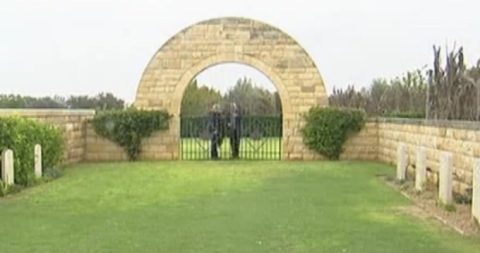
Israeli occupation forces have bulldozed sections of the Gaza War Cemetery in Gaza City’s al-Tuffah neighborhood, damaging graves of British, Australian, and other allied soldiers from the First and Second World Wars, according to an investigation by The Guardian.
Satellite imagery shows systematic earthworks in the cemetery’s southern corner, including removed gravestones, churned soil, and a large earth berm indicating the use of heavy machinery. The damage was not visible in images from March last year but appeared clearly in satellite photos taken in August and December.
Essam Jaradah, the cemetery’s former caretaker, told The Guardian that Israeli bulldozers first cleared land around the cemetery walls before later entering the graveyard itself, flattening nearly one dunum of land that included graves of Australian soldiers.
“The bulldozing covered the area from the bench where foreign visitors used to sit up to the memorial monument,” Jaradah said, adding that the operations took place after Israeli occupation forces withdrew from the area in late April or early May.
Israeli army cites combat operations
Responding to questions from The Guardian, the Israeli military command said the area was an “active combat zone” at the time and claimed its actions were taken for defensive reasons.
“At the relevant time, the area in question was an active combat zone,” a military spokesperson said, alleging the presence of underground “terrorist infrastructure” within and around the cemetery.
The Royal British Legion said it was “saddened” by reports that allied war graves had been damaged, stressing that such sites “deserve to be treated with the utmost respect”.
US traders struggling to find buyers for Venezuelan oil, as China shifts supply chain to Canada
Inside China Business | February 2, 2026
Following the US takeover of the Venezuelan oil industry, commodities trading firms were given contracts to market the crude to buyers across the world, including to China. But Venezuelan crude oil is now being sold at far higher prices than before, with the profits routed through US companies and energy traders. The higher prices have pushed Chinese refiners out of the market for the heavy crude from Venezuela, and they are shifting their orders to Canada, Russia, and Iran. Canadian tar sands oil is more expensive than Venezuelan heavy sour, but is similar, and offers far shorter transit times and lower shipping costs. Chinese energy traders have been instructed to refuse new offers for Venezuelan crude. Closing scene, Wulingyuan, Hunan Resources and links:
Reuters, Vitol, Trafigura offer Venezuelan oil to Indian, Chinese refiners for March delivery, sources say https://www.reuters.com/business/ener…
China replaces US barrels with crude from Canada https://www.seatrade-maritime.com/tan…
Trump’s Venezuela oil grab is pushing Chinese refiners to Canada (Not paywalled) https://calgaryherald.com/business/tr…
Reuters Exclusive: PetroChina holds off from buying Venezuelan oil marketed under US control, sources say https://www.reuters.com/business/ener…
Bloomberg, Trump’s Venezuela Oil Grab Pushes Chinese Refiners to Canada https://www.bloomberg.com/news/articl…
Trump administration demands Venezuela cut ties with US adversaries to resume oil production https://www.cnn.com/2026/01/07/politi…
Davos, Mark Carney’s frankness, and the Euro-American rift
By Raphael Machado | Strategic Culture Foundation | January 29, 2026
One of the defining factors of the era beginning from the second half of the 20th century is the partnership between the USA and Europe – initially only Western Europe, eventually most of the old continent. But “partnership” is perhaps an imprecise term. The ideal term would probably be “occupation,” since, as defined by Lord Ismay, NATO was created to “keep the Americans in, the Soviets out, and the Germans down.”
In the meantime, Europeans grew accustomed to an automatic alignment with the USA, quite similar to that of Ibero-American countries during the same period, with the exception of the brief period when Charles de Gaulle distanced his country from NATO. Otherwise, the Atlantic Alliance gradually absorbed European countries.
The confusion is such that when speaking of “Western civilization,” most people think of Europe and the USA together, not only as expressions of the same civilization but as possessing identical fundamental and strategic interests. The Davos Forum or World Economic Forum can be thought of as the “celebration” of this civilizational alliance, an event bringing together political, economic, and societal leaders from around the world to discuss the priorities to be adopted in the coming years.
Historically, the USA and its representatives have always been prominent at the Davos Forum in all discussions, whether on environmental issues, the supposed need to censor the internet, or the social transformations considered necessary to deal with the 2020 pandemic crisis or future health crises. It was a space for consensus and planning among the North Atlantic elites.
However, Trump’s antagonistic stance towards the countries of the European Union inevitably significantly changed the atmosphere of Davos this time.
The pressures and demands for the cession of Greenland, including the threat of using military force, ultimately became the driving force of interactions among the elites. Naturally, at this moment, EU countries would not be capable of mounting significant military resistance to the USA in Greenland. But the increase in European military presence on the Danish-owned island seems to serve simply as the drawing of a red line.
And despite Mark Rutte rushing to try to find some sort of compromise with Trump on the Greenland issue, the reality is that Trump’s mere threat and pressure against his supposed allies was enough to leave scars. In other words, no matter how timid and cowardly current European leadership may be, to the point of yielding time and again, European distrust and ill-will towards the USA is still likely to increase.
Perhaps it is even necessary to look at other sectors besides the political summit. Among intellectuals, think tanks, journalists, and influencers, it seems easier to find tougher and more critical positions regarding the USA, as well as less willingness to reconcile, than among national political leaders.
“Anti-Americanism,” once a central plank for both nationalist and socialist parties in Europe but fallen into disuse after the Cold War, may end up becoming an important discursive topic again in this era of rising diverse populisms.
To a large extent, the speech by Mark Carney, Prime Minister of Canada, can be seen as a reasonable summary of the current geopolitical moment.
Throughout his speech in Davos, Carney emphasized that for decades, Canada and most Western countries remained aligned with the so-called “rules-based international order,” even considering it partly fictional; still, it was a useful and pleasant fiction. The other Western countries knew that these rules were not applied equally to all countries, and that stronger countries were practically exempt from most of their regulations. Everything in that order depended on who was the “accused” and who was the “accuser.” Different countries, engaged in the same actions, such as suppressing civilian protesters, for example, would receive different treatment depending on who their leaders and governments were: some would receive no more than a symbolic slap on the wrist, others would be bombed and have their heads of state executed in sham courts.
And these Western countries were satisfied as long as the bombed countries were African or Arab or, occasionally, some Slavic country like Serbia. This was because, for a few countries, that order allowed them to collect benefits in the form of capitalist extractivism.
Now, however, the international order has ended. It does not even survive as a farce – according to Carney himself. Faced with a series of crises, many countries began to perceive global integration more as an Achilles’ heel than as an advantage. Goods might have been cheaper, but what good is the theoretical availability of cheaper products when, in times of crisis, they become inaccessible, as during the health crisis. Or when sanctions simply make trade relations unviable for targeted countries.
For Carney, therefore, some countries have decided to transform themselves into fortresses, primarily concerned with ensuring their own energy, food, and military autonomy. And one of the basic consequences of this change is the decline of multilateral organizations. International courts, the WHO, the WTO, the World Bank, and various other bodies are increasingly ignored and disdained by regional powers – in the case of countries outside the “Atlantic axis,” because they consider the influence of the USA and its allies in these bodies too great; in the case of the USA, because, on the contrary, they consider that these bodies do not sufficiently serve US national interests.
This parallel and crosswise dissatisfaction is natural, to the extent that international institutions only ever served the USA and its hegemony insofar as that hegemony was the best tool for gradually constituting a “world government,” that “New World Order” proclaimed by George H. W. Bush.
The consequence of this process of collapse of globalist multilateralism is that international relations have come to be dominated by force. Most medium-power countries are not prepared to deal with this new and sudden reality. Moreover, it is naive to simply condemn the current situation and hope for a return to the “good old days” of a “rules-based” international order where the rules do not apply equally to everyone.
Carney also makes a suggestion for these medium-power countries to deal with the current international situation: strengthen bilateral relations with countries of similar mindset and orientation, building small coalitions of reasonably limited scope, aiming both to eliminate possible economic weaknesses and to enhance security mechanisms.
Naturally, Carney is specifically referring to strengthening Canada-EU relations, but, to some extent, we can also apply this kind of reflection to those counter-hegemonic or non-aligned countries that are not continental powers like Russia, China, and India. The case of Venezuela demonstrated that it is, in fact, necessary to be prepared to deal with US aggressiveness.
Countries like Brazil, despite its size and the importance given to it in international relations, lack nuclear weapons and sufficiently modern military forces to effectively protect itself against a focused and determined military action. Naturally, Brazil should seek to solve these deficiencies (and, indeed, the debate on “Brazilian nuclear weapons” has already begun in political, military, and social circles), but no significant change will be seen in the short term – which is why Brazil actually needs to develop other ways to guarantee its own security that do not depend on simple servility to the USA.
It would be fully in Brazil’s interests to lobby, within BRICS, for increasing the “security” dimension of the coalition. Still, we doubt that the current Brazilian administration has any interest in this, or even that it understands the need for such a radical transformation. In the absence of this initiative, at the very least, Brazil should seek to update its military, intelligence, and radar technology with the help of Russian-Chinese partnerships. But on a regional level, Brazil needs to strengthen its ties with other South American countries and begin, subtly, to try to attract them and remove them from the US orbit.
In short, the mere fact that we are discussing these needs, instead of naively betting that international forums created on Western initiative will be enough to defend us, already proves that we are already in a new and dangerous world.
Davos and Abu Dhabi: How the Ukrainian Endgame Exposed Western Decline
By Ricardo Martins – New Eastern Outlook – January 28, 2026
While Russia, the United States, and Ukraine quietly negotiated in Abu Dhabi, Davos revealed Europe’s real position in the emerging world order: excluded from decision-making yet burdened with the costs of war and peace alike.
The 2026 World Economic Forum in Davos will likely be remembered less as a forum for global coordination than as a public autopsy of the Western-led international order.
What emerged in the Alpine setting was not coherence but fragmentation: rhetorical excess, strategic confusion, and an unmistakable sense that the world has already moved beyond the frameworks still defended—often ritualistically—by Euro-Atlantic elites.
Three speeches captured this moment with particular clarity: those of Volodymyr Zelensky, Mark Carney, and, less noticed but arguably most consequential, Chinese Vice-Premier Ding Xuexiang (represented in the Davos debate through He Lifeng’s economic message).
Zelensky and the Public Humiliation of Europe
President Volodymyr Zelensky’s speech was striking not only for its confrontational tone but also for its intended audience. His criticism was not primarily directed at Russia or even the United States, but bluntly at Europe. He accused the European Union of strategic indecision, military weakness, and an inability to guarantee Ukraine’s security, reiterating that Europe “still does not know how to defend itself” and remains structurally dependent on Washington.
Mocking Europe’s symbolic troop deployments to Greenland and its delayed reactions to crises such as Iran reinforced Zelensky’s humiliation of Europe.
This rhetoric can be understood as a final reckoning — an all-or-nothing move in which he burned all bridges and launched a frontal attack without regard for the consequences. By Davos, Kyiv was already aware that negotiations over the territorial concessions of the war were being discussed in Abu Dhabi between the United States, Russia, and Ukraine without European participation.
Zelensky’s speech thus functioned as political coercion aimed at Europe as the remaining actor capable of paying the price of a settlement. By publicly framing Europe as weak and morally indebted, Zelensky attempted to transform guilt into leverage in the final phase of negotiations.
This interpretation is reinforced by reporting in the Financial Times, which revealed that Ukraine’s willingness to consider territorial concessions is conditional upon accelerated EU membership, potentially by 2027. In domestic political terms, this trade-off allows Zelensky to reframe territorial loss as civilisational gain: Ukraine does not lose land; it “joins Europe.”
The bill, however, is addressed to Brussels.
Europe’s Astonishing Response
The European reaction to Zelensky’s speech in Davos bordered on political self-abnegation. Despite being publicly criticised, European Commission President Ursula von der Leyen praised Ukraine’s “heroic struggle” and emphasised Europe’s material commitment rather than responding to the substance of Zelensky’s accusations.
This asymmetry—verbal humiliation met with renewed rhetorical loyalty—reveals a deeper structural problem: Europe’s inability to translate financial power into strategic agency.
Dissent has nevertheless emerged at the national level. Italian politicians, including Rossano Sasso and Matteo Salvini, openly criticised Zelensky’s “ungrateful” tone and questioned continued military and financial support.
Such reactions reflect mounting domestic pressures linked to inflation, energy costs, and war fatigue, documented extensively by Politico and the Kiel Institute.
Yet these voices remain fragmented, and Europe as a collective actor continues to display what can only be described as strategic paralysis.
Mark Carney and the End of the Rules-Based Illusion
If Zelensky exposed Europe’s weakness, Mark Carney articulated its anxiety. His Davos speech openly acknowledged what had long been implicit: the so-called “rules-based international order” is no longer operative—and perhaps never was. Carney framed the current moment as a rupture, arguing that “middle powers” such as Canada and European states must now navigate a world no longer structured by predictable norms but by power, leverage, and economic scale.
Carney’s concept of “value-based realism” deserves close scrutiny. On the surface, it appears as an attempt to reconcile normative language with geopolitical adaptation. In substance, however, it represents an effort to preserve Western managerial influence within a system that has already shifted towards multipolarity. Sovereignty, in Carney’s formulation, is diluted into “managed multipolarity,” administered by the same financial and institutional elites that dominated the previous order.
This is precisely why his discourse fails to resonate in the Global South. For emerging powers—particularly within BRICS—the collapse of the Western order is not a tragedy to be managed but a long-awaited correction. Carney’s speech, far from acknowledging this, sought to repackage decline as stewardship.
That it reportedly irritated Donald Trump is unsurprising: Carney implicitly rejected American unilateralism while simultaneously refusing genuine systemic change.
China and the Silent Centre of Gravity
The most consequential intervention in Davos was arguably not Western at all. Chinese Vice-Premier He Lifeng articulated Beijing’s strategic priority with remarkable clarity: China is positioning itself to become the world’s largest consumer market, making access to Chinese demand the central axis of future global trade.
This message, echoed by analysts such as Pepe Escobar, signals a structural shift in the global economy: dependence is moving eastward.
Unlike Carney’s rhetorical manoeuvres, China’s position was grounded in material capacity: industrial scale, domestic demand, and long-term planning. For much of the Global South, this represents opportunity rather than threat. For Europe, however, it underscores marginalisation.
Abu Dhabi Decides, Europe Pays
The trilateral talks in Abu Dhabi marked a geopolitical turning point. While Europe has committed close to €200 billion in support to Ukraine, it was excluded from negotiations shaping the war’s end.
This exclusion is not accidental. Both Washington and Moscow increasingly view Brussels as incapable of strategic compromise, bound instead by ideological rigidity and proceduralism.
Europe thus faces a brutal dilemma: continue financing a war it does not control, or finance a peace settlement that fundamentally alters the EU through accelerated Ukrainian accession. Neither option strengthens European sovereignty.
Granting Ukraine some lite-sort of membership by 2027—without completed accession chapters—would transform the EU’s budgetary, agricultural, and cohesion policies overnight. Yet postponement risks indefinite financial haemorrhage. As the Financial Times and Reuters have noted, peace may ultimately be cheaper than perpetual war, even if politically uncomfortable.
Conclusion: Europe as the Weakest Link
Davos revealed a system speaking past itself. Zelensky spoke from desperation and tactical clarity. Carney spoke from elite anxiety. China spoke from structural confidence. Europe, by contrast, spoke in platitudes.
The irony is stark. Europe funds Ukraine, absorbs the economic shock, and bears the political consequences—yet is excluded from decision-making. In Abu Dhabi, values were absent, and strategy was outsourced. When the deal is announced, Europe may discover it was not a negotiator, but a guarantor of last resort.
The tragedy is not merely Europe’s weakness, but its refusal to acknowledge it.
Ricardo Martins is a Doctor in Sociology with specialisation in geopolitics and international relations.
Follow new articles on our Telegram channel
European leaders’ shift in their Davos addresses exposes Europe’s strategic anxiety
Global Times | January 21, 2026
The World Economic Forum (WEF) annual meeting recently kicked off in the Swiss resort city of Davos. This year’s forum took place amid rare transatlantic tensions triggered by the US intention to acquire Greenland. The focus of European leaders’ speeches pivoted noticeably from global economic issues to geopolitics, reflecting Europe’s deepening strategic anxiety amid structural contradictions with the US.
French President Emmanuel Macron said the EU should not bend to “the law of the strongest,” while Belgium’s Prime Minister Bart De Wever said the bloc was “at a crossroads” where it must decide on how to get out of a “very bad position” after trying to appease Trump. Even European Commission President Ursula von der Leyen highlighted the “geopolitical shocks” and “a dangerous downward spiral” brought by the US.
“The forum sends a clear political signal of Europe’s growing strategic awakening,” Zhao Junjie, a senior research fellow at the Institute of European Studies at the Chinese Academy of Social Sciences, told the Global Times on Wednesday.
The maximum pressure exerted by the US on the Greenland issue has shaken the long-standing value consensus between Europe and the US. Its unilateral and bullying actions have triggered strong fear and anxiety across Europe, which is a key reason for the heightened emotions and intense reactions toward the US among European representatives at this year’s forum.
The statements made by European leaders at the forum appear to have demonstrated Europe’s resolve to stand firm to the world. Yet it remains to be seen whether such firm commitments can be translated into practical, unified, and effective actions. As senior bankers and corporate executives at Davos noted, they believe the current responses of European leaders to the US are more emotional than pragmatic. Moreover, due to long-standing structural constraints – its deep entanglement with the US in security, energy, and economic affairs – Europe’s response is weak and constrained. Zhao further noted that Europe still lacks systematic measures to effectively counter American unilateralism, with current efforts largely limited to soft multilateral mechanisms.
Europe’s response to US unilateral pressures has been sluggish and lacking in internal coordination. The EU countries have not reached a consensus on the activation of Anti-Coercion Instrument. Meanwhile, Europe continues to grapple with “double standards” in its multilateral engagements. Despite the leaders’ calls for trade diversification, restrictive market-access policies toward certain foreign products have fueled ongoing trade tensions. This contradiction is illustrated by Macron’s appeal for Chinese investment in key sectors, even as the EU moves to phase out components and equipment from tech suppliers such as Huawei in some sectors – a policy that inevitably raises questions about Europe’s consistency and sincerity in pursuing cooperative partnerships.
Canada has already taken action. Prime Minister Mark Carney stated that middle powers are not “powerless” facing “a rupture in the world order.” He called for “honesty about the world as it is” and for building “something bigger, better, stronger, and more just.” Recently, Canada established strategic partnerships with China and Qatar to promote the diversification of its foreign relations. Such strategic sobriety may offer some inspiration for Europe.
Ursula von der Leyen declared in her special address that “Europe will always choose the world, and the world is ready to choose Europe.” Yet Europe must now answer a more pressing question: what path will it choose for itself in the changing global order?
The statements at Davos have sent a clear political signal of Europe’s awakening. Moving forward, Europe must consolidate its strength through unity, steer its own course with greater autonomy, and expand its strategic space through diversification. Confronted with external pressures, only by reinforcing internal solidarity, advancing pragmatic actions, and broadening multilateral cooperation can Europe truly safeguard its own interests and uphold the international multilateral order. Only in this way can Europe genuinely protect its interests amid profound changes. History does not wait for the hesitant – it is time for Europe to act.
Mali holds firm: West eyes new front to sabotage Sahel independence
By Aidan J. Simardone | The Cradle | November 19, 2025
If you are to believe western media, Mali is days away from falling to Al-Qaeda. Jama’at Nasr al-Islam wal-Muslimin (JNIM), a branch of Al-Qaeda in the Islamic Maghreb, is blockading fuel to the capital, Bamako. It is only a matter of time before growing frustration turns Malians against their “illegitimate” government. Or so the story goes.
The reality tells a different tale. The situation is serious, not only for Mali but also for the broader Alliance of Sahel States, which includes Burkina Faso and Niger. And yet, Mali is recovering. Russia has stepped in, delivering vital fuel shipments. Schools are reopening. Vehicles are back on the road. Towns previously captured by JNIM are being reclaimed.
It is a huge gamble for Russia. But should it succeed, Moscow will have secured a key ally and gained the favor of anti-imperialist countries in Africa. The risk, however, might not come from JNIM. Instead, it could come from a western-supported intervention that seeks not to stop Al-Qaeda, but to destroy the Alliance of Sahel States.
From French client to anti-colonial spearhead
After it gained independence, Mali continued to rely on France. Even its currency, the CFA franc, is pegged to the euro. In school, children were taught French history and learned to speak French. Until recently, France had 2,400 troops stationed as part of its “counterterrorism” operations.
Despite these apparent efforts, groups like JNIM, the Islamic State in the Sahel, and Azawad separatist militias grew. Meanwhile, western corporations profited as Mali became the fourth-largest producer of gold. With this wealth extracted, Mali remained one of the poorest countries in the world.
Bamako’s cooperation with the west did not always curry favor. Its alleged failure to follow the 2015 Algiers Accords with Azawad separatists resulted in the UN Security Council (UNSC) imposing sanctions in 2017. This made little impact, with Mali’s economy continuing to grow.
Yet most Malians were still in poverty, and the security situation worsened. Frustrated, a coup was launched in 2020. But when protests erupted, another coup followed in 2021, led by Assimi Goita, Mali’s current president. Western institutions portrayed it as democratic backsliding, with a military unjustly taking over the country. But the coup was highly popular, with people celebrating. According to a 2024 poll, nine out of 10 people thought the country was moving in the right direction.
President Goita was a radical, anti-colonial, pan-Africanist. In 2022, he kicked French troops out, instead seeking help from Russia. In 2025, Mali withdrew from the Economic Community of West African States (ECOWAS), accusing it of working with western powers. Goita nationalized the gold mines, removed French as Mali’s official language, and replaced school curricula about French history with Bamako’s own rich history.
Western-aligned institutions retaliated with sanctions. ECOWAS, the West African Economic and Monetary Union (WAEMU), and the EU imposed economic penalties. Cut off from financial institutions, Mali defaulted on its debt. But the impact was partly muted.
A few months after sanctions were imposed, the court of the WAEMU ordered that sanctions had to be lifted. Gold mining, which contributes to 10 percent of the economy, saw no impact. Mali shifted its trade to non-ECOWAS countries, and the economy continued to grow.
The West African country redirected trade outside the ECOWAS bloc and resolved its debt in 2024. Far from isolating the country, sanctions strengthened internal solidarity.
Even when ECOWAS lifted sanctions in July 2022 – citing a transition plan to civilian rule – no action was taken when the deadline passed. The reason? The sanctions had backfired, exposing ECOWAS as a western instrument and bolstering support for the Goita government.
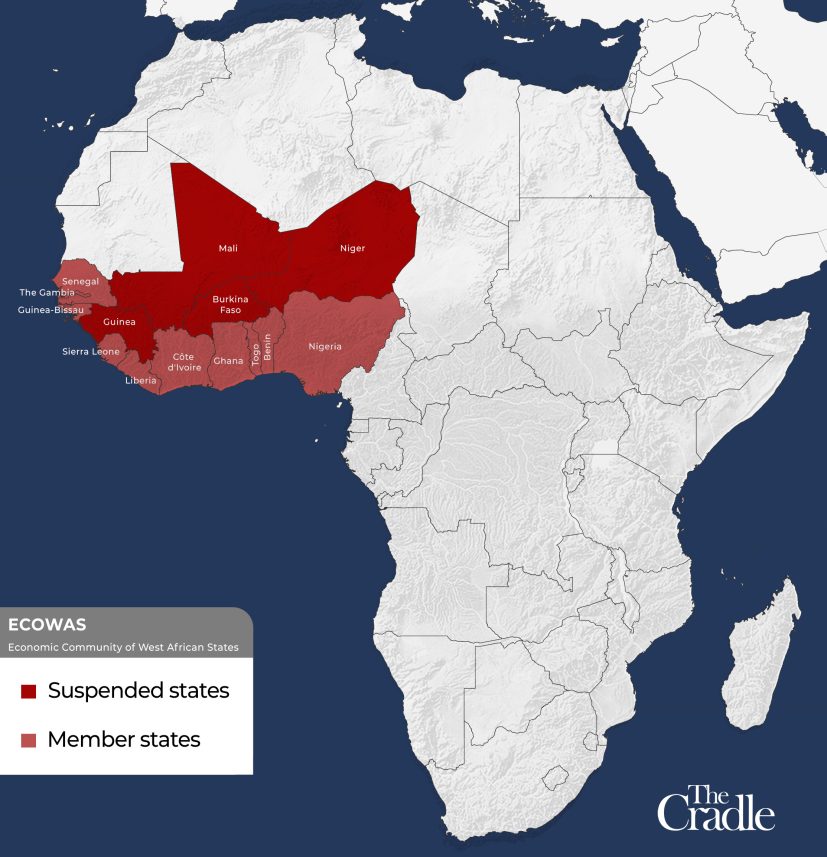
Map of the Economic Community of West African States (ECOWAS)
Sanctions failed, so proxy war begins
JNIM continues to receive financing from Persian Gulf patrons and income from ransoms and extortion. While it has a strong rural presence, it controls no major cities. Azawad separatists and ISIS fighters are similarly confined to Mali’s remote north.
A different strategy was needed. In recent weeks, JNIM has attacked fuel trucks, depriving Bamako of oil. Cars were unable to fill up, and schools closed. According to western media, JNIM wants to strangle the capital to promote unrest. Mali has had five coups since independence, three of which have occurred since 2012. News reports suggest that given this history, JNIM can ultimately topple the Malian government.
Reports of an “immediate collapse” are nearly a month old. What Western media fails to understand is that, unlike previous governments in Mali, the current one is highly popular. Truckers are willing to risk their lives to bring fuel to the capital. “If we die, it’s for a good cause,” one trucker said. Even if the blockade were to stop all fuel, Malian’s resilience and support for Goita would only increase.
Thankfully for Bamako, JNIM is facing setbacks. Russia, which provides support from the Africa Corps (formerly Wagner Group) and, in 2023, vetoed the UNSC’s sanctions, sent 160,000 and 200,000 metric tons of petroleum and agricultural products. This has provided some relief, with fuel lines shortening and schools reopening.
On 15 November, Mali and the African Corps seized the Intahaka mine. The next day, the town of Loulouni was also recaptured. That same day, the blockade south of Bamako was weakened, allowing convoys of fuel trucks to reach the city.
Manufacturing consent for intervention
So why does the western media continue insisting that Mali is collapsing? Simple: to justify military intervention.
One of the biggest propagandists has been France. In a post on X from the French Ministry for Europe and Foreign Affairs, Paris blamed Russia for abandoning Mali, despite being one of the only nations supporting it during this crisis. French news channels LCI and TF1 ran stories such as “Mali, the Jihadists at the gates of Bamako” and “Mali, the new stronghold of Al-Qaeda.”
In response, Bamako banned them from the country. Niger has also accused Benin of being a base of operations for France. French state media, France 24, did not deny the claim, only disputing that the number of soldiers was far less than Niger claimed.
France stands to regain a significant geopolitical advantage from regime change in Mali. The country borders seven former French colonies. A return would reassert French regional influence and weaken the anti-imperialist Alliance of Sahel States. Niger remains crucial to France’s uranium supply, which is necessary for 70 percent of the country’s energy. Bamako is also quickly becoming a major exporter of lithium – essential for electronics and electric cars – with the recent opening of its second mine.
Other western countries have also lost out under Goita’s rule. Canadian company Barrick Mining lost $1 billion when Mali nationalized the mining industry. Last month, other western firms, such as Harmony Gold, IAMGOLD, Cora Gold, and Resolute Mining, had their mining exploration licenses revoked.
The growing Russia–Mali partnership resembles Moscow’s 2015 intervention in Syria. Just as Russia propped up Damascus for as long as it could from a US-led proxy war, it now shores up Bamako. The payoff could be similarly strategic: diplomatic support, military basing rights, and influence in an emerging multipolar Africa.
Unlike past interventions cloaked as counterterrorism, the west now appears reluctant. Washington and its allies, usually quick to bomb under any pretext, have done nothing to aid Bamako. This silence suggests either tacit support for JNIM or confidence that Mali will implode without direct action.
Outsourcing war
As a member of the Alliance of Sahel States, the west fears that Mali’s resilience will be an inspiration to others to join the anti-imperialist struggle. The 2021 coup emerged as a result of inequality and insecurity. These factors can be found in many other West African countries such as Benin, the Ivory Coast, and Togo.
Some observers theorize that Africa’s most populous country, Nigeria, could soon have a revolution, amid high inequality and insecurity from Boko Haram. Nigeria’s growing ties with Mali are a serious threat to the west.
With sanctions failing to bring Mali to its knees, the only solution for the west is military intervention. This might be direct, as seen with Niger, where French troops are stationed in bordering Benin. But more likely, western countries will outsource their intervention to African states. This has occurred in Somalia, where the US has Kenya and Uganda do its dirty work in return for aid. The same could occur with Mali.
The most likely actors to play this role are ECOWAS and the African Union. ECOWAS receives military training from the US, and many of its leaders are closely tied to Washington. It also receives extensive financing from the EU, most recently receiving €110 million ($119 million) to support “peace, trade, and governance.” Far from neutral, it has become an enforcement arm for western interests. The bloc has previously sanctioned Mali and, in 2023, threatened to invade Niger.
The African Union has also served the interests of the west, such as the African Union Mission to Somalia, which is supported and financed by Washington and Brussels. The African Union Constitutive Act prohibits military intervention in any member state, with the exception of war crimes or at the request of the state.
Mali, however, was suspended from the African Union in 2021, making intervention fully legal under the Act. Chairperson of the African Union Commission, Mahmoud Ali Youssouf, recently called for “urgent international Action as crisis escalates in Mali.”
Bamako versus the empire
Mali faces a two-pronged assault: economic strangulation and the threat of foreign-backed military intervention.
Though JNIM remains a nuisance, it has failed to topple the government. The bigger threat comes from western capitals and their African proxies. Russia remains one of Mali’s few reliable allies. If successful, Moscow’s support will elevate its standing across the continent.
More importantly, Mali’s endurance will inspire other African states to challenge western domination and reclaim sovereignty.
Iran rejects Canada’s baseless claims of foiling ‘lethal plots’ by Tehran
Press TV – November 15, 2025
Iran has strongly dismissed allegations of sabotage operations raised by the head of Canada’s domestic Security Agency against the Islamic Republic, calling the claims baseless and fabricated.
On Thursday, Dan Rogers, director of the Canadian Security Intelligence Service, claimed that the agency this year foiled potentially lethal threats by Iran directed against people whom Tehran sees as enemies.
He claimed that the agency countered actions by Iranian intelligence services and what he called their proxies, who allegedly targeted individuals they perceived as threats to Iran.
Rogers also alleged that his agents had blocked attempts by Russia to illegally acquire Canadian goods and technologies. He also levelled some accusations against China and India for espionage and transnational repression efforts against Canada.
Zahra Ershadi, Iran’s deputy permanent representative to the United Nations, said in a statement on Friday that the allegations were aimed at shifting attention away from Israel’s ongoing actions in West Asia and Canada’s role in supporting them.
“The ridiculous accusations of the Canadian Security Organization against Iran have no purpose other than to divert attention from the ongoing violations and crimes committed by the Zionist regime in the West Asia region and Canada’s support for it,” she said.
Ershadi also criticized the obstruction of consular services for Iranians living in Canada, urging the Canadian government to reverse “irresponsible and unjustified” policies toward Tehran.
During the genocide in Gaza, Canada and several other Western countries continued to supply lethal weapons to the Israeli regime despite the enormous human toll in Palestinian territory.
Featured Video
Iran War Is Accelerating the End of US Dominance
or go to
Aletho News Archives – Video-Images
From the Archives
Why the UK, the EU and the US Gang-Up on Russia
By James Petras :: 03.20.2018
Introduction: For the greater part of a decade the US, the UK and the EU have been carrying out a campaign to undermine and overthrow the Russia government and in particular to oust President Putin. Fundamental issues are at stake including the real possibility of a nuclear war.
The most recent western propaganda campaign and one of the most virulent is the charge launched by the UK regime of Prime Minister Theresa May. The Brits have claimed that Russian secret agents conspired to poison a former Russian double-agent and his daughter in England, threatening the sovereignty and safety of the British people. No evidence has ever been presented. Instead the UK expelled Russian diplomats and demands harsher sanctions, to increase tensions. The UK and its US and EU patrons are moving toward a break in relations and a military build-up.
A number of fundamental questions arise regarding the origins and growing intensity of this anti-Russian animus.
Why do the Western regimes now feel Russia is a greater threat then in the past? Do they believe Russia is more vulnerable to Western threats or attacks? Why do the Western military leaders seek to undermine Russia’s defenses? Do the US economic elites believe it is possible to provoke an economic crisis and the demise of President Putin’s government? What is the strategic goal of Western policymakers? Why has the UK regime taken the lead in the anti-Russian crusade via the fake toxin accusations at this time?
This paper is directed at providing key elements to address these questions. … continue
Blog Roll
 Aletho News
- Western media whitewashes Israel’s attempted murder of British journalist in Lebanon
- Israel-linked arms facility set ablaze in EU
- IRAN: The Three Islands Unmaking American Unipolar Sea Power in the Persian Gulf
- Trump’s dispatch of Marine Expeditionary Unit signals desperation for any symbolic success
- Iran Proposes Creating Middle East Security Structure With All Regional States – President
- Iran’s weapons industry still churning out missiles despite war: IRGC
- Washington approves billions in new arms sales to Gulf states as concerns grow over stocks of air defenses
- Iran War: Pentagon’s $200B Budget Could Run Out in Just Five Months
- Seven US allies endorse Hormuz ‘coalition,’ offer ‘no commitment’ for military action
- ‘Safe’ corridor opening up through Strait of Hormuz: What we know so far
- If Americans Knew
- Meet the former fashion blogger and shady doctor behind the ‘30,000 dead’ Iran psy-op
- Vatican Secretary of State to Trump, Israel: End the war as soon as possible
- The Majority of Americans Believe War Against Iran Benefits Israel More Than US
- Efforts to shut down pro-Palestinian speech face series of setbacks in court
- What has Israel done to my brother?
- Eid without worship in Al Aqsa – Not a ceasefire Day 161
- Trump: Israel attacked Iranian gas field without US knowledge. No more such attacks!
- America’s friends must help extricate it from an unlawful war
- Democratic Nat’l Committee’s Kneejerk Backing of Israel Is Political and Moral Failure
- Major revelations from former counterterrorism chief Joe Kent’s extensive interview
- No Tricks Zone
- Energy Expert: Germany’s Nuclear Phaseout Was A “500 Billion Euro Mistake”
- New Research: South Australia’s Mid-Holocene Sea Surface Temperatures Were 4°C Warmer Than Today
- Storing Green Energy To Last Germany 10 Days Would Require A 60-Million Tonne Battery
- New Studies: UK Sea Levels Were 4 Meters Higher Than Today During The Mid-Holocene
- Destructive Green New Deal: German Energy And Metal Group Warns Of Drastic Crisis
- New Study Documents A 20-Year Pause In Arctic Sea Ice Decline – Driven By Internal Variability
- Wake-up Call: Survey Shows Majority Of Germans Now Favor Postponing Climate Targets!
- Televised! Leading German Political Candidate Tells Schoolchildren CO2 Makes Sun Hotter!
- New Study: A Century Warming Of 1.1°C Is ‘Commonplace’ And ‘Not Unusual’ During This Interglacial
- New Study: ‘Internal Noise’ And Volcanic Forcing Can Trigger 10-15°C Warming Within Decades
 Aletho News