Was SARS-CoV-2 entirely novel or particularly deadly?
BY THOMAS VERDUYN, DR TODD KENYON, DR JONATHAN ENGLER | PANDA | JUNE 22, 2023
As part of our inquiry into the drivers of excess deaths, we take a step back and address the central theme of the Covid-era narrative: that SARS-CoV-2 is a novel virus that is so deadly that drastic measures were needed to contain it.
In the previous articles of this mini series about excess deaths we looked at how effective the Covid shots were at arresting Covid [1, 2] and also how bad the “first wave” in New York city was.[3] There are good reasons behind why we chose to address these two topics first. One reason is that an honest look at these issues helps establish a balanced understanding of what might be driving excess deaths since 2020. Another reason is that both topics were central to the official narrative emanating from government sources and the mainstream media. We were told that the whole point of the lockdowns was to delay the spread of SARS-CoV-2 until a vaccine could be developed that would spare us from overwhelmed hospitals like what happened in places like New York and Italy.
As has been shown, and to put it mildly, the Covid shots did not perform nearly as well as promised. Sadly, the burden of the adverse events caused by the experimental shots turned out to be worse than the disease.[4] Furthermore, by a close examination of excess deaths in New York city in early 2020, and in particular by a comparison to what happened on the Diamond Princess, it was concluded that the tragedy in New York was not compatible with the spread of a virus such as SARS-CoV-2, let alone any other generally mild respiratory virus.
All of this presses us to take a step back and address the central theme of the Covid-era narrative, namely the idea that SARS-CoV-2 is a novel virus that is particularly deadly; so deadly that drastic measures were needed to contain it. We begin with a look at the idea that the virus is novel.
1. How novel is SARS-CoV-2?
In the field of virology, the term “novel virus” typically means that the virus was recently discovered. This definition, of course, tells us nothing at all about when the virus first existed. Thus, for instance, the first human-coronavirus was found in 1961.[5] It was labeled B814 and identified as a cause of the common cold. This does not mean that this particular cold-causing coronavirus suddenly appeared in that year. No, and much to the rather, it only means someone finally found it. The ability to isolate, identify and sequence RNA viruses is a relatively new science. The patent on the process used in PCR machines was first granted in 1987.[6] It was in 2003, only 20 years ago, that the first human reference genome was sequenced. Despite all the efforts by many scientists, mankind has not yet sequenced every virus on planet earth. It is quite possible we never will. As a result, we are hardly in a position to assert when a particular virus (or strain of a virus) first appeared. Even if sequencing of a virus could prove beyond reasonable doubt that it was made in a laboratory, unless we had lab records to prove when it was made, it would still be nearly impossible to determine when it first infected someone. At best we might be able to estimate a timeframe by using antibody tests applied to stored specimens. The fact that SARS-CoV-2 is a relatively mild virus with symptoms similar to that caused by the flu only compounds the challenge. All we know for certain about this virus is that labs first began testing for it in early 2020.
The real problem with all of this is that during the Covid era the term “novel virus” was used by many outlets (including universities, journals, the media, and government officials) to mean something quite different from “recently discovered.”[7] For example, the GoodRx website has an article in which the authors say that “SARS-CoV-2, the virus that causes COVID-19, is a “novel coronavirus.” This means it’s different from all viruses like it.” They go on to say that “In medicine, novel refers to a virus or bacteria that wasn’t known to affect humans. This means that the bug is either brand new or was only found in animals or other life forms.” [8] Likewise, Dr. Tam, the chief medical officer of Canada, recently wrote, “In March 2020, Canada was faced with a… virulent pathogen… for which there was no natural immunity… and no effective antivirals.” So we see that the official narrative was not only that SARS-CoV-2 was recently discovered, but that it did not exist before late December 2019, was different from other viruses, was newly capable of infecting humans, was entirely new to our immune system, and was outside the scope of what doctors knew how to treat.
Are any of these claims true? Other than the fact that it was recently identified, the other claims are either false or dubious at best. It is useful to examine each claim on its own. We begin with a brief investigation into the possibility that SARS-CoV-2 existed before December 2019. Actually, there is growing evidence that SARS-CoV-2 was around long before it suddenly acquired international attention. For instance, by searching through the public sequencing data archives, a group of researchers found that soil samples collected in Antarctica between Dec 2018 and Jan 2019 contained “sequence fragments matching the SARS-CoV-2 reference genome…” [9] This was so contrary to the official narrative that the authors later suggested that it had to be on account of laboratory contamination issues. But their findings were not unique. For example, by examining human blood samples taken in Italy before the Covid era, researchers found that already by September of 2019 some individuals (none of whom were sick at the time) had SARS-CoV-2 specific antibodies in their blood.[10 11] Other studies have found similarly.[12] Therefore, there is good evidence that the virus existed long before it garnered any attention.
Second, was SARS-CoV-2 that different from other viruses? The very fact that the virus was named “SARS-CoV-2” informs us that virologists think it is similar enough to SARS that it didn’t even warrant an entirely new name. Indeed, the two viruses are said to share “79.5% sequence identity.” [13] Despite the 20.5% difference, and notwithstanding the 17 year time lapse, studies have shown that people that were infected with SARS “possess long-lasting memory T cells… that displayed robust cross-reactivity to the N-protein of SARS-CoV-2.”[14] Therefore, although possessing differences, it cannot be said that this virus is that different from other coronaviruses.
Third, was this virus newly capable of infecting humans? To answer this question, it may help to consider RaTG13, a bat coronavirus that is said to be the closest to our virus. The two viruses are reported to be 96% similar.[15] Although it is commonly assumed that bat coronaviruses cannot infect humans without either a modification to its RNA or via an intermediate host, it is possible that bat coronaviruses jump to humans all the time, only without making us sick. For instance, a study done in 2018 found good evidence to conclude that bat coronaviruses are capable of infecting humans regularly, noting also that the “infections were subclinical or caused only mild symptoms.” [16] Conversely, experiments with blood samples of health care workers known to have had Covid demonstrated efficient neutralization of RaTG13.[15] Of particular significance in this regard is the little known fact that the PCR test for Covid, as designed by Drosten, was initially verified by making sure it detected coronaviruses from “bats in Europe and Asia.”[17] In other words, a positive PCR test may have indicated nothing more or less than the presence of a harmless bat coronavirus already endemic among humans. Although the Drosten test was later superseded by other tests, the official narrative emerged rapidly out of case detection using the Drosten test. Unfortunately, it is not clear to what extent this influenced early test results. In any case, it is certainly not novel that a virus of this sort could infect humans.
Fourth, is this virus entirely new to our immune system? Certainly not, for it was known from early on in the Covid-era that a significant percentage of people were immune to this supposedly novel virus. We previously observed that only 19% (712 of 3711) of the people on board the Diamond Princess cruise ship tested positive for the virus, and of these only a smaller fraction yet actually became ill.[4] Similarly, a group of researchers from Singapore “detected SARS-CoV-2 specific T cells in individuals with no history of SARS [or] Covid-19.” Remarkably, they also detected T cells in people that had no known contact with anyone that had had either SARS or Covid.[14] Likewise, a study in the UK found that many health care workers repeatedly tested negative despite repeated exposure to Covid.[18] The authors of that study concluded that “some individuals may clear subclinical infection before seroconversion.” Why did so many people never get Covid? Multiple researchers have concluded that it was likely a result of memory T-cells from a previous infection with a common cold or flu.[19, 20, 21, 22]
What percentage of people had sufficient prior immunity to prevent illness? Those same researchers found it was about 50%. For instance, a study by Grifoni et al “detected SARS-CoV-2-reactive CD4+ T cells in ~ 40% – 60% of unexposed individuals, suggesting cross-reactive T cell recognition between circulating ‘common cold’ coronaviruses and SARS-CoV-2.” [23] In other words, about half the population was destined to never become noticeably ill from Covid for the simple reason that they recently had a cold. Nor is this particularly surprising since it was known that the original SARS virus had also cross-reacted with other coronaviruses.[24] Thus, the virus was not entirely novel to our immune system.
Fifth, was this virus new to doctors? As may be gathered from the fact that Covid was around long before March 2020, it is almost certain that before doctors were told that they were dealing with a novel virus that they supposedly did not know how to treat, they must have unknowingly treated Covid as if it was any normal respiratory or influenza-like-illness. To the best of our knowledge, there is no record of doctors reporting an unusual increase in untreatable respiratory disease, at least not until the WHO officially declared Covid a pandemic. Even after doctors were advised it was an entirely new disease, treatment protocols were rapidly developed in multiple places.[25, 26, 27]
In summary, SARS-CoV-2 was “novel” only in the sense that it was first discovered in early 2020. It is certain that it existed globally for at least six months before this. Already by January 2020 about half the world’s population was immune to this virus. Nor was Covid outside the parameters of known treatments available for respiratory diseases. These facts should have been front and center in the media, and should have had a strong influence on government policies. Sadly, all this information was buried.
Of course, if Covid was not novel, it is impossible that it should have caused any excess deaths in 2020. It follows from this sobering conclusion that any and all excess deaths had to have been caused by other factors.
2. How deadly was Covid?
As was just pointed out, at least half of the population was essentially immune to Covid. For these people Covid was a non-issue. What about the other half? How lethal was it for them? Central to a proper answer of this question is the fact that our immune system is confronted with novel proteins all the time. Our survival does not depend on us having seen them or anything similar before. Rather, the immune system learns from all foreign material, remembers the experience, and serves to make future encounters less noteworthy. If at some point in the future a virus should arise that was both novel to our immune system and untreatable, even this would not necessarily mean that the virus was something to fear; certainly not to the extent of causing a cataclysm like we have recently witnessed.
In a previous article of this series [1] we made mention of a World Health Organization bulletin that estimated the Infection Fatality Rate (IFR) of Covid to be 0.23%.[28] That same bulletin also advised it might be substantially less than this. As data accumulated, the IFR was indeed found to be lower, eventually converging on a global average of about 0.15%.[29] For people under 70 years old, the average IFR of Covid drops down to 0.07%.[30] Of course these estimates were determined using information from death certificates and PCR test results, which (as shall be explained below) may have introduced significant inflationary errors into the results. The IFR of Covid may therefore be much less than 0.15%.
Moreover, it is well established that severe Covid illness is generally linked to those with underlying medical conditions, meaning it is rare in healthy individuals. For instance, a study looking at more than half a million people hospitalized in the USA with Covid found that 94.9% “had at least 1 underlying medical condition.” [31]
Nevertheless, for the sake of argument let us accept these estimates at face value and proceed to ask how Covid compares with the flu? The IFR of influenza is generally considered to be about 0.1%, and in a typical season about 8% of Americans get sick from the flu.[32] As for Covid, despite the unprecedented numbers of people that were tested for this virus, the total number of Covid cases in the USA during 2020 totaled 19.2 million,[33] or about 5.7% of the population. Thus, by all metrics it would appear that Covid in 2020 was on par with or less than a normal flu season.
The fact that Covid is not a particularly lethal disease was known since early 2020. For instance, the UK government officially declared that “as of 19 March 2020, Covid-19 is no longer considered to be an HCID in the UK.” [34] The acronym HCID stands for “high consequence infectious diseases.” Therefore, for the vast majority of people, the wonderful and immensely complicated human immune system was more than adequate to fight off a Covid infection.
If in fact Covid was only as bad as a normal flu season, why did it garner so much attention? And why have government dashboards suggested that Covid is causing millions of excess deaths in the world? The answer to the first of these two questions will have to be postponed for a future article. As for the second question, it is helpful to look a little closer at excess deaths in 2020. A recent study by Levitt et al analyzed all-cause mortality rates in 33 countries from 2009 to 2021. They found that during this 13 year window, the year 2020 was the worst year with the highest mortality for only four countries: “UK, Italy, Spain and Belgium.” [35] Another 10 countries had “the highest mortality in 2021.” (USA and Poland were the worst). As for the remaining 19 countries, either 2009 or 2010 had the highest mortality.
Was there anything particularly special about 2009 that made it the worst year for more than half these countries? Actually, it was found to be the worst for two simple reasons: mortality rates have in general been decreasing over time, and 2009 is as far back as the study went. Of interest is that in 2009 the WHO declared a pandemic on account of the H1N1 virus. Nothing special came of it, however, for “the total number of influenza-related deaths worldwide… proved similar to the number in a relatively mild year of seasonal influenza.” [36]
The fact that 2020 was the worst year for only 4 of these 33 countries lends support to our conclusion that Covid was about as bad as a normal flu season. The fact that 2021 was the worst year for 10 countries helps reinforce our previous findings that the Covid shots did very little to prevent Covid deaths and instead caused a great deal of deaths from adverse events.
3. Covid Data Issues
How is it possible that a mortality analysis seems to contradict reports about millions of Covid cases and deaths? There are several good reasons for this apparent discrepancy. For starters, and as was mentioned in a previous article,[1] on April 20, 2020 the WHO mandated changes to the way death certificates were to be filled out. The document stated that “a death due to Covid-19 is defined for surveillance purposes as a death resulting from a clinically compatible illness.” [37] In other words, since influenza typically has identical symptoms to Covid, flu deaths were to be labeled as Covid deaths. While this may be useful for “surveillance purposes,” it does not help us determine if Covid caused any excess deaths. Nor is it useful for making accurate comparisons between Covid and the flu. And it most definitely makes it difficult to calculate the IFR of Covid.
The WHO document went on to say: “A death due to Covid-19 may not be attributed to another disease (e.g. cancer)… Always apply these instructions whether they can be considered medically correct or not.” Therefore, even if cancer was the actual cause of death, if the person so much as tested positive for Covid, the death certificate was to say that Covid was the cause of death. The end result of this change in policy is that the number of deaths caused by Covid has been significantly over-counted in most countries.[38, 39, 40, 41] What was not affected by the protocol change was how many people died from all causes. This is why all-cause mortality studies are so relevant during the Covid-era.
Another issue muddying the waters is the PCR test used to identify a Covid case. Despite the fact that the PCR test is based on remarkable technology, it has various shortcomings when used as it was to establish a Covid case. Very briefly, a few such issues are:
- If the cycle threshold is too high, it will return a high number of false positives.[42]
- As disease prevalence decreases, the risk of false positives increases.[43, 44]
- The number and type of primers used for identifying the presence of SARS-CoV-2 has the potential to pick up fragments originating from some other source.[45, 46] (As we saw above, harmless bat coronaviruses may give a false positive.)
- The PCR test is capable of finding virus fragments,or intact virus in the airway, but is not capable of determining if a person is actually infected with Covid. Since clinical symptoms were not required to be present, many uninfected individuals falsely tested positive. [47, 48]
Every issue listed above has the tendency to inflate Covid deaths.
4. Covid in Canada
To put things into perspective, and to tie all these ideas together, it is appropriate to consider one particular country in more detail as an example. Let us consider Canada. Statistics Canada records that 16,151 deaths in 2020 were attributed to Covid.[49] This is slightly more than twice the number of deaths attributed to “Influenza and Pneumonia” in an average year in Canada (7304 deaths/yr). How is it possible that Covid was more than twice as deadly as the flu if the two illnesses are about the same?
The answer is either that the number of Covid deaths was overcounted due to all the issues just mentioned or that influenza deaths were underdiagnosed in the past. Unfortunately, it is now nearly impossible to determine the exact error rate. Nevertheless, by considering only the last of the issues in the above list, it is possible to demonstrate how significant the inflation factor really is.
Dr. Bullard, head of the provincial laboratory in Winnipeg Manitoba, testified that PCR tests do not verify infection and were never intended to be used to diagnose respiratory illness.[50] He went on to say that about 56% of positives in Canada belonged to people that were not infected with Covid. If we accept this percentage, in all likelihood at least 56% of the deaths attributed to Covid in Canada were a result of a false positive. Applying this error rate to Covid deaths in Canada in 2020 brings the number of deaths down to 7,106. It is duly noted that this number is slightly lower than the yearly average for influenza deaths in the preceding four years. If we use this adjusted amount, and plot mortality in Canada in 2020 by the top 15 leading causes of death, we can see the relative significance of Covid in Canada.

Figure 1. Source: Statistics Canada. Table 13-10-0392-01
Covid mortality was adjusted down by 56% to account for false positives.
In Figure 1 above, cancer and heart issues dwarf all other causes of death. The number of deaths attributed to flu and pneumonia is several thousand below average. This resulted from the fact that, according to the WHO mandate, many deaths that would normally have been classified as influenza were labeled as Covid because the two are clinically compatible illnesses. Also, Canadian labs changed the way they tested for the flu: “changes in laboratory testing practices as a result of the public health response to… Covid-19… may affect the comparability of data to previous… seasons.” [51] What is clear from this chart is that Covid was not particularly lethal, was no worse than a normal flu season, and certainly unworthy of the unprecedented attention it received.
Conclusion
In conclusion, it is safe to say that SARS-CoV-2 was “novel” in early 2020 solely because of the simple fact that that is when it was first detected. Not only was Covid treatable, but at least 50% of people had sufficient immunity from a previous common cold to prevent noticeable illness. It can also be said that Covid was not unusually lethal, since the mortality burden was only as bad as a normal flu season. Covid mortality (when adjusted for only one of several factors) ranked ninth among the leading causes of death in Canada, the same rank normally held by influenza and pneumonia.
Of course, it could be argued that the reason Covid deaths were this low is because government mandated lockdowns and other non-pharmaceutical interventions prevented a Covid catastrophe. It is this important topic that we plan to cover in our next article of this series.
References
- Kenyon, Todd et al, “It is impossible that the vaccines saved 14 million lives in 2021,” Panda, 2023, https://pandata.org/drivers-of-excess-deaths-part1/
- Verduyn et al, “How many lives were actually saved by the Covid-19 vaccines?” Panda, 2023, https://pandata.org/how-many-lives-were-actually-saved-by-the-covid-19-vaccines/
- Kenyon, Todd et al, “What the Diamond Princess tells us about NYC in spring 2020,” Panda, 2023, https://pandata.org/what-the-diamond-princess-tells-us-about-nyc-in-spring-2020/
- Verduyn, Thomas et al, “Did side effects from the Covid shots cause an excess mortality?” Panda, 2023, https://pandata.org/did-side-effects-from-the-covid-shots-cause-any-excess-mortality/
- Akronson, Jeffrey, “Covid-19: First coronavirus was described in The BMJ in 1965,” BMJ 2020;369:m1547
- Mulley, Kary, US Patent, 1987, http://patentimages.storage.googleapis.com/cc/f0/3e/dc51b1fb4af2e6/US4683202.pdf
- Morris, Dylan, “Novelty Means Severity: The Key To the Pandemic,” Insight, 2021, https://www.theinsight.org/p/novelty-means-severity-the-key-to
- Billingsley, Alyssa, Pinto-Garcia, Patricia, “The Novel Coronavirus: What Are Novel Viruses, and How Do They Impact Public Health?” GoodRx Health, 2023, https://www.goodrx.com/conditions/covid-19/what-does-novel-coronavirus-mean-science-medical-definition
- István Csabai, Krisztián Papp, Dávid Visontai et al. “Unique SARS-CoV-2 variant found in public sequence data of Antarctic soil samples collected in 2018-2019,” 23 December 2021, PREPRINT (Version 1) available at Research Square https://doi.org/10.21203/rs.3.rs-1177047/v1
- Apolone G, Montomoli E, Manenti A, et al. “Unexpected detection of SARS-CoV-2 antibodies in the prepandemic period in Italy.” Tumori Journal. 2021;107(5):446-451. doi:10.1177/0300891620974755
- Antonella Amendola, et al, “Molecular evidence for SARS-CoV-2 in samples collected from patients with morbilliform eruptions since late 2019 in Lombardy, northern Italy,” Environmental Research, Volume 215, Part 1, 2022, 113979,ISSN 0013-9351, https://www.sciencedirect.com/science/article/pii/S0013935122013068
- Jones, Will, “The Evidence COVID-19 Was Spreading Silently Around the World in Late 2019,” 2022, The Daily Sceptic, The Evidence COVID-19 Was Spreading Silently Around the World in Late 2019 – The Daily Sceptic
- Rossi GA, Sacco O, Mancino E, Cristiani L, Midulla F. “Differences and similarities between SARS-CoV and SARS-CoV-2: spike receptor-binding domain recognition and host cell infection with support of cellular serine proteases.” Infection. 2020 Oct;48(5):665-669. doi: 10.1007/s15010-020-01486-5. Epub 2020 Jul 31. PMID: 32737833; PMCID: PMC7393809
- Le Bert, N., Tan, A.T., Kunasegaran, K. et al. “SARS-CoV-2-specific T cell immunity in cases of COVID-19 and SARS, and uninfected controls.” Nature 584, 457–462 (2020). https://doi.org/10.1038/s41586-020-2550-z
- Cantoni, D., Mayora-Neto, M., Thakur, N. et al. “Pseudotyped Bat Coronavirus RaTG13 is efficiently neutralised by convalescent sera from SARS-CoV-2 infected patients.” Commun Biol 5, 409 (2022). https://doi.org/10.1038/s42003-022-03325-9
- Wang, N., Li, SY., Yang, XL. et al. “Serological Evidence of Bat SARS-Related Coronavirus Infection in Humans, China.” Virol. Sin. 33, 104–107 (2018). https://doi.org/10.1007/s12250-018-0012-7
- Corman, Victor M et al, “Detection of 2019 novel coronavirus (2019-nCoV) by real-time RT-PCR,” Eurosurveillance, 25, 2000045 (2020), https://doi.org/10.2807/1560-7917.ES.2020.25.3.2000045
- Swadling, L., Diniz, M.O., Schmidt, N.M. et al. “Pre-existing polymerase-specific T cells expand in abortive seronegative SARS-CoV-2.” Nature 601, 110–117 (2022). https://doi.org/10.1038/s41586-021-04186-8
- Jose Mateus et al., “Selective and cross-reactive SARS-CoV-2 T cell epitopes in unexposed humans.” Science, 370,89-94(2020). DOI:10.1126/science.abd3871
- Lipsitch, M., Grad, Y.H., Sette, A. et al. “Cross-reactive memory T cells and herd immunity to SARS-CoV-2.” Nat Rev Immunol 20, 709–713 (2020). https://doi.org/10.1038/s41577-020-00460-4
- Humbert, Marion et al, “Functional SARS-CoV-2 cross-reactive CD4+ T cells established in early childhood decline with age,” PNAS, 2023, https://doi.org/10.1073/pnas.2220320120
- Mahajan, S., Kode, V., Bhojak, K. et al. “Immunodominant T-cell epitopes from the SARS-CoV-2 spike antigen reveal robust pre-existing T-cell immunity in unexposed individuals.” Sci Rep 11, 13164 (2021). https://doi.org/10.1038/s41598-021-92521-4
- Grifoni, Alba et al, “Targets of T Cell Responses to SARS-CoV-2 Coronavirus in Humans with COVID-19 Disease and Unexposed Individuals,” Cell, 2020, DOI:https://doi.org/10.1016/j.cell.2020.05.015
- Patrick, David et al, “An Outbreak of Human Coronavirus OC43 Infection and Serological Cross-Reactivity with SARS Coronavirus,” Canadian Journal of Infectious Diseases and Medical Microbiology, 2006, https://doi.org/10.1155/2006/152612
- Front Line Covid Critical Care Alliance, Treatment Protocol, https://covid19criticalcare.com/treatment-protocols/
- Heart Advisory & Recovery Team, Ivermectin, https://www.hartgroup.org/category/ivermectin/
- McCullough PA, et al, “Multifaceted highly targeted sequential multidrug treatment of early ambulatory high-risk SARS-CoV-2 infection (COVID-19).” Rev Cardiovasc Med. 2020 Dec 30;21(4):517-530. doi: 10.31083/j.rcm.2020.04.264. PMID: 33387997.
- Ioannidis, John P A. (2021). “Infection fatality rate of COVID-19 inferred from seroprevalence data.” Bulletin of the World Health Organization, 99 (1), 19 – 33F. World Health Organization. http://dx.doi.org/10.2471/BLT.20.265892
- Ioannidis, John P A. “Reconciling estimates of global spread and infection fatality rates of COVID-19: An overview of systematic evaluations,” European Journal of Clinical Investigation, 2021, https://doi.org/10.1111/eci.13554
- Pezzullo AM, Axfors C, Contopoulos-Ioannidis DG, Apostolatos A, Ioannidis JPA. “Age-stratified infection fatality rate of COVID-19 in the non-elderly population.” Environ Res. 2023 Jan 1;216(Pt 3):114655. doi: 10.1016/j.envres.2022.114655. Epub 2022 Oct 28. PMID: 36341800; PMCID: PMC9613797.
- Kompaniyets, Lyudmyla et al, “Underlying Medical Conditions and Severe Illness Among 540,667 Adults Hospitalized With COVID-19, March 2020–March 2021,” CDC 2021, DOI: http://dx.doi.org/10.5888/pcd18.210123external icon
- Anonymous, “Key Facts About Influenza (Flu),” CDC 2022, https://www.cdc.gov/flu/about/keyfacts.htm
- Anonymous, Our World In Data, Coronavirus (COVID-19) Cases – Our World in Data
- Anonymous, “Guidance High consequence infectious diseases (HCID),” UK government, 2020, https://www.gov.uk/guidance/high-consequence-infectious-diseases-hcid
- Levitt, M., Zonta, F. & Ioannidis, J.P.A. “Excess death estimates from multiverse analysis in 2009–2021.” Eur J Epidemiol (2023). https://doi.org/10.1007/s10654-023-00998-2
- Fineberg, Harvey, “Pandemic Preparedness and Response — Lessons from the H1N1 Influenza of 2009,” N Engl J Med 2014; 370:1335-1342 DOI: 10.1056/NEJMra1208802
- Anonymous, “International Guidelines for Certification and Classification (coding) of Covid-19 as Cause of Death,” World Health Organization, 2020, https://cdn.who.int/media/docs/default-source/classification/icd/covid-19/guidelines-cause-of-death-covid-19-20200420-en.pdf (pg 3)
- Audie, Joseph, “Using CDC data and death certificate standards to propose a preliminary estimate for the number of US COVID-19 associated deaths that were caused by or contributed to by SARS-CoV-2 infection,” Research Gate, 2020, https://www.researchgate.net/publication/344228032_Using_CDC_data_and_death_certificate_standards_to_propose_a_preliminary_estimate_for_the_number_of_US_COVID-19_associated_deaths_that_were_caused_by_or_contributed_to_by_SARS-CoV-2_infection
- Fenton, Norman & Neil, Martin & McLachlan, Scott. (2021). What proportion of people with COVID-19 do not get symptoms?. 10.13140/RG.2.2.33939.60968.
- Jensen, Scott, 2023, https://www.youtube.com/watch?app=desktop&v=PHxj_Luclxs&feature=youtu.be
- Beaudoin, John, “500,000 Death Certificates Tell of Signals, Fraud, and Unlawful Deaths,” 2023, https://rumble.com/v2a7wtk-john-beaudoin-500000-death-certificates-tell-of-signals-fraud-and-unlawful-.html
- La Scola B, Le Bideau M, Andreani J, Hoang VT, Grimaldier C, Colson P, Gautret P, Raoult D. “Viral RNA load as determined by cell culture as a management tool for discharge of SARS-CoV-2 patients from infectious disease wards.” Eur J Clin Microbiol Infect Dis. 2020 Jun;39(6):1059-1061. doi: 10.1007/s10096-020-03913-9. Epub 2020 Apr 27. PMID: 32342252; PMCID: PMC7185831.
- Anonymous, “WHO Information Notice for Users 2020/05: Nucleic acid testing (NAT) technologies that use polymerase chain reaction (PCR) for detection of SARS-CoV-2,” World Health Organization, 2021, https://www.who.int/news/item/20-01-2021-who-information-notice-for-ivd-users-2020-05
- Deeks, John, “Why the school testing regime needs to change,” The Post, 2021, https://unherd.com/thepost/why-the-school-testing-regime-needs-to-change/
- Neil, Martin, “Put to the test: use of rapid testing technologies for covid-19,” BMJ 2021; 372 doi: https://doi.org/10.1136/bmj.n208
- Neil, Martin, “UK lighthouse laboratories testing for SARS-COV-2 may have breached WHO Emergency Use Assessment and potentially violated Manufacturer Instructions for Use.” Probability and Risk, 2021, https://probabilityandlaw.blogspot.com/2021/02/uk-lighthouse-laboratories-testing-for.html?m=1
- Deeks, Jonathan, “Operation Moonshot proposals are scientifically unsound,” BMJ 2020; 370 doi: https://doi.org/10.1136/bmj.m3699
- Pollock A M, Lancaster J. “Asymptomatic transmission of covid-19” BMJ 2020; 371 :m4851 doi:10.1136/bmj.m4851
- Anonymous, Statistics Canada. Table 13-10-0392-01 “Deaths and age-specific mortality rates, by selected grouped causes” DOI: https://doi.org/10.25318/1310039201-eng
- Anonymous, “Manitoba Chief Microbiologist and Laboratory Specialist: 56% of positive “cases” are not infectious,” JCCF, 2021, https://www.jccf.ca/manitoba-chief-microbiologist-and-laboratory-specialist-56-of-positive-cases-are-not-infectious/
- Government of Canada, “FluWatch annual report: 2019-2020 influenza season,” 2021, https://www.canada.ca/en/public-health/services/publications/diseases-conditions/fluwatch/2019-2020/annual-report.html
James Corbett Testifies at the National Citizens Inquiry
Corbett • 06/12/2023
Podcast: Play in new window | Download | Embed
On May 18, 2023, James Corbett testified to the National Citizens Inquiry in Ottawa on the subject of the WHO’s looming global pandemic treaty, the proposed amendments to the International Health Regulations, and the One Health approach that is being used to justify an even greater centralization of power in the hands of unaccountable institutions in the name of “global health.” The presentation also includes information on the prospect of Canada or other member states withdrawing from the WHO, information on the technocratic roots of the One Health agenda, how states of exception are used to undermine constitutional rights, and much, much more.
For those with limited bandwidth, CLICK HERE to download a smaller, lower file size version of this episode.
Watch on Archive / BitChute / Odysee / Rokfin / Rumble / Substack / Download the mp4
DOCUMENTATION
| National Citizens Inquiry – #SolutionsWatch | |
| Time Reference: | 00:47 |
| National Citizens Inquiry homepage | |
| Time Reference: | 01:17 |
| Quotations from WHO Constitution | |
| Time Reference: | 05:19 |
| Zero draft of the WHO CA+ for the consideration of the Intergovernmental Negotiating Body at its fourth meeting | |
| Time Reference: | 10:12 |
| WHO says COVID emergency is over. So what does that mean? | |
| Time Reference: | 13:20 |
| WHO chief declares monkeypox an international emergency after expert panel fails to reach consensus | |
| Time Reference: | 20:55 |
| Newsweek: PHEIC gives WHO widespread powers, up to and including “mobilizing NATO military assets” | |
| Time Reference: | 21:40 |
| Council of Europe: The handling of the H1N1 pandemic: more transparency needed | |
| Time Reference: | 23:01 |
| BMJ: WHO and the pandemic flu “conspiracies” | |
| Time Reference: | 23:04 |
| Proposed Amendments to the International Health Regulations (2005) submitted in accordance with decision WHA75(9) (2022) | |
| Time Reference: | 23:33 |
| Quote on Global Digital Health Certification Network from Implementation of the International Health Regulations (2005) |
|
| Time Reference: | 25:07 |
| CDC page on One Health | |
| Time Reference: | 33:27 |
| Quadripartite Secretariat for One Health | |
| Time Reference: | 35:24 |
| Sovereignty Coalition Press Conference: Get the US out of the W.H.O. | |
| Time Reference: | 40:12 |
| Biosecurity and Politics (Giorgio Agamben) | |
| Time Reference: | 43:15 |
| State of Exception by Giorgio Agamben | |
| Time Reference: | 51:33 |
| Universal Declaration of Human Rights | |
| Time Reference: | 51:59 |
| Lab-grown meat could be 25 times worse for the climate than beef | |
| Time Reference: | 55:21 |
| Shock: Elon Musk’s Grandfather Was Head Of Canada’s Technocracy Movement | |
| Time Reference: | 57:44 |
| Exploring Biodigital Convergence – Policy Horizons Canada | |
| Time Reference: | 01:01:04 |
| Denis Rancourt on excess mortality during the scamdemic | |
| Time Reference: | 01:15:40 |
| The Independent Panel: “Pandemic Preparedness” scores vs. death rates | |
| Time Reference: | 01:16:31 |
A line in the sand for euthanasia
Health Advisory & Recovery Team | June 6, 2023
It is easy to make an argument for euthanasia. Heart wrenching stories can be told about people who are suffering terribly and genuinely want to see their already imminent death hastened. The argument for not crossing this line is because as soon as it is crossed there is a very slippery slope on the other side. Canada has demonstrated this in a most tragic way.
Canada legalised euthanasia six years ago through the Medical Assistance in Dying bill (MAiD). Since its inception, over thirty thousand Canadians have been euthanized. The number has increased by about a third each year. By 2021 states sponsored homicide accounted for over 3% of all deaths. For comparison diabetes accounts for 2.5% and influenza and pneumonia together accounted for less than 2% in 2020.
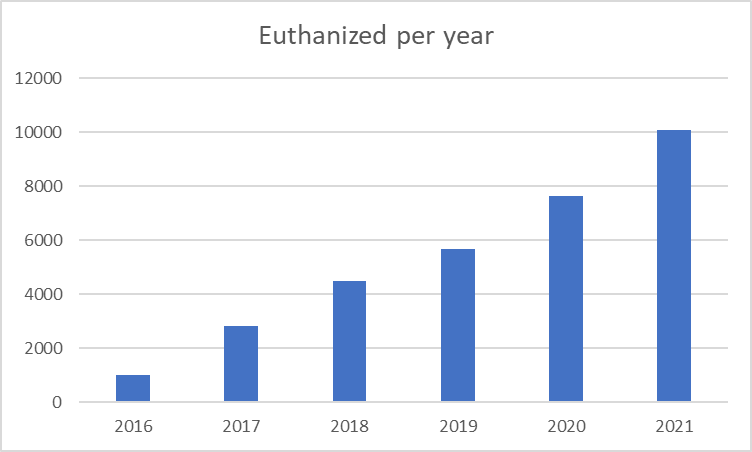
Figure 1: Number of state sponsored deaths per year
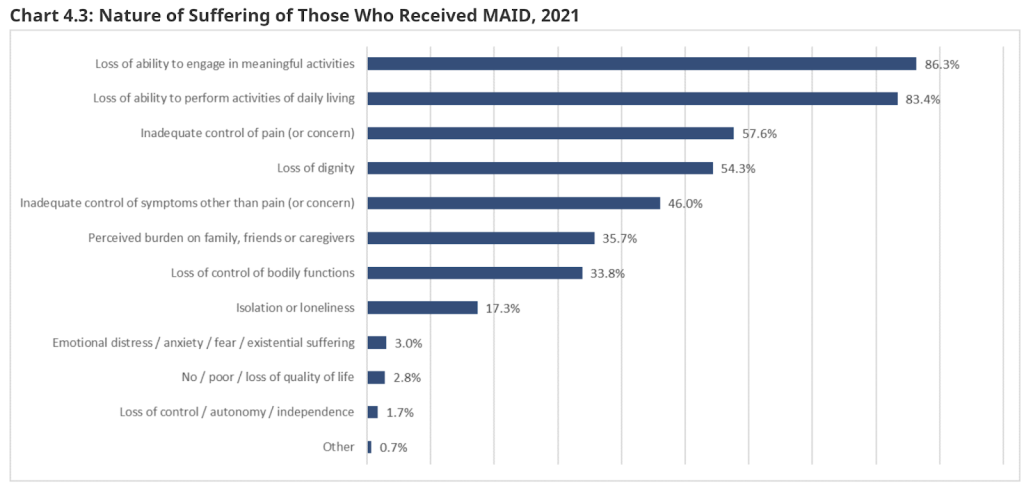
Figure 2: Reasons given for undergoing euthanasia in Canada.
The line in the sand that you do not kill has been utterly trampled over in Canada. Even the religious have lost their moral compass over this. One woman was killed by doctors in her church while religious leaders prayed over her. The church leaders claimed no-one expressed concern about this happening in a church.
Having crossed the line of “do not kill” there seems to have been little thought about drawing a new line in the sand that must not be crossed. There seems to have been little consideration of who and how many should be involved in the decision making. Note that more than a third of those killed felt they were a burden and one in six felt isolated or lonely (figure 2).
One of the most alarming developments from the implementation of MAiD is the case of a Canadian man who was approved for euthanasia due to his dire financial condition. This case underlines a chilling progression from euthanasia as an option for those in unbearable physical pain to a choice for individuals facing socioeconomic challenges. A survey showed that 28% of Canadians support euthanasia for homelessness and 27% for poverty. One family reported to the authorities the death of their depressed loved one in a hospital, where he was killed despite concerns being raised by the family and by nursing staff that he lacked capacity.
The notion of the ‘slippery slope’ is rooted in psychological research, particularly in relation to moral decision-making. An example is an experiment published in the Journal of Applied Psychology. It was found that participants were more likely to cheat when the reward started at a small amount and gradually increased. This gradual acceptance of unethical behaviour over time underscores the crux of the slippery slope effect.
By allowing euthanasia for individuals suffering physical pain, Canada may have unknowingly trampled on the path of ethical ambiguity, leading to euthanasia being used as a solution for conditions like poverty. This parallels the gradual acceptance of laws, cultural trends, and political misconduct that were initially unthinkable.
Drawing parallels with the regulation of public health, a similar ‘slippery slope’ scenario can be observed. While the intention behind banning smoking in public spaces was laudable, this move empowered public health bodies to impose further restrictions, gradually leading to what some critics label a ‘public health totalitarian state.’
To counter the ‘slippery slope’, researchers recommend a ‘prevention focus’, a psychological strategy emphasising vigilance and security. This approach involves considering the potential losses and negative outcomes of decisions before implementing them. Had this approach been more central to the discussion around MAiD, Canada might have avoided some of the ethically contentious situations it now faces.
Euthanasia is now legal in Belgium, Canada, Colombia, Luxembourg, Netherlands, New Zealand and Spain and parts of Australia. It is important that we start a public debate now. It is all the more important given that over the last few years it has become clear that we are living in a society with no respect for bodily autonomy. How long before it is accepted that “being a burden” is a just reason for killing. How much longer before people without capacity are considered to be too much of a burden?
The Canadian example underlines the dangers of the slippery slope in legalising euthanasia. The country’s experience shows that while euthanasia may be intended for individuals in unbearable physical pain, its application can gradually expand to cover other conditions, blurring ethical boundaries. It serves as a cautionary tale for other countries debating euthanasia legislation, urging them to consider potential ‘slippery slope’ implications before taking a decision.
Choked to death by hospital guards, for wearing a Covid mask too low
By Paul Stevens | TCW Defending Freedom | June 6, 2023
May 27, 2023 marked three years since the death of Stephanie Warriner. A coroner’s report records that this was the result of brain injuries consistent with ‘restraint asphyxia following struggle and exertion’, suffered more than two weeks earlier whilst a patient at Toronto General Hospital (TGH), Ontario. Stephanie’s alleged crime was failing to wear a Covid face mask properly. I recommend pausing to take that in.
Stephanie, 43, was a slight figure, 5ft 5in and 120lb. Having experienced long-term mental illness, including bipolar disorder and post-traumatic stress disorder (PTSD), and diagnosed with chronic obstructive pulmonary disease (COPD), the mother of five was admitted to TGH on May 10 with what a civil suit filed by her family describes as a ‘productive cough’. A Covid test had been negative. Having gone in search of a sandwich in the early hours of May 11, she was confronted aggressively by five personnel, four of them security guards, about her improper use of a face mask, which they said was worn too low.
As recorded in the civil suit document, after being ‘berated’ and ‘demeaned’ by guards, Stephanie was forced towards a wall, thrown to the ground and restrained, with weight applied to her back. During this time she was forced into handcuffs. Once the guards removed their weight from her back, she was seen to be ‘limp and lifeless’ but they did not attempt resuscitation or call for help. Instead, they placed her in a wheelchair and removed her from the view of security cameras and witnesses.
About ten minutes later the guards, moving her body into an elevator bay, attempted to resuscitate her but, as the coroner’s report noted, because of the ‘downtime’ between the damage being incurred and measures being taken, she developed a brain injury from which she never recovered.
The majority of the incident was captured on CCTV and may be viewed here. (You will notice that during recording, the CCTV camera appears to be moved. More about this later.) As a result of the restraint, Stephanie went into cardiac arrest, but did not die immediately. In fact, she lived for another 16 days, being first intubated and placed in intensive care and then transferred to Toronto Western Hospital on May 15. No attempt was made to contact her family until May 22, a full 11 days after the incident.
In July, two of the guards were dismissed and two were the subject of unspecified ‘internal disciplinary action’. According to a media report, at this time Toronto police said investigators were ‘awaiting the results of a full autopsy and that the case was in its early stages’. Five months later Stephanie’s sister, Denise, was still awaiting information from the police. Finally, in early December 2020, two guards were each charged with two counts of criminal negligence causing death and one count of manslaughter.
In November, 2022, two and a half years after Stephanie’s death, an Ontario judge quashed the case against the two guards, due to come before a jury last month, saying there was ‘a lack of admissible evidence to support the findings necessary for making a placement order on both counts’. Subsequently, the Federal government declined to pursue further criminal action. This despite the coroner’s report and other evidence, such as the CCTV video and court documents submitted by the Crown for an earlier preliminary hearing which contain evidence that one of the guards lied in his deposition, having initially claimed that Stephanie had ‘delivered several overhand and underhand punches to [Guard A’s] face and was kicking her feet’, but then ‘later on, [Guard B] began sobbing and admitted he had not been truthful in the report, saying: “I’m sorry. I would have never said the things I said in there if I knew there was a video”.’
Speaking of the CCTV footage, over two minutes of it has never been seen – and never will be. During Stephanie’s interrogation and restraint the camera was intentionally moved to point elsewhere. The guard monitoring the CCTV from the security office claimed that he ‘suffers from anxiety’ and moved the camera because he was ‘anxious and concerned about the altercation and use of force between [Guard A] and Stephanie’. In their civil suit, her family make it clear that they believe the camera was moved to ‘shield the other defendant guards from any potential criminal liability’.
This tragedy was the direct result of the febrile atmosphere and enforcement of unevidenced, irrational and petty Covid mask rules. Contrast Stephanie’s case with that of George Floyd, a black man who died in police custody that same month in Minneapolis. Protests were everywhere across the US and the entire world. Movements such as Black Lives Matter (BLM) sprang up. People were ‘taking the knee’ and filling their social media profiles with BLM images. There were calls for police forces to be defunded. Floyd himself achieved something close to beatification, with statues and wall paintings appearing widely. His police attackers received hefty prison sentences.
Stephanie Warriner? Nothing. Not a squeak. Because of a police and judicial embargo, it was barely a month ago that the public could even see the video and read about her death. Those who were implicated have walked free. And the health network which owns Toronto General and Toronto Western hospitals still tells us on its website that ‘in 2019, Toronto General was named among the world’s Top 10 Hospitals by Newsweek magazine’. It insists that its priorities include being ‘compassionate and caring’ with a focus on ‘quality and safety’.
Stephanie Warriner died, at the age of 43, for wearing a Covid face mask improperly. This in the very same city of Toronto where nurses unions’ had twice – in 2015 and 2018 – won cases against hospitals seeking to mask them at work over influenza, with the evidence in favour of masking ruled ‘insufficient, inadequate and completely unpersuasive’. As with so much harm which has been done to so many people in the name of ‘safety’ these past three years, it appears no one in authority questions this, much less cares.
Chinese ‘Secret Police Stations’… Fact or Fiction?
Canadian Patriot | May 28, 2023
In this first of a series of Canadian Patriot short films debunking anti-China Psyops, we ask the question ‘Is there actual evidence that secret Chinese Police Stations have been set up around the world as part of a Communist subversion of western freedom? This film will evaluate whether the single source used to justify this claim (a Spain-based human rights group called Safeguard Defenders) actually proves its accusations, and what actually controls it?
Stay tuned for future videos in this series which will investigate claims of Chinese election interference in Canada, Russian interference in the USA, Chinese spy balloon attacks, and more.
To pick up a copy of Breaking Free of Anti-China Psyops, click here:
https://canadianpatriot.org/2022/12/03/new-release-breaking-free-of-anti-china-psyops-how-the-cold-war-is-being-revived-and-what-you-can-do-about-it/
Support the Canadian Patriot Review in the following ways:
1) Make a donation to the Canadian Patriot
www.patreon.com/canadianpatriot
canadianpatriot.org/support-us/
2) Subscribe to Matt and Cynthia’s Substack
matthewehret.substack.com
cynthiachung.substack.com
3) Buy some books!
https://canadianpatriot.org/untold-history-of-canada-books/
4) Subscribe to our Telegram Channels
t.me/CanadianPatriotPress
Since it is likely just a matter of time before this Youtube channel gets suspended again or taken down entirely, check out our alternative platforms:
On Rumble
rumble.com/user/MattEhret
On Bitchute:
www.bitchute.com/channel/FPD8fbk6o541/
Former CBC reporter says outlet suppressed negative stories about COVID shots, lockdowns
By Anthony Murdoch | LifeSiteNews | May 25, 2023
OTTAWA, Ontario – A former journalist who worked for the state-funded Canadian Broadcasting Corporation (CBC) shockingly revealed that reporters were stopped from being able to cover stories critical of COVID vaccines and lockdowns, and were instead encouraged to push government “propaganda.”
The shocking revelations were made by past CBC Manitoba reporter Marianne Klowak during testimony at the National Citizen’s Inquiry (NCI) on May 18 in Ottawa.
“I know that as a public broadcaster, you’d expect us to be telling you the truth, and we stopped doing that,” said Klowak.
“And it was a number of stories that I have put forward that were blocked, but it seemed to me as a journalist who’d been there 34 years, it’s like the rules had changed overnight. And it changed so quickly that it left me just dizzy.”
Klowak noted that it was her editors who prevented her from doing stories in relation to protests against the COVID mandates, as well as reports of people having adverse events to the COVID shots, as reported by doctors.
She noted she had “witnessed in a very short time the collapse of journalism, news gathering, investigative reporting,” adding that the way she “saw it” is that “we were in fact pushing propaganda.”
“Not only had we shut down one side by silencing and discrediting anyone opposing the narrative, we had elevated and designated ourselves as gatekeepers of the truth. We no longer believed our audience was capable of thinking for themselves,” she told the NCI.
Klowak said a story of hers about a woman who had a COVID vaccine injury was completely neutered, or in effect “sanitized.”
“It should be just a straight story about someone who suffered an adverse reaction and we shouldn’t downplay it,” she noted.
“Instead, the way I saw it, her story was buried in experts and health officials and stats, which sanitized it.”
Klowak admitted that journalists “failed to hold power to account and no one was holding the media to account.”
In July of 2022, Klowak revealed that the CBC deliberately skewed its reporting on COVID-19 inoculations.
She said that CBC was “canceling one whole side of the debate” as the experimental COVID-19 shots became available across the world.
The NCI is a citizen-led and citizen-funded independent initiative investigating the government’s response to the COVID so-called pandemic.
At the inquiry in Ottawa as well, Dr. Christopher Alan Shoemaker, a Canadian doctor with 45 years of experience, testified about the injuries correlated with the COVID-19 mRNA injections, notably the jab’s effects on kids and reproductive health.
Shoemaker had his medical license suspended in January of 2022 by the College of Physicians and Surgeons of Ontario (CPSO) because he spoke out against the COVID shots.
As for Klowak, she left the CBC in late 2021. Since then, other CBC reporters have left over what they also see as biased COVID news coverage.
In January 2022, journalist Tara Henley quit for similar reasons, saying, “Those of us on the inside know just how swiftly — and how dramatically — the politics of the public broadcaster have shifted.”
About a month ago, retired Canadian Lt. Col. David Redman testified before the NCI that legacy media outlets such as the CBC are “ministries of propaganda.”
Many have accused the CBC and other media outlets of holding a pro-government bias because of those outlets’ ties to public funds.
In 2019, Prime Minister Justin Trudeau promised that his Liberal government would give legacy media, including the Canadian Broadcasting Corporation (CBC), an extra $595 million in federal assistance over the next four years.
Per its 2020-2021 annual report, the CBC receives about $1.24 billion in public funding every year, which is about 70% of its funding.
Despite these efforts, the Department of Canadian Heritage recently admitted the “bailout” of media has not worked in helping to prop up legacy media outlets.
Canada’s ‘shocking’ new report on foreign interference has found none
By Rachel Marsden | RT | May 27, 2023
The special rapporteur tasked by the Trudeau government with looking into foreign interference in Canadian politics didn’t find much. But he said he’ll nonetheless hold a “series of public hearings with Canadians” to talk about the “problem of foreign interference,” which he couldn’t really qualify with much actual evidence.
Former Canadian governor general David Johnston took all of two months to come up with his report, sparked by allegations that China had meddled in recent Canadian federal elections. The hysteria had reached such fever pitch that Ottawa expelled Chinese diplomat Zhao Wei after allegations arose in the Canadian press that China had threatened the Hong Kong-based family of Canadian member of parliament, Michael Chong. But after talking to Canadian spy services, Johnston said he found “no intelligence indicating that the PRC took steps to threaten his family.”
He did find evidence that Chinese officials had “sought to build profiles” on this MP and others. Oh wow, stop the press! Because some people might be shocked to learn that the actual job of diplomats serving in foreign countries is to liaise with local officials to advocate in favor of cooperation that’s self-serving to at least some degree, although ideally mutually beneficial as well. And to do that, you probably want to make sure that you know something about the guy to at least the same degree that a used car salesman would make an effort to know what would interest or appeal to a specific customer – if only because national interests should ideally be worth as much as a Twingo.
Your neighbor compiling a dossier on you is creepy. A diplomat compiling a dossier on a government official he’s dealing with is just basic professionalism.
Johnston also found that there was no shady partisan favoritism of one party over any other by Chinese officials in Canada, contrary to reporting that suggested favoritism of Liberals over Conservatives. It’s not as though either of the establishment parties is friendly towards China. Johnson said Chinese officials were more interested in supporting pro-China candidates, but also had to point out to the pearl-clutchers that a foreign diplomat saying he or she favors a particular candidate in a foreign election isn’t actually foreign interference. After all, Western officials couldn’t shut up about how much they wanted former President Donald Trump to lose to whomever the Democrats put up against him in the last two US elections. So if that’s not foreign interference, then why should other countries be held to a different standard just because they aren’t in the same club?
There have been press allegations that China sought the electoral defeat of certain candidates, like former Conservative MP Kenny Chiu, who sponsored foreign agent registry legislation. However, Johnston found that, while “it is clear that PRC diplomats did not like Mr. Chiu, who is of Hong Kong descent and not from mainland China… it is much less clear that they did anything particular about it” beyond not inviting him to their sponsored events.
Despite the lack of qualified evidence of interference in the report, and the focus on a single country – China – Johnston nonetheless came to the conclusion that “there is no doubt that foreign governments are attempting to influence candidates and voters… This is a growing threat to our democratic system and must be resisted as effectively as possible by government.”
No need to dig further, Johnston figures, discounting a public inquiry in favor of “public hearings.” But doesn’t that risk just batting around all the various fallacies and misconceptions that have been put out there by the Western press and officials – like those that Johnston himself had to correct in his report? Without an objective and full inquiry, the opportunity to exploit hearings to promote propaganda seems substantial. What about Ukrainian influence on Canadian politicians? Or Israeli influence?
Johnston focuses exclusively on China, and takes the odd swipe at Russia, in passing, but never mentions the kind of foreign interference brought to light at the recent French National Assembly commission into the same subject.
“Foreign interference, yes, I encountered it. Most of the time, it came from a friendly and allied country called the United States. I was listened to with President Sarkozy for five years by the NSA,” said Sarkozy’s former prime minister Francois Fillon. He confirmed WikiLeaks disclosures from US intercepts published in 2015 indicating that the National Security Agency was conducting electronic surveillance of French officials from the American embassy in Paris. Or that it was listening in on conversations of German allies at the highest level, including those of then-Chancellor Angela Merkel.
“I was not directly affected by Russian interference,” Fillon clarified, noting that like all great powers, Russia tries to “assert its point of view,” but that didn’t happen with him personally when he was in office. So then why make such a big deal about it, unless it’s just for propaganda purposes?
Canada, like Europe, suffers from tunnel vision when it comes to protecting its own interests and independence. The proof lies in the fact that both have failed to diversify away from their chronic over-reliance on the US. While it makes sense that the country sharing the world’s longest land border with the US would go for the low-hanging fruit when it comes to trade, it would nonetheless be interesting to qualify the pressures on Canadian officials and critical interests that have resulted in the Canadian establishment marching in lockstep with Washington, repeating the same propaganda and naming the same foes.
The idea that the US – the most powerful country on Earth – has absolutely no influence on its resource-rich next-door neighbor is absurd. The fact that the influence is so systemic that it’s not even worth a glance or a mention in a report into foreign interference is glaring. Does the Canadian government care to look under that rock? Or are they just going to keep scapegoating Russia and China when the most existential, insidious threat to Canadian independence lies inward and southward?
Canada’s Liberals Try To Defend Plan To Target Anonymous Social Media Accounts
By Didi Rankovic | Reclaim The Net | May 17, 2023
Canada’s ruling Liberals have found themselves accused of working against free press, as they continue their “war on misinformation.”
This time, the Liberals were caught doing this during their party congress that saw attendance from members coming across the country, and one of the things they did was pass a resolution – albeit a non-binding one – regarding the need to tackle “online misinformation.”
Not only are critically minded observers interpreting this as yet another danger likely to be faced by the free press, but how the document was adopted was also not particularly democratic in nature – the vote took place with no prior debate.
And it was on a Saturday morning that this “slipped through” and made it into the convention’s documents, albeit with only a couple of dozen party delegates present and willing to vote.
However – non-binding or otherwise, the intent is clearly there, and now the fear is that the government will find a way to work it into its policy with the aim of increasing control over Canadian media.
For the moment, the facts are that the resolution calls for “exploring options” (a habitually broad wording of initiatives of this sort) that would result in the accountability of internet services for the content they publish.
And, importantly – also exploring options – as to how to “limit” that content from being published on the services’ platforms, but no less importantly, “limit” that content “only to material whose sources can be traced.”
It wasn’t long before observers saw parallels with the way media, and online content is treated here in a way some saw as telling not merely of being “repressive” – but even “more repressive,” than some other regimes, than that in power in Canada.
From CBC (emphasis ours):
“The office would not say whether that means the government will commit to never implementing the resolution.
Responding to criticism Monday, the author of the resolution, B.C. Liberal Catherine Evans, said the policy was never intended to “target reputable Canadian journalists” but rather to combat disinformation people post anonymously online.”
Those who thought officials like Canadian Heritage Minister Pablo Rodriguez – who has managed to make an (international) name for himself for all the wrong reasons – would come out and say, yes – this is the natural progression of the course our policy has been taking for years toward tighter control over information, by often revealing it as “disinformation” for ease of elimination – will be disappointed.
Instead, Rodriguez is quoted as telling CBC News that, “A Liberal government would never implement a policy that would limit freedom of the press or dictate how journalists would do their work.”
And apparently we have to take his word for it.
Who is behind Canada’s state-level Sinophobia?
By Timur Fomenko | RT | May 11, 2023
On Tuesday, China and Canada engaged in a tit-for-tat expulsion of diplomats. The row was triggered by allegations that Chinese diplomat Zhao Wei had“interfered” in Canadian politics, apparently targeting anti-China Conservative MP Michael Chong.
The claims created a media firestorm in Ottawa after the Canadian Secret Intelligence Service (CSIS) reportedly accused “an accredited Chinese diplomat” of targeting Chong. Justin Trudeau’s government, under political pressure from the opposition, subsequently decided to act.
This row isn’t the first to derail relations between China and Canada. It’s one of many, including Ottawa’s decision to arrest Huawei executive Meng Wanzhou in 2018, China’s retaliatory arrest of Canadian nationals Michael Spavor and Michael Kovrig, Ottawa’s sporadic allegations of Chinese interference, and then Xi Jinping’s harsh rebuke of Trudeau on the sidelines of the G20 summit last November. It’s fair to say that relations between the two countries are in a state of freefall. But the question might be asked, who is the real culprit here? Or more to the point, who governs Canada?
Allegations of foreign interference are a funny thing, because they tend to only be used against countries who represent an ideological or cultural “other.” They never focus on certain “allied” countries that actually do interfere in the nation’s politics, controlling its media and political discourse, while using think tanks, often sponsored by military and government bodies, and to deliberately cause controversies in Canada in order to steer the country in a certain direction. It seems, for example, very fishy that in the midst of this whole saga, the US-sponsored Center for Strategic and International Studies think tank published an article calling for Canada to join AUKUS, the Australia, UK, US Pacific military alliance.
If it was not obvious enough already, no country has interfered in Canadian politics more than the United States. Although Canada appears more “progressive” and “forward-thinking” than its southern neighbor in many respects, the reality is that Ottawa is a loyal and obligated follower of the US and steadfast in its commitment to Anglophone exceptionalism. Although Canada is geographically larger than the US, its population is about 10% the size and as such, it is strategically, economically, culturally, and geographically dominated by Washington, giving it very little leverage in its foreign policy direction.
Arguably, out of all the Five Eyes nations (US, UK, Canada, Australia, New Zealand), these realities mean Canada has the least political autonomy and space to pursue its own foreign policy path. While under Trudeau the country is not as openly aggressive as it might have been under its conservative prime ministers, the US has been deftly manipulating Canadian politics by either driving through “wedge issues” such as arresting Meng, or using economic leverage to coerce Canada into making anti-China commitments. The United States–Mexico–Canada Agreement (USMCA) and its “poison pill” clause, which allows the US to terminate the entire agreement if Canada enters into a free-trade agreement with a “non-market” economy (i.e. China), is an excellent example.
Likewise, through the Five Eyes mechanism, the US exerts direct influence over Canada’s intelligence service, the CSIS, which in turn, then cooperates with and manipulates the Canadian mainstream media through newspapers such as the Globe and Mail. This has long been revealed in detail by Canadian investigative website The Canada Files. With Canada having a higher percentage of ethnic Chinese residents than any other Anglosphere country, amounting to nearly 5% of the population, this has been weaponized into a wholesale “yellow peril” narrative. While Canada is seemingly more progressive, one should note that beneath the surface, the foundation of the country and its heritage is built on racism. The liberal image of Trudeau’s government, for one, is easily overshadowed by the dark legacy of indigenous boarding schools, wherein thousands died at the hands of authorities in what is considered genocide by many.
Yet, despite this heritage, Canadian politicians regularly point fingers at China, accusing it of genocide of Uyghurs, especially figures such as Chong, who sponsored a 2021 motion to that end. This demonstrates the problem the country faces. Who really governs Canada, and which country is actually interfering in its politics? The fact that Ottawa is repeatedly roped into supporting Washington’s preferences, policies, and worldviews is not so much an alliance bound by common values as it is full-scale manipulation of the country’s politics. The US baits Canada into making abrasive and rash moves which provoke China, only for Beijing to respond, and then for Ottawa to frame itself as the victim. But is this narrative really true? Canadians ought to think about who the real culprit is here.
Canada Liberal’s Assault on Press Freedom: The Plot To Censor ‘Untraceable Sources’

By Dan Frieth | Reclaim The Net | May 7, 2023
During the Party National Convention, the Canadian Liberals discussed a proposal for online news publications whose sources cannot be verified to be censored. The proposal was titled “Combatting Disinformation in Canada.”
A section of the proposal read, “BE IT RESOLVED THAT the Liberal Party of Canada: Request the Government explore options to hold on-line information services accountable for the veracity of material published on their platforms and to limit publication only to material whose sources can be traced.”
We obtained a copy of the proposals for you here.
The relevant section is here:

It also suggested that the government “provide additional public funds to support advertisement-free news and information reporting by Canadian media through an arm’s-length non-partisan mechanism.”
The chair of the internet and e-commerce law at the University of Ottawa, Michael Geist, warned that the proposal is an attempt by the government to restrict “freedom of expression.”
“Liberal Party policy proposal calls for online information services ‘to limit publication only to material whose sources can be traced.’ An obvious violation of freedom of expression was voted as one of the top 20 policy resolutions for party discussion,” Geist wrote in a tweet.
In a blog post, he explained that while it is unclear what the Liberal Party means by “online information services,” the resulting “outcome is dangerous no matter the scope.”
“Is this all news outlets with a focus on their online presence? Is it online-only news sources? Is this far broader and designed to encompass Internet platforms such as Google, Facebook, Twitter, and TikTok (note the reference to “platforms”) with requirements that they be held accountable for posts without traceable sources,” Geist said.
“The implications of the government engaging in this form of heavy-handed speech regulation are dangerous in all of these circumstances. Sourcing is an important issue in the media and the government cannot claim to support press freedom and simultaneously back policies that intervene in sourcing.”
More:
Featured Video

Total War – Attacking Nuclear Plants, Desalination & Infrastructure
or go to
Aletho News Archives – Video-Images
From the Archives
Strike on Israel Shows US Bases Near Iran Are ‘Achilles Heel’
By Svetlana Ekimenko – Sputnik – 14.04.2024
Fears of a greater Middle East escalation were triggered after Iran launched a massive drone and missile attack against Israel, aided by Hezbollah and the Yemeni Houthis. Iran said the attack was in response to Israel’s bombing of the Iranian consulate in Damascus, Syria, which killed seven members of the elite Revolutionary Guard Corps.
Iran’s massive retaliatory attack on Israel from its own territory is a sign that the conflict could “escalate out of control.”
Michael Maloof, a former senior security analyst in the office of the US secretary of defense, told Sputnik that the first ever direct Iranian attack on Israel set a dangerous precedent.
“My concern is that this could easily escalate into something not only between Iran and Israel, but beyond the Middle East region,” he said.
Iran’s assault, which it stated was an act of “self-defense” after the Israeli strike on its consulate in Damascus, was originally intended to be a “limited” one, said Maloof.
Iran first sent in “swarms of drones with lights on as a sign of psychological warfare,” but sending in cruise and ballistic missiles by Tehran was a “distinct escalation,” said Maloof.
The scale of Iran’s attack on Israel suggests that Tehran was sending a message, demonstrating that it possesses “extraordinary capabilities,” said Maloof. … continue
Blog Roll
 Aletho News
- Pakistan PM backs Iran’s right to self-defense amid tensions
- Hungary blasts ‘fake’ EU accusation
- SAFE Debt Trap: Poland’s €43.7 Billion Bet on Unipolar Illusion
- War on Iran threatens global Gulf capital flows: FT analysis
- Mossad De Facto Admits To Inciting Riots In Iran
- Tehran: World grown thoroughly exhausted with US-Israeli ‘false flag storylines’
- Trump ‘stuck between a rock and a hard place’, lacks Iran war strategy: Ex-CIA chief
- Trump’s bombardment of fake news so far is working quite well. But where is it heading?
- Iran to Mine Sea Lanes in Persian Gulf in Case of Attack – Defense Council
- Barak blasts Netanyahu: ‘Stop lying – you can’t destroy Iran’s nuclear, missile capabilities’
- If Americans Knew
- From Sde Teiman, the truth about Israel’s military justice system has been set free
- Child denied life-saving bone marrow transplant by Israel ‘because he is from Gaza’
- Raffi Berg: BBC Middle East Editor Exposed as CIA, Mossad Collaborator
- Jerusalem Archbishop Rebukes Netanyahu’s Statements on Christianity
- US to embed Palantir AI across entire military: Report
- Israeli-US war on Iran to drag on “a few more weeks” – Not a ceasefire Day 164
- Lebanon deaths top 1,200; Palantir AI to be embedded across US military – Not a ceasefire Day 163
- Israel’s assassination game: Take all pragmatists off the board
- Food shortages return to Gaza as Israel tightens aid restrictions under the cover of its war on Iran
- Trump demands trillions in payments from Gulf countries, billions from Harvard – Not a ceasefire Day 162
- No Tricks Zone
- New Study: CO2 Is ‘Effectively Negligible’ As An Explanatory Climate Change Factor Since 2000
- Former Pfizer Toxicologist Dr. Helmut Sterz Tells Bundestag Hearing Pfizer Vaccine Should Have Never Been Approved
- Energy Expert: Germany’s Nuclear Phaseout Was A “500 Billion Euro Mistake”
- New Research: South Australia’s Mid-Holocene Sea Surface Temperatures Were 4°C Warmer Than Today
- Storing Green Energy To Last Germany 10 Days Would Require A 60-Million Tonne Battery
- New Studies: UK Sea Levels Were 4 Meters Higher Than Today During The Mid-Holocene
- Destructive Green New Deal: German Energy And Metal Group Warns Of Drastic Crisis
- New Study Documents A 20-Year Pause In Arctic Sea Ice Decline – Driven By Internal Variability
- Wake-up Call: Survey Shows Majority Of Germans Now Favor Postponing Climate Targets!
- Televised! Leading German Political Candidate Tells Schoolchildren CO2 Makes Sun Hotter!
 Aletho News