The Tragic Consequences of believing Anti-Science
The Naked Emperor’s Newsletter | January 17, 2023
I try not to write about anyone who has died because if it was my family member I would not want to read any speculations about their death. However, in this case I feel that justice has not been given a chance and therefore it needs highlighting.
The tragic story begins on 10 May 2020. Stephanie Warriner, who had chronic obstructive pulmonary disease (COPD) attended Toronto hospital because she was struggling to breath.
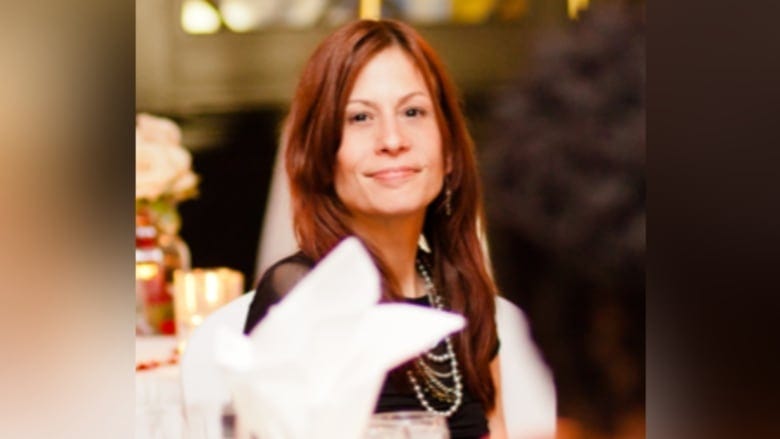
This is where the first piece of anti-science takes place. A population whipped up into a frenzy about Covid is on high-alert. They have been convinced that touching a parcel which hasn’t been quarantined for at least 72 hours, is likely to be riddled with the new virus and will cause them to die. Therefore, anyone with a cough is a walking weapon.
Due to Stephanie’s cough she was assumed to be COVID positive – anti-science mistake no.1. She was therefore placed in the Covid ward. Later, after testing it was found that she was in fact negative.
After a night in hospital, Stephanie left the Covid ward to go and get some food. Sitting in the hospital lobby she committed the terrible anti-science crime of wearing her mask around her neck.
Anti-science mistake no.2. People have been told that useless masks will stop people transmitting a virus. There’s no need to go into the science of it but let’s put it this way, an asbestos removal man doesn’t wear a loose piece of cloth to stop him getting lung cancer.
This was in 2020, before vaccines, so people couldn’t release their pent up fear by getting aggressive with the vaccine hesitant. Instead this pressure-release valve was opened up on the maskless.
At 6.38 a.m. a nurse and a security guard approach Stephanie and are seen talking to her. Another security guard and another member of staff are close behind. Remember Stephanie has her mask on her chin so is extremely dangerous, four people are required.
In the video, it seems like the nurse is angrily telling Stephanie something, to which Stephanie stands up, gently pushes the nurse and tries to walk off. The nurse then bundles her against a wall and the security guard assists.
At this point, the CCTV operator turns the camera away from the scene. Moments later, at 6:41, the video captures a motionless Stephanie being wheeled away from the scene by the pair that bundled her into the wall. Her feet drag along the floor showing that she is clearly unconscious.
As CBC News reports, much of this information has been subject to a publication ban until now. The reason being that the case has now been quashed and the Crown won’t appeal.
That’s despite the available video footage, two security staff who testified the accused placed weight on her upper body while she was held chest down, a forensic pathologist who testified Warriner would still be alive had she not been restrained that day — and revelations one of the guards admitted he falsely claimed Warriner threw the first punch.
Toronto criminal lawyer, Frank Addario, said “to see a judge decide to quash a case in this way is rare”. ”It’s not common for a judge to screen out a case before it’s set for trial… The system is set up so after a preliminary inquiry, the cases are generally sent on to trial because the bar to get a case sent on to trial is very low.”
There was no CCTV footage of the incident because the guard in charge of the camera “panicked” and “got really anxious”, so panned away.
The nurse claimed she took Warriner to the wall “as a last resort, after extensive efforts to verbally de-escalate an aggressive patient”. However, the nurse’s supervisor testified that he felt her actions were wrong.
Two eye witnesses said that 125-pound Stephanie was held down by her upper body despite training and policies warning not to. Both guards claimed this was because Stephanie repeatedly assaulted the nurse but during an internal investigation this turned out to be false. The guard said Stephanie punched the nurse’s face and was kicking but after being confronted with footage he sobbed “I’m sorry. I would have never said the things I said in there if I knew there was a video”. Got to love genuine remorse.
A coroner’s report would conclude Warriner died from a brain injury resulting from a lack of oxygen “due to restraint asphyxia following struggle and exertion,” with her underlying lung disease a possible factor.
Disgusting behaviour.
Tragically, Stephanie lost her life because of anti-science. Anti-science, together with fear, made people believe that the world would end if a piece of cloth was not worn on one’s face correctly. It also gave the power-hungry an excuse to target people who were just minding their own business.
And it seems anti-science is playing its part in the justice system as well. Whilst we don’t know all of the facts that made the Judge quash the case, the CBC article hints at this not being normal. The Judge even noted that “there is evidence that death could have been the culmination of the factors he [the forensic pathologist] described”.
Anti-science killed a lot of people over the last few years and this is just one, tragic and specific example of that.
Fortunately, with enough data analysis and push back, the anti-science was shown for what it truly was. Otherwise, tragic stories, such as Stephanie’s, would still be happening today (maybe they still are but hopefully to a lesser extent).
RT France Head Announces Broadcaster’s Closure After Paris Blocks Its Accounts
Sputnik – 21.01.2023
On the air in France, Belgium, Canada, Switzerland, and Mediterranean countries since 2017, RT France quickly became one of the largest alternative Francophone news broadcasters in Europe and North America. RT France was banned from broadcasting throughout the EU and Canada in early 2022 for providing a Russian perspective on the Ukraine crisis.
RT France has announced its closure after the blocking of its bank accounts in France.
“After five years of harassment, the authorities in power have achieved their goal, the closure of RT France,” the broadcaster said in a press statement tweeted out by Editor-in-Chief Xenia Fedorova on Saturday.
“Under the cover of the 9th package of sanctions against Russia, which does not target our channel, but its shareholder and parent company, the Directorate General of the Treasury decided to freeze the bank accounts of RT France, making it impossible to continue our activity,” the statement explained.
The broadcaster cited a series of recent articles and columns in French media which it said was designed to smear RT France and take it off the air.
“Clearly working with the authorities, some of our colleagues confused their role as journalists with that of policemen or judges, calling… for censorship of our media, and not hesitating to resort to false information, claiming, for example, that the activity of RT France was prohibited or illegal,” the statement said.
After an EU blanket block against Sputnik and RT in early 2022, RT France continued broadcasting online and via a Russian satellite, and its content accessed via VPN or social media.
In Saturday’s statement, the broadcaster recalled that it has been the target of forces seeking to shut it up since its launch for offering a “breath of fresh air” in an “ever-less representative and increasingly narrow media world, where critical thinking is no longer allowed.” The channel expressed pride in the “seriousness and rigor” of its coverage, and stressed its keenness to “present all opinions, give everyone a voice,” and “dare to question” – to quote its slogan.
The broadcaster emphasized that its coverage of the conflict in Ukraine – which got it banned from television broadcast in 2022, was consistently treated in a “vigilant” and “balanced way,” “whatever our detractors, who very often only rarely glanced at our channel, and obviously with a biased way, say.”
“In this particular geopolitical context, the opportunity presented itself to take advantage of this situation to (finally) gag RT France by banishing it from the European Union and from France,” despite the absence of any legal justification, the broadcaster noted.
RT France also lamented that 123 of its French employees, including 77 journalists with press cards, now risk remaining unpaid for the month of January, and losing their jobs by government decree. “Beyond the terrible economic impact for many families, there is the question of the future of media pluralism in France, its representativeness, and its independence,” as well as “the freedom of thought and expression in our society,” its statement noted.
The broadcaster emphasized that its closure, accompanied by the “deafening silence” of other French media and journalists, is an “extremely dangerous first step, because after our channel other media will be targeted.”
RT France’s bank accounts were frozen this week on the basis of European sanctions adopted last December.
The Russian Foreign Ministry warned Paris that it would retaliate unless French authorities stop “terrorizing” its journalists.
Sputnik and RT Editor-in-Chief Margarita Simonyan blasted the move to freeze the accounts on Friday, sarcastically calling it a true demonstration of “liberte, egalite et fraternite” (liberty, equality and fraternity).
RT France appealed its 2022 ban to the European Court of Justice last spring, but lost, hearing that the broadcaster needed to be silenced “at a time when opinions were forming on the war in Ukraine.”
Alzheimer’s drug approval raises the alarm
Data shows treatment can lead to ‘brain shrinkage’
By Maryanne Demasi, PhD | January 9, 2023
The US Food and Drug Administration (FDA) has granted an accelerated approval of a new treatment for Alzheimer’s disease, which aims to clear toxic amyloid protein build-up in the brain.
At a cost of $26,500 per year in the US (not covered by Medicare or Medicaid), people with early Alzheimer’s disease can receive a twice-monthly monoclonal antibody infusion called lecanemab (marketed as LEQEMBI™), co-developed by Eisai, a Japanese biotech firm, and Biogen.
In the lead up to the FDA’s approval, there was intense lobbying for the drug.
A ‘consensus statement’ signed by over 200 scientists, many of whom had financial ties to the drug companies, described lecanemab as a “foundational gamechanger” for the disease, calling for “no barrier” to the widespread availability of the treatment.
Now that the drug has been approved, advocacy groups like the Alzheimer’s Association, which are heavily funded by the drug industry, have welcomed the news, saying the FDA made “the right decision.”
But critics doubt the benefits of lecanemab outweigh its harms, and are dismayed that the FDA approved the drug without input from its own advisory panel.
Kim Witczak, a drug safety advocate, and member of the FDA’s Psychopharmacologic Drugs Advisory Committee, says she is “shocked” by the latest FDA stunt.
“By approving this new drug without a public advisory committee meeting, the FDA once again has shown a lack of concern for the public, patients, and healthcare providers. Convening its advisory panel would have helped reassure everyone that the FDA’s decision was scientifically sound and transparent,” said Witczak.
“Advisory committee meetings offer the opportunity to discuss the data in an open and public forum, to challenge methods, study endpoints (surrogate vs clinically meaningful), and safety findings before the general committee member discussion. But in this case, none of that was possible,” she added.
The FDA’s accelerated approval process used to green-light lecanemab is known for accepting lower evidentiary standards for drug efficacy, so that patients can gain access to experimental drugs sooner.
Critics say its reminiscent of the FDA’s approval of aducanumab – Biogen’s other Alzheimer’s drug. It was approved on the basis of lowering amyloid protein (a surrogate marker) in the brain, despite no clinically meaningful benefit for patients.
At the time, the controversial decision led to the resignation of FDA advisory member Aaron Kesselheim, who labelled it “probably the worst drug approval decision in recent U.S. history.”
Linda Furlini, a research ethics advisor based in Montreal, Canada says it essentially gives the rubber stamp to similar drugs down the track. “Once you grant accelerated approval of a drug in that class, then it’s easier to get the second drug, and then the third drug approved.”
Jessica Adams, an expert in drug regulatory affairs, agrees. She said, “Lecanemab’s approval shows the power of precedent in regulatory approvals. This is why I scoff whenever the FDA says it still reviews drugs on a case-by-case basis.”
The industry-funded study published in the New England Journal of Medicine, involving almost 1800 people with early Alzheimer’s disease, found that lecanemab could slow the decline of cognition and function by 27% over 18 months compared to placebo.
They used a “Clinical Dementia Rating” scale to show lecanemab patients declined by 1.21 points compared to 1.66 point in the placebo group – a 0.45 point difference in lecanemab’s favour.
But experts question whether the small difference will have any impact on how the patient actually feels.
Madhav Thambisetty, a neurologist at Johns Hopkins University and the National Institute on Aging said, “The benefit appears to be quite small, and it’s unclear how meaningful this might be for patients.”
In fact, the FDA’s own statistician Dr Tristan Massie was uncertain whether “the treatment effect on amyloid is reasonably likely to predict change on the clinical outcome” and considered the results of the study to be “exploratory”.
As a physician who cares for people with Alzheimer’s disease, Thambisetty spoke about the harms of the drug. “These patients can experience headaches, falls, confusion, vision disturbances and it’s unclear if patients will be able to see obvious benefits on a day-to-day basis,” he said.
The data showed an increased risk of brain bleeds and swelling, i.e. amyloid-related imaging abnormalities (ARIA) occurred in 126 (14.0%) of subjects in the lecanemab group and only 69 (7.7%) of subjects in the placebo group.
This prompted the FDA to include a warning on the drug about the risk of swelling and bleeding in the brain.
The drugmakers have also highlighted that people carrying two copies of the APOE4 gene (which predisposes someone to Alzheimer’s) puts them at a particularly “high risk of life-threatening brain haemorrhage.”
Three deaths have been reported in people taking lecanemab; an 80-yr old phase 3 trial participant who suffered intracranial haemorrhage, a 65-yr old who experienced brain swelling and bleeding and a 79-yr old who reportedly had seizures and brain bleed in the open-label phase of the trial.
Two of the three people who died were taking blood thinners, and experts who reviewed the lecanemab death cases suggested that anticoagulant use may have exacerbated the fatal outcomes.
Furlini’s research career has focused on the need to educate and support caregivers of people with dementia-type illnesses.
“You read the list of side effects – you might have gait problems, you might have brain swelling, visual disturbances… I mean, what are we doing here?” asks Furlini, “The patient is already confused and losing their cognitive capacity. How are these serious side effects helping them? It runs counter to any ethical semblance of what is wanted or expected.”
Thambisetty has also expressed concerns about the “brain shrinkage” seen in trial participants taking either lecanemab or aducanumab – increasing doses of the drug correlate to a decrease in brain volume.
“The observation of brain shrinkage is worrisome because, in the absence of compelling evidence to the contrary, it suggests a potential worsening of degenerative changes in the brains of people with Alzheimer’s disease,” wrote Thambisetty in a recent opinion piece for STAT.
The observation has been explained away by researchers who say that a reduced brain volume is due to the clearance of amyloid protein from the brain. But Thambisetty says there is little empirical evidence to support this theory.
Instead, he points to an Australian study which calculated that the clearance of amyloid plaque from the brain was too small to represent a plausible explanation for the loss of brain volume.
US lawmakers launched an investigation into the FDA after the agency’s controversial approval of aducanumab. Last month, a US House of Representatives panel released the report following an 18-month investigation.
The report said the process was “rife with irregularities” and that FDA officials “inappropriately collaborated” with the drugmaker during the approval process which “exceeded the norm in some respects.”
Representatives from the FDA and Biogen engaged in over 100 phone calls or meetings dating back to 2019 in order to expedite the drug’s approval, which lawmakers say, “consisted of atypical procedures and deviated from the agency’s own guidance.”
The congressional report recommended the agency “must take swift action to ensure that its processes for reviewing future Alzheimer’s disease treatments do not lead to the same doubts about the integrity of FDA’s review.”
But critics now say, it’s too late for an agency that has not taken accountability for its actions.
“These drug approvals have just created confusion, uncertainty, fear and misinformation. Then they wonder why people have no trust in their institutions, like the FDA. The world looks to the FDA for leadership. That it does not fulfill its responsibilities, remains the challenge of our times,” said Furlini.
Furlini has followed this area of research for decades and says the drug industry needs to move on from the ‘amyloid theory’ of Alzheimer’s disease and refocus its attention on other causes.
“After so many years, I’m fed up with the exclusive focus on the amyloid theory to the exclusion of other research theories, it’s a disservice to people with Alzheimer’s, and their families,” said Furlini
“There are a lot of buzzwords and marketing propaganda being put out there. And they justify it by saying that you have to give people hope. But you’re giving people false hope. It plays with people’s emotions, which I find horrendous,” added Furlini.
The Final Tally of Purdue Pharma’s Crime Will Be Dwarfed By What Is Now In the Making
By John Leake | Courageous Discourse | January 9, 2023
On October 21, 2020—just six weeks before the Pfizer-BioNTech COVID-19 Vaccine received Emergency Authorization Use in individuals 16 years of age and older—the US Department of Justice announced its Global Resolution of Criminal and Civil Investigations with Opioid Manufacturer Purdue Pharma and Civil Settlement with Members of the Sackler Family. As was stated in the announcement:
Today’s resolution is the result of years of hard work by the FBI and its partners to combat the opioid crisis in the U.S.,” said Steven M. D’Antuono, Assistant Director in Charge of the FBI Washington Field Office. “Purdue, through greed and violation of the law, prioritized money over the health and well-being of patients. The FBI remains committed to holding companies accountable for their illegal and inexcusable activity and to seeking justice, on behalf of the victims, for those who contributed to the opioid crisis.”
It is now high time for the Department of Justice and its FBI agents to investigate how and why regulatory laws and procedures for protecting the public against dangerous medical products were cast aside in order to promote and even force the dangerous mRNA vaccines on mankind.
Federal investigators need to start asking: Why are young athletes dropping on the football field and basketball court? Why are young media commentators dying in press boxes?
The same goes for the Canadian authorities, who need to ask why this CTV reporter collapsed during a live news broadcast. Wake up Mounties! Investigate why this generally fit young woman suddenly collapsed like this.
Canada Purchases 88 F-35 Fighter Jets in $14.2Bln Deal With Lockheed Martin
Samizdat – 09.01.2023
The Canadian government has inked a C$19 billion (US$14.2 billion) deal with Lockheed Martin to acquire a fleet of 88 F-35 fighter jets, Minister of Defense Anita Anand said on Monday.
“Today, I am announcing that Canada is acquiring a new fleet of 88 state of the art F 35 fighter jets through an agreement that we have finalized with the United States government and Lockheed Martin with Pratt and Whitney. This investment is estimated at $19 billion, making it the largest investment in our Royal Canadian Air Force in 30 years,” Anand said during a news conference.
Canada will acquire the aircraft in tranches and the first tranche will include 16 jets, the second in 2026 will include four jets, the third in 2027 will include six jets and the fourth in 2028 will also include six jets.
The rest of the fleet should be delivered by the end of 2032 just in time for the Royal Canadian Air Force (RCAF) phase out of its fleet of CF-18 jets, Anand added.
The defense minister noted that there is no clause in the agreement holding Lockheed Martin accountable for failing in the delivery schedule.
Canada has also acquired more CF-18 units from Australia to supplement RCAF’s fleet in the interim period, Anand said, adding that those are also being upgraded under the so-called Hornet extension project.
“These two initiatives will help extend the life of our CF-18 fleet to 2032 and will allow for a gradual transition from the CF-18 to the F 35,” Anand added.
Jordan Peterson threatened over political tweets
RT | January 3, 2023
Canadian psychologist Jordan Peterson said on Tuesday that may lose his license unless he submits to mandatory “social-media communication retraining” by the College of Psychologists of Ontario, his home province’s licensing authority.
“I face public disgrace, mandatory political re-education, disciplinary hearing and potential loss of my clinical licensing for agreeing with [Conservative MP] Pierre Poilievre and criticizing our standing [Prime Minister] Justin Trudeau,” Peterson said on Twitter.
According to Peterson, “about a dozen people from all over the world” submitted complaints to the CPO, alleging his views and comments “harmed people.” None of them were actual clients of his, but lied about it so their complaints would be accepted, he added.
The CPO demands that Peterson undergoes the “retraining” and submits “progress” reports, or face an “in-person tribunal” and suspension of his license to operate as a clinical psychologist.
“If I comply, the terms of my re-education and my punishment will be announced publicly,” he said.
“Canadians: your physicians, lawyers, psychologists and other professionals are now so intimidated by their commissar overlords that they fear to tell you the truth. This means that your care and legal counsel has been rendered dangerously unreliable,” Peterson tweeted.
Peterson was reinstated on Twitter in November, after Elon Musk bought the company and reversed many prior bans that he thought unjust. He had been locked out of his account in July 2022, for refusing to use a transgender actor’s new name and pronouns.
On December 27, Peterson tweeted that Trudeau “appears to me to be perpetually 14 yrs old,” referring to the concept of “psychological age” in his field of expertise.
The psychologist first gained national and international attention in 2016, when he was subjected to similar “re-education” pressure over his criticism of a bill that declared “gender identity and expression” to be protected categories. More recently, he has denounced the “totalitarian” lockdowns and vaccine mandates embraced by many countries – including Canada – in response to the Covid-19 pandemic.
How Institutions and Constitutional Republics Are Destroyed
Carl Jung’s perspicacious account of mass psychosis
By John Leake | Courageous Discourse | January 1, 2022
In recent years I’ve spoken with a number of parents who have expressed grave concern about what they perceive to be socially divisive, morally corrosive, and politically subversive indoctrination creeping into public education. Many have expressed their suspicion that predatory people have somehow found their way into our schools—people who seem interested in projecting their personal fetishes, obsessions, and resentments onto the souls of children.
Recently I heard a father express concern that gender dysphoric guys like Buffalo Bill in the 1991 film The Silence of the Lambs have landed teaching positions. His reflection was occasioned by reports last September of a male high school teacher in Ontario, Canada wearing titanic prosthetic breasts to his classes—an action vigorously defended by school administrators.

Kayla Lemieux is a manufacturing technology teacher at Oakville Trafalgar High School in Ontario, Canada
The concern that mentally ill people have made their way into our institutions reminded me of an essay that Carl Jung wrote in 1957 titled The Plight of the Individual in Modern Society. His opening reflections strike me as an apt description of the irrational and destabilizing phenomena we’ve witnessed in recent times.
Everywhere in the West there are subversive minorities, who—sheltered by our humanitarianism and our sense of justice—hold the incendiary torches ready, with nothing to stop the spread of their ideas except the critical reason of a single, fairly intelligent, mentally stable stratum of the population. One should not, however, overestimate the thickness of this stratum. It varies from country to country in accordance with national temperament. Also, it is regionally dependent on public education and is subject to the influence of acutely disturbing factors of a political and economic nature.
Taking plebiscites as a criterion, one could, at an optimistic estimate, put its upper limit at about 40% of the electorate. A rather more pessimistic view would not be unjustified either, since the gift of reason and critical reflection is not one of man’s outstanding peculiarities. And even where it exists, it proves to be wavering and inconstant, the more so, as a rule, the bigger the political groups are. The mass crushes out the insight and reflection that are still possible with the individual, and this necessarily leads to doctrinaire and authoritarian tyranny if ever the constitutional state should succumb to a fit of weakness.
Rational argument can be conducted with some prospect of success only so long as the emotionality of a given situation does not exceed a certain critical degree. If the affective temperature rises above this level, the possibility of reason having any effect ceases, and its place is taken by slogans and chimerical wish fantasies. That is to say, a sort of collective possession results, which rapidly develops into a psychic epidemic.
In this state, all those elements whose existence is merely tolerated as asocial under the rule of reason, come to the top. Such individuals are by no means rare curiosities to be met only in prisons and lunatic asylums. For every manifest case of insanity, there are, in my estimation, at least 10 latent cases who seldom get to the point of breaking out openly, but whose views and behavior, for all their appearance of normality, are influenced by unconsciously morbid and perverse factors.
There are, of course, no medical statistics on the frequency of latent psychosis, for understandable reasons. But even if their number should amount to less than 10 times that of manifest psychoses and of manifest criminality, the relatively small percentage of the population they represent is more than compensated for by the peculiar dangerousness of these people.
Their mental state is that of a collectively excited group ruled by affective judgments and wish fantasies. In a state of collective possession, they are the adapted ones and consequently they feel quite at home in it. They know from their own experience the language of these conditions, and they know how to handle them. Their chimerical ideas, spawned by fanatical resentment, appeal to the collective irrationality and find fruitful soil there, for they express all those motives and resentments which lurk in more normal people under the cloak of reason and insight. They are, therefore, despite their small number in comparison with the population as a whole, dangerous sources of infection, precisely because the so-called normal person possesses only a limited degree of self knowledge.
China Conducts Military Maneuvers Near Guam, Okinawa
By Kyle Anzalone and Will Porter | The Libertarian Institute | December 30, 2022
The Chinese aircraft carrier Liaoning has sailed near the Japanese island of Okinawa and the US territory of Guam over the past two weeks. The naval operations came at the end of a year which saw several military escalations between Washington and Beijing.
Tokyo reported that the Liaoning and at least four other large warships operated in waters near Okinawa, adding that the ships remained about 150 miles offshore for several days. While in the area, the Chinese carrier conducted over 200 takeoff and landing drills.
On Thursday, Japanese officials confirmed that, after sailing away from Japan, the flotilla then traveled near the US territory of Guam. According to the Global Times, a Chinese newspaper closely linked with the country’s ruling Communist Party, the operation ”showed that the Chinese carrier is ready to defend the country against potential US attacks launched from there.”
The relationship between Washington and Beijing has continued to deteriorate in 2022, perhaps best exemplified by House Speaker Nancy Pelosi’s trip to Taiwan last summer and a massive round of Chinese military drills launched near the island in retaliation.
President Joe Biden has further fueled tensions by repeatedly asserting that US forces would come to Taiwan’s defense in the event of a Chinese invasion. However, Taiwan is not recognized as a sovereign nation under US law, which instead endorses Beijing’s claim to the island and calls for a position of ”strategic ambiguity” towards Taipei.
While a number of past US administrations have refrained from openly saying whether Washington would intervene against China on Taiwan’s behalf, Biden has increasingly eroded that position, prompting senior White House officials to walk back his statements on multiple occasions. Proponents of strategic ambiguity contend that the policy acts as a deterrent against any future attack by Beijing, and stops short of emboldening Taipei to take aggressive actions of its own.
Biden recently met with Chinese President Xi on the sidelines of the G20 summit. While the goal was to seek to resolve various outstanding issues between the two powers, both countries continue to conduct provocative military exercises.
Tokyo – which is part a three-way security pact with Washington and Seoul created to confront Beijing – has also escalated regional tensions by announcing an end to its post-WWII defense-oriented military and plans to become the world’s third-highest weapons spender over the next five years. Moreover, the United States has worked to persuade its allies in the North Atlantic Treaty Organization to take part in its operations in Chinese-claimed waters, while Canada recently announced plans to conduct more military transits through the disputed Taiwan Strait.
Beijing has significantly deepened its security and diplomatic ties with Moscow this year, with the two allies striking a ”no limits strategic partnership” in the days before Russia’s invasion of Ukraine in late February. The Asian superpowers have conducted joint drills in the waters and skies around both Japan and Taiwan in recent weeks, having just wrapped up naval exercises in the East China Sea on Tuesday. Another round of wargames on December 14 saw Chinese warships cross multiple Japanese straits as Russian fighters and bombers flew near Japanese airspace over the Sea of Japan.
Underscoring the rising hostilities, earlier this week the Pentagon released a video, captured on December 21, showing a Chinese fighter that approached an American spy plane over the South China Sea, accusing the pilot of performing an ”unsafe maneuver” that risked a collision.
Canadian Government Tells Kids They’ll Be On Santa’s ‘Naughty List’ Without COVID Vaccine, Masks
By Tyler Durden | Zero Hedge | December 23, 2022
It’s the end of 2022 and the world is still witnessing new heights of Covid absurdity and fear-mongering authoritarianism coming from government figures.
Canada’s Chief Public Health Officer Theresa Tam has issued a new public health announcement for the Christmas holidays, which comes in the form of a 2-minute interview with “Mrs. Clause” from the “North Pole”. In it, children are warned that they could be on Santa’s “naughty list” if they don’t get the Covid-19 vaccine and mask up. Adults too are told that they won’t make the “nice list” if they don’t have their boosters.
Dr. Tam begins the video with the “good news” that the vast majority of Canadians have made the nice list this year after having been vaccinated.
And “Mrs. Claus” responds: “It just warms my heart to see everyone in Canada, especially kids, working so hard to keep the holidays safe…” The suggestion is that the minority of citizens who remain unvaccinated or without their boosters are “naughty”.
Mrs. Claus then informs the children that she and Santa are “both up do date with our vaccinations, including Covid boosters and flu shots.” This is the holiday image Canada wants to convey to impressionable young children – that coronavirus now threatens the mythical North Pole, apparently.
From there the Christmas message goes into the kind of guilt-tripping rhetoric we’ve all come to expect from the Canadian government, and its top health official who is the equivalent of Dr. Fauci.
“I always tell Santa to make a list and check it twice,” Mrs. Claus says, and goes through the “list” by telling children to “stay up to date on your vaccinations” as well as “wear a mask… and make sure it’s nice and snug.”
Dr. Tam follows by telling families that if they gather for the holidays, “open a door, or a window” to let fresh air in.
All of this might actually be a step up for Canada when compared to the first couple years of the pandemic, given that across major cities there were strict curfews severely hindering freedom of movement, and not even relatives could visit family members after dark on fear of being ticketed by police.
Prosecution stays COVID-related charges against Canadian Christian pastor Artur Pawlowski
By Anthony Murdoch | Life Site News | December 22, 2022
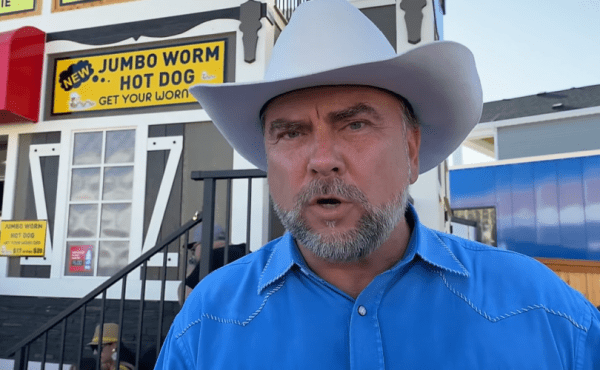
CALGARY, Alberta — Alberta-based Christian pastor Artur Pawlowski has been vindicated in court yet again after the COVID-related charges levied against him in 2020 for feeding the homeless and attending a pro-freedom rally were stayed by Crown prosecutors.
The Democracy Fund (TDF) said in a press release Tuesday that it “is pleased” with the decision by the Crown to drop Pawlowski’s charges, noting that if convicted he could have faced a fine of up to $100,000.
“Pastor Artur Pawlowski was charged for attending gatherings (feeding the homeless with his church and attending a Walk for Freedom protest), allegedly in breach of the COVID-19 pandemic-related gathering restrictions for ‘private social gatherings’ in December 2020,” said the TDF.
“The charges have been outstanding for the past 23 months, and Pastor Pawlowski has endured a total of five trial days.”
Pawlowski’s lawyer, Sarah Miller, noted that the Crown deciding to stay the charges is an “incredibly late resolution in Mr. Pawlowski’s favor.”
“The entire prosecution was flawed, from a weak case to extremely late disclosure, to inconsistent witnesses, to unreasonable delays,” said Miller.
“It will be a relief for Mr. Pawlowski once the stay expires and this prosecution is no longer hanging over him.”
The TDF noted that on December 16, right before Pawlowski’s trial was about to recommence, “the Crown decided to stay the prosecution.”
“This represents another victory for Pastor Pawlowski in his fight to defend religious freedom and civil liberties in Canada,” TDF celebrated.
The Crown’s decision to stay its charges against Pawlowski comes shortly after Alberta’s new premier, Danielle Smith, promised she would look at pardoning Christian pastors who were jailed for violating so-called COVID policies while Jason Kenney was premier.
Since becoming premier, Smith has been clear that she did not agree with how far COVID rules went under Kenney, noting specifically her displeasure with vaccine passports and mandates, as well as restrictions placed on places of worship.
Under Kenney’s leadership, Christian pastors Pawlowski, Tim Stephens, and James Coates were all jailed for flouting COVID health dictates.
This is not the first legal victory Pawlowski has had in relation to his fight against COVID mandates.
In July, Pawlowski had contempt charges against him and his brother Dawid nullified by an appeals court.
The Pawlowskis made international headlines after they were arrested in a highway takedown in May 2021 for holding worship services contrary to Alberta’s COVID rules, and ultimately spent three nights in jail before being released on bail.
In total, since the start of the COVID “crisis,” Artur Pawlowski has been jailed no less than five times. After his last arrest, he was initially denied bail when a provincial judge ruled he was a threat to “public safety.” This happened despite his alleged “crimes” being completely non-violent in nature.
Due to the severe backlash against Kenney for allowing what many felt was Christian persecution under the guise of public health policy, Smith has indicated that her government will never introduce draconian COVID mandates on Albertans again, including those targeting churches.
Canada redefined economic impact as “violence” to justify freezing protesters’ bank accounts
By Didi Rankovic | Reclaim The Net | December 20, 2022
Last February, Canadian authorities used whatever means they thought they could get away with to put an end to a peaceful political protest against Covid restrictions led by truckers, known as the Freedom Convoy.
Now, in trying to justify the government’s behavior, senior officials appear to be trying to “redefine” the meaning of (physical) violence, to make sure their actions fit within that definition.
The most controversial ones undertaken to stifle the protest – such as deploying riot police and freezing participants’ bank accounts – were done by evoking the Emergencies Act, in itself, a move controversial enough to warrant a commission inquiry.
The Public Order Emergency Commission (POEC) has issued a summary of a panel interview of four senior officials from the Prime Minister’s Office (PMO), while Prime Minister Justin Trudeau and several others were interviewed by the commission separately.
We obtained a copy of the summary for you here.
The summary shows that the panel identified areas that they “hoped the Commission could comment on;” one of them being threats to the economic security of Canada, “which carry with them a threat of tangible physical harm and violence.”
One of the PMO officials, the prime minister’s senior adviser on strategist and policy issues, Jeremy Broadhurst, is cited as saying that economic disruptions “can cause real, direct and personal harms in people’s lives.”
The truckers, whose work and livelihoods were first disrupted by Covid vaccine mandates and other restrictions, and then by the government seizing their bank accounts, would no doubt agree – but they had no government to protect them in this matter.
Instead, the government appears to have focused on protecting itself from political dissent back in February, and continues to do so today, as Broadhurst suggested that a “threat” to jobs, free movement of goods, etc. (caused by protests) is a threat “impossible to separate from the threat of violence, including physical violence.”
The question of what passes off as violence these days in Canada is important because in order to justify using martial law like the Emergencies Act, the government must meet the requirement of facing “an unmanageable threat to Canada,” as defined by the country’s Security Intelligence Services (CSIS) Act Section 2. (The Emergencies Act relies on the CSIS Act definition.)
In a previous exchange between a Freedom Convoy lawyer and the Ontario Provincial Police (OPP) commissioner, however, the former stated, “To your knowledge, there was no credible threat to the security of Canada as defined under Section 2 of the CSIS Act” – to which the commissioner replied, “That would be my understanding, yes.”
Featured Video

Alon Mizrahi: ‘Israel Must Be Dismantled’
or go to
Aletho News Archives – Video-Images
From the Archives
Allies Don’t Need Lobbies
By Jay Knott | Dissident Voice | September 24, 2013
In a recent article on Counterpunch, Rob Urie defended the traditional Marxist analysis of US policy in the Middle East. He argues that support for Israel is driven primarily by economic interest, not the Jewish lobby.
He starts by paying tribute to the idea that Western societies are uniquely racist. He says that the “Western narrative” claims there is an “Arab character”, and that this is “antique racist blather”. He gives no definition of these terms. Further, he establishes his credentials as part of the dominant current in the American left by claiming that “over a million people in Iraq died so ‘we’ in the West can drive SUVs.”1
When he tries to criticize bourgeois economics, he makes it clear he doesn’t understand the developments it has made since Marx’s day, using the mathematical discipline known as “game theory”. He dismisses the basic abstraction of economic theory, the idea of the rational individual, on the grounds that it is “devoid of history, culture and political context”. But abstractions are always devoid of something.
He defends a more concrete economic theory, mostly Marxist, with some input from another theorist of capitalist crisis, Hyman Minsky. This concrete theory leads him to the view that US activity in the Middle East is primarily driven by rational capitalist motives, the need to secure a supply of oil.
“Taking the totality of circumstance — former oil company executives launching war on an oil rich nation on a pretext they publicly proclaimed they didn’t believe shortly before taking office — and that upon launching their war proved to be non-existent, requires a willingness to overlook the obvious — that the war on Iraq was for oil, that is difficult to support.”1
Perhaps I’ve misunderstood him, but based on what he says in the rest of the article, this convoluted sentence seems to argue that, because president Bush and vice-president Cheney attacked Iraq on false premises, and they also said it was all about oil, and they are former oil executives, and Iraq has a lot of oil, it’s difficult to deny US attacks on Iraq are all about oil.
In fact, it’s not hard at all. As Urie points out, at times Bush and co. said that attacking Iraq was “protecting the world’s supply of oil.”1 But, as he also points out, they are congenital liars. Why should we believe them when they say they are trying to “protect” the oil supply? Protect it against what? When politicians “admit” attacks on Middle Eastern countries are wars for oil, they are parroting the neo-con party line, feeding the public, both left and right, with a plausible-sounding pretext. For right-wingers, “it’s a war for oil” is a reason to support war, and for leftists, it’s a way to feel better by complaining impotently about corporate greed. Both approaches help the war drive. … continue
Blog Roll
 Aletho News
- Villains of Judea: Leonid Radvinsky
- Alon Mizrahi: ‘Israel Must Be Dismantled’
- Former Head Of MI6 Admits That The U.S. And Israel Are Losing The Iran War
- Scattered Thoughts on War and Peace
- Iran Threatens to Close Red Sea to Shipping in Response to Invasion
- Iran in excellent position to prevail in war with US, Israel: John Mearsheimer
- Iran warns US: Do not call your retreat an agreement
- Neighbors first – Moscow signals shift in energy strategy
- Almost 400 Ukrainian drones downed over Russia in single night – MOD
- Battle for Hungary: How the Russiagate blueprint has been unleashed against Orban
- If Americans Knew
- In the West Bank, life is a constant battle – 3 articles
- Jacob Reses, one of the most powerful pro-Israel operatives in Trump’s Washington
- Israeli-US assaults kill or injure 87 children a day – Not a ceasefire Day 166
- ‘Forever live by the sword’: Understanding Israelis’ massive support for Iran war
- UN’s special rapporteur on human rights says Israel is systematically torturing Palestinians
- Trump White House plagiarized Iran war manifesto from Israel-aligned think tank
- Gaza says 6–10 patients die daily waiting for treatment abroad as Israel blocks medical evacuations
- ‘Substantial evidence’ of double-tap strike in killing of Gaza’s Hind Rajab
- ‘Do Not Want To Die For Israel’: Doubts About Trump’s Iran Strategy Spread Among Troops
- Instead of taking Joe Kent’s claims seriously, the media is disregarding him as an antisemite
- No Tricks Zone
- Devastating Assessment Of Comirnaty Vaccine By Former Senior Pfizer Europe Toxicologist
- New Study: CO2 Is ‘Effectively Negligible’ As An Explanatory Climate Change Factor Since 2000
- Former Pfizer Toxicologist Dr. Helmut Sterz Tells Bundestag Hearing Pfizer Vaccine Should Have Never Been Approved
- Energy Expert: Germany’s Nuclear Phaseout Was A “500 Billion Euro Mistake”
- New Research: South Australia’s Mid-Holocene Sea Surface Temperatures Were 4°C Warmer Than Today
- Storing Green Energy To Last Germany 10 Days Would Require A 60-Million Tonne Battery
- New Studies: UK Sea Levels Were 4 Meters Higher Than Today During The Mid-Holocene
- Destructive Green New Deal: German Energy And Metal Group Warns Of Drastic Crisis
- New Study Documents A 20-Year Pause In Arctic Sea Ice Decline – Driven By Internal Variability
- Wake-up Call: Survey Shows Majority Of Germans Now Favor Postponing Climate Targets!
 Aletho News