10 Reasons Behind Most Chronic Health Issues
By Dr. Joseph Mercola | April 20, 2022
The 2015-2016 National Health and Nutrition Examination Survey (NHANES) recorded the highest rate of obesity ever documented by the survey — 39.6% of adults with obesity.1 Those numbers only continue to grow. The Centers for Disease Control and Prevention2 recorded 42.5% of adults 20 and over with obesity in 2017-2018.
When the percentage of people who are overweight is included, that percentage rises dramatically to 73.6% of the population. The adult obesity prevalence map3 shows the highest prevalence of obesity and overweight in the Midwest and southern states with greater than 40% of the population recorded as obese.
The exception is Florida, where the percentage of the population who are obese ranges between 25% and 30%. The greatest challenge to maintaining a healthy weight is your diet. There are other factors that contribute to weight gain, including a lack of physical activity.
But it’s important to recognize that you’ll never out-exercise a poor diet. So, it’s the first factor you should address if you want to maintain a healthy weight, which is important as obesity is one of the major triggers for preventable disease.4
According to the U.S. Centers for Disease Control and Prevention,5 6 of every 10 adults in the U.S. have at least one chronic health condition, such as heart disease, cancer or Type 2 diabetes. These are also the leading causes of death in the U.S.,6 and obesity and overweight are significant risk factors for them.7
One 10-year study8 showed there was a dose-response relationship between being overweight or obese and the development of several chronic health conditions including gallstones, type 2 diabetes, high blood pressure, colon cancer, and heart disease.
There are significant challenges within the food supply that make it more and more difficult each month for people to make healthy choices. @MrSollozzo from the Meat Mafia Podcast created an informative graphic tweet9 in which he lists many of the diet and food-related challenges faced by Americans today, such as:
1. 10 Companies Control Almost All Manufactured Food
Oxfam America is a nonprofit organization that focuses on the inequalities that drive poverty and Injustice. In 201410 they created a powerful graphic image demonstrating how 10 companies control nearly every food product and beverage you find in the grocery store. Between them, revenues add up to more than $1 billion every day.
These companies include CocaCola, Mars, Nestle, Kellogg, General Mills, Wrigley and Wonka. They have a vested interest in ensuring loyal customers and engaging new customers each year using advertising to promote their products as healthy, wise diet choices for foods or as a fun dessert splurge.
It is difficult for many to ignore the hot buttons11 they push in their advertising campaigns, which include featuring catchy packaging,12 funding nutrition studies13 and publishing enticing print and video campaigns.14
Advertising drives people’s preferences and eating habits, which supports a company’s financial return, and in turn, drives the obesity epidemic. If you think your hands are tied, though, you still have a voice in what these companies market as you can vote with your pocketbook by refusing to purchase their products.
2. 70% of All Crops Are Genetically Modified (GM)
When you’re looking through the produce aisle for tonight’s meal, consider the fact that nearly 70% of crops grown in the U.S. are from genetically modified seeds. According to data15 from the International Service for the Acquisition of Agri-biotech Applications (ISAAA) the most popular GM crops are soybeans, maize, cotton and canola.
Soybeans, corn and canola are products used in many processed and ultraprocessed foods on grocery store shelves. There are two types of genetically engineered seed: herbicide-tolerant (HT) and insect-resistant (Bt).16 The USDA finds the adoption rate for both is increasing, and the adoption of stacked seed varieties, which has both traits, has accelerated in recent years.
The implications for your health after exposure to GM plants are significant and tied to the use of the herbicide glyphosate,17 which has increased dramatically in the last 20 years.18 Your gut flora is extremely important to your health and is negatively impacted by glyphosate. Experts have tied exposure to glyphosate and GM plants to an imbalance in gut bacteria19 and a variety of chronic diseases, including obesity.20
3. Meat Packers Underpay Ranchers and Overcharge Consumers
In 2020, the Department of Justice began formally investigating antitrust violations of the four largest beef packers in the U.S.,21 following complaints from several states and agricultural organizations. The “Big 4” companies are Cargill, Tyson Foods, JBS and National Beef, and they are responsible for processing 85% of all beef made into steaks, roasts and other cuts.22
When hamburger is factored into the equation, the Big 4 processes 70% of beef production. The four firms gained greater control of the industry in the early 1990s when USDA data showed the market share of slaughtered animals rose from 25% in 1977 to 71% in 1992. Several incidents brought attention to the consolidation that gave just four companies controlling interest in the market.
Cattle ranchers are frustrated by the price drops they experience when a meatpacking plant closes, while the packing companies benefit from rising meat prices. In the short term, this impacts the rancher’s livelihood and ability to stay in business. In the long-term, rising prices at the grocery store from lower supply levels may move more people to purchase plant-based fake “meat”.
4. 70% of the American Diet Is Processed Food
When you investigate the links between obesity and chronic illness, roughly 70% of the crops grown in the U.S. are genetically modified; 73.6% of the population is overweight or obese;23 roughly 60% of the population has at least one chronic disease and, according to data from two studies,24,25 consumption of ultraprocessed and processed foods is just over 70% in the general population. There are well over 40,000 on grocery store shelves, with the majority being processed and ultraprocessed foods.26 One study27 found that 57.9% of foods eaten were ultraprocessed and contributed 89.7% of calories from added sugar. Data also show that an excess of sugar in the diet may lead to a decrease in satiety, an increase in calorie intake and impaired energy production in your body.28
One model tracked the link between rising sugar consumption and obesity rates, finding that “past U.S. sugar consumption is at least sufficient to explain adult obesity change in the past 30 years.”29
5. Doctors Have Become Legalized Drug Dealers
@MrSollozzo calls doctors “legalized drug dealers,”30 as many frequently overprescribe medications31 rather than help patients change lifestyle habits to avoid chronic disease. Examples can be found in patients who are overprescribed pain medication, proton pump inhibitors, antidepressants,32 antibiotics33 and medications to manage the side effects of other medications.34
This is a symptom of a larger condition in which a physician’s care appears to be highly influenced by the pharmaceutical industry and not by a focus on the prevention or treatment of physical conditions that include nutritional and lifestyle alterations.
6. Big Pharma Controls Agriculture and the Seed Supply
In the 1990s, laws were introduced to protect bioengineered crops. In 2021, four large corporations owned more than 50% of the world’s seeds, which is a staggering monopoly that dominates the global food chain.35 One of those companies is Bayer, which acquired Monsanto in 2018.36
Monsanto is an agrochemical and agricultural biotechnology company, owned by a pharmaceutical company that controls a significant portion of the world’s seed supply, namely GM seed.37 Essentially, this means that Monsanto controls the GE food you eat, and Bayer supplies you with the drugs you need to treat your chronic disease triggered by that food.
7. Government Policies Favor Corporate Farming
Earl Butz was secretary of the USDA in the 1970s. It was his vision to create a centralized food system which, as Grist writes, “plunged a pitchfork into New Deal agricultural policies that sought to protect farmers from the big agribusiness companies whose interests he openly pushed.”38 At the time he was appointed to the USDA, he had served as a board member for several large firms, including Ralston Purina.
Critics predicted that these ties might compromise his ability to function objectively, and the prophecy was fulfilled when he forced agribusiness and large farming conglomerates on the national interest. His legacy continues to thrive as small farmers are gradually forced out of business and large conglomerates buy up huge tracts of land, expanding the reach of GE produce and concentrated animal feeding operations (CAFOs).
Most people have likely never shaken the hand of their local farmer, who may sell produce and meat at local farmers markets, to small grocers or directly to you, the consumer. One of the best things about these local food suppliers is that they are incentivized to provide you with the best quality food to stay in business.
8. ‘Science’ Replaced Saturated Fat With Refined Sugar
Research known as the Seven Countries Study was conceived by the late Ancel Keys, a mid-20th century physiologist who promoted polyunsaturated fats over natural, saturated dietary fats.39 He launched the study in 1958 with the intent of identifying dietary patterns that impact heart disease.40
The results of the study changed government dietary recommendations for decades, with recommendations to eliminate saturated fats from your diet. Along with the addition of polyunsaturated fats to replace the missing natural fats, the food industry also added sugar and whole grains to the mix of processed foods meant to tempt your palate.
Yet, as science has demonstrated, this move has had a broad impact on health and instead of helping to decrease heart disease, actually increased many people’s risk of coronary heart disease as replacement leads to:41
“… changes in LDL, high-density lipoprotein (HDL), and triglycerides that may increase the risk of CHD.
Additionally, diets high in sugar may induce many other abnormalities associated with elevated CHD risk, including elevated levels of glucose, insulin, and uric acid, impaired glucose tolerance, insulin and leptin resistance, non-alcoholic fatty liver disease, and altered platelet function. A diet high in added sugars has been found to cause a 3-fold increased risk of death due to cardiovascular disease.”
As a result of the new processed foods, average Americans developed a sweet tooth so strong that many experts believe they are consuming as much as 130 pounds of sugar each year.42,43,44 Sugar has become so cheap and ubiquitous, that it’s in nearly every processed and ultra-processed food.
9. Natural Fats Replaced With Factory-Produced Vegetable Oils
According to the USDA, consumption per year of added fat and oil rose by 30 pounds from 1970 to 2010. However, the amount of saturated animal fat declined while the rate of vegetable fat from seed oils increased.45 These are industrial vegetable and seed oils that are likely behind the majority of diseases diagnosed in this past century.
The number of people diagnosed with heart disease, cancer, high blood pressure, diabetes, obesity, metabolic syndrome, Alzheimer’s disease and stroke has all risen dramatically in the last decades and they all are linked to the consumption of seed oil.
In a 45-minute presentation titled, “Diseases of Civilization: Are Seed Oil Excesses the Unifying Mechanism?” Dr. Chris Knobbe reveals startling evidence that seed oils, so prevalent in modern diets, are the reason for most of today’s chronic diseases.46
His research indicts the high consumption of omega-6 seed oil in everyday diets as the major unifying driver of the chronic degenerative diseases of modern civilization. He calls the inundation of Western diets with harmful seeds oils “a global human experiment … without informed consent.”47
10. Fake Meat Plant Foods Sold as Healthier Choice
Although many fake meat products are sold as a healthier choice for you and the environment, it turns out that this is yet another smokescreen to control the food supply. As meat prices rise, more people may consider a choice they may not have before: to eat fake meat.
Total revenues for the plant-based Beyond Meat brand have grown steadily from $16.2 million in 2016 to $87.9 million in 201848 and exceeded expectations in 2020, hitting $406.8 million.49 The rising market share is a testament to how well their branding and advertising has convinced the public that they are healthier than pure animal protein.
Yet, it’s widely known that ultraprocessed foods are the enemies of good health, even increasing the risk of premature death by 62% when eaten in quantities of more than four servings each day, with each added serving increasing the risk by another 18%.50
So what is plant-based “meat,” anyway? “It’s not food; it’s software, intellectual property — 14 patents, in fact, in each bite of Impossible Burger with over 100 additional patents pending for animal proxies from chicken to fish,” says Seth Itzkan, environmental futurist and cofounder and co-director of Soil4Climate.51
He suggests fake meat products are destroying the environment by perpetuating a harmful reliance on genetically engineered (GE) grains while accelerating soil loss and detracting from regenerative agriculture.
Buyer Beware
Controlling the food supply is one more way of controlling your health and your future. With every passing year, it becomes more important to be aware of the food choices you make each day as they impact your health and wellness.
Your nutrition dictates how well your body works, and therefore how well you feel each day. As summer approaches, make a commitment to make smart choices for your health and visit local farmers markets for produce, seek out regeneratively-grown produce, meat and dairy products and consider buying your meat and dairy directly from local farmers.
Sources and References
- 1 Trust for America’s Health, The State of Obesity 2018
- 2 Centers for Disease Control and Prevention, Obesity and Overweight
- 3 Centers for Disease Control and Prevention, Adult Obesity Prevalence Map
- 4 Polish Journal of Food and Nutrition Science, 2019;69(3)
- 5 Centers for Disease Control and Prevention, March 21, 2022
- 6 Centers for Disease Control and Prevention, Leading Causes of Death
- 7 University of Mississippi Medical Center, Obesity and Chronic Disease
- 8 JAMA, 2001;161(13)
- 9, 30 Twitter, MrSollozzo, April 11, 2022
- 10 Oxfam America, December 10, 2014
- 11 Zen Business, Hot Button Marketing
- 12 Nutrients, 2019;11(5)
- 13 BMJ, 2020;371
- 14 Pan American Health Organization, Marketing of Ultra-processed and Processed Food and Non-alcoholic Drink Products
- 15 International Service for the Acquisition of Agri-biotech Applications, July 23, 2018
- 16 USDA, Recent Trends in GE Adoption
- 17 Environmental Health, 2016;15(19)
- 18 Environmental Sciences Europe, 2016;28(3)
- 19 Neurotoxicology, 2019;75:1
- 20 Impact of Genetically Modified Organisms on Environment and Health, 2021
- 21 Bloomberg, June 4, 2020
- 22 Reuters, June 17, 2021
- 23 CDC Obesity and Overweight September 10, 2021
- 24, 27 BMJ Open, 2016;6:e009892
- 25 American Journal of Clinical Nutrition, 2021;115(1)
- 26 Troy Media, December 26, 2019
- 28 BMJ Open Heart, 2016;3:e000469
- 29 Economics & Human Biology, 2020;36(100818)
- 31 StatNews, April 2, 2019
- 32 Journal of Clinical Medicine Research, 2019;11(9)
- 33 Centers for Disease Control and Prevention, May 3, 2016
- 34 BBC, September 22, 2021
- 35 DW, August 4, 2021
- 36 Fierce Pharma, August 29, 2019
- 37 Leaders in Wildlife Conservation, March 30, 2021
- 38 Grist, February 8, 2008
- 39 Seven Countries Study, Ancel Keys, top paras
- 40 Seven Countries Study, About the Study, para 1
- 41 Progressive Cardiovascular Disease, 2016;58(5) Abstract
- 42 Smithsonian, May 2017
- 43 Daily Health Post, July 25, 2019
- 44 DailyInfographic, March 25, 2015
- 45 USDA, January 2017
- 46 YouTube, June 13, 2020
- 47 YouTube, June 13, 2020, minute 10:36
- 48 Forbes August 28, 2020
- 49 Beyond Meat 2020 Financial Results February 25, 2021
- 50 BMJ 2019;365:l1949
- 51 Medium, May 25, 2020
Black Earth and the Struggle for Ukraine’s Future
By Andrey Panevin | Slavyangrad | June 25, 2015
The Ukrainian crisis can be viewed as being composed of several interconnected factors, from the civil war to rampant corruption, and the wider geopolitical ramifications of American confrontation with Russia. Another—relatively overlooked—factor is the ongoing conflict over Ukraine’s natural resources. Of particular interest to transnational corporations and their puppet local oligarchs is the ‘black earth’ of Ukraine. Black earth or ‘Chernozem’ is found in two major zones on earth, one of which encompasses sections of Moldova, Russia and Ukraine. Black earth is characterized by its very high fertility and, consequently, its capacity for producing a high agricultural output.
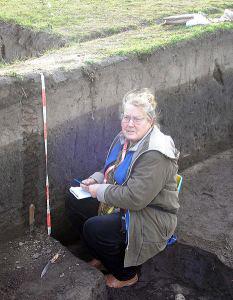
A scientist examines ‘chernozerm’ in Nikolaev, Ukraine.
(image: Saghnol, wikimedia commons)
International corporations have long been utilizing loopholes and political lobbying in order to overturn a Ukrainian moratorium on land sales to foreigners. By leasing numerous parcels of land these companies anticipate both the Ukrainian government’s desperation for money and the EU obligations to force open a goldmine of agricultural exploitation. The role of the ‘big players’—Monsanto, Cargill and Dupont—has been explored previously. The focus now is on agro-holding companies and individual oligarchs who seek to buy up and sell out Ukrainian land and livelihood.
One of the largest agro-holding companies operating in Ukraine is AgroGeneration. AgroGeneration seeks to “transform the land it works and today outperforms Ukrainian average yields. The company follows a traditional crop rotation and puts money into first-class fertilizers, seeds, and agricultural chemicals for the purpose of achieving profitability per crop.” The company has amassed 120,000 hectares of arable land, with 70,000 hectares being located in Kharkov oblast, whose eponymous capital is a city of great political and military importance in Ukraine. Kharkov has a large ethnic Russian and Russian-speaking population that has been actively repressed by the Kiev authorities, and it remains a region of dissent against the Kiev regime.
Michael Bleyzer, the Kharkov-born chairman of AgroGeneration, and founder of its sibling companies Sigma-Bleyzer and the Bleyzer Foundation, recognizes the importance of the city and has actively spoken about the need to maintain political and military order within it. In an op-ed for the KyivPost, Bleyzer writes of Kharkov as the most critical region, in need of being made “a very high priority. A large segment of the population in Kharkiv oblast is so discouraged by events and by the constant bombardment of Russian propaganda that they could be supportive of a Russian invasion or an attempt to establish a so-called People’s Republic.” Bleyzer further advocates a ‘Social Stabilization Fund’ for Kharkov, Dnepropetrovsk, Zaporozhia, Kherson, Nikolaev and Odessa. It is worth noting that these regions all contain either chernozerm or, as in the case of Odessa, ports through with which agricultural products transit.

The vast tracts of agricultural land controlled by AgroGeneration alone. (www.agrogeneration.com)
Michael Bleyzer’s role as a mouthpiece for the Kiev regime’s ‘war’ against Russia extends past his personal business interests and falls in line with the broader neoliberal, capitalist takeover of Ukraine. AgroGeneration and Sigma-Bleyzer (a private equity firm also owned by Bleyzer) seek to take advantage of the current regime’s plea to the West to ‘buy Ukraine’. These corporations and others are not only taking control of Ukraine’s farm land, they are doing it with European and American government assistance. In 2005, Sigma-Bleyzer received financing for a project worth up to 250 million euros from the European Bank for Reconstruction and Development (EBRD). In 2011, the EBRD gave AgroGeneration ten million dollars to double its ownership of Ukrainian land. In 2012 the Overseas Private Investment Corporation (OPIC)—an American government financial institution—gave Sigma-Bleyzer fifty million dollars for its ‘Eastern Europe fund.’
While these international corporations receive vast sums of money for their expansion in Ukraine, ‘access to credit remains a major problem for Ukraine’s small and medium farmers’. This interconnected system of funding from government finance institutions to private corporations has spelled doom for Ukraine’s agricultural sector, opening it up to exploitation and eventual ruin from the inside out.

Bleyzer (left) with US presidential candidate Ted Cruz on Maidan Square in Kiev. (Source: Secure America Now)
Connections between government and private corporations are at the core of this exploitation, with both entities seeking to employ what Bleyzer himself refers to as a system of “quasi-private equity funds managed by money managers from the private sector whenever possible.” Bleyzer’s attitude to the financial invasion of countries was well honed during the US-led invasion and occupation of Iraq, where he actively encouraged the US government to “create and implement the policy measures that will make an attractive investment climate in Iraq. This public-private partnership could play a critical role in making possible dramatic social and economic changes in Iraq and other countries in the region.” The goal of the corporate annexation of sovereign policy-reform has served Bleyzer and countless other oligarchs well from Iraq to Ukraine. In the context of this corrupt, financially imperialist environment it is no wonder that in a May 2015 economic report by Sigma-Bleyzer, it is casually written (in reference to the Ukrainian civil war) that “a frozen conflict could still provide the opportunity for the rest of the country to restart investments and economic growth.”
Ukraine’s precious black earth is being steadily annexed by international corporations and joins the list of resources and national sectors being outsourced to private investors. Agricultural corporations such as AgroGeneration find great corporate solidarity on the board of members of the US-Ukraine Business Council, which includes (among others) Sigma-Bleyzer, Monsanto, Dupont, Cargill, Exxon, Raytheon and the Bleyzer Foundation. These corporations share the common goal of pressuring the Ukrainian government to institute political ‘reforms’ in their favour. For agricultural corporations in particular, the goal is to pressure the government to “think about privatization. They need to prepare everything to allow for farmland sales (to foreign and domestic investors) in three to four years,” as stated by Heinz Strubenhoff, the agribusiness investment manager for the World Bank in Ukraine.
Ukraine is at a national crossroads and if the example of its increasing corporate annexation is anything to go by, it will have neither the money nor the resources to rebuild itself in the face of its political and cultural self-destruction. The West-supported preoccupation with ‘Russian invaders’ has left the oligarchy free to sell Ukraine’s political processes and natural resources to the highest bidder.
Who Owns Agricultural Land in Ukraine?
By Elizabeth Fraser | Oakland Institute | May 8, 2015
The fate of Ukraine’s agricultural sector is on shaky ground. Last year, the Oakland Institute reported that over 1.6 million hectares (ha) of land in Ukraine are now under the control of foreign-based corporations. Further research has allowed for the identification of additional foreign investments. Some estimates now bring the total of Ukrainian farmland controlled by foreign companies to over 2.2 million ha;1 however, research has also identified important grey areas around land tenure in the country, and who actually controls land in Ukraine today is difficult to ascertain.
The companies and shareholders behind foreign land acquisitions in Ukraine span many different parts of the world. The Danish “Trigon Agri,” for example, holds over 52,000 ha. Trigon was established in 2006 using start-up capital from Finnish “high net worth individuals.” The company is traded in Stockholm (NASDAQ), and its largest shareholders include: JPM Chase (UK, 9.5 percent); Swedbank (Sweden, 9.4 percent); UB Securities (Finland, 7.9 percent); Euroclear Bank (Belgium, 6.6 percent); and JP Morgan Clearing Corp (USA, 6.2 percent).
The United Farmers Holding Company, which is owned by a group of Saudi Arabian investors, controls some 33,000 ha of Ukrainian farmland through Continental Farmers Group PLC.
AgroGeneration, which holds 120,000 ha of Ukrainian farmland, is incorporated in France, with over 62 percent of its shares managed by SigmaBleyzer, a Texas-based investment company.
US pension fund NCH Capital holds 450,000 ha. The company began in 1993 and boasts being some of the earliest western investors in Ukraine after the break-up of the Soviet Union. Over the past decade, the company has systematically leased out small parcels of agricultural land (around two to six hectares in size) across Ukraine, aggregating these into large-scale farms that now operate industrially. According to NCH Capital’s General Partner, George Rohr, the leases give the company the right to buy the currently-leased farmland once the moratorium on the sale of land in Ukraine is lifted.
Another subset of companies have Ukrainian leadership, often a mix of domestic and foreign investment, and may be incorporated in tax havens like Cyprus, Austria, and Luxembourg. Some of them are also led by Ukrainian oligarchs. For instance, UkrLandFarming controls the country’s largest land-bank, totalling 654,000 ha of land. 95 percent of the shares of UkrLandFarming are owned by multi-millionaire Oleg Bakhmatyuk with the remaining five percent having been recently sold to Cargill. Similarly, Yuriy Kosiuk, Ukraine’s fifth richest man, is the CEO of MHP, one of the country’s largest agricultural companies, which holds over 360,000 ha of farmland.
With the onset of the political crisis, several of these mostly Ukrainian-based companies have descended into crisis themselves. One example is Cyprus-incorporated Mriya Agro Holding, which holds a land-bank of close to 300,000 ha. In 2014, the company’s website (which is no longer available online) indicated that 80 percent of the shares of Mriya Agro Holding are/were owned by the Guta family (Ukrainian), who hold primary leadership positions in the company. The remaining 20 percent are/were listed on the Frankfurt Stock Exchange.
According to news sources, in summer 2014 the company defaulted on its payments for two large Eurobonds, putting its future into question. The company first enlisted the support of US-based Blackstone Group and Ukrainian-based Dragon Capital, both of whom withdrew support after only one month; and later, the international auditing and financial service firm, Deloitte. An international bondholder committee was struck, comprised of several US and UK-based investment groups (including CarVal Investors – Cargill’s investment arm), which together own over 50 percent of the debt owed on Mriya’s 2018 Eurobonds and 15 percent of the 2016 Eurobonds. The future of this firm is unclear with some sources suggesting a risk of bankruptcy.
Other Ukrainian-owned companies incorporated in tax havens are also experiencing difficulties. Sintal Agriculture Public Ltd (based in Cyprus, traded on the Frankfurt Stock Exchange as of 2008, and holding almost 150,000 ha of land) ceased trading in shares on January 29, 2014 “until further notice” after bankruptcy proceedings were initiated against the company. In 2013, its website (now also defunct) indicated that 36.3 percent of the company was free floating shares.
The potential bankruptcy of these corporations, and the involvement of Western investors in the crisis management, raises questions about the fate of the agricultural land they hold. At this time, it is not clear how control over the agricultural lands in question will be addressed and what the role of foreign companies and funds who have invested in these companies will be. However, if things progress in a similar way to neighboring Romania, foreign control of this land could transpire.
Romania has a similar story of dissolving collectivized farms, giving land titles to collective farm workers, and imposing a moratorium on the sale of agricultural land. Loopholes in the country’s national legislation have created opportunities for foreign control of land via bankruptcy proceedings. As documented by Judith Bouniol, the bankruptcy of national agribusinesses has provided a gateway for foreign control of Romania’s farmland.
It is far from clear if the same scenario could take place in Ukraine. However, this lesson from Romania emphasizes the importance of keeping close watch on these agricultural land deals. In addition, the murky situation around land ownership in Ukraine raises many questions. Perhaps the most important is whether the growing concentration of Ukrainian land in the hands of a few oligarchs and foreign corporations can benefit the country, its people, and its economy.
—
1 Two land investment databases were accessed over the past year: the Land Matrix accessed in July 2014 and April 2015, and GRAIN’s 2012 data set on land investments worldwide. Taken individually, these databases suggest foreign land acquisitions of between 997,000 ha to 1.7M ha. When consolidated, individual deals reported by these databases represent over 2.2M ha of land in Ukraine.
The Corporate Takeover of Ukrainian Agriculture
By Frédéric Mousseau | IPS | January 27, 2015
OAKLAND, CA – At the same time as the United States, Canada and the European Union announced a set of new sanctions against Russia in mid-December last year, Ukraine received 350 million dollars in U.S. military aid, coming on top of a one billion dollar aid package approved by the U.S. Congress in March 2014.
Western governments’ further involvement in the Ukraine conflict signals their confidence in the cabinet appointed by the new government earlier in December 2014. This new government is unique given that three of its most important ministries were granted to foreign-born individuals who received Ukrainian citizenship just hours before their appointment.
The Ministry of Finance went to Natalie Jaresko, a U.S.-born and educated businesswoman who has been working in Ukraine since the mid-1990s, overseeing a private equity fund established by the U.S. government to invest in the country. Jaresko is also the CEO of Horizon Capital, an investment firm that administers various Western investments in the country.
As unusual as it may seem, this appointment is consistent with what looks more like a takeover of the Ukrainian economy by Western interests. In two reports – The Corporate Takeover of Ukrainian Agriculture and Walking on the West Side: The World Bank and the IMF in the Ukraine Conflict – the Oakland Institute has documented this takeover, particularly in the agricultural sector.
A major factor in the crisis that led to deadly protests and eventually to president Viktor Yanukovych’s removal from office in February 2014 was his rejection of a European Union (EU) Association agreement aimed at expanding trade and integrating Ukraine with the EU – an agreement that was tied to a 17 billion dollar loan from the International Monetary Fund (IMF).
After the president’s departure and the installation of a pro-Western government, the IMF initiated a reform programme that was a condition of its loan with the goal of increasing private investment in the country.
The package of measures includes reforming the public provision of water and energy, and, more important, attempts to address what the World Bank identified as the “structural roots” of the current economic crisis in Ukraine, notably the high cost of doing business in the country.
The Ukrainian agricultural sector has been a prime target for foreign private investment and is logically seen by the IMF and World Bank as a priority sector for reform. Both institutions praise the new government’s readiness to follow their advice.
For example, the foreign-driven agricultural reform roadmap provided to Ukraine includes facilitating the acquisition of agricultural land, cutting food and plant regulations and controls, and reducing corporate taxes and custom duties.
The stakes around Ukraine’s vast agricultural sector – the world’s third largest exporter of corn and fifth largest exporter of wheat – could not be higher. Ukraine is known for its ample fields of rich black soil, and the country boasts more than 32 million hectares of fertile, arable land – the equivalent of one-third of the entire arable land in the European Union.
The manoeuvring for control over the country’s agricultural system is a pivotal factor in the struggle that has been taking place over the last year in the greatest East-West confrontation since the Cold War.
The presence of foreign corporations in Ukrainian agriculture is growing quickly, with more than 1.6 million hectares signed over to foreign companies for agricultural purposes in recent years. While Monsanto, Cargill, and DuPont have been in Ukraine for quite some time, their investments in the country have grown significantly over the past few years.
Cargill is involved in the sale of pesticides, seeds and fertilisers and has recently expanded its agricultural investments to include grain storage, animal nutrition and a stake in UkrLandFarming, the largest agribusiness in the country.
Similarly, Monsanto has been in Ukraine for years but has doubled the size of its team over the last three years. In March 2014, just weeks after Yanukovych was deposed, the company invested 140 million dollars in building a new seed plant in Ukraine.
DuPont has also expanded its investments and announced in June 2013 that it too would be investing in a new seed plant in the country.
Western corporations have not just taken control of certain profitable agribusinesses and agricultural activities, they have now initiated a vertical integration of the agricultural sector and extended their grip on infrastructure and shipping.
For instance, Cargill now owns at least four grain elevators and two sunflower seed processing plants used for the production of sunflower oil. In December 2013, the company bought a “25% +1 share” in a grain terminal at the Black Sea port of Novorossiysk with a capacity of 3.5 million tons of grain per year.
All aspects of Ukraine’s agricultural supply chain – from the production of seeds and other agricultural inputs to the actual shipment of commodities out of the country – are thus increasingly controlled by Western firms.
European institutions and the U.S. government have actively promoted this expansion. It started with the push for a change of government at a time when president Yanukovych was seen as pro-Russian interests. This was further pushed, starting in February 2014, through the promotion of a “pro-business” reform agenda, as described by the U.S. Secretary of Commerce Penny Pritzker when she met with Prime Minister Arsenly Yatsenyuk in October 2014.
The European Union and the United States are working hand in hand in the takeover of Ukrainian agriculture. Although Ukraine does not allow the production of genetically modified (GM) crops, the Association Agreement between Ukraine and the European Union, which ignited the conflict that ousted Yanukovych, includes a clause (Article 404) that commits both parties to cooperate to “extend the use of biotechnologies” within the country.
This clause is surprising given that most European consumers reject GM crops. However, it creates an opening to bring GM products into Europe, an opportunity sought after by large agro-seed companies such as Monsanto.
Opening up Ukraine to the cultivation of GM crops would go against the will of European citizens, and it is unclear how the change would benefit Ukrainians.
It is similarly unclear how Ukrainians will benefit from this wave of foreign investment in their agriculture, and what impact these investments will have on the seven million local farmers.
Once they eventually look away from the conflict in the Eastern “pro-Russian” part of the country, Ukrainians may wonder what remains of their country’s ability to control its food supply and manage the economy to their own benefit.
As for U.S. and European citizens, will they eventually awaken from the headlines and grand rhetoric about Russian aggression and human rights abuses and question their governments’ involvement in the Ukraine conflict?
Frédéric Mousseau is the Policy Director at the Oakland Institute.
Featured Video

Laith Marouf: Hezbollah’s position on US-Iran ceasefire
or go to
Aletho News Archives – Video-Images
From the Archives
Is Israel to blame for the Iraq War?
American Goy | March 10, 2008
I am so tired of this old canard that “Israel had nothing to do with USA’s war with Iraq – in fact, it officially advised America against it”.
Bullshit. … continue
Blog Roll
 Aletho News
- Laith Marouf: Hezbollah’s position on US-Iran ceasefire: What you’re not being told
- Israel’s priority lies in destroying chances of peace between Iran, US: Ex-UN nuclear chief
- Ceasefire for all or for none: Iran shuts Hormuz over Lebanon attacks
- Strait of Hormuz is Iran’s ‘nuclear weapon’ that forced US retreat: Medvedev
- Energy crisis will last for months – Kremlin envoy
- Europe’s quiet role in the war on Iran
- Forty days that shook the Empire: How Iran turned the tables on US and prevailed
- Netanyahu unilaterally declares Lebanon outside of ceasefire deal
- Israeli leaders: ‘Not a single goal’ achieved in war with Iran
- What on earth just happened? Trump, Iran, and the unlikely ceasefire
- If Americans Knew
- Gazans face a triple crisis: severe shortages of water and bread, healthcare in tatters
- NY Times reports how Netanyahu took the US into Iran War
- A sigh of relief over Iran, but Gaza and Lebanon in dire straits – Daily Update
- Thousands dead and neighborhoods razed to the ground: Aid agencies fear southern Lebanon is becoming the new Gaza
- The war the US is fighting for Israel could cost trillions
- ‘Cigarette Burns, Nail Wounds’: Toddler Tortured in Gaza to Coerce Father
- Trump Says US Sent ‘a Lot of Guns’ to Protesters in Iran
- Israeli forces destroy 17 UN peacekeeper cameras in south Lebanon
- US-Israeli strikes ‘completely destroy’ synagogue in Tehran
- Archbishop for US Military Says Iran War Is Unjust Under Catholic Teaching
- No Tricks Zone
- An Inconvenient Tree: Uncovered In Alps… Europe Much Warmer Than Today 6000 Years Ago
- New Study Reports A 60% Slowdown In Greenland’s Ice Loss Rate In The Last Decade
- Low Intensity Tornado Wrecks Major Solar Farm, Creating A Potential Toxic Dump
- New Study Finds Warming Saves Lives…Cold Temperatures 12 Times More Deadly Than Excess Heat
- German Science Blog Accuses PIK Climate Institute Of Hallucinating Climate Tipping Points
- Devastating Assessment Of Comirnaty Vaccine By Former Senior Pfizer Europe Toxicologist
- New Study: CO2 Is ‘Effectively Negligible’ As An Explanatory Climate Change Factor Since 2000
- Former Pfizer Toxicologist Dr. Helmut Sterz Tells Bundestag Hearing Pfizer Vaccine Should Have Never Been Approved
- Energy Expert: Germany’s Nuclear Phaseout Was A “500 Billion Euro Mistake”
- New Research: South Australia’s Mid-Holocene Sea Surface Temperatures Were 4°C Warmer Than Today
 Aletho News