‘Conspiracy Vs. Government’ Is Part of an Elite Wave of Propaganda Justifying Violent Repression
The daily Bell – October 31, 2016
The rise of paranoid politics could make America ungovernable – and the FBI is fuelling the fire … Nothing can disprove the fears of a paranoiac. Indeed, everything confirms them … It takes away politicians’ incentive to understand one another and get things done. It says that if you scream loud enough, established norms will buckle under the pressure. And while those norms might be annoying and flawed, we’ll all miss them if they go. –UK Telegraph
With US belief in “conspiracy theory” over 50 percent (see our previous article here) elites are showing increasing concern that they have lost control of their narrative.
This article again illustrates elite push back. The article explains that if people grow paranoid about government, then the “norms” of government will collapse.
Conspiracy theory is called “paranoid politics” in this article but it amounts to the same thing.
The article also has parallels to an article we analyzed recently here by Cass Sunstein. His Bloomberg editorial suggested that nothing was more important from a political standpoint than returning “civility” to Congress and politics generally.
This article runs along the same lines: Negative perceptions of the US government can make the process of “governing” dysfunctional
More:
Take the “chemtrails” conspiracy theory: the idea that the white trails left behind in the sky by aeroplanes are sinister chemicals dispersed to sterilise or control voters.
If a government declares there is “no evidence” of such chemicals, that itself must be clear evidence that there’s something “they” don’t want us to know. But if that government were to open up an investigation, that too would be incontrovertible proof: “they” must have found something.
Let’s reverse this reasoning. Apparently, one can’t question much that government does because skepticism puts government in a no-win situation.
Better to accept official pronouncements, then. The only trouble is that almost anything modern Western governments say are lies.
Governments aren’t even important these days. The world from what we can tell is run by a small banking elite that controls the awesome power of central banks and the money they print.
The trillions available to this small group has allowed it to change the nature of society around the world.
The goal is global government and every kind of violence and corruption is employed to achieve it.
Secrecy is still employed by those creating “one world.” Thus the world is bent on the task of creating global governance while never admitting it.
But in the past several decades, the Internet has credibly exposed plans for world government. As a result, people have lost faith in mainstream media, politicians and capitalism itself.
This is the reason for the rise in “conspiracy theory” and “paranoid politics.”
This is also the reason elites would like to shut down the Internet, or at least control it more thoroughly.
Part of the push for control involves making a case that the Internet needs to be better regulated and appropriately censored.
To this end, elite propaganda has been aimed at justifying various anti-‘Net actions.
One justification involves the “populism versus globalism” meme we’ve covered extensively. (Just use a search engine for the phrase and “Daily Bell.”)
Another justification – another emergent meme – is that government itself is jeopardized by pervasive distrust.
One would think the answer would be to lie less, but this is not the conclusion we’re being furnished.
Both Sunstein in his article, and now the argument in this article, show us clearly that the solution to pervasive electoral cyncism and worse is to better control one’s attitude.
In other words, paranoia and conspiratorial cynicism need to be damped for government to survive and perform its proper function.
Here:
Why, then, did a seasoned operator like Mr Comey, whose judiciousness was praised by the Clinton campaign through the summer, feel the need to divulge this half-baked and potentially insignificant development before assessing it? There is one answer: fear of the mob.
The director of the FBI – those tough guys who smash in doors and shoot people – was scared that if he didn’t talk now and the news leaked out, it would confirm every conspiracy theory going about how the agency was in the Clintons’ pocket. In other words, we’ve reached a point in the politics of the world’s most powerful democracy where the appearance of probity matters more than the reality.
This is a key point in the article. It is one that fully reveals the cognitive dissonance at the heart of this particular argument. The idea is that government is too delicate to sustain itself in the face of the “mob.” The mob must therefore be silenced or “probity will matter more than reality.”
But who is to determine what constitutes a “mob”? And who is determine that the mob’s “reality” is false?
Both the Sunstein article and now this one are erecting very specific kinds of arguments. Government, we are told, is fragile and must be protected from forces that will undermine its credibility.
But this conclusion is merely assumed. It is never proven.
This argument begins and ends with government. Yet the Internet and its recovered history shows us clearly that Western governments mostly provide concealment for the world’s real powers that prefer to operate behind the scenes.
This is the reason for so much cynicism. Many have realized that the society constructed around them is lie. They have reacted by distrusting almost anything associated with modern society.
But in these articles, we can see the forces being marshaled against this state of mind. The preferred antidote is simply to assert that people’s distrust is corrosive to government authority and democracy generally.
No logic bolsters this argument. That’s why it is an emergent elite meme.
The goal of an elite meme is to be convincing not truthful.
And if it is not convincing – and increasingly elite memes are not – then its function is, anyway, to provide a justification for what we call directed history. These are the authoritarian strategies that elites wish to inflict on the rest of us.
This latter meme is an outgrowth of “populism versus globalism.” Populists, as we’ve pointed out, are being cast as ignorant, violent and intolerant. The current meme – let’s call it “conspiracy versus government” – lumps in conspiracy with populism.
Populists, we learn, are apt to adopt an irrational distrust of government. And what is government? It must comprise all that is good and virtuous in an uncivil world.
Both populists and conspiracy theory are to be vanquished, eventually, by wise globalists who understand that the absence of government will lead to violent “anarchy.”
Would that it were true. It is not. Government is merely in this day-and-age a curtain hiding the world’s real controllers who use endless violence, monetary debasement and economic depression to get their way.
Conclusion: We are watching the emergence of a new, dangerous memes. Increasingly and forcefully, it is being argued that “government” is good and that the truths people have discovered about their lives and society are destabilizing to government, and therefore “bad.” The idea will be to use these memes to make a case for increased censorship and even, eventually, violent repression – and worse.
Who’s Still Afraid of 9/11 Conspiracy Theories?
By Maidhc Ó Cathail | The Passionate Attachment | September 10, 2015
“The lady doth protest too much, methinks.”
—Queen Gertrude, Hamlet.
Whenever someone insists too strongly about something not being true, we tend to suspect that maybe it is. In their denials of involvement in 9/11, do Israel’s apologists “protest too much”?
While it would take a small book to adequately document the Israeli connection to 9/11—as Antiwar.com editor Justin Raimondo attempted to some extent in The Terror Enigma—let us briefly recall some of the more intriguing facts as reported in the mainstream media, involving dancing Israelis, Odigo warnings, and Zim’s timely move.
The story of the five Israelis who were seen celebrating and filming as the Twin Towers burned and collapsed was investigated by Neil Mackay in Scotland’s Sunday Herald. The so-called “dancing Israelis” worked for Urban Moving Systems, later deemed to be a Mossad front by the FBI. Despite failing numerous polygraph tests, the young men were deported to Israel two months later. Back home, several of the men appeared on a TV chat show, in which one of them amazingly said, “Our purpose was to document the event.”
Two employees of Odigo, an Israeli instant messaging service, received messages two hours before the World Trade Center attack on September 11 predicting the attack would happen, Ha’aretz reported.
Zim-American Israeli Shipping Co., part-owned by the Israeli government, moved their North American headquarters from the 16th floor of the WTC to Norfolk, Virginia one week before the 9/11 attacks, incurring a $50,000 fine for breaking its lease, according to the Jerusalem Post.
Despite being in the public domain, none of these relevant facts are mentioned in the 9/11 Commission’s 567-page report.
Moreover, Philip Zelikow, the executive director of the 9/11 Commission, is concerned about the spread of such inconvenient facts to the wider public. “Our worry,” he says, “is when things become infectious…. [then] this stuff can be deeply corrosive to public understanding. You can get where the bacteria can sicken the larger body.”
But was Zelikow speaking here as an American government official or as a pro-Israeli insider?
In the same month that he authored the so-called “Bush Doctrine” of preemptive war, which provided the justification for the 2003 invasion of Iraq, Zelikow made this candid admission: “Why would Iraq attack America or use nuclear weapons against us? I’ll tell you what I think the real threat (is) and actually has been since 1990—it’s the threat against Israel.”
Yet, instead of investigating the Israeli connection, Zelikow used the 9/11 Commission to sell the Israeli-inspired Iraq war to the American people.
Zelikow’s “bacteria” quote is cited in a 2008 paper entitled “Conspiracy Theories.” Co-authored by Cass Sunstein, who went on to head President Obama’s White House Office of Information and Regulatory Affairs, the main focus of the paper “involves conspiracy theories relating to terrorism, especially theories that arise from and post-date the 9/11 attacks.”
Rather than attempting to debunk such theories, Sunstein and Vermeule claim that those who suspect Israeli involvement in 9/11 suffer from a “crippled epistemology.” This, the authors argue, is due to “a sharply limited number of (relevant) informational sources.” In other words, “they know very few things, and what they know is wrong.”
To counter these suspicions, Sunstein recommends “cognitive infiltration of extremist groups, whereby government agents, or their allies (acting either virtually or in real space, and either openly or anonymously) will undermine the crippled epistemology of those who subscribe to such theories. They do so by planting doubts about the theories and stylized facts that circulate within such groups, thereby introducing beneficial cognitive diversity.”
It could, of course, be argued that Sunstein’s work also suffers from a crippled epistemology—his research relies heavily on pro-Israeli sources, most notably the notorious Islamophobe Daniel Pipes.
Pipes is a bit of an expert on conspiracy theories, having written two books on the subject. “Conspiracism provides a key to understanding the political culture of the Middle East,” Pipes opines in The Hidden Hand: Middle East Fears of Conspiracy. “It helps explain much of what would otherwise seem illogical or implausible, including the region’s record of political extremism and volatility, its culture of violence, and its poor record of modernization.”
Like Sunstein, Pipes is concerned that many in the region suspect Israeli involvement in 9/11. “The implications in the Middle East are quite profound,” Pipes told the LA-based Jewish Journal. “It’s one more brick in the edifice of fear and loathing of Israel and the Jews.”
In the absence of a proper 9/11 investigation, there remains a broad range of opinion about the precise nature of Israeli complicity. In The Terror Enigma, Justin Raimondo tentatively concludes that the Israeli connection to 9/11 amounts to “foreknowledge and passive collaboration with Bin Laden’s jihad.”
It’s hardly surprising then that some of the most obsessive critics of 9/11 “conspiracy theories” have ties to Israel. If Americans ever find out that their “staunchest ally” had anything to do with the mass murder of their fellow citizens on September 11, 2001, the would-be conspiracy debunkers have good reason to be afraid.
A version of this article was first published on April 3, 2010.
Students In Baltimore Taught To Ignore 9/11 Skeptics
By Keelan Balderson | Wide Shut | July 10, 2013
A new extra-curricular history program taught in Carroll County, Baltimore, USA, is warning students not to get sucked in to 9/11 conspiracy theorizing and that the official Government approved narrative is the only version with any “credence”.
The summer course offered to middle-schoolers aged around 11 years old is one of the first classes to go in depth with the subject with children, some of who were not alive when the tragedy took place.
“That is the first time I have talked about it in front of a group of more than five or six,” said teacher Mike Chrvala. In the past decade, discussing the day has gotten easier, he explained.
Carroll County holds free enrichment classes each year on subjects that include art, play-writing and science. Dick Thompson, the county’s coordinator of the summer courses, thought a class on 9/11 could provide important lessons for children born after the event. It is not taught in great depth during the school year – reports the Baltimore Sun newspaper.
Unsurprisingly the class strongly adheres to the official Government narrative, glossing over “conspiracy theories” as nonsense and praising the controversial Patriot Act and post 9/11 security measures.
Casey Jillson, 12, said the event isn’t just “a bad thing” but has resulted in some positive postscripts. “Our country learned to be more secure and safe,” she explained.
Chrvala hopes his students will “become little torchbearers to teach about 9/11,” though it seems they will only be regurgitating the contextless and biased story cherry-picked and spun together by the Bush Administration.
This isn’t the first or last school class that ignores the Bush Administration’s pre-planned invasion of Afghanistan, and the vast amount of data that shows that elements of the Government had foreknowledge of the attacks and “failed” to prevent the plot at key points, such as the granting of the alleged hijacker’s US Visas despite them failing to correctly fill out applications.
Such alternative information is considered dangerous by Western Governments, with Obama’s information Tsar Cass Sunstein advocating “cognitive infiltration”, and the UK’s DEMOS think tank suggesting so called “critical thinking” be taught in schools so children can counter the “radicalizing” conspiracy theories.
Of course not every wild “space beam” theory has credence, but if true “critical thinking” is to form the basis of children’s education, Government theories should be put under just as much scrutiny as the alternatives.
Featured Video
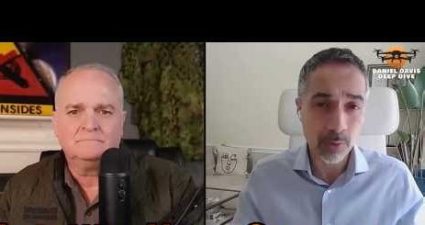
No Threat Can Force Iran’s Surrender /Trita Parsi & Lt Cl Daniel Davis
or go to
Aletho News Archives – Video-Images
From the Archives
What is the Israeli Lobby in Australia Doing in Interfaith Dialogue?
By Ali Kazak | Dissident Voice | October 11, 2015
For years Israel and its lobby around the world have been trying to normalise their relations with Arabs and Muslims without solving the Palestine Question.
One of the methods they resorted to in the last few years is using human rights and community organizations such as interfaith dialogue and Multiculturalism to achieve this objective and to: isolate the Palestinians, marginalise the Palestine question, end Israel’s isolation, and prevent criticism of Israel, knowing that these organisations will be the first to stand against Israel’s violations, racial and religious discrimination.
The group responsible for this task in Australia is The Australia/Israel & Jewish Affairs Council (AIJAC); its Director of International & Community Affairs, Jeremy Jones is in charge of lobbying religious community organizations, specifically Muslims and Christians. Consequently he convened the Faith Communities for Reconciliation, founding participant in the Australian Partnership of Religious Organisations and the Australian National Dialogue of Christians, Muslims & Jews.
AIJAC is a private political propaganda group. It is recognised as the main Israeli lobby in Australia. It coordinates its activities and works intimately with the Israeli embassy in Canberra and different institutions in Israel. It is privately funded by some Jewish businessmen. It monitors closely Australian politicians, the media, ethnic and religious groups, (especially Arabs and Muslims), unions and academics on their stands towards Israel and the Palestine question. … continue
Blog Roll
 Aletho News
- The war of liberation of the Arab and Islamic peoples expands across the Gulf
- Envoy warns UN on Trump’s threat to ‘obliterate’ Iran’s civilian infrastructure
- The Larak Corridor: Iran’s Rial Gate With No US, No Israel, and No Way Around
- ‘Economic terrorism’: Steel facilities hit again in US-Israeli strike
- ‘War Crime’: Iran condemns attacks on Arak, Ardakan nuclear sites
- Two-thirds of Americans want quick end to Iran war even if goals unmet
- Trump to Give “Important Update on Iran” Wednesday in Prime-Time Speech
- Theodore Postol: Iran’s Missiles & Drones Were Underestimated
- Iran To Target Military Industrial-Tech Complex That Facilitated Gaza Genocide
- Collapsing Empire: The Resistance Disarms ‘Israel’
- If Americans Knew
- Israel wants US to bomb more of Iran’s civilian structures (113,000 is not enough) – Not a ceasefire Day 173
- Ann Coulter Rips Into Fox News for Iran War Coverage
- Joe Kent Urges Americans To Call White House and Congress To Object To Sending Troops Into Iran
- DNC Resolution to Reject AIPAC Funding Puts Democratic Leaders in the Hot Seat
- Swedish foundation to build 400 schools as over 650,000 Gaza children remain without education for 2 years
- Israeli army admits photshopping image of slain Lebanese journalist
- This is how Israel is systematically killing health workers under the cover of war in Lebanon
- Carrying life under fire: Israeli invasion of Lebanon leaves pregnant women facing deadly risks
- Champagne all around for the new death penalty (for Palestinians) law – Not a ceasefire Day 172
- Why are Palestinian books struggling to be seen on Amazon?
- No Tricks Zone
- New Study Finds Warming Saves Lives…Cold Temperatures 12 Times More Deadly Than Excess Heat
- German Science Blog Accuses PIK Climate Institute Of Hallucinating Climate Tipping Points
- Devastating Assessment Of Comirnaty Vaccine By Former Senior Pfizer Europe Toxicologist
- New Study: CO2 Is ‘Effectively Negligible’ As An Explanatory Climate Change Factor Since 2000
- Former Pfizer Toxicologist Dr. Helmut Sterz Tells Bundestag Hearing Pfizer Vaccine Should Have Never Been Approved
- Energy Expert: Germany’s Nuclear Phaseout Was A “500 Billion Euro Mistake”
- New Research: South Australia’s Mid-Holocene Sea Surface Temperatures Were 4°C Warmer Than Today
- Storing Green Energy To Last Germany 10 Days Would Require A 60-Million Tonne Battery
- New Studies: UK Sea Levels Were 4 Meters Higher Than Today During The Mid-Holocene
- Destructive Green New Deal: German Energy And Metal Group Warns Of Drastic Crisis
 Aletho News