Clinton’s Campaign & The Anti-Russian Roots of the ‘Cultural Left’
By Caleb Maupin | New Eastern Outlook | August 21, 2016
In recent speeches, including her speech accepting the Democratic Party’s nomination for the Presidency, former Secretary of State Hillary Rodham Clinton has declared she would work to eradicate “systemic racism.” Clinton did not present any specific strategy or policy to do this, yet each time she has uttered the two word phrase “systemic racism” there is a large burst of applause from her audience. An article from vox.com claimed that use of this term was “major” because it is a phrase that is “embraced in particular by younger activists.”
In her speech, Clinton could have said she would work to eradicate “discrimination” or “under-representation” of minorities, but instead chose to use the favored buzzword of a specific political milieu to whom Clinton’s campaign seems to be pandering. The phrase is part of a whole vocabulary of what some call “oppression theory.” Young people have learned it from their University professors, namely those who teach Black or Gender Studies. This new lingo is used on various internet forums, especially Tumblr.
When the Democratic Nomination was still up for grabs, the internet was filled with Clinton supporters who referred to Sanders supporters as “Bernie Bros”, arguing that supporting the Presidential campaign of the Senator from Vermont was an expression of “white male privilege.”
Blogs, tweets, and statuses now urge disappointed Sanders supporters to “check their privilege”, consider ramifications of a Trump presidency, and vote for a candidate they despise. If a male Sanders supporter responds to these arguments and defends his decision to support Jill Stein or Gloria La Riva, or any candidate other than Clinton, he is accused of “man-splaining.” As the argument continues, if an opponent of Clinton objects to a personal insult directed toward him, he is “tone-policing.”
Where do these phrases come from? What is this political milieu that the Democratic Nominee has attached herself to? In the public eye it is often identified as the “far left.” This is not completely accurate.
The entity known as the political left can trace its roots to the French Revolution of the 1790s. Since that time, people who identify as “leftists,” revolutionaries, or radicals have used phrases like “liberty” and “solidarity,” they have talked about working toward “emancipation” and “liberation” against “oppression.” They have often used specifically Marxian formulations like “exploitation” and “expropriation” while advocating “power to the working class.” With rhetoric about liberation and opposing injustice, the left has been the traditional home for opponents of racism, sexism, and advocates of social equality.
However, this new milieu that talks of “interconnectedness” and “intersectionality” rather than solidarity, and celebrates global military interventions done for “humanitarian” reasons, while engaging in heated debates about concepts like “cisgender privilege,” accusing its detractors of being “white-splaining” “Bernie bros” who need to “check their privilege” is a new development, that did not arise naturally from within the left milieu.
The Congress for Cultural Freedom
To understand the unique rhetorical style that Clinton has embraced, one must understand what happened at the Waldorf-Astoria Hotel back in 1949. Despite the United States being in an anti-communist frenzy, with the House Un-American Activities committee in full swing, and many Communist Party members being sent to federal or state prisons, the Moscow-aligned Communist Party scored a key public relations victory.
On March 25th, 1949 the “Scientific and Cultural Conference for World Peace” opened in New York City, and gave voice to a loud, solid critique of US foreign policy. Albert Einstein, Will Geer, Arthur Miller, Aaron Copeland, Lillian Hellman, Frank Oppenheimer, Paul Robeson, W.E.B. Dubois, and many of the most well respected cultural and intellectual figures of the time took the stage at the conference. The speeches not only denounced the military build-up against the Soviet Union, but also defended Soviet military interventions, and presented the USSR as a friendly, socialist society, not the “Iron Curtain” or “Evil Empire” portrayed in US media. The US Central Intelligence Agency watched with anger as images of the Waldorf Peace Conference were distributed by media outlets across the planet, discrediting the United States and raising the prestige of the Soviet Union.
In response, the following year the CIA launched a project called the “Congress for Cultural Freedom.” Still today, the project is considered to be one of the agency’s greatest achievements of the Cold War era. The CIA brags about the project on its website saying it involved: “a cadre of energetic and well-connected staffers willing to experiment with unorthodox ideas and controversial individuals if that was what it took to challenge the Communists at their own game.”
The project involved indirect CIA funding of “cultural leftism.” Across the United States and western Europe, Socialists, Communists, Anarchists, as well as artists, musicians, academics and film-makers started getting CIA money. Many of them were unaware of where this money came from.
The CIA’s website confirms that it subsidized the New York-based Trotskyist magazine called Partisan Review. The magazine presented itself as representing the genuine socialism of Karl Marx, Max Shachtman and Leon Trotsky, while opposing “Stalinism” in the USSR. The CIA also promoted the works of Sidney Hook and other “socialist” college professors.
The project went beyond just political activism, and included funding for art galleries, experimental film-makers, and most especially, left-wing academics. The CIA funded the printing of George Orwell’s writings, as well as concerts by left-wing musicians. A 2014 article from the Chronicle of Higher Education bemoans the impact of CIA funding for the Iowa Writers Workshop, which promoted what was described as stylistic innovations and breakthroughs in literature.
Why Foment “Cultural Leftism?”
It seems strange that at the time of the Cold War, the US government was intentionally funding people who called themselves radical leftists. However, it makes sense for one key reason: all of the artists, activists, academics, and philosophers who received money from the CIA program were staunchly anti-Soviet.
The CIA intentionally promoted “cultural leftists” hoping to divert people with leftist and dissident instincts away from Soviet Communism. A significant political gap between western leftists and the USSR was already developing. Over the course of the 1920s, the Soviet Union grew to be much more socially conservative than during its earliest years. Homosexuality and abortion were outlawed, and the state awarded medals to women who bore more than 10 children.
While western leftists clung to abstract Marxist concepts like “free love” and “the destruction of gender,” the Soviet Union, fighting for its survival amidst blockades, invasions and foreign subversion, needed to tighten up. Facing constant attack, the Soviet Union was forced to become very authoritarian. With its industries rapidly developing within a previously poor and agrarian society, the Soviet economy required strict regulation. As they faced foreign attacks, Soviet leaders invoked not only Marxist-Leninist principles, but also Russian nationalism. Films portrayed medieval Czars not as tyrants but as patriotic idols fighting off foreign invaders. During the Second World War the Russian Orthodox Church was resurrected and allowed to function within Soviet society.
Despite having a centrally planned, non-capitalist economy, achieving what was often described as “economic miracles” by economists, when it came to cultural issues, the USSR simply did not live up to fantasies of many western leftists. Many activists who strove for an egalitarian paradise with “total freedom” were quite disappointed with what the Soviet Union had become.
Yet, even despite the growing divide, the Soviet Union had a huge network of international allies. The Communist International and broader People’s Front of anti-fascists represented a massive global current. After the Second World War, the current got even larger around the world due to the very admirable role played by Communists and the USSR itself during the war.
Starting in 1950 the CIA began working to exploit and expand the gap between western radicals and the Soviet Union, in the hope of isolating and defeating the USSR. From the earliest days, some of the project’s participants were already fantasizing about events similar to the “color revolutions” the CIA would be involved in a few decades later. When the project was being planned, the ex-Communist academic Sidney Hook said: “Give me a hundred million dollars and a thousand dedicated people, and I will guarantee to generate such a wave of democratic unrest among the masses–yes, even among the soldiers–of Stalin’s own empire, that all his problems for a long period of time to come will be internal. I can find the people.”
Regardless of their intentions, in funding and promoting “Cultural Leftism” the CIA ultimately remolded the left-wing of politics in the USA and Western Europe.
Eastern Mysticism, Fascism & The Occult
In Western Europe and the United States, Christianity represented the most prominent religious perspective and was promoted by the most centrist and mainstream elements of the political establishment. The radical left generally promoted philosophical materialism and scientific atheism. The occult, paganism, and eastern mysticism were an obsession of the extreme right.
The Nazis, who considered themselves to be a “party of the right” had glorified Germany’s pre-Christian religions, frequently invoking Oden and Valhalla in their propaganda. The famed Occultist Aleister Crowley who entertained the rich and powerful in Britain often vocally aligned with the Conservative Party and considered leftists to be a dirty crowd of uncultured rabble rousers. As a staunch right-winger the iconic para-normalist said “I hate Christianity as socialists hate soap.”
European fascists often marveled at India’s caste system, seeing it as an antidote to class struggle. Julius Evola, one of the primary Italian far-right intellectuals was also considered an expert on Hinduism and pre-Christian mythology. The Nazis adopted the Swastika as their emblem and called themselves “Aryans” because they identified themselves with the authoritarian structures of ancient India, and believed Germans to genetic descendants of it.
Within India, the caste system, mystical practices that are designed to attract spirits, along with the strict patriarchal family structure have been the main targets of social reformers. Many leftists in India accused the British empire of working to reinforce these things in order to effectively weaken the struggle for independence.
Regardless of left and right norms, following the 1950s, as the “Cultural Left” was re-energized while being re-molded by CIA funding in the United States, it was filled with admirers of traditional Indian culture. Writers like Jack Kerouac and Allen Ginsberg used Hindu chants in their writings, which were distributed and promoted at Universities. The International Society for Krishna Consciousness, a very conservative and anti-communist sect that worships a Hindu Diety became iconic participants in peace marches.
Similarly, the theocratic and feudal kingdom of Tibet was rewritten into a trendy liberal cause. The Dalai Lama’s regime was considered to be one of the most right-wing, authoritarian and patriarchal kingdoms in the world. The Nazis had been so impressed with the harshly enforced traditional structures of the Kingdom, that they had dispatched many delegations to study it. The Nazis had actively worked with the regime to fight the Nationalist and Communist forces in other parts of China.
In the 1950s, the CIA sponsored a campaign of guerrilla warfare intended to drive the Communist Party of China from the Tibet Autonomous Region and restore feudal theocratic rule. The book “The CIA’s Secret War in Tibet”, published by the Heritage Foundation, tells how the Dalai Lama’s brother led a team of violent insurgents who were airdropped into Tibet with US made weapons.
However, the remolded Cultural Left which Hillary Clinton now embraces, nearly worships the Dalai Lama. The “Free Tibet” movement, which calls for breaking up the People’s Republic of China, is now one of the trendiest “left-wing” causes. One of the favorite books of this “movement” is “Seven Years in Tibet”, written by Heinrich Harrier, a member of Hitler’s SS, who had been dispatched to Tibet during the Second World War.
“Tune in, Turn On, Drop Out”
The political left had long been outspoken opponents of recreational drug use. Many of the early socialists even opposed drinking alcohol and were part of the broader temperance movement of the early 20th century. However, as CIA money flowed in, forging the anti-Soviet “cultural left” this position was also altered.
According to what was revealed by the Church Committee, a commission set up by the US Congress to investigate the CIA in 1975, the CIA had actively distributed drugs to college students and others as part of “Project MKULTRA.” The CIA had involved many professors and academics in its research and distribution of Lysergic acid diethylamide (LSD) also called “acid.”
This hallucinogen had first been synthetically created by Albert Hoffman, a Swiss chemist, in 1938. During the 1950s, the US Central Intelligence Agency had widely experimented with LSD, hoping it could be weaponized and used against the Soviet Union.
Timothy Leary, a Harvard psychology professor, became one of the most well known figures among left-wing students during the 1960s and 70s. He preached “tune in, turn on, and drop out” and loudly encouraged young people who opposed the Vietnam War and racism to use LSD. In 1999, FBI files were released showing that Dr. Timothy Leary had been an FBI informant for much his career.
As the cultural left emerged, there was a strange re-orientation of the mainstream US media. The press backed away from hard line celebrations of capitalism and condemnations of dissent. Instead a large section of popular rock bands, University professors, and TV programs almost celebrated the “New Left,” specifically its cultural manifestations.
During the upsurge of left-wing political activism during the 1960s and 70s, many Communists who took political direction from the Soviet Union, China, or Cuba identified the campus based, drug using, promiscuous, and well funded anti-Soviet “New Left” as problematic. These forces that were organized into disciplined cadre organizations, were a minority, often labelled “Tankies” and “Hardliners” and denounced by iconic New Left figures like Jerry Rubin.
By the mid-1970s, the New Left’s political strength had died down. It remained a kind of small “loyal opposition” in US politics. Peace marches took place, the Green Party was formed, and the New Left functioned as a place that could absorb free thinkers and others with grievances against US society.
While the New Left remained isolated, the US government was ruled by people who espoused Neo-Con formulations about “the greatest country in the world” and called capitalism “the greatest system ever created.” The Ford Foundation, various Rockefeller think tanks, along with projects directed by George Soros funneled money to many who would be considered “left of center,” but they remained a small bloc that was ignored by major political forces.
The New Left Takes Power
 The turning point came after the failures of the Bush administration and the 2008 financial crisis dramatically changed the political atmosphere. The USA clearly has big problems now, and the Republican Party’s political message of “my country right or wrong” and “don’t fix it if it ain’t broke” would no longer suffice.
Amidst Republican confusion and re-messaging, the Democratic Party has now emerged as the most powerful entity in US politics. In order to maintain its grip on power, the Obama presidency and the Clinton campaign are re-energizing the “Cultural Left.” In 2016, the foot soldiers of the Democratic Party are those who have been trained in NGO funded, University based Cultural Leftism. With the global Communist movement far weaker now, the remnants and descendants of the CIA’s “New Left” have a high level of ideological dominance. What was once considered “counter-culture” has become the mainstream.
Now that opponents of the United States on the global stage are much more socially conservative, the pro-war and imperialistic message of the Cultural Left is far more pronounced. At times, Hillary Clinton’s campaign against Donald Trump sounds almost conservative. The Clinton campaign insinuates that Trump is unpatriotic for avoiding military service during the Vietnam War, and unqualified for the Presidency because he uses “offensive” language. According to Clinton’s supporters, Trump is loyal to the Kremlin and admires “dictators” i.e. regimes that challenge Wall Street dominance.
Hillary Clinton thundered “America is great, because America is good” during her convention speech, dismissing Trump’s “Make America Great Again” as unpatriotic. Many of the attacks leveled against Trump are not condemning him for being bigoted or authoritarian, but rather for being overcritical of US society and embracing “conspiracy theories.”
According to politics extolled by the Clinton-ites and their foot soldiers, being left-wing, fighting for women’s rights, and opposing injustice means carrying out regime change. According to Clinton’s Cultural Left, the battle for “human rights” must continue, and the Pentagon must be utilized to free women, homosexuals, transgender people, and others from “dictators” who do not share their enlightened social perspective. This liberation is to be carried out by arming Islamic extremists, enacting economic sanctions, and firing cruise missiles in order to create chaos and topple regimes deemed to be promoting values contrary to those taught in Race and Gender Studies courses.
Greater confrontation with Russia is considered a good thing because its government is accused of being “homophobic.” Those who point out that Clinton coddles dictators in places like Saudi Arabia, or that US meddling in Syria and Libya has strengthened the menace of ISIL are labelled “conspiracy theorists” who need to “check their privilege” and “stop man-splaining.”
At the same time, pointing out that the US backed anti-government fighters in Syria are actually Wahabbi fanatics who have slaughtered Christians and Alawites is called “Islamophobia.” Consistent with the argumentative style of the campus based “privilege politics” milieu, these facts are never refuted. Rather, one is simply accused of some ideological crime or impurity for pointing them out.
As millions of people are rapidly fleeing both Libya and Syria because NATO interventions have toppled independent nationalist governments and made their lives unlivable, leftists are applauding the situation. Rather than protest these imperialist crimes which created a mass refugee crisis, the bulk of leftists are having parades to “Welcome the Refugees.” Those who point out that NATO destabilizations have caused a crisis of mass migration, and say this is an atrocity that should be opposed, are accused of being bigots and Islamophobes.
The Growing Danger of War
The left that existed prior to the Second World War is something that Clinton-ites would never recognize. Books like “Toward Soviet America” by William Z. Foster in 1932 laid out a blue print for a planned economy in the United States, and called for hungry, unemployed working class people in Kentucky, Ohio, Alabama, and elsewhere to fight back and demand better working conditions.
The mass movements of the 1930s won the creation of social security, unemployment insurance, veterans benefits, and much more. The slogan the Communist Party used was “Don’t Starve, Fight!” Those who were mobilized were not a well educated cultural elite, but industrial workers, unemployed youth, students, and all kinds of other ordinary Americans who were suffering during the economic crisis known as the Great Depression.
The manufactured and recently empowered “cultural left” with which Clinton has aligned herself would look at such people and tell them they deserve to be destitute, because it would help them better understand what people of color have experienced. It would tell them that demanding jobs was a sense of “entitlement” and “white privilege.” It would tell them that they should celebrate the prospects of war with Russia or China because it would be mean toppling leaders portrayed to be “homophobic” or “oppressive of women.”
Now that the “left” has become something miles away from what it once was, it should be no surprise that lots of working class white people are embracing Donald Trump and the “alternative right.” Many white people who are suffering during the economic downturn have come to see the left as a current that seeks to punish and shame them, not improve their living situation. Furthermore, the modern left is perceived as looking down on them for not knowing the appropriate “oppression theory” lingo which is being taught at Universities.
If organizations emerged that actually made economic appeals, and organized against big money interests, in a way that is similar to what was done during the 1930s, the situation could be drastically altered.
However, that is not the case. The “new left,” specifically fostered to counter the influence of global opponents of western capitalism, has now taken the helm of western civilization, staffed with a cadre of loyal crusaders fighting in the name of “diversity” and “intersectionality.” Meanwhile, the economy is getting worse and the danger of a bigger military clash between the United States and Russia or China, the two largest countries on earth, is rapidly growing.
Caleb Maupin is a political analyst and activist based in New York. He studied political science at Baldwin-Wallace College.
‘Western Propaganda is Paid for in Syrian Blood’ – Dr Bouthaina Shaaban Talks to Vanessa Beeley
By Vanessa Beeley | 21st Century Wire | August 20, 2016
“The most effective way to destroy people is to deny and obliterate their own understanding of their history.” ~ George Orwell.
The media furore surrounding the now viral image of wounded Syrian child, Omran Daqneesh, in terrorist-held eastern Aleppo, Syria is still raging, while the push back against the tide of western-sponsored anti-Syrian State propaganda reveals itself to be strengthening with each new spike in pro-terrorist hyperbole designed to provoke a knee-jerk foreign policy response that is either advocating a “No Fly Zone”, or some form of escalation foreign military intervention inside of Syria.
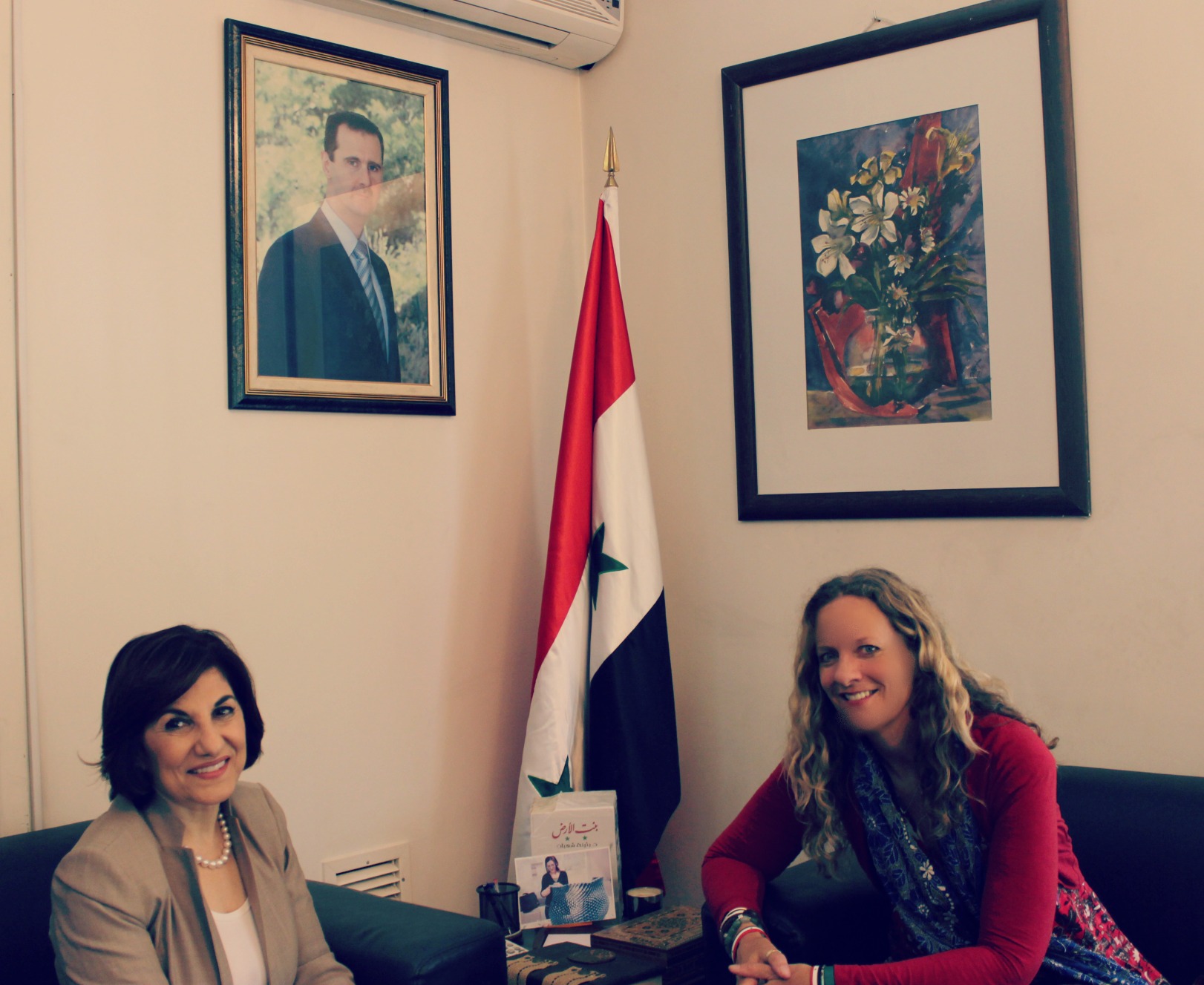
Today I had the honour to meet with Dr Bouthaina Shaaban, political and media advisor to Syrian President Bashar al Assad. We discussed many issues including this most recent heart wrenching image that is appearing across all main stream media channels. As we opened the discussion, Dr Shaaban said immediately: “We are paying for this propaganda with our blood.”
Dr Shaaban went on to describe how the “corporate media is distorting reality in Syria,” while also explaining why she was reluctant at the beginning of the NATO member and allies war on Syria, to speak to western mainstream media:
“They came here with accusatory questions, they didn’t come here to know what is going on. They came here to ask me why are you working with a man who is ‘killing his own people.’ What an ugly start for an interview. I said there is no point, they come here to gain credibility but only to re-confirm their own story rather than to find out what is really going on. I didn’t want to be used to ‘re-confirm’ their own story or to give them credibility.”
Dr Shaaban believes that there is a need to ensure voices like hers that resonate with passion for her country and its people, which should be heard across a far wider range of media platforms to counter what might be described as a vast Zionist and Gulf State (GCC) funded media network that is driving the propaganda train though the US and Europe. Dr Shaaban mentioned a weekly column that she is writing in Arabic and suggested that perhaps she should translate it for English media.
What follows is the transcript of Dr Shaaban’s statements on various subjects:
Why is our country being destroyed?
“I wrote that really we are going through a third world war, without naming it a third world war but this time it’s a global war between two projects and two ways of thinking – between western concepts that they want to promote: their own way of life, their own ideology, their own way of thinking even at the expense of other lives and the innocence of our countries while the old civilisations like the Chinese, the Indian, the Arab civilisation are struggling to keep their identity and to pass this identity to their children and grand-children
Personally I no longer believe that the way the system is working in the west has any ‘democracy’ for us, or has any ‘human rights’ for us, or that there is any ‘free press’ for us in their official media system. If you know how we feel now you would be really surprised.
I have two daughters and a son. One daughter is doing a PhD in architecture in London and the other is doing a PhD in the US in international relations and politics. The one in London has a three year old girl, the one in the States has a four year old boy. They have been here for a month, every time they go to the Old City, they come back crying. They say, is it possible that our children cannot live the way we lived, cannot know the Syria we knew, cannot enjoy the Syria we enjoyed? Why?
Why are we being prevented from passing on our experience, our culture, our livelihood to our children? Why are our families being destroyed? Why is our country being destroyed? This is a daily struggle for our children. My children take their children and show them everything because they are afraid that tomorrow this will not be here anymore.
This is a terrible thing to happen to any country, to any people on earth. We have the right to live the way we think, to live our own culture. You might find Paris exciting, I find Damascus the most beautiful place on earth. This is us, this is who we are. I was asked many times to leave as an Ambassador but I cannot leave Damascus, can you believe it? I do not want to live one year out of Damascus, I can never get enough of this city.
So, leave us alone – that is really our message and unfortunately the calculus of politics in the west has no consideration whatsoever for the way people feel or for their aspirations.”
Western Exceptionalism
“The problem with the western system is that they think they are superior and they think that they want to “civilize” us and they want us to come up to their “standards”, and I hate when I hear Obama or any US official talking about American exceptionalism. What do they mean American exceptionalism?
God created us as people. We belong to the same humanity, we belong to the same world. In the Quran God spoke about the differences between us and we should understand that we should celebrate and cherish these differences. This idea of supremacy is basically rooted in racism because it believes in the supremacy of one sect, colour or nationality over another.
I feel it is bad for the west too because racism is now producing bad results for western countries especially as there are so many different religions living everywhere in the world. The only salvation for all of us is to say there is one world, one humanity and to apply this rule to everybody. We must truly believe in that not only talk about it in the media and then practice racism in the law. There is a huge area for dialogue but we need people who believe in similar values.
We are fighting a war on the ground but it is also a clash of values.”
Reshaping our world and the problems we face.
“The Gulf States are a huge problem. With the petro dollar they are feeding the arms industry in the US, UK and France and prolonging this conflict. It is going to be a long process, we are living through a transitional stage in world history. It is going to be a long process in order to reshape our world. That is why we all have the obligation to be active so our new world is based on better values, better ethics, better ways of dealing with each other.
To achieve this new world, co-operation between east and west is crucial.
Where are the leaders in the US, or even in Europe, who are visionary and who are thinking about their countries for the next fifty years and who are doing the right thing for the people from an historical perspective? So perhaps we are living through a crisis of leadership.”
The Destruction of the Middle East is to protect Israel. NATO is trying to impose an Islamist extremist state onto Syria’s secular state.
“I think there are two explanations for that. First the west should be embarrassed to be supporting countries like Saudi Arabia and Qatar against Syria, Iraq or Sudan. We were the secular republics who produced books, scientists, intellectuals etc. I think there is a reason for that. The reason for what the west is doing, in my opinion as an Arab woman, could be summed up by the Arab-Israeli conflict. I feel that the western support for Israel against the Palestinian people and the destruction of a whole people and their identity by Israel shows that what the west cares about is for Israel to be the powerful state in the region for the next fifty or a hundred years. In order for Israel to be the prevailing force in the Middle East it is necessary to destroy Arabic culture.
Unfortunately, now I can see a union of evil between the Gulf States and Israel and western systems. I use the word systems to divorce this evil from the western people.
I respond as an Arab woman, who grew up knowing that my country was part of Bilad al-Sham, Greater Syria. I do not say this in an aggressive tone, but in a loving tone because Syria was Palestine, Lebanon, Jordan and I can’t understand why as a Syrian woman, I cannot visit Al Aqsa. Its very close geographically, yet its impossible for me to get there because Israel has been planted in the Middle East.
Israel is a major focus for western countries and all these wars against Arab countries and what they call the ‘Arab Spring’ is to destroy Arab armies and to prevent any Arab country being able to resist Israel in the future. They do not want us to be able to liberate our Golan Heights, or Palestine, or to simply assure the rights of the Arab people.
By the way, there are at least 50 UN resolutions that give the Palestinians at least half of Palestine and the world is doing nothing about that – on the contrary the US used 37 vetoes in order to prevent the Palestinians getting their rights. Western hypocrisy is amazing.
That is where the supremacy in the west is turned against Arabs because it is the Zionist media that tells the west that the Arabs are ‘backwards’ or primitive. People are persuaded by this propaganda and they treat us as the Zionists wish us to be treated. This is racism against Arabs and emanates from the Zionists.
Hillary Clinton has spoken about working with the Muslim Brotherhood. It is extensively documented that the Muslim Brotherhood has had connections to the CIA since they were created. Even if we read nothing but we apply the western proverb, “who is the beneficiary” – you will find Israel is the beneficiary from all this destruction.
You can see that the army and our intellectuals are the major targets for Israel. They dont want any intellectuals or any army left in our country. They destroyed the Iraqi army. There is a war of attrition against the Syrian army, against the Libyan army, the Sudanese, the Lebanese.
Unfortunately some who call themselves Arab in the Gulf use the petro-dollar in order to serve this project against our culture and our civilization because as a Syrian woman I feel the Gulf has no culture, no history. This is Bilad al-Sham continually inhabited for ten thousand years. The Gulf is forty years old and therefore they have no right to speak in the name of the Arabs
We are the Arabs, we are history, we are civilization.
What they are doing is against our civilization, against our history and against our future but I feel this is a very dangerous project that reminds me of how the American Indians were treated. They have destroyed Palmyra, they have destroyed our history and our culture.
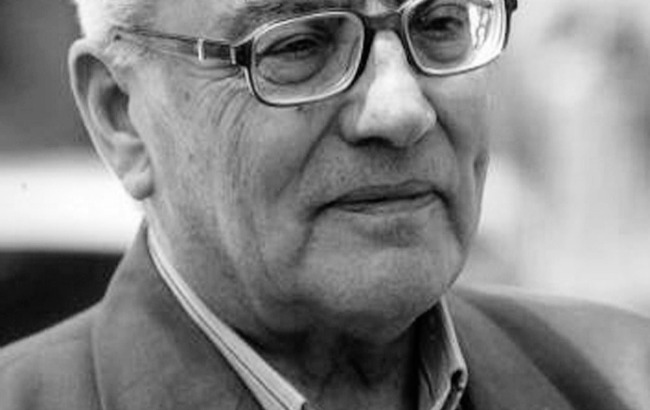
Khaled al Assad. Photo:Screenshot
Khaled al-Assad is the only archaeologist in the world who was writing about who was here in the past, in Palmyra. He was proving that the Zionists were never here. They killed him, they burned his library, they burned his books so we have nothing left of his work. From an observers’ perspective, they are focusing on history, material history, cultural history, identity, army. Any power that keeps you as an entire state, or any statesman that represents strength or unity will be demonized and destroyed.
Even Ramadan al Bouti a Sunni scholar who was speaking sense was murdered because they want to destroy anybody who speaks the truth or who is influential and can gather people around him.
What is the significance of President Assad? He is credible, people believe in him, Arab people believe in him. They do not want anybody like that to have influence. I feel there is a huge plan against all of us.
They operate by buying people, Arab people, people in powerful positions who serve the Zionist project against our culture and identity because they can be bought by money.
I am talking to you from experience, I was subjected to a huge amount of pressure by many countries to be bought by money and all the temptations you can think of were offered to me but I am somebody who cannot be bought by money. I am somebody who believes in my country and in my people. Even if I die, I can die for a cause. If I can’t live for it I can die for it.
Most of the defections that happened in Syria were driven by money. None of them has a cause or an ideology or any credibility with our people.
As you said quite rightly, the western people do not see any of this, they only see the shadow. Those people bought by money, they are the shadow state.
Nobody wants to know who we really are.”
The reason nobody knows the real Syria and the real Syrians, is because the western media has routinely lied and deceived us from the very beginning of the war against Syria – led by the US, NATO members and funded by the Gulf states, supported and encouraged by Israel who, as Dr Shaaban states, stands to benefit most from the perpetual chaos being maintained inside their strongest enemy in the region.
The Upcoming Nicaraguan Election Will Be a Test
By Nil NIKANDROV | Strategic Culture Foundation | 19.08.2016
After three Americans from the US embassy were accused of espionage and tossed out of Nicaragua, a protest was lodged in Managua against this «unwarranted» decision, and the Nicaraguan government was warned that the relationship between the two countries would suffer inevitable damage in tourism, trade, and investment from the US. The State Department issued notice that Americans might face threats in Nicaragua. The war of propaganda waged against Daniel Ortega’s regime has become so ferocious that political commentators are drawing conclusions about Washington’s plans to «end the dictatorship» in Nicaragua once and for all.
The Democratic Initiative of Spain and the Americas (IDEA), an international forum, was created in April of 2015 in order to launch attacks on Ortega and other Latin American «populist» leaders, and Washington was responsible for choosing its members: the chosen favorites include – Álvaro Uribe of Colombia, Alejandro Toledo of Peru, Lucio Gutiérrez of Ecuador, Felipe Calderón of Mexico, Óscar Arias of Costa Rica, José María Aznar of Spain, and others. These politicians work closely with the United States and continue to defer to Washington, even after leaving office.
IDEA released a statement in August that was highly critical of Nicaragua and which reads like something out of the Cold War: «The international community finds the violation of the democratic system in Nicaragua so worrisome that the former Ibero-American heads of state and of government have decided to ask the OAS and the EU to maintain critical oversight of these serious violations of democratic and constitutional order». And it goes on to say that statements by the members of IDEA «may be preceded by certain political and diplomatic actions, as provided by international law … in order to defend democracy and reestablish it where it has been compromised, as in the current example of Nicaragua».
In its attacks on the Nicaraguan government, the US National Security Agency uses materials obtained over the course of years of electronic surveillance of President Ortega, as well as his family and inner circle. Its deft use of such materials makes it possible to circulate all sorts of drivel that is designed to defame politicians who have been marked for public retaliation. Almost every «populist bloc» leader in Latin America is currently up against such cheap shots – Inácio Lula da Silva, Dilma Rousseff, Cristina Fernández de Kirchner, Rafael Correa, Nicolás Maduro, Evo Morales, and others.
Daniel Ortega has led his country for 13 years. He has been elected three times: in 1985, 2006, and 2012, and no one is predicting that he will have any opponents in the upcoming Nov. 6 election. Ortega’s political rivals are feuding amongst themselves. Despite the behind-the-scenes efforts of the US embassy, is has not been possible to consolidate the opposition in the run-up to the election. For this reason, the US has launched a blitzkrieg of propaganda against Daniel Ortega, his wife Rosario Murillo, and their grown children. The leitmotif of these «revelations» is a familiar one – some hogwash about the abuse of power, corruption, multi-million-dollar accounts in overseas banks, and the ownership of foreign real estate. The US continues to harp on the supposed parallels with the family of the dictator Anastasio Somoza; «Somoza García amassed a huge fortune, making him and his family some of the richest people in all of Latin America. By the time of his death in 1956 he left his children $200 million, which they managed to triple within a few years. His son, Anastasio Somoza DeBayle, owned 130 real estate holdings, as well as estates, residences, and tracts of land. He was owner of an airline (Líneas Aéreas de Nicaragua), a television station (Televisora de Nicaragua), the San Uribe and San Albino gold mines, and more».
One might well ask, what does Somoza’s wealth have to do with Ortega and his family? Nevertheless, the author of the article writes: «As is usual for totalitarian regimes of the past, there is no reliable information about the finances of the Nicaraguan president and his wife. That knotty question is top secret». Although there is no «reliable information», he goes on to claim that the family owns the Distribuidora Nicaragüense de Petróleos chain of gas stations, plus media outlets including four TV channels, radio stations, newspapers, websites, etc. In addition, Ortega has control over the project to build a transoceanic canal that would link the Pacific and Atlantic oceans, the cost of which is estimated at $50 billion. That mega-project has the backing of the Chinese entrepreneur Wang Jing.
Naturally of course the Chinese-Nicaraguan canal mega-project was met with hostility by Washington. They don’t want anything competing with the updated Panama Canal. And as for the company Distribuidora Nicaragüense de Petróleos, that is a model for energy-sector cooperation between Venezuela and Nicaragua – not some private racket that is allegedly being used by Ortega’s friends for their personal enrichment.
During the years when the Sandinistas were in the opposition, Ortega was constantly faced with the problem of getting access to the media. His attempts to communicate his views to the public invariably ran up against an information boycott. But now the situation has changed drastically. Ortega has turned the tide to his own advantage. The government controls hundreds of Internet websites, as well as the news services Nicaragua Triunfa and Nicaragua Comovamos. Dozens of provincial radio stations work on the side of the government, as do influential national stations like Radio Sandino, La Nueva Radio Ya, Radio Nicaragua, and Radio Primerísima. The work of the government and the president gets favorable coverage by TV channels that are managed by members of the Ortega family – Canal 13, Multinoticias Canal 4, Canal 8, and Telenica Canal 10. The pro-government channels also include Canal 23, Canal Extra Plus, 100 % Noticias, and others. None of the «leftist» Latin American presidents enjoy such an effective mouthpiece for information and propaganda as Ortega.
Yet despite the accusations that it is a dictatorship, the country has no censorship restrictions. The opposition and, consequently, the US embassy have every opportunity to proselytize there. Popular newspapers like La Prensa and El Nuevo Diario and the weekly Confidencial are employed with particular vigor toward this goal. Ortega responds immediately, using fiercely anti-imperialist and anti-American terminology. Nor does he keep silent when Washington directs attacks against Nicaragua’s allies. Ortega’s speeches in support of Russia, Cuba, and friendly governments in Ecuador, Bolivia, and other countries resonate far and wide.
The ideological underpinnings of Ortega’s international policy have remained unchanged throughout recent years: they consist of a fundamental rejection of American hegemony, coupled with patriotism, nationalism, and «socialism with a Nicaraguan face», plus support for the Latin American path to a true people’s democracy. This 70-year-old politician has never altered his revolutionary convictions. That said however, he is a flexible strategist who understands that a superpower can strike at any time and that the US is still unpredictable and dangerous. As the leader of a small country he has no choice but to maneuver, and he manages to do so without compromising his principles.
In December 2015 the CIA launched into yet another act of provocation against Nicaragua. Under the influence of inflammatory media reports about the Obama administration’s possible suspension of the preferential treatment Cuban migrants receive upon entering the US, hundreds rushed to emigrate from that island nation. The route suggested by the «well-wishers» from Miami: first by air from Havana to Ecuador (no visa needed), then by bus across several borders into Mexico, and from there into the US. Nothing to worry about, or so it would seem. However, Nicaraguan counter-intelligence got its hands on some information about CIA plans to use those migrants to stir things up. After arriving in Nicaragua from Costa Rica, their onward path – through Honduras, Guatemala, and Mexico – was to be closed, and the Cuban migrants would find themselves stranded in Nicaragua for a long time. As envisioned by the CIA, they were supposed to be the fuse to the ticking bomb of the country’s destabilization. Therefore, Daniel Ortega’s decision was emphatic: there should be no back doors, and the ones who came up with the whole migrant scheme should be the ones to deal with the mess! Demands that the migrants be admitted were hurled at that «inhumane regime» from all manner of human rights organizations patronized by American foundations. The members of the Central American Integration System (SICA) went public with their criticism of Ortega’s decision. The migrants themselves, as if on cue, tried to crash through the Nicaraguan border, with children and pregnant women planted in their forward ranks. The Nicaraguan government needed time to force the fugitives into Costa Rica. Tensions eased by February-March 2016. Ortega’s government refused to be blackmailed, and Washington had to quietly furnish its ally Costa Rica with financial assistance in order to provide for the migrants and evacuate them by air…
As the date of the Nicaraguan presidential election nears, new acts of provocation should be expected from US intelligence agencies and the American embassy. Ambassador Laura Dogu works assiduously with the Nicaraguan business community, persuading them that the ongoing Sandinista administration and its policy of «socialism with a Nicaraguan face» can only hurt their business interests.
The US embassy has conspicuously stepped up its work with the media and activists from NGOs and indigenous organizations, as well as the country’s youth. US intelligence agencies, diplomats, staffers with USAID (which is in reality a branch of the CIA), and Peace Corps volunteers are pinning their main hopes on Nicaragua’s youth, viewing that demographic as the most promising in the struggle against the Nicaraguan regime.
The Constitution offers no barriers to President Ortega’s reelection. He has been accused of taking control of executive, legislative, and judicial power, but the main factor ensuring his re-election is his broad popular support, which Ortega enjoys thanks to the social programs established during his years in office. Despite his socialist, anti-imperialist views, the president has many supporters in the country’s business community.
The November election forecasts don’t look too auspicious for the conspirators in the US embassy: Daniel Ortega is once again going to be elected president.
How Media Distorted Syrian Ceasefire’s Breakdown
By Gareth Porter | FAIR | August 11, 2016
Coverage of the breakdown of the partial ceasefire in Syria illustrated the main way corporate news media distort public understanding of a major foreign policy story. The problem is not that the key events in the story are entirely unreported, but that they were downplayed and quickly forgotten in the media’s embrace of themes with which they were more comfortable.
In this case, the one key event was the major offensive launched in early April by Al Nusra Front — the Al Qaeda franchise in Syria — alongside U.S.-backed armed opposition groups. This offensive was mentioned in at least two “quality” U.S. newspapers. Their readers, however, would not have read that it was that offensive that broke the back of the partial ceasefire.
On the contrary, they would have gotten the clear impression from following the major newspapers’ coverage that systematic violations by the Assad government doomed the ceasefire from the beginning.
Corporate media heralded the ceasefire agreement when it was negotiated by the United States and Russia in February, with the Los Angeles Times (2/3/16) calling it “the most determined diplomatic push to date aimed at ending the nation’s almost five-year conflict.” The “partial cessation of hostilities” was to apply between the Syrian regime and the non-jihadist forces, but not to the regime’s war with Nusra and with ISIS.
The clear implication was that the U.S.-supported non-jihadist opposition forces would have to separate themselves from Nusra, or else they would be legitimate targets for airstrikes.
But the relationship between the CIA-backed armed opposition to Assad and the jihadist Nusra Front was an issue that major U.S. newspapers had already found very difficult to cover (FAIR.org, 3/21/16).
U.S. Syria policy has been dependent on the military potential of the Nusra Front (and its close ally, Ahrar al Sham) for leverage on the Syrian regime, since the “moderate” opposition was unable to operate in northwest Syria without jihadist support. This central element in U.S. Syria policy, which both the government and the media were unwilling to acknowledge, was a central obstacle to accurate coverage of what happened to the Syrian ceasefire.
Shaping the Story
This problem began shaping the story as soon as the ceasefire agreement was announced. On Feb. 23, New York Times correspondent Neil MacFarquhar wrote a news analysis on the wider tensions between the Obama administration and Russia that pointed to “a gaping loophole” in the Syria ceasefire agreement: the fact that “it permits attacks against the Islamic State and the Nusra Front, an Al Qaeda affiliate, to continue.”
MacFarquhar asserted that exempting Nusra from the ceasefire “could work in Moscow’s favor, since many of the anti-Assad groups aligned with the United States fight alongside the Nusra Front.” That meant that Russia could “continue to strike United States-backed rebel groups without fear … of Washington’s doing anything to stop them,” he wrote.
On the same day, Adam Entous of the Wall Street Journal reported that Obama’s “top military and intelligence advisers don’t believe Russia will abide by a just-announced ceasefire in Syria and want to ready plans to increase pressure on Moscow by expanding covert support to rebels fighting the Russia-backed Assad regime.”
For two of the country’s most prominent newspapers, it was thus clear that the primary context of the Syria ceasefire was not its impact on Syria’s population, but how it affected the rivalry between powerful national security officials and Russia.
Contrary to those dark suspicions of Russian intentions to take advantage of the agreement to hit U.S.-supported Syrian opposition groups, however, as soon as the partial ceasefire agreement took effect on Feb. 27, Russia released a map that designated “green zones” where its air forces would not strike.
The green zones, according to the Russian Ministry of Defense, corresponded with Syrian opposition groups that had signed on to the ceasefire. Furthermore, Russia stopped bombing the Nusra-controlled areas of northwest Syria, instead focusing on ISIS targets, as Pentagon spokesperson Jeff Davis confirmed on March 14.
Breaking the Ceasefire
But instead of separating themselves from Nusra Front, the U.S.-supported armed opposition joined with Nusra and its jihadist allies in a major offensive aimed at destroying the ceasefire.
Charles Lister, a leading British specialist on the jihadists in Syria, has recounted being told by the commander of a U.S.-backed armed group that around March 20, Nusra officials began a round of meetings with non-jihadist opposition groups from Hama, Latakia and southern Aleppo — including those supported by the United States — to persuade them to participate in a major offensive against the Assad regime, rather than in a ceasefire and political negotiations.
News media did not ignore the offensive launched on April 3 by Nusra Front and its “moderate” allies. The Los Angeles Times (4/4/16) described a “punishing attack” by Nusra and several “so-called moderate rebel factions” on the town of Al Eis, southwest of Aleppo, “overlooking the M5 highway, a vital artery connecting the Syrian capital, Damascus, in the southwest of the country, with the government-held city of Homs, in west-central Syria, and Aleppo in the north.”
Associated Press (4/3/16) reported that Nusra Front’s closest ally, Ahrar al Sham, together with U.S.-supported factions had simultaneously “seized government positions in heavy fighting in northwestern Latakia province.” The story quoted Zakariya Qaytaz of the U.S.-supported Division 13 brigade as telling the agency through Twitter: “The truce is considered over. This battle is a notice to the regime.”
The Nusra-led offensive was a decisive violation of the ceasefire, which effectively frustrated the intention of isolating the jihadists. It led to continued high levels of fighting in the three areas where it had taken place, and Russian planes returned to Nusra Front-controlled territory for the first time in nearly six weeks. Yet after the first reports on the offensive, its very existence vanished from media coverage of Syria.
Disappearing Key Facts
No U.S. newspaper followed up over the next two weeks to analyze its significance in terms of U.S. policy, especially in light of the role of “legitimate” armed opposition groups in trashing the ceasefire.
Wall Street Journal correspondent Sam Dagher (4/4/16) suggested in his initial report on the offensive that it was a response to a Syrian air force airstrike in an opposition-controlled suburb of Damascus two days earlier, which activists said killed 30 civilians. But the offensive was so complex and well-organized that it had obviously been prepared well in advance of that strike.
None of the other papers sought to portray the offensive as the result of a pattern of increasing military pressure on the Nusra Front or its allies. In fact, after the initial reports, all four major newspapers — the New York Times, LA Times, Wall Street Journal and Washington Post — simply ignored the fact that the offensive had been carried out.
On April 19, three separate articles presented three variants of what became the broad media approach to explaining the fate of the ceasefire agreement. The Journal’s Nour Malas and Sam Dagher wrote: “A limited truce in Syria, brokered by the US and Russia in late February, has unraveled in recent weeks, with government forces escalating attacks on several fronts and rebels relaunching operations around the northern city of Aleppo.”
That formulation clearly suggested that either the regime had moved first, or that government and rebels had somehow both taken the offensive at the same moment; the former interpretation was encouraged by the headline, “Syrian Government Steps Up Airstrikes.”
On the same day, New York Times Beirut correspondent Anne Barnard wrote a piece focused mainly on regime airstrikes in two Idlib towns, Maarat al Numan and Kafr Nable, that had killed many as 40 civilians.
Barnard’s piece was headlined, “Ceasefire Crumbles as Bombings Kill Dozens” — suggesting that the airstrikes had somehow led to the “crumbling.” Barnard did refer to an otherwise unidentified “insurgent offensive” that preceded the strikes, but did not draw any causal relationship between it and the bombing.
The article cited the opposition claim that the government had repeatedly violated the partial ceasefire, but didn’t cite a single concrete instance of such a violation. And it appears to contradict that argument by observing that the Idlib airstrikes had ended “the relative respite from airstrikes that had lasted nearly two months” – i.e., from the time the ceasefire had gone into effect.
Yet a third article to appear that day, published by Reuters, explicitly asserted that the regime airstrike on a crowded market by Syrian planes to which Barnard referred was the cause of the failure of the partial ceasefire.
“Syrian peace talks appeared all but doomed on Tuesday,” it said, “after airstrikes killed about 40 people in a crowded vegetable market in rebel territory, with the opposition saying a truce was finished and it would keep out of negotiations indefinitely.”
Wrapping Up the Distortions
Finally, on April 27, Karen DeYoung, associate editor of the Washington Post, wrote a news analysis piece looking back on what happened to the ceasefire. The piece never mentioned the major Nusra Front offensive in which U.S.-supported armed groups had played a key role, passing on instead the distorted explanation of the fate of the ceasefire offered by national security bureaucrats.
“Some Defense Department and intelligence officials,” she wrote, “think Russia and its Syrian government client are clearly violating the ceasefire and provoking the opposition into doing the same.”
Like the three April 19 articles, DeYoung focused entirely on military moves taken by the regime more than two weeks after the joint Nusra/opposition April offensive. She cited the Syrian government bombing of Kafr Nabl and Maarat al Numan the previous week, asserting that the towns were “heavily bombed by Assad after rebel forces threw out Nusra occupiers and civilians took to the streets in anti-Assad demonstrations.”
But that characterization of the situation in the two towns, clearly aimed to support the notion that they were free of Nusra control, was false. In fact, Kafr Nabl had formerly been the home of the U.S.-backed Division 13, but far from having been thrown out, Nusra Front had reasserted its direct control over the towns in mid-March, kicking Division 13 out of its base and seizing its U.S.-supplied weapons after a fight over the larger town Maarat al Numan.
DeYoung went so far as to embrace the CIA/Pentagon bureaucrats’ argument that the United States should not have agreed to allow any attacks on Nusra Front in the ceasefire agreement.
“The Nusra ceasefire exception had already left a hole big enough for the Syrian government and Russia to barrel through,” she wrote, “and they have not hesitated to do so in pursuit of regaining the initiative on the ground for Assad.”
The implication of the argument is that the United States should do nothing to interfere with Nusra’s capacity to strike at the Assad regime. Thus DeYoung quoted an analyst for the Institute for the Study of War, which favors a more belligerent U.S. policy in Syria, dismissing the military collaboration by U.S.-supported groups with Nusra Front as not really significant, because it is only “tactical,” and that Nusra merely offers to help those allies “retaliate” against regime attacks, rather than seeking a military solution to the conflict.
Such arguments are merely shallow rationalizations, however, for the preference of hardliners in Washington for pitting Al Qaeda’s military power against Russia and its Syrian client, enhancing the power position of the U.S. national security state in Syria.
A Simplistic Summary
As more time passes, the media version of why the partial ceasefire failed has become even more simplistic and distorted. On July 12, DeYoung revisited the issue in the context of the Obama administration’s negotiations with Russia on military cooperation against Nusra Front. This time she portrayed the ceasefire quite starkly as the victim of Syrian and Russian bombing:
“Despite a ceasefire ostensibly in effect since February, Syrian planes have kept up a steady bombardment of both civilian and opposition sites — where they have argued that Al Nusra forces, exempt from the truce, are mixed with rebel groups covered by the accord. After observing the early weeks of the ceasefire, Russian planes joined the Syrian forces, including in an offensive last weekend that took over the only remaining supply route for both rebels and civilians hunkered down in the northern city of Aleppo.”
Playing the role of ultimate media arbiter of how the attentive public is to understand the pivotal issue of why the ceasefire failed, DeYoung has deleted from memory the essential facts. In her narrative, there was no Nusra Front plan to destroy the ceasefire, and no April Nusra offensive to seize strategic territory south of Aleppo with the full participation of U.S.-supported opposition groups.
The lesson of the Syrian ceasefire episode is clear: The most influential news media have virtually complete freedom to shape the narrative surrounding a given issue simply by erasing inconvenient facts from the story line. They can do that even when the events or facts have been reported by one or more of those very news media.
In the world of personal access and power inhabited by those who determine what will be published and what won’t, even the most obviously central facts are disposable in the service of a narrative that maintains necessary relationships.
Ex CIA chief’s ‘kill Russians, Iranians’ comment – Clinton job application
RT | August 11, 2016
Former CIA deputy director Michael Morell has proposed the US escalate the conflict in Syria by targeting President Bashar Assad’s allies. He added that killing Russians should be done covertly, but in such a way that the Kremlin would get the message.
Morell endorsed Hillary Clinton for US president and is known as a strong critic of Donald Trump.
RT: Russia and Iran are helping the Syrian government fight terrorists. So what would the US achieve by killing Russians and Iranians there?
Annie Machon: I think it would be jeopardizing world peace, to be quite frank. I think this is more like an alarming job application by Morell – so he would love to have a senior post in any Clinton administration, if she were to be elected. He is saying what he thinks she would like to hear about how America should deal with the situation in the Middle East. If indeed this does reflect her own views, then we’ve got to the absurd position, where actually world peace might be in safer hands if Donald Trump were elected president.
RT: Is Clinton running any risks by siding with a man who is proposing such a radical foreign policy move, do you think?
AM: I think this is a general reflection of the American establishment. Ever since the presidency of George W. Bush there has been a hit list of the countries that America has tried to ensure a regime change happens within. This was the list he called ‘the axis of evil’ comprising Libya, Syria, Iran, Iraq, and North Korea. Now, North Korea is under the patronage of China, so it’s relatively safe; plus it has a nuclear capability. So America can’t really do much about that one. But we’ve seen what they have done in all the other countries.
In fact, back in 2008 America was on the brink of going to war against Iran, as well. The only reason that rush to war was stopped – and this is something Bush has actually acknowledging in his memos – was because of the leaking of the national intelligence estimate of 2008, which is the combined thinking of all 16 US intelligence agencies – about Iran’s nuclear weapons capability and the development thereof. Their assessment then – and it has been re-ratified every year since – is that Iran gave up trying to develop any nuclear capability in 2003, and did not therefore pose a threat to Western interests. That is the only reason Iran is still standing. And we’ve seen all the mess in all the other countries.
RT: How consistent is Clinton’s foreign policy track record?
AM: I think fundamentally consistent with the sort of hawkish neocon approach the American establishment has been taking against many countries in the Middle East – preserve their interest there to prop up some of their close allies like Saudi Arabia and the dictatorships across the Middle East, as well.
But also consistent in trying to provoke reaction from Russia. The US and EU backed coup in Ukraine was an immense provocation. It is because Russia has managed to show a great deal of self-restraint in that area and in the face of provocation with big NATO exercises in the Baltic States and Poland and all the rest of it. That is the only reason that we haven’t seen an escalation into war.
RT: Clinton and her supporters claim Donald Trump is doing Russia a favor. His motto is making America great again. Why would that be perceived as beneficial for the Kremlin?
AM: I think mainly because he has made noises about the fact that he would ratchet down the pressure against Russia. In opposition to what Hillary Clinton has been describing – that the pressure needs to be kept on Russia. She represents the American establishment which is very keen on a unipolar world.
Now, with the resurgence of Russia that monopoly on power that America has enjoyed since the end of the Cold War, they deem to be under threat. Trump himself has said: “We don’t need to think like that. We can focus on building up our own country and let other countries get on with what they want to do, as well.” I think that is an unusually sane comment from the presidential hopeful.
Annie Machon is a former intelligence officer for MI5, the UK Security Service, who resigned in the late 1990s to blow the whistle on the spies’ incompetence and crimes with her ex-partner, David Shayler. Drawing on her varied experiences, she is now a public speaker, writer, media pundit, international tour and event organiser, political campaigner, and PR consultant. She is also now the Director of LEAP, Europe. She has a rare perspective both on the inner workings of governments, intelligence agencies and the media, as well as the wider implications for the need for increased openness and accountability in both public and private sectors.
Washington Escalates Covert Backing for Al Qaeda Militias in Aleppo
By Thomas Gaist | World Socialist Web Site | August 9, 2016
US-backed militias fighting against the Syrian government of Bashar al Assad have broken through the Russian and Syrian government encirclement of their positions inside the war-ravaged northern Syrian city of Aleppo, according to Western media.
During fierce battles over the weekend, the US-backed, Islamist-led militia coalition known as Jaysh al Fateh overran military bases in southwest Aleppo and secured an access road connecting the city to the rest of the country. Russian war planes and Syrian and Iranian ground forces counterattacked Sunday, targeting the anti-Assad forces with aerial bombardments and artillery.
According to Syrian opposition leader Anas al-Abdah, the Islamist offensive has achieved “almost a miracle,” leaving the anti-Assad forces poised to “break the siege and move into a stage where we are talking seriously about liberating the city.” The offensive has carved out a slim corridor linking Aleppo to rebel-held areas, raising the possibility of resupply operations for the desperately besieged Western-backed forces.
The encirclement of Washington’s extremist groups inside Aleppo, who have been reduced to a diminishing pocket in the city’s north and western sectors, in the face of a redoubled Syrian offensive backed by Russian air power and Iranian ground forces, came as a humiliating reversal for US imperialism. Washington has orchestrated a relentless civil war in Syria since 2011, killing hundreds of thousands of Syrians, without achieving its aim of toppling the Damascus regime and installing a neocolonial puppet government.
During the opening phases of the US-NATO orchestrated war, the anti-Assad militias seized control of large areas of the city, which they sought to utilize as a base of operations and object of plunder. Prior to the outbreak of the war, Aleppo’s population numbered between 1 and 2.5 million, according to varying estimates. Today, some 50,000 civilians are estimated to eke out an existence amid the rubble. The city as a whole has been without electricity and running water for more than a year, and entire neighborhoods are completely razed to the ground.
In recent weeks, with the Turkish government of President Recep Tayyip Erdogan withdrawing support for the rebels, in retaliation for Washington’s involvement in the failed July military coup attempt, the American-backed militias have faced the imminent possibility of defeat.
It is not coincidental that the ferocious US-backed assault is unfolding on the eve of Turkish President Erdogan’s trip to St. Petersburg, for talks with Russian President Vladimir Putin, on Tuesday. There are well-grounded fears in American ruling circles that Erdogan will reach a broad-based agreement with Putin, one that would close off all remaining supply routes necessary for sustaining the war against Damascus.
The cause of the sudden reversal in the fortunes of the anti-government forces, who, if US media reports can be believed, have seized the initiative from the jaws of total defeat, was quietly acknowledged in reports published by the New York Times on Saturday and Monday, titled “Military Success in Syria Gives Putin Upper Hand in US Proxy War” and “Rebel Offensive in Syria Challenges Government Siege of Aleppo.”
As Saturday’s Times piece noted, the US Central Intelligence Agency (CIA) has been supplying the Al Qaeda-linked militias with virtually unlimited supplies of sophisticated antitank missiles and other weaponry.
The US-backed rebel coalition, which has been dominated by the Al Nusra Front, “would receive new shipments of the antitank weapons as soon as the missiles were used,” according to comments from a rebel commander made in 2015, and quoted by the Times Saturday.
“We ask for ammunition and missiles, and we get more than we ask for,” the anti-Assad commander said.
In contrast to the Obama administration’s assertions that the shipments were being curtailed and funneled exclusively to “moderate forces,” in reality the CIA has been surging support for the encircled anti-Assad militias in Aleppo, foremost among which are the Al Nusra fighters.
As the Times update on Monday forthrightly acknowledged: “A vital factor in the rebel advance over the weekend was cooperation between mainstream rebel groups, some of which have received covert arms support from the United States, and the jihadist organization formerly known as the Nusra Front, which was affiliated with Al Qaeda.”
The infinite mendacity and hypocrisy of both the Times and the American imperial policy it defends could hardly find sharper expression.
The newspaper presents the change in name and formal disaffiliation of Al Nusra from Al Qaeda as some distant memory, when it was, in fact, announced barely a week and a half earlier. Like most of the Western media, the Times now cheers on the supposed battlefield successes of the so-called “rebels,” who, until the end of July, swore allegiance to Al Qaeda, supposedly the main target of Washington’s 15-year-long “war on terrorism.”
Moreover, in recent weeks, as US intelligence outfitted the surrounded Al Qaeda “rebels” in preparation for a new bloody offensive, America’s top diplomat, Secretary of State John Kerry, has touted steps toward a US-Russian military cooperation pact in Syria, the centerpiece of which would supposedly have been joint strikes against Al Nusra. While Kerry was pledging military cooperation with Moscow, along with joint “counterterrorism” operations, the CIA was giving weapons hand over fist to the Al Qaeda-affiliated forces, dumping fuel on a simmering US-Russian proxy conflict, with the potential to engulf broad areas of the Middle East and Europe in all-out war.
The downing of a Russian Mi-8 transport helicopter over Syria’s Idlib province Monday, which produced the largest single death toll for Russian forces operating in Syria since Moscow launched its intervention last year, grimly illustrated the lethal dynamics being unleashed by American imperialism’s ever more reckless pursuit of unchallenged hegemony over the strategic Levantine nation.
The US media celebrations of the “rebel” victory cannot be taken at face value, and must be weighed against reports from the Syrian government side, which have presented the scope of the rebel counteroffensive in more modest terms. Whatever the true extent of the rebel advances on the ground, it is already clear that the intensified fighting will serve as the political basis for a major military escalation by Washington.
In an interview with Fox News this weekend, Democratic presidential frontrunner, Hillary Clinton, issued bellicose threats against Russia, stating that “the facts raise serious issues about Russian interference in our elections, in our democracy.” Clinton has made clear her intention to pursue a massive escalation of the Syrian war and the broader US war drive against Russia if she wins the White House, saying during last year’s Democratic Party debate, “We have to stand up to his [Putin] bullying and specifically, in Syria.”
While the Obama White House prefers to delay a major escalation until after the elections, the weakness of the American position on the ground is forcing the administration to consider direct strikes against Damascus. Former Obama administration adviser, Dennis Ross, suggested last week that the White House should “begin speaking in a language that Mr. Assad and Mr. Putin can understand,” and employ direct cruise missile and drone strikes against Assad’s military infrastructure.
In the event that the government crushes the rebel attack, powerful factions within the US establishment can be counted on to press for the most aggressive measures against Assad, to be launched in the name of salvaging the American proxy forces, which have been built up at a cost of billions in CIA-supplied cash and weapons.
Even should the Al Qaeda-linked forces complete the breakout, and reassert control over Aleppo and the surrounding region, this will only set the stage for a massive government counterattack, and thus provide a suitable political pretext for further escalation by Washington. Beneath the fog of war in Syria, the only certainty is the constantly growing tendency toward a US-Russian clash that poses the gravest dangers for humanity.
“I Ran the CIA” Man Piles on Trump
Michael Morell “Calls it like he sees it.” Or does he?
By Philip Giraldi • Unz Review • August 9, 2016
Former CIA Acting Director Michael Morell has written a New York Times op-ed entitled “I Ran the CIA. Now I’m endorsing Hillary Clinton.” Morell’s story begins with the flat assertion that “Mrs. Clinton is highly qualified to be commander in chief. I trust she will deliver on the most important duty of a president – keeping our nation safe…Donald J. Trump is not only unqualified for the job, but he may well pose a threat to our national security.”
Morell arrived at his judgement regarding the upcoming election based on his four years of interaction with Hillary Clinton when she was Secretary of State. He admired her preparation, diligence and her willingness to “change her mind if presented with a compelling argument.” Morell “also saw the secretary’s commitment to our nation’s security: her belief that America is an exceptional nation that must lead in the world for the country to remain secure and prosperous; her understanding that diplomacy can be effective only if the country is perceived as willing and able to use force if necessary; and – her capacity to make the most difficult decision of all – whether to put young American women and men in harm’s way.”
“I Ran the CIA” Morell goes on to cite how Hillary was a “proponent of a more aggressive approach [in Syria], one that might have prevented the Islamic State from gaining a foothold…” and he credits her with not politicizing national security when she rejected moving the raid to kill bin Laden back one day so it would not conflict with the White House Correspondents Dinner. Throughout his piece Morell implies that Hillary’s “keeping us safe” policies will somehow actually benefit the country, but he does not explain why and never once mentions what actual American national interests might be served through global “leadership” backed up by force majeure.
And then there is Trump. Morell runs through the litany of the GOP candidate’s observed personality and character failings while also citing his lack of experience but he delivers what he thinks to be his most crushing blow when he introduces Vladimir Putin into the discussion. Putin, it seems, a wily ex-career intelligence officer, is “trained to identify vulnerabilities in an individual and to exploit them. That is exactly what he did early in the primaries. Mr. Putin played upon Mr. Trump’s vulnerabilities… In the intelligence business, we would say that Mr. Putin had recruited Mr. Trump as an unwitting agent of the Russian Federation.”
How can one be both unwitting and a recruited agent? Some might roll their eyes at that bit of hyperbole, but Morell goes on to explain why a claim that would be rather difficult to validate matters. He is unflinching and just a tad sanctimonious in affirming that his own intelligence training means that “[I] call it as I see it.” He derides Trump’s naivete in affirming that “Mr. Putin is a great leader…ignoring that he has killed and jailed journalists and political opponents, has invaded two of his neighbors and is driving his economy to ruin. Mr. Trump has also taken policy positions consistent with Russian, not American, interests — endorsing Russian espionage against the United States, supporting Russia’s annexation of Crimea and giving a green light to a possible Russian invasion of the Baltic States.”
Comments in The Times suggest that many readers are actually buying Morell’s argument, such as it is. They are perhaps ignorant of a number of facts about the author and where he stands ideologically and politically speaking, but first of all Morell’s bluster deserves a bit of a fact check. That the U.S. is “an exceptional nation” obliging it to lead the world, using force without hesitation whenever necessary, might well be questioned by many, particularly in light of the ineffective – or one might say disastrous? – policies instituted over the past fifteen years, policies which, I might add, both Morell and Clinton were parties to.
Contrary to Morell’s assertion, a hawkish Hillary Clinton has never hesitated to put young Americans or anyone else in “harm’s way.” His advocacy of Hillary’s promotion of using military force to overthrow Bashar al-Assad in Syria can be easily challenged by even cursory reflection on the dreadful results produced by similar efforts in Afghanistan, Iraq and Libya. A Syria with no government or a regime made up of a mixture of enemies of al-Assad would have become an open door for the development and expansion of ISIS, which is currently being most effectively opposed by the Syrian Army. And the Russians.
And yes, the Russians. For Morell and apparently Clinton they are the eternal enemy, but Trump’s often stated willingness to work with Putin and the nuclear armed state he heads is somehow seen as a Russian interest, not an American one. That Russia allegedly “invaded” two neighbors and forcibly annexed Crimea is a comic book version of what actually took place and which continues to roil the region. And there is no evidence whatsoever that Moscow either broke into the Democratic Party files or that it intends to invade the Baltic states. So much for the presumed insider knowledge coming from the man who “ran the CIA.”
As for the clincher about Trump being a Moscow run Manchurian candidate, I would suggest that Morell might have been a top analyst at the Agency but he never acquired or ran an actual spy in his life so his comments about The Donald having been recruited by Putin should be taken for what they are worth, which is precisely nothing. Indeed, as I have noted, calling someone an “unwitting agent” is itself meaningless as it implies being somehow recruited to engage in espionage but without realizing it and without being actually called upon to do anything. I would doubt that many real CIA Operations Officers would agree with Morell’s glib assessment or use such an expression. Trump for all his failings is presumably patriotic and no fool. He just might understand that dealing with a powerful foreign leader who is not completely to one’s liking just might be better than nuclear war. Perhaps Morell and Clinton should consider that option.
Michael Morell is, in fact, a product of Washington groupthink and a major beneficiary of Establishment politics, the very tradition that Hillary Clinton represents. Many readers have no doubt seen his serious, somewhat intense gaze as a television expert on terrorism. His career trajectory depends on there being major threats to the United States and this requires him to be constantly searching for enemies. Morell has covered for Hillary in the past, most notably over Benghazi where he altered the talking points of his Congressional testimony to make CIA’s assessment closer to Clinton’s version of events. That he has attached himself to the Hillary Clinton campaign should surprise no one.
When not fronting as a handsomely paid national security consultant for the CBS television network, Morell is employed by Beacon Global Strategies as a Senior Counselor, a company co-founded by Andrew Shapiro and Philippe Reines, members of the Clinton inner circle. As he has no experience in financial markets, he presumably spends his time warning well-heeled clients to watch out for random terrorists and Russians seeking to acquire “unwitting agents.” The clients might also want to consider that unless Morell is being illegally fed classified information by former colleagues his access to valuable insider information ended three years ago when he retired from CIA.
The national security industry that Morell is part of runs on fear. His current lifestyle and substantial emoluments depend on people being afraid of terrorism and foreigners in general, compelling them to turn to a designated expert like him to ask serious questions that he will answer in a serious way, sometimes suggesting that Islamic militants could potentially bring about some kind of global apocalypse if one does not seek knowledgeable counsel from firms like Beacon Global Strategies. And the Russians and Iranians are inevitably behind it all.
Morell, also a CIA torture apologist and a George Tenet protégé, was deeply involved in [many of the intelligence failures that preceded and followed] 9/11. He also has a book out that he wants to sell, positing somewhat ridiculously that he and his former employer had been fighting The Great War of Our Time against Islamic terrorists, something comparable to the World Wars of the past century, hence the title. Morell tends to see the world in Manichean terms. If he were at all introspective he might question the bad guys versus good guys narrative that he possibly peddles for commercial reasons but that is a road he does not choose to go down. His credentials as a warrior are somewhat suspect in any event as he never did any military service and his combat in the world of intelligence consisted largely of sitting behind a desk in Washington and providing briefings to George W. Bush and Barack Obama in which he presumably told them what they wanted to hear, though I am sure he would deny that.
It is certainly unseemly that the self-serving Morell has felt it appropriate to invoke his former government position to provide authenticity for a series of comments that in reality are little more than his own opinion. And, unfortunately, self-advancement by virtue of a government-private sector revolving door is not unique. He is but one of a host of pundits who are successful in selling the military-industrial-lobbyist-congressional-intelligence community’s largely fabricated narrative regarding the war on terror and diversified foreign threats. Throw in the neoconservatives as the in-your-face agents provocateurs who provide instant intellectual and media credibility for developments and you have large groups of engaged individuals with good access who are on the receiving end of the seemingly unending cash pipeline that began with 9/11. And the good thing about a well maintained pipeline is that it keeps on flowing. Is Michael J. Morell anticipating a high position in the Hillary Clinton Administration? You betcha.
50 GOP officials: Trump endangers US national security
Press TV – August 8, 2016
US Republican presidential nominee Donald Trump would put in danger the United States’ security, warn 50 top Republican national security officials.
The officials issued their warning Monday in a letter which was signed by aides and Cabinet members of past GOP administrations including George W. Bush’s and Richard Nixon’s.
“Mr. Trump lacks the character, values, and experience to be president,” the letter reads, adding he “would put at risk our country’s national security and well-being.”
The letter also declared that, “None of us will vote for Donald Trump,” according to the New York Times.

Michael Hayden, former director of both the CIA and National Security Agency
Among the officials are Michael Hayden, former director of both the CIA and National Security Agency; Michael Chertoff, former Secretary of Homeland Security for Bush and President Obama; John Negroponte, former director of national intelligence under Bush; Tom Ridge, former homeland security director under Bush in addition to former governor of the battleground state of Pennsylvania; as well as others who have worked as trade representatives, national security advisers and ambassadors.

Michael Chertoff, former Secretary of Homeland Security for both Bush and Obama
The officials said the GOP nominee “appears to lack basic knowledge about the belief in the US Constitution, US laws, and US institutions, including religious tolerance, freedom of the press, and an independent judiciary.”
Some other top Republicans have also declared they will not vote for the business mogul, but instead will support his Democratic rival, Hillary Clinton.
On Monday, Lezlee Westine, an aide to former president Bush, said she will support Clinton.
Westine, who worked as the White House director of the office of public liaison and as a deputy assistant to Bush, said she will support Clinton.
“Our nation faces a unique set of challenges that require steady and experienced leadership,” Westine said. “That is why today I am personally supporting Hillary Clinton. She has the expertise and commitment to American values to grow the economy, create jobs and protect America at home and abroad.”
Meanwhile, Trump on Monday announced his new economic plan, part of which he said he would slash taxes, block onerous financial regulations and unleash the energy sector.
“We are in a competition with the world, and I want America to win,” Trump told the Detroit Economic Club. “I want to jump-start America. It can be done, and it won’t even be that hard.”
Trump’s campaign has been marked by a lot of controversies including his remarks against Muslims and immigrants to the US.
This is while Clinton’s lead over Trump is significantly growing in recent polls in the run-up to the 2016 US presidential race.
Featured Video
Total War – Attacking Nuclear Plants, Desalination & Infrastructure
or go to
Aletho News Archives – Video-Images
From the Archives
The Heirs of Meyer Lansky Want Compensation from Cuba. They Shouldn’t Get a Dime.
By Jack Colhoun | History News Network | June 19, 2016
Meyer Lansky
The heirs of Meyer Lansky, the impresario of the North American Mafia gambling colony in Cuba (1933-1958) are betting on a big payback from the negotiations between the United States and Cuba to normalize relations between the two countries. Compensation claims by U.S. citizens or businesses for properties nationalized by the Cuban revolution are among the issues under discussion.
Lansky’s daughter Sandi, her son Gary Rapoport, and her brother Paul have filed a compensation claim against Cuba for the Riviera Hotel and Casino with the U.S. Foreign Claims Settlement Commission. The Cuban revolution confiscated the Riviera and other Mafia-owned properties after it toppled the gangster-linked regime of General Fulgencio Batista in 1959.
“It was through my grandfather’s hard work that the hotel was built,” Rapoport told the U. K. Daily Mail Online on December 23, 2015. “We are his natural relations . . . . By right, it should be our property.” He says the Riviera is valued at $70 million. The Tampa Bay Tribune, Reuters, and Haaretz have also covered the story.
The Riviera, which overlooks the Straits of Florida, was the crown jewel of Lansky’s casinos, hotels, and nightclubs in Havana. When the Riviera opened in December 1957, it was the largest Mafia-owned hotel-casino outside Las Vegas. The hotel’s 440 double rooms were booked solid for the winter season of 1957-1958.
However, the narrative that the success of the Riviera was the product of Meyer Lansky’s “hard work” is undercut by Lansky’s own assessment of his arrangement with Batista. … continue
Blog Roll
 Aletho News
- Seyed M. Marandi: Total War – Attacking Nuclear Plants, Desalination & Infrastructure
- Israel systematically torturing Palestinians in custody: UN special rapporteur Albanese
- How the US-Israeli aggression against Iran is affecting the war in Ukraine
- Italy Is Caught Between Two Wars. Russia’s LNG Tanker
- Iran Beats US & Israeli Missile Defenses by Exploiting Their Weaknesses
- Report: White House Making ‘Detailed Preparations’ for Invasion of Iran
- US Air Defenses Not Suited for Modern Combat — Ex-Air Force Officer
- Eight Iraqi resistance attacks hit US Victoria base near Baghdad airport
- US Dirty War Iran Revelations 2026: Ex-Counterterrorism Chief Joe Kent Exposes Proxy Strategy
- Iran’s Dimona Strike Shatters Myth of ‘Impenetrable’ THAAD, Patriot & Arrow Air Defenses – Analyst
- If Americans Knew
- Lebanon deaths top 1,200; Palantir AI to be embedded across US military – Not a ceasefire Day 163
- Israel’s assassination game: Take all pragmatists off the board
- Food shortages return to Gaza as Israel tightens aid restrictions under the cover of its war on Iran
- Trump demands trillions in payments from Gulf countries, billions from Harvard – Not a ceasefire Day 162
- Meet the former fashion blogger and shady doctor behind the ‘30,000 dead’ Iran psy-op
- Vatican Secretary of State to Trump, Israel: End the war as soon as possible
- The Majority of Americans Believe War Against Iran Benefits Israel More Than US
- Efforts to shut down pro-Palestinian speech face series of setbacks in court
- What has Israel done to my brother?
- Eid without worship in Al Aqsa – Not a ceasefire Day 161
- No Tricks Zone
- Former Pfizer Toxicologist Dr. Helmut Sterz Tells Bundestag Hearing Pfizer Vaccine Should Have Never Been Approved
- Energy Expert: Germany’s Nuclear Phaseout Was A “500 Billion Euro Mistake”
- New Research: South Australia’s Mid-Holocene Sea Surface Temperatures Were 4°C Warmer Than Today
- Storing Green Energy To Last Germany 10 Days Would Require A 60-Million Tonne Battery
- New Studies: UK Sea Levels Were 4 Meters Higher Than Today During The Mid-Holocene
- Destructive Green New Deal: German Energy And Metal Group Warns Of Drastic Crisis
- New Study Documents A 20-Year Pause In Arctic Sea Ice Decline – Driven By Internal Variability
- Wake-up Call: Survey Shows Majority Of Germans Now Favor Postponing Climate Targets!
- Televised! Leading German Political Candidate Tells Schoolchildren CO2 Makes Sun Hotter!
- New Study: A Century Warming Of 1.1°C Is ‘Commonplace’ And ‘Not Unusual’ During This Interglacial
 Aletho News