AP: Chavez Wasted His Money on Healthcare When He Could Have Built Gigantic Skyscrapers
By Jim Naureckas | FAIR | March 6, 2013

One of the more bizarre takes on Venezuelan President Hugo Chavez’s death comes from Associated Press business reporter Pamela Sampson (3/5/13):
Chavez invested Venezuela’s oil wealth into social programs including state-run food markets, cash benefits for poor families, free health clinics and education programs. But those gains were meager compared with the spectacular construction projects that oil riches spurred in glittering Middle Eastern cities, including the world’s tallest building in Dubai and plans for branches of the Louvre and Guggenheim museums in Abu Dhabi.
That’s right: Chavez squandered his nation’s oil money on healthcare, education and nutrition when he could have been building the world’s tallest building or his own branch of the Louvre. What kind of monster has priorities like that?

In case you’re curious about what kind of results this kooky agenda had, here’s a chart (NACLA, 10/8/12) based on World Bank poverty stats–showing the proportion of Venezuelans living on less than $2 a day falling from 35 percent to 13 percent over three years. (For comparison purposes, there’s a similar stat for Brazil, which made substantial but less dramatic progress against poverty over the same time period.)
Of course, during this time, the number of Venezuelans living in the world’s tallest building went from 0 percent to 0 percent, while the number of copies of the Mona Lisa remained flat, at none. So you have to say that Chavez’s presidency was overall pretty disappointing–at least by AP‘s standards.
Related article
- Preparing for a Post-Chávez Venezuela (alethonews.wordpress.com)
Chavez is dead, but his revolution goes on
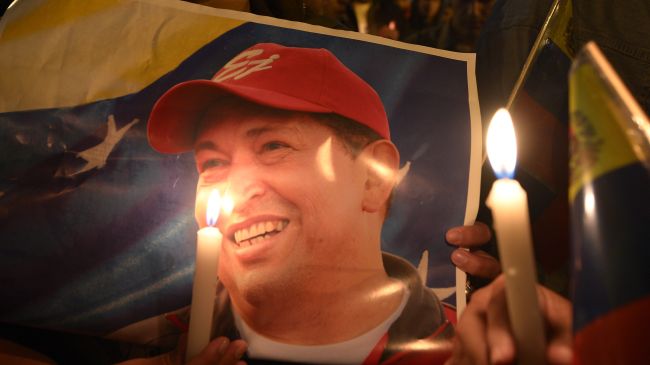
By Yusuf Fernandez | Press TV | March 6, 2013
Thousands of saddened Venezuelans poured into the streets of Caracas crying, hugging each other and shouting slogans in support of President Hugo Chavez after learning of his death. “I feel such big pain I cannot even speak,” said Yamilina Barrios, a 39-year-old office worker, to the Associated Press. “He was the best thing the country had … I adore him. Let´s hope the country calms down and we can continue the tasks he left us.”
Leaders of the continent also showed their sorrow. “We are devastated by the death of the brother Hugo Chavez,” Prensa Latina agency quoted Bolivian president Evo Morales as saying, while he was accompanied by several members of his cabinet. Chavez was “a caring brother, a fellow revolutionary, a Latin American who fought for his country, for the great homeland, as Simon Bolivar did. He gave his whole life for the liberation of the Venezuelan people, the people of Latin America and all anti-imperialist fighters in the world”.
Chavez dedicated his whole life to the cause of the oppressed and poor, the integration and unity of Latin America, the construction of a multipolar world and the fight against the imperialism. Hugo Chavez died due to the illness he had, which many suspect was inoculated to him by any of his enemies, starting by the US government.
He became notorious after a group of army officers and soldiers, led by him, tried to overthrow in 1992 the corrupt and criminal pro-US government of Venezuelan President Carlos Andres Perez, a social democratic politician who ordered a brutal and bloody crackdown on demonstrators that were protesting against IMF-austerity measures on February 27 1989. About 3,000 people were killed by troops in that episode known as “the Caracazo”.
Chavez spent two years in a military prison. After being released, he led a Boliviarian movement that had two main goals: social justice for the impoverished majority of Venezuelans and independence from the US Empire and its financial tools. In 1998, he won his first presidential election and he would never lose one from then on.
The President changed the leadership of the oil national company, PDVSA, whose revenues had benefited only a small national oligarchy and US corporations up to then. At the same time, Chavez funded various social assistance programs for the poor. These programs have improved literacy levels, health care, housing and income levels for Venezuela´s majority.
During Chavez´s years in office, poverty has been cut a half and extreme poverty by 70%. Millions of Venezuelans have had access to health care for the first time, and college enrollment doubled, with free tuition for many students. Inequality was also considerably reduced. By contrast, the two decades that preceded Chavez, Venezuela was one of the worst economic failures in Latin America, with real income per person actually falling by 14% from 1980-1998.
Chavez was the main promoter of the process for the integration of Latin America. It would lead to the creation of some Latin American blocs, such as ALBA, UNASUR or CELAC, which reduced US-dominated OAS to irrelevance. US plans to control Latin American economies through a continental free trade agreement also failed due to the opposition of Venezuela and some other countries.
Following Chavez´s revolution, Latin America has elected in recent years a group of leaders -Evo Morales in Bolivia, Rafael Correa in Ecuador and Daniel Ortega in Nicaragua- who are deeply involved in the fight for social justice in their societies and political independence for their countries and the continent on the whole. Other leaders who followed that trend -Manuel Zelaya in Honduras and Fernando de Lugo in Paraguay- were illegally toppled by US-supported right-wing coups.
In the international field, Chavez was an active promoter of a multipolar world. In order to liberate his country from an imperialist control, Venezuela established solid links with Russia, China, Iran, Syria and other countries. He supported the fight of the Palestinian people against the Zionist occupation.
Due to all these policies, Chavez earned the implacable hatred and hostility of Washington. In April 2002, the CIA backed a military coup to overthrow him. A group of right-wing leaders and generals arrested and imprison him and took over the power, in a move widely welcomed by the US and some European governments and media. However, he was saved and restored to power two days later by the rapid action of loyal military officers and soldiers and a huge popular uprising.
Even after the failure of the coup, the right-wing sectors, which dominated some private media outlets, especially channels as Venevision, Univision and Globovision, continued their permanent campaign against Chavez and his government. All kind of dirty games, including a politicized general strike, were put in place in order to overthrow him. However, all these plans failed due to the high political awareness of the Venezuelan people.
For its part, Washington used its agencies, including the CIA, to fund the political opposition and the oligarchy. According to the site venezuelanalysis.com, Capriles and the Venezuelan opposition received 20 million dollars from US organizations, such as USAID and the National Endowment for Democracy.
Media campaigns were also used as a weapon of preference against the Venezuelan government. Despite Chavez´s repeated electoral victories, successive US administrations and corporate media presented his rule as illegitimate and dictatorial. The US Embassy in Caracas became a hub of anti-Chavez activities, as it shows the recent expulsion of the US Air Force attaché, Col. David Delmonaco, and his deputy, who allegedly tried to recruit Venezuelan army officers for “destabilizing projects.”
In this context, the statement by US President, Barack Obama, which claims that Washington wants to normalize its relations with Caracas, is hypocritically insincere. Actually, the US is just attempting to look for new mechanisms to recover its control over Venezuela and change its economic, social and foreign policy.
The death of President Chavez will force the country to conduct another presidential election within 30 days. The candidate and new leader of the Bolivarian movement, Vice-President Nicolas Maduro, will be the candidate who will confront Henrique Capriles, the right-wing governor of Miranda state, who was comfortably defeated by Chavez in a presidential election held last October.
Although Washington and its Venezuelan allies hope that the death of Chavez may help them put an end to the Bolivarian revolution in Venezuela and Latin America, there are many reasons to think otherwise. The people of Venezuela are aware of the achievements and progress that has obtained at this late stage and is not willing to renounce them. On the other hand, the early, and still not clarified death of Chavez, will reinforce his figure, turning it into a symbol of a policy for the oppressed, for the independence and integration of Latin America and for a world free from imperialism.
“Oligarchies are surely celebrating when the peoples that fight for their freedom and dignity and work for equality are suffering. But it does not matter, the only thing that matters is that we are united, we fight for liberation. A lot of strength, a lot of unity. The best tribute to Chavez is unity. Unity to fight, to work for the equality of all peoples of the world,” Morales said.
Related articles
- The Revolution Within the Revolution Will Continue (alethonews.wordpress.com)
- Latin American leaders praise Chavez and prepare to travel to Caracas for his funeral on Friday (alethonews.wordpress.com)
Latin American leaders praise Chavez and prepare to travel to Caracas for his funeral on Friday
MercoPress | March 6, 2013
All Latin American leaders expressed their deep sorrow over the death of President Hugo Chavez, and several of them will be travelling to Caracas for his funeral scheduled next Friday.
Cristina Fernandez suspended all activities and declared three days of mourning Cristina Fernandez suspended all activities and declared three days of mourning
Argentine president Cristina Fernandez suspended all official activities, declared three days of mourning and will be flying to Caracas for the funeral. Cristina Fernández decided to leave Wednesday morning in the Tango 01 presidential plane along with her Uruguayan counterpart José “Pepe” Mujica, Planning Minister Julio de Vido and Foreign Minister Héctor Timerman.
Likewise Brazil’s Dilma Rousseff cancelled this week’s visit to Argentina and is planning to travel to Caracas for the funeral of Chavez. During an official ceremony Rousseff said that “in many occasions the Brazilian government did not fully concord with President Chavez”, but “today and as always we acknowledge him as a great leader, and an irreparable loss, and above all a loyal friend of Brazil and of its people”.
The Brazilian leader said she regretted the loss “not only as president but also as a person for which I had great affection”
Former president Lula da Silva also expressed ‘deep sorrow” over the death of President Chavez and in “this very sad day, all my solidarity with the Venezuelan people”.
Uruguayan president Jose Mujica also expressed his deep pain over the loss of ‘companion-commander’ Chavez and trusted the Venezuelan people and its government would continue to ‘strengthen democracy” of which the deceased leader was a “great builder”.
Bolivia’s Evo Morales who had special admiration for Chavez left Tuesday night for Caracas and decreed a full week of mourning and flags at half mast.
“Undoubtedly we had our differences, but I always admired the strength and commitment with which president Chavez battled for his ideas. He was a man profoundly committed to the integration of Latin America”, said Chilean president Sebastian Piñera.
From Mexico President Enrique Peña Nieto expressed his “deep condolence” over the loss of President Chavez. “My feelings are with his family and with the Venezuelan people, and for Venezuela to continue along the path of democracy”.
Peruvian president Ollanta Humala sent to the Venezuelan people “Bolivarian, South American and Latinamerican solidarity” and wished that in such difficult moments, “unity and reflection will prevail in such a way that things can go ahead peacefully and along the democratic track”.
From El Salvador president Mauricio Funes said Venezuela has not only lost a president, but a patriot, a man who transformed his country and “ruled for the people, changing the inequality and exclusion that prevailed in the country before he was elected to office”.
Finally the Organization of American States Secretary General Jose Miguel Insulza expressed condolences to the government and people of Venezuela regretting the sad news of the death of President Chavez.
“In a moment of such pain and sorrow for the Venezuelan people, we are next to you together with the rest of the peoples of the Americas”, said the OAS release. OAS flags will fly at half mast and there will be an extraordinary meeting of the Permanent Council to the memory of President Chavez.
President Hugo Chavez has Died
Venezuelanalysis | March 5th 2013
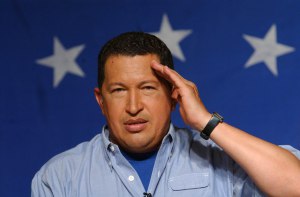 Merida – After two years of battling cancer, President Hugo Chavez has died today at 4.25 pm.
Vice-president Nicolas Maduro made the announcement on public television shortly after, speaking from the Military Hospital in Caracas, where Chavez was being treated.
Military and Bolivarian police have been sent out into the street to protect the people and maintain the peace. For now, things are calm here, with some people celebrating by honking their car horns, and many others quietly mourning in their homes.
Maduro made the announcement just a few hours after addressing the nation for an hour, accusing the opposition of taking advantage of the current situation to cause destabilization.
“Those who die for life, can’t be called dead,” Maduro concluded.
In Caracas, thousands of people have gathered in Plaza Bolivar and are said to be heading to the Miraflores Palace. Those gathered are shouting that “Chavez lives, the struggle continues,” “the people united will never be defeated,” as well as swearing that the Venezuelan bourgeoisie “will never return” to the Miraflores Palace.
Chavez supporters are also gathering in central squares across the country to rally together and mourn the death of their president.
Describing the scene in Caracas, Andromaco Martinez, stated that he was on the metro when he found out about the president’s death, “people began running everywhere”.
In Plaza Bolivar, “no-one is crying or praying,” he said, emphasizing that the Venezuelan people would defiantly defend the revolution.
“The struggle has already been ignited,” he added.
US Embassy Officials Expelled from Venezuela, Government Warns of “Conspiracy Plans”
By Tamara Pearson | Venezuelanalysis | March 5th 2013
Merida – Vice-president Nicolas Maduro today denounced destabilisation plans by the international and Venezuelan right wing, announcing the expulsion of two US officials for threatening military security. He also implied that Chavez’s cancer was “caused by enemies of Venezuela”.
Right-wing destabilisation plans
Maduro made the announcement today just after midday, following a meeting this morning with Venezuela’s political military leadership.
Maduro pronounced the expulsion of diplomat David del Monaco, and Air Attaché Deblin Costal of the US embassy in Caracas for being implicated in “conspiracy plans”.
“They have 24 hours to pack their bags and leave,” Maduro said.
He explained that Monaco had, for the last few weeks, been contacting members of the Venezuelan military in order to bring about a destabilisation plan in Venezuela.
“This official has been given the task of looking for active military members in Venezuela in order to propose destabilisation projects to the Armed Forces.”
“We want to denounce that we have certain clues of elements that make up this poisonous picture, which seek to disrupt the social life of our country and give it a beating,” he added.
“The enemies of the country, who aim to destroy democracy, have decided to go ahead with plans to destabilise Venezuela and damage the crux of a democracy…they have intensified the attacks against the economy and against goods and services,” Maduro said, referring to the scarcity of certain food and hygiene products that the country is currently experiencing.
Maduro argued that the “national and international right wing” were taking advantage of the “difficult circumstances” Venezuela is going through as a result of the “delicate state of health of President Chavez”.
Doubt over the cause of Chavez’s cancer
Further, he said, “We don’t have any doubts that the historical enemies of the country have searched for a way to damage the health of President Chavez… that he was attacked with this illness,” alluding to the possibility of a “scientific attack”.
“Just like what happened to Yasser Arafat… Eventually there will be a scientific investigation into President Chavez’s illness,” he said.
There are different theories as to the cause of the former President of the Palestinian National Authority, Yasser Arafat’s death in 2004. Last July Al Jazeera reported that traces of polonium-210, a rare and highly radioactive element, were found on Arafat’s belongings.
Other experts however claimed that polonium’s half life means it would be impossible to discover it now if it had been used for poisoning eight years ago, and that it must have been planted later. In 2005 the Palestinian ambassador to Sri Lanka, Attalah Quiba also alleged that Arafat had been poisoned by “high technology” such as a “high-tech laser”.
Continue fighting and working
Maduro concluded his public announcement by saying, “Men and women loyal to Chavez, we’re going to continue with our duties, so that no single program for the people is held back”.
“Venezuela’s political and military leadership is united, we call on the people to close ranks, to unite forces, and to pray for our comandante,” he said.
Referring to mainstream media lies and distortions about Chavez’s health and the situation in Venezuela, Maduro also expressed his appreciation to Venezuela for its “strength that there has been to face the psychological and dirty war against our people”.
The vice-president called for “respect for Chavez, for his family in these difficult times, respect for the pain and worry of our people”.
Related articles
Piñera Praises Chávez at CELAC Summit
Media Influences Public Opinion on Venezuela But Not So Much Governments
By Mark Weisbrot | CEPR Americas Blog | January 29, 2013
In writing about the media’s ongoing hate-fest for Hugo Chávez, I pointed out that the major media’s reporting had been effective, in that it has convinced most consumers of the Western media – especially in the Western Hemisphere and Europe – that Venezuela suffers from a dictatorship that has ruined the country.
But there is an important sense in which it has failed. Of course it has failed to convince Venezuelans that they would be better off under a neoliberal regime, and that is one reason why Chávez and his party have won 13 of 14 elections and referenda since he was first elected in 1998. Perhaps of equal importance, it has also failed to persuade other governments that President Chávez is motivated by some kind of irrational hatred of the U.S. – as the media generally reports it. Most foreign ministries have some research capacity, and although they are influenced by major media, at the higher levels they have better information and make their own evaluations.
That is why Chávez has been able to play a significant role in the growing independence and regional integration of Latin America, despite his vilification in the media, and years of effort by the U.S. government to isolate Venezuela from its neighbors. For example, the governments that decided to form the Community of Latin American and Caribbean States (CELAC) – a new hemispheric organization including all countries other than the U.S. and Canada – don’t care whether the media dismisses it as “Chavez’s project.” When Brazil, Argentina, and Uruguay decided to admit Venezuela as a full member of the trading bloc Mercosur, they didn’t care what the media in any of their respective countries would say about it.
Of course the left governments of Argentina, Brazil, Ecuador, Bolivia, Uruguay and others have been quite sympathetic to Chávez and see him as a very important ally. But the region has changed so much in the last 10 or 15 years that it is not only the left governments who appreciate him. Here is what one of the only remaining right-wing presidents in South America, Sebastián Piñera of Chile, said on Sunday about Chávez, in Santiago:
I want to acknowledge a President who is not with us today, but whose vision, tenacity and strength has had a profound impact on the creation of the CELAC. I refer to President Hugo Chávez, the father of this regional group that welcomes all nations of Latin America and the Caribbean, 33 in all, and which excludes only two countries on the continent: the United States and Canada. We are all hoping for you to win this battle, perhaps the toughest battle of your life, which you are doing with the same strength and courage as always, and that you regain your health and that you can return in full capacity as President of Venezuela.
Back in 2006, the New York Times ran a front-page news article with a large-type headline: “Seeking United Latin America, Chávez is a Divider.” The thesis was being pushed by the Bush State Department, and was echoed by the anti- Chávez sources cited in the article.
How completely wrong they turned out to be.
Related articles
- CELAC Strengthened by Second Annual Summit (venezuelanalysis.com)
- Cuba takes over presidency of regional group Celac (morningstaronline.co.uk)
- Venezuela wants best of relations with the US based on ‘mutual absolute respect’ (alethonews.wordpress.com)
Venezuela’s Chavez “Entering New Phase” of Recovery
By Ewan Robertson | Venezuelanalysis | January 21, 2012
Mérida – Venezuelan President Hugo Chavez is entering a new phase of his recovery, according to Vice President Nicolas Maduro.
Chavez has been out of the public light since his cancer operation in Cuba in December, his fourth in eighteen months.
Recent health updates from the Venezuelan government have sent positive signals, with the latest official communication describing the Venezuelan president’s recovery as “favourable”.
Yesterday, Vice President Maduro announced that Chavez was “leaving the post-operatory [phase] and is going to enter into a new phase of treatment that is in a process of evaluation”.
He further commented that Chavez “is stabilising in all respects, the functioning of his organs, he is fully conscious, and he has ever more vital strength to enter the next phase, which will be announced by official sources”.
Last Friday, a group of doctors called “Doctors for Life” released a medical report in which they claimed to “refute various versions that have been propagated about Chavez’s clinical state” in national and international media outlets.
The report, which was posted on the webpage of the government’s ministry of communication, claimed that Chavez was entering a “final recovery phase” and that by 5 February he would be ready to leave hospital. It further stated that the “complex abdominal surgery” undergone by Chavez was only performed on patients “without metastasis”.
In further comments about Chavez yesterday, Maduro said that “sooner rather than later we’re going to have the president with us, meanwhile…here (in Venezuela) there is a work team that he has formed and is governing and working with the people”.
Speaking in an interview on the television program “Jose Vicente Today”, the Vice President added that in his conversations with Chavez, “His mood is the same as always… He’ s still got his good humour and permanent smile”.
Opposition cancel march
Meanwhile, the Venezuelan opposition have cancelled their planned march in Caracas this Wednesday.
The march was called to protest a supposed “violation” of the constitution, which the opposition claim occurred when Chavez did not return to Venezuela for his presidential inauguration ceremony on 10 January. The Supreme Court had previously ruled that the delay in Chavez’s swearing-in was legal.
The opposition’s Democratic Unity (MUD) coalition blamed the cancellation on the decision of pro-government parties and movements to also march in the capital on Wednesday, accusing the government of “attacking the freedom that all Venezuelans have to celebrate such an important date for democracy”.
The opposition will still hold a downsized indoor event in Caracas on Wednesday 23 January, a date which marks the fall of the Marcos Jimenez dictatorship in 1958.
Meanwhile, the pro-Chavez movement is planning to hold a huge rally in Caracas to celebrate the day and to support their leader, as well as holding events around the country.
Juan Carlos Dugarte, a leader in the government’s United Socialist Party of Venezuela (PSUV), argued that the opposition’s motives for cancelling their march had more to do with fears of a low turnout.
“They (the opposition) have every right and freedom to demonstrate, no march of theirs is going to be obstructed. The true reason for doing it in a reduced space is that they don’t have the mobilisation capacity, because they’re divided,” he said.
Hugo Chavez: Why Does He Hate Us?
By Peter Hart | FAIR | January 11, 2013
If there’s one thing media want you to know about Venezuelan president Hugo Chavez, it’s that he doesn’t like the United States. On the PBS NewsHour (1/10/13), Ray Suarez told viewers that Chavez
antagonized Washington, it seemed, whenever he could, forging friendships with Iran’s Mahmoud Abbas (sic), Syria’s embattled Bashar al-Assad, and he formed an especially close bond with Cuban Presidents Fidel and Raul Castro.
 On the CBS Evening News (1/8/13), Scott Pelley said:
“Chavez has made a career out of bashing the United States and allied himself with Iran and Syria.”
While it’s hard to say Chavez has made a “career” out of U.S.-bashing–he does have, after all, a full-time job as president of Venezuela–you, too, might be excused for harboring some hard feelings towards a government that helped to try to overthrow your own. Which may be why U.S. reports rarely bring up the 2002 coup attempt–and when they do, treat Washington’s involvement in it as another nutty Chavez conspiracy theory.
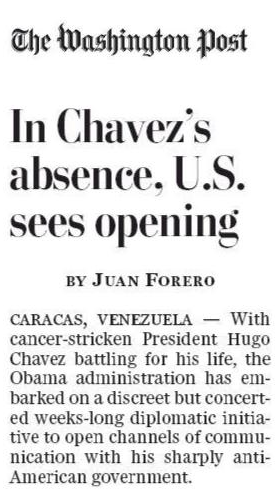
Here’s Juan Forero in the Washington Post (1/10/13):
A central ideological pillar of Chavez’s rule over 14 years has been to oppose Republican and Democratic administrations in Washington, which he accuses of trying to destabilize his government.
“I think they really believe it, that we are out there at some level to do them ill,” said Charles Shapiro, president of the Institute of the Americas, a think tank in San Diego.
As ambassador to Venezuela from 2002 to 2004, Shapiro met with Chavez and other high- ranking officials, including [Vice President Nicolas] Maduro. But the relationship began to fall apart, with Chavez accusing the United States of supporting a coup that briefly ousted him from power. U.S. officials have long denied the charge.
Shapiro recalled how Maduro made what he called unsubstantiated accusations about CIA activity in Venezuela, without ever approaching the embassy with a complaint. He said that as time went by, the United States became a useful foil for Chavez and most Venezuelan officials withdrew contact.
“A sure way to ruin your career, to become a backbencher, was to become too friendly with the U.S. Embassy,” Shapiro said.
So Venezuela has a strange political culture where being friendly with the U.S. government gets you in trouble.
The Post airs Chavez’s charge–and then the U.S. denial. But the United States had all sorts of contact with the coup plotters before they made their move against Chavez in 2002. According to the State Department (7/02):
It is clear that NED [National Endowment for Democracy], Department of Defense (DOD) and other U.S. assistance programs provided training, institution building and other support to individuals and organizations understood to be actively involved in the brief ouster of the Chavez government.
And the CIA, as was reported by Forero himself (New York Times, 12/3/04), knew of the coup plotting.
The Central Intelligence Agency was aware that dissident military officers and opposition figures in Venezuela were planning a coup against President Hugo Chávez in 2002, newly declassified intelligence documents show. But immediately after the overthrow, the Bush administration blamed Mr. Chávez, a left-leaning populist, for his own downfall and denied knowing about the threats.
Scott Wilson, who was the Washington Post foreign editor at the time, told Oliver Stone for his film South of the Border:
Yes, the United States was hosting people involved in the coup before it happened. There was involvement of U.S.-sponsored NGOs in training some of the people that were involved in the coup. And in the immediate aftermath of the coup, the United States government said that it was a resignation, not a coup, effectively recognizing the government that took office very briefly until President Chavez returned.
And we know that the United States made quick efforts to have the coup government recognized as legitimate. The Bush government, immediately after the coup, blamed it on Chavez. And some of the coup plotters met with officials at the U.S. embassy in Caracas before they acted.
But the important thing for readers to know, according to Wilson’s successors at the Washington Post, is that U.S. officials deny they supported anything.
Delay in Chavez inauguration possible: Venezuelan Supreme Court
Press TV – January 9, 2013
The Venezuelan Supreme Court says President Hugo Chavez can legally postpone the Thursday inauguration as the current government remains in power.
On Wednesday, Supreme Court President Luisa Estella Morales, following a unanimous decision by the panel, also ruled out medical checks for the president’s scheduled inauguration ceremony.
“The oath-taking of the re-elected president can be carried out at a time after January 10 before the Supreme Court, if it is not done on the said day before the National Assembly,” the ruling said.
As the president has been recovering from an illness and the government would be renewing its term, Morales said, “there is not even a temporary absence” of Chavez from taking the oath.
Until Chavez recovers, current government officials “will continue fully exercising their functions under the principle of administrative continuity,” it said.
Opposition groups of the government earlier on Wednesday requested the Supreme Court to decide on the ruling.
The ruling comes as government officials pointed out the constitution allows the court to swear in a new president without a time limitation for a leave of absence, which the congress voted for on Tuesday.
The Supreme Court’s decision comes as Chavez continues to gain support from South American allies.
Foreign Policy Advisor to the Brazilian President, Marco Aurelio Garcia, on Tuesday said that — on behalf of Brazilian President Dilma Rousseff — Brazil supports the postponing of the inaugural ceremony.
Chavez, who first came to power in 1999, was re-elected to a new six-year term in October, 2012. However, a month before the planned inauguration he underwent a fourth round of cancer surgery in Cuba’s capital Havana.
The full text of the Supreme Court decision can be read here (in Spanish).
Related articles
- Venezuelans Continue to Defy the Washington Post
- Exposing Five Key Media Myths about Chavez’s Health and Swearing-in
- Venezuela Among the Most Positive Countries, Gallup Says
- Venezuela’s Economy Grows by 5.5 Percent in 2012
- There is an alternative: what Venezuela can teach us about the banking sector
- Economic BS in Rich Countries is Reinforced by BS about Venezuela
- The Achievements of Hugo Chavez
Featured Video

Rewriting the risk? Inside the government’s vaccine safety messaging
or go to
Aletho News Archives – Video-Images
Book Review
“Davos Can Really Replace the UN”
Inside the book that maps the architecture behind global governance — from the Epstein files to the Pact for the Future
Lies are Unbekoming | April 1, 2026
On June 13, 2019, the United Nations and the World Economic Forum signed a partnership deal to “accelerate the implementation of the 2030 Agenda for Sustainable Development.” That same evening, WEF president Börge Brende — Norway’s former Foreign Minister — had dinner with Jeffrey Epstein at Epstein’s Manhattan townhouse. The Epstein files, released January 2026, contain an exchange between the two from the previous year. Epstein to Brende: “Davos can really replace the UN. C21, cyber, crypto . genetics… intl coordination.” Brende back to Epstein: “Exactly — we need a new global architecture. World Economic Forum (Davos) is uniquely positioned — public private.”
The next day, the UN General Assembly adopted the framework for restructuring global governance.
That sequence — the partnership signing, the Epstein dinner, the candid admission about replacing the UN with a public-private architecture, and then the formal adoption — opens Jacob Nordangård’s The Digital World Brain. Pages two and three. Footnoted to the UN resolution number, the Epstein files, and the General Assembly record.
I keep coming back to it because it captures what this book does that almost nothing else in the independent research space manages. I’ve followed Jacob’s work for years now and interviewed him about his research. Each book peels back another layer of the same institutional architecture, and each time I think he’s reached the limit of what can be documented, the next one goes further. Nordangård doesn’t speculate. He doesn’t editorialize much. He lays institutional actions next to each other in chronological order and lets the pattern announce itself. … continue
Blog Roll
 Aletho News
- The End of NATO
- 37 days of war on Iran cost US staggering $42bln, tracker shows
- Baghdad tells Asian refiners, traders to begin loading Iraqi crude amid Iranian exemption
- Under fire, Moscow and Tehran close ranks
- Iran, US receive Pakistan-mediated plan for ceasefire then final deal
- Iran submits demands for end to war as mediators scramble ahead of Trump deadline
- Iran Threatens Retaliatory Strike on Stargate AI Project in UAE
- US sent ‘a lot’ of arms to Iranian protesters – Trump
- Barak Ravid Launders Deception To Allow Trump To Back Off Of His Power Plant Threat – Again
- REWRITING THE RISK? INSIDE THE GOVERNMENT’S VACCINE SAFETY MESSAGING
- If Americans Knew
- Trump poised to “blow everything up” (ie. commit war crimes) in Iran – Daily Update
- In Iran, Israel-US take aim at “reason, research, and freedom of thought” – Daily Update
- US loses planes over Iran, Israel downgrades Lebanon war goals – Daily Update
- Israel Is Blocking Palestinians from Easter at Church Where Jesus Resurrected
- Plot to assassinate Palestinian activist follows harassment campaign promoted by Zionist groups and elected officials
- Prominent New York synagogue hosts presentation on why U.S. Jews should support the ethnic cleansing of Gaza
- Tapper vs. Piker: Is the CNN Anchor Auditioning for David Ellison?
- Shouldn’t Democrats Be Able to Condemn Genocide?
- Israel-US kill negotiators, destroy civilian structures, but Iran’s military capabilities still largely intact – Daily Update
- ‘War crime’: Global condemnation as Israeli ministers celebrate death penalty law targeting Palestinian prisoners
- No Tricks Zone
- An Inconvenient Tree: Uncovered In Alps… Europe Much Warmer Than Today 6000 Years Ago
- New Study Reports A 60% Slowdown In Greenland’s Ice Loss Rate In The Last Decade
- Low Intensity Tornado Wrecks Major Solar Farm, Creating A Potential Toxic Dump
- New Study Finds Warming Saves Lives…Cold Temperatures 12 Times More Deadly Than Excess Heat
- German Science Blog Accuses PIK Climate Institute Of Hallucinating Climate Tipping Points
- Devastating Assessment Of Comirnaty Vaccine By Former Senior Pfizer Europe Toxicologist
- New Study: CO2 Is ‘Effectively Negligible’ As An Explanatory Climate Change Factor Since 2000
- Former Pfizer Toxicologist Dr. Helmut Sterz Tells Bundestag Hearing Pfizer Vaccine Should Have Never Been Approved
- Energy Expert: Germany’s Nuclear Phaseout Was A “500 Billion Euro Mistake”
- New Research: South Australia’s Mid-Holocene Sea Surface Temperatures Were 4°C Warmer Than Today
 Aletho News