Chicago Tribune Sues Mayor Emanuel for Refusing to Release Private Emails About Corrupt Red Light System
By Joshua Brown | PINAC | October 30, 2015
The Chicago Tribune is suing Chicago Mayor Rahm Emanuel for not complying with public records requests after the mayor refused to release communications about city business conducted through private emails and text messages.
The lawsuit states that the mayor uses private phones and private emails to conduct city business as a way to avoid the public release of his city related correspondences and activity.
The Chicago Tribune seeks to receive emails and electronic communications pertaining to a controversial red light camera system in Chicago, a system mired in controversy and corruption.
The yellow lights were timed shorter with an intended outcome to catch more people running red lights, resulting in more traffic ticket money for the city, according to an investigative report by the Tribune last year.
More than $500 million was generated from the Chicago red light traffic system, the largest in the nation, according to the lawsuit filed last month, which can be read here.
City officials boasted the red light system would make intersections and driving safer, but an uptick in injury-related crashes occurred as a result of the red light system because of the shorter duration of yellow lights.
Because of these crashes, 50 of the cameras were removed at 25 intersections within the city.
Redflex Traffic Systems was the vendor that created the system along with former Chicago city official John Bills. It was quickly discovered that Bills and Redflex CEO David Kidwell were involved in a $2 million bribery scheme to implement the red light system in Chicago.
Kidwell and Bills were both relieved of their duties.
It is common for officials to use personal email to skirt Freedom of Information Act requests.
Recently, Phyllis Wise who is the Chancellor of The University of Illinois used personal emails to avoid Freedom of Information Act requests.
The Chancellor has since resigned from the university. Additionally, it was brought to light that Hillary Clinton used private emails to conduct official government business too.
This is the second time the Chicago Tribune has sued Mayor Emanuel; in June 2015 suit was filed regarding the non-disclosure of emails of a multi-million-dollar no-bid Chicago Public Schools contract. That suit is pending.
According to Chicago Tribune Editor Gerould Kern:
“We are seeking the release of public records on matters of great interest to citizens, but the city refuses to divulge them. Regrettably, the city’s denial is part of a pattern of resistance to releasing public documents covered by the Illinois Freedom of Information Act. We are compelled, therefore, to go to court for the second time in three months to force the city’s compliance.”
But Mayor Emanuel said he has done nothing wrong:
“We always comply and work through all of the Freedom of Information (requests) in the most responsive way possible. I have a practice that my political and personal stays on my private email, and city business is on the government, and that’s the way I operate.”
Written communications by government officials relating to city or government business are subject to Freedom of Information Act requests, including electronic communications.
FBI won’t release video of police shooting of black teenager

Press TV – April 16, 2015
The FBI and Chicago police department are refusing to release a video of the shooting death of a 17-year-old black man, who was killed by a police officer last year.
Chicago police and the FBI are withholding the dash-cam video because it is “central to their investigation,” Chicago Mayor Rahm Emanuel was quoted as saying by the Associated Press on Wednesday.
Authorities said they were “confident this video will be released at the appropriate time when their investigation is complete.”
Laquan McDonald was shot 16 times in October 2014 when he allegedly brandished a knife and refused to drop it when confronted by officers. The city has approved a $5 million settlement with the teen’s family.
Some members of the Chicago City Council fear releasing the video could spark the kind of angry protests seen elsewhere in the United States in recent months.
“Regaining the trust of the community, particularly the black community, starts with honesty and hiding a potential execution is the kind of thing that destroys trust,” said Craig Futterman, a law professor at the University of Chicago.
The shooting has not generated the same kind of national attention as other recent high-profile confrontations involving officers. The Chicago police department has long been dogged by a reputation for police brutality.
The officer who killed McDonald is not being named but he has been stripped of his police powers and put on desk duty. No decision has been made on whether he will face criminal charges in the case.
Several videos showing police brutality have been released in recent weeks. A newly released video shows a police officer in Arizona intentionally running over an armed suspect with his vehicle last month.
Police Officer Michael Rapiejko slammed his car into 36-year-old Mario Valencia which was recorded in the dashboard camera that was released on Tuesday. Valencia was taken to a hospital in serious condition but released two days later into police custody.
Another cell phone video was released last week showing an officer in North Charleston, South Carolina firing multiple times at an African-American man as he ran away, sparking outrage around the country.
Chicago leads New York City in use of stop-and-frisk by police, new study finds
ACLU report also finds pedestrian stops disproportionately aimed at minority residents
ACLU | March 23, 2015
CHICAGO – Chicago police are now among the nation’s leaders in the use of the controversial “stop-and-frisk” practice, replacing New York City which had been notorious for the technique. That startling finding is at the core of a new report issued today by the American Civil Liberties Union of Illinois on the practice by the Chicago Police Department. The report highlights the use (and overuse) of the practice in Chicago, notes that the justification for such stops often fails to meet constitutional standards and makes recommendations for fixing CPD policies in order to curb abuses and restore community trust in the City.
Perhaps the most startling finding of the ACLU report is that during the summer of 2014, CPD conducted more than a quarter million stops of civilians that did not lead to an arrest. When comparing that number of stops to population in Chicago versus New York City at the height of that city’s controversial use of the stop-and-frisk practice, Chicagoans were stopped more than four times as often as people in New York. Stops per 1000 residents was 93.6 in Chicago, compared to 22.9 (at the highest point in 2011) in New York City. The New York police have been forced to curb significantly their use of stop-and-frisk after a federal judge found the use in that city to be unconstitutional.
“While most of the media coverage has suggested that that stop-and-frisk was a New York phenomena – it’s misuse is not limited to New York,” said Harvey Grossman, legal director for the American Civil Liberties Union of Illinois. “Chicago has been systematically abusing this practice, for reasons that are not justified by our constitution.”
“And just like New York, we see that African Americans are singled out for these searches,” added Grossman.
A “stop-and-frisk” search has become common in African American and Latino communities across Chicago. Under a 1968 Supreme Court ruling, officers are allowed to stop a civilian if they have reasonable suspicion that person has been, is, or is about to be involved in criminal activity. Once the stop has occurred, officers can frisk the individual if they have reasonable suspicion that the person is dangerous or has a weapon in their possession. The ACLU report demonstrates that in Chicago, these stops disproportionately target people of color and often are done without the justification required by the Court.
According to data from calendar year 2014 analyzed by the ACLU, African Americans represent nearly 72% of all the stops in the City of Chicago, as compared to the reality that African Americans represent only about 32% of the City’s population. The data analyzed by the ACLU shows that stops most commonly take place in the districts with the largest minority populations. For example, in 2014, police conducted 266 stops per 1000 people in the Englewood area (which is predominantly African American) while the rate in predominantly white Lincoln/Foster district was just 43 per 1000 people.
However, the data also shows that African Americans are much more likely to be the target of stops in predominantly white neighborhoods. Thus, in Jefferson Park where the population is just 1% African American, African Americans account for a full 15% of all stop-and-frisks in that area. In the Near North District, where the African American population is 9.1%, African Americans are subjected to more than one-half (57.7%) of all the stops. The ACLU report concludes that “black citizens are disproportionately subjected to more stops than their white counterparts.
The report also explores the problems with the reasons for many of the stops are taking place. Each time a Chicago Police officer makes a stop, the officer is required to fill out a “contact card” collecting information about the person who was stopped and why the stop took place. The ACLU’s review of a randomly-selected number of contact cards from selected months in 2012 and 2013, found that in half of all stops reviewed the officer failed to record a legally sufficient reason for initiating the stop. In a number of other instances, police stated that they stopped someone for a reason that was unrelated to criminal activity (associating with others who were suspicious, for example) or asserting that someone “matched a description” without any explanation of how or what description was matched. In spite of this poor performance, the City reported that it has no record of police officers receiving additional training after the academy in proper procedures for stop and frisks—training that seems to be needed greatly.
“What this data shows should be a wake-up call for residents of the City,” said Karen Sheley, senior legal counsel and one of the authors of the report. “CPD is engaging in wholesale stop-and-frisks of African American youth, without any link to criminal activity in most cases.”
“These stops don’t make us safer, they simply drive a wedge further between the police and the public they serve,” added Sheley.
Equally troubling is that the City’s poor record keeping about stop and frisk has resulted in a lack of transparency and accountability. The City only records information about stops if there is no arrest or charges. Stops that result in arrest are not identifiable and so the rate of innocent persons stopped cannot be ascertained. In New York, which does keep such data, 88% of persons stopped were innocent (they were not arrested or issued a summons). Also, Chicago records no information about frisks, which prevents the City from computing the rate of frisks resulting in the seizure of contraband. For example, in New York, which records frisk data, only 2% of the frisks turned up weapons.
The ACLU of Illinois offers a four-point plan for fixing this problem without the turmoil and litigation that marked the process in New York. The ACLU’s proposal includes:
• Require police to collect data on all frisks and make the data public to be analyzed and assessed;
• Require police to collect data on all stops and make the data public to be analyzed and assessed;
• Require regular training for officers on legal requirements for stop-and-frisks; and,
• Require police officers to issue a receipt for every pedestrian stop, with the officer’s name, the time of the encounter, the place of the encounter and the reason for the encounter – making it possible to facilitate a civilian complaint regarding the encounter.
“The data makes clear that stop-and-frisk is a problem in Chicago and needs to be reformed,” said the ACLU’s Grossman. “The City has an opportunity to make modest fixes now, rather than risk further alienation with large swaths of the public.”
“Policing in Chicago ought to encourage community involvement, rather than create additional resentment.”
The Guardian’s Homan Square story was huge on the internet—but not in Chicago media
By Jackie Spinner | Columbia Journalism Review | March 4, 2015
CHICAGO, IL — On Election Day just over a week ago, as this city’s reporters and editors focused on whether the incumbent mayor with ties to the White House would win big or be forced into a historic run-off, an out-of-town newspaper produced a startling account of alleged abuse at a police facility called Homan Square.
The blockbuster story, published in The Guardian and written by Brooklyn-based journalist Spencer Ackerman, described the warehouse as the “domestic equivalent of a CIA black site,” where secretive police units operate and detainees are “disappeared,” with no access to lawyers or relatives and no immediate record of their whereabouts.
With its comparisons to war-on-terror practices and allegations of police brutality, the story landed big on the internet, with well more than 100,000 social shares and write-ups across the Web. The one place it didn’t get much traction: Chicago media.
The city’s two main dailies, the Chicago Tribune and Chicago Sun-Times, quickly reported that city police denied any wrongdoing in pieces that offered little original reporting. The CBS affiliate in Chicago also reported the police denial. The local papers and TV stations have since covered protests from groups demanding that the facility be shuttered.
But more than a week after the initial story, local enterprise reporting remains scant. The most notable examples are a few oddly framed stories, from the Tribune and public radio station WBEZ, suggesting that the focus on Homan Square is misplaced and that, according to local defense attorneys, abusive detentions and interrogations may actually be routine and widespread. If true, that would seem to be worth digging into—but the local coverage, especially in the Tribune, put as much emphasis on possible overreach by The Guardian as it did on police abuse. … Full article
New high-tech lampposts in Chicago will collect data on weather and people
RT | June 23, 2014
The streets of Chicago, Illinois will soon host some state-of-the-art new technology, but privacy advocates have concerns about certain data collection tools coming to the Windy City.
According to a report published on Monday by Chicago Tribune reporter David Heinzmann, a system of data-collection sensors will start being affixed to light poles and lampposts in the major Midwest hub sometime next month so that researchers and scientists there will have a new way to get their hands on some highly sought after information.
The “Array of Things” project being put together by the University of Chicago and Argonne National Laboratory’s Urban Center for Computation and Data will collect details about air quality, light intensity, sound volume, heat, precipitation and wind, according to Heinzmann’s report, as well as lay the groundwork for a vast infrastructure that will ideally let this kind of data, and even more, be collected for ages to come using additional new sensors. The installation of each utility box will cost less than $500, and officials told the Tribune that they’ll require less than $15 a piece for annual electricity costs. The technology inside the boxes that hold the sensors were developed with more than $1 million in funding from the likes of Cisco, Intel and others, the Tribune noted.
Last month, John Moore of technology website GCN wrote that all of this data will not only be collected to nodes throughout Chicago, but will also be sent to city computers so officials can scour it when in need of examining data trends as future projects are plotted out.
“Our intention is to understand cities better,” computer scientist and Urban Center director Charlie Catlett told the Tribune. “Part of the goal is to make these things essentially a public utility.”
Some say that these unassuming sensors have stepped over the line, though, because in addition to weather details and other seemingly invasive data, the “Array of Things” nodes in the Windy City will also look for cell phone signals being emitted by the mobile devices in the pockets of passersby.
In order to get a better grasp on population density within some parts of Chicago, the sensors being installed will also try to make contact with cell phones in order to get a rough number of how many devices — and presumably how many people — pass through a certain area at any given time.
The architects of the project told the Tribune that they are going to great lengths to insure that personally identifiable information isn’t sucked up, and said so far that any cell phone signals won’t be traceable back to the owner of the device that pings a lamppost sensor.
“We don’t collect things that can identify people. There are no cameras or recording devices,” Catlett told the paper. Sensors will be collecting “sound levels but not recording actual sound. The only imaging will be infrared,” rather than video, he said.
The sensors, Catlett added, “will not save address data, and will only count nearby devices.”
Critics say sucking up more data is inevitable, however, and warn that recording even miniscule amounts of information from cell phones could leave enough of a window for abuse to occur.
“If they do a good job they’ll collect identifiable data. You can (gather) identifiable data with remarkably little information,” Gary King, director of the Institute for Quantitative Social Science at Harvard University, told the Tribune. “You have to be careful. Good things can produce bad things.”
“If you spend a million dollars wiring these boxes, and a company comes in and says ‘We’ll pay you a million dollars to collect personally identifiable information,’ what’s the oversight over those companies?” asked Indiana University privacy expert Fred Cate.
“Almost any data that starts with an individual is going to be identifiable,” Cate said. “You may not care about the fact that it’s personally identifiable. It’s still going to be personally identifiable.”
Indeed, RT has reported extensively in the past about similar up-and-coming technologies that spurred outrage in other locales once considered for adoption. License plate readers that let law enforcement see where automobiles of interest are geographically located have caused concerns in numerous cities and towns across the United States, and lampposts like the ones in Chicago but with the ability to record audio and video has sparked outrage elsewhere.
Chicago Police “Heat List” Renews Old Fears About Government Flagging and Tagging
By Jay Stanley | ACLU | February 25, 2014
The Verge had a story last week (expanding on an August report from the Chicago Tribune that I’d missed) that the Chicago police have created a list of the “400 most dangerous people in Chicago.” The Trib reported on one fellow, who had no criminal arrests, expressing surprise over having received a visit from the police and being told he was on this list. A 17-year-old girl was also shocked when told she was on the list.
The database, according to the Verge, is based on historic crime information, disturbance calls, and suspicious person reports. The CPD’s list is heavily based on social network analysis (which is interesting considering the debates now swirling around the uses of metadata and the analysis such data enables). A sociologist whose work inspired the list, Andrew Papachristos, told the author of a Chicago Magazine piece (which goes into some interesting depth on some of the theory behind the list): “It’s not just about your friends and who you’re hanging out with, it’s actually the structure of these networks that matter.”
The list was funded through a Justice Department grant known as “Two Degrees of Association.” (At least that’s one less hop than the NSA uses.)
I’m still consistently surprised how often things we worry about in the abstract actually show up in the real world. For years, privacy advocates have been warning about how databases might be mined by the authorities for information used to label, sort, and prejudge people. True, there are all too many precedents for this sort of thing, including the CAPPS II program proposed early in the Bush Administration, the nation’s terrorist watch lists, various police gang lists, and the Automated Targeting System. The TSA’s Pre-Check whitelist is also a cousin of this kind of program. All are based on using various information sources and grinding them through one or another logic engines to spit out a judgment about individuals and their supposed dangerousness or safeness as a human being. But still, this program amazes me in how starkly it replicates the kinds of things we have been warning about in many different contexts.
Just two weeks ago, for example, I was asked by several news outlets what we think about police officers using Google Glass. I told them that Glass is basically a body camera, and that the issues were the same as those outlined in our white paper on police use of that technology. The principal difference between Glass and the body cameras being marketed to police is that Glass can also display information. I said this shouldn’t be a problem—unless (I added almost apologetically because of the slightly fanciful nature of this point) the police started using them with face recognition to display some kind of rating or warning for individuals who have been somehow determined to be untrustworthy.
“Of course, that’s not a problem today,” I said, “it’s more of a futuristic concern.”
Ha! Barely a week later, that scenario doesn’t seem so futuristic any more to me, especially at a time when some want to use face recognition to warn them when someone on a blacklist tries to enter a store or school. (True, Google doesn’t currently permit FaceRec apps on Glass, but it’s unclear how long that will last.)
Some further points and questions about Chicago’s heat list:
- The principal problem with flagging suspicious individuals in this way may be the risk of guilt by association. Although we don’t know how valid, accurate, and fair the algorithm is, it’s important to note that even if its measures were valid statistically—that one particular individual really does have an increased risk of crime because of certain things about his or her life—it may still constitute guilt-by-association for a person who actually remains innocent. It is simply not fair for people to be subject to punishments and disadvantages because of the groups they belong to or what other people in similar circumstances tend to do. I keep going back to the example of the man whose credit rating was lowered because the other customers of a store where he shopped had poor repayment histories.
- Why should the police restrict their hotlist to 400? Why not 4,000 or 40,000? In fact, why not give every citizen a rating, between 1 and 100 say, of how “risky” they might be? Then the police could program their Google Glass to display that score hovering above the head of every person who comes into their field of vision. This is a path it’s all too easy to see the police sliding down, and one we should not take even the first steps towards.
- Remember too the point that (as I made here) there are a vast number of laws on the books, many complicated and obscure, and anyone who is scrutinized closely enough by the authorities is far more likely to actually be found to have run afoul of some law than a person who isn’t. In that respect inclusion on the list could become a self-fulfilling prophesy.
- Will the Chicago police carry out any kind of analysis to measure how effective this technique is? Will they look at the success of their predictions, search for any discriminatory effects, or attempt to find out whether these rankings become a self-fulfilling prophesy? The police often have little inclination to do any such things—to adopt rigorous criteria for measuring whether their new toys and gizmos are providing a good return on investment. Purely from an oversight point of view, every aspect of this program would ideally be made public so the world could scrutinize it—certainly the algorithm. Privacy concerns, however, suggest that the names of individuals who are (quite possibly totally unfairly) flagged by these algorithms not be made public, nor any personal data that is being fed into the algorithms.
- A Chicago police commander is quoted as saying, “If you end up on that list, there’s a reason you’re there.” This framing begs the question at the heart of this approach: is it valid and accurate? Such circular logic is genuinely frightening when it comes from a police officer talking about matters of guilt and innocence.
- It’s true that there could be a fine line between laudable efforts to identify and help “at-risk youth,” and efforts to tag some people with labels that are used to discriminate and stigmatize. Research on the “epidemiology of violence” could be valuable if used as part of a public health approach to crime. But if it’s part of a criminal justice “pre-crime” approach, then that’s where the problems arise.
Overall, the key question is this: will being flagged by these systems lead to good things in a person’s life, like increased support, opportunities, and chances to escape crime—or bad things, such as surveillance and prejudicial encounters with the police? Unfortunately, there are all too many reasons to worry that this program will veer towards the worst nightmares of those who have been closely watching the growth of the data-based society.
Related article


Your Rights Aren’t Worth Crap
Locking The Public Out Of Public Trials In Chicago
By CHRIS GEOVANIS | CounterPunch | January 21, 2014
Public trials are one of the fundamental tenets of American democracy. And they’ve been cancelled in Chicago, at least for the trial of the NATO 3 — three defendants battling terrorism charges for alleged ‘crimes’ wholly instigated, manufactured and advanced by undercover cops in a blatant case of entrapment. But you’ll be hard pressed to determine this for yourself, since you’re essentially banned from the courtroom unless you’re willing to surrender your right to privacy, your right to even a glimmer of free expression, or your right as a non-corporate reporter to cover the case in real time like your corporate colleagues can.
Government officials are forcing every member of the public seeking to observe the NATO 3 trial to ‘pre-register’, produce a government-issued ID, submit to a criminal background check — and, of course, trust them with your data.
This last bit is spectacularly hard to swallow, as news continues to come out about the extent of government spying and data-mining on perfectly lawful activity like talking on the phone. Government agencies have surveilled and disrupted the Occupy movement, to which the defendants had a loose affiliation, simply for existing, and we’ve barely begun to plumb the depths of cop spying in the run-up to Chicago’s NATO protest — and beyond. For Chicagoans, this comes in the wake of the Chicago cops’ notorious history of political spying, disruption and assassination going back to the days of the infamous COINTELPRO Red Squad.
In fact, there would be no criminal case against the three defendants if the city’s autocratic former mayor, Richard M. Daley, hadn’t finally succeeded in convincing the federal court in 2001 to effectively gut the Red Squad Consent Decree banning police spying, infiltration, harassment, intimidation and undercover disruption of political activity. The hollowed out decree was ultimately dissolved in 2009.
Attorneys for the NATO defendants have argued in a court finding that the ‘terrorism’ scheme they’re charged with is based on “idle chatter, laced with bravado and abetted, encouraged and egged on by the undercover police agents.” There was no actual act of vandalism committed, and there certainly was no act of ‘terror’ committed — unless you’re feeling terrorized by the prospect of undercover cops inciting thought crimes to dirty up your political beliefs. But there was, essentially, a law enforcement scheme to incite crime where no crime had been committed, wholly fomented by undercover cops engaged in manufacturing criminality — cop behavior that would have been illegal under the Red Squad consent decree.
Meanwhile, public officials continue to invoke the ‘terrorism’ meme in the NATO trial as part of a criminal prosecution that has consistently conflated dissent with criminality. And they’re taking no chances on uncontrolled spin in the case.
Besides making members of the public surrender their privacy rights to attend the trial, they’re enforcing the courts’ recently imposed ban on cell phones, lest people who CAN get in report from the ground, and have told those who are willing to ‘pre-register’ that officials are giving priority seating to those who then RE-register to attend a day before each trial date. You don’t re-register? You take your chances at getting a seat the following day. At one point, the judge even considered banning pencils and paper from the courtroom.
New rules for non-corporate reporters are equally extreme. Officials are imposing restrictions that effectively ban freelance reporters and reporters with non-corporate and non-traditional media from the kind of access and privileges — including the right to carry their cell phones — that corporate reporters will be afforded.
“It is my sense going into this trial that the Cook County Sheriff’s Office will be putting on a trial that undermines the public’s right to access much more than the US military did during Manning’s court martial,” writes Firedoglake reporter Kevin Gosztola. He should know, since he covered the Manning trial daily — and his most recent piece on the NATO 3 trial is a compelling and disturbing summary of the state’s dubious basis for its terrorism allegations.
The state’s scheme to effectively ban the public from a public — and publicly funded — trial is part of a long-standing official pattern to harass, arrest and undermine those who dissent in Chicago. For years, activists in Chicago had to fight in court for permission to rally and march against the Iraq war, and protesters have routinely been subject to arrest simply for attempting to exercise their First Amendment rights. More broadly, the restrictions that local government overlords have imposed on public access and public oversight in the NATO trial are part of a national effort to re-brand dissent as inherently dangerous.
The judge in the NATO 3 case, Thaddeus Wilson, prominently displays a picture of Martin Luther King behind his bench. If he were able, King would be spinning in his grave at some of the rulings Wilson has issued in the case. Wilson refused, for example, to dismiss a juror for cause, even though she routinely teaches at the Chicago police academy, and is married to the law enforcement officer who supervised the undercover operations of state police during the NATO protests. Despite the fact that police spying and its abuses lie at the heart of the NATO 3 case — and that this prospective juror’s very livelihood and family economy is grounded in police collaboration — Wilson ruled that there was no reason to doubt her ability to serve objectively.
That’s like saying that the chairman of BP is perfectly fit to serve on a jury weighing criminal negligence in the Deepwater Horizon disaster. Defense attorneys were forced to exercise a peremptory challenge to keep her off the jury.
Judge Wilson has also issued a disingenuously named ‘decorum’ order that sets the stage for massive courtroom repression. The edict is so sweeping that one could conceivably be ejected from the courtroom and cited for criminal contempt for the ‘crime’ of raising your eyebrows or shaking your head at testimony — or even smiling at a defendant. The order also bans political buttons, t-shirts, armbands and perhaps even particular colors — we won’t know until we show up wearing red or black or both. If you get up to take a leak, you can’t get back into the courtroom until the judge calls a recess — and in the jury selection of the phase, court sometimes ran past 9PM, so empty your bladder early.
Wilson has also consistently ruled in the prosecution’s favor in terms of what evidence will and will not be admissible. And in one of the judge’s worst rulings, Wilson has asserted that police are included under the terrorism definition of the state statute under which the defendants are being tried, which defines terrorism as “intent to coerce a significant portion of the civilian population.”
In short, the testimony of the undercover cops who manufactured the conditions for a ‘crime’ to be alleged should be treated like any testimony from any ‘civilian’. Jurors could essentially be asked to embrace the legal fiction that these undercover cops felt ‘coerced’ into the self-same crime they themselves were attempting to create and incite. This ruling essentially privileges testimony from cops in a police department whose officers routinely tell flat-out lies with impunity to bolster their cases.
It bears emphasizing that the undercover cops at the heart of this case are not civilians. They’re the undercover cops who told court officials they ‘lost’ a shitload of text messages that could have been exculpatory for the NATO 3 defense team — this in an age when virtually any electronic traffic anywhere lives somewhere, including in the NSA’s vast databases. Except when the NSA’s pals in the Chicago police department lose that electronic traffic. They’re the undercover cops who actually manufactured the conditions in which they could allege a crime under the notoriously vague and little used state terrorism statute under which the NATO 3 are charged.
This is just as dunderheaded as the only other instance in which this state terrorism statute has been used to charge someone. In that case, the state convicted a college student for making a terrorist threat — even though he actually did no such thing — after cops searched his unoccupied car and found some crappy and inflammatory rap lyrics scribbled on a piece of paper. The state circuit court in that case sentenced the student — a Black man in a largely white community — to five years in prison. An appellate court later tossed out that conviction. Blacks, dissidents — hey, this state terrorism statute is perfect for Illinois’ law enforcement community!
Secret trials are abhorrent. That’s why the nation’s founders, whatever their other manifest flaws, banned them. Secret trials built on the testimony of undercover cops given broad license to manufacture and incite criminal activity to entrap defendants is particularly revolting and deeply dangerous to all of us.
“The NATO 3 trial is not about terrorism,” says Andy Thayer, who helped organize 2012’s protests against the NATO meeting. “This trial is about the government using hype ABOUT terrorism to pursue a political agenda, and as such represents a fundamental mis-use of the justice system, if we are to believe the words of the U.S. Constitution.”
The political agenda of the Cook County States Attorneys Office — the prosecutors of record of the NATO 3 and others criminally charged around the 2012 NATO protests — has included a stubborn commitment to defend its own most egregious miscarriages of justice. Cook County States Attorney and career Chicago prosecutor Anita Alvarez, who’s not been shy about chasing media face time in the NATO cases, has historically embraced the worst sorts of police excess and abuse — including cops who torture, lie and murder.
Alvarez’ local prosecutorial agenda dovetails with allied schemes in national and local government to support increasingly militarized police forces which hustle funding for their agencies on the public dime, and promote the careers of “security” industry professionals — many of whom are former members of these self-same militarized police forces.
Those self-same law enforcement agencies are also perfectly happy to collude with corporations to suppress dissent that those corporations deem unhelpful — what journalist Naomi Wolf has described as “totally integrated corporate-state repression of dissent.”
To support this agenda in Chicago, authorities are using the tried and true tactic of terrifying people into signing off on their most fundamental civil liberties — including any vestiges of privacy rights — for the ‘privilege’ of attending a public criminal trial rooted in police misdeeds. More than a few activists who assembled in Chicago in May 2012 to oppose the murderous war agenda of NATO have said they simply will not submit to the state’s draconian terms to attend the NATO 3 trial. And in that respect, the state has succeeded in locking out some of the people with the most at stake in a ‘public’ trial in which defense attorneys have been consistently thwarted in their effort to expose law enforcement’s schemes to derail dissent and manufacture crime.
The Chicago police and their overlord, Rahm “Mayor 1%” Emanuel, worked mightily to make the city safe during the NATO protests for the worst sorts of corporate criminals and their military backers. Emanuel and Alvarez remain strong allies in a shared dystopian vision of civic life in a city that routinely criminalizes people of color and undermines the fundamental tenets of economic and social justice. It’s no accident that Mayor 1% backs privatization schemes in critical public endeavors that range from education to health — just as States’ Attorney Anita Alvarez backs privatizing this critically important public trial.
So, who are the real terrorists?
Chris Geovanis is a Chicago media activist, advocacy journalist and member of the HammerHard MediaWorks collective. You can reach her via Twitter @heavyseas, via her Facebook page or at chrisgeovanis(at)gmail.com
Related articles


End Game For Corporate School Reform: Privatized Holding Tanks, Remote Ed, Military Charter Schools
By Bruce A. Dixon | Black Agenda Report | October 30, 2013
Doug Henwood, a radical economist and founder of Left Business Observer, says it as succinctly as anyone when he sums up the goal of bipartisan corporate education reform imposed on poorer neighborhoods as “ … low cost privatized holding tanks leading to McDonalds jobs for the lucky, or to prison for the not so lucky …” along with classes delivered by computers rather than unionized teachers. But as useful as this summation is, it leaves out one element worth noting. You can’t run a global empire without a military class, any more than you can run a prison without prison guards.
So in Chicago, widely touted as a laboratory of educational innovation, mostly because its current mayor, President Obama’s former chief of staff holds dictatorial power over its public schools, one of the showpieces of education reform has been the handing over of entire high schools and even middle schools to the army, the navy and the marine corps.
Before the era of corporate reform there was at least one achievement of genuine small d democratic education reform pushed through by the administration of Chicago mayor Harold Washington in the 1980s. Since then parents in every public school have been allowed to elect parent councils, with reps from among rank and file teachers, which have veto power over title one funds and principal’s contracts, which are limited to two years. The “innovative” answer of downtown bureaucrats, corporate elites and subsequent mayors to parents taking a hand in running the schools has been to simply close Chicago public schools and replace them with charters over which parents have no say.
This year, Chicago closed more public schools than any other school district in a single year in the nation’s history. None were charter schools. This week Chicago Mayor Rahm Emanuel announced he was moving the middle school which had earlier been given to the marine corps into the facility of a fully functioning neighborhood school, Ames Middle School.
The fact that Ames parents and community members had testified, had met with officials and overwhelmingly rejected the closing of their school meant less than nothing, and may even have contributed to the replacement of their school by a military academy. What mayor, and what alderman really wants organized parents running their own neighborhood institutions? It’s bad for business if you’re a privatizer, or a politician who takes cues and campaign contributions from privatizers. And ultimately habits of local democracy are bad for empire.
What Chicago, and corporate education reformers and privatizers and their contractors nationwide want, as Henwood observes, are low-cost holding tanks to funnel the well-behaved into low-wage precarious labor for the lucky and jail for the unlucky. They want distance education and computerized instruction because these are cheaper than human, potentially unionized teachers. And to Henwood’s list we should add, they want a sprinkling of military charter schools. After all, you can’t run an empire without soldiers, or a prison without guards.
Related article
- You gotta love the education ‘reformers’ (susiemadrak.com)
Man Claims Cops Sodomized Him With a Gun
By JACK BOUBOUSHIAN | Courthouse News | June 24, 2013
CHICAGO – Chicago police officers sodomized a man with a gun, “laugh(ing) hysterically,” until he agreed to buy drugs for the cops in a sting, the man claims in court.
Angel Perez sued Chicago and its police Officer Jorge L. Lopez in Federal Court.
Perez was working as a delivery driver on Oct. 20, 2012, when cops in an unmarked car pulled him over, handcuffed him and took him to the Harrison Street Police Station, he says in the complaint.
There, “Two officers began assaulting the plaintiff with questions regarding robberies and drug dealers in the Taylor Street area,” the complaint states. “Plaintiff responded that he did not know anything about robberies or drug dealings in the Taylor Street area and again and repeatedly requested that the officers call his lawyer. Plaintiff’s lawyer was never contacted and the questioning continued. The officers were particularly interested in why the plaintiff had the telephone number of an individual by the name of ‘Dwayne’ in his telephone.”
Perez claims the police released him after two hours of questioning, but Officer Lopez called him the next day, “told the plaintiff that what took place the night before was a mistake and that he needed the plaintiff to sign some papers so that his car would not be towed. Defendant Lopez instructed the plaintiff to meet him at Al’s Beef on Taylor Street at 3:00 p.m. that day,” the complaint states.
But when Perez arrived at Al’s Beef, an officer with Lopez, known to Perez only as the Sergeant, “grabbed the plaintiff and slammed his head on to the trunk of his car, searched plaintiff, handcuffed plaintiff with his hands behind his back and placed him in the squad car.”
The complaint continues: “Plaintiff was then taken back to the Harrison Street Police station to a second floor room with chairs and a table. Again, plaintiff was handcuffed to a bar, and this time he was also placed in ankle shackles.
“Plaintiff was held against his will in the room for several hours handcuffed and shackled, and not free to leave the custody of the defendants. While in the room, several other officers (approximately six officers) entered the room during the next several hours joining defendant Lopez and the Sergeant threatening the plaintiff with sending him to the Cook County jail to be raped by gang members. Further, that the[y] (the officers) could do whatever they wanted and that they would plant evidence on him and his family members if he continued to refuse to cooperate with them. Still, further that if he did not cooperate they would charge him [with] a conspiracy to obstruct justice. One of the officers in the room identified himself as the ‘Commander.’
“Plaintiff repeatedly requested his lawyer; that request was not acknowledged by the officers.
“The officers wanted the plaintiff to call or text ‘Dwayne’ and set up a drug purchase, but he refused to call or text Dwayne.
“After a period of time refusing to call or text Dwayne, the officers began to pull and contort the plaintiff’s body while he was handcuffed to the wall and shackled at his ankles, causing the plaintiff severe pain. At one point, the Sergeant sat on the plaintiff’s chest and placed his palms on the plaintiff’s eye sockets and pushed hard against them, causing plaintiff severe pain. The Sergeant also drove his elbows into plaintiff’s back and head causing severe pain. Defendant Lopez was in the room at the time and did not intervene.
“In an attempt to contact the outside world, plaintiff agreed to make the call and he attempted to call a friend of his to inform him what was transpiring, at which time an officer took plaintiff’s telephone and hung up the call.
“After several hours of verbal and physical torture, defendant Lopez and the Sergeant were alone in the room with the plaintiff. The officers told plaintiff that if he refused to cooperate with them that they were going to give him a ‘little taste’ of what he would be getting at the Cook County jail. They put plaintiff over a chair and pulled down his pants, and defendant Lopez said, ‘I hear that a big black nigger dick feels like a gun up your ass.’
“Then defendant Lopez and/or the Sergeant, knowing their actions created a strong likelihood of great bodily harm and mental anguish, inserted a cold metal object, believed to be one of officer’s service revolvers, into the plaintiff’s rectum, causing the plaintiff severe pain and humiliation. The two officers laughed hysterically while inserting the object into the plaintiff’s rectum.
“The Sergeant then said ‘I almost blew your brains out.’ The officers told the plaintiff that they would continue to insert the gun into his rectum until he cooperated with them.
“Plaintiff began to cry and agreed to cooperate with the officers.”
Perez called Dwayne and arranged to buy one gram of heroin, according to the complaint.
“The police then brought plaintiff to his car, provided the plaintiff with money to purchase the heroin, a box believed to be a GPS device and an audio recording device to record the transaction.
“Plaintiff completed the purchase from Dwayne for the Chicago Police and returned the drugs and equipment to the police. The officers then wanted plaintiff to sell drugs to Dwayne. Plaintiff told the officers that he would not be involved again with them,” according to the complaint.
Perez claims that Lopez continued to call his cell phone, asking to meet with him again, until Perez contacted the Independent Police Review Authority.
“At no time on either October 20, 2012 or October 21, 2012, prior to plaintiff’s seizure and torture, did the plaintiff commit a crime,” Perez says in the complaint.
Perez seeks punitive damages for excessive force, failure to intervene and emotional distress. He is represented by Dennis DeCaro with Kupets & DeCaro.
Related articles
- Beaten for Filming a Beating, Woman Says (alethonews.wordpress.com)
- Baltimore Cops Sued (Again) For Destroying Citizen Footage of Them Caught in the Act of Being Themselves (reason.com)
Boeing plans to cut up to 2,300 jobs
Press TV – March 23, 2013
The Boeing Company says it will cut up to 2,300 jobs by the end of 2013 in line with plans to mainly downsize the production line of its cutting-edge 787 Dreamliner jets.
According to a statement released by the Chicago-based company on Friday, the cuts will also target the production line of Boeing’s 747 aircraft.
The 787 Dreamliners have been grounded since mid-January due to a battery problem.
A Boeing representative said that out of those job cuts, about 800 workers will be laid off in the Boeing Commercial Airplanes division, with the rest of the cutbacks coming through attrition and redeployment.
The job cuts are aimed at improving corporate governance during a development phase of new airplanes, the company stated.
Analysts say it is too early to estimate the financial effect of the job cuts particularly in light of the 787 Dreamliner grounding, with worldwide orders for the jetliner pushing the company revenue to over $80 billion.
The planned job cuts at Boeing comes as the Federal Aviation Administration (FAA) announced it was being forced to cut about 637 million dollars from its current budget and it would close air-traffic control towers at 149 airports across the United States due to Washington’s latest spending cuts.
Earlier in March, a report issued by the US Department of Labor showed that the unemployment rate was increasing in half of the US states, with employers adding the fewest jobs in seven months.
The nationwide unemployment rate increased in January to 7.9 percent from 7.8 percent in December 2012, with the rate of job increases remaining far below what economists recommend to maintain healthy employment rates.
The US economy shrank by 0.1 percent in the fourth quarter of 2012, casting doubt on the strength of economic recovery in the country.
Boeing crisis threatens US economy: Bill Jones
Press TV – January 18, 2013
Why Isn’t Closing 129 Chicago Public Schools National News?
A Black Agenda Radio Commentary by Bruce A. Dixon | February 27, 2013
If you don’t live in Chicago you might not know that the CEO and the dozens of other six figure a year mayoral cronies who run the Chicago Public Schools want to close 129 public schools this year, more than a third of the city’s total. It’s not national news for the same reason that closing 40 public schools in Philadelphia last year wasn’t national news, and massive school closings in the poorer neighborhoods of cities across the country is not news either.
It’s not news because school closings and school privatization, the end game of the bipartisan policies the Obama administration, Wall Street, the US Chamber of Commerce, a host of right wing foundations and deep pockets and hordes of politicians in both parties from the president down are pushing down the throats of communities across the country, are deeply unpopular. The American people, and especially the parents, teachers, grandparents, and other residents of poorer neighborhoods where closings and privatization are happening emphatically don’t want these things.
Even the word describing their policy, “privatization” is so vastly unpopular that they’ve taken it out of circulation altogether. The best way, our leaders imagine, to contain and curtail resistance to their deeply unpopular policies is to avoid naming them for what they are, to keep them on the down low, to not report on their implementation, and certainly to not cover any civic resistance to them.
Local elites in each city and school district concoct real or imaginary “crises” to which the solution is always firing more experienced teachers, hiring more temps in their place, instituting more high-stakes testing, closing more public schools and substituting more unaccountable (and often profitable) charter schools, frequently in the same buildings that once housed public schools. In Chicago the “crisis” is precipitated every year when the CPS (that’s Chicago Public Schools – Chicago’s never had an elected school board, they’re all mayoral appointees) honchos announce the schools are in a billion dollar hole. The Chicago Teachers Union of course, took a look over the same books and revealed that despite the host of top $100,000 a year officials whose jobs never seem to be cut, the system was nine figures in the black, not ten in the red. Naturally, local and national media didn’t report that either.
Chicago’s teachers have done what those in New York, Houston, Dallas, L.A. and others have not, and spent their union dues funding outreach and collaboration with parents across the city, so neighborhood hearings on the school closings are packed to overflowing with outraged parents, indignant local business people, angry teachers and concerned students. If CNN, MSNBC, or Fox News gave the school closings and privatization story a fraction of the coverage they gave deceptive and dishonest pro-privatization movies like Waiting For Superman and Won’t Back Down, the outrage against the move to privatize education would be unstoppable. The most coverage the wave of school closings have received lately was a misleading segment on Melissa Harris-Perry’s weekly TV show on whether school closings were “racist” or not, with no examination of the how or why they happen or the growing resistance to them.
Oceans of ink and hot air have been expended claiming that “social media” would somehow take up the slack created by the disappearance of local news gathering organizations, and how these things can somehow fuel and sustain a wave of public outrage that can topple unjust authority and make the will of the people felt. But when it comes to the war of our elite waged to privatize public education, we haven’t seen it yet.
Contact Bruce A. Dixon at bruce.dixon(at)blackagendareport.com.
Related articles
Featured Video
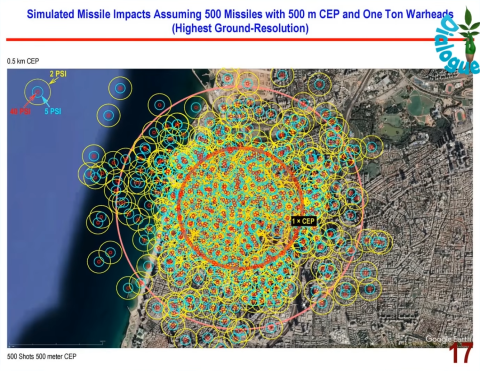
Prof. Ted Postol: US–Iran War? Israel’s Fatal Gamble
or go to
Aletho News Archives – Video-Images
From the Archives
Neocon Max Boot: Legal and illegal aliens need to enlist in the US army and die for Israel

By Jonas E. Alexis | Veterans Today | October 16, 2107
In 1973 Irving Kristol, the godfather of the Neoconservative movement, made a stunning statement which is still relevant to understanding the Israeli influence in US foreign policy. Kristol said:
“Senator McGovern is very sincere when he says that he will try to cut the military budget by 30%. And this is to drive a knife in the heart of Israel… Jews don’t like big military budgets. But it is now an interest of the Jews to have a large and powerful military establishment in the United States…
“American Jews who care about the survival of the state of Israel have to say, no, we don’t want to cut the military budget, it is important to keep that military budget big, so that we can defend Israel.”
Read the statement again very carefully. A big military budget, said Kristol, is only good for Israel, not America or much of the Western World. In other words, precious American soldiers who go to the Middle East to fight so-called terrorism are just working for Israel, not for America.
So, whenever the Neocons use words such as “democracy” or “freedom,” they are essentially conning decent Americans to support Israel’s perpetual wars. … continue
Blog Roll
 Aletho News
- ‘Britain’s Index of Repression’ documents 964 incidents of anti-Palestinian crackdown
- Prof. Ted Postol: US–Iran War? Israel’s Fatal Gamble
- UK prosecutors drop aggravated burglary charges against 24 Palestine Action activists
- Unidentified drone downed over Lebanon airbase, US forces block authorities from crash site
- Peeling Back the US Information Operation in Iran
- Israel ‘dictating terms’ to US – Turkish professor
- US ramps up nuclear claims against China
- Erdogan wants nukes: What a Turkish bomb would mean for the Middle East
- Ukrainian disruption of Russian oil pipeline triggers emergency in EU state
- Kaja Kallas: an uncomfortable figure useful to the EU’s Russophobic purposes
- If Americans Knew
- Compliant aid: Who are the Israel-approved NGOs scaling up in Gaza?
- Why won’t Trump’s “Board of Peace” bring peace? – Not a ceasefire Day 131
- Help end the injustice against Shadi
- Israel’s Favorite American President
- Israel’s “Yellow Line” Is a Death Trap for Palestinians. We Drove Into It.
- Why Israel’s expanding occupation in Syria presents a critical legal test
- Gaza is not a natural disaster. It is the victim of genocide enabled by global inaction
- Netanyahu’s plan to “end” US aid to Israel is to give even more money under a different name
- Israel ceased firing on Gaza for just 15 days of the “ceasefire” – Not a ceasefire Day 130
- In Gaza, “rats run over our faces” – Not a ceasefire Day 129
- No Tricks Zone
- Coal Power Back In Trend As Globe Tries To Keep Pace With Growing Demand For Power
- New Study: A 4°C Warmer Beaufort Sea Had ‘No Sea Ice’ 11,700 – 8200 Years Ago
- Unfudging The Data: Dutch Meteorological Institute Reinstates Early 20th Centruy Heat Waves It Had Erased Earlier
- German Gas Crisis…Chancellor Merz Allegedly Bans Gas Debate Ahead of Elections!
- Pollen Reconstructions Show The Last Glacial’s Warming Events Were Global, 10x Greater Than Modern
- Germany’s Natural Gas Storage Level Dwindles To Just 28%… Increasingly Critical
- New Study Rebuts The Assumption That Anthropogenic CO2 Molecules Have ‘Special’ Properties
- Climate Scientist Who Predicted End Of “Heavy Frost And Snow” Now Refuses Media Inquiries
- Polar Bear Numbers Rising And Health Improving In Areas With The Most Rapid Sea Ice Decline
- One Reason Only For Germany’s Heating Gas Crisis: Its Hardcore-Dumbass Energy Policy
 Aletho News