Expensive Climate Policies Sparked the Chile Riots, Just Like the Yellow Vest Protests in France
By James Taylor | The Epoch Times | October 25, 2019
Climate activists and the United Nations are suffering a major black eye this week as protests and riots resulting from high energy prices have erupted in Santiago, Chile.
Chile, which is hosting a major U.N. climate conference in December, earned praise from climate activists for recently imposing a carbon dioxide tax on conventional energy sources and switching the Santiago Metro system to renewable power. Now, the people of Chile are rising up and firing a shot across the bow of other nations considering similar energy taxes and expensive renewable energy programs.
On Friday, protestors took to the streets throughout Santiago in response to Metro fare hikes. The protests soon spread to other cities and led to rioting and at least five reported deaths. The Chilean government and the legacy media blamed the fare hikes on rising oil prices. But that is not true.
Oil prices are not rising. Global oil prices are currently 25 percent lower than they were a year ago and 37 percent lower than they were five years ago.
In Chile, gasoline prices reflect the lower oil prices. Chilean gasoline prices were $1.12 U.S. per liter in August 2019 (the last month for which data are available), compared to $1.28 a year ago. Five years ago, Chilean gasoline sold at $1.50 U.S.
Santiago Metro fares are rising, despite falling oil and gasoline prices, because government officials in 2018 traded out most of the Metro’s energy sources from conventional power to wind and solar power. The Chilean government also hit the portion of conventional power that remains with new carbon dioxide taxes.
As a result, Chileans are now burdened by higher Metro fares reflecting unnecessary energy price hikes. As Chileans protest in the streets, climate activists and their media allies want people to believe oil is to blame rather than government climate programs that raise energy prices and impoverish people.
Unlike speculative climate change harms that never seem to really happen, carbon dioxide taxes and renewable energy mandates immediately and measurably raise living costs and reduce living standards. … continue reading
The Neoliberal Ghost of Pinochet Is Finally Being Exorcised From Chile
By Paul Antonopoulos | October 25, 2019
More than 46 years of initially military imposed neoliberalism has finally exploded into widespread frustration, protest and violence. This neoliberalism culminated in 2017 with twelve businessmen, among them Chilean President Sebatián Piñera, monopolizing at least 17% of the national GDP, demonstrating the huge gap in wealth equity. There is little doubt why the latest protests have exploded violently, with 18 dead so far – Piñera had declared war on his own people to protect his lucrative monopoly racket.
It is without surprise he had declared war. The aggressive neoliberalism that has dominated Chile since the 1973 Chilean coup d’état when socialist President Salvador Allende was killed and eventually replaced by neoliberal Augusto Pinochet, with the backing and blessing of U.S. President Richard Nixon, Henry Kissinger, the CIA and the so-called “Chicago Boys” neoliberal economic team.
Although the so-called communist threat was defeated in Chile, it was not until 1990 for the kinder face of neoliberalism to return to the country, with the first democratic election taking place since the coup. The return to democracy had not meant any differences to the economic system.
The appearance of GDP growth in the South American country created the mythology of the Chilean miracle, ‘thanks’ to the Chicago Boys, the group of young Chilean economists who studied at the University of Chicago under the adviser to U.S. President Ronald Reagan and British Prime Minister Margaret Thatcher, professor Milton Friedman. They were the so-called economic liberators and advised Pinochet on applying complete free-market policies, essentially to privatize state-owned industries and companies, and to open the economy.
The pernicious globalist model was applied and deemed a miracle because of significant GDP growth. However, this is only to the benefit of shareholders and private companies and does not reflect on the average Chilean experience. According to the Organization for Economic Cooperation and Development (OECD), the Gini coefficient value, a method to measure wealth distribution, stood at a record 0.50 in 2017, one of the highest inequality coefficients in the world.
This is because the incomes of the richest 10 percent of Chile are 26 times higher than the incomes of the poorest 10 percent of the population. This is partly also due because the of an unfair taxation system that creates a massive tax burden on the poor as Chile’s government earns less from income taxes than any other country in the 35-member OECD. Despite praises of the supposed fantastic economic performance, almost a third of Chilean workers are employed in part-time jobs, with one in two Chileans having low literacy skills, according to the OECD.
And now as Chile literally burns and 18 people are dead, we cannot forget that former president Michelle Bachelet grotesquely dedicated lessons on “human rights” against Venezuelan President Nicolás Maduro. Although Piñera apologized, it was not for his declaration of war against the people, but rather for the decades of unresolved problems, followed by an announcement for a new social and economic program.
A reversal of the crippling neoliberal economic system? Highly doubtful and probably more a Band-Aid option.
Neoliberal propagandist Enrique Krauze Kleinbort – accused of the coup attempt to overthrow Mexican President López Obrador – proclaimed that Chile was ‘the role model’ for Latin American economic growth. If the inequality is considered a ‘role model,’ it shows that the oligarchs of Latin America have not realized a growing trend of violent opposition to neoliberalism, as the recent case in Ecuador demonstrates.
The very fact that Piñera attempted to increase transportation and energy costs in Chile demonstrates his lack of knowledge on international outrage to neoliberalism. The French Gilets Jaunes (Yellow Vests) in France began their actions 12 months ago, which also spread across Europe, when neoliberal President Emmanuel Macron attempted to increase gasoline taxes. In 2018, Brazilian truck drivers blocked roads in a demand for a decrease in diesel prices. Mexico in 2017 saw a 20% rise in fuel prices that exploded into riots.
However, the attempted increase in transportation and energy costs was only the spark that lit the fire. As Piñera, the male part of a monopoly over the Chilean economy, was forced to admit this is an explosion after decades worth of frustration, neglect and abuse. Candida Cecilia Morel, the wife of the billionaire Piñera, sent a WhatsApp message that was leaked in the media, in which she comments on the violence and the protests shaking her country – and it certainly does show the disconnect that the elite of Chile have with the common Chilean. The message said that “we are absolutely overwhelmed, it is like a foreign invasion, alien,” and that “we will have to decrease our privileges and share with others.” Her suggestion to decrease “privileges and shares” is a stark reminder of Charles Dickens 1800’s Britain.
With such elitist comments and referring to Chileans as aliens, there is little wonder that there has been little calm despite Piñera’s half-done apology and promises of more neoliberalism with a softer punch. Although circles close to the Chilean Presidency affirm that the disturbances and destabilization are orchestrated from abroad, it is unlikely to be true. We can of course expect that Venezuela will be the scape goat by some Chilean oligarchs, just as the oligarchs in Ecuador and Colombia do, but there remains little evidence that this is the case.
Rather, as Piñera has had to attest, decades of neoliberalism is the cause of this. However, perhaps inspired by events in Ecuador, it appears that the Chilean people are finally exorcising the neoliberal ghost of Pinochet from its country. It appears that the violence will not end unless the Chilean president makes drastic changes to the Chilean economy. Whether he does this or not remains to be seen.
Paul Antonopoulos is a Research Fellow at the Center for Syncretic Studies.
Delaying publication of the settlement blacklist exposes the UN’s false narratives on human rights
By Ramona Wadi | MEMO | March 7, 2019
The UN is openly flaunting its priorities and, sadly, human rights are far from a major concern for the international organisation. Since its creation post-World War Two, and having established itself as the platform which determines what constitutes a human rights violation and which countries can be considered as perpetrators, several trends have emerged within the UN which reduces the seriousness of people being deprived of their legitimate rights.
This has been achieved by creating ample space for reports on human rights violations to be disseminated, while refusing to insist upon accountability and justice. Ironically, the increasing awareness regarding human rights violations is actually creating widespread impunity, as the UN promotes itself as a platform for reporting about violations while intentionally failing to take action.
Last month, for example, a UN report said that Israel “may have” committed war crimes against Palestinians participating in the Great March of Return demonstrations; it was publicised heavily, despite a predictable outcome. Israel will not be held accountable and those celebrating the UN’s recognition of Israel having possibly committed war crimes will not be vindicated by a thorough follow-up and prosecution. Another wave of silence will descend until the UN issues another report that reaches the same conclusion. We will never see an international court having the opportunity to test the evidence from both sides to judge whether “may have” is to become “has”, and appropriate action is to be taken.
On Tuesday, it was revealed that UN Human Rights Commissioner Michelle Bachelet has delayed the publication of a report exposing companies and institutions that do business with Israeli settlements due to “factual complexity”. According to Bachelet, “Further consideration is necessary to fully respond to the [human rights] council’s request.”
In response to Bachelet’s decision, PLO Committee Member Hanan Ashrawi noted, “The issue of corporate responsibility to respect human rights is neither a novelty nor an anomaly in the rules-based international system.”
Publishing the UN blacklist of companies had already been delayed by Bachelet’s predecessor in 2017. Israel has lobbied extensively for the report to remain unpublished, fearing the repercussions if firms listed in the report were to be targeted by boycotts.
The Times of Israel described the report as “highly controversial”, yet neither Israel nor its apologists deem colonialism and its nefarious activities to be controversial, which is the least that can be said about the shocking level of violence unleashed by the Israelis on Palestine and the Palestinians. The truth is that there is nothing at all “controversial” about publishing a report detailing how companies and colonialism thrive upon human rights violations, unless you have something to hide.
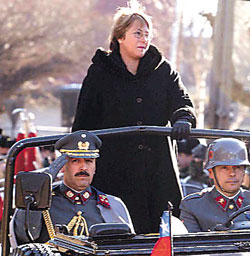 What is controversial, though, is Bachelet’s decision to delay publication. The former President of Chile is no stranger to controversy when it comes to her country’s human rights record, despite her own suffering at the hands of the Pinochet dictatorship. The application of the anti-terror laws to the indigenous Mapuche communities was most widespread during her two terms of office. As UN High Commissioner, she also failed to voice any substantive statement over the murder of Mapuche youth Camilo Catrillanca, killed on his own land by a special force known as the Comando Jungla.
Israel might find it has an ally at the UN in Bachelet, who is clearly no novice when it comes to the targeting of indigenous populations. Her expression of “regret” at Israel’s dismissal of the UN report documenting Israel’s use of violence at the Great March of Return protests is meaningless.
When it comes to human rights violations, rhetoric stands alone, especially when it comes to premeditated violence. There is no other institution like the UN that can create a spectacle out of violence and human rights rhetoric which fuels international attention, knowing full well that any reactions — any expressions of “regret” — will be temporary and have no effect.
The blacklist is another matter altogether. Bachelet is contributing to the impunity desired by Israel in order to retain its economic benefits from the occupation of Palestine. Settlements and human rights violations are an acceptable rhetorical subject, whereas settlements and the profits for the state therefrom as collaborators in violations are a red line for Israel and the UN. By delaying publication of this report, Bachelet is sending a clear message to the Palestinians: Israel and its business links are to be protected at all costs, even if that means sacrificing more of the indigenous Palestinian population.
While Israel Lobby Blocks BDS in Chile at the Local Level, National-Level BDS Looms
By Whitney Webb | Mint Press News | December 7, 2018
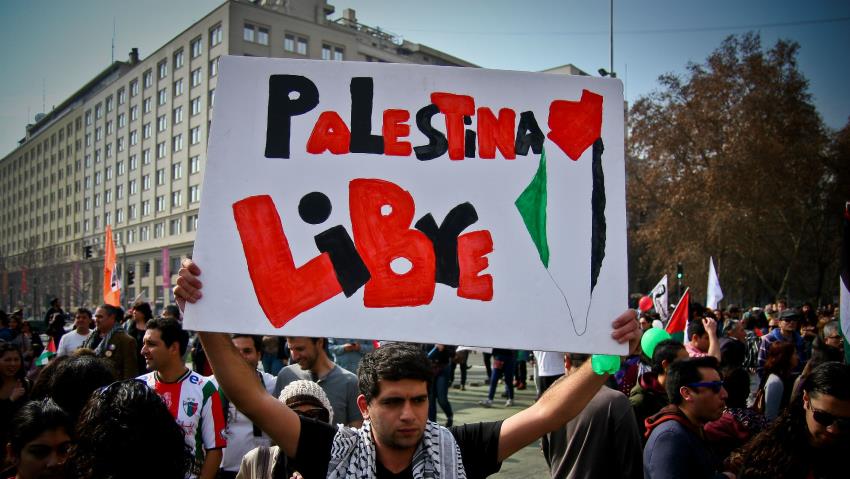
SANTIAGO, CHILE — After the Chilean city of Valdivia became the first municipality in Latin America to support the non-violent Boycott, Divest and Sanctions (BDS) movement this past June, the Chilean government has now ruled that it is illegal to boycott Israel at the municipal level throughout the entire country.
The decision was made by Chilean Comptroller Jorge Bermudez Soto on Wednesday after a long legal battle initiated by the Jewish Community of Chile (Comunidad Judía de Chile) over Valdivia’s decision to boycott Israel.
In June, Valdivia unanimously adopted a measure that specifically declared the municipality as an “Apartheid Free Zone” and prohibited the city from working with any business that benefits or is linked to Israel’s occupation of Palestine and/or Israel’s apartheid policy that targets Palestinians.
According to the text of the declaration, the ban on working with such businesses would remain in effect until Israel ends its occupation of Palestine and dismantles the border wall; until Palestinians are granted fundamental human rights by the Israeli state and are treated as equals under Israeli law; and until the right of return of Palestinian refugees is granted, as stipulated by UN Resolution 194. The initiative had been personally introduced by the city’s mayor, Omar Sabat, who is of Palestinian descent.
However, Bermudez Soto – in representing Chile’s national government – determined on Wednesday that, though the Chilean Constitution gives local governments independence on some matters, the head of the Chilean state has the exclusive right to conduct relations with foreign powers. As a result, Valdivia’s boycott of Israel was determined to be illegal.
Bermudez Soto also went on to state that Valdivia’s boycott violated Chilean law for failing to treat anyone participating in a government bidding process in an “equal and non-discriminatory” fashion. Most importantly, Bermudez Soto noted that this decision applies not only to Valdivia but to all Chilean municipalities, making it illegal to support BDS at the municipal level in Chile. As a result, the decision has made Chile the first country in Latin America to ban support for BDS at the local level.
Bermudez Soto’s language in his decision echoes the four legal complaints filed against Valdivia in June by various Zionist organizations in Chile and abroad. The Jewish Community of Chile, which filed three out of the four complaints, argued that Valdivia’s ban on services linked to the Israeli occupation of Palestine or illegal Israeli settlements violated Chilean laws on equality as well as discrimination in economic matters.
Powerful Zionist forces made Valdivia a target
Unsurprisingly, the Jewish Community of Chile has praised the move, claiming that it is the first step in creating a “Chile free from BDS.” Zionist organizations in the U.S. — including StandWithUs, whose controversial behavior was detailed in a recently leaked Al Jazeera documentary — have praised the Chilean government’s edict as “an example for the rest of the world.”
The Jewish Community of Chile is one of the most powerful organizations of the Zionist lobby in Chile, as it is the Chilean branch of the World Jewish Congress (WJC), an influential international Zionist organization that regularly hosts events with the Israeli government and supports illegal Israeli settlements in the occupied West Bank. The group’s current chairman is David de Rothschild and one of its vice presidents is Argentinian real estate magnate Eduardo Elsztain, who is very close to controversial Hungarian-American billionaire George Soros.
WJC, as evidenced by the presence of several billionaires on its leadership board, is extremely well-funded, with its U.S. offices alone reporting an annual revenue in excess of $22 million. Given the Jewish Community of Chile’s direct association with WJC, it is safe to assume that WJC helped foot the bill for the nearly six-month legal battle aimed at derailing Valdivia’s decision to support BDS in June.
Notably, without this legal action taken by the Jewish Community of Chile and other Zionist lobby organizations in Chile, the June decision to support BDS by Valdivia – a city whose population is under 150,000 – would have likely gone unchallenged.
Prospects good for national BDS action
While the declaration of the illegality of BDS support at the municipal level is being treated by Zionist groups within Chile and beyond as a “BDS fail,” other recent actions at the national level in Chile suggest that Chile could soon follow Ireland and become the next country to support BDS as a nation.
On November 27, the Chilean Congress approved a resolution demanding that the Chilean government “forbid the entry of products manufactured and coming from Israeli colonies in occupied Palestinian territory,” in a vote with 99 in favor and seven against. The resolution mandated that the government explore how a boycott could be implemented nationwide, an important step towards the future passage of a nationwide boycott of Israel. It also recognized East Jerusalem as the capital of Palestine and accused Israel of being an apartheid state.
Given that the recent decision by Chile’s comptroller to make municipal support for BDS illegal relied on the lack of authority Chilean cities have in regards to foreign relations, the nationwide BDS law – which has a good chance of passing Chile’s Congress – could soon deliver a much larger victory for Palestinian rights activists — and one that could not be challenged on the same grounds that were used to nullify Valdivia’s support for the BDS movement.
Whitney Webb is a staff writer for MintPress News and a contributor to Ben Swann’s Truth in Media. Her work has appeared on Global Research, the Ron Paul Institute and 21st Century Wire, among others. She has also made radio and TV appearances on RT and Sputnik. She currently lives with her family in southern Chile.
Chile: Mapuche Leaders Meet, Call For Demilitarization
teleSUR | December 2, 2018
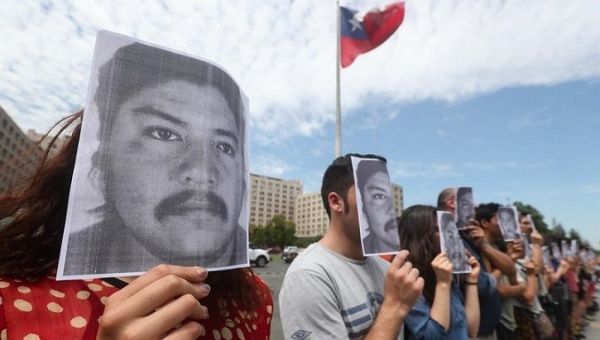
A group of Mapuche leaders Saturday met in Temucuicui to decide next possible steps after the assassination of Camilo Catrillanca on Nov. 14 by Chilean Carabineros (police).
The leaders decided on four demands they will put forward to the Chilean state.
“We demand the current government to urgently dismantle and remove said police unit (Jungle Command) considering that this constitutes a permanent threat, violating our right to live in peace, violating the rights of our children, women and the elderly,” they said in a statement.
The other three demands of the community are; self-determination for the Mapuche people, establishing a commission of historical truth ‘to clarify the crimes against humanity’ against the Mapuche people, and territorial restitution.
Marcelo Catrillanca, father of Camilo was in charge of the meeting. He urged the Mapuche people to continue their mobilizations and civil disobedience in the country.
Jorge Huenchullan, a community leader said that the participants of the meeting expressed “their pain and outrage at how the State has been carrying out policies regarding the Mapuche people”, adding that “if the authorities agree to carry out the demands, we are willing to talk. If they are not, there will be a call to rebellion.”
Additionally, they added that “we remind the Chilean State that the lands and territory (of Mapuche) were taken over and occupied by military violence,” so those who are not Mapuche lack legitimacy and legality in that land.
The four carabineros who took part in the operation which killed Camilo were ordered into preventive detention on Nov. 30. They are charged with homicide and obstruction of justice for destroying evidence. A period of two months for the investigation was established by the prosecutor’s office.
RELATED:
Mexico’s EZLN Expresses Solidarity With Chile Mapuche Struggle
George H.W. Bush, the CIA and a Case of State-Sponsored Terrorism
By Robert Parry | Consortium News | September 23, 2000
In early fall of 1976, after a Chilean government assassin had killed a Chilean dissident and an American woman with a car bomb in Washington, D.C., George H.W. Bush’s CIA leaked a false report clearing Chile’s military dictatorship and pointing the FBI in the wrong direction.
The bogus CIA assessment, spread through Newsweek magazine and other U.S. media outlets, was planted despite CIA’s now admitted awareness at the time that Chile was participating in Operation Condor, a cross-border campaign targeting political dissidents, and the CIA’s own suspicions that the Chilean junta was behind the terrorist bombing in Washington.
In a 21-page report to Congress on Sept. 18, 2000, the CIA officially acknowledged for the first time that the mastermind of the terrorist attack, Chilean intelligence chief Manuel Contreras, was a paid asset of the CIA.
The CIA report was issued almost 24 years to the day after the murders of former Chilean diplomat Orlando Letelier and American co-worker Ronni Moffitt, who died on Sept. 21, 1976, when a remote-controlled bomb ripped apart Letelier’s car as they drove down Massachusetts Avenue, a stately section of Washington known as Embassy Row.
In the report, the CIA also acknowledged publicly for the first time that it consulted Contreras in October 1976 about the Letelier assassination. The report added that the CIA was aware of the alleged Chilean government role in the murders and included that suspicion in an internal cable the same month.
“CIA’s first intelligence report containing this allegation was dated 6 October 1976,” a little more than two weeks after the bombing, the CIA disclosed.
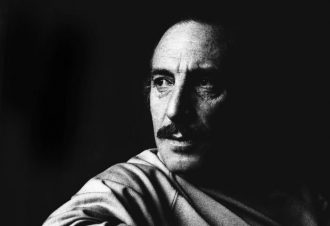
Chilean diplomat Orlando Letelier (Wikipedia)
Nevertheless, the CIA – then under CIA Director George H.W. Bush – leaked for public consumption an assessment clearing the Chilean government’s feared intelligence service, DINA, which was then run by Contreras.
Relying on the word of Bush’s CIA, Newsweek reported that “the Chilean secret police were not involved” in the Letelier assassination. “The [Central Intelligence] agency reached its decision because the bomb was too crude to be the work of experts and because the murder, coming while Chile’s rulers were wooing U.S. support, could only damage the Santiago regime.” [Newsweek, Oct. 11, 1976]
Bush, who later became the 41st president of the United States (and is the father of the 43rd president), has never explained his role in putting out the false cover story that diverted attention away from the real terrorists. Nor has Bush explained what he knew about the Chilean intelligence operation in the weeks before Letelier and Moffitt were killed.
Dodging Disclosure
As a Newsweek correspondent in 1988, a dozen years after the Letelier bombing, when the elder Bush was running for president, I prepared a detailed story about Bush’s handling of the Letelier case.
The draft story included the first account from U.S. intelligence sources that Contreras was a CIA asset in the mid-1970s. I also learned that the CIA had consulted Contreras about the Letelier assassination, information that the CIA then would not confirm.
The sources told me that the CIA sent its Santiago station chief, Wiley Gilstrap, to talk with Contreras after the bombing. Gilstrap then cabled back to CIA headquarters in Langley, Virginia, Contreras’s assurances that the Chilean government was not involved. Contreras told Gilstrap that the most likely killers were communists who wanted to make a martyr out of Letelier.
My story draft also described how Bush’s CIA had been forewarned in 1976 about DINA’s secret plans to send agents, including the assassin Michael Townley, into the United States on false passports.
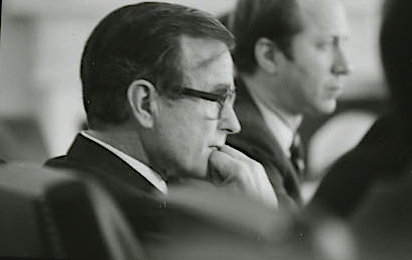
Then-Vice President George H.W. Bush at the White House on Feb. 12, 1981. (Reagan Library)
Upon learning of this strange mission, the U.S. ambassador to Paraguay, George Landau, cabled Bush about Chile’s claim that Townley and another agent were traveling to CIA headquarters for a meeting with Bush’s deputy, Vernon Walters. Landau also forwarded copies of the false passports to the CIA.
Walters cabled back that he was unaware of any scheduled appointment with these Chilean agents. Landau immediately canceled the visas, but Townley simply altered his plans and continued on his way to the United States. After arriving, he enlisted some right-wing Cuban-Americans in the Letelier plot and went to Washington to plant the bomb under Letelier’s car.
The CIA has never explained what action it took, if any, after receiving Landau’s warning. A natural follow-up would have been to contact DINA and ask what was afoot or whether a message about the trip had been misdirected. The CIA report in 2000 made no mention of these aspects of the case.
After the assassination, Bush promised the CIA’s full cooperation in tracking down the Letelier-Moffitt killers. But instead the CIA took contrary actions, such as planting the false exoneration and withholding evidence that would have implicated the Chilean junta.
“Nothing the agency gave us helped us to break this case,” said federal prosecutor Eugene Propper in a 1988 interview for the story I was drafting for Newsweek. The CIA never volunteered Ambassador Landau’s cable about the suspicious DINA mission nor copies of the fake passports that included a photo of Townley, the chief assassin. Nor did Bush’s CIA divulge its knowledge of the existence of Operation Condor.
FBI agents in Washington and Latin America broke the case two years later. They discovered Operation Condor on their own and tracked the assassination back to Townley and his accomplices in the United States.
In 1988, as then-Vice President Bush was citing his CIA work as an important part of his government experience, I submitted questions to him asking about his actions in the days before and after the Letelier bombing. Bush’s chief of staff, Craig Fuller, wrote back, saying Bush “will have no comment on the specific issues raised in your letter.”
As it turned out, the Bush campaign had little to fear from my discoveries. When I submitted my story draft – with its exclusive account of Contreras’s role as a CIA asset – Newsweek’s editors refused to run the story. Washington bureau chief Evan Thomas told me that Editor Maynard Parker even had accused me of being “out to get Bush.”
The CIA’s Admission
Twenty-four years after the Letelier assassination and 12 years after Newsweek killed the first account of the Contreras-CIA relationship, the CIA admitted that it had paid Contreras as an intelligence asset and consulted with him about the Letelier assassination.
Still, in the sketchy report in 2000, the spy agency sought to portray itself as more victim than accomplice. According to the report, the CIA was internally critical of Contreras’s human rights abuses and skeptical about his credibility. The CIA said its skepticism predates the spy agency’s contact with him about the Letelier-Moffitt murders.
“The relationship, while correct, was not cordial and smooth, particularly as evidence of Contreras’ role in human rights abuses emerged,” the CIA reported. “In December 1974, the CIA concluded that Contreras was not going to improve his human rights performance. …
“By April 1975, intelligence reporting showed that Contreras was the principal obstacle to a reasonable human rights policy within the Junta, but an interagency committee [within the Ford administration] directed the CIA to continue its relationship with Contreras.”
The CIA report added that “a one-time payment was given to Contreras” in 1975, a time frame when the CIA was first hearing about Operation Condor, a cross-border program run by South America’s military dictatorships to hunt down dissidents living in other countries.
“CIA sought from Contreras information regarding evidence that emerged in 1975 of a formal Southern Cone cooperative intelligence effort – ‘Operation Condor’ – building on informal cooperation in tracking and, in at least a few cases, killing political opponents. By October 1976, there was sufficient information that the CIA decided to approach Contreras on the matter. Contreras confirmed Condor’s existence as an intelligence-sharing network but denied that it had a role in extra-judicial killings.”
Also, in October 1976, the CIA said it “worked out” how it would assist the FBI in its investigation of the Letelier assassination, which had occurred the previous month. The spy agency’s report offered no details of what it did, however. The report added only that Contreras was already a murder suspect by fall 1976.
“At that time, Contreras’ possible role in the Letelier assassination became an issue,” the CIA’s report said. “By the end of 1976, contacts with Contreras were very infrequent.”
Even though the CIA came to recognize the likelihood that DINA was behind the Letelier assassination, there never was any indication that Bush’s CIA sought to correct the false impression created by its leaks to the news media asserting DINA’s innocence.
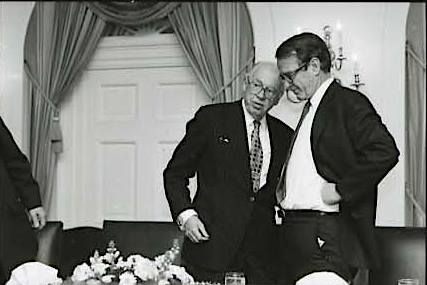
Then-Vice President George H.W. Bush with CIA Director William Casey, Feb. 11, 1981. (Reagan Library)
After Bush left the CIA with Jimmy Carter’s inauguration in 1977, the spy agency distanced itself from Contreras, the new report said. “During 1977, CIA met with Contreras about half a dozen times; three of those contacts were to request information on the Letelier assassination,” the CIA report said.
“On 3 November 1977, Contreras was transferred to a function unrelated to intelligence so the CIA severed all contact with him,” the report added. “After a short struggle to retain power, Contreras resigned from the Army in 1978. In the interim, CIA gathered specific, detailed intelligence reporting concerning Contreras’ involvement in ordering the Letelier assassination.”
Remaining Mysteries
Though the CIA report in 2000 contained the first official admission of a relationship with Contreras, it shed no light on the actions of Bush and his deputy, Walters, in the days before and after the Letelier assassination. It also offered no explanation why Bush’s CIA planted false information in the American press clearing Chile’s military dictatorship.
While providing the 21-page summary on its relationship with Chile’s military dictatorship, the CIA refused to release documents from a quarter century earlier on the grounds that the disclosures might jeopardize the CIA’s “sources and methods.” The refusal came in the face of President Bill Clinton’s specific order to release as much information as possible.
Perhaps the CIA was playing for time. With CIA headquarters officially named the George Bush Center for Intelligence and with veterans of the Reagan-Bush years still dominating the CIA’s hierarchy, the spy agency might have hoped that the election of Texas Gov. George W. Bush would free it from demands to open up records to the American people.
For his part, former President George H.W. Bush declared his intent to take a more active role in campaigning for his son’s election. In Florida on Sept. 22, 2000, Bush said he was “absolutely convinced” that if his son is elected president, “we will restore the respect, honor and decency that the White House deserves.”
The late investigative reporter Robert Parry, the founding editor of Consortium News, broke many of the Iran-Contra stories for The Associated Press and Newsweek in the 1980s. His last book, America’s Stolen Narrative, can be obtained in print here or as an e-book (from Amazon and barnesandnoble.com).
Bolivia: Morales Seeks New Relationship With Chile After Ruling
teleSUR | September 29, 2018
Bolivia’s President Evo Morales hopes to start a “new era” in his nation’s relationship with Chile once the International Court of Justice rules on Bolivia’s demand for sea access on Monday.
The new age will take “advantage of our potentialities, promoting integration for the well being of our peoples,” Morales said. “It’s necessary to cure injuries from the past.”
After a years-long process, the court will decide whether the Chilean government must negotiate a sea exit for Bolivia. La Paz issued the demand in April 2013.
Morales said he values peaceful solutions for international disputes, based on international law.
“Bolivia will never give up in its cause, that’s why the Bolivian people will gather on October 1 without divisions, without difference around our three-color flag, our wiphala and our sea claim flag,” he said. “Our reunion with the sea is not only possible, but inevitable.”
He also asked the people of Chile to understand the demand shouldn’t be considered an “unfriendly act,” but rather an opportunity.
Bolivia demanded the court declare Chile must negotiate an exit for the Pacific Ocean, based on diplomatic evidence it has previously agreed to do so.
Chile is denying any negotiation based on a 1904 treaty between both countries, giving up 120,000 square kilometers of territory, including 400 shore kilometers, to Chile.
The treaty was a result of the War of the Pacific, in which Bolivia and Peru fought against Chile between 1879 and 1883.
The UN’s International Court of Justice is legally binding but it has no means to enforce its rulings over the states.
Chile Begins ‘Coffee With A Cop’ At Starbucks To Build Trust

Guards, National Stadium, Santiago, Chile, 1973 photo by Marcelo Montecino
teleSUR | September 2, 2018
Chile’s national police force and Starbucks are partnering with the hope that people regain the trust of the state security agency found guilty of embezzling millions.
Chile’s national police are implementing their own ‘Coffee With a Cop’ campaign signing a contract with Starbucks to have three police officers in each of the country’s 120 stores for two hours once per month in order improve public trust in the government institution.
As part of the state security apparatus, carabineros, once helped torture, kill and prosecute its own citizens during the Augusto Pinochet military dictatorship (1973-1990), they had partly recuperated their image over the last couple of decades. By 2017, while still quite violent, carabineros were considered the least corrupt security force in Latin America. But in March of last year at least 70 of its rank and file were found guilty of illicit association and money laundering of up to US$38 million.
By February 2018 public distrust of the carabineros rose to 48 percent, 17 percent higher than the previous year, according to a Camden survey.
The state security force is hoping to overcome distrust and to gain people’s confidence by making themselves available to chat at local Starbucks throughout the country.
The national police communications coordinator, Major Diego Rojas, told local media “we saw that people did not see us up close. Citizens talk to the police when there is a crime when there is little space (to talk).”
The carabineros and Starbucks launched a pilot program last July stationing two police officers in three capital stores in Santiago for two hours each day. Rojas said the experiment went well.
Santiago’s mayor, Claudio Orrego, added: “there will be two or three police officers and a captain (at the coffee shops). They’ll be in uniform talking to people.”
The national security force decided to work with Starbucks because: “It’s a big chain that worked with the US police. In addition, it is in different communities, (and) it has a wide-ranging clientele.”
Juan Pablo Riveros, marketing manager for Starbucks Chile, said in a statement: “Our specific role in this program will be to provide the best place for these important meetings to occur. These will be made in all our stores in Chile, once a month, on a fixed schedule.” Riveros added, “We believe that these kinds of instances are very important for everyone, we are inviting the community to talk, and that for us is the most relevant.”
However, the Director of Advertising at the University Diego Portales, Cristian Leporati, told local media the initiative misses the mark.
“This is wrong. In general, people with a greater amount of prejudice against the Carabineros, … are not those who generally go to Starbucks.” Leporati added, “It is a huge marketing mistake to not segment the target audience well. I see it as a performance to make a by-product, like generating images of them talking to people.”
Last Thursday on the International Day of the Disappeared, carabineros prevented hundreds of families of the disappeared during the dictatorship from reaching the presidential palace in Santiago to place pictures of their loved ones.
The ‘Coffee With A Cop‘ campaign in the United States began in 2011 in Hawthorne, California with the same intention of building trust between cops and citizens who were more often saw the police as hurting rather than helping the city.
Chile: Activists Protest Against Dictatorship Killers’ Parole

teleSUR | August 1, 2018
Human rights activists in Chile are protesting a Supreme Court decision to release former Judge Gamaliel Soto, three former military soldiers and a police officer involved in the torture and disappearance of 31-year-old Eduardo Alberto Gonzalez Galeno in 1973.
The demonstrators gathered in front of the court in Valparaiso holding pictures of people forcibly disappeared during the military dictatorship headed by Augusto Pinochet, including Gonzalez Galeno, director of the Hospital of Cunco in Araucania, on September 14, 1973.
Soto had been sentenced to ten years for his involvement in ordering Gonzalez Galeno’s kidnapping, but Chile’s Second Chamber of the Supreme Court decided on Tuesday to grant him parole.
The three military soldiers, Jose Quintanilla Fernandez, Hernan Protillo Aranda and Felipe Gonzalez Astorga, as well as police officer Manuel Perez Santillan, all convicted of crimes against humanity, were also released as a result of an appeal to the country’s highest court, according to Nodal.
Their release was welcomed by the group’s legal defence, arguing that good behavior and the fact that they served half of their sentence were sufficient reason for their release.
Witnesses said Gonzalez Galeno was accused of being a member of the Revolutionary Left Movement (MIR) during his captivity by the military dictatorship headed by military general Augusto Pinochet and, subsequently, beaten and disappeared.
Human rights lawyer Nelson Caucoto decried the court’s decision to release the men, stating there was no justification to grant parole: “We must take into account that parole is justified only by people who have been rehabilitated.
“It does not make sense to grant people freedom to live alongside others if they have not recognized the gravity of their crimes, nor have shown repentance beyond the fulfillment of certain formalities.”
Caucoto also said granting parole to people convicted of crimes against humanity, as in this case, violates the international agreements that Chile is a signatory to.
Featured Video
No Threat Can Force Iran’s Surrender /Trita Parsi & Lt Cl Daniel Davis
or go to
Aletho News Archives – Video-Images
From the Archives
What is the Israeli Lobby in Australia Doing in Interfaith Dialogue?
By Ali Kazak | Dissident Voice | October 11, 2015
For years Israel and its lobby around the world have been trying to normalise their relations with Arabs and Muslims without solving the Palestine Question.
One of the methods they resorted to in the last few years is using human rights and community organizations such as interfaith dialogue and Multiculturalism to achieve this objective and to: isolate the Palestinians, marginalise the Palestine question, end Israel’s isolation, and prevent criticism of Israel, knowing that these organisations will be the first to stand against Israel’s violations, racial and religious discrimination.
The group responsible for this task in Australia is The Australia/Israel & Jewish Affairs Council (AIJAC); its Director of International & Community Affairs, Jeremy Jones is in charge of lobbying religious community organizations, specifically Muslims and Christians. Consequently he convened the Faith Communities for Reconciliation, founding participant in the Australian Partnership of Religious Organisations and the Australian National Dialogue of Christians, Muslims & Jews.
AIJAC is a private political propaganda group. It is recognised as the main Israeli lobby in Australia. It coordinates its activities and works intimately with the Israeli embassy in Canberra and different institutions in Israel. It is privately funded by some Jewish businessmen. It monitors closely Australian politicians, the media, ethnic and religious groups, (especially Arabs and Muslims), unions and academics on their stands towards Israel and the Palestine question. … continue
Blog Roll
 Aletho News
- ‘Economic terrorism’: Steel facilities hit again in US-Israeli strike
- ‘War Crime’: Iran condemns attacks on Arak, Ardakan nuclear sites
- Two-thirds of Americans want quick end to Iran war even if goals unmet
- Trump to Give “Important Update on Iran” Wednesday in Prime-Time Speech
- Theodore Postol: Iran’s Missiles & Drones Were Underestimated
- Iran To Target Military Industrial-Tech Complex That Facilitated Gaza Genocide
- Collapsing Empire: The Resistance Disarms ‘Israel’
- Suicide Should Not Be a Government Service
- Rethinking America’s greatest threat: Iran vs. Israel-Firsters
- Iran accuses adversaries of false flags to strain Turkey ties
- If Americans Knew
- Ann Coulter Rips Into Fox News for Iran War Coverage
- Joe Kent Urges Americans To Call White House and Congress To Object To Sending Troops Into Iran
- DNC Resolution to Reject AIPAC Funding Puts Democratic Leaders in the Hot Seat
- Swedish foundation to build 400 schools as over 650,000 Gaza children remain without education for 2 years
- Israeli army admits photshopping image of slain Lebanese journalist
- This is how Israel is systematically killing health workers under the cover of war in Lebanon
- Carrying life under fire: Israeli invasion of Lebanon leaves pregnant women facing deadly risks
- Champagne all around for the new death penalty (for Palestinians) law – Not a ceasefire Day 172
- Why are Palestinian books struggling to be seen on Amazon?
- The Line Between Affinity and Conspiracy
- No Tricks Zone
- New Study Finds Warming Saves Lives…Cold Temperatures 12 Times More Deadly Than Excess Heat
- German Science Blog Accuses PIK Climate Institute Of Hallucinating Climate Tipping Points
- Devastating Assessment Of Comirnaty Vaccine By Former Senior Pfizer Europe Toxicologist
- New Study: CO2 Is ‘Effectively Negligible’ As An Explanatory Climate Change Factor Since 2000
- Former Pfizer Toxicologist Dr. Helmut Sterz Tells Bundestag Hearing Pfizer Vaccine Should Have Never Been Approved
- Energy Expert: Germany’s Nuclear Phaseout Was A “500 Billion Euro Mistake”
- New Research: South Australia’s Mid-Holocene Sea Surface Temperatures Were 4°C Warmer Than Today
- Storing Green Energy To Last Germany 10 Days Would Require A 60-Million Tonne Battery
- New Studies: UK Sea Levels Were 4 Meters Higher Than Today During The Mid-Holocene
- Destructive Green New Deal: German Energy And Metal Group Warns Of Drastic Crisis
 Aletho News