It appears that special counsel Robert Mueller withheld key information in its plea deal with Trump’s former attorney, Michael Cohen, which would exonerate Trump and undermine the entire purpose of the special counsel, according to Paul Sperry of RealClearInvestigations.

Cohen pleaded guilty last week to lying to the Senate intelligence committee in 2017 about the Trump Organization’s plans to build a Trump Tower in Moscow – telling them under oath that negotiations he was conducting ended five months sooner than they actually did.
Mueller, however, in his nine-page charging document filed with the court seen by Capitol Hill sources, failed to include the fact that Cohen had no direct contacts at the Kremlin – which undercuts any notion that the Trump campaign had a “backchannel” to Putin.
On page 7 of the statement of criminal information filed against Cohen, which is separate from but related to the plea agreement, Mueller mentions that Cohen tried to email Russian President Vladimir Putin’s office on Jan. 14, 2016, and again on Jan. 16, 2016. But Mueller, who personally signed the document, omitted the fact that Cohen did not have any direct points of contact at the Kremlin, and had resorted to sending the emails to a general press mailbox. Sources who have seen these additional emails point out that this omitted information undercuts the idea of a “back channel” and thus the special counsel’s collusion case. –RCI
Page 2 of the same charging document offers further evidence that there was no connection between the Trump campaign and the Kremlin; an August 2017 letter from Cohn to the Senate intelligence committee states that Trump “was never in contact with anyone about this [Moscow Project] proposal other than me,” an assertion which Mueller does not contest as false – which means that “prosecutors have tested its veracity through corroborating sources” and found it to be truthful, according to Sperry’s sources. Also unchallenged by Mueller is Cohen’s statement that he “ultimately determined that the proposal was not feasible and never agreed to make a trip to Russia.”
“Though Cohen may have lied to Congress about the dates,” one Hill investigator said, “it’s clear from personal messages he sent in 2015 and 2016 that the Trump Organization did not have formal lines of communication set up with Putin’s office or the Kremlin during the campaign. There was no secret ‘back channel.’”
“So as far as collusion goes,” the source added, “the project is actually more exculpatory than incriminating for Trump and his campaign.” –RCI
The Trump Tower Moscow meeting – spearheaded by New York real estate developer and longtime FBI and CIA asset, Felix Sater, bears a passing resemblance to the June 2016 Trump Tower meeting between members of the Trump campaign and a Russian attorney (who hated Trump), and which was set up by a British concert promotor tied to Fusion GPS – the firm Hillary Clinton’s campaign paid to write the salacious and unverified “Trump-Russia Dossier.”
 British concert promotor and Fusion GPS associate Rob Goldstone
“Specifically, we have learned that the person who sought the meeting is associated with Fusion GPS, a firm which according to public reports, was retained by Democratic operatives to develop opposition research on the president and which commissioned the phony Steele dossier” –Washington Post
In both the Trump Tower meeting and the Trump Tower Moscow negotiations, it is clear that nobody in the Trump campaign had any sort of special access to the Kremlin, while Cohen’s emails and text messages reveal that he failed to establish contact with Putin’s spokesman. He did, however, reach a desk secretary in the spokesman’s office.
What’s more, it was Sater – a Russian immigrant with a dubious past who was representing the Bayrock Group (and not the Trump Organization), who cooked up the Moscow Trump Tower project in 2015 – suggesting that Trump would license his name to the project and share in the profits, but not actually commit capital or build the project.
 Felix Sater, FBI and CIA asset, real estate developer, ex-con
Sater went from a “Wall Street wunderkind” working at Bear Stearns and Lehman Brothers, to getting barred from the securities industry over a barroom brawl which led to a year in prison, to facilitating a $40 million pump-and-dump stock scheme for the New York mafia, to working telecom deals in Russia – where the FBI and CIA tapped him as an undercover intelligence asset who was told by his handler “I want you to understand: If you’re caught, the USA is going to disavow you and, at best, you get a bullet in the head.”
The Moscow project, meanwhile, fizzled because Sater didn’t have the pull within the Russian government he said he had. At best, Sater had a third-hand connection to Putin which never panned out.
Sources say Sater, whom Cohen described as a “salesman,” testified to the House intelligence panel in late 2017 that his communications with Cohen about putting Trump and Putin on a stage for a “ribbon-cutting” for a Trump Tower in Moscow were “mere puffery” to try to promote the project and get it off the ground.
Also according to his still-undisclosed testimony, Sater swore none of those communications involved taking any action to influence the 2016 presidential election. None of the emails and texts between Sater and Cohen mention Russian plans or efforts to hack Democrats’ campaign emails or influence the election. –RCI
As Tom Fitton of Judicial Watch noted of Mueller’s strategy: “”Mueller seems desperate to confuse Americans by conflating the cancelled and legitimate Russia business venture with the Russia collusion theory he was actually hired to investigate,” said Fitton. “This is a transparent attempt to try to embarrass the president.”
The MSM took the ball and ran with it anyway
CNN, meanwhile, said that Cohen’s charging documents suggest Trump had a working relationship with Putin, who “had leverage over Trump” due to the project.
“Well into the 2016 campaign, one of the president’s closest associates was in touch with the Kremlin on this project, as we now know, and Michael Cohen says he was lying about it to protect the president,” said CNN‘s Wolf Blitzer.
Jeffrey Toobin – CNN‘s legal analyst, said the Cohen revelations were so “enormous” that Trump “might not finish his term,” while MSNBC pundits said that the court papers prove “Trump secretly interacted with Putin’s own office.”
“Now we have evidence that there was direct communication between the Trump Organization and Putin’s office on this. I mean, this is collusion,” said Mother Jones‘s David Corn.
Adam Schiff, the incoming Democratic chairman of the House intelligence committee, said Trump was dealing directly with Putin on real estate ventures, and Democrats will investigate whether Russians laundered money through the Trump Organization. –RCI
As Sperry of RealClearInvestigations points out, however, “former federal prosecutors said Mueller’s filing does not remotely incriminate the president in purported Russia collusion. It doesn’t even imply he directed Cohen to lie to Congress.”
“It doesn’t implicate President Trump in any way,” said former independent counsel Solomon L. Wisenberg. “The reality is, this is a nothing-burger.”
December 3, 2018
Posted by aletho |
Deception, Fake News, Mainstream Media, Warmongering | CIA, CNN, FBI, MSNBC, Robert Mueller, United States, Wolf Blitzer |
Leave a comment
Given that we have all been born and raised under a regime that has the CIA, hardly anyone questions the power of the CIA to assassinate people. The CIA’s power of assassination has become a deeply established part of American life.
Yet, the Constitution, which called the federal government into existence and established its powers, does not authorize the federal government to assassinate people.
If the proponents of the Constitution had told the American people that the Constitution was bringing into existence a government that wielded the power to assassinate people, there is no way that Americans would have approved the deal, in which case they would have continued operating under the Articles of Confederation.
Under the Articles, the powers of the federal government were so weak, it didn’t even have the power to tax, much less the power to assassinate people. That’s because our American ancestors wanted it that way. The last thing they wanted was a federal government with vast powers.
In fact, the purpose of the Constitutional Convention was simply to amend the Articles of Confederation. During the 13 years of operating under the Articles, problems had arisen, such as trade wars between the states. The convention was intended to fix those problems with amendments to the Articles.
Instead, the delegates came out with an entirely different proposal, one that would call into existence a federal government that had more powers, including the power to tax.
Americans were leery. The last thing they wanted was a powerful central government. They had had enough of that type of government as British citizens under the British Empire. They believed that the biggest threat to people’s freedom and well-being lay with their own government. They believed that if they approved a federal government, it would become tyrannical and oppressive, like other governments had done throughout history.
They were especially concerned with the power of the government to murder people, including citizens. They knew that state-sponsored murder was the ultimate power in any tyrannical regime. When a government can kill anyone it wants with impunity, all other rights are effectively nullified. And our ancestors were sufficiently well-versed in history to know that tyrannical regimes were notorious for killing their own citizens, especially those people who challenge, criticize, or object to the tyranny.
The proponents of the Constitution told Americans that they had nothing to be concerned about. The Constitution wasn’t calling into existence a government with general powers to do anything it wanted. Instead, by the terms of the document that would be calling the federal government into existence, its powers would be limited to the few powers that were enumerated within the document. Thus, if a power wasn’t enumerated, it didn’t exist and, therefore, couldn’t be exercised. Since the Constitution wasn’t giving the federal government the power to murder people, it couldn’t exercise that power.
On that basis, our American ancestors approved the deal, but only on the condition that the Constitution would be immediately amended after approval with a Bill of Rights. To make sure that federal officials understood that they didn’t have the power to murder people, the Fifth Amendment was enacted. It prohibited the federal government from killing people without first according them due process of law. It’s worth noting that the protections of the Fifth Amendment are not limited to American citizens. The Amendment prohibits the federal government from murdering anyone, including people who are not U.S. citizens.
What is due process of law? It’s a phrase that stretches all the way back to Magna Carta in 1215, when the barons of England forced their king to acknowledge that his powers over them were limited. Magna Carta prohibited the king from killing British citizens in violation of the “law of the land,” a phrase that evolved over the centuries into “due process of law.”
Essentially, due process means notice and hearing. It says to the government: “You cannot kill anyone unless you first give him formal notice of the particular criminal offense that you are claiming warrants killing him.” Then, after notice, there has to be fair trial in which the accused has the right to be heard. The Sixth Amendment ensured that people would have the right of trial by jury because our ancestors didn’t trust judges or tribunals.
And so it was that the American people lived in a society for more than 150 years in which the federal government lacked the power to assassinate people, which is really just a fancy word for murder. A governmental assassination is the state-sponsored killing of a person without notice and trial — that is, without due process of law.
The situation changed after World War II, when the federal government, in a watershed event, was converted from a limited-government republic into what is known as a “national-security state,” a type of governmental system that is inherent to totalitarian regimes. U.S. officials maintained that the conversion was necessary in order to confront the Soviet Union, a communist state, which itself was a national-security state. The idea was that in order to defeat the Soviet Union in the Cold War, it would be necessary for the United States to adopt, temporarily, its same type of national-security state system.
In 1947, the CIA was called into existence as part of this new national-security state. President Truman, the president who was responsible for the federal government’s conversion to a national-security state, intended for the CIA to be strictly an intelligence-gathering agency. But someone slipped a bit of nebulous language into the law that called the CIA into existence, which the CIA seized upon to justify the adoption of omnipotent powers, including the power to assassinate people with impunity, so long as the assassination was to protect “national security.” Needless to say, the CIA had the omnipotent power to make that determination.
As monumental as the conversion to a national-security state was, it was not done through a constitutional amendment. The Constitution continued to be the supreme law that governed the operations of the federal government, including the CIA. Thus, since the Constitution did not give the federal government the power to assassinate people and since the Fifth Amendment expressly prohibited the federal government from assassinating people, the U.S. Supreme Court and the rest of the federal judiciary had the responsibility to declare the CIA’s power to assassinate people unconstitutional.
Unfortunately, however, in a national-security state power is everything and especially omnipotent power. Recognizing that as a practical matter, there would be no way that the federal judiciary could keep the CIA from assassinating people in the name of protecting “national security,” the federal courts went silent or even supportive.
In 1989 the Cold War ended. Yet, we still have a national-security state and we still have a CIA with the power to assassinate people, including Americans. Why is that?
December 3, 2018
Posted by aletho |
Civil Liberties, Timeless or most popular | CIA, Human rights, United States |
Leave a comment
In early fall of 1976, after a Chilean government assassin had killed a Chilean dissident and an American woman with a car bomb in Washington, D.C., George H.W. Bush’s CIA leaked a false report clearing Chile’s military dictatorship and pointing the FBI in the wrong direction.
The bogus CIA assessment, spread through Newsweek magazine and other U.S. media outlets, was planted despite CIA’s now admitted awareness at the time that Chile was participating in Operation Condor, a cross-border campaign targeting political dissidents, and the CIA’s own suspicions that the Chilean junta was behind the terrorist bombing in Washington.
In a 21-page report to Congress on Sept. 18, 2000, the CIA officially acknowledged for the first time that the mastermind of the terrorist attack, Chilean intelligence chief Manuel Contreras, was a paid asset of the CIA.
The CIA report was issued almost 24 years to the day after the murders of former Chilean diplomat Orlando Letelier and American co-worker Ronni Moffitt, who died on Sept. 21, 1976, when a remote-controlled bomb ripped apart Letelier’s car as they drove down Massachusetts Avenue, a stately section of Washington known as Embassy Row.
In the report, the CIA also acknowledged publicly for the first time that it consulted Contreras in October 1976 about the Letelier assassination. The report added that the CIA was aware of the alleged Chilean government role in the murders and included that suspicion in an internal cable the same month.
“CIA’s first intelligence report containing this allegation was dated 6 October 1976,” a little more than two weeks after the bombing, the CIA disclosed.
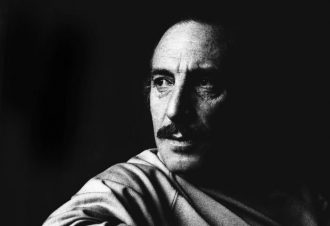
Chilean diplomat Orlando Letelier (Wikipedia)
Nevertheless, the CIA – then under CIA Director George H.W. Bush – leaked for public consumption an assessment clearing the Chilean government’s feared intelligence service, DINA, which was then run by Contreras.
Relying on the word of Bush’s CIA, Newsweek reported that “the Chilean secret police were not involved” in the Letelier assassination. “The [Central Intelligence] agency reached its decision because the bomb was too crude to be the work of experts and because the murder, coming while Chile’s rulers were wooing U.S. support, could only damage the Santiago regime.” [Newsweek, Oct. 11, 1976]
Bush, who later became the 41st president of the United States (and is the father of the 43rd president), has never explained his role in putting out the false cover story that diverted attention away from the real terrorists. Nor has Bush explained what he knew about the Chilean intelligence operation in the weeks before Letelier and Moffitt were killed.
Dodging Disclosure
As a Newsweek correspondent in 1988, a dozen years after the Letelier bombing, when the elder Bush was running for president, I prepared a detailed story about Bush’s handling of the Letelier case.
The draft story included the first account from U.S. intelligence sources that Contreras was a CIA asset in the mid-1970s. I also learned that the CIA had consulted Contreras about the Letelier assassination, information that the CIA then would not confirm.
The sources told me that the CIA sent its Santiago station chief, Wiley Gilstrap, to talk with Contreras after the bombing. Gilstrap then cabled back to CIA headquarters in Langley, Virginia, Contreras’s assurances that the Chilean government was not involved. Contreras told Gilstrap that the most likely killers were communists who wanted to make a martyr out of Letelier.
My story draft also described how Bush’s CIA had been forewarned in 1976 about DINA’s secret plans to send agents, including the assassin Michael Townley, into the United States on false passports.
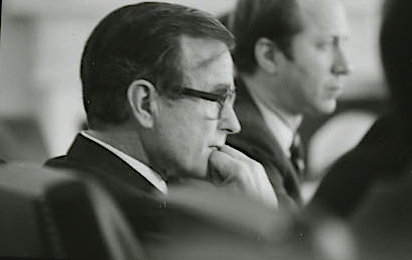
Then-Vice President George H.W. Bush at the White House on Feb. 12, 1981. (Reagan Library)
Upon learning of this strange mission, the U.S. ambassador to Paraguay, George Landau, cabled Bush about Chile’s claim that Townley and another agent were traveling to CIA headquarters for a meeting with Bush’s deputy, Vernon Walters. Landau also forwarded copies of the false passports to the CIA.
Walters cabled back that he was unaware of any scheduled appointment with these Chilean agents. Landau immediately canceled the visas, but Townley simply altered his plans and continued on his way to the United States. After arriving, he enlisted some right-wing Cuban-Americans in the Letelier plot and went to Washington to plant the bomb under Letelier’s car.
The CIA has never explained what action it took, if any, after receiving Landau’s warning. A natural follow-up would have been to contact DINA and ask what was afoot or whether a message about the trip had been misdirected. The CIA report in 2000 made no mention of these aspects of the case.
After the assassination, Bush promised the CIA’s full cooperation in tracking down the Letelier-Moffitt killers. But instead the CIA took contrary actions, such as planting the false exoneration and withholding evidence that would have implicated the Chilean junta.
“Nothing the agency gave us helped us to break this case,” said federal prosecutor Eugene Propper in a 1988 interview for the story I was drafting for Newsweek. The CIA never volunteered Ambassador Landau’s cable about the suspicious DINA mission nor copies of the fake passports that included a photo of Townley, the chief assassin. Nor did Bush’s CIA divulge its knowledge of the existence of Operation Condor.
FBI agents in Washington and Latin America broke the case two years later. They discovered Operation Condor on their own and tracked the assassination back to Townley and his accomplices in the United States.
In 1988, as then-Vice President Bush was citing his CIA work as an important part of his government experience, I submitted questions to him asking about his actions in the days before and after the Letelier bombing. Bush’s chief of staff, Craig Fuller, wrote back, saying Bush “will have no comment on the specific issues raised in your letter.”
As it turned out, the Bush campaign had little to fear from my discoveries. When I submitted my story draft – with its exclusive account of Contreras’s role as a CIA asset – Newsweek’s editors refused to run the story. Washington bureau chief Evan Thomas told me that Editor Maynard Parker even had accused me of being “out to get Bush.”
The CIA’s Admission
Twenty-four years after the Letelier assassination and 12 years after Newsweek killed the first account of the Contreras-CIA relationship, the CIA admitted that it had paid Contreras as an intelligence asset and consulted with him about the Letelier assassination.
Still, in the sketchy report in 2000, the spy agency sought to portray itself as more victim than accomplice. According to the report, the CIA was internally critical of Contreras’s human rights abuses and skeptical about his credibility. The CIA said its skepticism predates the spy agency’s contact with him about the Letelier-Moffitt murders.
“The relationship, while correct, was not cordial and smooth, particularly as evidence of Contreras’ role in human rights abuses emerged,” the CIA reported. “In December 1974, the CIA concluded that Contreras was not going to improve his human rights performance. …
“By April 1975, intelligence reporting showed that Contreras was the principal obstacle to a reasonable human rights policy within the Junta, but an interagency committee [within the Ford administration] directed the CIA to continue its relationship with Contreras.”
The CIA report added that “a one-time payment was given to Contreras” in 1975, a time frame when the CIA was first hearing about Operation Condor, a cross-border program run by South America’s military dictatorships to hunt down dissidents living in other countries.
“CIA sought from Contreras information regarding evidence that emerged in 1975 of a formal Southern Cone cooperative intelligence effort – ‘Operation Condor’ – building on informal cooperation in tracking and, in at least a few cases, killing political opponents. By October 1976, there was sufficient information that the CIA decided to approach Contreras on the matter. Contreras confirmed Condor’s existence as an intelligence-sharing network but denied that it had a role in extra-judicial killings.”
Also, in October 1976, the CIA said it “worked out” how it would assist the FBI in its investigation of the Letelier assassination, which had occurred the previous month. The spy agency’s report offered no details of what it did, however. The report added only that Contreras was already a murder suspect by fall 1976.
“At that time, Contreras’ possible role in the Letelier assassination became an issue,” the CIA’s report said. “By the end of 1976, contacts with Contreras were very infrequent.”
Even though the CIA came to recognize the likelihood that DINA was behind the Letelier assassination, there never was any indication that Bush’s CIA sought to correct the false impression created by its leaks to the news media asserting DINA’s innocence.
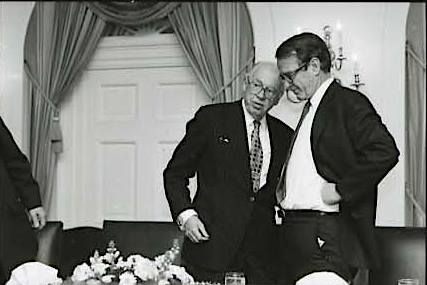
Then-Vice President George H.W. Bush with CIA Director William Casey, Feb. 11, 1981. (Reagan Library)
After Bush left the CIA with Jimmy Carter’s inauguration in 1977, the spy agency distanced itself from Contreras, the new report said. “During 1977, CIA met with Contreras about half a dozen times; three of those contacts were to request information on the Letelier assassination,” the CIA report said.
“On 3 November 1977, Contreras was transferred to a function unrelated to intelligence so the CIA severed all contact with him,” the report added. “After a short struggle to retain power, Contreras resigned from the Army in 1978. In the interim, CIA gathered specific, detailed intelligence reporting concerning Contreras’ involvement in ordering the Letelier assassination.”
Remaining Mysteries
Though the CIA report in 2000 contained the first official admission of a relationship with Contreras, it shed no light on the actions of Bush and his deputy, Walters, in the days before and after the Letelier assassination. It also offered no explanation why Bush’s CIA planted false information in the American press clearing Chile’s military dictatorship.
While providing the 21-page summary on its relationship with Chile’s military dictatorship, the CIA refused to release documents from a quarter century earlier on the grounds that the disclosures might jeopardize the CIA’s “sources and methods.” The refusal came in the face of President Bill Clinton’s specific order to release as much information as possible.
Perhaps the CIA was playing for time. With CIA headquarters officially named the George Bush Center for Intelligence and with veterans of the Reagan-Bush years still dominating the CIA’s hierarchy, the spy agency might have hoped that the election of Texas Gov. George W. Bush would free it from demands to open up records to the American people.
For his part, former President George H.W. Bush declared his intent to take a more active role in campaigning for his son’s election. In Florida on Sept. 22, 2000, Bush said he was “absolutely convinced” that if his son is elected president, “we will restore the respect, honor and decency that the White House deserves.”
The late investigative reporter Robert Parry, the founding editor of Consortium News, broke many of the Iran-Contra stories for The Associated Press and Newsweek in the 1980s. His last book, America’s Stolen Narrative, can be obtained in print here or as an e-book (from Amazon and barnesandnoble.com).
December 1, 2018
Posted by aletho |
Deception, False Flag Terrorism, Mainstream Media, Warmongering, Timeless or most popular | Chile, CIA, Newsweek, Operation Condor, United States |
Leave a comment
Ever since Washington Post columnist Jamal Khashoggi was murdered in the Saudi Arabian embassy in Turkey, the Post has pressed hard to show that the murder was a state-sponsored assassination orchestrated by Saudi Crown Prince Mohammed bin Salman.
If only the Post had shown the same diligence, determination, and perseverance in the assassination of President Kennedy that it is displaying in the Khashoggi assassination. Instead, like many other U.S. mainstream newspapers, the Post has long taken the same position on the Kennedy assassination that President Trump is taking with respect to the Khashoggi assassination: obtuse denial.
This was especially true during the tenure of the Assassination Records Review Board in the 1990s. You couldn’t find a better example of journalistic indifference than what happened during that period of time. The following are just two examples of this phenomenon.
First, though, the background:
In 1991 Oliver Stone came out with his movie JFK, which posited that the assassination of President Kennedy was actually a highly sophisticated regime-change operation at the hands of the U.S. national security establishment, i.e., the military and the CIA.
The mainstream press went after Stone with a vengeance. Although they didn’t dispute the fact that the U.S. national-security establishment carried out assassinations and regime-change operations against foreign leaders, they were indignant and outraged over the suggestion that such an operation would be carried out against a U.S. president.
At the end of Stone’s movie was a blub informing people that despite the passage of almost 30 years since the assassination, the national-security agencies were steadfastly continuing to keep their records relating to the Kennedy assassination secret from the American people, most of whom had never accepted the official lone-nut theory of the assassination.
That blurb produced such outrage among the public that Congress was pressured into enacting the JFK Records Act, which mandated that the national-security agencies disclose their long-secret records to the public.
But there was a major oddity about the law: While the ARRB was charged with enforcing the JFK Records Act, the law also prohibited it from investigating any aspect of the assassination. That is a very bizarre provision. If newly discovered evidence is discovered that incriminates the national-security establishment, why wouldn’t Congress want it investigated?
Did the Post write any editorials questioning that particular provision? Nope. Unlike the Khashoggi assassination, about which the Post has published multiple editorials and op-eds, the Post didn’t see fit to issue even a mild criticism of that no-investigation provision.
Did the ARRB come up with evidence that incriminated the national-security establishment? You bet it did. The following are just a few examples.
- The two brain examinations
The military pathologists who conducted the autopsy on President Kennedy’s body claimed that there was only one examination of President Kennedy’s brain as part of the autopsy. The general counsel for the ARRB, an attorney named Jeremy Gunn, and an ARRB staff member named Douglas Horne discovered, however, that that was a lie. They discovered that were actually two brain examinations, the second which could not possibly have involved the president’s brain and instead was almost certainly a brain specimen that had been brought over from the Bethesda Medical School.
How did Gunn and Horne discover the military pathologists’ lie? They did it by examining the testimony and the timelines of the two brain exams.
The first brain examination was held within a couple of days after the assassination. It was attended by the two military pathologists who were falsely claiming that there was only one brain examination, Navy Commanders James Humes and J. Thornton Boswell.
That first brain exam was also attended by the official autopsy photographer, John Stringer, who taught medical photography at the Bethesda Medical School. Stringer told the ARRB that at that brain examination, which almost certainly involved President Kennedy’s brain, the pathologists “sectioned” the brain. That meant that they cut it like one would cut a loaf of bread. That is standard procedure in gunshot wounds to the head, especially to examine the trajectory of the bullet. Once a brain is sectioned, there is no way to put it back together. It remains cut into slices.
The second brain examination was held about a week later. How do we know that? Because the third military pathologist who conducted the autopsy, Army Lt. Col. Pierre Finck, told the ARRB that he attended that brain examination. Also attending that second brain exam were the two lying pathologists, Humes and Boswell.
Thus, Humes and Boswell participated in both brain exams, which they were falsely conflating into one brain exam.
Stringer told the ARRB that Finck was not at the brain examination. Finck told the ARRB that Stringer was not at the brain examination. That’s how Gunn and Horne figured out that Humes and Boswell were lying when they claimed that there had been only one brain examination.
Here’s something important about the second brain examination: The brain in that examination was fully intact. That means that it had to be a brain specimen of someone other than President Kennedy because, again, a brain that has been sectioned cannot be put back together.
Here’s something else to note about the second brain examination: The second brain weighed 150 grams more than an average person’s brain, which would have been impossible if it were President Kennedy’s brain. That’s because the gunshot that hit Kennedy in the head destroyed one-fourth to one-third of his brain. Thus, there is no way that Kennedy’s brain could have weighed more than an average person’s brain after having lost so much brain mass from the gunshot.
That again confirms that the second brain could not possibly have been President Kennedy’s brain. Yet, a photograph of that second brain is what is in the official autopsy record. The photograph of the second brain shows that the brain is damaged but without major loss of brain tissue. In other words, the military’s photograph of President Kennedys’ brain in the official autopsy record is bogus.
But here’s the kicker: Remember that provision in the JFK Records Act, the one that the Washington Post didn’t see fit to criticize when the law was enacted. It prohibited the ARRB from investigating any aspect of the Kennedy assassination. It was a provision of the law that the board of commissioners of the ARRB strictly enforced on the staff, making it very clear that any staff member who was caught violating that restriction would be immediately fired.
Thus, after discovering that there were, in fact, two separate brain examinations, the second of which could not possibly have involved the president’s brain, Gunn and Horne were absolutely prohibited from investigating the matter.
Did the Washington Post investigate the issue? After all, here was clear circumstantial evidence pointing in the direction of a fraudulent autopsy having been carried out on the body of the deceased president on the very day of the assassination. Isn’t that something that any self-respecting investigative newspaper or journalist would relish checking into? Like maybe just a telephone call to Humes and Boswell asking them to explain why Stringer and Finck were both claiming to be at the brain exam at completely different times and denying that the other was there.
And it’s not like the Post was unaware of what Gunn and Horne had discovered. Take a look at these two articles, both of which detail Gunn’s and Horne’s discovery of the two brain examinations:
“Newly Released JFK Documents Raise Questions About Medical Evidence” by Deb Riechman, a writer fotr the Associated Press. It was published by the Post on November 9, 1998.
“Archive Photos Not of JFK’s Brain, Concludes Aide to Review Board” by George Lardner, a Washington Post staff writer. It was published by the Post on November 10, 1998.
Did the Post follow up on these two articles by assigning an investigative reporter to investigate the matter? Did it publish a slew of editorials and op-eds demanding that the military explain what was going on here, as it has with the Khashoggi assassination? Did it publish critiques of the provision in the JFK Records Act that prohibited the ARRB from investigating the matter and request Congress to amend the law to allow such an investigation?
No, no, and no.
- The Saundra Spencer testimony
During its tenure in the 1990s, the ARRB summoned a woman named Saundra Spencer to testify. In November 1963, Spencer was a U.S. Navy Petty Officer who was working in the U.S. Navy’s photography lab in Washington, D.C. She had a top-secret security clearance and helped developed top-secret photographs. She worked closely with the White House. No one has ever questioned the integrity, veracity, or competence of Saundra Spencer. It would be virtually impossible to find a more credible witness.
Spencer told the ARRB an astounding story. On the weekend of the assassination, she was asked to develop, on a top-secret, classified basis the military’s autopsy photographs for President Kennedy. Given that she had been led to believe that the matter was classified, Spencer had kept her secret for some 30 years.
The ARRB’s general counsel, Jeremy Gunn, showed her the official autopsy photographs in the JFK autopsy record. Spencer carefully examined them. She then told Gunn in direct and unequivocal terms that those official autopsy photographs were not the ones she developed on the weekend of the assassination. The records she developed, she stated, showed a massive exit-sized wound in the lower back of Kennedy’s head. The military’s official autopsy photographs show no such wound and show the back of Kennedy’s head to be fully intact.
There is something important to note about Spencer’s testimony: It matched what the treating physicians at Parkland Hospital in Dallas said immediately after the president was declared dead. It also matched what bystanders stated who were situated to the rear of the presidential limousine and who had been splattered with brain tissue. It also matched what two of the Parkland nurses stated. It also matched what Secret Service agent Clint Hill stated. It also matched the bone fragment from the lower rear of the president’s skull that was found the day after the assassination. It also matched what two FBI agents said, one of whom told the ARRB that the official autopsy photographs appeared to be “doctored.” It also matched what many of the official autopsy participants had secretly told the House Select Committee in the 1970s.
That could only mean one thing: The military’s autopsy photograph of the back of President Kennedy’s head was bogus, as bogus as the military’s autopsy brain photograph.
But keep in mind something important: Notwithstanding Spencer’s sworn testimony, the ARRB was prohibited from investigating the matter because of the no-investigation provision that someone had slipped into the JFK Records Act.
Did Spencer’s testimony motivate the Washington Post to launch a journalistic investigation into the Kennedy autopsy? Did her testimony motive the Post to call for a modification of the JFK Records Act to enable ARRB to investigate the matter?
No and no.
You see, only national-security establishments of other countries carry out assassinations and regime-change operations against their own leaders. In the eyes of the U.S. mainstream press, our national-security establishment would never do such a thing. Therefore, there was and is no reason to investigate the manifest fraud in the Kennedy autopsy that was carried out by the U.S. military on the very evening of assassination as well as the origin and purpose of that fraudulent scheme.
For more information, see:
The Kennedy Autopsy by Jacob Hornberger
The JFK Assassination (ongoing video series) by Jacob Hornberger
Regime Change: The Kennedy Assassination by Jacob Hornberger
JFK’s War with the National Security Establishment: Why Kennedy Was Assassinated by Douglas Horne
The CIA, Terrorism, and the Cold War: The Evil of the National Security State by Jacob Hornberger
CIA & JFK: The Secret Assassination Files by Jefferson Morley Altered History: Exposing Deceit and Deception in the JFK Assassination Medical Evidence by Douglas Horne (video)
November 26, 2018
Posted by aletho |
Deception, Mainstream Media, Warmongering, Timeless or most popular | CIA, JFK Assassination, United States, Washington Post |
Leave a comment
It turns out that Christopher Steele, the former MI6 spy tasked with creating an opposition research dossier on then-candidate Donald Trump using “Kremlin sources,” actually had terrible intelligence on Russian matters, reports The Hill’s John Solomon.
In a business matter unrelated to the dossier, Steele boasted in a Feb. 8, 2016 email to a potential private-sector client that Russian President Vladimir Putin might be losing his grip on power.
“I also don’t believe any Russian client or associate will admit to a Western business contact that PUTIN has been weakened or is on the way out, as the intel suggests, out of fear of being branded an oppositionist,” Steele cautioned the recipient. “We shall see but I hope you find them informative/useful anyway.” –The Hill
Steele was very hush-hush to the prospective client of his firm, Orbis Business Intelligence, writing “All are sensitive source, of course, and need handling accordingly with anyone Russian or Ukrainian.”
Not only was Steele’s information dead wrong, it flew in the face of CIA intelligence indicating that Putin was in fact gaining power.
… more than two-and-a-half years later, Steele’s intelligence seems debunked in retrospect.
Putin is firmly entrenched in power and, in the summer and fall of 2016, he pulled off one of his most daring feats against the Western world with his meddling in the U.S. presidential election.
Yet, even more alarming at the time was the fact that Steele’s reporting in February 2016 flew in the face of the CIA’s own assessment of Moscow, ironically given that exact same month to Congress in the agency’s annual global threats assessment. –The Hill
On Feb. 9, 2016 – just one day after Steele sent the email, the CIA declared that Putin was pursuing a “more assertive foreign policy approach,” as well as a Western disinformation campaign since his popularity at home was soaring.
“President Vladimir Putin has sustained his popular approval at or near record highs for nearly two years after illegally annexing Crimea,” the CIA reported, suggesting that protests in 2016 over the weakening Russian economy could be tamped down using “repressive tactics.”
In other words, Steele’s Russian intel was crap.
When it came to the wildly salacious and unproven “Trump-Russia dossier,” meanwhile, the icing on this particular cow-pie has to be that Steele’s “Kremlin” sources – described in Vanity Fair as “a senior Russian Foreign Ministry figure” and “a former top level intelligence officer still active in the Kremlin – was instead a former intelligence figure in Washington D.C.
In notes between Steele’s former employer, Glenn Simpson of Fusion GPS, and the former #4 official at the Justice Department, Bruce Ohr, Ohr writes “Much of the collection about the Trump campaign ties to Russia comes from a former Russian intelligence officer (? not entirely clear) who lives in the US,” quoting Simpson.
In other words, Steele’s intelligence was hearsay collected a continent away from Moscow. –The Hill
What makes this particularly troubling is that the FBI relied on Steele’s Trump-Russia dossier, which they struggled to verify, in order to justify surveiling the Trump campaign.
Steele’s correspondence with the business associate is the latest piece of evidence suggesting the former British spy may not have been as well-versed or -sourced in Russian intelligence as he was portrayed when the FBI used his now-infamous anti-Trump dossier to support a request for a Foreign Intelligence Surveillance Act (FISA) warrant against Trump campaign adviser Carter Page.
Both the DOJ’s inspector general and multiple committees in Congress are investigating whether the FBI properly handled the Trump-Russia collusion case or whether it fell prey to political pressure and shoddy investigative work, as congressional Republicans and President Trump himself claim.
The FBI has an obligation to submit only verified information to support a FISA warrant. –The Hill
No wonder Steele is afraid to come to the United States and testify in front of lawmakers!
November 22, 2018
Posted by aletho |
Deception | CIA, FBI, MI6, United States |
Leave a comment
It is rare that Thanksgiving falls on a significant date, as it does this year, November 22, the date President Kennedy was assassinated in 1963. When we gather to give thanks, we should remember the extraordinarily courageous John F. Kennedy and the absent presence of a man whose death, dark and bloody as it was, is a sign of hope in these dark times.
For if John Kennedy had not had the spiritual conscience to secretly carry-on a back channel letter correspondence with the courageous Nikita Khrushchev, facilitated by Pope John XXIII, we very well might not be here, having been incinerated in a nuclear holocaust.
As then, so today, do we desperately need such a meeting of minds as the U.S. continually pushes Russia into a defensive posture that makes a nuclear confrontation so much more likely.
A true war hero twice over, John Kennedy risked his life to save his men in World War II, and then, after a radical turn toward peace-making in the last year of his life, he died in his own country at the hands of his domestic enemies as a soldier in a non-violent struggle for peace and reconciliation for all people across the world.
Hope? Not because he was assassinated, but why he was assassinated.
We know who killed him: the national security state, led by the CIA, killed him, not Lee Harvey Oswald. It was a coup d’état purposely conducted in plain sight to send a message that every president since has heeded: Your job is to make war and threaten nuclear annihilation for the Deep State elites. Follow orders or else. And they have followed.
If you find my assertion about the CIA audacious and absurd, first read James Douglass’s JFK and the Unspeakable: Why He Died and Why It Matters, a book widely regarded as the best book on the assassination and its meaning. Read it very closely and slowly. Check all his sources, read his endnotes, and analyze his logic. Approach his meticulous research as if you agreed with Gandhi’s saying that truth is God and God is truth. Try to refute Douglass. You will be stymied.
Then read David Talbot’s The Devil’s Chessboard: Allen Dulles, the CIA, and the Rise of America’s Secret Government for further clarification. You will come away from these two books profoundly shaken to your core. Be a truth-seeker, if you are not one already.
Or if you prefer, call me a “conspiracy theorist,” as the CIA wants, since it was the Agency that produced CIA Dispatch # 1035-960. “Most Americans,” writes Professor Lance deHaven-Smith of Florida State University, “will be shocked to learn that the conspiracy theory label was popularized as a pejorative term by the Central Intelligence Agency (CIA) in a propaganda campaign initiated in 1967.”
This program was aimed at critics of the Warren Commission. The CIA requested that its own people and corporate media accomplices, including all its many journalist assets, besmirch the good names of anyone who dared to point out the absurdities in the government claim that Lee Harvey Oswald, a man working for the CIA as a fall guy, could have killed Kennedy.
So be careful how you use the term, if you don’t want to be working with the assassins to silence their critics.
But my intention here is not to debate the obvious. In a season of thanksgiving and hope, I want to remind you to remember and honor JFK. Because he knew the horror of war and grasped the systemic evil of its proponents within his own government, John Kennedy grew out of the war machine – in James Douglass’s words in JFK and the Unspeakable, when he was assassinated, JFK “was turning, Teshuvah, ‘turning,’ the rabbinic word for repentance,” against war and toward peace as his actions in the last year of his life make crystal clear. As a result, the unspeakable deep-state forces murdered him. He knew they would, but as a man of great courage, he knew he must follow the words of Abraham Lincoln dear to his heart: “I know there is a God – and I see a storm coming. If he has a place for me, I believe that I am ready.”
Hope comes from facing the truth, not from fleeing from it. The Trappist monk, Thomas Merton, called our denial of the truth about JFK and his turn toward peace that led to his murder by forces within his own government, the “unspeakable”: “the void that gets into the language of public and official declarations at the very moment when they are pronounced, and makes them ring dead with the hollowness of the abyss.”
We are living in that abyss today. But we can still speak; we can refuse to be silenced. And in speaking up we will find hope.
Jim Douglass asks: “How can we take hope from a peacemaking president’s assassination by his own national security state?”
He answers: “The story of why John Kennedy died encircles the earth. Because JFK chose peace on earth at the height of the Cold War, he was executed. But he turned toward peace, in spite of the consequences to himself, humanity is still alive and struggling. That is hopeful, especially if we understand what he went through and what he has given us as his vision.”
His life’s story is the story of the courage to change radically and turn toward truth and peace-making no matter what the cost.
We should all raise our glasses in a Thanksgiving toast to John Kennedy. In his story is ours; the hope he bequeathed to us through his courageous death is one of hope for life. Our gratitude to JFK must follow with our commitment to oppose the killers in our own government who want to silence us all, now and forevermore.
November 22, 2018
Posted by aletho |
Deception, Militarism, Timeless or most popular | CIA, JFK Assassination, United States |
Leave a comment
American writer and academic James Petras says the United States is using journalist Jamal Khashoggi’s assassination to create an environment that can lessen the influence of Saudi Crown Prince Mohammed bin Salman (MBS).
James Petras, author and political commentator, made the remarks in an interview with Press TV on Thursday while commenting on a report which says the US Senate is expected to vote on legislation aimed at punishing Saudi Arabia over its brutal war on Yemen as well as the murder of the Saudi dissident journalist at its consulate in Istanbul, Turkey.
Senator Bob Corker, the Republican chairman of the Senate Foreign Relations Committee, said Tuesday that the upper chamber could vote on the resolution within weeks prior to the end of the year.
Corker said that the legislation seeks to stop all assistance to the Kingdom, adding measures to end arms sales to Riyadh would also be discussed at the Senate.
Petras said that it’s “very clear that there is a great deal of indignation in the US about the behavior of the so-called crown prince in Saudi Arabia, Muhammad bin Salman, who has been involved in a number of assassinations, including of someone very close to the US government, and a very prominent participant in the Washington Post.”
“Some observers think he was collaborating with the CIA on keeping them informed on the inside struggles inside Saudi Arabia, and that was one of the reasons that Prince Salman murdered him,” he added.
“Now the fact the US felt that the Saudis were undermining US operations in Saudi-underlined region. The Yemen invasion by the Saudis has been going on for three years. The US has supplied the Saudis with arms, advisors, and signing of a major agreement with the support of President Trump,” he noted.
“This is all part of the background. I think the feeling is with Khashoggi’s assassination that Washington can create an environment that can lessen the influence of Prince Salman,” he argued.
“And I think that his purge inside Saudi Arabia has caused too much instability. They think that the Yemen war can be used against him even though Washington has continued to support the Saudis in decimating the population,” the analyst said.
“So I think the Senate will be fighting the pro-Saudi element in the government, particularly President Trump. President Trump wants to punish the Saudis but not too much, maybe a slap in the wrist and perhaps creates countervailing powers,” he said.
“I don’t expect the US to force the Saudis to withdraw from Yemen. I think that that’s what they want, to open up some negotiations between the Saudis and the Houthis and the pro-Saudi Yemenites who have been operating on the periphery,” he observed.
Saudi Arabia has come under fierce criticism after journalist Jamal Khashoggi was killed inside its consulate in Istanbul on October 2.
Khashoggi, a prominent commentator on Saudi affairs who wrote for The Washington Post’s Global Opinions section, had lived in self-imposed exile in the US since September 2017, when he left Saudi Arabia over fears of the Riyadh regime’s crackdown on critical voices.
Crown Prince Salman is a prime suspect in the murder plot.
November 15, 2018
Posted by aletho |
Deception | CIA, Saudi Arabia, United States, Yemen |
Leave a comment
As per usual in my ongoing failure to “speak to the day” as a journalist should, this piece will come out after the “most important election of our lifetimes”-midterms. Part of the delay was having to deal with friends who were worried that I would say the sorts of things I say here—because, you know, as a philosopher and retired professor the influence I have is enormous! I’ll return to the all-important midterms at the end, now that they are (safely?) behind us.
I imagine the “lifetimes” in question are those of the well-trained liberals, progressives, and “leftists” who are now in their twenties, thirties, and forties; “educated people.” For anyone older, I find it hard to understand how they think the stakes of things within the existing social system are so different than in any other election. Even for those in their forties, we have lived as adults in a time when the Supreme Court stopped an election and installed a president and vice-president in what looked like a right-wing coup. This unfolded into real elements of fascism, such as the abrogation of the U.S. constitution by the Patriot Act, the starting of wars on the basis of outright lies (lies that were easily seen through, but that were supported by Democrats in Congress such as Hillary Clinton); these wars continue today. But my liberal friends say, “never mind that, because … Trump.”
For liberals, there is nothing Trump has done that is anything but bad or even horrible. Everything Trump is and does is horrible for them.
George W. Bush is the name we associate with these never-ending wars, wars that the Democrats supported. Trump took down Bush and his terrible family with a single line that needed to be said—and yet no Democrat said it; that was a great service to both America and the rest of the world. But the Democrats are incapable of recognizing this. In fact, now they love W. and feel nostalgia for his presidency.
On day one of his administration, as promised, Donald Trump cancelled the Trans-Pacific Partnership trade agreement, which had the very dangerous and wrong aim of isolating China internationally. That by itself is worth the price of admission.
In the 2016 election, every element of the ruling class and the State (and the Deep State, the crucial element of which is the CIA, at least as I understand it) supported Hillary Clinton. Leading figures in the Republican Party did everything they could to undermine Trump. The following passage from Tucker Carlson’s new book, Ship of Fools, is worth not only reading, but repeated study; the passage describes Bill Kristol’s trajectory in 2015 to 2016 regarding Trump’s candidacy and election:
“I remain not pro-Trump, but I’m once again drifting into the anti-anti-Trump camp,” Kristol wrote in August 2015. “Much of the criticism of Trump has the feel of falling (fairly or unfairly) into the hobgoblin-of-small-minds category.”
Then came the South Carolina primary debate. Trump criticized the Iraq War and its promoters. Kristol erupted. He was as angry as he had been in public about anything. Kristol denounced not just Trump, but anyone who didn’t join him in denouncing Trump.
“Once upon a time we had leaders who would have expressed their outrage at such a slander,” he wrote in the Weekly Standard. “They would have explained to the American people how extraordinarily irresponsible his slander was, and would have done their best to discredit a man who could behave so irresponsibly. They would have pronounced him to be unfit to be president of the United States, and they would have mobilized their friends, supporters and admirers to ensure so appalling an eventuality didn’t come to pass.”
Suddenly Kristol found himself aligned with the cocktail partiers at Davos he once mocked. Global elites might oppose the interests of American voters, but at least they didn’t accuse Bill Kristol of lying about Iraq. Kristol lapsed into a kind of public nervous breakdown, once coming close to tears on television, as he tried to stop Trump.
He failed. Trump won the nomination, but Kristol barely took a breath. He began searching for a warm body willing to mount a third-party challenge that would guarantee Hillary Clinton’s victory in the general election. (pp.116-117; Ship of Fools, Free Press, 2018)
This fascinating tale of Kristol’s attempt to undermine Trump goes on, including the attempt to convince Mitt Romney to be the aforementioned “warm body,” i.e., patsy. It is very interesting to me, as someone who does work in Mormon Studies (especially communitarian political theory and the heterodox elements of LDS theology), that Kristol settled on Evan McMullin, a Mormon who had worked for the CIA. Unlike Romney, McMullin has actual Utah roots, and he did receive more votes there than anywhere else (where the LDS Church had denounced Trump, spurred by the famous “pussy grabber” tape). Still McMullin did not become president of Utah, either, coming in third there, behind Hillary Clinton.
Given that Trump managed to triumph even against the CIA and every other element of the State/Deep State/ruling class, I propose we call this period of the Trump candidacy and presidency an “experiment.” Liberals, and others who turn out to be no more than liberals, call it “fascism.” Some call it “right-wing populism.” Perhaps there are elements of the latter, but it is hard for me to see how terms such as “left” and “right” have much meaning anymore. Now more than ever almost everyone who uses the term “left” to describe themselves as supposedly something to the left of the Democratic Party (even if, as with Democratic Socialists of America, representing the left within the Democratic Party) has folded themselves into this wretched, ridiculous “party”—at least for “now,” when “the stakes are so high,” indeed higher than they’ve ever been, in “our lifetimes,” etc., etc., ad nauseum.
What is condemned now as “right-wing populism” is simply the populism of the working class, it is the popular discontent of working people who have continually been sold down the river by the globalist-imperialist ruling class. The Democratic Party leadership have positioned themselves to be the best servants of this class, and they’ve done a very good job with that. This is especially true in the ideological sphere, whereby anyone who disagrees with them is a racist, misogynist, homophobe, transphobe, and hater of refugees from the Third World. On this last, and the approaching “caravan,” it makes sense to me now why, as Secretary of State, Hillary Clinton would have supported a coup in Honduras—to drive more desperate people northward to further replace and undermine working people in the U.S. That is the sort of game the globalists play on the global chess board; more to come on this subject.
People who believe the Democratic Party ideology, or who at least believe that, at this apparently “singular moment,” “NOW” (as a close friend of mine put it), we have to set aside “ideological purity” and support the Democrats are just wrong about what is going on in the world. Like the recent class-driven/Identity Politics constituencies who pass themselves off as “feminism,” the voices of this supposed desperation about Trump are largely coming from the academic and otherwise “professional” middle-class, who identify their interests with globalism. On the one hand, from this group, I’ve seen some saying the “ideologically-pure” on the “left” supposedly “look down their noses” at those who recognize the necessity to vote for Democrats “NOW.” On the other hand, I’ve also seen the hilarious ploy of posting videos of Barack Obama asking people, “whether left or right,” to “get involved,” and vote. Let me put it this way: people who promote the latter ploy know full well that they are full of it, except perhaps it simply does not enter their minds, such are their ideological blinders and deep-seated class interests, that not everyone is going to vote the way these “involved”-types want them to. For my part, yes, if you hold a gun to my head and force me to vote, I will vote, but I am not going to vote for the party of militarism and war and spitting on working people (all the while expecting them to silently get back to work, while there is work to get back to—and otherwise bugger off), and doing no more for those whose real grievances are diverted into the Identity Politics agenda than instrumentalizing them for the power of globalist finance capital.
As for anyone who is “looking down their nose,” it is these same Democrats who have become masters of nasal ocularism*, calling the working people “stupid” and “uneducated.” Never was it more true what Marx said in the third thesis on Feuerbach, “The educator must be educated.” [*“nasal ocularism”—from the Latin, “nasi deorsum quaeritis,” op. cit. Seneca, De Brevitate Vita, c.49 CE]
In other words, I hope the Trump experiment is allowed to unfold quite a bit more.
It’s not the revolution, obviously, and it’s not the world that humanity needs, in the longer term, but it’s qualitatively better than what the Democrats have on offer.
The most straightforward version of this reasoning has to do with the recent discussion of the term “nationalism.” There is much more to be said on this question (and I will return to it elsewhere), but the point here is that Trump avowed the label in opposition to “globalism.” It seems to me that Trump meant the term in the simple sense of “take care of your own people,” and, yes, we can raise many questions about that—though, significantly, none that the Democrats have provided any good answer to (e.g., with the border issue, all they have is opposition to actually having borders, but no actual immigration policy to propose). In a somewhat more complicated vein, I think Trump means something like “protectionism” in a libertarian, non-interventionist vein. Obviously, it is completely bizarre that actual “socialist” and “communist” organizations (I’ll turn to one in a moment) could complain about trade wars and other trade policies that “threaten to destabilize world markets.” In other words, let’s defend the World Trade Organization!—after all, we’re already going down the path of defending the CIA, FBI, etc., with the Democrats. So crazy.
I recall that Alexander Cockburn once said (and perhaps the source of this can be found) that, given the choice between a libertarian anti-interventionist and a Democrat, he would take the former every time. Belief in the mythology of the mythical “free market” is not necessary to make this claim. Furthermore, though, while no one can say what will come from the Trump disruption, we have to let go of the idea that there is some connection between the internationalism that humanity needs and the globalism that the Democrats support, and the attendant view that what is “truly left” is somehow “left of the Democrats” and finding itself in what is “left in the Democratic Party.” That’s just bad reasoning that doesn’t understand the world as it is configured today.
***
Of the various things for which we can be thankful to our forty-fifth president, perhaps the most important is what we can call “the Trump Clarification.”
In actuality, this Clarification is spread out over numerous, qualitatively-different issues. I wrote about one form this Clarification takes in a previous article on the Christine Blasey Ford stunt. Trump “causes problems for the postmodern capitalism anti-politics set-up, and shakes things up. He is especially good at taking things that have needed to be addressed for years, and pushing them another step (at least rhetorically) toward crisis—and what the existing structure is showing is that, whether Democrat or Republican, the system has no solution to these things, at least not without a major shake-up and (what’s more important) without loss of power by those who are entrenched in power.”
Another form of clarification is that those to the “left” of ordinary Democratic Party liberals have had to decide where they stand. Unfortunately, they have gone full-bore into the liberalism, or neo-liberalism if you want to call it that, of the Democratic Party. In other words, so-called “progressives” and “leftists” and even “socialists” and “Marxists,” and the far-greater part of those who call themselves “feminists,” or activists concerned with “issues of race,” or Trans-activists, etc., have now folded themselves into a “politics” where the horizons are “anti-Trump,” or “because Trump,” and where, whatever they think they are intending to advance, all they will achieve, at most, is support for the Democratic Party as some kind of “alternative”—really, the only alternative. Undoubtedly, many think they are doing something else; at the same time, bedazzled by the term “fascism,” and excited by the prospect of being part of “the Resistance,” they seem to have lost all critical capacity for understanding society in a systemic and systematic way.
Whatever they think they are, these “leftists” have now shown their true colors and are simply liberals. Perhaps to capture this acquiescence of leftism into Democratic Party liberalism I can coin the term “LOL,” for the liberalism of ostensible leftists.
But I’m not laughing out loud, or in fact laughing at all. On a personal level, this has been a painful thing for me, as I have seen many comrades and friends go in this direction.
[… digression… ]
There are many indications of how unhinged and upside-down liberals and LOLs have become, but I would especially like to point to a roughly one-month period when Donald Trump met with Kim Jong Un in Singapore and Vladimir Putin in Helsinki.
The evening of the Helsinki meeting, I posted the following on my Facebook page:
Results of the past week:
Trump disrupts alliance with Europe.
Trump disrupts NATO.
Trump blasts U.S. “intelligence community.”
Trump has conversation with Putin without his many minders present.
Both establishment “parties” (“steering media for money and power,” as Habermas put it) are angry at Trump.
What’s not to like? (Just to be clear, I’m not being sarcastic.)
Predictably, many of my friends—real or Facebook-only, or somewhere in-between—jumped on this for a very simple reason: I had said positive things about Trump. Well, that can’t be allowed!
The New York Times reported, with many others following, that “Trump sheds all notions of how a president should conduct himself abroad.” When Trump expressed doubts about the U.S. “intelligence community” and its indications that there was Russian interference in the 2016 election, “his words prompted rebukes from Democratic and Republican lawmakers.” One has to love this headline from the NYT: “TV anchors agape after the Trump-Putin appearance.” There were headlines regarding “universal condemnation,” and the real kicker, the president was called a “traitor.”
The latter was because, as some of my Facebook friends wrote on their pages, the president had sold out the United States to Putin and Russia. How that would actually happen is something they didn’t really consider, and neither did they reconsider their comments in the weeks after July 16 when Russian flags didn’t go up all over the country.
All of this sounded pretty good to me.
On the way to Helsinki, Trump stopped by London to see Queen Elizabeth. The news that day, June 14, was all about how Trump had supposedly committed a faux pas by stepping in front of the queen. Later it was seen clearly that the queen had told the president to walk ahead of her, but even so the reaction was how terrible it was that Trump broke royal protocol. Horrors, truly. That the president would offend the queen of England or the British Commonwealth or whatever it is at the moment, while on his way to suck up to the president of Russia, it’s just too much.
A month before, president Trump flew to Singapore to meet with the Korean leader Kim Jong Un. As every reader here knows, this was the first time a U.S. president has met with a leader of the DPRK. In the wake of the meeting, the DPRK returned to the U.S. some remains of U.S. soldiers who had died in the Korean War, and it was clear these remains had been taken care of very carefully. It was an extraordinary gesture, given the horrible war that the United States had unleashed on the people of Korea.
How anyone could see this summit meeting as anything but a good thing, I find hard to imagine. Again, as with a few other major actions by Donald Trump, I think this one is worth the price of admission.
Of course, liberals (and other LOLs) not only do not see things this way, but more, what is very important, they cannot let themselves see things this way. So, my liberal and ostensibly leftist friends say things on the order of, “Well, we don’t know how this is really going to work out.” Hmm … that’s so strange … after all, we do know how most everything else is going to work out, but, on this one thing, we can’t be too sure.
Rachel Maddow commented on the “spectacle” and the “weirdness” of the summit, saying that “we” shouldn’t “sugar coat” Trump’s having reached out to “the most repressive dictatorship on earth.” “There’s a reason why no U.S. president has agreed to give the North Korean dictatorship what they have wanted for so long.” The only “accomplishment” Maddow sees here is that Trump has bestowed “legitimacy” on the North Korean regime. (MSNBC, July 12, 2018)
That’s some really brilliant bullshit, from the Democratic Party’s paradigm of an “educated woman.”
Actually, I want to say a couple things about this “educated woman” theme from the Democratic Party leadership. This is clearly a signal to those in the professional middle-class or those who aspire to this class, but there is also something more here with this reference to “educated.”
First, “educated” here is a reference to those young people who are presently in some part of the college/university system, or who have been through this system in the last ten years or so. In other words, it’s more praise for the always-needing-of-praise middle-class Millennial generation. (And isn’t it the case when people talk about Millennials, they mean middle class, or perhaps a few scholarship students from the working class, perhaps minority students, who are taken—rightly or wrongly—to aspire to the middle class?) What, however, is the relationship between having a university degree and being “educated” these days? To put it succinctly, and I’m sorry that this is not very nice, most people receiving college degrees are not what one ought to call “educated.” The “hard” sciences, or some of them, and the humanities (or some of them), may be a little different, but, for the most part students have come out of colleges and universities for years now not having been and not having become good readers. In fact, the “trick” that so many students in recent years are trying to achieve is to get through college without reading a single book, and many of them are able to “achieve” this. Clearly this includes a great deal of today’s “educated” liberals, who, if they “know” anything, it is simply how to put certain terms in play in order to defeat the white cis-male or whatever. I’m sure those who support that model of “education” will not rest until every college is made over into the Title IX/SJW paradise that is Palo Alto University, where Christine Blasey Ford teaches.
My other comment goes more directly to the liberal talking heads such as Maddow, and public opinion they seek to generate among liberals regarding the Trump-Kim summit. Whether these talking heads are so “educated” that they cannot understand this, I do not know, but anything to do with North Korea is very significantly more to do with China. Indeed, the Korean War itself had a great deal to do with China, as did the Vietnam War and the larger war that the United States unleashed in Southeast Asia. Even for those who ever knew this in the first place, which is probably not so many these days, there is a tendency to forget that, from the moment Mao and the Communist Party of China took nationwide power in 1949, the U.S. went into overdrive to create havoc on the borders and in border regions.
So, here is president Trump attempting to consistently pursue something he said throughout his campaign, that a world in which the U.S. gets along with Russia and China is a better world, and Democrats and LOLs have put themselves in a position where they can only criticize Trump for these efforts. This is where the Democrats and other anti-Trump movement people have been since the 2016 election, but in the period from June 12 to July 16 of this past summer they really sealed themselves into this box, and it is very hard to see how they can get out of it. At the very least, they are going to need the help of people who are not so “educated.”
***
The anti-Trumpers, on the one side, and those who are at least open to the idea that there is a Trump experiment that ought to unfold a bit more, on the other, seem to live in two very different worlds. This is literally true, in some ways; here I will conclude by speaking to the outcome of the mid-term elections in terms of the divide between “rural” and “urban.”
Democrats at the presidential level have been elected or supported in recent years by mostly urban majorities in a handful of mostly northern states (with the exception of California). (Having grown up in Miami, I can also say that the urban centers of central and south Florida are also “northern” in the relevant aspects.) What this means is that, looking at things in terms of the “red” and “blue” states, presidents can be elected by a relative handful of cities. Considering a map of red and blue counties, one will see a United States that is overwhelmingly red, while the blue parts are the counties that encompass New York, Chicago, Los Angeles, etc.
When it comes to the U.S. Congress as a whole, things work differently, as there isn’t the winner-takes-all aspect (whereby, for example, Chicago/Cook County can mostly overwhelm the rest of Illinois) and there is no Electoral College. There are still questions about how majorities (or majorities of those who vote) express themselves in the outcomes of elections, but they are different questions. Here the blue states tend to express themselves better in the House of Representatives, while the red states are better represented in the Senate. Some complain about this set-up, as the Senate is not apportioned in terms of the populations of each state, and therefore seems to be not a body reflecting majority rule.
However, let us interrupt this little Civics class for a moment to remind ourselves that there is nothing in the U.S. system, at least at the national level, that is really representative of “the people” in any substantive sense. We can simply cite president Jimmy Carter, Nobel Prize winner, committed Christian, greatest Democrat alive (according to Democrats, I mean), and almost certainly one of only two or three U.S. presidents who is not/was not a pussy grabber (along with Abraham Lincoln, probably the greatest president, who was gay), and who, as the head of an effort to certify elections in various countries as “free, fair, and open,” has spoken to the oligarchic nature of the U.S. system. Someone praised by Lincoln, namely Karl Marx, proclaimed that every class society is a “dictatorship” in the following way: a capitalist society is a society ruled by capital. This means that, albeit in complicated, often messy ways, capital decides—unless some countervailing force forces things in another direction. There is ample historical experience to show that electoral “politics” is not a real countervailing force. In a way, it is the number one task of the Democratic Party to convince people otherwise, despite the fact that no so-called “democracy” (or “democratic republic”) has been bought and paid for to the extent that the United States has been—and that is not even to get into the basis (in slavery, indentured servitude, genocide of the existing indigenous population, and general dispossession of the great majority) for what was called a “revolution” in 1776. (Despite this, I do not agree, or at least not entirely, with most European Marxists, e.g. some of my favorites such as Sartre, Adorno, and Badiou, that there was nothing at all good in the American Revolution.) So that’s the Civics class none of us got back in the day, and of course there is a great deal of complexity left out here.
What is Donald Trump in all this? I’ve proposed three terms: experiment, clarification, and disruption. In the aforementioned “all this,” I think the third of these terms is most important. Trump disrupted the Republican Party in very significant ways on his way to the nomination. That disruption did not necessarily have to be a good thing, in any larger terms—but, in fact, it was a good thing. Because it is a delicious passage that ought to make any person with good will toward humanity happy, I will quote again from Tucker Carlson’s Ship of Fools:
It is possible to isolate the precise moment that Trump permanently alienated the Republican establishment in Washington: February 13, 2016. There was a GOP primary debate that night in Greenville, South Carolina, so every Republican in Washington was watching. Seemingly out of nowhere, Trump articulated something that no party leader had ever said out loud. “We should never have been in Iraq,” Trump announced, his voice rising. “We have destabilized the Middle East.”
Many in the crowd booed, but Trump kept going: “They lied. They said there were weapons of mass destruction. There were none. And they knew there were none.”
This was the moment when Jeb Bush and the whole Bush family was done for, and how can anyone in the liberal/left camp not be happy about that? And Jeb helped nicely with his whining, “I’m tired of people attacking my brother and my family.” Yes, wonderful crime family there! –or, crime plus CIA, which is pretty much how the latter always works. Just like that, too, Jeb’s 100+ million dollars spent on the campaign went down the toilet. But let’s stay with Carlson a bit more:
Pandemonium seemed to erupt in the hall, and on television. Shocked political analysts [were they agape?] declared the Trump presidential effort had just euthanized itself. Republican voters, they said with certainty, would never accept attacks on policies their party had espoused and carried out. …
Rival Republicans denounced Trump as an apostate. Voters considered him brave.
Trump won the South Carolina primary, and shortly after that, the Republican nomination.
Republicans in Washington never recovered. When Trump attacked the Iraq War and questioned the integrity of the people who planned and promoted it, he was attacking them. [This is where the Bill Kristol narrative picks up.] They hated him for that. (My emphasis; pp.108-109.)
As I said in “The Christine Blasey Ford episode,” you know it’s a different, topsy-turvy world when Tucker Carlson is making far more sense than the “left.” But then, I suppose it’s a topsy-turvy world when the First Lady is from the same country as Slavoj Zizek!
And consider again the fact that the LOLs had been saying for years that they were “frustrated” that Democratic politicians, including Hillary Clinton, did not go after G.W. Bush on the Iraq War and what led up to it. HRC is of course a hawk, she is all about war and militarism; but even if she wasn’t so hawkish, she is also all about the game of “politics” as it is supposed to be played. When Trump showed very bad etiquette in that debate, he really broke with the entire political establishment, and made them all look like the craven, lying power-players they are.
Couldn’t a good argument be made, on the basis of Trump’s apostasy, and on the basis of my Marx 101 Civics-class presentation, and on the basis of the reactionary etiquette of all acceptable establishment politicians of either establishment party (in the complete bullshit “two-party system,” that we all learned about in Civics class), that Trump’s election was the closest thing to a triumph for democracy that could possibly happen in the United States?
Obviously, Trump is not the international proletariat, but is he in some way representing something of the working class? Ironically, the LOLs themselves think this—except that what Trump represents is the “stupid, fascist, racist, white, male workers” of the “rural” parts of the U.S. Of course the “male” part is definitely not true, part of why HRC lost is that the majority of white women, and many other women, did not vote for her.
What exactly are the “rural” parts of the United States? As I suggest above, referring to the blue/red map of counties rather than states, “rural America” is now everything that is outside of a handful of large and relatively large cities. (Having lived in Shanghai and Mexico City in recent years, my perception of what is a relatively large city has been altered a good deal. But what I’m really talking about is the famous New Yorker cartoon on the New Yorker’s view of the United States.) In some sense there are very few parts of the United States that are “rural” anymore. There are cars, roads, highways, electricity, and television; even more, now, there is the internet. The latter is working well as a force of globalist homogenization.
Two things that larger cities bring is more “diversity” and more “culture.” The second of these is not at all available to everyone, and certainly not equally, but still, it seems like a good thing.
“Diversity” is universally praised as good, but I think it’s a little more complicated than that, and one way to see this is in the class structures of cities. Of course all my liberal, academic friends “love the diversity” of New York, Chicago, San Francisco, etc. For them it is like a smorgasbord of experiences that they can have, and then they go home to relative comfort. Of course they are “around” ethnic Mexicans quite a lot, boys and girls and men and women who work in restaurants (not just Mexican restaurants), generally in the back, and sometimes as caregivers. In universities there are non-white students who either come from better-off families or who have been provided with financial aid in the hope that they can join the middle class in a very assimilated, middle-class way. Some of these students succeed, while many quietly slip away. How much longer even this experiment will go on is uncertain, as even for middle-class whites the “college experience” is becoming untenable. The term that cannot be brought into the “diversity” parade is indeed class, because urban diversity on the whole depends on a great deal of class inequality, and situations where, on the whole, after one has one’s exciting “diversity”-interactions for the day, one can retreat to a different kind of space. Obviously this is an extreme example, but consider the meme that went around recently, featuring mega-pop star Katy Perry. As part of the “resistance” to Trump on the border question, she preaches, “The greatest thing we can do is unite and just love on each other. No barriers, no borders, we all just need to coexist.” And yet Perry “lives in a very-large, nineteen-million dollar mansion, hidden at the end of a private drive in a gated community surrounded by security.” Many of the leading Democratic politicians have similar set-ups.
One of the things that happens in the “rural” part of American, which includes medium-sized cities and towns in states as diverse as Ohio and Iowa and Kansas and Wyoming and—well, really, most of the states (and much of Canada!) is that “diversity” is not just the fun mixing of cultures and colors that liberal academics celebrate. Instead it is the supplanting of a longstanding culture by a new population of non-union workers who have been brought in by what are more or less legal “human traffickers”—except these traffickers don’t work for some penny-ante operation (though, at the ground level, they may live like prison guards, not so much better-off than prisoners), they ultimately work for globalized finance capital. This is not a fun scene, for anyone, really—but all the LOLs can do is complain that the “rural, white” people don’t want or like “diversity.”
There is a good deal more to say about this question, but once again I’ll put in a plug for Ship of Fools; see Ch. 5, “The diversity diversion.” There’s more to say than what Carlson says, too, but in any case, much of what he says is on a topic that has been ruled out of order by academic liberals and, what is so vastly crazy I would find it hard to wrap my head around it if I hadn’t come through that scene myself, academic leftists and Marxists—namely, the topic of class.
But I’m sure all these good folks would want to talk about class if only the workers (or the “white workers”) weren’t so stupid, racist, misogynist (even the women, obviously), and fascist. You see, they’ve ruled themselves out of consideration. We are back with the crude dismissal of the working class by Bertrand Russell and other aristocratic, Fabian socialists. Russell, in his sweeping, generalized characterization of Marxism, claimed that Marx and Marxists thought that the working class should rule society because they are some sort of morally-superior class. Perhaps Russell was unconsciously reflecting on his own superior attitudes (Russell was not so “open” as to accept his gay son, for example, and the poor young man fell into insanity), but, in any case, despite the fact that very few working-class people could even begin to get up to the debaucheries perpetrated by the ruling class (no one can afford these things, if nothing else), Marx’s argument is something quite different, it has to do with the social structure.
As I said above, that even Maoists and so many others who have called themselves “Marxists” down through the decades could now buy into this nonsense, if from the “other side” (working people, or the “white working class,” is morally-inferior), as it were, is a disaster of epic proportions, right up there with LOLs loving the CIA, FBI, Mueller, George W. Bush, John McCain, etc.
There’s a good side to this, though. It shouldn’t be so hard to break with all of this horrible crap, and in fact most “ordinary people,” especially “ordinary working people,” aren’t having such a hard time breaking with it. And whether or not Trump truly represents these people, he does seem to be an alternative to the horrible crap that the Democratic Party proudly represents.
And you know what they’re going to say: something about the rural, white, working class being fascist, etc. And something about me being a fascist or fascist sympathizer, etc.
In my CounterPunch.org articles, I’ve tried to say some structural things about capitalism, imperialism, globalism, and postmodern capitalism, and the specifically-American context for why I not only don’t think Trump is a fascist, but also why I don’t think real fascism will work in America. One very major reason is that a fascist society is a highly-militarized and politicized (in a particular ideological way) society, and, for all kinds of reasons such a society is not in the offing here. These reasons range from consumerism (don’t stop going to the mall just because of 9/11 and the Patriot Act) and the warped view of what freedom is in a consumerist society, to the recent announcement of the “Space Force.” The “Space Force” is something that was coming for some time now, and it will be coming regardless of who is president—and one reason for this is that the U.S. cannot hope to mobilize the numbers of people it would take to actually “win” a long-term war in, say, Iran—it cannot even do this in Iraq or Afghanistan. (See chapters 9 and 10 of George Friedman, The Next Hundred Years [2010], for a very plausible scenario on the Space Force; most likely this will grow out of what most people do not realize is the “other space program,” namely the U.S. Air Force.) On the other hand, this mechanization-robotization-cyberization of space is mixed up with a gaggle of other issues, including immigration (let people in to become cannon fodder) and a military system that is, in effect, just as much a welfare system as anything else.
Certainly there are “Orwellian,” or “Vonnegut-ian” aspects to all this (see the latter’s Player Piano on the “Reeks and Wrecks”), but these don’t add up to fascism, and indeed these sorts of things work better in a system of global “markets,” especially where the working people are treated like excremental beings who are the worst kind of people, who need to shut up and check their privilege, curb their racist and misogynist anger, and get back to work, if they have work, and otherwise bugger off.
That’s the message our LOLs have for working people, who they think they can carve into sections by race, etc.—and capitalism especially in its eighteenth to twentieth-century forms, and in new forms employing Identity Politics today, has done an exemplary job with this carving. Let’s go back for a moment to Max Horkeimer’s famous line that, “If you’re not going to talk about capitalism, shut up about fascism.” Somehow it has escaped today’s LOLs, most significantly the avowedly-leftist (and even “Marxist”) side of this bunch that they go on about Trump being a capitalist (and he is, but let’s also think structurally about some of the divisions among the capitalists), but they have put themselves in a position where all they can do is affirm the gigantic forces of capitalism in the United States and the world, with its leading edge of finance capital.
Obviously this is very complicated stuff. The point here, though, is that in pursuing this “fascism” thesis (though to call it a “thesis” is to give too much credit to it), these LOLs have suckered themselves into supporting the main workings of capital in the world today—and, from this, nothing good will come, and much that is bad.
So, what would actually be good is to stop blaming working people for having figured this out—even if not in the heavily “theorized” way that some academics might prefer.
The irony here is that, in this age where the left is wrapped-up in Identity Politics, there’s not a lot of good “theoretical” work going around, things have mostly been reduced to a jargon that is good for little more than name-calling and call-out culture.
It is hard to expect that things will go in a better way for the existing Left. They’ve dumbed themselves down too far. (In terms of philosophy and what came to be called “theory”—based in literary theory and giving rise to “cultural studies”—I do blame some of this dumbing down on the more recent outcomes of phenomenology and hermeneutics, with not enough structuralism.) They’ve attached themselves too thoroughly to power as the be-all of everything. (It has to be recognized that some of this comes out of utilitarian and Hobbesian aspects of Marx, and the Machiavellian aspects of Lenin—and the failure to grapple with the ways in which Mao and others provided a corrective to this.) Their self-conception (and this goes for liberals in general) as so bloody smart is bound up with the idea that most ordinary people are stupid.
It is hard to imagine that this LOL/LARP “resistance” can go much further, or that it could have gone as far as it has, for that matter, without some major, if hidden, backing.
All this went around a major bend with the Month I discussed. Another bend was traversed with the Christine Blasey Ford and Elizabeth Warren stunts, though at that point the LOLs were moving at breakneck speed toward the mid-terms, only taking time out to blame Trump for the (fake) pipe bombs and the murder of eleven Jews at a Pittsburgh synagogue. The pipe-bomb suspect looks very suspicious, not like someone who could have pulled off what he is charged with doing; the person charged with the synagogue murders was angry that Trump is not an anti-Semite. Trump made strong statements in both cases, but of course all of that just became fodder for the Democrats on the way to the mid-terms.
Now we have some results.
I will say, and perhaps this will make my liberal friends a little happy, that I’m not sorry that certain Republicans lost their elections. In my home state of Kansas, I’m not sorry that the Republican lost the race for governor. It’s good that people here have had enough of Brownback-ism, and more or less any Republican candidate for governor in Kansas is going to be in the pocket of the Koch brothers. Similarly, it’s of course good that Scott Walker has been booted out in Wisconsin. There are a few more examples like that around the country where I’m not only not sorry the Republican lost, but that the Democrat won.
In terms of the Trump experiment, I can see some possibility for something good coming out of the Democratic retake of the House. One would think that the Democrats will now have to actually make concrete proposals on immigration rather than just blather ideological baloney that amounts in reality to there not being any borders. (Again, here, there are all kinds of complexities to questions of immigration and borders that the supposedly-benign view of immigration espoused by LOLs papers over.) They might actually have to take responsibility for something, for a change. As I’ve said before, there is almost a “situationist” (in the sense of Guy Debord) aspect to the way that Trump pushes “maximal” solutions in order to at least thematize the need for some solution. Perhaps here, too, we see that what is especially disruptive about Trump is that, while he is “of” the world of capitalism and the capitalist economic and “political” system, he is not entirely “in” it.
Now, compare this with what is entirely “in” this latter world, and who would not have things any other way … in other words, the Democratic Party, and all who would give aid and comfort to it.
And so, are the Democrats actually gearing up to propose solutions to these problems that have been thematized (sometimes in a forced and perhaps “extreme” way) by president Trump? No, of course not. For one thing, immediately after the midterms (even with ballots still being counted and contested in some states), the Democrats have a new hero: Jeff Sessions! They are holding new demonstrations: Protect the Mueller investigation!
Let’s note that the Democrats themselves do not officially use the term “fascism” when talking about Trump—that is instead the ostensible Marxists, including my former comrades of the formerly Maoist RCP. The latter cite the definition of fascism formulated in 1935 by the Comintern leader, Georgi Dimitrov. Dimitrov based himself on Lenin and argued that fascism is the open dictatorship of the most reactionary elements of finance capital. This describes the Democrats nicely, especially insomuch as they wrap this dictatorship up in SJW and Identity Politics rhetoric.
What leading Democrats have said in the wake of the midterms (only a few days ago, now) is that their concentration will be on more investigations of Trump, support for the Mueller investigation (including what no special prosecutor has had or is supposed to have, complete carte blanche to look into anything and everything—other than, one supposes, things like the installation of a fascist regime in the Ukraine by Obama’s and Clinton’s State Department), and attempts to impeach Trump. But hey, there are good reasons for this: 1) the Democrats know they have no alternative on the immigration/border situation, and neither do they want one, because their main aim is to undermine the working people of the U.S. for the benefit of globalist finance capital; 2) especially these newer, younger Democrats, these “fresh faces” that my liberal friends are so excited about, have never gotten down to any kind of real work other than SJW activism, and this latter kind of “work” mainly consists in name-calling to bring people down. On this latter point, let’s not forget that Identity Politics inevitably divides against itself; it would not be surprising if we are about to see a sectarianism that makes previous left sectarianisms look like a hippie drum circle.
***
Remember the very simple message that Trump had for potential African-American voters in 2016? “What do you have to lose?” Understood as a constituency, and an “identity,” things were a little more complicated than that. But perhaps the eight-percent of African-Americans who voted for Trump understood well enough that it was worth taking a chance, when the Democrats treated them as chumps. (Significantly, that eight-percent consisted in four-percent women, thirteen-percent men.) Whether African-American unemployment is down as much as Trump says, or as little as the Democrats say, it seems clear that at least it is down.
When it comes to the thematization of the “rural” and of working people—which more or less comes to the same thing, and neither is it some racially monolithic group, either (as Trump has continually thematized in speeches that brilliant liberals can only hear as something from the Nuremburg rallies)—Trump is at least bringing forward issues that do not exist in any positive or constructive way for the LOLs. This deserves credit, because, whether or not Trump is really for the working people, at least he is not the sworn enemy of working people, at least he does not openly express contempt for working people.
But I frankly think the Trump experiment, disruption, and clarification opens up much more than that for the ordinary working people, of all colors, genders, and sexualities of the United States, and one can at least hope that opportunities are opened up for ordinary people of other countries if the United States can get out of their business. (I will say more about this in a subsequent article, which at the moment I hope to title something like, “From Maoist to Trumpist? Encountering today’s “left.”)
So, to my many liberal or effectively-liberal friends who say that “revolution is not in the offing” and there is some sort of qualitative difference between normally-functioning bourgeois democracy and what Trump is and represents, and so I have to choose, my response is:
Laissez l’experience rouler!
Bill Martin is professor of philosophy emeritus from DePaul University. He is aiming to go from retired professor to renewed philosopher, and also to devote a good deal of time to making music. After twenty-eight years in Chicago, he now lives full-time in Salina, Kansas. His most recent book is Ethical Marxism: The Categorical Imperative of Liberation. He has now released four albums of experimental music in his “Avant-Bass” series, most recently Raga Chaturanga (Avant-Bass 3) and Emptiness, Garden: String Quartets (Avant-Bass 4).
November 14, 2018
Posted by aletho |
Militarism, Progressive Hypocrite, Supremacism, Social Darwinism, Timeless or most popular | CIA, Hillary Clinton, United States |
Leave a comment
“They say they can’t believe it, it’s a sacrilegious shame
Now, who would want to hurt such a hero of the game?
But you know I predicted it; I knew he had to fall
How did it happen? I hope his suffering was small.
Tell me every detail, I’ve got to know it all,
And do you have a picture of the pain?” – Phil Ochs, The Crucifixion
“You are aware of only one unrest;
Oh, never learn to know the other!
Two souls, alas, are dwelling in my breast,
And one is striving to forsake its brother.” – Goethe, Faust
President John Kennedy was assassinated by the U.S. national-security state, led by the C.I.A., on November 22, 1963 in Dallas, Texas. That is a fact beyond dispute, except for those who wish to engage in pseudo-debates to deny the obvious. I prefer not to, since there is nothing to debate.
But there is everything to mourn, even after fifty-five years, first of course for the man himself, then for those who have suffered and died for bearing witness to the truth about his assassination, and finally for the consequences of his murder, because it cut savagely into any pretense of American innocence and set the stage for the nihilistic tragedies that have followed, including the murders of Malcolm X, MLK, RFK, the September 11, 2001 attacks, and the ongoing “war on terror.”
Today, JFK’s killers have tightened their chokehold on the country and on the throats of those wishing to tell the truth. Their penetration of the corporate mass media is wide and deep, and the narratives they spin can make an innocent soul’s head spin. Everything is twisted to serve their interests. With a click of a finger, truth and falsehood rotate like spokes on a rapidly turning wheel – spooks turning spokes in a game of hide and seek meant to confuse and derange the public. Constant befuddlement is the name of this racket.
It’s a melancholy task to contemplate the parts played, consciously or unconsciously, by various actors in this deadly game, not least because one’s own naiveté prompts one sometimes to question or abandon those one once admired and to dive deeply into the twisted minds and hearts of fellow humans. What follows concerns one such man’s strange story as told by another man, whose story is perhaps stranger, and what their relationships with U.S. intelligence, if any, might suggest about our situation today.
Oh I am just a student, Sir, and only want to learn
But it’s hard to read through the risin’ smoke of the books that you like to burn
So I’d like to make a promise and I’d like to make a vow
That when I got something to say, Sir, I’m gonna say it now
Those are the words of the folk singer, Phil Ochs, from his 1966 song “I’m Going To Say It Now.” Ochs wrote and performed passionate protest songs during the 1960s that inspired many to speak and act in opposition to the Vietnam War and many other injustices. He was a fiery, sardonic activist whose music, such as “I Ain’t Marching Any More,” induced many to refuse military induction and to burn their draft cards. He, not Bob Dylan, was the committed voice of the 1960s radical anti-war folk music world, singing at events and rallies across the country, culminating at the 1968 Democratic National Convention in Chicago when the Chicago police rioted and savagely beat anti-war protesters, and Yippies and Hippies and protesters gathered in Lincoln Park to listen to Ochs sing defiant songs to keep up their spirits. But Ochs’s own spirit was broken that terrible year of so many deaths, which started his long descent into alcoholism and mental chaos that ended with his suicide in 1976.
I was one of those who was inspired by his music. I still am. Soulful and satiric, biting and beautiful, stirring and inspiriting, it has a power few can equal. But I have come to a point where I feel compelled to broach a mysterious story involving Ochs, something that when I first heard it in passing shocked me terribly. No, I thought, that can’t be true; it’s impossible.
But the more I have researched it, the truer it seems – with emphasis on the word “seems” – for there is only one source for the story, a source I don’t doubt but can’t confirm.
But either way, I have come to see the story as emblematic of the treachery and confusion sown by the CIA, its Operation Mockingbird, and its so-called Mighty Wurlitzer that have played so many for fools through its control of the corporate mass media and the production of narratives that run like little movies too perfect to be true, but too true to be false – even when they are. Screens within screens within screens. Efforts to fuck up as many people as possible in operation chaos, to derange and cleave them into split personalities within and without, and to mystify as many minds as possible.
I think Phil Ochs was one so mystified. I am wondering if in life and death he was used and abused by radically evil forces, whomever they may be.
According to Phil’s best friend from college at Ohio State, the man who taught him to play guitar, his singing partner, best man at his wedding, constant pal in their days in Greenwich Village, and life-long friend, Jim Glover, Ochs was in Dallas, Texas on November 22, 1963, standing outside the Dal-Tex building in Dealey Plaza when JFK was driven by to be killed. Glover says Phil told him he went there as a “national security observer.”
I had read about this on some off-beat websites, but never in biographies of Ochs, or in the latest documentary about him, There But for Fortune. There seems to be an “official” ban on mentioning Glover’s claim, even though Glover appears in the books and the documentary, has been interviewed by the authors and filmmaker, and is considered by them, as Phil’s old and close friend, to be a reliable source.
Jim Glover, who was one half of the well-known folk duo, Jim and Jean, back in the 1960s, and is now an anti-war activist in Florida, says that he has told Ochs’s siblings and biographers all the details, has also reported it recently and as far back as the early 1990s to the FBI, and has put these claims out on some internet sites and openly spoken about it. These disclosures have resulted in silence from Ochs’s family and biographers. There have been no efforts to refute it, and so it circulates far outside the mainstream. Since Glover speaks of it openly and in great detail, and since it is a shocking claim with serious implications, one would think it worthy of response. But it is only greeted with silence. It seems perhaps like another example of what Thomas Merton called “the unspeakable” – “the void that contradicts everything that is spoken even before the words are said.”
So I contacted Glover and asked him about it. He told me that Phil had told him months before the assassination that he was “working for National Security, something like the C.I.A.” Then, he later told him he had gone to Dallas with one of the Gambino boys as “a national security observer” and had been standing in Dealey Plaza outside the Dal-Tex building where he was filmed when JFK was shot. Jim Glover has sent me photos that he discovered decades later that he says are photos of Phil in Dealey Plaza at the exact spot he mentioned and also in the movie theater where Oswald was arrested. He thinks they are very conclusive, especially because of the Dealey Plaza location, despite their blurriness. While I think they are not dispositive, they do look like Ochs in a fuzzy sort of way.
The first two photos are outside the Dal-Tex building, after and before the assassination.
The third is inside the movie theater where Oswald was captured and taken out the front door, while the second Oswald was led out the back door.
And the last is a photo of Ochs at Ohio State in 1961 for comparison purposes.


Whatever you think of the photos, they are one piece of a larger mystery, a tale stranger than fiction. They may or may not show Ochs, as Jim Glover is certain they do, but if Ochs’s biographers trust him on other matters, why would they doubt him when he says Ochs told him he was in Dallas that day? He says they are afraid to entertain the possibility.
So we might ask the question: If Phil Ochs was in Dallas that day, what was he doing there?
Let me reiterate: The murder of President Kennedy is not a mystery, and I am not exploring it. We know he was killed in a coup carried out by the national security state led by the CIA. If you want to know why, and if you want to know why this Thanksgiving, November 22, we should give thanks for John Kennedy’s life and witness, read JFK and the Unspeakable by James Douglass. It’s the only book you need to read on the assassination.
Phil Ochs is the mystery in Glover’s telling, and I am wondering about him (and Glover), what he thought he was doing getting tangled up with shadowy intelligence operatives, how that awakening knowledge subsequently affected him, how he responded, and what place guilt and fear played in his post-1963 life and death. I am proceeding as if Ochs went to Dallas at the naïve age of 22 not to harm Kennedy, but as Glover said he said, to investigate the threats against Kennedy that he had heard of in NYC through V. T. Lee of the Fair Play for Cuba Committee (FPCC) and others. (This is the same V.T. Lee who received a letter from Lee Harvey Oswald, who was proposing a FPCC chapter for New Orleans in May 1963, where he was performing his theatrical stunts. Lee warned Oswald not to provoke “unnecessary incidents which frighten away prospective supporters” in a place so hostile to Castro. But Oswald, of course, did the opposite to establish his fake support for Castro.)
Glover says he also knew of the plots against Kennedy that were widely circulating in leftist circles, and afterwards felt Phil and he were being set up to be implicated in the assassination in case the official cover story fell apart since he and Glover were sympathetic to Castro and Cuba. He says their phones were tapped and they were being surveilled. At this time Glover and his partner Jean were persuaded, against Ochs’s advice, to go on a Hollywood Hootenanny Tour of southern college campuses, a surreal trip that made stops in Dallas and Houston and seemed clearly connected to the Kennedy assassination as strange people got off and on the multi-bus caravan, talking about Kennedy being killed. Glover says these included George and Barbara Bush and J. Edgar Hoover, who were picked up by the bus at the Houston airport late in the day of November 22.
You would have to have a fantastic imagination to make this stuff up. Why would he? Yet his tale is truly bizarre, revealing the intricate nature of the government conspiracy to kill Kennedy and to create multiple tales of plausible deniability when others failed.
He told me that he doesn’t know who told Phil to go to Dallas, but he is unequivocal that he did. He said:
I don’t have all the answers. All I know is what Phil told me to keep us both as safe as possible. He told me I’ll never lie to you but there are things I can’t tell you. Knowing I had a big mouth if he told me things you [me] are asking, I might not be alive. His purpose as I see it was to observe, and being set up if Oswald lived, he could have been used as, ‘See a Castro sympathizer knew and was involved.’ And that would apply to me also [learning what he did on the Hootenanny Tour] and they would stop at nothing to have us both silenced permanently if Oswald or Kennedy lived because we knew too much.
Once, he said, as an example of his big mouth, he was performing at the Gaslight in Greenwich Village and told the audience that Phil had been in Dallas as a national security observer. He thinks Ochs’s manager, Al Grossman, and Bob Dylan heard it, “because Phil came over and said, ‘Are you trying to get me killed?’”
Phil, he said, was a super patriot and would never have done anything to harm Kennedy, but was tricked into going to Dallas under the assumption that he was working with those trying to prevent the assassination by investigating the plot or trying to infiltrate it and perhaps stop it. But when Ochs returned to NYC later that day, according to Glover, he was devastated by Kennedy’s assassination and at the realization that he had been used and was now compromised. That is why he cried so terribly that night and wanted to die. His youthful innocence had died.
Phil Ochs was a man of two minds and inclinations, not unusual for a coterie of musicians of that era who knew and associated with it each other, had military/intelligence family backgrounds, and were never drafted like so many young men not in college. Like so many of these musical icons – Jim Morrison, David Crosby, Frank Zappa, “Papa” John Philips, Stephen Stills, et al (as Dave McGowan chronicles in his book, Weird Scenes Inside the Canyon, where he questions their public personae and the strange ways they gathered from far distances at one time into Los Angeles’s Laurel Canyon, at the heart which was a covert military film facility, Lookout Mountain Laboratory) – Ochs had a military background. He was a conservative rebel who suddenly transformed from a conservative to a radical at Ohio State in his last year, according to Glover. He attended Staunton Military Academy with Barry Goldwater’s son and John Dean of Watergate fame and was a sergeant in the ROTC at Ohio State where at the least he was aware of military intelligence spying on radical students; he idolized John Wayne, James Dean, Marlon Brando and the American western film mythology of the cowboy and soldier; he loved John Kennedy; he sang powerful anti-war songs and would jokingly say to his audience that now that they had listened to his anti-government songs he was turning them in to the government; he was a drama king who loved heroes and wanted to be one; he was a left-winger who mocked liberals; he was a folk singer who loved Elvis. In short, he was a man of many contradictions, of highs and lows, hope and despair, driven to stop war and injustice and to become a star in the superficial entertainment culture, etc. As he fell apart in his last years, it became easy to categorize him with the facile term “manic-depressive” or “bipolar.”
I think that misses the heart of the matter, as if a term explains its reality, as if his paranoia had no basis outside his mind, as if he was just nuts to think the CIA was out to get him, as he did regularly and especially after he was attacked and choked while walking alone on a beach in Dar-es-Salaam, Tanzania, when his vocal cords were ruptured and his voice permanently damaged.
My guess is that he was driven by guilt and fear and that his suicide at age 35 was connected to being in Dallas on the day JFK was assassinated. I think he died that day too, and that the next 13 years of his life were courageous attempts to quell his guilt for being gulled into going to Dallas and fear that he might be killed for doing so by singing out his rebellious songs in the face of his ghosts. He was a haunted man, and produced haunting songs in response to exorcise his demons, including the songs The Crucifixion and That Was the President, both about John Kennedy.
In his last years he said he was John Train (sometimes John Butler Train), not Phil Ochs, and that John Train had killed Phil Ochs in the Chelsea Hotel on the summer solstice in 1975, the solstice being a significant turning point. His biographers give various explanations for his adoption of this pseudonym, all of which, I believe, miss the mark. To say he took the name from his heroes John Wayne, John Ford, John Kennedy, and William Butler Yeats, avoids the key word: Train. It’s as if the word is unimportant or unspeakable, or the name John Train is a common name that “crazy” Phil just made up.
As he was unravelling in fear and trembling, I believe he was referring to a real John Train, a CIA operative, when he metaphorically said “on the first day of summer 1975, Phil Ochs was murdered in the Chelsea Hotel by John Train…. For the good of societies, public and secret, he needed to be gotten rid of.” Train assassinates Ochs. Then the following spring Ochs assassinates Ochs by hanging himself.
Could it just be a coincidence that there is a real John Train who from the early 1950s onward was connected to the CIA and the covert state in various activities as an asset or an agent? This John Train, who was one of the founders and funders of The Paris Review, its first managing editor, who together with the CIA’s Peter Matthiessen and George Plimpton started the magazine for the CIA under its propaganda front, The Congress for Cultural Freedom. This John Train, who ran cover corporations for the CIA and was connected to George Herbert Walker Bush through the CIA’s Thomas Devine, who was involved in setting up Bush’s company Zapata Offshore. This John Train, who was deeply involved with the CIA’s activities in the early 1980s backing the CIA-supported mujahideen against the Soviets in Afghanistan. This John Train who…. [i]
It is farfetched in the extreme to think that Phil Ochs just plucked the name John Train out of thin air. But the fact that this is asserted by his biographers makes sense when we realize that Jim Glover’s claims are ignored by Ochs’s family, his biographers, and the makers of the documentary about him. That there is a real CIA-affiliated John Train and that Glover insists Phil told him he was in Dallas on November 22, 1963 seem clearly connected. But these facts are unspeakable. I think they need to be explored.
Like Jim Glover, I don’t have all the answers about Phil Ochs. My guess and my hope is that Phil was used and was not complicit, that he naively thought by going to Dallas he was working with the good guys to protect the president from the killers, and when he witnessed the brutal murder, he felt compromised, and felt so overwhelmed with guilt and fear that life eventually became too unbearable for him. Clearly this is Glover’s story. I think it is incumbent on those who don’t believe it to explain why Glover would fabricate such an intricate tale that glorifies his friend as a true patriot, whom he claims was used by intelligence operatives and who therefore suffered for the rest of his life for trying to protect President Kennedy.
Whatever the truth in this age of “not knowing,” I think his story is a parable for our times. Whenever you think you’re getting the straight scoop, think again, and then again. The CIA’s Operation Mockingbird is still singing its siren song to convince us that the crucifixion was a one-time event, when Phil knew otherwise, right from the start and right to the end. I think he tried to warn us and wouldn’t be silenced, even in death.
When I’m Gone
[1] See Joel Whitney’s Finks, Russ Baker’s Family of Secrets, David McGowan’s Weird Scenes Inside the Canyon, and Bill Kelly’s http://jfkcountercoup.blogspot.com/2013/05/phil-ochs-at-dealey-plaza.html
November 13, 2018
Posted by aletho |
Deception, Timeless or most popular | Assassination of John Kennedy, CIA, Operation Mockingbird, United States |
Leave a comment
Republican Sen. Chuck Grassley of Iowa made a dramatic announcement this month that almost nobody in America paid any attention to. Grassley released a statement saying that four years ago, he asked the Intelligence Community Inspector General to release two “Congressional Notifications” written by former CIA Director John Brennan and former Director of National Intelligence James Clapper.
Grassley had had his requests to declassify the documents ignored repeatedly throughout the last two years of the Obama administration. He decided to try again because all of the Obama people at the CIA and DNI are gone now. This time, his request was approved.
So what was the information that was finally declassified? It was written confirmation that John Brennan ordered CIA hackers to intercept the emails of all potential or possible intelligence community whistleblowers who may have been trying to contact the Congressional oversight committees, specifically to the Senate Select Committee on Intelligence and the Senate Judiciary Committee.
Simply put, Brennan ordered his people to hack into the Senate email system—again. Grassley is the longtime chairman of Judiciary Committee, and he was understandably appalled.
First, let me explain what a Congressional Notification is. The CIA is required by law to inform the Congressional oversight committees whenever one of its officers, agents, or administrators breaks the law, when an operation requires Congressional approval because it is a “covert action” program, or whenever something happens at the CIA that’s potentially controversial and the Agency wants to save itself the embarrassment of explaining itself to Congress later.
Brennan apparently ordered his officers to spy on the Senate. Remember, back in 2014 his officers spied on Intelligence Community investigators while they were writing the Senate Torture Report. This time, he decided to inform Congress.
But Brennan and Clapper classified the notification. It was like a taunt. “Sure, I’m spying on Congress, which is illegal. But it’s classified, so what are you going to do about it?”
Grassley went through the proper channels. And even though Brennan and Clapper essentially gave him the middle finger, he didn’t say anything until the documents were finally declassified. He’s a bigger man than I.

John Brennan, left, and James Clapper. (LBJ Library / Flickr)
I think Grassley missed an opportunity here, though.
First, it’s my own opinion that John Brennan belongs in prison. He has flouted U.S. national security laws with impunity for years. That’s unacceptable. In these declassified notifications, he’s confessing to hacking into the Senate’s computer system. That’s a violation of a whole host of laws, from illegal use of a government computer to wire fraud to espionage. There ought to be a price to pay for it, especially in light of the fact that Brennan was the leading force behind the prosecutions of eight national security whistleblowers during the Obama administration, almost three times the number of whistleblowers charged under the Espionage Act by all previous presidents combined.
Second, it’s a crime, a felony, to overclassify government information. Most Americans have no idea that that’s the case. Of course, nobody has ever been charged with it. But it’s a serious problem, and it’s antithetical to transparency. The CIA Inspector General said of the notifications, “I could see no reason to withhold declassification of these documents. They contained no information that could be construed as sources and methods.” That’s an admission that the notifications were improperly classified in the first place.
Grassley added, “There is a strong public interest in (the notifications’s) content. I do not believe they need to be classified at all, and they should be released in their entirety.”
Grassley went so far as to call out Brennan and Clapper by name. “What sources or methods would be jeopardized by the declassification of these notifications? After four-and-a-half years of bureaucratic foot-dragging, led by Brennan and Clapper, we finally have the answer: None.”
So why weren’t they declassified four years ago? Remember, it’s illegal to classify a crime. And it’s illegal to classify something solely for the purpose of preventing embarrassment to the CIA. Yet those were the very reasons for classifying the documents in the first place. It was because Brennan and Clapper think they’re somehow special cases. (Recall that it was Clapper who lied directly to the Senate Intelligence Committee about intercepting the communications of American citizens. He also did that with impunity.)
Brennan and Clapper think the law doesn’t apply to them. But it does. Without the rule of law, we have chaos in our country. The law has to apply equally to all Americans. Brennan and Clapper need to learn that lesson the hard way. They broke the law. They ought to be prosecuted for it.
John Kiriakou is a former CIA counterterrorism officer and a former senior investigator with the Senate Foreign Relations Committee. John became the sixth whistleblower indicted by the Obama administration under the Espionage Act—a law designed to punish spies. He served 23 months in prison as a result of his attempts to oppose the Bush administration’s torture program.
November 11, 2018
Posted by aletho |
Civil Liberties, Corruption, Deception, Timeless or most popular | CIA, United States |
Leave a comment
A newly-out memo containing the Obama admin’s talking points about “Russian hacking” in the 2016 election reveals how US spy agencies attributed email leaks to the Kremlin by saying it’s “consistent” with what they think Russia does.
The seven-page document was contained within the 49 pages published on Friday by BuzzFeed, which obtained them through a Freedom of Information Act (FOIA) inquiry from the Office of the Director of National Intelligence (ODNI) in late October. At the root of it is a November 29 letter by several Democrats on the Senate Intelligence Committee, asking then-President Barack Obama to declassify documents concerning “Russian Active Measures.”
The claim that Russia directly interfered in the 2016 US presidential elections – by first hacking the emails of the Democratic National Committee and Hillary Clinton’s campaign chair John Podesta, and then releasing them through DCLeaks, WikiLeaks and the hacker known as “Guccifer 2.0” – was all the rage in Washington at the time, as Democrats sought to explain the fact that Clinton just lost to Donald Trump.
Obama did not declassify the documents. Instead, he apparently instructed DNI James Clapper to respond to the senators. Moving at the speed of government, the ODNI responded on January 27 – a week after Trump’s inauguration – saying that their inquiry resulted in the January 6 release of the intelligence community assessment (ICA) on “Russian activities and intentions.”
This ended up as the infamous report making all sorts of claims and accusations but offering no evidence – and prominently featuring an annex about RT dating back from 2012.
The talking points memo sent by ODNI to the Senate Democrats has not been previously published. Reading through it, one is struck by the circular reasoning of the US “intelligence community” – or rather, Clapper’s hand-picked group of CIA, FBI and NSA people charged with coming up with the assessment.
The US intelligence community is “confident” that the Russian government was behind the “compromises” of emails, because their release is “consistent with the methods and motivations of Russian-directed efforts,” the talking points say. In other words, this fits what US spies believe are Russian objectives, therefore it had to be the Kremlin doing it!
“We believe, based on the scope and sensitivity of these efforts, that only Russia’s senior-most officials could have authorized these activities,” the memo goes on to say. Again, inference based on assumption, not evidence.
Blaming Russia for the hack of the DNC and the Democratic Congressional Campaign Committee (DCC) was based on “the forensic evidence identified by a private cyber-firm” – meaning CyberStrike, a DNC contractor led by Atlantic Council fellow Dmitry Alperovich – and the spies “own review and understanding of cyber activities by the Russian Government.”
In plain English, the evidence CrowdStrike gave the intelligence community fit its preconceived notions about Russian cyber operations, which sounds quite convenient.
Remember the accusations that several state election systems were also “hacked” by the Russians? Here is the ODNI, saying that they “are not definitively attributing the intrusions into state elections systems to the Russian Government.” But “the fact that they are consistent with Russian motivations and intent behind the DNC and DCCC intrusions, strongly suggests that Russia is responsible.”
Answering its own question whether Russia is trying to alter the outcome of the election, the ODNI says: “The Kremlin probably expects that publicity surrounding the disclosures will raise questions about the integrity of the election process and would undermine the legitimacy of the President-elect.”
At this point, any TV legal drama would have a charming courtroom lawyer shout out “Objection, speculation!” Except that passage is also a self-fulfilling prophecy. It wasn’t the disclosures of Democrat emails, however, that sowed doubts about the legitimacy of US elections, but rather the absurd conspiracy theory about Trump’s “collusion” with the Kremlin and “Russian hacking,” which the ODNI memo reveals was based on nothing more than the spies wanting to believe it was true.
November 10, 2018
Posted by aletho |
Deception, Russophobia | CIA, FBI, NSA, Obama, United States |
Leave a comment
Government agencies that are skilled at invading nearly everyone’s privacy worldwide are sometimes totally inept at keeping their own internal communications secure. The problem is particularly acute for the Central Intelligence Agency (CIA), which must maintain secure contact with thousands of foreign agents scattered all over the world. By secure contact one means being able to provide specific targeting to the agents and receive in return detailed information that responds to what is being sought without any third party being able to intercept or interpret what is being shared.
Communicating is the most vulnerable element in any foreign agent operation, particularly as counter-intelligence services commit major resources to cracking the systems used to link an agent in the field with his case officer or handler, who might be in the same country under diplomatic cover but just as easily might be in another nearby country or halfway around the world.
Various media reports have lately been detailing a catastrophic communications security failure by the CIA that took place between 2007 and 2013. In simple terms, what took place was this: the Agency developed a method of covertly communicating with its agents through the internet that involved sites which enabled two way communications that were believed to be both secure and efficient. It presumably operated like social media sites where you have to log in, provide a password and then are able to send and receive messages. It almost certainly had some level of encryption built into it and there may have been several layers of passwords and/or questions that the user had to answer to gain access.
Once developed, the system, which was originally intended only for occasional low-level use, was then deployed to handle nearly all the CIA’s agent communications worldwide, including a number of key countries targeted by Washington, to include Iran and China. Each country had a separate site and the sites themselves were set up under innocuous business or social cover arrangements which presumably would have made them of no interest to prowling counterintelligence services.
What exactly went wrong is not completely clear, but the mechanism was discovered by Iranian counterintelligence, possibly employing information provided by a double agent. The Iranians determined what kind of indicators and components the CIA site had and then went on a Google search to find other similar sites. They then watched their site as well as the others, noting both their activity and their idiosyncrasies, and were presumably able to penetrate the site directed against them. At some point, they passed what they had learned on to the Chinese and possibly others.
The Chinese expanded on the Iranian work by breaking through the firewall in their country’s site and getting into the entire system. It was possible to identify all the CIA agents in China. More than two dozen were arrested, tortured and killed and a like number were found and executed in Iran, though some were warned by the CIA and were able to escape. Agents in other countries were also exfiltrated as a security measure because it was not known to what extent the information on the system had been compromised and shared. The damage is still being assessed, but one thing that is known is that the United States knew little or nothing about what was going on in China and Iran at a critical time when negotiations over nuclear programs and North Korea were taking place.
The internet communications system was used so extensively because it was easy to use. When it eventually crashed, fully 70% of CIA communications with agents were potentially compromised. Ironically, a CIA contractor had, in 2008, warned that the internet system had major flaws that could be exploited. He was fired for his pains.
Secret communications to protect spies are as old as the Greeks and Romans, who used codes and substitution ciphers. The leap into internet communications by the CIA demonstrated that no system is infallible. The CIA got lazy and did not do its homework when setting up communications plans with agents. The reality is that running agents in a hostile foreign country is more an art than a science. You communicate with a spy in a way that fits in with his lifestyle so as not to arouse suspicion. He or she might be able to take phone calls, or receive letters with invisible writing. They might have the privacy to do burst communications from a computer to a satellite. Or they might prefer to use the old-fashioned methods — to include chalk marks signaling dead drops, brush passes and encrypted communications using one-time pads. CIA, which lost many of its skilled spies post 9/11 after it went crazy over electronics, drones and paramilitary operations, will now have to relearn Basic Espionage 101. It will not be easy and will take years to do if it is even possible. Some might argue, perhaps, that the world would be a better and safer place if it is not done at all.
November 8, 2018
Posted by aletho |
Deception | CIA, United States |
Leave a comment




 Aletho News
