Rand Paul Claims Ex-CIA Director Has Been Monetizing His Security Clearance
Sputnik – 16.08.2018
WASHINGTON – US Senator Rand Paul said in a statement on Wednesday that he urged President Donald Trump to revoke the security clearance of former CIA Director John Brennan.
“I applaud President Trump for his revoking of John Brennan’s security clearance,” Paul said in the press release on Wednesday. “I urged the President to do this.”
Paul, who filibustered Brennan’s nomination to lead the CIA in 2013, said Brennan has shredded constitutional rights, lied to Congress and has been monetizing and making partisan political use of his security clearance since ending his directorship at the CIA.
Earlier on Wednesday, Trump announced in a statement that he revoked Brennan’s security clearance as part of the president’s constitutional responsibility to protect the nation’s classified information.
Trump also said that security clearances of other Obama administration officials were under review, including of former National Security Adviser Susan Rice, former Deputy US Attorney General Sally Yates and former Director of National Intelligence James Clapper.
The statement pointed out that Brennan’s behavior has been unprofessional, and the former CIA director has been using his status to make a series of unfounded and outrageous allegations, wild outbursts on the internet and television about the Trump administration.
Trump Strikes Back at ‘Ringleader’ Brennan

By Ray McGovern • Consortium News • August 15, 2018
There’s more than meets the eye to President Donald Trump’s decision to revoke the security clearances that ex-CIA Director John Brennan enjoyed as a courtesy customarily afforded former directors. The President’s move is the second major sign that Brennan is about to be hoist on his own petard. It is one embroidered with rhetoric charging Trump with treason and, far more important, with documents now in the hands of congressional investigators showing Brennan’s ringleader role in the so-far unsuccessful attempts to derail Trump both before and after the 2016 election.
Brennan will fight hard to avoid being put on trial but will need united support from from his Deep State co-conspirators — a dubious proposition. One of Brennan’s major concerns at this point has to be whether the “honor-among-thieves” ethos will prevail, or whether some or all of his former partners in crime will latch onto the opportunity to “confess” to investigators: “Brennan made me do it.”
Well before Monday night, when Trump lawyer Rudy Giuliani let a small bomb drop on Brennan, there was strong evidence that Brennan had been quarterbacking illegal operations against Trump. Giuliani added fuel to the fire when he told Sean Hannity of Fox news:
“I’m going to tell you who orchestrated, who was the quarterback for all this … The guy running it is Brennan, and he should be in front of a grand jury. Brennan took … a dossier that, unless he’s the biggest idiot intelligence agent that ever lived … it’s false; you can look at it and laugh at it. And he peddled it to [then Senate Majority Leader] Harry Reid, and that led to the request for the investigation. So you take a false dossier, get Senators involved, and you get a couple of Republican Senators, and they demand an investigation — a totally phony investigation.”
The Fix Brennan Finds Himself In
After eight years of enjoying President Barack Obama’s solid support and defense to do pretty much anything he chose — including hacking into the computers of the Senate Intelligence Committee — Brennan now lacks what, here in Washington, we refer to as a “Rabbi” with strong incentive to advance and protect you. He expected Hillary Clinton to play that role (were it ever to be needed), and that seemed to be solidly in the cards. But, oops, she lost.
What needs to be borne in mind in all this is, as former FBI Director James Comey himself has admitted: “I was making decisions in an environment where Hillary Clinton was sure to be the next president.” Comey, Brennan, and co-conspirators, who decided — in that “environment” — to play fast and loose with the Constitution and the law, were supremely confident they would not only keep their jobs, but also receive plaudits, not indictments.
Unless one understands and remembers this, it is understandably difficult to believe that the very top U.S. law enforcement and intelligence officials did what documentary evidence has now demonstrated they did.
So, unlike his predecessors, most of whom also left under a dark cloud, Brennan is bereft of anyone to protect him. He lacks even a PR person to help him avoid holding himself up to ridicule — and now retaliation — for unprecedentedly hostile tweets and other gaffes. Brennan’s mentor, ex-CIA Director George Tenet, for example, had powerful Rabbis in President George W. Bush and Vice President Dick Cheney, as well as a bizarrely empathetic Establishment media, when Tenet quit in disgrace 2004.
The main question now is whether the chairs of the House oversight committees will chose to face down the Deep State. They almost never do, and the smart money says that, if they do, they will lose — largely because of the virtually total support of the Establishment media for the Deep State. This often takes bizarre forms. The title of a recent column by Washington Post “liberal” commentator Eugene Robinson speaks volumes: “God Bless the Deep State.”
Ray McGovern works with Tell the Word, a publishing arm of the ecumenical Church of the Saviour in inner-city Washington. During his 27-year career as a CIA analyst, he served under nine CIA directors and seven Presidents. He is a member of Veteran Intelligence Professionals for Sanity (VIPS).
‘Too Big to Fail’: Russia-gate One Year After VIPS Showed a Leak, Not a Hack
By Patrick Lawrence | Consortium News | August 13, 2018
A year has passed since highly credentialed intelligence professionals produced the first hard evidence that allegations of mail theft and other crimes attributed to Russia rested on purposeful falsification and subterfuge. The initial reaction to these revelations—a firestorm of frantic denial—augured ill, and the time since has fulfilled one’s worst expectations. One year later we live within an institutionalized proscription of proven reality. Our discourse consists of a series of fence posts and taboos. By any detached measure, this lands us in deep, serious trouble. The sprawl of what we call “Russia-gate” now brings our republic and its institutions to a moment of great peril—the gravest since the McCarthy years and possibly since the Civil War. No, I do not consider this hyperbole.
Much has happened since Veteran Intelligence Professionals for Sanity published its report on intrusions into the Democratic Party’s mail servers on Consortium News on July 24 last year. Parts of the intelligence apparatus—by no means all or even most of it—have issued official “assessments” of Russian culpability. Media have produced countless multi-part “investigations,” “special reports,” and what-have-yous that amount to an orgy of faulty syllogisms. Robert Mueller’s special investigation has issued two sets of indictments that, on scrutiny, prove as wanting in evidence as the notoriously flimsy intelligence “assessment” of January 6, 2017.
Indictments are not evidence and do not need to contain evidence. That is supposed to come out at trail, which is very unlikely to ever happen. Nevertheless, the corporate media has treated the indictments as convictions.
Numerous sets of sanctions against Russia, individual Russians, and Russian entities have been imposed on the basis of this great conjuring of assumption and presumption. The latest came last week, when the Trump administration announced measures in response to the alleged attempt to murder Sergei and Yulia Skripal, a former double agent and his daughter, in England last March. No evidence proving responsibility in the Skripal case has yet been produced. This amounts to our new standard. It prompted a reader with whom I am in regular contact to ask, “How far will we allow our government to escalate against others without proof of anything?”
This is a very good question.

Cover of 2001 book that looks at an earlier era of anti-Russia hysteria
There have been many attempts to discredit VIPS50 as the group’s document is called. There has been much amateurish journalism, false reporting, misrepresentation, distortion, misquotation, and omission. We have been treated to much shoddy science, attempts at character assassination, a great deal of base name-calling, and much else. Russia is routinely advanced as the greatest threat to democracy Americans now face. Is there any denying that we live amid an induced hysteria now comparable to the “Red under every bed” period of the 1950s?
None of this has altered the basic case. VIPS and forensic scientists working with it have continued their investigations. New facts, some of which alter conclusions drawn last year, have come to light, and these are to be addressed. But the basic evidence that Russia-gate is a false narrative concocted by various constituents of national power stands, difficult as this is to discern. Scrape back all that is ethically unacceptable and unscrupulously conveyed into the public sphere and you find that nothing has changed: No one “hacked” the Democratic party’s mail in the summer of 2016. It was leaked locally, from what one can make out, to expose the party leadership’s corrupt efforts to sink Bernie Sanders’ insurgent campaign to win the Democratic nomination.
But in another, very profound way, more has changed since VIPS50 was published than one could have imagined a year ago. American discourse has descended to a dangerous level of irrationality. The most ordinary standards of evidentiary procedure are forgone. Many of our key institutions—the foreign policy apparatus, the media, key intelligence and law-enforcement agencies, the political leadership—are now extravagantly committed to a narrative none appears able to control. The risk of self-inflicted damage these institutions assume, should the truth of the Russia-gate events emerge—as one day it surely will—is nearly incalculable. This is what inspires my McCarthy and Civil War references. Russia-gate, in a phrase, has become too big to fail.
This column is an attack on no one. However it may be read, it is not intended as another round of vituperative argument adding to the din and fog we already suffer daily. No shred of ideology informs it. I write a lament—this for all we have done to ourselves and our institutions this past year, and to the prospect of an orderly world, and for all that must somehow be done to repair the damage once enough of us indeed recognize what has been done.
New VIPS Findings
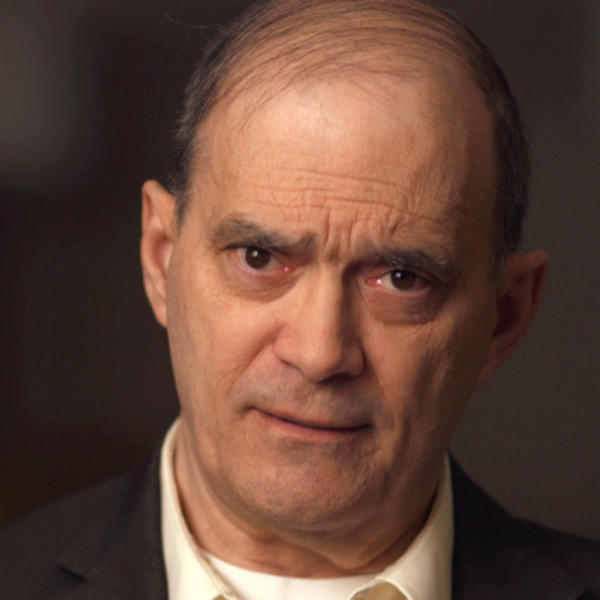
Binney: Dares anyone to prove remote speeds
The forensic scientists working with VIPS continued their research and experiments after VIPS50 was published. So have key members of the VIPS group, notably William Binney, the National Security Agency’s former technical director for global analysis and designer of programs the agency still uses to monitor internet traffic. Such work continues as we speak, indeed. This was always the intent: “Evidence to date” was the premise of VIPS50. Over the past year there have been confirmations of the original thesis and some surprises that alter secondary aspects of it. Let us look at the most significant of these findings.
At the time I reported on the findings of VIPS and associated forensic scientists, that the most fundamental evidence that the events of summer 2016 constituted a leak, not a hack, was the transfer rate—the speed at which data was copied. The speed proven then was an average of 22.7 megabytes per second. That speed matches what is standard when someone with physical access uses an external storage device to copy data from a computer or server and is much faster than a remote hack reliant on an internet service provider could achieve—either at the time or since, Binney has found.
Binney experimented into the autumn. By mid-autumn he had tested several routes—from East Coast locations to cities in eastern Europe, from New Jersey to London. The fastest internet transfer speed achieved, during the New Jersey–to–Britain test, was 12.0 megabytes of data per second. Since this time it has emerged from G-2.0’s metadata that the detected average speed—the 22.7 megabytes per second—included peak speeds that ran as high as 49.1 megabytes per second, impossible over the internet. “You’d need a dedicated, leased, 400–megabit line all the way to Russia to achieve that result,” Binney said in a recent interview.
To my knowledge, no one with an understanding of the science involved, including various former skeptics, any longer questions the validity of the specific finding based on the observed transfer rate. That remains the bedrock evidence of the case VIPS and others advance without qualification. “No one—including the FBI, the CIA, and the NSA—has come out against this finding,” Binney said Monday. “Anyone who says the speed we demonstrated can be achieved remotely, our position is ‘Let’s see it. We’ll help any way we can.’ There hasn’t been anyone yet.”
There is also the question of where and when leaks were executed. Research into this has turned out differently.
Evidence last year, based on analysis of the available metadata, showed that the copy operation date-stamped July 5, 2016, took place in the Eastern U.S. time zone. But Forensicator, one of the chief forensic investigators working on the mail-theft case anonymously, published evidence in May that, while there was activity in the Eastern zone at the time of that copy, here was also a copy operation in the Pacific time zone, where clocks run three hours earlier that EST. In an earlier publication he had also reported activity in the Central time zone.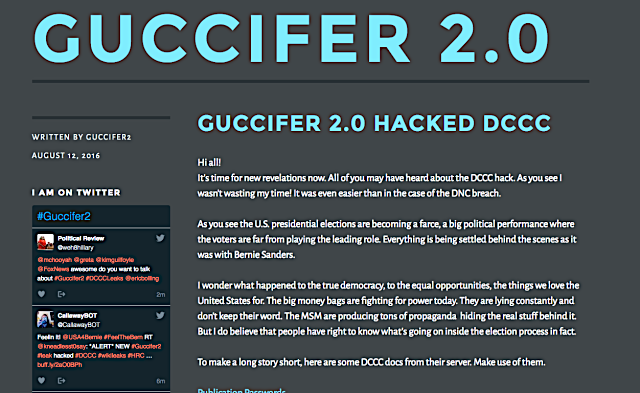
Plainly, more was awaiting discovery as to the when and where of the copy operations. The identity of Guccifer 2.0, who claimed to be a Romanian hacker but which the latest Mueller indictment claims is a construct of the GRU, Russian military intelligence, has never been proven. The question is what G–2.0 did with or to the data in question. It turns out that both more, and less, is known about G–2.0 than was thought to have been previously demonstrated. This work has been completed only recently. It was done by Binney in collaboration with Duncan Campbell, a British journalist who has followed the Russia-gate question closely.
Peak Speed Established
Binney visited Campbell in Brighton, England, early this past spring. They examined all the metadata associated with the files G–2.0 has made public. They looked at the number of files, the size of each, and the time stamps at the end of each. It was at this time that Binney and Campbell established the peak transfer rate at 49.1 megabytes per second.
But they discovered something else of significance, too. At some point G–2.0 had merged two sets of data, one dated July 5, 2016, which had been known, and another dated the following September 1, which had not been known. In essence, Campbell reverse-engineered G–2.0’s work: He took the sets of data G–2.0 presented as two and combined them back into one. “G–2.0 used an algorithm to make a downloaded file look like two files,” Binney explained. “Those two shuffled back together like a deck of cards.”
G–2.0 then took another step. Running another algorithm, he changed all the dates on all the files. With yet another algorithm, he changed the hours stamped on each file. These are called “range changes” among the professionals. The conclusion was then obvious: G–2.0 is a fabrication and a fabricator. Forensicator had already proven that the G–2.0 entity had inserted Russian “fingerprints” into the document known as the “Trump Opposition Report,” which he had published on June 15, 2016. It is clear that no firm conclusions can be drawn at this point as to when or where G–2.0 did what he did.
“Now you need to prove everything you might think about him,” Binney told me. “We have no way of knowing anything about him or what he has done, apart from manipulating the files. We detected activity in the Eastern time zone. Now we have to ask again, ‘Which time zone?’ The West Coast copy operation [discovered by Forensicator] has to be proven. All the data has been manipulated. It’s a fabrication.”
This throws various things into question. The conclusions initially drawn on time and location in VIPS50 are now subject to these recent discoveries. “In retrospect, giving ‘equal importance’ status to data pertaining to the locale was mistaken,” Ray McGovern, a prominent VIPS member, wrote in a recent note. “The key finding on transfer speed always dwarfed it in importance.”
The indictments against 12 Russian intelligence officers announced in mid–July by Rod Rosenstein, the deputy attorney-general, also come into question. They rest in considerable part on evidence derived from G–2.0 and DCLeaks, another online persona. How credible are those indictments in view of what is now known about G–2.0?
Binney told me: “Once we proved G–2.0 is a fabrication and a manipulator, the timing and location questions couldn’t be answered but really didn’t matter. I don’t right now see a way of absolutely proving either time or location. But this doesn’t change anything. We know what we know: The intrusion into the Democratic National Committee mail was a local download—wherever ‘local’ is.” That doesn’t change. As to Rosenstein, he’ll have a lot to prove.”
What Role does Evidence Play?
Rosenstein’s predicament—and there is no indication he understands it as one—brings us to an essential problem: What is the place of evidence in American public discourse? Of rational exchange?
The questions are germane far beyond the Russia-gate phenomenon, but it is there that answers are most urgent. What is implicit in the Rosenstein indictments has been evident everywhere in our public sphere for a year or more: Make a presumption supported by circumstantial evidence or none and build other presumptions upon it until a false narrative is constructed. The press has deployed this device for as long as I have been a practitioner: “Might” or “could” or “possibly” becomes “perhaps,” “probably” and “almost certainly,” and then moves on to unqualified fact in the course of, maybe, several weeks. Now this is how our most basic institutions—not least agencies of the Justice Department—routinely operate.

Rosenstein at the Department of Justice July 13, 2018 announcing indictments against 12 Russian GRU. (Photo by Chip Somodevilla/Getty Images)
This is what I mean when I refer to ours as a republic in peril.
There is the argument that certain things have been uncovered over the past year, and these are enough to conclude that Russia plots to undermine our democracy. I refer to the small number of Facebook advertisements attributed to Russians, to strings of Twitter messages, to various phishing exercises that occur thousands of times a day the world over. To be clear, I am no more satisfied with the evidence of Russian involvement in these cases than I am with the evidence in any other aspect of the Russia-gate case. But for the sake of argument, let us say it is all true.
Does this line up with the Russophobic hysteria—not too strong a term—that envelops us? Does this explain the astonishing investments our public institutions, the press, and leading political parties have made in advancing this hysteria as they did a variant of in the 1950s?
As global politics go, some serious thought should be given to a reality we have created all by ourselves: It is now likely that America has built a new Cold War division with Russia that will prove permanent for the next 20 to 30 years. All this because of some Facebook ads and Twitter threads of unproven origin? Am I the only one who sees a weird and worrisome gap between what we are intent on believing—as against thinking or knowing—and the consequences of these beliefs?
There was an orthodoxy abroad many centuries ago called Fideism. In the simplest terms, it means the privileging of faith and belief over reason. It was the enemy of individual conscience, among much else. Fideism has deep roots, but it was well around in the 16th century, when Montaigne and others had to navigate its many dangers. Closer to our time, William James landed a variant on American shores with an 1896 address called “The Will to Believe.” Bertrand Russell countered this line of thinking a couple of decades later with “Free Thought and Official Propaganda,” a lecture whose title I will let speak for itself. Twenty years ago, none other than Pope John Paul II warned of a resurgence of Fideism. It is still around, in short.
Do we suffer from it? A variant of it, I would say, if not precisely in name. There seems to be a givenness to it in the American character. I think we are staring into a 21st century rendition of it.
To doubt the hollowed-out myth of American innocence is a grave sin against the faith. It is now unpatriotic to question the Russia-gate narrative despite the absence of evidence to support it. Informal censorship of differing perspectives is perfectly routine. It is now considered treasonous to question the word of intelligence agencies and the officials who lead them despite long records of deceit. Do we forget that it was only 15 years ago that these same institutions and people deceived us into an invasion of Iraq the consequences of which still persist?
This was the question Craig Murray, the former British diplomat (who has vital information on the DNC mail theft but who has never been interviewed by American investigators) posed a few weeks ago. Eugene Robinson gave a good-enough reply in a Washington Post opinion piece shortly afterward: “God Bless the Deep State,” the headline read.
How we got here deserves a work of social psychology, and I hope someone takes up the task. Understanding our path into our self-created crisis seems to me the first step to finding our way out of it.
Patrick Lawrence, a correspondent abroad for many years, chiefly for the International Herald Tribune, is a columnist, essayist, author, and lecturer. His most recent book is Time No Longer: Americans After the American Century (Yale). Follow him @thefloutist. His web site is www.patricklawrence.us. Support his work via www.patreon.com/thefloutist.
Revolving Door: How Security Clearances Perpetuate Top-Level Corruption in the United States
By Philip M. GIRALDI | Strategic Culture Foundation | 02.08.2018
President Donald Trump is threatening to take away the security clearances of a number of former senior intelligence and security officers who have been extremely critical of him. Most Americans were unaware that any ex-officials continued to hold clearances after they retired and the controversy has inevitably raised the question why that should be so. Unfortunately, there is no simple answer.
A security clearance is granted to a person but it is also linked to “need to know” in terms of what kind of information should or could be accessed, which means that when you are no longer working as Director of the Central Intelligence Agency you don’t necessarily need to know anything about China’s spying on the United States. Or do you? If you transition into a directorship or staff position of a major intelligence or security contractor, which many retirees do, you might need to retain the qualification for your job, which makes the clearance an essential component in the notorious revolving door whereby government officials transit to the private sector and then directly lobby their former colleagues to keep the flow of cash coming.
At top levels among the beltway bandit companies, where little work is actually done, some make the case that you have to remain “well informed” to function properly. The fact is that many top-level bureaucrats do retain their clearances for those nebulous reasons and also sometimes as a courtesy. Some have even received regular briefings from the CIA and the office of the Director of National intelligence even though they hold no government positions. A few very senior ex-officials have also been recalled by congress or the White House to provide testimony on particular areas of expertise or on past operations, which can legitimately require a clearance, though in such cases one can be granted on a temporary basis to cover a specific issue.
The problem arises when former officials use their clearances as bona fides to enhance their marketability for non-clearance jobs in the media or corporate world, particularly when those individuals are criticizing current government policies and behaving in a partisan fashion regarding specific candidates for office. Donald Trump was especially assailed by former officials John Brennan, James Clapper, Michael Hayden and Michael Morell before the 2016 election, all of whom continue to attack him currently, most particularly for the recent meeting with Russian President Vladimir Putin. During the 2016 campaign, Morell, who openly supported Hillary Clinton and is the designated intelligence on-air contributor for CBS news, deliberately linked the fact that he was ex-CIA Acting Director to his assertion that Trump was somehow an “unwitting agent of the Russian Federation” to establish his credibility. That type of activity should be considered abusive and an exploitation of one’s former office.
Morell left CIA in June 2013 and by November was a senior counselor with Beacon Global Strategies. According to the firm’s website, Beacon Global Strategies is a government and private sector consulting group that specializes in matters of international policy, foreign affairs, national defense, cyber, intelligence, and homeland security. Morell may know little about those issues as they have evolved in the past five years, but citing his clearance gives him credibility for knowledge that he might not really possess and also gives him direct access to former colleagues that he can lobby to obtain government contracts.
Former CIA Director John Brennan, who famously voted for the Communist Party candidate for US president in 1976, has also profited greatly from his government service, becoming rich from his board memberships. He sits on the board of directors of SecureAuth + CORE Security and also on the board of The Analysis Corporation. More important in terms of his public profile, he is the “Intelligence Consultant” for NBC News and MSNBC and appears regularly.
Last week Senator Rand Paul met with President Trump and recommended that Brennan’s security clearance be revoked. He argued that Brennan, Trump’s most aggressive critic, has been using his credentials to provide credibility when he calls meeting with Russia’s president “treasonous” and describes the president as “wholly in the pocket of Putin.” Clearance holders also more generally use their privileged access to “secret information” to leverage speaking and television network pundit fees. In other words, Brennan and the others are using their security clearances to enhance their incomes, monetizing their access to classified information to enhance their value.
It is by no means clear whether Trump will revoke the clearances of Clapper, Brennan, Morell and Hayden. As he is the legal source of all government clearances he has the power to do so. An equitable solution on the clearance issue more generally speaking would be to cancel all security clearances on the day when one leaves government service unless there is a direct and immediate transition to a private sector position that absolutely requires such a qualification. That would be fair to lower level employees seeking a second source of income and it would also eliminate many of those who are merely cashing in on their presumed access. As it is a rational solution it is very unlikely that it will be entertained by either the White House or by Congress.
Trump threatens Turkey with sanctions. What if he’s serious?
By M K Bhadrakumar | Indian Punchline | July 27, 2018
The frequency with which US President Donald Trump holds out threats to other countries is such that he is no longer being taken seriously. The list of countries threatened by Trump so far includes North Korea, Germany, Canada, China, Venezuela, Pakistan, Syria, Iran and Turkey.
In all fairness, Trump makes no distinction between enemies, adversaries, friends or allies. Turkey, a NATO ally, holds a record of sorts as the country most threatened by the Trump administration. In separate tweets on Thursday, Trump and Vice-President Mike Pence gave an ultimatum to Turkey that unless Andrew Brunson, an American evangelical pastor of a small Protestant church in western Turkey, is released from detention immediately, Ankara should be “prepared to face the consequences” in the form of “significant sanctions.”
For the benefit of the uninitiated, Brunson who has been living in Turkey for 23 years was arrested in the aftermath of the failed 2016 coup attempt to overthrow Erdogan, charged with spying and involvement in the failed coup. The Turkish government had probably hoped for a tradeoff – Brunson in exchange for the Islamist preacher Fetullah Gulen who is living in Pennsylvania whom Ankara regards as having masterminded the 2016 coup attempt to overthrow Erdogan. Ankara has been pressing Gulen’s extradition and Washington has been stonewalling. It’s a complicated case history, since Gulen has had links in the past with the CIA.
Turkey has shrugged off the latest threat from Trump and Pence. However, for Trump, Christian groups form a core constituency politically, and taking a tough stance on the high-profile Brunson case has endeared him to those groups. Dr. Ronnie Floyd, former president of the Southern Baptist Convention, recently made the following remark in praise of the White House effort: “I thank God we have an administration that cherishes the freedom of religion as our founders hoped we would.”
Trump’s latest threat puts Erdogan in a fix because releasing Brunson without a reciprocal move on Gulen’s extradition means a loss of face. Erdogan is acutely conscious of his strongman-image. He must be wondering whether Trump is serious about the ultimatum on Brunson’s release. Brinkmanship comes naturally to Trump. Indeed, with Trump one really doesn’t know what happens next.
But Erdogan can be more than a match for Trump in the ‘art of the deal’. At a meeting today with Russian President Vladimir Putin on the sidelines of the BRICS summit in South Africa, Erdogan added disdainfully that Trump’s real grouse in giving such an ultimatum yesterday could be that Turkey has drawn close to Russia in the recent times. That is a spin, of course. But then, Erdogan is also hoping to extract a big concession from Putin – deferment of the planned military operation to liberate the northwestern Syrian province of Idlib on the Turkish border from Ankara’s proxy groups. Turkey is keen to retain Idlib as its zone of influence.
Does Putin feel impressed that US-Turkish ties are deteriorating? There are no easy answers here. Nonetheless, Erdogan sees no harm in playing Trump against Putin. After all, who knows, Putin may hold back on the assault to liberate Idlib…
Yet, the chances are that this time around, Trump probably intends to carry out his ultimatum to impose sanctions on Turkey. The point is, US patience with Turkey seems to be wearing thin. Turkey is no longer a ‘swing’ state in the US’ Middle East strategies, given the poor state of Turkish-Israeli relations, Erdogan’s ‘pivot to Russia’ and the overall trust deficit in Turkish-American relationship. Erdogan snubbed the US threat of sanctions and upheld his decision to purchase S-400 missile defence system from Russia. Last week, Erdogan bluntly rejected the demarche by Washington that Turkey should cut back its oil imports from Iran.
The Pentagon, the CIA, and the NSA Are in Charge
By Jacob G. Hornberger – FFF – July 27, 2018
The U.S. mainstream press can easily recognize the dominant and influential role that the military plays in society, so long as they are referring to countries like Pakistan and Egypt. Unfortunately, the same reporters and commentators turn a blind eye to the similar phenomenon here in the United States.
For example, the Washington Post writes: “When not in power, [Pakistan’s generals] have exerted outsize control over foreign policy, the economy, and local politics.” The New York Times writes: “Even during civilian rule, the country’s generals have wielded enormous power, setting the agenda for the country’s foreign and security policies…. As prime minister, Mr. Sharif ran afoul of the military early on by trying to assert control over foreign and defense policy, which is seen as the army’s domain.”
It’s the same in Egypt. Newsweek points out that after the military coup that ousted democratically elected President Mohammed Morsi from office, “The army stepped in…. Five years on from the coup, the military government — led by general-turned-president Abdel Fattah el-Sisi — has established a firm grip on the nation….”
Meanwhile, not surprisingly, the U.S. government is flooding the Egyptian military with hundreds of millions of dollars that the IRS has forcibly taken from the American people.
What the mainstream media and, unfortunately, all too many Americans, fail to recognize is that the Egyptian, Pakistani, and American governments all have a fundamental governmental principle in common: All three are national-security states and, consequently, in all three regimes the military and intelligence sections of the government play the dominant role within the government and within society.
What is a national-security state? It is a type of government that has a vast and permanent military-intelligence establishment. Secrecy is a core element, with threats of severe punishment on anyone who discloses secrets of the regime.
The most important principle of a national-security state is, not surprisingly, a concept called “national security.” Everything revolves around recognizing and eradicating threats to “national security.” There is no established definition of “national security.” The military and the intelligence forces wield the omnipotent and non-reviewable power to determine who and what constitutes a threat to ”national security” and the omnipotent and non-reviewable power to eradicate it.
In Pakistan and Egypt, the entire national-security establishment is subsumed in what is simply referred to as “the military.” In the United States, the national-security establishment is divided principally into three parts: the vast military establishment, led by the Pentagon, the CIA, and the NSA. I say “principally” because to a certain extent the FBI, over time, has been absorbed into the national-security establishment.
What many Americans fail to realize is that the United States wasn’t always a national-security state. When the Constitution called the federal government into existence, the federal government was a limited-government republic. The size of the army was extremely small and there was no CIA, NSA, or FBI. There was no concept of “national security.” Transparency, not secrecy, characterized the republic.
That all changed after World War II. Americans were told that in order to successfully confront America’s World War II partner and ally, the Soviet Union, in a “cold war,” it would be necessary to convert the federal government from a limited-government republic into a national-security state, which is what the Soviet Union was.
That’s how America ended up with essentially the same type of governmental system that exists in Pakistan and Egypt. It’s also how the country ended up with such programs as assassination, torture, indefinite detention, mass surveillance, and denial of due process, none of which existed when the federal government was a limited-government republic.
What many Americans also fail to recognize is that it’s the national-security establishment that is really the part of the federal government that is in charge, especially when it comes to foreign policy. That’s why President Trump was unable to pull U.S. troops out of Syria after expressing a desire to do so — the Pentagon wouldn’t permit it. It’s also why he was unable to release the CIA’s long-secret JFK records last fall, as he announced he was going to do and as the law required — the CIA wouldn’t permit it. It’s why Americans continue to be saddled under a regime that engages in mass secret surveillance, no different in principle from that which exists in Pakistan and Egypt — the NSA will not permit the federal courts to interfere with its surveillance operations. It’s why no congressional candidate would ever dare to call for a dismantling of military installations or projects in his district — the Pentagon as well as the local press would skewer him.
When it comes to enforcing the Constitution, the U.S. Supreme Court and the federal judiciary are permitted to maintain an appearance of being ultimately in charge but only up to a certain point. That’s why there are people in Guantanamo Bay who have now been incarcerated by the Pentagon and the CIA for 14 years without a trial.
A book that every American should read is National Security and Double Government by Michael J. Glennon, professor of law at Tufts University. Glennon explains perfectly how the U.S. national-security state works compared to nations like Pakistan and Egypt.
In those countries, the control of the national-security establishment is direct, while in the United States it is indirect. Here, the Pentagon, the CIA, and the NSA permit the president, the Congress, and the judiciary to appear to be in control of the federal government. But as Glennon shows, it’s just a veneer. The real control lies with the part of the government that wields the largest amount of force, and that part consists of the Pentagon, the CIA, and the NSA.
Recall what George Washington is reputed to have said, “Government is not reason. It is not eloquence. It is force.” But not all parts of the government are equal. Some wield more force than others. It is undeniable that the national-security part of the government wields the most force of all.
If anyone in Washington, D.C., had doubts about the overwhelming power of the U.S. national-security establishment, such doubts came to an end on November 22, 1963, when President Kennedy was assassinated after taking on the military and the CIA. (See FFF’s book JFK’s War with the National Security Establishment: Why Kennedy Was Assassinated by Douglas Horne and my new video-podcast series “The National-Security State’s Assassination of John F. Kennedy.) Kennedy had reputedly vowed to tear the CIA into a thousand pieces, to end the racket of the Cold War, to withdraw all U.S. troops from Vietnam, and to normalize relations with Russia, Cuba, and the rest of the communist world, all of which, needless to say, was considered heresy to the national-security establishment. Suddenly, after Dallas, it dawned on everyone in Washington that there was a new sheriff in town, one that would not countenance any threat to the power of the national-security establishment and, of course, to its existence, just like in Pakistan and Egypt. That’s undoubtedly a lesson that President Trump himself is now learning.
The Case for Stripping Former Officials of their Security Clearances
By John Kiriakou | Consortium News | July 25, 2018
Libertarian senator Rand Paul, a Kentucky Republican, said on Monday that in a personal meeting with President Donald Trump, he urged the president to revoke the security clearances of a half dozen former Obama-era intelligence officials, including former CIA director John Brennan, former Director of National Intelligence James Clapper, and former National Security Advisor Susan Rice. I couldn’t agree more with Paul’s position, not specifically regarding these three people, but for any former intelligence official. No former intelligence official should keep a security clearance, especially if he or she transitions to the media or to a corporate board.
The controversy specifically over Brennan’s clearance has been bubbling along for more than a year. He has been one of Trump’s most vocal and harshest critics. Last week he went so far as to accuse Trump of having committed “treason” during his meeting in Helsinki, Finland with Russian president Vladimir Putin. Brennan said in a tweet, “Donald Trump’s press conference performance in Helsinki rises to & exceeds the threshold of ‘high crimes and misdemeanors.’ It was nothing short of treasonous. Not only were Trump’s comments imbecilic, he is wholly in the pocket of Putin. Republican patriots: Where are you???” The outburst was in response to Trump’s unwillingness to accept the Intelligence Community position that Putin and the Russians interfered in the 2016 presidential election.
Other intelligence professionals weighed in negatively on Trump’s Helsinki performance, including Republicans like former Defense Secretary Chuck Hagel and former CIA director Mike Hayden.
Why are these people saying anything at all? And why do they have active Top Secret security clearances if they have no governmental positions? The first question is easier to answer than the second. Before answering, though, I want to say that I don’t think this issue is specific to Donald Trump. Former officials of every administration criticize those who have replaced them. That’s the way Washington works. It’s a way for those former officials to remain relevant. Donald Trump happens to be an easy target. His actions are so wildly unpredictable—and frequently so disingenuous on the surface of things—that he proves wrong the oft-quoted observation by the late Egyptian president Gamal Abdel Nasser: “The genius of you Americans is that you never make clear-cut stupid moves. You only make complicated stupid moves, which make the rest of us wonder at the possibility that we might be missing something.”
Cashing In
I’ve known John Brennan for 30 years. He was my boss in the CIA’s Directorate of Intelligence decades ago. John was hard to get along with. His superiors generally didn’t like him. He was once fired from a job at the CIA. He’s not particularly bright. And then he found a patron in former CIA director George Tenet, who saved his career. Brennan has had his run. He succeeded beyond his wildest dreams. He’s been CIA Director, deputy National Security Advisor, director of the Transnational Terrorism Information Center, and deputy Executive Director of the CIA. That’s pretty heady stuff for a kid from Bergen, New Jersey.
He also has very low self-esteem from those early days at the CIA. Almost everybody else had more degrees, spoke more languages, and went to better schools. Until Tenet, Brennan never had a political rabbi and was stuck at the GS-15 (journeyman) level for years. Now, all these years later, he again doesn’t have anyone to help his career. Barack Obama isn’t president anymore. And Brennan desperately wants to be Secretary of Defense. He says it to anybody willing to listen. That is what’s supposed to be his legacy, at least in his mind.
Besides legacy, Brennan and the others have cashed in on their government service. They’ve all become rich by sitting on corporate boards. Brennan is on the board of directors of a company called SecureAuth + CORE Security. He also serves on the board of The Analysis Corporation, which he helped found before joining the Obama Administration. Finally, and most importantly, Brennan is now the official talking head and “Intelligence Consultant” for NBC News and MSNBC.
To me, this is the point that is the most obviously wrong. How is it that former officials who now have no role in government are able to keep their active security clearances? This has abuse written all over it. First, these officials run the risk of exposing classified information in a television interview, either inadvertently or not. Second, and more cynically, what is to keep them from propagandizing the American people by simply spouting the CIA line or allowing the CIA to use them to put out disinformation? What’s to keep them from propagandizing the American people by selectively leaking information known only to the intelligence agencies and Congress? Or to release information passed to them by the FBI?
No former intelligence officials should have a security clearance. There’s no purpose for it other than propaganda and personal enrichment. And if Brennan or Hayden or Clapper or any other former intelligence official becomes an employee of a media company, he or she should not have a security clearance. Period. Donald Trump ought to act right now.
John Kiriakou is a former CIA counterterrorism officer and a former senior investigator with the Senate Foreign Relations Committee. John became the sixth whistleblower indicted by the Obama administration under the Espionage Act – a law designed to punish spies. He served 23 months in prison as a result of his attempts to oppose the Bush administration’s torture program.
Violent Coup Fail in Nicaragua
By Kevin Zeese | CounterPunch | July 24, 2018
On Clearing The FOG radio and podcast, Margaret Flowers and I interviewed Stephen Sefton, who lives in Nicaragua and is a founder of Tortilla con Sal. He names the names behind the violence and describes what is happening in Nicaragua.
Lessons Learned From The Failed Violent Coup In Nicaragua And Next Steps
The violent coup in Nicaragua has failed. This does not mean the United States and oligarchs are giving up, but this phase of their effort to remove the government did not succeed. The coup exposed the alliances who are working with the United States to put in place a neoliberal government that is controlled by the United States and serves the interests of the wealthy. People celebrated the failure of the coup but realize work needs to be done to protect the gains of the Sandinista revolution.
People Celebrate Revolution, Call For Peace, Show Support for Government
The people of Nicaragua showed their support for the democratically-elected government of Daniel Ortega with a massive outpouring in Managua in a celebration of the 39th anniversary of the Sandinista Revolution. In addition to the mass protest in Managua, various cities had their own, in some cases very sizeable ones.
People have wanted peace to return to Nicaragua. They have also wanted the roadblocks removed, which have resulted in closed businesses, job loss and loss of mobility. Roadblocks have been removed, even in the opposition stronghold of Masaya. There were two opposition deaths and one police officer killed in the removal. There was also an earlier death of a policeman in Masaya, captured when he was off-duty, tortured and burnt to death. This brings the total of police killed since April up to at least 21 with hundreds injured. With the opening of the main road on the east side of Masaya, all Nicaragua’s main routes are open to traffic and buses etc are operating normally.
At the rally, President Ortega called on the people of Nicaragua to defend peace and reinstate the unity that existed in the nation before the violent opposition protests. He described how the violent coup attempted to destabilize the country and ended the peace that has existed through the eleven years of his time in office. He said, “Peace must be defended every day to avoid situations like these being repeated.”
He also criticized the Catholic Bishops for their role in the failed violent coup. Ortega described the Episcopal Conference of Nicaragua as “coup leaders” for collaborating with the opposition during the protests. Not only did the Catholic leadership side with the opposition during the national dialogue, but priests were involved in kidnapping and torture. Pope Francis has a lot of work to do to rein in the Catholic Church in Nicaragua. If their role in these violent protests and opposition to an economy for the people is not stopped, this will become a scandal for the Catholic Church.
Other Latin American leaders spoke out against involvement in the coup. Bolivian President Evo Morales condemned US “interference” in Nicaragua, denouncing the “criminal strategies” used against the government of Daniel Ortega. Morales accused the United States Agency for International Development (USAID), and the National Endowment for Democracy (NED) of “openly supporting violence” in Nicaragua. Also at the celebration were the foreign ministers of Cuba and Venezuela, Bruno Rodríguez Parrilla, and Jorge Arreza, all supporting Nicaragua over the violent coup of the United States and oligarchs.
The United States is Escalating Economic War and Support for Opposition
The United States is not giving up. Also on the anniversary of the revolution, the NICA Act, designed to escalate the economic war against Nicaragua, was introduced in the Senate. It has already been passed by the US House of Representatives. The Senate bill, called the Nicaragua Human Rights and Anti-corruption Act of 2018, imposes sanctions, calls for early elections and escalates US intelligence involvement in Nicaragua. It is a law that ensures continued US efforts to remove the democratically-elected government.
At the same time, USAID announced an additional $1.5 million for Nicaragua to build opposition to the government. This will fund the NGOs that participated in the protests, human rights groups that falsely reported the situation, media to produce the regime change narrative and other support for the opposition.
The coordination between Nicaraguan opposition and the United States was shown by Max Blumenthal’s attempted visit to an organization that funnels USAID and NED money to the opposition. He visited the Managua offices of the Institute of Strategic Studies and Public Policies (IEEPP in Spanish), but it was closed because its director, Felix Maradiaga, who was at the heart of the violent unrest, was in Washington, DC seeking more funding from USAID.
On July 18, the US-dominated OAS passed a resolution concerning “The Situation in Nicaragua.” An earlier effort to endorse a report of the Inter-American Commission on Human Rights (IACHR) was so biased that it failed. The report ignored the opposition’s widespread violence or inaccurately attributed it to the government. It also failed to recognize government actions in self-defense. The resolution approving the IACHR report was supported by only ten out of 34 countries.
The resolution, which was finally passed by the OAS, condemned violence on all sides and urged Nicaragua to pursue all options including the national dialogue to seek peace begun by Ortega. On the issue of elections, the resolution urged Nicaragua “to support an electoral calendar jointly agreed to in the context of the National Dialogue process.” Only this mainly symbolic resolution could pass muster in the OAS, despite US domination.
What Happened and What Was Learned
In our article “Correcting the Record: What Is Really Happening In Nicaragua,” Nils McCune and I describe what was behind the violent coup attempt. We reported that there was a lot of misinformation on what was occurring in Nicaragua, indeed the false narrative of regime change was part of the tactics of the failed coup. Perhaps most importantly we described the alignment of forces behind the coup.
The coup was a class war turned upside down. The Ortega government includes none of the oligarchic families, a first in the history of Nicaragua. He has put in place a bottom-up economy that has lifted people out of poverty, provided access to health care and education, given micro-loans to entrepreneurs and small businesses and created an economy energized by public spending. Ortega expanded coverage of the social security system; as a result, a new formula was required to ensure fiscal stability.
Ortega made a counter-proposal to the IMF/business proposal, which would cut social security and raise the retirement age. He proposed no cuts to social security and increasing employer contributions by 3.5% to pension and health funds, while only slightly increasing worker contributions by 0.75% and shifting 5% of pensioners’ cash transfer into their healthcare fund. These reforms were the trigger as it was the business lobby who called for the protests.
The forces aligned with the violent coup included the oligarchs, big business interests, foreign investors (e.g. Colombian financiers), the US-funded NGO’s and the Catholic Church, a long-term ally of the wealthy. Also involved was the Movement for Renovation of Sandinismo (MRS), a tiny Sandinista offshoot party, of former Sandanistas who left the party when Ortega lost an election in 1990 who are aligned with the US State Department.
Regarding students, there were already student protests around university elections, and these were redirected by the violent coup effort and supported by a small minority of students from private universities, the April 19th Movement. Some of these students had been brought to the US by the Freedom House, which has long ties to the CIA and met with far-right interventionist members of the US Congress, including Rep. Ileana Ros-Lehtinen, Sen. Marco Rubio, and Sen. Ted Cruz.
These groups acted in opposition to the bulk of Nicaraguan society and showed their true colors. This includes:

No doubt more will come out about this in the future as the coup is researched and analyzed. As the facts become clear, the opposition will lose more political power and be even less likely to win elections. The blockades of roads with violence undermined the economy and had a negative impact on the poor and working class. If it becomes evident that this was a strategy of the opposition, they will lose power. NGO’s that are funded by the US and run by members of the MRS will be noted for their dishonest narrative and will be seen as an arm of the United States and not trusted by the people of Nicaragua. Media outside of Nicaragua will come to understand that human rights groups and NGOs are not reliable sources of information but need to be questioned. They need to be pushed to break their ties with the United States.
This does not mean all is well on the Sandinista side of the alliance of forces. The coup is an opportunity for self-reflection and self-criticism that is already happening, as seen in this list of 20 results from the coup, which begins with “A more consolidated and United FSLN.” In addition, the Action Group of the Solidarity with Nicaragua Campaign put forward seven propositions to unify around. The protest took advantage of challenges the Nicaraguan government faces in continuing to lift up the poor and economically insecure. It shows their need to build their capacity to quickly let the public know their side of the story. And, it shows the need for planning for a post-Ortega Sandinista government, as the president is in his third term.
The anniversary of the revolution was a good beginning at strengthening the unity of the Sandinista movement and celebration of the defeat of the coup, but there will be challenges ahead. Nicaragua is a poor country that needs foreign investment. If the United States escalates the economic war, which seems to be the intent, it will make it challenging to continue the social and economic programs that are lifting up the poor. Nicaragua had relied on investment from Venezuela, but it is also in the midst of an economic war, which along with the low oil prices has created economic challenges for them. Nicaragua has begun to build economic relationships with China, Russia, Iran and other countries; these will likely need to expand.
The misinformation was deep and widespread. Inside Nicaragua, there were stories of students being killed that never happened but that escalated the protests. The opposition claimed to be nonviolent when their strategy was to use violence to force regime change while the government quartered the National Police. False news and videos of attacks on neighborhoods and universities never stopped being manufactured. One example, students calling for help and claiming they were under attack, was later exposed in a video showing the students practicing the false social media narrative.
Peace and justice activists in the United States and western nations have learned they need to be much more careful believing reports on what is occurring in Nicaragua. The US-funding of NGOs involved in women’s issues, environmental protection and human rights in Nicaragua make them questionable sources of information for justice advocates. In addition, US-funded regime change efforts are getting more sophisticated at social media; and thus, care must be taken as social media is abused by regime change advocates. We must look to other sources that have shown the ability to report accurately e.g., Tortilla con Sal, Telesur, Redvolucion. Peace and justice advocates must be grounded in anti-imperialism and nonintervention by the United States.
The Myth of US ‘Inaction’ in Syria
By William Van Wagenen – The Libertarian Institute – July 8, 2018
Introduction
When the Russian military intervened in the Syrian war in October 2015, many in the Western press complained bitterly, demanding that US planners intervene directly in Syria on behalf of the anti-government rebels in response. Reuters alleged that “The Middle East is angry and bewildered by US inaction in Syria,” arguing that “The question on everyone’s mind is: will the United States and its European and regional Sunni allies intervene to stop President Vladimir Putin from reversing the gains made by mainstream Syrian rebels after more than four years of war? Few are holding their breath.” The Washington Post similarly argued that Russian president Vladimir Putin was “exploiting America’s inaction,” while the Guardian lamented the “western inability to care enough about the plight of Syrians.” As Russian and Syrian forces battled rebels one year later in Aleppo, more dramatic accusations of US inaction emerged, with Foreign Policy describing US policy in Syria under Obama as “inaction in the face of genocide.”
 The idea that the United States has not intervened in Syria and is guilty of “inaction,” is a myth however. The United States and its Western and Gulf Allies have intervened in the Syrian conflict from early on. US planners have been fighting what the New York Times described as a “$1 Billion Secret C.I.A. War in Syria” while providing weapons to rebels through a program considered “one of the costliest covert action programs in the history of the C.I.A.” Starting in the fall of 2012, the US and its Gulf partners, under the direction of then CIA director David Petraeus, were openly sending “a cataract of weaponry” into Syria. It is likely that such shipments began much earlier without public acknowledgment, via the “rat line” from Libya, as reported by journalist Seymour Hersh. US Special Envoy to Syria Michael Ratner, in a meeting with members of the Syrian opposition, explained that “The armed groups in Syria get a lot of support, not just from the United States but from other partners,” while Secretary of State John Kerry added in the same meeting, “I think we’ve been putting an extraordinary amount of arms in,” and “Qatar, Turkey, Saudi Arabia, a huge amount of weapons [are] coming in. A huge amount of money.”
Also a myth is the idea that any US intervention in Syria would seek to protect civilians. While allegations that Syrian and Russian forces were committing genocide in Aleppo proved baseless, US planners have themselves supported rebels intent on committing genocide and sectarian mass murder. This was clearly evident in the Syrian city of Latakia, which by the time of the Russian intervention in October 2015 was on the verge of falling to a coalition of Syrian rebel groups including al-Qaeda (known in Syria as the Nusra Front) and the US-armed and funded Free Syrian Army (FSA).
Robert Worth of the New York Times writes that “In Latakia, some people told me that their city might have been destroyed if not for the Russians. The city has long been one of Syria’s safe zones, well defended by the army and its militias; there are tent cities full of people who have fled other parts of the country, including thousands from Aleppo. But in the summer of 2015, the rebels were closing in on the Latakia city limits, and mortars were falling downtown. If the rebels had captured the area — where Alawites are the majority — a result would almost certainly have been sectarian mass murder. Many people in the region would have blamed the United States, which armed some of the rebels operating in the area. . . Andrew Exum, who worked in the Pentagon at the time, told me that the military drew up contingency plans for a rapid collapse of the regime. The planning sessions were talked about as ‘catastrophic success [emphasis mine].’”
Alawite civilians in Latakia faced the prospect of being massacred if rebels had been able to capture the city, due to the virulently anti-Alawite views of Nusra Front members. Nusra religious clerics draw on the writings of the fringe 14th century Islamic scholar Ibn Taymiyya to argue that Alawites are “infidels” deserving of death. Syria analyst Sam Heller described Nusra clerics as promoting “toxic — even genocidal — sectarianism.” Rebels from the FSA, which have fought alongside and “in the ranks” of the Nusra Front throughout the conflict, also posed a threat to Alawite civilians in Latakia. While typically considered moderate in the Western press, many FSA battalions have been armed and funded by the Syrian Muslim Brotherhood (MB). Thanks to the influence of Brotherhood ideologue Said Hawwa, the Syrian Brotherhood strongly promoted the anti-Alawite sectarian views of Ibn Taymiyya from the 1960’s until the 1980’s. This anti-Alawite sectarianism re-emerged in segments of the Syrian opposition, including in elements of the FSA, when peaceful protests and armed insurrection against the Syrian government simultaneously erupted in Syria in the spring of 2011.
While the Syrian and Russian militaries managed to protect Latakia and prevent a massacre of the city’s Alawite civilians, the broader effort to prevent the fall of the country to al-Qaeda and its FSA allies exacted a huge toll on Syria’s Alawites. The Telegraph noted that already by April 2015, “The scale of the sect’s losses is staggering” and that of some 250,000 Alawite men of fighting age “as many as one third are dead” and that “Alawite villages nestled in the hills of their ancestral Latakia province are all but devoid of young men. The women dress only in mourning black.”
While arming rebels threatening the massacre of Alawite civilians in Latakia, US planners were at the same time welcoming the potential massacre of Syrian civilians in Damascus. The Syrian capital was on the verge of falling to the Islamic State (ISIS) in the summer of 2015 after ISIS, with the help of Nusra, captured all of the Yarmouk Palestinian refugee camp in the southern Damascus suburbs. The New York Times acknowledged the ISIS threat to Damascus at this time, observing that “By seizing much of the camp” ISIS had “made its greatest inroads yet into Damascus,” while the Washington Post noted that “Their new push puts [ISIS] within five miles of the heart of the capital . . . even as they are on the retreat in Iraq.”
In a private meeting with members of the Syrian opposition, Secretary of State John Kerry acknowledged that US planners had actually welcomed the ISIS advance on Damascus, in an effort to use it as leverage to force Assad to give up power. Kerry explained that, “the reason Russia came in is because ISIL [ISIS] was getting stronger. Daesh [ISIS] was threatening the possibility of going to Damascus. And that is why Russia came in. They didn’t want a Daesh [ISIS] government and they supported Assad. And we know this was growing. We were watching. We saw that Daesh [ISIS]was growing in strength. And we thought Assad was threatened. We thought we could manage that Assad might then negotiate. Instead of negotiating, he got Putin to support him [emphasis mine].”
Because the US was bombing ISIS in defense of its Kurdish allies in Northeastern Syria and its Iraqi government allies in Northwestern Iraq, the fact that US planners at the same time welcomed the ISIS push on Damascus against the Syrian government was largely obscured.
Had Damascus fallen to ISIS, it is clear that many civilians in the city, including Christians, Alawites, Shiites, members of the LGBTQ community, and pro-government Sunnis, would have been killed. While commenting on the Russian intervention, Michael Kofman of the Wilson Center acknowledged that “Assad may be irredeemable in the eyes of the United States, but it is equally clear that a high human price would be paid when the Islamic State [ISIS] or al-Nusra seizes the major population centers in Syria that he still controls.”
It is also clear that US planners were deliberately supporting al-Qaeda (Nusra), despite its genocidal intentions towards Syria’s Alawites, by flooding Syria with weapons. Because FSA brigades that received funding and weapons from the US and its Gulf Allies were fighting side by side with militants from Nusra throughout the country, in practice much of the money and weapons sent to the FSA ultimately benefited al-Qaeda.
For example, US-made TOW anti-tank missiles sent by US planners to FSA groups in Idlib played a crucial role in helping Nusra conquer the entire province in the spring of 2015. Syria analyst Hassan Hassan observed in Foreign Policy during this period that “The Syrian rebels are on a roll” and that “The recent offensives in Idlib have been strikingly swift — thanks in large part to suicide bombers and American anti-tank TOW missiles,” which the FSA and Nusra deployed in tandem. Syria analyst Charles Lister, also writing in Foreign Policy, described how US planners explicitly encouraged the FSA groups they were arming to fight alongside Nusra in Idlib. Rebel victories in Idlib, in particular the town of Jisr al-Shughour, allowed Nusra and the FSA to then threaten the massacre of Alawites in Latakia.
When Russia intervened militarily in Syria in October 2015, US planners responded by immediately increasing shipments of TOW anti-tank missiles to FSA groups, some of which then helped Nusra capture the strategic town of Murek in central Syria one month later in November 2015.
This prompted Daveed Gartenstein-Ross of the Foundation for Defense of Democracies (FDD) to observe that “it is impossible to argue that U.S. officials involved in the CIA’s program cannot discern that Nusra and other extremists have benefited” from CIA weapons shipments to Syrian rebels, “And despite this, the CIA decided to drastically increase lethal support to vetted rebel factions following the Russian intervention into Syria in late September.”
Nusra did not only benefit from fighting alongside FSA rebels armed with US-supplied weapons, but acquired many of these weapons themselves. That Nusra regularly purchased weapons from the Western-backed military councils supplying the FSA was confirmed in October 2014, when the New York Times reported that Shafi al-Ajmi, a Nusra fundraiser, told a Saudi news channel that “When the military councils sell the weapons they receive, guess who buys them? It’s me.”
That al-Qaeda was purchasing US supplied weapons seemed of little concern to US planners. When journalist Sharmine Narwani asked why US-supplied weapons allegedly meant for FSA groups were showing up in Nusra hands, CENTCOM spokesman Lieutenant Commander Kyle Raines responded: “We don’t ‘command and control’ these forces—we only ‘train and enable’ them. Who they say they’re allying with, that’s their business.”
Obama administration officials themselves acknowledged tacit US support for al-Qaeda, admitting in November 2016 to the Washington Post that they had struck “a deal with the devil,” years before, “whereby the United States largely held its fire against al-Nusra because the group was popular with Syrians in rebel-controlled areas and furthered the U.S. goal of putting military pressure on Assad,” thereby confirming long standing Russian accusations that the US had been “sheltering al-Nusra.”
More recently, Ben Rhodes, deputy national security advisor under the Obama administration, acknowledged providing military support to Syrian rebels, even though it was clear that Nusra comprised a good portion of the Syrian opposition as a whole. Rhodes explained that “there was a slight absurdity in the fact that we were debating options to provide military support to the opposition at the same time that we were deciding to designate al-Nusra, a big chunk of that opposition, as a terrorist organization.”
Despite designating Nusra as a terror group already in 2012, US planners nevertheless provided weapons to the Syrian rebels, of which Nusra comprised a “big chunk,” for the next 7 years. As Sharmine Narwani observes, “U.S. arms have been seen in Nusra’s possession for many years now, including highly valued TOW missiles, which were game-changing weapons in the Syrian military theater. When American weapons end up in al-Qaeda hands during the first or second year of a conflict, one assumes simple errors in judgment. When the problem persists after seven years, however, it starts to look like there’s a policy in place to look the other way.”
US planners welcomed rebel gains in Syria, including by rebel groups advocating genocide against Syria’s Alawite population, such as ISIS and Nusra, because these gains bolstered the broader US goal of toppling the Syrian government, in an effort to weaken its close allies, Iran and Hezbollah. US planners wished to see rebel gains in Syria, in spite of the obviously catastrophic consequences for Syrian civilians, including for Syria’s Sunnis, which rebel success would bring. US support for the rebels belies the myth of US “inaction” in Syria, and the myth that any US intervention would be for the sake of preventing massacres and even genocide, rather than in support of it.
In the remainder of this essay, I will review the US support for rebel advances in the spring and summer of 2015 in Idlib, Latakia, Palmyra, Yarmouk, and Homs. I will describe how these rebel advances nearly led to the massacre of Syrian civilians in two of the country’s main population centers, Latakia and Damascus, if not for the Russian intervention which halted the rebel advance.
Idlib
In March of 2015, rebels from the Jaish al-Fatah coalition, which included Nusra and the jihadist rebel group Ahrar al-Sham, launched a coordinated assault along with brigades from the FSA on Idlib province, leading to the capture of the province as a whole from Syrian government forces two months later.
Rebels captured Idlib city itself on March 29. Al-Jazeera quoted the pro-opposition Syrian Observatory for Human Rights (SOHR) as declaring “Al-Nusra Front and its allies have captured all of Idlib,” in a battle that led to some 130 deaths. Al-Jazeera also quoted representatives of the Western-backed Syrian National Council (SNC) as declaring the capture of Idlib city as “an important victory on the road to the full liberation of Syrian soil from the Assad regime and its allies,” showing the close relationship between the US-supported Syrian political opposition in exile and al-Qaeda affiliated militants on the ground in Syria. Rebels captured the last major Syrian army base in the province on March 19 near the town of Mastouma. Rebel control of Idlib was completed with the ouster of the Syrian army from the town of Ariha at the end of May, causing government forces to retreat to bases on the coast in Latakia.
The rebel offensive in Idlib succeeded largely due to the lethal combination of Nusra suicide bombers and US-provided TOW anti-tank missiles. FSA commander Fares Bayoush from the Fursan al-Haq brigade explained to the LA Times “that his group’s TOW missiles played an important role in repelling government tanks during a March offensive in Idlib province spearheaded by an Islamist coalition called the Army of Conquest, which includes Al Nusra Front.” It was during this period that Syria analyst Hassan Hassan observed in Foreign Policy that, “The Syrian rebels are on a roll,” and that “the recent offensives in Idlib have been strikingly swift — thanks in large part to suicide bombers and American anti-tank TOW missiles,” as well as that,“For the first time since the conflict began, Assad’s heartlands in the Western region [Latakia] seemed exposed.”
The close cooperation between FSA brigades and rebels from the al-Qaeda affiliated Nusra Front in Idlib was encouraged by US planners. Syria analyst Charles Lister, also writing in Foreign Policy, observed that “The involvement of FSA groups, in fact, reveals how the factions’ backers have changed their tune regarding coordination with Islamists. Several commanders involved in leading recent Idlib operations confirmed to this author that the U.S.-led operations room in southern Turkey, which coordinates the provision of lethal and non-lethal support to vetted opposition groups, was instrumental in facilitating their involvement in the operation from early April onwards. That operations room — along with another in Jordan, which covers Syria’s south — also appears to have dramatically increased its level of assistance and provision of intelligence to vetted groups in recent weeks [emphasis mine].”
Lister, who has testified several times before the US House Foreign Affairs Committee to make policy proscriptions for US planners in Syria, argued at that time that US cooperation with al-Qaeda (Nusra) is the best option: “[T]here still remains no better alternative to cooperating with al Qaeda, and thus facilitating its prominence. If the West wants a better solution, it must broaden and intensify its engagement with Syria’s insurgent groups and considerably expand its provision of assistance to a wider set of acceptable groups” echoing a popular view among Western and Gulf think tank analysts that al-Qaeda was worthy of US support.
Predictably, US efforts to help al-Qaeda conquer Idlib had grim consequences for many of its residents, large numbers of whom fled after rebels took control of the city and province. The Guardian reported that while under Syrian government control, Idlib city, with a population of some 165,000 before the war, “had been swollen by hundreds of thousands of displaced people, who had fled there to escape fighting elsewhere.” In contrast, when the rebels came, many civilians fled. The New York Times reported that although “some Idlib residents celebrated Saturday, cheering as fighters ripped down posters of Mr. Assad or embracing insurgent relatives who returned to the city for the first time in years, others streamed out of the city, with convoys of loaded cars and trucks blocking roads.” Citing the United Nations, the NYT reported that already by April 1, just two days after the rebel arrival, at least 30,000 residents had fled the city. One Idlib resident who fled when the rebels arrived explained that “The rebels that attacked Idlib at the end of March 2015 came from all sorts of countries. I even saw children carrying weapons. The rebels had a list of names of people who were to be killed, in the majority of cases because they held pro government views. One of my friends, a teacher, was on the list and was shot. . . . I left Idlib with my cousin who had a car. Afterwards, my house was occupied and looted by the rebels. I had planned to sell my house to enable my daughter to study medicine. Now it’s too late. I also worry about our old Christian neighbors. I am a Muslim but the religion of these rebels is not my Islam. I detest Salafism, and do not want to live under it.”
On April 25, rebels from the Jaish al-Fatah coalition, which included the jihadist rebel groups Nusra, Ahrar al-Sham, and Jund al-Aqsa, captured the strategic town of Jisr al-Shughour, which lies on the highway connecting Latakia to Aleppo. The rebel capture of the town came one month after the capture of Idlib city. The Guardian quoted one senior opposition member who had supplied weapons to the rebels taking Jisr al-Shughour as noting, “I would put the advances down to one word . . .Tow,” referring to missiles made in the US and purchased by Saudi Arabia for supply to the rebels. The opposition member noted as well that “Saudi is not as concerned as it was by who among the rebel groups is winning, as long as it’s not [Isis]. They’ve convinced everyone involved in Syria that the real enemy is Iran,” suggesting Saudi comfort in militarily supplying jihadist rebels from al-Qaeda. Rebel media posted video of civilians fleeing Jisr al-Shughour after its capture, claiming they wished to escape in anticipation of a pending regime bombardment now that the city had fallen. The Guardian also quoted one resident as noting that FSA groups participated alongside the Nusra-led Jaish al-Fatah coalition in taking the city, in accordance with the familiar pattern: “There were people from the normal opposition there. They were strong too, but the jihadists were stronger.”
Though the city fell on April 25, hundreds of Syrian army soldiers and some women and children fled to the National Hospital complex, which remained under siege by rebels for the next month. The soldiers managed to repel multiple suicide car bombs, targeting them with rocket propelled grenades. Rebels then began preparing to detonate a large tunnel bomb below the hospital to destroy it and kill the soldiers inside. The soldiers then attempted to flee the hospital under air cover from the Syrian air force. Of this incident, the Telegraph reports, “Syrian rebel leaders have described massacres of hundreds of Assad troops and fighters in grim detail as the regime’s defenses begin to crumble in the face of revived attacks on several fronts. President Bashar al-Assad had promised to rescue hundreds of his men who were surrounded in a last stand at a hospital in the key north-western town of Jisr al-Shughour. Eventually, the men tried to run for it under the cover of a regime aerial attack, pre-empting a final assault by rebels including Jabhat al-Nusra, the Syrian branch of al-Qaeda, and other Islamist groups. Instead, many of the soldiers were shot down as they were cornered in orchards on the edge of town, a rebel spokesman said.” Rebels claimed to have killed 208 Syrian soldiers, including several high ranking officers, while pro-government sources claimed up to 80 soldiers managed to escape. One soldier who managed to escape alive described the ordeal to Chinese state media, adding that a number of civilians escaped with the soldiers.
Jisr al-Shughour fell four years after rebels initially attempted to take the city in June 2011, just three months after the beginning of anti-government protests. Several hundred rebels attacked the local police station with dynamite, killing a number of soldiers inside, and then ambushed and killed as many as 120 Syrian army soldiers sent as reinforcements. This event was known as the “massacre” of Jisr al-Shughour. The killings were widely attributed to the Syrian army itself at the time, as activists implausibly blamed the Syrian army for the killing of its own soldiers. The story of government responsibility for the killings was widely believed, and reported as such in the Western press, as the rebel attacks took place at a time before armed rebel activity in Syria was widely acknowledged. This was despite correct reporting on the killings at the time by Syria expert and University of Oklahoma professor Joshua Landis. Rebel responsibility for the killings was later confirmed by journalist Rania Abouzeid, who was able to return to Jisr al-Shughour years later and interview witnesses who confirmed rebels had killed the soldiers, as recounted in her book, “No Turning Back: Life, Loss, and Hope in Wartime Syria (pages 55-60).”
Latakia
The defeat of government forces in Idlib, in particular in Jisr al-Shughour, allowed rebels to then push on toward Latakia province on the Western coast of Syria, and to threaten the massacre of the large Alawite population there, as discussed above. A representative from the rebel group Ahrar al-Sham explained to Reuters that “Jisr al-Shughour is more important than Idlib itself, it is very close to the coastal area which is a regime area [Latakia], the coast now is within our fire reach.”
Alawites, which comprised some 50% of the population in Latakia, faced the prospect of being massacred if rebels from Nusra had been able to capture the city, due to the virulently anti-Alawite views of Nusra members, who draw on the writings of the fringe 14th century Islamic scholar Ibn Taymiyya in order to deem Alawites “infidels” deserving of death.
Syrian analyst Sam Heller cites the views of the supreme Nusra religious official Sami al-Oreidi to show that Nusra promotes “toxic — even genocidal – sectarianism” against Syria’s Alawite population. Heller writes that “[T]he verdict on Syria’s Alawites, Oreidi makes clear, is death. Oreidi cites medieval Islamic jurist Imam al-Ghazali, who wrote, ‘Proceed with [the Alawites] as you would with apostates…. The land must be purged of them.’ He also quotes Islamic scholar Ibn Taymiyyah, himself Syrian and among the formative influences on modern Salafism: This people called the ‘Nuseiriyyah [Alawites] . . . are more infidels than the Jews and the Nasara [Christians]; more infidels, in fact, than many polytheists. Their harm to the nation of Muhammad, peace be upon him, is greater than the infidels waging war on it.’”
But it was not only jihadist fighters from the Nusra Front that held strongly sectarian, anti-Alawite views, but also many fighters from the FSA as well, due to the Syrian Muslim Brotherhood (MB) roots of many FSA battalions. Thanks to the influence of Brotherhood ideologue Said Hawwa, the Syrian MB promoted the anti-Alawite sectarian views of Ibn Taymiyya from the 1960’s until the 1980’s.
Islam scholar Itzchak Weismann of the University of Haifa writes that “In defining his attitude toward the ‘Alawis, Hawwa alludes to a fatwa of Ibn Taymiya, which although it concerns a particular Ismal’ili sect can be applied, in his opinion, to any analogous sect in the Muslim world. According to this fatwa jihad against this sect precedes jihad against polytheists (musbrikun) or against ahl al-kitab, as it belongs to the category of jihad against murtaddun [apostates]. Thus, in Hawwa’s view, Syria is a unique case of a Muslim state that is ruled by a heretical batini government, and in such a case he sees no escape from a violent confrontation. The Sunni majority, led by the Islamic movement, must wage an uncompromising war against Assad’s regime and against ‘Alawi dominance in Syria.”
This view helped inspire some Brotherhood members, such as Marwan Hadid, to split from the broader Syrian MB organization and initiate an armed insurrection against the Syrian government in Hama in 1964. Upon Hadid’s death in government custody in 1976, his followers, known as the Fighting Vanguard, initiated an assassination campaign targeting Alawite members of the Syrian government bureaucracy and security forces. As part of this campaign, Fighting Vanguard militants massacred 83 Alawite army cadets in Aleppo in June 1979, while attempting to assassinate President Hafez al-Assad himself in June 1980. In response, Assad ordered the massacre of some 500 MB members then being held in Tadmur prison. The Syrian MB joined the Fighting Vanguard in launching an armed insurrection (which they called a jihad) against the Syrian government in Hama in 1982. Islamist militants attacked police stations, Ba’ath party offices and Syrian army units, forcing the army to withdraw from the city. The army regrouped however, and (in)famously suppressed the insurrection, with the use of considerable violence, leaving thousands dead and much of the city in ruins (for a review of this period, see “Ashes of Hama” by Rafael Lefevre and “The Struggle for Power in Syria” by Nikolaos van Dam).
While the Syrian MB has espoused more moderate positions after the group was defeated in Hama, anti-Alawite sectarianism which colored its conflict with the Syrian government in the 1980’s re-emerged in some segments of the Syrian opposition at the outset of anti-government protests in 2011, and was taken up by some FSA rebel groups.
In some anti-government protests in the spring of 2011, protestors chanted the slogan “Christians to Beirut, Alawites to the grave,” while in June 2011, Syrian opposition cleric and FSA supporter Adnan Arour threatened to put Alawites supporting the government in “meat grinders” and “feed their flesh to the dogs.”
In the summer of 2011, Lebanese Sunnis from the city of Tripoli were entering Syria to fight for the FSA-affiliated Farouq Brigade in Homs, with encouragement from Lebanese cleric Masen al-Mohammed, who insisted that “Assad is an infidel,” because he is a member of the Alawite faith and that “It is the duty of every Muslim, every Arab to fight the infidels.”
FSA groups inquired of Islamic scholars in March 2012 whether it was allowed to raid Alawite villages and kill their women and children in response to alleged crimes committed by the Syrian army.
On April 10, 2011, just weeks after the first anti-government protests in Syria, anti-government activists loyal to local Salafi cleric and protest leader Anas Ayrout murdered an Alawite farmer in Banias named Nidal Janoud. Video emerged of the activists stabbing Nidal to death in the street. In July 2013, Ayrout, by then a rebel commander and member of the Western-backed Syrian National Council (SNC) told Reuters that “We have to drive them [Alawites] out of their homes like they drove us out. They have to feel pain like we feel pain,” and that “(Alawites) are relaxed while areas that have slipped out of regime control are always under shelling (by government forces), always in pain. . . If you do not create a balance of terror, the battle will not be decided.”
Similarly, in September 2013, Zahran Alloush, a Salafi preacher and founder of the Saudi-supported opposition rebel group Jaish al-Islam, called for “cleansing Damascus” of all Alawites, while calling Shiite Muslims, of which Alawites are considered an offshoot, “unclean” and threating to “destroy your skulls” and “make you taste the worst torture in life before Allah makes you taste the worst torture on judgment day.” Proof that Jaish al-Islam was welcomed by the mainstream and Western-backed political opposition became clear when Zahran’s cousin and co-founder of Jaish al-Islam, Mohammad Alloush, was appointed as the lead negotiator for the Syrian opposition at the Geneva peace negotiations in January 2016.
The anti-Alawite incitement promoted by opposition clerics such as Alloush, al-Mohammed, Arour, and Ayrout was at times translated into action. In December 2012, FSA battalions carried out a mass kidnapping of Alawite civilians in the town of Aqrab. Alex Thomsen of Channel 4 News reported that according to residents of the town who had escaped, “rebels wanted to take the women and children to al-Houla to use them as human shields against bombardment from government forces, and they believed they would kill the remaining men.”
In August 2013, one month after Ayrout’s threats against Alawites, fighters under the command of FSA head Salim Idriss participated alongside Nusra and ISIS in the massacre and kidnapping of Alawite civilians in 10 villages in Latakia, according to the BBC. Human Rights Watch (HRC) investigated the massacre further, and reported that on August 4, rebels overran a Syrian army position, killing some 30 Syrian soldiers. Rebels then massacred 190 civilians, including 57 women and 18 children and 14 elderly men. Rebels also kidnapped and held hostage some 200 additional civilians, the majority women and children. Many of the hostages were released 9 months later as part of a ceasefire deal to end fighting between the Syrian army and rebels in Homs, and victims were able to recount horrific details of their captivity to the pro-Syrian government Lebanese newspaper, al-Akhbar.
The massacre came as part of a rebel offensive, led by ISIS, to capture Tartous, a port town crucial for the Syrian army receiving weapons shipments by sea from its Iranian allies. The Telegraph reported that Western-backed Syrian National Council (SNC) denied that rebels were targeting civilians based on their religious identity, but that the SNC nevertheless “praised” the ISIS led-offensive “stating that the villages had been used as launching posts from which pro-government militias had shelled rebel held villages in the north of the province.” At the same time, the Telegraph reported that “Video footage posted showed rebel groups indiscriminately launching rockets in the direction of Qardaha, the Assad village, and many of the comments made in the footage were clearly sectarian.”
In November 2015, Jaish al-Islam placed Alawite prisoners, both kidnapped civilians and captured Syrian soldiers, in metal cages in public squares. The Telegraph cited SOHR reporting that “Jaish al-Islam is using these captives and kidnapped people – including whole families – as human shields,” allegedly in an effort to prevent Syrian government bombing.
Christians in Latakia also feared the rebels. In March 2014, the Armenian Christian village of Kassab in northern Latakia province was overrun by rebels crossing the Syrian border from Turkey. Saudi owned al-Arabia reports that “Kassab’s residents fled after rebels seized their village on March 23, as part of a rebel offensive in the coastal Syrian province of Latakia, Assad’s ancestral heartland.” One resident who fled when the rebels came told al-Jazeera that “There was no obvious reason to invade, no heavy Syrian military presence. . . But that morning, shelling was pouring down like hail.” Once the residents fled, rebels looted their homes and farm equipment. “They have taken the televisions, radios and microwaves to Kassab Square, and they’ve gathered all the tractors at the Kassab Tourist Resort,” a media representative for the Armenians in the town told al-Jazeera. The Washington Post reported that a “mother of three said that after she arrived in Latakia with her children, she called home, and a man who identified himself as a member of Jabhat al-Nusra answered” and told her “Come back, why did you leave your home? We have come here to protect you,” before also telling her “she should convert to Islam before returning.” The mother described how “I pleaded with him, ‘Eat and drink whatever you like, but please don’t destroy the house.’” American celebrity personality Kim Kardashian, herself Armenian, attempted to bring attention to the plight of Kassab’s residents and the danger they faced from al-Qaeda rebels. In response, the Daily Beast published an article making light of her concerns, suggesting Kardashian was simply an apologist for dictators.
Despite rebel attacks on various villages in Latakia province as described above, Latakia city and its some 400,000 residents had largely been spared the violence engulfing much of the country, with some 200,000 displaced persons finding refuge in Latakia, many of whom were housed in tents and pre-fabricated homes in the city’s sports stadium complex.
By the spring of 2015, however, rebels were encroaching closer and closer on Latakia city. In March 2015, Saudi-owned al-Arabiya reported that rebels had detonated a car bomb in Qardaha, President Assad’s hometown, located just 30 kilometers Latakia city, and that the Syrian army was conducting operations in an effort to “put to an end the frequent shelling of loyalist villages and towns on the coasts. Morale is reportedly cracking in the regime strongholds due to repeated artillery shelling.”
When Jisr al-Shughour in Idlib province fell to the rebels in April 2015, pro-opposition Orient News reported that the coming rebel advance on Latakia would be considerably more difficult and complicated, not just for military reasons, but due to demographic ones as well, as Latakia is primarily populated by supporters of the government. Orient News also acknowledged that many towns and cities in Latakia taken by the rebels would be depopulated, explaining that the “entry of the opposition to these regions will cause a large wave of displaced persons, as occurred when the opposition took control of the villages of Ishtabrak and al-Rasmania and Ghania, which are villages surrounding Jisr al-Shughour and whose residents support the government,” noting as well that the capture of these towns by the opposition “led to residents of these towns fleeing to areas under government control in the Sahel [Latakia].”
In June 2015, one Latakia resident told Syria Deeply that, the “opposition’s proximity to Latakia is what everyone talks about these days. People expect that Latakia is next, after Idlib and Jisr al-Shughour. When the opposition took over Idlib, people in Latakia were disappointed, but when they took over Jisr al-Shughour, people were scared.” The resident noted that many young men from Latakia had already died fighting with the Syrian army against rebels elsewhere in Syria: “Many Latakians were killed fighting with the army and serving their country. More than 150 people from my neighborhood were killed in service. Their pictures are hung along the main street. All streets in Latakia are like this.” Despite the fear of a rebel takeover of Latakia, the resident suggested many were encouraged by the fact that prominent Syrian general Suhail al-Hassan, who had had considerable success in defeating rebels elsewhere, had been appointed to re-take Jisr al-Shughour. The resident concluded his comments by stating that “The army is our only hope that Syria would become peaceful again.”
While the threat of the massacre of Alawite civilians in Latakia city loomed in the summer of 2015, Syria’s Alawite community had already suffered terrible losses at the hands of the rebels elsewhere. In April 2015 the Telegraph had noted that “The scale of the sect’s losses is staggering: with a population of around two million, a tenth of Syria’s population, the Alawites boast perhaps 250,000 men of fighting age. Today as many as one third are dead, local residents and Western diplomats say. Many Alawite villages nestled in the hills of their ancestral Latakia province are all but devoid of young men. The women dress only in mourning black [emphasis mine].” The Telegraph quotes a Latakia resident as explaining that “Every day there at least 30 men returned from the front lines in coffins. In the beginning of the war their deaths were celebrated with big funerals. Now they are quietly dumped in the back of pick-up trucks,” which caused some Alawite mothers to “set up ‘road blocks’ at the entrances to some of the mountain villages to prevent the army from forcibly taking their sons to the military draft” and to tell military commanders to “Go and bring the sons of the big shots to war and after that we will give you our children.” Resentment due to the high casualties among Alawite army conscripts had begun years before. The Telegraph reported in October 2012 that “as families see their young soldiers coming home in body bags ‘everyday’ that support [for Bashar al-Assad] is cracking” in his hometown of Qardaha, where “The walls are covered in posters showing the faces of the young men that have been killed.”
On September 2, 2015 rebels detonated a car bomb outside a school in Latakia city, killing 12. In providing context for the bombing, the BBC noted that “Latakia has largely escaped the conflict that has devastated most of Syria and left 250,000 people dead. But a rebel alliance that includes al-Qaeda’s local affiliate, al-Nusra Front, has been advancing on the city and within its surrounding province after driving government forces out of much of neighboring Idlib province earlier this year.” The BBC chose not acknowledge the threat to civilians of the rebel advance, characterizing it instead as simply “the latest in a series of setbacks for the president.” Al-Jazeera cited SOHR as reporting this was “the biggest car bomb attack in Latakia since the war began” and that “This is rare for Latakia city, which is usually hit by rockets.” Al-Jazeera added that “Rebel fighters entrenched in the hilly terrain around Latakia regularly fire rockets and other missiles into the city.”
Robert Worth of the New York Times writes of this period that “the rebels were closing in on the Latakia city limits, and mortars were falling downtown. If the rebels had captured the area — where Alawites are the majority — a result would almost certainly have been sectarian mass murder. Many people in the region would have blamed the United States, which armed some of the rebels operating in the area. . . Andrew Exum, who worked in the Pentagon at the time, told me that the military drew up contingency plans for a rapid collapse of the regime. The planning sessions were talked about as ‘catastrophic success [emphasis mine].’”
The phrase “catastrophic success” is an odd one. Presumably, the rebel takeover of Latakia and possible collapse of the Syrian government would be catastrophic, given the large numbers of people that would have been massacred. Such an outcome would have nevertheless constituted a success, from the perspective of US planners, as the fall of the Syrian government was long a strategic US goal, due to the desire to weaken Syria’s close allies, Iran and Hezbollah.
For example, Flynt Leverett, the former Middle East specialist for the State Department, CIA and National Security Council during the Bush Administration described how, “The unrest in Syria started in March 2011. . . . and by April of 2011, just one month into this the Obama administration was backgrounding David Sanger from the New York Times and other sympathetic reporters that they were looking at the situation in Syria as a way of pushing back and undermining Iran. That if you could bring about regime change in [Syria] the argument was that this would really weaken Iran’s regional position and reignite the Green Movement and produce regime change in Iran. . . This has been very much the real strategic driver for American policy toward the situation.”
Central Syria (Homs and Hama)
In late March 2015, ISIS fighters moved south and west from their stronghold in Raqqa to initiate an offensive to take control of territory in central Syria, in Homs and Hama provinces. Both provinces are strategically important as the M5 highway, which connects Damascus to the major population centers in the north, in particular Aleppo, runs directly through both Homs and Hama and constitutes Syria’s economic and military lifeline. ISIS gains in Homs and Hama, in particular in the ancient city of Palmyra, also helped open the road toward Damascus.
On March 23, 2015 ISIS fighters assaulted the town of Sheikh Hilal, in an effort to control the larger Salamiya area in Hama. Reuters cited the SOHR as reporting that ISIS had killed 74 Syrian government soldiers during the assault, which according to Syrian government officials were either off-duty soldiers or members of the locally formed defense groups. ISIS released photos of five Syrian soldiers its militants had beheaded. On June 27, ISIS raided Sheikh Hilal once again. Al-Arabiya quotes SOHR as reporting that ISIS fighters killed “40 government loyalists, including soldiers and members of the National Defense Forces,’ a local pro-regime militia.” Sheikh Hilal was an important target for ISIS because according to SOHR, “If they seize control of this road, they’ll cut off the regime forces in Aleppo, since the government won’t be able to send reinforcements or supplies there.”
On March 30, 2015 ISIS fighters assaulted the town of Mabouja, 30 km west of Sheikh Hilal. Al-Jazeera cites the SOHR as reporting that “ISIL [ISIS] had killed entire families and that the dead included people who were burned alive. The population of Mabouja includes Alawites and Ismailis — sects deemed heretical by the radical brand of Sunni Islam espoused by ISIL [ISIS], said Rami Abdulrahman, who runs the Observatory. But he said that Sunni residents were among the dead, too [emphasis mine].” Al-Jazeera also observed that, “ISIL [ISIS] fighters have mounted numerous attacks in government-held areas in the provinces of Hama and Homs in recent weeks, even as it has lost ground in the north and northeast under pressure from a Kurdish militia backed by U.S.-led airstrikes.” The New York Times reports that according to a journalist from the area near Mabouja, “48 bodies had been buried on Wednesday, and that residents were angry that the government had not sent ‘real army, tanks and heavy weapons’ to back up lightly armed pro-government militias” from the National Defense Forces (NDF) which had been tasked with protecting the town. According to pro-Syrian government al-Masdar News, fighters from the NDF were able to finally repel the ISIS assault with help from the “Syrian Arab Air Force’s (SAAF) Hind Helicopters,” while the “NDF was successful in retaking all lost territory in Al-Maba’ouji, while also killing over 40 enemy combatants from ISIS, including a number of foreigners from Tunisia, Chechnya, Saudi Arabia, Kuwait, and Bosnia,” while the NDF suffered 31 dead and 23 injured.
On May 20, 2015 ISIS conquered the city of Tadmur at the site of ancient Palmyra, famous for its Roman ruins, and which lies in Homs province on the road between Deir Ezzour and Damascus. CNN reported of the ISIS assault to take Palmyra that “After at least 100 Syrian soldiers died in fighting overnight, Syrian warplanes carried out airstrikes Thursday in and around Palmyra.”
Shortly after capturing the city, ISIS released video of its fighters throwing two allegedly gay men from the top of a building, and then stoning them. CBS News cites an eyewitness as claiming that “ISIS militants blared on loudspeakers for men to gather. Then a black van pulled up outside the Wael Hotel, and Mallah and Salamah were brought out. The first to be thrown off was Mallah. He was tied to a chair so he couldn’t resist, then pushed over the side. He landed on his back, broken but still moving. A fighter shot him in the head. Next was Salameh. He landed on his head and died immediately. Still, fighters stoned his body, Omar said. The bodies were then hung up in Palmyra’s Freedom Square for two days, each with a placard on his chest: ‘He received the punishment for practicing the crime of Lot’s people.’” ISIS also released video of teenage boys carrying out the mass execution of 25 captured Syrian soldiers in the city’s ancient amphitheater. Agence France Presse (AFP) reported that ISIS executed as many as 200 people after taking the city. ISIS militants also murdered Khalid al-Asaad, the 83 year old retired director of antiquities for Palmyra. The New York Times reports that “After detaining him for weeks, the jihadists dragged him on Tuesday to a public square where a masked swordsman cut off his head in front of a crowd, Mr. Asaad’s relatives said. His blood-soaked body was then suspended with red twine by its wrists from a traffic light, his head resting on the ground between his feet, his glasses still on, according to a photo distributed on social media by Islamic State supporters.”
CNN commented that despite these atrocities, “there’s no indication that Syrian ground forces will try to take back the city, 150 miles northeast of Damascus, the capital. Nor that any other countries such as the United States will come to the rescue. ‘The world does not care about us,’ the Palmyra resident said. ‘All they are interested in is the stones of ancient Palmyra.’”
US planners could have indeed bombed convoys of ISIS fighters moving across the open desert from Raqqa to assault Palmyra, but chose not to. The LA Times reported of this period that “as Islamic State [ISIS] closed in on Palmyra, the U.S.-led aerial coalition that has been pummeling Islamic State in Syria for the past 18 months took no action to prevent the extremists’ advance toward the historic town — which, until then, had remained in the hands of the sorely overstretched Syrian security forces. The U.S. approach in Palmyra contrasted dramatically with the very proactive U.S. bombardment of Kobani during 2014-15 on behalf of U.S.-allied Kurdish militias fending off a furious Islamic State offensive [Emphasis mine].” US planners were willing to come to the aid of their Kurdish allies in northeastern Syria against ISIS, but refused to do the same for residents in Palmyra, as the city had been under Syrian government control.
One year later, in March 2016, Russian and Syrian forces were able to retake Palmyra and liberate it from ISIS, to the displeasure of US planners. The LA Times noted that White House officials have “difficulty publicly lauding advances against Islamic State by Assad and his allies, including the Russians and Iranians, after years of calling for Assad’s fall” and that the Russian success in combating ISIS created a “dilemma” for US planners, because “Washington has endeavored to portray the battle against Islamic State as a project of the United States and its allies, while accusing Moscow of attacking ‘moderate’ rebels instead of the extremists. Palmyra seems to embody an alternative narrative.” US dissatisfaction at the defeat of ISIS in Palmyra was also expressed by State Department spokesperson Mark Toner at a press briefing in March 2016, when Toner refused “to laud” the Syrian and Russian effort to liberate the city.
The fall of Palmyra in May 2015 resulted in ISIS control of some 50% of Syrian territory, and constituted “another strategic defeat that could expose Homs and Damascus to the terror group’s advances,” according to the Guardian. Al-Jazeera acknowledged the same, explaining that the “fall of the city potentially opens the way for ISIL [ISIS] to advance towards key government-held areas, including the capital and Homs.”
After capturing Palmyra, ISIS militants attempted multiple times to assault the nearby T4 airbase, located 40 km west to the west of the ancient city in Homs province. Crowd-sourced journalism site Bellingcat reported that “The Islamic State’s [ISIS] offensive in Central Syria has not only allowed the fighters of the Islamic State [ISIS] to expand their operations into areas previously out of reach, but it now also threatens the regime’s gas supplies, its presence on numerous fronts, its control over the only road leading to the vitally important T4 airbase and the airbase itself, the largest of its kind in Syria.”
On August 6, 2015 ISIS advanced further toward the Damascus by capturing the town of al-Qaryatain, which lays roughly half way between Palmyra and the Syrian capital. United Press International (UPI) reports that “37 pro-government forces were killed, as were 23 IS militants. The battle began with suicide bombings at checkpoints of the town of about 40,000; the population of the community, a mix of Sunni Muslims and Christians, has been reduced by the flight of refugees. The capture of al-Qaryatain indicates IS [ISIS] can move troops and supplies across central Syria without interference, from Palmyra in the east and southwestward to al-Qaryatain.” CNN cited SOHR as reporting that “The Islamic extremists [ISIS] have abducted more than 200 people, said Rami Abdurrahman, the observatory’s executive director. Up to 500 people are unaccounted for, but Abdurrahman said the observatory has confirmed that at least 230 people have been taken hostage. He said that ISIS militants targeted Christians, some of whom were abducted from the town’s Dar Alyan monastery, as well as people believed to have alliances with the Syrian regime.” To be considered a collaborator or as having “alliances with the regime” by ISIS, it was often enough to simply have a picture of Bashar al-Assad on one’s phone, despite the fact that “lots of people have a picture of Bashar on the phone because it helps them get through checkpoints,” according to one former ISIS captive. ISIS militants then bulldozed the 1,500 year old monastery and its church, while the senior priest, Father Jacques Mouraud, was among the kidnapped.
The capture of Qaraytain also allowed ISIS forces to threaten to take control of the strategic M5 highway on month later. Patrick Cockburn of the Independent reported in September 2015 that “Islamic State (Isis) forces in Syria are threatening to capture a crucial road, the loss of which could touch off a panic and the exodus of several million refugees from government areas, in addition to the four million who have already fled. Isis fighters have advanced recently to within 22 miles of the M5 highway, the only major route connecting government-held territory in Damascus to the north and west of the country. . . The four million Syrians who are already refugees mostly came from opposition or contested areas that have been systematically bombarded by government aircraft and artillery, making them uninhabitable. But the majority of the 17 million Syrians still in the country live in government-controlled areas now threatened by Isis. These people are terrified of Isis occupying their cities, towns and villages because of its reputation for mass executions, ritual mutilation and rape against those not obedient to its extreme variant of Sunni Islam. Half the Syrian population has already been displaced inside or outside the country, so accurate figures are hard to estimate, but among those particularly at risk are the Alawites (2.6 million), the Shia heterodox sect that has provided the ruling elite of Syria since the 1960s, the Christians (two million), the Syrian Kurds (2.2 million), and Druze (650,000) in addition to millions of Sunni Arabs associated with the Syrian government and its army [emphasis mine].”
Yarmouk
By April 2015, ISIS and Nusra had also captured the Yarmouk Palestinian refugee camp, known as the capital of the Palestinian diaspora, in the southern suburbs of Damascus, and just kilometers from the presidential palace. This allowed ISIS and Nusra to control territory that could be used as a base to assault the heart of the Syrian capital itself.
Flush with newly delivered weapons supplied by the CIA and its Saudi partners, rebels from the FSA and Nusra had invaded and occupied Yarmouk camp two and a half years previously, on December 15, 2012. Rebels entered the camp against the will of Yarmouk’s resident’s, despite explicit requests from the PLO that the rebels not invade, as Palestinians wished to remain neutral in the conflict.
Some 800,000 Yarmouk residents, both Palestinian and Syrian, fled the camp to escape the dangers of the subsequent fighting. Residents, fearing both the rebel mortars and Syrian government MiG airstrikes, sought refuge in other Damascus neighborhoods, in the Palestinian camps in Lebanon, in Turkey, and even in Europe, with the scale of the displacement numerically rivaling that of the 1948 Nakba.
Rebels soon began looting homes, taking over hospitals and stealing medicine. The Syrian government imposed a siege on Yarmouk, which prevented the rebels from advancing further toward Damascus, but which made food, water, and basic necessities scarce, forcing residents to depend heavily on intermittent UNRWA humanitarian aid deliveries. Government and rebel use of heavy artillery and mortars while fighting one another led to significant destruction in the camp, and scores of civilian deaths.
The few remaining civilians, roughly 20,000, became trapped in the camp because, as one Yarmouk resident told the Guardian, “rebel groups were eager to keep people in the camp, she said, particularly men and boys. Their departure was seen as defection from the opposition cause as well as potentially making it easier for government troops to enter the camp by force and regain control.” While the Syrian government encouraged civilians to leave, many nonetheless feared being detained by the Syrian security forces which were screening exiting civilians for fighters. The rebel occupation and government siege continued for years, causing hundreds of deaths due to starvation and lack of medical care.
In April 2015, Nusra fighters facilitated the entry of ISIS fighters into Yarmouk. The BBC reported that “Monitors say IS [ISIS] and the al-Qaeda-affiliated al-Nusra Front, who have fought each other in other parts of Syria, are working together in Yarmouk.”
Several thousand residents who managed to escape the camp and take shelter in a school in an area under Syrian army control told of ISIS atrocities, including one boy who saw ISIS fighters using a severed head as a soccer ball, and a woman who described how “’Daesh’s [ISIS] arrival meant destruction and massacre. Their behavior’s not human and their religion is not ours.”
Clashes between ISIS and local Palestinian rebels (who were loyal to Hamas and had previously supported Nusra’s initial invasion of the camp) exacerbated the humanitarian situation, forcing UNRWA to cease the already limited aid deliveries to Yarmouk. The Guardian quoted one Yarmouk resident as stating, “There is no food or electricity or water, Daesh [ISIS] is killing and looting the camp, there are clashes, there is shelling. Everyone is shelling the camp. . . As soon as Daesh entered the camp they burned the Palestinian flag and beheaded civilians.”
The Syrian government tightened the siege, reaffirming their concern that ISIS fighters controlled territory so near the heart of the Syrian capital. Al-Jazeera reporter Stefanie Dekker explained that “It is a complex situation. The government forces control the northern part [of the camp] towards Damascus. It is their priority to keep the capital safe. . . The fact that ISIL [ISIS] fighters are less than 10km away is of a huge concern. If they allow a humanitarian corridor, who will be coming out?” Despite these concerns, al-Jazeera reported that the Syrian government did indeed allow residents to leave, as some 2,000 were able to be evacuated at this time, with many finding shelter in government schools in neighboring areas.
Fighters from the pro-government Popular Front for the Liberation of Palestine-General Command (PFLP-GC) confronted ISIS fighters at the northern edge of the camp to stop their advance, while the Syrian military bombed ISIS positions. Foreign Policy quoted one PFLP-GC fighter originally from Yarmouk as saying “I will not stop until they [ISIS] leave the camp. . . I have no problem staying here in this position, not sleeping, digging out tunnels, and fighting. We need to do this,” while quoting another PFLP-GC fighter who felt that “If we weren’t here fighting, [the militants] would be able to access Damascus. . . We’re here to protect the camp and Damascus.”
The New York Times acknowledged the ISIS threat to Syrian capital at this time, observing that “By seizing much of the camp” ISIS had “made its greatest inroads yet into Damascus,” while the Washington Post noted that “Their new push puts [ISIS] within five miles of the heart of the capital . . . even as they are on the retreat in Iraq.”
As a result of this threat, 14 Palestinian factions agreed to form a joint operations room with the Syrian army to try defeat ISIS militarily and purge its militants from the camp. PLO Executive Committee member Ahmed Majdalani told a press conference that “The decision will be jointly made by the two sides to retake the camp from the obscurantist terrorists who seize it now.” However, the PLO soon reversed course, claiming the Palestinians should not be dragged into any conflict, allegedly as a result of pressure on Palestinian President Mahmoud Abbas from Saudi Arabia and Qatar.
The US preference for the advance of ISIS toward Damascus, even as US warplanes were bombing the terror group in Eastern Syria and Iraq, was explained by Secretary of State John Kerry. Kerry shockingly admitted that US planners actually welcomed the ISIS push toward Damascus, which they felt they could leverage to put pressure on Assad to give up power to the US-backed opposition. As discussed above, Kerry explained that, “We were watching. We saw that Daesh [ISIS]was growing in strength. And we thought Assad was threatened. We thought we could manage that Assad might then negotiate. Instead of negotiating, he got Putin to support him.” The New York Times reported in detail on the meeting, an audio recording of which was leaked, as did the Guardian and CNN. Despite Kerry’s shocking comments, none of these three news outlets mentioned his admission that US planners welcomed the ISIS advance on Damascus, presumably due to requests by US intelligence officials. CNN initially posted the full audio of the leaked tape, but later took it down, claiming in an editor’s note to have done so for the safety of participants in the meeting.
Russia Intervenes
The Nusra/FSA advance on Latakia and ISIS advance on Damascus and the M5 highway provides the context in which Russian forces intervened in Syria in September 2015. Writing in the New York Review of Books, Charles Glass confirmed Secretary of State Kerry’s view that Russia intervened in the conflict to prevent the fall of the Syrian government to jihadists from Nusra and ISIS. Glass quoted “one analyst familiar with Russian decision making” as noting that by autumn 2015, “it was clear Damascus could fall,” which was a “red line” that “Russia could not abide.” As a result, Russia “increased air support and sent ground forces to guarantee the survival of Syria’s government, army, and institutions. Its action saved Damascus from an insurgent onslaught and gave the Syrian army the upper hand in the long seesaw war.”
US planners responded to Russian efforts to save Damascus and Latakia from Nusra and ISIS respectively by immediately increasing shipments of TOW anti-tank missiles to the FSA, despite their knowledge these weapons had helped Nusra conquer Idlib and threaten Latakia.
The New York Times reported on October 12, 2015, just two weeks after the start of the Russian intervention, that rebels were now receiving as many TOW missiles as they asked for. One FSA commander explained, “We get what we ask for in a very short time,” while another rebel official in Hama called the supply “carte blanche,” suggesting, “We can get as much as we need and whenever we need them.” The NYT also acknowledged that FSA cooperation with Nusra constituted a “tactical alliance that Free Syrian Army commanders describe as an uncomfortable marriage of necessity, because they cannot operate without the consent of the larger and stronger Nusra Front.”
Daveed Gartenstein-Ross of the Foundation for Defense of Democracies (FDD) observed that “at this point it is impossible to argue that U.S. officials involved in the CIA’s program cannot discern that Nusra and other extremists have benefited” from CIA weapons shipments to Syrian rebels, “And despite this, the CIA decided to drastically increase lethal support to vetted rebel factions following the Russian intervention into Syria in late September.”
TOW Missiles Just “Rhetoric”
Understanding that TOW shipments were benefitting al-Qaeda, US planners stopped short of also providing anti-aircraft missiles to FSA groups. US planners have strongly supported Syrian rebel groups, but not at any cost. The New York Times noted that the Russians “appear to be using techniques honed in Afghanistan, where the occupying Soviet Army fought insurgents who were eventually supplied with antiaircraft missiles by the United States. Some of those insurgents later began Al Qaeda. That specter hangs over American policy, and has kept Syrian insurgents from receiving what they most want: antiaircraft missiles . . .”
Opposition supporters, including many oddly identifying as socialists, complained bitterly that US planners were not willing to take the step of providing anti-aircraft missiles to the FSA, for the ultimate benefit of al-Qaeda. Author and opposition supporter Leila al-Shami bizarrely suggested the US refusal to provide anti-aircraft missiles to the rebels proves that “The United States support for Free Syrian Army militias on the ground has never really been any more than rhetoric. It’s never really given any serious support to them.” Al-Shami ignores the over $1 billion of weaponry and assistance provided by the CIA to the rebels directly, not to mention the much larger amounts of aid provided by America’s Gulf partners to both the FSA and Salafi rebel groups Ahrar al-Sham and Jaish al-Islam since the start of the Syrian conflict, with US approval. Some opposition supporters expressed to Secretary of State Kerry that they would not be satisfied unless the US military intervened directly on behalf of the rebels to depose Assad, despite the illegality of doing so under international law, and potential that such an intervention could trigger a direct conflict between the US and Russia. Rebel-affiliated media activists tweeting under the guise of the young girl, Bana al-Abed, suggested the US should come to the aid of the al-Qaeda-dominated rebels in Aleppo even at the risk of starting World War III with Russia.
Conclusion
US planners welcomed rebel gains in Syria, including by jihadist groups advocating genocide against Syria’s Alawite population such as ISIS and Nusra, because these gains bolstered the broader US goal of toppling the Syrian government, in an effort to weaken its close allies, Iran and Hezbollah. US planners wished to see rebel gains in Syria, in spite of the obviously catastrophic consequences for Syrian civilians that rebel success would bring. US support for the rebels belies the myth of US “inaction” in Syria, and the myth that any US intervention would be for the sake of preventing massacres and even genocide, rather than in support of it.
The Syrian government is an authoritarian police state that has long been in need of drastic reform. Like all governments fighting a war, the Syrian government has killed civilians and committed crimes against innocent people during the course of the Syrian conflict (though the extent of these crimes has been massively inflated and often even fabricated in the Western press). Similarly, the Russian military deserves harsh criticism, as it has undoubtedly killed civilians unnecessarily during air strikes against the rebels. The deaths of these civilians are tragic, as are the deaths of civilians in Raqqa and Mosul killed by US bombs in the effort to defeat ISIS in those cities.
It is unclear however, how Syrian civilians generally would have benefited if US planners had succeeded in accomplishing their goal of helping the predominantly jihadist Syrian rebels, including al-Qaeda and ISIS, topple the Syrian government. One Syrian fighting for a pro-government militia articulated why he and many Syrians in general oppose the rebels and the Syrian political opposition which supports them: “At first, my family sympathized with the protesters. But then it became obvious that the hardliners among the secular opposition work in the interests of Turkey and the Arab monarchies. Plus the course for Islamization was visible early on, and that was a concern. Like pretty much all normal people, my family, my friends and everyone I know in Syria are strongly against Wahhabis and religious extremism in general [emphasis mine],” with Wahhabism referring to the state ideology of Saudi Arabia, from which al-Qaeda and ISIS draw much of their inspiration.
In Syria’s major population centers, civilians are terrified that the rebels will come, and look to the Syrian army to protect them. Large numbers of civilians leave any city where rebels gain a foothold and seek refuge primarily in government controlled areas of the country or outside of Syria itself. The threat of Syrian and Russian bombing certainly plays a role in this, but it is clear that rebel looting, the murder of minorities and those sympathetic to the government, and the imposition of extremist religious rule do not endear the rebels to Syria’s civilian population.
Contrary to most reporting on Syria, which suggests the civil war has pitted Syria’s entire Sunni population against its Alawite, Christian, Druze, Shia and other minorities, in fact many Syrian Sunnis support the government and oppose Salafi-Jihadism, the extremist religious ideology undergirding most rebel groups in Syria. The Syrian government would have fallen long ago, if not for Sunni support. For example, the rebels were hated even in the majority Sunni city of Aleppo and many Sunnis continue to fight in the Syrian army against the rebels, while many Syrian Sunnis have been killed by the rebels for this support of the government. For this reason, describing the rebels as “Sunni” is misleading. A more accurate description of Syria’s rebels would be “Salafi-Jihadi” or “Wahhabi,” or “Takfiri,” or “religious fundamentalist” rather than “Sunni.”
Had Damascus and Latakia fallen to the rebels, not only Alawites and Christians, but also pro-government Sunnis and Sunnis opposed to Salafi-Jihadi ideology would have been massacred, not to mention members of Syria’s LGBTQ community. The Russian intervention in Syria then, by all indications, prevented this horrific outcome for Syrians of all ethnic and religious identities, despite the best efforts of US planners to achieve the “catastrophic success” in Syria they had hoped for.
Featured Video
Seyed M. Marandi: Negotiations Collapsed – Return to War
or go to
Aletho News Archives – Video-Images
From the Archives
Wartime internment camps in Australia
National Archives of Australia
World War I
During World War I, for security reasons the Australian Government pursued a comprehensive internment policy against enemy aliens living in Australia.
Initially only those born in countries at war with Australia were classed as enemy aliens, but later this was expanded to include people of enemy nations who were naturalised British subjects, Australian-born descendants of migrants born in enemy nations and others who were thought to pose a threat to Australia’s security.
Australia interned almost 7,000 people during World War I, of whom about 4,500 were enemy aliens and British nationals of German ancestry already resident in Australia.
Records of World War I internment camps
World War II
During World War II, Australian authorities established internment camps for three reasons – to prevent residents from assisting Australia’s enemies, to appease public opinion and to house overseas internees sent to Australia for the duration of the war.
Unlike World War I, the initial aim of internment during the later conflict was to identify and intern those who posed a particular threat to the safety or defence of the country. As the war progressed, however, this policy changed and Japanese residents were interned en masse. In the later years of the war, Germans and Italians were also interned on the basis of nationality, particularly those living in the north of Australia. In all, just over 20 per cent of all Italians resident in Australia were interned. … continue
Blog Roll
 Aletho News
- Tomorrow’s naval blockade showdown
- ‘Israel’ attacks civilians to hide its embarrassing military failures & out of pure sadism
- Any Foreign Military Vessel Approaching Hormuz Under Any Pretext ‘Will Be Dealt With Severely’: IRGC
- Diplomats slam US negotiators’ performance in Iran talks
- Trump Refuses Exit Ramp, War with Iran will Continue
- Trump Says US Naval Blockade in Strait of Hormuz Will Begin Shortly
- US, Iran end 21-hour talks without agreement
- US IRAN TALKS: Who Are the Crazy Ones Here? /Lt Col Daniel Davis
- Talks with the US end without a deal over excessive US demands: Iran
- Feeling Better, Getting Worse: How Psychiatric Drugs Create the Illusion They Cure
- If Americans Knew
- US-Iran ceasefire negotiations make zero progress – Daily Update
- Pro-Israel ‘Thinktanks’ and Individuals who Influence U.S. Foreign Policy
- Mearsheimer reveals how Israel dictates US policies on Iran, Gaza – video
- After killing 350+, Israel still has a “score to settle” with Lebanon before ceasefire – Daily Update
- Military aid to Israel emerges as the latest political litmus test for Democrats
- The only Palestinian children’s rights organization closes following years-long Israeli campaign against it
- ‘I Can’t Forget the Smell’: Lebanese Reel After Israel Kills Over 300 in Single Day
- DNC Shoots Down Resolutions Calling Out AIPAC and Limiting Arms to Israel
- TCN: Is Israel Blackmailing President Trump?
- Israel killed at least 303 Lebanese yesterday – who were they? Daily Update
- No Tricks Zone
- German Expert: Heat Dome Led To Record Temps In Western USA…Warmer In 1934, 1936
- New Study: No Linear Warming Or Glacier Retreat Along Northern Antarctic Peninsula Since 1980s
- An Inconvenient Tree: Uncovered In Alps… Europe Much Warmer Than Today 6000 Years Ago
- New Study Reports A 60% Slowdown In Greenland’s Ice Loss Rate In The Last Decade
- Low Intensity Tornado Wrecks Major Solar Farm, Creating A Potential Toxic Dump
- New Study Finds Warming Saves Lives…Cold Temperatures 12 Times More Deadly Than Excess Heat
- German Science Blog Accuses PIK Climate Institute Of Hallucinating Climate Tipping Points
- Devastating Assessment Of Comirnaty Vaccine By Former Senior Pfizer Europe Toxicologist
- New Study: CO2 Is ‘Effectively Negligible’ As An Explanatory Climate Change Factor Since 2000
- Former Pfizer Toxicologist Dr. Helmut Sterz Tells Bundestag Hearing Pfizer Vaccine Should Have Never Been Approved
 Aletho News