Indigenous Governor in Colombia Assassinated
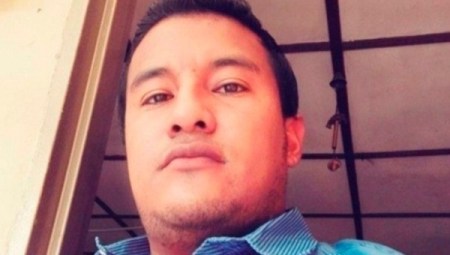
Politician and member of the Yanacona community, William Alexander Joiner, was shot three times and killed Wednesday. | Photo: ONIC
teleSUR – March 3, 2016
An Indigenous lawmaker from Colombia’s southern department of Cauca was shot and killed Wednesday, in what officials think may have been a targeted or political assassination.
William Alexander Joiner, a lawmaker from the municipality of Rio Blanco and member of the Yanacona community, was shot by passing motorcyclists while in the capital of Cauca, Popoyan.
Eyewitnesses reported that the Indigenous governor was shot three times by three riders in the city’s historical center. Joiner was taken to University Hospital, San Jose de Popayan, where he later died.
Col. Pedro Rodelo Asfora, commander of the Metropolitan Police of Popoyan, said a reward of US$3,000 (10 million pesos) will be offered for anyone with information leading to the identification of the culprits.
Colonel Asfora said officials do not believe allegations that it was a robbery, and have not ruled out the possibility that it may have been a targeted attack.
The National Indigenous Organization of Colombia (ONIC), and its offices across the country, have condemned Joiner’s killing, saying it is part of a larger strategy to exterminate Indigenous leaders and people.
The ONIC, with its 47 subsidiaries across the country, as well as the National Indigenous Movement have demanded that the relevant authorities be assigned to investigate the crime, and that the culprits do not go unpunished.
Former Colombia President Alvaro Uribe’s Brother Arrested for Links to Death Squads
teleSUR | February 29, 2016
The brother of former Colombian President Alvro Uribe was arrested Monday accused of having ties with paramilitaries — also known as death squads — in the country as well as other crimes.
Santiago Uribe Velez was arrested in the coastal city of Medellin by officials from the attorney general’s office, who have long been monitoring the former president’s brother.
Velez is accused of forming and developing the paramilitary group known as “Los Doce Apostoles” (The Twelve Apostles) in the 1990s.
According to testimony by officials in the municipality of Yarumal in Velez’ home state of Antioquia, Velez was among a group of farmers who had the idea of forming an armed group to protect traders who were victims of extortion in the region.
The group then created an armed paramilitary unit in the 1990’s that committed various crimes, with the complicity of the Antioquia police department.
Juan Carlos Meneses, chief of police for Yarumal, said that when he arrived to the region in 1993, there was “a group of people doing cleaning, or social cleansing, or disappeared people who identify themselves as guerrillas, as thieves, as kidnappers, extortionists or even if they only had a vice, or vices. The only thing you have to do is, when that group goes to do a job, you have to collaborate with them.”
Meneses added that he would “collaborate” by giving Velez a sum of money every month and pointed out that Velez’ group had the full support of the state and national authorities, reported Colombian daily El Espectador.
While Uribe was president (2002-2010), his administration was tarnished by scandals. This included accusations of housing death squad members at his ranch in the 1980s — some of the most violent times in the country — when he was governor of Antioquia. He was accused of maintaining those ties while leading the country.
Paramilitary groups targeted not only guerrilla fighters, but also political opponents, left-wing activists, as well as academics and have been found guilty of committing numerous human rights abuses.
Even though these groups were technically demobilized between 2003-2006 under an agreement with the government, they continue to be a strong force across the country.
Human rights groups have long demanded that Uribe clarify his role, if any, in the formation of paramilitary groups. However, he has denied all allegations and continues to be active in politics, serving as a senator for the Center Democratic party.
Colombian Army Kills 7 ELN Rebels, Maybe Peace Talks Too?
teleSUR – February 21, 2016
The Colombian army killed at least seven ELN guerrillas in a special operation Saturday that took place near its border with Venezuela – an attack that is sure to have repercussions for the preliminary peace negotiations between the rebel group and the Colombian government.
Two other ELN (National Liberation Army) members were captured in Sunday’s offensive in the northern department of Arauca.
The Colombian Defense Ministry later tweeted that six rebels were successfully “neutralized” in the special operation. Meanwhile, the presidency tweeted a special congratulations to its troops for the “strong blow against the ELN in Arauca.”
According to Army Commander, General Alberto Mejia, the attack was a joint operation between army intelligence, the national air force, the national police and had the full support of the attorney general.
However, the attacks come as the ELN and the government have been trying to undergo preliminary peace discussions in an effort to end the ongoing fighting in the country. The talks have been tense in past weeks as both sides have accused the other of stalling negotiations while aggression on the ground continues.
The ongoing hostilities threaten to put in jeopardy the peace talks between the government and the FARC (Revolutionary Armed Forces of Colombia) rebels – Colombia’s largest guerrilla group – who are aiming to sign a final peace deal by their self-imposed deadline of March 23.
The two sides have been undergoing negotiations in Havana, Cuba, for over three years in an attempt to bring the five decades of fighting to an end, which has seen over 220,000 people killed and millions more displaced or disappeared.
However, there remain several critical factors to actually reaching peace in the country, which include making peace with the second largest guerrilla group in the country, the ELN.
‘Paz Colombia’: the Latest US Attempt to Control Colombia?
By Justin Podur – teleSUR – February 8, 2016
The U.S. has announced funding for a new Plan Colombia as the country moves towards a resolution to its civil war. What is its real purpose?
Colombia’s peace process has entered its final phase. Agreements have been reached on land reform, political participation, and the rights of victims. The discussions are now focused on ending the conflict and implementation and verification of the accords. The deadline for a final agreement is March 23, and it might be met.
In this last phase of negotiations, Colombia’s president reached out to the US for aid. On February 4, a new initiative was unveiled in Washington by presidents Santos and Obama: the new version of Plan Colombia, which they called “Paz Colombia”. Obama began by commemorating the success of Plan Colombia, a plan that brought military helicopters and escalated aerial fumigation to the country. “We were proud to support Colombia and its people as you strengthened your security forces, as you reformed land laws, and bolstered democratic institutions,” he said. “And after 15 years of sacrifice and determination, a tipping point has been reached. The tide has turned.”
Santos elaborated on the successes since Plan Colombia was rolled out in 2000: “Today we can say without a doubt that the goals that we had in 2000 — such as fighting the drug war, strengthening institutions, and imposing the rule of law, and to take social programs to great parts of remote Colombian territory — those objectives have been met.”
The history of Plan Colombia is slightly different than that presented by Obama and Santos. As lawyer Dan Kovalik outlined in this article for teleSUR English, the problems the president’s claim Plan Colombia solved were mostly made worse by it.
Take Santos’s objectives, which Plan Colombia supposedly met: The drug war? There may be a peace agreement between the government and FARC, but the drug war promises to go on and on. The rule of law and the strengthening of institutions? These were certainly areas of struggle over the past 15 years, but any gains made there were fought for by the people, not flown in by the military helicopters of Plan Colombia. Social programs and protections? Many have been lost under neoliberalism – some have been preserved by struggle by Colombia’s movements.
What about Obama’s list? Security forces were strengthened, to be sure. New equipment was introduced and soldiers were trained in its use. But the Plan Colombia years were years of collaboration between the military and the paramilitaries, who were responsible for the most horrific violence. Reformed land laws? The 15 years of Plan Colombia were a time of losses of land and of rights to land. Colombia’s 1991 Constitution was one of the most progressive in Latin America when it came into force. Indigenous and Afro-Colombian territorial rights were enshrined. Paramilitary violence escalated after this constitution, as elites deployed their forces to create facts on the ground: specifically, to use terror and massacre to force people to flee the territories they had just won legal rights to. Millions of people were displaced from their lands in this way. Legal changes under the 15 years of Plan Colombia, the “reformed land laws”, attempted to retroactively legalize this loss of land. As for the bolstering of democratic institutions, it was in the Plan Colombia years that the “para-politica” or “para-Uribe” scandal occurred – evidence of signed contracts between politicians and paramilitaries to kill and displace local people.
There were other scandals too, in the Plan Colombia years. The Colombian security services wiretapping politicians involved in the peace process. The Colombian military entrapping and murdering completely innocent peasants, dressing them up as guerrillas, and using the deaths to inflate the numbers of casualties their units were inflicting (“false positives”).
At the announcement of the Paz Colombia plan, Obama said that the US would support the peace the same way it had supported the war. If this is the plan, it is frightening. When Plan Colombia started in 2000, there was actually a peace process underway between the FARC and the government. It had begun just a year before, in 1999. There is little question that Plan Colombia helped to derail it, steering the Colombian government towards a military solution.
At $450 million USD, the scale of Paz Colombia was reportedly disappointing to President Santos. The original Plan Colombia was announced at $1.3 billion USD, most of which paid for US-manufactured attack helicopters. Colombia paid several times that amount out of its own budget for Plan Colombia. Colombians paid for Plan Colombia, and they will be paying for Paz Colombia.
Those were not the only costs Colombians paid. The environmental and health costs of the spraying are difficult to calculate. In 2008, Ecuador took Colombia to court over the ecological and health damage caused by aerial fumigation on the Colombia-Ecuador border. In 2013, the lawsuit was settled for $15 million, which environmentalists argued was an extreme undervaluation of the damage. The true damages might be in the billions.
Many problems remain. Neither the peace accords nor Paz Colombia deal with the bigger cause of violence over the decades: the paramilitaries. Implementation will be fraught with difficulties. When previous guerrilla groups disarmed and joined politics (Union Patriotica and M-19), they were devastated by state-backed paramilitary assassination campaigns. Unarmed social movements have struggled during the talks, as they did during the war, to get their voices heard and their sacrifices recognized.
But a negotiated end to the armed conflict has long been a demand of these movements, and its realization is to be celebrated. The movements will be the ones fighting to prevent Colombia’s post-war reality from being “mired in structural poverty and violence and endemic corruption”, as Hector Perla wrote in teleSUR last week.
It is not accurate to say that the US is standing with Colombia in peace as it did in war. It might be more accurate to say that the US is trying to control the peace as it controlled the war. If the history of Plan Colombia is a guide, an independent path might yield a better peace.
The Wages of Plan Colombia Have Been Death

United Self-Defense Forces of Colombia (AUC) paramilitaries patrol a small village. The AUC have been responsible for torture, extrajudicial killings, war crimes and crimes against humanity. Photo: Justice for Colombia
By Daniel Kovalik | teleSUR | February 3, 2016
Plan Colombia’s 15th anniversary will be celebrated in Washington Thursday. But the legacy of the plan is marked by massacres, mass graves, and death squads.
According to Colombia’s Victims Unit, the number of victims of Colombia’s civil war has surpassed 7 million. This number includes those who have been killed, disappeared or displaced since 1956. For a country of under 50 million citizens, these numbers are staggering, and certainly newsworthy, but apparently not for the mainstream media.
Of course, the violence and human rights abuses in Colombia have constituted inconvenient truths for the Western media as the U.S. has been a major sponsor of the violence and abuses in that country.
Indeed, a notable fact in the Colombia Victims Unit report is that “that the majority of victimization occurred after 2000, peaking in 2002 at 744,799 victims.” It is not coincidental that “Plan Colombia,” or “Plan Washington” as many Colombians have called it, was inaugurated by President Bill Clinton in 2000, thus escalating the conflict to new heights and new levels of barbarity. Plan Colombia is a plan pursuant to which the U.S. has given Colombia billions in mostly military and police assistance.
As Amnesty International has explained, these monies have only fueled the human rights crisis in Colombia:
Amnesty International USA has been calling for a complete cut off of US military aid to Colombia for over a decade due to the continued collaboration between the Colombian Armed Forces and their paramilitary allies as well the failure of the Colombian government to improve human rights conditions.
Colombia has been one of the largest recipients of US military aid for well over a decade and the largest in the western hemisphere. . . . Yet torture, massacres, “disappearances” and killings of non-combatants are widespread and collusion between the armed forces and paramilitary groups continues to this day. . . .
“Plan Colombia” — the name for the US aid package since 2000, was created as a strategy to combat drugs and contribute to peace, mainly through military means….
Despite overwhelming evidence of continued failure to protect human rights the State Department has continued to certify Colombia as fit to receive aid. The US has continued a policy of throwing “fuel on the fire” of already widespread human rights violations, collusion with illegal paramilitary groups and near total impunity.
Furthermore, after 10 years and over $8 billion dollars of U.S. assistance to Colombia, U.S. policy has failed to reduce availability or use of cocaine in the US, and Colombia’s human rights record remains deeply troubling. Despite this, the State Department continues to certify military aid to Colombia, even after reviewing the country’s human rights record.
However, what Amnesty International did not explain are two salient facts.
First, the human rights group does not mention that Plan Colombia was initiated in the midst of peace talks between the Colombian government and FARC guerillas, and actually played a key role in derailing these talks, and with them the prospects for peace – prospects which have only been revived recently.
Second, Amnesty International does not mention that the paramilitaries which continue to collaborate with the U.S.-backed military in Colombia were actually a creation of the U.S. Thus, these paramilitaries were the brainchild of the Kennedy Administration back in 1962 – that is, two years before the FARC guerillas were even constituted.
As Noam Chomsky has mentioned a number of times, Kennedy commenced the U.S.’s counterinsurgency program, of which paramilitaries were a key component, in order to combat the scourge of Liberation Theology unleashed by Vatican II. And indeed, as Chomsky has also noted, the U.S. School of the Americas has bragged about how it helped “destroy liberation theology,” which emphasizes the “preferential treatment of the poor.”
Colombia has been ground zero for this plan which has targeted, among others, Catholic clergy for assassination. Accordingly, as documented by the Episcopal Conference of Colombia, over 80 Catholic clergy have been murdered in Colombia since 1984 — including 79 priests and 2 bishops — for the crime of advocating on behalf of the poor.
One brave Colombian Liberation Priest, Father Javier Giraldo sent a letter in September of 2011 to the U.S. Ambassador to Colombia, P. Michael McKinley, imploring him to prevail upon President Barack Obama to reconsider his decision to release millions of dollars in military aid to Colombia in light its abysmal human rights record.
In this letter, Father Giraldo informed the Ambassador that Colombian military’s directive known as EJC 3-10 – a directive based upon General Yarborough’s 1962 recommendation to organize paramilitary groups – is still very much in effect today in the form of paramilitary groups which both the U.S. and Colombian governments attempt to dismiss as mere criminal bands known as “BACRIM.”
According to Father Giraldo, these neo-paramilitary groups, as before, continue to work “in close harmony with the Army and Police” to carry out crimes against humanity, including forced displacement, with the number of internally displaced people in Colombia now at over 6 million; extra-judicial killings which have resulted in the proliferation of mass graves throughout Colombia; and “the systematic crime of forced disappearances, which according to national and international agencies now affects more than 50,000 families.”
And, he also places the responsibility for these continued abuses firmly at the feet of the U.S. Thus, Father Giraldo informs the U.S. ambassador that “[t]he current commanders take part in the same immunity, and impunity and the assistance from your government only reinforces their criminal activity.”
As Father Giraldo explains, the U.S.’s military/paramilitary policy is part and parcel of an unjust economic policy which allows for the unconstrained penetration of Colombia by multinational corporations at the expense of the Colombian people. He states:
The permits issued for mining exploitation to numerous transnational businesses have activated paramilitaries and armed conflict tremendously. They are leaving huge populations of poor people without any land or resources. The destruction of the environment and the destruction of indigenous, campesino and Afro-Colombian communities by these projects are leading to every kind of resistance. This means that the security of these companies and of their destructive projects is only effective with the protection of enormous contingents of paramilitaries secretly co-opted by the armed forces and by the government security agencies, which do not hesitate to murder the leaders of the resistance.
Father Giraldo further describes:
The permanent genocide that is being carried out in Buenaventura, where the neighborhoods and the Community Councils around the port are being invaded by paramilitaries supported or tolerated by the armed forces. They cut people in pieces with horrifying cruelty throwing the body parts in to the sea, if any of them dare to resist the megaproject for the new port. This included the expulsion of people living in the poorest areas and it includes the expropriation of the plots of garbage dumps where these people, in the midst of their misery, have over decades tried to survive.
Not surprisingly, Father Giraldo’s prophetic voice fell on deaf ears, and Obama proceeded with the release of the military aid to Colombia. And, it is the deathly silence over the horrifying human rights situation in Colombia which allows the U.S. to continue its destructive military/economic policy in that country.
Colombia: 300 Campesino Leaders Killed in 2015

Campesino leaders say the government is criminalizing their movements and does not protect their rights. | Photo: @marchapatriota
teleSUR – November 21, 2015
At least 300 campesino leaders have been killed in Colombia in 2015, according to Andres Gil, human rights leader and spokesperson of the Marcha Patriotica.
Many of these deaths have come as campesino leaders are attempting to defend their land and their natural resources. Another 7,000 campesino leaders have been jailed.
Land distribution in Colombia is extremely unequal. Less than 1 percent of the population owns roughly half of the land, and 70 percent of the population owns only 5 percent of the land. Campesinos who fight for their land are often risking their lives.
At least three campesinos leaders where killed just in the last two weeks, including the young Afro-descendent leader Jhon Jairo Ramirez Olaya in the Valle region; the environmental and campesino leader Daniel Abril, in the Orinoquia region; and the representative of Afro-descendent victims from Cordoba, Luis Francisco Hernandez Gonzales.
Another young campesino leader allegedly killed by the armed forces last Friday, according to Marcha Patriota.
According to Verdad Abierta — an investigative project on the armed conflict of Colombia’s Semana magazine — Abril accused various state officials of corruption, and was fighting against multiple oil corporations with extensive land interests.
Feliciano Valencia, another indigenous leader from the region of Cauca who was controversially sentenced to 18 years in jail, was also victim of a homicide attempt on Tuesday, as four men opened fire on his home, according to local social organizations.
Still in Cauca, in the end October, the armed forces were recently involved in the murder of indigenous leader Alfredo Bolaño, the 58th victim from security forces in the region, one of the most affected by violence because of its highly fertile lands.
On Friday, the Colombian army killed one campesino and wounded five others after it raided a rural area in what military officials said was an effort to “manually eradicate” illegal coca crops.
According to the local community, the armed forces opened fire on a peaceful march last Thursday in Argelia, Cauca.
The country’s ombudsman Fabian Laverde told teleSUR that this issue was rooted in several causes.
“First, the national government refuses to recognize the existence of paramilitarism. Second, the complaints from the social movements made about situations of threats or concrete actions against residents of these territories have been completely ignored,” he said.
Misrepresentation of the Colombian Conflict
By Matt Peppe | Just the Facts | October 4, 2015
A week and a half ago news emerged from Havana that the FARC (Revolutionary Armed Forces of Colombia) and the Colombian government had reached a framework for a final peace agreement to be signed within six months. This was hailed as a breakthrough in the half-century-old conflict and an opportunity to bring peace to the people of Colombia. But by adopting the government’s narrative, mainstream media have failed to recognize the primary cause of the violence and the inevitability that it will continue in the future.
The decades-long policy of the Colombian government has been a national security strategy of counterinsurgency, developed in the late 1950s under the sponsorship of the US military. The goal of the US government was to maintain a business-friendly political system that would implement economic policies amenable to multinational corporations and foreign capital. Resistance to such policies was deemed subversion, and people who sympathized with such resistance were branded as internal enemies to be eliminated or neutralized by military means.
The narrative of the national security doctrine holds that if the insurgent threat is eliminated, then peace will be restored. The implicit assumption is that the FARC rebels have always been the side standing in the way of peace. According to this interpretation, when the FARC initiated their military operations the state was acting for the benefit of the nation as a whole by organizing a counter response.
But this narrative is historically inaccurate. The Colombian conflict is not a battle of society at large against a group of guerillas, but a battle of a small group of elites controlling the state apparatus against the majority of the population.
“As in many other Latin American countries, we can find the seeds of present-day social inequality and strife in the concentration of Colombia’s land and resources under the control of a tiny minority, matched by the progressive dispossession of the majority of people, which originated with colonialism in the sixteenth century,” explains Jasmin Hristov in her book Blood and Capital: The Paramilitarization of Colombia. [1]
After the FARC developed as the armed wing of the Communist Party in Colombia, the counterinsurgency doctrine – developed by the US military and codified in manuals distributed as early as the 1960s – taught the US’s Colombian counterparts to view any advocacy for social justice or democratic reform as a form of Communist insurgency. In addition to armed rebels, clergy, academics, labor leaders, human rights workers, and other members of civil society became potential insurgent targets.
To further extend their reach into Colombian society, the government legally authorized paramilitarism in 1965 with Plan Lazlo to form “civilian defense forces” armed and incorporated into the Colombian military system. [2] These forces serve the government’s goal of preserving the status quo by carrying out their dirty work through the use of death squads, assassinations, torture, intimidation and disappearances while providing cover and the appearance of distance from the state itself.
The Colombian conflict cannot be understood without recognizing the true nature of the actors involved and the interests they represent. “The paramilitary has never been, and is even less so now, a third actor (the state and the guerillas being the other two), as portrayed in mainstream security discourses,” writes Hristov. [3]
Writing in the New York Times after the peace agreement was announced, Ernesto Londoño declared the “three-way fight among guerilla factions, government forces and right-wing paramilitary bands that often acted as proxies for the state had killed more than 220,000 people and displaced an estimated 5.7 million.”
Dan Kovalik, Professor of International Human Rights at the University of Pittsburgh School of Law, disputes the notion that paramilitaries merely occasionally serve as proxies: “It is impossible to talk about the paramilitaries as separate from the Colombian state, for the Colombian state helped create the paramilitaries, and human rights groups have concluded year after year that the state has provided them with weapons, logistical support and has carried out joint operations with them, Even federal courts confronted with this questions under the Alien Tort Claims Act have concluded that the paramilitaries are sufficiently integrated with the state that their misdeeds constitute state action.”
Aside from inaccurately describing the fighting, Londoño’s statement uses statistics about the cumulative violence without describing who holds responsibility for the deaths and displacements. Later in his editorial, Londoño implicitly blames the FARC for the majority of the violence: “Dozens of victims traveled to Havana to speak about abuses they endured at the hands of the guerilla leaders. Some implicated government forces in brutal acts… The special war tribunals the government intends to start adjudicating crimes will be dismissed as kangaroo courts by those who would have favored a military defeat of the FARC.”
If one accepts the national security narrative that most violence by the government amounts to collateral damage as a result of reaction to insurgent aggression, then guerillas would be responsible for the majority of deaths and injuries. But this is hardly the case.
Kovalik notes that “human rights groups have consistently concluded that the Colombian state and its paramilitary allies commit the lion’s share of the human rights violations in that country – in the worst years, at least 80% of the abuses can be attributed to these forces.”
US Government Intervention and Plan Colombia
Londoño also credits US policy with providing the impetus to achieving peace: “Washington’s forceful intervention in the war, an intervention that began in the late 1990s, enabled the Colombian government to weaken the FARC and ultimately set the stage for peace negotiations.”
Washington’s counterinsurgency policy is seen not only as an instrument for peace, but as the primary factor enabling its achievement. This is stunning historical revisionism that portrays the instigator and sponsor of massive violence that has lasted decades as an honest broker for ending this violence.
In reality, Washington’s intervention began 40 years earlier than Londoño claims, and it created the war that has raged ever since. By any objective measure, US policy in Colombia has been an abject failure. Under US direction, funding and training, the Colombian state has had one of the worst human rights records in the hemisphere. Many human rights organizations attest to this, and have demanded an end to US military aid to Colombia.
“Year after year US policy has ignored the evidence and the cries of the United Nations, Colombian and international non-governmental organizations and the people of Colombia. Plan Colombia is a failure in every respect and human rights in Colombia will not improve until there is a fundamental shift in US foreign policy,” writes Amnesty International USA.
A Human Rights Watch report declared that: “all international security assistance should be conditioned on explicit actions by the Colombian Government to sever links, at all levels, between the Colombian military and paramilitary groups. Abuses directly attributed to members of the Colombian military have decreased in recent years, but over the same period the number and scale of abuses attributed to paramilitary groups operating with the military’s acquiescence or open support have skyrocketed.”
Bogotá professor and historian Renán Vega Cantor, in a study of U.S. involvement in Colombia, writes that: “State terrorism that has been perpetual in Colombia since the end of the 1940s feeds off the military support and financing of the United States, as much as the interests of the dominant Creole classes, to preserve their wealth and power and deny the fulfillment of elemental economic and social reforms that are redistributive.”
What the New York Times and the mainstream media miss in their analysis is that the current neoliberal Colombian sociopolitical system necessitates the continuance of violence to accommodate capital.
“The guerilla was not the cause of the Colombian conflict but rather one of its symptoms, and simultaneously became a contributing factor in the sense that its very existence has provided the ideological substance for the pretext and justification behind state-sanctioned violence and militarization, Thus unfortunately the presence of the guerilla has been used by the powerful to legitimate the onslaught on social forces that challenge the power of the dominant classes,” writes Hristov in her latest book, Paramilitarism and Neoliberalism: Violent Systems of Capital Accumulation in Colombia and Beyond. [4]
Hristov says that in order for the government to meet FARC’s demands, they would have to invest in social programs at the expense of the military-security apparatus currently in place. But since these systems serve the neoliberal economic restructuring that funnels land and resources from the masses to the tiny elite minority, it would be naive to assume this will happen.
“Even in a post-FARC era the state would always have a pretext, such as BACRIM [criminal bands with roots in nominally disarmed paramilitary groups] or the existence of other guerilla groups, to maintain its high level of militarization,” Hristov writes. [5]
The portrayal of the Colombian conflict in the New York Times and other mainstream media replicates state propaganda, in the form of the national security doctrine, while failing to account for the inherent violence of the economic system in Colombia that has driven the perpetual militarism and coercion in the country.
While any agreement offering the prospect of decreased bloodshed is encouraging, the fact that the Colombian state continues to abide by the Washington Consensus and its neoliberal socioeconomic model sadly signifies that the country is inevitably headed for continued violence, dispossession, and suffering by the vast majority of the population.
When the Colombian government and the western media recognize that Washington intervention exacerbates the violence, rather than helps minimize it, then possibly Colombia can begin to extricate itself and pursue a course that will enable the Colombian people to achieve lasting peace and social justice.
References
[1] Hristov, Jasmin. Blood and Capital: The Paramilitarization of Colombia. Ohio University Press; 1 edition, 2009. Kindle edition.
[2] Ibid.
[3] Ibid.
[4] Hristov, Jasmin. Paramilitarism and Neoliberalism: Violent Systems of Capital Accumulation in Colombia and Beyond. London: Pluto Press, 2014. (pg. 153)
[5] Hristov, 2014 (pg. 157)
Matt Peppe writes about politics, U.S. foreign policy and Latin America on his blog. You can follow him on twitter.
Time for President Obama to Free Simon Trinidad
By Tom Burke | teleSUR | September 24, 2015
September 24 marks the day one year ago when the National Victims Table was set up as an important part of the Colombian peace process. Exactly one year later, the Revolutionary Armed Forces of Colombia – People’s Army (FARC-EP) and the Colombian government of Manuel Santos are announcing an agreement on victims and justice, a bilateral ceasefire, and a signing date for the peace agreement.
It is a big step forward for the Colombian peace process, with the issues of prisoners, setting aside arms, and then implementation to be agreed upon next. Although the number of Colombian political prisoners is around 7000, there is one prisoner who stands out because he is held under cruel and unusual circumstances. That is FARC negotiator Simon Trinidad (aka Ricardo Palmera).
Held for 11 years as a political prisoner of the U.S. Empire, the 65-year-old Trinidad is in solitary confinement at the Florence Supermax in Colorado, the “Guantanamo of the Rockies.” Trinidad is a good man who embodies the struggle of the Colombian people for freedom, and the FARC say that without him, they will not sign an agreement.
It is President Barack Obama who can set Simon Trinidad free, to take his rightful place at the Colombian peace negotiations. President Obama can send a loud and clear message that the U.S. backs the peace process. For President Obama, the time to act is now, and it is likely to add momentum to the peace process.
Earlier this week, I marched with thirty-five activists from nine U.S. cities on a rural highway in the Rocky Mountains to demand, “Free Simon Trinidad! Peace for Colombia!” We marched to the modern underground dungeon where prisoners can be held with no human contact for years on end. Across from the guardhouse of the Colorado supermax, we held signs saying, “President Obama free Simon Trinidad!” and “Send Simon Trinidad to peace talks!”
As we marched back up Highway 67 to the small town of Florence, I kept thinking how strange it is, surreal in fact, that our efforts to end the U.S. war and intervention brought us to this place. The scenery is beautiful and breathtaking, but when you think of the men being held underground with no access to sunlight or fresh air, and no other human to talk to, the prison seems doubly vicious, consciously dehumanizing. Only the strongest of people, someone like Simon Trinidad, can persevere under these conditions.
With September 24 being the starting date of the National Victims Table, that date has great significance for me and my friends who organize solidarity with Colombia and Simon Trinidad in particular. For I am one of the Antiwar 23, raided by the FBI in Chicago, Minneapolis, and Grand Rapids, five years ago today. Over 100 FBI agents raided seven homes, scaring our children, and taking away our computers, phones and boxes of whatever else they wanted. When I left our house to write a press release, I realized I was being followed. I drove to my wife’s job where the FBI subpoenaed us to the grand jury in Chicago. It was shocking. Like all of the Antiwar 23, we refused to appear. No witch hunts for us.
I don’t like to think of myself as a victim, but the U.S. government did target us because of our effective organizing. The U.S. government claimed the Antiwar 23 were sending money and providing material support to the FARC and PFLP. The FBI said we faced 15-year prison sentences. However, when the U.S. government spy could not find any evidence, she and her FBI handlers attempted to create a crime. It did not work. We are still organizing solidarity, such as the campaign for a Palestinian American women’s leader “Justice for Rasmea Odeh”.
Over time we learned that the U.S. government political repression began when we protested outside the four trials of Colombian revolutionary Simon Trinidad. Our small group of solidarity activists did our part to expose the injustice of the four trials of Simon Trinidad and the U.S. government was angry with us. We protested and reported to the media on the unfair procedures and rulings. We were there in the courtroom when the cheating Judge Hogan was forced to step down after the first trial. We helped turn what should have been the triumph of the Empire, into a shameful display of corruption.
Today, I find September 24 to be a day for reflection and for re-dedication to the cause of stopping U.S. war and intervention in Colombia and everywhere else too. Plan Colombia is a colossal failure and needs to be brought to an end. We will continue to act in solidarity with the people of Colombia for a lasting peace with justice. We say “Free Simon Trinidad! Peace for Colombia!” Now is the time for President Obama to act.
Tom Burke is the spokesperson for the National Committee to Free Ricardo Palmera (Simon Trinidad)
Background: Who is Simon Trinidad?
Peace in Sight: Historic Agreement between Colombia and the FARC
By Miguel Salazar | Council on Hemispheric Affairs | September 24, 2015
On Wednesday, September 23, 2015, Colombian President Juan Manuel Santos and FARC leader Rodrigo Londoño pledged to end the country’s internal conflict by March 26, 2016.
Ever since La Violencia—Colombia’s infamous civil war lasting from 1948 to 1958—the polarization of the country’s political parties and ideological factions has led to an escalation of a deep-seated violence throughout Colombia. The Revolutionary Armed Forces of Colombia (Fuerzas Armadas Revolucionarias de Colombia, FARC) was initially formed as an armed peasant movement in 1964 that demanded comprehensive land and social reforms. Since then, the government and right-wing paramilitaries have waged a violent conflict against the FARC in rural Colombia that has resulted in a total of 220,000 deaths and over 5.7 million displacements.[i]
Negotiations between the FARC and the Colombian government have been ongoing since 2012, but Wednesday marked President Santos’ first appearance at the peace talks, and the beginning of a more visible role as a major force for concluding the peace accord. The two sides have agreed to create special tribunals to try former FARC combatants as well as government troops and rightist paramilitaries. Those found guilty of human rights violations will be required to pay reparations to their victims and will face a maximum sentence of eight years under special conditions, if they voluntarily opt to cooperate with the judicial process.[ii] Combatants who do not cooperate and are convicted could face much longer sentences. Those who sign the peace deal, accept responsibility, face charges and pay reparations will be safe from extradition if they are wanted by the United States on drug trafficking charges.[iii]
Pressured into the peace talks by the Colombian public, Bogotá has spent billions of dollars on efforts to combat the FARC (the 2015 budget for armed forces and police is $12.2 billion),[iv] while the United States has contributed over $9 billion for military operations since the birth of Plan Colombia in 2000.[v] Meanwhile, the FARC have suffered from sharply diminishing membership numbers (16,000 in 2001 to 7,000 in 2013) over the past decade and a half.[vi]
However, this momentous agreement comes with historical antecedents. The FARC recently demanded an inclusion of right-wing paramilitary groups in the current peace talks.[vii] These were agreed to by President Santos on Wednesday.[viii] Previous administrations have attempted to implement comprehensive demobilization and reinsertion programs with guerrilla groups but have failed due to the exclusion of paramilitary forces. In Colombia’s last peace agreement, the Betancur administration (1982-1986) legalized guerrilla members that accepted the amnesty as political actors in 1985, and the FARC subsequently demobilized and established the Patriotic Union (Unión Patriótica, UP), their political party. However, over 3,000 UP members paid dearly for this tactical mistake; having put down their weapons and rejoined civic life, they were later assassinated by paramilitary elements.[ix]
This changed with the election of President Álvaro Uribe (2002-2010), who refused to negotiate with the FARC and instead opted for supporting talks with the United Self-Defense Forces of Colombia (Autodefensas Unidas de Colombia, AUC), the largest paramilitary group in the country,[x] which has subsequently splintered off into several small criminal gangs.[xi] Since the demobilization of the AUC under Uribe, however, Colombian diplomats had not engaged in peace talks with the FARC until 2012.
COHA is cautiously optimistic about the shift in character of the Colombian government that has allowed for the promise of peace. However, insufficient funding, an inadequate monitoring of demobilized combatants, and a lack of consultation with host communities in the past have impeded Colombia from successfully maintaining peace. Although it has yet to be seen whether these agreements will prove to be successful in the long-term, President Santos’s government and the FARC are to be lauded for having taken a crucial step toward sustainable peace in Colombia.
[i] “World Report 2015: Colombia.” Human Rights Watch. 2015. Web.
[ii] Acosta, Nelson, and Daniel Trotta. “Colombia, FARC Rebels Vow to End 50-year War within Six Months.” Reuters. September 23, 2015. Web.
[iii] Lander, Rose. “Colombia Govt, FARC Agree to Maximum Prison Sentences for War Crimes.” Colombia Reports. September 23, 2015. Web.
[iv] Muñoz, Sara Schaefer. “Colombia Unlikely to Cut Defense Budget If FARC Deal Is Reached, Officials Say.” The Wall Street Journal. January 20, 2015. Web.
[v] Arsenault, Chris. “Did Colombia’s War on Drugs Succeed?” Al Jazeera. May 22, 2014. Web.
[vi] Renwick, Danielle, and Stephanie Hanson. “FARC, ELN: Colombia’s Left-Wing Guerrillas.” Council on Foreign Relations. December 1, 2014. Web.
[vii] Alsema, Adriaan. “The FARC’s Biggest Fear: Colombia’s Paramilitary Groups.” Colombia Reports. July 10, 2015. Web.
[viii] Acosta, Nelson, and Daniel Trotta. “Colombia, FARC Rebels Vow to End 50-year War within Six Months.” Reuters. September 23, 2015. Web.
[ix] Laplante, Lisa J, and Kimberly Theidon. “Transitional Justice in Times of Conflict: Colombia’s Ley De Justicia Y Paz.” Michigan Journal of International Law 28, no. 49 (2006): 59-61.
[x] Ibid: 61-62.
[xi] McDermott, Jeremy. “The BACRIM and Their Position in Colombia’s Underworld.” InSight Crime. May 2, 2014. Web.
Burning cane and planting corn to reclaim territory in southwestern Colombia
By Lisa Taylor – NACLA – 09/15/2015
Sunlight filters through the trees and whiffs of vegetable beef stew float through the air as dozens of women, men and youths of the Nasa indigenous people congregate together in the southwestern Colombian province of Cauca once a month for a “minga.” During the minga – a type of communal work found throughout the Andes – approximately one thousand people clear hundreds of hectares of sugarcane with machetes and controlled fires.
Replacing the “green desert” of monoculture sugarcane with their own crops is part of the “Liberation of Mother Earth” movement initiated in 2005 by the Nasa. Cauca is one of the most militarized provinces in the country, and indigenous communities have been heavily affected by violence from armed groups including state security forces, paramilitaries and guerrillas. After suffering displacement and the exploitation of their lands by multinational corporations, the Nasa are reclaiming their ancestral territory, sowing subsistence crops including corn, beans, plantains and yucca.
“The Liberation of Mother Earth is a strategy for the defense of life; it’s the protection of life. It’s for our community well-being and so, convinced by this ancient struggle, we are here today,” said one representative attending the July minga from the indigenous reservation of Jambaló.*
The newest phase of the Liberation movement began last December when over 3000 Nasa began peacefully occupying seven sugarcane farms in three different municipalities (Corinto, Caloto and Santander de Quilichao) in northern Cauca. On these farms, they discovered various indigenous artifacts buried in the land, relics from previous generations of Nasa who had been displaced over the last century by armed groups and corporate interests. Statistics from the United Nations indicate that 3.1 million internally displaced persons in Colombia have abandoned an estimated 4 million hectares since 1985.
Under a 2000 ruling by the Inter-American Commission on Human Rights (IACHR), certain lands currently occupied by sugarcane farms are legally owed to the Nasa people after the 1991 El Nilo massacre, when 20 indigenous people were assassinated by members of the national police and other unknown armed actors.
The Colombian state agreed to title 15,663 hectares to the Nasa people as part of a collective reparations deal negotiated by the Inter-American Commission on Human Rights (IACHR). After a delay of more than ten years, the government turned over most of the land, but more than half of it is either infertile or located in protected forest reserves. The government argues that as the price of fertile land in the region has tripled in the intervening ten years, the national budget cannot cover purchasing land currently dedicated to sugarcane for reparations owed the Nasa.
When the government failed to fulfill the reparations agreement and guarantee their security – after El Nilo, three similar massacres occurred in 2001 nearby in the River Naya, Gualanday and San Pedro – the Nasa decided to take back their lands independently. They demand at least 20,000 hectares of land for their survival, adequate agrarian policy reform and special economic and social development programs tailored for indigenous peoples, as called for by Colombian government Decree 982 issued in 1999.
“We’re here because it is our right, but also because of necessity,” a representative from the Regional Indigenous Council of Cauca (CRIC) said. “We don’t have anywhere to sow. . .We’re not going to wait for the government to say, ‘here, have this,’ so bit by bit we’re going to go about achieving our own goals and liberating Mother Earth, liberating her from all monoculture crops.”
According to the Association of Indigenous Councils of Northern Cauca (ACIN), 56 percent of children in the region suffer from hunger or malnutrition and 6,000 of 25,000 local families have inadequate land for survival. Meanwhile, less than one percent of Colombia’s population owns 62 percent of all land, and eight sugar company giants possess over 330,000 hectares (about 1274 square miles) of local land which is planted horizon to horizon with sugarcane, used principally to produce foodstuffs, ethanol and molasses for both domestic consumption and export.
The Nasa have concentrated their occupation on the fields owned by INCAUCA, the multinational sugar company owned by Colombian billionaire Carlos Ardila Lülle. They contend his company represents a “transnational model of plunder and agribusiness.” The Nasa criticize this as an unsustainable model of development that depends upon the cultivation of monoculture crops (sugar, bananas, palm oil and flowers) for export.
“The story of capital and of those who accumulate capital is a project of death that ends up destroying all nature, including the lives of human beings. For us, the land is our mother and they are committing a crime against her,” wrote the ACIN in a 2010 statement.
Artisanal sugarcane production arrived in Cauca in 1538 after the Spanish invasion, and by the beginning of the 19th century, the first modern sugar mill was installed by the company Manuelita. Later railway expansion and mechanization led to a production boom in the 1930s and 1940s – a boom that corresponds with the first waves of indigenous displacement.
Although the Nasa’s recent land occupation is peaceful, since last December at least 143 indigenous people have been injured, 37 seriously, by firearms, tear gas, rubber bullets and confrontations with state security forces. On April 10, 19-year old indigenous guard Guillermo Pavi was killed after he was reportedly shot by the Colombian riot police (ESMAD) and the army. With the road blocked, his injuries proved fatal because his companions could not get him to a hospital.
On May 28, riot police attempted to evict people with tanks, tractors and tear gas, announcing over a megaphone that “this one will be worse than El Nilo.” State security forces have also repeatedly burned and destroyed newly planted crops, recently decimating 580 hectares of corn, beans, yucca and plantains in mid-June and returning for a second round of destruction in July.
The Nasa have received threatening letters, phone calls and text messages from neo-paramilitary groups such as the Aguilas Negras that falsely accuse them of being affiliated with guerrilla groups, which still have a strong presence in the region.
“The Aguilas Negras intelligence has a hundred names of people who are doing harm on the farms . . . who support the narco-terrorists [the FARC . . .] It won’t be a surprise when dismembered bodies appear among those Indian sons-of-bitches,” read one written threat.
Despite the attacks, the Nasa remain committed. Maintaining a constant presence and planting crops, they reclaim their territory day by day, hectare by hectare, advocating against the imposition of monoculture agriculture and extractive economic models, arguing that these do not lead to real development but rather the exploitation of the earth and people that can only be ended with the Liberation of Mother Earth.
“The truth is that today nature ought to be quite content because she has begun to feel our presence again,” said a CRIC representative. “Hopefully as soon as possible, we won’t see all of this sugarcane but rather we’ll see fruit, shade, water . . . This is the challenge each one of us has. It’s not easy but it’s not impossible.”
*Interviewees are unnamed at their request to emphasize the movement’s collective nature and because of concerns for their safety.
Lisa Taylor works for Witness for Peace in Colombia.
Venezuela’s Maduro Proposes Cucuta Gasoline Deal, Expands Border Closure
By Lucas Koerner – Venezuelanalysis – September 16, 2015
Caracas – In the lead-up to talks with his Colombian counterpart, Venezuelan President Nicolas Maduro proposed a series of measures aimed at resolving the tense border conflict, including the sale of Venezuelan gasoline in the Colombian border city of Cucuta.
Tensions between the two neighbors have been on the rise since mid-August when Maduro ordered a 60-day closure of sections of the joint border in response to an alleged paramilitary attack on three Venezuelan soldiers in the frontier zone.
As Maduro prepares to sit down with Colombia’s Santos in the coming days, the socialist leader announced Friday the creation of Mission New Border of Peace, which will be charged with expanding all of Venezuela’s social missions established over the previous sixteen years to the border zone.
“This mission is aimed at bringing all of the missions, Homes of the Motherland, Barrio Adentro, Robinson, health and educational missions to teach people there to read and write, [give them their] elementary, secondary, and university education.”
The Venezuelan Head of State also announced a proposal to sell Venezuelan gasoline in the Colombian border city of Cucuta at preferential rates, favoring “cab drivers, workers, professionals, poor people.”
“We are ready to do it, President Santos, as soon as we sit down to talk, because this is how it works, proposal, counter-proposal, conversation, dialogue, and results,” he stated.
Colombian frontier cities such as Cucuta are an estimated 80% dependent on contraband Venezuelan gasoline, which is smuggled across the border at a rate of approximately 100,000 liters daily.
New Border Closures
President Maduro’s initiatives were followed on Tuesday with the announcement of new border closures in ten municipalities along the Colombian border, including seven in the northwestern state of Zulia and three in southwestern Apure state.
These border municipalities, comprising Jesus Enrique Lossada, Rosario de Perija, Machique de Perija, Cañada de Urdaneta, Jesus Maria Semprun, Paez, Catatumbo, Colon, Romulo Gallegos and Pedro Camejo, will be the first to see the roll-out of Mission New Border of Peace, aimed at creating social and economic alternatives to paramilitarism and contraband.
Cross-border smuggling has played a key role in what the President Maduro has termed an economic war against Venezuela, with an estimated 35% of subsidized food items making their way to Colombia.
US, Colombia: Conspiracy against Venezuela
Nil NIKANDROV – Strategic Culture Foundation – 14.09.2015
“Airtec Inc. has been awarded a contract for intelligence, surveillance, and reconnaissance (ISR) services in support of the U.S. Southern Command. The deal is expected to be completed in September 2018. The contractor will provide ISR services utilizing a Bombardier DHC-8/200.
According to José Vicente Rangel, a Venezuelan journalist, the aircraft will be equipped with cutting-edge equipment to effectively survey the border areas of Venezuela.”
The US special services have applied a lot of effort to incite tensions in the “conflict zone” on the border between the two states. There are forces in the ranks of Colombian political and military leadership that are ready to help Washington in its subversive operations against the “main regional adversary”. Colombian President Juan Manuel Santos, a henchman of tycoons’ families, has said many a time that he supports further progress in the “special relationship” with Washington, including military ties. Santos believes that the deployment of seven US military facilities on Colombian soil is a step on the way of engaging Colombian military in NATO activities. Bogota is an integral part of the US plan to restore its dominant position in the region.
Colombia is used to undermine the process of Latin American and Caribbean integration. Nicolas Maduro, the President of Venezuela, displays great tolerance against the backdrop of hostile actions undertaken by Colombia. American supervisors apply no special effort to conceal their involvement. The intention is evident – the opposition is trying to prove tha Maduro’s government is unable to get the national economy back on track and fill Venezuelan stores to meet the legitimate demands of consumers for essentials. Internal sabotage is assisted by the activities of smugglers operating in Colombian territory.
Joint efforts are required to fight smuggling but Colombian border guards do nothing to interrupt the criminal activities often headed by former paramilitares (paramilitaries), the militants of AUC (the United Self-Defense Forces of Colombia). According to Venezuelan counterintelligence, their leaders collaborate with Colombian power structures.

AUC fighters have recently staged a provocation near the border area. They laid an ambush for a Venezuelan patrol in pursuit of smugglers. Shots were fired and three servicemen were seriously wounded. President Maduro immediately introduced the state of emergency in one of the areas near the Colombian border (the state of Táchira) and sealed the border for an uncertain period of time. Police and military reinforcements were sent out to find the attackers. Venezuela launched operations to pinpoint the paramilitares strongpoints – the bunkers serving as prisons for kidnapped people and stashes of smuggled goods. Thirty five militants have been arrested so far. The interrogations provided information on the scale of crimes perpetrated by paramilitares in Venezuela, including even existence of secret burial places. Maduro said the findings about the activities of criminals and armed formations reveal the horrible truth and he, as president, has an obligation to do away with this evil in Venezuela.
His tough stand is justified. The economic war against Venezuela has come to the point when essentials, foodstuffs, hygiene stuffs and medicals evaporate from the stores located in the vicinity of border areas. Everything is taken out of the country – clothes, shoes, car parts, tires and oil production equipment. Filling stations run out of fuel. Gasoline prices are extremely low in Venezuela. It takes only 2 USD to fill a tank. That’s why great quantities of Venezuelan fuel are transported to Colombia along the whole length of the countries’ border. According to official data, the small town of San Cristobal, Táchira’s capital, “has consumed” more gas than Caracas. It has gone far enough. The situation has reached the point when gas smuggling brings more profit to Colombian paramilitares than drug trafficking!

Smuggling thrives because there is a great difference in the prices of consumer goods (Venezuela allocates subsidies to bring the prices down). The rate of bolivar, the Venezuela’s currency, is used for large-scale scams. The Colombian city of Cúcuta has become the center of financial and economic subversive activities. It boasts around three thousand currency exchange shops. The general strategy is to devalue the bolivar. It results in impoverishment of people and increasing discontent in Venezuela.
Cúcuta has always played an important part in conspirators’ plans. The US Defense Intelligence Agency and the Central Intelligence agencies are active there. This is the place where radical cells of Venezuelan opposition get instructions. The leaders of three groups formed especially for anti-Venezuelan activities – El Centro de Pensamiento Primero Colombia» (the Center of Thought Foundation – Colombia First), FTI Consulting (Forensic Technologies International) and La Fundación Internacionalismo Democrático (the Democratic Internationalism Foundation) – hold their meetings there. The anti-Venezuelan conspiracy is led by former Colombian President Alvaro Uribe, who was recruited by the Central Intelligence Agency in mid-80s. The Agency used damaging information. He was number 82 on the list of drug dealers prepared by the US Drug Enforcement Administration. During all eight years of his tenure President Uribe was involved in subversive activities against Hugo Chavez trying to isolate the “Bolivarian regime” in the Western Hemisphere. With good reason the Venezuelan intelligence agencies consider him to be the key figure in the US-led plot to overthrow the “Maduro regime”.
The Sanchez government of Colombia enjoys the support of Western media, especially by the New York Times and the Washington Post. Their editorials say essentially the same thing. They spread the idea that the “border problem” with Colombia has been “invented by Maduro” and this entire hullabaloo is raised with the purpose to ratchet up the Venezuelan President’s support before the parliamentary election. Not a word is said about five and half million Colombians residing in Venezuela, part of them as refugees who fled the civil war, the activities of paramiltares, drug traffickers and smugglers operating on Colombian soil. Venezuela’s Ministry of Foreign Affairs has hit the nail right on the head when it disclosed the purpose of these publications. According to the Ministry, it’s all part of another plot staged by US media against Venezuela and its Bolivarian revolution.
Roy Chaderton, the Venezuelan Ambassador to the Organization of American States, said such Columbian media outlets as El Tiempo, RCN and Caracol radio stations and TV channels, as well as CNN Spanish language broadcasts, incite hatred towards Venezuela and its people. According to him, this hatred campaign could lead to a war. This scenario was avoided because Venezuelan leaders adopted quite different behavior patterns giving “positive signs” to Colombia. The Ambassador called on all the diplomats accredited with the Organization of American States not to trust Colombian media outlets waging a war of the fourth generation.
The US State Department made a statement regarding the closure of the border. It emphasized the humanitarian aspect of the problem and recommended to normalize the situation with the help of regional organizations. It said US diplomats were ready to contribute toward launching a dialogue. But there are different types of diplomats. For instance, according to Contrainjerencia, a respectable website, Kevin M. Whitaker, the US Ambassador to Colombia, served as the head of CIA station in Venezuela in 2006. It’s hard to believe that Whitaker and the like will really do anything positive. They have a quite different missions to carry out.
Featured Video
Theodore Postol: Iran’s Missiles & Drones Were Underestimated
or go to
Aletho News Archives – Video-Images
From the Archives
Wars for Israel: A reminder of who’s giving the marching orders
By Damian Lataan | February 7, 2012
As the West prepares to march off to yet another war in the Middle East, we should perhaps remind ourselves of who is giving the West their marching orders.
In February 2003, just weeks before the US and their allies launched their attack on Iraq and her peoples, a delegation of US congressmen, together with the US Ambassador to the United Nations, John Bolton, a well known pro-Zionist and neoconservative war-hawk, were in Israel at the invitation of the Israeli government then led by Israeli Prime Minister Ariel Sharon.
Addressing the congressmen, Sharon told them ‘that Iran, Libya and Syria should be stripped of weapons of mass destruction after Iraq’. Later, Sharon told John Bolton ‘that Israel was concerned about the security threat posed by Iran, and stressed that it was important to deal with Iran even while American attention was focused on Iraq’. … continue
Blog Roll
 Aletho News
- A New Resistance Front: How Does Syria Factor into the Regional War?
- Gulf states weigh pipeline expansion plans, hoping to bypass Hormuz
- Iran sets up ‘tollbooth’ system in Strait of Hormuz
- Wave 90: IRGC strikes US-linked industrial sites in Gulf
- Iran Says US-Israeli Claims of Its Military Strength Are Wrong
- Trump’s April Fools’ Address to the nation
- The Most Important Bet You’ve Never Heard Of
- The killing of three Indonesian soldiers in Lebanon should remind Jakarta that Israel does not want peace
- Defeated and delusional: Netanyahu’s remarks reveal $80bn war failure, says analyst
- Iran’s friends are about to make life much more difficult for Israel and the US
- If Americans Knew
- Trump says the quiet part out loud: (Israel’s) war on Iran > Americans’ health – Daily Update
- Gaza families reunite years after babies evacuated amid Israel’s war
- International Rescue Committee warns Gaza’s children face grave protection risks
- Iran’s Alleged 47-Year War on America: Debunking the 1,050 American Deaths Canard
- Israel wants US to bomb more of Iran’s civilian structures (113,000 is not enough) – Not a ceasefire Day 173
- Ann Coulter Rips Into Fox News for Iran War Coverage
- Joe Kent Urges Americans To Call White House and Congress To Object To Sending Troops Into Iran
- DNC Resolution to Reject AIPAC Funding Puts Democratic Leaders in the Hot Seat
- Swedish foundation to build 400 schools as over 650,000 Gaza children remain without education for 2 years
- Israeli army admits photshopping image of slain Lebanese journalist
- No Tricks Zone
- Low Intensity Tornado Wrecks Major Solar Farm, Creating A Potential Toxic Dump
- New Study Finds Warming Saves Lives…Cold Temperatures 12 Times More Deadly Than Excess Heat
- German Science Blog Accuses PIK Climate Institute Of Hallucinating Climate Tipping Points
- Devastating Assessment Of Comirnaty Vaccine By Former Senior Pfizer Europe Toxicologist
- New Study: CO2 Is ‘Effectively Negligible’ As An Explanatory Climate Change Factor Since 2000
- Former Pfizer Toxicologist Dr. Helmut Sterz Tells Bundestag Hearing Pfizer Vaccine Should Have Never Been Approved
- Energy Expert: Germany’s Nuclear Phaseout Was A “500 Billion Euro Mistake”
- New Research: South Australia’s Mid-Holocene Sea Surface Temperatures Were 4°C Warmer Than Today
- Storing Green Energy To Last Germany 10 Days Would Require A 60-Million Tonne Battery
- New Studies: UK Sea Levels Were 4 Meters Higher Than Today During The Mid-Holocene
 Aletho News