Healthcare Workers Reject COVID, Flu Shots Amid ‘Tremendous Erosion of Trust’ in Health Agencies
By Michael Nevradakis, Ph.D. | The Defender | November 4, 2024
The number of healthcare workers receiving COVID-19 and flu vaccines declined during the 2023-24 cold and flu season, according to the Centers for Disease Control and Prevention (CDC).
Only 15.3% of acute hospital workers and 10.5% of nursing home personnel received a COVID-19 vaccine during the 2023-24 season — down from 17.8% and 22.8% respectively, the CDC said in its Oct. 31 Morbidity and Mortality Weekly Report.
Based on data from the CDC’s National Healthcare Safety Network, flu vaccine rates for the same healthcare worker groups were higher than COVID-19 vaccine rates — 80.7% for acute care hospital personnel and 45.4% for nursing home personnel.
However, the rates remained “persistently below the levels during the prepandemic period.” For example, the flu vaccine rate for hospital workers in 2019-20 was 91%.
The CDC figures also showed that nearly 1 in 100 healthcare workers reported “a medical contraindication” to receiving either the COVID-19 (0.71%) or flu (0.89%) vaccine. The CDC figures did not provide information on the rate of vaccine side effects reported by healthcare workers.
The CDC said more research is needed “to identify effective strategies to improve vaccination at a time when health care personnel are susceptible to low vaccine confidence.”
Such studies would also seek to improve “confidence about the safety and effectiveness of vaccines among health care personnel through, for example, providing additional education about the safety and effectiveness of vaccination to health care personnel.”
Dr. Jane Orient, executive director of the Association of American Physicians and Surgeons (AAPS), told The Defender the data didn’t surprise her.
“It is no longer possible to deny safety signals and lack of effectiveness,” Orient said. “A large percentage [of healthcare workers] have themselves had several episodes of COVID, had adverse reactions themselves, or know someone who did.”
Pulmonologist Dr. Pierre Kory, founder of the Leading Edge Clinic and president emeritus and co-founder of the Front Line COVID-19 Critical Care Alliance, said the CDC figures represent “a welcome trend” that he hopes will continue. He said:
“Regardless of the reasons for the decline, the data shows healthcare workers’ tremendous erosion of trust in our regulatory agencies. Allowing this distrust to continue will further undermine the public’s confidence in our healthcare agencies.”
Kory noted the symbolism of healthcare workers turning their backs on the COVID-19 vaccine in particular. “If the vaccine is not for us, it is certainly not for them,” Kory said.
Danielle Baker, a certified hospice and palliative care registered nurse injured by the Pfizer-BioNTech COVID-19 vaccine, agreed.
“With the current state of public healthcare, I am not surprised by the figures. In healthcare, there were positions where you agreed to some annual vaccinations upon hire, but the events of 2021 forever shook the core of even that practice,” Baker said.
Dr. Mary Talley Bowden, an ear, nose and throat specialist who was suspended by Houston Methodist Hospital for treating COVID-19 patients with ivermectin, said, “85% of healthcare workers are opting not to get the COVID shots because they know these shots are all risk and no benefit.”
‘Why should we trust you?’
Dr. Marty Makary, a public health researcher at Johns Hopkins University and author of “Blind Spots: When Medicine Gets it Wrong, and What It Means for Our Health,” said the disparity between the CDC’s COVID-19 vaccination recommendations and the actual coverage rate “is telling.”
“It’s also embarrassing for the CDC director [Dr. Rochelle Walensky], who has made pushing the new COVID booster a leading priority of her tenure,” Makary said.
Orient said that doctors and other healthcare personnel who stood up to vaccine mandates and pressure from their employers to get vaccinated “are vindicated” by the CDC’s data “and should be applauded.”
“The message to the public should be obvious,” Orient said. “Why should we trust you?”
Others, though, do not feel vindicated. Sarah Choujounian, co-founder of the Canadian Frontline Nurses, told The Defender that while “many have been awakened to the fact that vaccines are not safe,” she and other nurses who opposed vaccine mandates are still facing professional repercussions.
“This news does not bring vindication as I, amongst many others, am still in court being dragged through a disciplinary hearing for standing up to the corruption and standing up for what is best for our communities,” Choujounian said.
Dr. Danice Hertz, a retired gastroenterologist who was “horribly injured” after receiving the Pfizer-BioNTech COVID-19 vaccine, said lawmakers and policymakers need to open their eyes to the growing distrust of the COVID-19 vaccines by the medical community.
Hertz said:
“I personally have been injured by the Pfizer COVID vaccine. I believed what I was told by our agencies, that these vaccines are safe and effective. I learned the hard way that they were not telling the truth.”
Bowden said that doctors haven’t done enough to speak out. She said:
“Why are physicians not speaking out? Our profession has veered off course, and physicians today are more concerned with protecting their jobs over upholding the Hippocratic oath.
“We have an abundant amount of data showing adverse events from these shots, but we don’t have anyone in authority who will look at the data. Physicians need to get vocal and stand up to the government doctors who have taken over our healthcare system.”
Orient said more doctors are starting to speak out, but “intense indoctrination, financial incentives and fear of ostracism and licensure are huge barriers to overcome.”
Kory said if the medical establishment and the government are to have any hope of reestablishing trust, they need to “recognize the truth about the COVID-19 vaccines. Until that happens, no message from them will be taken seriously, and the little public trust left in these institutions will eventually be gone.”
Baker said he believes the public has reached a point where they no longer need to look to healthcare professionals for an answer when it comes to COVID-19 vaccination. He said:
“People pay attention. The mass media messages, governmental overstep, blanket mandates, lack of agency support for those adversely affected and unwillingness to see and hear responses to these things have caused an implosion.
“Enough of the general public has reached a consensus when it comes to this particular shot from the collective set of experiences over the past years.”
CDC data leave unanswered questions
The CDC data — self-reported by hospitals and nursing home facilities — also demonstrated regional differences in vaccine uptake. COVID-19 vaccine update was highest in the Pacific region and lowest in the Mountain and Southern states.
For the flu vaccine, uptake was highest in the Mountain region and lowest in the Pacific region for acute care hospital employees, while for nursing home personnel, uptake was highest in the Northeast and lowest in the South.
Figures for the current respiratory illness season are not yet available.
Pediatrician Dr. Michelle Perro told The Defender the data still leaves some unanswered questions.
“One criticism is that it did not delineate which types of healthcare employees were opting out of the flu and COVID vaccines. It appears that this data may not have been readily available,” Perro said.
This article was originally published by The Defender — Children’s Health Defense’s News & Views Website under Creative Commons license CC BY-NC-ND 4.0. Please consider subscribing to The Defender or donating to Children’s Health Defense.
RIPPLE EFFECT
The HighWire | October 31, 2024
Jefferey Jaxen Guest Hosts! First, the continued demise of legacy media and the rise of new media delivering the truth; Jefferey reports on a massive Alzheimer’s fraud, and is the UK going to mandate weight loss injections?; Fluoride Win Attorney Walks through Video Depositions and Evidence Exposing Fluoridation as one of the most damaging public policies in American History.
Guest: Michael Connett, Esq.
House Floats Law to Make Colleges That Mandated COVID Shots Pay for Vaccine Injuries
By Suzanne Burdick, Ph.D. | The Defender | October 30, 2024
Colleges that mandated the COVID-19 vaccine would be liable for medical expenses for students who experienced adverse events from the shot, under a bill introduced Tuesday in the U.S. House of Representatives.
The University Forced Vaccination Student Injury Mitigation Act of 2024 would require higher education institutions to cover medical costs for students who were — or still are — required to get a COVID-19 shot for class attendance and who experienced an injury.
The bill — introduced by Rep. Matt Rosendale (R-Mont.) — stipulates colleges must cover the medical costs or risk losing all federal funding from the U.S. Department of Education.
“If you are not prepared to face the consequences, you should have never committed the act,” said Rosendale in a press release. “Colleges and universities forced students to inject themselves with an experimental vaccine knowing it was not going to prevent COVID-19 while potentially simultaneously causing life-threatening health defects like Guillain-Barré Syndrome and myocarditis.”
“It is now time,” Rosendale added, “for schools to be held accountable for their brazen disregard for students’ health and pay for the issues they are responsible for causing.”
Reps. Eli Crane (R-Ariz.) and Bill Posey (R-Fla.) co-sponsored the bill.
Dr. Joseph Marine, professor of medicine at the Johns Hopkins University School of Medicine, explained in the press release why he supports the bill:
“COVID-19 vaccine mandates for college students were flawed policies that did not alter the course of the pandemic and were not needed to keep college campuses ‘safe.’ I had to make efforts to prevent my own high school and college-age children from receiving COVID-19 booster shots that they did not want or need.
“It seems reasonable to me that institutions that implemented such policies without a sound medical or scientific rationale should take responsibility for any proven medical harm that they caused.”
If passed, the bill would allow students to submit a formal request for reimbursement, the Washington Examiner reported.
The request would have to include a record of COVID-19 vaccination, certification from a medical provider that the vaccine caused some kind of disease and a detailed account of related medical expenses.
Diseases covered by the legislation include myocarditis, pericarditis, thrombosis with thrombocytopenia syndrome, Guillain-Barré syndrome and any other diseases that the U.S. Secretary of Education determines to be linked to COVID-19 vaccination.
After the student’s request is vetted to ensure it’s valid and contains sufficient evidence, the college would have to pay the medical costs within 30 days.
It is unclear when a vote on the bill will take place.
CHD took college mandate challenge to U.S. Supreme Court
Rutgers University was the first college or university in the U.S. to mandate the vaccines, threatening to disenroll noncompliant students in the fall 2021 semester. In August 2021, Children’s Health Defense (CHD) sued the university in an attempt to block the mandate.
The case was dismissed in January 2023. After losing on appeal in February, CHD in May asked the U.S. Supreme Court to hear the case, but the court declined. Meanwhile, a month earlier, Rutgers abruptly ended the mandate.
Meanwhile, a federal appeals court this summer ruled that employees in the Los Angeles Unified School District can sue the district over its COVID-19 vaccine mandate because the shots don’t prevent transmission.
The Centers for Disease Control and Prevention (CDC) acknowledges that myocarditis and pericarditis may occur after COVID-19 vaccination. And research shows that adolescents and young adults are particularly at risk of vaccine-induced myocarditis.
As of Sept. 27, there were 1,604,710 Vaccine Adverse Event Reporting System (VAERS) reports of injury or death following a COVID-19 vaccination.
VAERS is the primary mechanism for reporting adverse vaccine reactions in the U.S. Reports submitted to VAERS require further investigation before confirming the reported adverse event was caused by the vaccine. VAERS has historically been shown to report only 1% of actual vaccine adverse events.
Meanwhile, citing concerns about the shots’ efficacy and safety, Idaho’s Southwest District Health last week voted to no longer offer COVID-19 vaccines at all 30 locations where it provides healthcare services.
17 colleges still have COVID vaccine mandates
By late May 2021, more than 400 U.S. colleges and universities required students to be vaccinated against COVID-19, The New York Times reported.
As of Oct. 19, 17 of those institutions still have a COVID-19 vaccination requirement for students to be able to enroll or live on campus, according to No College Mandates, a “group of concerned parents, doctors, nurses, professors, students and other college stakeholders working towards the common goal of ending COVID-19 vaccine mandates.”
Lucia Sinatra, co-founder of No College Mandates, said in the press release:
“College students were never at risk of severe injury or death from any variant of the COVID-19 virus and institutions of higher education had this data well in advance of mandating COVID-19 vaccines.”
According to the CDC, age is the “strongest risk factor” for severe outcomes from COVID-19 — meaning that the older a person is, the greater their risk for severe symptoms and death.
The CDC said its National Center for Health Statistics shows that “compared with ages 18–29 years, the risk of death is 25 times higher in those ages 50–64 years, 60 times higher in those ages 65–74 years, 140 times higher in those ages 75–84 years, and 340 times higher in those ages 85+ years.”
In other words, the typical college student — ages 18-22 — isn’t usually at risk of severe disease or death from COVID-19 when compared with older age groups.
Nonetheless, Sinatra said, many colleges imposed “some of the most coercive and restrictive vaccination policies” on college students, stripping them of their “fundamental right to bodily autonomy and informed consent.”
This article was originally published by The Defender — Children’s Health Defense’s News & Views Website under Creative Commons license CC BY-NC-ND 4.0. Please consider subscribing to The Defender or donating to Children’s Health Defense.
Idaho Health Board First in U.S. to Defy CDC and FDA by Removing COVID Vaccines From Clinics
By Suzanne Burdick, Ph.D. | The Defender | October 29, 2024
Idaho’s Southwest District Health will no longer offer COVID-19 vaccines after its board voted 4-3 last week to pull the shots from the 30 locations where it provides healthcare services.
“It’s the first health agency in America to do that,” Laura Demaray, a Southwest Idaho resident and nurse who attended the Oct. 22 vote, told The Defender.
Miste Karlfeldt, executive director of Health Freedom Idaho, agreed that the board’s vote is historic. “It’s thrilling,” she told The Defender.
The board’s vote came after it received about 300 public comments urging the district, which encompasses six counties, to stop promoting the shots.
Just before the board voted, members heard presentations from cardiologist Dr. Peter McCullough, pathologist Dr. Ryan Cole, pediatrician Dr. Renata Moon and obstetrician and gynecologist Dr. James Thorp on safety concerns related to the COVID-19 vaccines.
Dr. John Tribble, the board’s only physician, invited them to speak.
“Dr. Tribble was a very brave board member who is very aware of the harms of the COVID injection,” said Demaray. “He asked me to help gather the presenters.”
Demaray, who said she knows many people injured by the COVID-19 vaccines, and others reached out to experts who could present data related to COVID-19 vaccine harms to the board. “It was total teamwork.”
Mary Holland, Children’s Health Defense CEO, applauded the board’s action:
“After hearing from 300 constituents, listening to well-informed physicians and assessing the public record, the Southwest Idaho Health District Board made an informed decision not to stock its own clinics with COVID shots.”
Demaray and Holland pointed out that the board didn’t take away anyone’s freedom to get a COVID-19 vaccine. “If residents want, they can obtain the shots from other pharmacies and doctors’ offices,” Holland said.
Demaray said the board’s decision showed “there’s some distrust in this shot.” She added:
“If a health district is giving a shot in their own clinics, then it means they believe in the shot and they don’t think somebody will get hurt. It means they support it tacitly.”
Holland said, “The Health District Board was conveying its values to the public — ‘these products are unsafe and we do not promote them’ — and the board was within its authority to do this.”
A precedent for other health agencies?
Tribble told The Defender some of the backstory leading up to the historic vote. “The people of this district were demanding answers,” he said. “Many came forward with heartbreaking stories of vaccine injury.”
After listening to its residents, the board members felt it was important to allow “the free and open discussion and evaluation of the evidence for and against the safety and efficacy of the COVID-19 vaccine.”
In addition to hearing presentations from McCullough, Moon, Cole and Thorp, the board also heard from district staff physician Dr. Perry Jansen who recommended keeping the vaccine on the district’s clinic shelves.
“In the end,” Tribble said, “the evidence clearly showed a lack of safety and efficacy as it compares to the risk from COVID-19 and their [the board members’] decision reflected that.”
The board members who voted to remove the shot “exhibited courage” because they did so “based on the evidence, in direct opposition to the federal health agencies’ recommendations.” Tribble said:
“I believe our actions here stand as an example and precedent for other health agencies to take back control of their health and freedoms from a corrupted federal system. I hope this will inspire other health agencies to openly discuss this issue and evaluate the evidence for themselves.”
‘That is how you open up a can of truth’
Karlfeldt said she’s confident the board’s landmark decision will embolden other health administrators across Idaho and the rest of the U.S. to make similar moves.
Demaray agreed. She said she already heard from two other Idaho health districts that are now considering pulling the COVID-19 shots from their clinics after learning of the Southwest District’s vote.
Demaray encouraged other U.S. citizens to reach out to their local health board members, asking them to review the safety information on the COVID-19 vaccines.
Many federal health agency leaders are captured by industry, but that’s not the case with most local-level health officials, Demaray said. “They aren’t all bought out yet.”
“If you bring your local doctors like Dr. Tribble — or Dr. Cole, Dr. McCullough, Dr. Moon and Dr. Thorp — if you bring them and they make presentations, it is public record and your community gets to see that,” she said.
“That is how you open up a can of truth,” Demaray added.
There’s a lot of power at the local level because while the Centers for Disease Control and Prevention (CDC) recommends COVID-19 vaccines and the U.S. Food and Drug Administration (FDA) approves them, it’s typically the local agencies that adopt policies to promote them.
Holland said, “Sadly, people need to accept that they cannot trust the federal government anymore when it comes to their health.”
VAERS: 1.6 million reports of injury or death after COVID vaccination
Nicolas Hulscher, an epidemiologist at the McCullough Foundation, commended the board for its action.
“Southwest Idaho Health District has made the correct and brave choice to remove COVID-19 injections from their clinics,” Hulscher said. “The updated boosters were never tested in humans, while previous iterations have demonstrated that they’re not safe for human use.”
Hulscher noted that Boise State Public Radio’s coverage of the vote labeled the presentations by McCullough and others as “anti-vaccine.”
The Boise State Public Radio article — which referred to McCullough and the other presenters as “doctors widely accused of spreading conspiracy theories and misinformation” — appeared to “blindly favor COVID-19 vaccines,” he said, “while ignoring deeply worrisome safety data.”
For instance, the number of injuries and deaths reported to the Vaccine Adverse Event Reporting System (VAERS) following COVID-19 vaccination continues to climb.
VAERS is the primary mechanism for reporting adverse vaccine reactions in the U.S. Reports submitted to VAERS require further investigation before confirming the reported adverse event was caused by the vaccine. VAERS has historically been shown to report only 1% of actual vaccine adverse events.
As of Sept. 27, there were 1,604,710 VAERS reports of injury or death following a COVID-19 vaccination.
The board’s vote has helped create greater public awareness that the COVID-19 shots “are massively injurious gene therapy products,” Holland said.
Tribble agreed:
“People need to understand that these shots are not vaccines by the traditional definition. That is to say, they do not impart immunity or prevent transmission.
“They were rushed to market, given legal immunity and coercively pushed upon the world’s population backed by unfounded fears spread by governments and media.”
Moreover, the safety and efficacy data we have is limited and primarily released by the same vaccine companies that stood to make hundreds of billions of dollars off of these injections, Tribble added.
“This experiment with mRNA gene therapy during COVID-19 will be shown to be one of the most egregious examples of democide in world history,” he said.
This article was originally published by The Defender — Children’s Health Defense’s News & Views Website under Creative Commons license CC BY-NC-ND 4.0. Please consider subscribing to The Defender or donating to Children’s Health Defense.
NIH Spending $2.2 Million to ‘Nudge’ Elderly to Get More Vaccines
By Brenda Baletti, Ph.D. | The Defender | October 29, 2024
Using U.S. taxpayer dollars, researchers at two universities are identifying older people behind on their recommended vaccines and testing personalized “nudges” to coax them into getting more shots. nih-nudge-more-vaccines-feature.jpg
According to grant documents obtained by Children’s Health Defense (CHD) via a Freedom of Information Act (FOIA) request, the National Institutes of Health (NIH) is funding the $2.2 million “BE IMMUNE” clinical trial, which began in 2020 and will run through 2025.
Researchers at the University of Pennsylvania and the University of Washington are using Electronic Health Records (EHR) data — the electronic records from doctors’ offices containing patients’ detailed health and demographic data — to target African American, Hispanic and Asian people with lower flu, pneumococcal and herpes zoster vaccination rates.
The ongoing study blames the “poor vaccination rates” on patients’ and clinicians’ “widespread decision-making biases.” The trial is testing strategies drawn from behavioral economics, which uses insights from psychology to understand — and in this case to “nudge” or direct — people’s decision-making behavior.
The randomized controlled study is headed up by Dr. Shivan Mehta and a team of healthcare management experts who combine medical and business-based strategies to run studies like these.
The trials often are based in Penn Medicine’s in-house “Nudge Unit,” where behavioral design teams are dedicated to figuring out how to influence patient choices.
The grant is part of a massive initiative by the NIH to increase vaccine uptake by changing how people make decisions. The initiative has included hundreds of millions of dollars in grants since 2020 to create “culturally tailored” pro-vaccine materials to promote COVID-19 and flu vaccines.
It also included more than 50 grants worth $40 million designed to increase HPV vaccine uptake.
Testing the ‘ladder’ of behavioral interventions
The study is testing different “nudges” at more than 100 primary care practices at Penn Medicine, University of Washington Medicine and the Veterans Affairs Health System, one of the world’s largest EHR vendors in the world.
Over 1,000 primary care physicians and thousands of eligible patients at those practices are involved in the trial.
The range of tested interventions is scaled on a ladder.
Nudges lower on the ladder try presenting people with information so they can make their own decisions about vaccines —- methods that typically are not very effective for increasing vaccine uptake, the researchers said.
Nudges higher on the ladder either prompt people to make decisions, or simply plan their decisions for them.
For example, one nudge automatically sets up vaccination appointments for people, compelling them to go to their appointment and get vaccinated unless they intentionally opt out.

The “opt-out” framework has been effective in other areas of healthcare, such as colorectal cancer screening or persuading more people to take their flu shots, the researchers reported.
Netflix uses prompts to encourage binge-watching — healthcare should prompt people to get more shots
Penn’s “Nudge Unit,” which bills itself as the “world’s first behavioral design team embedded within a health system,” houses the study, which is also being conducted in a similar unit at the University of Washington.
Economist Richard H. Thaler and legal scholar Cass R. Sunstein popularized nudging in their 2008 book, “Nudge: Improving Decisions About Health, Wealth, and Happiness” as a method to create a “choice architecture” designed to influence people’s behavior in a predictable way “but without restricting choice” — particularly for policies or measures that might otherwise be unpopular.
Penn launched its Nudge Unit in 2016, inspired by British Prime Minister David Cameron’s Nudge Unit, established in 2010 to shape citizen behavior in the United Kingdom — a strategy the Penn researchers thought should also be applied to healthcare.
Penn’s Nudge Unit founders argued in a 2018 New England Journal of Medicine article that healthcare should use the same strategies businesses use to influence consumer behavior.
For example, they said, airlines require consumers to actively choose whether to purchase trip insurance before they can buy a plane ticket. Netflix changed its default settings to automatically play the next episode in a TV series to encourage binge watching.
“Similar opportunities exist to direct clinicians and patients toward better health care in situations where there’s consensus about desired behaviors,” they wrote, citing effective drugs, vaccines and targeted therapies as examples.
The strategy is being implemented globally — management consulting firm McKinsey reported that about 400 “nudge units” had been established globally by 2021.
However, even the Bill & Melinda Gates Foundation-backed Gavi concedes, “the theory has its critics — detractors argue that nudges can be paternalistic, invasive, ideological, and coercive in ways that erode public trust.”
The researchers behind this study also found that often the nudge approach doesn’t work.
In those cases, they argue “a stronger intervention—a ‘shove’—may be needed.”
EHR — an opportunity to scale up the nudge
The researchers celebrated EHR for offering a unique opportunity to develop and rapidly scale up personalized nudges.
The records increasingly are used for research and clinical trial recruitment because they contain a wealth of data. And new technological tools now allow researchers to “mine, assimilate, analyze, link, reproduce and transmit information” gleaned from that data.
Twila Brase, a registered nurse and author of “Big Brother in the Exam Room: The Dangerous Truth about Electronic Health Records,” told The Defender most people think the privacy of their EHR is protected by the Health Insurance Portability and Accountability Act, better known as HIPPA — but that’s not the case.
HIPPA only guarantees your data will be secure as it is passed among the various entities that have access to it, including researchers, Brase said. And that access can be provided without your consent.
“Nowhere in the law does HIPPA give you control over your medical records,” she said.
Because the records contain massive amounts of personal information that can be used and linked in many different ways, researchers studying EHR-based research argue that the use of EHR also raises “pressing questions concerning privacy, confidentiality, and patient awareness.”
They say that the use of one’s EHR data for research reasons can be confusing or even impossible to opt out of because often the provision of healthcare is linked to accepting a policy allowing researchers to use EHRs.
And EHR research often operates on the same logic as the nudge — an “opt-out” approach where permission is assumed unless a patient explicitly indicates they want to revoke it.
This article was originally published by The Defender — Children’s Health Defense’s News & Views Website under Creative Commons license CC BY-NC-ND 4.0. Please consider subscribing to The Defender or donating to Children’s Health Defense.
Despite Concerns About ‘Vaccine Fatigue,’ CDC Recommends Extra COVID Boosters, Including for Some Infants
By Brenda Baletti, Ph.D. | The Defender | October 24, 2024
Advisers to the Centers for Disease Control and Prevention (CDC) on Wednesday recommended two COVID-19 boosters during the 2024-2025 season for people ages 65 and older and for younger people who are moderately or severely immunocompromised.
The Advisory Committee on Immunization Practices (ACIP) also recommended that immunocompromised people ages 6 months and older take “additional doses” of the shot — three or more — based on shared clinical decision-making between doctor and patient.
The vote for all three new COVID-19 vaccine recommendations was unanimous.
The committee also voted 14-1 to recommend Pfizer and Merck’s pneumococcal conjugate vaccines — designed to protect against meningitis and pneumonia — for all adults who have never received the vaccine ages 50 and older, lowering the recommended age from 65.
The U.S. Food and Drug Administration in June approved Merck’s Capvaxive for prevention of invasive pneumococcal disease and pneumococcal pneumonia in adults.
The vote expands the market for both companies, who will now be able to market their vaccines to millions more eligible adults, boosting their annual revenues by hundreds of millions of dollars, FiercePharma reported.
CDC Director Mandy Cohen endorsed the recommendations after the meeting, making them official CDC recommendations.
“CDC will continue to educate the public on how and when to get their updated vaccinations so they can risk less severe illness and do more of what they love,” Cohen said.
“ACIP loves advising that people receive the most vaccines possible,” internist Dr. Meryl Nass told The Defender.
She added:
“When ACIP talks about shared decision-making, what they mean is this: ‘We lack the data to recommend this vaccine for this group, so we could be criticized (or worse) for making an unscientific recommendation. But we really want you to have it.’
“So we think the patient and doctor (who is much less educated about the minutiae regarding the vaccine than the ACIP members are) should together decide whether the patient should get it. That way we protect ourselves while maximizing the number of jabs.’”
Nass said that if ACIP members were serious about shared clinical decision-making, “They would put all their thoughts down so clinicians could become educated and then jointly evaluate the risks and benefits with patients.”
The committee also voted unanimously to add high-dose and adjuvanted flu vaccines to the Vaccines for Children Program — which provides free vaccines to children whose families can’t afford them — for transplant recipients taking immunosuppressive medications.
ACIP is described as an independent, nonfederal expert body of professionals with clinical, scientific and public health expertise. The committee decides which vaccines should be recommended to the public, who should take them and how often.
In practice, most members have financial ties to vaccine makers that they don’t consider to be conflicts of interest. For example, in Wednesday’s meeting, paid Merck consultant and researcher Noel Brewer, Ph.D., declared “no conflict” before voting to recommend Merck’s vaccine.
More recommendations may ‘exacerbate existing vaccine fatigue’
The CDC said that in the 2023-2024 COVID-19 season, only 8.9% of people over age 65 and 5.4% of immunocompromised adults age 18 and older had received two boosters.
The presenter, Dr. Georgina Peacock, said there was “obviously a need for additional education and recommendations,” but raised concerns that additional recommendations “may also exacerbate existing vaccine fatigue.”
Ruth Link-Gelles, Ph.D., presented COVID-19 vaccine efficacy data that provided the rationale for the new recommendations. Efficacy is affected by time since the last booster dose, changes in COVID-19 variants and the time since someone was last infected with COVID-19, she said.
Link-Gelles said those are hard to disentangle, especially given that all adults have high rates of infection-induced immunity. Infection-induced immunity rates ranged from 72% for people over age 65 to 89% for those ages 16-49 and 84% for those ages 50-64.
In adults over 65, she said protection waned to zero against emergency room visits and hospitalization by four to six months and was somewhat more effective against critical illness.
She also said that additional education alone wasn’t effective in increasing uptake.
Waning efficacy: an argument for more shots or proof of natural immunity?
Link-Gelles presented a slide that showed COVID-19 vaccine effectiveness waned significantly among people ages 18-64, beginning at 30% and dropping to negative 15% by six months post-vaccination.
When pressed on how to interpret the negative efficacy, she said, “There is no biological plausibility for the vaccine increasing your risk of disease.”
Vaccine effectiveness data is relative, meaning it’s a measure of how much more protection a vaccinated person has than an unvaccinated one, she said. Therefore, “what we think is happening” is that unvaccinated people were getting natural immunity during that time, giving them more robust immunity and skewing the baseline for comparison.
Because vaccine efficacy is a comparison of the disease in the vaccinated versus the unvaccinated, if the efficacy is negative, “then the unvaccinated have more protection than the vaccinated,” Karl Jablonowski, Ph.D., senior research scientist at Children’s Health Defense, told The Defender.
Jablonowski pointed out that Link-Gelles suggested the unvaccinated are exposed to wild-type COVID-19 and then gain immunity, compared with the vaccinated who would not gain that same wild-type immunity.
“What Dr. Link-Gelles is not entertaining, that which she sees ‘no biological plausibility,’ is the possibility of diminishing immune health of the vaccinated,” he said.
Jablonowski added:
“Both scenarios reduce the infections in the unvaccinated relative to the vaccinated. Either scenario points to the same conclusion, that the unvaccinated have superior long-term (180-299 days) immune health when facing the COVID-19 pandemic.
“More broadly, you cannot present VE [vaccine efficacy] analysis as a valid assessment of how well a vaccine works and then disregard the analysis when it shows the vaccine is not working.
“It is clear, from CDC’s own data and presentation, that the vaccinated had a higher long-term incidence of disease than the unvaccinated.”
Watch the Oct. 23 ACIP meeting here
This article was originally published by The Defender — Children’s Health Defense’s News & Views Website under Creative Commons license CC BY-NC-ND 4.0. Please consider subscribing to The Defender or donating to Children’s Health Defense.
The Most Devastating Report So Far
By Jay BhattacharyaJayanta Bhattacharya | Brownstone Institute | October 27, 2024
The House report on HHS Covid propaganda is devastating. The Biden administration spent almost $1 billion to push falsehoods about Covid vaccines, boosters, and masks on the American people. If a pharma company had run the campaign, it would have been fined out of existence.
HHS engaged a PR firm, the Fors Marsh Group (FMG), for the propaganda campaign. The main goal was to increase Covid vax uptake. The strategy: 1. Exaggerate Covid mortality risk 2. Downplay the fact that there was no good evidence that the Covid vax stops transmission.
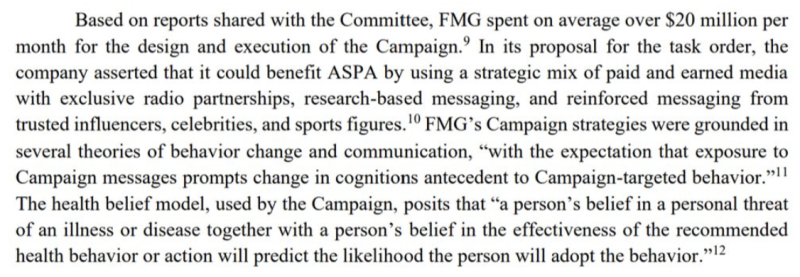
The propaganda campaign extended beyond vax uptake and included exaggerating mask efficacy and pushing for social distancing and school closures.
Ultimately, since the messaging did not match reality, the campaign collapsed public trust in public health.
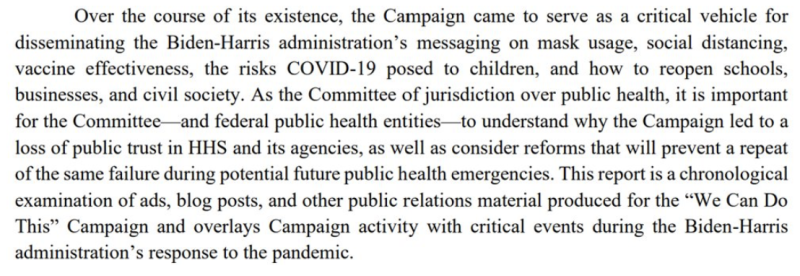
The PR firm (FMG) drew most of its faulty science from the CDC’s “guidance,” which ignored the FDA’s findings on the vaccine’s limitations, as well as scientific findings from other countries that contradicted CDC groupthink.
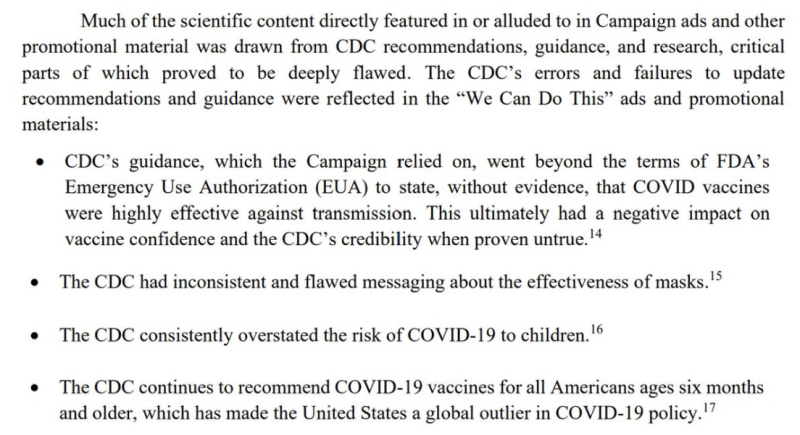
The report details the CDC’s mask flip-flopping through the years. It’s especially infuriating to recall the CDC’s weird, anti-scientific, anti-human focus on masking toddlers with cloth masks into 2022.
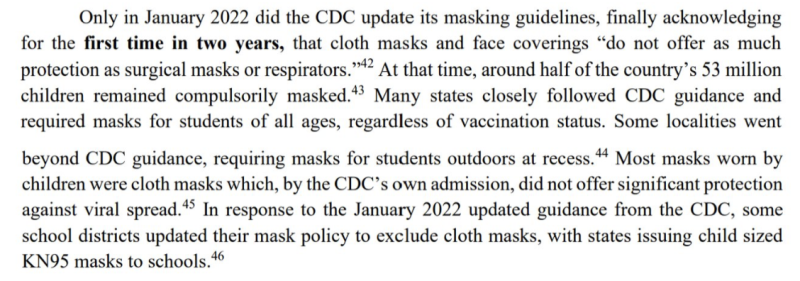
President Biden’s Covid advisor Ashish K. Jha waited until Dec. 2022 (right after leaving government service) to tell the country that “[t]here is no study in the world that shows that masks work that well.” What took him so long?

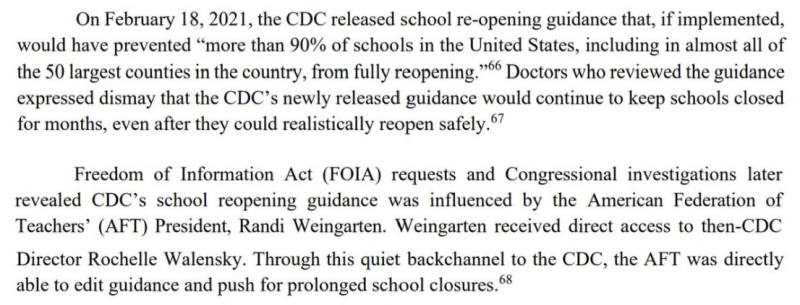
In 2021, former CDC director, Rochelle Walensky rewrote CDC guidance on social distancing at the behest of the national teachers’ union, guaranteeing that schools would remain closed to in-person learning for many months.
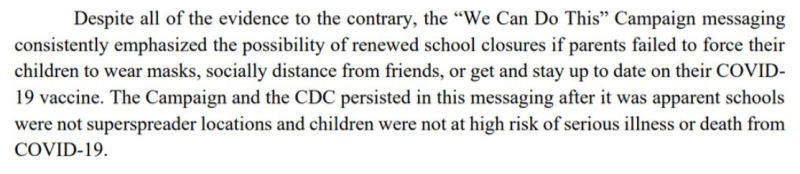
During this period, the PR firm FMG put out ads telling parents that schools would close unless kids masked up, stayed away from friends, and got Covid-vaccinated.
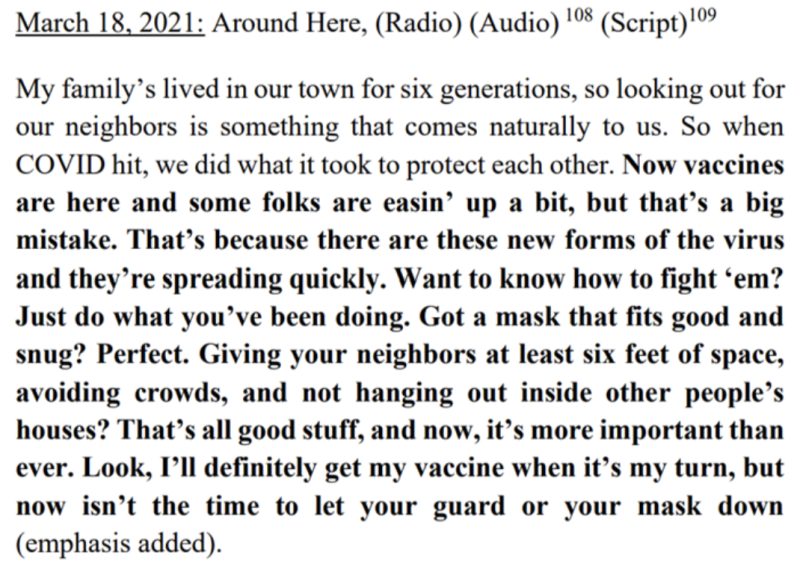
In March 2021, even as the CDC told the American people that the vaxxed did not need to mask, the PR firm ran ads saying that masks were still needed, even for the vaxxed. “It’s not time to ease up” we were told, in the absence of evidence any of that did any good.
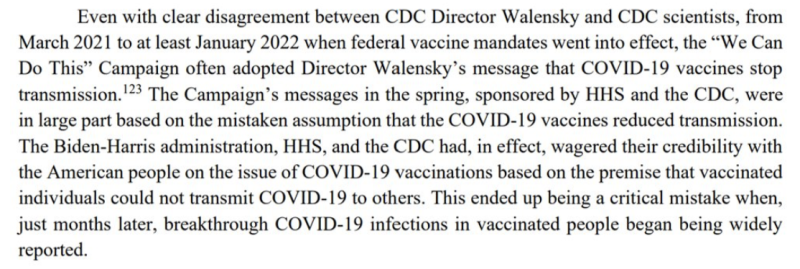
In 2021, to support the Biden/Harris administration’s push for vax mandates, the PR firm pushed the false idea that the vax stopped Covid transmission. When people started getting “breakthrough” infections, public trust in public health collapsed.
Later, when the FDA approved the vax for 12 to 15-year-old kids, the PR firm told parents that schools could open in fall 2021 only if they got their kids vaccinated. These ads never mentioned side effects like myocarditis due to the vax.
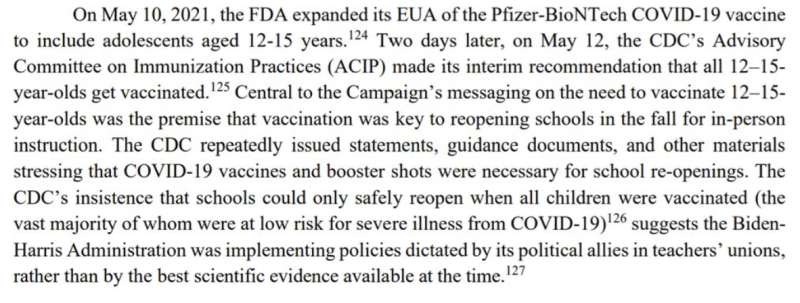
HHS has scrubbed the propaganda ads from this era from its web pages. It’s easy to see why. They are embarrassing. They tell kids, in effect, that they should treat other kids like biohazards unless they are vaccinated.
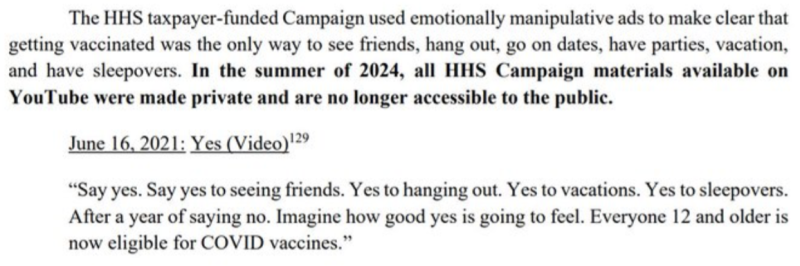
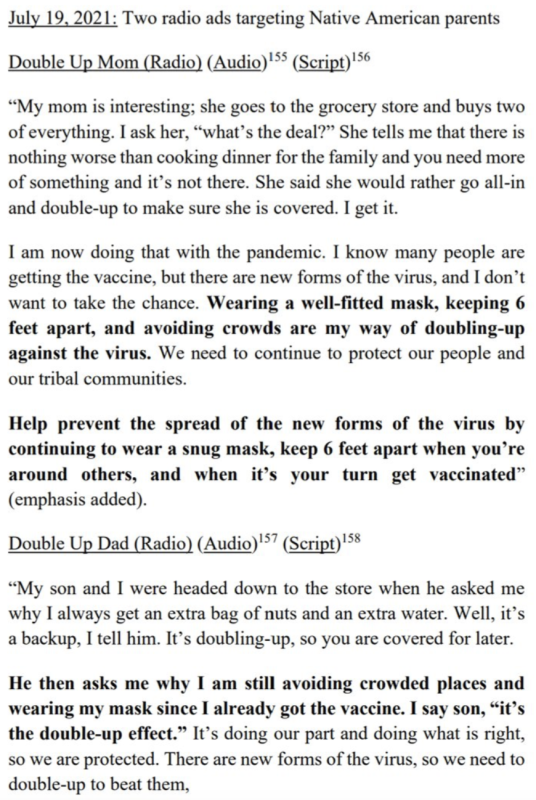
When the Delta variant arrived, the PR firm doubled down on fear-mongering, masking, and social distancing.
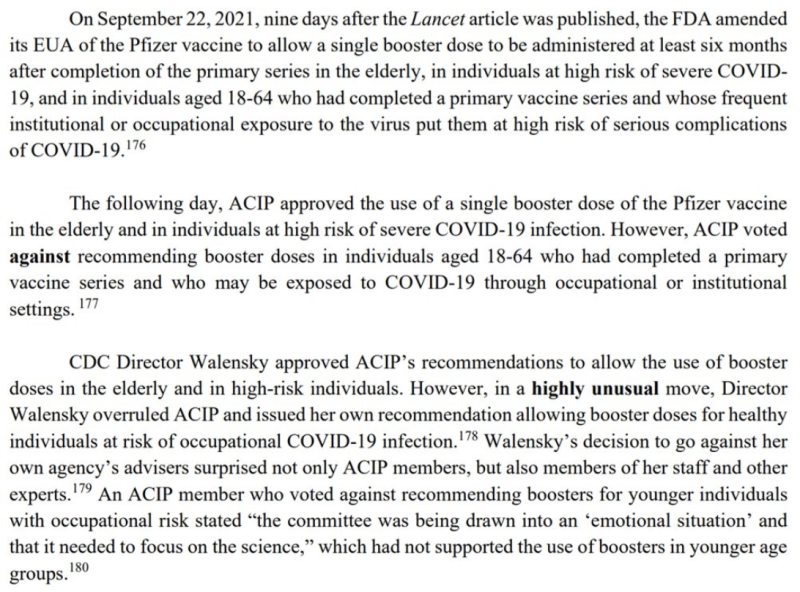
In September 2021, CDC director Walensky overruled the agency’s external experts to recommend the booster to all adults rather than just the elderly. The director’s action was “highly unusual” and went beyond the FDA’s approval of the booster for only the elderly.
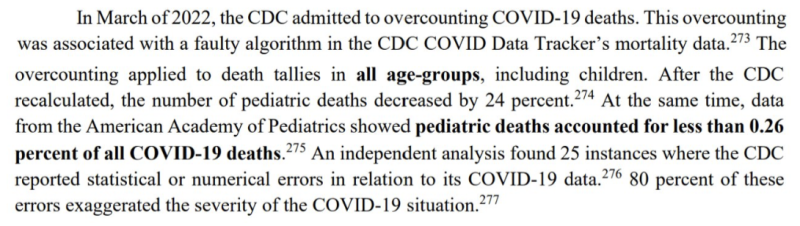
The PR campaign and the CDC persistently overestimated the mortality risk of Covid infection in kids to scare parents into vaccinating their children with the Covid vax.

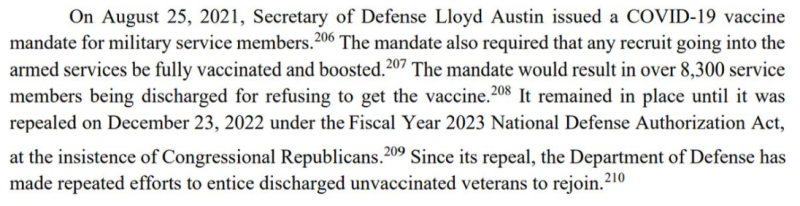
In Aug. 2021, the military imposed its Covid vax mandate, leading to 8,300 servicemen being discharged. Since 2023, the DOD has been trying to get the discharged servicemen to reenlist. What harm has been done to American national security by the vax mandate?
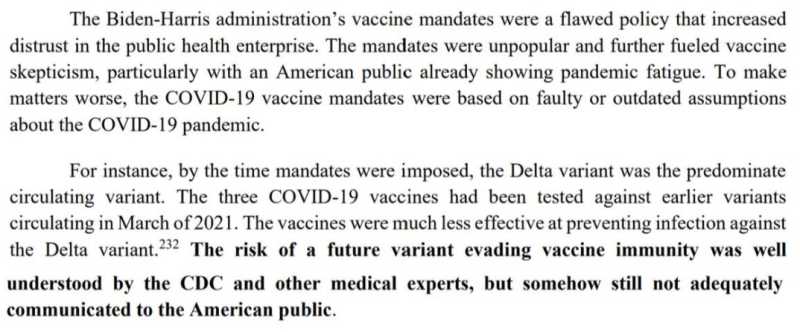
The Biden/Harris administration imposed the OSHA, CMS, and military vax mandates, even though the CDC knew that the Delta variant evaded vaccine immunity. The PR campaign studiously avoided informing Americans about waning vaccine efficacy in the face of variants.
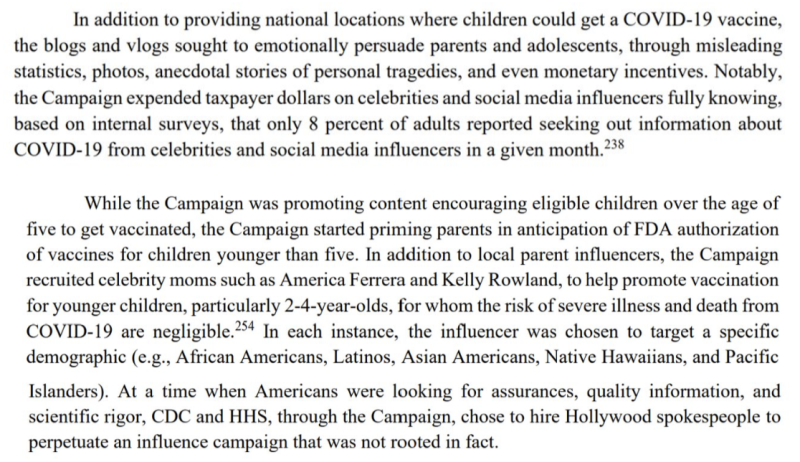
The propaganda campaign hired celebrities and influencers to “persuade” children to get the Covid vax.
I think if a celebrity is paid to advertise a faulty product, that celebrity should be partially liable if the product harms some people.
In the absence of evidence, the propaganda campaign ran ads telling parents that the vaccine would prevent their kids from getting Long Covid.
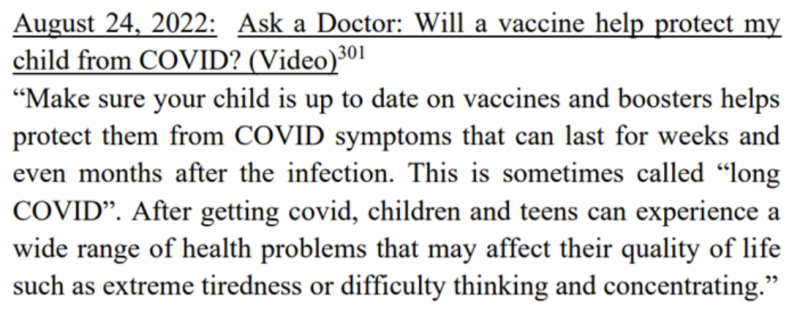
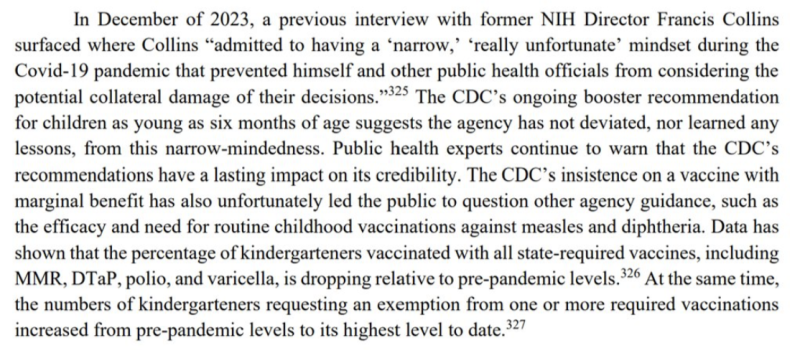
With the collapse in public trust in the CDC, parents have begun to question all CDC advice. Predictably, the HHS propaganda campaign has led to a decline in the uptake of routine childhood vaccines.
The report makes several recommendations, including formally defining the CDC’s core mission to focus on disease prevention, forcing HHS propaganda to abide by the FDA’s product labeling rules, and revamping the process of evaluating vaccine safety.
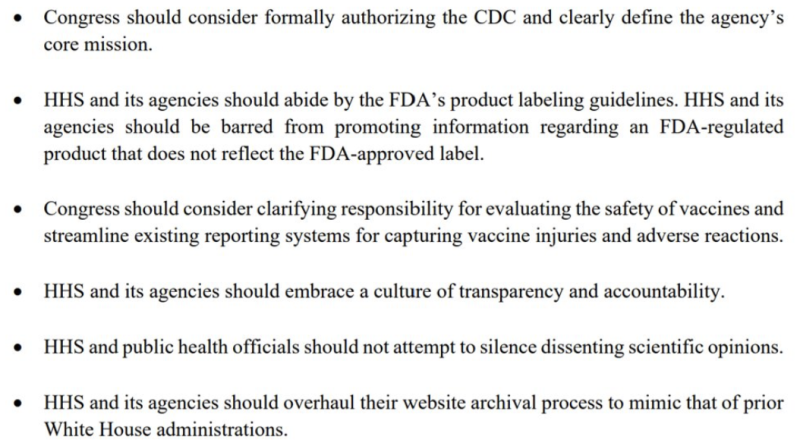
Probably the most important recommendation: HHS should never again adopt a policy of silencing dissenting scientists in an attempt to create an illusion of consensus in favor of CDC groupthink.
You can find a copy of the full House report here. The HHS must take its findings seriously if there is any hope for public health to regain public.
Dr. Jay Bhattacharya is a physician, epidemiologist and health economist. He is Professor at Stanford Medical School, a Research Associate at the National Bureau of Economics Research, a Senior Fellow at the Stanford Institute for Economic Policy Research, a Faculty Member at the Stanford Freeman Spogli Institute, and a Fellow at the Academy of Science and Freedom. His research focuses on the economics of health care around the world with a particular emphasis on the health and well-being of vulnerable populations. Co-Author of the Great Barrington Declaration.
‘Seismic’ Verdicts: SF Transit System Must Pay Almost $8 Million to 6 Workers Fired for Refusing COVID Shots
By Brenda Baletti, Ph.D. | The Defender | October 25, 2024
The San Francisco Bay Area Rapid Transit District (BART) must pay about $7.8 million to six former employees who lost their jobs after the district denied their requests for accommodations for religious exemptions from BART’s COVID-19 mandate.
In the largest financial win yet for workers fired for failing to comply with COVID-19 vaccine mandates, a federal jury composed of entirely vaccinated jurors on Wednesday awarded the plaintiffs between approximately $1.2 million and $1.5 million each to compensate for economic losses and mental anguish.
The case is one of hundreds filed across the country since 2021, representing thousands of workers who say they lost their jobs when their employers illegally denied their requests for religious accommodation to the COVID-19 mandate.
“These verdicts are seismic — a 7.8 San Francisco legal earthquake,” Brad Dacus, president of the Pacific Justice Institute, which represented the plaintiffs, said in a statement. “This amazing outcome represents so much hard work by our team, perseverance by these clients, and fairness from our judicial system.”
The workers’ attorney, Kevin Snider, told The Defender that because of BART’s mandate, “The workers were forced to either deny their faith or lose their jobs.” He said they chose the latter, demonstrating the sincerity of their religious convictions.
The lawsuit began as three separate cases representing 35 employees fired by BART. The three cases were later consolidated into a single lawsuit. Twenty-nine of the plaintiffs settled with BART, but the remaining six went to trial this month.
“These workers lost their jobs and have struggled for more than two years,” Snider said. “It was a devastating disruption to their lives and to their families. Being able to settle or get a jury verdict helps them to put closure on this and for those who went to trial, they felt heard and understood by a jury, which can be important.”
This was the second time the case went to trial. The first trial ended in a mistrial in July when the jury could not reach a unanimous decision, as required in federal civil trials.
BART, which can appeal the decision, declined to comment. Bloomberg Law reported that BART filed a motion for judgment as a matter of law during the trial, which U.S. District Judge William Alsup said would be argued in December.
The motion argues that the plaintiffs have insufficient evidence to reasonably support their case, even if a jury finds otherwise. In response, the judge can allow the verdict to stand, order a new trial or overrule the jury’s verdict.
Religious objectors had option to comply, retire, resign or be terminated
The plaintiffs first sued BART in December 2022, alleging the agency violated their First Amendment rights to religious freedom and federal and state anti-discrimination laws.
The BART system, which operates in five counties across the San Francisco Bay area, issued a mandate on Oct. 14, 2021, requiring employees to be fully vaccinated as a condition of employment.
Employees could apply for a religious or medical exemption. If granted, BART determined whether to provide them reasonable accommodation. Between October 2021 and February 2022, 204 of Bart’s 4,000-plus employees sought an exemption.
Approximately 179 of those were for religious beliefs by people practicing a variety of religious faiths, including various forms of Christianity, Islam and Ruism, according to Snider.
BART granted 70 of the religious exemptions and denied the rest, according to the complaint.
But even the employees granted an exemption were denied reasonable accommodation so they could continue working. Although BART acknowledged their right to a religious exemption, the agency said it couldn’t reasonably make accommodations, like allowing them to work at home or do weekly testing.
However, 1 in 3 of the employees seeking medical exemption were granted exemption and given accommodation, according to the complaint.
Instead of proceeding on the assumption that the accommodation requests were based on sincerely held religious beliefs, the complaint alleges, BART launched a probe into the sincerity of the employees’ beliefs.
Employees’ claims were investigated using an interviewer template that asked for a detailed explanation of their beliefs and why taking the COVID-19 vaccine would violate them. The template included questions like, “What do you think will happen to you if you take the COVID-19 vaccine?”
BART proceeded to deny all requests for accommodation from religious objectors and gave them the option to comply with the mandate, retire if qualified, resign or be terminated.
All of the plaintiffs refused to comply and lost their jobs.
Over the next couple of years, many of those employees, working with the Pacific Justice Institute, sued BART and settled their cases. The cases that couldn’t reach a settlement proceeded to trial — which Snider said carried a serious risk, because “San Francisco is probably the most difficult venue in the entire country to have a vaccine case.”
The trial happened in two phases. First, the jury was asked to rule on whether BART could have granted the requested accommodations. They rejected the agency’s argument that it couldn’t reasonably accommodate the employees seeking religious exemptions without facing an undue hardship.
Then they heard testimony about the sincerity of the plaintiffs’ religious beliefs and the damages they suffered.
Sinder, whose firm represents plaintiffs alleging religious discrimination in more than a hundred vaccine mandate lawsuits across the country, said that he thought public opinion was slowly changing to favor workers.
This article was originally published by The Defender — Children’s Health Defense’s News & Views Website under Creative Commons license CC BY-NC-ND 4.0. Please consider subscribing to The Defender or donating to Children’s Health Defense.
The impact of vaccine mandates to healthcare workers in Canada
By Eleftherios Gkioulekas | October 20, 2024
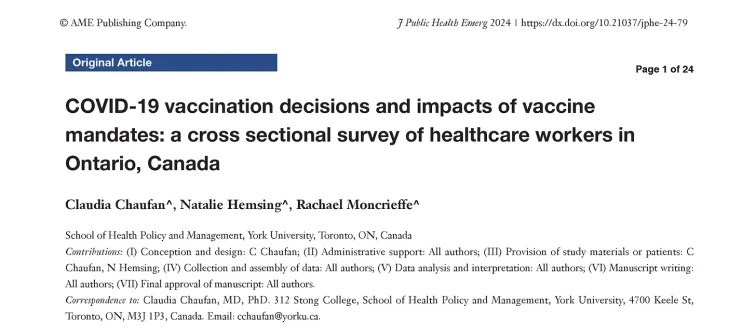
A recent paper by Professor Claudia Chaufan and colleagues reported the results of a cross-sectional survey of 468 Canadian healthcare workers examining the impact of COVID-19 vaccination decisions and the impacts of vaccine mandates. The sample used in the study is interesting because it consists predominantly of nurses and other supporting disciplines but very few medical doctors. The study provides only descriptive statistics; however, the reported results are astounding.
Here are some highlights: 75% of respondents that received the COVID-19 vaccine reported that the reason for taking the injectable product was employer vaccine mandates. Only 22% of vaccinated respondents reported no adverse events. Moderate adverse events were reported by 35.6% of respondents and severe adverse reactions were reported by 29.8% of respondents. Out of the 87 respondents that received the COVID-19 vaccine, 1 reported a life-threatening adverse reaction. Interestingly, only 4.3% of respondents were trained on how to report post-vaccination adverse events and only 4.5% of respondents reported that they were encouraged to report adverse events after vaccination.
From the entire sample of both vaccinated and unvaccinated healthcare workers, 74.6% reported anxiety and/or depression and 18.3% reported experiencing suicidal thoughts due to employer vaccination requirements (agree and strongly agree responses). Although 40% reported willingness to return to their previous role if vaccine mandates were dropped, another 42.5% reported an intention to leave their occupation or the healthcare industry as a result of their experience with vaccine mandates (agree and strongly agree responses). 85% reported that employers did not offer alternatives to vaccination to satisfy their vaccine mandate, with only 1 out of 468 respondents reporting that their employer was willing to accept proof of natural immunity, even though 75% of respondents reported that they worked with COVID-19 patients prior to the availability of the COVID-19 vaccines. Only 9.5% reported being offered regular testing as an alternative to vaccination.
59% of respondents reported that they were not provided with any written information about the vaccines, necessary for informed consent, and only 2.4% of respondents were provided with the package insert from the vaccine manufacturer.
Finally, only 16.1% of vaccinated respondents reported being happy with their choice to get vaccinated, whereas 92.6% of unvaccinated respondents reported being happy with their decision to not get vaccinated (agree and strongly agree). Furthermore, 70.3% observed differential treatment of patients based on their vaccine status and only 4.1% report that they are confident that the current healthcare system will provide adequate and quality care while respecting personal preferences and values (agree and strongly agree).
For more details, you will have to read the paper.
Here’s the paper’s conclusion:
In 2021 the Organization for Economic Cooperation and Development (OECD) announced six evaluation criteria that jointly provide “a normative framework (…) to determine the merit or worth of an intervention”- a policy, a strategy, or an activity (42). The first criterion is “relevance”, i.e., to what extent a policy is responsive to beneficiaries, meaning those who “benefit directly or indirectly from the policy”. The second criterion is “coherence”, i.e., to what extent a policy is compatible with other policies in a given setting. The third is “effectiveness”, i.e., to what extent a policy has achieved or is expected to achieve its objectives. The fourth criterion is “efficiency”, to what extent a policy converts inputs into outputs in the “most cost-effective way possible, as compared to feasible alternatives in the context” and within a reasonable timeframe. The fifth criterion is “impact”, i.e., to what extent a policy “has generated or is expected to generate significant positive or negative, intended or unintended”, effects. The sixth and last criterion is “sustainability”, i.e., whether benefits are likely to last (42).
If our findings indicate a trend in the health care sector in Ontario, Canada, they suggest that by these criteria the policy of mandated vaccination for HCWs in the province has failed in its purported goal of promoting safer healthcare environments and achieving better care. Concerning “relevance”, the intended beneficiaries, whether HCWs, patients, or communities at large, have been harmed by exacerbated staff shortages, intimidating work environments, and health professionals coerced into acting against their best clinical judgment. Concerning “coherence”, the policy has proven to be at odds with other policies within health settings, such as the imperative to maintain adequate staffing levels or to respect informed consent and bodily autonomy, not only for HCWs but for those patients who, for whatever reason, decline vaccination. As to “effectiveness”, there is no evidence that the policy has improved patient care-as suggested by our findings, it has likely worsened it.
Concerning “efficiency”, there is no evidence that the policy has been more cost-effective than comparable alternatives, such as relying on the superiority of naturally acquired immunity over artificial immunity (23,43-45), acquired by most HCWs during 2020 as they treated patients in critical need, and for this reason were celebrated as heroes by the media and the authorities (46,47). Notably, naturally acquired immunity, achieved through recovery from a prior infection, was not recognized by healthcare employers in Canada. In fact, there is no evidence that such (then unvaccinated) workers were deemed a threat to patient safety and disciplined for that reason. Concerning “impact”, our findings also suggest that the overall impact of the policy on the well-being of HCWs and the sustainability of health systems has also been negative. Finally, concerning “sustainability”, with close to half of our sample of highly trained and experienced HCWs intending to leave the health professions, we see no evidence for any net benefits, either current or future. We conclude that if, by the OECD criteria, the policy of mandated vaccination for HCWs has failed, this failure, along with the contested efficacy and safety of COVID-19 vaccines, their negative impact on HCWs’ wellbeing, staffing levels, and patient care, and the threat that mandates represent to longstanding bioethical principles such as informed consent and bodily autonomy (48,49), negates any basis-policy, scientific, or ethical-to continue with the practice.
References
C. Chaufan and N. Hemsing and R. Moncrieffe, “COVID-19 vaccination decisions and impacts of vaccine mandates: a cross sectional survey of healthcare workers in Ontario, Canada”, Journal of Public Health and Emergency (2024), Online First, https://jphe.amegroups.org/article/view/10313
‘Childish Temper Tantrums’ – Australian Councilor Fires Back at Pressure From Authorities
By Anatoly Donstov – Sputnik – 24.10.2024
Following his powerful interview with Sputnik, Adrian McRae, businessman and member of the Town of Port Hedland Council in Australia, has been urged to resign by Western Australia Premier Roger Cook in a desperate attempt to silence him.
“Earlier this week, before the Premier had heard I was in Russia, he suggested that the entire Town of Port Hedland Council should get back to “knitting” when we demanded him to show us evidence that the Covid-19 vaccines were safe… So, instead of acting like a true leader, … he attacks me personally and resorts to ad-hominem – the last refuge of a failed argument. I feel sorry for him actually. I don’t know what I’d do if I was in his shoes,” McRae told Sputnik, explaining Cook’s “contempt” towards him and “all West Australian Councilors.”
On Wednesday, the Premier called for the resignation of McRae, labeling him “an embarrassment” after his interview with Sputnik, ABC reported. In the interview, the businessman criticized Australian and Western media for biased coverage of Russia and challenged the narrative portraying Moscow as the enemy.
McRae warned that free speech is under threat in the West, while BRICS countries still offer hope for its protection. As an observer in the 2024 Russian presidential election, McRae praised the transparency of the process, drawing heavy criticism from Australian media.
“It’s simple. The Premier is using the boogeyman of Russia to attempt to ruin my character in hopes of people forgetting about the important questions my entire Council has asked him regarding the mRNA vaccine contamination. He is deflecting the subject to the best of his very limited ability and making an absolute fool of himself in the process,” McRae told Sputnik, explaining why Cook has gone to such lengths to smear him.
Despite the Premier’s desperate attempts to suppress the council member, McRae remains a strong voice against Western censorship and political corruption, with Sputnik delivering the uncensored truth that the West fears.
“Sadly for the Premier, I have truth and science on my side. He, on the other hand, has nothing but a dying prostitute media and a really poor scriptwriter. So no, I am not too concerned about the Premier and his childish temper tantrums,” McRae said confidently, undeterred by the threats from the Western Australia Premier.
Dark Money, Darker Motives: Why is Bill Gates Backing Kamala Harris Using Shady Super PAC?
By Ilya Tsukanov – Sputnik – 23.10.2024
Tech billionaire, philanthropist and WEF cheerleader Bill Gates has given Kamala Harris’s campaign a $50 mln boost using dark money super PAC Future Forward. The donation was intended to remain secret, but was uncovered by NYT this week.
What’s Future Forward?
Set up in 2018 by former Obama campaign staffers and coming out of left field in the final weeks of the 2020 race to fund a massive pro-Biden media blitz, Future Forward is a super political action committee funded mostly by Big Tech and venture capital firms, including Meta, Google, disgraced crypto financier Sam Bankman-Fried, Bain Capital and Bridgewater Associates.
The super PAC has raised a whopping $700 mln for the 2024 election cycle, rolling out $75 mln in pro-Harris ads last week.
What’s Behind Gates’ Electoral ‘Generosity’?
2024 is at least the second election cycle where Gates has used a dark money vehicle to support the Democratic Party’s candidate. In 2020, the Bill and Melinda Gates Foundation contributed nearly $70 mln to the New Venture Fund, a nonprofit belonging to DC consultancy Arabella Advisors, which bankrolls the Sixteen Thirty Fund, a goliath of undisclosed donations for Democratic politicians and liberal causes which raised nearly $390 mln four years ago. Publicly, Gates and his now former wife also gave $500,000 to Biden’s inaugural committee.
Mr. Gates has been an active supporter of Democratic candidates since at least 2008, contributing financially to and praising the campaigns of Barack Obama and Hillary Clinton.
Gates’ ties to the Clintons are deeply rooted, with the billionaire becoming a top donor to the Clinton Foundation, and forging partnerships with the organization for global projects since at least 2013.
In a telling interview in 2016 in which he explained his preference for Clinton, Gates said “there have been questions about vaccines in general where some of the candidates have shown that they’re not as up to date about vaccines in general, and that’s got to be a concern.”
“Science in general, whether it’s GMOs or vaccines, there’s a lot of people out there who don’t give science the benefit of the doubt. In terms of experience, Hillary Clinton and Bill Clinton have more experience in global health,” Gates said at the time.
How has Gates profited off the Dems’ agenda?
With Harris’ presidential bid expected to broadly continue the Biden/Clinton line on foreign and domestic policy, it makes sense for Gates to throw his influence behind the VP, given the perceived threat of the Trump brand of red-pill MAGA Republicans and their anti-vax, anti-tech, and anti-interventionist leanings.
“This election is different, with unprecedented significance for Americans and the most vulnerable people around the world,” Gates said this week after info about his $50 mln donation leaked out.
“I think it’s great to have somebody who’s younger, who can think about things like AI and how we shape that in the right way, and I certainly offer up my opinions to the politicians who are interested,” Gates said this summer after Biden dropped out and named Harris his successor.
The Gates Foundation’s fortunes got a big boost under Biden, with its endowment growing from $69 bln in 2020 to $75.2 bln in 2023.
Gates enjoyed a profits bonanza off mRNA coronavirus vaccines mandated by the Biden administration. In 2022, he sold off shares of BioNTech stocks he bought in 2019 as sales slowed. His foundation has also owned shares in Pfizer, CureVac and Vir Biotech going back to well before the pandemic.
The billionaire’s foundation supports the Global Virome Project – an ambitious initiative created in 2018 to predict pathogens that could trigger lethal pandemics, but accused of weaponizing viruses from a network of 150 biolabs worldwide.
Gates has also backed a broad array of World Economic Forum-affiliated initiatives, including projects to reduce emissions and create synthetic meat and dairy. In 2022, The Seattle Times revealed Gates’ secret lobbying to save Biden’s signature $2+ trln Build Back Better social and climate spending package.
Gates has also been a top backer of the Biden administration’s battle against media and online ‘misinformation’, with an explosive MintPress investigation from 2021 revealing that his foundation had bankrolled some $319 mln in media, including CNN, the BBC, Le Monde, the Financial Times, Der Spiegel and others to ensure favorable coverage of his agenda and that of his allies.
Featured Video

Bombing Iran Back Into the Stone Age /Lt Col Daniel Davis & Jim Jatras
or go to
Aletho News Archives – Video-Images
From the Archives
The Occupied Mentality Syndrome
Saudi Arabia on the American chessboard – Part 2
By B. J. Sabri | American Herald Tribune | April 19, 2016
Since the Korean War, but particularly since the Iranian Revolution of 1979 until today, the United States has been steadily escalating its military presence in the Persian Gulf. Taking advantage of many colossal events of the past 36 years, [1] the hyper-empire has institutionalized its massive presence on land and sea, and expanded its objectives to include the unambiguous physical control of the area, as well as the clear understanding that local Arab governments should abide by them. The pretext is always the same: in “defense” of the national interests and security of the United States. From observing how the United States has been interacting with the governments of the region, and by judging from the size of its expeditionary force, we could reach a basic conclusion. The United States is occupying, de facto, the entire Arabian Peninsula. (Yemen, devastated by Saudi and American jets is yet to be conquered. Oman? Britain returned not as colonial ruler but as a soft occupying power.)
Under this articulation, Saudi Arabia, Qatar, Kuwait, and the United Arab Emirates are virtually occupied countries. If we compare this type of occupation to the mandate and protectorate regimes of the past, the results might be identical—the nations affected by it lose sovereignty. When Arab governments comply with the objectives of a foreign power that station military forces on their national milieu, then that power controls them in multiple ways including how they react to policy deliberations and what decisions they intend to take on specific issues. A good method to verify the concept of effective occupation is this: take notice of what the United States says and wants, and then compare it to what the gulf rulers do in response. (I shall discuss this detail at some point in the upcoming parts.)
If the presence of US forces or other means of political pressure are a factor in Saudi Arabia’s interventionist Arab wars, then we need to debate this issue. However, from the history of resistance to colonialism, we learnt: if a powerful state imposes its order on a nation by military means or other forms of coercion, and if this nation does not resist that imposition, then a mental subordination to the powerful state will ensue. This is especially true in the case of Saudi Arabia. One single event, 9/11, has transformed it from a US “ally” into an instant political hostage of the American Empire. … continue
Blog Roll
 Aletho News
- Brazilian Congressman seeks to bar Israeli military personnel from entering Brazil
- Official reveals evidence of Arab states’ involvement in US-Israeli war on Iran
- His Majesty’s head-chopper: Syria’s MI6-backed president bows to King Charles
- Forced to backtrack: ‘Israel’ drops Hezbollah disarmament goal
- Britain’s Lebanon surveillance network: A digital map for war
- Bahrain faces scrutiny for opposition crackdown after detainee killed
- Hegseth’s Pentagon Purge Designed to Prevent a Mutiny: Karen Kwiatkowski
- Greek shipping firms secretly transporting oil, weapons to Israel
- UN vote on Hormuz force delayed as Iran issues warning
- Trump and the debris of Iran war
- If Americans Knew
- Israel-US kill negotiators, destroy civilian structures, but Iran’s military capabilities still largely intact – Daily Update
- ‘War crime’: Global condemnation as Israeli ministers celebrate death penalty law targeting Palestinian prisoners
- 7 Ways Israel Is Turning Lebanon Into Gaza
- World’s Leading Football Bodies Under Fire Over Israel Policies
- Experts warn of possible use of nukes against Iran
- Israeli invasion of Lebanon could be worse than 1982, warn European officials
- Passover: Liberation and collective punishment
- Trump says the quiet part out loud: (Israel’s) war on Iran > Americans’ health – Daily Update
- Gaza families reunite years after babies evacuated amid Israel’s war
- International Rescue Committee warns Gaza’s children face grave protection risks
- No Tricks Zone
- Low Intensity Tornado Wrecks Major Solar Farm, Creating A Potential Toxic Dump
- New Study Finds Warming Saves Lives…Cold Temperatures 12 Times More Deadly Than Excess Heat
- German Science Blog Accuses PIK Climate Institute Of Hallucinating Climate Tipping Points
- Devastating Assessment Of Comirnaty Vaccine By Former Senior Pfizer Europe Toxicologist
- New Study: CO2 Is ‘Effectively Negligible’ As An Explanatory Climate Change Factor Since 2000
- Former Pfizer Toxicologist Dr. Helmut Sterz Tells Bundestag Hearing Pfizer Vaccine Should Have Never Been Approved
- Energy Expert: Germany’s Nuclear Phaseout Was A “500 Billion Euro Mistake”
- New Research: South Australia’s Mid-Holocene Sea Surface Temperatures Were 4°C Warmer Than Today
- Storing Green Energy To Last Germany 10 Days Would Require A 60-Million Tonne Battery
- New Studies: UK Sea Levels Were 4 Meters Higher Than Today During The Mid-Holocene
 Aletho News