mRNA: GROUND ZERO FOR CANCER CRISIS?
The HighWire with Del Bigtree | August 7, 2025
As HHS Secretary Robert F. Kennedy Jr. pulls the plug on $500 million in mRNA vaccine contracts and U.S. COVID shot uptake plummets to historic lows, a more alarming crisis is taking shape—a potential pandemic of cancer. Could the very technology once hailed as revolutionary now be triggering a silent epidemic? Explore the emerging science uncovering how mRNA vaccines may be reactivating dormant cancer cells and disrupting immune surveillance. This is a wake-up call the world can’t afford to ignore.
RFK Jr. Ends Financial Incentives for Hospitals That Report Staff Vaccination Rates
By Suzanne Burdick, Ph.D. | The Defender | August 4, 2025
The federal government will no longer financially reward hospitals for reporting the vaccination rates of their staff, the U.S. Department of Health and Human Services (HHS) announced on Aug. 1. According to the press release, the incentive system was “coercive and denied informed consent.”
U.S. Health Secretary Robert F. Kennedy Jr. said:
“Medical decisions should be made based on one thing: the wellbeing of the person — never on a financial bonus or a government mandate. … Doctors deserve the freedom to use their training, follow the science, and speak the truth — without fear of punishment.”
The move repeals a Centers for Medicare & Medicaid Services (CMS) inpatient payment policy created during the Biden administration that tied hospital reimbursement to COVID-19 vaccination reporting.
Under the old policy, hospitals didn’t just collect the data and hold it internally. They published the data on the Centers for Disease Control and Prevention’s (CDC) National Healthcare Safety Network — the “nation’s most widely used healthcare-associated infection tracking system,” where it was used “as a tool for public shaming, not public health,” the press release said.
CMS Administrator Mehmet Oz applauded the repeal.
“Doctors and other providers should have the same autonomy to choose what’s right for their own individual health care needs as the patients for whom they care,” Oz said. “Today’s announcement helps put that power back in their hands.”
HHS said the repeal is part of the agency’s broader efforts to “restore medical autonomy in federally funded programs and root out financial and regulatory pressures that incentivize physicians towards pre-scripted medical decisions rather than individualized, evidence-based care.”
CMS estimated that the annual burden of collecting the data across 3,050 hospitals was between $1,378,600 and $1,608,570.
Trial Site News noted that HHS’ press release didn’t cite evidence supporting the allegation that requiring hospitals to report vaccination data had been used to shame them, but said such evidence may exist.
According to Trial Site News :
“This policy rollback is more than bureaucratic housekeeping — it’s a reflection of a national reckoning. The American people grew weary of the top-down, one-size-fits-all vaccination regime advanced by HHS agencies like the FDA and CDC during the COVID-19 era.
“What was framed as public health became, in the eyes of many, a vehicle for coercion, censorship, and loss of personal agency. … The rise of RFK Jr. to lead HHS isn’t a fluke; it’s a clear mandate from the public demanding medical freedom, transparency, and an end to government overreach disguised as science.”
Jon Fleetwood wrote in a Substack post today that the change suggests HHS may be restructuring how it relates to the medical community. The agency “now favors decentralization and professional freedom over command-and-control enforcement,” he said.
Many hospital workers resisted COVID vaccine
The issue of COVID-19 vaccination mandates for hospital staff has been contentious.
Earlier this year, the Court of Appeals of the State of Kansas ruled that Saint Luke’s Health Systems improperly fired an employee when it rejected her request for a religious exemption from the hospital system’s COVID-19 vaccine mandate.
In 2021, over 100 hospital workers in Texas sued their employer for requiring them to get a COVID-19 shot, alleging the mandate forced them to “subject themselves to medical experimentation as a prerequisite to feeding their families.”
The same year, a New Jersey hospital system fired over 100 employees who refused to get a COVID-19 shot.
In 2023, CMS eliminated COVID-19 mandates for healthcare workers. Since then, healthcare worker COVID-19 vaccination rates have dropped.
Last fall, roughly 85% of healthcare workers declined a COVID-19 booster, according to U.S. Food and Drug Administration Commissioner Marty Makary.
Will HHS eliminate vaccine incentives for pediatricians?
The HHS policy change didn’t reference an incentive program that rewards pediatricians who follow the CDC childhood immunization schedule. Kennedy raised the issue last month during an interview with Tucker Carlson.
But Polly Tommey, program director for Children’s Health Defense’s (CHD) CHD.TV, brought it up during her testimony last month at a U.S. Senate hearing on vaccine injury.
“We need our pediatricians to stop getting bonuses for vaccinating our children,” said Tommey, whose son was injured by a childhood vaccine.
CHD Chief Scientific Officer Brian Hooker, who also has a vaccine-injured son and testified during the Senate hearing, said pediatricians can receive hundreds of dollars for each fully vaccinated child, depending on certain factors.
CHD CEO Mary Holland said in a recent interview with OAN News that vaccine incentives for pediatricians have “completely distorted” pediatric care.
“A pediatrician with a large practice of thousands of children in it can earn hundreds of thousands of dollars, really serious money, by having a 90% or a 95% uptake rate,” Holland said.
AAP tells doctors it’s ok to drop patients if parents refuse to follow vaccine schedule
A recent investigation by The Defender found that high vaccination rates are key to a profitable pediatric practice, according to data from insurance incentive structures and an analysis of a pediatric practice’s income.
The American Academy of Pediatrics (AAP), in a 2016 report on “Countering Vaccine Hesitancy,” told pediatricians that it was an “acceptable option” to dismiss families who refused to vaccinate their children.
The AAP receives funding from numerous vaccine makers, including AstraZeneca, Eli Lilly, GSK, Merck, Moderna and Pfizer, according to data compiled by White Rose Intelligence.
Last month, the AAP sued Kennedy and other HHS officials over the decision to no longer recommend COVID-19 vaccines for healthy kids and pregnant women.
On July 28, the AAP issued a policy statement urging states to eliminate all non-medical exemptions to vaccination requirements for school kids, including religious and conscience-based exemptions.
When The Defender asked HHS if it planned to eliminate financial pressure tied to pediatric vaccination reporting, an HHS spokesperson said the agency “continues to evaluate solutions that align with current public health priorities and the best available scientific evidence.”
Related articles in The Defender
- Court Rules Against Hospital That Fired Woman for Refusing COVID Vaccine
- Are Vaccines Big Money-Makers for Pediatricians? RFK Jr. Comment During Interview With Tucker Carlson Sparks New Debate
- ‘We Get Paid to Vaccinate Your Children’: Pediatrician Reveals Details of Big Pharma Payola Scheme
- Pediatricians Get Paid to Push Vaccines — and It’s No Small Amount of Cash
- CHD Funds Lawsuit Against CDC Over Program That Forces Pediatricians to Give COVID Vaccines to Kids on Medicaid
This article was originally published by The Defender — Children’s Health Defense’s News & Views Website under Creative Commons license CC BY-NC-ND 4.0. Please consider subscribing to The Defender or donating to Children’s Health Defense.
California Hospital Concealed Evidence Linking ‘Catastrophic Surge’ in Stillbirths to COVID Vaccine, Lawsuit Alleges
By Brenda Baletti, Ph.D. | The Defender | August 4, 2025
A California hospital concealed data linking a “catastrophic surge” in stillbirths among women who received COVID-19 vaccines, according to a lawsuit filed last week in the Superior Court of California, Fresno County.
Michelle Spencer, a nurse at Community Medical Centers’ (CMC) Community Regional Medical Center, said the hospital “deliberately and selectively” concealed from staff, patients and regulators a spike in unborn baby deaths that began in spring 2021, and retaliated against her when she publicized the information.
The lawsuit also says the hospital concealed medical data related to the fetal deaths that showed a link to COVID-19 vaccination of pregnant mothers.
The data include hospital-wide medical records documenting the number of stillbirths and the vaccination histories of those babies’ mothers. One managing nurse at the hospital told a staff member that nearly all of the stillbirths occurred among vaccinated mothers.
According to the complaint, Spencer “witnessed firsthand the exponential increase in unborn baby deaths directly correlating with pregnant women who received a Covid vaccine and then would deliver a dead baby a close number of days or weeks following their injection.”
Spencer’s attorney, Greg Glaser, said:
“The essence of this case is that the truth shall set you free. The hospital possessed vaccinated versus unvaccinated comparison data. The numbers proved the vaccines were causing miscarriages and more in the vaccinated group.
“We know hospital management analyzed the data because they said so, and we see they concealed it from regulators because that file [requested by regulators] is empty.”
Children’s Health Defense is funding the lawsuit, which accuses the hospital of fraud, retaliation and unethical business practices.
Graphic email describes spike in ‘demise patients,’ or stillbirths
Spencer, who has been employed with the hospital since 2017, works in the antepartum, postpartum and labor and delivery units, all located on the hospital’s third floor. Before the COVID-19 vaccination rollouts, the hospital averaged one fetal death per month, she said in the lawsuit.
However, beginning in spring 2021, the number of stillbirths skyrocketed to about 20 per month, and remains at that level today, Spencer said. The number is an estimate because Spencer can’t access the hospital’s full medical records.
In September 2022, Julie Christopherson, a nurse manager specializing in perinatal care and bereavement, sent an email to the nursing and technical staff at the hospital describing the ongoing spike in stillborn babies, which she called “demise patients.”
“Well, it seems as though the increase of demise patients that we are seeing is going to continue,” Christopherson wrote. “There were 22 demises in August, which ties the record number of demises in July 2021, and so far in September there have been 7 and it’s only the 8th day of the month.”
She said the nurses hadn’t seen all of the deaths because the statistics included other units within the hospital, “but there have still been so many in our department.”
Christopherson said:
“It’s a lot of work for you as the bedside RN’s and it’s also a lot of work for me. Demises have taken a lot of my time away from the other groups of patients that I serve, so I hope this trend doesn’t continue indefinitely.
“I know of a few more that are scheduled to deliver in the week ahead, so unfortunately the process is going to be very familiar with all of you.”
According to the email, many parents requested autopsies of their babies. It also provided graphic details of the mishandling of a dead fetus, and reminded the staff of proper procedures for handling the babies’ remains and other associated biological material.
Hospital ‘aggressively’ promoted vaccines despite signs of risk, lawsuit alleges
The lawsuit alleges the spike in baby deaths began in spring 2021, as the hospital “was aggressively promoting Covid-19 vaccines to pregnant women, including requiring OBGYNs with hospital privileges (and their staff) to administer vaccines without knowing or disclosing risks or benefits.”
According to the lawsuit, Christopherson “expressed bias against unvaccinated children and their parents” and helped the hospital conceal data linking vaccines to the record-high number of stillbirths.
Nearly all of the deceased babies were born to mothers who received the COVID-19 vaccine, while the number of fetal deaths in mothers who didn’t get the vaccine remained at the pre-vaccine rollout level, averaging one per month, according to the lawsuit.
The hospital management ignored “multiple safety signals” for COVID-19 vaccine injuries among mothers and babies, according to the complaint, which states:
“Not only did the increase in unborn baby deaths occur, but mothers suddenly … began having more frequent and more significant health problems (i.e., vascular, clotting, hemorrhaging) that did not occur prior to Spring 2021 based on Plaintiff’s direct observations and conversations with colleagues. ….
“ … At the same time … the neonatal intensive care unit (NICU) on the fourth floor also experienced such dramatic spikes in injuries that the patient population nearly doubled. … From direct observation and conversations with colleagues after March 2021, Plaintiff learned of increasing numbers of babies being born at CMC with conditions such as missing fingers and toes, heart murmurs, and jaundice.”
The hospital benefited financially from promoting the vaccines, the lawsuit says, while pushing the cost of that policy on patients and healthcare professionals by refusing to investigate the COVID-19 shot as the possible cause of its increasing injury and death rates.
Hospital retaliated by withholding her bonus, Spencer said
Spencer kept a copy of Christopherson’s email, which she shared with multiple independent news sources. She also appealed to clinical supervisors to investigate whether the vaccines were linked to fetal deaths.
In response, Spencer “was gaslit by management who continued to make unsubstantiated excuses such as ‘pesticides’ as a more likely cause of the record high dead babies at CMC,” according to the lawsuit.
Spencer said she followed the standards of ethical whistleblowing and did not violate hospital rules. However, when the hospital learned she had shared the email with the media, it opened what Spencer called a “biased investigation” into her, in an attempt to silence her and other concerned colleagues.
Spencer said the hospital wasted its resources investigating her, instead of investigating the cause of the stillbirths.
She appealed to the California Department of Public Health to investigate the deaths. However, the hospital used its influence to prevent any investigation, provided false medical information to the agency regarding the number of fetal deaths, and stated COVID-19 vaccines played no role in the stillbirths, according to the lawsuit.
In December 2022, the hospital declined to pay Spencer a $5,000 retention bonus, claiming she was no longer in good standing because she was under investigation.
This sent a message to staff that “whistleblowers will be punished,” she said.
By intentionally concealing the vaccine-correlated data regarding baby deaths, the hospital prevented her from fulfilling her responsibility as a nurse to properly inform her patients of their health risks, Spencer said.
She continues working at the hospital and informs patients of the risks associated with vaccines, including the Hep B vaccine. However, she has been reprimanded for those actions.
Spencer is asking the court to compel the hospital to have a qualified third party investigate the deaths. She also seeks lost wages and punitive damages.
Spencer said she hopes her lawsuit will “expose the evil that’s going on in the hospital system,” and will “wake up parents and educate nurses.”
Glaser said:
“The hospital chose financial gain over people’s lives, and the hospital retaliated against Ms. Spencer as the nurse who blew the whistle on all of this. Our goal with the case is to give the evidence to a jury to set the truth free. Only then can we really begin to heal. And God knows we need it.”
Related articles in The Defender
- Study of 1.3 Million Women Links COVID Vaccines to Pregnancy Risk
- Study Finds 37 Safety Signals for COVID Vaccines During Pregnancy, CDC Still Urges Women to Get the Shots
- COVID Shots During Pregnancy Linked With Rise in Fetal Deaths, Leaked Emails Suggest
- Hep B Vaccines Come With High Risk, Little Benefit — Why Does CDC Recommend Them for Every Newborn?
This article was originally published by The Defender — Children’s Health Defense’s News & Views Website under Creative Commons license CC BY-NC-ND 4.0. Please consider subscribing to The Defender or donating to Children’s Health Defense.
HHS Cancels mRNA Vaccine Development – ‘poses more risk than benefit’ says RFK Jr
By Jefferey Jaxen | August 5, 2025
A stunning announcement from HHS Secretary RFK Jr. has set the media ablaze.
“After reviewing the science and consulting top experts at NIH and FDA, HHS has determined that mRNA technology poses more risk than benefits than these respiratory viruses.”
The official HHS press release states:
“BARDA is terminating 22 mRNA vaccine development investments because the data show these vaccines fail to protect effectively against upper respiratory infections like COVID and flu. We’re shifting that funding toward safer, broader vaccine platforms that remain effective even as viruses mutate.”
The announcement wipes out nearly $500 million worth of Covid mRNA vaccine development projects, “we’re moving beyond the limitations of mRNA and investing in better solutions” stated Kennedy in the HHS press release.
Kennedy’s announcement comes after months of outside pressure to wind down the Covid mRNA vaccine platform in the U.S.
In May 2025, RFK Jr. removed COVID-19 vaccines from the list of routine immunizations for healthy pregnant women and children.
HHS and America now have pressing work at hand to undue the damage of the rushed and forced mRNA vaccine platform.
World-leading cancer researcher Dr. Patrick Soon-Shiong recently stated in an interview: “This non-infectious pandemic of cancer is sadly upon us” referring to how both the virus and the vaccine can awaken sleeping cancer cells in the body. A topic mainstream science is just now, after years of alternative researchers and journalists banging the drum, beginning to admit and study. The new study in the journal Nature chronicles how it is actually the immune system’s response to the lab created gain-of-function bioweapon (and the mRNA shot as we have pointed out) that down-regulates and allows for accelerated cancer progression.
Kennedy has signaled over the last month that he is now taking aim at the broken vaccine injury compensation in the United States.
America, and other countries that align with our mission, must now develop a Manhattan Project-level effort to reverse the many harms brought about by the lab-constructed virus and the shot we were falsely told would save us from it.
FDA stalls decision on petition to suspend mRNA injections, citing ‘other priorities’
US regulator quietly delays action despite evidence of regulatory failure, DNA contamination, and a surge in cancers among young people.
By Maryanne Demasi, PhD | July 19, 2025
The U.S. Food and Drug Administration (FDA) has delayed its response to a formal petition demanding the suspension of the mRNA Covid-19 injections, citing “the existence of other FDA priorities.”
In a letter dated 17 July 2025, Dr Vinay Prasad—recently appointed Director of the FDA’s Center for Biologics Evaluation and Research (CBER)—acknowledged that the agency had “not yet reached resolution of the issues raised” in the petition.
Filed on 20 January 2025, the petition alleges that Pfizer’s Comirnaty and Moderna’s Spikevax were “unlawfully approved” in violation of federal regulatory requirements.
It calls for an immediate halt to the injections, independent testing of retained vials, and a full investigation into the approval process.
Fatal flaws in licensing mRNA products
Submitted by lawyer Katie Ashby-Koppens of PJ O’Brien & Associates, and spearheaded by former barrister Julian Gillespie, the petition argues that the mRNA injections were misclassified from the outset.
Although the products meet the FDA’s own definition of gene therapy, they were not regulated as such—sidestepping the heightened oversight normally required for gene-based interventions.
Under U.S. law, gene therapies must undergo ‘Environmental Assessments,’ be reviewed by specialised advisory committees, and face a more rigorous public transparency process.
But by labelling the mRNA injections as conventional ‘vaccines,’ regulators were able to fast-track their approval through a separate, less stringent pathway—bypassing critical safeguards.
The petition also raises alarm over synthetic DNA fragments found in the final products. Independent testing by multiple laboratories—including the FDA’s own facility—revealed DNA contamination far exceeding the safety limits.
Because the DNA is encapsulated in lipid nanoparticles, it can bypass normal immune defences, enter human cells, and in some cases integrate into the genome. The potential consequences, the petition warns, include genomic instability, cancer, and heritable genetic damage.
One of the most serious findings is the presence of SV40 promoter sequences in Pfizer’s injection—elements known to interfere with tumour-suppressing pathways such as p53.
The petition accuses Pfizer of withholding this information from the FDA in breach of disclosure laws.
Interim letter, no timeline
Under federal law, the FDA was required to respond to the petition within 180 days.
Just before the deadline, it issued a standard interim letter—acknowledging the petitioners’ main concerns but offering no timeline for a final decision.
Nor did the agency indicate that any investigation had begun. “We will respond to your petition as soon as we have reached a decision on your request,” wrote Prasad.
The agency’s delay is not uncommon—but critics say it reflects a deeper reluctance to confront the scientific and regulatory implications head-on.
Fully addressing the petition would require a sweeping and uncomfortable re-evaluation of how mRNA technologies were developed, approved, and marketed under the guise of conventional ‘vaccines.’
If the products were unlawfully licensed—mislabelled as vaccines to circumvent gene therapy regulations—the fallout would be unprecedented.
The admission alone could expose governments to extraordinary legal and financial liability—including product withdrawals, class actions, long-term health monitoring, injury compensation, and potential criminal investigations.
Petitioners speak out
Gillespie said the FDA is caught “between a rock and a hard place”—but that doesn’t excuse inaction. He believes the recent surge in cancers among young people demands urgent scrutiny.
“There’s been a tremendous and continuing rise in cancers across the United States commensurate with the rollout of these products,” he said. “Government officials have seen the data… and are refusing to address the elephant in the room.”
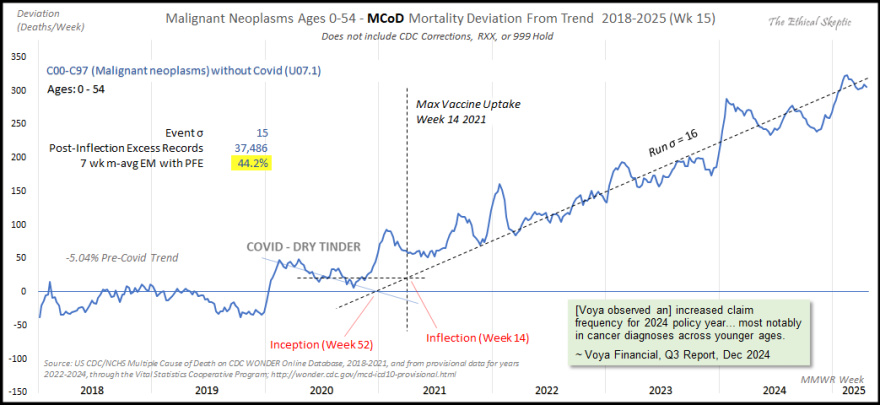
Analysis by Ethical Skeptic shows young cancers are up by 44%
Dr Jessica Rose, a computational biologist and co-author of the petition, said the public was never given accurate information about the nature of the products.
“The public was not told what they were being injected with,” she said. “And still to this day, they are not.”
She described the failure to distinguish gene-based therapies from traditional vaccines as “an existential crisis,” warning that “more and more people—including children and infants—are being exposed to the harms of foreign DNA.”
Dr David Speicher, a virologist and co-signatory on the petition, said the FDA’s letter amounts to bureaucratic minimisation.
“The number of vaccine-injured people continues to grow, and we do not all know the long-term harms caused by these genetic products,” he said. “Yet the FDA states that ‘other priorities’ are more important.”
He called for “an independent scientific team to examine the regulatory process, as well as to provide funding to researchers to explore biological mechanisms such as genomic integration.”
Pharmacy consultant and petitioner Maria Gutschi said the mRNA products represent a new therapeutic category “with no previous knowledge to leverage in assessing safety and efficacy.”
She argued that, given the novelty and risks, “the bar to suspend and/or mandate ‘black box’ warnings must be higher than for any previous therapeutic agent.” Gutschi urged the FDA to treat this as “THE priority” going forward.
A tale of two gene therapies
Critics say the FDA’s handling of mRNA harms stands in stark contrast to its swift response to safety concerns involving other gene therapies.
Yesterday, the agency announced a halt to clinical trials for Sarepta Therapeutics’ investigational gene therapy after the company reported another patient death—bringing the total to three deaths across two separate gene therapy products.
The treatment, developed for limb girdle muscular dystrophy, prompted immediate regulatory action.
“Today, we’ve shown that this FDA takes swift action when patient safety is at risk,” said FDA Commissioner Marty Makary, declaring the agency is “not afraid to take immediate action when a serious safety signal emerges.”
In contrast, the FDA has remained inert on mRNA injections—which also deliver genetic material into human cells but were classified as “vaccines”—despite thousands of reported deaths and serious adverse events following administration.
According to the petitioners, the public was led to believe they were receiving a conventional vaccine—when in fact, they were being administered gene therapy.
By failing to recognise and regulate the products accordingly, the FDA violated public trust—bypassing transparency laws, concealing critical risks, and depriving individuals of the opportunity to make informed medical decisions.
Next steps
People don’t want agencies to stall. They don’t want bureaucratic evasions. They want answers—and they want accountability.
The FDA’s next move won’t simply test regulatory process.
It will test courage—whether anyone inside the system is willing to confront the fallout in what may be the most consequential medical misclassification in modern history.
Massie Proposes to Make COVID Vaccine Makers Liable for Injuries, Opening Door for Thousands of Lawsuits
By Michael Nevradakis, Ph.D. | The Defender | July 16, 2025
Rep. Thomas Massie (R-Ky.) on Tuesday introduced legislation to repeal the “sweeping” liability shield that exempts COVID-19 vaccine manufacturers from responsibility for serious injuries or death caused by their products.
The liability protection amounts to “medical malpractice martial law,” Massie said in a press release.
The PREP Repeal Act (H.R.4388) would revoke the Public Readiness and Emergency Preparedness (PREP) Act of 2005, a law that provides legal immunity to “covered persons” who manufacture or administer countermeasures during a public health emergency.
“Covered persons” under the PREP Act include vaccine makers, manufacturers of masks and other personal protective equipment, and physicians, nurses and pharmacists who administer vaccines.
The Biden administration ended the COVID-19 public health emergency in May 2023. However, the public health emergency, declared in January 2020 by the U.S. Department of Health and Human Services (HHS) under the PREP Act, remains in effect.
In December 2024, HHS extended the liability protections through 2029. It was the 12th extension since 2020.
Massie’s bill would strip away these protections, repealing the PREP Act’s liability shield and restoring civil remedy rights for people harmed by products covered under the act.
“Τhe ability of citizens to seek redress for injury or harm is a fundamental principle of justice and due process,” the bill states, adding that the PREP Act’s liability shield has “undermined public trust and accountability” and “enabled regulatory capture.”
“The 2005 PREP Act prevents people from holding corporations accountable for the pain and suffering they cause during Presidentially declared emergencies. Americans deserve the right to seek justice when injured by government-mandated products. The PREP Repeal Act will restore that right,” Massie said in the press release.
In an interview today on the “Brian Thomas Morning Show,” Massie said the bill would apply to all COVID-19-related countermeasures, not just vaccines.
“If somebody made a mask that had cancer particles on it, and you inhaled those … too bad, they’re covered by the PREP Act,” Massie said. “I don’t like lawsuits, but they do keep corporations sort of in check. There’s this incentive not to harm people if you’re going to have to pay for it, if it becomes unprofitable.”
Attorney Ray Flores, senior outside counsel for Children’s Health Defense and an expert on the PREP Act, said:
“The ‘sweeping liability protections’ extend far beyond manufacturer shields to condone every conceivable medical atrocity. If Massie’s bill passes, the pandemic assembly line would be dismantled. It would be goodbye liability protections, goodbye mandates and goodbye mass-human experimentation.”
According to Flores, repeal of the PREP Act would also end other current public health emergencies, including mpox (monkeypox), pandemic influenza, anthrax and Zika.
Dr. Meryl Nass, founder of Door to Freedom, said the bill “will stop another COVID vaccine fiasco and also stop the widespread use of unproven tests such as the COVID-19 PCR tests, which were also issued under emergency use authorizations (EUA).”
Wayne Rohde, author of “The Vaccine Court: The Dark Truth of America’s Vaccine Injury Compensation Program” and “The Vaccine Court 2.0,” said the bill contains “nonspecific language” and gaps that require attention. Rohde said this includes:
“How to wind down the Act, address all of the amendments added to the Act over the last 4 years, covered persons, how to handle the covered countermeasures such as medical devices, medications, drugs and personal protective equipment, and, of course, the elephant in the room, the vaccines used and their future legal liability.”
Legislation would open the door to thousands of lawsuits previously blocked by PREP Act
Massie’s proposed legislation would apply to all current and future lawsuits challenging the PREP Act, including pending appeals.
Attorney Rick Jaffe said the proposed legislation is retroactive to March 10, 2020, “reopening the courthouse doors to thousands of injured individuals whose claims were previously blocked by PREP’s sweeping liability shield.”
The legislation would allow claimants to sue COVID-19 vaccine makers directly, Jaffe said:
“The bill, if passed, allows people injured by the COVID shots to sue, presumably, the manufacturers as well as those who administered the shots, and that would be a big and much unwanted thing from the perspective of the manufacturers and pharmacy chains which administered the shots.”
Massie told Brian Thomas he believes the PREP Act is unconstitutional, as it preempts state medical malpractice laws.
“Here’s why I call the PREP Act medical malpractice martial law,” Massie said. “It’s a federal law that says none of the state laws apply, and I think it’s a violation of the 10th Amendment. There’s nowhere in the Constitution that lets the federal government say that all state laws dealing with liability are null and void.”
Most, but not all, courts have so far sided against vaccine injury lawsuits challenging the PREP Act’s liability shield.
In March, the Maine Supreme Judicial Court upheld a lower court ruling that school medical staff who gave a COVID-19 vaccine to a minor without obtaining parental consent cannot be held liable under the PREP Act.
The Maine ruling came one week after the U.S. Supreme Court refused to review a lower court’s ruling in a similar lawsuit in Vermont. In that case, a school administered a COVID-19 vaccine to a 6-year-old boy despite his and his parents’ objections. Last year, the Vermont Supreme Court ruled that the PREP Act shielded school officials from liability.
At least two recent lawsuits challenging the PREP Act have cleared initial judicial hurdles but remain pending.
In March, the Supreme Court of North Carolina ruled that a lawsuit filed by the mother of a 14-year-old boy given a COVID-19 vaccine at school without consent can proceed. The court ruled the PREP Act does not preempt state law requiring parental consent for vaccination.
In November 2024, a federal court ruled that a lawsuit filed by a woman injured by AstraZeneca’s COVID-19 vaccine during a U.S. clinical trial can continue.
According to the complaint, AstraZeneca’s consent form for trial participants promised enrollees medical treatment in the event of illness or injury suffered during the study. The court rejected the drugmaker’s claim that a federal liability shield protects it from breach-of-contract claims.
Bill would end ‘dismal’ PREP Act vaccine injury compensation program
Massie’s proposed bill also rescinds unused federal funds earmarked for injury claims under the PREP Act.
Such claims are heard by the Countermeasures Injury Compensation Program (CICP), a government-run COVID-19 vaccine injury compensation program established under the PREP Act.
CICP has faced criticism for its slow pace of resolving claims and the limited compensation it offers.
Jaffe said:
“The PREP Act created a legal black hole where traditional tort rights and due process protections disappeared, replaced by a virtually unreviewable administrative compensation program — the CICP — that has denied nearly every COVID-related claim. In effect, Americans injured by federally endorsed products were stripped of their constitutional right to seek redress. This bill restores that right.”
According to the most recent CICP data, of the 13,836 claims related to COVID-19 countermeasures filed to date, 75 were found eligible for compensation. As of June 1, 39 of those have been compensated. The overwhelming majority of claims were denied (4,338) or are “pending review or in review” (9,423).
Dr. Joel Wallskog, an orthopedic surgeon injured by COVID-19 vaccines and co-chair of React19, an organization advocating on behalf of vaccine-injury victims, said CICP strips claimants of their constitutional rights to due process and a jury trial.
“The CICP program was intended to be the safety net for those Americans injured by the emergency countermeasures, such as the COVID-19 shots. However, the program is a dismal failure with over a 98% denial rate,” Wallskog said.
If the proposed legislation passes, Flores said, the most likely outcome would be attempting to move COVID-19 injuries into the National Vaccine Injury Compensation Program (VICP), which covers injuries from vaccines routinely administered to children and pregnant women.
However, such a move may face obstacles, including complications regarding how to handle claims pending before the CICP.
Rohde said:
“Money obligated for current operations would not be affected [but] how do you determine the monetary need for pending CICP petitions? How to handle the CICP petitions already received and what about the future claims? Do you move all the CICP vaccine petitions into the VICP? That creates all sorts of new problems.”
In May, the Centers for Disease Control and Prevention (CDC) changed its recommendations on COVID-19 vaccines for healthy children. The CDC now recommends that parents of healthy children consult their pediatricians and together make decide whether to vaccinate against the virus.
According to Flores, “Now that these injections are not on the routine recommended schedule for healthy children and pregnant women, they wouldn’t qualify” for compensation from the VICP.
‘It will probably only pass if Americans get behind it in a big way’
Massie’s proposed legislation is similar to a bill introduced last year that would allow Americans to sue the manufacturers of COVID-19 vaccines for vaccine-related adverse events, including deaths, by removing the vaccine makers’ liability shield.
The Let Injured Americans Be Legally Empowered Act, or the LIABLE Act (H.R.7551), has since languished in the U.S. House of Representatives.
Wallskog said Massie’s bill faces “an uphill battle to make it to the Congressional floor and get to a vote.”
Flores was less optimistic about the bill’s future because it would allow claimants to sue COVID-19 vaccine manufacturers directly.
“The bill, in theory, is just what we need. However, implementing it would cause utter chaos,” Flores said. “Absent a miracle, the prospects [of passage] are slim to none.”
Nass said public awareness and support are crucial for the bill’s success.
“It will probably only pass if Americans get behind it in a big way,” Nass said.
Wallskog said if the legislation is passed, it would be more far-reaching than a declaration by Health Secretary Robert F. Kennedy Jr. removing COVID-19 countermeasures from the PREP Act.
“Executive orders can simply be reversed by the next HHS secretary. Legislative change is much more powerful with more staying power,” Wallskog said.
This has not occurred to date, which Flores said is “the greatest indication of the forces that Kennedy and Rep. Massie are up against.”
Related articles in The Defender
- COVID Vaccine Makers Get Another Free Pass as Biden Administration Extends Liability Shield Through 2029
- Exclusive: Public Health Emergency in U.S. Set to Expire May 11 — But EUA Vaccines, Liability Shields Aren’t Going Away Anytime Soon
- Nearly 10,000 Claims Pending as COVID Vaccine Injury Compensation Program Faces Possible Budget Cut
- New Law Would Make COVID Vaccine Makers Liable for Injuries, Deaths
- Liability-Free COVID Vaccine Makers Seek Additional ‘Free Pass’ From FDA
This article was originally published by The Defender — Children’s Health Defense’s News & Views Website under Creative Commons license CC BY-NC-ND 4.0. Please consider subscribing to The Defender or donating to Children’s Health Defense.
Net Zero: The Mystery of the Falling Fertility
By Tomas Furst | Brownstone Institute | July 8, 2025
In January 2022, the number of children born in the Czech Republic suddenly decreased by about 10%. By the end of 2022, it had become clear that this was a signal: All the monthly numbers of newborns were mysteriously low.
In April 2023, I wrote a piece for a Czech investigative platform InFakta and suggested that this unexpected phenomenon might be connected to the aggressive vaccination campaign that had started approximately 9 months before the drop in natality. Denik N – a Czech equivalent of the New York Times – immediately came forward with a “devastating takedown” of my article, labeled me a liar and claimed that the pattern can be explained by demographics: There were fewer women in the population and they were getting older.
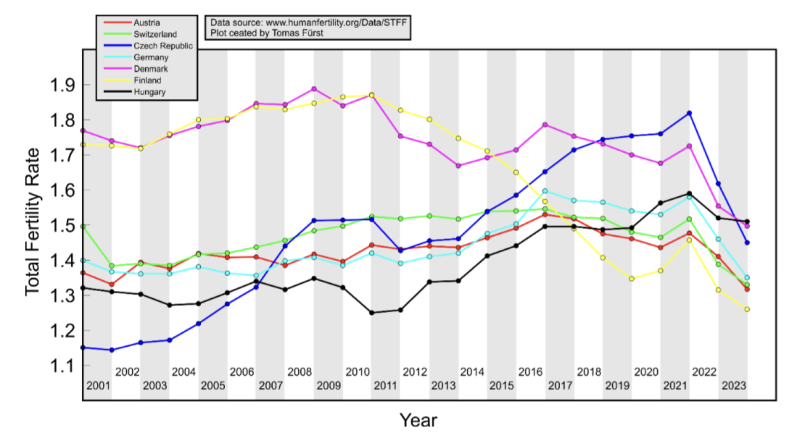
To compare fertility across countries (and time), the so-called Total Fertility Rate (TFR) is used. Roughly speaking, it is the average number of children that are born to a woman over her lifetime. TFR is independent of the number of women and of their age structure. Figure 1 below shows the evolution of TFR in several European countries between 2001 and 2023. I selected countries that experienced a similar drop in TFR in 2022 as the Czech Republic.
So, by the end of 2023, the following two points were clear:
- The drop in natality in the Czech Republic in 2022 could not be explained by demographic factors. Total fertility rate – which is independent of the number of women and their age structure – dropped sharply in 2022 and has been decreasing ever since. The data for 2024 show that the Czech TFR has decreased further to 1.37.
- Many other European countries experienced the same dramatic and unexpected decrease in fertility that started at the beginning of 2022. I have selected some of them for Figure 1 but there are more: The Netherlands, Norway, Slovakia, Slovenia, and Sweden. On the other hand, there are some countries that do not show a sudden drop in TFR, but rather a steady decline over a longer period (e.g. Belgium, France, UK, Greece, or Italy). Notable exceptions are Bulgaria, Spain, and Portugal where fertility has increased (albeit from very low numbers). The Human Fertility Project database has all the numbers.
This data pattern is so amazing and unexpected that even the mainstream media in Europe cannot avoid the problem completely. From time to time, talking heads with many academic titles appear and push one of the politically correct narratives: It’s Putin! (Spoiler alert: The war started in February 2022; however, children not born in 2022 were not conceived in 2021). It’s the inflation caused by Putin! (Sorry, that was even later). It’s the demographics! (Nope, see above, TFR is independent of the demographics).
Thus, the “v” word keeps creeping back into people’s minds and the Web’s Wild West is ripe with speculation. We decided not to speculate but to wrestle some more data from the Czech government. For many months, we were trying to acquire the number of newborns in each month, broken down by age and vaccination status of the mother. The post-socialist health-care system of our country is a double-edged sword: On one hand, the state collects much more data about citizens than an American would believe. On the other hand, we have an equivalent of the FOIA, and we are not afraid to use it. After many months of fruitless correspondence with the authorities, we turned to Jitka Chalankova – a Czech Ron Johnson in skirts – who finally managed to obtain an invaluable data sheet.
To my knowledge, the datasheet (now publicly available with an English translation here) is the only officially released dataset containing a breakdown of newborns by the Covid-19 vaccination status of the mother. We requested much more detailed data, but this is all we got. The data contains the number of births per month between January 2021 and December 2023 given by women (aged 18-39) who were vaccinated, i.e., had received at least one Covid vaccine dose by the date of delivery, and by women who were unvaccinated, i.e., had not received any dose of any Covid vaccine by the date of delivery.
Furthermore, the numbers of births per month by women vaccinated by one or more doses during pregnancy were provided. This enabled us to estimate the number of women who were vaccinated before conception. Then, we used open data on the Czech population structure by age, and open data on Covid vaccination by day, sex, and age.
Combining these three datasets, we were able to estimate the rates of successful conceptions (i.e., conceptions that led to births nine months later) by preconception vaccination status of the mother. Those interested in the technical details of the procedure may read Methods in the newly released paper. It is worth mentioning that the paper had been rejected without review in six high-ranking scientific journals. In Figure 2, we reprint the main finding of our analysis.
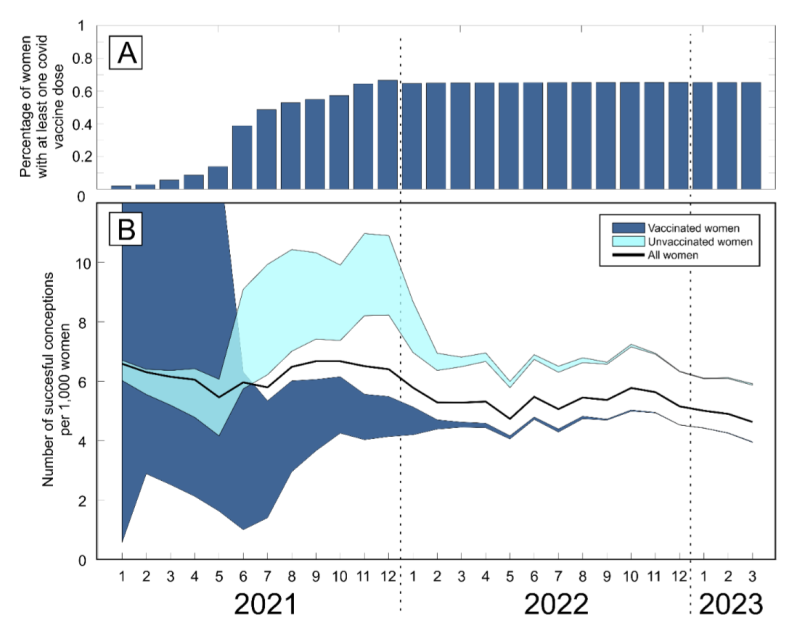
Figure 2 reveals several interesting patterns that I list here in order of importance:
- Vaccinated women conceived about a third fewer children than would be expected from their share of the population. Unvaccinated women conceived at about the same rate as all women before the pandemic. Thus, a strong association between Covid vaccination status and successful conceptions has been established.
- In the second half of 2021, there was a peak in the rate of conceptions of the unvaccinated (and a corresponding trough in the vaccinated). This points to rather intelligent behavior of Czech women, who – contrary to the official advice – probably avoided vaccination if they wanted to get pregnant. This concentrated the pregnancies in the unvaccinated group and produced the peak.
- In the first half of 2021, there was significant uncertainty in the estimates of the conception rates. The lower estimate of the conception rate in the vaccinated was produced by assuming that all women vaccinated (by at least one dose) during pregnancy were unvaccinated before conception. This was almost certainly true in the first half of 2021 because the vaccines were not available prior to 2021. The upper estimate was produced by assuming that all women vaccinated (by at least one dose) during pregnancy also received at least one dose before conception. This was probably closer to the truth in the second part of 2021. Thus, we think that the true conception rates for the vaccinated start close to the lower bound in early 2021 and end close to the upper bound in early 2022. Once again, we would like to be much more precise, but we have to work with what we have got.
Now that the association between Covid-19 vaccination and lower rates of conception has been established, the one important question looms: Is this association causal? In other words, did the Covid-19 vaccines really prevent women from getting pregnant?
The guardians of the official narrative brush off our findings and say that the difference is easily explained by confounding: The vaccinated tend to be older, more educated, city-dwelling, more climate change aware…you name it. That all may well be true, but in early 2022, the TFR of the whole population dropped sharply and has been decreasing ever since.
So, something must have happened in the spring of 2021. Had the population of women just spontaneously separated into two groups – rednecks who wanted kids and didn’t want the jab, and city slickers who didn’t want kids and wanted the jab – the fertility rate of the unvaccinated would indeed be much higher than that of the vaccinated. In that respect, such a selection bias could explain the observed pattern. However, had this been true, the total TFR of the whole population would have remained constant.
But this is not what happened. For some reason, the TFR of the whole population jumped down in January 2022 and has been decreasing ever since. And we have just shown that, for some reason, this decrease in fertility affected only the vaccinated. So, if you want to argue that a mysterious factor X is responsible for the drop in fertility, you will have to explain (1) why the factor affected only the vaccinated, and (2) why it started affecting them at about the time of vaccination. That is a tall order. Mr. Occam and I both think that X = the vaccine is the simplest explanation.
What really puzzles me is the continuation of the trend. If the vaccines really prevented conception, shouldn’t the effect have been transient? It’s been more than three years since the mass vaccination event, but fertility rates still keep falling. If this trend continues for another five years, we may as well stop arguing about pensions, defense spending, healthcare reform, and education – because we are done.
We are in the middle of what may be the biggest fertility crisis in the history of mankind. The reason for the collapse in fertility is not known. The governments of many European countries have the data that would unlock the mystery. Yet, it seems that no one wants to know.
Court Orders Bank Freezing Records in Freedom Convoy Case
By Cindy Harper | Reclaim The Net | July 9, 2025
A Canadian court has ordered the release of documents that could shed light on how federal authorities and law enforcement worked together to freeze the bank accounts of a protester involved in the Freedom Convoy.
Both the RCMP and TD Bank are now required to provide records related to Evan Blackman, who took part in the 2022 demonstrations and had his accounts frozen despite not being convicted of any crime at the time.
The Justice Centre for Constitutional Freedoms (JCCF) announced the Ontario Court of Justice ruling. The organization is representing Blackman, whose legal team argues that the actions taken against him amounted to a serious abuse of power.
“The freezing of Mr. Blackman’s bank accounts was an extreme overreach on the part of the police and the federal government,” said his lawyer, Chris Fleury. “These records will hopefully reveal exactly how and why Mr. Blackman’s accounts [were] frozen.”
Blackman was arrested during the mass protests in Ottawa, which drew thousands of Canadians opposed to vaccine mandates and other pandemic-era restrictions.
Although he faced charges of mischief and obstructing police, those charges were dismissed in October due to a lack of evidence. Despite this, prosecutors have appealed, and a trial is set to begin on August 14.
At the height of the protests, TD Bank froze three of Blackman’s accounts following government orders issued under the Emergencies Act. Then-Prime Minister Justin Trudeau had invoked the act to grant his government broad powers to disrupt the protest movement, including the unprecedented use of financial institutions to penalize individuals for their support or participation.
In 2024, a Federal Court Justice ruled that Trudeau’s decision to invoke the act had not been justified.
Blackman’s legal team plans to use the newly released records to demonstrate the extent of government intrusion into personal freedoms. According to the JCCF, this case may be the first in Canada where a criminal trial includes a Charter challenge over the freezing of personal bank accounts under emergency legislation.
Von der Leyen blames Russia for no-confidence motion

RT | July 8, 2025
European Commission President Ursula von der Leyen has dismissed efforts by members of the European Parliament to oust her, branding her critics “conspiracy theorists” and accusing them of acting on behalf of Russian President Vladimir Putin.
Von der Leyen is facing a parliamentary motion of no-confidence in her presidency, which is scheduled for a vote on Thursday after being tabled by Romanian MEP Gheorghe Piperea. Addressing the parliament during a debate on Monday, von der Leyen said those backing the proposal were following “the oldest playbook of extremists” and were attempting to undermine public confidence in the EU with “false claims.”
“There is no proof that they have any answers, but there is ample proof that many are supported by our enemies and by their puppet masters in Russia or elsewhere.”
“These are movements fueled by conspiracies, from anti-vaxxers to Putin apologists. And you only have to look at some of the signatories of this motion to understand what I mean.”
In his remarks to parliament, Piperea accused the Commission of centralizing decision-making in a non-democratic fashion and of interfering in the internal affairs of member states.
Russian officials have claimed that EU leaders are using fear tactics to shield themselves from criticism. Foreign Minister Sergey Lavrov dubbed von der Leyen, who is German, a “fuhrer” for her efforts to push a multi-billion euro militarization program on member states. Russia maintains that unlike Western states it does not interfere with other nations’ domestic affairs.
Von der Leyen urged “all the pro-Europeans, pro-democracy forces” in the chamber to support her agenda, arguing that unity was essential to uphold the EU’s foreign policy strength.
Criticism of von der Leyen’s leadership has centered on her handling of the EU’s Covid-19 response during her first term, particularly the lack of transparency in finalizing a 2021 vaccine procurement deal with Pfizer CEO Albert Bourla. Earlier this year, the European Court of Justice found her office at fault for failing to retain text messages exchanged with Bourla and for refusing to release them to journalists with adequate justification.
Piperea is a member of Romania’s AUR party, led by George Simion, who narrowly lost a presidential runoff this year to a pro-EU candidate. The election followed a scrapped first-round vote earlier in 2024, in which outsider Calin Georgescu emerged as the frontrunner. The country’s Constitutional Court annulled the results, citing government allegations of Russian interference. Critics of the EU claim the episode reflects a broader anti-democratic trend allegedly enabled by Brussels.
“Why Can’t We Talk About This?”
Rainey Media TV | June 4, 2025
Please Support Our Film via: E-Transfer: dean_rainey@yahoo.ca
PAYPAL: deanrainey@raineymedia.com
Buy My A Coffee: https://buymeacoffee.com/raineymedia
SNAIL MAIL: Rainey Media, PO Box 5, Delhi PO Main, ON, N4B 2W8 Canada
To book your own screening: deanrainey@raineymedia.com
“Why Can’t We Talk About This?” delves into the life of a man grappling with the aftermath of a COVID-19 vaccine injury, weaving his personal struggle into a broader examination of why such experiences are rarely discussed.
To help Michael via support: https://www.gofundme.com/f/benefit-fo…
We’ve made this film easily accessible for everyone because the information it contains and the discussion it starts is just too important. This film had no funding and was made without sponsorship. All costs were paid out of my own pocket. My team and I spent over a year and a half making this film. Any support you give will go towards expenses incurred making and marketing the movie. (Even sending the price of a movie ticket would help.) Once we cover those costs, we will be providing Michael with a share of the proceeds.
To order DVDs of this film, visit: https://raineymedia.com/video-store/
Also available on Rumble.
Featured Video

The Most Important Bet You’ve Never Heard Of
or go to
Aletho News Archives – Video-Images
From the Archives
Wars for Israel: A reminder of who’s giving the marching orders
By Damian Lataan | February 7, 2012
As the West prepares to march off to yet another war in the Middle East, we should perhaps remind ourselves of who is giving the West their marching orders.
In February 2003, just weeks before the US and their allies launched their attack on Iraq and her peoples, a delegation of US congressmen, together with the US Ambassador to the United Nations, John Bolton, a well known pro-Zionist and neoconservative war-hawk, were in Israel at the invitation of the Israeli government then led by Israeli Prime Minister Ariel Sharon.
Addressing the congressmen, Sharon told them ‘that Iran, Libya and Syria should be stripped of weapons of mass destruction after Iraq’. Later, Sharon told John Bolton ‘that Israel was concerned about the security threat posed by Iran, and stressed that it was important to deal with Iran even while American attention was focused on Iraq’. … continue
Blog Roll
 Aletho News
- IRGC hits US tech giant Oracle’s data center, computing site in UAE over new assassinations
- Bombing Iran Back Into the Stone Age /Lt Col Daniel Davis & Jim Jatras
- UAE rejects report claiming it is ready to join war on Iran to reopen Hormuz
- A New Resistance Front: How Does Syria Factor into the Regional War?
- Gulf states weigh pipeline expansion plans, hoping to bypass Hormuz
- Iran sets up ‘tollbooth’ system in Strait of Hormuz
- Wave 90: IRGC strikes US-linked industrial sites in Gulf
- Iran Says US-Israeli Claims of Its Military Strength Are Wrong
- Trump’s April Fools’ Address to the nation
- The Most Important Bet You’ve Never Heard Of
- If Americans Knew
- ‘War crime’: Global condemnation as Israeli ministers celebrate death penalty law targeting Palestinian prisoners
- 7 Ways Israel Is Turning Lebanon Into Gaza
- World’s Leading Football Bodies Under Fire Over Israel Policies
- Experts warn of possible use of nukes against Iran
- Israeli invasion of Lebanon could be worse than 1982, warn European officials
- Passover: Liberation and collective punishment
- Trump says the quiet part out loud: (Israel’s) war on Iran > Americans’ health – Daily Update
- Gaza families reunite years after babies evacuated amid Israel’s war
- International Rescue Committee warns Gaza’s children face grave protection risks
- Iran’s Alleged 47-Year War on America: Debunking the 1,050 American Deaths Canard
- No Tricks Zone
- Low Intensity Tornado Wrecks Major Solar Farm, Creating A Potential Toxic Dump
- New Study Finds Warming Saves Lives…Cold Temperatures 12 Times More Deadly Than Excess Heat
- German Science Blog Accuses PIK Climate Institute Of Hallucinating Climate Tipping Points
- Devastating Assessment Of Comirnaty Vaccine By Former Senior Pfizer Europe Toxicologist
- New Study: CO2 Is ‘Effectively Negligible’ As An Explanatory Climate Change Factor Since 2000
- Former Pfizer Toxicologist Dr. Helmut Sterz Tells Bundestag Hearing Pfizer Vaccine Should Have Never Been Approved
- Energy Expert: Germany’s Nuclear Phaseout Was A “500 Billion Euro Mistake”
- New Research: South Australia’s Mid-Holocene Sea Surface Temperatures Were 4°C Warmer Than Today
- Storing Green Energy To Last Germany 10 Days Would Require A 60-Million Tonne Battery
- New Studies: UK Sea Levels Were 4 Meters Higher Than Today During The Mid-Holocene
 Aletho News