The Global Purge Of Independent Leaders (2020-2022)
A chronological overview of leadership changes and the policy pivots that followed
Health And Truth and Mark Stronge | October 28, 2025
From early 2020 onward, a repeating script unfolded: a head of state voiced skepticism of lockdowns, PCR testing, or experimental mRNA vaccines; international agencies scolded them; chaos or “illness” struck; and within weeks new officials delivered full compliance and suddenly unlocked frozen aid money. The alignment was worldwide—different cultures, same choreography.
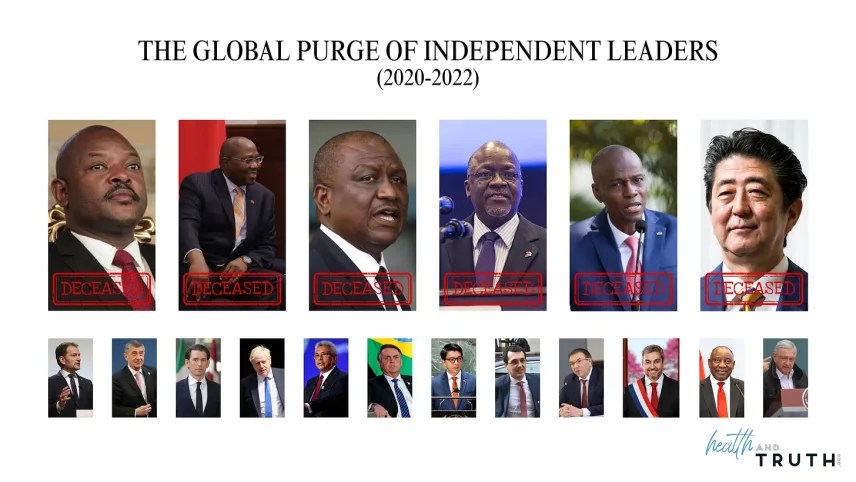
1. Burundi – Pierre Nkurunziza
In Burundi, President Pierre Nkurunziza expelled the World Health Organization from his country in May 2020, saying foreign interference was undermining national sovereignty. He kept the nation open while neighboring states imposed severe restrictions. Merely two weeks after that decision he was dead, officially of a “heart attack,” though associates described him as being in vibrant health. His successor, Évariste Ndayishimiye, reversed course immediately, reopened WHO offices, and signed new vaccine and funding arrangements that brought Burundi back into the international fold.
- Backdrop: In spring 2020 the government halted WHO field work, accusing it of interfering with domestic affairs. Burundi rejected external pandemic restrictions and held public gatherings normally.
- Event: Nkurunziza died suddenly 8 June 2020 while still in office; official cause – cardiac arrest.
- Immediate shift: Successor Évariste Ndayishimiye re‑opened WHO offices, declared COVID‑19 a “national priority,” invited vaccine partnerships, and received roughly $24 million in rapid IMF assistance.
- Result: Burundi signed onto COVAX distribution in 2021 after having been one of the continent’s last hold‑outs.
2. Eswatini – Ambrose Dlamini
In Eswatini (formerly Swaziland), Prime Minister Ambrose Dlamini resisted extreme lockdown policies, insisting that starving citizens to stop a virus was immoral. In December 2020 he was taken to South Africa “for observation” and declared dead soon afterward. The royal government that replaced him moved quickly to impose strict curfews, accept COVAX vaccines, and collect foreign emergency aid.
- Backdrop: The businessman‑turned‑PM favoured balanced restrictions, warning that closing trade would worsen poverty.
- Event: Tested positive for SARS‑CoV‑2, transferred to South Africa, and died 13 Dec 2020.
- Aftermath: King Mswati III and his cabinet adopted curfews, mandatory masking, and joined regional COVAX planning.
- Economic follow‑up: The African Development Bank confirmed a $10 million grant under the COVID‑19 Response Support Programme in early 2021.
3. Ivory Coast – Hamed Bakayoko
A similar disappearance occurred in Ivory Coast. Hamed Bakayoko, the charismatic prime minister, had publicly encouraged herbal treatments and questioned the accuracy of PCR diagnostics. In March 2021 he died in Germany of “cancer,” barely eight months after his predecessor suffered a similar fate. His passing removed the last voice questioning WHO dependence. President Alassane Ouattara’s administration proceeded to import AstraZeneca doses through COVAX, and by summer the country was being praised for its “responsible leadership.”
- Backdrop: The popular Prime Minister promoted herbal remedies and localized treatment efforts while maintaining open borders for trade.
- Event: Died 3 Mar 2021 in Germany where he was under cancer treatment; preceded by the death of previous PM Amadou Gon Coulibaly eight months earlier.
- Aftermath: President Alassane Ouattara named Patrick Achi acting PM; by May, 504 000 AstraZeneca doses had been deployed through COVAX.
- Funding: World Bank approved $300 million for emergency health and education programmes that quarter.
4. Tanzania – John Magufuli
The next to fall was Tanzania’s John Magufuli, Africa’s most outspoken skeptic of mass testing and vaccines. He mocked the system by demonstrating that fruit and goats tested positive for COVID. After vanishing from public view in March 2021, the vice‑president announced that he had died of heart failure. His replacement, Samia Suluhu Hassan, promptly reversed every one of his policies, accepted a $600 million IMF “emergency” loan, reopened the gates to foreign pharmaceutical programs, and declared a massive vaccination drive before year’s end.
- Backdrop: Highly skeptical of PCR testing accuracy and mass vaccination; prioritized economic continuity.
- Event: Absent from view in March 2021 for two weeks; Vice President Samia Suluhu Hassan announced his death 17 March (heart failure).
- Aftermath: New administration reinstated public health briefings, reopened WHO cooperation, applied for IMF Rapid Credit Facility ($600 million approved Sept 2021).
- Policy transformation: Vaccine programmes, mask campaigns, and international data reporting began within ninety days.
5. Haiti – Jovenel Moïse
Then came Haiti, where Jovenel Moïse had rejected donated vaccine shipments, explaining that the country faced deeper issues of water and poverty. On July 7 2021, he was executed in his home by an armed team whose origins remain murky. Within three weeks, Haiti received half a million Moderna doses from COVAX and enjoyed renewed flows of Inter‑American Development Bank and USAID funding. The national policy flipped overnight.
- Backdrop: Refused early COVAX vaccine delivery, arguing sanitation and nutrition were greater priorities.
- Event: Assassinated 7 Jul 2021 by a commando team; political motives still contested.
- Aftermath: First COVAX shipment of 500 000 Moderna doses landed 14 July 2021.
- Financial context: Inter‑American Development Bank and USAID re‑released more than $60 million in suspended grants under the “COVID‑19 Recovery Program.”
6. Japan – Shinzo Abe → Yoshihide Suga → Fumio Kishida
In Japan, Prime Minister Shinzo Abe avoided harsh lockdowns and refused to make vaccination compulsory. In August 2020 he resigned citing chronic illness, a convenient exit for global interests irritated by Japan’s autonomy. His successor Yoshihide Suga approved emergency authorization for the Pfizer vaccine within weeks, and after political struggles Fumio Kishida continued the same line, expanding booster programs and digital health passes. When Abe, now a private citizen and public skeptic of global centralization, was assassinated in July 2022, the last independent conservative bastion in Japan’s establishment disappeared. The current government invested ¥4.5 trillion—about $40 billion—in mRNA infrastructure partnerships with Western firms.
- Backdrop: Abe resisted extreme lockdowns and mandatory passes; preferred voluntary distancing.
- Resignation: Aug 2020 due to chronic illness; Suga took over and immediately authorized Pfizer vaccine imports (Feb 2021).
- Transition: Kishida succeeded Suga Oct 2021 after election; expanded booster campaigns and health‑pass apps.
- Abe’s assassination: 8 Jul 2022 in Nara; investigation officially attributed to a personal grudge.
- Post‑event: Japan pledged ¥4.5 trillion (≈ $40 billion) in bio‑innovation investment partly for mRNA research.
7. Slovakia – Igor Matovič
Slovakia followed the pattern in March 2021 when Igor Matovič, who had attempted to purchase Russia’s Sputnik V vaccine outside the European Union’s centralized supply, was forced out after furious criticism from Brussels. His successor Eduard Heger rejoined the EU’s procurement framework and in return unlocked €6.3 billion in recovery funds.
- Backdrop: Purchased Sputnik V without EU approval to widen supply options.
- Event: Coalition crisis culminated March 2021 in his resignation.
- Aftermath: New PM Eduard Heger froze Sputnik imports, conformed to EU purchasing pool, and unlocked €6.3 billion EU Recovery Funds.
8. Czech Republic – Andrej Babiš
Nearby, the Czech Republic saw Prime Minister Andrej Babiš lose power at the end of 2021 after refusing to maintain endless pandemic states of emergency. His replacement Petr Fiala implemented vaccine passports and mass‑testing decrees soon afterward, bringing the nation into perfect accord with EU directives.
- Backdrop: Initially resisted heavy lockdowns, favored voluntary vaccination.
- Event: Lost October 2021 election amid strong pro‑mandate media push.
- Aftermath: Petr Fiala government mandated digital health passes (“Tečka” app) and extended state‑support contracts with Pfizer/Moderna.
9. Austria – Sebastian Kurz
Austria lost Sebastian Kurz the same year. Once a rising star who had questioned perpetual lockdowns, Kurz resigned under the weight of a corruption scandal in October 2021. Within days his successor announced Europe’s first universal vaccine mandate and qualified the country for €4.5 billion in European Stability Mechanism funding.
- Backdrop: Pushed for reopening and questioned perpetual emergency powers.
- Event: October 2021 resignation after prosecution alleged misuse of party funds.
- Aftermath: Successor Alexander Schallenberg announced universal vaccination January 2022; European Stability Mechanism distributed ≈ €4.5 billion in recovery funding.
10. United Kingdom – Boris Johnson
In the United Kingdom, Boris Johnson’s government had ended restrictions in mid‑2021 and refused to make vaccine passports a permanent condition of daily life. The press then exploded with “Partygate” scandals over gatherings during lockdown. Johnson resigned in 2022, replaced by Rishi Sunak, who restored Britain to full WHO cooperation and financed a £2 billion digital‑health‑ID system intended to prevent “misinformation.”
- Backdrop: Repealed many restrictions July 2021 (“Freedom Day”), angering zero‑COVID advocates.
- Event: Forced resignation mid‑2022 after “Partygate.”
- Aftermath: Rishi Sunak government supported the WHO pandemic‑treaty process and invested £2 billion in NHS digital ID infrastructure through Palantir‑backed data platforms. Within weeks of taking office, Downing Street announced negotiations with Moderna to establish a permanent mRNA‑manufacturing base — a 10‑year “strategic partnership” followed with construction of a mRNA vaccine research, development, and manufacturing centre in Harwell Science Park (Oxfordshire), projected to produce up to 250 million doses a year in a future outbreak. This collaboration was framed as part of the UK’s “100‑Day Mission” to deliver vaccines within 100 days of identifying a new pathogen; the mission itself originated from G7 and G20 pandemic‑preparedness pledges.
11. Sri Lanka – Gotabaya Rajapaksa
Half a world away in Sri Lanka, President Gotabaya Rajapaksa argued that global supply sabotage and debt were worse problems than COVID. By mid‑2022 coordinated protests and economic chaos forced him to flee abroad. Within weeks, the IMF approved a $3 billion bailout that required health‑security reforms and the adoption of digital‑surveillance frameworks under WHO supervision.
- Backdrop: Advocated reopening, claimed economic sabotage larger threat than virus.
- Event: Mass protests July 2022 amid fuel and food shortages.
- Aftermath: New interim government signed a $3 billion IMF agreement mandating fiscal reform and health‑security modernization.
12. Brazil – Jair Bolsonaro
Brazil completed the second‑wave phase of this storyline. President Jair Bolsonaro ridiculed mask mandates, called lockdowns a luxury for the rich, and questioned vaccine safety. After two furious years of constant hostility from media conglomerates and international NGOs, he lost the 2022 election. Lula da Silva took office, rejoined WHO initiatives, and secured a $1.2 billion World Bank “preparedness” loan.
- Backdrop: Dismissed lockdowns as “hysteria,” resisted vaccine coercion.
- Event: Lost 2022 election to Lula da Silva after two years of hostile media coverage.
- Aftermath: Brazil re‑entered WHO initiatives, COVAX procurement, and secured World Bank Preparedness Loan ($1.2 billion).
13. Madagascar – Andry Rajoelina
Along the African coast to Madagascar, President Andry Rajoelina had introduced his own herbal remedy, COVID‑Organics, and rejected Western pharmacology. In 2021 an attempted coup shook the island, and under global pressure Rajoelina signed new agreements restoring WHO cooperation that same year so donor funding could return.
- Backdrop: Promoted herbal tonic “COVID‑Organics” (artemisia‑based), claiming national self‑reliance.
- Event: July 2021 coup attempt; several senior officers arrested.
- Aftermath: Rajoelina accepted WHO cooperation and external medical aid later that year, restoring aid flows suspended in 2020.
14. Romania – Vlad Voiculescu Minister of Health
Appointed in December 2020 under Prime Minister Florin Cîțu, Voiculescu quickly became one of Eastern Europe’s most outspoken advocates for data transparency within the vaccine‑procurement process.
He questioned:
- why the European Commission’s contracts with Pfizer/BioNTech and Moderna were heavily redacted;
- the procedure for reporting adverse events and hospital bed usage;
- and financial allocation for Romania’s “Green Certificate” system.
In April 2021, Voiculescu alleged irregularities in the way national statistics on Covid mortality were reported (he said hospital figures were being “massaged” to fit EU targets).
Within 48 hours, Prime Minister Cîțu dismissed him (14 April 2021). That dismissal fractured the ruling coalition and was widely interpreted as pressure from Brussels and Bucharest business lobbies to restore “credibility” with EU health authorities.
- Backdrop: In 2021 Romanian minister objected to secrecy of EU vaccine contracts.
- Event: Dismissal and cabinet reshuffle.
- Aftermath:
- Florin Cîțu — Prime Minister (National Liberal Party), an economist trained in the US and a former banker, had emphasized cooperation with the European Commission’s Recovery Facility.
- Immediately after Voiculescu’s removal, Cîțu approved the formal implementation of the EU Digital COVID Certificate
- He signed Romania’s Recovery and Resilience Facility plan for €29 billion (approved September 2021).
- Cîțu later lost internal party support and was replaced by Nicolae Ciucă (2021 December).
- Raed Arafat — Secretary of State, Chief of the Department for Emergency Situations, a longtime figure in Romanian health management (specialist of Palestinian background), spearheaded the nationwide lockdown operations.
- He became polarizing — praised for emergency coordination but criticized for advocating strict curfews and mandatory digital passes.
- Through his influence, Romania aligned with EU Civil Protection Mechanisms and WHO technical advisories.
- Government enforced EU Digital COVID Certificates.
- Brussels released tranches of Recovery and Resilience Facility funds (€29 billion total plan).
- Florin Cîțu — Prime Minister (National Liberal Party), an economist trained in the US and a former banker, had emphasized cooperation with the European Commission’s Recovery Facility.
15. Bulgaria – Kostadin Angov
Appointed during the closing months of Prime Minister Boyko Borisov’s third administration, acting Health Minister Kostadin Angov (2020 – 2021) faced severe criticism from Brussels for Bulgaria’s slow vaccine rollout and limited transparency regarding distribution data. Angov and Borisov’s cabinet were accused of delaying orders through the EU’s joint procurement scheme, preferring to wait for additional safety results before committing to large Pfizer/Moderna contracts.
By late March 2021, Bulgaria had one of the lowest vaccination rates in the European Union and was publicly rebuked by the European Commission for “failure to utilize allocated supply quotas.”
Backdrop: By early 2021, Bulgaria’s center‑right government under Boyko Borisov had lost support amid apparent corruption scandals unrelated to health policy but amplified by public anger over uneven lockdown enforcement and vaccine delays. Multiple cabinet ministers, including acting Health Minister Angov, were called before parliamentary committees to justify the government’s refusal to impose stricter green‑pass rules or to publish full statistics on vaccine deliveries.
Event: In April 2021, Borisov’s GERB party failed to form a coalition following a general election; the president appointed Stefan Yanev as caretaker prime minister, and Stoycho Katsarov — a former deputy minister and health‑reform activist — assumed the health portfolio. Katsarov announced immediate compliance with EU digital pass protocols and promised rapid adoption of the COVID Certificates system, stating that “communication with Brussels must be restored through transparency and vaccination.”
Aftermath: Within three months of the caretaker cabinet’s installation, Bulgaria joined the EU Digital Green Certificate scheme (July 2021), issued its own national app, and implemented tightened entry controls for public venues. The European Commission then approved Bulgaria’s €6 billion Recovery and Resilience Facility allocation (approved December 2021) after earlier postponements linked to “governance deficiencies.”
Katsarov and Yanev argued the shift was strictly technocratic, yet domestic media framed it as the price of unlocking EU funds frozen under Borisov. Moreover, WHO country officers held joint press briefings in Sofia throughout autumn 2021, publicly graduating Bulgaria from a “non‑compliant” to a “fully aligned EU‑health partner.” Later that year a second caretaker cabinet retained the same policies to preserve continued Brussels cooperation.
Government Outcome: By the end of 2021 Bulgaria had moved from partial defiance to complete compliance with EU and WHO health requirements. The turnover of Borisov’s administration and replacement with technocratic caretaker officials effectively cleared the way for release of European recovery funds for health‑system modernization and digital infrastructure projects.
Summary of Sequence
- Initial reluctance to join EU vaccine mandates and delays in accepting digital certificate standards.
- Electoral defeat of incumbent government after months of European pressure and domestic unrest.
- Caretaker administration’s rapid embrace of EU and WHO frameworks.
- Approval of €6 billion in Recovery Funds and re‑establishment of good standing with Brussels.
16. Paraguay – Mario Abdo Benítez
Paraguay’s experience exemplifies how smaller Latin American economies were forced to align pandemic policies with international credit conditions. President Mario Abdo Benítez’s government initially emphasized economic stability over draconian lockdowns, warning that strict restrictions would devastate informal workers who make up more than 60% of the labour market. However, as domestic protests intensified and foreign creditors tightened lending conditions, the administration conceded to the IMF’s stipulations that pandemic‑response financing be tied to specific “public‑health governance commitments.” Once those commitments were accepted, loan disbursements resumed, showing how financial contingency mechanisms coerced health‑policy conformity.
- Backdrop: Through 2020 and early 2021 Paraguay maintained one of South America’s least restrictive lockdown regimes. The government was reluctant to mandate vaccinations or fully close borders with Brazil and Argentina.
- Event: In March 2021 mass protests erupted in Asunción over shortages of medical supplies and alleged corruption in procurement; opposition parties launched a failed impeachment attempt against President Abdo Benítez.
- Aftermath: To restore credit stability, the finance ministry agreed to conditions attached to an IMF Rapid Financing Instrument (≈ $274 million) earmarked for health expenditure auditing and expansion of surveillance systems. By late 2021 Paraguay was fully aligned with WHO and Pan American Health Organization recommendations.
- Outcome: Government stability was restored after external financing resumed, but policy autonomy remained limited by credit conditionality.
17. South Africa – Cyril Ramaphosa
South Africa began as a reluctant participant in strict global pandemic protocols. President Cyril Ramaphosa voiced concerns that extended lockdowns could fuel unrest and economic collapse, and he pushed for Africa‑wide vaccine intellectual‑property waivers rather than Western purchases. Nevertheless, as international ratings agencies threatened downgrades and IMF/World Bank assistance was made contingent on “strengthened public‑health governance,” South Africa shifted its course, introducing some of the continent’s strictest workplace vaccine rules.
- Backdrop: From early 2020 to mid‑2021 Ramaphosa’s cabinet clashed with business unions and community organizations over the cost of lockdowns versus public‑health benefit. Debt pressures soared following a 10% GDP contraction in 2020.
- Event: The National Treasury secured a $4.3 billion IMF loan (July 2020) and a World Bank loan of $750 million (Jan 2022) containing performance benchmarks for pandemic containment and “human capital protection”.
- Aftermath: By December 2021 South Africa announced mandatory vaccination for public‑sector employees and participation in the WHO vaccine passport initiative. Foreign aid disbursement and sovereign bond ratings stabilized only after these steps.
- Outcome: Policy alignment improved credit access but deepened domestic inequality and led to significant civil‑liberty litigation and ongoing parliamentary inquiries into procurement transparency.
18. Mexico – Andrés Manuel López Obrador
Mexico under Andrés Manuel López Obrador (AMLO) presented one of the last major cases of gradual capitulation to WHO and multilateral financial pressures. Initially AMLO resisted mandatory lockdowns and booster campaigns, insisting that national public‑health policy should focus on nutrition and poverty reduction. However, a combination of supply‑chain disruption, dollar liquidity concerns, and lobbying from international philanthropic networks (CEPI, GAVI, and the Gates Foundation) eventually pushed Mexico toward full policy compliance by 2022.
- Backdrop: Throughout 2020 Mexico’s Health Secretary Jorge Alcocer and Under‑secretary Hugo López‑Gatell advocated moderate restrictions and non‑coercive vaccine rollout. The country’s mortality surged during mid‑2021, provoking foreign and domestic pressure for a policy shift.
- Event: Facing threat of credit downgrades, the Finance Ministry began talks with the World Bank and IMF for infrastructure loans linked to public‑health reform. In December 2021 Mexico signed a joint memorandum of understanding with WHO and CEPI for “bio‑pharmaceutical collaboration and vaccine development capacity”.
- Aftermath: Through 2022 Mexico aligned its vaccine certification systems with the COVAX framework and expanded digital health records for the Ministry of Health, unlocking up to $1 billion in World Bank Covid‑response financing.
- Outcome: By 2023 Mexico was publicly touted by WHO offices as a “model for integrated pandemic response,” demonstrating how international credit leverage transformed a once‑independent policy line into strict adherence with global health‑security standards.
Summary of Observable Trends
- Chronology: Deaths of Nkurunziza, Dlamini, Bakayoko, Magufuli, and Moïse opened the sequence (Jun 2020 – Jul 2021). Political collapses in Europe, Asia, and the Americas followed through 2022.
- Policy effect: Every successor endorsed WHO recommendations and entered international funding arrangements that had been unavailable under predecessors.
- Financial trigger: Aid packages—IMF Rapid Credit, World Bank preparedness loans, EU Recovery mechanisms—were routinely disbursed within 30–90 days of the leadership change.
Key Takeaway
From 2020 to 2022, the result was unmistakable: national autonomy collapsed beneath a synchronized agenda linking public‑health compliance to economic salvation. Countries that resisted early, especially in Africa, suffered the hardest blows—five sitting leaders dead in one year. More powerful nations experienced subtler coups through scandal, protest, or economic blackmail, all producing the same end state.
What emerged from these parallel crises was not medical harmony but political homogenization. Each successor declared a “renewed partnership with science,” welcomed new funding from the IMF, World Bank, or GAVI, and ushered in digital‑compliance systems that now define post‑pandemic governance.
By the end of 2022 nearly every government on Earth—rich or poor, democratic or autocratic—had been brought into alignment. Differing flags, languages, and histories no longer prevented one shared choreography: resistance punished, obedience financed, and sovereignty quietly exchanged for a coordinated global script.
- IMF Press Release – Rapid Credit Facility for Burundi (June 2020).
- Reuters / AP Report – Death of Eswatini Prime Minister (Dec 2020).
- African Development Bank – COVID‑19 Response Support Programme (2021).
- World Bank – Ivory Coast Emergency Support Project (2021).
- IMF Press Release No. 21/210 – Tanzania RFI (Sept 2021).
- Associated Press – “President of Haiti Assassinated at Home” (July 2021).
- IDB Official Statement on Haiti Relief Funding (2021).
- Japan Cabinet Office – Resignation of PM Abe (Aug 2020).
- Nikkei Asia – “Japan Invests in mRNA Manufacturing” (2022).
- 1European Commission – Next Generation EU Fund Allocation to Slovakia (2021).
- Czech News Agency – Election Results and Policy Changes (2021).
- Austrian Prosecution Service – Kurz Investigation Report (2021).
- EU Council Press Release – Austria ESM Allocation (2022).
- UK Parliamentary Record – Digital Health Infrastructure Funding (2022).
- IMF Staff Report – Sri Lanka Extended Fund Facility (March 2023).
- World Bank – Brazil Pandemic Preparedness Loan (2022).
- WHO Madagascar Country Office – Cooperation Agreement (2021).
- European Commission – Romania RRF Approval (2021).
- European Commission – Bulgaria RRF Approval (2021).
- IMF Country Report – Paraguay Pandemic Financing (2021).
- IMF Country Report – South Africa Fiscal Support Arrangements (2021).
- WHO / CEPI Press Release – Mexico Cooperation Agreement (2022).
- IMF Country Report – Paraguay Rapid Financing Instrument 2021.
- BBC News Latin America – “Protests Rock Paraguay Over Pandemic Supplies,” March 2021.
- Finance Ministry of Paraguay – Press Release on IMF Commitments April 2021.
- South African Reserve Bank Annual Report 2021.
- IMF Press Release No. 20/315 – South Africa Loan Approval; World Bank Loan Press Brief 2022.
- Reuters – “South Africa Adopts Mandatory Public‑Sector Vaccination Policy,” December 2021.
- El Universal – “López‑Gatell Sabemos que no habrá vacunación obligatoria,” 2020.
- WHO / CEPI – Memorandum on Mexico Vaccine Collaboration, December 2021.
- World Bank – “Mexico COVID‑19 Emergency Response Project,” 2022.
‘Formal, Unequivocal Apologies’ Needed to Restore Public Trust After COVID Vaccine Mandates
By Jill Erzen | The Defender | October 15, 2025
The public deserves “formal, unequivocal apologies from governments and medical bodies” for COVID-19 vaccine mandates and for “silencing truth seekers,” according to a paper published Oct. 9 in the journal Science, Public Health Policy and the Law.
Vaccine mandates and lack of transparency during the COVID-19 pandemic eroded public trust, which deepened the divide between health authorities and the people they serve, according to authors Dr. Aseem Malhotra and Andrea Lamont Nazarenko, Ph.D.
“The pandemic demonstrated that when scientific integrity is lacking and dissent is suppressed, unethical decision-making can become legitimized,” they wrote. “When this happens, public confidence in health authorities erodes.”
Trust in public health agencies plummeted during the pandemic. Confidence in decision-making at the Centers for Disease Control and Prevention (CDC) fell from 73% in 2020 to 61% in 2025, according to polling firm KFF.
Public opinion on physicians and hospitals also suffered, with trust dropping from 71.5% in April 2020 to 40.1% in January 2024, according to a study in JAMA Network Open.
Restoring faith in public health agencies requires “long overdue” apologies, as well as “full transparency of data, independent evaluation of evidence, and accountability through both policy change and public acknowledgment of harm,” the paper’s authors said.
‘Pandemic of the vaccine injured’
The “safe and effective” narrative surrounding the COVID-19 vaccine shifted over the years toward “unsafe and defective,” according to the authors.
Policymakers’ unwillingness to acknowledge the vaccine’s emerging safety signals may be “the most egregious failure” of all. “We are currently facing what some call a ‘pandemic of the vaccine injured,’” the authors said.
In 2022, a study in the journal Vaccine found that the risk of serious harms from the COVID-19 vaccine was two to four times greater than the risk of being hospitalized with COVID-19. That same year, researchers surveyed 40,000 Germans and found a high rate of severe side effects from the COVID-19 vaccine that persisted for months or longer.
Studies from 2025 suggest the risks may not decrease over time.
- A preprint study found that genetic material contained within mRNA COVID-19 vaccines can integrate into the human genome, potentially contributing to the onset of aggressive cancer.
- An analysis of a Japanese database of 18 million people showed that people who received COVID-19 vaccines had a significantly higher risk of death in the first year after vaccination compared to the unvaccinated, and the risk increased with each additional dose.
- A peer-reviewed study published in EXCLI Journal was the first to uncover statistically significant evidence of increased cancer risk following COVID-19 vaccination in Italy.
In public health, policymakers must anchor their decisions in cumulative evidence that evolves with new knowledge, according to Malhotra and Nazarenko. “It is a profound failure of scientific and ethical responsibility to overlook these safety concerns,” they wrote.
Health systems must adjust to manage ‘psychological fallout’ of pandemic
The authors said the health risks revealed by the emerging COVID-19 vaccine studies illustrate one of the central lessons of the pandemic: evidence evolves. Policies must be adjusted as new evidence comes to light, but that didn’t happen, they wrote.
“If the full body of research ultimately shows a net harm from COVID-19 vaccination and pandemic-era policies, the greater barrier will be psychological, not scientific,” Malhotra and Nazarenko said. “Our social systems must therefore be prepared to manage the psychological fallout, responding with clarity and compassion.”
To rebuild legitimacy, institutions must actively uphold ethical principles that prioritize the public over political or corporate interests, they said. The U.S. Department of Health and Human Services (HHS) is taking steps in this direction, according to the authors.
In September, U.S. Health Secretary Robert F. Kennedy Jr. led two roundtable discussions on long COVID that included doctors, researchers and patients. The talks were, in part, in response to “the calls that I get almost every day from people who are suffering from long COVID across the country and don’t know where to go and feel that their voices aren’t being listened to,” Kennedy said.
In August, Kennedy canceled nearly $500 million in contracts and grants intended to develop mRNA vaccines. “We reviewed the science, listened to the experts, and acted,” Kennedy said in announcing the move.
Restoring public trust hinges on informed consent and shared decision-making, according to the authors.
“A contributing factor to the prevalence of injury has been the extent to which government officials and public health authorities overrode the doctor-patient relationship, taking precedence over the ethics of individualized medicine,” they wrote.
Earlier this month, the CDC handed supporters of informed consent a win by updating its childhood immunization schedule to emphasize individual-based decision-making for COVID-19 vaccination in children 6 months and older.
‘Suppression may quiet critics, but it suffocates science’
In 2024, the journal Cureus retracted the first peer-reviewed paper to provide an extensive analysis of COVID-19 mRNA vaccine trial data and post-injection injuries.
“Silencing contestation is not a neutral choice; it is contrary to the methods by which science corrects itself,” Malhotra and Nazarenko said.
“Voices that push the mainstream should be encouraged, not silenced. Yet, contemporary public health often substitutes condemnation for curiosity, marginalizing dissent even when data warrant debate,” they wrote.
According to the authors, Kennedy’s critics provide “the most striking example of silencing opposition.”
Vaccine lobbyists at a leading biotech industry trade group purportedly criticized Kennedy’s “anti-vaccine stance” during an April meeting, calling him a “direct threat to public health.” A spokesperson for the organization denied the statements.
Kennedy’s policies at the HHS have sparked similar claims from six former U.S. surgeons general, who said he is “endangering the health of the nation.” Several senators have made similar assertions and called for Kennedy’s resignation.
Corporations and regulatory bodies commonly use character assassination to weaken their opposition, according to the paper’s authors. Those in power silence dissent by discrediting critics with smear campaigns and labels like “anti-vaxxer,” shifting focus from evidence to identity.
“Suppression may quiet critics, but it suffocates science,” Malhotra and Nazarenko wrote. “The remedy for disagreement is better evidence and open debate — not censorship or character assassination. Robust science requires robust dissent.”
This article was originally published by The Defender — Children’s Health Defense’s News & Views Website under Creative Commons license CC BY-NC-ND 4.0. Please consider subscribing to The Defender or donating to Children’s Health Defense.
Houston Hospital Denies Refusing Organ Transplants to Unvaccinated Patients
By Brenda Baletti, Ph.D. | The Defender | October 15, 2025
A Houston hospital accused of denying organ transplants to patients who haven’t been vaccinated against COVID-19 today told The Defender it “does not have a policy requiring transplant patients to be vaccinated against COVID-19, or any other disease, and does not deny care based on vaccination status.”
“We abide by all state laws and, as one of the largest transplant programs in the country, the safety of our patients always comes first,” Houston Methodist Hospital said in a statement.
The allegations stem from Texas Attorney General Ken Paxton, who stated in a letter that his office may investigate Houston Methodist Hospital for allegedly denying organ transplants to patients who refused the COVID-19 vaccine, according to a letter his office sent the hospital.
The letter to Houston Methodist Hospital’s President and CEO Marc L. Boom cited a July 24 X post by Texas doctor Mary Tally Bowden. The post included a screenshot of the hospital’s transplant policy showing that patients seeking a kidney transplant must receive the COVID-19 shot.
Monday, Bowden posted Paxton’s press release on X, claiming she had “written and oral proof (recorded conversation)” that the hospital required transplant patients to get the shots. “To my knowledge, their policy has not changed,” she added.
Bowden previously worked at Houston Methodist Hospital. The hospital suspended her privileges after she prescribed ivermectin to prevent and treat COVID-19. The hospital also accused her of spreading “misinformation.”
Bowden sued Houston Methodist after hospital officials refused to provide public information about the institution’s finances during the pandemic.
In the press release issued Monday, Paxton said, “Texans looking to receive medical care should never be turned away due to arbitrary COVID-19 vaccine mandates imposed by woke medical providers.”
He added:
“Vaccine mandates as a precondition for certain life-saving treatments may not only violate new state laws that became effective on September 1, but they also violate human dignity and run contrary to foundational principles of medical ethics. That’s why I’ve requested that Houston Methodist Hospital clarify its compliance with Texas’s new laws and position on vaccine mandates.”
The hospital has 14 days to notify the Texas Office of the Attorney General (OAG) about the steps it has taken to comply with the recently passed provision in the Texas Health and Safety Code, which prohibits denying organ transplants based on vaccination status.
The OAG said it will open a formal investigation if the hospital fails to respond.
Paxton’s office said its letter to the hospital “reaffirms Attorney General Paxton’s stance against COVID-19 vaccine mandates and reflects his commitment to protecting the rights and freedoms of Texans by challenging unlawful vaccine mandates.”
In recent years, Paxton’s office has challenged Big Pharma’s actions related to COVID-19 shots and weight-loss drugs, and has investigated toothpaste companies for deceptive marketing geared toward children.
This article was originally published by The Defender — Children’s Health Defense’s News & Views Website under Creative Commons license CC BY-NC-ND 4.0. Please consider subscribing to The Defender or donating to Children’s Health Defense.
New Book: Covid Through Our Eyes
Review by Maryanne Demasi, PhD | September 28, 2025
 When Covid hit, governments, health agencies and the media marched in lockstep. Their united front was sold as “consensus.”
In reality, it was compliance by coercion. Dissenters were punished, questions suppressed, and the public was fed slogans instead of science.
Covid Through Our Eyes tears away that façade.
This collection of essays—written by doctors, scientists, lawyers, journalists, economists and ordinary Australians whose lives were upended—restores the voices silenced during the pandemic.
Each chapter forms part of a collective testimony. And in a final act of principle, not a cent of the book’s sales goes to the authors; all proceeds support Australia’s vaccine injury class action.
A chorus of voices
Editors Robert Clancy, an immunologist, and Melissa McCann, a physician, have gathered an extraordinary range of perspectives.
Among them, British oncologist Angus Dalgleish describes patients relapsing into aggressive cancers after years in remission. He argues that repeated boosters and chronic spike protein exposure created a “pro-cancer milieu.”
Vaccinologist Nikolai Petrovsky recounts how his homegrown vaccine, built on decades of expertise, was cast aside in favour of untested mRNA technology.
Statistician Andrew Madry lays out devastating evidence of excess mortality and the government’s refusal to investigate the causes.
Other contributors highlight phenomena dismissed at the time: immune system imprinting, shifts in antibody subclasses, and persistence of mRNA in the body.
Regulatory expert Philip Altman details how the Therapeutic Goods Administration ignored clear safety signals, choosing convenience over caution.
Lawyers and doctors tell of their battles in the courts and on the streets against vaccine mandates—small victories, bitter defeats, and governments that seemed more determined to silence critics than to defend their policies with evidence.
Clancy himself turns a sharp eye on Australia. Once a nation of independent scientists—from Burnet to Fenner, with pandemic plans crafted at the Commonwealth Serum Laboratories—by 2020 it had surrendered to bureaucracy.
He argues that recovery depends on restoring the doctor–patient relationship and returning vaccine development to proven antigen platforms, not experimental technologies rushed to market.
The media that failed
My own chapter in the book examines how mainstream media collapsed.
Newsrooms abandoned their adversarial role and parroted government lines. Contradictory evidence was buried. Scientists who asked questions were branded fringe. Patients who reported harm were cast as public health risks.
The press did not simply fail; it became an enforcer. That betrayal corroded trust, and the damage persists today.
Stories of loss
The most haunting chapters are personal.
Antonio DeRose, left in a wheelchair after transverse myelitis, describes doctors who refused to acknowledge the cause.
Queenslander Caitlin Gotze died six weeks after her second Pfizer dose, with her myocarditis misdiagnosed as asthma.
Actor and writer Katie Lees collapsed from clotting linked to AstraZeneca; her death was reduced to a single line on a regulator’s website.
These are stories of grief, stark reminders of what happens when agencies, designed to protect, instead deny responsibility.
This book matters
Covid may have slipped from the headlines, but its consequences have not.
Excess deaths remain unexplained. Injured families still fight for recognition. Trust has been squandered. And this nation has yet to hold a Royal Commission into Covid.
Covid Through Our Eyes is essential reading for anyone who wants to understand what really happened to Australians—a nation of people once known for their laid-back spirit, now grappling with a legacy of coercion and injury.
Buy it, read it, and judge for yourself.
Google admits Biden regime pressured content removal, promises to restore banned YouTube accounts
By Dan Frieth | Reclaim The Net | September 23, 2025
After years of denying bias, Google now concedes that it gave in to pressure from the Biden White House to remove content that did not breach its own rules.
The admission comes alongside a promise to restore access to YouTube accounts permanently removed for political speech related to COVID-19 and elections, topics where government officials had applied behind-the-scenes pressure to control the narrative.
This move follows sustained scrutiny from the House Judiciary Committee, which Reclaim The Net covered extensively, led by Chairman Jim Jordan (R-OH), who issued a subpoena and spearheaded an investigation that revealed the extent of government influence on content moderation decisions at Google.
In a letter from its legal representative, Google confirmed that it faced pressure from the federal government to suppress lawful speech.
We obtained a copy of the letter for you here.
Google revealed that it had been contacted multiple times by top federal officials regarding content on its platforms, even when that content did not break any rules.
The company stated that “Senior Biden Administration officials, including White House officials, conducted repeated and sustained outreach to Alphabet and pressed the Company regarding certain user-generated content related to the COVID-19 pandemic that did not violate its policies.”
According to the company, this outreach took place in a broader political climate that made it difficult to operate independently.
Google noted that “The political environment during the pandemic created significant pressure on platforms, including YouTube, to address content that some deemed harmful.”
While describing the situation, Google made clear its disapproval of such efforts, stating bluntly that “This pressure was – and remains – unacceptable and wrong.”
In response to this period of politicized enforcement, the company said it is now taking steps to reverse prior censorship decisions.
As part of that process, Google confirmed that “Reflecting the Company’s commitment to free expression, YouTube will provide an opportunity for all creators to rejoin the platform if the company terminated their channels for repeated violations of COVID-19 and elections integrity policies that are no longer in effect.”
The letter also clarified YouTube’s approach to content moderation, explicitly rejecting the use of outside arbiters. “YouTube does not use third-party fact checkers to determine whether content should be removed or labeled,” the company said.
Acknowledging the role of political diversity on its platform, Google stated that “YouTube values conservative voices on its platform. These creators have extensive reach and play an important role in civic discourse.”
The company concluded with a broader statement rejecting government interference in lawful online speech, saying that “The federal government should not play a role in pressuring private companies to take action on lawful speech.”
The revelations echo findings in the Murthy v. Missouri case, where lower courts found that federal agencies had taken on a role similar to an “Orwellian ‘Ministry of Truth.’” While the Supreme Court dismissed the case on procedural grounds, the core issues around government pressure on speech remain unresolved.
The investigation into Google is part of a broader probe into how tech firms handled information related to the 2020 election, COVID-19, and high-profile political topics such as Hunter Biden’s laptop. The committee’s findings show a pattern of censorship aligned with political objectives.
Is It Safe to Get 3 Vaccines at Once? Vaccine Makers Say Yes, But FDA Wants Proof
By Michael Nevradakis, Ph.D. | The Defender | September 8, 2025
Is it safe to get a COVID-19, RSV and flu vaccine at the same time? The answer is yes, according to many medical experts and the CDC and HHS websites — but that’s about to change.
According to an Aug. 25 memo, the U.S. Food and Drug Administration (FDA) now says vaccine makers must conduct clinical trials to study the potential adverse effects of simultaneously giving multiple shots for respiratory viruses before they can market the vaccines as “safe and effective” when received at the same time.
The FDA said it “cannot affirm that concurrent administration is both safe and effective,” as coadministration has not been thoroughly studied.
Some medical and scientific experts welcomed the new policy, first reported last week by The Washington Post.
Dr. Clayton J. Baker, an internal medicine physician, said:
“There is urgent need for scientifically sound, non-Pharma-conducted studies regarding the safety of all simultaneously administered vaccines.
“This practice is widely used and dangerously under-evaluated. The greatest risk is to young children during co-administration of the many different vaccines listed on the current, bloated Centers for Disease Control and Prevention [CDC] pediatric schedule.”
Last month, two doctors who lost their medical licenses because they questioned the CDC’s vaccine recommendations for children sued the agency for failing to test the cumulative effect of the 72-dose schedule on children’s health.
Research scientist and author James Lyons-Weiler, Ph.D., said, “Properly controlled and sufficiently powered trials are the gold standard,” promised by U.S. Health Secretary Robert F. Kennedy Jr., and that such trials are “the correct approach for any clinical intervention.”
“It’s about time the gold standard of science is applied to vaccines,” he said.
In a statement shared with The Defender, Emily G. Hilliard, press secretary for the U.S. Department of Health and Human Services, said the department “does not comment on future or potential policy decisions.”
Prasad: Past studies ‘incapable of adequately documenting safety signals’
According to Fierce Pharma, the Biden administration “supported vaccine coadministration as a means to increase immunization rates.”
Dr. Vinay Prasad, director of the FDA Center for Biologics Evaluation and Research (CBER), has publicly criticized this strategy due to a lack of evidence supporting it, the Post reported.
The Post cited 2021 guidance from the World Health Organization, which found that coadministration of the COVID-19 and flu vaccines is safe and “has potential advantages.”
A survey of the scientific literature, published in March in the journal Influenza and Other Respiratory Viruses and cited by the Post, found that “Adult vaccine coadministration is safe for all the combinations we assessed,” with adverse events that were “generally mild to moderate and of short duration.”
The Post also cited a 2022 CDC study published in JAMA Network Open, which found that “simultaneous administration of COVID-19 mRNA booster and influenza vaccines may be associated with increased likelihood of systemic reactions.” Yet, according to the Post, “those reactions were mostly mild and went away quickly.”
In the FDA memo, Prasad said past determinations regarding the safety of coadministering respiratory virus vaccines were made on the basis of small randomized studies. “Such small trials are inherently incapable of adequately documenting safety signals,” he said.
Baker agreed:
“At least two of the studies showed statistically significant increases in systemic reactions when the vaccines were coadministered. To dismiss this finding without further evaluation — as was done — is both irresponsible and tendentious in favor of ‘just giving’ the shots.”
Lyons-Weiler said the relevant studies “support convenience and short-term tolerability,” but “do not deliver the decisive evidence needed for label-level claims about clinical benefit or the absence of interaction-driven risk.”
Giving multiple vaccines at once is convenient, profitable — but not necessarily safe
Dr. Ashish Jha, the White House’s former coronavirus coordinator during the Biden administration and now dean of the Brown University School of Public Health, told the Post that the millions of doses of respiratory virus vaccines coadministered over the years prove they are safe.
“The burden of proof is not on manufacturers to be able to do something that clearly has been done millions of times safely,” Jha said.
Karl Jablonowski, Ph.D., senior research scientist at Children’s Health Defense, said Jha “is partaking in a fallacy that past actions were safe and warranted,” as “historic data of dubious record does not constitute a safety study.”
Jablonowski said:
“That it has been administered millions of times does not make vaccines safe; it makes them profitable. That we administered vaccines to our most vulnerable — during pregnancy and to 6-month-old infants — doesn’t make them safe, it makes us reckless.”
Baker agreed, saying, “Jha is correct in stating that the coadministration of multiple vaccines for respiratory viruses ‘clearly has been done millions of times.’ But how ‘safely’ has it been done? Jha doesn’t know, because nobody knows.”
Jablonowski said looking at vaccination data retrospectively is problematic because “there is no experimental control.”
He cited the case of a 6-month-old in Iowa who received multiple respiratory virus vaccines concurrently in 2022 and was “found pulseless” in his crib 10 days later, according to a report in the U.S. government-run Vaccine Adverse Event Reporting System or VAERS.
“Which vaccine, if any, likely killed him? We don’t know, because we don’t have the safety studies for combinations,” Jablonowski said.
Jablonowski also referred to a 2023 paper published in The BMJ on the safety of the mRNA COVID-19 booster shots. His analysis of the study’s data found that people who received a flu vaccine along with their fourth COVID-19 booster dose had a 62.5% higher risk of stroke within 28 days of vaccination.
The 2022 CDC study does, in fact, show “a compounding or synergy of adverse reactions,” Jablonowski added.
The study states:
“Compared with administration of COVID-19 mRNA booster vaccines alone, simultaneous administration of COVID-19 mRNA booster and seasonal influenza vaccines was associated with significant increases in reports of systemic reactions during days 0 to 7 following vaccination.”
Jablonowski analyzed the study’s results. He found that people who received Pfizer or Moderna COVID-19 vaccines concurrently with a flu vaccine were more likely to experience a systemic or injection-site reaction or to be unable to work or attend school following vaccination.
FDA policy ‘could have implications’ beyond cold and flu season
CDC guidance, current as of Aug. 18, states, “Flu, COVID-19, and RSV vaccines may be co-administered (given at the same visit)” and “may also be co-administered with other vaccines.”
According to the Post, Prasad’s memo “could have implications that go beyond the fall respiratory vaccination season.”
While the memo “does not prevent pharmacies and doctors from providing coronavirus and flu vaccines in the same visit,” the Post suggested that immunization rates may decline if more than one visit is required to receive multiple respiratory virus vaccines, or longer intervals are required between shots.
The memo comes as national pharmacy chains, including CVS and Walgreens, have begun limiting access to COVID-19 vaccines in response to new federal guidelines enacted last month ending emergency use authorization of the COVID-19 shots and restricting them to people at higher risk for severe illness.
According to the Post, Pfizer responded to Prasad’s memo by sending a letter to healthcare providers stating that some batches of its COVID-19 vaccine contain “unapproved prescribing information inside the cartons,” indicating the company intends to add a warning about coadministration of the vaccine to its product label.
According to the Post, the FDA’s policy change may also lead to new recommendations for respiratory vaccines — potentially stemming from the CDC’s vaccine advisory panel, the Advisory Committee on Immunization Practices (ACIP).
CDC vaccine advisers to meet next week
ACIP is scheduled to meet Sept. 18 to vote on COVID-19 vaccine recommendations for the upcoming cold and flu season.
In June, Kennedy retired all 17 members of ACIP to eliminate conflicts of interest. Shortly after, Kennedy named eight researchers and physicians to the committee, but one nominee declined to participate. Fierce Pharma reported last week that Kennedy plans to nominate seven additional members to the committee.
The new FDA policy is part of a broader series of shakeups at the FDA and CDC.
Prasad resigned from his position on July 29 amid pressure from vocal critics, but returned to his position two weeks later.
In May, Prasad replaced Peter Marks, M.D., Ph.D., as head of CBER. Marks had overseen Operation Warp Speed and the rapid development and approval of the COVID-19 vaccines. He resigned in March under pressure from Kennedy.
On Aug. 27, the White House confirmed the firing of CDC Director Susan Monarez, after she refused to resign amid clashes with Kennedy.
During a contentious U.S. Senate hearing Thursday, Kennedy said Monarez had indicated she would refuse to endorse any ACIP recommendations, even before the committee met to make them.
On Sept. 1, President Donald Trump suggested that the CDC and Big Pharma have not been fully forthcoming about COVID-19 vaccine safety data. Trump demanded they “clear up this mess.”
This article was originally published by The Defender — Children’s Health Defense’s News & Views Website under Creative Commons license CC BY-NC-ND 4.0. Please consider subscribing to The Defender or donating to Children’s Health Defense.
THE “661 TRIALS” LIE: WHAT AARON SIRI REVEALED IN CONGRESS
The HighWire with Del Bigtree | September 11, 2025
Del sits down with ICAN’s lead attorney, Aaron Siri, Esq., for a hard-hitting conversation following his explosive Senate testimony. Siri takes aim at the false narrative of “661 placebo-controlled vaccine trials,” dismantling it point by point. He also exposes the buried Henry Ford study featured in the upcoming documentary “An Inconvenient Study,” and opens up about his powerful new book, “Vaccines. Amen.” Together, they make the case for why true transparency in vaccine science can no longer be delayed.
Sparks Fly as RFK Jr. Tells Senators CDC Failed Americans During COVID
By Brenda Baletti, Ph.D. | The Defender | September 4, 2025
In a contentious Senate hearing today, U.S. Health Secretary Robert F. Kennedy Jr. engaged in fiery exchanges with senators on both sides of the aisle who questioned his record in office, the administration’s vaccine policies, and the ouster of top officials and advisers at the Centers for Disease Control and Prevention (CDC).
During the hearing held by the Senate Finance Committee, which has oversight over the U.S. Department of Health and Human Services (HHS), many senators used their allotted five minutes to make impassioned speeches and air their grievances, often leaving Kennedy little or no time to respond.
The New York Times described Kennedy, who was visibly annoyed at times, as “remarkably salty and dismissive with senators at times today.”
“You don’t want to talk,” Kennedy told Sen. Elizabeth Smith (D-Minn.). “You want to harangue and have partisan politics. I want to solve these problems.”
Sens. Elizabeth Warren (D-Mass.) and Raphael Warnock (D-Ga.) called for Kennedy to resign or be fired by President Donald Trump during the hearing. This morning, Democratic senators on the committee issued a statement calling for his resignation.
Kennedy clashed with senators over the administration’s recent firing of CDC Director Susan Monarez, the U.S. Food and Drug Administration’s (FDA) narrowing of the COVID-19 vaccine approvals, the recent cancellation of $500 million in research funding for mRNA vaccines, Kennedy’s restructuring of the CDC’s Advisory Committee on Immunization Practices) and the upcoming agenda for that committee, which will address the universal hepatitis B vaccine recommendations.
Several senators also pressed Kennedy on whether Operation Warp Speed was a great accomplishment, and raised concerns about cuts to Medicaid and funding for rural hospitals.
Kennedy shot back at his critics, promising to fix the “malpractice” within the public health agencies, and touting his agency’s many accomplishments since he took the helm.
He blasted the CDC, which he said, “is the most corrupt agency in HHS,” for its history of failing to protect Americans’ health, particularly during the COVID-19 crisis, during which the U.S. “did worse than any country in the world.”
“The people at CDC who oversaw that process, who put masks on our children, who closed our schools, are the people who will be leaving,” he said, adding, “That’s why we need bold, competent and creative new leadership at CDC. People who are able and willing to chart a new course.”
Wyden called Kennedy a liar, Kennedy accused Wyden of doing nothing to prevent chronic disease
After Committee Chair Mike Crapo (R-Idaho) kicked off what he predicted would be a “spirited debate,” ranking member Ron Wyden (D-Ore.) attacked Kennedy for the “costs, chaos and corruption” he allegedly brought to the agency.
That was also the title of a report Wyden co-authored with Sen. Angela Alsobrooks (D-Md.) and submitted to the record, summarizing their take on Kennedy’s tenure at HHS.
Wyden called Kennedy a liar and made what he called an “unprecedented” request that Kennedy be formally sworn in, presumably so the committee could later prove he lied under oath. Crapo refused the request, which isn’t customary in Senate hearings.
Wyden then launched a long attack on Kennedy’s “agenda,” which he said is “fundamentally cruel and defies common sense.”
Kennedy shot back:
“Senator, you’ve sat in that chair for how long? 20, 25 years? While the chronic disease in our children went up to 76%, and you said nothing. You never asked the question, why it’s happening. ‘Why is this happening?’ Today, for the first time in 20 years, we learned that infant mortality has increased in our country. It’s not because I came in here. It’s because of what happened during the Biden administration that we’re going to end.”
Kennedy says Monarez lied in WSJ Op-Ed
Several senators referred to an op-ed written by Monarez and published this morning in The Wall Street Journal. Monarez, who was fired last week by Trump, claimed Kennedy pressured her “to compromise science itself.”
“I was told to preapprove the recommendations of a vaccine advisory panel newly filled with people who have publicly expressed antivaccine rhetoric,” Monarez wrote.
When asked, Kennedy disputed Monarez’s account of her firing. “I told her that she had to resign because I asked her, ‘Are you a trustworthy person?’ And she said ‘no,’” he said.
Wyden quoted Monarez to Kennedy and asked whether he had pressured her to preapprove recommendations. “No, I did not say that to her,” Kennedy responded.
So she’s lying today to the American people in the Wall Street Journal ?” Wyden asked.
“Yes, sir,” Kennedy responded.
Kennedy said the opposite was true. Monarez indicated she would refuse to endorse any CDC vaccine panel recommendations even before the committee met to make them, he said. He said he asked her to walk back that stance so she would hear the recommendations and their rationale before making any decision, but Monarez refused.
Taking away vaccines?
Several senators, including Smith and Warren, accused Kennedy of going back on his commitment and “taking away vaccines” from the American people.
Warren cited the FDA’s decision to end emergency use authorization of COVID-19 vaccines and limit approvals of the vaccines to people at high risk. However, HHS also confirmed the vaccines would be available for anyone who decided they wanted them anyway.
Defending the move, Kennedy told Warren, “We’re not going to recommend a product for which there’s no clinical data for that indication, is that what I should be doing?”
“I know you’ve taken $855,000 from pharmaceutical companies, Senator,” he later told Warren.
Operation Warp Speed — worthy of a Nobel Prize
Senators accused Kennedy of holding a contradictory position on Operation Warp Speed, which Sen. Bill Cassidy (R-La.) said deserved a Nobel Prize, but few gave him time to respond to the accusations.
Several senators also lambasted Kennedy for not acknowledging that the COVID-19 vaccines saved millions of lives.
Sen. Roger Marshall (R-Kan.), a physician who supported Kennedy and spent much of his five minutes questioning why the hepatitis B vaccine is given to all babies, asked Kennedy to respond.
Kennedy said that when the COVID-19 vaccines were first rolled out, they were necessary because the virus was dangerous, but that the vaccines were significantly less necessary now.
“The virus has mutated, it’s much less dangerous, where there’s a lot of natural immunity and herd immunity, and so the calculus is different, and it’s complicated.”
Kennedy added:
“They think I’m being evasive because I won’t make a kind of a statement that’s almost religious in nature, ‘it saved a million lives.’ Well, there is no data to support that. There’s no study. There’s modeling studies. There’s faulty data.”
Sen. Ron Johnson (R-Wis.), who thanked Kennedy for “putting up with this abuse,” backed Kennedy’s statements on the dangers of the COVID-19 vaccines and said federal health agencies hid the early signals for myo and pericarditis.
At the end of the hearing, Crapo offered Kennedy the floor to make a statement if there were things he wanted to clarify.
“I think I’ll have mercy on everybody here,” Kennedy said. “Let’s adjourn.”
Watch the full hearing on CHD.TV
This article was originally published by The Defender — Children’s Health Defense’s News & Views Website under Creative Commons license CC BY-NC-ND 4.0. Please consider subscribing to The Defender or donating to Children’s Health Defense.
Louisiana Surgeon General Warns Parents about ‘Authoritarian’ American Academy of Pediatrics
By Adam Dick | Peace and Prosperity Blog | September 6, 2025
In February, I highlighted a statement by Louisiana Surgeon General Ralph L. Abraham, commending it for its pro-freedom tone. I also noted that “I will be watching for follow-up actions.” Well, on Thursday, Abraham came out with a powerful editorial again strongly arguing for employing a pro-freedom approach in relation to medical issues.
In the editorial, Abraham took on squarely the American Academy of Pediatrics (AAP) — a large and influential organization of pediatricians that Abraham termed an “authoritarian organization” that has been “captured by special interests.” The AAP, Abraham related, “thinks they know better than any parent or doctor in this country and wants you to bend to their will while they hold your child down and give them whatever pharmaceutical product they choose.”
In his editorial, Abraham threw his support behind United States Health and Human Services Secretary Robert F. Kennedy, Jr. who last week strongly criticized the AAP and its “Big Pharma benefactors” after the AAP took yet another step in its over-the-top campaign to maximize the amount of shots injected into children in America.
Abraham’s passionate and informative editorial, published at The Center Square, begins as follows:
By now, virtually every parent in the U.S. understands that COVID-19 shots for healthy children are a very bad idea. Public health authorities in nearly every country on earth abandoned the practice a couple of years ago. Even the World Health Organization (WHO), which admittedly lost whatever credibility it had left during the pandemic, stopped recommending the shot for healthy kids. At no point did the theoretical benefits outweigh the risks of an experimental product that had unknown long-term risks in the pediatric population.
Many are probably wondering why this topic is still being talked about at all, which would have been a valid question until recently, when an organization formerly known as the gold standard for pediatric advocacy defied logic and commanded that all babies, on their 6-month birthday, receive a COVID-19 vaccine. The American Academy of Pediatrics (AAP) made this recommendation in response to the CDC’s credibility-restoring move of removing the COVID-19 vaccine from the childhood schedule. They have even gone so far as to sue Secretary Robert F. Kennedy and the CDC over the very sound decision.
This is not the first time the AAP has done something crazy. In 2023, its board voted unanimously in favor of recommending transition therapy for “transgender” kids. We don’t let kids choose what they eat for dinner, much less make irreversible, life-altering decisions. To put a cherry on top of the insanity, the AAP has also called for religious vaccine exemptions to be outlawed. This authoritarian organization thinks they know better than any parent or doctor in this country and wants you to bend to their will while they hold your child down and give them whatever pharmaceutical product they choose.
Read Abraham’s complete editorial here.
Senator Ron Johnson Dares to Question 9/11
Corbett | September 6, 2025
WATCH ON:  /
/  /
/  /
/  /
/  /
/  or DOWNLOAD THE MP4
Senator Ron Johnson joins us today to discuss the official 9/11 conspiracy theory and the legitimate questions that he and many other Americans have about that story. We discuss Senator Johnson’s problems with the official 9/11 investigation, whether the Senate can and should hold new hearings on the subject, and what he will be discussing at the upcoming Turning the Tide: 9/11 Justice in 2025 conference in Washington, D.C. We also delve into harm caused by the experimental mRNA injections and the subsequent erosion of public trust in government and institutions.
SHOW NOTES
Turning the Tide: 9/11 Justice in 2025
Dr. Chris Palmer: Full Testimony- Senate Roundtable, Washington D.C. 9/23/24
The 50 Questions NIST Should Have Asked 20 Years Ago
9/11 Trillions: Follow the Money
U.S. Senator Ron Johnson Questions Drs. McCullough, Vaugh & Thorp
Featured Video

10K More U.S. Troops Deploy as Trump Weighs New Iran Strikes
or go to
Aletho News Archives – Video-Images
From the Archives
Genetic baloney in thick slices
MAYBE COULD BE INC.
By Jon Rappoport | No More Fake News | July 8, 2021
Gene research companies tend to come and go. They start out banging and popping like fireworks in the sky, and then they fade out—selling themselves to larger outfits who’ve hired better liars…
Once upon a time, it sounded easy. Start with a disease, find the gene responsible for the disease, and correct the problem.
Then, researchers wondered, was disease the result of one gene or a group of genes acting together?
Either way, the proof would be in devising cures for diseases using gene therapy. “Not yet, but soon…”
And regardless, the major need was: money. Lots and lots of money.
This need required good PR people. “We have to pump up the idea that we’re on the edge of tremendous breakthroughs. We’re always on that edge…”
This hype also needed to obscure the fact that there wasn’t (and isn’t) ANY gene cure for ANY disease. … continue
Blog Roll
 Aletho News
- UK Government Body Kept Files on People Criticizing Prevent Program
- US military withdrawal from Iraq and the collapse of US-Israeli hegemonic project in West Asia
- What does Europe want – a war with Russia?
- She Followed the Actual Data on COVID Vaccines and Masks — Her Career Took a Huge Hit
- Florida AG Sues Pfizer, Bourla Over Deceptive Marketing of COVID Vaccines
- Von der Leyen gifts her spin doctor a job for life
- 10K More U.S. Troops Deploy as Trump Weighs New Iran Strikes /Suliaman Ahmed
- Iranian crew declared Dena training vessel ‘unarmed’ to US warship before deadly torpedo strike: Report
- Iran’s NPT debate moves beyond parliament
- Houthis condemn Saudi claims of attack on Medina
- If Americans Knew
- Israel is squeezing the life out of Palestinians – Daily Update
- The Israeli Right Portrays Islam as Murderous. It Serves a Political Purpose
- Jordan Has Had Enough: King Abdullah’s Scathing Warning to Israel
- Israeli Colonizers (i.e. Settlers) Kill Palestinian Man Near Salfit
- New Google Maps images reveal massive scale of devastation in Gaza
- Jewish supremacy, anti-Palestinian bigotry on display in Israel – Daily Update
- Israeli Soldiers Abduct At Least 22 Across Occupied West Bank
- Eight Palestinians Killed in Israeli Attacks on Gaza
- Israeli former leaders and security chiefs threaten legal action over ‘Jewish terrorism’
- Israel map in LA Times ad includes all land from the river to the sea
- No Tricks Zone
- Green Energy Debacle: German Expert Professor Fritz Vahrenholt Warns Of Severe Economic And Social Consequences
- Two More Paleo Reconstructions Affirm Meters-Higher Sea Levels Across Ireland, Brazil 7000-6000 Years Ago
- New Study: Earth And Venus Surface Warmth Largely Explained By Convection And Lapse Rate, Not CO2 Or Radiation
- 2025 Nature Paper Claiming Worsening Global Drought Gets RETRACTED …Heavily Flawed
- New Study: ‘Global Drought Shows No Detectable Recent Acceleration Under Climate Warming’
- Economic Masterminds: German Socialists Suggest Taxing Productivity Gains Stemming From Using AI
- The South China Sea Has Not Been Cooperating With The Climate Change Narrative
- Energy Crisis: Germany Enters Heating Season With Historically Low Gas Reserve Fill Levels
- New Study: The Antarctic Ice Sheet Gained Mass From 2020-2024 Due To Staggering Snow And Ice Accumulation
- Study: Ocean Heating Rates From Thousands Of Years Ago ‘Dwarf’ Modern Ocean Heating Rates

