After Years of Silence, New CDC Vaccine Panel to Vote on Mercury in Flu Shots
By Suzanne Burdick, Ph.D. | The Defender | June 18, 2025
The CDC’s vaccine advisory committee will vote next week on the mercury-based flu vaccine, according to an Advisory Committee on Immunization Practices (ACIP) meeting agenda draft posted today on the ACIP website
The committee will also vote on RSV vaccines for pregnant mothers, babies and young children.
This will be the first meeting since U.S. Health and Human Services (HHS) Secretary Robert F. Kennedy Jr. tapped eight new ACIP members — just days after removing all 17 former members in what he called a “clean sweep … needed to re-establish public confidence in vaccine science.”
Before they vote, ACIP members will hear presentations on respiratory syncytial virus, or RSV vaccines, including Merck’s new RSV shot for newborns. Last week, the U.S. Food and Drug Administration (FDA) approved the new shot, even though clinical trials showed an 11.71% rate of serious adverse events, including death.
Discussions, but no votes, are slated for other vaccines, including COVID-19, Chikungunya, Anthrax and MMRV (Measles, Mumps, Rubella, Varicella).
ACIP decides which vaccines should be recommended to the public, who should take them and how often — recommendations the Centers for Disease Control and Prevention (CDC) typically rubber stamps and publishes on its immunization schedules.
The committee will meet June 25-26 in Atlanta, Georgia.
ACIP to discuss thimerosal after years of silence
Thimerosal is a mercury-based preservative used in multi-dose vials of the flu vaccine, according to the CDC. Most single-dose vials and pre-filled syringes of the flu shot don’t contain the preservative, as they’re intended for single use.
Over 25 years ago, vaccine industry leaders and public health officials concealed evidence from the CDC’s own database that linked thimerosal to neurodevelopmental disorders in children, including autism, according to transcripts from a meeting in Norcross, Georgia.
The U.S. government has long said thimerosal poses no harm to children. However, in 2001, out of what the agency said was an abundance of caution, the CDC said the ingredient would no longer be used in childhood vaccines.
A recent investigation by journalist Sharyl Attkisson proved both statements untrue.
Thimerosal’s potential to harm kids has been on Kennedy’s radar for over a decade. In 2014, he edited a book on the topic: “Thimerosal: Let the Science Speak: The Evidence Supporting the Immediate Removal of Mercury — a Known Neurotoxin — from Vaccines.”
The CDC webpage for flu shot safety considerations during pregnancy makes no mention of thimerosal, nor does it encourage pregnant women to be sure they get a flu shot from a single-dose vial or prefilled syringe to avoid mercury exposure.
Next week, ACIP members will hear a presentation on thimerosal in vaccines and a presentation on proposed recommendations for flu vaccines that contain thimerosal. The names of the presenters were not listed on the agenda at press time.
The committee will also vote on flu vaccines that don’t contain thimerosal.
Dr. Meryl Nass, who has attended many past ACIP meetings, said, “There is no need for thimerosal, a known neurotoxin, as it is not used in single-dose vials. Its use should be ended.”
Critics weigh in on ACIP agenda
Reactions to the ACIP meeting agenda were mixed. Some said it signaled that the CDC is veering off course, while others called for even more change.
Brian Hooker, Ph.D., Children’s Health Defense’s (CHD) chief scientific officer, said that although he was encouraged by Kennedy’s selections for the new ACIP members, he was disappointed in the slate of meeting presenters and moderators.
“It is the same old cast of CDC characters (from the National Center for Infectious and Respiratory Diseases) who present a very biased viewpoint,” Hooker said. “CDC’s culture is vaccinology as a religion, straight up. ACIP committee members desperately need an alternative view that is based on the very stark reality of vaccine ineffectiveness and the extremely high prevalence of vaccine adverse events.”
Dr. Jeremy Faust, editor of Medpage, said in a Substack post critiquing the ACIP meeting agenda that the planned vote on thimerosal “revives and elevates a longstanding anti-vaccine conspiracy theory.”
“Removing the compound will do nothing to improve vaccine safety,” Faust wrote, “but it certainly will undermine confidence in other existing vaccines.”
Faust also criticized the CDC for failing to put a COVID-19 vaccine vote on the meeting agenda, writing that the move will leave “fall policies unclear.”
HHS officials last month removed the COVID-19 shot from the CDC’s recommended list of immunizations for healthy children and pregnant women after the FDA limited its COVID-19 vaccine approvals to high-risk groups and the elderly.
‘This could mark a turning point’
James Lyons-Weiler, Ph.D. is president and CEO of the Institute for Pure and Applied Knowledge, an advocacy group that pushes for accuracy and integrity in science and for biomedical researchers to put people’s health before profits. He said the ACIP meeting agenda suggested that the CDC was making progress in “structure, balance, and transparency.”
“If public comment is taken seriously and if safety data are rigorously and honestly evaluated — then this could mark a turning point,” Lyons-Weiler said.
Lyons-Weiler said it’s also important that the CDC be “fully open” about its Evidence to Recommendations framework.
When ACIP makes a vaccine recommendation, it’s accompanied by what’s called an Evidence to Recommendations framework that describes the information the committee used in making its decision.
In the past, the CDC took shortcuts in showing this evidence, Lyons-Weiler said. He said he hopes the next ACIP meeting shows that the CDC is moving forward “with the full light of science, skepticism, and civic trust.”
ACIP guidelines don’t address full scope of possible vaccine injuries
Historically, states use ACIP recommendations to help shape vaccine policy and doctors use them in making decisions.
Some states consider the ACIP’s “General Best Practice Guidelines for Immunization,” which lists examples of contraindications and precautions for each vaccine, as the only acceptable authority when deciding whether to grant a child’s medical exemption request to a school-required vaccine.
However, ACIP’s list of contraindications isn’t exhaustive, according to attorney Sujata Gibson, who said:
“Right now, states like New York and California are overruling treating physicians and rejecting medical exemptions when they don’t see the condition listed in the ACIP best practices guideline as a contraindication or a precaution.
“But the guideline doesn’t provide an exhaustive list of all the reasons a child may be at risk of serious harm… The way that New York, California and other states are treating these guidelines is reckless and dangerous, and children are being severely harmed as a result.”
In other words, it doesn’t matter how many doctors confirm that a particular child will likely be harmed by a certain vaccine, states like New York and California give medical exemptions only for conditions specified in ACIP’s guidelines.
The Defender reached out to the CDC to ask if the new ACIP committee will clarify that its guidance is not a substitute for clinical decision-making and should not be used as a standard for clinicians or schools in deciding whether to grant medical exemptions. The CDC did not respond by the deadline.
This article was originally published by The Defender — Children’s Health Defense’s News & Views Website under Creative Commons license CC BY-NC-ND 4.0. Please consider subscribing to The Defender or donating to Children’s Health Defense.
Did Covid Vaccines Really Save Millions?
By Yaakov Ophir | Brownstone Institute | June 21, 2025
Two years have passed since the official end of the Covid-19 pandemic, yet the topic of vaccination remains highly sensitive in both public and scientific discourse. Attempts to question the legitimacy of the mass vaccination campaign or to raise concerns about potential harms are often met with a moral red line: the widely repeated claim that “Covid-19 vaccines have saved millions and millions of lives.”
Remarkably, this assertion was treated as established fact even during the recent U.S. Senate PSI hearing on May 21, 2025, which focused on vaccine-related adverse outcomes.1 Ranking Member Richard Blumenthal opened the hearing with the following statement:
“As we talk about the side effects of COVID vaccines, I think we need to be clear about the most important fact. For all Americans, COVID-19 vaccines have saved millions and millions of lives. There is no scientific question about that fact… One study found that 3 million American deaths were averted…in the United States… I would like this study entered into the record.1
This confident assertion raises a fundamental question: Is there truly solid and conclusive scientific evidence to support the powerful claim that the Covid-19 mass vaccination campaign resulted in a net benefit of millions of lives saved?
Faced with this fundamental question, our research team undertook a structured, step-by-step evaluation of the empirical foundations of the “millions saved” narrative. Building on our prior work,2, 3 we critically examined the hypothetical statistical models that produced this extraordinary figure, as well as multiple randomized controlled trials and large-scale observational studies that served as the empirical basis for the vaccine efficacy estimates fed into these models.
We have now uploaded our full-length article with what we believe to be urgently important findings to a preprint server,4 in order to allow scientists, physicians, and policymakers to independently evaluate the evidence. Because meaningful scientific discourse requires careful scrutiny of the data, we strongly urge readers not to rely solely on the current brief article, but to engage directly with the full analysis presented in our preprint.4
Our goal here is to highlight several central findings that, in our view, demand serious attention, given their direct relevance to one of the most significant public health interventions in modern history: a global, government-backed mass vaccination campaign that, in many countries, was accompanied by mandates and unprecedented restrictions on individual freedoms.
What follows is a concise overview of key insights from our structured analysis that, in our view, every health professional, policymaker, and citizen deserves to consider:
- The widely cited claim that “millions of lives were saved” by Covid-19 vaccines is based on hypothetical models that rest on a long sequence of assumptions—many of which are either weak, unvalidated, or demonstrably false (see below). As a result, the outputs of these models are of questionable value and cannot be taken as reliable evidence.
- A central assumption underlying these models was that Covid-19 vaccines provided strong and durable protection against infection and transmission. Consider the original statement by Dr. Anthony Fauci, then Chief Medical Advisor to the US President: “When you get vaccinated you not only protect your own health… but also you contribute to the community health by preventing the spread of the virus throughout the community…you become a dead end to the virus” (bold added).5 This assumption—serving as the cornerstone of the mass vaccination campaign—turned out to be false. Real-world data quickly revealed that vaccine efficacy against infection was fragile and short-lived, and efficacy against transmission was never directly studied.
- Strikingly, despite the collapse of this original narrative (point 2), the vaccination campaign continued under a revised justification: that the vaccines provide lasting protection against severe illness and death, even after their short-term effect against infection diminishes. It is important to recognize that this updated claim hinges on a conceptual separation between these two types of efficacy—a separation that, as we demonstrate repeatedly in our preprint article, was never empirically validated.
- In fact, available data suggest that protection against infection and protection against severe illness or death are closely linked, following a similar trajectory of waning over time. The difference lies primarily in timing, with a natural delay between initial infection and the development of severe outcomes.
- To directly assess the validity of this supposed distinction between protection against infection and protection against severe illness, we examined the conditional probability of severe illness among individuals who became infected across several key studies. The results were clear: the apparent protection against severe outcomes was most likely a byproduct of the short-term protection against infection. None of the influential studies we analyzed demonstrated independent or durable protection against severe illness or death.
- Notably, some studies stopped tracking severe outcomes precisely at the point when vaccine protection would be expected to wane—paralleling the well-documented decline in protection against infection and the typical delay between infection and the onset of severe illness or death mentioned above. This pattern raises serious concerns about potential misrepresentation or selective reporting of research findings.
- Finally, the pivotal randomized controlled trial that led to the Emergency Use Authorization (EUA) of the Pfizer vaccine showed no meaningful difference between the vaccine and placebo groups in preventing: (1) flu-like symptoms, (2) severe Covid-19, or (3) all-cause mortality. The only significant difference was observed in a non-clinical outcome—laboratory-confirmed Covid-19 infection—and even this result was based on data from no more than 8.24% of participants, collected in a potentially biased manner, as detailed in our preprint.
- Notably, no Covid-19-related deaths were recorded in Pfizer’s pivotal trial. This absence raises serious questions about whether the legal and medical criteria for issuing an emergency use authorization were truly met.
- Even more importantly, the six-month follow-up trial by Pfizer reported 15 deaths in the vaccine group (n = 21,720), compared to 14 in the placebo group (n = 21,728). Given the large sample size, this lack of mortality benefit should have served as a critical anchor for any hypothetical model or evidence-based discussion regarding the overall benefit of the vaccine.
These findings seriously challenge the notion that Covid-19 vaccines saved millions of lives. Moreover, our in-depth investigation uncovered a broader range of methodological flaws that cast doubt on the overall reliability of the existing evidence base. These include: (a) followup periods that were exceedingly short and inconsistently applied across groups; (b) implausible efficacy signals appearing almost immediately after vaccination—well before full immunization could have occurred biologically; and (c) heavy reliance on observational data vulnerable to Healthy Vaccinee Bias, differential testing rates, and numerous other confounding factors.
Taken together, these methodological and empirical concerns not only undermine the foundation of the “millions saved” narrative, but also raise a deeper question: If the evidence is so limited and flawed, how did this narrative gain such dominance in scientific and public discourse?
The issue is not whether some degree of vaccine efficacy was observed at specific moments (e.g., see the fascinating example in our preprint of the Bar-On et al. study on the second booster), but rather how such fleeting observations came to shape the broader public narrative. Isolated data points were elevated and decontextualized, while critical considerations—such as (a) waning immunity, (b) the lack of demonstrated mortality benefit, (c) vaccine breakthrough infections leading to hospitalization or death, and (d) an increasingly robust body of evidence on adverse effects—were systematically sidelined (Figure 1).
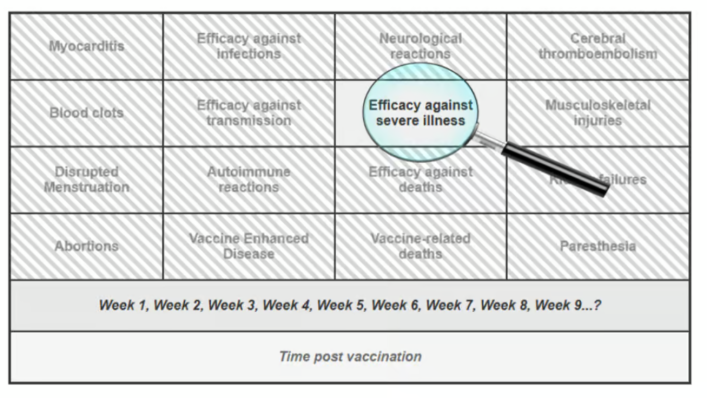
Figure 1. Illustrating a Selective Focus on a Transiently Favorable Outcome While Ignoring Concerning Data
This narrowing of focus — peering through the keyhole of one transient success — has allowed a fragile claim to solidify into a powerful myth, reinforced by institutional authority, social conformity, and the systematic suppression of dissenting voices (including our own experience of censorship, as detailed in our preprint).
We therefore call on the scientific and medical communities to take a step back, widen the lens, and return to a foundational principle of medicine: every intervention, no matter how promising, must undergo continuous, evidence-based evaluation of both its benefits and its potential harms. To the best of our knowledge, such a balanced and rigorous appraisal has yet to be applied to the Covid-19 vaccines.
Based on the evidence reviewed in our preprint, we conclude that the claim that “Covid-19 vaccines saved millions and millions of lives”1 is not supported by empirical evidence. While these vaccines were widely promoted as safe and effective, accumulating reports of serious adverse events—such as myocarditis, pericarditis, thrombosis, and neurological symptoms—have been extensively documented across pharmacovigilance systems and in multiple peer-reviewed studies (e.g., 6-16), many co-authored by the last author of the current article.
Notably, this biologically active intervention was administered repeatedly in the form of boosters, thereby compounding potential risks—often in populations with near-zero risk of Covid-related mortality, such as children. Taken together with the lack of demonstrable long-term efficacy presented in our preprint,4 the available evidence suggests that the risk–benefit balance of the Covid-19 vaccines may, in fact, tilt toward the negative end of this fundamental medical equation.17, 18
References
1. Homeland Security. The Corruption of Science and Federal Health Agencies: How Health Officials Downplayed and Hid Myocarditis and Other Adverse Events Associated with the COVID-19 Vaccines.
2. Ophir Y, Shir-Raz Y, Zakov S, McCullough PA. The Efficacy of COVID-19 Vaccine Boosters against Severe Illness and Deaths: Scientific Fact or Wishful Myth?. Journal of American Physicians and Surgeons. 2023;28(1). doi: https://www.jpands.org/vol28no1/ophir.pdf.
3. Ophir Y. The Final Brick in the Vaccine Efficacy Narrative ⋆ Brownstone Institute. 2023.
4. Ophir Y, Shir-Raz Y, Zakov S, McCullough PA. A Step-by-Step Evaluation of the Claim That COVID-19 Vaccines Saved Millions of Lives. Researchgate (preprint). 2025. doi: 10.13140/RG.2.2.12897.42085.
5. NEWS C. Transcript: Dr. Anthony Fauci on “Face the Nation,” May 16, 2021. 2021.
6. Rose J. A Report on the US Vaccine Adverse Events Reporting System (VAERS) of the COVID-1 9 Messenger Ribonucleic Acid (mRNA) Biologicals. Science, Public Health Policy, and The Law. 2021;2:59–80.
7. Fraiman J, Erviti J, Jones M, et al. Serious adverse events of special interest following mRNA COVID-19 vaccination in randomized trials in adults. Vaccine. 2022;40(40):5798–5805. doi: 10.1016/j.vaccine.2022.08.036.
8. Shir-Raz Y. Breaking: Leaked Video Reveals Serious Side-Effects Related to the Pfizer COVID-19 Vaccine Covered Up by the Israeli MOH. 2022.
9. Witberg G, Barda N, Hoss S, et al. Myocarditis after Covid-19 Vaccination in a Large Health Care Organization. N Engl J Med. 2021;385(23):2132–2139. doi: 10.1056/NEJMoa2110737.
10. Chua GT, Kwan MYW, Chui CSL, et al. Epidemiology of Acute Myocarditis/Pericarditis in Hong Kong Adolescents Following Comirnaty Vaccination. Clinical Infectious Diseases. 2021:ciab989. doi: 10.1093/cid/ciab989.
11. Hulscher N, Alexander PE, Amerling R, et al. A Systematic REVIEW of Autopsy findings in deaths after covid-19 vaccination. Forensic Sci Int. 2024:112115. doi: 10.1016/j.forsciint.2024.112115.
12. Oster ME, Shay DK, Su JR, et al. Myocarditis Cases Reported After mRNA-Based COVID-19 Vaccination in the US From December 2020 to August 2021. JAMA. 2022;327(4):331–340. doi: 10.1001/jama.2021.24110.
13. Takada K, Taguchi K, Samura M, et al. SARS-CoV-2 mRNA vaccine-related myocarditis and pericarditis: An analysis of the Japanese Adverse Drug Event Report database. Journal of Infection and Chemotherapy. 2024.
14. McCullough P, Rogers C, Cosgrove K, et al. Association between COVID-19 Vaccination and Neuropsychiatric Conditions. 2025.
15. McCullough PA, Hulscher N. Risk stratification for future cardiac arrest after COVID-19 vaccination. World J Cardiol. 2025;17(2):103909. doi: 10.4330/wjc.v17.i2.103909.
16. Hulscher N, Hodkinson R, Makis W, McCullough PA. Autopsy findings in cases of fatal COVID-19 vaccine-induced myocarditis. ESC Heart Failure. 2024;n/a. doi: 10.1002/ehf2.14680.
17. Mead MN, Seneff S, Wolfinger R, et al. COVID-19 Modified mRNA “Vaccines”: Lessons Learned from Clinical Trials, Mass Vaccination, and the Bio-Pharmaceutical Complex, Part 1. International Journal of Vaccine Theory, Practice, and Research. 2024;3(2):1112–1178. doi: 10.56098/fdrasy50.
18. Mead MN, Seneff S, Rose J, Wolfinger R, Hulscher N, McCullough PA. COVID-19 Modified mRNA “Vaccines”: Lessons Learned from Clinical Trials, Mass Vaccination, and the Bio-Pharmaceutical Complex, Part 2. International Journal of Vaccine Theory, Practice, and Research. 2024;3(2):1275–1344. doi: 10.56098/w66wjg87.
This article was co-authored by Yaffa Shir-Raz, Shay Zakov, and Peter A. McCullough.
Dr. Yaakov Ophir is Head of the Mental Health Innovation and Ethics Lab at Ariel University and a member of the Steering Committee for the Centre for Human-Inspired Artificial Intelligence (CHIA) at the University of Cambridge. His research explores digital-age psychopathology, AI and VR screening and interventions, and critical psychiatry. His recent book, ADHD Is Not an Illness and Ritalin Is Not a Cure, challenges the dominant biomedical paradigm in psychiatry. As part of his broader commitment to responsible innovation and scientific integrity, Dr. Ophir critically assesses scientific studies related to mental health and medical practice, with particular attention to ethical concerns and the influence of industrial interests. He is also a licensed clinical psychologist specializing in child and family therapy.
Excess deaths 2025
Dr. John Campbell | May 28, 2025
Excess mortality: Deaths from all causes compared to average over previous years
https://bmjpublichealth.bmj.com/content/2/1/e000282
1 January 2020 until 31 December 2022
47 countries of the Western World, 3, 098, 456
Excess mortality
2021, 42 countries
2022, 43 countries
Conclusions
Excess mortality has remained high in the Western World for three consecutive years
This raises serious concerns.
Government leaders and policymakers need to thoroughly investigate underlying causes of persistent excess mortality.
2015–2019 compared to 2020–2024
Percentage difference between the reported weekly or monthly deaths in 2020–2024 and the average deaths in the same period in 2015–2019
https://ourworldindata.org/grapher/excess-mortality-p-scores-average-baseline
Correlation and causality
Smoking is correlated with lung cancer
Asbestos exposure is correlated with mesothelioma
Alcohol consumption is associated with liver cirrhosis
Obesity is correlated with high sugar intake
Radiation exposure is correlated with cancer
Dioxin exposure is correlated with cancer
Causality may be adjudicated by larger scale associations, consistent between countries, where other explanations are unlikely, where effect follows cause, where greater exposure causes more harm with a plausible biological mechanism with coherence between bench science and epidemiological data supported by (even limited) experimentation. By analogy to other causes of harm and sometimes by reversibility.
US makes sweeping changes to key vaccine group
RT | June 10, 2025
The US Department of Health and Human Services (HHS) has dismissed all the members of a key advisory panel that has helped shape national vaccination policy for decades. Health Secretary Robert F. Kennedy Jr. said on Monday that the move was necessary to reestablish public trust and address longstanding concerns over conflicts of interest.
The Advisory Committee on Immunization Practices (ACIP) was created within the Centers for Disease Control and Prevention (CDC) in the mid-1960s. In an op-ed published on Monday in the Wall Street Journal, Kennedy claimed that the panel has “a history of conflicts of interest, persecution of dissidents, a lack of curiosity, and skewed science.”
The secretary cited reports from a House committee in 2000 and the HHS inspector general in 2009 that detailed financial connections between ACIP members and pharmaceutical companies. He said his decision to replace all 17 current members was driven by the need for a “clean slate.”
“The problem isn’t necessarily that ACIP members are corrupt. Most likely aim to serve the public interest as they understand it,” Kennedy wrote. “The problem is their immersion in a system of industry-aligned incentives and paradigms that enforce a narrow pro-industry orthodoxy.”
ACIP members are appointed to four-year terms, and eight of the most recent appointments were made in the final days of the administration of Joe Biden.
”It was very intentional,” a former senior HHS official told STAT News. “It was our goal to fill every vacancy on every [federal advisory committee] the department has, with particular focus on ones like ACIP where maintenance of our scientific expertise was critical.”
Mandy Cohen, who served as the CDC director under Biden, told NBC News the move “spreads confusion and casts doubt on transparent public health processes that protect Americans.” Richard Besser, who was acting CDC director under Barack Obama, said it “should erase any remaining doubt that he intends to impose his personal anti-vaccine agenda on the American people.”
Kennedy has long criticized aspects of US vaccine programs, arguing they are too closely aligned with industry interests and fail to prioritize public health. His detractors frequently label him an “anti-vaxxer.”
During his confirmation hearings, Kennedy pledged that his decisions would be science-driven. In his WSJ piece, he warned against attributing the American public’s “crisis of trust” solely to “misinformation or anti-science attitudes.”
APPROVE NOW, STUDY LATER: IS THIS SAFE?
The HighWire with Del Bigtree | June 5, 2025
As alarming new data reveals a spike in sudden heart attacks and strokes, the FDA has greenlit Moderna’s latest mRNA COVID shot—no placebo trials, no independent long-term safety data, and post-market studies delayed until 2029 and 2034. Once again, speed trumps caution. Is safety giving way to speed again, or are post-marketing placebo trials a step in the right direction?
Australia quietly pivots on Covid-19 vaccine policy
By Maryanne Demasi, PhD | June 3, 2025
It didn’t come with a press conference or a media blitz. In fact, there was no announcement at all.
But sometime around 2 May 2025, the Australian Department of Health quietly removed its recommendation for Covid-19 vaccination in healthy children and adolescents under 18.

The change was tucked into an online update to the Australian Immunisation Handbook—no headline, no ministerial statement, no media campaign to inform the public.
For the first time since the rollout began, Australian health authorities now say that unless a child has underlying medical conditions, they do not need the vaccine.
Australia now joins a growing list of countries backing away from the blanket approach to vaccinating low-risk populations.
In the US, health officials under HHS Secretary Robert F. Kennedy Jr. recently removed routine recommendations for Covid-19 vaccination in healthy children and pregnant women.
The CDC now leaves it up to “shared decision-making”—a tacit acknowledgment that the previous universal approach may have overreached.
Denmark, meanwhile, was ahead of the curve.
It stopped recommending the vaccine for healthy children back in 2022, citing data showing that severe Covid in children was exceedingly rare and that the benefits of mass vaccination did not outweigh the harms.
Australia’s policy reversal might be late, but what makes it striking is how quietly it was done—and how much it implicitly concedes.
For years, anyone who questioned the need to vaccinate healthy children was dismissed as anti-science or dangerous. Now, the same authorities who widely promoted the shots are quietly walking it back.
And the adverse events that critics raised early on—myocarditis, pericarditis, and other post-vaccine complications—are no longer fringe concerns. They’re acknowledged in official risk assessments.
The shift also comes at a time when the legal and regulatory framework that enabled the rapid approval of mRNA vaccines is under growing scrutiny.
In Australia, a case brought by Dr Julian Fidge, a general practitioner and former pharmacist, challenged the legality of the vaccine approvals.
He argued that Pfizer and Moderna’s mRNA vaccines should have been classified as “genetically modified organisms” under the Gene Technology Act 2000, and therefore required a licence from the Office of the Gene Technology Regulator (OGTR) before being rolled out.
But the court dismissed the case on procedural grounds, ruling that Dr Fidge lacked standing to pursue it.
Still, the case drew attention to whether these products were channelled through the wrong regulatory pathway.
That question is now at the centre of a citizen petition in the US, filed with the FDA in January 2025, claiming the agency “wrongfully and illegally” approved the mRNA Covid-19 vaccines by treating them as conventional biologics, not gene therapies.
According to the FDA’s own definition, gene therapy products are those that use genetic material to alter cellular function for therapeutic use.
By that logic, mRNA vaccines clearly qualify – and should have faced far more rigorous safety testing, including environmental risk assessments and long-term follow-up studies.
As of June, the FDA has not responded to the petition—but the implications are enormous.
If regulators in Australia or the US misclassified these products during the emergency rush, it would expose a systemic failure to apply the appropriate safeguards to an entirely new class of biotechnology.
And it’s not just about legal definitions. The public mood is shifting.
The notion that healthy children and adolescents should have been part of a sweeping global experiment with novel gene-based technologies now looks reckless in hindsight. For the public, trust has been damaged—perhaps irreparably.
That shift in perception has consequences far beyond Covid.
Billions of dollars have been invested in mRNA platforms for other diseases—flu, RSV, and cancer. So what happens if confidence in the technology craters?
Already, the US FDA has announced it will require new randomised clinical trials for annual Covid-19 boosters in “healthy” people under 65—setting a higher threshold for evidence (than immunobridging data) that may make future approvals more challenging.
The industry might dismiss this as just a hiccup—but the truth is, mRNA vaccines were never subjected to the kind of long-term scrutiny typically required of products given to healthy people, especially children.
The argument that urgency justified shortcuts has worn thin.
The real emergency now is institutional—one of captured regulators, collapsing public trust, and a health system so entangled with the pharmaceutical industry it can no longer tell the difference between evidence and marketing.
Is the FDA a mutinous ship?
By Dr Clare Craig | Health Advisory & Recovery Team | June 3, 2025
They promised change. They promised transparency. They promised reform. But with the FDA’s latest approval of Moderna’s mNEXSPIKE® covid jab, it is clear the only thing that has changed is the branding.
This so-called “reformed” FDA has just authorised a new mRNA vaccine — without testing it against a placebo. Instead, the comparator was Moderna’s previous product, already associated with a range of known adverse effects.
And yet, somehow, we’re meant to believe this is progress.
Meanwhile, the leaders heading up MAHA, elected on a promise to end the regulatory theatre and restore public trust, appear to be captaining a vessel still drifting in the same dangerous waters. They are on a mutinous ship and are wrestling for the wheel.
While the FDA continues to greenlight successive iterations of mRNA vaccines, other major Western nations long since reduced their ambitions:
- In the United Kingdom, the Joint Committee on Vaccination and Immunisation (JCVI) now recommends boosters only for individuals aged 75 and over, residents of care homes, and those with specific clinical vulnerabilities.
- France and Germany have similarly curtailed their booster programmes, focusing on high-risk populations and refraining from broad recommendations for younger, healthier demographics.
This more cautious approach is not justifiable either given the failure of these product and their safety profile. The “benefit” only ever was – and continues to be – a statistical illusion. No one should be being exposed to this unnecessary risk.
This divergence raises a critical question: How can the same body of evidence lead to such different public health policies?
Latest Inadequate Trials
The Phase 3 trial underpinning mNEXSPIKE’s approval enrolled approximately 11,400 participants aged 12 and older. While this number might seem substantial, it’s important to note that only about half received the mNEXSPIKE vaccine, while the remainder received an earlier Moderna product as a comparator. There was no placebo comparison.
This sample size is insufficient to detect rare but serious adverse events – even with a placebo. Without one you can only see differences between two sets of harm.
For context, previous studies have indicated that mRNA vaccines may be associated with an excess risk of serious adverse events of special interest, estimated at approximately 15.1 per 10,000 vaccinated individuals. This is totally unacceptable for general use even in a product that has significant benefits.
Despite approval, critical safety studies are still pending. One study, assessing safety in pregnant women, is not due until 2032. Another, evaluating vaccine effectiveness for adults aged 50–64, is still in the planning stages.
Are the FDA still pretending there is an emergency to justify these rushed decisions?
A Hollow Reformation
The USA public deserves better from their officials. They are paying for this reckless approach. The question is, can those with a more precautionary, less ideological approach, wrestle the wheel of the ship and steer her to safety?
Covid-19 vaccine reform is moving slower than many had hoped
Moderna’s latest mRNA vaccine approval stuns reform advocates—but real change demands persistence when science runs up against powerful interests
By Maryanne Demasi, PhD | June 1, 2025
Just three weeks after Dr Vinay Prasad assumed oversight of vaccines at the FDA, Moderna’s latest Covid-19 vaccine, mNEXSPIKE®, received full approval.
For those who had hoped the mRNA platform would be shelved, the decision landed like a gut punch.
Approved on 31 May 2025, the next-generation shot is intended for adults over 65, as well as individuals aged 12 to 64 with at least one risk factor for severe illness.
And it came under the watch of a man who had spent years demanding greater scientific rigour from the agency.
Prasad had been among the FDA’s most outspoken critics during the pandemic, repeatedly condemning its reliance on surrogate endpoints—such as antibody levels—rather than hard clinical outcomes like reduced hospitalisation or death.
And he didn’t just say it once. He drove the point home, over and over.
“Showing boosters improve neutralizing antibodies or other laboratory measures is not what we need,” he posted on X in July 2022. “We need randomized control trials powered for clinical endpoints showing boosters improve outcomes that people care about.”
In January 2023, he co-signed a formal Citizen Petition to the FDA stating, “This immunobridging surrogate endpoint has not been validated to predict clinical efficacy.”
Then in March 2023, he made his position even clearer on Substack. “I don’t care about transient antibody titer levels,” he wrote.
But mNEXSPIKE® appears to have been approved primarily using exactly those kinds of data—measures of immune response, not measures of meaningful outcomes.
So how do we square that?
Technically, the approval aligns with the policy Prasad outlined in a recent New England Journal of Medicine article.
There, he proposed a two-track system — no further vaccine approvals for healthy adults without RCTs showing clinical benefit—but for older adults and at-risk individuals, immunobridging data could still be acceptable.
So yes, by that standard, mNEXSPIKE® fits the rules.
But it doesn’t erase the discomfort. Because for years, Prasad insisted those very shortcuts—approving Covid vaccines based on antibody levels instead of clinical outcomes—were scientifically flimsy.
Now, under his watch, those same shortcuts are back in play.
When Robert F. Kennedy Jr. was appointed HHS Secretary, reform didn’t just seem likely—it felt imminent.
Many expected the mRNA shots would be pulled from the market, or at the very least, that new approvals would be frozen until stronger evidence emerged.
Instead, we’ve seen a flood of high-production videos and polished slogans about “restoring public trust.”
To many observers, it looks like transparency on the surface—but business as usual underneath.
Of course, no one said this would be easy.
Having worked in government as a political adviser, I know how hard it is to shift systems that are not only slow and bureaucratic, but deeply enmeshed with commercial interests. And no sector is more heavily invested in mRNA than biotech.
This isn’t just about Covid anymore. The pharmaceutical industry has poured billions into mRNA vaccines for RSV, flu, HIV, cancer, and more. Entire product pipelines are now staked on the assumption that the technology is here to stay.
Pulling the plug wouldn’t just alter public health policy—it would tank portfolios, gut R&D budgets, and unleash a political and financial firestorm from some of the most powerful corporate interests on earth.
That’s the kind of pressure Prasad is under now. That’s the reality Kennedy’s team has stepped into.
This is no longer science versus ideology. It’s science versus entrenched industry power.
And many are beginning to worry we’re watching the same playbook unfold—just with better branding.
That’s not what MAHA supporters or vaccine-injured families were hoping for. They’re not asking for tweaks. They want the shots gone. Not revised. Not updated—just gone.
But political reality rarely keeps pace with public demand. Even the most determined reformers can’t move faster than the machinery they’re trying to dismantle.
So where does that leave us?
Facing the hardest task of all—staying in the fight.
Progress may feel glacial, but it is underway.
The CDC has removed routine Covid-19 vaccine recommendations for healthy children and pregnant women. Prasad’s new framework has halted low-risk approvals unless backed by RCTs.
Yes, the mRNA platform is still alive—and still fiercely protected—but reform was never going to be easy. And it was never going to come all at once.
COVID Doubts Made You a ‘Violent Extremist’
By Jim Bovard | The Libertarian Institute | June 2, 2025
Biden administration policymakers hated you more than you knew.
Four years ago, I warned at the Libertarian Institute:
“Libertarians are in the federal crosshairs… Many libertarians assume they have nothing to fear because they are not engaged in seeking to violently overthrow the government. But the feds will be able to find many other pretexts to target peaceful citizens with supposedly subversive ideas.”
Three years ago, I warned at the Institute that White House Press Secretary Karine Jean-Pierre was damning anyone who did not kowtow to the regime:
“’When you are not with what majority of Americans are, then you know, that is extreme. That is an extreme way of thinking.’ That wacko definition of extremism designed to vilify anyone who doubts Biden will save America’s soul.”
In October 2023, I warned at the Institute:
“Federal bureaucrats heaved together a bunch of letters to contrive an ominous new acronym for the latest peril to domestic tranquility. The result: AGAAVE—’anti-government, anti-authority violent extremism’—which looks like a typo for a sugar substitute. The FBI vastly expanded the supposed AGAAVE peril by broadening suspicion from ‘furtherance of ideological agendas’ to ‘furtherance of political and/or social agendas.’ Anyone who has an agenda different from Team Biden’s could be AGAAVE’d for his own good.”
Director of National Intelligence Tulsi Gabbard recently declassified a December 13, 2021 report by the National Counterterrorism Center. Gabbard’s version had a more honest title than the original version: “Declassified Biden Administration Documents Labeling COVID Dissenters, Others as ‘Domestic Violent Extremists.’”
President Joe Biden’s Brain Trust sounded the alarm on criticisms such as “COVID-19 vaccines are unsafe, especially for children, are part of a government or global conspiracy to deprive individuals of their civil liberties and livelihoods, or are designed to start a new social or political order.” After government lockdowns had destroyed millions of jobs, only the paranoid would fear the government would ever violate their liberties or subvert their livelihoods.
Biden policymakers pretended that the surge in criticism of COVID policies was proof of the psychopathology of Biden’s opponents. But in September 2021, Biden dictated that one-hundred million Americans working for private companies must get the COVID vaccine. The official counterterrorism report stated that it anticipated that “the threat will continue at least into the winter, as many of the new COVID-19 mandates in the U.S….are implemented, including U.S. workplace vaccination policies that carry disciplinary or termination penalties.” The Supreme Court struck down most of that vaccine mandate as illegal in January 2022 but not before it had profoundly disrupted legions of lives and businesses—as well as American health care.
The other factor spurring the surge in COVID criticism was the failure of the COVID vaccines. In early 2022, the effectiveness of the COVID booster shot had fallen to 31%—too low to have been approved by the Food and Drug Administration. Though most American adults had gotten COVID vaccines, there were more than a million new COVID cases a day in January 2022. Most COVID fatalities were occurring among the fully vaxxed. Studies showed that people who received multiple boosters were actually more likely to be hit by COVID infections.
So obviously, the Biden administration had no choice but to demonize any and all COVID critics. A confidential 2022 Department of Homeland Security report detailed pending crackdowns on “inaccurate” information on “the efficacy of COVID-19 vaccines,” among other targets. A few months earlier, Jen Easterly, the chief of the Cybersecurity and Infrastructure Security Agency, declared, “We live in a world where people talk about alternative facts, post-truth, which I think is really, really dangerous if people get to pick their own facts.” Plenty of Biden administration officials considered it “really dangerous” to permit people to assert that COVID vaccines were failing.
The National Counterterrorism Center report noted, “The availability of a vaccine for all school-age children might spur conspiracy theories and perceptions that schools will vaccinate children against parents’ will.” Like the same way that some states and many school systems have sought to enable children to change their gender without their parents’ knowledge or consent?
The report also warned that “new COVID-19 mitigation measures—particularly mandates or endorsements of vaccines for children—will probably spur plotting against the government.” The FDA knew that COVID vaccines sharply increased the risk of myocarditis—an inflamed heart—in young males but the Biden White House browbeat the agency into fully approving the COVID vaccine anyhow. New York Governor Kathy Hochul sought unsuccessfully to mandate vaccines for all schoolkids in the Empire State even though her State Department of Health reported in May 2022 that the Pfizer vaccine was only 12% effective for children during the Omicron surge. The Biden administration included COVID vaccines in the semi-mandatory regimen for young children despite the vaccine’s failure and perils.
The vilification of COVID doubts propelled the Biden crackdown on uppity parents. As governments shut down schools and issued mask mandates in failed responses to COVID, parents raised hell at school board meetings. The National School Board Association denounced such criticism as “a form of domestic terrorism” and urged Team Biden to deploy the FBI and the Patriot Act against protesting parents (an initial draft of the letter called for sending in the National Guard to protect school boards).
On October 4, 2021, Attorney General Merrick Garland announced that the FBI would speedily “convene meetings” in every state aimed at “addressing threats against school administrators, board members, teachers, and staff.” The Justice Department announced that its National Security Division would help determine “how federal enforcement tools can be used” to prosecute angry parents. The Biden administration effectively announced plans to drop legal nuclear bombs on school board critics. An FBI whistleblower revealed that FBI counterterrorism tools were being used to target angry parents. FBI agents across the nation began interrogating parents whose names were reported on a “tip line” set up for people to phone in accusations against anyone who complained about school closures, mask mandates, or other issues.
Portraying doubts on COVID policy as a warning sign of domestic violent extremism unleashed the FBI to target anybody who howled against mandatory injections or the near-total destruction of their freedom of movement. That December 13, 2021 National Counterterrorism Center report may be only the tip of the iceberg of federal mischief. We may soon learn of far more direct machinations to vilify, undercut, or other stifle COVID critics.
How Lies and Hubris Caused an Awakening
By Pat Fidopiastis | Brownstone Institute | May 26, 2025
In March 2020, the phrase “Fifteen days to slow the spread” was transmitting faster than SARS-CoV-2. At the time, it seemed reasonable to want to buy our health care workers a few weeks to prepare. Contemporaneously, Dr. Anthony Fauci reasonably summarized decades of research in his 60 Minutes interview by saying that masks are not an effective way to block respiratory viruses.
In a Snapchat interview, Dr. Fauci reasonably interpreted timely data on Covid-19 outcomes to conclude that young people could decide for themselves if they wanted to meet strangers on a dating app during the pandemic. As Dr. Fauci put it: “Because that’s what’s called relative risk.”
Even the authors of the “proximal origin” opinion piece in Nature Medicine made reasonable points in support of a natural origin of SARS-CoV-2 (despite revealing their cards by calling “lab leak” implausible): “… it is likely that SARS-CoV-2-like viruses with partial or full polybasic cleavage sites will be discovered in other species” and “More scientific data could swing the balance of evidence to favor one hypothesis over another.”
Five years later, thousands of animals have been sampled, millions of genomic sequences have been analyzed, and still there is nothing remotely close to a non-human adapted, animal version of SARS-CoV-2; back in 2003, using “stone tools” compared to today’s technology, they found the animal version of that SARS virus in a few months.
Unfortunately, the honeymoon of reason was brief. Overwhelming evidence that SARS-CoV-2 was not natural became a “destructive conspiracy,” and if you spoke about it, you were somehow racist.
Surgeon General Jerome Adams instructed us on how to make a life-saving mask from an old t-shirt. Dr. Fauci used the bizarre excuse that he lied in his 60 Minutes interview to explain why he abruptly reversed himself and began promoting the epidemiological theater of wearing several masks at once.
Not to be outdone, Dr. Deborah Birx summed up the futility of her leadership with this pearl: “We know that there are ways that you can even play tennis with marked balls so you’re not touching each other’s balls.” This sounded more like a punchline than worthwhile public health advice. Perhaps most egregious of all, we learned that “Two weeks to slow the spread” was not meant to be taken literally.
For me, a professor of microbiology for nearly 25 years, the moment of reason ended when I stepped into an elevator on my campus and saw a floor sticker telling me where to stand (Fig. 1). I simply could not keep quiet and pretend that this was sound public health advice.

Fig. 1
Before long, businesses were inundated with pandemic rules. I was hired by one of the lucky ones deemed “essential,” and therefore allowed to open, to assist with “safe” operation plans.
When I arrived to conduct my inspection, the business looked more like an Ebola field hospital than a furniture store (Fig. 2). Masked customers were herded in the parking lot by ropes and signs. One by one, they were greeted by an attendant, grateful to still have a job, standing behind Plexiglas, wearing a mask and face shield.
The friendly attendant was instructed to ask uncomfortable questions about symptoms like diarrhea. If a customer responded “yes” to any of the symptoms or refused to answer, they could not shop for furniture. If “no,” then their temperature was measured.
It was nearly 100 degrees that day so almost everyone had to be scanned multiple times. Inside the store was a maze of one-way arrows, warning signs, Plexiglas, hand sanitizer stations, and boxes of masks and disposable couch covers. They even had a video monitor reporting the number of customers per 400 square feet of store. Sadly, the epidemiological version of “over-medicating the patient” did not stop with onerous business rules.

Fig. 2
Drunk with power, public health officials in California felt ordained to protect the unwashed masses from Thanksgiving dinner. Unsurprisingly, these farcical dining rules did not apply to everyone.
Who actually believed “singing, chanting, shouting, and physical exertion” at a family dinner was too risky? Who decided that we needed to bulldoze a skate park to prevent kids from congregating? Why was it necessary to arrest a lone paddleboarder in Santa Monica Bay for “flouting coronavirus closures?”
In the LA Times article on the paddler’s arrest, a professor from the prestigious Scripps Institute of Oceanography opined, “SARS-CoV-2, the virus that causes COVID-19, could enter coastal waters and transfer back into the air along the coast. I wouldn’t go in the water if you paid me $1 million right now.”
I tried laughing off the ridiculous, unenforceable Thanksgiving rules, those stickers in the elevators, and other nonsense that at the time was happening somewhere else. But I could not get past the frightening reality that so many of my highly educated peers actually believed nonsense like SARS-CoV-2 was leaping out of the ocean.
Anyone paying attention could compile government data on Covid-19 outcomes and assess risk for themselves (Table 1). The message was always the same – the vast majority of deaths attributed to Covid-19 were people over 65 years old with severe comorbidities, especially obesity.
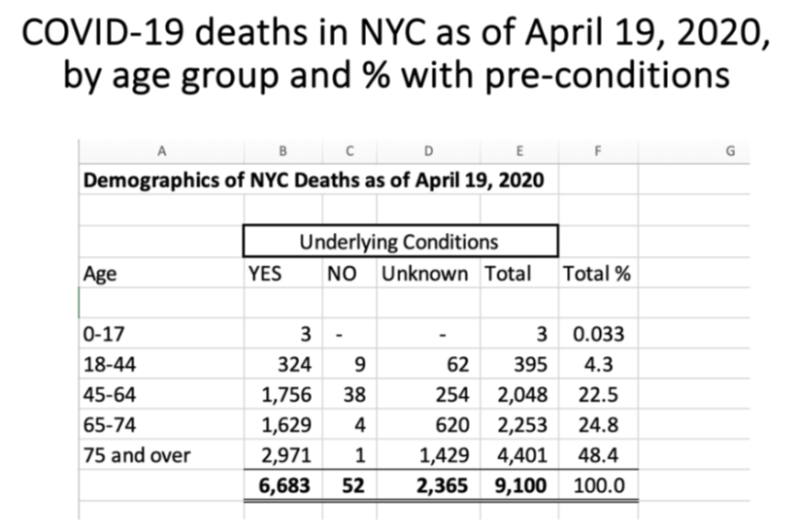
Table 1
By signing the Great Barrington Declaration and discussing its premise of “focused protection” in my advanced microbiology courses, I received an avalanche of vitriol.
Among the most shocking responses were accusations of “ageism” and “fat-shaming” for discussing hard facts about the pandemic.
Just like that, the “Science doesn’t care about your feelings” crowd started prioritizing their feelings. The university newspaper asked for an interview. I was warned not to accept, but I wanted to start a bigger conversation. I regret my decision because the article they wrote did not represent the views I articulated.
Instead, I was accused of promoting a “power imbalance” by supposedly forcing my “junk science” views on students. I used to think the cries of “fake news” were just a lazy argument by people that could not support their position, until I read that article about me.
Ironically, these same people who attacked me had completely accepted the made-up “six-feet rule,” which was the root of so much collateral damage. Heavily biased news sources like NPR defended this unscientific rule by stating, “distance still protects you.” However, if the cure is not even remotely feasible, despite the best efforts of authoritarians, then it’s not really a cure.
Apparently I crossed the line when I discussed in class how politicized the pandemic had become. How is it that President Trump’s rallies were spreading “coronavirus and death” but BLM protests had no effect on coronavirus cases? The sampling bias was baked in, given that contact tracers were being told not to ask people if they had been to a protest.
Why was it acceptable for CNN to use phrases such as “Wuhan virus” and “Chinese coronavirus,” but when President Trump did it, he was called “racist?” Was it actually “racist” to discuss the obvious signs of genetic manipulation in the SARS-CoV-2 genome with my students in an Emerging Infectious Diseases class?
My campus newspaper and many of my colleagues thought so, as did an Asian American and Pacific Islander group calling for my resignation. When the admonitions about masks became aggressive (Fig. 3), and draconian, unscientific outdoor mask fines were being implemented, I analyzed some data and conducted a few experiments to find out for myself if masks were worth all the anger.
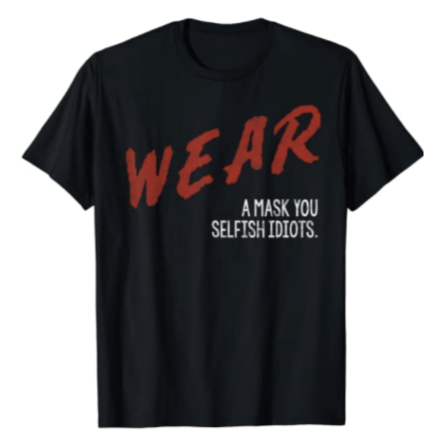
Fig. 3
I looked at “cases” in places like New York City and pointed out when the mask mandate and fines were applied (Fig. 4). Notably, the NYC mandate was instituted after cases had already begun to fall, and coercive fines did not prevent the second wave, which was longer and reached a higher peak than the first wave.
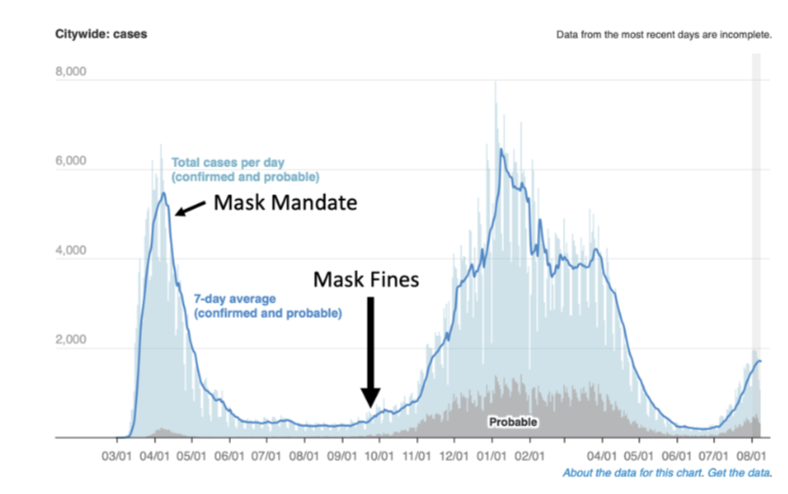
Fig. 4
I had my allergy-prone daughter sneeze onto petri-plates with and without the CDC-approved masks we wore to enter locations that enforced the mask mandate (Fig. 5). The saliva spray patterns, illustrated by microbial growth on the plates, were virtually indistinguishable.
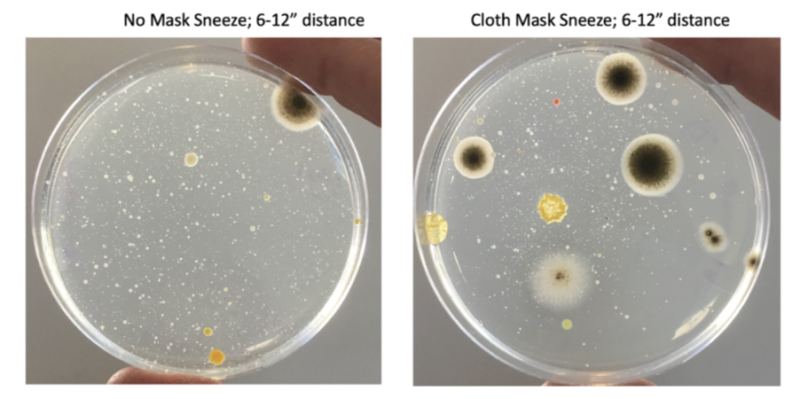
Fig. 5
In the 60 Minutes interview, Dr. Fauci stated that “… often there are unintended consequences…people keep fiddling with the mask and touching their face…” implying that germs collect on masks, making them a source of contagion rather than a barrier.
Indeed, after the sneeze experiment, I stamped the outside of my daughter’s mask onto a petri-plate. The resulting dense microbial growth supported Dr. Fauci’s argument against mask wearing – “fiddling with the mask” probably does spread microbes (Fig. 6).
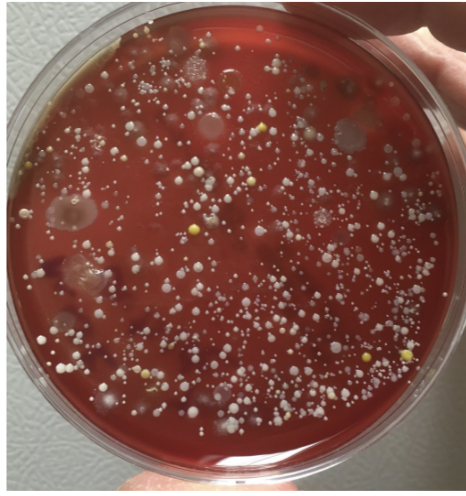
Fig. 6
At the time, I stated in the campus newspaper that “the science on masks was mixed at best.” However, the third-year journalism student apparently knew better and decided I was pushing “junk science.” Was I naïve to expect an apology after “the science” started catching up to what I was saying?
During the pandemic, my lab was responsible for measuring SARS-CoV-2 levels in wastewater (Fig. 7) to use this information as a means of tracking community transmission. We learned two important lessons from this approach.
First, peak levels of SARS-CoV-2 in wastewater (orange line) provided a few weeks’ lead to when we could expect to see peak levels of people testing positive for the virus (i.e., “cases;” blue line). Second, we learned that the mask mandate (red line) did not stop the virus from doing what it wanted. Despite the mask mandate, transmission of SARS-CoV-2 reached unprecedented highs.
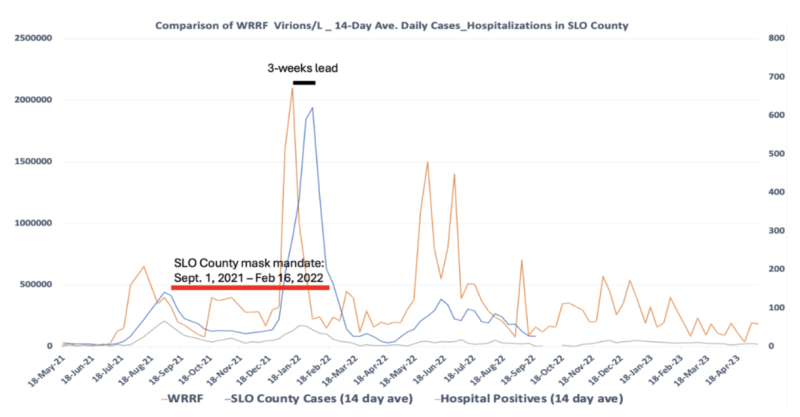
Fig. 7
Taken together, my findings were supported by decades of research showing that masks are not effective against respiratory viruses, regardless of the quality. Still, the counterargument persisted that wearing an N95 mask suctioned to your face, and constantly replacing it, would have stopped the pandemic.
Again, if the cure is not feasible, then it’s not really a cure, is it? The reality is that there are no convincing data supporting mask mandates, none that even remotely support children being forced to wear saliva-soaked masks, and especially none that would justify people being choked and beaten for opposing them.
The “follow the science” crowd was honing their authoritarian skills in preparation for mandatory vaccinations. The motivation for these mandates was summed up perfectly: “During the Sars crisis in 2003 pharma companies answered the WHO’s call for vaccine research. They invested hundreds of millions of dollars, but then — when the outbreak died away — governments and charities lost interest.” According to epidemiologist Dr. Osterholm “The companies were left holding the bag.”
How could Big Pharma avoid “holding the bag” on a vaccine they hoped would stop a virus that had repeatedly ripped through the world’s population? Not surprisingly, their first order of business was to drop the concept of “natural immunity” into the memory hole, centuries of science be damned. The subtext was if regular people knew that natural immunity was real, they probably would not want the vaccine, especially if they already had Covid-19 a few times.
Leading up to the vaccine rollout, I tested myself regularly using PCR, antibody, and antigen assays. I eventually tested positive and had mild flu-like symptoms. While well-educated friends of mine had gone to such lengths as to move out of their homes to distance themselves from their children and wait for the vaccines, my family chose a different tack. Instead, we huddled, got mild infections (except for my wife, who seemed to be immune), shared some level of natural immunity to the latest version of the virus, and tracked our infections (Table 2).
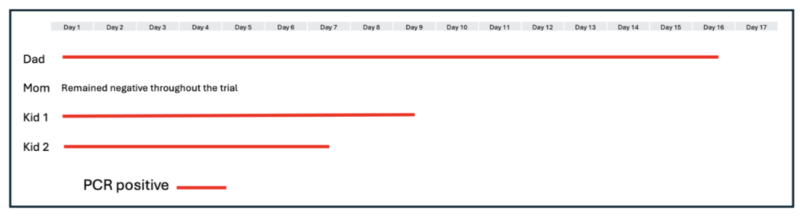
Table 2
When I shared the “herd immunity” story with my small social media following, most appreciated hearing something other than doom and gloom. However, others showed a level of vindictiveness that should not have surprised me, given how acceptable it became to wish death on the unvaccinated.
A colleague attempted to shame me in the campus newspaper, while others wondered out loud whether Child Protective Services should be notified. How dare you give your children the sniffles! How dare you use this time of ridiculous “virtual learning” mandates to provide your children with some hands-on experience performing quantitative PCR!
Predictably, my SARS-CoV-2 antibody levels were extremely high after over two weeks of PCR-positivity. While still overflowing with SARS-CoV-2 antibodies, I was scheduled to receive mandatory shots in order to return to campus.
If the world had actually followed the science, my recent PCR positivity and elevated antibody titers should have been a reasonable exemption. Unfortunately, there was no such exemption. Having seen the terrible treatment of my colleague Dr. Kheriaty, I decided we would play the role of guinea pigs and take what would be an all-risk-and-no-reward shot, especially for my kids. That is, there was nothing in it for us except a few days of high fever and injection site swelling, but definite financial reward for everyone in the vaccine supply chain.
As a member of the “laptop class,” the “lockdowns” made my life easier in many ways. While small business owners struggled, I was getting full pay to upload instructional videos to my university students, and occasionally engage with them online. My wastewater epidemiology work was deemed “essential,” so I was permitted to go to my lab to perform those duties for additional compensation.
However, the ad hominem attacks and threats caused me to disengage from further attempts to start a discussion on pandemic policy, which no doubt was their goal. While the world was fighting over toilet paper and shaming each other for “killing grandma,” we tuned out for a while (Fig. 8).

Fig. 8
I was surrounded by so much anger that I truly believed I was alone in my heretical views on pandemic policy. However, I officially tuned back in when Dr. Scott Atlas invited me to join a small group called The Academy for Science and Freedom.
Our meeting at the Hillsdale College Kirby Center in Washington, D.C. was the first time I had hope since the pandemic started. We were professors, medical doctors, publishers, and journalists, all united by a common belief that the people in charge abandoned a basic tenet of public health: voluntary instead of coercive measures would protect public trust and induce cooperation.
Despite all the great minds in the room, it was hard to imagine we would ever get to where we are right now. But here we are. Many of the people responsible for lockdowns, forced vaccinations, and covering up the unnatural origin of SARS-CoV-2 are gone.
In their place, are Academy members such as Dr. Tracy Beth Høeg, Dr. Jay Bhattacharya, Dr. Matt Memoli, Dr. Vinay Prasad, Dr. Martin Kulldorff, and Dr. Marty Makary. All of whom were treated far worse than me. The overwhelming rejection of “The Fauci School” of public health policy is vindicating. However, recent headlines suggest there are holdouts refusing to accept that they were fooled: Dr. Høeg is a “vaccine skeptic,” Dr. Memoli “is known for questioning vaccine mandates,” and Dr. Prasad is an “anti-science MAHA extremist.”
The people I trusted probably fooled me on a lot of things I voted for, like the benefits of a 20,000-page health care policy. Who has time to actually read that stuff? However, they were never going to succeed at fooling me about the science of the pandemic.
Their lies and hubris caused an awakening, reminiscent of the scene in The Matrix when Neo emerged from the virtual world to a brutal reality. I just hope the people I trust who are now running the major institutions will allocate all resources to programs that will actually improve human health. In doing so, they should have no problem convincing those holdouts not only that they had been fooled, but who fooled them.
Featured Video

The Most Important Bet You’ve Never Heard Of
or go to
Aletho News Archives – Video-Images
From the Archives
The Occupied Mentality Syndrome
Saudi Arabia on the American chessboard – Part 2
By B. J. Sabri | American Herald Tribune | April 19, 2016
Since the Korean War, but particularly since the Iranian Revolution of 1979 until today, the United States has been steadily escalating its military presence in the Persian Gulf. Taking advantage of many colossal events of the past 36 years, [1] the hyper-empire has institutionalized its massive presence on land and sea, and expanded its objectives to include the unambiguous physical control of the area, as well as the clear understanding that local Arab governments should abide by them. The pretext is always the same: in “defense” of the national interests and security of the United States. From observing how the United States has been interacting with the governments of the region, and by judging from the size of its expeditionary force, we could reach a basic conclusion. The United States is occupying, de facto, the entire Arabian Peninsula. (Yemen, devastated by Saudi and American jets is yet to be conquered. Oman? Britain returned not as colonial ruler but as a soft occupying power.)
Under this articulation, Saudi Arabia, Qatar, Kuwait, and the United Arab Emirates are virtually occupied countries. If we compare this type of occupation to the mandate and protectorate regimes of the past, the results might be identical—the nations affected by it lose sovereignty. When Arab governments comply with the objectives of a foreign power that station military forces on their national milieu, then that power controls them in multiple ways including how they react to policy deliberations and what decisions they intend to take on specific issues. A good method to verify the concept of effective occupation is this: take notice of what the United States says and wants, and then compare it to what the gulf rulers do in response. (I shall discuss this detail at some point in the upcoming parts.)
If the presence of US forces or other means of political pressure are a factor in Saudi Arabia’s interventionist Arab wars, then we need to debate this issue. However, from the history of resistance to colonialism, we learnt: if a powerful state imposes its order on a nation by military means or other forms of coercion, and if this nation does not resist that imposition, then a mental subordination to the powerful state will ensue. This is especially true in the case of Saudi Arabia. One single event, 9/11, has transformed it from a US “ally” into an instant political hostage of the American Empire. … continue
Blog Roll
 Aletho News
- Trump and the debris of Iran war
- IRGC hits US tech giant Oracle’s data center, computing site in UAE over new assassinations
- Bombing Iran Back Into the Stone Age /Lt Col Daniel Davis & Jim Jatras
- UAE rejects report claiming it is ready to join war on Iran to reopen Hormuz
- A New Resistance Front: How Does Syria Factor into the Regional War?
- Gulf states weigh pipeline expansion plans, hoping to bypass Hormuz
- Iran sets up ‘tollbooth’ system in Strait of Hormuz
- Wave 90: IRGC strikes US-linked industrial sites in Gulf
- Iran Says US-Israeli Claims of Its Military Strength Are Wrong
- Trump’s April Fools’ Address to the nation
- If Americans Knew
- ‘War crime’: Global condemnation as Israeli ministers celebrate death penalty law targeting Palestinian prisoners
- 7 Ways Israel Is Turning Lebanon Into Gaza
- World’s Leading Football Bodies Under Fire Over Israel Policies
- Experts warn of possible use of nukes against Iran
- Israeli invasion of Lebanon could be worse than 1982, warn European officials
- Passover: Liberation and collective punishment
- Trump says the quiet part out loud: (Israel’s) war on Iran > Americans’ health – Daily Update
- Gaza families reunite years after babies evacuated amid Israel’s war
- International Rescue Committee warns Gaza’s children face grave protection risks
- Iran’s Alleged 47-Year War on America: Debunking the 1,050 American Deaths Canard
- No Tricks Zone
- Low Intensity Tornado Wrecks Major Solar Farm, Creating A Potential Toxic Dump
- New Study Finds Warming Saves Lives…Cold Temperatures 12 Times More Deadly Than Excess Heat
- German Science Blog Accuses PIK Climate Institute Of Hallucinating Climate Tipping Points
- Devastating Assessment Of Comirnaty Vaccine By Former Senior Pfizer Europe Toxicologist
- New Study: CO2 Is ‘Effectively Negligible’ As An Explanatory Climate Change Factor Since 2000
- Former Pfizer Toxicologist Dr. Helmut Sterz Tells Bundestag Hearing Pfizer Vaccine Should Have Never Been Approved
- Energy Expert: Germany’s Nuclear Phaseout Was A “500 Billion Euro Mistake”
- New Research: South Australia’s Mid-Holocene Sea Surface Temperatures Were 4°C Warmer Than Today
- Storing Green Energy To Last Germany 10 Days Would Require A 60-Million Tonne Battery
- New Studies: UK Sea Levels Were 4 Meters Higher Than Today During The Mid-Holocene
 Aletho News