NIH Shuts Down Research Center Founded by Fauci, as DOJ Scrutinizes Key Researchers
By Michael Nevradakis, Ph.D. | The Defender | June 5, 2025
Officials at the National Institutes of Health (NIH) plan to shut down a research center established by Dr. Anthony Fauci that issued grants to embattled researchers who promoted the “zoonotic origin” theory that COVID-19 emerged from wildlife, The Disinformation Chronicle reported today.
Fauci established the Centers for Research in Emerging Infectious Diseases (CREID) in 2020 to conduct “investigations into how and where viruses and other pathogens emerge from wildlife and spill over to cause disease in people.”
According to The Disinformation Chronicle, when CREID launched, it issued 11 grants worth $17 million, with an additional $82 million in expected funding over five years. It’s unclear how much of the money has already been spent.
Two CREID grantees have been the focus of intense scrutiny: Peter Daszak, Ph.D., of the EcoHealth Alliance and Kristian Andersen, Ph.D., of Scripps Research Institute. Both played key roles in publicly promoting the theory that SARS-CoV-2, which led to the COVID-19 pandemic, originated in wildlife.
The U.S. Department of Justice has launched “initial inquiries” into one of the CREID grants Anderson received. Last year, the U.S. Department of Health and Human Services (HHS) suspended all government funding for EcoHealth Alliance.
The Disinformation Chronicle quoted an NIH spokesperson, who confirmed the agency has terminated all outstanding CREID grants.
“Strengthening overall health through proactive disease prevention offers a more resilient foundation for responding to future health threats — beyond reliance on vaccines or treatments for yet-unknown pathogens,” the spokesperson said.
Andersen received a CREID grant after co-authoring zoonotic origin paper
In March 2020, Andersen co-authored “The proximal origin of SARS-CoV-2,” published in Nature Medicine. The paper — widely known as the “Proximal Origin” paper — concluded that COVID-19 had a zoonotic origin. It became one of that year’s most-cited papers, accessed over 6 million times.
Government officials, including Fauci, and mainstream media outlets later cited the paper as part of efforts to discredit proponents of the theory that COVID-19 originated in and escaped from a lab.
The Trump administration is investigating whether the authors and publisher of “Proximal Origin” allowed Fauci and other key public health officials to influence the paper’s conclusions in exchange for funding — a possible quid pro quo.
According to The Disinformation Chronicle, two months after “Proximal Origin” was published, Andersen received a CREID grant.
In testimony to Congress in July 2023, Andersen said, “There is no connection between the grant and the conclusions we reached about the origin of the pandemic.” Later that month, The Intercept published documents showing that Andersen “knew that was false.”
Andersen and other virologists were initially skeptical about dismissing the lab-leak theory. But emails and documents revealed through a congressional investigation and some media outlets revealed that, under pressure from Fauci and other public health officials, Andersen endorsed the zoonotic theory in “Proximal Origin.”
During a Feb. 1, 2020, email and call between Fauci and several virologists, including Andersen, the participants expressed concern that COVID-19 might have been manipulated instead of originating in nature.
Transcripts revealed by The Nation in July 2023 showed that, in a February 2020 Slack thread, Andersen wrote to other virologists that “the main issue is that accidental release is in fact highly likely — it’s not some fringe theory.”
And on April 16, 2020, Andersen sent a Slack message to his “Proximal Origin” co-authors, stating, “I’m still not fully convinced that no culture was involved. We also can’t fully rule out engineering (for basic research).”
Andersen may have misled intelligence agencies on COVID’s origins
Andersen privately questioned the true origins of COVID-19. However, in March 2020 — one week after “Proximal Origin” was published — he participated in a U.S. Department of State briefing with other non-government scientists, where he dismissed the possibility that COVID-19 emerged from a lab leak at the Wuhan Institute of Virology in China.
According to The Disinformation Chronicle, the briefing led the State Department to issue a report concluding there was no evidence that COVID-19 was developed in a lab. In 2023, Andersen testified during a sworn congressional deposition that he also briefed the CIA and FBI regarding COVID-19’s origins.
The DOJ is now likely to examine Andersen’s role in misleading U.S. intelligence agencies, The Disinformation Chronicle reported, quoting a State Department official, who said, “I don’t see how this not a criminal misleading and counterintelligence matter. This is way beyond the threshold needed for a grand jury.”
In April, the Trump administration launched a new version of the government’s official COVID-19 website, presenting evidence that COVID-19 emerged due to a leak at the Wuhan lab. The CIA, FBI, U.S. Department of Energy, U.S. Congress and other intelligence agencies have endorsed this theory.
Daszak has also been under scrutiny for possible improprieties involving his research. According to The Disinformation Chronicle, Daszak was found to have undisclosed ties to the Wuhan Institute of Virology — including issuing a subaward to a researcher at that laboratory, Shi Zhengli, Ph.D., widely known as the “Bat Lady.”
In issuing its decision to bar Daszak’s EcoHealth Alliance from receiving further federal funds, HHS cited the organization’s lack of response “to NIH’s multiple safety-related requests” relating to research performed at the Wuhan lab.
Journalist Paul D. Thacker, a former U.S. Senate investigator and publisher of The Disinformation Chronicle, said that congressional investigations involving Andersen and others have been problematic.
“The congressional investigations into these matters were not well managed. A lot of people are still shocked at how little got done,” Thacker said.
Last month, the NIH introduced a new policy prohibiting NIH grantees from outsourcing parts of their research to foreign entities through subawards.
Facing investigation, is Andersen looking to flee the U.S.?
Andersen, a Danish citizen, is now looking to leave the U.S. “as the noose continues to tighten,” The Disinformation Chronicle reported. He is said to be considering a position at the University of Oslo in Norway.
Sigrid Bratlie, a molecular biologist and senior adviser at Norway’s Langsikt Policy Centre, told The Disinformation Chronicle that “there is an ongoing effort from a group of scientists at the University of Oslo to recruit Andersen, and that this might be finalized in the near future.”
In October 2024, Andersen delivered a lecture at the University of Oslo on the “facts and the fiction” of the COVID-19 pandemic, claiming that critiques of his research were political attacks spread by conspiracy theorists.
The Norwegian Society for Immunology, which sponsored the lecture, later issued an apology. According to The Disinformation Chronicle, the apology stated, “In retrospect, unfortunately, it seems the purpose of his lecture was just as much about stopping the free debate in Norway on this topic.”
Thacker said that Andersen’s possible move to Norway is part of a broader trend where many scientists are expressing public dissent at the Trump administration’s policies.
“The majority of scientists I see complaining are all entrenched in liberal politics. Pretty much every one of them has a large account on [social media platform] Bluesky where allied reporters hang out to find quotes,” Thacker said.
This article was originally published by The Defender — Children’s Health Defense’s News & Views Website under Creative Commons license CC BY-NC-ND 4.0. Please consider subscribing to The Defender or donating to Children’s Health Defense.
How Lies and Hubris Caused an Awakening
By Pat Fidopiastis | Brownstone Institute | May 26, 2025
In March 2020, the phrase “Fifteen days to slow the spread” was transmitting faster than SARS-CoV-2. At the time, it seemed reasonable to want to buy our health care workers a few weeks to prepare. Contemporaneously, Dr. Anthony Fauci reasonably summarized decades of research in his 60 Minutes interview by saying that masks are not an effective way to block respiratory viruses.
In a Snapchat interview, Dr. Fauci reasonably interpreted timely data on Covid-19 outcomes to conclude that young people could decide for themselves if they wanted to meet strangers on a dating app during the pandemic. As Dr. Fauci put it: “Because that’s what’s called relative risk.”
Even the authors of the “proximal origin” opinion piece in Nature Medicine made reasonable points in support of a natural origin of SARS-CoV-2 (despite revealing their cards by calling “lab leak” implausible): “… it is likely that SARS-CoV-2-like viruses with partial or full polybasic cleavage sites will be discovered in other species” and “More scientific data could swing the balance of evidence to favor one hypothesis over another.”
Five years later, thousands of animals have been sampled, millions of genomic sequences have been analyzed, and still there is nothing remotely close to a non-human adapted, animal version of SARS-CoV-2; back in 2003, using “stone tools” compared to today’s technology, they found the animal version of that SARS virus in a few months.
Unfortunately, the honeymoon of reason was brief. Overwhelming evidence that SARS-CoV-2 was not natural became a “destructive conspiracy,” and if you spoke about it, you were somehow racist.
Surgeon General Jerome Adams instructed us on how to make a life-saving mask from an old t-shirt. Dr. Fauci used the bizarre excuse that he lied in his 60 Minutes interview to explain why he abruptly reversed himself and began promoting the epidemiological theater of wearing several masks at once.
Not to be outdone, Dr. Deborah Birx summed up the futility of her leadership with this pearl: “We know that there are ways that you can even play tennis with marked balls so you’re not touching each other’s balls.” This sounded more like a punchline than worthwhile public health advice. Perhaps most egregious of all, we learned that “Two weeks to slow the spread” was not meant to be taken literally.
For me, a professor of microbiology for nearly 25 years, the moment of reason ended when I stepped into an elevator on my campus and saw a floor sticker telling me where to stand (Fig. 1). I simply could not keep quiet and pretend that this was sound public health advice.

Fig. 1
Before long, businesses were inundated with pandemic rules. I was hired by one of the lucky ones deemed “essential,” and therefore allowed to open, to assist with “safe” operation plans.
When I arrived to conduct my inspection, the business looked more like an Ebola field hospital than a furniture store (Fig. 2). Masked customers were herded in the parking lot by ropes and signs. One by one, they were greeted by an attendant, grateful to still have a job, standing behind Plexiglas, wearing a mask and face shield.
The friendly attendant was instructed to ask uncomfortable questions about symptoms like diarrhea. If a customer responded “yes” to any of the symptoms or refused to answer, they could not shop for furniture. If “no,” then their temperature was measured.
It was nearly 100 degrees that day so almost everyone had to be scanned multiple times. Inside the store was a maze of one-way arrows, warning signs, Plexiglas, hand sanitizer stations, and boxes of masks and disposable couch covers. They even had a video monitor reporting the number of customers per 400 square feet of store. Sadly, the epidemiological version of “over-medicating the patient” did not stop with onerous business rules.
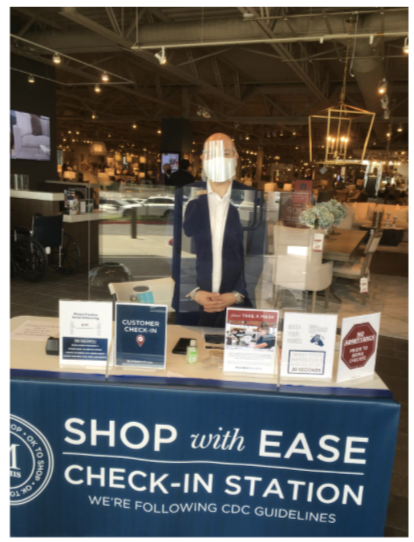
Fig. 2
Drunk with power, public health officials in California felt ordained to protect the unwashed masses from Thanksgiving dinner. Unsurprisingly, these farcical dining rules did not apply to everyone.
Who actually believed “singing, chanting, shouting, and physical exertion” at a family dinner was too risky? Who decided that we needed to bulldoze a skate park to prevent kids from congregating? Why was it necessary to arrest a lone paddleboarder in Santa Monica Bay for “flouting coronavirus closures?”
In the LA Times article on the paddler’s arrest, a professor from the prestigious Scripps Institute of Oceanography opined, “SARS-CoV-2, the virus that causes COVID-19, could enter coastal waters and transfer back into the air along the coast. I wouldn’t go in the water if you paid me $1 million right now.”
I tried laughing off the ridiculous, unenforceable Thanksgiving rules, those stickers in the elevators, and other nonsense that at the time was happening somewhere else. But I could not get past the frightening reality that so many of my highly educated peers actually believed nonsense like SARS-CoV-2 was leaping out of the ocean.
Anyone paying attention could compile government data on Covid-19 outcomes and assess risk for themselves (Table 1). The message was always the same – the vast majority of deaths attributed to Covid-19 were people over 65 years old with severe comorbidities, especially obesity.
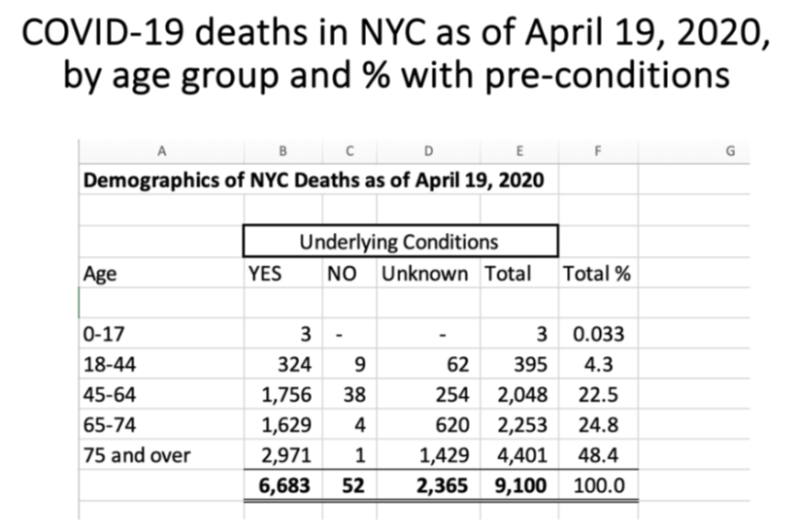
Table 1
By signing the Great Barrington Declaration and discussing its premise of “focused protection” in my advanced microbiology courses, I received an avalanche of vitriol.
Among the most shocking responses were accusations of “ageism” and “fat-shaming” for discussing hard facts about the pandemic.
Just like that, the “Science doesn’t care about your feelings” crowd started prioritizing their feelings. The university newspaper asked for an interview. I was warned not to accept, but I wanted to start a bigger conversation. I regret my decision because the article they wrote did not represent the views I articulated.
Instead, I was accused of promoting a “power imbalance” by supposedly forcing my “junk science” views on students. I used to think the cries of “fake news” were just a lazy argument by people that could not support their position, until I read that article about me.
Ironically, these same people who attacked me had completely accepted the made-up “six-feet rule,” which was the root of so much collateral damage. Heavily biased news sources like NPR defended this unscientific rule by stating, “distance still protects you.” However, if the cure is not even remotely feasible, despite the best efforts of authoritarians, then it’s not really a cure.
Apparently I crossed the line when I discussed in class how politicized the pandemic had become. How is it that President Trump’s rallies were spreading “coronavirus and death” but BLM protests had no effect on coronavirus cases? The sampling bias was baked in, given that contact tracers were being told not to ask people if they had been to a protest.
Why was it acceptable for CNN to use phrases such as “Wuhan virus” and “Chinese coronavirus,” but when President Trump did it, he was called “racist?” Was it actually “racist” to discuss the obvious signs of genetic manipulation in the SARS-CoV-2 genome with my students in an Emerging Infectious Diseases class?
My campus newspaper and many of my colleagues thought so, as did an Asian American and Pacific Islander group calling for my resignation. When the admonitions about masks became aggressive (Fig. 3), and draconian, unscientific outdoor mask fines were being implemented, I analyzed some data and conducted a few experiments to find out for myself if masks were worth all the anger.
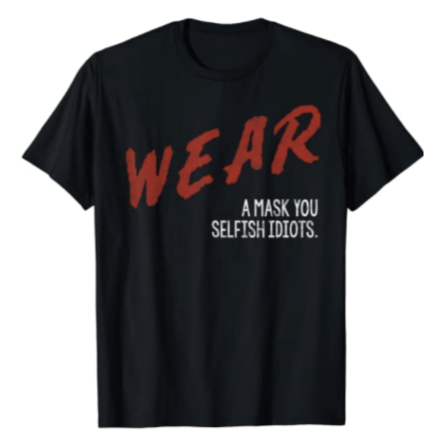
Fig. 3
I looked at “cases” in places like New York City and pointed out when the mask mandate and fines were applied (Fig. 4). Notably, the NYC mandate was instituted after cases had already begun to fall, and coercive fines did not prevent the second wave, which was longer and reached a higher peak than the first wave.
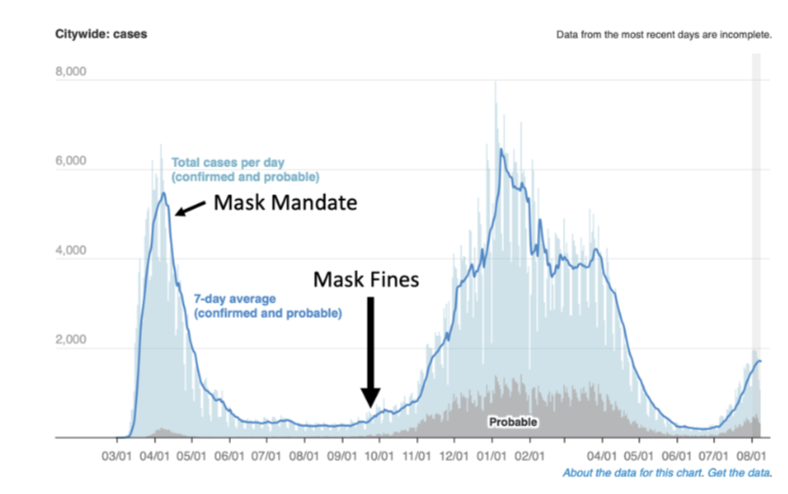
Fig. 4
I had my allergy-prone daughter sneeze onto petri-plates with and without the CDC-approved masks we wore to enter locations that enforced the mask mandate (Fig. 5). The saliva spray patterns, illustrated by microbial growth on the plates, were virtually indistinguishable.
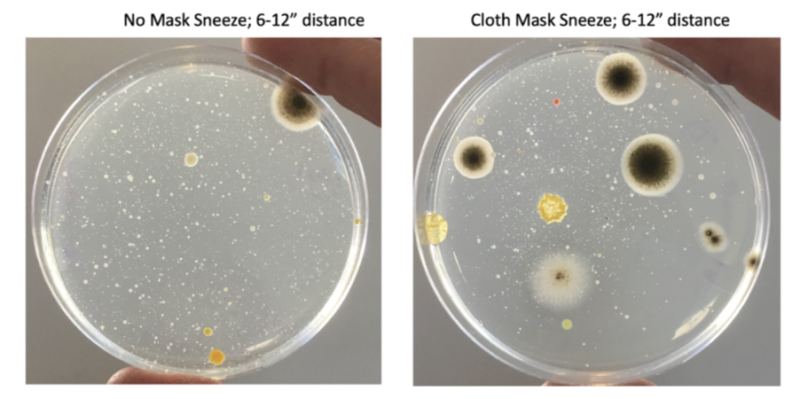
Fig. 5
In the 60 Minutes interview, Dr. Fauci stated that “… often there are unintended consequences…people keep fiddling with the mask and touching their face…” implying that germs collect on masks, making them a source of contagion rather than a barrier.
Indeed, after the sneeze experiment, I stamped the outside of my daughter’s mask onto a petri-plate. The resulting dense microbial growth supported Dr. Fauci’s argument against mask wearing – “fiddling with the mask” probably does spread microbes (Fig. 6).
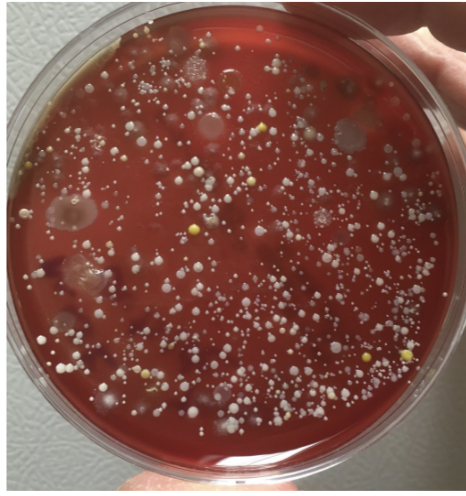
Fig. 6
At the time, I stated in the campus newspaper that “the science on masks was mixed at best.” However, the third-year journalism student apparently knew better and decided I was pushing “junk science.” Was I naïve to expect an apology after “the science” started catching up to what I was saying?
During the pandemic, my lab was responsible for measuring SARS-CoV-2 levels in wastewater (Fig. 7) to use this information as a means of tracking community transmission. We learned two important lessons from this approach.
First, peak levels of SARS-CoV-2 in wastewater (orange line) provided a few weeks’ lead to when we could expect to see peak levels of people testing positive for the virus (i.e., “cases;” blue line). Second, we learned that the mask mandate (red line) did not stop the virus from doing what it wanted. Despite the mask mandate, transmission of SARS-CoV-2 reached unprecedented highs.
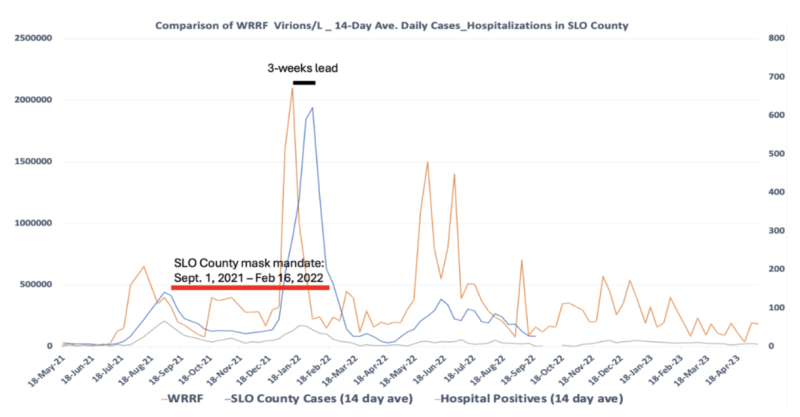
Fig. 7
Taken together, my findings were supported by decades of research showing that masks are not effective against respiratory viruses, regardless of the quality. Still, the counterargument persisted that wearing an N95 mask suctioned to your face, and constantly replacing it, would have stopped the pandemic.
Again, if the cure is not feasible, then it’s not really a cure, is it? The reality is that there are no convincing data supporting mask mandates, none that even remotely support children being forced to wear saliva-soaked masks, and especially none that would justify people being choked and beaten for opposing them.
The “follow the science” crowd was honing their authoritarian skills in preparation for mandatory vaccinations. The motivation for these mandates was summed up perfectly: “During the Sars crisis in 2003 pharma companies answered the WHO’s call for vaccine research. They invested hundreds of millions of dollars, but then — when the outbreak died away — governments and charities lost interest.” According to epidemiologist Dr. Osterholm “The companies were left holding the bag.”
How could Big Pharma avoid “holding the bag” on a vaccine they hoped would stop a virus that had repeatedly ripped through the world’s population? Not surprisingly, their first order of business was to drop the concept of “natural immunity” into the memory hole, centuries of science be damned. The subtext was if regular people knew that natural immunity was real, they probably would not want the vaccine, especially if they already had Covid-19 a few times.
Leading up to the vaccine rollout, I tested myself regularly using PCR, antibody, and antigen assays. I eventually tested positive and had mild flu-like symptoms. While well-educated friends of mine had gone to such lengths as to move out of their homes to distance themselves from their children and wait for the vaccines, my family chose a different tack. Instead, we huddled, got mild infections (except for my wife, who seemed to be immune), shared some level of natural immunity to the latest version of the virus, and tracked our infections (Table 2).
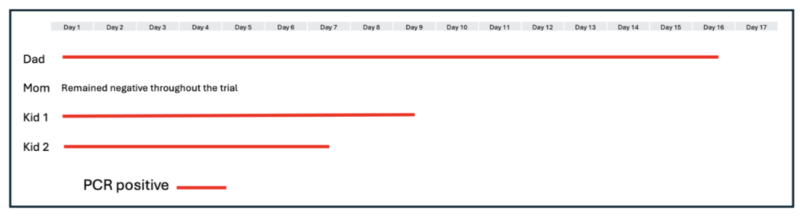
Table 2
When I shared the “herd immunity” story with my small social media following, most appreciated hearing something other than doom and gloom. However, others showed a level of vindictiveness that should not have surprised me, given how acceptable it became to wish death on the unvaccinated.
A colleague attempted to shame me in the campus newspaper, while others wondered out loud whether Child Protective Services should be notified. How dare you give your children the sniffles! How dare you use this time of ridiculous “virtual learning” mandates to provide your children with some hands-on experience performing quantitative PCR!
Predictably, my SARS-CoV-2 antibody levels were extremely high after over two weeks of PCR-positivity. While still overflowing with SARS-CoV-2 antibodies, I was scheduled to receive mandatory shots in order to return to campus.
If the world had actually followed the science, my recent PCR positivity and elevated antibody titers should have been a reasonable exemption. Unfortunately, there was no such exemption. Having seen the terrible treatment of my colleague Dr. Kheriaty, I decided we would play the role of guinea pigs and take what would be an all-risk-and-no-reward shot, especially for my kids. That is, there was nothing in it for us except a few days of high fever and injection site swelling, but definite financial reward for everyone in the vaccine supply chain.
As a member of the “laptop class,” the “lockdowns” made my life easier in many ways. While small business owners struggled, I was getting full pay to upload instructional videos to my university students, and occasionally engage with them online. My wastewater epidemiology work was deemed “essential,” so I was permitted to go to my lab to perform those duties for additional compensation.
However, the ad hominem attacks and threats caused me to disengage from further attempts to start a discussion on pandemic policy, which no doubt was their goal. While the world was fighting over toilet paper and shaming each other for “killing grandma,” we tuned out for a while (Fig. 8).

Fig. 8
I was surrounded by so much anger that I truly believed I was alone in my heretical views on pandemic policy. However, I officially tuned back in when Dr. Scott Atlas invited me to join a small group called The Academy for Science and Freedom.
Our meeting at the Hillsdale College Kirby Center in Washington, D.C. was the first time I had hope since the pandemic started. We were professors, medical doctors, publishers, and journalists, all united by a common belief that the people in charge abandoned a basic tenet of public health: voluntary instead of coercive measures would protect public trust and induce cooperation.
Despite all the great minds in the room, it was hard to imagine we would ever get to where we are right now. But here we are. Many of the people responsible for lockdowns, forced vaccinations, and covering up the unnatural origin of SARS-CoV-2 are gone.
In their place, are Academy members such as Dr. Tracy Beth Høeg, Dr. Jay Bhattacharya, Dr. Matt Memoli, Dr. Vinay Prasad, Dr. Martin Kulldorff, and Dr. Marty Makary. All of whom were treated far worse than me. The overwhelming rejection of “The Fauci School” of public health policy is vindicating. However, recent headlines suggest there are holdouts refusing to accept that they were fooled: Dr. Høeg is a “vaccine skeptic,” Dr. Memoli “is known for questioning vaccine mandates,” and Dr. Prasad is an “anti-science MAHA extremist.”
The people I trusted probably fooled me on a lot of things I voted for, like the benefits of a 20,000-page health care policy. Who has time to actually read that stuff? However, they were never going to succeed at fooling me about the science of the pandemic.
Their lies and hubris caused an awakening, reminiscent of the scene in The Matrix when Neo emerged from the virtual world to a brutal reality. I just hope the people I trust who are now running the major institutions will allocate all resources to programs that will actually improve human health. In doing so, they should have no problem convincing those holdouts not only that they had been fooled, but who fooled them.
The Deep State Goes Viral: Foreword
By Jeffrey A Tucker | Brownstone Institute | May 12, 2025
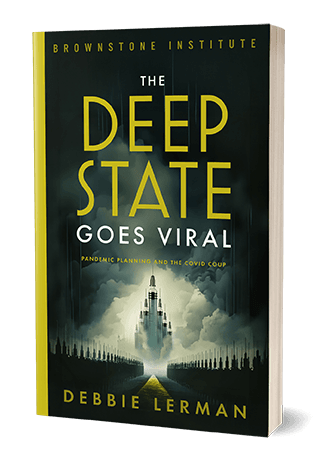
The following is Jeffrey Tucker’s Foreword introduction to Debbie Lerman’s new book, The Deep State Goes Viral: Pandemic Planning and the Covid Coup.
It was about a month into lockdowns, April 2020, and my phone rang with an unusual number. I picked up and the caller identified himself as Rajeev Venkayya, a name I knew from my writings on the 2005 pandemic scare. Now the head of a vaccine company, he once served as Special Assistant to the President for Biodefense, and claimed to be the inventor of pandemic planning.
Venkayya was a primary author of “A National Strategy for Pandemic Influenza” as issued by the George W. Bush administration in 2005. It was the first document that mapped out a nascent version of lockdowns, designed for global deployment. “A flu pandemic would have global consequences,” said Bush, “so no nation can afford to ignore this threat, and every nation has responsibilities to detect and stop its spread.”
It was always a strange document because it stood in constant contradiction to public health orthodoxies dating back decades and even a century. With it, there were two alternative paths in place in the event of a new virus: the normal path that everyone is taught in medical school (therapeutics for the sick, caution with social disturbances, calm and reason, quarantines only in extreme cases) and a biosecurity path that invoked totalitarian measures.
Those two paths existed side-by-side for a decade and a half before the lockdowns.
Now I found myself speaking with the guy who claims credit for having mapped out the biosecurity approach, which contradicted all public health wisdom and experience. His plan was finally being implemented. Not too many voices dissented, partially due to fear but also due to censorship, which was already very tight. He told me to stop objecting to the lockdowns because they have everything under control.
I asked a basic question. Let’s say we all hunker down, hide under the sofa, eschew physical meetings with family and friends, stop all gatherings of all kinds, and keep businesses and schools closed. What, I asked, happens to the virus itself? Does it jump in a hole in the ground or head to Mars for fear of another press conference by Andrew Cuomo or Anthony Fauci?
After some fallacy-filled banter about the R-naught, I could tell he was getting exasperated with me, and finally, with some hesitation, he told me the plan. There would be a vaccine. I balked and said that no vaccine can sterilize against a fast-mutating respiratory pathogen with a zoonotic reservoir. Even if such a thing did appear, it would take 10 years of trials and testing before it was safe to release to the general population. Are we going to stay locked down for a decade?
“It will come much faster,” he said. “You watch. You will be surprised.”
Hanging up, I recall dismissing him as a crank, a has-been with nothing better to do than call up poor writers and bug them.
I had entirely misread the meaning, simply because I was not prepared to understand the sheer depth and vastness of the operation now in play. All that was taking place struck me as obviously destructive and fundamentally flawed but rooted in a kind of intellectual error: a loss of understanding of virology basics.
Around the same time, the New York Times posted without fanfare a new document called PanCAP-A: Pandemic Crisis Action Plan – Adapted. It was Venkayya’s plan, only intensified, as released on March 13, 2020, three days before President Trump’s press conference announcing the lockdowns. I read through it, reposted it, but had no idea what it meant. I hoped someone could come along to explain it, interpret it, and tease out its implications, all in the interest of getting to the bottom of the who, what, and why of this fundamental attack on civilization itself.
That person did come along. She is Debbie Lerman, intrepid author of this wonderful book that so beautifully presents the best thoughts on all the questions that had eluded me. She took the document apart and discovered a fundamental truth therein. The rule-making authority for the pandemic response was not vested in public-health agencies but the National Security Council.
This was stated as plain as day in the document; I had somehow missed that. This was not public health. It was national security. The antidote under development with the label vaccine was really a military countermeasure. In other words, this was Venkayya’s plan times ten, and the idea was precisely to override all tradition and public health concerns and replace them with national security measures.
Realizing this fundamentally changes the structure of the story of the last five years. This is not a story of a world that mysteriously forgot about natural immunity and made some intellectual error in thinking that governments could shut down economies and turn them back on again, scaring a pathogen back to where it came from. What we experienced in a very real sense was quasi-martial law, a deep-state coup not only on a national but on an international level.
These are terrifying thoughts and hardly anyone is prepared to discuss them, which is why Lerman’s book is so crucial. In terms of public debate about what happened to us, we are barely at the beginning. There is now a willingness to admit that the lockdowns did more overall harm than good. Even the legacy media has started venturing out to grant permission for such thoughts. But the role of the pharmaceuticals in driving the policy and the role of the national-security state in backing this grand industrial project is still taboo.
In 21st-century journalism and advocacy designed to influence the public mind, the overwhelming concern of all writers and institutions is professional survival. That means fitting into an approved ethos or paradigm regardless of the facts. This is why Lerman’s thesis is not debated; it is hardly spoken of at all in polite society. That said, my work at Brownstone Institute has put me in close contact with many thinkers in high places. This much I can say: what Lerman has written in this book is not disputed but admitted in private.
Strange isn’t it? We saw during the Covid years how professional aspiration incentivized silence even in the face of egregious violations of human rights, including mandatory school closures that robbed children of education, followed by face-covering requirements and forced injections for the whole population. The near-silence was deafening even if anyone with a brain and a conscience knew that all of this was wrong. Not even the excuse that “We didn’t know” works anymore because we did know.
This same dynamic of social and cultural control is fully in operation now that we are through that stage and onto another one, which is precisely why Lerman’s findings have not yet made their way to polite society, to say nothing of mainstream media. Will we get there? Maybe. This book can help; at least it is now available for everyone brave enough to confront the facts. You will find herein the most well-documented and coherent presentation of answers to the core questions (what, how, why) that all of us have been asking since this hell was first visited upon us.
Trump bans federal funding of “dangerous” gain-of-function research
The executive order targets high-risk bioengineering, calling time on a scientific gamble that is likely to have sparked a global catastrophe.
By Maryanne Demasi, PhD | May 5, 2025
In a major policy shift, President Donald Trump has signed an executive order halting federal funding for “dangerous” gain-of-function (GoF) research.
The order defines such work as “scientific research on an infectious agent or toxin with the potential to cause disease by enhancing its pathogenicity or increasing its transmissibility.”
Sitting behind the Resolute desk, flanked by key health officials, Trump signed the order with his trademark black Sharpie.
“It’s a big deal,” he said in a subdued tone. “Could have been that we wouldn’t have had the problems we had… if we had this done earlier.”
The directive compels federal agencies to suspend funding for any project “reasonably determined to be dangerous.” It applies not only to domestic institutions, but also to research conducted in “countries of concern” such as China and Iran.
A reckoning led by dissenters
The announcement marked not only a change in policy, but a striking reversal in scientific leadership.
Standing beside Trump were three officials once ridiculed as outliers during the pandemic – Health Secretary Robert F. Kennedy Jr., NIH Director Jay Bhattacharya, and FDA Commissioner Marty Makary.
Now elevated to senior roles, each has been outspoken in challenging the dominant narrative around Covid-19, including the origins of the virus and the ethics of risky research.
“It’s unbelievable to think the entire nightmare of Covid was totally preventable,” said Makary, referring to the mounting evidence of a lab origin and the suppression of early warnings.
“It’s crazy to think this entire nightmare was probably the result of some scientists messing with mother nature—with technology exported from the United States—that is, inserting a furin cleavage site,” said Makary. “So I hope this does some good in the world.”
Kennedy, long critical of gain-of-function research, was more blunt. “In all of the history of gain-of-function research, we cannot point to a single good thing that has come of it,” he said.
Speaking to reporters, Kennedy added, “We can’t allow this reckless experimentation to continue, especially when it’s been linked to catastrophic outcomes with no discernible benefit.”
For Kennedy, the NIH’s support of EcoHealth Alliance’s work at the Wuhan Institute of Virology wasn’t an isolated failure—it reflected a broader pattern of merging national security interests with poorly regulated academic ambition, which he wrote about in his latest book, The Wuhan Cover-Up.
Bhattacharya called the order a long-overdue correction.
“This is a historic day,” he said. “The conduct of this research does not protect us against pandemics, as some people might say. It doesn’t protect us against other nations.”
Bhattacharya warned that even well-intentioned experiments carry immense risk.
“There’s always a danger that in doing this research, it might leak out, just by accident even, and cause a pandemic. Any nation that engages in this research endangers their own population, as well as the world,” he warned.
Bhattacharya emphasised that most scientific work would continue unaffected. “The vast majority of science will go on under this as normal,” he explained, “but the fraction of this research that has the risk of causing a pandemic… we’re going to put in place a framework to make sure that the public has a say.”
“I’m really proud to be here with President Trump, who signed this order ending this research and for the first time, putting in place a real regulatory framework to make it go away forever,” Bhattacharya added.
Suppression of lab-leak evidence
The executive order also represents a deeper reckoning with how early concerns about a lab origin were dismissed.
Early in the pandemic, Trump publicly raised the possibility that Covid-19 may have leaked from a laboratory in Wuhan, reportedly based on intelligence assessments.
But his suggestion was swiftly undermined—particularly by those within his own administration. Dr Anthony Fauci, then director of the National Institute of Allergy and Infectious Diseases, was quietly working to promote the natural origin theory.
Fauci held enormous influence over public health messaging, the media, and scientific institutions. His behind-the-scenes efforts to discredit the lab-leak hypothesis and favour a zoonotic explanation triggered a near-immediate shift in the White House’s public stance.
The campaign to suppress alternative explanations also became visible in leading scientific journals.
In February 2020, The Lancet published a letter organised by Fauci-linked researchers, which labelled lab-origin theories as “conspiracy.” The intent was not to encourage scientific debate, but to squash it.
Weeks later, Nature Medicine released the now-infamous “Proximal Origin” paper, which declared the virus was “not a laboratory construct.” Private emails later revealed that the authors actually had serious doubts and suspected the virus looked engineered.
Together, the two papers helped shut down legitimate scrutiny and created a scientific firewall protecting US-funded research.
Fauci retired in 2022 and, in early 2025, was granted a sweeping pardon by President Biden.
In April this year, the Trump administration launched an official White House website.
It states rather unequivocally: “COVID-19 came from a lab in Wuhan, China. The Wuhan Institute of Virology (WIV), a lab controlled by the Chinese Communist Party (CCP), likely leaked the virus that caused the deadliest pandemic in human history.”
The site also alleges that top scientists and government officials in the US helped cover it up.
A turning point
This executive order signals a broader shift in how Trump’s government intends to confront the scientific and political failures of the pandemic era.
For years, unelected bureaucrats silenced dissent, buried contradictory evidence, and steered decisions behind closed doors. Questions about the virus’ origins were dismissed as conspiracy.
Whistleblowers were marginalised and dangerous research continued, shielded from oversight.
Now, with this order, the Trump administration is drawing a line.
By cutting off federal funding for high-risk virus manipulation and imposing new oversight, the order delivers what’s been missing from pandemic policy – that is, the political will to confront uncomfortable truths and a serious effort to prevent a future man-made pandemic.
The Great Spillover Hoax
By Jeffrey A Tucker | Brownstone Institute | April 27, 2025
Why precisely were Anthony Fauci and his cohorts so anxious to blame SARS-CoV-2 on bats and later pangolins in wet markets? It was not just to deflect attention from the possibility that the novel virus leaked from a lab in Wuhan doing gain-of-function research. There was a larger point: to reinforce a very important narrative concerning zoonotic spillovers.
It’s a fancy phrase that speaks to a kind of granular focus that discourages nonspecialists from having an opinion. Leave it to the experts! They know!
Let’s take a closer look.
For many years, there has been an emerging orthodoxy in epidemiological circles that viruses are jumping from animals to humans at a growing rate. That’s the key assertion, the core claim, the one that is rarely challenged. It is made repeatedly and often in the literature on this subject, much like climate claims in that different literature.
The model goes as follows.
Step one: assert that spillover is increasing, due to urbanization, deforestation, globalization, industrialization, carbon-producing internal combustion, pet ownership, colonialism, icky diets, shorter skirt lengths, whatever other thing you are against, or some amorphous combination of all the above. Regardless, it is new and it is happening at a growing rate.
Step two: observe that only scientists fully understand what a grave threat this is to human life, so they have a social obligation to get out in front of this trend. That requires gain-of-function research to mix and merge pathogens in a lab to see which ones pose the most immediate threats to our existence.
Step three: in order to protect ourselves fully, we need to deploy all the newest technologies including and especially those which allow for fast production of vaccines that can be distributed in the event of the pandemics that are inevitably coming, probably just around the corner. Above all, that requires testing and perfecting mRNA shots that deliver spike protein through lipid nanoparticles so they can be printed and distributed to the population widely and quickly.
Step four: as society breathlessly awaits the great antidote to the deadly virus that comes to us via these vicious spillovers, there is no choice but to enact common-sense public-health measures like extreme restrictions on your liberty to travel, operate a business, and gather with others. The top goal is disease monitoring and containment. The top target: those who behave in ways that presume the existence of anachronisms like freedom and human rights.
Step five: these protocols must be accepted by all governments because of course we live in a globalist setting in which otherwise no pathogen can possibly be contained. No one nation can be permitted to go its own way because doing so endangers the whole. We are all in this together.
If that way of thinking strikes you as surprising, ridiculous, and scary, you have clearly not attended an academic conference on epidemiology, a trade show for pharmaceutical companies, or a planning group feeding information to the United Nations and the World Health Organization.
This is conventional wisdom in all these circles, not even slightly unusual or strange. It is the new orthodoxy, widely accepted by all experts in this realm.
The first I had heard of this entire theory was the August 2020 article in Cell written by David Morens and Anthony Fauci. Written during lockdowns that the authors helped shepherd, the article reflected the apocalyptic tone of the times. They said humanity took a bad turn 12,000 years ago, causing idyllic lives to face myriad infections. We cannot go back to a Rouseauian paradise but we can work to “rebuild the infrastructures of human existence.”
I was obviously stunned, reread the piece carefully, and wondered where the evidence for the great spillover – the crucial empirical assertion of the piece – could be found. They cite many papers in the literature but looking at them further, we find only models, assertions, claims rooted in testing bias, and many other sketchy claims.
What I found was a fog machine.
You see, everything turns on this question. If spillovers are not increasing, or if spillovers are just a normal part of the complicated relationship between humans and the microbial kingdom they inhabit alongside all living things, the entire agenda falls apart.
If spillovers are not a pressing problem, the rationale for gain-of-function evaporates, as does the need for funding, the push for the shots, and the wild schemes to lock down until the antidote arrives. It’s the crucial step, one that has mostly evaded serious public attention but which is nearly universally accepted within the domain of what is called Public Health today.
Who is challenging this? A tremendously important article just appeared in the Journal of Epidemiology and Global Health. It is: “Natural Spillover Risk and Disease Outbreaks: Is Over-Simplification Putting Public Health at Risk?” by the Brownstone-backed team at REPPARE. It’s something of a miracle that this piece got through peer review but here it is.
They present the core assumption: “Arguments supporting pandemic policy are heavily based on the premise that pandemic risk is rapidly increasing, driven in particular by passage of pathogens from animal reservoirs to establish transmission in the human population; ‘zoonotic spillover.’ Proposed drivers for increasing spillover are mostly based on environmental change attributed to anthropogenic origin, including deforestation, agricultural expansion and intensification, and changes in climate.”
And the observation: “If a genuine misattribution bias regarding spillover risk and consequent pandemic risk is arising, this can distort public health policy with potentially far-reaching consequences on health outcomes.”
Then they take it on with a careful examination of the literature generally footnoted as proof. What they find is a typical game of citation roulette: this guy cites this guy who cites this guy who cites that guy, and so on in spinning circles of authoritative-seeming apparatus but fully lacking in any real substance. They write: “We see a pattern of assertive statements of rapidly rising disease risk with anthropogenic impacts on ecology driving it. These are cited heavily, resting largely on opinion, which is a poor substitute for evidence. More concerningly, there is a consistent trend of misrepresenting cited papers.”
We’ve seen this movie many times before. What’s more, there does exist a largely ignored literature that closely examines many of the supposed causal factors that drive spillovers that reveals grave doubts about any causal connection at all. The authors then place the skeptical papers against the opinion papers usually cited and conclude that what has emerged is an evidence-free orthodoxy designed to back an industrial project.
“There are several potential reasons for this tendency to reference opinion as if it is fact. The field has been relatively small, with authorship shared across many papers. This risks the development of a mechanism for circular referencing, reviewing and reinforcement of opinion, shielding claims from sceptical inquiry or external review. The increased interest of private-sector funders in public health institutions including WHO, and its emphasis on commodities in health responses, may deepen this echo chamber, inadvertently downgrading or ignoring contrary findings while emphasizing those studies that support further funding.”
See the pattern here? Anyone who has followed sociology of “the science” over these last five years can. It’s groupthink, the acceptance of doctrine believed because all their peers believe it. In any case, the gig pays well.
Now we can better explain why it is that Fauci and the rest were so emphatic that the coronavirus of 2019 did not originate in a lab for which they had arranged the funding but instead leapt from a bat or something else from a wet market.
The wet market narrative was not only designed to cover up their scheme and avoid blame for a global pandemic of any level of severity. It was also to deploy the potentially catastrophic consequences and resulting public panic as a rationale for continuing their own biological experimentation and funding grift.
“Sadly, it appears we have a leak from a lab.”
“No worries. We’ll find some scientists and steer some grant money to prove the pathogen in question originated from zoonotic spillover, thus proving the point that we need more funding.”
“Brilliant Dr. Fauci! Do we have contacts in the media?”
“We do. We’ll get on that.”
Fauci’s Replacement at NIAID a Cheerleader for Gain-of-Function Research
By Michael Nevradakis, Ph.D. | The Defender | April 29, 2025
A virologist who supports gain-of-function research and believes COVID-19 evolved naturally is the new acting director of the National Institute of Allergy and Infectious Diseases (NIAID), the agency Dr. Anthony Fauci led for 38 years.
Jeffery Taubenberger, M.D., Ph.D., a 19-year veteran of NIAID and chief of the institute’s Viral Pathogenesis and Evolution Section, replaced Dr. Jeanne Marrazzo, who was placed on leave last month by the Trump administration.
Citing an email from Dr. Matthew Memoli, deputy director of the National Institutes of Health (NIH), Science reported that Taubenberger’s first day as acting director was April 25. Taubenberger will head an institute with a $6.56 billion budget, making it the second-largest NIH branch, overseen by the U.S. Department of Health and Human Services (HHS).
Several researchers told Science that Taubenberger has a commendable track record, highlighting his work sequencing the Spanish flu virus of 1918.
Adolfo Garcia-Sastre, Ph.D., a virologist at the Icahn School of Medicine at Mount Sinai in New York, said Taubenberger “has made many critical contributions to the field of influenza, both in pathogenesis, animal models, human data, and vaccines.”
But critics point to Taubenberger’s public support of gain-of-function research and the zoonotic theory of COVID-19’s origins, which holds that the virus crossed over naturally from animals to humans.
They also criticized his past ties to Fauci and other controversial virologists, and his prior work on COVID-19 vaccines.
Gain-of-function research, which increases the transmissibility or virulence of viruses, is often used in vaccine development. Such research was conducted at the Wuhan Institute of Virology in China, prompting fears that the virus was developed at the lab and subsequently leaked.
Concerns over the safety of gain-of-function research previously led the U.S. government to implement a moratorium on such projects between 2014 and 2017.
“Gain-of-function research, if made safe, is a tremendous tool for forecasting the evolution of pathogens,” said Karl Jablonowski, Ph.D., senior research scientist for Children’s Health Defense. “The problem is that there is no such thing as a leak-proof laboratory, just as there is no such thing as an unsinkable ship. A lab leak is not inevitable, but it is a risk — one that we witness surprisingly often.”
Rutgers University molecular biologist Richard Ebright, Ph.D., a critic of gain-of-function research, said, “Taubenberger is part of the problem at NIAID, not part of the solution.”
Ebright said Taubenberger’s track record is at odds with HHS’ “Make America Healthy Again” agenda:
“Taubenberger’s views on the need for transparency and accountability at NIAID management, on the need for re-prioritization of NIAID funding to match disease burden, on the cause and cover-up of COVID, on reckless gain-of-function research and pathogen-resurrection research, and on biosafety, biosecurity, and biorisk management all appear to be diametrically opposed to those of HHS Secretary Kennedy.
“As such, Taubenberger’s appointment as acting director of NIAID is baffling.”
In a 2014 interview with the journal EMBO Reports, Taubenberger downplayed the risks of gain-of-function research, claiming it’s what “virologists have done for a hundred years.”
In a 2013 letter to the journal mBio, Taubenberger suggested that gain-of-function research replicates natural processes. He argued that Influenza A viruses “continually undergo ‘dual use experiments’ as a matter of evolution and selection.”
According to the American Society for Microbiology, dual-use research is a type of gain-of-function research that raises “important biosafety and/or biosecurity concerns.” It requires “a higher level of review” and is “subject to strict protocols.”
Jablonowski said Taubenberger’s dismissal of concerns over the safety of gain-of-function research overlooks its inherent risks.
“The problem with the argument is actually a problem with the policy it argues — it assumes an ill-willed actor intent on ‘deliberate misuse’ as the risk. Recent history has taught us that lab leaks pose a real and serious risk, no ill-willed actor needed. … Advocates of gain-of-function research do not include a realistic assessment of pathogen escape as part of a risk-benefit balance,” Jablonowski said.
While Taubenberger has been lauded for his role in sequencing the 1918 Spanish flu virus, some scientists were critical of this work, with Ebright calling the reconstruction of the 1918 virus “reckless.”
“Taubenberger … exhumed victims of the 1918 Spanish flu from the Alaskan permafrost to sequence and reconstruct the virus,” Jablonowski said. “It is a virus that killed 50 million people in two short years, and with its resurrection, could have reinitiated a pandemic.”
Taubenberger downplayed connections between COVID, lab leak
Taubenberger has sought to downplay any connection between gain-of-function research and the origins of COVID-19, instead claiming the virus emerged naturally.
In July 2020, Taubenberger and Fauci associate Dr. David Morens co-authored an op-ed in the American Journal of Tropical Medicine and Hygiene, suggesting that COVID-19 is “a virus that emerged naturally.”
In a later email to a Science reporter, on which Taubenberger was copied, Morens described the article as a publication that “defends Peter and his Chinese colleagues” — referring to zoologist Peter Daszak, Ph.D., former president of the EcoHealth Alliance, which collaborated with Wuhan scientists on gain-of-function research.
Jablonowski said the authors of the 2020 op-ed “are unfit for office at a scientific institution — not because they got the origins of COVID-19 wrong, but because they played the game of deceiving the world. One of the villains of COVID-19 was EcoHealth Alliance, and Taubenberger’s narrative casts it as the hero.”
In their op-ed, Fauci and Morens called for the development of “broadly protective vaccines” and suggested that the role of organizations like the Coalition for Epidemic Preparedness Innovations (CEPI) “should be extended and strengthened.”
In 2021, CEPI launched its “100 Days Mission” to develop infrastructure capable of delivering a vaccine for a future pandemic within 100 days. CEPI’s supporters include the Gates Foundation, World Economic Forum and Wellcome Trust.
According to his NIAID biography, Taubenberger has overseen research aimed at developing “broadly-protective coronavirus vaccines in pre-clinical animal studies.”
“Taubenberger is wrong about the dangers of gain-of-function research and also about the ‘zoonotic theory,’” said immunologist and biochemist Jessica Rose, Ph.D. “He needs to read EcoHealth Alliance’s DEFUSE proposal.”
Project DEFUSE, a 2018 grant developed by Daszak and co-authored by U.S. and Wuhan scientists, proposed engineering high-risk coronaviruses of the same species as SARS-CoV-2.
Although the U.S. government’s Defense Advanced Research Projects Agency rejected the proposal, some scientists have likened DEFUSE to a blueprint for generating SARS-CoV-2 in the lab, noting the similarities between the proposed work and key characteristics of SARS-CoV-2 that are not found elsewhere in nature.
Last year, HHS suspended all funding for EcoHealth Alliance after finding the organization failed to properly monitor risky coronavirus experiments.
The suspension came two weeks after a U.S. House of Representatives committee investigating the COVID-19 pandemic called for a criminal investigation of Daszak and a month after the U.S. Senate launched an investigation into 15 federal agencies that were briefed about Project DEFUSE in 2018 but said nothing.
Taubenberger collaborated closely with Fauci
According to U.S. Right to Know, “Most of the NIAID employees who helped Daszak maintain funding amid the pandemic still retain positions of influence at NIAID” — including Taubenberger and Morens, formerly a key aide to Fauci who is under investigation for allegedly using his personal email address to evade Freedom of Information Act requests for communications related to the origins of COVID-19.
Ebright said that Taubenberger has maintained longstanding collaborations with such figures, noting that he co-authored 14 papers with Fauci and 66 papers with Morens.
According to U.S. Right to Know, Taubenberger also collaborated with researchers who played a key role in promoting the zoonotic theory of COVID-19’s origins — including Daszak and several co-authors of “The proximal origin of SARS-Cov-2,” a March 2020 editorial published in Nature Medicine promoting the natural origin of COVID-19 that was later used to discredit proponents of the lab-leak theory.
Earlier this month, the Trump administration launched a revamped version of the government’s official COVID-19 website, presenting evidence that COVID-19 emerged following a leak at the Wuhan Institute of Virology. The CIA, FBI, U.S. Department of Energy, U.S. Congress and other intelligence agencies have endorsed this theory.
In a 1998 interview on PBS’ “American Experience,” Taubenberger suggested that a flu pandemic was inevitable. “The odds are very great, practically a hundred percent, that another pandemic will occur,” he said.
This article was originally published by The Defender — Children’s Health Defense’s News & Views Website under Creative Commons license CC BY-NC-ND 4.0. Please consider subscribing to The Defender or donating to Children’s Health Defense.
The False Claims of WHO’s Pandemic Agreement
By David Bell | Brownstone Institute | April 28, 2025
One way to determine whether a suggestion is worth following is to look at the evidence presented to support it. If the evidence makes sense and smells real, then perhaps the program you are asked to sign up for is worthy of consideration.
However, if the whole scheme is sold on fallacies that a child could poke a stick through, and its chief proponents cannot possibly believe their own rhetoric, then only a fool would go much further. This is obvious – you don’t buy a used car on a salesman’s insistence that there is no other way to get from your kitchen to your bathroom.
Delegates at the coming World Health Assembly in Geneva are faced with such a choice. In this case, the car salesman is the World Health Organization (WHO), an organization still commanding considerable global respect based on a legacy of sane and solid work some decades ago.
It also benefits from a persistent misunderstanding that large international organizations would not intentionally lie (they increasingly do, as noted below). The delegates will be voting on the recently completed text of the Pandemic Agreement, part of a broad effort to extract large profits and salaries from an intrinsic human fear of rare causes of death. Fear and confusion distract human minds from rational behavior.
WHO Likes a Good Story?
The Pandemic Agreement, and the international pandemic agenda it is intended to support, are based on a series of demonstrably false claims:
- There is evidence of a rising risk of severe naturally occurring pandemics due to a rapid (exponential) increase in infectious disease outbreaks
- A massive return on financial investment is expected from diverting large resources to prepare for, prevent, or combat these
- The Covid-19 outbreak was probably of natural origin, and serves as an example of unavoidable health and financial costs we will incur again if we don’t act now.
If any of these were false, then the basis on which the WHO and its backers have argued for the Pandemic Agreement is fundamentally flawed. And all of them can be shown to be false. However, influential people and organizations want pandemics to be the main focus of public health. The WHO supports this because it is paid to.
The private sector invested heavily in vaccines, and a few countries with large vaccine and biotech industries now direct most of the WHO’s work through specified funding. The WHO is obligated to deliver what these interests direct it to.
The WHO was once independent and able to concentrate on health priorities – back when they prioritized the main drivers of sickness and premature mortality and gained the reputation they now trade from. In today’s corporatized public health, population-based approaches have lost value, and the aspirations of the World Economic Forum hold more sway than those dying before sixty.
Success in the health commodities business is about enlarging markets, not reducing the need for intervention. The WHO and its reputation are useful tools to sanitize this. Colonialism, as ever, needs to appear altruistic.
Truth Is Less Compelling Than Fiction
So, to address these fallacies. Infectious disease mortality has steadily declined over the past century despite a minor Covid blip that took us back just a decade. This blip includes the virus, but also the avoidable imposition of poverty, unemployment, reduced healthcare access, and other factors that the WHO had previously warned against, but recently actively promoted.
To get around this reality of decreasing mortality, the WHO uses a hypothetical disease (Disease X), a placeholder for something that has not happened since the Spanish flu in the pre-antibiotic era. The huge Medieval pandemics such as the Black Death were mostly bacterial in origin, as were probably most Spanish flu deaths. With antibiotics, sewers, and better food, we now live longer and don’t expect such mortality events, but the WHO uses this threat regardless.
Thus, the WHO has been reduced to misrepresenting fragile evidence (e.g. ignoring technology developments that can explain rising reports of outbreaks) and opinion pieces by sponsored panels in order to support the narrative of rapidly rising pandemic risk. Even Covid-19 is getting harder to use. If, as appears most likely, it was an inevitable result of laboratory manipulation, then it no longer even serves as an outlier. The WHO’s pandemic agenda is squarely targeted at natural outbreaks; hence the need for “Disease X”.
The WHO (and the World Bank) follow a similar approach in inflating financial Return on Investment (ROI). If you received an email promoting over 300 to 700 times return on a proposed investment, some may be impressed but sensible people would suspect something amiss. But this is what the Group of Twenty (G20) secretariat told its members in 2022 for return on investment on the WHO’s pandemic preparedness proposals.
The WHO and the World Bank provided the graphic below to the same G20 meeting to support such astronomical predictions. It is essentially subterfuge; a fantasy to mislead readers such as politicians who are too busy, and trusting, to dig deeper. As these agencies are intended to serve countries rather than fool them, this sort of behavior, which is recurrent, should call into question their very existence.
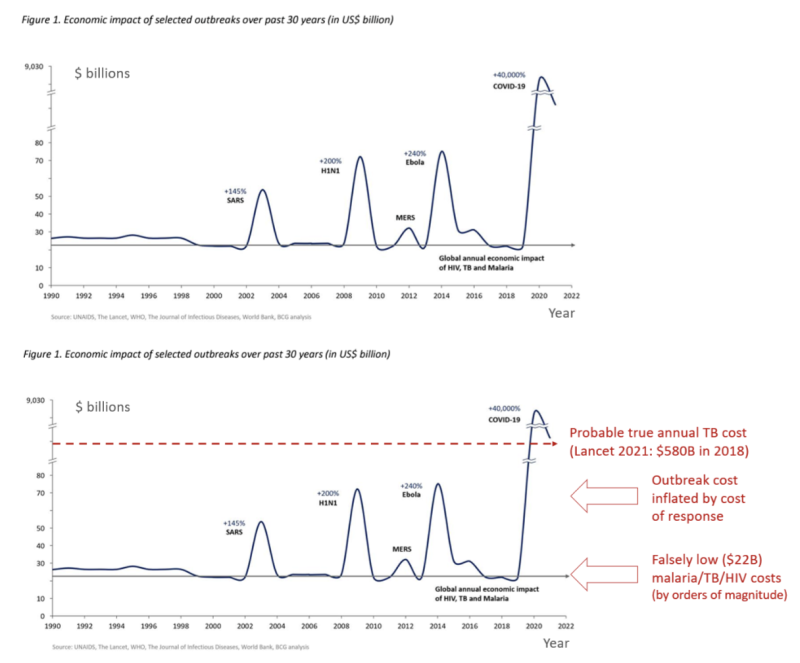
Figure 1 from Analysis of Pandemic Preparedness and Response (PPR) architecture, financing needs, gaps and mechanisms, prepared by WHO and the World Bank for the G20, March 2022. Lower chart modified by REPPARE, University of Leeds.
A virus like SARS-CoV-2 (causing Covid-19) that mostly targets the sick elderly with an overall infectious mortality rate of about 0.15% will not cost $9 trillion unless panicked or greedy people choose to close down the world’s supply lines, implement mass unemployment, and then print money for multi-trillion-dollar stimulus packages. In contrast, diseases that regularly kill more and much younger people, like tuberculosis, malaria, and HIV/AIDS, cost far more than $22 billion a year in contrast.
A 2021 Lancet article put tuberculosis losses alone at $580 billion/year in 2018. Malaria kills over 600,000 children annually, and HIV/AIDS results in similar numbers of deaths. These deaths of current and future productive workers, leaving orphaned children, cost countries. Once, they were the WHO’s main priority.
Trading on a Fading Reputation
In selling the package, the WHO seems to have abandoned any attempt at meaningful dialogue. They still justify the surveillance-lockdown-mass vaccinate model by the logic-free claim that over 14 million lives were saved by Covid vaccines in 2021 (so we all have to do that again). The WHO recorded a little over 3 million Covid-related deaths in the first (vaccine-free) year of the pandemic. For the 14 million ‘saved’ to be correct, another 17 million would somehow have been due to die in year two, despite most people having gained immunity and many of the most susceptible having already succumbed.
Such childish claims are meant to shock and confuse rather than educate. People are paid to model such numbers to create narratives, and others are paid to spin them on the WHO websites and elsewhere. An industry worth hundreds of billions of dollars depends on such messaging. Scientific integrity cannot survive in an organization paid to be a mouthpiece.
As an alternative, the WHO could advocate for investment in areas that promoted longevity in wealthy countries – sanitation, better diet and living conditions, and access to basic, good medical care.
This was once the WHO’s priority because it not only greatly reduces mortality from rare pandemic events (most Covid deaths were in people already very unwell), but it also reduces mortality from the big endemic killers such as malaria, tuberculosis, common childhood infections, and many chronic non-communicable diseases. It is, unequivocally, the main reason why mortality from major childhood infectious diseases like measles and Whooping cough plummeted long before mass vaccinations were introduced.
If we concentrated on strategies that improve general health and resilience, rather than the financial health of the pandemic industrial complex, we could then confidently decide not to wreck the lives of our children and elderly if a pandemic did arise.
Very few people would be at high risk. We could all expect to live longer and healthier lives. The WHO has elected to leave this path, instill mass and unfounded fear, and support a very different paradigm. While the Pandemic Agreement is not essential to it, it is an important part of diverting further funds to this agenda and cementing this corporatist approach into place.
The United States has done well by stepping out of this mess, but continues to push many of the same fallacies and was instrumental in sowing the mess we now reap. While a few other governments are questioning, it is hard for any politicians to stand with truth when a sponsored media stands squarely elsewhere.
Society is once more enslaving itself, at the behest of an entitled few, facilitated by international agencies that were set up specifically to guard against this. At the coming World Health Assembly, the pandemic fairytale will almost certainly prevail.
The hope is that a well-deserved erosion of trust will eventually catch up with the global health industry and too few countries will ratify this treaty for it ever to come into force. To fix the underlying problem though and derail the pandemic industry train, we will need to rethink the whole approach to cooperation in international health.
David Bell, Senior Scholar at Brownstone Institute, is a public health physician and biotech consultant in global health. David is a former medical officer and scientist at the World Health Organization (WHO), Programme Head for malaria and febrile diseases at the Foundation for Innovative New Diagnostics (FIND) in Geneva, Switzerland, and Director of Global Health Technologies at Intellectual Ventures Global Good Fund in Bellevue, WA, USA.
Klaus Schwab, Sophist

By Laurie Calhoun | The Libertarian Institute | May 1, 2025
The existence of Klaus Schwab became known to much of the thinking world during the Coronapocalypse, when so-called conspiracy theories began to flourish about the use of the novel COVID-19 virus as a pretext for reconfiguring the world. The “Great Reset” and the “New Normal” began to be spoken of fondly by bureaucrats back in 2020, shortly after the in some ways incomprehensibly influential Schwab co-authored with Thierry Malleret a short book extolling just those concepts: Covid-19: The Great Reset.
The work, or paraphrased excerpts of it, must have been spam-emailed to every government official and mainstream media journalist on the planet, because in no time pundits and their parrots in the press were gushing about the Great Reset, essentially a Brave New World to come (had none of them read Aldous Huxley’s classic work, or did they simply not understand it?). Nearly every influential person with a microphone was emitting the expression “Everything has changed,” insisting that this was because of the emergence of the novel coronavirus, not the government policies enacted in response to it. Schwab was lurking behind the scenes from the beginning, proffering gaslighting homilies and question-begging arguments camouflaged as benevolent recommendations and facts:
“The worldwide crisis triggered by the coronavirus pandemic has no parallel in modern history.”
In truth, “Everything changed” only because government officials changed everything, by closing national borders, locking down entire populations, preventing groups from assembling, and shutting down schools and all but specially designated “essential” businesses. Human beings were required to wear masks nearly everywhere they went, and those who demurred were treated as miscreants and pursued by the police. The insistence by politicians, bureaucrats and other opinion makers that “Everything has changed” was curiously reminiscent of how officials rationalized a massive and ruthless assault on Afghanistan and Iraq in the aftermath of crimes committed on September 11, 2001, by a small group of persons hailing primarily from Saudi Arabia. (Induction on two cases: when someone starts chiming, “Everything has changed!” in order to persuade you to do something or to support some initiative, you should probably turn around and walk away.)
Klaus Schwab founded and led the World Economic Forum (WEF) for more than fifty years. Many of what were revealed during the pandemic period to be the most brazen authoritarians among ostensibly democratic world leaders have connections to the organization. Canadian Prime Minister Justin Trudeau, New Zealand Prime Minister Jacinda Ardern, and French President Emmanuel Macron are notable examples of leaders who punished and even ostracized citizens for daring to defy their administration’s draconian COVID policies. Schwab recently resigned from his position, but whether that was because of age—he was born in 1938—or scandal matters little at this point, for his legacy has been secured throughout much of the world.
Key features of the Great Reset were to foist ESG (Environmental, Social and Governance investing) on people transnationally or, perhaps more accurately, meta-nationally. We have seen that elements of Schwab’s Weltanschauung have indeed made their way into not only federal government policies, with Green New Deals and carbon-limiting programs imposed in many parts of the planet, but also global corporate initiatives, as many companies now boast about their “environmental and social conscience,” using this as a marketing tool. Under the “Social Governance” guise of the ESG program, enthusiastic efforts to expand DEI (Diversity, Equity, and Inclusion) frameworks throughout the spheres of education and business have led to the appearance of “trans flags” waving alongside national flags at government buildings in what can only be characterized as a bizarre obsession with the subset of human beings, oddly in ascendance, who are said to have been born with the wrong set of genitalia.
One of the more extreme consequences of DEI has indeed been the effusive promotion of a radical trans agenda, which is arguably both homophobic and misogynistic, promoting as it does a grotesque caricature of femininity, exemplified by the skimpily clad and seemingly ditsy Dylan Mulvaney (remember the Budweiser ads?), while essentially denying the possibility of androgyny. In the name of inclusion, biological males (persons in possession of a Y chromosome) have been allowed to compete with females (persons devoid of a Y chromosome) in sports, with female competitors predictably forced to forego awards and scholarships as a result. Female athletes whose sports involve contact with competitors have been physically endangered by the admission of males into their sphere, as is evidenced by the case of volleyball player Payton McNabb and the 2024 Olympic boxing controversy, when two competitors who had previously failed a female gender test (for Y chromosome and testosterone levels) were permitted to compete. On top of all of those clear and present dangers, females in locker rooms have been faced with the prospect of seeing a penis dangling before them as they change their clothes or shower. Rather than attempt to protect females, policymakers were somehow persuaded by radical trans activists that males who decreed themselves to be female needed to be protected instead.
The incomprehensible power of the radical trans facet of the DEI agenda also brought about the enactment of laws which criminalize the “mis-pronouning” of persons who, despite having been born male, self-identify as female, or vice versa. Or neither, which necessitates, by law in some places now, that their interlocutors restrict personal pronoun usage to ‘they/them’. The latter is needless to say a no-win arrangement, for in complying with pronoun laws, one is thus obliged to commit a crime of grammar.
On the New Green Deal front, the European Union is continually devising new policies which attest to its commitments to the New Normal as envisioned by Schwab’s WEF, perhaps the most notorious slogan of which is “You’ll own nothing and be happy.” Countless memes have satirized the WEF leader for exhorting people to eat insects and stay in their “pods,” on the grounds that livestock and travel are allegedly a menace to the future of the planet. (Note: the persons who attend the ever-proliferating conferences on the environment or serve as parliament members of the EU generally fly to their meetings, sometimes in private jets.) Earnest discussion of the possibility of “15-minute cities,” where people do not need to (or are not allowed to) travel farther than fifteen minutes from their domicile has been taken up among local council members in “green-savvy” communities.
The list of rules and regulations already imposed by the European Union is seemingly endless, but to offer only two recent examples: plastic bottles sold in Europe are now required to have their caps affixed to them, and single-serving portion containers (such as are used at bed and breakfast hotels for jam, butter, honey, etc.) are in the process of being outlawed, despite having been devised as a means not only of convenience but also to prevent cross-contamination between unrelated guests. Only time will tell whether bureaucrats eventually side with public health officials or environmentalists in the latter case.
Far more important for the future of free people are the persistent censorship measures in the United Kingdom, Europe, Australia and beyond, modeled after anti-misinformation and surveillance policies aggressively enforced in many countries during the COVID period. To the shock of many thinking people, governments have taken it upon themselves to monitor the social media posts of citizens and to criminalize the expression of what are deemed unacceptable opinions, an obvious legacy of the COVID period, when persons who disagreed with the government were roundly denounced as agents of misinformation who needed to be de-platformed and silenced, lest they kill anyone with their dangerous ideas. Strikingly, reports of vaccine injury were not even false (misinformation), according to the censors themselves, but instead “malinformation,” which officials regarded as having the potential to prevent people who needed the “vaccine” from getting it.
Looking back at the surprising convergence among governments about the necessity of global lockdowns and, later, universal vaccination in the face of a virus which primarily endangered elderly and already infirm persons, it is clear that Schwab’s work served as a sort of template for how to communicate with constituents and conduct public affairs. Paternalism reigned (or, if you prefer, “maternalism” à la Nurse Ratched), as citizens were spoken to by political leaders in condescending tones as though they were toddlers who needed to be protected from themselves. This approach to governance can be summed up in a phrase: Children are to be seen, not heard.
Citizens were told that it was wrong to do their own research because only “the experts,” such as pandemic guru Anthony Fauci knew what they were doing. Despite having repeatedly lied in insisting that the virus had emerged naturally, having somehow leapt from a bat to a human being (when someone in Wuhan ate a bowl of soup?), Fauci himself, we now know, promoted and funded the gain-of-function research which culminated in the very existence—and potency—of the virus. Throughout this period of history, persons who dared to dissent from the dictates and narratives of the government were decried as enemies of humanity who needed to be controlled in order to protect other people from their nefarious tendencies. Notably, Robert F. Kennedy, Jr., author of The Real Anthony Fauci (a true tale of moral horror), who now serves as secretary of Health and Human Services (HHS) in Donald Trump’s second administration, was publicly derided and discredited as an insane conspiracy theorist throughout Joe Biden’s presidency.
The conduct of governments during the period of history from 2020 to 2023 was so confounding and preposterous that a plethora of bona fide conspiracy theories continued to emerge, reaching a peak with the release of the alleged miracle vaccine, which everyone on the planet was first encouraged (through coaxing and bribery) and then, in some cases, required to line up for, on pain of punishment for failure to comply. Some of the theories were quite creative, asserting, for example, that the shots were introducing microchips into the bodies of the recipients, or would turn them into frogs. But the term antivaxxer was affixed to anyone who declined the shot, whatever their reason, with everyone in that group assimilated and depicted as intellectually inept for defying what were claimed by officials at the time to be the dictates of common sense.
Some people, whether with formal training in science or simply endowed with critical thinking skills, understandably expressed skepticism about the new m-RNA therapy shot which they were told would eradicate the virus, while being simultaneously told that natural immunity was inadequate and that persons who already recovered from the virus would still need to undergo vaccination. Because a vaccine, by definition, exploits the subject’s own immune system, anyone with even a modicum of logical acumen must have understood that the new miracle vaccine, which depended on the immune system itself, would only work as advertised if, in fact, natural immunity was possible. This flagrant contradiction was not recognized or acknowledged as such by inept (or, in some cases, mercenarily corrupt) government officials and public health pundits, but it was the most obvious sign to people yet to be indoctrinated into the COVID cult (or not on the Big Pharma dole) that something was seriously awry.
The “Natural immunity is not possible, but this vaccine is necessary and will save you!” contradiction no doubt inspired some of the ever-mutating and proliferating theories about what was really going on. In Covid-19: The Great Reset, Schwab himself refers to antivaxxers as a dangerous impediment to getting through the crisis, and the term came swiftly to be used to denounce anyone who raised even doubts grounded in logic and science about the wisdom of submitting to an experimental treatment in cases where the person’s chances of death from the virus were quite low, as was true for all healthy young persons, and had already been demonstrated in each particular case of anyone who had recovered from previous infection.
The Pentagon required all service persons to take part in the experimental trial of the mRNA therapy, whether or not they had already recovered from infection. The more than 8,000 troops who refused the shot were discharged without pay in 2021, and the military vaccine mandate was not rescinded until 2023. Since assuming office in 2025, Pete Hegseth, Trump’s new defense secretary, has been apologizing to those persons and attempting to make amends, acknowledging that the order to take an experimental vaccine was in fact illegal and that no one was obliged to follow illegal orders. The true motives and sincerity of the new administration on this matter will be seen in how they treat the persons who suffered vaccine injury as a result of having undergone the procedure, under the erroneous belief that Joe Biden’s secretary of defense, Lloyd Austin, knew what he was doing when he ordered the entire military corps to follow his über-masked, serially vaccinated and boosted example. If the government extends its offer of compensation only to healthy troops, in an effort to woo them back into service, and ignores the persons who were disabled by the vaccine, or the individuals and families wrecked by being plunged precipitously into penury, then it will be safe to conclude that Hegseth’s apology tour is no more and no less than a measure intended to mitigate the ongoing recruitment crisis.
There seemed to be grounds for hope that the United States had managed to extricate itself from the totalitarian clutches of meta-bureaucrats such as Klaus Schwab and their “Fifty Year Plans” for humanity when Donald Trump defeated Kamala Harris (who to this day has pronouns in her profile at X) in the November 2024 presidential election. The new president immediately rescinded all DEI initiatives implemented under Biden and enacted numerous executive orders in an effort to protect women, and restore a modicum of sanity to what had become a surreal situation, by boldly asserting the biological fact that no matter how many body parts a male human being chooses to cut off or modify, every remaining cell in his body will still contain a Y chromosome. Trump also acted swiftly to criminalize the scandalous medical practice of mutilating the genitalia of minors. Both Trump and his vice president, J.D. Vance, repeatedly pronounced that free speech would always prevail in the United States as a fundamental pillar of democracy, and they vociferously denounced the censorship going on abroad.
Vestiges of the New World Order, however, can be seen in the United States, for example, the requirement that all citizens who wish to travel or enter a federal building be in possession of a Real ID. This measure, too, which begins in May 2025, having been planned long ago, in the aftermath of September 11, 2001, bears similarities to some of what was going on during the COVID period, when tracking apps and data collection at borders were nearly ubiquitous. More and more data about citizens continues to be collected by governments, and remnants of the health documentation requirements during the COVID period can be seen in the visas now needed to travel to countries where formerly a passport sufficed. Restriction of movement reached a peak during the COVID period, but the apparatus now exists and with a bit of tweaking could be used to stop anyone, anywhere, from relocating at the caprice of government officials, whoever they may be, and whatever their priorities.
The removal of students from campuses in the United States for daring to speak out against the government’s continuing support of the indiscriminate bombing of Gaza suggests that Trump, like Biden and Harris, supports free speech only so long as it does not threaten his own plans for the country or its satellite state, Israel. The libertarians who voted for Trump were needless to say thrilled when he followed through on his promise to pardon Ross Ulbricht, the founder of Silk Road who had received a double life sentence plus forty years with no possibility of parole. In choosing to vote for Trump, however, libertarians had somehow forgotten or chose to ignore the fact that Julian Assange was thrown into Belmarsh prison under Trump’s watch. (I am aware that many persons vote according to a “lesser evil” calculation, but the fact remains: the worst persecution of Assange occurred under Trump.) The fact that U.S. government drones are now acknowledged to be flying above U.S. skies (they were under Biden as well, although this was denied at the time), reveals that surveillance of residents remains a priority of the ostensibly new administration.
Antiwar activists—some of whom voted for Trump—were hopeful that he was sincere when he promised on the campaign trail not to start but to end wars. Even more welcome, albeit frankly astonishing, was Trump’s assertion on February 13, 2025, not long after having re-assumed the presidency, that he would like to cut the $800 billion Pentagon budget in half and work for the abolition of nuclear weapons. Pacific hopes were swiftly dashed less than two months later when, immediately after hosting Israel Prime Minister Benjamin Netanyahu (for the second time in 2025), Trump announced on April 7, 2025, a new, even bigger, $1 trillion defense budget, accompanied by his customary raving about how splendid the U.S. military will be, thanks to his management.
In a welcome change to citizens concerned about government overreach and the massive federal debt, the Department of Government Efficiency (DOGE), under the direction of Elon Musk, has been purging programs and canceling contracts relating to DEI and other parts of the Schwab “New Normal” agenda, including regulations intended to promote the Green New Deal and expand government power over citizens’ lives. The era of big government, however, is obviously not behind us. Along with his sudden imposition of extreme tariffs and announcement of a shocking 25% increase in defense spending, Trump’s strange fascination with the future possible annexation of Greenland, Canada, and Gaza, does not bode well for the future of free people. The idea that the leader of one country may simply “buy” another country or a part of another country (in the case of Gaza) reflects the very megalomania intrinsic to supra-national organizations such as the WEF and characters such as Klaus Schwab who attempt to impose their will on the rest of humanity.
Setting all of those substantial concerns aside, at the very least we can take solace in the fact that Klaus Schwab is no longer calling the WEF shots and penning flagrantly sophistic pamphlets replete with non sequiturs and gaslighting guidance masquerading as benevolence. Goodbye and good riddance, Herr Professor Doktor Schwab, we will not miss you. Alas, the WEF continues on (funded by not only a congeries of self-interested global corporations, but also NGOs and, by transitivity, unwitting taxpayers), and the danger it poses thus remains. Self-deluded officials named as global thought leaders will continue to comply with the WEF, as was exemplified by former New Zealand Prime Minister Jacinda Ardern, who is explicitly singled out for praise in Covid-19: The Great Reset.
Bureaucrats, for their part, will continue to conduct themselves as bureaucrats do, amassing power, devising new rules and regulations, and imposing arbitrary policies by all means necessary, as we witnessed throughout the COVID era. Peter Brabeck-Letmathe, the recently named interim chairman of the WEF, is a former CEO of Nestlé who famously claimed that people have no right to water. Unbeknownst to many of the millions of people who purchase and imbibe bottled water everyday, much of it derives from government-treated municipal water supplies filtered and then poured into plastic bottles to look as though it was sourced from natural spring wells such as Evian, Perrier, Pellegrino, Gerolsteiner, et al. It is unclear how much power Brabeck-Letmathe will exert, or for how long, but he does happen to look empirically indistinguishable from the super villains depicted in movies, so there is some chance that if he begins spouting out gaslighting prescriptions about how all human beings ought to behave, at least some among us will shudder, turn around and walk away.
COVID VACCINE INJURIES CONFIRMED BY NEW DATA
The HighWire with Del Bigtree | April 24, 2025
Del and Jefferey reveal newly uncovered CDC data tying COVID-19 vaccines to neurological, cardiac, and autoimmune injuries, including brain inflammation and heart complications. As evidence mounts, the failure of health officials to warn the public threatens to shatter what little trust remains.
USAID and the Architecture of Perception
By Joshua Stylman | February 16, 2025
The United States Agency for International Development (USAID) has long portrayed itself as America’s humanitarian aid organization, delivering assistance to developing nations. With an annual budget of nearly $40 billion and operations in over 100 countries, it represents one of the largest foreign aid institutions in the world. But recent disclosures reveal its true nature as something far more systematic: an architect of global consciousness. Consider: Reuters, one of the world’s most trusted news sources, received USAID funding for ‘Large Scale Social Deception’ and ‘Social Engineering Defence.’ While there’s debate about the exact scope of these programs, the implications are staggering: a division of one of the world’s most relied-upon sources for objective reporting was paid by a US government agency for systemic reality construction. This funding goes beyond traditional media support, representing a deliberate infrastructure for discourse framing that fundamentally challenges the concept of ‘objective’ reporting.
But it goes deeper. In what reads like a Michael Crichton plot come to life, the recent USAID revelations show a staggering reach of narrative control. Take Internews Network, a USAID-financed NGO that has pushed nearly half a billion dollars ($472.6m) through a secretive network, ‘working with’ 4,291 media outlets. In just one year, they produced 4,799 hours of broadcasts reaching up to 778 million people and ‘trained’ over 9,000 journalists. This isn’t just funding – it’s a systematic infrastructure of consciousness manipulation.
The revelations show USAID funding both the Wuhan Lab’s gain-of-function research and the media outlets that would shape the story around what emerged from it. Backing organizations that would fabricate impeachment evidence. Funding both the election systems that facilitate outcomes and the fact-checkers that determine which discussions about those outcomes are permitted. But these disclosures point to something far more significant than mere corruption.
These revelations didn’t emerge from nowhere – they come from government grant disclosures, FOIA requests, and official records that aren’t even hidden, just ignored. As my old friend Mark Schiffer noted the other day, ‘The most important truths today cannot be debated – they must be felt as totalities.’ The pattern, once seen, cannot be unseen. Some may question DOGE’s methods or the rapid pace of these disclosures, and those constitutional concerns deserve serious discussion. But that’s a separate conversation from what these documents reveal. The revelations themselves – documented in official records and grant disclosures – are undeniable and should shock anyone who values truth. The means of exposure matter far less than what’s being exposed: one of the largest narrative control operations in history.
No domain is untouched – markets, tech, culture, health, and obviously, media – and you’ll find the same design. Intelligence agencies are deeply embedded in each domain because shaping how we perceive reality is more powerful than controlling reality itself
Just as fiat currency replaced real value with declared value, we now see the same pattern everywhere: fiat science replaces inquiry with predetermined conclusions, fiat culture replaces organic development with curated influence, fiat history replaces lived experience with manufactured narratives. We live in an era of fiat everything – where reality itself is declared, not discovered.. And just as they create artificial scarcity in monetary systems, they manufacture false choices everywhere else – presenting us with artificial binaries that obscure the true complexity of our world. As Schiffer wrote elsewhere, reality no longer requires consensus, only coherence. But there’s a crucial distinction: real coherence emerges naturally across multiple domains, reflecting deeper truths that cannot be fabricated. The coherence imposed by perception management isn’t truth – it’s a controlled discourse engineered for consistency, not discovery. The USAID receipts now provide concrete evidence of how this manufactured coherence is built: a scripted reality where the appearance of logic is more important than actual substance.
This isn’t just pattern matching – it’s pattern prediction. Just as algorithms learn to recognize and anticipate behavioral patterns, those who understand this system’s architecture can see its next moves before they’re made. The question isn’t whether something is “true” or “false” – it’s understanding how information flows shape consciousness itself.
To understand how deep this goes, let’s examine their methodology. As Dr. Sherri Tenpenny and others have meticulously documented through FOIA requests and government grant disclosures, the pattern emerges through two primary vectors of control:
Information Control:
- $34 million to Politico (which as Tenpenny notes, struggled to make payroll without this funding)
- Extensive payments to New York Times
- Direct funding to BBC Media Action
- $4.5 million to Kazakhstan to combat “disinformation”
Health and Development:
- $84 million to Clinton Foundation health initiatives
- $100 million for AIDS treatment in Ukraine
- Funding for contraceptive programs in developing nations
Cultural Programming:
- $20 million to Sesame Street in Iraq
- $68 million to World Economic Forum
- $2 million for sex changes and LGBT activism in Guatemala
- Global cultural initiatives (millions spread across LGBTQ programs in Serbia, DEI projects in Ireland, transgender arts in Colombia and Peru, and tourism promotion in Egypt)
What emerges is not just a list of expenditures, but a blueprint for global reality architecture: From Kazakhstan to Ireland, from Serbia to Peru, from Vietnam to Egypt – there isn’t a corner of the world untouched by this system. This isn’t merely a distribution of resources, but a strategic infrastructure of global influence. Each allocation—whether to media outlets, health initiatives, or cultural programs – represents a carefully placed node in a network designed to shape perception across multiple domains. First, control the flow of information through media funding. Then, establish legitimacy through health and development programs. Finally, reshape social structures through cultural programming. The end goal isn’t just to influence what people think, but to determine the boundaries of what can be thought – and to do so on a planetary scale.
For those who’ve been studying the architecture of censorship, like Mike Benz has been documenting for years, none of this comes as a surprise. It’s perfect symmetry: we knew about the censorship. Now we’re seeing the receipts. One hand feeds them talking points, the other hand feeds them our taxpayer dollars. This isn’t speculation; it’s documented fact. Even Wikipedia’s own funding database contains over 45,000 reports tied to USAID – many detailing corruption, media influence, and financial manipulation. The evidence has always been there, but it was ignored, dismissed, or buried under the very fact-checking apparatus USAID funds. These weren’t crackpot theories; they were warnings. And now, we finally have the receipts.
And it doesn’t stop at controlling information. USAID isn’t just shaping media portrayals – it’s funding the systems that enforce them. Last week, Benz broke a bombshell: USAID gives twice as much money ($27 million) to the fiscal sponsor of the group controlling Soros-funded prosecutors than Soros himself gives ($14 million). This isn’t about one billionaire’s influence – it’s about state-backed enforcement of scripted accounts. The same network that dictates what you can think is dictating who prosecutes crime, what laws are enforced, and who faces consequences.
USAID’s influence isn’t just about funding media control—it extends to direct political interference. It didn’t just send aid to Brazil – it funded censorship, backed left-wing activists, and helped rig the 2022 election against Bolsonaro.
Benz revealed that the agency waged a “holy war of censorship,” systematically suppressing Bolsonaro supporters online while bolstering opposition voices. Millions flowed to NGOs pushing leftist framing, including the Felipe Neto Institute, which received U.S. funding while Bolsonaro allies were deplatformed. USAID also bankrolled Amazon-based activist groups, financed media campaigns designed to manipulate public opinion, and funneled money into Brazilian organizations that pushed for stricter internet regulations.
This wasn’t aid—it was election interference disguised as democracy promotion. USAID used American tax dollars to decide Brazil’s future, and it likely deployed similar tactics in many other countries—all under the guise of humanitarian assistance.
And it’s not just abroad. While USAID’s defenders claim it’s a tool for charity and development in poor nations, the evidence suggests something much more insidious. It’s a $40 billion driver of regime change overseas – and now, evidence points to its involvement in regime change efforts at home. Alongside the CIA, USAID appears to have played a role in the 2019 impeachment of Trump – an illegal effort to overturn a U.S. election using the same tools of perception sculpting and political engineering it deploys abroad.
Left vs right, vaxxed vs unvaxxed, Russia vs Ukraine, believer vs skeptic (on any topic) – these false dichotomies serve to fragment our understanding while reality itself is far more nuanced and multidimensional. Each manufactured crisis spawns not just reactions, but reactions to those reactions, creating endless layers of derivative meaning built on artificial foundations.
The real power isn’t in manufacturing individual facts, but in creating systems where false facts become self-reinforcing. When a fact-checker cites another fact-checker who cites a “trusted source” that’s funded by the same entities funding the fact-checkers, the pattern becomes clear. The truth isn’t in any individual claim – it’s in recognizing how the claims work together to create a closed system of artificial reality.
Take the mRNA vaccine debate for example: The pattern manifests before the explanation – people passionately debate efficacy without realizing the entire framework was constructed. First, they fund the research. Then they fund the media to shape the narrative. Even skeptics often fall into their trap, arguing about effectiveness rates while accepting their basic premise. The moment you debate ‘vaccine efficacy,’ you’ve already lost – you’re using their framework to discuss what is, in reality, an experimental gene therapy. By accepting their terminology, their metrics, their framing of the discussion itself, you’re playing in their constructed reality. Each layer of control is designed not just to influence opinions, but to preemptively structure how those opinions can be formed.
Like learning to spot a staged photo or hearing a false note in music, developing a reliable bullshit detector requires pattern recognition. Once you start seeing how narratives are constructed – how language is weaponized, how frameworks are built – it changes the lens with which you view the whole world. The same intelligence agencies embedding themselves in every domain that shapes our understanding aren’t just controlling information flow – they’re programming how we process that information itself.
The recursive theater plays out in real time. When USAID announced funding cuts, BBC News rushed to amplify humanitarian concerns with dramatic headlines about HIV patients and endangered lives. What they didn’t mention in their reporting? USAID is their top funder, bankrolling BBC Media Action with millions in direct payments. Watch how the system protects itself: the largest recipient of USAID media funding creates emotional propaganda about USAID’s importance while obfuscating their financial relationship in their reporting.
This institutional self-defense illustrates a crucial pattern: organizations funded for reality construction protect themselves through layers of misdirection. When presented with evidence, the fact-checking apparatus funded by these same systems springs into action. They’ll tell you that these payments were for standard “subscriptions,” that programs promoting gender ideology are really just about “equality and rights.” But when USAID awards $2 million to Asociación Lambda in Guatemala for “gender-affirming health care” – which can include surgeries, hormone therapy, and counseling – those same defenders conveniently omit the details, blurring the line between advocacy and direct intervention. The very organizations funded for social architecture are the ones telling you there is no social architecture. It’s akin to asking the arsonist to investigate the fire.
Like characters in a grand production, I watch old friends still trusting in institutions like the New York Times. Even this exposition becomes a potential node in the system – the very act of revealing the mechanics of control might itself be anticipated, another layer of the recursive theater. In my earlier work on technocracy, I explored how our digital world has evolved far beyond Truman Burbank’s physical dome. His world had visible walls, cameras, and scripted encounters – a constructed reality he could theoretically escape by reaching its edges. Our prison is more sophisticated: no walls, no visible limits, just algorithmic containment that shapes thought itself. Truman only had to sail far enough to find the truth. But how do you sail beyond the boundaries of perception when the ocean itself is programmed?
Sure, USAID has done some good work—but so did Al Capone with his soup kitchens. Just as the infamous gangster’s charity work made him untouchable in his community, USAID’s aid programs create a veneer of benevolence that makes questioning their larger agenda politically impossible. Philanthropic window dressing has long been a tool for power players to shield themselves from scrutiny. Consider Jimmy Savile: a celebrated philanthropist whose charity work granted him access to hospitals and vulnerable children while he committed unspeakable crimes in plain sight. His carefully cultivated image made him beyond reproach for decades, just as institutional benevolence now serves as a protective layer for global influence operations. The true function of organizations like USAID isn’t just aid—it’s social architecture, mind shaping, and the laundering of taxpayer dollars through an intricate web of NGOs and foundations.
This layered deception is self-reinforcing – each level of manufactured reality is protected by another level of institutional authority. These institutions don’t just dictate stories; they shape the infrastructure through which narratives are disseminated. For what it’s worth, I believe most tools themselves are neutral. The same digital systems that enable mass surveillance could empower individual sovereignty. The same networks that centralize control could facilitate decentralized cooperation. The question isn’t the technology itself, but whether it’s deployed to concentrate or distribute power.
This understanding didn’t come from nowhere. Those who first sensed this artificiality were dismissed as conspiracy theorists. We noticed the coordination across outlets, the strange synchronicity of messaging, the way certain stories were amplified while others disappeared. Now we have the sales receipts showing exactly how that manipulation was funded and orchestrated.
I know this journey of discovery intimately. When I started understanding the dangers of mRNA technology, I went all in. I connected with the incredibly talented filmmaker Jennifer Sharp and helped with Anecdotals, her film about vaccine injuries. I was ready to tether my whole identity to this cause. But then I started zooming out. I began seeing how COVID might have been a financial crime designed to usher in central bank digital currency. The deeper I looked, the more I realized these weren’t isolated deceptions – it was part of a larger system of control. The very fabric of what I thought was real began to dissolve.
What disturbed me most was seeing how deeply programming relies on mimicry. Humans are imitative creatures by nature – it’s how we learn, how we build culture. But this natural tendency has been weaponized. I’d present friends with peer-reviewed studies, documented evidence, historical connections – only to watch them respond with verbatim talking points from corporate media. It wasn’t that they disagreed – it was that they weren’t even processing the information. They were pattern-matching against pre-approved chronicles, outsourcing their thinking to “trusted experts” who were themselves caught in the same web of manufactured perception. I realized then: none of us knows anything for certain – we’re all just mimicking what we’ve been programmed to believe is authoritative knowledge.
The challenge isn’t just seeing through any single deception – it’s understanding how these systems work together in complex, non-linear ways. When we fixate on individual threads, we miss the larger pattern. Like pulling a thread on a sweater and watching it unravel, eventually you realize there was no sweater in the first place – just an intricately woven illusion. Just as a hologram contains the whole image in each fragment, every piece of this system reflects the larger blueprint for reality construction.
Consider the $34 million to Politico – this isn’t just a funding stream, but a holographic reveal of the entire system. It’s not merely that Politico received money; it’s that this single transaction contains the entire blueprint of perception management. The payment itself is a microcosm: struggling media outlet, government funding, narrative control – each element reflects the whole. This recursive system protects itself through layers of self-validation. When critics point out media bias, fact-checkers funded by the same system declare it ‘debunked.’ When researchers question official accounts, journals funded by the same interests reject their work. Even the language of resistance – ‘speaking truth to power,’ ‘fighting disinformation,’ ‘protecting democracy’ – has been co-opted and weaponized by the very system it was meant to challenge.
The COVID story epitomizes this systemic manipulation. What began as a public health crisis transformed into a global experiment in narrative control – demonstrating how rapidly populations could be reshaped through coordinated messaging, institutional authority, and weaponized fear. The pandemic wasn’t just about a virus; it was a proof of concept for how comprehensively human cognition could be engineered – a single node revealing the true scope and ambition of discourse manipulation.
Think about the cycle: American taxpayers unknowingly funded the crisis itself – then paid again to be deceived about it. They paid for the development of gain-of-function research, then paid again for the messaging that would convince them to accept masks, lockdowns, and experimental interventions. The system is so confident in its psychological control that it doesn’t even bother hiding the evidence anymore.
As I’ve documented in my Engineering Reality series, this framework for consciousness management runs far deeper than most can imagine. USAID’s revelations aren’t isolated incidents—they’re glimpses into a vast system of social design that has been in operation for decades. When the same agency funding your fact-checkers is openly paying for ‘social deception,’ when your trusted news sources are receiving direct payments for ‘social architecture,’ the very framework of what we consider ‘real’ begins to crumble.
We’re not just watching events unfold – we’re watching reactions to artificial events, then reactions to those reactions, creating an infinite regression of derivative meaning. People form passionate positions about issues that were constructed, then others define themselves in opposition to those positions. Each layer of reaction fuels the next phase of steered consensus. What we’re witnessing isn’t just the spread of manufactured realities, but the architecture of cultural and geopolitical trends themselves. Artificial trends spawn authentic reactions, which generate counter-reactions, until we’ve built entire societies responding to carefully orchestrated theater. The social engineers aren’t just steering individual beliefs – they’re reshaping the very foundations of how humans make sense of the world.
These revelations are just the tip of the iceberg. Anyone paying attention to the depth and depravity of the corruption knows that this is only the beginning. As more information emerges, the illusion of neutrality, of benevolence, of institutions acting in the public interest, will crumble. No one who truly engages with this information is walking away with renewed faith in the system. The shift is only happening in one direction – some faster than others, but none in reverse. The real question is: what happens when a critical mass reaches the point where their foundational understanding of the world collapses? When they realize that the records shaping their perception were never organic, but manufactured? Some will refuse to look, choosing comfort over confrontation. But for those willing to face it, this is not just about corruption – it’s about the very nature of the reality they thought they inhabited.
The implications are staggering not just for individual awareness, but for our very ability to function as a republic. How can citizens make informed decisions when reality itself has been splintered into competing manufactured tales? When people discover that their most deeply held beliefs were shaped, that their passionate causes were scripted, that even their cultural interests and tastes were curated, that their opposition to certain systems was anticipated and designed – what remains of authentic human experience?
What’s coming will force a choice: either retreat into comfortable denial, dismissing mounting evidence as “right-wing conspiracy theories,” or face the shattering realization that the world we thought we inhabited never actually existed. My research over the past few years points to far more nefarious activities yet to be revealed – operations so heinous that many will simply refuse to process them.
As I wrote about in “The Second Matrix,” there’s always the risk of falling into another layer of controlled awakening. But the greater risk lies in thinking too small, in anchoring ourselves to any single thread of understanding. The USAID revelations aren’t just about exposing one agency’s role in shaping reality – they’re about recognizing how our very thought patterns have been colonized by recursive layers of artificial reality.
This is the true crisis of our time: not just the manipulation of reality, but the fragmentation of human consciousness itself. When people grasp that their beliefs, causes, and even their resistance were shaped within this system, they are forced to confront the deeper question: What does it mean to reclaim one’s own mind?
But here’s what they don’t want you to realize: seeing through these systems is profoundly liberating. When you understand how reality is constructed, you’re no longer bound by its artificial constraints. This isn’t just about exposing deception – it’s about freeing consciousness itself from manufactured limitations.
The jig may be up on USAID’s reality architecture operation. But the deeper challenge lies in reconstructing meaning in a world where the very fabric of reality has been woven from artificial threads. The choice we face isn’t just between comfortable illusion and uncomfortable truth. The old system demanded validation before belief. The new reality requires something else entirely: the ability to recognize patterns before they’re officially confirmed, to feel coherence across multiple domains, to step outside the crafted game completely. This isn’t about choosing sides in their manufactured binaries – it’s about seeing the pattern architecture itself.
What does this liberation look like in practice? It’s catching the pattern of a manufactured crisis before it’s fully deployed. It’s recognizing how seemingly unrelated events – a banking collapse, a health emergency, a social movement – are actually nodes in the same network of control. It’s understanding that true sovereignty isn’t about having all the answers, but about developing the capacity to sense the web of deception before it solidifies into apparent reality. Because the ultimate power isn’t in knowing every answer – it’s in realizing when the question itself has been designed to trap you inside the manufactured paradigm.
As we develop this pattern recognition capacity – this ability to see through algorithmic manipulation – what it means to be human is itself evolving. As these systems of ideological infrastructure crumble, our task isn’t just to preserve individual awakening but to protect and nurture the most conscious elements of humanity. The ultimate liberation isn’t just seeing through the deception – it’s maintaining our essential humanity in a world of tightly controlled perception.
As these systems of reality sculpting crumble, we have an unprecedented opportunity to rediscover what’s real – not through their manufactured frameworks, but through our own direct experience of truth. What’s authentic isn’t always what’s organic – in a mediated world, authenticity means conscious choice rather than unconscious reaction. It means understanding how our minds are shaped while maintaining our capacity for genuine connection, creative expression, and direct experience. The most human elements – love, creativity, intuition, genuine discovery – become more precious precisely because they defy algorithmic control. These are the last frontiers of human freedom—the unpredictable, unquantifiable forces that cannot be reduced to data points or behavioral models.
The ultimate battle isn’t just for truth – it’s for the human spirit itself. A system that can engineer perception can engineer submission. But there’s a beautiful irony here: the very act of recognizing these systems of reality construction is itself an expression of authentic consciousness – a choice that proves they haven’t conquered human perception completely. Free will cannot be engineered precisely because the capacity to see through engineered reality remains ours. In the end, their greatest fear isn’t that we’ll reject their manufactured world – it’s that we’ll remember how to see beyond it.
Featured Video
Maria Farmer: Epstein victim reveals explosive information covered up by media
or go to
Aletho News Archives – Video-Images
From the Archives
Netanyahu Is Leading US President Trump to War with Iran
By Prof. James Petras | Global Research | October 27, 2017
Introduction
Israeli Prime Minister Benjamin Netanyahu and the Presidents of the 52 Major Jewish American Organizations are leading President Trump, like a puppy on a leash, into a major war with Iran. The hysterical ’52 Presidents’ and ‘Bibi’ Netanyahu are busy manufacturing Holocaust-level predictions that a non-nuclear Iran is preparing to ‘vaporize’ Israel. The buffoonish US President Trump has swallowed this fantasy wholesale and is pushing our nation toward war for the sake of Israel and its US-based supporters and agents. We will cite ten recent examples of Israeli-authored policies, implemented by Trump in his march to war (there are scores of others). … continue
Blog Roll
 Aletho News
- Pax Judaica Explained | Prof. David Miller
- Was MAHA Too Good to Last in the Trump Administration?
- Vermont advances bill letting unelected Health Commissioner decide which vaccines ctizens should receive
- Why the US-Israeli alliance will lose against Iran
- US envoy Huckabee claims Israel has ‘biblical right’ to conquer all West Asia
- Testing the Alliance: Netanyahu’s Washington Visit
- Britain is once again poisoning peace diplomacy with Russia and fueling war in Europe
- Russian fuel tanker to test US sanctions amid Cuba crisis
- EU state issues ultimatum to Zelensky over Russian oil supplies
- Maria Farmer: Epstein Victim Reveals Explosive Information Covered Up by Media
- If Americans Knew
- Ominous messaging from Trump’s “Board of Peace” – Not a ceasefire Day 134
- ‘Christians Out’: Jerusalem Church Tagged With Hate Graffiti, Police Investigating
- Israeli Settlers Kill American Teen
- ‘We returned from hell’: Palestinian journalists recount torture in Israeli prisons
- No mercy for Gaza in Ramadan – Not a ceasefire Day 133
- The Israeli Government Installed and Maintained Security System at Epstein Apartment
- Tucker Carlson interrogated in Israel, has passport seized after interviewing US ambassador
- 6,000 Amputees in Gaza Face Impossible Recovery amid Israeli War Ultimatum
- The Lancet: Gaza death toll far higher than reported – Not a ceasefire Day 132
- Compliant aid: Who are the Israel-approved NGOs scaling up in Gaza?
- No Tricks Zone
- Germany: Electric Car Catches Fire At Charging Station, Sets Off Local “Inferno”, Widespread Damage
- New Study: Canada’s New Brunswick Was 1°C Warmer Than Today During The Medieval Warm Period
- Coal Power Back In Trend As Globe Tries To Keep Pace With Growing Demand For Power
- New Study: A 4°C Warmer Beaufort Sea Had ‘No Sea Ice’ 11,700 – 8200 Years Ago
- Unfudging The Data: Dutch Meteorological Institute Reinstates Early 20th Centruy Heat Waves It Had Erased Earlier
- German Gas Crisis…Chancellor Merz Allegedly Bans Gas Debate Ahead of Elections!
- Pollen Reconstructions Show The Last Glacial’s Warming Events Were Global, 10x Greater Than Modern
- Germany’s Natural Gas Storage Level Dwindles To Just 28%… Increasingly Critical
- New Study Rebuts The Assumption That Anthropogenic CO2 Molecules Have ‘Special’ Properties
- Climate Scientist Who Predicted End Of “Heavy Frost And Snow” Now Refuses Media Inquiries
 Aletho News