The Illusion of Western News
By Finian Cunningham – Sputnik – 14.12.2015
Multi-million-dollar advertising money has long been suspected as an unspoken filter for Western news media coverage. If the news conflicts with advertising interests then it is simply dropped.
Western complicity in Yemen’s conflict is a case study. Add to that the celebrity sheen of Hollywood stars Jennifer Aniston and Nicole Kidman. What we then have is an illustration of how ugly realities of killing and war crimes are cosmetically air brushed from public awareness.
Let’s take three major Western media outlets — BBC, CNN, France 24. All are notable for their dearth of news coverage on the bloody conflict in Yemen. On any given day over the past nine months, these channels have rarely given any reports on the daily violence in the Arabian Peninsula country.
Yemen is heading into peace talks in Geneva this week, so there might follow some desultory reports on the said channels. But over the past nine months when the country was being pummeled in an appalling onslaught by foreign powers, the same channels gave negligible reportage.
It also turns out — not coincidentally — that major advertisers on these same news channels include Qatar Airways, Emirates Airlines and Etihad. The latter two advertisers feature screen celebrities Jennifer Aniston and Nicole Kidman, posing as satisfied customers of these Gulf state-owned companies.
Other prominent advertisers on BBC, CNN and France 24 are Turkish Airlines and Business Friendly Bahrain.
This advertising complex has, undoubtedly, a direct bearing on why the three mentioned Western news channels do not give any meaningful coverage of the disturbing events in Yemen.
Notwithstanding there is much that deserves telling about Yemen — if your purpose was journalism and public information.
The poorest country in the Arab region is being bombed by a coalition of states that include the US, Britain and Saudi Arabia, as well as a handful of other Persian Gulf oil-rich kingdoms. The latter include Qatar, the United Arab Emirates and Bahrain.
Thousands of Yemeni civilians — women and children — have been killed in air strikes by warplanes from this foreign military coalition, which claims to have intervened in Yemen to reinstall a regime headed up by a discredited president who was forced into exile in March this year by a popular uprising. The uprising was led by the Yemeni national army allied with guerrilla known as the Houthis.
Out of Yemen’s 24 million population, nearly half are in dire humanitarian conditions from lack of food, water and medicine, according to the United Nations. The suffering is aggravated by a sea and air blockade of Yemen by the Western-Arab military coalition.
Due to Western involvement in a humanitarian disaster unfolding in Yemen, one might think that Western media would be at least giving some coverage. Well, not if you watch BBC, CNN or France 24.
Moreover, there are reliable reports that ground forces fighting against the Houthi rebels and the Yemeni national army are comprised of Western mercenaries — in addition to troops from Saudi Arabia, Bahrain and the UAE.
According to Lebanon’s Al Manar news outlet, foreign mercenaries killed so far in Yemen include French, British and Australian, as well as Colombian and others from Latin America. They have been enlisted by the notorious US-based private security firm, Blackwater, also known as Academi.
The mercenaries are first sent to the United Arab Emirates for training before dispatch to Yemen, reported the New York Times.
What’s more — and this is explosive from a journalistic point of view — the mercenaries being sent to Yemen also comprise Islamist brigades aligned with the self-styled Islamic State (IS) terror network out of Syria. This has been confirmed by senior Yemeni army sources and several Arab region news outlets, such as Yemen’s Masirah TV and Lebanon’s Al Akhbar newspaper.
In Syria, the IS terror group and other jihadist brigades are suspected of being deployed covertly by a US-led coalition for the purpose of regime change against the government of President Bashar al-Assad. The US-led coalition includes Britain, France, Turkey, Saudi Arabia, Qatar and the UAE. Illicit oil smuggling is one stream of income to fund the terror brigades, as Russian intelligence has uncovered.
Washington and its allies claim to be bombing Syria to “degrade and defeat” IS, in the words of President Barack Obama. But, according to the Syrian and Russian militaries, the Western-led coalition is not serious in its stated aims. Indeed, on the contrary, evidence points to the US-led bombing of Syria as being inordinately ineffectual compared with the parallel Russian aerial campaign against the terror groups.
The conclusion is that the West’s “ineffectiveness” in defeating IS is a deliberate policy because IS is actually a covert regime-change asset in Syria.
That conclusion is consistent with how IS and other jihadist mercenaries are being relocated out of Syria to take up military assignment in Yemen in a configuration that sees Washington and London provide air power, along with warplanes from Saudi Arabia and other Arab states; and the same Arab states providing on-the-ground US-trained mercenaries in addition to their own regular armies.
The IS terror brigades are thus integrated with the Western-Arab coalition fighting in Yemen.
According to Brigadier General Ali Mayhoub, of the Syrian Arab Army, hundreds of jihadist mercenaries have been secretly flown out of Syria to Yemen on board civilian airliners belonging to Turkish Airlines, Emirates Airlines and Qatar Airways.
The IS-affiliated mercenaries were flown into Yemen’s southern port city of Aden at the end of October, about three weeks after Russian President Vladimir Putin ordered Russian fighter jets to begin their blistering anti-terror operations in Syria.
It seems more than a coincidence that major commercial companies belonging to Turkey, Qatar, the United Arab Emirates and Bahrain are lucrative sources of advertising revenue for the three Western news channels, BBC, CNN and France 24. Actresses Jennifer Aniston and Nicole Kidman leverage the advertising budget stakes by multiple millions of dollars.
The companies belong to countries — all or partially state-owned — that are involved in sponsoring military campaigns in Yemen and Syria. The more overt military intervention in Yemen has seen a catalogue of war crimes, including the bombing of civilian centres with cluster bombs, such as hospitals and schools.
Amnesty International last week documented “war crimes” carried out by the aerial bombing coalition attacking Yemen, comprising the US, Britain, Saudi Arabia and other Gulf Arab states.
Yet, scarcely any of these gross violations committed in Yemen by the Western-Arab coalition and their connections to terrorist groups in Syria are covered by the three major Western news channels, BBC, CNN and France 24.
Patently, the censorship is correlated with specific sources of commercial advertising income, which is over-riding the Western public interest in knowing what is really going on in Yemen and how their governments are involved in violations of international law, including state-sponsored terrorism.
Ironically, the same Western channels never stop blowing trumpets to their “consumers” of how courageous and ethical they are in “bringing you the stories”. Evidently, as far as Yemen is concerned, the “journalistic commitment” is determined not by truth and much more by advertising money flowing from states complicit in war crimes.
Western news media’s self-declarations of “independence” and “integrity” are like the celebrity adverts that sponsor them. Cosmetic and illusory.
Turkish Tanks, Troops Uninvited ‘Occupants’ in Increasingly Irate Iraq
Sputnik – 10.12.2015
There are no security treaties between Iraq and Turkey, which is why the presence of Turkish troops in Iraq is nothing but an act of occupation, according to Razzak Muhaibis, an MP from the Iraqi political bloc Badr Organisation.
In an interview with Sputnik, Razzak Muhaibis, an MP from the Iraqi political bloc Badr Organisation, said that Turkish forces are essentially occupiers because there are no security treaties between Ankara and Baghdad.
According to him, legislators from Iraq’s special parliamentary panels contacted the country’s Foreign Ministry after discussing the topic earlier on Thursday.
Muhaibis said that after analyzing the archives on relations between Iraq and Turkey, it turned out that bilateral security treaties haven’t existed between the countries since 1946.
“So the Turkish troops in Mosul can be called occupational forces because they entered Iraq without the Iraqi government’ s request or the parliament’s permission,” Muhaibis said.
Earlier on Thursday, Russian Foreign Ministry spokeswoman Maria Zakharova stated that Moscow considers Turkey’s move to deploy troops to Iraq a flagrant violation of international law.
On December 4, Turkey deployed hundreds of personnel to a camp in northern Iraq’s Bashiqa region, located near the city of Mosul, currently controlled by Daesh, (ISIL/ISIS). Ankara has called it a routine rotation to train Iraqis to retake Mosul.
Earlier this week, Iraqi Prime Minister Haider Abadi gave Turkey 24 hours to withdraw its troops from Iraq, and threatened to approach the UN Security Council to have the matter reviewed. Turkey refused to do so.
In Syria the West Embraces Sectarianism
By Alexander Mercouris – Sputnik – 10.12.2015
One of the most troubling developments in the Syrian crisis is the West’s embrace of religious sectarianism.
The argument goes as follows: in order to defeat the Islamic State the West has to overthrow Syria’s President Assad because as an Alawite he is unacceptable to Syria’s Sunni majority who supposedly prefer the Sunni Islamic State to him.
This argument has recently been taken further by John Bolton — the US’s former ambassador to the UN — who is actually calling for the partition of Syria and Iraq on sectarian lines, with a “Sunni-stan” replacing the Islamic State/Daesh.
Bolton at least has the honesty to admit that this is in part a geopolitical play. However is the premise behind the argument as couched by its more moderate advocates even true?
The one opinion poll carried out in Iraq and Syria suggests not.
It found little difference in political attitudes between Sunnis and Shias. It found that both Sunnis and Shias overwhelmingly want their countries to remain united.
It shows strong support in Syria for President Assad and very slight support for the Islamic State — many of whose fighters come from abroad — in both Iraq and Syria.
In Iraq only 5% of the population has a positive view of the Islamic State/Daesh.
In Syria that rises to 21%, a figure that almost certainly overstates its support. A better reflection of its actual support is its core support, which is just 7%.
This whole idea that the best way to fight the Sunni sectarianism of the Islamic State is by embracing Sunni sectarianism is very alarming. One wonders whether those who call for it really understand what they are calling for?
It is a repudiation of Western values. The West claims to stand for freedom, democracy and secularism. It mistakenly embraced the Arab Spring on that basis. Now it seems the West is prepared to embrace the opposite.
It tries to solve the problem of the Islamic State by creating something — a sectarian Sunni state — that looks almost as dangerous.
It grossly misrepresents the nature of the Syrian government, treating it as if it were a sectarian entity when it is in fact a secular one.
This constant harping on the fact that President Assad comes from an Alawite family ignores the fact the government he leads is not sectarian but Arab nationalist and secular.
President Assad is married to a Sunni, most of his ministers are Sunni, as are most officials and diplomats who serve his government. So are most of the army’s officers and most of its soldiers. Claims that most of the Sunni officers and soldiers defected when the war began and that the army is now largely Alawite are unverified and almost certainly untrue.
It is not President Assad who is the violent religious sectarian. It is his opponents.
It is impossible to avoid the feeling that this latest argument — that President Assad has to be overthrown to persuade Syria’s Sunni to fight the Islamic State — is not really an argument at all but a rationalisation to justify the Western obsession with overthrowing him.
Overthrowing the man who leads the government whose army is actually fighting the Islamic State hardly seems the best way to fight it.
Embracing Sunni sectarianism to defeat the Islamic State looks not only unworkable — it assumes Sunni sectarians are prepared to ally themselves with the West so the West can defeat other Sunni sectarians — but seems calculated to do the opposite of what the West says it wants by entrenching Sunni sectarianism and jihadism in Syria.
To such follies does the obsession with regime change lead.
Arms giants see stocks rocket after Syrian airstrikes vote
RT | December 3, 2015
The share prices of major international arms traders jumped in the wake of the British parliament’s decision to extend its aerial bombing campaign against Islamic State (IS, formerly ISIS/ISIL) from Iraq into Syria.
Stock values at BAE Systems, Airbus, Finmeccanica and Thales all soared as trading began on Thursday morning, CommonSpace reports. It comes as Britain prepares to spend millions more on its war with IS, and as an international collaboration against the terror group looks ever more likely.
BAE Systems leapt four points at the start of trading on Thursday. The jump comes as the arms trader’s value increased by 14 percent following the terror attacks in Paris which left 130 dead and over 300 injured.
Britain announced it is boosting its military spending and introducing a range of new security measures in the wake of the Paris attacks.
Aircraft firm Airbus, which develops the British Typhoon fighter jet, is also trading 1.5 percent up since the stock market opened on Thursday.
Italian arms dealer Finmeccanica has also seen its shares rise by 2 percent.
Andrew Smith of Campaign Against Arms Trade told CommonSpace that arms companies are cashing in on the bloodshed.
“Unfortunately, where most of us see war and destruction, the arms companies see a business opportunity. It is conflict and military intervention that fuel arms sales, and companies like BAE are only too happy to cash in from it. These companies don’t care who uses their weapons or the damage they cause, the only thing they care about is profit.”
Prime Minister David Cameron warned on Thursday that British military action in Syria will be complex and take a long time.
“This is going to take time. It is complex and it is difficult what we are asking our pilots to do, and our thoughts should be with them and their families as they commence this important work,” he added.
On Wednesday evening British bombers hit seven IS targets in eastern Syria, including oil fields used to supply the terror group with vital funds.
Defence Secretary Michael Fallon said the airstrikes had dealt IS “a real blow,” and added that British planes would not initially be targeting urban areas like Raqqa.
“I can confirm that four British Tornados were in action after the vote last night attacking oil fields in eastern Syria – the Omar oil fields – from which the Daesh (IS) terrorists receive a huge part of their revenue.”
“This strikes a very real blow at the oil and the revenue on which the Daesh terrorists depend,” he told the BBC.
UN slams airstrike on water plant in Syria’s Aleppo
Press TV – December 1, 2015
The United Nations has censured the bombardment of a water treatment plant in northwestern Syria.
The Syrian state news agency SANA reported that the US-led coalition conducting airstrikes against purported positions of the Daesh Takfiri terrorists in Syria had bombed the water plant.
“In Syria, the rules of war, including those meant to protect vital civilian infrastructure, continue to be broken on a daily basis,” said Hanaa Singer, the UNICEF representative in Syria, in a statement on Tuesday.
“The airstrike which reportedly hit al-Khafseh water treatment plant in the northern city of Aleppo last Thursday (November 26) is a particularly alarming example.”
The US-led coalition airstrikes have been widely criticized as ineffective with Syrian President Bashar al-Assad saying terrorists in Syria have grown in power since the military campaign was launched in September 2014. Reports also show that the air strikes have repeatedly hit Syrian infrastructure.
The coalition has been bombing the purported Daesh positions without any authorization from the government in Damascus or a United Nations mandate.
As a result of the West’s warped policy on Syria, the coalition has not only failed in its mission to dislodge the Daesh terrorists, but also, according to President Assad, the West has provided assistance to the Takfiri terrorists.
“Logistically, all kinds of supports to ISIS (Daesh), whether it’s human resources, money, and selling their oil, and so on, passes through Turkey, in cooperation with the Saudis and Qataris, and of course with American and Western overlooking of what’s going on,” Assad stated on November 22.
Lebanon, al-Nusra Front exchange prisoners
Press TV – December 1, 2015
The Lebanese army and militants from the al-Qaeda-affiliated Takfiri group al-Nusra Front have exchanged prisoners.
The swap on Tuesday took place under a Qatari-mediated deal that secured the release of 16 Lebanese soldiers and policemen held captive since August 2014, when the terrorist group kidnapped them during an attack in Lebanon’s border town of Arsal. The al-Nusra terrorists have killed four captives in that time span.
In exchange, the Lebanese government set free 13 militants, including Saja al-Dulaimi, the ex-wife of the so-called leader of the Daesh Takfiri terrorist group Ibrahim al-Samarrai, also known as Abu Bakr al-Baghdadi.
“We accomplished the entire agreement with al-Nusra. We received our heroic soldiers and we are on our way back to Beirut,” said Abbas Ibrahim, a senior Lebanese security official who supervised the prisoner swap.
Ibrahim, meanwhile, said Beirut was willing to strike a similar agreement with Daesh, which is believed to be holding nine Lebanese soldiers.
“This joy [is] not complete until the return of those kidnapped by Daesh. We are ready to negotiate with Daesh if we find someone to negotiate with,” he said.
The exchange started when Lebanon’s Red Cross received the body of a Lebanese soldier believed to be Mohamed Hamieh, one of the four slain troops, from al-Nusra. The body was handed over to officials from the Lebanese National Security Agency in the village of Labweh, located about 124 kilometers (77 miles) northeast of the Lebanese capital, Beirut.
DNA tests are expected to be conducted to verify the identity of the dead soldier.
The government of Qatar launched a mediation effort over one year ago for the release of the Lebanese captives. Qatar is widely believed to be a major supporters of militants fighting in Syria.
Lebanon has been suffering from terrorist attacks by al-Qaeda-linked militants as well as random rocket attacks, which are viewed as a spillover of the conflict in Syria.
Breaking international law in Syria
By Sharmine Narwani | RT | November 25, 2015
The war drums are getting louder in the aftermath of ISIS attacks in Paris, as Western countries gear up to launch further airstrikes in Syria. But obscured in the fine print of countless resolutions and media headlines is this: the West has no legal basis for military intervention. Their strikes are illegal.
“It is always preferable in these circumstances to have the full backing of the United Nations Security Council (UNSC) but I have to say what matters most of all is that any actions we would take would… be legal,” explained UK Prime Minister David Cameron to the House of Commons last Wednesday.
Legal? No, there’s not a scrap of evidence that UK airstrikes would be lawful in their current incarnation.
Then just two days later, on Friday, the UN Security Council unanimously adopted Resolution 2249, aimed at rallying the world behind the fairly obvious notion that ISIS is an “unprecedented threat to international peace and security.”
“It’s a call to action to member states that have the capacity to do so to take all necessary measures against (ISIS) and other terrorist groups,” British UN Ambassador Matthew Rycroft told reporters.
The phrase “all necessary measures” was broadly interpreted – if not explicitly sanctioning the “use of force” in Syria, then as a wink to it.
Let’s examine the pertinent language of UNSCR 2249:
The resolution “calls upon Member States that have the capacity to do so to take all necessary measures, in compliance with international law, in particular with the United Nations Charter…on the territory under the control of ISIL also known as Da’esh, in Syria and Iraq.”
Note that the resolution demands “compliance with international law, in particular with the UN Charter.” This is probably the most significant explainer to the “all necessary measures” phrase. Use of force is one of the most difficult things for the UNSC to sanction – it is a last resort measure, and a rare one. The lack of Chapter 7 language in the resolution pretty much means that ‘use of force’ is not on the menu unless states have other means to wrangle “compliance with international law.”
What you need to know about international law
It is important to understand that the United Nations was set up in the aftermath of World War 2 expressly to prevent war and to regulate and inhibit the use of force in settling disputes among its member states. This is the UN’s big function – to “maintain international peace and security,” as enshrined in the UN Charter’s very first article.
There are a lot of laws that seek to govern and prevent wars, but the Western nations looking to launch airstrikes in Syria have made things easy for us – they have cited the law that they believe justifies their military intervention: specifically, Article 51 of the UN Charter. It reads, in part:
“Nothing in the present Charter shall impair the inherent right of individual or collective self-defense if an armed attack occurs against a Member of the United Nations, until the Security Council has taken measures necessary to maintain international peace and security.”
So doesn’t France, for instance, enjoy the inherent right to bomb ISIS targets in Syria as an act of self-defense – in order to prevent further attacks?
And don’t members of the US-led coalition, who cite the “collective self-defense” of Iraq (the Iraqi government has formally made this request), have the right to prevent further ISIS attacks from Syrian territory into Iraqi areas?
Well, no. Article 51, as conceived in the UN Charter, refers to attacks between territorial states, not with non-state actors like ISIS or Al-Qaeda. Syria, after all, did not attack France or Iraq – or Turkey, Australia, Jordan or Saudi Arabia.
And here’s where it gets interesting.
Western leaders are employing two distinct strategies to obfuscate the lack of legal justification for intervention in Syria. The first is the use of propaganda to build narratives about Syria that support their legal argumentation. The second is a shrewd effort to cite legal “theory” as a means to ‘stretch’ existing law into a shape that supports their objectives.
The “Unwilling and Unable” Theory – the “Unable” argument
The unwilling and unable theory – as related to the Syria/ISIS situation – essentially argues that the Syrian state is both unwilling and unable to target the non-state actor based within its territory (ISIS, in this case) that poses a threat to another state.
Let’s break this down further.
Ostensibly, Syria is ‘unable’ to sufficiently degrade or destroy ISIS because, as we can clearly see, ISIS controls a significant amount of territory within Syria’s borders that its national army has not been able to reclaim.
This made some sense – until September 30 when Russia entered the Syrian military theater and began to launch widespread airstrikes against terrorist targets inside Syria.
As a major global military power, Russia is clearly ‘able’ to thwart ISIS –certainly just as well as most of the Western NATO states participating in airstrikes already. Moreover, as Russia is operating there due to a direct Syrian government appeal for assistance, the Russian military role in Syria is perfectly legal.
This development struck a blow at the US-led coalition’s legal justification for strikes in Syria. Not that the coalition’s actions were ever legal – “unwilling and unable” is merely a theory and has no basis in customary international law.
About this new Russian role, Major Patrick Walsh, associate professor in the International and Operational Law Department at the US Army’s Judge Advocate General’s Legal Center and School in Virginia, says:
“The United States and others who are acting in collective defense of Iraq and Turkey are in a precarious position. The international community is calling on Russia to stop attacking rebel groups and start attacking ISIS. But if Russia does, and if the Assad government commits to preventing ISIS from attacking Syria’s neighbors and delivers on that commitment, then the unwilling or unable theory for intervention in Syria would no longer apply. Nations would be unable to legally intervene inside Syria against ISIS without the Assad government’s consent.”
In recent weeks, the Russians have made ISIS the target of many of its airstrikes, and are day by day improving coordination efficiency with the ground troops and air force of the Syrian Arab Army (SAA) and its allies -Iran, Hezbollah and other foreign groups who are also in Syria legally, at the invitation of the Syrian state.
Certainly, the balance of power on the ground in Syria has started to shift away from militants and terrorist groups since Russia launched its campaign seven weeks ago – much more than we have seen in a year of coalition strikes.
The “Unwilling and Unable” Theory – the “Unwilling” argument
Now for the ‘unwilling’ part of the theory. And this is where the role of Western governments in seeding ‘propaganda’ comes into play.
The US and its allies have been arguing for the past few years that the Syrian government is either in cahoots with ISIS, benefits from ISIS’ existence, or is a major recruiting magnet for the terror group.
Western media, in particular, has made a point of underplaying the SAA’s military confrontations with ISIS, often suggesting that the government actively avoids ISIS-controlled areas.
The net result of this narrative has been to convey the message that the Syrian government has been ‘unwilling’ to diminish the terror group’s base within the country.
But is this true?
ISIS was born from the Islamic State of Iraq (ISI) in April, 2013 when the group’s leader Abu Bakr al-Baghdadi declared a short-lived union of ISI and Syria’s Al-Qaeda branch, Jabhat al-Nusra. Armed militants in Syria have switched around their militia allegiances many times throughout this conflict, so it would be disingenuous to suggest the Syrian army has not fought each and every one of these groups at some point since early 2011.
If ISIS was viewed as a ‘neglected’ target at any juncture, it has been mainly because the terror group was focused on land grabs for its “Caliphate” in the largely barren north-east areas of the country – away from the congested urban centers and infrastructure hubs that have defined the SAA’s military priorities.
But ISIS has always remained a fixture in the SAA’s sights. The Syrian army has fought or targeted ISIS, specifically, in dozens of battlefields since the organization’s inception, and continues to do so. In Deir Hafer Plains, Mennagh, Kuweires, Tal Arn, al-Safira, Tal Hasel and the Aleppo Industrial District. In the suburbs and countryside of Damascus – most famously in Yarmouk this year – where the SAA and its allies thwarted ISIS’ advance into the capital city. In the Qalamun mountains, in Christian Qara and Faleeta. In Deir Ezzor, where ISIS would join forces with the US-backed Free Syrian Army (FSA): al-Husseiniyeh, Hatla, Sakr Island, al-Hamadiyah, al-Rashidiyah, al-Jubeileh, Sheikh Yasseen, Mohassan, al-Kanamat, al-Sina’a, al-Amal, al-Haweeqa, al-Ayyash, the Ghassan Aboud neighborhood, al-Tayyim Oil Fields and the Deir ez-Zor military airport. In Hasakah Province – Hasakah city itself, al-Qamishli, Regiment 121 and its environs, the Kawkab and Abdel-Aziz Mountains. In Raqqa, the Islamic State’s capital in Syria, the SAA combatted ISIS in Division 17, Brigade 93 and Tabaqa Airbase. In Hama Province, the entire al-Salamiyah District – Ithriyah, Sheikh Hajar, Khanasser. In the province of Homs, the eastern countryside: Palmyra, Sukaneh, Quraytayn, Mahin, Sadad, Jubb al-Ahmar, the T-4 Airbase and the Iraqi border crossing. In Suweida, the northern countryside.
If anything, the Russian intervention has assisted the Syrian state in going on the offensive against ISIS and other like-minded terror groups. Before Russia moved in, the SAA was hunkering down in and around key strategic areas to protect these hubs. Today, Syria and its allies are hitting targets by land and air in the kinds of coordinated offensives we have not seen before.
Seeding ‘propaganda’
The role of propaganda and carefully manipulated narratives should not be underestimated in laying the groundwork for foreign military intervention in Syria.
From “the dictator is killing his own people” to the “regime is using chemical weapons” to the need to establish “No Fly Zones” to safeguard “refugees fleeing Assad”… propaganda has been liberally used to build the justification for foreign military intervention.
Article 2 of the UN Charter states, in part:
“All Members shall refrain in their international relations from the threat or use of force against the territorial integrity or political independence of any state, or in any other manner inconsistent with the purposes of the United Nations.”
It’s hard to see how Syria’s sovereignty and territorial integrity has not been systematically violated throughout the nearly five years of this conflict, by the very states that make up the US-led coalition. The US, UK, France, Saudi Arabia, Turkey, Qatar, the UAE and other nations have poured weapons, funds, troops and assistance into undermining a UN member state at every turn.
“Legitimacy” is the essential foundation upon which governance rests. Vilify a sitting government, shut down multiple embassies, isolate a regime in international forums, and you can destroy the fragile veneer of legitimacy of a king, president or prime minister.
But efforts to delegitimize the government of Syrian President Bashar al-Assad have also served to lay the groundwork for coalition airstrikes in Syria.
If Assad is viewed to lack “legitimacy,” the coalition creates the impression that there is no real government from which it can gain the necessary authority to launch its airstrikes.
This mere ‘impression’ provided the pretext for Washington to announce it was sending 50 Special Forces troops into Syria, as though the US wasn’t violating every tenet of international law in doing so. “It’s okay – there’s no real government there,” we are convinced.
Media reports repeatedly highlight the ‘percentages’ of territory outside the grasp of Syrian government forces – this too serves a purpose. One of the essentials of a state is that it consists of territory over which it governs.
If only 50 percent of Syria is under government control, the argument goes, “then surely we can just walk into the other ‘ungoverned’ parts” – as when US Ambassador to Syria Robert Ford and US Senator John McCain just strolled illegally across the border of the sovereign Syrian state.
Sweep aside these ‘impressions’ and bury them well. The Syrian government of Bashar al-Assad is viewed by the United Nations as the only legitimate government in Syria. Every official UN interaction with the state is directed at this government. The Syrian seat at the UN is occupied by Ambassador Bashar al-Jaafari, a representative of Assad’s government. It doesn’t matter how many Syrian embassies in how many capitals are shut down – or how many governments-in-exile are established. The UN only recognizes one.
As one UN official told me in private: “Control of surface territory doesn’t count. The government of Kuwait when its entire territory was occupied by Iraq – and it was in exile – was still the legitimate government of Kuwait. The Syrian government could have 10 percent of its surface left – the decision of the UN Security Council is all that matters from the perspective of international law, even if other governments recognize a new Syrian government.”
Countdown to more illegal airstrikes?
If there was any lingering doubt about the illegality of coalition activities in Syria, the Syrian government put these to rest in September, in two letters to the UNSC that denounced foreign airstrikes as unlawful:
“If any State invokes the excuse of counter-terrorism in order to be present on Syrian territory without the consent of the Syrian Government whether on the country’s land or in its airspace or territorial waters, its action shall be considered a violation of Syrian sovereignty.”
Yet still, upon the adoption of UNSC Resolution 2249 last Friday, US Deputy Representative to the United Nations Michele Sison insisted that “in accordance with the UN Charter and its recognition of the inherent right of individual and collective self-defense,” the US would use “necessary and proportionate military action” in Syria.
The website for the European Journal of International Law (EJIL) promptly pointed out the obvious:
“The resolution is worded so as to suggest there is Security Council support for the use of force against IS. However, though the resolution, and the unanimity with which it was adopted, might confer a degree of legitimacy on actions against IS, the resolution does not actually authorize any actions against IS, nor does it provide a legal basis for the use of force against IS either in Syria or in Iraq.”
On Thursday, UK Prime Minister David Cameron plans to unveil his new “comprehensive strategy” to tackle ISIS, which we are told will include launching airstrikes in Syria.
We already know the legal pretext he will spin – “unwilling and unable,” Article 51, UN Charter, individual and collective self-defense, and so forth.
But if Cameron’s September 7 comments at the House of Commons are any indication, he will use the following logic to argue that the UK has no other choice than to resort to ‘use of force’ in Syria. In response to questions about two illegal drone attacks targeting British nationals in Syria, the prime minister emphasized:
“These people were in a part of Syria where there was no government, no one to work with, and no other way of addressing this threat… When we are dealing with people in ISIL-dominated Syria—there is no government, there are no troops on the ground—there is no other way of dealing with them than the route that we took.”
But Cameron does have another route available to him – and it is the only ‘legal’ option for military involvement in Syria.
If the UK’s intention is solely to degrade and destroy ISIS, then it must request authorization from the Syrian government to participate in a coordinated military campaign that could help speed up the task.
If Western (and allied Arab) leaders can’t stomach dealing with the Assad government on this issue, then by all means work through an intermediary – like the Russians – who can coordinate and authorize military operations on behalf of their Syrian ally.
The Syrian government has said on multiple occasions that it welcomes sincere international efforts to fight terrorism inside its territory. But these efforts must come under the direction of a central legal authority that can lead a broad campaign on the ground and in the air.
The West argues that, unlike in Iraq, it seeks to maintain the institutions of the Syrian state if Assad were to step down. The SAA is one of these ‘institutions’ – why not coordinate with it now?
But after seven weeks of Russian airstrikes coordinated with extensive ground troops (which the coalition lacks), none of these scenarios may even be warranted. ISIS and other extremist groups have lost ground in recent weeks, and if this trend continues, coalition states should fall back and focus on other key ISIS-busting activities referenced in UNSCR 2249 – squeezing terror financing, locking down key borders, sharing intelligence…”all necessary measures” to destroy this group.
If the ‘international community’ wants to return ‘peace and stability’ to the Syrian state, it seems prudent to point out that its very first course of action should be to stop breaking international law in Syria.
Sharmine Narwani is a commentator and analyst of Middle East geopolitics. She is a former senior associate at St. Antony’s College, Oxford University and has a master’s degree in International Relations from Columbia University. Sharmine has written commentary for a wide array of publications, including Al Akhbar English, the New York Times, the Guardian, Asia Times Online, Salon.com, USA Today, the Huffington Post, Al Jazeera English, BRICS Post and others. You can follow her on Twitter at @snarwani
Featured Video
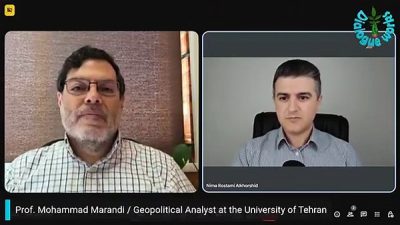
Seyed M. Marandi: U.S. Military DIVIDED? Iran’s Secret Defense EXPOSED
or go to
Aletho News Archives – Video-Images
From the Archives
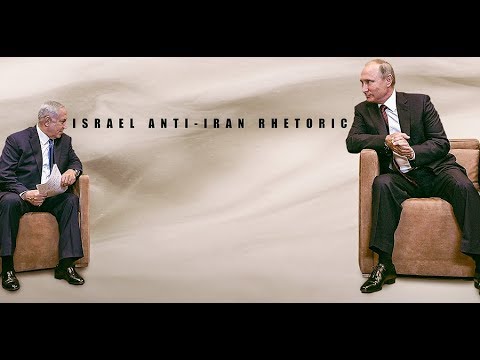
‘Israel sees Iran as obstacle to its policies’
Press TV – August 25, 2017
Prime Minister Benjamin Netanyahu has said that Israel felt threatened by Iran’s growing influence in the Middle East. Netanyahu expressed his Iranophobic view in a meeting with Russian President Vladimir Putin in Russia’s Black Sea resort of Sochi on Wednesday. Press TV has asked Scott Rickard, former American intelligence linguist from Tampa, Florida, and Brent Budowsky, a columnist at The Hill from Washington, to give their thoughts on the issue.
Rickard said Tel Aviv is concerned about the fact that the regime could not carry out its old project to spread sectarian divisions and pave the way for dismemberment of the countries in the Middle East region because of the Iranian-led resistance against Israeli policies, not only in the occupied territories of Palestine but also in the whole region.
“Iran is not a threat to Israel whatsoever. The threat that Israel sees is the fact that their Oded Yinon Plan is being put to a hold by Iran,” the intelligence linguist said on Thursday night.
“They (the Israelis) look at Iran as a threat only because they have no influence on their governments and Iran is autonomous and is not under the Zionist influence,” he added.
Since the victory of the Islamic Republic of Iran in 1979, Tehran has been critical of Israel’s policies in the region, whereas “no leaders [of other states] even dared to speak out against Zionism,” Rickard argued. … continue
Blog Roll
 Aletho News
- Iran declares ‘historic victory’ over US, says enemy forced to accept its proposal
- Trump Claims Ceasefire, Reopening of Strait of Hormuz Agreement with Iran
- Israeli tank fire killed UN peacekeeper in Lebanon, UNIFIL investigation finds
- Russia, China block Bahrain-sponsored UN resolution on Strait of Hormuz
- The US-Israeli War on Science is an Assault on our Future
- Trump’s Promise to Bomb Iran ‘Like Never Before’ Faces Brutal Logistics — Expert
- Germany seeks to restrict stays abroad for men of fighting age – Berliner Zeitung
- Evidence points to Ukraine being behind TurkStream attempted sabotage, but that should come as no surprise
- Sri Lanka secures supplies of Russia oil – minister
- Nations across Asia strike direct deals with Iran for Hormuz passage
- If Americans Knew
- Thousands dead and neighborhoods razed to the ground: Aid agencies fear southern Lebanon is becoming the new Gaza
- The war the US is fighting for Israel could cost trillions
- ‘Cigarette Burns, Nail Wounds’: Toddler Tortured in Gaza to Coerce Father
- Trump Says US Sent ‘a Lot of Guns’ to Protesters in Iran
- Israeli forces destroy 17 UN peacekeeper cameras in south Lebanon
- US-Israeli strikes ‘completely destroy’ synagogue in Tehran
- Archbishop for US Military Says Iran War Is Unjust Under Catholic Teaching
- Iranian leaders’ Open Letters to the American People
- Trump says Iranians appreciate bombs, WHO warns of nuclear risks – Daily Update
- U.N. experts demand Israel release prominent Gaza doctor after reports of ‘severe torture’
- No Tricks Zone
- An Inconvenient Tree: Uncovered In Alps… Europe Much Warmer Than Today 6000 Years Ago
- New Study Reports A 60% Slowdown In Greenland’s Ice Loss Rate In The Last Decade
- Low Intensity Tornado Wrecks Major Solar Farm, Creating A Potential Toxic Dump
- New Study Finds Warming Saves Lives…Cold Temperatures 12 Times More Deadly Than Excess Heat
- German Science Blog Accuses PIK Climate Institute Of Hallucinating Climate Tipping Points
- Devastating Assessment Of Comirnaty Vaccine By Former Senior Pfizer Europe Toxicologist
- New Study: CO2 Is ‘Effectively Negligible’ As An Explanatory Climate Change Factor Since 2000
- Former Pfizer Toxicologist Dr. Helmut Sterz Tells Bundestag Hearing Pfizer Vaccine Should Have Never Been Approved
- Energy Expert: Germany’s Nuclear Phaseout Was A “500 Billion Euro Mistake”
- New Research: South Australia’s Mid-Holocene Sea Surface Temperatures Were 4°C Warmer Than Today
 Aletho News