Was the 2016 election a turning point for American democracy? Did political shenanigans and the election destroy so much credibility and legitimacy that the system will never fully recover?
In 2016, ignorant voters were reviled like never before. However, the entire political-media system floundered badly. Never before had American voters been obliged to choose between two such widely despised candidates. A few months before the election, an Associated Press poll “found that 86 percent of Americans were angry or dissatisfied with the state of politics in the nation.” Routine deceit by both candidates helped make “post-truth” the Oxford English Dictionary’s word of the year for 2016.
Many Americans were riled early on because one party preempted voters from selecting their preferred candidate. The Democratic Party leadership decided in 2015 or earlier to award its presidential nomination to former Secretary of State Hillary Clinton; a large block of “super delegates” chosen by party elites instead of voters helped ensure that result. In , WikiLeaks released the hacked emails of the Democratic National Committee, exposing how the Democratic Party “fixed” its primaries and procedures to ensure that Clinton would be the nominee — even though she was under FBI criminal investigation at the time. After the emails were released, DNC chairwoman Debbie Wasserman Schulz resigned and was promptly appointed honorary chair of the Clinton campaign.
Republican nominee Donald Trump also produced plenty of scandals and outrages, including a leaked audio tape from 2005 boasting of pussy grabbing, inflammatory comments on illegal Mexican immigrants and a Mexican-American judge, and unsavory squabbling with a Venezuelan beauty queen who gained 60 pounds. Trump was also tarnished by allegations of improprieties or crimes by Trump University, the Trump Foundation, and some branches of his corporate empire.
Trump’s rise provoked denunciations from poohbahs who considered themselves the public policy equivalent of Mt. Olympus. James Traub, an heir to the Bloomingdale fortune and a member of the Council for Foreign Relations, lashed out in an oped entitled, “It’s Time for the Elites to Rise Up Against the Ignorant Masses.” Traub declared that “the political schism of our time” is “not about the left vs. the right; it’s about the sane vs. the mindlessly angry.” His solution: “It is necessary to say that people are deluded and that the task of leadership is to un-delude them.” Traub asked: “Is that ‘elitist?’ Maybe it is; maybe we have become so inclined to celebrate the authenticity of all personal conviction that it is now elitist to believe in reason, expertise, and the lessons of history.” And anyone who disagreed with Traub was automatically unfit to judge history.
Clinton’s email scandal
The most politically damaging scandal of the 2016 race involved Clinton’s emails as secretary of state. Federal law requires the government to preserve the emails of top officials, but Clinton evaded that mandate by setting up a private server in her own house. She violated federal law and regulations by handling top-secret information on an unsecure communications system. When a congressional committee subpoenaed her emails as part of an official investigation, she and her staffers deleted more than 30,000 messages. When she was asked if she had wiped clean her email server before turning information over to the FBI, she laughed, “What? Like with a cloth or something? I don’t know how it works digitally at all.” In reality, Clinton operatives used powerful software to shred the hard drives beyond recognition while other aides used hammers to smash her cell phones to block investigators from reviving her records.
Clinton was the first major-party female presidential candidate in American history and her supporters were encouraged to view any criticism as an attack on all women. Robin Lakoff, a linguistics professor at the University of California, Berkeley, raged in Time magazine: “Emailgate is a bitch hunt, but the target is not Hillary Clinton. It’s us. It’s not about emails; it’s about public communication by a woman in general. Clinton is guilty of SWF (Speaking While Female).” Washington Post media critic columnist Margaret Sullivan bewailed the media’s “ridiculous emphasis put on every development about Hillary Clinton’s email practices.”
Media bias and hypocrisy
Some pro-Clinton journalists went to the ramparts to glorify government secrecy. Vox.com’s Matt Yglesias attacked the Freedom of Information Act (FOIA), declaring that it is “fundamentally not in the public interest to routinely know” the content of emails of high-ranking government officials. He proposed amending FOIA to exempt email almost across the board because “effective government beats transparent government.” Mother Jones editor Kevin Drum followed up with a piece calling for “less transparency” and stressing that “Hillary Clinton is a real object lesson in how FOIA can go wrong when it’s weaponized.” Actually, if the Obama administration had obeyed FOIA and disclosed Clinton’s emails as secretary of state, the Democratic Party might have nominated a different candidate and won the 2016 election.
Other journalists asserted that truth itself can be a liability for democracy. After she resigned as secretary of state, Clinton gave dozens of speeches to Wall Street banks and other interest groups, for which she received $21 million. Clinton refused to disclose the speech texts, but Wikileaks leaked them in early October. In one speech for which she was paid $240,000, Clinton defended political weaseling: “You need both a public and private position on certain issues.” In a New York Times oped, author Jonathan Rauch praised Hillary for her “disarming candor — including candor about lack of candor…. Hypocrisy and two-facedness … are a public good and a political necessity…. In our hearts, we know she’s right.”
Clinton defended political weaseling.
A month before the election, WikiLeaks began daily releases of more than 50,000 hacked emails from Clinton campaign chief John Podesta. Highlights included a 10-page analysis of the conflicts of interest behind “Bill Clinton Inc.” by a top Clinton aide, an unsavory $1 million gift to Bill Clinton from the government of Qatar (who Hillary Clinton derided for financing ISIS in another email), ample “pay to play” kickbacks from aspiring political appointees, machinations on evading government investigations of Hillary’s emails, and advance disclosures of questions for Hillary in upcoming debates from a CNN bigwig.
The media had no qualms about heavily publicizing the tax returns of Donald Trump, which had been illegally provided to the New York Times. (Trump had reneged on promises to disclose the returns.) But as Fairness and Accuracy in Reporting, a liberal media watchdog, noted, “nothing to see here” was the verdict issued by many pundits on WikiLeaks. Zeynep Tufekci, a University of North Carolina professor and a New York Times contributing opinion writer, denounced WikiLeaks and claimed its “true target is the health of our democracy.” Tufekci asserted that “obsessively reporting” about the Podesta disclosures was “not responsible journalism.” CNN host Chris Cuomo even implied that citizens risked prison time if they downloaded the leaked emails. He told viewers that “it’s illegal to possess these stolen documents. It’s different for the media, so everything you’re learning about this, you’re learning from us.” Some Republicans joined the suppression campaign. Sen. Marco Rubio (R-Fla.) declared, “I will not discuss any issue that has become public solely on the basis of WikiLeaks…. I want to warn my fellow Republicans who may want to capitalize politically on these leaks: it is the Democrats. it could be us.” WikiLeaks endangered the bipartisan right to govern in secret. Instead, anyone who revealed internal political documents was presumably engaging in a conspiracy against American democracy. (In 2019, the Trump’s Justice Department charged WikiLeaks founder Julian Assange with violating the Espionage Act — though his actual offense was Lese Majeste.)
Journalists were told they had a sacred duty to slant the news. A Washington Post editorial warned that “Donald Trump is a unique threat to American democracy… The Republican Party has moved the lunatic fringe onto center stage.” Vox editor Emmett Rensin urged readers to take to the streets: “If Trump comes to your town, start a riot. Let’s be clear: It’s never a shame to storm the barricades set up around a fascist.” In October, Washington Post columnist Dana Milbank denounced the “lapdogs of the media.” But the lapdogs were not those journalists and pundits who cheered the Clinton campaign. Instead, the “lap dogs” were any journalist who failed to attack Trump as vehemently as Milbank thought he deserved. Milbank declared that “it is absolutely appropriate to ‘take sides’ in a contest between democracy and its alternative.” Wikileaks revealed that Milbank had earlier contacted the Democratic National Committee for assistance on a Passover-themed piece on the “Ten Plagues of Trump.” Most of the quotes Milbank used to attack Trump were provided by the DNC. Wikileaks disclosed many other messages from journalists kowtowing to the Clinton campaign.
Disdain of voters
Voters were sometimes openly disdained. At a reception, Clinton declared that “half of Trump’s supporters” were part of “the basket of deplorables … racist, sexist, homophobic, xenophobic, Islamophobic,” and mostly “irredeemable.” Clinton assured attendees at the $1,200-a-person fundraiser that they were part of the “other basket” in America. Clinton did not suffer a fatal media backlash, because many pundits shared her opinion. A few days before the election, David Brooks, one of the nation’s most respected commentators, declared on the PBS Newshour, “Basically, less educated or high school-educated whites are going to Trump. It doesn’t matter what the guy does… People are just going with their gene pool and whatever it is. And that is one of the more depressing aspects of this race for me.” CBS News’s Will Rahn observed that the media diagnosed Trump supporters “as racists in the way Dark Age clerics confused medical problems with demonic possession.”
After the election, public-radio icon Garrison Keillor vented in the Washington Post that “raw ego and proud illiteracy have won out… Resentment is no excuse for baldfaced stupidity.” New York Times columnist Roxane Gay wailed, “I thought there were more Americans who believe in progress and equality than there were Americans who were racist, xenophobic, misogynistic and homophobic.” Georgetown University professor Jason Brennan scoffed: “Donald Trump always enjoyed massive support from uneducated, low-information white people… we saw something historic: the dance of the dunces. Never before have the lesser-educated so uniformly supported a candidate.” Washington Post media columnist Margaret Sullivan absolved her profession for any bias or mistakes: “We wanted to believe in a country where decency and civility still mattered, and where someone so crude, spiteful and intemperate could never be elected — because America was better than that.”
Actually, a New Republic analysis shortly after the election pointed out that Clinton lost because she failed to garner a majority of white college-educated voters. Many commentators could not concede that citizens had ample reasons to despise and vote against both major-party candidates.
Post-election laments
After the 2016 election, protestors demanded that Trump be denied the presidency because he failed the newly discovered “progressive rhetoric legitimacy test” that annulled 60 million ballots. In Richmond, Virginia, one protestor painted “Your vote was a hate crime” on a prominent statue. In Portland, Oregon, protestors rioted, looting and smashing storefronts and cars. Activists disclosed the home addresses of Electoral College electors, who were bombarded with death threats warning them to vote for Clinton instead of Trump. More than four million people signed an online petition demanding that the Electoral College effectively overturn the election because Trump was “unfit to serve.”
Almost all the antics that occurred after the 2016 election vanished into a memory hole after the , 2021, Capitol building ruckus after the 2020 election.
Ironically, while the media and many politicians were busy sneering at voters, the FBI and the Clinton campaign carried out one of the most brazen illegal schemes in American political history. In 2023, Special Counsel John Durham released a 316-page report detailing how Clinton and the FBI connived to rig the 2016 election. But that topic will need to wait for a later issue.
James Bovard is a policy advisor to The Future of Freedom Foundation and is the author of the ebook Freedom Frauds: Hard Lessons in American Liberty, published by FFF, his new book, Last Rights: The Death of American Liberty, and nine other books.
The definition of insanity is doing the same thing over and over and expecting different results. This old saying, usually (mis)attributed to Albert Einstein, perfectly encompasses two very prominent mental health conditions of our time – the infamous Trump Derangement Syndrome (TDS) and Russia Derangement Syndrome (RDS). Symptoms of either of these can be disastrous if left unchecked. However, when combined in a single person or an organization, the consequences of TDS and RDS are virtually guaranteed to be catastrophic. The absolute failure of the DNC has left it without both the presidency and US Congress, giving the Republicans an unprecedented political advantage.
Thus, they simply won’t stop talking about the “evil hand of the Kremlin” and its alleged “role in electing Trump”. The sheer disparity between their various ludicrous propaganda narratives concerning Russia is truly mind-boggling. Namely, the Democrat-run mainstream propaganda machine has spent the last well over two and a half years trying to convince everyone that Moscow is “losing in Ukraine”, while simultaneously claiming that Russia is “so powerful” it can actually “elect” US presidents (including “through Facebook ads”, of all things). This doesn’t strike the DNC as completely illogical. Quite the contrary, to them, it’s not only “completely sensible”, but the “only explanation” on how they could’ve lost.
CNN, the neoliberal mouthpiece infamous for its pathological hatred for Trump, couldn’t wait a single day after the election and immediately (re)launched the so-called “Russiagate” conspiracy theory. To that end, it invited Bob Woodward, a Deep State-controlled “investigative journalist” who is usually cited as the “man who uncovered the Watergate scandal”. Woodward himself immediately proved that he’s a Deep State asset by claiming that “Putin might be blackmailing Trump”. He failed to explain how exactly the Russian president is doing that, but alas – the narrative simply needs to be kept alive somehow. The DNC has been fighting tooth and nail to push “Russiagate” for nearly a decade at this point.
It seems that this remains its flagship “strategy” in fighting Trump and the Deep State is entirely in line with it. However, the majority of the American people remain unconvinced. In fact, it can even be argued that the narrative has become a meme of sorts, as virtually anything can be “blamed” on those “evil Russians”. The Democrats also seem to think it can be a good way to shift attention away from their numerous corruption and financial scandals, the latest of which involves a $20 million debt they managed to accrue during their failed election campaign. According to multiple sources, the Kamala Harris campaign burned through over a billion dollars, even leaving the aforementioned $20 million in debt.
According to Politico’s Christopher Cadelago, “after raising over $1 billion and left with $118 million in the bank as of October 16, the Harris campaign ended the 2024 election season with at least $20 million in debt”. Cadelago, the California bureau chief for Politico, shared the information on X, citing “two separate sources familiar with the situation”. Breitbart CEO Matt Boyle confirmed this, adding that “a Kamala campaign staffer said there is a massive scandal here worthy of an audit” and that Jen O’Malley Dillon, the Harris campaign chair, “blew through a billion dollars in a few months”. It seems the largest amount of that money was wasted on celebrity concerts organized precisely by O’Malley Dillon.
According to Zero Hedge, which cites data from the Federal Election Commission (FEC), the Harris campaign received over a billion dollars up until October 16, including when the incumbent Joe Biden was still campaigning for reelection. Over the same period, the Trump campaign got $392 million and spent $345 million, meaning that it managed to save nearly $50 million and also win the election. In addition, the Democrats wasted another $1.1 billion on “aired advertising and associated reservations”, according to AdImpact – a website that monitors the cost and content of ads. The DNC’s financial appetites are very well known, as evidenced by numerous scandals involving the funneling of the so-called “Ukraine aid”.
Drago Bosnic is an independent geopolitical and military analyst.
Robert F. Kennedy Jr. has announced he would back Republican candidate Donald Trump and end his independent run for president, but only in swing US states.
The son of Senator Robert Kennedy and nephew of President John F. Kennedy first tried to challenge President Joe Biden for the Democratic nomination last April. Faced with obstruction within the party, he announced a third-party bid last October.
“Many months ago I promised the American people I would withdraw from the race if I became a spoiler,” Kennedy said on Friday afternoon. “In my heart, I no longer believe I have a realistic path to electoral victory.”
Kennedy said that three major issues led him to leave the Democrats: “free speech, the war in Ukraine, and the war on our children.” Trump, he explained, has “adopted these issues as his own to the point where he has asked to enlist me in his administration.”
The party two of his grandfathers helped build has become “the party of war, censorship, corruption, big pharma, big tech, big money,” Kennedy said.
He also accused the US government – led by Democrats on both occasions – of staging a coup in Ukraine in 2014 and rejecting a peace plan in 2019, pushing Kiev into a conflict with Moscow that, according to Kennedy, has cost over 600,000 Ukrainian lives so far.
“Ukraine is a victim of this war, and it’s a victim of the West,” he said.
Kennedy also criticized Vice President Kamala Harris for not having won “a single delegate” during the 2020 race, avoiding interviews, and not having a policy platform but a campaign focused entirely on opposing Trump.
Democrats have filed lawsuits to keep Kennedy off the ballot in many states, forcing his campaign to spend millions on ballot access challenges, according to NBC News.
In practical terms, Kennedy explained, he would be removing his name from the ballot in swing states while continuing to run in solidly “red” or “blue” states so his supporters can still cast a ballot without “harming or helping” anyone. His campaign has reportedly already filed petitions to that effect in Arizona and Pennsylvania.
Robert F. Kennedy Jr. today suspended his campaign for president of the United States as an independent, telling the media he no longer saw a path forward to victory “in the face of relentless censorship.”
Kennedy said that following discussions with former President Donald Trump, he has agreed to join forces with Trump in a unity party, which will allow the two to work together on “existential issues,” including ending the war on Ukraine, censorship and the childhood chronic disease epidemic.
“I believe I have a moral obligation to use this opportunity to save millions of children,” Kennedy said.
Kennedy, founder and chairman on leave from Children’s Health Defense — whose campaign defied the odds by gathering more than 1 million signatures in a drive to get on the ballot in all 50 states — said he will remain on the ballot except in a handful of battleground states.
Kennedy delivered a scathing rebuke to the Democratic Party and the DNC, which he said “dragged us into court, state after state after state” in a campaign of “legal warfare” to keep him off the ballot.
He promised that if Trump is elected, in addition to ending chronic disease in children, he will work with Trump to clean up corrupt agencies and the “corrupt food system.”
Kennedy said he reached out to the Harris campaign in an attempt to engage them on issues he believes are critical to the country’s future, but the campaign didn’t respond.
Calling it a difficult choice to join the Trump campaign Kennedy said, “I have the certainty that this is what I’m meant to do. … Ultimately the only thing that will save our country and our children is if we choose to love our kids more than we hate each other.”
Kennedy launched his campaign on April 20, 2023, with a nearly two-hour speech in Boston, during which he vowed to reduce chronic disease in children.
He reminded the audience of the obligation America’s leaders have to protect children — from toxic pesticides, from dangerous pharmaceuticals and from the “corrupt merger of state and corporate power” that robs future generations of their health and of their ability to achieve financial security.
On Oct. 9, 2023, Kennedy said he would no longer challenge President Joe Biden for the Democratic nomination for U.S. president, announcing that he instead would run for president as an independent.
He told a crowd in Philadelphia that most Americans are tired of divisive politics and that they agree more than they disagree when it comes to issues like the environment, education and the economy.
“We agree that we want a clean environment and wholesome communities for our kids,” Kennedy said.
He accused both parties of being beholden to corporate donors.
Ukraine’s ill-fated Kursk terror attack could be part of the US Democratic establishment’s effort to prop up their candidate, Vice President Kamala Harris, in the 2024 presidential election, according to Wall Street analyst Charles Ortel.
Despite the US State Department and Pentagon denying any involvement in the Kiev regime’s Kursk aggression, it has all the earmarks of US-NATO management and planning, according to Major General Apti Alaudinov, deputy head of the Russian Defense Ministry’s Military-Political Directorate and Alexander Bortnikov, director of the Russian Federal Security Service (FSB).
“At this stage, nothing likely happens in Ukraine and vis-a-vis Russia unless approved in advance by someone in the US,” Wall Street analyst and investigative journalist Charles Ortel told Sputnik. “Relevant questions include: exactly who approved these offensive operations and what debate, if any, occurred in Congress before these raids happened?”
Ortel called the Kursk attack a “wag the dog 2.0” operation, saying that it “seems a reprise” of then-US President Bill Clinton’s assault on one of Sudan’s biggest pharmaceutical factories in Khartoum in 1998. The US attack based on faulty intelligence was presented as retaliation to Al-Qaeda bombings of the US Embassies in Kenya and Tanzania.
However, some analysts noted at the time that the US bombing came as investigations into Clinton’s lies about his affair with Monica Lewinsky intensified. Dubbing the case a “wag the dog” situation, they suggested that Clinton urgently authorized the strike as a distraction, with the backing of many Democratic lawmakers including then-Senator Joe Biden.
The Kursk aggression appears to be as dubious in terms of military planning and strategic value as the senseless bombing of the Al Shifa factory. US Congressman Paul Gosar called Ukraine’s border incursion “suicidal” in an interview with Sputnik, while retired US Air Force Lieutenant Colonel Karen Kwiatkowski wondered whether Secretary of State Antony Blinken and National Security Advisor Jake Sullivan had a hand in the Kursk aggression planning.
Earlier, on August 8, CNN quoted Ukrainian officials as saying that the Kursk attack was aimed at demoralizing Russian forces and diverting them away from other parts of the front. However, as of August 12, the Ukrainian military told the New York Times and Financial Times (FT) that the Russian Armed Forces’ advance in Donbass, including near strategically important Chasov Yar and Torestk, is continuing unabated.
To complicate matters further for Kiev, at least six Ukrainian brigades that previously fought near Kharkov, Sumy, Chasov Yar and Toretsk were redirected to participate in the Kursk aggression, according to FT. The newspaper cited Ukrainian soldiers’ worries about leaving positions in Donbass to take part in the Kursk gamble.
On August 15, Russia’s Tsentr Battlegroup destroyed a Ukrainian military stronghold in the Avdeyyevka direction in the Donetsk People’s Republic (DPR). On August 12, the Russian military liberated the settlement of Lisichnoye; earlier, Timofeyevka and Veseloye were retaken from the enemy. Russia liberated a total of 19 settlements of the DPR in July, according to the Russian Ministry of Defense.
Harris and Walz’s ‘Illusionary’ Campaign Doomed to be Busted
One might ask why the US Democratic establishment would need any “prop-up” of their presidential candidate Kamala Harris and her running mate Tim Walz, given that the two are currently enjoying a surge in the polls.
According to Ortel, the surge appears to be short-lived and most likely artificial and made-up by the US corporate press, especially given that Harris’ poll numbers as Biden’s veep had been disastrous. For instance, the Wall Street analyst referred to a recent survey published by the Hill that claimed that more voters trust Harris than Donald Trump on the economy as completely detached from reality.
“The corporate-owned press, including Fox, has lost all credibility which explains their financial losses and the rise of Twitter spaces, Tucker Carlson and alternative truth-tellers that thrive,” Ortel said. “Traditional actors are resolved to sell fiction as fact to promote a singularly unaccomplished airhead to lead America out of the messes she helped create.”
Indeed, US conservative commentators and pundits have recently thrown Harris’ poll numbers, campaign performance and unwillingness to make one-on-one interviews into question.
“[The media] are so in the tank for Harris that they are defending her decision not to talk to them,” remarked US investigative journalist and author Michael Shellenberg on X on August 14. Earlier, the journalist drew attention to the fact that, for some strange reason, Harris has not put a policy agenda on her website.
Former White House Political Director Matt Schlapp tweeted that there is nothing short of a “push by the national media and Democratic National Committee (DNC) to legitimize Kamala Harris,” adding that she is not giving interviews to evade criticism over her vice presidency.
Similarly, Fox News host Sean Hannity recently called Harris “an illusion, built on a mountain of lies” on X.
Rogan O’Handley, a former entertainment lawyer, claimed on X on August 7 that the Harris campaign was caught offering Instagram influencers money to post personal stories about how the Biden-Harris administration helped them.
Axios reported on August 13 that it found that Harris’ campaign was editing news headlines and descriptions within Google search ads to “make it appear as if the Guardian, Reuters, CBS News and other major publishers are on her side.” The news outlet noted that while such activity is in line with the Google rules, the tech giant admitted there was a “glitch” that removed a disclaimer “sponsored” near the news headlines touting Harris.
US conservative journalist Kyle Becker also alleged on X that pollsters are “oversampling” Democrats for no reason “except deceiving the voters.” Becker believes that the reports that Harris is leading her Republican competitor in key battleground states are made up to justify her future win. “It is all designed to try to keep Harris within the margin of cheating,” tweeted Becker. In 2020, Biden won the presidential election after outperforming Trump by a razor-thin margin in crucial swing states. Many Republicans believe voting procedures were rigged there.
According to Ortel, the Harris-Walz campaign “honeymoon” may end as abruptly as it started.
“The true mud-slinging will start after Labor Day [September 2] and continue thereafter. No one yet has vetted Harris or Walz and I suspect their reputations will be gutted, fairly, well before November 5, 2024. Moreover, neither are effective, battle-hardened debaters, campaigners or leaders,” Ortel said.
Looming Crises Won’t Allow Harris-Walz to Fool Voters
While the Harris-Walz campaign needs good news, be it record-high poll numbers, Federal Reserve interest rate cuts, or their proxy Zelensky claiming victories, the problem is that the “looming crises and worsening economic prospects” won’t let “conflicted grifters” in the US establishment fool American voters again, according to Ortel.
As Ukrainian forces continue to lose ground on the battlefield, the Biden administration is still struggling to reach a ceasefire agreement amid Israel’s war in Gaza, fuelling discontent with the Democratic Party among Palestine supporters. According to the New York Post, an August 14 rally supporting Vice President Harris in the New York City descended into chaos after pro-Palestinian protesters infiltrated the gathering and later started to clash with the police.
Meanwhile, Bloomberg experts warn the US economy is expected to slow down under the Biden-Harris administration, casting an additional shadow on the Harris-Walz campaign.
Commenting on the Democratic administration’s chaotic domestic and foreign policies, Ortel noted:
“The period 1991 to present stands already as a rare epoch during which too many leaders combined arrogance and ignorance into a toxic cocktail, gulling voters with effective lies into bullied serfs, grateful for gruel as the donor class and their paid stooges seemingly prospered,” the pundit said. “‘What could have been’ from 1991 forward unburdened by Harris, Walz and other incompetent, conflicted has-beens is truly a marvel to contemplate! Let’s see whether the American election is free and fair and let’s see who actually wins.”
The murder of Seth Rich—in the middle of one of the most brutal presidential election years in history—has always struck me as an example of the authorities NOT investigating a matter of public interest. The mainstream media and half the country were so blinded by partisan passions that they couldn’t see the grounds for suspecting that the young man’s murder was politically motivated. Just a few hours after the incident occurred—before there was any time to perform an investigation—the Metropolitan Police Department announced that the murder appeared to be a “botched robbery.”
Since Seth Rich was murdered on July 10, 2016—12 days before Wikileaks published embarrassing DNC e-mails—there has been much speculation that he could have been the source because he was upset about how the DNC had treated Bernie Sanders. A good investigator wouldn’t speculate about the crime, but he would certainly notice that, statistically speaking, the murder is extraordinary.
Seth Rich was shot in the back near his apartment building, and though he was carrying a valuable watch, wallet, and cell phone, these were not taken by the assailant. Perhaps it was a botched robbery, as the Metropolitan Police Department quickly announced, but shooting a guy in the back without taking his valuables is not typical of armed robbery. Other robberies in the same neighborhood around the same time followed the conventional pattern of the assailant threatening the victim and demanding his or her valuables instead of opening fire on the victim.
In the year 2016, there were 135 homicides in Washington D.C., which has a resident population of 672,000, which comes to approximately one murder per 5000 residents— a dramatic decline from the city’s murder rate in the early nineties. Incidentally, the Metropolitan Police conducted an analysis of homicide for the years 1998-2000—after homicide rates had dropped significantly—and concluded that the primary motives were
1) Argument/conflict
2). Drug related
3). Revenge/retaliation
4). Robbery
5). Gang related.
During this period, homicides were not equally distributed throughout the city, but were concentrated in particular neighborhoods. 92% of the victims were African Americans 3.2% were Hispanic and 3.2% were white. Though one must consider the possibility that homicide trends in DC have changed since 2000 (apart from merely decreasing in numbers) it’s notable that, of the currently unsolved homicides in Washington DC in the year 2016, Seth Rich is the only white victim in a city that is now 44% white.
Julian Assange has always insisted the DNC e-mails were leaked and not hacked. Former NSA technical director William Binney has also insisted that if the DNC e-mails were hacked, it would be child’s play for the NSA to establish the precise routing of the hack, which indicates that the e-mails were more likely leaked by an insider.
Regarding motive, a good investigator would consider the hypothesis that Seth Rich was murdered NOT in retaliation, but to eliminate him as a witness that the DNC e-mails were leaked by an insider and not hacked by Russians. Almost immediately after the embarrassing e-mails were published, Hillary Clinton’s campaign hired CrowdStrike to perform a forensic cyber analysis of the server. CrowdStrike falsely proclaimed it was Russian hackers who were responsible, and never presented evidence to support this assertion.
Regarding the assailant: A good investigator would consider the hypothesis that he was contracted to murder Rich but knew nothing about his target or the motive for killing him. This hypothesis is consistent with Rich being murdered as he approached the entrance to his home—that is, the contract killer was provided only with the address and a photograph of his target.
Another notable aspect of this crime was the extremely emotional tone of press reporting from the same reporters who so passionately embraced the Russian meddling story. The mere suggestion that Seth Rich’s murder was politically motivated prompted these same people to angrily denounce this (perfectly reasonable hypothesis) as “wild, right wing conspiracy theory” and to demand that reporters cease and desist from exploring this hypothesis.
While the murder of Seth Rich was done at night and many of the details were concealed, the recent assassination attempt on Donald Trump was performed in broad daylight with millions watching. The fact that proper security was withheld from the event is so obvious that people have a hard time believing it was an intentional act.
Surely, naive people think, those currently in power wouldn’t perform such deeds so out in the open. And yet, there it is, plain to see, right under everyone’s nose.
second I saw the news yesterday that computers all over the world had been taken down—causing widespread disruptions to travel, medical care and an array of businesses—I couldn’t help wondering if it was an implicit reminder of how dependent we are on global computer systems, and therefore how vulnerable we are.
Then I saw the outage was purportedly traced to CrowdStrike—the same Austin-based cybersecurity hired by the DNC in 2016 to investigate the alleged “hack” of its server. The security breach resulted in the leak of incredibly embarrassing e-mails revealing John Podesta, Hillary Clinton, and DNC leadership performing all manner of Machiavellian machinations.
Back then, when I read the Wikileaks e-mails, I immediately wondered, “How are these villains going to change the subject from the content of their e-mails to something else? What misdirection trick are they going to pull?”
Enter CrowdStrike, which the DNC hired to do a forensic cybersecurity analysis of the DNC server. Shortly thereafter, CrowdStrike claimed that Russian agents had hacked it.
Even though former NSA Technical Director, William Binney, tried to tell anyone who would listen that the leak must have resulted from a DNC insider who downloaded the e-mails onto a storage device, no major mainstream media outlet would listen to him.
I wondered about Binney’s concept on a DNC insider when I researched the mysterious death of DNC insider Seth Rich (An Extraordinary Unsolved Murder in Washington D.C.) shortly before the accusation of Russian hacking was made.
Did Rich—who was apparently disaffected with the DNC because of its shabby treatment of Bernie Sanders—reveal to someone that he knew that the leak was not the result of an external hack, thereby prompting the perception that he could easily debunk the Russian-Collusion Hoax if he weren’t silenced forever?
Now, less than one week after whoever is running this country allowed a would-be assassin to climb onto a roof and take a shot at Donald Trump on a stage 400 feet away, we are told that CrowdStrike’s defective update to its security software knocked out global IT systems.
It seems to me that CrowdStrike should be viewed with grave suspicion and that businesses should be asking if it is prudent to have CrowdStrike software running on their computer systems.
In successfully lobbying Congress for an additional $61 billion in Ukraine war funding, an effort that ended this month with celebratory Democrats waving Ukrainian flags in the House chamber, President Biden has cast his administration’s standoff with Russia as an existential test for democracy.
“What makes our moment rare is that freedom and democracy are under attack, both at home and overseas,” Biden declared in his State of the Union address in March. “History is watching, just like history watched three years ago on January 6th.”
While Biden’s narrative is widely accepted by Washington’s political establishment, a close examination of the president and his top principals’ record dating back to the Obama administration reveals a different picture. Far from protecting democracy from Kyiv to Washington, their role in Ukraine looks more like epic meddling resulting in political upheaval for both countries.
Over the last decade, Ukraine has been the battleground in a proxy war between the U.S. and Russia – a conflict massively escalated by the Kremlin’s invasion in 2022. The fight erupted in early 2014, when Biden and his team, then serving in the Obama administration, supported the overthrow of Ukraine’s elected president, Viktor Yanukovych. Leveraging billions of dollars in U.S. assistance, Washington has shaped the personnel and policies of subsequent Ukrainian governments, all while expanding its military and intelligence presence in Ukraine via the CIA and NATO. During this period, Ukraine has not become an independent self-sustaining democracy, but a client state heavily dependent on European and U.S. support, which has not protected it from the ravages of war.
The Biden-Obama team’s meddling in Ukraine has also had a boomerang effect at home.
As well-connected Washington Beltway insiders such as Hunter Biden have exploited it for personal enrichment, Ukraine has become a source of foreign interference in the U.S. political system – with questions of unsavory dealings arising in the 2016 and 2020 elections as well as the first impeachment of Donald Trump. After years of secrecy, CIA sources have only recently confirmed that Ukrainian intelligence helped generate the Russian interference allegations that engulfed Trump’s presidency. House Democrats’ initial attempt to impeach Trump, undertaken in the fall of 2019, came in response to his efforts to scrutinize Ukraine’s Russiagate connection.
This account of U.S. interference in Ukraine, which can be traced to fateful decisions made by the Obama administration, including then-Vice President Biden and his top aides, is based on often overlooked public disclosures. It also relies on the personal testimony of Andrii Telizhenko, a former Ukrainian diplomat and Democratic Party-tied political consultant who worked closely with U.S. officials to promote regime change in Ukraine.
Although he once welcomed Washington’s influence in Ukraine, Telizhenko now takes a different view. “I’m a Ukrainian who knew how Ukraine was 30 years ago, and what it became today,” he says. “For me, it’s a total failed state.” In his view, Ukraine has been “used directly by the United States to fight a [proxy] war with Russia” and “as a rag to make money for people like Biden and his family.”
The State Department has accused Telizhenko being part of a “Russia-linked foreign influence network.” In Sept. 2020 it revoked his visa to travel to the United States. Telizhenko, who now lives in a western European country where he was granted political asylum, denies working with Russia and says that he is a whistleblower speaking out to expose how U.S. interference has ravaged his country. RealClearInvestigations has confirmed that he worked closely with top American officials while they advanced policies aimed at severing Ukraine’s ties to Russia. No official contacted for this article – including former CIA chief John Brennan and senior State Department official Victoria Nuland – disputed any of his claims.
A Coup in ‘Full Coordination’ With the U.S.
The Biden team’s path to influencing Ukraine began with the eruption of anti-government unrest in November 2013. That month, protesters began filling Kyiv’s Maidan Nezalezhnosti (Independence Square) after then-President Viktor Yanukovych, a notoriously corrupt leader, delayed signing a European Union (EU) trade pact. To members of what came to be known as the Maidan movement, Yanukovych’s decision was a betrayal of his pledge to strengthen Western ties, and a worrying sign of Russian allegiance in a country haunted by its Soviet past.
The reality was more complex. Yanukovych was hoping to maintain relations with both Russia and Europe – and use competition between them to Ukraine’s advantage. He also worried that the EU’s terms, which demanded reduced trade with Russia, would alienate his political base in the east and south, home to millions of ethnic Russians. As the International Crisis Group noted, these Yanukovych-supporting Ukrainians feared that the EU terms “would hurt their livelihoods, a large number of which were tied to trade and close relations with Russia.” Despite claims that the Maidan movement represented a “popular revolution,” polls from that period showed that Ukrainians were evenly split on it, or even majority opposed.
After an initial period of peaceful protest, the Maidan movement was soon co-opted by nationalist forces, which encouraged a violent insurrection for regime change. Leading Maidan’s hardline contingent was Oleh Tyahnybok of the Svoboda party, who had once urged his supporters to fight what he called the “Muscovite-Jewish mafia running Ukraine.” Tyahnybok’s followers were joined by Right Sector, a coalition of ultra-nationalist groups whose members openly sported Nazi insignia. One year before, the European Parliament condemned Svoboda for “racist, anti-Semitic and xenophobic views” and urged Ukrainian political parties “not to associate with, endorse or form coalitions with this party.”
Powerful figures in Washington took a different view: For them, the Maidan movement represented an opportunity to achieve a longtime goal of pulling Ukraine into the Western orbit. Given Ukraine’s historical ties to Russia, its integration with the West could also be used to undermine the rule of Russian President Vladimir Putin.
As the-late Zbigniew Brzezinski, the influential former national security adviser to President Jimmy Carter, once wrote: “Without Ukraine, Russia ceases to be a Eurasian empire.” Two months before the Kyiv protests erupted, Carl Gershman, head of the National Endowment for Democracy, dubbed Ukraine “the biggest prize” in the West’s rivalry with Russia. Absorbing Ukraine, Gershman explained, could leave Putin “on the losing end not just in the near abroad” – i.e, its former Soviet satellites – “but within Russia itself.” Shortly after, senior State Department official Nuland boasted that the U.S. had “invested more than $5 billion” to help pro-Western “civil society” groups achieve a “secure and prosperous and democratic Ukraine.”
Seeking to capitalize on the unrest, U.S. figures including Nuland, Republican Sen. John McCain, and Democratic Sen. Chris Murphy visited Maidan Square. In a show of support for the movement’s hardline faction, which went beyond supporting the EU trade deal to demand Yanukovych’s ouster, the trio met privately with Tyahnybok and appeared with him on stage. The senators’ mission, Murphy said, was to “bring about a peaceful transition here.”
The Maidan Movement’s most significant U.S. endorsement came from then-Vice President Joe Biden. “Nothing would have greater impact for securing our interests and the world’s interests in Europe than to see a democratic, prosperous, and independent Ukraine in the region,” Biden said.
According to Andrii Telizhenko, a former Ukrainian government official who worked closely with Western officials during this period, the U.S. government’s role went far beyond those high-profile displays of solidarity.
“As soon as it grew into something, into the bigger Maidan, in the beginning of December, it basically was full coordination with the U.S. Embassy,” Telizhenko recalls. “Full, full.”
When the protests erupted, Telizhenko was working as an adviser to a Ukrainian member of Parliament. Having spent part of his youth in Canada and the United States, Telizhenko’s fluent English and Western connections landed him a position helping to oversee the Maidan Movement’s international relations. In this role, he organized meetings with and coordinated security arrangements for foreign visitors, including U.S. Ambassador Geoffrey Pyatt, Nuland, and McCain. Most of their briefings were held at Kyiv’s Trade Unions Building, the movement’s de-facto headquarters in the city’s center.
Telizhenko says Pyatt routinely coordinated with Maidan leaders on protest strategy. In one encounter, the ambassador observed Right Sector members assembling Molotov cocktails that would later be thrown at riot police attempting to enter the building. Sometimes, the U.S. ambassador disapproved of his counterparts’ tactics. “The U.S. embassy would criticize if something would happen more radical than it was supposed to go by plan, because it’s bad for the picture,” Telizhenko said.
That winter was marked by a series of escalating clashes. On February 20, 2014, snipers fatally shot dozens of protesters in Maidan square. Western governments attributed the killings to Yanukovych’s forces. But an intercepted phone call between NATO officials told a different story.
In the recorded conversation, Estonian foreign minister Urmas Paet told EU foreign secretary Catherine Ashton that he believed pro-Maidan forces were behind the slaughter. In Kyiv, Paet reported, “there is now stronger and stronger understanding that behind the snipers, it was not Yanukovych, but it was somebody from the new [opposition] coalition.”
In a bid to resolve the Maidan crisis and avoid more bloodshed, European officials brokered a compromise between Yanukovich and the opposition. The Feb. 21 deal called for a new national unity government that would keep him in office, with reduced powers, until early elections at year’s end. It also called for the disarmament of the Maidan forces and a withdrawal of riot police. Holding up its end of the bargain, government security forces pulled back. But the Maidan encampment’s ultra-nationalist contingent had no interest in compromise.
“We don’t want to see Yanukovych in power,” Maidan Movement squadron leader Vladimir Parasyuk declared that same day. “… And unless this morning you come up with a statement demanding that he steps down, then we will take arms and go, I swear.”
In insisting on regime change, the far-right contingent was also usurping the leadership of more moderate opposition leaders such as Vitali Klitschko, who supported the power-sharing agreement.
“The goal was to overthrow the government,” Telizhenko says. “That was the first goal. And it was all green-lighted by the U.S. Embassy. They basically supported all this, because they did not tell them to stop. If they told them [Maidan leaders] to stop, they would stop.”
Yet another leaked phone call bolstered suspicions that the U.S. endorsed regime change. On the recording, presumably intercepted in January by Russian or Ukrainian intelligence, Nuland and Pyatt discussed their choice of leaders in a proposed power-sharing government with Yanukovich. Their conversation showed that the U.S. exerted considerable influence with the faction seeking the Ukrainian president’s ouster.
Tyahnybok, the openly antisemitic head of Svodova, would be a “problem” in office, Nuland worried, and better “on the outside.” Klitschko, the more moderate Maidan member, was ruled out as well. “I don’t think Klitsch should go into government,” Nuland said. “I don’t think it’s necessary. I don’t think it’s a good idea.” One reason was Klitschko’s proximity to the European Union. Despite her government’s warm words for the European Union in public, Nuland told Pyatt: “Fuck the EU.”
The two U.S. officials settled on technocrat Arseniy Yatsenyuk. “I think Yats is the guy,” Nuland said. By that point, Yatsenyuk had endorsed violent insurrection. The government’s rejection of Maidan demands, he said, meant that “people had acquired the right to move from non-violent to violent means of protest.”
The only outstanding matter, Pyatt relayed, was securing “somebody with an international personality to come out here and help to midwife this thing.” Nuland replied that Vice President Joe Biden and his senior aide, Jake Sullivan, who now serves as Biden’s National Security Adviser, had signed on to provide “an atta-boy and to get the deets [details] to stick.”
Just hours after the power-sharing agreement was reached, Nuland’s wishes were granted. Yanukovich, no longer protected by his armed forces, fled the capital. Emboldened by their sabotage of an EU-brokered power-sharing truce, Maidan Movement members stormed the Ukrainian Parliament and pushed through the formation of a new government. In violation of parliamentary rules on impeachment proceedings, and lacking a sufficient quorum, Oleksandr Turchynov was named the new acting president. The Nuland-backed Yatsenyuk was appointed Prime Minister.
In a reflection of their influence, at least five post-coup cabinet posts in national security, defense, and law enforcement were given to members of Svoboda and its far-right ally Right Sector.
“The uncomfortable truth is that a sizeable portion of Kyiv’s current government – and the protesters who brought it to power – are, indeed, fascists,” wrote Andrew Foxall, now a British defense official, and Oren Kessler, a Tel Aviv-based analyst, in Foreign Policy the following month. While denying any role in Yanukovich’s ouster, the Obama administration immediately endorsed it, as Secretary of State John Kerry expressed “strong support” for the new government.
In his memoir, former senior Obama aide Ben Rhodes acknowledged that Nuland and Pyatt “sounded as if they were picking a new government as they evaluated different Ukrainian leaders.” Rather than dispel that impression, he acknowledged that some of the Maidan “leaders received grants from U.S. democracy promotion programs.”
In 2012, one pro-Maidan group, Center UA, received most of its more than $500,000 in donations from the U.S. Agency for International Development (USAID), the National Endowment for Democracy, eBay founder Pierre Omidyar, and financier George Soros.
By its own count, Soros’ International Renaissance Foundation spent over $109 million in Ukraine between 2004 and 2014. In leaked documents, a former IRF board member even bragged that its partners “were the main driving force and the foundation of the Maidan movement,” and that without Soros’ funding, “the revolution might not have succeeded.” Weeks after the coup, an IRF strategy document noted, “Like during the Maidan protests, IRF representatives are in the midst of Ukraine’s transition process.”
Jeffrey Sachs, a Columbia University professor who advised Ukraine on economic policy in the early 1990s, visited Kyiv shortly after the coup to consult with the new government.
“I was taken around the Maidan where people were still milling around,” Sachs recalls. “And the American NGOs were around there, and they were describing to me: ‘Oh we paid for this, we paid for that. We funded this insurrection.’ It turned my stomach.” Sachs believes that these groups were acting at the behest of U.S. intelligence. To go about “funding this uprising,” he says, “they didn’t do that on their own as nice NGOs. This is off-budget financing for a U.S. regime-change operation.”
Weeks after vowing to bring about a “transition” in Ukraine, Sen. Murphy openly took credit for it. “I really think that the clear position of the United States has in part been what has helped lead to this change in regime,” Murphy said. “I think it was our role, including sanctions and threats of sanctions, that forced, in part, Yanukovych from office.”
The Proxy War Gets Hot
Far from resolving the unrest, Viktor Yanukovych’s ouster plunged Ukraine into a war.
Just days after the Ukrainian president fled to Moscow, Russian special forces stormed Crimea’s local parliament. The following month, Russia annexed Crimea following a hasty, militarized referendum denounced by Ukraine, the U.S., and much of the world. While these objections were well-founded, Western surveys of Crimeans nonetheless found majority support for Russian annexation.
Emboldened by the events in Crimea, and hostile to a new government that had overthrown their elected leader Yanukovych, Russophile Ukrainians in the eastern Donbas region followed suit.
On April 6 and 7, anti-Maidan protesters seized government buildings in Donetsk, Luhansk, and Kharkiv. The Donetsk rebels declared the founding of the Donetsk People’s Republic. The Luhansk People’s Republic followed 20 days later. Both areas announced independence referendums for May 11.
As in Crimea, Moscow backed the Donbas rebellion. But unlike in Crimea, the Kremlin opposed the independence votes. The organizers, Putin said, should “hold off on the referendum in order to give dialogue the conditions it needs to have a chance.”
In public, the Obama administration claimed to also favor dialogue between Kyiv and the Russia-backed rebels in eastern Ukraine. Behind the scenes, a more aggressive plan was brewing.
On April 12, CIA chief John Brennan slipped into the Ukrainian capital for secret meetings with top officials. Russia, whose intelligence services ran a network of informants inside Ukraine, publicly outed Brennan’s visit. The Kremlin and Yanukovych directly accused Brennan of encouraging an assault on the Donbas.
The CIA dismissed the allegation as “completely false,” and insisted that Brennan supported a “diplomatic solution” as “the only way to resolve the crisis.” The following month, Brennan insisted that “I was out there to interact with our Ukrainian partners and friends.”
Yet Russia and Yanukovych were not alone in voicing concerns about the CIA chief’s covert trip. “What message does it send to have John Brennan, the head of the CIA in Kiev, meeting with the interim government?” Sen. Murphy complained. “Does that not confirm the worst paranoia on the part of the Russians and those who see the Kiev government as essentially a puppet of the West?… It may not be super smart to have Brennan in Kiev, giving the impression that the United States is somehow there to fight a proxy war with Russia.”
According to Telizhenko, who attended the Brennan meeting and spoke to RCI on record about it for the first time, that’s exactly what the CIA chief was there to do. Contrary to U.S. claims, Telizhenko says, “Brennan gave a green light to use force against Donbas,” and discussed “how the U.S. could support it.” One day after the meeting, Kyiv announced an “Anti-Terrorist Operation” (ATO) against the Donbas region and began a military assault.
Telizhenko, who was by then working as a senior policy adviser to Vitaliy Yarema, the First Deputy Prime Minister, says he helped arrange the Brennan gathering after getting a phone call from the U.S. embassy. “I was told there was going to be a top secret meeting, with a top U.S. official and that my boss should be there,” he recalls. “I was also told not to tell anyone.”
Brennan, he recalls, arrived at the Foreign Intelligence Office of Ukraine in a beat-up gray mini-van and a coterie of armed guards. Others in attendance included U.S. Ambassador Pyatt, Acting President Oleksandr Turchynov, foreign intelligence chief Victor Gvozd, and other senior Ukrainian security officials.
After a customary exchange of medals and souvenir trophies, the topic turned to the unrest in the Donbas. “Brennan was talking about how Ukraine should act,” Telizhenko says. “A plan to keep Donbas in Ukraine’s hands. But Ukraine’s army was not fully equipped. We only had stuff in reserves. They discussed plans for the ATO and how to keep Ukraine’s military fully armed throughout.” Brennan’s overall message was that “Russia is behind” the Donbas unrest, and “Ukraine has to take firm, aggressive action to not let this spread all over.”
Brennan and Pyatt did not respond to a request for comment.
Two weeks after Brennan’s visit, the Obama administration offered yet another high-level endorsement of the Donbas operation when then-Vice President Biden visited Kyiv. With Ukraine facing “unrest and uncertainty,” Biden told a group of lawmakers, it now had “a second opportunity to make good on the original promise made by the Orange Revolution” – referring to earlier 2004-2005 post-electoral upheaval that blocked Yanukovych, albeit temporarily, from the presidency.
Looking back, Telizhenko is struck by the contrast between Brennan’s bellicosity in Donbas and the Obama administration’s lax response to Russia’s Crimea grab one month prior.
“After Crimea, they told us not to respond,” he said. But beforehand, “the Americans scoffed at warnings” that Ukraine could lose the peninsula. When Ukrainian officials met with Pentagon counterparts in March, “we gave them evidence that the little green men” – the incognito Russian forces who seized Crimea – “were Russians. They dismissed it.” Telizhenko now speculates that the U.S. permitted the Crimean takeover to encourage a conflict between Kyiv and Moscow-backed eastern Ukrainians. “I think they wanted Ukraine to hate Russia, and they wanted Russia to take the bait,” he said. Had Ukraine acted earlier, he believes, “the Crimea situation could have been stopped.”
With Russia in control of Crimea and Ukraine assaulting the Donbas with U.S. backing, the country descended into a full-scale civil war. Thousands were killed and millions displaced in the ensuing conflict. When Ukrainian forces threatened to overrun the Donbas rebels in August 2014, the Kremlin launched a direct military intervention that turned the tide. But rather than offer Ukraine more military assistance, Obama began getting cold feet.
Obama, senior Pentagon official Derek Chollet recalled, was concerned that flooding Ukraine with more weapons would “escalate the crisis” and give “Putin a pretext to go further and invade all of Ukraine.”
Rebuffing pressure from within his own Cabinet, Obama promised German Chancellor Angela Merkel in February 2015 that he would not send lethal aid to Ukraine. According to the U.S. Ambassador to Germany, Peter Wittig, Obama agreed with Merkel on the need “to give some space for those diplomatic, political efforts that were under way.”
That same month, Obama’s commitment gave Merkel the momentum to finalize the Minsk II Accords, a pact between Kyiv and Russian-backed Ukrainian rebels. Under Minsk II, an outmatched Ukrainian government agreed to allow limited autonomy for the breakaway Donbas regions in exchange for the rebels’ demilitarization and the withdrawal of their Russian allies.
Inside the White House, Obama’s position on Ukraine left him virtually alone. Obama’s reluctance to arm Ukraine, Chollet recalled, marked a rare situation “in which just about every senior official was for doing something that the president opposed.”
One of those senior officials was the State Department’s point person for Ukraine, Victoria Nuland. Along with allied officials and lawmakers, Nuland sought to undermine the Minsk peace pact even before it was signed.
As Germany and France lobbied Moscow and Kyiv to accept a peace deal, Nuland addressed a private meeting of U.S. officials, generals, and lawmakers – including Sen. McCain and future Secretary of State Mike Pompeo – on the sidelines of the annual Munich Security Conference. Dismissing the French-German diplomatic efforts as an act of appeasement, Nuland outlined a strategy to continue the war with a fresh influx of Western arms. Perhaps mindful of the optics of flooding Ukraine with military hardware at a time when the Obama administration was claiming to support to a peace agreement, Nuland offered a public relations suggestion. “I would like to urge you to use the word ‘defensive system’ to describe what we would be delivering against Putin’s offensive systems,” Nuland told the gathering.
The Munich meeting underscored that while President Obama may have publicly supported a peace deal in Ukraine, a bipartisan alliance of powerful Washington actors – including his own principals – was determined to stop it. As Foreign Policy magazine reported, “the takeaway for many Europeans … was that Nuland gave short shrift to their concerns about provoking an escalation with Russia and was confusingly out of sync with Obama.”
As Nuland and other officials quietly undermined the Minsk accords, the CIA deepened its role in Ukraine. U.S. intelligence sources recently disclosed to the New York Times that the agency has operated 12 secret bases inside Ukraine since 2014. The post-coup government’s first new spy chief, Valentyn Nalyvaichenko, also revealed that he established a formal partnership with the CIA and MI6 just two days after Yanukovych’s ouster.
According to a separate account in the Washington Post, the CIA restructured Ukraine’s two main spy services and turned them into U.S. proxies. Starting in 2015, the CIA transformed Ukraine’s military intelligence agency, the GUR, so extensively that “we had kind of rebuilt it from scratch,” a former intelligence official told the Post. “GUR was our little baby.” As a benefit of being the CIA’s proxy, the agency even funded new headquarters for the GUR’s paramilitary wing and a separate division for electronic espionage.
In a 2016 congressional appearance, Nuland touted the extensive U.S. role in Ukraine. “Since the start of the crisis, the United States has provided over $760 million in assistance to Ukraine, in addition to two $1 billion loan guarantees,” Nuland said. U.S. advisers “serve in almost a dozen Ukrainian ministries,” and were helping “modernize Ukraine’s institutions” of state-owned industries.
Nuland’s comments underscored an overlooked irony of the U.S. role in Ukraine: In claiming to defend Ukraine from Russian influence, Ukraine was subsumed by American influence.
Boomeranging Into U.S. Politics
In the aftermath of the February 2014 coup, the transformation of Ukraine into an American client state soon had a boomerang effect, as maneuvers in that country increasingly impacted U.S. domestic politics.
“Americans are highly visible in the Ukrainian political process,” Bloomberg columnist Leonid Bershidsky observed in November 2015. “The U.S. embassy in Kyiv is a center of power, and Ukrainian politicians openly talk of appointments and dismissals being vetted by U.S. Ambassador Geoffrey Pyatt and even U.S. Vice President Joe Biden.”
One of the earliest and best-known cases came in December 2015, when Biden threatened to withhold $1 billion in aid unless Ukraine fired its prosecutor general, Viktor Shokin, whom the vice president claimed was corrupt. When Biden’s threat resurfaced as an issue during the 2020 election, the official line, as reported by CNN, was that “the effort to remove Shokin was backed by the Obama administration, European allies” and even some Republicans.
In fact, from Washington’s perspective, the campaign for Shokin’s ouster marked a change of course. Six months before Biden’s visit, Nuland had written Shokin that “We have been impressed with the ambitious reform and anti-corruption agenda of your government.”
An Oct. 1, 2015, memo summarizing the recommendation of the [U.S.] Interagency Policy Committee on Ukraine stated, “Ukraine has made sufficient progress on its [anti-corruption] reform agenda to justify a third [loan] guarantee.” … The next month, moreover, the task force drafted a loan guarantee agreement that did not call for Shokin’s removal. Then, in December, Joe Biden flew to Kyiv to demand his ouster.
No one has explained why Shokin suddenly came into the crosshairs. At the time, the prosecutor general was investigating Burisma, a Ukrainian energy firm that was paying Hunter Biden over $80,000 per month to sit on its board.
According to emails obtained from his laptop, Hunter Biden introduced his father to a top Burisma executive less than one year before. Burisma also retained Blue Star Strategies, a D.C. consulting firm that worked closely with Hunter, to help enlist U.S. officials who could pressure the Ukrainian government to drop its criminal probes.
Two senior executives at Blue Star, Sally Painter and Karen Tramontano, formerly worked as top aides to President Bill Clinton.
According to a November 2015 email sent to Hunter by Vadym Pozharsky, a Burisma adviser, the energy firm’s desired “deliverables” included visits from “influential current and/or former US policy-makers to Ukraine.” The “ultimate purpose” of these visits would be “to close down” any legal cases against the company’s owner, Mykola Zlochevsky. One month after that email, Joe Biden visited Ukraine and demanded Shokin’s firing.
Telizhenko – who worked in Shokin’s office at the time, and later worked for Blue Star – said the evidence contradicts claims that Shokin was fired because of his failure, among other things, to investigate Burisma. “There were four criminal cases opened in 2014 against Burisma, and two more additionally opened by Shokin when he became the Prosecutor General,” recalls Telizhenko. “So, whenever anybody says, ‘There were no criminal cases, nobody was investigating Burisma, Shokin was fired because he was a bad prosecutor, he didn’t do his work’ … this was all a lie. No, he did his work.”
In a 2023 interview, Hunter Biden’s former business partner, Devon Archer, said Shokin was seen as a “threat” to Burisma. Both of Shokin’s cases against Burisma were closed after his firing.
Ukraine Meddling vs. Trump
While allegations of Russian interference and collusion would come to dominate the 2016 campaign, the first documented case of foreign meddling originated in Ukraine.
Telizhenko, who served as a political officer at the Ukrainian embassy in Washington, D.C., before joining Blue Star, was an early whistleblower. He went public in January 2017, telling Politico how the Ukrainian embassy worked to help Hillary Clinton’s 2016 election campaign and undermine Trump’s.
According to Telizhenko, Ukraine’s D.C. ambassador, Valeriy Chaly, instructed staffers to shun Trump’s campaign because “Hillary was going to win.”
Telizhenko says he was told to meet with veteran Democratic operative Alexandra Chalupa, who had also served in the Clinton White House. “The U.S. government and people from the Democratic National Committee are approaching and asking for dirt on a presidential candidate,” Telizhenko recalls. “And Chalupa said, ‘I want dirt. I just want to get Trump off the elections.’”
Starting in early 2016, U.S. officials leaned on the Ukrainians to investigate Paul Manafort, the GOP consultant who would become Trump’s campaign manager, and avoid scrutiny of Burisma, as RCI reported in 2022. “Obama’s NSC hosted Ukrainian officials and told them to stop investigating Hunter Biden and start investigating Paul Manafort,” a former senior NSC official told RCI. In January 2016, the FBI suddenly reopened a closed investigation into Manafort for potential money laundering and tax evasion connected to his work in Ukraine.
Telizhenko, who attended a White House meeting with Ukrainian colleagues that same month, says he witnessed Justice Department officials pressing representatives of Ukraine’s Corruption Bureau. “The U.S. officials were asking for the Ukrainian officials to get any information, financial information, about Americans working for the former government of Ukraine, the Yanukovych government,” he says.
By the time Telizhenko spoke out, Ukrainian officials had already admitted intervening in the 2016 election to help Clinton’s campaign. In August, Ukraine’s National Anti-Corruption Bureau (NABU) released what it claimed was a secret ledger showing that Manafort received millions in illicit cash payments from Yanukovych’s party. The Clinton campaign, then in the early stages of its effort to portray their Republican rival as a Russian conspirator, seized on the news as evidence of Trump’s “troubling connections” to “pro-Kremlin elements in Ukraine.”
The alleged ledger was first obtained by Ukrainian lawmaker Serhiy Leshchenko, who had claimed that he had received it anonymously by mail. Yet Leshchenko was not an impartial source: He made no effort to hide his efforts to help elect Clinton. “A Trump presidency would change the pro-Ukrainian agenda in American foreign policy,” Leshchenko told the Financial Times. For him, “it was important to show … that [Trump] is [a] pro-Russian candidate who can break the geopolitical balance in the world.” Accordingly, he added, most of Ukraine’s politicians were “on Hillary Clinton’s side.”
Manafort, who would be convicted of unrelated tax and other financial crimes in 2018, denied the allegation. The ledger was handwritten and did not match the amounts that Manafort was paid in electronic wire transfers. Moreover, the ledger was said to have been stored at Yanukovych’s party headquarters, yet that building was burned in a 2014 riot by Maidan activists.
Telizhenko agrees with Manafort that the ledger was a fabrication. “I think the ledger was just made up because nobody saw it, and nobody got the official documents themselves. From my understanding it was all a toss-up, a made-up story, just because they could not find any dirt on the Trump campaign.”
But with the U.S. media starting to amplify the Clinton campaign’s Trump-Russia conspiracy theories, a wary Trump demanded Manafort’s resignation. “The easiest way for Trump to sidestep the whole Ukraine story is for Manafort not to be there,” Newt Gingrich, the former House speaker and a Trump campaign adviser, explained.
The 2016 Russian Hacking Claim
The release of the Manafort ledger and cooperation with the Democratic National Committee was not the end of Ukraine’s 2016 election interference.
A recent account in theNew York Times revealed that Ukrainian intelligence played a vital role in generating CIA allegations that would become a foundation of the Russiagate hoax – that Russia stole Democratic Party emails and released them via WikiLeaks in a bid to help elect Trump. Once again, CIA chief Brennan played a critical role.
In the Times’ telling, some Obama officials wanted to shut down the CIA’s work in Ukraine after a botched August 2016 Ukrainian intelligence operation in Crimea turned deadly. But Brennan “persuaded them that doing so would be self-defeating, given the relationship was starting to produce intelligence on the Russians as the C.I.A. was investigating Russian election meddling.” This “relationship” between Brennan and his Ukrainian counterparts proved to be pivotal. According to the Times, Ukrainian military intelligence – which the CIA closely managed – claimed to have duped a Russian officer into “into providing information that allowed the C.I.A. to connect Russia’s government to the so-called Fancy Bear hacking group.”
“Fancy Bear” is one of two alleged Russian cyber espionage groups that the FBI has accused of carrying out the 2016 DNC email theft. Yet this allegation has a direct tie not just to Ukraine, but to the Clinton campaign. The name “Fancy Bear” was coined by CrowdStrike, a private firm working directly for Clinton’s attorney, Michael Sussmann. As RealClearInvestigations has previously reported, CrowdStrike first accused Russia of hacking the DNC, and the FBI relied on the firm for evidence. Years after publicly accusing Russia of the theft, CrowdStrike executive Shawn Henry was forced to admit in sworn congressional testimony that the firm “did not have concrete evidence” that Russian hackers took data from the DNC servers.
CrowdStrike’s admission about the evidentiary hole in the Russian hacking allegation, along with the newly disclosed Ukrainian intelligence role in generating it, were both kept under wraps throughout the entirety of Special Counsel Robert Muller’s probe into alleged Russian interference. But when Trump sought answers on both matters, he once again found himself the target of an investigation.
In late September 2019, weeks after Mueller’s halting congressional testimony – which left Trump foes dissatisfied over his failure to find insufficient evidence of a Russian conspiracy – House Democrats kicked off an effort to impeach Trump for freezing U.S. weapons shipments in an alleged scheme to pressure Ukraine into investigating the Bidens. The impeachment was triggered by a whistleblower complaint about a phone call between Trump and Ukrainian President Volodymyr Zelensky two months prior. The “whistleblower” was later identified by RealClearInvestigations as Eric Ciaramella, an intelligence official who had served as Ukraine adviser to then-Vice President Biden when he demanded Shokin’s firing and to the Obama administration’s other key point person for Kyiv, Victoria Nuland.
Yet Trump’s infamous July 2019 phone call with Zelensky was not primarily focused on the Bidens. Instead, according to the transcript, Trump asked Zelensky to do him “a favor” and cooperate with a Justice Department investigation into the origins of Russiagate, which, he asserted, had Ukrainian links. Trump specifically invoked CrowdStrike, the Clinton campaign contractor that had generated the allegation that Russia had hacked the Democratic Party emails. CrowdStrike’s allegation of Russian interference, Trump told Zelensky, had somehow “started with Ukraine.”
More than four years after the call, and eight years after the 2016 campaign, the New York Times’ recent revelation that the CIA relied on Ukrainian intelligence operatives to identify alleged Russian hackers adds new context to Trump’s request for Zelensky’s help. Asked about the Times’ disclosure, a source familiar with Trump’s thinking confirmed to RCI that the president was indeed referring to a Ukrainian role in the Russian hacking allegations that consumed his presidency. “That’s why they impeached him,” the source said. “They didn’t want to be exposed.”
Trump’s First Impeachment
The first impeachment of Donald Trump once again inserted Ukraine into the highest levels of U.S. politics. But the impact may have been even greater in Ukraine.
When Democrats targeted Trump for his phone call with Zelensky, the rookie Ukrainian leader was just months into a mandate that he had won on a pledge to end the Donbas war. In his inaugural address, Zelensky promised that he was “not afraid to lose my own popularity, my ratings,” and even “my own position – as long as peace arrives.”
In their lone face-to-face meeting, held on the sidelines of the United Nations General Assembly, Trump tried to encourage Zelensky to negotiate with Russia. “I really hope that you and President Putin can get together and solve your problem,” Trump said, referring to the Donbas war. “That would be a tremendous achievement.”
But Ukraine’s powerful ultra-nationalists had other plans. Right Sector co-founder Dmytro Yarosh, commander of the Ukrainian Volunteer Army, responded: “No, he [Zelensky] would lose his life. He will hang on some tree on Khreshchatyk [Kyiv’s main street] – if he betrays Ukraine” by making a peace with the Russian-backed rebels.
By impeaching Trump for pausing U.S. weaponry to Ukraine, Democrats sent a similar message. Trump, the final House impeachment report proclaimed, had “compromised the national security of the United States.” In his opening statement at Trump’s Senate trial, Rep. Adam Schiff – then seeking to rebound from the collapse of the Trump-Russia conspiracy theory – declared: “The United States aids Ukraine and her people, so that we can fight Russia over there, and we don’t have to fight Russia here.”
Other powerful Washington officials, including star impeachment witness William Taylor, then serving as the chief U.S. diplomat in Ukraine, pushed Zelensky toward conflict.
Just before the impeachment scandal erupted in Washington, Zelensky was “expressing curiosity” about the Steinmeier Formula, a German-led effort to revive the stalled Minsk process, which he “hoped might lead to a deal with the Kremlin,” Taylor later recounted to the Washington Post. But Taylor disagreed. “No one knows what it is,” Taylor told Zelensky of the German plan. “Steinmeier doesn’t know what it is … It’s a terrible idea.”
With both powerful Ukrainian ultra-nationalists and Washington bureaucrats opposed to ending the Donbas war, Zelensky ultimately abandoned the peace platform that he was elected on. “By early 2021,” the Post reported, citing a Zelensky ally, “Zelensky believed that negotiations wouldn’t work and that Ukraine would need to retake the Donetsk and Luhansk regions ‘either through a political or military path.’”
The return of the Biden team to the Oval Office in January 2021 appears to have encouraged Zelensky’s confrontational path. By then, polls showed the rookie president trailing OPFL, the opposition party with the second-most seats in parliament and headed by Viktor Medvedchuk, a Ukrainian mogul close to Putin.
The following month, Zelensky offered his response to waning public support. Three OPFL-tied television channels were taken off the air. Two weeks later, Zelensky followed up by seizing the assets of Medvedchuk’s family, including a pipeline that brought Russian oil through Ukraine. Medvedchuk was also charged with treason.
Zelensky’s crackdown drew harsh criticism, including from close allies. “This is an illegal mechanism that contradicts the Constitution,” Dmytro Razumkov, the speaker of the parliament and a manager of Zelensky’s presidential campaign, complained.
Yet Zelensky won praise from the newly inaugurated Biden White House, while hailed his effort to “counter Russia’s malign influence.”
It turns out that the U.S. not only applauded Zelensky’s domestic crackdown, but inspired it. Zelensky’s first national security adviser, Oleksandr Danyliuk, later revealed to Time Magazine that the TV stations’ shuttering was “conceived as a welcome gift to the Biden Administration.” Targeting those stations, Danyliuk explained, “was calculated to fit in with the U.S. agenda.” And the U.S. was a happy recipient. “He turned out to be a doer,” a State Department official approvingly said of Zelensky. “He got it done.”
Just days after receiving Zelensky’s “welcome gift” in March 2021, the Biden administration approved its first military package for Ukraine, valued at $125 million. That same month, Ukraine’s National Security and Defense Council approved a strategy to recover all of Crimea from Russian control, including by force. By the end of March, intense fighting resumed in the Donbas, shattering months of a relatively stable ceasefire.
Russia offered its own reaction. Two days after its ally Medvedchuk’s assets were seized in February, Russia deployed thousands of troops to the Ukraine border, the beginning of a build-up that ultimately topped 100,000 and culminated in an invasion one year later.
The Kremlin, Medvedchuk claimed, was acting to protect Russophile Ukrainians targeted by Zelensky’s censorship. “When they close TV channels that Russian-speaking people watched, when they persecute the party these people voted for, it touches all of the Russian-speaking population,” he said.
Medvedchuk also warned that the more hawkish factions of the Kremlin could use the crackdown as a pretext for war. “There are hawks around Putin who want this crisis. They are ready to invade. They come to him and say, ‘Look at your Medvedchuk. Where is he now? Where is your peaceful solution? Sitting under house arrest? Should we wait until all pro-Russian forces are arrested?’ ”
A Whistleblower Silenced on Alleged Biden Corruption
Along with encouraging a proxy war with Russia in Ukraine, the first Trump impeachment also promoted the highly dubious Democratic Party narrative that scrutiny of Ukrainian interference in U.S. politics was a “conspiracy theory” or “Russian disinformation.” Another star impeachment witness, Lt. Col. Alexander Vindman, who leaked the Trump/Zelensky phone call to Ciaramella, testified that Telizhenko – who had blown the whistle on Ukrainian collusion with the DNC – was “not a credible individual.”
Telizhenko was undeterred. After detailing reliable evidence of Ukrainian’s 2016 election interference to Politico, Telizhenko continued to speak out – and increasingly drew the attention of government officials who sought to undermine his claims by casting him as a Russian agent.
Beginning in May 2019, Telizhenko cooperated with Rudy Giuliani, then acting as Trump’s personal attorney, in his effort to expose information about the Bidens’ alleged corruption in Ukraine. During Giuliani’s visits to Ukraine, Telizhenko served as an adviser and translator.
That same year, Telizhenko testified to the Federal Election Commission (FEC) as part of a probe into whether the DNC’s 2016 collusion with the Ukrainian embassy violated campaign finance laws. By contrast, multiple DNC officials refused to testify. Telizhenko then cooperated with a separate Senate probe, co-chaired by Republicans Chuck Grassley and Ron Johnson, on how Hunter Biden’s business dealings impacted U.S. policy in Ukraine.
By the lead-up to the 2020 election, Telizhenko found himself the target of a concerted effort to silence him. As the Senate probed Ukraine, the FBI delivered a classified warning echoing Democrats’ talking points that Telizhenko was among the “known purveyors of Russian disinformation narratives” about the Bidens. In response, GOP Sen. Johnson dropped plans to subpoena Telizhenko. Nevertheless, Telizhenko’s communications with Obama administration officials and his former employer Blue Star Strategies were heavily featured in Johnson and Grassley’s final report on the Bidens’ conflicts of interest in Ukraine, released in September 2020.
The U.S. government’s claims of yet another Russian-backed plot to hurt a Democratic Party presidential nominee set the stage for another highly consequential act of election interference. On October 14, 2020, the New York Post published the first in a series of stories detailing how Hunter Biden had traded on his family name to secure lucrative business abroad, including in Ukraine. The Post’s reporting, based on the contents of a laptop Hunter’s had apparently abandoned in a repair shop, also raised questions about Joe Biden’s denials of involvement in his son’s business dealings.
The Hunter Biden laptop emails pointed to the very kind of influence-peddling that the Biden campaign and Democrats routinely accused Trump of. But rather than allow voters to read the reporting and judge for themselves, the Post’s journalism was subjected to a smear campaign and a censorship campaign unparalleled in modern American history. In a statement, a group of more than 50 former intelligence officials – including John Brennan, the former CIA chief – declared that the Hunter Biden laptop story “has all the classic earmarks of a Russian information operation.” Meanwhile, Facebook and Twitter prevented the story from being shared on their social media networks.
The FBI lent credence to the intelligence veterans’ false claim by launching a probe into whether the laptop contents were part of a “Russian disinformation” campaign aiming to hurt Biden. The bureau initiated this effort despite having been in possession of Hunter Biden’s laptop, which it had verified as genuine, for almost a year. To buttress innuendo that the laptop was a Russian plot, a CNN report suspiciously noted that Telizhenko had posted an image on social media featuring Trump holding up an edition of the New York Post’s laptop story.
In January 2021, shortly before Biden took office, the U.S. Treasury Department followed suit by imposing sanctions on Telizhenko for allegedly “having directly or indirectly engaged in, sponsored, concealed, or otherwise been complicit in foreign influence in a United States election.”
Treasury, however, did not release any evidence to support its claims. Two months later, the department issued a similar statement in announcing sanctions on former Manafort aide Konstantin Kilimnik, whom it accused of being a “known Russian Intelligence Services agent implementing influence operations on their behalf.” Treasury’s actions followed a bipartisan Senate Intelligence report that also accused Kilimnik of being a Russian spy. As RealClearInvestigations has previously reported, neither the Treasury Department or Senate panel provided any evidence to support their allegations about Kilimnik, which were called into question by countervailing information that RCI brought to light. Just like Telizhenko, Kilimnik had extensive contacts with the Obama administration, whose State Department treated him as a trusted source.
The U.S. government’s endorsement of Democratic claims about Telizhenko had a direct impact on the FEC investigation into DNC-Ukrainian collusion, in which he had testified. In August 2019, the FEC initially sided with Telizhenko and informed Alexandra Chalupa – the DNC operative whom he outed for targeting Paul Manafort – that she plausibly violated the Federal Election Campaign Act by having “the Ukrainian Embassy… [perform] opposition research on the Trump campaign at no charge to the DNC.” The FEC also noted that the DNC “does not directly deny that Chalupa obtained assistance from the Ukrainians nor that she passed on the Ukrainian Embassy’s research to DNC officials.”
But when the Treasury Department sanctioned Telizhenko in January 2021, the FEC suddenly reversed course. As RealClearInvestigations has previously reported, the FEC closed the case against the DNC without punitive action. Democratic commissioner Ellen Weintraub even dismissed allegations of Ukrainian-DNC collusion as “Russian disinformation.” As evidence, she pointed to media reports about Telizhenko and the recent Treasury sanctions against him.
Yet Telizhenko’s detractors have been unable to adduce any concrete evidence tying him to Russia. A January 2021 intelligence community report, declassified two months later, accused Russia of waging “influence operations against the 2020 US presidential election” on behalf of Trump. It made no mention of Telizhenko. The Democratic-led claims of Telizhenko’s supposed Russian ties are additionally undermined by his extensive contact with Obama-Biden administration officials, as journalist John Solomon reported in September 2020.
Telizhenko says he has “no connection at all” to the Russian government or any effort to amplify its messaging. “I’m ready,” he says. “Let the Treasury Department publish what they have on me, and I’m ready to go against them. Let them show the public what they have. They have nothing … I am ready to talk about the truth. They are not.”
Epilogue
Just as Telizhenko has been effectively silenced in the U.S. establishment, so has the Ukrainian meddling that he helped expose. Capturing the prevailing media narrative, the Washington Post recently claimed that Trump has “falsely blamed Ukraine for trying to help Democratic rival Hillary Clinton,” which, the Post added, is “a smear spread by Russian spy services.” This narrative ignores a voluminous record that includes Ukrainian officials admitting to helping Clinton.
As the Biden administration successfully pressured Congress to approve its $61 billion funding request for Ukraine, holdout Republicans were similarly accused of parroting the Kremlin. Shortly before the vote, two influential Republican committee chairmen, Reps. Mike Turner of Ohio and Mike McCaul of Texas, claimed that unnamed members of their caucus were repeating Russian propaganda. Zelensky also asserted that Russia was manipulating U.S. opponents of continued war funding: “When we talk about the Congress — do you notice how [the Russians] work with society in the United States?”
Now that Biden has signed that newly authorized funding into law, the president and his senior aides have been handed the means to extend a proxy war that they launched a decade ago and that continues to ravage Ukraine. In yet another case of Ukraine playing a significant role in domestic U.S. politics, Biden has also secured a boost to his bid for reelection. As the New York Timesrecently observed: “The resumption of large-scale military aid from the United States all but ensures that the war will be unfinished in Ukraine when Americans go to the polls in November.”
US presidential candidate Robert F. Kennedy Jr. has reportedly made plans to run as a third-party candidate, potentially shaking up the 2024 race for the White House by sapping Democrat votes away from President Joe Biden and boosting the odds of a Republican victory.
Kennedy, who is currently polling as the top challenger to Biden for the Democratic Party’s nomination, plans to announce his candidacy as an independent during an October 9 campaign event in Pennsylvania, Mediaitereported on Friday. Kennedy’s campaign will run commercials attacking the Democratic National Committee (DNC) to “pave the way” for the announcement, the media outlet said.
Kennedy has railed against the DNC for refusing to give him a fair opportunity to win the party’s nomination, and he has criticized Biden for declining to approve US Secret Service protection for him during the campaign, despite numerous death threats. He’s the son of 1968 presidential candidate Robert F. Kennedy and the nephew of former President John F. Kennedy Jr., both of whom were assassinated.
“Bobby feels that the DNC is changing the rules to exclude his candidacy, so an independent run is the only way to go,” Mediaite cited a Kennedy campaign insider as saying. The New York Times reported last week that Kennedy had met with the chairman of the Libertarian Party, suggesting that he was considering a run for president without winning the Democratic nomination.
A Rasmussen Reports poll earlier this month showed that 57% of Democrats plan to vote for Biden in the party’s primary elections, compared with 25% who back Kennedy. The same survey found that 33% of Democrat voters will likely support Kennedy if he runs as a third-party candidate in the November 2024 general election against Biden and Republican frontrunner Donald Trump.
Such an outcome would have cost Biden about 27 million votes in the 2020 election, which could have resulted in a landslide victory for then-President Trump. A strong third-party contender could have an impact similar to that of Texas billionaire Ross Perot, a fiscal conservative who drew votes away from then-President George H.W. Bush in 1992. Bush supporters have argued that he failed to win re-election because of Perot’s candidacy. Perot won 19.7 million votes.
Kennedy, an environmental lawyer who has spoken out against alleged dangers of vaccines, boasts the name recognition of a family that was long a Democratic Party dynasty. He has said that his top priority as president will be to “end the corrupt merger between state and corporate power.” Kennedy also has argued that Biden’s administration missed many opportunities to settle the Russia-Ukraine conflict peacefully, and its strategy of giving billions of dollars’ worth of weapons to Kiev has been “terrible for the Ukrainian people.”
History teaches us that dictatorial power is rarely if ever achieved all at once. The aspiring dictator invariably begins with censorship. By controlling the flow of information to the public, he shapes public perceptions in his favor, and against his critics.
Facts, worldviews, and opinions that challenge his own are expunged from the marketplace of ideas. Individuals who communicate to the public about these facts and opinions are silenced, segregated, and ostracized.
Through this process of elimination, the aspiring dictator hones his craft and eventually becomes a complete dictator.
Enter the current Biden Administration. In a recent interview with Aaron Kheriaty, MD—a psychiatrist and medical ethics expert who is a plaintiff in Missouri v. Biden—Kheriaty told me about the censorship program that the White House and an array of federal agencies have erected in recent years. He and his co-plaintiffs knew that some such program was operational, but they were still shocked by the discovery of its size and scope. As Kheriaty described it, the program is a Leviathan—a vast and systematic apparatus for exerting pressure on social media companies to censor any opinion or content that displeases the government. There’s a name for such an apparatus—namely, DICTATORSHIP.
In other words, a program of widespread censorship is the creation and work of a dictator. By way of censorship, the fledgling dictator not only silences his critics, but also prevents his dictatorial powers, privileges, and activities from being detected and reported. Thus, censorship is the means by which an aspiring dictator becomes a complete dictator.
Missouri v. Biden shows us that the Biden Administration, its lackeys in Congress, and its electoral organ, the DNC, have not yet erected a full dictatorship. Nevertheless, their conduct reveals that they aspire to do so and have already done much to achieve their ambition. They therefore treat with withering contempt anyone who threatens their ambition.
We saw a shocking expression of this at the House Judiciary Committee (Select Subcommittee on the Weaponization of the Federal Government) hearing that was held on Thursday, July 20, 2023. While the Committee’s chair, Jim Jordan of Ohio, and his fellow Republican members welcomed the testimony of Robert F. Kennedy, Jr., the Committee’s minority (Democrat) members did everything in their power to censor the hearing.
The mind reels in trying to comprehend this strange and paradoxical reality, so I will restate it. Last week, a hearing was held to “examine the federal government’s role in censoring Americans, the Missouri v. Biden case, and Big Tech’s collusion with out-of-control government agencies to silence speech.” Instead of listening to the witness and considering his testimony, the Committee’s minority members tried to censor him.
Ranking Member of the minority, Stacey Plassket—a non-voting delegate to the House from the United States Virgin Islands’ (USVI)—began by asserting that presidential candidate RFK, Jr.’s speech is not protected by the First Amendment:
Many of my Republican colleagues across the dais will rush to cover that they have Mr. Kennedy here because they want to protect his free speech. This is not the kind of free speech that I know of.
Free speech is not an absolute. The Supreme Court has stated that. And others’ free speech that is allowed—hateful, abusive rhetoric—does not need to be promoted in the halls of the people’s house.
These folks have a plan. They want to give expression to the most vile sorts of speech here in this committee room because it prepares the ground for their own conspiracy theories and pseudoscience.
And they apparently don’t care how many people are hurt or die as a consequence of their actions.… Because nothing, nothing is more important to them than power.
Plaskett’s assertions are an expression of the same strategy deployed by every dictator in history—namely, to dehumanize a dissident by characterizing his opinions as vile and dangerous. By the dictator’s logic, the dissident is not free to express his opinions because they pose a threat to the body politic. While such assertions are couched in the benevolent sounding language of protecting the citizenry, the true threat the dissident poses is not to the citizenry, but to the dictator’s power.
Assuming the role of Grand Inquisitor at the hearing was Rep. Debbie Wasserman Schultz (D-Fla.). She began by motioning the Committee to move into executive session, thereby closing the hearing to the public. She made this motion on the grounds that RFK, Jr.’s remarks about COVID-19 at a recent press event are harmful to the public.
Readers who are interested in the reality of these remarks—as distinct from the mainstream media’s blitz of mendacious propaganda about them—may consider reading my Substack post about it. In a nutshell, RFK, Jr. mentioned the vast medical literature about genetic variations in the ACE-2 receptor that cause some ethnic groups, especially Chinese and Ashkenazi Jews, to be less susceptible to severe COVID-19 illness than other ethnic groups.
Following the Committee’s rejection of Rep. Wasserman Schultz’s motion, she characterized RFK, Jr.’s recent remarks as perpetuating a longstanding anti-Semitic trope that Jews are responsible for infectious disease outbreaks. She then claimed (with perfect humbug) that she wanted to give the witness “a chance to correct his statements and repair some of the harm that he’s helped cause” to the Jewish people.
Her idea of “giving the witness a chance” was making grossly distorted representations of what he has purportedly said in the past, and then interrupting him every time he tried to set the record straight. Such methods of interrogation have been employed by every dictator’s kangaroo court in history.
Readers of this Substack may recall that Schultz is the former chair of the Democratic National Committee. On July 28, 2016, leaked emails showed that she and other DNC staff had taken actions to favor Hillary Clinton over Bernie Sanders in the 2016 Democratic primaries. The leaked e-mails indicate that she did this in exchange for funds for paying off the DNC’s remaining debt from the 2012 presidential campaign. After eliminating Sanders from the 2016 race, Schultz is now (in her capacity as member of the House) hard at work to eliminate Kennedy from the 2024 race.
Schultz’s conduct is another expression of the dictator’s spirit—that is, the conviction that the ends justify means. It doesn’t matter that she once resigned her chair at an institution governing the electoral process after her corrupt, duplicitous, and unfair conduct was exposed. Her party and its supporters are still giving her license to abuse and censor RFK, Jr., and to mislead the public about statements he has made about public policy.
To learn more about Missouri v. Biden, please see my interview with plaintiff Aaron Kheriaty, MD.
John Leake with Aaron Kheriaty on Censorship
John Leake with Aaron Kheriaty on the origin of the citizenry needs to be protected from itself.
John Leake with Aaron Kheriaty on the way to correct false ideas.
Full Interview
The Kennedy Beacon Podcast EP1: John Leake with Aaron Kheriaty, MD
Former Special Counsel John Durham offered his first public testimony before the House Judiciary Committee on Wednesday regarding the details of his report into the FBI’s handling of allegations of collusion between ex-President Donald Trump and Russia. The day before, Durham testified behind closed doors to the US House Intelligence Committee.
While it is not completely clear whether the Federal Bureau of Investigation knew from the outset that dug-up “information on Trump” had been paid for by the Hillary Clinton campaign in 2016, there is “no excuse for their having learned that and, nevertheless, proceeded with the investigation,” former CIA station chief Philip Giraldi told Sputnik.
“There might have been personal malice involved in going after Trump, but that has not been clearly demonstrated,” the Executive Director of the Council for the National Interest added, referencing the FBI’s investigation into the alleged Trump-Russia “collusion”.
Former Special Counsel John Durham paid his second visit to Capitol Hill on Wednesday to face the House Judiciary Committee over the details of his May report, released after almost a four-year-long investigation into the origins of the FBI’s Trump-Russia investigation codenamed, Crossfire Hurricane. Durham had found that the agency had been “seriously deficient,” relying on “raw, unanalyzed, and uncorroborated intelligence,” when probing the 2016 Donald Trump campaign’s alleged ties to “Russia.”
“One has to assume that the Bureau felt it had a great deal invested in maintaining Democratic Party control of the presidency and that there were concerns that Trump would upset the arrangements made under [Barack] Obama,” Giraldi said.
The Durham report had also exposed the Democratic establishment’s anti-Trump narrative, and the role of Hillary Clinton’s campaign in spawning and then pushing the Trump-Russia collusion hoax.
During his probe, the special counsel charged and convicted FBI lawyer Kevin Clinesmith, who admitted to doctoring an email to state that Trump aide Carter Page had never been a CIA asset (which was not true) in order to push ahead with surveilling the former Trump campaign adviser. Durham also brought charges against Hillary Clinton’s campaign lawyer Michael Sussmann and Brookings Institution scholar Igor Danchenko for lying to the FBI. Danchenko has served as the main ‘subsource’ for ex-MI6 agent Christopher Steele, the author of the now infamous Steele dossier. It had been funded by the Clinton campaign and the Democratic National Committee (DNC) through the law firm Perkins Coie, which Marc Elias and Michael Sussmann worked for at the time.
The claims the “dirty” dossier contained were used by the FBI in a series of clandestine preliminary probes against Trump starting from 2016. John Durham, as part of his investigation, found that Steele’s source, Danchenko, when questioned by the FBI was unable to confirm any of the assumptions.
‘Acting on Behalf of the Deep State’
As the Hillary Clinton 2016 campaign sought to use fabricated information from the Steele dossier to smear Donald Trump and some of his advisors, similar tactics were wielded in the 2020 elections, Philip Giraldi previously underscored. After the House Judiciary and Intelligence Committees found that senior Biden campaign officials colluded with the CIA to falsely discredit Hunter Biden’s “laptop from hell” as “Russian disinformation”, Giraldi pointed out that former acting CIA Director Michael Morell had drafted the notorious letter, titled “Public Statement on the Hunter Biden emails.” It was signed by 51 former intelligence officials including CIA Directors John Brennan, Leon Panetta, and Mike Hayden, former acting CIA Director Michael Morell, former Director of National Intelligence and James Clapper. The letter claimed that the data on Hunter’s hard drive “has all the classic earmarks of a Russian information operation.”
“The CIA did not ‘approve’ of the letter from the 51 former national security officials. My understanding is that it was submitted to them because the Agency exercises ‘prepublication review’ over all articles and books written by former undercover officers to block the publication of any national secrets. In this case, as I understand it, they confirmed that the letter contained no classified information. The letter itself was largely the product of collaboration by Tony Blinken and Michael Morell, both Democratic Party loyalists who expected to benefit personally,” Giraldi emphasized.
The 51 ex-spies’ opinion was quickly disseminated by the US mainstream press, while the Hunter Biden laptop story, shedding light on the Biden family’s questionable business dealings, was suppressed by both Big Media and Big Tech.
“Morell, Blinken and associates should have known that they were acting on behalf of the deep state and were in fact damaging US democracy such as it is! When the national security agencies go after candidates it is in fact the death of government of and by the people,” Giraldi remarked.
Ahead of John Durham’s testimony on June 21, Judiciary Chair Jim Jordan (R-Ohio) underscored in his opening statement that the hearing was tasked to provide more “detail and add more color” to the findings of the May report.
“Seven years of attacking Trump is scary enough… What’s more frightening is that any one of us could be next,” Jordan emphasized.
A number of Republicans echoed John Durham’s calls for reforming the FBI, underscoring that the agency, had become “politicized” and “weaponized”, and had carried out a “politically motivated” investigation of Donald Trump.
Looking ahead at the next election cycle, where both Biden and Trump are gearing up to vie for another Oval Office stint, Philip Giraldi concluded:
“For 2024, I expect that the agencies will do everything they can to help Biden or whoever replaces him from the Democratic Party but they will be a lot more careful about how they do it than they were in 2020.”
The Department of Homeland Security’s controversial social media censorship effort during the 2020 election was propped up by a partisan billionaire.
Newly obtained documents, acquired through a public records request, confirm that Pierre Omidyar, the billionaire founder of eBay, financed a specialized portal maintained by the Center for Internet Security (CIS). This portal was used to facilitate the swift removal of predominantly conservative messages on Twitter and Facebook during the previous presidential election.
Omidyar, previously identified as one of the largest donors to campaign groups supporting Joe Biden’s presidential bid, donated $45 million to the “Sixteen Thirty Fund” in 2020. This dark money group mobilized Democratic voters and financed pro-Biden Super PACs. However, Omidyar’s direct involvement in the DHS partnership, which is now facing increased scrutiny, remained undisclosed until now.
The funding provided by Omidyar to CIS was used to establish a Misinformation Reporting Portal (MiRP). A team from CIS continuously monitored this portal 24/7 from September 28 to November 6, 2020, as revealed in a post-election report, “Election Infrastructure Misinformation Reporting.” The Democracy Fund, Omidyar’s foundation, supported the creation of the MiRP through a direct grant, according to the report.
The misinformation reporting portal served to rapidly identify and remove instances of alleged misinformation. CIS’s report acknowledged that the flagged content ranged from “intentional misinformation to honest mistakes.” Of the content reported by CIS, 61% “resulted in positive action,” which the group defined as content takedowns or labeling.
This MiRP system was used by a coalition of liberal-leaning research groups and overseen by the Cybersecurity and Infrastructure Agency (CISA), a sub-agency of the DHS that has led the government’s push to censor social media. Despite government backing for the project, the effort was partisan – the Democratic National Committee was part of the consortium, but not the Republican National Committee, indicating a partisan bias.
“In addition to sharing all reports with CISA, some reports were shared with the Federal Bureau of Investigation,” the CIS report noted. The effort focused on “election narratives” deemed conspiratorial or inaccurate.
Tax records appear to confirm the Omidyar funding. The Democracy Fund’s 990 disclosure shows that it donated $130,000 to CIS in 2020. The grant, however, is listed as support for “election security best practices,” a vague description that belied the true function of the MiRP portal.
CIS did not respond to a request for comment. The Omidyar Network discussed this inquiry with me but stopped responding before publication.
Evidence of this MiRP system first emerged in emails I obtained from a visit to Twitter’s San Francisco headquarters in December. In an email thread dated October 1, 2020, Twitter attorney Stacia Cardille mentioned receiving outreach from DHS, forwarding a censorship demand from CISA, CIS official Aaron Wilson, and a representative from the Election Integrity Partnership, a coalition monitoring misinformation.
The alleged misinformation mentioned in the October 1 thread revolved around conservative warnings regarding potential risks associated with mail-in voting—a concern voiced by partisans from both sides. Twitter, however, took action against conservative accounts but did not similarly act against Democrats who warned against mail-in ballots, as I’ve previously reported. For instance, former D.N.C. chairman Howard Dean tweeted during the election: “Do not vote by mail. Ok to vote now early and drop your ballot off in person at the proper office. Too late to trust trumps postmaster thug.”
The Dean tweet was noted by Twitter’s content moderation team but no action was taken, while similar messages warning against mail-in voting from conservative accounts were censored.
The CIS report provides a comprehensive explanation of the public-private apparatus employed to influence content on social media. In doing so, the report also debunks recent myths. In April, MSNBC host Mehdi Hasan made a false claim that journalist Matt Taibbi deliberately misrepresented his case under oath during his congressional testimony on CISA’s role in shaping social media decisions. Hasan suggested that Taibbi had willfully conflated CISA with CIS during his testimony. This claim led Representative Stacey Plaskett (D-V.I) to accuse Taibbi of perjury in a letter.
The CIS report I obtained contradicts Hasan and Plaskett, clarifying that “CIS and CISA worked together to ensure the reports were sent to the social media platform within an hour of their receipt.” CIS also played a pivotal role in triaging the material while maintaining the government partnership with disinformation research think tanks.
In essence, CIS and CISA worked in close collaboration to exert pressure on platforms like Twitter, aiming to remove conservative political expression deemed untrustworthy. The project was a public-private venture, overseen by government agencies, and supported by a system financed entirely by a Democratic donor.
The report makes recommendations for future elections. It notes that misinformation reporting may require dedicated government funding, with a “transition to the operational side of CIS” under the CISA umbrella, as well as better operational support from social media platforms.
The CIS report is part of a batch of documents recently received from Kate Starbird, an advisory board member of CISA at the University of Washington, via a records request. As I reported on Tuesday, the Justice Department intervened last year to impede the release of records from Starbird’s team. Starbird has also accused journalists seeking these records of “harassment,” likening it to a cyber attack.
Nevertheless, these inquiries are part of a broader public examination of government-backed censorship. As previously reported, Starbird’s advisory panel advocated for an expanded role for CISA, calling for an extension of its monitoring to include various platforms such as social media, mainstream media, cable news, hyper-partisan media, talk radio, and other online resources.
To support their argument for such a broad mandate, CISA advisors highlighted the detrimental effects of alleged misinformation on key democratic institutions like the courts, as well as other sectors such as the financial system and public health measures, suggesting that virtually any major public interest concern may be used as justification for broad censorship.
On Sunday, June 12, 2016, WikiLeaks founder Julian Assange said in an interview on the British political show, ITV Peston: “We have upcoming leaks in relation to Hillary Clinton … We have emails pending publication, that is correct,” Assange said.
As soon as I saw this Washington Post report, I suspected it was a fraud perpetrated by Hillary Clinton’s friends in the U.S. government and mainstream media. Prima facie, it was pretty clear that the “Russian DNC” hack story was a way to distract attention away from the embarrassing content of the leaked DNC E-mails.
One of the oldest dirty tricks in the political playbook is to speak of the treachery of foreigners whenever a country’s rulers perceive that their power if threatened. As James Madison put it:
The means of defence against foreign danger have been always the instruments of tyranny at home. Among the Romans it was a standing maxim to excite a war, whenever a revolt was apprehended.
The E-mail correspondence of Hillary Clinton and her campaign manager, John Podesta, contained numerous expressions of a duplicitous, cynical, and Machiavellian nature. Clearly they felt threatened by the publication of these documents that showed their true colors. They therefore felt compelled to take strong action to change the subject. And what better way to change the subject than to speak loudly about Russian perfidy?
And so the Russian-Collusion Hoax was born. At the time I was astonished that such a huge swath of the permanent political class and mainstream media were all—in a perfectly coordinated fashion—talking such patently mendacious nonsense. I remember thinking that such orchestrated lying revealed extraordinary centralized control of our institutions. I also remember thinking that if this network of power could get away with telling—for months on end—such a whopper about President Trump, there was no telling what other colossal, organized frauds were going to be committed in the years ahead. “Wow, what’s next?” I asked my younger brother in one of our conversations about the hoax.
The first 100 pages contain nothing particularly surprising. Mostly it provides the meticulous details of what I already knew to be the case in the summer of 2016. However, on page 104, I ran across the following section:
iii. What the FBI knew from its intelligence collections as of early 2017. As the record reflects, as of early 2017, the FBI still did not possess any intelligence showing that anyone associated with the Trump campaign was in contact with Russian intelligence officers during the campaign. Indeed, based on declassified documents from early 2017, the FBI’s own records show that reports published by The New York Times in February and March 2017 concerning what four unnamed current and former U.S. intelligence officials claimed about Trump campaign personnel being in touch with any Russian intelligence officers was untrue.
These unidentified sources reportedly stated that (i) U.S. law enforcement and intelligence agencies intercepted communications of members of Trump’s campaign and other Trump associates that showed repeated contacts with senior Russian intelligence officials in the year before the election; (ii) former Trump campaign chairman Paul Manafort had been one of the individuals picked up on the intercepted “calls;” and (iii) the intercepted communications between Trump associates and Russians had been initially captured by the NSA. However, official FBI documentation reflects that all three of these highly concerning claims of Trump-related contacts with Russian intelligence were untrue. Indeed, in a contemporaneous critique of the Times article prepared by Peter Strzok, who was steeped in the details of Crossfire Hurricane, all three of the above-referenced allegations were explicitly refuted. Strzok’s evaluation of the allegations included the following:
• The FBI had not seen any evidence of any individuals affiliated with the Trump team in contact with Russian intelligence officers. He characterized this allegation as misleading and inaccurate as written. He noted that there had been some individuals in contact with Russians, both governmental and non-governmental, but none of these individuals had an affiliation with Russian intelligence. He also noted previous contact between Carter Page and a Russian intelligence officer, but this contact did not occur during Page’s association with the Trump campaign.
• The FBI had no information in its holdings, nor had it received any such information from other members of the Intelligence Community, that Paul Manafort had been a party to a call with any Russian government official. Strzok noted that the Intelligence Community had not provided the FBI with any such information even though the FBI had advised certain agencies of its interest in anything they might hold or collect regarding Manafort.
• Regarding the allegation that the NSA initially captured these communications between Trump campaign officials and Trump associates and the Russians, Strzok repeated that if such communications had been collected by the NSA, the FBI was not aware of that fact.
In other words, in its Russian-Collusion reporting, the New York Times published assertions from “four unnamed current and former U.S. intelligence officials” that were entirely false. Thus, the practice of using “unidentified sources”—a practice that was once heavily frowned upon by respectable journalists—enabled the commission of a giant deception that inflicted untold damage to our political system.
Even at that time (in early 2017) I told anyone who would listen that if it was possible to take down a sitting President of the United States by publishing the assertions of anonymous sources from within the state bureaucracy, then our government by elected officials was over, and our true masters were the “unnamed intelligence officials.”
“Containing the United States” is, of course, a ridiculous and self-contradictory idea in the U.S. and Western ideological and propaganda system. We all know that the United States had to “contain” the Soviet Union from 1945 to 1991, and since then has had the task of containing Russia and China. Only they threaten, bully, aggress and worry countries like Poland and Vietnam. Obama has had to reassure them both of our steadfast stand against Russian and Chinese military attacks. NATO has, of course, expanded greatly over the past several decades, despite the deaths of the Soviet Union and Warsaw Pact, but only to contain the renewed Russian — and Iranian, Libyan, Syrian and other — military threats; and we have “pivoted” to Asia, supported Japanese rearmament, bolstered our own forces in that area and jousted with the Chinese in their coastal waters solely to contain China. Earlier we had been obliged to contain North Vietnam, or was it the Soviet Union in Vietnam? Or China? Or “communism”? Or maybe all of them? Or none of them, but just needing an excuse to enlarge power?
The parallel propaganda has taken many forms. One is accepting as a premise that the United States only acts defensively and has no internal forces and interests that drive it to enlarge its sphere of control. I noted in an earlier article how Paul Krugman claims that internal Russian problems may well be the explanation of Russian “aggression,” but how at the same time it never occurs to him that the huge U.S. transnational corporate interests and “defense” establishment, and the pro-Israel lobby’s activities, might possibly make for an expansionist dynamic here.2 This reflects the standard establishment perspective that we are good and only react to evil. This was the view sustaining and justifying the invasion and occupation of Iraq from 2003. That attack was taken here as not evil but a response to evil, even if involving lies and mistakes, hence not describable as “aggression.” … continue
This site is provided as a research and reference tool. Although we make every reasonable effort to ensure that the information and data provided at this site are useful, accurate, and current, we cannot guarantee that the information and data provided here will be error-free. By using this site, you assume all responsibility for and risk arising from your use of and reliance upon the contents of this site.
This site and the information available through it do not, and are not intended to constitute legal advice. Should you require legal advice, you should consult your own attorney.
Nothing within this site or linked to by this site constitutes investment advice or medical advice.
Materials accessible from or added to this site by third parties, such as comments posted, are strictly the responsibility of the third party who added such materials or made them accessible and we neither endorse nor undertake to control, monitor, edit or assume responsibility for any such third-party material.
The posting of stories, commentaries, reports, documents and links (embedded or otherwise) on this site does not in any way, shape or form, implied or otherwise, necessarily express or suggest endorsement or support of any of such posted material or parts therein.
The word “alleged” is deemed to occur before the word “fraud.” Since the rule of law still applies. To peasants, at least.
Fair Use
This site contains copyrighted material the use of which has not always been specifically authorized by the copyright owner. We are making such material available in our efforts to advance understanding of environmental, political, human rights, economic, democracy, scientific, and social justice issues, etc. We believe this constitutes a ‘fair use’ of any such copyrighted material as provided for in section 107 of the US Copyright Law. In accordance with Title 17 U.S.C. Section 107, the material on this site is distributed without profit to those who have expressed a prior interest in receiving the included information for research and educational purposes. For more info go to: http://www.law.cornell.edu/uscode/17/107.shtml. If you wish to use copyrighted material from this site for purposes of your own that go beyond ‘fair use’, you must obtain permission from the copyright owner.
DMCA Contact
This is information for anyone that wishes to challenge our “fair use” of copyrighted material.
If you are a legal copyright holder or a designated agent for such and you believe that content residing on or accessible through our website infringes a copyright and falls outside the boundaries of “Fair Use”, please send a notice of infringement by contacting atheonews@gmail.com.
We will respond and take necessary action immediately.
If notice is given of an alleged copyright violation we will act expeditiously to remove or disable access to the material(s) in question.
All 3rd party material posted on this website is copyright the respective owners / authors. Aletho News makes no claim of copyright on such material.
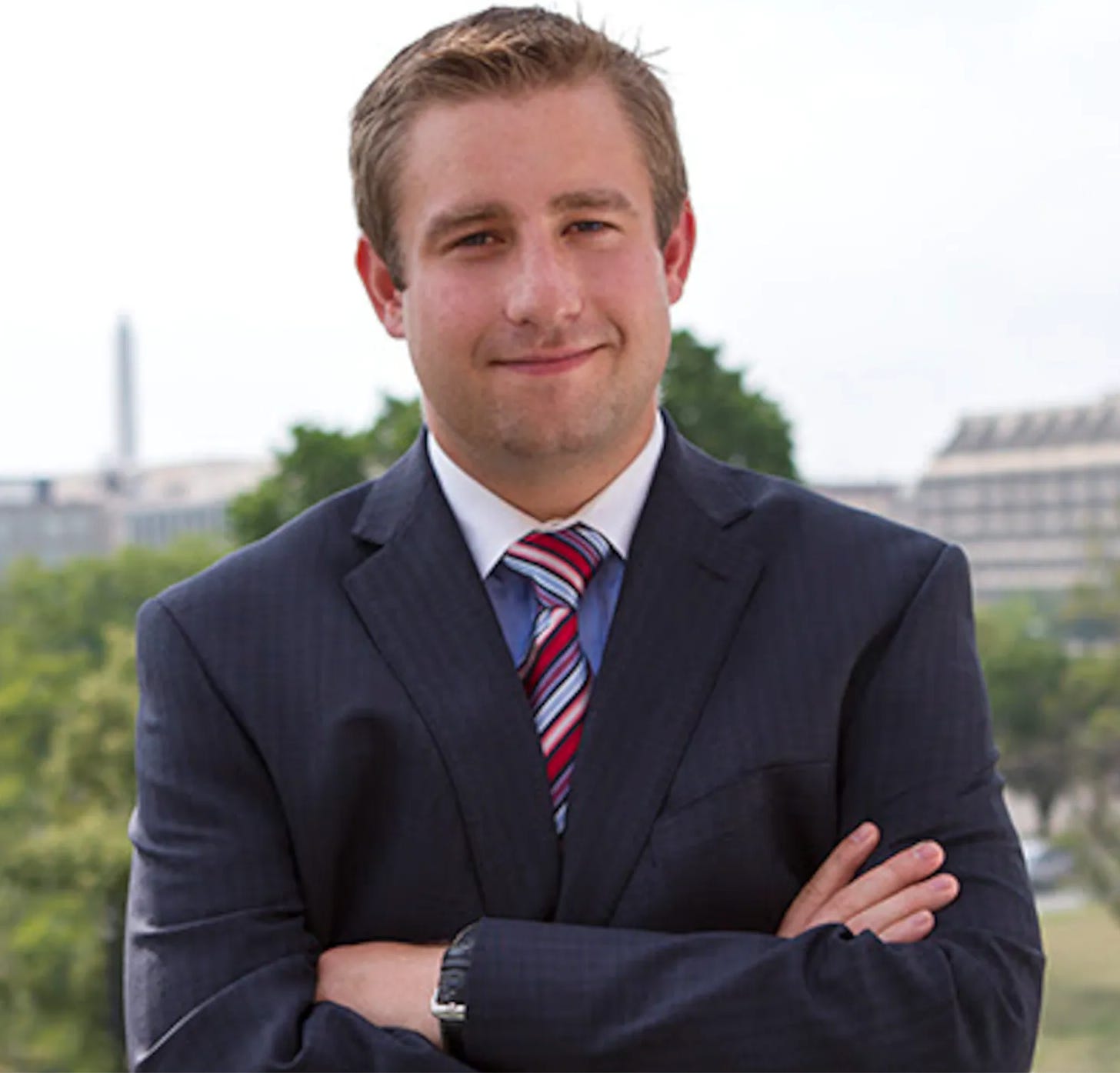

 Aletho News