At the UN General assembly last fall there was an essential vote on the future of mankind. Resolution number A/RES/70/33 calling for the international society to take forward multilateral nuclear disarmament negotiations had been submitted by Austria, Brazil, Chile, Costa Rica, Ecuador, Georgia, Ghana, Guatemala, Ireland, Kenya, Lichtenstein, Malta, Marshall Islands, Mexico, Nigeria, Panama, Peru, Philippines, South Africa, Trinidad and Tobago, Uruguay and Venezuela. For that, these countries deserve our deep respect and gratitude. The resolution reminds us that all the peoples of the world have a vital interest in the success of nuclear disarmament negotiations, that all states have the right to participate in disarmament negotiations, and, at the same time, declares support for the UN Secretary – General’s five-point proposal on nuclear disarmament.
The resolution reiterates the universal objective that remains the achievement and maintenance of a world without nuclear weapons, and emphasizes the importance of addressing issues related to nuclear weapons in a comprehensive, inclusive, interactive and constructive manner, for the advancement of multilateral nuclear disarmament negotiations. The resolution calls on the UN to establish an Open-ended Working Group (OEWG) of willing and responsible states to bring the negotiations on nuclear disarmament forward in this spirit.
When voted upon at the UNGA a month ago, on December 7, 2015, there was a huge majority of states (75 %) that supported the resolution, namely 138 of the 184 member states that were present. Most of them are from the global south, with majorities in Latin-America, Africa, Asia, the Middle East, and the Pacific. After having shown such courage and wisdom, they all deserve to be named among the states of hope, states that want to sustain mankind on earth.
Only 12 states voted against the resolution. Guess who they are: China, Czech Republic, Estonia, France, Hungary, Israel, Latvia, Lithuania, Poland, Russian Federation, United Kingdom, and the United States. What is wrong with them? Well, they are either nuclear-armed states or among the new NATO member states. They are the states of concern in today’s world. It is hypocritical that states that claim to be the protectors of freedom, democracy, and humanity constitute a small minority that refuse to enter into multilateral, inclusive, interactive and constructive negotiations to free the world from nuclear weapons. Among the three other nuclear-armed states, India and Pakistan had the civility to abstain, while the DPRK was the only one to vote “yes.”
Despite the reactionary, dangerous, and irresponsible position of the 12 states of concern and the tepid attitude of the abstainers, the OEWG was established by an overwhelming majority of the UNGA. The OEWG will convene in Geneva for 15 working days during the first half of 2016. The OEWG has no mandate to negotiate treaties to free the world of the inhuman nuclear weapons, but has clearly been asked to discuss and show how it can be achieved. Surely, the nations of hope that voted in favor of the OEWG will take part in the work. We can hope that at least some of the states of concern and some of the abstainers come to their senses and take part in this essential work for the future of mankind.
Participation in the OEWG is open for everyone and blockable by none. No matter what the states of concern do or don’t do, there is good reason to trust that the vast majority of nations of hope together with civil society from all over in the fall will present an outcome to the UNGA that will turn our common dream of a world free of nuclear weapons into a reality—perhaps sooner that we dare to believe.
In a statement released Wednesday, Ecuador’s governing party, Alianza PAIS, rejected the “latest political intervention against the government of Ecuador by the U.S.-based organization Human Rights Watch (HRW) in its report released on 10 November 2015.”
The report made unsubstantiated claims that “the administration of President Rafael Correa has expanded state control over media and civil society” and argued that security forces used “excessive force” against “peaceful” protests this year. It left out important context, such as the calls by the leaders of those protests to get rid of the democratically elected and very popular left wing government. The report criticized Ecuador because the well known US political tool, USAID shut their offices this year, and claimed the government has “broad powers to limit free speech.” Finally, the report took a political position on Ecuador’s internal legislative decisions.
“This organization repeatedly ignores the unprecedented advances in human rights that have occurred in Ecuador while manipulating human rights discourse to unjustly attack the nation’s elected government. It is not the first time HRW releases partisan reports against Latin America’s progressive governments,” Alianza PAIS stated.
Allianza PAIS accused HRW of misrepresenting the sizes of demonstrations, minimizing opposition violence, and of misrepresenting the state of emergency declared with the eruption of the Cotopaxi volanco – portraying that measure as a repressive tool.
“The sources of HRW’s funding, including corporate funding, contribute to its political bias while its board members and advisers have links with the financial, military and political sectors, the latter criticized by significant figures including Nobel laureates,” Alianza stated.
President Rafael Correa high-fives a boy during his tour of a new school built in the province of Azuay, Ecuador, Oct. 20, 2015. | Photo: Ecuadorean Presidency
Ecuador announced Wednesday that the government intends to build 400 new schools by 2017.
Half of the schools will be the state of the art “Millennium Educational Units” that include scientific laboratories, a library, a multi-purpose auditorium, an administrative wing and ample classrooms. The rest will be prefabricated units that can be constructed much faster and will be built in areas with the most urgent need for new schools.
“There is no better way to achieve true freedom than quality education,” President Rafael Correa said Tuesday during a ceremony to inaugurate a new school in the province of Azuay.
The new Millennium Educational Unit opened in Azuay replaces 13 much smaller schools that were sorely lacking in supplies and space needed to provide a quality education.
According to the Andes news agency, the funding for this particular school came from royalties from a nearby mining project. The stated objective of the Correa government is to take the income generated from extraction projects and invest it into strategic sectors such as education in order to move the country away from its dependence on non-renewable resources.
Ecuadorean law also stipulates that a portion of the income generated by extraction projects be reinvested into the region where the project is located.
Correa says his government had invested at least US$20 billion in education over the past eight years of his administration. The Ministry of Education provides free school supplies, books, uniforms, and meals in order to reduce barriers for low-income students, with a goal of achieving a 100 percent attendance rate.
The political opposition and right-wing press have criticized the Correa government over its spending. During the inauguration ceremony Correa replied saying, “Ecuador does not spend a lot, it invests a lot, which is different.”
The country has already built 57 of the Millennium Educational Units, with a further 48 under construction. The schools are intended to have a lifespan of 100 years. The prefabricated schools have a shorter lifespan at 25 years but take only 11 weeks to build.
Ecuadorean President Rafael Correa Tuesday inaugurated three new health centers in the province of Cotopaxi, which are destined to serve more than 55,000 people.
The health centers were built at a cost of US$7 million and serve a part of Ecuador currently at risk of being affected by the possible eruption of the Cotopaxi volcano.
President Correa said these centers are already equipped to deal with any potential emergency related to a possible eruption.
The new health centers are part of a push by the government to improve public health in the country by reducing visits to larger hospitals and placing a greater emphasis on prevention.
These centers, run by the Ministry of Public Health, are available to all residents free of charge.
“In 2015 alone, 2.5 million dollars have been allocated to health, a human right, and the best possible investment of money,” said Correa.
Since 2007 and the arrival of Correa to the presidency, 46 health centers and 12 hospitals have been built throughout the country, with more set to be opened over the next few years.
“We are continuing on the path so that public services serve as an example, that they are the best, that’s the dream that the Citizens Revolution holds,” said Minister of Health Carina Vance, referencing the name given to the political process led by President Correa.
These new health centers are deliberately built in areas previously under-served by government services. The three new centers inaugurated Tuesday are located in a part Ecuador where the majority of the residents are indigenous peoples.
President Correa said that these types of services are an example of the commitment the government has toward serving indigenous communities and the reason why the Citizens Revolution continues to enjoy support from the majority of indigenous peoples.
A segment of the indigenous movement recently declared an “uprising” against the government, holding marches and rallies throughout the country to demonstrate their opposition.
The smaller “type B” health center inaugurated by the president includes outpatient services, dental attention, X-rays, a clinical laboratory, emergency services, clinical psychology, physiotherapy, and a pharmacy.
A second “type B” center and a larger “type C” center were simultaneously unveiled. The president said they intended to inaugurate all three centers with a visit to the largest one but changed their plans after an opposition political group said they would try to storm the center during the president’s visit.
In response to President Rafael Correa’s proposed inheritance tax, a far right coalition in Ecuador has launched a campaign of anti-government protest in the country. This movement is being joined by some forces on the green and Indigenous left, long opposed to Correa’s economic strategy of neo-extractivism, that is, the exploitation of Ecuador’s rich deposits of oil to fuel the economy as well as providing the majority of government revenue. Correa’s economic approach has been to aggressively push forward oil operations, even in environmentally sensitive areas, and then use the proceeds to pay for poverty reduction programs. The various Eco-Indigenous groups have legitimate concerns about the sustainability of the neo-extractivist approach, but it is a fact that since Correa came into office in 2007 one million Ecuadorians have been lifted out of poverty. In 2007 4 of 10 Ecuadorians lived in poverty. Today less than a quarter of the population does.
COHA calls for an end to the violence that has accompanied the protests, with over 100 police and military now having suffered injuries, including grave ones. COHA supports dialogue between the various opposition sectors and the government, and the continuation of the positive trend in Ecuador of settling political differences by democratic procedures, not golpismo.
By Larry Birns, Director of COHA and Senior Research Fellows: Jim A. Baer, Nicholas Birns, William Camacaro, Lynn Holland, Frederick B. Mills, Ronn Pineo.
Ecuadorean opposition leader Carlos Perez called on the Ecuadorean military and police to rebel against the government during an interview with Ecuadorean TV channel TeleAmazonas Tuesday.
“I call on the military, police you must rebel. You cannot blindly follow an illegitimate act, you cannot do this,” Perez told the interviewer from TeleAmazonas. “If I go to prison for saying this, I welcome this.”
Perez was being interviewed together with his partner Manuela Picq. Both were detained during violent protests last week against the government of Rafael Correa in the Ecuadorean capital. Picq’s detention led to scrutiny of her immigration status, which was found to be “irregular.” A judge ruled Monday that Picq — who said she would begin the process to obtain permanent residency — could stay in the country.
Perez called for the rebellion while commenting on a clash Monday between opposition protesters and police in the province of Loja, where police — backed by the military — arrived to clear an illegal roadblock and were attacked with sticks, rocks, and fire bombs. One police officer was later kidnapped, but managed to escape his captors during the night.
Perez’s remarks are likely to generate controversy in the country, given that the failed 2010 coup against the Correa government began as a police rebellion. In June, a disturbing video surfaced that appeared to incite the Ecuadorean police force to join opposition protests against proposed tax increases on Ecuador’s wealthiest sectors.
Perez, who previously served 8 days in prison for interfering in the delivery of public services, was caught on video Thursday calling on his supporters to surround the presidential palace, where government supporters had assembled. Following his remarks, protestors clashed with police, who were blocking access to the area in order to avoid conflict between the sides.
During the interview, the pair accused the government of illegally detaining them during the violent protests. Picq had previously told the El Comercio newspaper that she “was treated like a criminal simply for walking on the street,” however, she then admitted on Tuesday that she physically interfered with police, who were attempting to detain Perez.
President Correa said opposition groups have opted to turn to violence due to the “failure” of the work stoppage called by opposition-aligned groups last week. The political coalition United Front, which supports the government, also said the national action had failed, citing that no work stoppages had taken place and the protests had lower turnout than expected.
The violent tactics of segments of the opposition have come under heavy scrutiny. In a statement, the Ecuadorean ombudsperson’s office said, “Violent acts are incompatible with democracy, which is why we challenge all forms of aggression that violates rights, regardless of where it comes from.”
In an interview with the Andes news agency, Mario Ramos, director of the Andean Center for Strategic Studies said, “We do not have democratic opposition, that must be clear: there is a subversive opposition that is acting against the security of the Ecuadorean state, against democracy, against the Constitution. Let me be clear, this is not a democratic opposition, this is a subversive opposition.”
Ecuador’s Interior Ministry issued a press release Saturday denying allegations that police had attacked and illegally detained French-Brazilian academic Manuela Picq during violent anti-government protests last Thursday.
Picq was taken into custody at a location where anti-government protesters began throwing projectiles and fire bombs at police in an attempt to enter the site where thousands of government supporters had gathered. Shortly following her detention, right-wing lawmaker Andres Paez sent tweets indicating that police had entered the Eugenio Espejo Hospital – where Picq had been sent to – in order to take injured protesters away.
Photos showing Picq with a bruise around her eye also began making the rounds on social media, but allegations claiming the bruises were from the police were disproven shortly after. Tweet:
To all my followers. Manuela Picq had confirmed to me that this photo that I shared was not from today. Many apologies to all.
Hospital Director Dr. Lenin Mantilla denied police had entered the hospital and said Picq and other opposition leaders were released after they were given medical clearances.
The release also included a recorded testimony of Manuela Picq denying rumors that she had been the victim of mistreatment by authorities.
“I was treated kindly by the police authorities and the paramedics on the scene,” Picq said during her recorded testimony.
According to local police reports, the academic and writer had suffered bruises during Thursday’s protest due to an attack from “unknown assailants” and was approached by authorities who sought to administer first aid. Picq was subsequently asked to provide her documentation, where officials say they discovered she had been living in the country with an “irregular status.”
However, in an interview with El Comerico, Picq claims she was illegally detained by Ecuadorean police officials.
“Yesterday, I was not an illegal immigrant and they arrested me without any probable cause. They didn’t detain me with any motive,” Picq told the newspaper.
The media report also coincided with the release of a photograph, which began circulating across social media platforms that depicted Picq being carried away by Ecuadorean police.
Picq, who is the partner of radical opposition leader Carlos Perez, had been participating in roadblocks as part of the so-called ‘National Action’ by anti-government organizations.
The action, which was supported by most right-wing leaders including banker Guillermo Lasso and agro-businessman Alvaro Noboa, came on the heels of demonstrations against government proposals to increase inheritance and capital gains taxes for the country’s wealthiest sector.
The Ecuadorean Ministry of Interior confirmed that they will reach a decision by Monday regarding Picq’s potential deportation.
Ecuador’s Armed Forces revealed via a tweet that 11 soldiers and police officers were injured Saturday after being attacked with live ammunition as they attempted to clear an illegal roadblock in the Amazonian province of Morona Santiago.
The roadblock had been set up as part of opposition protests against the government of elected president Rafael Correa. Officials confirmed that six people had been arrested as a result.
On Saturday, Ecuadorean President Rafael Correa criticized the organizers of the opposition demonstrations for their role in promoting violence, which resulted in more than 80 police and several journalists being injured.
Ecuador’s capital was rocked by violent protests Thursday which formed part of what a segment of the indigenous movement and opposition-aligned trade unions were calling an “uprising” and “work stoppage.”
Government supporters classified Thursday’s protests as an effort to destabilize the democratically-elected government.
Despite various opposition groups coming together, those opposed to the government failed in their objective to oust the government, which President Correa classified Aug. 13 as “historic” victory for the country’s democracy.
Correa expressed dismay at the violence exhibited by opposition demonstrators during his weekly television program broadcast from the province of Imbabura.
“I’ve never seen them so violent, so aggressive,” declared Correa, adding that “those who used violence will be punished with the full rigor of the law.”
The president reserved some of his harshest criticisms for leaders of opposition indigenous organizations, who despite previous assurances that the action would be peaceful and was not aimed at ousting the government, participated in inciting the violence.
Ecuarunari president Carlos Perez was caught on camera encouraging protesters to storm the plaza where government supporters had gathered. Responding to this call, opposition demonstrators — including the Governor of Zamora, Salvador Quishpe — violently attacked police, who endured attacks with sticks, poles, steel barricades, fireworks, and firebombs.
Quishpe, who was seen attacking police lines using the barricades, became covered in soot from the burning tires placed in front of police by demonstrators. The opposition politician subsequently claimed that he been beaten by police.
President Correa also heavily criticized the logic of the organizers of Thursday’s actions, saying the shutting down highways only harmed ordinary Ecuadoreans instead of causing harm to the government.
Correa blasted statements from protest organizers Jorge Herrera of the Conaie Indigenous group and Perez of Ecuarunari. Herrera called on the National Assembly to withdraw a series of proposed constitutional amendments currently under discussion, while Perez demanded Correa resign – despite the fact that Correa maintains high levels of popular support.
The leaders warned they would continue their protests and threatened to escalate their actions if their demands were not met.
“This president does not accept blackmail from anyone,” said Correa responded.
Correa criticized the hypocrisy of right-wing politicians, such as right-wing former banker Guillermo Lasso and Guayaquil mayor Jaime Nebot, who declared their support for the protests despite historically opposing the demands made by those who organized Thursday’s protests.
The president warned that these types of protests were likely to continue as part of a concerted effort to wear down the government.
Many in Ecuador’s robust indigenous movement are questioning a call by the Confederation of Indigenous Nationalities of Ecuador, also known as CONAIE, for a national uprising against the government of President Rafael Correa.
CONAIE has rejected a call for dialogue sponsored by the government and have instead have called for an indigenous-led uprising, which will begin with marches on Aug. 2 in the Zamora province and conclude in Quito for an uprising on Aug. 10.
“Everyone needs to know that CONAIE is not the only indigenous voice in the country,” Franklin Columba, leader of the National Confederation of Campesino, Indigenous and Black Organizations (FENOCIN) told teleSUR English on Thursday. “Here there are many organizations that also have their own processes.”
CONAIE’s demands are varied. For many indigenous activists government withdrawal from their land and a repeal of water laws are essential. Others have joined protests lead by the wealthy right-wing opposition leaders that have rejected of the capital gains bill and inheritance tax proposed by the national government to redistribute wealth.
“This march is to try and force the national government reconsider its political positions that they have been imposing. This uprising is demanding that the national government give concrete responses to our historic demands, our concrete demands in this country,” said President of CONAIE Jorge Herrera to the press.
The organization has taken a hardline to those who question their tactics, saying that they will sanction indigenous leaders who refuse to participate in the August uprising.
Columba told teleSUR that FENOCIN has rejected CONAIE’s uprising and it’s call for a national strike because “we as a national organization are not going to lend ourselves to playing the right’s game,” referring to the wealthy right-wing opposition who have used the momentum of current protests to denounce laws to redistribute the wealth in the country.
This is not the first indigenous uprising which has been called for in Ecuador. Indigenous nationalities from across the country converged on Quito on May 28, 1990. They blocked highways, held hunger strikes and occupied public spaces until they reached an agreement with the national government on June 11.
During the 1990 uprising CONAIE received popular support, as many of their demands represented those who lived harsh lives in Ecuadorean society. The movement is today under new leadership, and analysts have pointed to the fact that Pachakutik, the political party representing CONAIE, seems to be forging alliances with right-wing parties like former presidential candidate Guillermo Lasso’s CREO party.
“The alliances which we have seen Pachakutik make, the political arm, party of the indigenous movement of CONAIE and the Ecuarunari movement, are with right-wing groups. They are having meetings. This is a blow to their own ideological principles. They have always said that any type of relationship with the right would be impossible, because of what the right stands for,” said analyst Werner Vasquez to teleSUR English.
“(The right-wing) is the symbol of historic repression and exploitation suffered by the indigenous population. So it seems impossible to try to understand these alliances. I think it comes from them wanting to align themselves with those who are also opposed to the Citizen’s Revolution, and who have a common enemy, which is the state.”
Many indigenous organizations who participated in the 1990 uprising today feel that CONAIE no longer represents their interests. Some organizations, like FEI, agree that the land and water laws need to be revised, but they have chosen to participate in the National Dialogue on Equality and Social Justice to discuss these measures.
“We have proposed for this dialogue to cover fundamental issues, transcendental issues, like the agrarian revolution, also putting this in the context of diversifying production in the country, to support small and medium scale producers, campesinos and indigenous peoples,” said Jose Agualsaca, president of the Indigenous Federation of Ecuador (FEI) following a meeting with representatives of the national government to teleSUR English.
He went on to say, “We believe that these marches and this uprising wants to destabilize the country, and what they really want is to overthrow President Rafael Correa from power. But it would not end there, they want to take him out, then convoke a new constitutional assembly, and make a new constitution which would serve the interests of the richest sectors of society. This is the position of the FEI.”
Indigenous organizations across Ecuador are finding themselves at odds with CONAIE’S leadership, which has been viewed as moving further and further away from its historic support base. These groups are opting for dialogue, discussing their concerns and ideas with national authorities, in an effort to become key participants in constructing the future of the country.
Later this month the outcome is expected of the completely unjust and incompetent show trials held in Libya over the last year or so of around 200 former officials of the Libyan Jamahiriya. If that outcome is reported at all in North American and European media, its real meaning will be completely hidden in self-serving apologetics for NATO’s destruction of Libya in 2011.
The same psy-warfare framework that justified NATO’s campaign of terrorist aggression will falsely present the show trials’ outcome as rough justice dealt out to individuals who deserve no better.
That outcome should put on high alert anyone defending the countries of the Bolivarian Alliance of the Americas against very similar psychological warfare and terrorist subversion supported by NATO governments of the US and its allies. Not for nothing did Hugo Chávez and Daniel Ortega speak out in defense of Muammar al Gaddhafi and Libya against NATO’s terrorist war. They had already learned long ago the very same lessons to have emerged more recently from the utterly depressing human, moral and political catastrophe of Libya’s destruction.
In 2013, a study by a distinguished Harvard University academic acknowledged that the failure in Libya of the US government’s ostensible avowed policy in Libya and in North and West Africa was based on serial falsehoods. That fact-based, acerbic policy criticism from a source generally supportive of US government foreign policy should give much pause for thought. Along with support for Libya from outstanding revolutionary leaders like Ortega, Chavez and Nelson Mandela it amounts to a categorical indictment of received Western opinion about Libya which, across virtually the entire Western political spectrum, sided either openly or indirectly with NATO’s 2011 war.
No one genuinely concerned to defend progress towards an equitable, peaceful multi-polar world based on mutual respect between sovereign, autonomous nations and peoples should underestimate or forget the horror of what NATO did to Libya. Tens of thousands were killed and wounded in attacks by the bombers and helicopters of many NATO countries. Millions were displaced or forced into exile. Cities like Sirte and Bani Walid were devastated. Schools, universities, hospitals, factories producing food products and other essential civilian infrastructure were targeted and severely damaged or destroyed.
The destruction of Libya marked the categorical abandonment of whatever vestigial moral authority may still have remained to the European Union and its member governments.
It demonstrated in the most humiliating way the impotence and irrelevance of the African Union.
It put hard questions about the anti-imperialism of the Iranian and Syrian governments as well as highlighting the race supremacism of the governments of the Arab League and the already damaged integrity of the Palestinian authorities.
Almost all of them quickly recognized the overtly racist renegade Libyan CNT junta. For their part, the then governments of Russia and China weakly accepted NATO country assurances about the defensive nature of the air exclusion zone.
The only governments to emerge with any real credit from the destruction of Libya were the governments of the ALBA countries and a few African governments like Zimbabwe.
Countries like Cuba, Venezuela, Argentina, Nicaragua, Bolivia and Ecuador have all been victims of comprehensive disinformation campaigns of demonization and caricature, although perhaps not so extreme as the final campaign against Libya’s Jamahiriya and Muammar al Gaddhafi.
It is worth considering the basic component of that disinformation war against Libya. What is sometimes called 4th generation warfare is as old as warfare itself. Like Athens versus Sparta, or Rome versus Carthage the fundamental objective of NATO governments and their allies is to make their chosen target seem Other, creating a despised, outcast doppelganger anti-image of the West’s own phony self-image.
So Libya’s Jamahiriya was tagged as undemocratic by hypocritical Western governments, most of whom came to power with around just 20% to 25% of the vote of their electorates, thanks overwhelmingly to elite corporate funding. Libya’s democratic process was one that recognized its society’s contradictions and attempted continual self-renewal.
By contrast, the Western corporate oligarchies offer virtually meaningless periodic elections obfuscated by public relations and organized on a yes-or-yes basis to favor politicians groomed and bankrolled by their countries’ anti-democratic elites. Muammar al Ghaddafi was labeled a dictator even though his policy initiatives were not infrequently rejected within Libya’s system of popular congresses.
In 2009, during a policy conflict between Muammar al Gaddhafi and pro-Western so-called reformers, these could not get their way in Libya’s popular assemblies so they chose staging a violent putsch to achieve the regime change their Western government backers wanted. Venezuela’s experience has been almost identical, although, to date, the country has avoided the kind of coup d’état and subsequent NATO driven war that destroyed Libya Libya was portrayed as a systematic human rights violator.
But Libya’s response to the constant terrorist attacks and subversion it suffered from the very start of its Revolution in 1969 was no different to that of any Western government faced with a similar threat. The British government tortured and murdered alleged subversives all through the Irish war, colluding with sectarian paramilitary death squads. The same pattern of torture and extrajudicial murder also consistently marked the Spanish authorities’ campaign against Basque separatists. Guantanamo’s torture camp symbolizes the brutality and illegality of the US government’s response to terrorist threats.
Libya’s Jamahiriya probably conformed as closely to international human rights norms in relation to fighting terrorism as the three Western governments that led NATO’s war of destruction. Human rights protection in Libya was certainly superior to Western allies like Turkey, Egypt, Israel, Saudi Arabia, Qatar or the other quasi-feudal Gulf State tyrannies.
All the pretexts for the Western assault on Libya’s legitimate government were completely bogus. In any case, as Gerald Perreira points out, the fundamental objective achieved by the destruction of Libya was to shut down the decisive impetus towards African integration led by Muammar al Gaddhafi.
CNT leaders like Mustafa Abdul Jalil were Arab supremacists who fiercely resisted the Pan-African policies advocated by Muammar al Gaddhafi. Arab supremacism, phony neoliberal reformism and the treachery of repressive human rights abusers like Mahmoud Jibril made a lethal reactionary cocktail perfectly suited to ruthless NATO government manipulation. On cue, Western corporate and alternative media presented the corrupt political project of these viciously reactionary elements as a “revolution”, part of the absurdly hyped “Arab Spring”. As if NATO country governments, dedicated to the service of their countries’ corporate elites, have ever promoted genuine democracy or comprehensive human rights around the world.
From Ukraine and Greece, to Yemen and Syria, to Haiti and Honduras, what the Western powers and their allies want is access to natural resources, control of strategically important territories and decisive advantages for their trade and finance. Destroying Libya effectively removed a real threat to Western control and domination in Africa.
Currently, the NATO country elites’ political sales staff, for the moment President Obama, Prime Minister Cameron, President Hollande and Chancellor Merkel, are battering Greece into submission. But those leaders and their allies are using economic and psychological warfare to attack many other targets, not just Greece. They do so against Venezuela and other stubbornly independent countries around the world.
That is why the leaders of Argentina, Cuba, Ecuador, Nicaragua and Venezuela very publicly welcomed the No vote in the Greek referendum. Unlike Libya, in their different regions Syria and Venezuela are part of regional alliances backed at long last by firm leaders in Russia and China, strong enough to face down any likely economic or military threat from the United States and its allies.
But it would be a mistake to forget Libya. Defending the people of Libya represents an important self-defense measure against Western predators in their global psychological warfare assault on the free, anti-imperialist world.
As a leading force in that free world, ALBA country governments should urgently consider challenging the governments of North America and Europe to protect the thousands of political prisoners in Libya who have been tortured and denied due process.
The ALBA country governments and their allies have infinitely more moral and political authority than Western leaders to speak out in defense of fundamental human rights. They should make outspoken use of that authority now to expose the sadism and hypocrisy of Western governments in Libya, Syria, Yemen and elsewhere.
In Libya, they may perhaps yet help to save the lives of as many as 200 former officials of the Libyan Jamahiriya at risk from quasi-judicial murder by the West’s corrupt terrorist proxies in a country they have devastated with merciless cynicism.
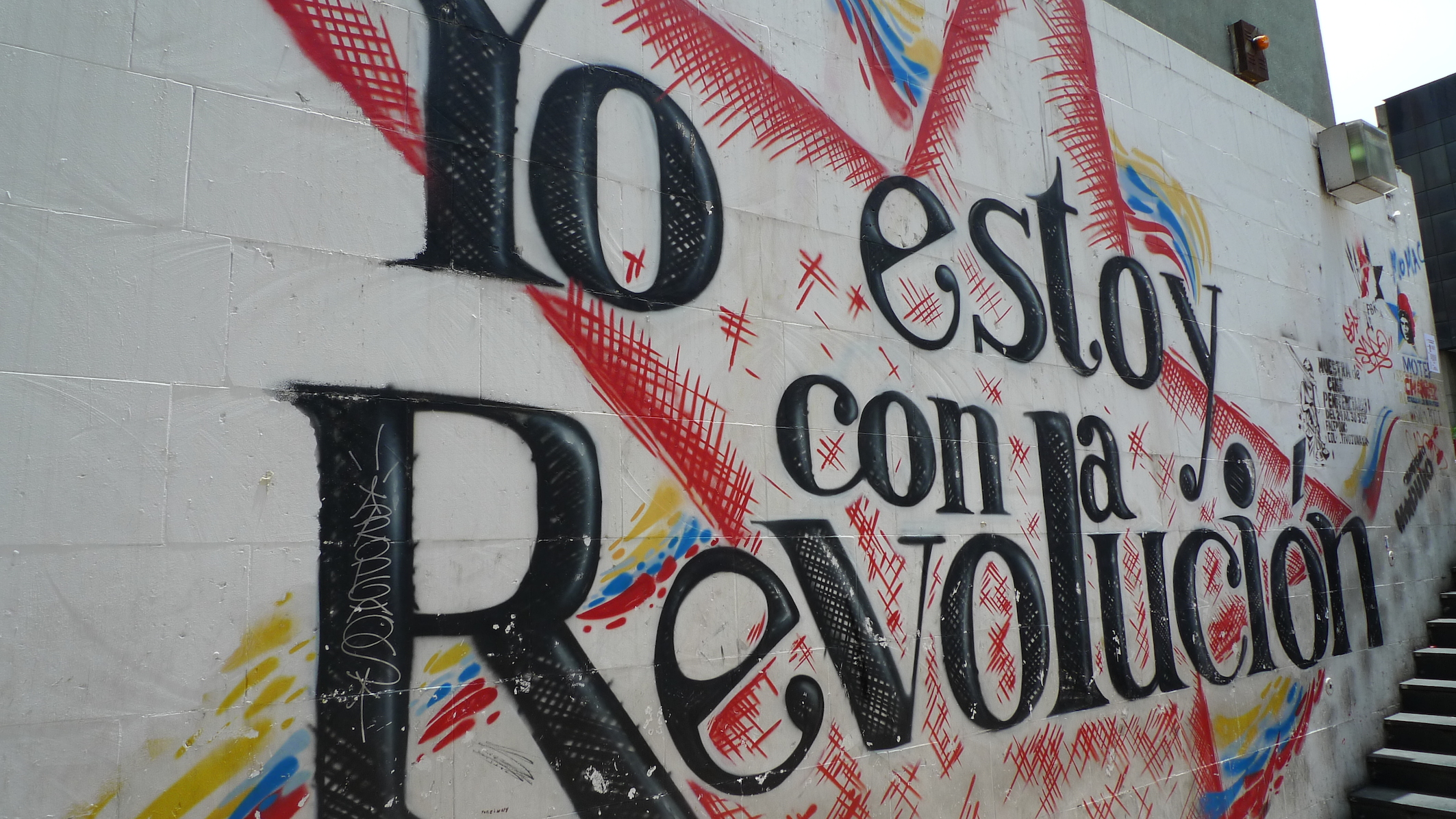
Do not take the Latin American revolutions for granted.
They inspired the entire Planet. They brought hope to every corner of our scarred Earth. But now they are themselves in need of our support.
If left alone, they would thrive for decades and centuries. But the Empire is once again on the offensive. It is shaking with fury. It is ready to invade, to smash, burn to ashes all the hopes, all that which had been achieved.
Don’t believe in the “common wisdom” which proclaims that the rulers of the world simply “closed their eyes” more than a decade ago; that George W. Bush was “too busy” ravishing the Middle East, therefore “allowing” most of the Latin American countries to “sneak away” from the iron grip of the Empire.
Such “analyses” are as patronizing as they are false. The Empire never sleeps! What Latin America now has was built on its daring, its sweat, its genius and its blood – it fought against the Empire, courageously, for decades, losing its best sons and daughters. It fought for freedom, for justice and socialism.
The Empire was not “looking the other way”. It was looking straight south, in fury, but for some time it was too confused, too astounded, too shocked at what it was witnessing. Its “slaves” had risen and taken power back into their own hands. They showed to the entire world what freedom really is.
For some time, the Empire was paralyzed by rage and unable to act.
The Empire’s undeniable property, Latin America, inhabited by “un-people” born only in order to supply cheap labor and raw materials to the rich part of the world, was suddenly, proudly and publicly, breaking its shackles, declaring itself free, demanding respect. Its natural resources were now used to feed its own people, to build social housing, create public transportation systems, construct hospitals, schools and public parks.
But after the first wave of panic, the Empire began to do what it does the best – it began the killings.
It attempted to overthrow Venezuelan government in 2002, but it failed. The Venezuelan people rose, and so did the Venezuelan military, defending then President Hugo Chavez. The Empire tried again and again, and it is trying until now. Trying and failing!
“We are at war”, I was told by one of the editors of Caracas-based television network, TeleSUR, for which I made several documentary films. “We are literally working under the barrel of cannon”.
***
Ms. Tamara Pearson, an Australian revolutionary journalist and activist, who recently moved from Venezuela to Ecuador, explained the difficult situation in Venezuela, a country that is under constant attack from both the US, and the local comprador elites:
“People are suffering a lot. Basic food prices are high, much medicine is unavailable, and various services aren’t working. On one level, people are used to this – the business owners would cause shortages and blame the government before each of the many elections. But usually it’s less intense and lasts just a few months. But this has been going on and getting worse, since Chavez died – over two years now. There is no doubt that the US, and more so, Venezuelan and Colombian elites and business owners are a huge or even the main factor…”
All of revolutionary Latin America is “screaming”.
As I described in two of my recent books, “Exposing Lies Of The Empire” and “Fighting Against Western Imperialism”, the Empire is using similar destabilization strategy against all countries that are resisting its deadly embrace.
Its propaganda is mighty and omnipresent. CNN and FOX TV are beamed into almost all major hotels and airports of Latin America, even in some revolutionary countries like Ecuador. Almost all major newspapers of the continent, including those in Venezuela, Ecuador, Chile and Argentina, are controlled by the right wing business elites. Almost all of the foreign news coverage comes from European and North American sources, making the Latin American public totally confused about Islam, China, Russia, South Africa, Iran, even about their own neighbors.
The local elites continue to serve foreign interests, their loyalties firmly with North America and Europe.
Every left wing Latin American government has been facing bizarre protests and subversion actions conducted by the elites. Destabilization tactics have been clearly designed in far away capitals. They were mass-produced and therefore almost identical to those the West has been using against China, Russia, South Africa, and other “rebellious” nations.
Propaganda, disinformation and spreading of confusion have been some of the mightiest tools of the fascist right wing.
“Economic uncertainty” is an extremely powerful weapon. It was used first in Chile, in the 1973 coup against socialist President Salvador Allende. Pro-Western Chilean elites and businessmen created food shortages, and then blamed it on the socialist government, using El Mercurio and other daily newspapers as their propaganda tools.
Peter Koenig, former World Bank economist and now prominent dissident and critic of the world neoliberal regime, wrote for this essay:
Today Madame Bachelet, the socialist President of Chile has a hard time fighting against the Mercurio inspired Chilean oligarchs. They will not let go. Recently they invited the World Bank to assess the school reform package proposed by Bachelet, basically to return universities to the public sector. Of course, the ‘upper class’ of Chileans knew that the World Bank would come up with nothing less than predicting an economic disaster if the reform is approved. As a result, Bachelet made concessions – which on the other hand are not accepted by professors and teachers. It’s the first step towards chaos – and chaos is what the empire attempts to implant in every country where they strive for ‘regime change’.
But one of the “dirtiest” of their weapons is the accusation of corruption. Corrupt pro-Western politicians and individuals who misused tens, even hundreds of millions of dollars of the peoples money and destroyed the economies of their countries by taking unserviceable loans that kept disappearing into their deep pockets, are now pointing their soiled fingers at relatively clean governments, in countries like Chile and Argentina. Everything in “Southern Cone” and in Brazil is now under scrutiny.
Peter Koenig (who co-authored a book “The World Order and Revolution!: Essays from the Resistance” with leading Canadian international lawyer Christopher Black and me) shows how important it is, for the Empire, destabilization of Brazil, one of the key members of BRICS:
Brazil being a member of the BRICS is particularly in the crosshairs of the empire – as the BRICS have to be destabilized, divided – they are becoming an economic threat to Washington. Brazil is key for the non-Asian part of the BRICS. A fall of Brazil would be a major blow to the cohesion of the BRICS.
There are totally different standards for pro-Western fascist politicians and for those from the Left. The Left can get away with nothing, while the Right has been getting away literally with mass murder and with the disappearance of tens of billions of dollars.
It is, of course, the common strategy in all the client states of the West. For instance, one of the most corrupt countries on earth, Indonesia, tolerates absolute sleaze and graft from former generals, but when progressive socialist Muslim leader, Abdurrahman Wahid, became the President, he was smeared and removed in a short time, on “corruption” charges.
After centuries of the Monroe Doctrine, after mass murder committed in “Latin” America first by Europeans and then by North Americans and their rich local butlers, it will take long decades to fully eradicate the corruption, because corruption comes with the moral collapse of the colonial powers and the local elites. Financial greed is only its byproduct.
The great pre-colonial cultures of what are now Peru, Ecuador and Bolivia did not have corruption. Corruption was injected by Western colonialism.
And now, corruption under left wing, revolutionary governments still exists, since it is difficult to root out all the rats at once, but it is incomparably smaller than under the previous fascist right wing cliques!
***
The rich in Latin America are heartless, servile (to the Empire) and greedy in the extreme. Latin America has still the most unequal distribution of wealth on earth. True, it is much richer (and even its poor are richer, with some exceptions of Central America, Peru or Paraguay) than Africa or even in Southeast Asia, but this cannot be used as an excuse.
Even the most progressive socialist governments now in power would ever dare to touch, to slap the private enterprises too hard. From this angle, China with its central planning and controlled economy is much more socialist than Ecuador or Bolivia.
A few days ago, as I was flying from Ecuador to Peru, I read that the number of multimillionaires in Latin America was actually increasing, and so is the social gap between the rich and the rest of the societies. The article was using some anecdotal evidence, saying that, for instance, in Chile alone, now, more Porsche sports cars are sold than in the entirety of Latin America few years ago. As if confirming it, I noticed a Porsche auto dealership next to my hotel in Asuncion, the capital of the second poorest country in South America. I asked for numbers, but the Porsche manager refused to supply them, still proudly claiming that his company was “doing very well”.
So what do they – the “elites” – really want? They have money, plenty of money. They have luxury cars, estates in their own countries, and condominiums abroad. What more?
As in Thailand, Philippines, Indonesia or Kenya, and all over the West, they want power. They want to feel unique. They want to be admired.
The Socialist governments allow them to stay rich. But they force them to share their wealth and above all, they shame them. They are also trying to minimize the gap – through education, free medical care and countless social projects.
That is, of course, unacceptable to the elites. They want it all, as they always had it. And to have it all, they are ready to murder, to side with the darkest foreign interests, even to commit treason.
***
Increasingly, the interests of the local elites are very closely linked to foreign interests – those of the Empire and those of the private sector.
As I was told in Ecuador, by Ms. Paola Pabón, Assembly Member representing Pichincha area:
Behind the involvement of the US, are some ex-bankers such as Isaiah brothers, who lost power here, escaped courts and went to live in the United States, but there are also huge economic powers such as Chevron. It means that there are not only political interests of the US, but also private, economic ones.
Predominantly, the local elites are using their countries as milking cows, with very little or zero interest in the well being of their people.
That is why their protests against Latin American revolutions are thoroughly hypocritical. They are not fighting for improvements in their countries, but for their own, selfish personal interests. Those shouts and the pathetic hunger strikes of the “opposition” in Venezuela may appear patriotic, but only thanks to propaganda abilities to the Western mass media.
The elites would do anything to make all revolutions, all over Latin America, fail and collapse. They are even spending their own money to make it happen.
They know that if they manage to remove progressive forces from power, they could rule once again, totally unopposed, as their counterparts do in all other client states of the West – in the Middle East, Africa, South and Southeast Asia, and Oceania.
The temptation is tremendous. Most of the elites in Latin America still remember well, how it feels, how it tastes – to control their countries unopposed, and with full support from the West.
***
Eduardo Galeano, the great Uruguayan writer and revolutionary thinker, once told me: “I keep repeating to all those new leaders of Latin America: “Comrades, do not play with poor people’s hopes! Hope is all they have.”
It appears that hope has finally been takes seriously, in Bolivia, Uruguay, Venezuela, Ecuador, Chile, Argentina, Brazil, Nicaragua and elsewhere.
It was also taken seriously in Honduras, but hope was crushed by the US-orchestrated coup. In Paraguay, under a semi-progressive priest who preached liberation theology, hope was taken semi-seriously, but even that was too much in the country that had been ruled, for decades, by fascist cliques. In 2012, a constitutional coup followed by an appalling massacre of predominantly indigenous people, and fascism returned.
After these two setbacks, Latin America shook, but kept moving forward. Hugo Chavez died, or was murdered by the North, depending which theory you subscribe to. His demise was a tremendous blow to the entire continent, but still, the continent kept moving. “Here, nobody surrenders!” Chavez shouted, dying, but proud.
“President Correa of Ecuador is one of very few leaders of the “original project””, said Paola Pabón. “Lula in Brazil will not be able to stand for reelection, anymore, mainly due to corruption scandals. Mujica is not in power, anymore, and Cristina Fernandez will be retiring. Evo Morales does not have regional influence, and even Maduro does not have… For this reason, Ecuador is so important, strategically. If ‘they’ hit us, if there is a successful coup, it would be tremendous victory for them, to destroy a President with regional importance; who speaks for the region… and also, because Ecuador is one country where the government actually functions well.”
Walter Bustos, who used to work for this government, is alarmed by developments in Ecuador and the entirety of Latin America. Both he and Paula Pabón realize how fragile the Latin American revolutions are. While driving with me to an indigenous area of Riobamba, Walter lamented:
In case there is a military coup in Ecuador, the difference between here and Venezuela would be enormous: while in Venezuela, Chavez incorporated the military into his revolution, in case of citizens revolution in Ecuador, we have no security; we cannot count on support of the military in case there is some armed, political or economic attack against us.
Hugo Chavez was not only a great revolutionary, but also a tremendous strategist. He knew that any great revolution has to be fought, won, and then defended. Winning the battle is never enough. One has to consolidate forces, and uphold the victory. Chavez was first thinker, and then soldier.
Correa, Morales, Fernandez go forward, brave, proud but unprotected. Under their governments, the lives of ordinary people improve tremendously. That is what matters to them. They are decent and honest beings, unwilling to dirty themselves with intrigues, speculations and conspiracy theories.
But their great success will not gain them any recognition from the Empire, or from their own elites. The success of socialism is the worst nightmare for rulers of the world and their local butlers.
This is how President Salvador Allende died in 1973. He dismissed all rumors, and then all warnings that the coup was coming. “I am not going to arrest people just because of some suspicion that they may do something”, he used to say. After the coup took place, he died proudly, a true hero, committing suicide by marching towards the helicopter gunships and fighter jets that were bombarding the Presidential Palace of La Moneda. But he was not the only victim. As a result of the coup, thousands of Chilean people died, and tens of thousands were savagely tortured and raped. Chile did not die, but went into a horrific coma, from which it only recently manages to recover.
Henry Kissinger summarized the moral corruption/collapse of his country’s regime when he uttered his memorable phrase:
I don’t see why we need to stand by and watch a country go communist due to the irresponsibility of its people. The issues are much too important for the Chilean voters to be left to decide for themselves.
Despite his great intentions, President Salvador Allende failed his people. He underestimated the bestiality of the Empire, and the result were millions of broken lives.
Since then, the Empire’s selfishness and brutality only evolved. The more successful leaders like Correa become, the more real is the danger of a coup – of a devastating, deadly attack from the North, and subversion from within.
The fragility of Latin American revolutions is obvious. The elites cannot be trusted. They showed on many occasions how far they are willing to go, committing treason, collaborating with the West against their own nations: in Chile, Peru, Colombia, Mexico, Honduras, Venezuela, Paraguay and Bolivia, to name just a few cases.
Appeasing both the elites and the Empire, while fighting for social justice and true independence, is impossible. The elites want to have full control of their countries, while the Empire demands full submission. No compromise could be reached. The history speaks clearly about that. And the Empire demonstrated on countless occasions that Latin American democracy would be respected only if the people vote the way that suits Washington.
Latin America has to learn how to defend itself, for the sake of its people.
Its closer and closer cooperation with China and Russia is essential. A coherent regional defense agreement should follow.
The next few years will be crucial. The revolutions have to be institutionalized; they cannot depend only on charisma of its leaders.
Constant sabotages and coup attempts, like those in Venezuela, should not be tolerated. They lead to chaos and to uncertainty. They break countries economically and socially.
It is clear what the Empire and its servants are doing: they are trying to push Latin American revolutionary countries against the wall, as they pushed, in the past, North Korea. They are trying to make them “react”, so they could say: “You see, this is true socialism, this defensive, hermitic and paranoid system.”
The path will not be easy. It will be dangerous and long.
Latin America can only survive through international cooperation and solidarity. It would also have to fight legally, at home and abroad. Those who are committing treason and those who are interrupting development of the country should face justice.
The left wing governments that are ruling South American countries won democratic elections: much more democratic than those in Europe and the United States. If the individuals and groups act against the expressed will of their own people, they should be taken to courts.
If a powerful country tortures other countries and shows total spite for their people, it should face an international legal system. The United States demonstrated, countless times, that it considers itself well above the law. It even forced several government in Latin America and elsewhere, to give its military personnel immunity. One of these countries is Paraguay, historically flooded with CIA, DEA and FBI agents.
In order to legally restrain the Empire, huge international pressure would have to be built. Like in the case of Managua, which legally sued the US for many acts of terror committed against Nicaragua. The Empire will most likely refuse to accept any guilty verdict. But the pressure has to be on!
All this would be meaningless without dedicated, constant coverage of the events by independent or opposition media, be they huge new state-funded networks like RT, TeleSur, CCTV or Press TV, of progressive independent media like Counterpunch, VNN, or ICH. It is essential that Latin Americans demand information from these sources, instead of consuming the toxic lies spread through CNN en Español, FOX, EFE and other right wing Western sources.
The battle for the Latin American people and for their freedom is on. Do not get fooled, it has been on for quite some time, and it is very tough fight.
Latin America is one of the fronts of the integrated fight for the survival of our Planet.
People who admire this part of the world, all those who have been inspired by Latin American revolutions, should participate in the struggle.
The best sons and daughters of this continent are now fighting in their own, quixotic way, as they always did: frontally, with exposed heart, totally unprotected. But their fight is just, and they are in this battle in order to defend the people.
Their opponents are rich, deceitful and brutal. But they are also selfish and they fight only for their own interests. They are not loved by their nations. If they lose, Latin America will win!
Those countries defending themselves against the Empire should unite, before it’s too late. Now as Latin America is rising from its knees, it becomes clear who are its foes and who are real friends, real brothers and sisters!
This scarred but stunning continent of courageous poets, of dreamers and revolutionaries should not be allowed to fall. In Caracas, Quito and La Paz, they are fighting for entire humanity.
The state of Ecuador won an important case Monday brought against it by the Isaias brothers, a pair of fugitive bankers who were convicted of embezzlement for their role as the heads of bank Filanbanco during the Ecuadorean banking crisis in the late 1990s.
Ecuador’s attorney general revealed in a communique that the court of the Southern District of New York has denied a suit by William and Roberto Isaias, which sought to sue Ecuador for US$1 billion, after the state seized approximately 200 business connected to the brothers when the pair fled the country.
The U.S. court determined that the suit did not fall under its jurisdiction, as the state of Ecuador enjoys sovereign immunity. According to the communique, the court also found that the brothers had failed to prove that the seizures were illegitimate.
The brothers have the option to appeal within 30 days. Ecuador is still seeking the extradition of William and Roberto Isaias.
However, the pair have received preferential treatment, due to their connections to U.S. Senator Robert Menendez, himself the subject of a corruption investigation.
The brothers were found guilty in absentia and sentenced to eight years in prison by the Ecuadorean National Court, which determined that the brothers had falsified Filanbanco’s financial statements. Filanbanco received millions from the Ecuadorean state in bail-outs during the country’s bank crisis.
This is the second case the Isaias brothers have lost in U.S. courts, after a 2014 ruling determined that Ecuador could attempt to seize properties belonging to the brothers in Florida in order to recover a portion of the US$200 million the government of Ecuador says it is still owed.
By Jonas E. Alexis | Veterans Today | October 16, 2107
In 1973 Irving Kristol, the godfather of the Neoconservative movement, made a stunning statement which is still relevant to understanding the Israeli influence in US foreign policy. Kristol said:
“Senator McGovern is very sincere when he says that he will try to cut the military budget by 30%. And this is to drive a knife in the heart of Israel… Jews don’t like big military budgets. But it is now an interest of the Jews to have a large and powerful military establishment in the United States…
“American Jews who care about the survival of the state of Israel have to say, no, we don’t want to cut the military budget, it is important to keep that military budget big, so that we can defend Israel.”
Read the statement again very carefully. A big military budget, said Kristol, is only good for Israel, not America or much of the Western World. In other words, precious American soldiers who go to the Middle East to fight so-called terrorism are just working for Israel, not for America.
So, whenever the Neocons use words such as “democracy” or “freedom,” they are essentially conning decent Americans to support Israel’s perpetual wars. … continue
This site is provided as a research and reference tool. Although we make every reasonable effort to ensure that the information and data provided at this site are useful, accurate, and current, we cannot guarantee that the information and data provided here will be error-free. By using this site, you assume all responsibility for and risk arising from your use of and reliance upon the contents of this site.
This site and the information available through it do not, and are not intended to constitute legal advice. Should you require legal advice, you should consult your own attorney.
Nothing within this site or linked to by this site constitutes investment advice or medical advice.
Materials accessible from or added to this site by third parties, such as comments posted, are strictly the responsibility of the third party who added such materials or made them accessible and we neither endorse nor undertake to control, monitor, edit or assume responsibility for any such third-party material.
The posting of stories, commentaries, reports, documents and links (embedded or otherwise) on this site does not in any way, shape or form, implied or otherwise, necessarily express or suggest endorsement or support of any of such posted material or parts therein.
The word “alleged” is deemed to occur before the word “fraud.” Since the rule of law still applies. To peasants, at least.
Fair Use
This site contains copyrighted material the use of which has not always been specifically authorized by the copyright owner. We are making such material available in our efforts to advance understanding of environmental, political, human rights, economic, democracy, scientific, and social justice issues, etc. We believe this constitutes a ‘fair use’ of any such copyrighted material as provided for in section 107 of the US Copyright Law. In accordance with Title 17 U.S.C. Section 107, the material on this site is distributed without profit to those who have expressed a prior interest in receiving the included information for research and educational purposes. For more info go to: http://www.law.cornell.edu/uscode/17/107.shtml. If you wish to use copyrighted material from this site for purposes of your own that go beyond ‘fair use’, you must obtain permission from the copyright owner.
DMCA Contact
This is information for anyone that wishes to challenge our “fair use” of copyrighted material.
If you are a legal copyright holder or a designated agent for such and you believe that content residing on or accessible through our website infringes a copyright and falls outside the boundaries of “Fair Use”, please send a notice of infringement by contacting atheonews@gmail.com.
We will respond and take necessary action immediately.
If notice is given of an alleged copyright violation we will act expeditiously to remove or disable access to the material(s) in question.
All 3rd party material posted on this website is copyright the respective owners / authors. Aletho News makes no claim of copyright on such material.



 Aletho News