Eurasian countries need own rating system – Putin
RT | May 25, 2023
The Eurasian Economic Union (EEU) member states should establish a rating agency to provide adequate assessment tools for the region’s growing economic activity, Russian President Vladimir Putin has said.
The proposal was made during a meeting of the Supreme Eurasian Economic Council in Moscow on Thursday.
Currently, the market for international credit ratings is dominated by three US-based agencies: Moody’s Investor Services, Standard and Poor’s (S&P), and Fitch Group. Countries outside the West have accused them of economic and political bias when it comes to assessing their markets.
“It would be useful to establish the Eurasian rating agency,” Putin stated, adding that principled approaches and strict criteria are needed. “It is important to guarantee that the work is absolutely objective. This is its whole value. If this is not the case, then there is no point in it,” the Russian leader stressed.
In addition, the president called for the development of industrial cooperation and an increase in the number of new joint ventures under the common trade mark “Made in the EEU.”
“It is important that such a new brand become recognizable and gain popularity among consumers in all our countries as soon as possible, and the Eurasian quality mark on goods manufactured in the territory of the five countries means that products meet the highest standards,” he stressed.
Additionally, the Russian leader called on participants at the EEU summit to develop common priorities for technological development, and create technological alliances with the involvement of third countries. Such associations could help set up new science-intensive and high-tech industries in the region, according to Putin.
The EEU, which is based on the Customs Union of Russia, Kazakhstan and Belarus, was established in 2015. It was later joined by Armenia and Kyrgyzstan. This year, Iran sealed a memorandum on free trade with the bloc. The union is designed to ensure the free movement of goods, services, capital, and workers between member nations.
Russia-Iran ties soar high under US pressure
By M K Bhadrakumar | Indian Punchline | April 22, 2018
A commentary entitled Tehran, Moscow boosting strategic relations, appearing last week in the Iran Daily newspaper, which is close to Supreme Leader Ali Khamenei – and subsequently circulated by IRNA – noted as follows:
“Policies adopted by Tehran and Moscow are becoming more harmonious on a daily basis as their bilateral as well as multilateral moves and measures are becoming more consistent with each other.”
The general expectation was that in the downstream of the 2015 Iran nuclear pact opening the door to Iran’s integration with the international community, Russia-Iran ties might get atrophied. But the exact opposite is happening. A senior Iranian official told Alexander Lavrentiev, Russian President Vladimir Putin’s special envoy to Syria, at a meeting in Tehran last week that the two countries are having their relations at the highest level in recent times.
If any single factor is to be held accountable for this, it must be American policies. The US’ containment policies toward Russia pursued under President Barack Obama have continued during the Trump presidency – and, arguably, even intensified. For Iran, on the other hand, the expected scale of integration with the international community has not materialized following the implementation of the 2015 nuclear pact due to the US’ negative attitude. The inertia of the Obama period has given way to hostile US policies under President Trump.
Meanwhile, the conflict in Syria has found Russia and Iran on the same side as staunch supporters of President Bashar Al-Assad. The Russian-Iranian cooperation deepened progressively during the period since the deployment of Russian forces to Syria in September 2015 and proved effective in stemming the tide of the war in favor of the Syrian government.
In the process, the overall Russian-Iranian relations began acquiring a strategic character, which they had lacked previously. Today, the spectre of US sanctions haunts both countries. The quasi-alliance with Iran provides much-needed strategic depth to the Russian policies in the Middle East. Whereas, Russia’s robust support on the vexed nuclear issue is invaluable help to Tehran at the present juncture. If Iran’s relations with the West run into difficulty under US pressure, Tehran’s dependence on Russia will only increase. Suffice to say, the more these countries face hostility from the US, the stronger their quasi-alliance is becoming. Shades of the “new type of relations” between Russia and China!
Two developments this week highlight that Middle Eastern politics has to reckon with a new geopolitical reality in the developing Russian-Iranian quasi-alliance. First, in a major statement two days ago, Russian Foreign Minister Sergey Lavrov hinted that following the recent western missile strike on Syria, Moscow may consider supplying the advanced S-300 missile defence system to Damascus.
If Russia upgrades the Syrian air defence system, the military balance will shift in favor of Damascus and thereby Iran will also be a beneficiary, since Syrian capability to deter any further Israeli adventures in its air space will help the consolidation of long-term Iranian presence in the Levant as well. (Following the killing of several Iranian personnel in a recent Israeli missile attack on a Syrian base near Damascus, the Chief of the Iranian Army Abdolrahim Mousavi said on Saturday that “destroying the Zionist regime is one of the major tasks of the Islamic Revolutionary Guards.”)
In a second development this week, Russian energy minister Alexander Novak was quoted as saying that Russia has received the first shipment of oil under the oil-for-goods deal agreed upon in 2014 (and ratified by the two countries last year) with a view to eschew the use of the US dollar in their bilateral trade transactions. Under the deal, Russia would initially buy 100,000 barrels a day from Iran and sell the country $45 billion worth of goods.
Indeed, the implications are profound when Russia and Iran, two energy superpowers, collaborate on oil trade. The two countries have also signed six provisional agreements to collaborate on “strategic” energy deals worth up to $30 billion. The Russian Presidential aide Yuri Ushakov recently disclosed that Russian investment in developing Iran’s oil and gas fields could total more than $50 billion.
According to Ushakov, Iran’s formal entry into the Russia-led Eurasian Economic Union is now only a matter of months. The free-trade deal between the EEU and Iran will be a game changer for Russian-Iranian economic cooperation on the whole. Meanwhile, with Russia’s support, Iran has also applied for membership of the Shanghai Cooperation Organization.
CrossTalk: Ukraine’s Destinies
RT | April 6, 2016
The Netherlands is holding an advisory referendum on a key treaty between the European Union and Ukraine. This vote is important for a number of reasons – it is a unique opportunity to face head-on what many call the EU’s democracy deficit. Also, we will find out if the West’s institutionalized anti-Russia bias reflects the popular will.
CrossTalking with Ben Aris, Gilbert Doctorow, and Joost Niemoller.
See also:
Dutch Voters Reject Ukraine Deal
Consortium News | April 7, 2016
Dutch voters struck a blow against the E.U.’s Ukrainian association agreement – and the incessant Russia-bashing that has surrounded it – creating hope for less belligerence in Europe, writes Gilbert Doctorow. – Read article
Kyrgyzstan becomes 5th member of Russia-led Eurasian Economic Union
RT | August 5, 2015
Kazakhstan was the last member of the Eurasian Economic Union (EEU) to adopt the accession of Kyrgyzstan to the bloc. Kazakhstan’s President Nursultan Nazarbayev signed a corresponding law on Tuesday.
Before that, the document was ratified by the EEU members Armenia, Belarus and Russia. Kyrgyz President Almazbek Atambayev signed a bill on his country’s accession to the EEU on May 21.
Atambayev told TASS last week that Kyrgyzstan would open its customs borders to other EEU member states soon. According to Kyrgyz Minister of Economy Oleg Pankratov, Kazakhstan decided to abolish sanitary and quarantine control on the state border with Kyrgyzstan. Kazakhstan is the only EEU bloc country to have a border with Kyrgyzstan.
The Eurasian Economic Union was started in 2015 based on the Customs Union of Russia, Kazakhstan and Belarus. Armenia soon joined the union. The bloc was launched to ensure the free movement of goods, services, capital and workforce within its borders.
Many countries have expressed interest in setting up a free trade zone with the EEU. Vietnam has already signed the agreement, while India is on the way. Thailand is expected to launch a free trade zone with the EEU in 2016. Syrian Prime Minister Wael Halqi said in July that Damascus wants to join the Eurasian Union and set up customs-free zone to boost economic relations with friendly states.
Syria wants to join Russia-led Eurasian Economic Union – prime minister
RT | July 21, 2015
Syrian Prime Minister Wael Halqi has said joining the Eurasian Economic Union (EEU) will allow Damascus easier economic and trade cooperation with friendly nations. Russia and Belarus are also discussing a new loan to Syria.
“Negotiations with Russia on joining the Eurasian Union and customs-free zone are being held. We see this as a benefit and strengthening the relations with friendly states, which will facilitate economic and trade cooperation with them,” said Halqi in an interview with RIA Novosti Tuesday.
According to the prime minister, Russia and Syria have signed a number of contracts for the construction of gas processing plants, irrigation facilities and power stations. In 2013, an agreement was signed for Russian companies to develop oil fields on the Syrian coast. The first phase is worth $88 million and will last for five years.
The countries are also discussing the expansion of loans to Damascus.
“Negotiations with Russia and Belarus on the provision of new lines of credit continue. It will help to meet the needs of production, create new opportunities for the development of the internal market and economic process,” said the prime minister.
He expressed the hope that Russia would help the Syrian government “to cope with the brutal attacks, including the unjust economic sanctions imposed by the West.”
Halqi said that credits between Iran and Syria have already been implemented. The two countries have signed and implemented two lines of credit, of which $3.6 billion Tehran has allocated for projects related to oil and $1 billion for the delivery of humanitarian aid, including food, medicines, hospital equipment and components for power plants.
The prime minister said that Syria appreciates all the efforts made by the Russian leadership to maintain the policy and economy of Syria during the years of crisis, and specifically thanked Moscow for donating 100,000 tons of wheat as humanitarian aid to the Syrian people.
READ MORE: Thailand to apply for free trade zone with EEU by 2016 – minister
Featured Video
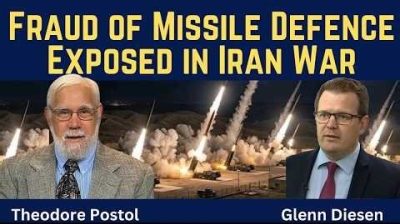
Ted Postol: Fraud of Missile Defence Exposed in Iran War
or go to
Aletho News Archives – Video-Images
Frlom the Archives
Containing the United States
By Edward S. Herman | Z Magazine | September 2016
“Containing the United States” is, of course, a ridiculous and self-contradictory idea in the U.S. and Western ideological and propaganda system. We all know that the United States had to “contain” the Soviet Union from 1945 to 1991, and since then has had the task of containing Russia and China. Only they threaten, bully, aggress and worry countries like Poland and Vietnam. Obama has had to reassure them both of our steadfast stand against Russian and Chinese military attacks. NATO has, of course, expanded greatly over the past several decades, despite the deaths of the Soviet Union and Warsaw Pact, but only to contain the renewed Russian — and Iranian, Libyan, Syrian and other — military threats; and we have “pivoted” to Asia, supported Japanese rearmament, bolstered our own forces in that area and jousted with the Chinese in their coastal waters solely to contain China. Earlier we had been obliged to contain North Vietnam, or was it the Soviet Union in Vietnam? Or China? Or “communism”? Or maybe all of them? Or none of them, but just needing an excuse to enlarge power?
The parallel propaganda has taken many forms. One is accepting as a premise that the United States only acts defensively and has no internal forces and interests that drive it to enlarge its sphere of control. I noted in an earlier article how Paul Krugman claims that internal Russian problems may well be the explanation of Russian “aggression,” but how at the same time it never occurs to him that the huge U.S. transnational corporate interests and “defense” establishment, and the pro-Israel lobby’s activities, might possibly make for an expansionist dynamic here.2 This reflects the standard establishment perspective that we are good and only react to evil. This was the view sustaining and justifying the invasion and occupation of Iraq from 2003. That attack was taken here as not evil but a response to evil, even if involving lies and mistakes, hence not describable as “aggression.” … continue
Blog Roll
 Aletho News
- Trump Admits He Is Destroying Iran For Israel
- Iran’s latest move in the GCC countries was a stroke of genius
- Blackmail and death threats, Zelensky embarrasses the EU, but there’s no condemnation
- Israel threatens to kill Iran’s new leadership
- Possible Scenarios for the Middle East
- The Horizon of the War. “Italy is being Dragged Into the War against Iran”
- A Second Vietnam War? Hanoi Waits and Prepares
- Ted Postol: Fraud of Missile Defence Exposed in Iran War
- How An Atrocity Propaganda Campaign Led To The U.S. And Israel Committing Real Atrocities In Iran
- Calls for the reconfiguration of military arrangements in the Gulf region
- If Americans Knew
- Fires and toxic air in Iran (thanks, Israel) – Not a ceasefire Day 150
- At Israel’s hands, Iran is burning, Lebanon and Gaza are crumbling – Not a ceasefire Day 149
- Israel is using the ‘Gaza doctrine’ in Lebanon and Iran
- Saudi journalist says ‘not all attacks’ on Gulf coming from Iran, fears US-Israel dragging monarchies into war
- Iranian officials say Israel carried out some of the drone strikes on Gulf energy sites
- US, Israel ravage Iran and Lebanon; 4 killed in Gaza – Not a ceasefire Day 148
- US troops were told war on Iran was ‘all part of God’s divine plan’, watchdog alleges
- Trump wants to run the show in Iran, but doesn’t know what he’s doing – Not a ceasefire Day 147
- ‘Dirty Work’ :The truth about how Israel was founded
- Mass Expulsion in Lebanon as Israel Expands War: “We Don’t Know Where to Go”
- No Tricks Zone
- Wake-up Call: Survey Shows Majority Of Germans Now Favor Postponing Climate Targets!
- Televised! Leading German Political Candidate Tells Schoolchildren CO2 Makes Sun Hotter!
- New Study: A Century Warming Of 1.1°C Is ‘Commonplace’ And ‘Not Unusual’ During This Interglacial
- New Study: ‘Internal Noise’ And Volcanic Forcing Can Trigger 10-15°C Warming Within Decades
- Glaciers Worldwide Are Suddendly Surging, Experts Blame Warming!
- Surprising Discovery: Sahara Is Greening…Billions Of Trees Where Once Thought To Be Barren
- New Research Reaffirms Clouds, Aerosols, And Surface Solar Radiation Are ‘Driving The Climate System’
- Germany: Electric Car Catches Fire At Charging Station, Sets Off Local “Inferno”, Widespread Damage
- New Study: Canada’s New Brunswick Was 1°C Warmer Than Today During The Medieval Warm Period
- Coal Power Back In Trend As Globe Tries To Keep Pace With Growing Demand For Power
 Aletho News