White House covered up chemical spill cancer risk – report
RT | June 2, 2025
The administration of former US President Joe Biden tried to cover up serious public health risks related to a 2023 toxic chemical spill in East Palestine, Ohio, a whistleblower protection and advocacy group has claimed.
The Government Accountability Project (GAP) has published a set of documents obtained through a lawsuit from the Federal Emergency Management Agency (FEMA), which allegedly prove that the White House deliberately chose to withhold the true scale of the catastrophe while intentionally avoiding contact with affected residents.
On February 3, 2023, a Norfolk Southern freight train carrying toxic chemicals, including vinyl chloride, derailed near the village of East Palestine, spilling its hazardous contents into a nearby waterway. Five tankers were later also deliberately ignited in a controlled burn. The incident forced evacuations, was linked to animal deaths, and led to reports of unexplained illnesses in the weeks that followed.
Several months later, the Environmental Protection Agency (EPA) publicly declared that East Palestine residents were “not in danger,” citing air and water monitoring results. Biden had also praised what he called his administration’s “herculean efforts” to resolve the crisis.
The government’s response was heavily criticized at the time, with many calling out Biden for not visiting East Palestine sooner, downplaying the severity of the disaster, and prioritizing public relations over the health and safety concerns raised by residents and experts.
According to GAP investigator Lesley Pacey, the public’s fears have turned out to be justified, with internal documents showing that the White House, the EPA, and FEMA had privately discussed the serious dangers associated with the chemical spill, described internally as “really toxic,” and “deliberately kept this information from the community.”
In an interview with NewsNation published on Saturday, Pacey explained that FEMA knew that the controlled chemical burn resulted in a “really toxic plume” and that it could cause cancer clusters in the region and other health risks that would require 20 years of medical monitoring.
The information was never publicly disclosed or acknowledged by FEMA or the White House as the Biden administration chose to focus on “public reassurances” rather than “worrying about public health,” Pacey told the New York Post.
The emails obtained by GAP have also shown that FEMA’s coordinator – sent to East Palestine to oversee recovery efforts, communicate with residents and assess their needs – was actually directly instructed to avoid engaging with the locals.
“They completely botched this event from the very beginning,” Pacey surmised.
Runaway Pesticide Toxicity of Food Supply Shows Generational EPA Failure
By Jefferey Jaxen | September 24, 2024
The decades-long push to clean up the American food supply has received supercharged momentum over the last month thanks, in part, to Robert F. Kennedy Jr. His media messaging to reform regulatory agencies has gained critical mass through social media outlets along with breaking into the mainstream of political talking points.
Meanwhile, the Environmental Protection Agency (EPA) has recently acted using a rare emergency order for the first time in 40 years to stop the use of a problematic pesticide, Dacthal, from the market.
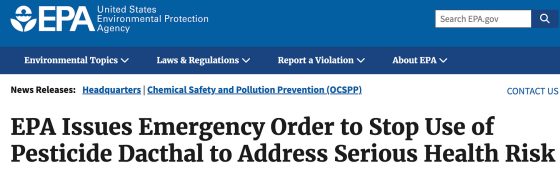
Why? According to their press release, “EPA has taken this action because unborn babies whose pregnant mothers are exposed to DCPA, sometimes without even knowing the exposure has occurred, could experience changes to fetal thyroid hormone levels, and these changes are generally linked to low birth weight, impaired brain development, decreased IQ, and impaired motor skills later in life, some of which may be irreversible.”
Does this prove the agency is listening to The People and responding to the current social momentum towards healthy food? Is the Biden–Harris administration (or whoever is truly running the country) making historic change?
Not really…
The issue of toxins, agrochemicals, and inferior ingredients harming American health through our food supply has long been a bipartisan operation – handed down from administration to administration without pause from what could only be deemed a food industrial complex… a corporate health deep state of sorts.
The EPA classified Dacthal as a “possible carcinogen” in 1995 after its studies done by the manufacturer found it could cause thyroid tumors in animals.
The entire European Union banned the pesticide in 2009 due to irrefutable health concerns. Not the EPA… it was big business as usual.
The Environmental Working Group reports:
“In 2013, the EPA required AMVAC, the sole DCPA manufacturer in the U.S., to submit an additional study showing the chemical’s effects on the fetal thyroid among other information.
AMVAC’s research, finally submitted to the EPA in 2022, showed even low doses of DCPA exposure can harm the developing fetus.
During the nearly 10 years before it finally complied with the EPA’s requirement, the company continued producing and selling Dacthal.”
In other words, the EPA dragged its feet, through multiple administrations, to slow roll the removal of this known, health-damaging pesticide.
Another point in play is the EPA’s regulatory hypocrisy claiming it removed Dacthal because it caused changes in fetal thyroid hormone levels, low birth weight, impaired brain development, decreased IQ, and impaired motor skills later in life.
Lowered IQ… Changes in thyroid function…
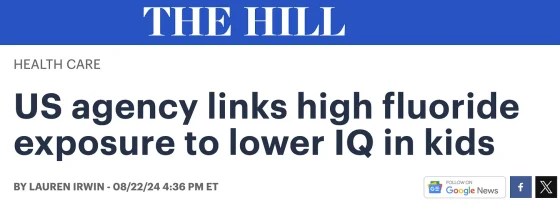
Meanwhile, the EPA is literally defending in court, for multiple years, the practice of widespread water fluoridation. Even though a new government report from the Department of Health and Human Services’s National Toxicology Program found it lowered IQ in children… which has been known for a long time.
Furthermore, a review of developmental fluoride neurotoxicity research shows fluoride is an endocrine disrupter causing toxicity to the thyroid gland that can affect thyroid function at intake levels as low as 0.01 to 0.03 mg/kg/day in individuals with iodine deficiency.
Yet fluoride can’t be touched. The EPA defends this practice considered one of the greatest public health achievements over the last 100 years.
How about glyphosate? The EPA acted fast on that one right?
The chemical was only removed from the U.S. market by its manufacturer due to overwhelming litigation costs of lost lawsuits threatening the corporate viability of Bayer. EPA… silent.
So here we are with an EPA that’s still broken. The results?
Continued tests of the American food supply reveals widespread pesticide contamination with a recent finding of a cocktail of 21 different pesticides in Target’s baby food. Twelve of the pesticides found are classified as highly hazardous to the environment and/or human health and eight are banned in the European Union.
A new systematic review looking at the impact of organic foods on chronic diseases found:
“A significant inverse relationship between organic food consumption and cardiometabolic risk factors, including obesity, diabetes mellitus, hypertension, and hyperlipidemia, was observed in the majority of prospective studies… Clinical trials consistently indicated lower pesticide exposure in participants on organic diets, suggesting potential health benefits.”
While its been clear to anyone paying attention that the U.S. regulatory agencies often act as barriers to optimal health rather than protectors. The parents, activists, non-profits and lawyers have stepped up, continuously, to fill the role of watchdog often battling the very agencies being funded to the tune of untold billions to oversee the regulation of environmental, medical, and health products and concerns of Americans.
As this narrative gets breathing room, the current messaging of clean, healthy food is also running head long into record low consumer confidence and higher food prices making basics challenging for most Americans. For it to continue the staying power it needs and desperately deserves, real change will be required from a combined political and grassroots union to overturn the very culture of regulatory agencies away from corporate capture and the conflicts of interest revolving door influence that has corrupted the core of American oversight for over half a century. No small task.
Fluoride in Water Poses ‘Unreasonable Risk’ to Children, Federal Judge Rules
By Brenda Baletti, Ph.D. | The Defender | September 25, 2024
In a decision that could end the practice of water fluoridation in the U.S., a federal judge late Tuesday ruled that water fluoridation at current U.S. levels poses an “unreasonable risk” of reduced IQ in children.
The U.S. Environmental Protection Agency (EPA) can no longer ignore that risk, and must take regulatory action, Judge Edward Chen of the U.S. District Court of the Northern District of California wrote in the long-awaited landmark decision.
More than 200 million Americans drink water treated with fluoride at the “optimal” level of 0.7 milligrams per liter (mg/L). However, Chen ruled that a preponderance of scientific evidence shows this level of fluoride exposure may damage human health, particularly that of pregnant mothers and young children.
The verdict delivers a major blow to the EPA, public health agencies like the Centers for Disease Control and Prevention (CDC) and professional lobbying groups like the American Dental Association (ADA), which have staked their reputations on the claim that water fluoridation is one of the greatest public health achievements of the 20th century and an unqualified public good.
Fluoride proponents refused to reexamine that stance despite mounting scientific evidence from top researchers and government agencies of fluoride’s neurotoxic risks, particularly for infants’ developing brains.
Instead, they attempted to weaken and suppress the research and discredit the scientists carrying it out.
Rick North, board member of Fluoride Action Network, one of the plaintiffs in the lawsuit, told The Defender, “What’s false is the CDC claiming that fluoridation is one of the 10 greatest health achievements of the 20th century. What’s true is that ending fluoridation will be one of the 10 greatest health achievements of the 21st century.”
“The judge did what EPA has long refused to do, and that is to apply the EPA standard risk assessment framework to fluoride,” said Michael Connett, attorney for the plaintiffs. “In so doing, the court has shown that the widespread exposure to fluoride that we now have in the United States is unreasonably and precariously close to the levels that we know cause harm.”
The EPA can appeal Tuesday’s decision. The agency told The Defender it is reviewing the decision and has no comment at this time. The U.S. Department of Justice, which represents the EPA in the lawsuit, also said it has no comment.
EPA’s argument ‘not persuasive’
The ruling concludes a historic lawsuit — one that has dragged on for seven years — brought against the EPA by environmental and consumer advocacy organizations like the Fluoride Action Network, Moms Against Fluoridation and Food & Water Watch, along with individual parents and children.
It is the first lawsuit to go to a federal trial under the Toxic Substances Control Act (TSCA), as amended by Congress in 2016. The TSCA allows U.S. citizens to petition the EPA to evaluate whether a chemical presents an unreasonable risk to public health and should be regulated.
If the EPA denies a TSCA citizen petition — which the agency did when the plaintiffs asked it to reexamine water fluoridation in 2016 — the petitioners are entitled to a “de novo” judicial review of the science without the deference to the agency typically afforded it in legal cases.
Chen’s 80-page ruling, issued six months after closing arguments in February, offers a careful and detailed articulation of the EPA’s review process for chemicals that pose a hazard to human health and evaluates and summarizes the extensive scientific data presented at trial.
Chen wrote, “EPA’s own expert agrees that fluoride is hazardous at some level.” He cited a key report issued by the U.S. Department of Health and Human Services (HHS) National Toxicology Program (NTP), which undertook a systematic review of all available scientific research at the time of publication.
The report “concluded that fluoride is indeed associated with reduced IQ in children, at least at exposure levels at or above 1.5 mg/L,” Chen wrote.
The NTP also reported that although there are technical challenges to measuring fluoride’s toxic effects at low levels, “scientists have observed a statistically significant association between fluoride and adverse effects in children even at such ‘lower’ exposure levels,” Chen wrote.
He said that despite recognizing that fluoride is hazardous, the EPA’s defense rested largely on the fact that the exact level at which it is hazardous is too unclear for the agency to determine whether the chemical presents an unreasonable risk.
This argument is “not persuasive,” Chen wrote.
Pregnant women exposed to fluoride in water at levels exceeding the hazard level
The EPA requires a margin of error by a factor of at least 10 to exist between the hazard level for a toxin and the acceptable human exposure level. “Put differently, only an exposure that is below 1/10th of the hazard level would be deemed safe under Amended TSCA, given the margin of error required,” Chen wrote.
That means that even if the hazard level were 4 mg/L — well above the 1.5 mg/L identified by the NTP — the safe level of fluoride exposure would be 0.4 mg/L, well below the current “optimal” fluoride level in the U.S., Chen wrote.
The much lower probable hazard level established by high-quality studies indicates that many pregnant women in the U.S. are already exposed to fluoride in water at levels exceeding the hazard level.
“Under even the most conservative estimates of this level, there is not enough of a margin between the accepted hazard level and the actual human exposure levels to find that fluoride is safe,” Chen concluded.
“Simply put, the risk to health at exposure levels in United States drinking water is sufficiently high to trigger regulatory response by the EPA under Amended TSCA.”
The law dictates that the EPA must take regulatory action, but it does not specify what that action has to be. EPA regulatory actions can range from notifying the public of risks to banning chemicals.
Philippe Grandjean, M.D., Ph.D., adjunct professor in environmental health at Harvard and chair of environmental medicine at the University of Southern Denmark, top researcher on fluoride’s neurotoxicity and expert witness for plaintiffs in the case told The Defender he thought the court’s decision was “well-justified.”
He said the ruling made it incumbent on the EPA to go beyond simply ending water fluoridation.
“EPA will have to consider what to do in the southwestern parts of the country where the fluoride content of groundwater is too high due to minerals in the soil containing fluoride,” he said. “And then there is the question about ingestion of toothpaste.”
The CDC and the ADA did not immediately respond to The Defender’s request for comment.
More than 70 years of controversy
For more than seven decades, U.S. public health officials have steadfastly supported water fluoridation, claiming the practice is a key strategy for maintaining and improving dental health.
Proponents of water fluoridation, with help from the mainstream press, often attempted to cast those questioning fluoride’s benefits and raising concerns about its safety as conspiracy theorists.
The EPA in 1975 recommended adding fluoride to water at an optimal level of 1.2 mg/L for its dental benefits, but recommended a maximum level of 4 mg/L, the ruling said.
As more evidence has emerged about fluoride’s adverse health effects, including skeletal fluorosis, recommended levels were revised.
Surgeon General Vivek Murthy, officially lowered the recommended dosage for water fluoridation in 2015 from 0.7-1.2 mg/L to 0.7 mg/L after considering “adverse health effects” along with alleged benefits.
However, evidence that fluoride poses a neurotoxic risk has existed for decades.
In 2017, after the EPA rejected their citizen petition to end fluoridation of drinking water in the U.S. based on evidence of health risks, namely neurotoxicity, the plaintiffs filed the lawsuit.
A seven-day trial took place in federal court in San Francisco in June 2020, but Chen put the proceedings on hold pending the release of the NTP’s systematic review of research available on the neurotoxic effects of fluoride.
The NTP sought to publish its report — which consisted of a “state of the science” monograph and a meta-analysis — in May 2022, but dental officials at the CDC and the National Institutes of Health National Institute of Dental and Craniofacial Research pressured HHS Assistant Secretary for Health Rachel Levine to prevent the review from being published.
The ADA also sought to suppress the report.
Levine told the NTP to not publish the report but to put it on hold and allow for further review.
Plaintiffs submitted documents obtained via the Freedom of Information Act exposing this intervention to the court. The revelation prompted Chen to rule that the trial should go forward using the draft report from the NTP.
The trial resumed in January in San Francisco, with arguments presented over the course of two weeks.
The NTP’s monograph was finalized and published last month on its website. The meta-analysis is forthcoming in a peer-reviewed journal.
Connett said that Congress created the citizen petition provision in TSCA as a counterweight to bureaucratic lethargy and as a check on the EPA.
The statute, he said, is a powerful tool for overcoming politicized science.
“When science becomes fossilized in political inertia, the citizen petition provision of TSCA is a very powerful tool for citizens,” Connett said. “Through this case, we have been able to effectuate what Congress had envisioned with this part of the statute.”
This article was originally published by The Defender — Children’s Health Defense’s News & Views Website under Creative Commons license CC BY-NC-ND 4.0. Please consider subscribing to The Defender or donating to Children’s Health Defense.
From Bird Flu to Climate Snakes
By Breeauna Sagdal | Brownstone Institute | April 24, 2024
Seasoned veterinarians and livestock producers alike have been scratching their heads trying to understand the media’s response to the avian flu. Headlines across every major news outlet warn of humans becoming infected with the “deadly” bird flu after one reported case of pink-eye in a human.
The entire narrative is predicated upon a long-disputed claim that Covid-19 was the result of a zoonotic jump—the famed Wuhan bat wet-market theory.
While the source of Covid is hotly contested within the scientific community, the policy vehicle at the center of this dialectic began years prior to Sars-CoV-2 and is quite resolute in force and effect.
In 2016, the Gates Foundation donated to the World Health Organization to create the OneHealth Initiative. Since 2020, the CDC has adopted and implemented the OneHealth Initiative to build a “collaborative, multisectoral, and transdisciplinary approach—working at the local, regional, national, and global levels—with the goal of achieving optimal health outcomes recognizing the interconnection between people, animals, plants, and their shared environment.”
In the aftermath of Covid-19, the OneHealth Initiative began taking shape, due largely in part to millions of tax dollars appropriated through ARP (American Rescue Plan) funding.
Through its APHIS (Animal and Plant Health Investigation System) the USDA (United States Department of Agriculture) was given $300 million in 2021 to begin implementing “a risk-based, comprehensive, integrated disease monitoring and surveillance system domestically…to build additional capacity for zoonotic disease surveillance and prevention,” globally.
“The One Health concept recognizes that the health of people, animals, and the environment are all linked,” said USDA Under Secretary for Marketing and Regulatory Programs Jenny Lester Moffitt.
According to the USDA’s press release, the Biden-Harris administration’s OneHealth approach will also help to ensure “new markets and streams of income for farmers and producers using climate smart food and forestry practices,” by “making historic investments in infrastructure and clean energy capabilities in rural America.”
In other words, the federal government is using regulatory enforcement to intervene in the marketplace, in addition to subsidizing corporations with tax dollars to direct a planned economic outcome—ending meat consumption.
Climate-Smart Commodities – Planning the Economy through Subsidized Intervention
Under the recently announced Climate-Smart Commodities program, the USDA has appropriated $3.1 billion in tax subsidies to one hundred and forty-one new private Climate-Smart projects, ranging from carbon sequestration to Climate-Smart meat and forestry practices.
Private investors such as Amazon founder Jeff Bezos – who just committed $1 billion to the development of lab cultured meat-like molds, and meat grown in petri dishes, to
Ballpark, formerly known for its hot dogs but is now harvesting python meat, is rushing to cash in on this new industry, and the OneHealth/USDA certification program.
Culling The Herd – Regulatory Intervention in the Marketplace
Meanwhile, the last vestiges of America’s food freedom and decentralized food sources are quietly being targeted by the full force of the federal government.
The once voluntary APHIS System is poised to become the mandatory APHIS-15, which among many other changes, “the system will be renamed Animal Health, Disease, and Pest Surveillance and Management System, USDA/APHIS-15. This system is used by APHIS to collect, manage, and evaluate animal health data for disease and pest control and surveillance programs.”
Among those “many changes” that APHIS-15 is undergoing, one should be of particular interest to the public—the removal of all references to the voluntary* Bovine Johne’s Disease Control Program.
“Updating the authority for maintenance of the system to remove reference to the Bovine Johne’s Disease Control Program.”
In addition to removing references to the once-voluntary herd culling program, the USDA is also implementing mandatory RFID ear tags in cattle and bison.
According to the USDA/APHIS-15, expanded authority places disease tracing in their jurisdiction and the radio frequency ear tags are necessary for the “rapid and accurate recordkeeping for this volume of animals and movement,” which they say “is not achievable without electronic systems.”
The notice clearly spells out that RFID tags “may be read without restraint as the animal goes past an electronic reader.”
“Once the reader scans the tag, the electronically collected tag number can be rapidly and accurately transmitted from the reader to a connected electronic database.”
However, industry leaders and lawmakers alike have said the database will be used to track vaccination history and movement, and that this data may be used to impact the market rate of cattle and bison at the time of processing.
Centralized Control of Processing/Production via Public-Private Partnership Agreements
In addition to the vast new authority of the USDA funded through the OneHealth Initiative, and the ARP, the EPA has also created its own unique set of regulatory burdens upon the entire meat industry.
On March 25, 2024, the EPA finalized a new set of Clean Water Act rule changes to limit nitrogen and phosphorus “pollutants” in downstream water treatment facilities from processing facilities. While the EPA’s interpretation of authority and jurisdiction over wastewater is concerning long-term, the broader context of consolidated processing under four multinational meat-packing companies is of much greater concern for the immediate future.
With few exceptions, in the United States it is illegal to sell meat without a USDA certification. Currently, the only way to access USDA certification is through a USDA-certified processing facility.
According to the EPA, the new rules will impact up to 845 processing facilities nationwide, unless facilities drastically limit the amount of meat they process each year.
With processing capabilities being the number one barrier to market for livestock producers, and billions of dollars in grants being awarded to Climate-Smart food substitutes, the amount of government intervention into the marketplace becomes very clear.
The United States, once a consumer-demand free market society, is currently witnessing the use of government force, and intervention tactics to steer and manipulate the marketplace. Similar to 1930’s Italy, this is being achieved by the state within the state, through the use of selectionism, protectionism, and economic planning between public-private partnership agreements.
The long-term and unavoidable problem with economic fascism is that it leads to authoritarian and centralized control, from which escape is impossible.
As each industry becomes centralized and consolidated under the few, consumer choice simultaneously disappears. As choice disappears, so does the ability of the individual to meet their specific and unique needs.
Eventually, the individual no longer serves a role outside of its usefulness to the state—the final exhale before the last python squeeze.
The Administrative State Moves To Show Who’s Boss On Energy Policy
By Francis Menton | Manhattan Contrarian | July 08, 2022
Last Thursday, June 30, the Supreme Court issued its decision in West Virginia v. EPA, holding that, absent a further explicit statute from the Congress, the EPA did not have the authority to orchestrate its planned fundamental restructuring of the electric power generation sector of the economy. More generally, the Supreme Court stated that in cases involving “major questions,” including regulations that affect large portions of the economy, the government must demonstrate “clear congressional authorization” to support a sweeping effort to regulate.
Do you think that such a Supreme Court decision might cause the various regulatory bureaucracies to slow down and reconsider a little before plowing ahead with other dubious plans for fundamental economic restructurings? That’s not how these bureaucracies work. And such is most particularly the case with regard to regulators of the energy sector, sometimes known as “climate change” arena, where the bureaucrats are burning with a righteous religious fervor that they believe entitles them to cast the evil sinners into the fires of hell.
And thus, contemporaneous with the Supreme Court’s decision, several agencies promptly doubled down on efforts to strangle the oil and gas industries with regulatory restrictions, essentially daring the courts or anyone else to stop them. Thousands of pages of statutes give them thousands of arguments to claim they have the “clear congressional authorization,” any one of which arguments might stick. They are now out to show who’s boss.
EPA Administrator Michael Regan wasted no time in getting a statement out on the afternoon of June 30. Excerpt:
[W]e are committed to using the full scope of EPA’s authorities to protect communities and reduce the pollution that is driving climate change. . . . EPA will move forward with lawfully setting and implementing environmental standards that meet our obligation to protect all people and all communities from environmental harm.
In other words, we will just have to find other ways to implement the restrictions that we want to implement. The very next day, July 1, David Blackmon at Forbes reported that “EPA Targets Permian Basin, Widening Biden’s War On Oil And Gas.” The Permian Basin is currently the most productive oil and gas region in the United States, providing about 40% of the oil production and 15% of the gas of the entire country. The Permian Basin is also the site of about 40% of the nation’s active drilling rigs. And so it seems that EPA is gearing up to declare the Permian Basin a so-called “non-attainment area” with respect to ozone. Blackmon:
[T]he Environmental Protection Agency (EPA) announced [this week that] it may soon issue a ruling declaring that vast parts of the Permian Basin are in “non-attainment” status under the agency’s ozone regulations. If such a declaration is made, it will constitute a direct governmental assault on what is by far America’s most active and productive oil-producing region and its second most-productive natural gas area.
What would be the effect of such a declaration on current and future U.S. domestic oil and gas production? Blackmon again:
Placing the Permian Basin in non-attainment status would force a significant reduction in the region’s rig count, severely limiting the domestic industry’s efforts to increase U.S. oil production at a time when the global oil market is already severely under-supplied.
Texas Governor Greg Abbott promptly called on the Biden Administration to back off, saying that an EPA “non-attainment declaration “could interfere in the production of oil in Texas which could lead to skyrocketing prices at the pump by reducing production, increase the cost of that production, or do both.” But Blackmon notes that the plan comes from an office headed by a Biden-appointed anti-fossil-fuel activist, and thus is likely a core element of the administration’s program:
Mr. Biden appointed Joe Goffman, another of the many anti-fossil fuel activists that now hold senior posts at his various agencies, to head up EPA’s Office of Air and Radiation on an acting basis. That appointment might have been made with this specific policy action in mind.
Meanwhile, over at the Interior Department, July 1 was also the day for issuance of a statutorily-mandated five-year off-shore oil and gas leasing plan. Nicholas Groom at Reuters has a summary here. The bottom line is, we’re going to completely shut down leasing off both the Atlantic and Pacific coasts, but maybe we’ll allow a little in the Gulf of Mexico or the Cook Inlet (Alaska). The number of auctions over the five-year period will be in the range of “zero to eleven,” and supposedly we’ll take public input as to which way to go. But Interior Secretary Deb Haaland in a statement left no doubt as to where she wants and expects this to come out:
“From Day One, President Biden and I have made clear our commitment to transition to a clean energy economy,” Haaland said in a statement. “Today, we put forward an opportunity for the American people to consider and provide input on the future of offshore oil and gas leasing. The time for the public to weigh in on our future is now.”
There is a 90 day period for public comment. You can be sure that environmental activist groups will flood the zone with thousands of comments to support the approach of the “zero” option of ceasing all further off-shore leases.
Other agencies were eerily silent in the aftermath of the Supreme Court’s June 30 decision. Notable among those were the SEC and the Federal Reserve, both of which have recently ventured into adding “climate change” to their missions with only the most questionable of statutory support. Neither has given any indication of an intention to slow down.
And then on July 2, President Biden issued his now-famous tweet blaming the rising price of gas at the pump on gas station owners:
My message to the companies running gas stations and setting prices at the pump is simple: this is a time of war and global peril. Bring down the price you are charging at the pump to reflect the cost you’re paying for the product. And do it now.
A bureaucracy-wide campaign is ongoing under this guy’s direction to suppress oil and gas production in any way they can think of, and yet he has the gall to blame high prices on “companies running gas stations,” the majority of which are small independent businesses. At this point Biden has become malicious.
US Supreme Court Limits Use of Clean Air Act in Major Blow to WH’s Climate Change Policy
Samizdat – 30.06.2022
The reduction of emissions, decrease in the use of fossil fuels and development of effective green energy sources are among the top priorities of Biden’s declared Build Back Better agenda. The latter already suffered a major blow last year when part of the legislation that was supposed to fund climate policies failed to pass Congress.
The US Supreme Court has ruled that the Environmental Protection Agency interpreted the Clean Air Act – the country’s main anti-air pollution law that allows the regulation of greenhouse gas emissions – too broadly, and ordered to limit its use. Six justices deemed “conservative” supported the decision, while three “liberal” justices opposed it.
The court specifically ruled that the EPA does not have the authority to limit emissions from power plants using the Clean Air Act.
The decision comes as a response to an appeal by 19 states, coal companies and power plants to prevent the EPA from abusing broad authority to regulate emissions. They asked the US Supreme Court to allow them greater flexibility in phasing out emissions-intensive plants, namely coal ones so that they could provide services reliably.
The ruling might undermine Joe Biden’s planned efforts to propose mandatory emission reductions at power plants in the US by the end of the year. It is supposed to be the first step in the POTUS’ broader plan to have the country’s power generation emissions-free in 13 years.
The idea of regulating power plant emissions dates back to the Obama administration and its plans to pass the Clean Power Plan that would have explicitly given the government the tools to retire emissions-intensive coal plans. The act was effectively blocked by a 5-4 US Supreme Court decision in 2016 and shelved for good under the Donald Trump administration.
Regardless of the Democrats’ efforts, the US power plant emissions have actually already sunk below the levels that should have been achieved only by 2030 under Obama’s original plan. They were achieved thanks to closures of the very same coal plants driven by market mechanisms [fracked gas].
Millions Face New Fluoridation Threats
By Stuart Cooper | Fluoride Action Network | June 21, 2022
The published science over the past decade has taught us a lot about water fluoridation, about both the very real and significant side effects inflicted on the public, but also about the credibility of those who continue to vouch for its safety.
At this point, the question we must ask isn’t whether the overwhelming risks outweigh the theoretical scant benefits, or whether more research is needed to draw strong conclusions. No, the only appropriate question now is: How much more harm will the promoters and regulators of fluoridation allow the practice to inflict on the public?
Without the Fluoride Action Network, our coalition partners, and people like you taking a stand, their answer will be a resounding, “a lot more harm!” With their credibility and influence at stake after defending fluoridation for more than 75 years, they’ve sadly shown that they’ll not only be the last to act, but that they plan to double down until we stop them.
As we speak, tens of millions of residents currently living on community water systems with no added fluoride throughout the United States, Canada, the United Kingdom, Australia and New Zealand are facing the imminent threat of having their water dosed with hazardous fluoridation chemicals.
The CDC has announced a new strategy and helped develop a new technology to fluoridate an addition 19+ million Americans, which will also eventually expand to Canadians, Australians and likely others.
Meanwhile, the governments in the U.K. and New Zealand have exploited the recent pandemic to pass sweeping health care reform bills that effectively include nationwide fluoridation mandates due to decades of strong pushback from residents and elected officials at the local level, keeping fluoridation at bay.
Fluoride Has Already Damaged the Teeth of Millions
The U.S. Centers for Disease Control’s own data taken from the National Health and Nutrition Examination Surveys (NHANES) has repeatedly found that our children in the United States are significantly overexposed to fluoride, evidenced by skyrocketing rates of dental fluorosis.
Fluorosis is a biomarker of toxicity from ingested fluoride, and is a permanent tooth defect, causing unsightly discoloration and mottling of the teeth, weakening the enamel and resulting in increased dental decay.
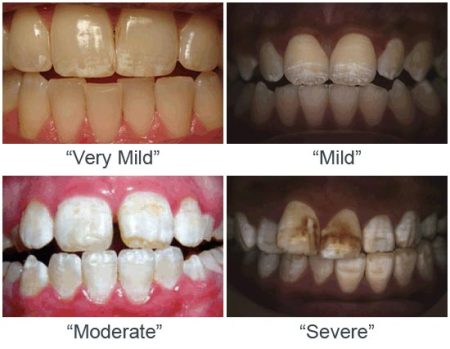
Ingesting fluoridated water — particularly in reconstituted infant formula — and processed foods made with fluoridated water are recognized as the primary sources of exposure, though swallowing toothpaste and fluoride prescriptions also contribute.
A 2015 review of the practice of fluoridation by the Cochrane Collaboration, the gold standard for evidence-based reviews of health interventions, found that “there is a significant association between dental fluorosis (of aesthetic concern or all levels of dental fluorosis) and [water] fluoride level.”
The CDC reported that 41% of adolescents (12 to 15) had dental fluorosis in 2004. At the time this was an increase of over 400% from the rates found 60 years prior. Then the 2012 survey found that the rate jumped significantly to 65+% of adolescents with dental fluorosis.
Now, according to a recent study (Yang, June 2021) published in the journal Ecotoxicology and Environmental Safety using the data from the NHANES 2015-16 survey, the “prevalence of dental fluorosis was 70% in the U.S. children.”
This means that the teeth of millions of children, teens and adults have already been damaged by overexposure to fluoride during development, and the CDC, along with the other promoters of fluoridation are fully aware. However, the teeth are not the only tissues in the body that are harmed by or accumulate fluoride. There is no apparent reason, therefore, why fluoride’s effects on the body would be limited to the teeth. As noted by renowned dentist and researcher Dr. Hardy Limeback:
… it is illogical to assume that tooth enamel is the only tissue affected by low daily doses of fluoride ingestion.
NHANES data has been used in recent published and peer-reviewed studies to link fluoridated water with a number of additional side-effects, including earlier onset of menstruation for black teens, sleep disorders in adolescents, increase uric acid levels in the blood, and kidney and liver impairment in adolescents.
Additional studies on fluoridation have also recently found higher rates of hip fractures, disruption of the endocrine system, and increased rates of hypothyroidism.
Fluoride Is the New Lead
There is now a large body of government-funded research indicating that fluoride is neurotoxic, and is associated with lowered IQ in children and a significant increase in ADHD diagnosis and related behaviors in children at doses experienced in fluoridated communities. Experts in the toxicology have likened the size of the effect to that from lead.
To date, 69 human studies, most from endemic fluorosis areas in China, have associated lowered IQ with fluoride exposure. The highest quality fluoride brain studies have been published since 2017, when the first of five NIEHS-NIH (National Institutes of Health) funded prospective-cohort studies was published (Bashash et al., 2017) finding an association between fetal exposure to fluoride and lowered IQ in Mexico.
A year later, another NIH-funded study found an increase in ADHD symptoms associated with in utero exposure to fluoride (Bashash et al., 2018).
Over the next two years, two more of these government-funded studies found similar results, linking fetal exposure to fluoridated water in Canada to lowered IQ (Green et al., 2019), and finding that bottle-fed infants in fluoridated communities in Canada had a significantly lowered IQ compared to bottle-fed infants in non-fluoridated communities (Till et al., 2020).
And just last year, the fifth NIH-funded study (Cantoral et al, 2021), found that for every 0.5 mg increase in dietary fluoride intake during pregnancy was associated with a 3.10 to 3.46-point lower cognitive score in boys. The authors stated:
“Fluoride is not an essential nutrient and … fluoride ingestion in pregnancy does not strengthen enamel during tooth formation in the fetus but has been associated with increased risk of neurotoxicity, even at optimal exposure levels …
These findings suggest that the development of nonverbal abilities in males may be more vulnerable to prenatal fluoride exposure than language or motor abilities, even at levels within the recommended intake range.”
I strongly urge you to watch and share this recent 20-minute PowerPoint presentation by professor Christine Till, Ph.D., lead author of some of these landmark fluoride studies, explaining her team’s research and findings.
In 2021, the first benchmark dose analysis conducted on maternal fluoride exposure and neurotoxicity to the fetus was published in the journal Risk Analysis (Grandjean, 2021). Benchmark doses analyses are used by the EPA and toxicologist to determine at what level a substance starts to cause harm. It is well established that a loss of one IQ point leads to a reduced lifetime earning ability of $18,000.
The analysis confirmed that extremely low fluoride exposure during pregnancy impairs fetal brain development, finding that a maternal urine fluoride concentration of only 0.2mg/L — which coincides with the level in water (0.2ppm) — was enough to lower IQ by at least 1 point.
This is four times lower than the current government “recommended” level of 0.8ppm in fluoridated communities. It’s also six times lower than the level that was recommended as “safe” by the CDC, HHS, and the American Dental Association for over 60-years up until 2011 (1.2ppm).
For perspective, A urinary fluoride (UF) concentration of 0.2mg/L is far below what a pregnant woman in a fluoridated community would have, as confirmed by two recent studies. A recent study of pregnant women in fluoridated San Francisco, California, found a mean UF concentration of 0.74mg/L. A second study with participants in fluoridated communities across Canada found a mean UF concentration of 1.06mg/L.
Both studies also found that the UF levels were significantly lower for the participants living in the non-fluoridated communities. The authors of the benchmark dose analysis stated:
“These findings suggest that fetal brain development is highly vulnerable to fluoride exposure … and provide additional evidence that fluoride is a developmental neurotoxicant (i.e., causing adverse effects on brain development in early life).
Given the ubiquity of fluoride exposure, the population impact of adverse effects from fluoride may be even greater than for other toxic elements like lead, mercury, and arsenic … and the benchmark results should inspire a revision of water fluoride recommendations aimed at protecting pregnant women and young children.”
These authors are hardly alone in comparing fluoride’s neurotoxic impact to the well-established harm of lead:
- Dr. Dimitri Christakis, MPH, and Dr. Frederick Rivara, MPH, editors for the Journal of the American Medical Association (JAMA) on their podcast (around 4:25): “[The 4.5 IQ loss is] An effect size which is sizeable — on par with lead.”
- Christine Till, PhD, co-author of several landmark fluoride/neurotoxicity studies, on Canada’s CTV: “4.5 points is a dramatic loss of IQ, comparable to what you’d see with lead exposure.”
- David Bellinger, Ph.D., MSc, Harvard professor of neurology, on NPR: “It’s actually very similar to the effect size that’s seen with childhood exposure to lead.”
Other experts, including Linda Birnbaum PhD, former Director of the National Toxicology Program, stress the need to avoid fluoride:
“Given the weight of evidence that fluoride is toxic to the developing brain, it is time [to] protect pregnant women and their children [and recommend they] reduce their fluoride intake.”
There are now nine fluoride mother-offspring studies linking fluoride exposure to harm, and 23 studies published on the association between fluoride exposure and reduced IQ since 2017.
How FAN Responded to the Science
Because of the growing list of published fluoride-IQ studies, and the downplaying of their importance by pro-fluoridation advocates such as the Division of Oral Health at the CDC and the American Dental Association, FAN embarked on two initiatives in 2016.
First, we requested the National Toxicology Program undertake a systematic review of ALL the studies (animal, human and cellular) pertaining to fluoride’s potential to damage the brain. The NTP agreed with our request, and they plan to publish the final results of their multiyear review of fluoride neurotoxicity any day now. In the two first drafts the NTP concluded, “that fluoride is presumed to be a cognitive neurodevelopmental hazard to humans …”
The review drafts identified over 100 studies showing adverse effects including IQ loss and increased ADHD. Among 27 studies designated as high quality, 15 show fluoride injury at the same exposure levels found in community fluoridation programs.
Second, we petitioned the EPA under provisions in the Toxic Substances and Control Act to ban the deliberate addition of fluoridation chemicals to the drinking water supply because it poses an unreasonable risk to the developing brains of children. The EPA’s lack of action led to FAN suing them in federal court.
The initial phase of the trial was held in June 2020, concluding with the judge saying, “I don’t think anyone disputes that fluoride is a hazard.” However, the court is awaiting the final NTP report before moving forward with the final phase of the trial. Here is a short video update on the lawsuit from FAN’s attorney.
This past year, FAN embarked on a two more initiatives. We communicated with the U.S. surgeon general about the risk posed by fluoridation to developing children, and asked that he take action to warn parents.
We also initiated a dialogue with CDC officials (see initial letter signed by 112 professionals) that ultimately led to them organizing presentations for their leadership from several fluoride/neurotoxicity study authors, Dr. Bruce Lanphear, Christine Till, Ph.D., and Dr. Philippe Grandjean on their research.
How Promoters Have Responded to the Science: A New Threat
It has been six months since the CDC heard the presentations on neurotoxicity from the three veteran researchers, and it’s been over a decade since the CDC acknowledged that fluoridation has damaged the teeth of millions.
Yet, the CDC, along with the EPA, World Health Organization, American Academy of Pediatrics, American Dental Association and their state level peers not only have failed to warn residents about the dangers posed by fluoridation, but have continued advocating for fluoridation expansion in spite of the science.
The CDC has partnered with the chemical industry to target 19 million residents in 32,000 small and medium sized communities across the United States that do not add fluoridation chemicals to the public drinking water. Using your tax dollars, the CDC provided upward of $2 million dollars in funds to private business to develop a fluoridation delivery product for water systems serving between 50 and 10,000 people.
The widespread sale and promotion of this new product began in January throughout the U.S., but is also planned for Canada and Australia in the near future. The American Dental Association has joined the CDC in pushing this new strategy.
In July of 2021, the CDC held a “Public Health Grand Rounds” presentation on fluoridation. While there was no mention of the large number of new studies linking low levels of fluoridated water to neurotoxicity, it was an infomercial for a new technology that the CDC and ADA were calling “a game changer” in their efforts to expand fluoridation.
Below is a slide from that presentation, where you can see they intend to increase the percentage of fluoridated water systems from 73% to 77% — representing 19 million people on 32,000 water systems — by 2030.

This goal isn’t exactly new. The CDC and ADA have utilized a number of strategies over the past decade to expand the practice, but largely due to FAN and our network of local volunteers and professionals, the number of fluoridating communities has actually decreased, while the population served has increased slightly due to urban growth.
To accomplish this significant increase over the next eight years, they intend to utilize a new fluoridation system specifically designed to be simple and cheap enough for even the smallest water systems, which could include private systems, or even colleges and public schools.
They’re calling it the “New Wave Fluoridation System.” It utilizes compacted sodium fluorosilicate in a tablet form designed to dissolve over time in a small amount of water, much like the deodorizer tablets used in urinals.

We have learned that this process started in 2013, when CDC’s chief fluoridation engineer, Kip Duchon, suggested that the CDC help develop a product that was feasible for small and rural communities. Soon thereafter the CDC announced a Small Business Innovation Research grant opportunity — providing upward of $2 million — for private business to develop and test the idea.
KC Industries, of Mulberry, Florida, was awarded at least two large grants, one to develop the tablet and the other to develop the injection/feeder system.
KC Industries is a small chemical manufacturer with a handful of employees. According to their website, “The plant was built by Kaiser Aluminum & Chemical Corporation and began producing Sodium Fluorosilicate in 1957 as a raw material to manufacture aluminum.”
KC Industries purchased the facility in 1999 and appears to have focused heavily on the “dry” fluoride drinking water additive market with sodium fluoride. Here is their page on their sodium fluoride product; it’s worth a quick look.
Over the past 20 years, more communities have switched their additive to fluorosilicic acid, which is an incredibly dangerous and corrosive liquid, but is cheaper. This led to a massive decline in sales of dry additives, and KC Industries’ profits.
According to their press release, they were struggling until the CDC’s grant, which they say provided “a new lease on life” for the chemical company. They’re expecting “an immediate return on investment” as communities clamor for the new system.
KC Industry representatives have said that interest in the system has come from around the world. The first community to use the product as part of a free pilot project is Cleveland, Georgia. Other communities that have signed on include Marathon, Wisconsin; Center, Colorado; and Aulander, North Carolina. The Missouri state legislature has also included nearly $4 million in funding over the next few years to go toward grants to expand the program in their state.
The CDC employee who initiated this process, Kip Duchon, has retired from the CDC and is now a consultant to the ADA’s National Fluoridation Advisory Committee.
The ADA has already called it a “game-changer” and lobbied Congressional members to include taxpayer funding for this technology in the recent infrastructure bill intended to help economy out of the pandemic.
Meanwhile, the CDC also continues to give very large taxpayer-funded grants to states to pay for public relations campaigns to promote fluoridation.
Pandemic Exploited to Mandate Fluoridation in UK, New Zealand
Even worse than what is happening in North America with the new tablet fluoridation system, is the recent passage of legislation in both the United Kingdom and New Zealand, transferring authority over fluoridation from local officials (and indirectly the public) to unelected public health bureaucrats who have vowed to mandate the practice throughout their respective nations without concern for what the public wants.
Both nations include fluoridation resolutions as part of a much broader legislative effort to centralize public health decisions in response to the pandemic. The U.K. and New Zealand will now join Ireland and Singapore as the four public health outliers in a world that has overwhelmingly rejected fluoridated water.
Last year, the New Zealand government revived, amended and passed a bill that was introduced in 2016, but lacked enough support for passage. As introduced, the bill would have moved fluoridation decisions from local councils — where they reside presently — to district health boards.
However, the current government amended the language to centralize fluoridation authority even further, by giving full control to the director-general of health, Dr. Ashley Bloomfield. Using this process defied the normal democratic process, with no select committee, community consultation or public input. Local councils (and local taxpayers) will be responsible for all capital and operational costs.
Like the CDC, government officials and public health officials were warned in advance of the harm their decision would cause, yet they ignored it.
Some local leaders have quickly made their opposition to this proposal heard, including the mayor of Whangarei, Sheryl Mai, who said, “People who drink water from the tap will be mass medicated whether they want to be or not.”
Mayor Greg Lang of Carterton, and Mayor Alex Beijen of South Wairarapa, both opposed the measure because it took councils, consumers and ratepayers out of the decision. Officials in Christchurch and Southland have also recently voiced opposition, saying safety is a greater priority than fluoride. Clearly, there is still a chance for those communities that push back against this proposal.
In the U.K., decades of efforts by the government to expand fluoridation stalled having reached only 10% of the population. Efforts to fluoridate Northern Ireland failed miserably with 22 councils voting against the measure. Scotland too remained unfluoridated. Efforts over the last two decades to fluoridate Southampton, Manchester, and Hull also failed.
As a result, Prime Minister Boris Johnson proposed an addition to the large Health and Care Act that would effectively mandate fluoridation by giving the health secretary, Sajid Javid, unilateral power to force communities throughout the country to add fluoridation chemicals to the public water supplies.
FAN coordinated with locals to mount opposition to this proposal, including a series of public letters from British scientists accusing public health officials of ignoring the science. The opposition culminated on the floor of the House of Lords, where a number of members spoke out against the proposal, including Lord Reay, who warned of the dangers posed to developing children.
Since passage into law, FAN has made an official submission to the government urging the Department of Health and Social Care to perform a health risk assessment on the effects of fluoridated water on the pregnant woman, the fetus and the formula-fed infant, before implementing fluoridation into the U.K. No regulatory agency in any fluoridating country has ever done this.
However, as the U.K. is contemplating expanding fluoridation to the whole country, it is essential that this is done before they embark on this program.
The Last Line of Defense
I want to conclude by asking the same question I asked at the beginning of this article, but rephrased: How much more harm will YOU allow the promoters and regulators of fluoridation to inflict on the public?
As I write this, millions of developing babies and infants are being overexposed to fluoride from their fluoridated tap water. The research has shown that there is no safe amount of fluoride for the fetus or infant. All will be impacted, some significantly more than others.
Please help us defend these vulnerable children and give them the gift of normal brain development. Help us also protect other vulnerable subpopulations, including those with hypersensitivities, dental fluorosis, bone brittleness and kidney, liver, or thyroid impairment.
The Fluoride Action Network is a nonprofit advocacy group set up in 2000 to broaden awareness among citizens, scientists and policymakers on the toxicity of fluoride compounds. It maintains the largest online database for fluoride toxicity studies, and has helped many of the 300+ communities that have ended or rejected fluoridation chemicals since 2010.
We’re amplifying the voices of a growing chorus of renowned international experts in toxicology, neurology and environmental toxins, warning the public about fluoridation, and educating and recruiting more to speak out.
We’ve captured the surgeon general’s and the CDCs’ attention, made progress with our federal lawsuit against the EPA, helped communities come together to fight fluoridation, and worked with state legislators to defeat mandate bills and support prohibition efforts.
Can you help us continue defend our water and our health, and expand our efforts as new threats arise here in North America and around the world in the United Kingdom and New Zealand? Will you stand with FAN?
Fluoride Awareness Week – Your Help Is Needed
On June 20 to June 26, we launch Fluoride Awareness Week. We set aside an entire week dedicated to ending the practice of fluoridation. There’s no doubt about it: Fluoride should not be ingested. Even scientists from the Environmental Protection Agency’s (EPA) National Health and Environmental Effects Research Laboratory have classified fluoride as a “chemical having substantial evidence of developmental neurotoxicity.”
The only real solution is to stop the archaic practice of artificial water fluoridation in the first place. Fortunately, the Fluoride Action Network (FAN), has a game plan to END fluoridation worldwide.
Clean pure water is a prerequisite to optimal health. Industrial chemicals, drugs and other toxic additives really have no place in our water supplies. So please, protect your drinking water and support the fluoride-free movement by making a tax-deductible donation to the Fluoride Action Network today.
New EPA Climate Change Indicator Is Deceptive
Science Under Attack | May 31, 2021
New climate change indicators on the U.S. EPA (Environmental Protection Agency) website are intended to inform science-based decision-making by presenting climate science transparently. But many of the indicators are misleading or deceptive, being based on incomplete evidence or selective data.
A typical example is the indicator for heat waves. This is illustrated in the top panel of the figure below, depicting the EPA’s representation of heat wave frequency in the U.S. from 1961 to 2019. The figure purports to show a steady increase in the occurrence of heat waves, which supposedly tripled from an average of two per year during the 1960s to six per year during the 2010s.
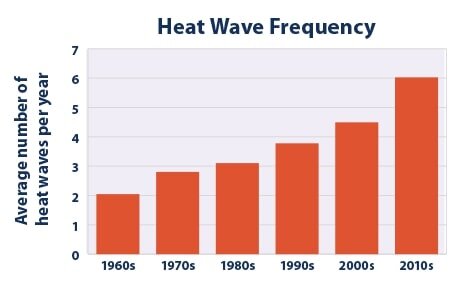
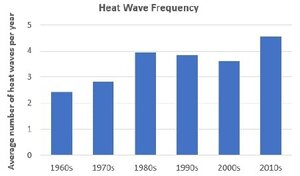
Unfortunately, the chart on the top is highly deceptive in several ways. First, the data is derived from minimum, not maximum, temperatures averaged across 50 American cities. The corresponding chart for maximum temperatures, shown in the bottom panel above, paints a rather different picture – one in which the heat wave frequency less than doubled from 2.5 per year in the 1960s to 4.5 per year in the 2010s, and actually declined from the 1980s to the 2000s.
This maximum-temperature graph revealing a much smaller increase in heat waves than the minimum-temperature graph displayed so boldly on the EPA website is dishonestly hidden away in its technical documentation.
A second deception is that the starting date of 1961 for both graphs is conveniently cherry-picked during a 30-year period of global cooling from 1940 to 1970. That in itself exaggerates the warming effect since then. Starting instead in 1980, after the current bout of global warming had begun, it can be seen that the heat wave frequency based on maximum temperatures (bottom panel) barely increased at all from 1981 to 2019. Similar exaggeration and sleight of hand can be seen in the EPA indicators for heat wave duration, season length and intensity.
A third deception is that the 1961 start date ignores the record U.S. heat of the 1930s, a decade characterized by persistent, searing heat waves across North America, especially in 1934 and 1936. The next figure shows the frequency and magnitude of U.S. heatwaves from 1900 to 2018.
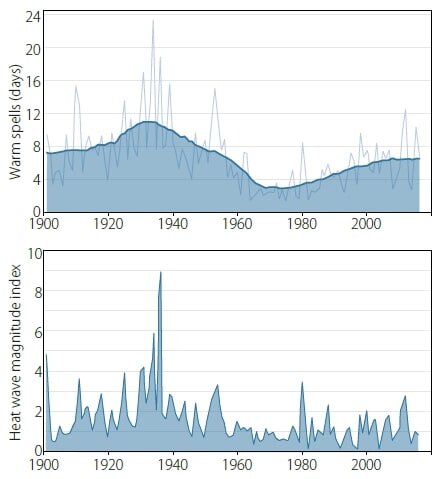
The frequency (top panel) is the annual number of calendar days the maximum temperature exceeded the 90th percentile for 1961–1990 for at least six consecutive days. The EPA’s data is calculated for a period of at least four days, while the heat wave index (lower panel) measures the annual magnitude of all heat waves of at least three days in that year combined.
Despite the differences in definition, it’s abundantly clear that heat waves over the last few decades – the ones publicized by the EPA – pale in comparison to those of the 1930s, and even those of other decades such as the 1910s and 1950s. The peak heat wave index in 1936 is a full three times higher than it was in 2012 and up to nine times higher than in many other years.
The heat wave index shown above actually appears on the same EPA website page as the mimimum-temperature chart. But it’s presented as a tiny Figure 3 that is only 20% as large as the much more prominent Figure 1 showing minimum temperatures. As pointed out recently by another writer, a full-size version of the index chart, from 1895 to 2015, was once featured on the website, before the site was updated this year with the new climate change indicators.
The EPA points out that the 1930s heat waves in North America, which were concentrated in the Great Plains states of the U.S. and southern Canada, were exacerbated by Dust Bowl drought that depleted soil moisture and reduced the moderating effects of evaporation. While this is undoubtedly true, it has been suggested by climate scientists that future droughts in a warming world could result in further record-breaking U.S. heat waves. The EPA has no justification for omitting 1930s heat waves from their data record, or for suppressing the heat wave index chart.
Although the Dust Bowl was unique to the U.S. and Canada, there are locations in other parts of North America and in other countries where substantial heat waves occurred before 1961 as well. In the summer of 1930 two record-setting, back-to-back scorchers, each lasting eight days, afflicted Washington, D.C.; while in 1936, the province of Ontario – also well removed from the Great Plains – experienced 43 degrees Celsius (109 degrees Fahrenheit) heat during the longest, deadliest Canadian heat wave on record. In Europe, France was baked during heat waves in both 1930 and 1947, and many eastern European countries suffered prolonged heat waves in 1946.
What all this means is that the EPA’s heat-wave indicator grossly misrepresents the actual science and defeats its stated goal for the indicators of “informing our understanding of climate change.”
EPA Updates Its “Climate Change Indicators”
By Francis Menton | Manhattan Contrarian | May 13, 2021
It appears that some time last month the EPA provided a major update of what it calls its “climate change indicators.” The EPA’s web page for this is headed “Climate Change Indicators in the United States,” with the sub-heading “Climate Change Is Happening Now.” The update is an initiative of the Biden administration, now eager to invest a few trillion dollars of your money in new “green” infrastructure, after several years in which the Trump EPA paid no attention to keeping these data up to date. The New York Times reports on the big update on today’s front page, under the headline “Climate Change Is getting Worse, E.P.A. Says. Just Look Around.”
The basic technique here is to propagandize you with every sort of essentially irrelevant anecdotal information, while diverting your attention away from the only indicator of “climate change” that actually counts, which is temperature. After all, if temperatures aren’t going up, it isn’t “global warming.” Here, we have some 54 supposed climate “indicators” — everything from rain to drought to ice to sea level — out of which the things relating to actual temperature are only a handful, and then are buried deep in the midst of all the others, probably in the hope that you will miss them. And moreover, the temperature data are then grossly misrepresented in what has to be an intentional effort at deception.
But let’s start with the official line from the new Biden EPA.
The Earth’s climate is changing. Temperatures are rising, snow and rainfall patterns are shifting, and more extreme climate events – like heavy rainstorms and record high temperatures – are already happening. Many of these observed changes are linked to the rising levels of carbon dioxide and other greenhouse gases in our atmosphere, caused by human activities.
The Times then picks up on the theme by its headline calling for you to “just look around” to determine that “climate change” is happening. The idea is that you can determine that there is “climate change” by observing ice on ponds, or something, without having to bother with those complicated thermometers, let alone sophisticated satellite measurements:
Wildfires are bigger, and starting earlier in the year. Heat waves are more frequent. Seas are warmer, and flooding is more common. The air is getting hotter. Even ragweed pollen season is beginning sooner. . . . [EPA’s indicators] map everything from Lyme disease, which is growing more prevalent in some states as a warming climate expands the regions where deer ticks can survive, to the growing drought in the Southwest that threatens the availability of drinking water, increases the likelihood of wildfires but also reduces the ability to generate electricity from hydropower.
So how about the temperature guys? As you can see, the Times does throw in a couple of references to “heat waves” and “hotter air” in the midst of all the stuff about flooding, ragweed pollen, ticks, and whatever else. What’s missing is any citation or link to any source to support the assertion about actual temperatures. But over at the EPA page, under the heading “U.S. and Global Temperature,” we find the following graph, which is said to have been updated to April 2021:
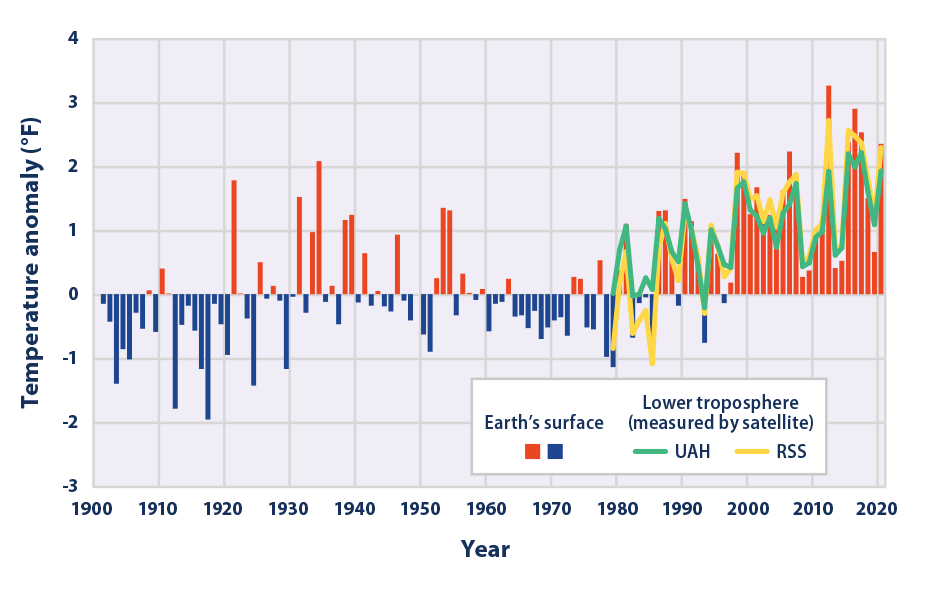
That appears rather scary! Everything looks like it is going up sharply with passing time. Check out especially the green line, which is identified as the “lower troposphere [temperatures] (measured by satellite) of UAH.” The green line ends with a steep uptick, leaving it with the latest data point just below a record reached in 2016, and a full 2 deg F above the 1901-2000 average.
Oh, but here is the actual lower troposphere temperature record from UAH, available at the website of Roy Spencer, who is the guy who compiles the UAH record:
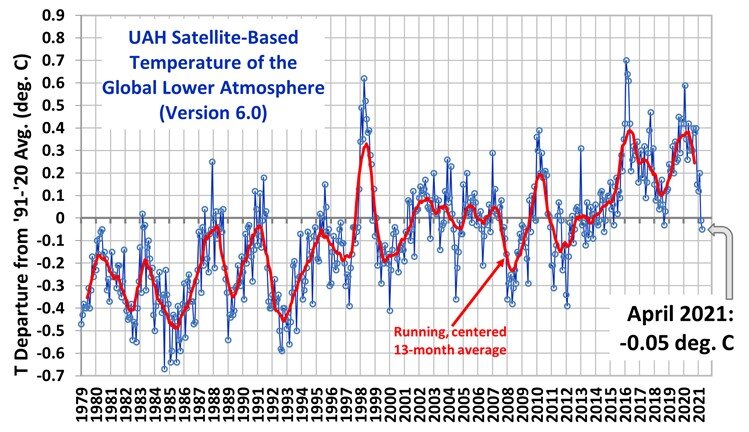
There are a few differences in the presentation that require a little interpretation, like the EPA graph is in deg F and has anomalies from a 1901-2000 mean, while the UAH graph is in deg C and shows anomalies from a 1991-2020 mean. But still, it leaps out that the green line on EPA’s web page, said to be the UAH record, ends with a sharp uptick and with the last point a full 2 deg F above the mean line; while this record, from UAH itself, ends with a sharp downtick and the last point actually below the mean line. Although EPA explicitly says on its web page that it updated the information in April 2021, this downtick in the UAH record began in January 2020 — a year and 4 plus months ago — and reflects a decline in lower troposphere temperatures of some 0.65 deg C, which is almost 1.2 deg F.
In other words, well more than half of the seemingly scary increase in temperature since 1901 shown in the EPA graph has just gone away in the last 16 months. So the Biden EPA, not wanting to complicate the official story of “climate change is happening now,” simply truncated the data in its graph at January 2020 to shut out the last year plus of big temperature declines. There is no way to characterize the EPA graph as other than intentionally deceptive.
I guess it’s OK because it’s in the noble cause of convincing the American people to allow the government to spend a few trillion dollars on windmills and electric car charging stations for the rich.
Radiation spike near Hanford nuclear waste site ‘natural’ – EPA
RT | May 15, 2016
The US Environmental Protection Agency chalked elevated gamma radiation levels around America’s largest nuclear waste storage facility, the Hanford site, up to natural causes, but RT’s Alexey Yaroshevsky has found a few inconsistencies in its claims.
RT has reported extensively on the situation at Washington State’s Hanford Nuclear storage facility since various leaks and injuries to workers were reported. An incident on May 5th covered by RT, when radiation levels in the area adjacent to the site skyrocketed, prompted a federal investigation.
However, following the RT report, a local newspaper urged its audience not to “believe everything on the Internet” in an article extensively quoting a statement from the EPA that claimed the elevated radiation levels had a natural cause and were not connected to the Hanford facility in any way.
“The US Environmental Protection Agency and the Washington State Department of Health agree that radiation from naturally occurring radon was measured on an EPA monitor,” the EPA statement reads.
“The scientists determined that the cause was a temporary elevation of radon levels from the natural decay of certain types of elements found in nearly all rocks and soil.”
The statement also stresses that the spike in radiation could not have been due to emissions from Hanford because the wind was blowing from the opposite direction at the time the measurements were taken.
“The Department of Health said that was not possible because the wind was blowing the wrong direction for the radiation to have come from Hanford at the time the reading was taken,” the EPA notes.
Yet RT America correspondent Alexey Yaroshevsky compared the graph of the radiation readings to wind maps provided by the US national weather service and discovered that the EPA’s findings may not be entirely correct, as the graph appears to show the wind circling around the Hanford site and the area where the readings were taken.
Meanwhile, health protection authorities seem to have quickly taken up the radon-related scenario, emphasizing that radon is common in the area, accumulating in places closer to the ground, and urging people with basements to get radon-measurement canisters to check their homes for excessive levels.
Radon gas is a natural byproduct of Uranium decay in the soil and considered a dangerous carcinogen that can cause lung cancer. Estimates state that outdoor radon levels cause some 800 of the 21,000 radon induced lung cancer deaths that occur in the United States every year.
However, according to a map of radon levels from the EPA’s own website, Benton County, in which the Hanford nuclear plant is located, has relatively low levels radon, even when compared to other American states.
The Hanford nuclear site, on the other hand, holds some 56 million gallons of radioactive waste stored in underground tanks that were built between the 1940s and 1970s. Those who used to work at the facility have told RT that vapor incidents are common when radioactive waste is being transported between tanks, which happens often, as the tanks are wearing out.
READ MORE:
‘I thought I was dying’: Ex-Hanford worker gravely ill after inhaling toxic fumes
Hanford Site not ‘controlling what comes out of nuclear waste tanks to protect workers’ – public
Glyphosate and Atrazine: EPA posts, then retracts, reports on top herbicide chemicals
RT | May 6, 2016
The EPA recently posted online reports on two disputed herbicide chemicals, only to pull them offline shortly afterwards. The reports said glyphosate was not a human carcinogen and atrazine caused reproductive harm to mammals.
On April 29, the EPA’s cancer assessment review committee (CARC) posted an 86-page report on the agency’s regulations.gov website that stated glyphosate, the main ingredient in Monsanto’s Roundup weed killer that was deemed a “probable” human carcinogen by the World Health Organization last year, “was not likely to be carcinogenic to humans,” Reuters reported.
On May 2, the EPA pulled the report offline, saying the action was taken “because our assessment is not final,” and that the “preliminary” documents were “inadvertently” published.
“EPA has not completed our cancer review,” the EPA told Reuters. “We will look at the work of other governments as well as work by (the U.S. Department of Health and Human Services’) Agricultural Health Study as we move to make a decision on glyphosate.”
However, the cover page of the documents was titled “final Cancer Assessment Document,” Reuters reported, and the word “FINAL” was printed on each page of the report, dated October 1, 2015. The EPA said the assessment — part of the first comprehensive safety review of the chemical since 1993, which will determine glyphosate use in the US over the next 15 years — will be complete by the end of 2016.
Critics of glyphosate ridiculed the EPA for its short-lived assessment, while the chemical’s supporters, including agribusiness giant Monsanto, hailed the report for endorsing glyphosate’s safety. Monsanto even posted a copy of it on its website.
“Pulling the report indicates lack of confidence in the outcome,” tweeted Nathan Donley, a scientist for the Center for Biological Diversity. “Can’t blame them, the analysis is terrible.”
The glyphosate documents indicated that the EPA was “relying heavily on unpublished, industry funded studies” in its assessment that glyphosate is not a human carcinogen, the Center for Biological Diversity said. In contrast, the World Health Organization’s view that glyphosate is a “likely” human carcinogen included studies that were publicly available and that took into account consumer products.
“All they’re doing is reviewing studies that are funded by the industry,” Jennifer Sass, a senior scientist at Natural Resources Defense Council, told Reuters.
In 1974, Monsanto began selling the chemical in Roundup, which has become a top bioicide for farming, especially involving genetically-engineered crops, and home and garden uses.
“No pesticide regulator in the world considers glyphosate to be a carcinogen, and this conclusion by the U.S. EPA once again reinforces this important fact,” said Hugh Grant, Monsanto’s CEO.
The use of glyphosate in herbicides has increased by more than 250 times in the United States over the last 40 years, according to the New England Journal of Medicine. Long-term exposure to glyphosate has been linked to kidney and liver damage, as well as cellular and genetic diseases. Monsanto and defenders of glyphosate use called the World Health Organization’s carcinogen classification too “dramatic” and have pointed to assurances that the chemical is safe.
In April, the European Parliament approved the seven-year reauthorization of glyphosate, though it recommended the chemical should be used only by professionals and not in public places.
Atrazine
Around the same time it pulled the glyphosate assessment off its website, the EPA similarly published and retracted a less-flattering report on the herbicide atrazine, which was banned in Europe in 2004. Atrazine is legal in the US, where it is second only to glyphosate among most-used agricultural herbicides.
Atrazine is manufactured by agrochemical corporation Syngenta. At least 60 million pounds of the chemical is used in the US each year, mainly on corn fields, according to the Natural Resources Defense Council. US agencies and other researchers have found high levels of atrazine in groundwater and drinking water near agricultural and rural areas. Atrazine is known to be an endocrine disruptor and has been linked to hormonal defects and some types of cancer in humans.
On April 29, an EPA assessment on atrazine was posted on the agency’s website but subsequently taken down. The documents are available here. The assessment said atrazine was found to cause reproductive harm to birds and mammals, exceeding by 200 times the EPA’s “levels of concern.” Amphibians were found to be especially at-risk from atrazine exposure, echoing research by scientists at the University of California, Berkeley, who found that about three-quarters of male frogs are castrated by the chemical.
“When the amount of atrazine allowed in our drinking water is high enough to turn a male tadpole into a female frog, then our regulatory system has failed us,” said Donley, the Center for Biological Diversity scientist. “We’ve reached a point with atrazine where more scientific analysis is just unnecessary — atrazine needs to be banned now.”
Like glyphosate, atrazine is undergoing a 15-year safety review by the EPA. The previous of such assessments on atrazine occurred in 2003.
Syngenta, atrazine’s maker, touts the chemical’s safety on its website, claiming it is not “physically possible to dissolve enough atrazine in water to have any impact on hormones or human health.”
“No one has, ever will, or ever could be exposed to enough atrazine in the natural environment to affect their reproductive health,” the chemical giant says.
Read more:
Quaker Oats sued for use of glyphosate in ‘100% natural’ products
Featured Video

Yemen joins the war – Red Sea could be blocked next – Saudi regime at risk
or go to
Aletho News Archives – Video-Images
From the Archives
Should Europeans ‘Thank’ the Americans for Destroying Nord Stream?
By Robert Bridge | Strategic Culture Foundation | September 29, 2022
With an investigation continuing into the destruction of the Nord Stream gas pipeline that provided energy supplies to Europe from Russia, there appears to be just one prime suspect, and that should surprise nobody.
Following the sabotage of the Nord Stream 1 and 2 gas pipelines, former Polish Foreign Minister Radoslaw Sikorski already seemed to know the identity of the perpetrator when he tweeted out: “Thank you, USA.”
At first glance, it seemed that Sikorski was speaking sarcastically, berating Washington for carrying out an attack that will have severe repercussions for the people of Europe. After all, how could anyone see any good coming from the termination of Europe’s primary source of gas reserves with winter just around the corner? It was Sikorski’s homeland of Poland, after all, that urged its citizens to collect firewood in the face of dwindling gas reserves.
In fact, the Polish diplomat was speaking one-hundred percent literally… continue
Blog Roll
 Aletho News
- Russian Oil Tanker Arrives in Cuba Amid U.S. Blockade
- America Racing to Strategic Defeat in Iran: Lt Col Daniel Davis
- FTC Warns Visa, Mastercard, PayPal, Stripe Over Political Debanking
- Russian tanker approaches Cuba despite US oil blockade
- Marandi: Yemen joins the war – Red Sea could be blocked next – Saudi regime at risk
- Pro-Palestinian French member of European Parliament denied entry to Canada
- Pakistan to Host US-Iran Talks
- How Indonesia’s tilt toward the US left it stranded in the Strait of Hormuz
- US has no choice but to retreat from Iranian borders: Top commander
- Iran Retaliation Strikes Chemical Plant Near Dimona
- If Americans Knew
- Israeli police block Catholic cardinal from entering Church of the Holy Sepulchre on Palm Sunday
- Israel is assassinating journalists again, more than any other nation, anywhere, ever – Not a ceasefire Day 170
- Over 300 US service members wounded, majority have brain injuries – Not a ceasefire Day 169
- Researchers at Human Rights Watch Resign Over Blocked Report on Palestinian Refugee Return
- Jewish Groups Are Backing a War Americans Don’t Want
- Eric Fingerhut Thinks He’s the President of the Jews
- Top Jewish Philanthropists, Rabbis Urge Israeli President to Take Action Against ‘Jewish Extremists’
- Don’t Be Fooled. Zionist Leaders Have Always Wanted to Control Southern Lebanon
- Israel’s widespread use of torture is a core element of its genocide against the Palestinian people
- In Israel’s War on Iran, Many Middle East US Bases Rendered “All But Uninhabitable”
- No Tricks Zone
- New Study Finds Warming Saves Lives…Cold Temperatures 12 Times More Deadly Than Excess Heat
- German Science Blog Accuses PIK Climate Institute Of Hallucinating Climate Tipping Points
- Devastating Assessment Of Comirnaty Vaccine By Former Senior Pfizer Europe Toxicologist
- New Study: CO2 Is ‘Effectively Negligible’ As An Explanatory Climate Change Factor Since 2000
- Former Pfizer Toxicologist Dr. Helmut Sterz Tells Bundestag Hearing Pfizer Vaccine Should Have Never Been Approved
- Energy Expert: Germany’s Nuclear Phaseout Was A “500 Billion Euro Mistake”
- New Research: South Australia’s Mid-Holocene Sea Surface Temperatures Were 4°C Warmer Than Today
- Storing Green Energy To Last Germany 10 Days Would Require A 60-Million Tonne Battery
- New Studies: UK Sea Levels Were 4 Meters Higher Than Today During The Mid-Holocene
- Destructive Green New Deal: German Energy And Metal Group Warns Of Drastic Crisis
 Aletho News