EPIC Appeals FOIA Decisions Concerning Body Scanner Information
Electronic Privacy Information Center – April 16, 2013
EPIC has filed appeals in two Freedom of Information Act cases seeking documents related to airport body scanners from the Department of Homeland Security and the Transportation Security Administration.
EPIC filed FOIA requests with the agencies seeking records related to radiation risks from body scanners and the threat detection software the machines use.
The TSA is currently developing formal rules for the use of body scanners in response to a court order in one of EPIC’s previous cases.
Body scanners allow routine digital strip searches of individuals who are not suspected of any crime.
For more information, see EPIC: Radiation Risks lawsuit and EPIC: ATR lawsuit, and EPIC: Suspension of Body Scanner Program.
Related articles
- Judge: DHS Must Release Body Scanner Safety Reports (reason.com)
- Letter From a Screener: So We Found a Suicide Bomber With The Full Body Scanner: Now What? (takingsenseaway.wordpress.com)
FBI Sued for Info on Supersnooping Program
By RYAN ABBOTT | Courthouse News | April 10, 2013
WASHINGTON – The FBI refuses to provide information on a massive biometric identification database that can identify noncriminal civilians through iris scans, DNA, and facial and voice recognition, a watchdog claims in court.
The Electronic Privacy Information Center, or EPIC, sued the FBI in Federal Court, claiming that the bureau identified more than 7,000 pages of responsive records, but won’t release them.
EPIC claims the FBI began posting details on its website about its biometric identification system, known as Next Generation Identification (NGI), in 2009.
“When completed, the NGI system will be the largest biometric database in the world,” EPIC says in its complaint. “The vast majority of records contained in the NGI database will be of U.S. citizens.”
EPIC claims the NGI system will be able to identify people through fingerprints, iris scans, DNA profiles, voice identification profiles, palm prints and photographs, and will through facial recognition.
“The NGI database will include photographic images of millions of individuals who are neither criminals nor suspects,” the complaint states.
The Department of Homeland Security has spent “hundreds of millions of dollars” into the system, and wants to integrate it into state and local surveillance systems that may use other surveillance technology, giving the government the capability of real-time matching of live feeds from surveillance cameras, EPIC claims.
There are an estimated 30 million surveillance cameras in the United States, but not all of them will be used for law enforcement purposes, EPIC says in the complaint.
It claims private entities will also have access to the system.
EPIC claims the Orwellian system already is up and running in New York City, where police have been scanning irises of arrestees since 2010 and using a handheld device that “allows officers patrolling the streets to scan irises and faces of individuals and match them against biometric databases.”
At least 11 other states participate in the program: Arizona, Hawaii, Kansas, Maryland, Michigan, Missouri, Nebraska, New Mexico, Ohio, South Carolina and Tennessee, according to the complaint.
EPIC claims it submitted two FOIA request in 2012, seeking records on the FBI’s contracts with private contractors Lockheed Martin, IBM, Accenture, BAE Systems Information Technology, Global Science & Technology, Innovation Management & Technology Services, Platinum Solutions, the National Center for State Courts, and any other entities involved with the program.
The FBI said it found 7,380 pages of potentially responsive records but has failed to disclose a single agency record, the complaint states.
EPIC wants to see the records, and wants its FOIA fees waived.
It is represented by house counsel Ginger McCall.
Related article
FBI Uses Portable Device to Track Cell Phone Users
By Matt Bewig | AllGov | January 14, 2013
Even on dry land, Americans should fear the stingray. Not the flat cartilaginous fishes related to sharks, but the secret government surveillance device that not only tracks suspected criminals but also intercepts the private information of law-abiding citizens who happen to be nearby. Now, because of a Freedom of Information Act (FOIA) request and lawsuit brought by the Electronic Privacy Information Center (EPIC) against the FBI, the government is slowly releasing thousands of relevant documents that are already raising alarms among privacy and civil liberties advocates.
The stingray came to public notice in 2011 when the FBI used a “cell-site simulator” to track down a suspect. This portable device, also called an “IMSI catcher” or a “stingray,” sends out a signal that fools nearby wireless phones into connecting with a fake network. It can then capture all sorts of personal data from all of those phones, including location data that can then be used to track a person’s movements in real time. A stingray can be handheld or mounted on a motor vehicle or an unmanned surveillance drone.
As the FBI has admitted to EPIC, because the stingray fools all nearby wireless phones into connecting with its bogus network and uploading private data to it, its use would constitute a “search and seizure” under the Fourth Amendment to the Constitution and thus require a warrant. However, because the FBI argues that wireless phone users have no reasonable expectation to privacy, the agency says it does not need a warrant. The Supreme Court has not yet ruled on the privacy of cell phone calls.
In addition to (probably) violating the constitution, the use of stingrays is also prohibited by federal law. Although heavily redacted, the files reluctantly released by the FBI reveal snippets of internal Justice Department discussions of how to justify use of the stingray as compliant with the provisions of the Communications Act that prohibit “interference” with communication signals like those of wireless phones.
These documents demonstrate, according to EPIC attorney Alan Butler, that “there are clearly concerns, even within the agency, that the use of Stingray technology might be inconsistent with current regulations. I don’t know how the DOJ justifies the use of Stingrays given the limitations of the Communications Act prohibition.”
Nor is it just the FBI. According to a recent report, local police are “quietly” using stingrays in Los Angeles, Miami, Fort Worth, and Gilbert, Arizona. And likely other places, as well.
Related articles
New Documents: Big Sis Lied About Canceling Mobile Body Scanner Program
Homeland Security claimed it had “dropped the plans at an early stage”
By Steve Watson | Prisonplanet | August 17, 2012

Newly released documents clearly show that the The Homeland Security Department continued to pursue a mobile surveillance program, moving radiation firing body scanners out of airports and into streets and shopping malls, despite claiming it has dropped the plans altogether.
The Electronic Privacy Information Center (EPIC) yesterday released the documents, obtained under the Freedom of Information Act, showing that the DHS was still operating the program in March 2011, just two days prior to claiming it had “dropped the projects in a very early phase after testing showed flaws”.
Previous EPIC FOIA work produced records showing that the DHS is actively moving to install radiation firing scanners in all manner of public places.
The technologies include “intelligent video,” backscatter x-ray, Millimeter Wave Radar, and Terahertz Wave, and could be deployed at subway platforms, sidewalks, sports arenas, and shopping malls.
EPIC filed a specific lawsuit against the DHS for attempting to keep the program secret.
EPIC’s suit asked a federal court to order disclosure of nearly 1,000 pages of additional records detailing the controversial program – records the agency repeatedly refused to make public, despite freedom of information requests and appeals over the course of several months.
The lawsuit points to an agency under the DHS umbrella, the Science and Technology Directorate, which has released only 15 full pages of documents on the mobile scanners, whilst heavily redacting another 158 pages and withholding 983 pages of documents.
In February 2011, EPIC discovered (PDF) that the DHS had paid contractors “millions of dollars on mobile body scanner technology that could be used at railways, stadiums, and elsewhere” on crowds of moving people.
According to the documents obtained by EPIC, the Transport Security Agency plans to expand the use of these systems to peer under clothes and inside bags away from airports.
The documents included a “Surface Transportation Security Priority Assessment” [PDF] which revealed details of conducting risk assessments and possible implementation of body scanners in “Mass transit, commuter and long-distance passenger rail, freight rail, commercial vehicles (including intercity buses), and pipelines, and related infrastructure (including roads and highways), that are within the territory of the United States.”
The DHS maintained that it had discontinued the program, but refused to provide the proof, invoking several FOIA exemption clauses, ironically including one that cited “invasion of personal privacy”.
EPIC also noted that the DHS has actively deployed “mobile body scanner technology in vans that are able to scan other vehicles while driving down public roadways.”
“These vans, known as ‘Z Backscatter Vans,’ are capable of seeing through vehicles and clothing and routinely store the images that they generate.” EPIC’s lawsuit notes.
As we previously reported, while the focus remained on the TSA’s use of naked body scanners at airports, the feds had already purchased hundreds of x-ray scanners mounted in vans that were being used to randomly scan vehicles, passengers and homes in complete violation of the 4th amendment and with wanton disregard for any health consequences.
WSBTV reported on one instance of the mobile scanners being used to check trucks for explosive devices at an internal checkpoint set up by Homeland Security, the Department of Transportation, and the TSA. Officials admitted there was no specific threat that justified the checkpoint, and although it was labeled a “counter-terror operation,” the scans were also being conducted in the name of “safety”.
EPIC will continue to pursue the case in an attempt to discover whether the DHS still plans to roll out mobile body scanners across America.
Related articles
- Court Orders TSA to Explain Lawless Use of Naked Body Scanners (thenewamerican.com)
- TSA flouts the law on body scanners (juneauempire.com)
Featured Video
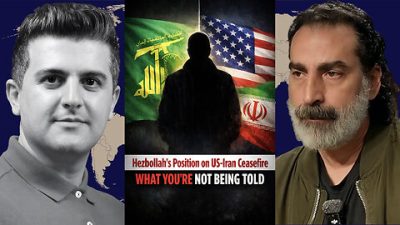
Laith Marouf: Hezbollah’s position on US-Iran ceasefire
or go to
Aletho News Archives – Video-Images
From the Archives
The Dirty Little Secret behind the “Global Terrorism Index”
The Omission of Israeli Terrorism in the Occupied Palestinian Territories
By Karin Brothers | Global Research | December 6, 2014
… The Israeli settlements — all of which are illegal – have been identified as a major impediment to peace. The refusal of a major “global” terrorism report to name the Israeli settlers as one of the groups most responsible for terrorism not only misrepresents a major source of regional violence but exposes the Global Terrorism Index as a propaganda tool that supports a U.S. agenda.
In recent years, governments have been attempting to thwart terrorism by blocking supportive fund-raising. When it comes to Israeli settlements, however, the US and Canada actually encourage fund-raising by giving organizations (such as Christian Friends of Israeli Communities (CFOIC) and the Jewish National Fund) financial support in the form of donor tax-deductions.
Charities which provide funds for the Israeli settlements should be regarded as terror-financing organizations. They should not only lose their tax-deductible status, but they should be banned because they support the violation of international humanitarian law. The terror-financing laws that are being strictly enforced for Muslim charities should be applied to Christian and Jewish charities as well. … Read full article
Blog Roll
 Aletho News
- The ‘Opposition Party’ Has Done Nothing to Stop the Iran War and Much to Goad Trump Into Continuing It
- Moscow backs Tehran on status of Lebanon in US-Iran deal
- How UK Regulator Ofcom Quietly Bypassed International Law to Police American Speech
- The Black Cube Files: How Former Mossad Operatives Flipped a Nation
- Laith Marouf: Hezbollah’s position on US-Iran ceasefire: What you’re not being told
- Israel’s priority lies in destroying chances of peace between Iran, US: Ex-UN nuclear chief
- Ceasefire for all or for none: Iran shuts Hormuz over Lebanon attacks
- Strait of Hormuz is Iran’s ‘nuclear weapon’ that forced US retreat: Medvedev
- Energy crisis will last for months – Kremlin envoy
- Europe’s quiet role in the war on Iran
- If Americans Knew
- This is ceasefire? Israel’s biggest massacre yet in Lebanon, another journalist killed in Gaza – Daily Update
- Tucker Carlson on Israel: This Is the Behavior of an Ally? Really?
- Gazans face a triple crisis: severe shortages of water and bread, healthcare in tatters
- NY Times reports how Netanyahu took the US into Iran War
- A sigh of relief over Iran, but Gaza and Lebanon in dire straits – Daily Update
- Thousands dead and neighborhoods razed to the ground: Aid agencies fear southern Lebanon is becoming the new Gaza
- The war the US is fighting for Israel could cost trillions
- ‘Cigarette Burns, Nail Wounds’: Toddler Tortured in Gaza to Coerce Father
- Trump Says US Sent ‘a Lot of Guns’ to Protesters in Iran
- Israeli forces destroy 17 UN peacekeeper cameras in south Lebanon
- No Tricks Zone
- An Inconvenient Tree: Uncovered In Alps… Europe Much Warmer Than Today 6000 Years Ago
- New Study Reports A 60% Slowdown In Greenland’s Ice Loss Rate In The Last Decade
- Low Intensity Tornado Wrecks Major Solar Farm, Creating A Potential Toxic Dump
- New Study Finds Warming Saves Lives…Cold Temperatures 12 Times More Deadly Than Excess Heat
- German Science Blog Accuses PIK Climate Institute Of Hallucinating Climate Tipping Points
- Devastating Assessment Of Comirnaty Vaccine By Former Senior Pfizer Europe Toxicologist
- New Study: CO2 Is ‘Effectively Negligible’ As An Explanatory Climate Change Factor Since 2000
- Former Pfizer Toxicologist Dr. Helmut Sterz Tells Bundestag Hearing Pfizer Vaccine Should Have Never Been Approved
- Energy Expert: Germany’s Nuclear Phaseout Was A “500 Billion Euro Mistake”
- New Research: South Australia’s Mid-Holocene Sea Surface Temperatures Were 4°C Warmer Than Today
 Aletho News