US Blames Putin When Erdogan Caught Weaponizing Refugees
By Andrew Korybko | Sputnik | February 11, 2016
The recently released minutes from a November meeting between Erdogan and the EU prove that the Turkish strongman is manipulating the immigrant flow into Europe for strategic ends.
The Greek financial website euro2day.gr published the shocking record of what transpired at a November meeting between Erdogan, Tusk, and Juncker in Antalya. In attempting to squeeze more money out of Brussels for his cooperation in halting the refugee flow, the Turkish leader thuggishly threatened that “We can open the doors to Greece and Bulgaria anytime and we can put the refugees on buses”, snarling to the EU leaders and rhetorically taunting them by asking “how will you deal with refugees if you don’t get a deal? Kill the refugees?”
€3 billion later, Erdogan shut up but he didn’t shut his borders, and the human wave continues to crash into Europe.
Now that the cat’s out of the bag and there’s a smoking gun to prove what most Europeans had already figured out by now — that the immigrant crisis is a strategically engineered weapon against them — the US has gone into full spin mode by doing what it does best, blaming Russia.
A day before the minutes were leaked, Carnegie Europe published a mudslinging piece which alleges in its title that “Putin Uses The Refugee Crisis To Weaken Merkel“, and a day after the Erdogan bombshell was made public, George Soros followed up with one of his famous speculative attacks (albeit this time non-financial) in which he ludicrously proclaimed that “Putin’s current aim is to foster the EU’s disintegration, and the best way to do so is to flood the EU with Syrian refugees.”
Ironically, but as is the established pattern, every time that the US is caught doing something unsavory, they always reflexively resort to blaming Russia for their own sins, and the immigrant crisis is no different. What’s new this time around, however, are the strange “anti-imperialist” bedfellows that they’ve aligned with in doing so.
‘Weapons Of Mass Migration’
The first thing to understand about the immigrant crisis is that the on-the-ground conditions for it were created by the US’ aggressive unipolar wars on the Mideast and North Africa, and that the resultant humanitarian catastrophe has been strategically weaponized by Washington and its allies for various geopolitical and economic ends.
Kelly M. Greenhill, an Associate Professor at Tufts University and Research Fellow at Harvard Kennedy School of Government’s Belfer Center for Science and International Affairs, published a groundbreaking 2010 book about “Weapons of Mass Migration: Forced Displacement, Coercion, and Foreign Policy” in which she proved that there are at least 56 instances in which states have purposefully generated, provoked, and exploited massive waves of human migrations as an instrument to further their respective policies. Excerpts from her book were culled to form a summarized article that’s available for free at the Naval Postgraduate School’s website.
In terms of the present application of “Weapons Of Mass Migration”, the US and Turkey have a few overlapping goals in mind. Ghassan Kadi brilliantly explained that Erdogan wants to use the immigrants as leverage in order to extract financial and institutional concessions from the EU, while concomitantly flooding the West with Islamist-sympathizing individuals that can act as a fifth column of support for his expansionist policy of Neo-Ottomanism.
The latter goal segues in nicely with what the US wants to do, which is to kaleidoscopically fracture hitherto largely homogeneous European societies via provoked and prolonged Hobbesian conflict between the locals, refugees, and host governments. It’s aware that the civilizational dissimilarity between the native Europeans and the migrating Muslim masses will inevitably lead to multifaceted tension, and it aims to perpetually exploit the resultant identity cleavages in order to conveniently craft various Color Revolution scenarios in keeping certain governments in check and away from pragmatic cooperation with Russia and China (e.g. Nord Stream II, Turkish/Balkan Stream, and the Balkan Silk Road).
Qualifying Caveats And The Smoking Gun Pattern
It’s useful at this moment to point out that while there definitely are some legitimate refugees reaching Europe’s shores, many of the newcomers are economic migrants that aren’t even from Syria, and that a highly disproportionate number of the people who have come to the continent are draft-age young males. This is why the author collectively and more accurately refers to these people as immigrants and not “refugees”. Russian Defense spokesman Igor Konashenkov, American Director of National Intelligence James Clapper, and French Minister of Defense Jean-Yves Le Drian have all recently warned that Daesh terrorists are actively infiltrating borders under the guise of being “refugees”, so there are absolutely some legitimate concerns about the types of people getting into Europe undetected.
Another thing is that “Islamist” isn’t a synonym for Muslim (as it’s commonly mistaken to be), but rather a label in referring to those that seek to impose Islam on others, such as Muslim Brotherhood and Wahhabi sympathizers. These individuals don’t have to be instructed on how to stir up problems in their host countries because their Islamist ideology naturally inspires them to clash with the locals, which thus organically satisfies the US’ 21st-century “Operation Gladio” plans. Regrettably, the sexual terrorist attacks in Cologne and other cities leave no doubt that many of these undesirable immigrants have already gotten into the EU, confirming that the US and Turkey’s destabilizing geopolitical plans are already in full swing.
Most Europeans figured out on their own that something was amiss about the whole immigrant crisis, questioning why so many of the new arrivals, if they were genuine refugees, would behave with such arrogant, ungrateful, and callous disregard for the host population that literally (as they were led to believe) saved their lives. The smoking gun of Erdogan’s transcribed threat, proving the degree of control that he has over the floodgates and his willingness to leverage this in as self-interested of a manner as possible, showed many Europeans that they weren’t wrong for questioning the mainstream media’s narrative on this whole matter.
Similar smoking guns have dispelled the Western myth about other high-profile crises as well. The Nuland-Pyatt recording proved that the US was scheming for regime change in Ukraine, and a 2012 Defense Intelligence Agency memo explicitly states that the Syrian “opposition” was full of terrorists from the beginning and that a “declared or undeclared Salafist principality in eastern Syria”, which later turned out to be Daesh, was “exactly what the supporting powers to the opposition want”. The latest revelation validates many people’s prior fears that the immigrant crisis had been strategically engineered, and it casts a damning light on the US’ role and intended agenda behind it. Tellingly, the faked hysteria that Putin is “flooding the EU with Syrian refugees” to “weaken Merkel” seems to imply that the German Chancellor’s days are numbered, but the US wants to cover its tracks and clumsily pretend that it’s Moscow which actually has something to gain by deposing its strategic Nord Stream II partner and not Washington like is actually the case.
Strange Bedfellows
Up until the point where the US had to begrudgingly acknowledge that strategically engineered “Weapons of Mass Migration” were being used against the EU and predictably blame it all on Russia, its allied “NGOs” and information outlets had categorically denied that such a planned phenomenon was taking place, slurring anyone who dared to even infer this possibility as being “racist”, “fascist”, and “white supremacist”. Astonishingly, this mainstream media-imposed “political correctness” and ideological intimidation was aggressively repeated by social and alternative media “activists” who fashioned themselves as (militant) far-left “anti-imperialists” — typically the sort of individuals who speak out against the US’ “thought police” or at least respect others’ right to do so.
These “anti-imperialists” claim to support Russia’s role in the world, yet state that border controls and assimilative & integrational immigration policies are some kind of “new fascism”. Apparently they never read President Putin’s 2012 manifesto on the topic, otherwise they would know that the Russian leader has a very firm and publicly declared stance against open borders and the Western conception of “multiculturalism”. By attacking concerned individuals that espouse these exact same principles as “racist”, “fascist”, and “white supremacist”, they’re indirectly attacking Russia and associating it with those slurs. It’s a documented fact that the tentacles of unipolar influence are long and deeply embedded in all sorts of social and political movements, so it’s reasonable to question whether these “anti-imperialist” voices are just “misguided activists” or if they’re really just anti-Russian provocateurs with an ideological ax to grind.
Turkey’s Revival of a Dirty ‘Deep State’
By Jonathan Marshall | Consortium News | February 10, 2016
Turkey’s embattled President Recep Tayyip Erdogan is resurrecting the “deep state” alliance of secret intelligence operatives and extreme rightists that he so notably challenged just a few years ago while putting hundreds of military officers and other opponents on trial for conspiring against Turkish democracy. In a remarkable about-face, Erdogan is now emulating the ruthless tactics of previous authoritarian rulers at the expense of Turkey’s evolution as a liberal state.
Like many of his secular predecessors, Erdogan has reverted to waging an all-out war against radical Kurdish separatists, the PKK. He is dramatically expanding the once discredited National Intelligence Agency, which in years past recruited Mafia criminals and right-wing terrorists to murder Kurdish leaders, left-wing activists and intellectuals. And he appears to be forging an alliance with ultranationalist members of the National Action Party (MHP), who supplied many of the ruthless killers for those murderous operations.
These developments should alarm U.S. and European leaders. They are ominously anti-democratic trends in a country that once promised to meld the best of Western and Near Eastern traditions. They are also helping to drive Turkey’s secret alliances with Islamist extremists in Syria and its violent opposition to Kurdish groups that are leading the resistance to ISIS in that country.
Erdogan successfully cultivated a democratic image after his moderate Islamic party, the Justice and Development Party (AKP), gained a two-thirds parliamentary majority in the November 2002 elections. Then in 2008, with public support for his party sagging, Erdogan oversaw the mass indictment of more than 200 former military officers, academics, journalists, businessmen and other opponents of the AKP.
The 2,455-page indictment alleged a vast conspiracy by members of an alleged “Ergenekon terrorist organization,” named after a mythical place in the Altay Mountains, to destabilize Turkish society and overthrow the government.
The alleged Ergenekon plot drew credibility from an all-too-real alliance of intelligence operatives, criminals and rightist terrorists exposed in the aftermath of the so-called “Susurluk Incident.” A car crash in the Turkish town of Susurluk in 1996 connected one of the country’s leading heroin traffickers and terrorists with a member of the conservative ruling party, the head of the counterinsurgency police, and the Minister of Interior.
Subsequent investigations linked this “deep state” network to a former NATO program — sometimes known by the name of its Italian version, “Operation Gladio” — to foment guerrilla resistance in case of a Soviet occupation of Turkey.
In contrast to the legitimate revelations that grew out of the Susurluk affair, the Ergenekon proceeding at times resembled a Soviet show trial. A court handed down life sentences to a former head of the Turkish military and several top generals, the heads of various intelligence organizations, a prominent secular ultranationalist, secular journalists, and a prominent deputy from a secular opposition party, among others.
A separate proceeding, known as “Sledgehammer,” convicted more than 300 secular military officers of involvement in an alleged coup plot against the AKP government in 2003.
Critics accused the Erdogan regime of using the cases to neutralize its potential rivals as part of its broader suppression of political dissent.
“The intimidation and the number of arrests have steadily risen in the last 10 years,” Der Spiegel observed in 2013. “Many journalists no longer dare to report what’s really happening, authors avoid making public appearances and government critics need bodyguards. The anti-terrorism law is an effective instrument of power for the government as the supposed terrorist threat is an accusation that’s hard to disprove. It plays on a deep-rooted fear among Turks that someone is trying to destabilize and damage the nation.”
The two big trials that fanned that fear were based on falsified evidence and a politicized judicial system. The injustice was effectively recognized by Istanbul’s high criminal court in 2014 when it freed the former army chief of staff convicted in the Ergenekon case. In March 2015, a prosecutor admitted that evidence submitted in the Sledgehammer case was “fake” and 236 convicted suspects were acquitted.
However, just as Erdogan had used those two cases to purge the Turkish power structure of his secular critics, so he used the discrediting of those cases as an excuse to purge supporters of another rival, the exiled moderate Muslim cleric Fethullah Gülen. Erdogan accused them of terrorism and of creating a “parallel state” to challenge his rule. The crackdown followed judicial actions and news leaks, attributed to Gülen followers, that implicated Erdogan’s family and supporters in high-level corruption. As the New York Times observed, Erdogan turned his back on those show trials “for the simple reason that the same prosecutors who targeted the military with fake evidence are now going after him.”
Now, in a complete reversal of his previous warnings about the dangers of the deep state, Erdogan is actively cultivating the very institutions that were at its core.
For example, the government is planning a 48 percent increase in spending for the National Intelligence Agency (MIT) in 2016, on top of a 419 percent increase over the past decade. The new money is slated to pay for construction of a big new headquarters building and to expand the agency’s operations.
According to Turkish expert Pinar Tremblay, “What we are observing here is a national intelligence agency that has become a prominent player in the decision-making process for Turkish politics. … [MIT head Hakan] Fidan acts as a shadow foreign minister. He is present in almost all high-level meetings with the president and prime minister. It is an open secret that both the president and the prime minister trust Fidan more than any other bureaucrat.”
After MIT trucks were caught in 2013 and 2014 smuggling ammunition, rocket parts, and mortar shells to radical Islamic groups in Syria, Erdogan’s allies put police and other officials involved in the raids on trial for allegedly conspiring with Gülen against the government.
A recent report also suggest that Erdogan is also seeking support for his Syrian adventures from members of the National Action Party (MHP), sometimes known as the Grey Wolves. Once openly neo-fascist in ideology, the party figured prominently in terrorist violence in the 1970s and 1980s with backing from military and police officials. Mehmet Ali Agca, the terrorist who tried to assassinate Pope John Paul II in 1981, was a member of the Grey Wolves.
Members of a youth branch of the MHP are reportedly now fighting in Syria to support that country’s Turkish ethnic minority, the Turkmen, against Syrian Kurds. (The Turkmen are also being armed by the MIT.) At least one MHP notable was killed recently by a Russian bombing raid; one of the mourners at his funeral was the Turkish gunman who murdered the pilot of the Russian jet shot down by Turkey in November.
A leading Turkish expert on the Grey Wolves, journalist Kemal Can, says they are drawn to supporting the Turkmen less for ideological reasons than because of state recruitment. “I think that, directly or indirectly, the state link is the decisive one,” he said. “The ultranationalists are the most fertile pool for secret operations.”
Many members of the MHP are also drawn to the cause by their violent opposition to the Kurds and other non-Turkish minority groups.
After PKK militants attacked Turkish soldiers and police last summer and fall, Grey Wolves attacked 140 offices of the HDP, the Peoples’ Democratic Party which supports the rights of Kurds and other minorities, according to the leftist Turkish journalist Sungur Savran, setting many offices on fire:
“Ordinary Kurds were hunted on the streets of the cities and towns of the Turkish-dominated western parts of the country, intercity buses stopped and stoned, and Kurdish seasonal workers attacked collectively, their houses and cars burnt down, and they themselves driven away en masse.”
Such polarizing violence suited the needs of Erdogan’s AKP party, which wants to eliminate the HDP from parliament in order to gain the super-majority it needs to revise the constitution to enhance Erdogan’s powers as president.
Last September, intriguingly, one leader of the ultranationalist MHP urged restraint against ordinary Kurds, saying that “equating the PKK and our Kurdish-origin siblings is a blind trap” that would ensure wider ethnic conflict. Further, he claimed that groups acting in the name of the Grey Wolves to attack Kurds were actually “Mafia” fronts for President Erdogan.
His claim about the “Mafia” may have been more than metaphorical. Following Erdogan’s recent denunciation of hundreds of Turkish academics as “traitors” for protesting the government’s vicious crackdown on Kurdish communities, an ultranationalist organized crime boss – who was briefly imprisoned for his alleged role in the Ergenekon conspiracy but is today chummy with Erdogan – promised to “take a shower” in “the blood of those so-called intellectuals.”
So there you have it: The Erdogan regime has revived an alliance of intelligence officials, right-wing ultranationalists and even organized criminals to crush Kurdish extremism, to cow political critics, and to support radical Islamists in Syria.
The Erdogan regime, once the great scourge of alleged anti-democratic conspirators, has recreated the Turkish deep state as part of a menacing power grab. It represents a direct threat not only to Turkish democracy, but to Turkey’s neighbors and NATO allies, who will bear the consequences of Erdogan’s ever-more risky, erratic and self-serving policies.
Jonathan Marshall is author or co-author of five books on international affairs, including The Lebanese Connection: Corruption, Civil War and the International Drug Traffic (Stanford University Press, 2012).
Turkish civil servants asked to report ‘insults’ against president & top officials to police
RT | February 3, 2016
The governor’s office in Isparta, southwestern Turkey, has reportedly sent a request to all state institutions in the province instructing staff to report cases of “insulting” President Recep Tayyip Erdoğan and other top officials straight to the police.
Insulting the president is considered a crime in Turkey and the punishment can be up to four years in jail.
“According to Articles 299 and 125 of the Turkish Penal Code [TCK], an action must be taken for the posts [on social media] including insults against our president and other senior government officials, which have increased lately in direct proportion to the increase in terror activities in our country,” the notification, signed by Isparta Deputy Governor Fevzi Güneş on behalf of Isparta Governor Vahdettin Özkan, stated, Today’s Zaman reported.
The government began its crackdown on Kurdish fighters from the Kurdistan Workers’ Party (PKK), outlawed by Ankara, last July. Turkey’s authorities maintain those killed during the security operation in the southeast were all PKK members. According to Turkish human rights groups, however, more than 160 civilians were killed during the government offensive.
President Erdogan has publicly vowed to continue the operation until the area is cleansed of Kurdish militants. Kurds have long been campaigning for the right to self-determination and greater autonomy in Turkey, where they are the largest ethnic minority.
In mid-Januray, Turkey arrested over a dozen academics for signing a declaration denouncing Ankara’s military operations against Kurdish militants. The move came after over 1,200 scholars were under investigation for criticizing the Turkish State. They were accused of allegedly participating in “terrorist propaganda” after signing a declaration condemning military operations against Kurdish rebels in the southeast. Erdogan described the group of academics as “poor excuses for intellectuals.” He insisted human rights violations in the southeast of the country were being carried out by referring to the Kurdish rebels, not by the state.
The day after Erdogan urged prosecutors to investigate academics, who signed the declaration criticizing military action in the country’s mainly Kurdish southeast, Kemal Kilicdaroglu, leader of the main opposition Republican People’s Party’s (CHP), called the Turkish president “a dictator.”
In January, a local Turkish court dismissed Recep Tayyip Erdogan’s appeal against Kilicdaroglu. The Turkish president was seeking damages after the opposition party leader called him a “thief.” Erdogan’s lawyers demanded 200,000 Turkish lire ($66,000) in damages, saying this was an “attack on his personal rights.”
On Monday, an Ankara court sentenced another Turkish politician Hüseyin Aygün, a former deputy from the CHP party, to 14 months in prison for “publicly insulting” Prime Minister Ahmet Davutoğlu. Aygün rejected all accusations, Haber Turk reported.
The Republican People’s Party has repeatedly accused the government of using counter-terror laws to persecute journalists, saying 156 were arrested in 2015, with 484 legal actions launched against journalists and 774 fired during the year.
Aygün was sentenced to nine months in jail for “inciting people to enmity or hatred or denigration,” Müslim Sarı, another former CHP deputy, wrote on his Twitter.
“This ruling is clear evidence that there [is] no freedom of thought and expression in Turkey and judicial independence has ended too,” Sarı said in another tweet.
Late last month, a Turkish court sentenced a female teacher to almost a year in prison for making a rude gesture at Erdogan (when he was prime minister) at a political rally in 2014.
“The situation for freedom of expression is at an all-time low,” Andrew Gardner, Amnesty’s Turkey researcher, told the Times. “Countless unfair criminal cases have been brought, including under defamation and anti-terrorism laws — even children have been remanded in pre-trial detention,” he said.
Life Terms for Turkish Journalists who Reported Shipping Arms to Syria Militants
Al-Manar | January 27, 2016
Turkish prosecutors demanded life sentences for two top journalists who reported that President Recep Tayyip Erdogan’s government tried to ship arms to insurgents in Syria.
Prosecutors asked the Istanbul court to sentence Cumhuriyet newspaper’s editor-in-chief Can Dundar and Ankara bureau chief Erdem Gul each to one aggravated life sentence, one ordinary life sentence and 30 years in jail, the Dogan news agency reported, quoting the indictment.
The report said that both Erdogan and his hugely powerful but low-profile ally, the head of the National Intelligence Organization (MIT) Hakan Fidan, are named as plaintiffs in the indictment.
Dundar and Gul were both placed under arrest in late November over the report earlier in the year that claimed to show proof that a consignment of weapons seized at the border in January 2014 was bound for Takfiri militants in Syria.
Since then, they have both been held in the Silivri jail on the outskirts of Istanbul ahead of their trial, whose date has still yet to be announced.
In the indictment, they have been formally charged with obtaining and revealing state secrets “for espionage purposes” and seeking to “violently” overthrow the Turkish government as well as aiding an “armed terrorist organization”, it said.
The penalties demanded by the prosecutors are significantly higher than had previously been expected.
The case has amplified concerns about press freedom under the rule of Erdogan, who had personally warned Dundar he would “pay a price” over the front-page story.
Turkey’s Erdogan files $32k lawsuit against opposition leader who called him a ‘dictator’
RT | January 18, 2016
Attorneys for Turkish President Tayyip Erdogan have filed a lawsuit against a major opposition leader for stating that Erdogan is a dictator, presidential sources and the opposition party told Reuters. The president is reportedly seeking $32,000 in damages.
Republican People’s Party (CHP) leader Kemal Kilicdaroglu made the controversial comment on Saturday, just one day after Erdogan urged prosecutors to investigate academics who signed a declaration criticizing military action in the country’s mainly Kurdish southeast. Twenty-seven of the signatories were briefly detained.
“Academics who express their opinions have been detained one by one on instructions given by a so-called dictator,” he said during a speech to his party’s 35th General Congress in Ankara, referring to those who have signed petitions opposing the military crackdown on the outlawed Kurdistan Workers’ Party (PKK) and urging an end to curfews.
“You may not agree with the content of the declaration. We also have issues with it, we also have our disagreements. But why limit freedom of speech?” Kilicdaroglu added.
Erdogan’s lawyers are seeking 100,000 lira (US$32,000) in damages, according to Turkish media.
A petition presented to the public prosecutor’s office also asked for a civil lawsuit to be launched against the CHP, Turkey’s Anadolu agency reported. The biggest opposition party in Turkey, with 134 seats in the 550-member Turkish parliament, the CHP, has been led by Kilicdaroglu since May 2010.
In addition to the lawsuit, an attorney from the Ankara prosecutor’s office has also launched an investigation into Kilicdaroglu’s comments on charges of “openly insulting the president,” local media reported.
In Turkey, insulting the president is a crime punishable by up to four years in jail. Although Kilicdaroglu has immunity from prosecution because he is a lawmaker, parliament could vote by a simple majority to remove that protection.
It’s not the first time that Erdogan and Kilicdaroglu have clashed. In June 2015, Erdogan filed a 100,000 lira ($32,000) lawsuit against the CHP leader for “mental anguish” following a public spat over claims that there were golden toilet seats installed in the presidential palace.
Are Terrorist Attacks in Turkey State-Sponsored?
By Stephen Lendman | January 14, 2016
Blaming recent terrorist attacks in Turkish cities on ISIS (or other non-state actors) is dubious at best. Erdogan supports Daesh. Why would it target a valued ally?
The latest incidents happened this week following earlier ones. An alleged suicide bomber killed 10 tourists in Istanbul’s historic district, mostly German nationals. At least 15 others were injured.
Erdogan’s “condemn(ation)” of what happened rang hollow. Angela Merkel blamed “international terrorism.”
Former Obama State Department counterterrorism coordinator Daniel Benjamin claimed ISIS is “determined to target more soft targets outside their areas… in Syria and Iraq” – without explaining what it could hope to gain strategically.
On Thursday, a huge blast largely destroyed a police headquarters building in Turkey’s Diyarbakir province. At least five deaths were reported, dozens injured.
Kurdish PKK militants were blamed despite no evidence proving it. Reports claimed eight “terrorists” were killed in clashes with police following the bombing.
What’s going on? Is Turkey especially vulnerable to terrorist attacks given their frequency in recent months? Or does responsibility lie elsewhere?
Were high-profile attacks in its cities state-sponsored? Erdogan supports terrorist groups while claiming to combat them.
He heads a fascist police state. He’s an international criminal with megalomaniacal aims, wanting political opponents eliminated, waging war on freedom, tolerating no internal critics, charging them with treason.
Putin calls him an “accomplice of terrorists” – aiding ISIS, Al Qaeda and other groups complicit with Washington, waging war without mercy on Turkish Kurds, hugely responsible for regional violence and instability.
He seeks unchallenged tyrannical powers under the mantle of presidential rule, wanting Ankara’s constitution rewritten to oblige him.
Turkey has enjoyed nearly 140 years of parliamentary governance – despite four military coups and execution of a prime minister. It has never taken steps to shift to iron-fisted one-man presidential rule.
Fear-mongering is longstanding US policy. Erdogan appears to be following the same strategy, aiming to overcome parliamentary opposition to his power-grabbing scheme – using alleged terrorist attacks to enlist support for iron-fisted presidential rule on the pretext of protecting national security.
As long as Erdogan remains Turkey’s leader, tyranny will substitute for democratic freedoms. His next moves to solidify power remain to be seen.
Stephen Lendman can be reached at lendmanstephen@sbcglobal.net.
His new book as editor and contributor is titled “Flashpoint in Ukraine: US Drive for Hegemony Risks WW III.”
Ankara Vows to Press Academics Calling to Stop War Against Kurds’ PKK
Sputnik – 13.01.2016
Turkey’s top higher education authority vowed to take measures against academics who signed a letter calling to stop military operations against Kurdish militants, local media reported Wednesday.
Turkish President Recep Tayyip Erdogan has sharply criticized the so-called Academicians for Peace group, accusing them of undermining Turkey’s national security after their declaration was read at press conferences in Istanbul and Ankara on Monday.
After an urgent meeting, Turkey’s Higher Education Board issued a statement saying that the institution would do whatever it took regarding the academics, Today’s Zaman newspaper reported. The body does not have the authority to directly punish the academics, but could pressure university administrations to do so, according to the paper.
Over 1,000 academics from 89 Turkish universities have signed a declaration urging to end the ongoing fighting between Ankara forces and the Kurdistan Workers’ Party (PKK) militants.
The declaration calls on the government to restore a peace process with the PKK that was abandoned in July 2015.
The Kurds, Turkey’s largest ethnic minority, have been striving to gain independence from Turkey. The PKK, founded in the late 1970s to promote the self-determination for the Kurdish community, is designated as a terrorist group by Ankara.
Severe clashes between Ankara forces and PKK militants have been arising sporadically since a July terror attack in the city of Suruc, which killed over 30 people, most of them Kurds. As Kurds killed two Turkish policemen in what has been said to be a retaliation strike, Ankara launched a military campaign against the group.
Guess Who Railed Against : ‘State Terror Against Kurds’ in ‘Kurdistan’
Sputnik – 03.01.2016
Inconsistency is common in politicians, who one day decry ‘state terror’ against citizens and some two decades later send tanks against those same people to ‘impose curfews’.
A report published in a Turkish daily newspaper demonstrates the dramatic change in the stated political policy of Recep Tayyip Erdogan since 1991.
The Hurriet published passages from a 90-page report on the “Kurdish issue,” composed by Erdogan while he was an official with the conservative Islamist Refah (Welfare) party in his hometown of Istanbul.
In the report, requested by his party’s leadership, Erdogan clearly denounced Turkish military operations in the Kurdish southeast, referring to them as acts of “state terror” against “Kurdish people.”
Erdogan, at the time, wrote that because “the Kurdish issue” is a “national question,” the correct way to resolve it is “by recognizing Kurdish language as an independent language and which has no relations to the Turkish language.”
But by 2016, some 25 years later and with Erdogan as the boss, Kurds are not necessarily forbidden to learn their mother tongue, but several letters of the Kurdish alphabet are outlawed in Turkey and the number of schools providing education in Kurdish and other minority languages is very small.
“What is called ‘the Southeastern issue’ is, in essence, the Kurdish question, which is no doubt a national question. These areas, which are labeled as Southeast, have since the dawn of history been called Kurdistan,” Erdogan said in 1991. “This region has suffered twice, from PKK assaults since 1985 and at the same time it has been subjected to state terror which has targeted the population for allegedly supporting the PKK.”
In 2016, as the president of the Turkish Republic and playing a nationalist card, Recep Tayyip Erdogan is singing a different song.
“You will be annihilated in those houses, those buildings, those ditches which you have dug,” Erdogan has pronounced recently, referring to trenches created by Kurdish fighters in many southeastern cities. “Our security forces will continue this fight until it has been completely cleansed and a peaceful atmosphere established.”
Many politicians and experts worldwide have described Erdogan’s ongoing military operation against Kurds as “state terror,” a comparison not lost on students of recent Turkish political history.
Some 200 civilians have been killed during recent blockades and attacks by Turkish government forces. Over 100,000 people have reportedly been displaced in ongoing military actions in Turkey’s majority-Kurdish southeast.
Severe clashes between Ankara forces and the Kurdistan Worker’s Party (PKK), alongside popular resistance units, have arisen since a July terror attack in the city of Suruc which killed over 30 people, most of them Kurds. After Kurds killed two Turkish policemen they claimed were affiliated with Daesh soon after the attack, Ankara launched a military campaign against PKK and self-defense units. The clashes intensified in December 2015 in the southeastern city of Diyarbakir, with curfews imposed in numerous Kurdish areas across the southeast.
Turkey Backs Anti-Russian Tatar Sabotage and Subversion
By Stephen Lendman | December 29, 2015
Turkish President Erdogan is up to his ears in high crimes, internally and abroad, his rap sheet matching some of the world’s worst.
Self-determination is a universal right. Crimea is legally part of Russia, its population overwhelmingly voting by national referendum in March 2014 (by a 96.77% majority with an 83.1% turnout) to correct a historic mistake.
There’s no going back or legitimate reason for any nation to reject reality. Washington and likeminded regimes remain hardline, including Turkey – Erdogan directly aiding the formation of a Crimean Tatar battalion, tasked with committing sabotage and other forms of subversion. More on this below.
Last August, Erdogan met with anti-Russian Tatar resistance leaders Mustafa Dzhemilev and Refat Chubarov in Ankara – promising no Turkish recognition of Crimea as a Russian province, pledging aid to its subversive resistance.
Recently, he met with Dzhemilev and Chubarov in Konya Turkey, both men organizers of the failed Crimean food and electricity blockade. Discussions about a strategic alliance with Ukraine and possible naval blockade of the peninsula were held – with Turkey’s involvement.
Lenur Islyamov represents the illegitimate, unregistered “Majlis (or council) of Crimean Tatars” organization. He explained Ankara is actively involved in forming a Tatar battalion on the pretext of “protecting the Crimean frontier” – code language for plotting sabotage and subversion, operating as an enemy of Russia with direct Erdogan aid.
According to Islyamov, “(w)hile the Ukrainian defense ministry only scratches its head, (its) Turkish” counterpart is offering direct support – likely including weapons, munitions, funding and training to commit lawless acts against the Russian Federation.
Islyamov told Ukrainian television viewers, “(w)e now have more than a hundred people who have already entered the battalion as volunteers, but we hope that after all the ministry of defense and the armed forces of Ukraine, will create and allow the Crimean Tatars to have their own national battalion within the armed forces.”
He aims to enlist hundreds of fighters, able to wage guerrilla war on the pretext of defending Crimea’s borders, risking direct confrontation with Moscow, apparently part of Erdogan’s dirty scheme complicit with Washington, following his downing a Russian Su-24 bomber, a willful act of war.
Islyamov promised further efforts to isolate Crimea and ways to “liberate Tatars” within a year – returning the peninsula to Ukraine – a strategy of madness, making no more sense than attempting to liberate my home state of Illinois from America.
His notion of instituting a naval blockade with Turkish help, including “small boats (able) to attack ships carry(ing) goods to Crimea” has no chance to succeed.
In late November, Tatar insurgents destroyed parts of the southern Ukraine Kherson region electricity grid, supplying energy to Crimea – preventing repair crews from restoring power, leaving 1.8 million people in the dark for days.
Russia intervened responsibly, supplying energy amounts needed – the first stage of a so-called energy bridge weeks ahead of schedule.
Most Crimeans are ethnic Russians, Tatars at most about 12% of the population, their people not in conflict with other ethnic groups, a small rogue band entirely responsible.
Erdogan risks greater confrontation with Russia than already – by partnering in sabotage and subversion, more proof of his rogue credentials.
Legitimate Majlis Tatar officials reject Dzhemilev, Chubarov, Islyamov and other hardliners, saying “cooperation with extremist groups condemned by the whole progressive world has deprived them of their right to represent Crimean Tatars.”
“From now on, all their statements at any forums should be qualified as personal opinions” – not representing the views of the vast majority of Crimean Tatars.
They denounced rogue elements using Tatar national symbols, saying they’re “not a bargaining chip for political crooks. No one gave them the right to unilaterally use our relics at their discretion.”
Erdogan continues overstepping recklessly, already deeply involved in supporting ISIS, challenging Russia’s patience, perhaps sowing seeds of internal rebellion.
Stephen Lendman can be reached at lendmanstephen@sbcglobal.net.
His new book as editor and contributor is titled “Flashpoint in Ukraine: US Drive for Hegemony Risks WW III.”
What’s Behind Turkey’s Repeated Calls for No-Fly Zone in Syria?
Sputnik – 29.12.2015
Turkish President Tayyip Erdogan’s calls for a safe zone in Syria are aimed at destabilizing the situation in the region, including the collapse of Syria, analysts said.
On December 27, Turkish President Recep Tayyip Erdogan announced plans to create a safe zone in Syria. In an interview with Al Arabiya he said that the safe zone could shelter refugees who live in Turkey and want to return to Syria.
The zone is initially planned to stretch 98 km along the border and span 45 km in the territory of Syria, with the possibility of further expansion, Erdogan explained. According to the president, the area will be “terrorism-free”.
He also suggested that the Turkish government could begin raising funds for the project, including building houses for refuges.
Thus, Erdogan continues to hold unofficial discussions with Washington. In early December, White House Press Secretary Josh Earnest said that projects such as a safe zone in Syria would require significant resources.
Ground forces would be necessary to protect a safe zone. But this contradicts the strategy proposed by President Barack Obama, Earnest underscored.
Meanwhile, in August, the Turkish Foreign Ministry announced that Washington had given the green light to establish a safe zone in Syria which would be protected jointly by US and Turkish troops.
In turn, Washington denounced the statement saying that the sides had agreed only on using the Turkish Incirlik airbase by US forces. It seems that the US and Turkey discussed a safe zone but in the end Washington evaded any final agreements.
Now, Erdogan has again brought up the initiative. And this time it is very likely that Turkey will act. The situation is changing in Syria where government forces have significantly advanced against terrorists. The country may be divided into “occupation zones”, so it is very important for Ankara to play one of the key roles in the process.
“Now, Erdogan needs major achievements in his foreign policy,” Alexei Fenenko, a security expert at the Russian Academy of Sciences, told Svobodnaya Pressa. “The last two months were difficult for the Turkish president. The row between Ankara and Moscow caused a crisis in tourism and in the Turkish garment industry. His attempt to invade Iraq failed. Finally, Turkey now has tensions with Greece.”
All of the above has prompted Erdogan to take decisive steps to establish a safe zone in Syria, the analyst noted.
“I’m afraid this may be the scenario. There is no one more fearless than a politician who has nothing to lose. After a series of failures a politician like Erdogan can hit badly,” Fenenko said.
Turkey is very likely to attempt to occupy part of Syria to establish a safe zone, he pointed out. At the same, the US’ actions would depend on what Ankara achieves.
At the same time, Russia will oppose such a scenario since it is committed to protecting Syria’s territorial integrity, Fesenko said.
“I believe we should once again reaffirm our readiness to protect its territorial integrity. Russia may rely on its S-400 air defense systems deployed to the Hmeymim airbase. This means there is still the possibility of a military confrontation between Russia and Turkey,” he concluded.
Erdogan has made numerous statements about his readiness to establish a safe zone in Syria, analyst Stanislav Tarasov said.
Ankara’s policy in the region is still based on the scenario which presumes the collapse of Syria and Iraq, he pointed out. But the balance has changed, and other players will not let Turkey establish a safe zone in Syria.
“Turkey will not invade Syria. There are Syrian forces backed by Russian jets. What is more, if Turkey invaded the Kurds may support Damascus,” Tarasov said. “The problem is that Ankara still relies on Syria’s collapse and is not ready for any other outcome. This is why Ankara’s calls for a safe zone in Syria are wrong.”
Featured Video
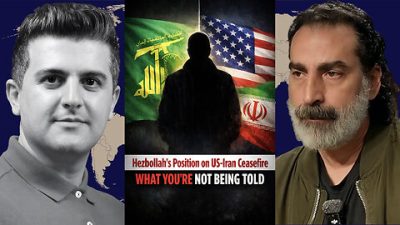
Laith Marouf: Hezbollah’s position on US-Iran ceasefire
or go to
Aletho News Archives – Video-Images
From the Archives
The Dirty Little Secret behind the “Global Terrorism Index”
The Omission of Israeli Terrorism in the Occupied Palestinian Territories
By Karin Brothers | Global Research | December 6, 2014
… The Israeli settlements — all of which are illegal – have been identified as a major impediment to peace. The refusal of a major “global” terrorism report to name the Israeli settlers as one of the groups most responsible for terrorism not only misrepresents a major source of regional violence but exposes the Global Terrorism Index as a propaganda tool that supports a U.S. agenda.
In recent years, governments have been attempting to thwart terrorism by blocking supportive fund-raising. When it comes to Israeli settlements, however, the US and Canada actually encourage fund-raising by giving organizations (such as Christian Friends of Israeli Communities (CFOIC) and the Jewish National Fund) financial support in the form of donor tax-deductions.
Charities which provide funds for the Israeli settlements should be regarded as terror-financing organizations. They should not only lose their tax-deductible status, but they should be banned because they support the violation of international humanitarian law. The terror-financing laws that are being strictly enforced for Muslim charities should be applied to Christian and Jewish charities as well. … Read full article
Blog Roll
 Aletho News
- The ‘Opposition Party’ Has Done Nothing to Stop the Iran War and Much to Goad Trump Into Continuing It
- Moscow backs Tehran on status of Lebanon in US-Iran deal
- How UK Regulator Ofcom Quietly Bypassed International Law to Police American Speech
- The Black Cube Files: How Former Mossad Operatives Flipped a Nation
- Laith Marouf: Hezbollah’s position on US-Iran ceasefire: What you’re not being told
- Israel’s priority lies in destroying chances of peace between Iran, US: Ex-UN nuclear chief
- Ceasefire for all or for none: Iran shuts Hormuz over Lebanon attacks
- Strait of Hormuz is Iran’s ‘nuclear weapon’ that forced US retreat: Medvedev
- Energy crisis will last for months – Kremlin envoy
- Europe’s quiet role in the war on Iran
- If Americans Knew
- This is ceasefire? Israel’s biggest massacre yet in Lebanon, another journalist killed in Gaza – Daily Update
- Tucker Carlson on Israel: This Is the Behavior of an Ally? Really?
- Gazans face a triple crisis: severe shortages of water and bread, healthcare in tatters
- NY Times reports how Netanyahu took the US into Iran War
- A sigh of relief over Iran, but Gaza and Lebanon in dire straits – Daily Update
- Thousands dead and neighborhoods razed to the ground: Aid agencies fear southern Lebanon is becoming the new Gaza
- The war the US is fighting for Israel could cost trillions
- ‘Cigarette Burns, Nail Wounds’: Toddler Tortured in Gaza to Coerce Father
- Trump Says US Sent ‘a Lot of Guns’ to Protesters in Iran
- Israeli forces destroy 17 UN peacekeeper cameras in south Lebanon
- No Tricks Zone
- An Inconvenient Tree: Uncovered In Alps… Europe Much Warmer Than Today 6000 Years Ago
- New Study Reports A 60% Slowdown In Greenland’s Ice Loss Rate In The Last Decade
- Low Intensity Tornado Wrecks Major Solar Farm, Creating A Potential Toxic Dump
- New Study Finds Warming Saves Lives…Cold Temperatures 12 Times More Deadly Than Excess Heat
- German Science Blog Accuses PIK Climate Institute Of Hallucinating Climate Tipping Points
- Devastating Assessment Of Comirnaty Vaccine By Former Senior Pfizer Europe Toxicologist
- New Study: CO2 Is ‘Effectively Negligible’ As An Explanatory Climate Change Factor Since 2000
- Former Pfizer Toxicologist Dr. Helmut Sterz Tells Bundestag Hearing Pfizer Vaccine Should Have Never Been Approved
- Energy Expert: Germany’s Nuclear Phaseout Was A “500 Billion Euro Mistake”
- New Research: South Australia’s Mid-Holocene Sea Surface Temperatures Were 4°C Warmer Than Today
 Aletho News