Grooming the Gulf: How Epstein Forged Emirati Elites Into Tools for Israel
By Freddie Ponton | 21st Century Wire | February 10, 2026
In the last 48 hours, the U.S. Department of Justice has begun dumping what officials say amounts to more than three million pages of material tied to Jeffrey Epstein—an archive so vast it includes thousands of videos and hundreds of thousands of images. The tranche is only a fraction of what exists. Officials acknowledge that millions of additional documents remain under review, meaning the public has seen just a sliver of the government’s total Epstein archive. What is being unloaded into the public domain is not just evidence of private depravity; it is an inadvertent blueprint of how power really works when no one is supposed to be watching, an industrial‑scale influence machine whose files casually braid together billionaires, cabinet‑level officials, and strategic infrastructure from New York to the Horn of Africa. And even now, the public is being allowed to see only what officials deem manageable, with redactions still shielding some of the most sensitive names and millions of pages kept out of sight.
Hidden within those documents, leaks, screenshots, and email excerpts now circulating online, are connections that stretch far beyond Manhattan, Palm Beach, or even Paris. They reach deep into the Persian Gulf, into Dubai’s executive suites, and into the personal inboxes of officials in the United Arab Emirates.
These emails offer a unique glimpse behind the opulent shadows of Dubai’s towers, where untraceable billions flow like oil. In that world, a convicted pedophile whispers ministerial appointments to a UAE diplomat while discussing port deals that could move cargo and secrets across continents. According to persistent intelligence‑linked information surrounding his operations, Jeffrey Epstein was not acting alone or merely chasing thrills; he was allegedly operating as a geopolitical asset, cultivating leverage over Gulf elites, with places like Somaliland emerging as potential pawns in a larger strategic game. It is in such an environment that figures like Epstein thrive the best, because their private perversions double as statecraft.
Hind Al Owais and the Epstein Emails That Stain a Nation
Emails unearthed from the DOJ Epstein library reveal troubling facts about Jeffrey Epstein’s exchanges with Hind Al Owais, a young, ambitious Emirati woman navigating the opulent halls of UAE diplomacy. With her polished LinkedIn profile and lofty titles, she appears at first glance to be a symbol of progress. As director of the UAE’s Permanent Committee for Human Rights and a UN adviser since 2015, she has publicly championed women’s empowerment, declaring it both a moral and strategic imperative. On paper, Hind Al Owais is the face of a “modern” UAE: a diplomat, UN adviser, and later a senior human‑rights official fronting panels on women’s rights and regional mechanisms.

Hind Al Owais, UAE’s Permanent Committee for Human Rights and a UN adviser since 2015 (Source: YourStory.com)

In press releases, she speaks of “dignity” and “gender equality” while chairing events under the banner of the Permanent Committee for Human Rights in Abu Dhabi. In the emails, the tone is very different. The same woman who would later open high‑level human‑rights dialogues is trading easy banter with a convicted sex offender, eagerly accepting his career advice, and bringing family into his orbit. The contrast is not just personal hypocrisy; it looks like the textbook use of a polished, progressive female diplomat as a shield for an authoritarian system willing to outsource leverage work to a man like Epstein while selling the world a sanitised narrative at the UN.
The correspondence begins in 2011, during Epstein’s post‑prison resurgence. Al Owais, then a rising figure in UAE foreign affairs, began emailing the financier. Their communications suggest the exchanges were part of a broader effort to compromise UAE elites for Israeli leverage. Numerous emails linked to Hind Al Owais and Jeffrey Epstein from January 2012 are currently the subject of extensive scrutiny, prompting unsettling questions regarding the nature of their relationship. One email (EFTA01844869) states: “Getting one girl ready is difficult enough; two girls, you can certainly call a challenge.” Another conversation is said to mention introducing her sister to Epstein. In one message, Epstein positioned her as a future UAE Minister of Culture, declaring there would be “no competition.” (EFTA00909346)
One email (EFTA01845739) from January 26, 2012, stands out. Al Owais expresses excitement about introducing her sister, Hala, allegedly just 13 at the time, to Epstein, a man infamous for preying on underage girls. Epstein’s reply is suggestive, promising more time with both. Another message jokes about the challenge of preparing “two girls.” Critics online have seized on these exchanges, arguing that Al Owais was not just a passive contact but an active facilitator, a kind of soft‑power handler who normalised Epstein’s access to young Emirati women.
The DOJ emails that have surfaced so far do not explicitly spell out sexual transactions or list ages, which conveniently allows defenders to hide behind literalism. But in the real world, context matters: a senior diplomat, working in New York, repeatedly arranging access for “girls” to a man already notorious for abusing minors is not a neutral act; it is complicity dressed up as networking.
Online backlash was immediate. Critics claimed Al Owais worked as a procurer, supplying minors, including her own sister, to Epstein. Viral posts branded her a “pimp” and “Satan worshipper,” drawing thousands of retweets amid outrage over her UN role. Although no direct proof of underage involvement appears in the emails themselves, it can be argued that the pattern fits Epstein’s methods, which rest on compromising officials feeding a machine designed not only for pleasure but for leverage. Emails from 2017 show him lobbying against Qatar, accusing Doha of terrorism financing in line with UAE‑Israel strategies, underscoring that his communications with Gulf elites were deeply political, not merely social.
Photos circulating online show Al Owais beside Epstein, her diplomatic poise clashing with his predatory grin. Critics highlight the contradiction: how can someone linked to Epstein lead human‑rights initiatives in a country notorious for the kafala system? The kafala regime has long been described by rights groups as a system of modern servitude, binding migrant workers to employers in conditions ripe for abuse; placing an Epstein‑linked diplomat at the helm of “human rights” in such a state is less reform than reputation‑laundering.
Adding another layer, discussions online claim Ghislaine Maxwell received girls supplied through the same network. Ex‑spy Ari Ben‑Menashe alleges the pair ran Mossad honeytraps together, building on older reports that Maxwell’s father, Robert Maxwell, had served as a Mossad asset. These accounts are contested and not fully documented, but the emerging patterns in the Epstein–UAE files sit uncomfortably close to what one would expect from an intelligence‑linked kompromat operation targeting Gulf elites.
Even as these revelations spread across social media, Abu Dhabi appears to have kept Al Owais anchored in its human‑rights machinery, letting her continue to front events and initiatives in the UAE’s name. The message is unmistakable: whatever passed between her and Epstein does not disqualify her from helping launder the regime’s image on the international stage.
Timeline of Epstein’s UAE–Israel Web
Year – Event
- 2009 – Bin Sulayem sends Epstein a torture video; Epstein replies, “I loved the torture video.”
- 2010 – Epstein allegedly linked in commentary to the Mossad hit on Hamas leader Mahmoud al‑Mabhouh in Dubai, fitting the broader narrative of an Israeli intelligence‑adjacent operator moving through Gulf territory.
- 2011–2012 – Al Owais emails Epstein about her sister and career boosts; Epstein dangles ministerial suggestions, positioning her as a future UAE Minister of Culture.
- 2013 – Epstein brokers Ehud Barak–bin Sulayem meetings for port investments, cementing a triangle linking an ex‑Israeli prime minister, a Dubai port magnate, and a convicted predator.
- 2017 – Epstein lobbies anti‑Qatar pressure in line with UAE and Israeli strategies, echoing the blockade politics that would reshape Gulf alliances.
- 2018 – Bin Sulayem shares Somaliland history; Epstein touts equity in the port and boasts of being basically in charge of nearby Djibouti facilities.
- 2020 – Abraham Accords normalize UAE–Israel ties, formalising a relationship that had already been woven in through years of quiet cooperation and shared interests.
- 2026 – Files and commentary claim Epstein trained under Barak for global blackmail operations, merging personal depravity with strategic utility.
If a diplomat could allegedly facilitate such access, the question becomes unavoidable: what might a billionaire port magnate do?
The Sultan’s Sordid Secrets — Bin Sulayem’s Torture Videos and Port Empires
From the intimate whispers of diplomatic emails, the narrative expands into the world of Sultan Ahmed bin Sulayem, the CEO of DP World—a state‑linked giant controlling a significant share of global container traffic. According to the files, bin Sulayem exchanged thousands of emails with Epstein over more than a decade. The correspondence blends lewd banter, elite introductions, and geopolitical scheming.
Sultan Ahmed bin Sulayem does not run a boutique firm; he sits atop a state‑linked conglomerate that touches roughly one in ten containers moved on the planet, with stakes in more than 80 ports and terminals from London to Dakar to Berbera. In other words, when he jokes with Epstein about torture videos and shares “gifts” like a fragment of the Kaaba’s covering, he is not just another vulgar rich man; he is the point where a sovereign logistics empire meets a blackmail broker.
One revelation stands out (EFTA00749241): the torture‑video exchange. Unredacted after scrutiny by Rep. Thomas Massie in February 2026, it identifies bin Sulayem as the sender. This echoes the accusations from a 2009 scandal involving Sheikh Issa bin Zayed Al Nahyan torturing an Afghan grain merchant with cattle prods, sand, and fire—and another 25 victims, according to American businessman Bassam Nabulsi. The old torture tape was once treated as an embarrassing aberration; in light of the Epstein emails, it looks more like a symptom of a system where sadism and impunity are bonding rituals among the elite.
Online backlash was swift. Critics labelled bin Sulayem part of the UAE’s “filthiest scum.” Theories spread that the video served as kompromat—leverage collected by Epstein to secure cooperation. Whether or not that specific file was ever brandished as blackmail, the logic is clear: a regime that records torture and a fixer who monetises secrets are natural partners.
Meanwhile, bin Sulayem gifted Epstein a sacred Kaaba Kiswa cloth intended for Islam’s holiest site. Emails (EFTA01051761) show UAE businesswoman Aziza Al‑Ahmadi arranging the shipment. Epstein reportedly used it as a carpet, prompting outrage and accusations of desecration. This is what impunity looks like when religion is instrumentalised for power. A cloth destined for the Kaaba is rerouted through a UAE billionaire to a US sex offender, laid out on the floor as a decorative prop in his private den of exploitation. For many Muslims, the outrage is not just about sacrilege; it is about the casual way a state‑backed executive treated the sacred as one more chip in a game of influence with a man whose entire business model revolved around defilement.
The correspondence contains further lewd exchanges, including jokes about sexual exploits and discussions of foreign students. Bin Sulayem facilitated introductions to Emirati royals and even pitched ideas to Elon Musk through Epstein in 2015 EFTA02716369), using the predator as a networking hub into Western tech and political circles.
But the ports are the real story. DP World’s infrastructure controls intercontinental traffic. For a trafficker, critics argue, such systems offer anonymity and reach: containers are counted, not souls. Some theories cast bin Sulayem as Epstein’s logistics partner, someone whose empire could provide the plausible deniability that only large‑scale shipping can offer. Since 2006, Epstein acted as a go‑between, linking former Israeli Prime Minister and Defense Minister Ehud Barak with bin Sulayem. This triangular relationship—Barak, bin Sulayem, and Epstein—shows in Epstein file EFTA02600899, enabling discreet communications that certainly contributed to the foundation of later economic and political alignments, including the 2020 Abraham Accords, which normalised relations between the UAE and Israel. From here, the story shifts naturally to Somaliland.
The Somaliland Gambit — UAE Ports, Epstein’s Equity, and the Israeli Shadow
The bin Sulayem scandal converges in the dusty ports of Somaliland, a self‑declared republic clinging to independence from war‑torn Somalia. Here, the narrative escalates from personal perversions to geopolitical machinations, and Epstein’s fingerprints appear on deals that could turn strategic harbours into conduits for exploitation—all within the UAE’s ecosystem that has harboured money launderers and opaque fortunes for years, providing Epstein a fertile ground to operate.
Recently published articles and DOJ‑linked emails (EFTA01885124) show Epstein’s circle eyeing Somaliland as early as 2012 for water and finance ventures. One message describes “huge water reserves, untapped (and clean) near the port city of Berbera. providing direct access to the Saudi market. Easy to ship. Minimal transport.” The language is chilling in its simplicity: a territory reduced to a resource node on someone else’s spreadsheet, its water turned into a line item in a private equity‑style pitch.
Here, the UAE, through DP World and bin Sulayem, has poured billions into Berbera port, signing controversial agreements that bypass Somalia’s central government. DP World and its partners have committed up to 1 billion USD to logistics infrastructure along the Berbera corridor, tying the port into Ethiopian trade routes and Gulf markets, all under a legal framework that treats Somaliland as a quasi‑sovereign partner despite its lack of international recognition. For Mogadishu, this is a direct challenge to its sovereignty; for Dubai, it is a lucrative wedge into the Red Sea; for actors like Epstein, it is an ideal gray zone, where jurisdiction is murky, and oversight is thin.
Epstein’s role appears in multiple 2018 emails: bin Sulayem shares a brief history of Somaliland’s recognition push with Epstein, including a document (EFTA00842536) titled along the lines of “The recognition of Somaliland – a brief history,” inviting him into the conversation not as a bystander but as a broker. Epstein, in turn, claims equity in the port and boasts of being basically in charge of nearby Djibouti facilities, casting himself as a shadow stakeholder in the region’s maritime chokepoints. Whether that equity was real or inflated bravado, the intent is clear: he wanted to position himself at the junction of finance, infrastructure, and political recognition in one of the world’s most strategically sensitive corridors.
Recently uncovered emails from the DOJ Epstein library (EFTA01876256) reveal his enduring fascination with Somaliland, discussing strange projects like “building a small studio in Somaliland and calling it SOMALIWOOD STUDIOS, to produce shows like Sesame Street type, including children’s programming, etc. for African kids.” The proposed “Somaliwood” studio reads like black comedy until you remember who is talking. Here is a man accused of systemically abusing minors, now sketching out soft‑power projects aimed at African children in a territory whose legal status is deliberately ambiguous and whose poverty makes scrutiny difficult. It is the colonial mission civilisatrice updated for the age of offshore finance and private jets: entertain the children, harvest the elite.
These emails include conversations from the years prior to Epstein’s “death” with DP World chief Sultan bin Sulayem regarding proposals aimed at recognising the territory as an independent state. (EFTA00842536) For Somaliland’s people, the stakes are immediate. Poverty and instability persist while foreign powers carve up their coastline. Critics describe the deals as neo‑colonial projects. Some claim the UAE lobbied for Somaliland’s separation ahead of the Abraham Accords, with Epstein acting as an intermediary promoting Israeli technology, turning the territory into a bargaining chip in a three‑way game between Abu Dhabi, Tel Aviv, and Western security planners.
DP World handles roughly 80 million containers annually. To those who suspect trafficking behind the trade routes, that scale offers perfect cover. Israel was among the earliest nations to acknowledge the brief five‑day independence of British Somaliland in 1960, but it was on December 26, 2025, that Israel officially declared it would be the first nation to fully recognise Somaliland, sparking new developments in the Red Sea Basin. As part of this agreement, Israel plans to set up a diplomatic and potentially security presence in the region for the first time since its relations with Eritrea soured in 2020.
The human consequences are stark. Somali migrants fleeing famine risk falling into trafficking routes. Epstein’s proposed cultural projects in Somaliland echo the recruitment tactics used elsewhere in his network: philanthropy as bait, media as camouflage, and vulnerable populations as raw material.
Epstein, Mossad, and the Israeli Interest
For years, former intelligence officials, investigative journalists, and independent researchers have argued that Epstein was not simply a freelance blackmailer but an asset embedded in Israeli intelligence networks. Ari Ben‑Menashe, a self‑described former Israeli intelligence officer, has claimed that Epstein and Ghislaine Maxwell ran a Mossad “honeytrap” operation, seeded by her father Robert Maxwell—himself long reported as a Mossad asset. These accounts are disputed and not yet backed by a full documentary record, but they sketch a plausible frame: private vice harnessed for state leverage, with Epstein as the smiling frontman.
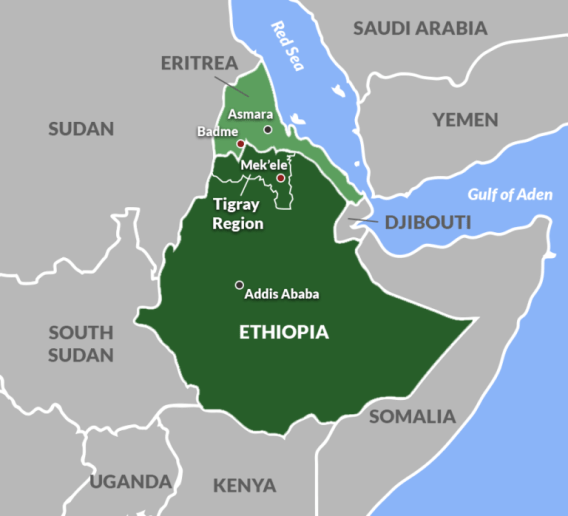
What the DOJ files now reveal is a pattern that fits uncomfortably well with that hypothesis. You have an Israeli‑aligned fixer cultivating leverage over Gulf elites, moving seamlessly between private jets, UN corridors, and port concessions, just as Israel sought to break its regional isolation, secure new security corridors, and reposition itself along the Red Sea. Look at the map.
The same years in which Epstein is emailing bin Sulayem about “recognition of Somaliland” and boasting of influence around Djibouti are the years in which Israel is quietly repositioning itself on the Red Sea, negotiating normalisation with Gulf monarchies, and searching for ways to project power near Bab el‑Mandeb without provoking domestic backlash.
A privatised network of ports, logistics corridors, and pliable elites, facilitated by someone who holds their secrets, solves several problems at once. It offers deniable access, commercial cover, and a ready‑made human‑intelligence pipeline into regimes that officially still have to perform outrage for the Arab street. In that light, the Abraham Accords no longer look like a sudden breakthrough of “peace” but the public codification of relationships that had already been wired in through years of backchannel deals, port concessions, and blackmail‑ready kompromat.
Was Epstein’s network decisive in sealing those agreements? The evidence is not yet complete. But the architecture is visible: Emirati royals and executives enjoying the services of a man whose alleged handlers, according to multiple intelligence veterans, sat in Tel Aviv; strategic infrastructure in places like Berbera and Djibouti drifting quietly into Emirati hands; and, finally, a ribbon‑cutting ceremony in Washington where everyone pretends this was all about tourism and flights.
The Geopolitical Knot — Theories, Implications, and the Call for Justice
Viewed together, the Epstein–UAE saga becomes, in the eyes of its critics, more than a criminal case. It becomes a portrait of how global power allegedly weaponises personal vice. From Al Owais’s alleged facilitation to bin Sulayem’s torture‑video exchange and the port deals in Somaliland, the narrative paints Epstein as a fixer for Israeli strategic interests, operating in the gray zones where intelligence services, corporate empires, and royal courts overlap. His activities reportedly included brokering Qatari‑Israeli meetings and backchannels involving Russia and Syria, further blurring the line between private financier and unofficial envoy.
Some theories suggest the Abraham Accords were sealed with kompromat, transforming ports into surveillance nodes and trafficking corridors. Online outrage reflects broader anger at perceived hypocrisy. The victims, underage girls, abused labourers, displaced Somalis, remain central to the story, even as elites evade accountability and rebrand themselves as champions of reform.
Ghislaine Maxwell’s refusal to testify before Congress adds to the sense of impunity. Rep. Thomas Massie’s push for unredacted files hints at further revelations, including six redacted names—one reportedly a senior foreign official. His posts have already identified figures like Leslie Wexner as co‑conspirators and bin Sulayem as the sender of the torture video. Theories of intelligence‑agency cover‑ups persist, fueled by Epstein’s highly convenient death in custody. Some speculate unreleased files may map deeper links to Israeli intelligence operations financed through the UAE’s untraceable wealth, routed through free zones, shell companies, and sovereign funds that answer to no electorate.
If you strip away the PR gloss, the pattern is brutally simple. Israel secures new corridors and listening posts along the Red Sea, marketed as “normalisation”; the UAE entrenches itself as a logistics empire and financial safe haven, its human‑rights abuses airbrushed by friendly diplomats at the UN; Western elites enjoy access, contracts, and plausible deniability. Somaliland, meanwhile, becomes another bargaining promise land in a game it did not design, its coastline sliced into concessions, its sovereignty traded in PDFs and email attachments between a Dubai tycoon and a US sex offender.
The DOJ archive does not just expose individual monsters. It sketches the contours of a system in which the abuse of girls, the torture of workers, and the carving up of fragile states are all part of the same circuitry of power. And as long as that circuitry continues to serve the strategic interests of states like Israel and their Gulf partners, there is every incentive to let Epstein die on camera, redact a few names, and insist the machine is gone—when, in reality, only the frontman has changed.
The CIA in Ethiopia
Tales of the American Empire | September 14, 2023
In 1981, President Ronald Reagan signed a presidential “finding” under the National Security Act authorizing the CIA to conduct a nonlethal campaign to support democratic resistance to the communist Dergs and the CIA budgeted 500,000 dollars a year to help the Ethiopian People’s Democratic Alliance conduct a worldwide propaganda war against the Marxist government. This group was led by wealthy Ethiopian landowners who had fled their nation after the communists seized their property.
Reagan labeled Ethiopia a threat to the world, and was one of four nations he targeted for regime change. Reagan wanted to arm Ethiopian “freedom fighters” as part of the “Reagan Doctrine,” a concerted effort to roll back Soviet gains in the Third World, but the US Congress refused to provide funds. As a result, the CIA raised funds itself.
It is unknown if the CIA worked with its friends in Hollywood to create the 1985 “We Are the World – Live Aid” fundraiser, or just diverted the money flow. Most evidence comes from a March 3, 2010 report by Martin Plaut of the BBC that published evidence millions of dollars worth of aid for the Ethiopian famine were diverted to buy weapons by the Tigrayan People’s Liberation Front, a CIA backed group trying to overthrow the Ethiopian communist government. Rebel soldiers said they posed as grain merchants to receive cash they used to buy arms. The report cited a declassified CIA document saying aid was “almost certainly being diverted for military purposes.” One rebel leader estimated 95 of the 100 million dollars raised by the charity effort was used to buy weaponry.
____________________________
Related Tale: “The Sordid History of the CIA”;  • The Sordid History of the CIA
“Ethiopian Famine Aid Spent on Weapons”; Martin Plaut, BBC; March 3, 2010; this is the “corrected” article from months later after the BBC editorial board reacted to threats for printing the truth; http://news.bbc.co.uk/2/hi/africa/853…
Audio of the original report can be heard here: https://archive.org/details/AidForArm…
“Ethiopia’s Contras”; MERIP; March 1987; https://merip.org/1987/03/ethiopias-c…
“Ethiopian Security Police Seized, Tortured CIA Agent”; Patrick Tyler; The Washington Post; April 25, 1986; https://www.washingtonpost.com/archiv…
Related Tale: “The American Empire Invades Africa”; • The American Empire Invades Africa
Related Tale: “The Empire’s 2021 Coup in Guinea”; • The Empire’s 2021 Coup in Guinea
“Americans are WILDLY Misled About Ethiopia”; Jimmy Dore Show; January 29, 2023; • Americans Are WILDLY Misled About Eth…
“UN agency suspends food aid to Ethiopia’s Tigray amid theft”; AP; May 1, 2023; https://www.stripes.com/theaters/afri…
Related Tale: “The CIA in Angola”; • The CIA in Angola
Neocolonialism haunts Horn of Africa
BY M. K. BHADRAKUMAR | INDIAN PUNCHLINE | JANUARY 5, 2022
Chinese foreign ministers have traditionally marked the new year by visiting the African continent. Wang Yi’s 2022 African tour begins with Eritrea against the backdrop of the US strategy in the Horn of Africa to gain control of the strategically vital Red Sea that connects Indian Ocean with the Suez Canal.
Eritrea and China are close friends. China was a supporter of the Eritrean liberation movement since the 1970s. Eritrean President Isaias Afewerki, the veteran revolutionary who led the independence movement, had received military training in China. More recently, Eritrea was one of the 54 countries backing China’s Hong Kong policy (against 39 voicing concern in a rival Western bloc) at the UN General Assembly in October 2020.
Last November, Eritrea signed an MoU with China to join the Belt And Road Initiative. Neighbouring Djibouti is already a major participant in the BRI. So is Sudan along the Red Sea coastline.
Central to regional cohesion in the Horn of Africa is the relationship between Ethiopia and Eritrea. It has been a conflict-ridden troubled relationship but China, which also has close ties with Ethiopia, is well-placed to meditate reconciliation.
One common view is that Ethiopian Prime Minister Abiy Ahmed pulled off a stunning victory in the conflict with US-backed Tigray Peoples Liberation Front (TPLF) with the help of armed drones supplied by the United Arab Emirates, Turkey and Iran. But civil wars are won on the ground. And the politico-military axis between Ethiopia and Eritrea to take on the TPLF proved to be the decisive factor. China encouraged the rapprochement between Addis Ababa and Asmara.
Effectively, the two leaderships understood that they have a congruence of interests in thwarting the TPLF which is an American proxy to destabilise their countries and trigger regime changes. (Read the analysis in CounterPunch titled Ethiopia Conflict by US Design.)
Washington is mighty displeased that China’s influence in Djibouti is on the rise and resents that the Marxist regime of Isaias Afewerki keeps the US at arm’s length.
The Horn of Africa is of great strategic importance, and Ethiopia sits at its heart. Destabilise Ethiopia and impact the whole region; install a dictatorial expansionist ethnocentric regime (TPLF); sow division and poison the atmosphere of mutual understanding and cooperation that is being built within the region — this is the neocolonial agenda.
President Uhuru of Kenya, speaking at Ethiopian Prime Minister Abiy Ahmed’s inauguration had said, “Ethiopia is the Mother of African independence… for all of us on the continent, Ethiopia is our Mother… As we know, if the Mother is not at peace, the family cannot be at peace.”
The US is going for the jugular veins of the Mother of post-colonial Africa. An analogy would be destabilising India to gain control of the South Asian region, the difference being that Ethiopia is the only African country never to have been colonised.
The widespread revulsion among Afghans all over the continent is palpable over the US using its TPLF proxy to destabilise Ethiopia. Their collective cry is “No more” — no more colonialism, no more sanctions, no more disinformation, no more lies by the CNN, BBC, etc. The cry resonates widely amongst the Ethiopians, Eritreans, Sudanese, Somali, Kenyan, and friends of Ethiopia.
The paradox is, Ethiopia today has a democratically elected government after decades of thuggery under the TPLF that ruled with an iron fist for over 30 years with US backing. The Tigray people actually add up to only 5% of Ethiopia’s population but such details were irrelevant to Washington so long as the government in Addis Ababa obeyed its diktat.
There is also a religious sub-text. The Tigray people are Christians whereas the largest ethnic group in Ethiopia is the Oromo, native to the region of Ethiopia and Kenya. They are a Cushitic people who have inhabited the East and Northeast Africa since at least the early 1st millennium. The Oromo people have a glorious history of forced resistance to religious conversion, primarily by European explorers, Catholic Christians missionaries.
Broadly, the resistance ideology is embedded in the Oromo collective memory. Abiy Ahmed is the first ethnic Oromo to become prime minister. Nobel laureate Abiy Ahmed is an extraordinary politician, far-sighted and deeply committed to his country’s plural identity national sovereignty.
In geopolitical terms, Washington would see many advantages in the destabilisation of Ethiopia as it would trigger a multi-vector regional conflagration, as happens when multi-ethnic nations unravel — such as the former Yugoslavia or today’s India or Russia. And neighbouring countries would be inevitably sucked into ethnic wars such as Sudan, Eritrea, Djibouti, Somalia and Kenya — and even Egypt and Persian Gulf states.
The fact that the UAE, Turkey and Iran — improbable allies — are supporting Abiy’s desperate effort to preserve Ethiopia’s sovereignty and national cohesion and helped boost his military campaign to ward off another attempt by the US-backed TPLF to capture power speaks volumes.
In this matrix, while the US aims to dominate the hugely strategic Horn of Africa, “Plan B” will be to be the spoiler by throwing the region into turmoil so that China is also a loser. The point is, the Western world has no answer to China’s BRI.
China and Ethiopia have a strong political affinity and deep economic bonds, and Ethiopia is one of China’s top five investment destinations on the African continent. Beyond investment, relations extend to trade, infrastructure finance and other areas. Economic engagement with China has provided Ethiopia with many opportunities.
Curiously, even prior to the advent of the BRI, China was already a major financier of Ethiopia’s infrastructure. Chinese investment in the manufacturing sector — incidentally, one of the Abiy government’s focus areas currently — has contributed to the country’s economic transformation and diversification and to job creation.
A recent report by the well-known London-based global think-tank ODI titled The Belt and Road and Chinese Enterprises in Ethiopia estimates that China’s BRI “has the potential to open up new development pathways through infrastructure development, stimulating investment and job creation and promoting economic transformation… BRI can be an engine for growth and development. However, this is not a given…”
The ODI report, dated August 2021, concludes, “Chinese investors are concerned regarding economic and political uncertainty in Ethiopia. Political uncertainty has to do with domestic conflict and political instability, which may affect not only investors’ profitability, but also their personal safety and the safety of their assets. The economic challenges relate to high production and transport costs and the difficulties of accessing foreign exchange, which is a problem for virtually all Chinese businesses in the country. The challenges identified by Chinese investors could pose a threat to the sustained development of China–Ethiopia economic cooperation.”
Simply put, if there is mayhem in Ethiopia, the locomotive of China’s BRI in the vast regions of the Horn of Africa and East Africa can be potentially slowed down if not derailed. That is the least the US can do faced with the grim prospect that it has no alternative offer to make to the African nations to counter the BRI.
If the BRI locomotive chugs along unimpeded, the entire Western neocolonial project in Africa in the 21st century is threatened with extinction. The existential angst shows in the Biden Administration’s announcement on New Year’s Eve terminating Ethiopia’s access to the US duty-free trade program under the U.S. African Growth and Opportunity Act (AGOA “amid the widening conflict in northern Ethiopia.”
President Biden had threatened in November already that Ethiopia would be cut off from the AGOA because of alleged human rights violations in the Tigray region. Biden spoke up in sheer despair in anticipation of Wang Yi’s working visit to Ethiopia on December1!
Miracle or Mirage? Manufacturing Hunger and Poverty in Ethiopia

Oakland Institute
As months of protest and civil unrest hurl Ethiopia into a severe political crisis, a new report from the Oakland Institute debunks the myth that the country is the new “African Lion.” Miracle or Mirage? Manufacturing Hunger and Poverty in Ethiopia exposes how authoritarian development schemes have perpetuated cycles of poverty, food insecurity, and marginalized the country’s most vulnerable citizens.
A key government objective is to make Ethiopia one of the largest sugar producers in the world. Several sugar expansion plans are underway, including the colossal Kuraz Project in the Lower Omo Valley, which will include up to five sugar factories and 150,000 hectares of sugarcane plantations that rely on Gibe III Dam for irrigation. Studies show that Gibe III could reduce the Omo River flow by as much as 70 percent, threatening the livelihoods of 200,000 Ethiopians and 300,000 Kenyans who depend on the downstream water flow for herding, fishing, and flood-recession agriculture.
Miracle or Mirage? offers lessons from the deadly impact of sugar and cotton plantations in the Awash Valley in the Afar Region, established in the 1950s. The projects drastically reduced land and water availability for people and cattle, undermined food security, destroyed key drought coping mechanisms, and stirred up violent conflicts between different groups over the remaining resources. The establishment of plantations was a critical factor in the 1972-1973 famine, resulting in the deaths of nearly 200,000 Afar people. These findings raise serious questions about the government’s logic behind sugar expansion, with $11.2 billion to be invested by 2020, and much more for irrigation schemes and dams – Gibe III alone cost Ethiopia $1.8 billion.
Using quantitative evidence, the report also details how plantations established in the Awash Valley have been far less profitable than pastoralist livestock production, while carrying massive environmental costs including the depletion of vital water resources.
Download PDF (size: 0.73 MB) Miracle or Mirage? Manufacturing Hunger and Poverty in Ethiopia
Refugees as Weapons in a Propaganda War
By Eric Draitser | New Eastern Outlook | 21.11.2015
In the wake of the horrific terror attacks in Paris, world attention will once again be focused on the issue of refugees entering Europe. While much of the spotlight has been rightly pointed at Syrian refugees fleeing the western-sponsored war against the Syrian government, it must be remembered that the refugees come from a variety of countries, each of which has its own particular circumstances, with many of them having been victims of US-NATO aggression in one form or another. Syria, Afghanistan and Libya have of course been targeted by so-called ‘humanitarian wars’ and fake ‘revolutions’ which have left the countries fractured, divided, and unable to function; these countries have been transformed into failed states thanks to US-NATO policy.
What often gets lost in the discussion of refugees however is the fact that a significant proportion of those seeking sanctuary in Europe and the US are from the Horn of Africa: Sudan, Somalia, Ethiopia, and Eritrea primarily. While there is some discussion of this issue in western media, it is mostly ignored when it comes to the first three countries as news of fleeing Sudanese, Somalis, and Ethiopians does not bode well for Washington’s narrative as the US has, in one way or another, been directly involved in each of those countries.
However, in the case of Eritrea, a fiercely independent nation that refuses to bow to the diktats of the US, the country is presented as a seemingly bottomless wellspring of refugees fleeing the country. Were one to read solely the UN reports and news stories, one could be forgiven for thinking that Eritrea has been mostly depopulated as hordes of Eritrean youth flee the country in droves. But that narrative, one which is periodically reinforced by distorted coverage in the media, is quickly being eroded as increasingly the truth is coming out.
Countering the Eritrean Refugee Propaganda
The popular understanding of Eritrea in the West (to the extent that people know of the country at all) is of a nation, formerly ruled by Ethiopia, which has become the “North Korea of Africa,” a systematic violator of human rights ruled by a brutal dictatorship that uses slave labor and tortures its citizens. As such, Eritrea is immediately convicted in the court of public opinion and, therefore, becomes a convenient scapegoat when it comes to migration. In fact, it seems that the propaganda against Eritrea has been so effective, with the US and Europe so keen to take in anyone fleeing the country, that it has become the stated country of origin for thousands upon thousands of refugees from a number of countries. It seems that African refugees, regardless of their true country of origin, are all Eritreans now.
Take for instance the comments by the Austrian ambassador to Ethiopia who unabashedly explained that, “We believe that 30 to 40 percent of the Eritreans in Europe are Ethiopians.” Depending on who you ask, the numbers may actually be even higher than that. Indeed, being granted asylum in Europe is no easy feat for African refugees who, knowing the political agenda of Europe and its attempts to isolate and destabilize Eritrea through promoting the migration of its citizens, quickly lose their passports and claim to be Eritreans fleeing political persecution.
But who can blame these people when the US itself has established specific policies and programs aimed at luring Eritrean youths away from their country? As WikiLeaks revealed in a 2009 diplomatic cable from the US Embassy entitled “Promoting Educational Opportunity for Anti-Regime Eritrean Youth,” the former US ambassador to Eritrea Ronald K. McMullen noted that the US:
… intends to begin adjudicating student visa applications, regardless of whether the regime is willing to issue the applicant an Eritrean passport and exit visa …With an Eritrean passport and an F1 visa in a Form DS-232, the lucky young person is off to America. For those visa recipients who manage to leave the country and receive UNHCR refugee status, a UN-authorized travel document might allow the young person to travel to America with his or her F1 in the DS-232.…Due to the Isaias regime´s ongoing restrictions on Embassy Asmara, [the US] does not contemplate a resumption of full visa services in the near future. However, giving young Eritreans hope, the chance for an education, and the skills with which to rebuild their impoverished country in the post-Isaias period is one of the strongest signals we can send to the Eritrean people that the United States has not abandoned them…
Using the twin enticements of educational scholarships and escape from mandatory national service, the US and its European allies have attempted to lure thousands of Eritreans to the West in the hopes of destabilizing the Asmara government. As the Ambassador noted, the US intention is to usher in a “post Isaias [Afewerki, president of Eritrea] period.” In other words: regime change. And it seems that Washington and its European allies calculated that their policy of economically isolating Eritrea through sanctions has not effectively disrupted the country’s development.
And it is just such programs and guidelines which look favorably on Eritrean migrants which have motivated tens of thousands of Africans to claim that they all come from the relatively small Eritrea. The reality however is that a significant number of these refugees (perhaps even the majority) are actually from Ethiopia and other countries. As Eritrea-based journalist and East Africa expert Thomas Mountain noted in 2013:
Every year for a decade or more than a million Ethiopians, 10 million and counting, have left, or fled, their homeland… Why, why would ten million Ethiopians, one in every 8 people in the country, risking their lives in many cases, seek refuge in foreign, mostly unwelcoming, lands? The answer lies in the policies of the Ethiopian regime which have been described by UN investigators in reports long suppressed with words such as “food and medical aid blockades”, “scorched earth counterinsurgency tactics”, “mass murder” and even “genocide”… Most of the Ethiopian refugees are from the Oromo nationality, at 40 million strong half of Ethiopia, or the ethnic Somalis of the Ogaden. Both of these regions in southern Ethiopia have long been victims of some of the most inhumane, brutal treatment any peoples of the world have ever known.
There is little mention of this Ethiopian exodus which, for a variety of reasons, is suppressed in the West. Many of the refugees simply claim to be Eritrean knowing that they stand a far greater chance of being admitted into Europe or the US if they claim origin from a blacklisted country like Eritrea, rather than an ally such as Ethiopia, a country long seen as Washington’s closest partner in the region.
In fact, Ethiopia is consistently praised as an economic success story, with the World Bank having recently announced that the African nation is the world’s fastest growing economy for 2015-2017. Despite this alleged ‘economic miracle,’ Ethiopia is still hemorrhaging population as citizens flee in their thousands, providing further evidence that outside the glittering capital of Addis Ababa the country remains one of the most destitute and violent in the world.
The same can be said of South Sudan, a country created by the US and Israel primarily, and which has now descended into civil war sending more than 600,000 refugees streaming out of the newly created country, with another 1.5 million internally displaced. Somalia remains a living nightmare for the poor souls unfortunate enough to have been born in a country that is a nation-state in name only. According to the UN, Somalia boasts more than 1.1 million internally displaced refugees with nearly 1 million refugees located outside the country. Taken in total, Ethiopian, South Sudanese, and Somali refugees comprise a population greater than the entire population of Eritrea.
However, Somalia, Ethiopia, and South Sudan are all strategic allies (read clients) of the United States and its western partners; Eritrea is considered persona non grata by Washington. This fundamental fact far more than anything else accounts for the completely distorted coverage of the refugee issue in Eritrea. Put another way, refugees and human trafficking are a convenient public relations and propaganda weapon employed by the US to demonize Eritrea, and to tarnish its project of economic and political self-reliance.
Refugees as Pretext, Independence Is the Real Sin
Eritrea has been demonized by the US and the West mainly because it has refused to be subservient to the imperial system. First and foremost among Eritrea’s grave sins is its stubborn insistence on maintaining full independence and sovereignty in both political and economic spheres. This fact is perhaps best illustrated by Eritrean President Afewerki’s bold rejection of foreign aid of various sorts, stating repeatedly that Eritrea needs to “stand on its own two feet.” Afewerki’s pronouncements are in line with what pan-Africanist leaders such as Thomas Sankara, Marxists such as Walter Rodney, and many others have argued for decades: namely that, as Afewerkie put it in 2007 after rejecting a $200 million dollar “aid” package from the World Bank, “Fifty years and billions of dollars in post-colonial international aid have done little to lift Africa from chronic poverty… [African societies] are crippled societies… You can’t keep these people living on handouts because that doesn’t change their lives.”
Of course, there are also other critical political and economic reasons for Eritrea’s pariah status in the eyes of the so called “developed world,” and especially the US. Perhaps the most obvious, and most unforgivable from the perspective of Washington, is Eritrea’s stubborn refusal to have any cooperation, formal or informal, with AFRICOM or any other US military. While every other country in Africa with the exception of the equally demonized, and equally victimized, Zimbabwe has some military connections to US imperialism, Eritrea remains stubbornly defiant. I suppose Eritrea takes the notion of post-colonial independence seriously.
Is it any wonder that Afewerki and his government are demonized by the West? What is the history of US and European behavior towards independent African leaders who advocated self-sufficiency, self-reliance, and anti-capitalist, anti-imperialist ideology? The answer is self-evident. Such ideas as those embodied by Eritrea are seen by Washington, London, and Brussels as not only defiant, but dangerous; dangerous not only because of what they say, but dangerous because they’re actually working.
Naturally there are legitimate concerns to be raised about Eritrea and major strides still to be made in the political and economic spheres. Social progress is an arduous process, especially in a part of the world where nearly every other country is racked with violence, genocide, famine, and a host of other existential crises. But the progress necessary for Eritrea will be made by and for Eritreans; it cannot and must not be imposed from without by the same forces that, in their humanitarian magnanimity, rained bombs on Libya and systematically undermined, destabilized, and/or destroyed nations in seemingly every corner of the globe.
Refugees should be treated with dignity and respect. Their suffering should never be trivialized, nor should they be scapegoated as terrorists. But equally so, their tragedies should not be allowed to be cynically exploited for political gain by the West. The flow of refugees is an outgrowth of the policies of the Empire – the same Empire that continues to transform this crisis into a potent weapon of destabilization and war.
Federal Appeals Court: US Citizens Can’t Sue FBI Agents For Torture Abroad
By Kevin Gosztola | ShadowProof | October 26, 2015
A federal appeals court decision effectively grants FBI agents involved in terrorism investigations abroad immunity from lawsuits, which allege torture or other constitutional rights violations.
The D.C. Circuit Court of Appeals ruled against Amir Meshal, an American citizen who was detained and tortured by FBI agents in Kenya, Somalia, and Ethiopia, and declined to permit Meshal to pursue damages for what he endured.
According to the federal appeals court [PDF], allowing Meshal to pursue damages would extend Bivens into a new context: the “extraterritorial application of constitutional protections.”
Bivens is a case that created precedent for bringing cases against federal government officials. However, courts have been extremely reluctant to allow plaintiffs to pursue damages when a case may set a precedent or lead to a court intruding upon national security and foreign policy matters.
In Meshal’s case, U.S. agents and foreign officials are accused of working together. A decision would pass judgment on officials working under a “foreign justice system.” Such “intrusion,” the appeals court claimed, could have diplomatic consequences.
The appeals court quoted prior cases and stated:
Allowing Bivens suits involving both national security and foreign policy areas will “subject the government to litigation and potential law declaration it will be unable to moot by conceding individual relief, and force courts to make difficult determinations about whether and how constitutional rights should apply abroad and outside the ordinary peacetime contexts for which they were developed.” Even if the expansion of Bivens would not impose “the sovereign will of the United States onto conduct by foreign officials in a foreign land,” the actual repercussions are impossible to parse. We cannot forecast how the spectre of litigation and the potential discovery of sensitive information might affect the enthusiasm of foreign states to cooperate in joint actions or the government’s ability to keep foreign policy commitments or protect intelligence. Just as the special needs of the military requires courts to leave the creation of damage remedies against military officers to Congress, so the special needs of foreign affairs combined with national security “must stay our hand in the creation of damage remedies. [emphasis added]
Or, more succinctly, the appeals court claims “special factors counsel hesitation” in allowing Meshal to pursue “money damages.”
The appeals court additionally determined Meshal’s citizenship did not override these “special factors.”
In issuing this decision, the appeals court leaves the issue of remedies for torture to Congress or the Supreme Court and makes it virtually impossible for torture survivors to pursue justice when their rights are supremely violated.
Meshal is Detained Incommunicado, Threatened with Transfer to Israel
Meshal was in the Horn of Africa when, on January 24, 2007, Kenyan soldiers captured and interrogated him. He was “hooded, handcuffed and flown to Nairobi, where he was taken to the Ruai Police Station and questioned by an officer of Kenya’s Criminal Investigation Department” and was told that the police had to “find out what the United States wanted to do with him before he could send him back to the United States.” He remained in detention without access to a telephone or his attorney for a week, according to the U.S. District Court of the District of Columbia’s decision.
On February 3, “three Americans,” who turned out to be FBI agents, interrogated Meshal and told him he would be handed over to the Kenyans and remain stuck in a “lawless country” if he did not cooperate. The agents also accused him of “having received weapons and interrogation resistance training in an al Qaeda camp.” Supervising Special Agent Chris Higgenbotham, one of the officials sued, threatened Meshal with being transferred to Israel where the Israelis would “make him disappear.” Meshal was informed that another U.S. citizen he had met in Kenya, Daniel Maldonado, who was also seized by Kenyan soldiers, “had a lot to say about” him and his story “would have to match.”
Meshal was flown by Kenyan officials to Somalia with twelve others on February 9. He was “detained in handcuffs in an underground room with no windows or toilets,” which was referred to as “the cave.” This was allegedly to prevent pressure from Kenyan courts to halt his detention and interrogation by FBI agents.
About a week later, Meshal was transported in handcuffs and a blindfold to Addis Ababa, Ethiopia. He was held there in incommunicado detention for a week before Ethiopian officials started regularly transporting him to a villa with other prisoners where he could be interrogated by FBI agents. He remained in detention for three months and was moved into solitary confinement twice.
Finally, on May 24, he was taken to the U.S. Embassy in Addis Ababa and flown back to the U.S. He was detained for four months and lost eighty pounds. US officials never charged him with a crime.
Appeals Court Skeptical of US Secrecy Arguments (But That Didn’t Matter)
Although the U.S. government did not invoke the “state secrets privilege,” it put forward a “laundry list of sensitive issues” that would allegedly be implicated if Meshal was able to pursue a lawsuit against FBI agents.
The government claimed it would involve “inquiry” into “national security threats in the Horn of Africa region,” the “substance and sources of intelligence,” and whether procedures relating to counterterrorism investigations abroad “were correctly applied.” Also, the government insisted it would require discovery “from both foreign counterterrorism officials, and U.S. intelligence officials up and down the chain of command, as well as evidence concerning the conditions at alleged detention locations in Ethiopia, Somalia, and Kenya.”
The appeals court appropriately asked in their decision, “Why would an inquiry into whether the defendants threatened Meshal with torture or death require discovery from U.S. intelligence officials up and down the chain of command? Why would an inquiry into Meshal’s allegedly unlawful detention without a judicial hearing reveal the substance or source of intelligence gathered in the Horn of Africa?”
“What would make it necessary for the government to identify other national security threats?” the court additionally asked.
Despite recognizing the unfounded basis for claims about how the lawsuit would risk disclosure of sensitive information, the appeals court chose to be overly cautious and dismiss the case as the government urged.
Appeals Court Overlooks Affidavit from Former FBI Agent
The American Civil Liberties Union, which filed the suit on behalf of Meshal, obtained an affidavit from former FBI Agent Donald Borelli, who unequivocally made clear FBI agents are expected to follow the U.S. Constitution when in territories abroad.
“The FBI’s longstanding commitment to respect the Constitution—including when it acts abroad in respect of U.S. citizens—reflects and implements the long established rule that the Constitution applies to and constrains U.S. government action against U.S. citizens abroad,” Borelli maintained.
In fact, Borelli cited a Supreme Court decision in 1957 involving two U.S. citizens, “who were tried and convicted by court-martial based on allegations they murdered service member spouses on U.S. military bases.”
From the Supreme Court’s ruling:
At the beginning we reject the idea that when the United States acts against citizens abroad it can do so free of the Bill of Rights. The United States is entirely a creature of the Constitution. Its power and authority have no other source. It can only act in accordance with all the limitations imposed by the Constitution. When the Government reaches out to punish a citizen who is abroad, the shield which the Bill of Rights and other parts of the Constitution provide to protect his life and liberty should not be stripped away just because he happens to be in another land. This is not a novel concept. To the contrary, it is as old as government. It was recognized long before Paul successfully invoked his right as a Roman citizen to be tried in strict accordance with Roman law.
Citizens like Meshal are supposed to have protection from unreasonable searches and seizures, however, the lower courts are unwilling to check the power of the Executive Branch. They have chosen to wait until the Supreme Court or Congress acts and that gives someone like Meshal an exceedingly small chance of ever winning justice.
Africa’s Cuba: Eritrea Endures 13 Years of Illegal Occupation and Sanctions
By Elias Amare | Black Agenda Report | April 15, 2015
Monday, April 13, was the 13th anniversary of the ruling of the Eritrea Ethiopia Boundary Commission (EEBC), and the continued illegal occupation of sovereign Eritrean territories by Ethiopia since then. Also, it’s been well over five years since the US engineered unjust sanctions at the UN Security Council against Eritrea in late 2009.
In a “Global Action Day of Resistance,” Eritreans and their friends worldwide held rallies, online petitions, cycling tours, etc., to protest these injustices against Eritrea, a country in the Horn of Africa that many progressive analysts are recognizing as the “Cuba of Africa.” In the US, Eritreans in the Bay Area, California, held a protest rally in Oakland.
In Europe, more than twenty five cyclists from ten different countries (Canada, Denmark, Eritrea, Germany, Italy, the Netherlands, Norway, Sweden, Switzerland and the UK), starting in Goteborg, Sweden, stopping in over ten German and three Swiss cities, rode over 1700 km, highlighting along the way the truth about Eritrea and its people and how, despite repeatedly being wronged by the west, the country is forging forward and has become an oasis of peace and harmony in the Horn of Africa.
The demands of this Eritrean Global Action Day of Resistance are:
An immediate and unconditional implementation of the 13-year old, final and binding, boundary decision and an end to Ethiopia’s illegal occupation of sovereign Eritrean territories, including the town of Badme; and
An end to the illegal UN sanctions imposed on Eritrea in December 2009, which have long been proven to be based on totally fabricated and falsified “evidence” by Ethiopia and its handlers.
Ethiopia’s Occupation: a Threat to Regional Peace
The Algiers Agreement was signed in December, 2000, in Algeria by President Isaias Afwerki for Eritrea and by the late Prime Minister Meles Zenawi for Ethiopia and witnessed and guaranteed by Secretary General Kofi Annan on behalf of the United Nations, Senator Reno Serri (EU Special envoy for the Horn of Africa) on behalf of the European Union, President Abdelaziz Bouteflika of Algeria, President Olusegun Obasanjo of Nigeria, Secretary of State Madeleine Albright on behalf of the United States, Secretary General, Salim Ahmed Salim representing the Organization for African Unity (OAU), now the African Union.
The Algiers Agreements, brokered and authored by the US State Department, called for the delimitation and demarcation of the Eritrea Ethiopia border and that punitive actions would be taken against the party that did not abide by its treaty obligations.
The independent and neutral Eritrea Ethiopia Boundary Commission (EEBC) delivered unanimously its final and binding delimitation decision on 13 April, 2002, and because of Ethiopia’s intransigence the Commission, which was ready to demarcate the border physically, was forced to publish its virtual demarcation decision on 30 November, 2007. Eritrea had fully accepted the decisions; Ethiopia, however, has rejected it calling it “totally illegal, unjust, and irresponsible” and has refused to abide by the EEBC’s demarcation directives. Ethiopia, in breach of international law and its obligations under the Algiers Agreement, continues to occupy sovereign Eritrean territories, including the town of Badme, the casus belli for the conflict. As the EEBC had stated it in its final report, “Ethiopia has so persistently maintained a position of non-compliance with its obligations in relation to the Commission.” Furthermore, Ethiopia has failed to comply with the Commission’s Order of 17 July, 2002, that required Ethiopia to “return to Ethiopian territory of those persons in Dembe Mengul who were moved from Ethiopia pursuant to an Ethiopian resettlement program since 13 April, 2002.”
UN Sanctions: a Travesty of Justice
Though the pretext for the unjust UN Security Council sanctions on Eritrea, first on December 23, 2009 (Resolution 1907) and the other one from December 5, 2011 (Resolution 2023), were to “serve” peace and security in Somalia, as the past five years have made clear, punishing innocent Eritrea based on false premises has neither brought peace to Somalia nor security to the Horn of Africa. The very forces that orchestrated lies against Eritrea are still wreaking havoc in the region. Former US Assistant Secretary for African Affairs and veteran Ambassador Herman Cohen said it well a year ago:
“Those of us who know Eritrea well, understand that the Eritrean leadership fears Islamic militancy as much as any other country in the Horn of Africa region. … In view of the absence of any intelligence, real or fabricated, linking Eritrea with Shabaab for over four years, the UN Security Council should terminate sanctions imposed in 2009 by UNSC resolution 1907.”
There is no, and there has never been “intelligence, real or fabricated,” that links Eritrea to any form of extremism in the Horn of Africa other than what the Ethiopians provided the Somalia-Eritrea Monitoring Group. All evidence indicates that most of the fabrication against Eritrea has been generated by Ethiopian operatives at home and abroad, its highly-paid lobbyists in Washington, D.C., and other capitals, as well as the Ethiopian minority regime’s Western enablers.
As for the Somalia-Eritrea Monitoring Group, this is a group that has lots of problems when it comes to credibility. This is a group that cannot “execute its responsibilities and mandate with professionalism, impartiality and objectivity.” It is a Group that is influenced left and right “by political considerations outside of its mandate.” The disgraceful exits of Dinesh Mahtani (its financial expert), in the fall of 2014, after he was caught red-handed advocating for “regime change” in Eritrea on behalf of the UN, and before that the firing of coordinator Matt Bryden for his dubious behavior as a monitor, are two latest cases that show this monitoring group has completely lost its legitimacy as an impartial UN investigative body.
In fact, the group has completely lost its credibility among many UN Security Council members, including some of its permanent members, Russia and China. In response to the Group’s 2013 report, the Russian Permanent Representative, Ambassador Vitaly Churkin, dismissed it as “dishonest and politically motivated.” Besides China and Russia, the Group’s report was also dismissed by Norway, Italy, and South Africa. Even the Somali Government itself has wholesale rejected the Monitoring Group’s report.
Both UNSC Resolutions 1907 (2009) and 2023 (2011) were incubated in the U.S. and hatched in Ethiopia. US Ambassador Donald Yamamoto is quoted by one of the Wikileaked cables admitting that the US had “advised the Prime Minister and his senior leadership … any case against Eritrea should be raised by other countries. Any charges levied by Ethiopia would be viewed only in the context of their border conflict.” The 2011 sanctions were also adopted under the false accusations orchestrated by the US using Ethiopia and Kenya as actors. On the absurd accusation from Ethiopia, Ambassador Vitaly Churkin of Russia said, “the Security Council was not presented with convincing proof of Eritrea’s involvement in that incident. We have not seen the results of any investigation of that incident, if indeed there was one.” On the accusations from Kenya, the UN Monitoring group itself admitted that it “has found no evidence to substantiate allegations that Eritrea supplied Al-Shabaab with arms and ammunition by air in October and November 2011. No evidence to substantiate the allegations that one or more aircraft landed at Baidoa International Airport between 29 October and 3 November 2011, or that Eritrea supplied Al-Shabaab in Baidoa by air with arms and ammunition during the same period.”
This US-Ethiopia conspiracy against Eritrea gets as far as the US giving an approving nod to Ethiopia to employ terrorist groups against Eritrea. One of the Wikileak cables says: “Meles said one option would be to directly support opposition groups that are capable of sending ‘armed propaganda units’ into Eritrea. Meles said that the groups with the most capability to operate inside Eritrea are those ‘that you don’t like from the lowlands, like the Keru’ who he said would be ‘much better able to survive in Eritrea.’” This is a jihadist terrorist group that had murdered a Canadian geologist in cold blood in western Eritrea and is responsible for the March 20, 2015 attempt to sabotage the Canadian owned Bisha gold mine in Eritrea in the vicinity of the area the Americans and Ethiopians were talking about 5 years ago.
All these US hostilities against Eritrea stem from the fact that Eritrea has refused to be subservient to misguided US policies for the region. As Professor Richard Reid, a history professor at SOAS, University of London, put it, US policy is biased in favor of Ethiopia and against Eritrea “for all sorts of reasons” one of them being:
“Eritrea was seen as a bunker state; they were less easy to control. Ethiopia had a more reliable military perhaps. Their policy was more directable and perhaps predictable. Whereas Eritrea, from the mid 1990s, it was clearly seen as unpredictable and couldn’t be relied upon to do certain things that Washington might want to do.”
Denial of Remittance: Violation of Eritrea’s Right to Development
The much talked about 2% Rehabilitation and Development fund that Eritreans in the Diaspora pay, also had nothing to do with Somalia; it has been a target of the US from as far back as 1999 (during the Eritrea-Ethiopia border war). A leaked US diplomatic cable from Asmara makes it clear that the Americans were bent on “disrupting the hard currency supply chain” so that they can “significantly and detrimentally impact the operations of the GSE [Government of the State of Eritrea]”.
We also read in the Wikileak cables that the Americans were strategizing with the Ethiopians on this very evil scheme. As the Late Ethiopian Prime Minister said then, “Isaias’ calculations would be shattered, if the U.S. and others imposed financial sanctions on him and particularly cut off Isaias’ funding from Qatar and other countries and the important funding from the Diaspora in the U.S.” Another Ethiopian official repeats in the Wikileak cables that “cutting off the flow of money to Eritrea was essential. Particularly, remittances from the U.S. were a major source of funding for Eritrea.” The Ethiopian officials were assured by US Deputy Assistant Secretary of State Karl Wycoff “that the U.S. remains committed to achieving a UNSC sanctions regime against Asmara and continues to broaden the discussion beyond the P3 and Uganda with a hard push by USUN” and that “USG was also expanding efforts to undercut support for Asmara,” noting for example he had been sent on “a trip to Cairo, Riyadh, Jeddah and other cities both to promote efforts to undercut flows of support to Asmara.”
Despite all these conspiracies and hostilities, however, Eritreans believe a long-term and fruitful relationship between Eritrea and the other nations in the region is essential for maintaining peace and security, and fighting off poverty and extremism in the Horn of Africa. Therefore, Eritreans and their friends are demanding that all progressives urge members of the UN Security Council to do what is moral and ethical: to lift these unjust sanctions against Eritrea.
During the past decade and a half, the priorities of Eritrea have been to achieve food security, eradicate diseases such as malaria, decrease infant and maternal mortality rates and increase access to education to all sectors of the population. Based on its own and other independent evaluations, Eritrea has achieved modest successes in these efforts. However, Ethiopia’s continued occupation of Eritrean territories and a de facto state of war is violating Eritrean people’s right to development, dignity, security and peace. All this has been made possible because the USA and Europe are continuing to bankroll Ethiopia’s defiance and aggression.
Eritreans worldwide are therefore calling on all progressive peace- and justice-loving friends and organizations to support their demands for peace and urge their national governments to reign in the lawless minority regime in Ethiopia that continues to wreak havoc over the lives of the peoples in the Horn of Africa region in general, but the people of Eritrea in particular.
Elias Amare is a journalist/researcher and peace activist based in Asmara, Eritrea. To learn more about Eritrea’s struggle against unjust imperialist sanctions visit http://eritrean-smart.org/
Foreign Secretary refused to intervene for Brit rendered to Ethiopia
Reprieve | January 25, 2015
The Foreign Secretary refused to contact the Ethiopian government to protest its abduction of a British man, it’s emerged, despite warnings from Foreign Office (FCO) staff that the man was at risk of execution.
Andargachew ‘Andy’ Tsege, a father of three from London, was abducted in Yemen and rendered to Ethiopia seven months ago today. Mr Tsege, who is a prominent critic of the Ethiopian government, remains in incommunicado detention. The Ethiopian government has refused to reveal his whereabouts, or confirm whether it plans to carry out a death sentence imposed in absentia in 2009.
Internal FCO emails obtained through subject access requests by Mr Tsege’s family show that UK officials were extremely concerned that he would be mistreated or executed – but that despite this, nearly a month after the incident, the Foreign Secretary declined requests to intervene in his case.
An internal email sent by senior FCO staff several days after Mr Tsege’s disappearance says: “I think we should be aiming for a Ministerial call asap, given concerns about welfare and the DP [death penalty]… we should be raising at senior levels and getting in Ministerial follow-up (letter or call) asap to make clear how unhappy we are about this.”
A separate message suggested there should be consequences at “a UK citizen being kidnapped and returned against his will to a country which has passed two death sentences on him. A country which is in receipt of vast quantities of UK development assistance. Don’t we need to do more than give them a stern talking to?”
A number of urgent internal FCO messages asked the incoming Foreign Secretary Phillip Hammond to contact the Ethiopian Foreign Minister in the days following the incident, the documents show. However, Mr Hammond’s office rebuffed the requests, saying: “we’ve also had a request from [Foreign Minister] Tedros’ office for an introductory call with the Foreign Secretary, but I don’t think we are going to be able to find time for that at the moment. […] On this letter, I’m nervous about asking the Foreign Secretary to sign something so negative in his first correspondence”.
The FCO has told lawyers for Mr Tsege’s family at human rights charity Reprieve that the UK Government has no grounds to challenge the legality of his removal from Ethiopia.
Maya Foa, director of Reprieve’s death penalty team, said: “It is clear that those working for the Foreign Secretary know how perilous the situation is for Andy Tsege. They know that Andy has committed no crime, that his extradition was probably unlawful, and that there are grave risks to his safety. What’s shocking is that the Foreign Secretary appears time and time again to have blocked any meaningful action that could potentially bring this British father home to his family, unharmed. Andy has now been held in solitary and incommunicado detention for over seven months, under sentence of death. One has to question what interests the Foreign Secretary is putting above the life and safety of his citizen, when all those around him are calling for him to do more.”
Judge Finds Courts Cannot Protect US Citizens Tortured by US Government Officials Abroad
By Kevin Gosztola | Firedoglake | June 17, 2014
A federal district court dismissed a case that was brought by the American Civil Liberties Union on behalf of a United States citizen and against US government officials who allegedly tortured, abused and subjected him to rendition and incommunicado detention in Kenya, Somalia and Ethiopia. The dismissal was another stark example of how it is nearly impossible for torture victims to push for justice in an American court of law.
Amir Meshal was in the Horn of Africa when, on January 24, 2007, Kenyan soldiers captured and interrogated him. He was “hooded, handcuffed and flown to Nairobi, where he was taken to the Ruai Police Station and questioned by an officer of Kenya’s Criminal Investigation Department” and was told that the police had to “find out what the United States wanted to do with him before he could send him back to the United States.” He remained in detention without access to a telephone or his attorney for a week, according to the US District Court of the District of Columbia’s decision [PDF].
On February 3, “three Americans,” who turned out to be FBI agents, interrogated Meshal and told him he would be handed over to the Kenyans and remain stuck in a “lawless country” if he did not cooperate. The agents also accused him of “having received weapons and interrogation resistance training in an al Qaeda camp.” Supervising Special Agent Chris Higgenbotham, one of the officials sued, threatened Meshal with being transferred to Israel where the Israelis would “make him disappear.” Meshal was informed that another US citizen he had met in Kenya, Daniel Maldonado, who was also seized by Kenyan soldiers, “had a lot to say about” him and his story “would have to match.”
Meshal was flown by Kenyan officials to Somalia with twelve others on February 9. He was “detained in handcuffs in an underground room with no windows or toilets,” which was referred to as “the cave.” This was allegedly to prevent pressure from Kenyan courts to halt his detention and interrogation by FBI agents.
About a week later, Meshal was transported in handcuffs and a blindfold to Addis Ababa, Ethiopia. He was held there in incommunicado detention for a week before Ethiopian officials started \regularly transporting him to a villa with other prisoners where he could be interrogated by FBI agents. He remained in detention for three months and was moved into solitary confinement twice.
Finally, on May 24, he was taken to the US Embassy in Addis Ababa and flown back to the US. He was detained for four months and lost eighty pounds. US officials never charged him with a crime.
Judge Emmet G. Sullivan, who was appointed by President Bill Clinton, wrote in the decision, “The facts alleged in this case and the legal questions presented are deeply troubling.” But, he added, “Although Congress has legislated with respect to detainee rights, it has provided no civil remedies for US citizens subject to the appalling mistreatment Mr. Meshal has alleged against officials of his own government.”
In the past couple of years, Sullivan acknowledged, three federal appeals courts, including the appeals court for the DC Circuit, had rejected cases brought by citizens, including military contractors, who alleged they had been tortured or abused by US government officials. He claimed, “Only the legislative branch can provide United States citizens with a remedy for mistreatment by the United States government on foreign soil; this court cannot.”
ACLU National Security Project Director Hina Shamsi reacted, “While we appreciate the court’s outrage at the appalling mistreatment Mr. Meshal suffered at the hands of his own government, we are deeply disappointed at the court’s conclusion that it does not have the power to provide him a remedy.
“It is a sad day for Mr. Meshal and for all Americans, who have a right to expect better of their government and their courts than immunity for terrible government misconduct,” Shamsi added.
The judge’s decision “sends a deeply troubling and negative signal,” Shamsi told Firedoglake. “We’re considering our next steps in this case.”
Meshal was only seeking to hold particular US government officials responsible for the torture and abuse he had experienced. Nonetheless, Sullivan essentially accepted the government’s “national security” argument—that Meshal was “attacking the nation’s foreign policy, specifically joint operations in the Horn of Africa and executive policies which permit FBI agents to conduct and participate in investigations abroad.”
“As the government points out, these claims have the potential to implicate ‘national security threats in the Horn of Africa region; substance and sources of intelligence; the extent to which each government in the region participates in or cooperates with U.S. operations to identify, apprehend, detain, and question suspected terrorists on their soil; [and] the actions taken by each government as part of any participation or cooperation with U.S. operations.’”
In other words, allowing Meshal to sue US government officials would interfere with affairs that were entirely in the control of the Executive Branch and violate separation of powers. US government officials can engage in all manner of conduct against an individual so long as he or she is in the custody of a foreign government.
Jose Padilla, a US citizen who was detained as an enemy combatant and allegedly tortured for three years while he was in US military custody on the mainland, had his case dismissed. A US citizen and government contractor who alleged he had been “illegally detained, interrogated and tortured for nearly ten months on a US military base in Iraq” had his case dismissed. And US citizens Donald Vance and Nathan Ertel, who were US government contractors allegedly detained, arrested and tortured by the US military in Iraq, had their case dismissed.
These were the cases that Sullivan believed were “binding precedent” he had to follow yet he noted that a dissenting opinion in Vance’s case had warned that the judicial branch was “creating a doctrine of constitutional triviality where private actions are permitted only if they cannot possibly offend anyone anywhere.”
Judge Ann Claire Williams added, “That approach undermines our essential constitutional protections in the circumstances when they are often most necessary.” Sullivan added that the court feared this prediction was “arguably correct.”
FBI Supervising Special Agent Chris Higgenbotham forced Meshal to sign forms and told Meshal when he did not want to sign, “If you want to go home, this will help you get there. If you don’t cooperate with us, you’ll be in the hands of the Kenyans, and they don’t want you.”
Another Supervising Special Agent, Steve Hersem, told Meshal if he “confessed his connection to al Qaeda” only then would he be granted due process in a civilian court. Otherwise, if he didn’t “confess” he would be transferred to Somalia. Hersem also told Meshal he would “send him to Egypt, where he would be imprisoned and tortured if he did not cooperate and admit his connection with al Qaeda, and told him ‘you made it so that even your grand-kids are going to be affected by what you did.’”
While in Ethiopia, an unidentified FBI agent said he would only be sent home if he was “truthful.” Meshal repeatedly ask to speak to his lawyer but agents denied his requests.
The reality is that covert operations in America’s dirty wars are now more sacrosanct to the US government than the rights US citizens are supposed to enjoy.
US government officials deliberately refused to provide Meshal with a probable cause hearing or some form of due process. In fact, one of the only reasons the US Embassy got involved and he was eventually transported back to the US is because McClatchy Newspapers became aware of his detention and published a story under the headline, “American’s rendition may have broken international, US laws.”
If a US media organization had not found out about his mistreatment, how much longer would he have been held and interrogated by FBI agents who were threatening him daily?
Featured Video

No Threat Can Force Iran’s Surrender /Trita Parsi & Lt Cl Daniel Davis
or go to
Aletho News Archives – Video-Images
From the Archives
An Expert Military Analysis of War with China
Actually, None is Necessary
By Fred Reed • Unz Review • December 13, 2020
The Correlation of Armed Forces: U.S. goods and services trade with China totaled an estimated $634.8 billion in 2019. Exports were $163.0 billion; imports were $471.8 billion. The U.S. goods and services trade deficit with China was $308.8 billion in 2019. Trade in services with China (exports and imports) totaled an estimated $76.7 billion in 2019. Services exports were $56.5 billion; services imports were $20.1 billion. The U.S. services trade surplus with China was $36.4 billion in 2019.
There is talk within the Washingtoniat of a possible war with China. Steve Bannon, who apparently was dropped on his head as a child, actually favors such a war. We hear the usual shoo-the-boobs alarm about how the Chinese are doing something terrible and we must gird our loins and American values and show them what for, bow wow, woof. The danger is that the current game of who-blinks-first in Asian waters might actually provoke a shooting war. You know the kind of thing: One warship refuses to get out of the way of another, a collision ensues, some retard lieutenant who signed up on waivers opens fire, and we’re off and running. It is not a good idea to let children play with matches.
The said war is discussed either in emotional terms by idiots or in purely naval terms by those familiar with such things, so we hear of the First Island Chain and the Second Island Chain and whose missiles against the other’s missiles and so on. This would be appropriate if we were fighting World War Two again. Which we aren’t. Let’s take a quick-and-dirty look at how such a war might go.
To begin the war, America would overestimate itself and underestimate China. This is doctrine in the Pentagon. … continue
Blog Roll
 Aletho News
- Theodore Postol: Iran’s Missiles & Drones Were Underestimated
- Iran To Target Military Industrial-Tech Complex That Facilitated Gaza Genocide
- Collapsing Empire: The Resistance Disarms ‘Israel’
- Suicide Should Not Be a Government Service
- Rethinking America’s greatest threat: Iran vs. Israel-Firsters
- Iran accuses adversaries of false flags to strain Turkey ties
- Poland rules out sending Patriot missiles to US/Israel amid war on Iran
- Tehran approves new Hormuz plan with major restrictions
- No Threat Can Force Iran’s Surrender /Trita Parsi & Lt Cl Daniel Davis
- UK’s New Pandemic Plan Would Turn Big Tech Into a Mass Location Tracking Network
- If Americans Knew
- Ann Coulter Rips Into Fox News for Iran War Coverage, Compares to False Rigged 2020 Election Reporting
- Joe Kent Urges Americans To Call White House and Congress To Object To Sending Troops Into Iran
- DNC Resolution to Reject AIPAC Funding Puts Democratic Leaders in the Hot Seat
- Swedish foundation to build 400 schools as over 650,000 Gaza children remain without education for 2 years
- Israeli army admits photshopping image of slain Lebanese journalist
- This is how Israel is systematically killing health workers under the cover of war in Lebanon
- Carrying life under fire: Israeli invasion of Lebanon leaves pregnant women facing deadly risks
- Champagne all around for the new death penalty (for Palestinians) law – Not a ceasefire Day 172
- Why are Palestinian books struggling to be seen on Amazon?
- The Line Between Affinity and Conspiracy
- No Tricks Zone
- New Study Finds Warming Saves Lives…Cold Temperatures 12 Times More Deadly Than Excess Heat
- German Science Blog Accuses PIK Climate Institute Of Hallucinating Climate Tipping Points
- Devastating Assessment Of Comirnaty Vaccine By Former Senior Pfizer Europe Toxicologist
- New Study: CO2 Is ‘Effectively Negligible’ As An Explanatory Climate Change Factor Since 2000
- Former Pfizer Toxicologist Dr. Helmut Sterz Tells Bundestag Hearing Pfizer Vaccine Should Have Never Been Approved
- Energy Expert: Germany’s Nuclear Phaseout Was A “500 Billion Euro Mistake”
- New Research: South Australia’s Mid-Holocene Sea Surface Temperatures Were 4°C Warmer Than Today
- Storing Green Energy To Last Germany 10 Days Would Require A 60-Million Tonne Battery
- New Studies: UK Sea Levels Were 4 Meters Higher Than Today During The Mid-Holocene
- Destructive Green New Deal: German Energy And Metal Group Warns Of Drastic Crisis
 Aletho News