Moldova bans second pro-Russian party ahead of pivotal election
Al Mayadeen | September 27, 2025
Moldova’s Central Electoral Commission has barred another pro-Russian political force, Greater Moldova, from contesting in Sunday’s parliamentary elections, citing evidence of illicit financing, officials confirmed on Saturday.
The decision, taken late Friday, marks the second time in just days that a pro-Russian party has been excluded, intensifying concerns over foreign influence, the integrity of the electoral process, and Moldova’s long-term EU aspirations.
According to the commission, the ban followed findings by police, security, and intelligence services that Greater Moldova had engaged in illegal financing and received money from foreign sources. Officials alleged that the party distributed funds to sway voters and concealed financial resources.
Party leader Victoria Furtuna denounced the ruling as politically motivated and vowed to challenge it in court, the Moldpress news agency reported.
Authorities suspect that Greater Moldova was effectively continuing the activities of the previously outlawed party of Ilan Shor, the fugitive businessman living in Moscow who has been accused of corruption but denies any wrongdoing.
Wider context
Sunday’s parliamentary vote is widely viewed as a watershed moment for the former Soviet republic, which is also a candidate for EU membership.
Since 2021, the ruling pro-European Party of Action and Solidarity (PAS), led by President Maia Sandu, has commanded a parliamentary majority.
However, recent opinion polls suggest the PAS could lose ground as opposition parties tap into public frustration over high living costs, rising poverty, and economic stagnation.
Analysts warn that a weakened PAS may be forced into coalition rule, potentially complicating its target of securing EU accession by 2030.
The exclusion of Greater Moldova comes just a week after another pro-Russian faction, Heart of Moldova, part of the Patriotic Bloc, was also banned from participating in the vote.
Moscow, for its part, maintains it does not interfere in Moldova’s internal affairs.
Kallas insists US shouldn’t offload Ukraine on EU
RT | September 26, 2025
Brussels is not solely responsible for helping Ukraine end its conflict with Russia, EU foreign policy chief Kaja Kallas told Politico on the sidelines of the UN General Assembly in New York on Thursday.
The comments follow US President Donald Trump’s recent apparent change of stance on Ukraine, after he suggested that Kiev, “with the support of the European Union,” was “in a position to fight and win.” Some observers saw the remark as Trump stepping back from the conflict after failing to make good on his pledge to end it quickly.
“He was the one who promised to stop the killing,” Kallas said. “So it can’t be on us.”
After taking office in January, Trump engaged in brokering peace negotiations while suspending military aid to Kiev and refraining from imposing sanctions on Russia.
He has insisted that the EU countries take greater responsibility for their own security, urging European NATO members to increase military spending to 5% of their gross domestic product (GDP).
Brussels’ top diplomat insisted that there is no NATO without the US, adding that America is one of the military bloc’s key members and any discussion of NATO’s role must reflect Washington’s responsibilities.
The EU has faced challenges in financing long-term support for Ukraine, limited by constraints in its budgetary mechanisms and resistance from some members.
Kallas, a long-time Russia hawk, put forward an ambitious plan in March to mobilize new military aid for Ukraine worth €40 billion via EU member states. Several countries, including France, Italy, Spain, and Portugal, resisted the proposal, wary of the formidable commitments.
After weeks of negotiations, the package was scaled back to €5 billion for ammunition, underscoring both the limits of EU unity and the challenges Kallas faces in translating her hawkish stance into collective action.
Russia has repeatedly accused the EU of undermining the peace efforts around Ukraine and militarizing in preparation for any conflict with Moscow.
Moscow’s Foreign Minister Sergey Lavrov said on Thursday that the EU and NATO have declared “an actual war” on Russia, accusing the West of orchestrating the Ukraine conflict.
Moldovan opposition warns of election fraud
RT | September 25, 2025
Moldova’s pro-Western authorities will attempt to falsify the results of this weekend’s parliamentary election, including by ballot stuffing abroad, an opposition leader has claimed.
Irina Vlah of the Patriotic Electoral Bloc (BEP) urged citizens to participate in Sunday’s vote and claimed that fraud is the only way the governing Party of Action and Solidarity (PAS) can secure victory.
“They will try to appropriate all the unused ballots. They are preparing ballot-stuffing abroad under the cover of the ‘diaspora,’” she told supporters on Thursday.
Recent polls show PAS, the pro-Western party led by President Maia Sandu, trailing narrowly behind BEP. According to various media reports, Sandu secured re-election in 2024 thanks largely to ballots cast abroad, a fact that fuels opposition suspicions ahead of Sunday’s vote.
The Russian Foreign Ministry has accused the Moldovan authorities of a selective approach toward overseas voters. In a statement on Thursday, it noted that while 280 polling stations will be open in the US and Western Europe, with mail-in voting also permitted, only two stations will operate in Russia for its large Moldovan community, allowing just 10,000 people to cast ballots.
The ministry also dismissed what it described as the “spread of unfounded claims about Moscow’s interference” in Moldova’s internal affairs, pointing instead to the EU leaders openly supporting the country’s current leadership. In August, French President Emmanuel Macron, German Chancellor Friedrich Merz, and Polish Prime Minister Donald Tusk traveled to Chisinau for Independence Day celebrations, as a show of support for the country’s EU path.
Sandu has accused Russia of waging a “hybrid war” and spending “hundreds of millions of euros” to sway Moldovan voters. Earlier this week, Moldovan police arrested 74 people on suspicion of plotting unrest, alleging a network of activists was working to amplify Russian influence.
Moscow has denied any involvement and warned on Tuesday that NATO members had already deployed troops in western Ukraine to prepare for an intervention in Moldova after the vote.
German industrial giant poised for major job cuts – media
RT | September 25, 2025
Leading German automotive supplier Bosch is set to slash a “five-digit number” of jobs as part of a major cost-cutting exercise, Handelsblatt reported on Thursday, citing anonymous industry sources.
Germany and other EU members have seen their industries lose ground globally after switching from inexpensive Russian oil and gas imports to costlier alternatives following the escalation of the Ukraine conflict in 2022.
Earlier this month, Bosch HR director Stefan Grosch revealed that the company’s mobility division, which produces fuel injectors and driver-assistance software among other items, was staring at an annual shortfall of approximately €2.5 billion ($2.95 billion).
In an email statement to the press, Bosch said it would be “cutting costs across the board – from materials and logistics to capital spending and jobs.”
In its report on Thursday, Handelsblatt noted the German company had already axed 4,500 jobs last year in its largest division at home.
In late July, BMW reported a 29%-year-on-year-drop in first-half profits. The German auto giant attributed the poor showing to the import duties on cars and vehicle parts imposed by US President Donald Trump in April as well as intense “competitive pressure,” particularly from China.
Fellow German automaker Volkswagen saw its after-tax earnings slump by 36% in the second quarter of the year, with Mercedes posting yet worse results.
In June, the German Press Agency (dpa) estimated that Germany’s industrial sector had lost more than 100,000 jobs over the past year.
German Chancellor Friedrich Merz last month acknowledged that the country was “not just in a period of economic weakness, we are in a structural crisis of our economy,” caused by a loss of competitiveness.
Commenting on the economic woes witnessed across multiple EU member states, Russian Foreign Ministry spokeswoman Maria Zakharova described it in April as “the true cost of the EU’s anti-Russian agenda.”
Last February, Russian President Vladimir Putin stated that the German government was “destroying their auto industry.”
Only 36 countries back Ukraine in key UN vote

RT | September 24, 2025
A joint statement by Ukraine and the EU condemning Russia has received the backing of only 36 out of the 193 UN member states. The US notably abstained.
Presented by EU foreign affairs chief Kaja Kallas and Ukrainian Foreign Minister Andrey Sibiga at the UN Headquarters in New York on Tuesday, the document describes Russia’s actions vis-a-vis Ukraine as a “blatant violation of the UN Charter.” It also calls on the global community to “maximize pressure” on Moscow, and to support Ukraine’s “territorial integrity within its internationally recognized borders.”
The joint statement was endorsed by the 26 EU member states, with the exception of Hungary, and also endorsed by Albania, Andorra, Australia, Bosnia and Herzegovina, Canada, Japan, Monaco, New Zealand, Norway, and the UK.
Back in February, the UN Security Council rejected a resolution drafted by Kiev and its European backers that contained similar anti-Russian rhetoric. A competing resolution promoted by the US was eventually adopted, with Washington, Moscow, and eight other members voting in favor and five European nations abstaining. That version avoided branding Russia as an aggressor and called for a “swift end” to the Ukraine conflict.
Moscow’s deputy envoy to the UN, Dmitry Polyansky, at the time described the outcome as a victory for common sense, claiming that “more and more people realize the true colors of the Zelensky regime.”
Moscow has consistently characterized the Ukraine conflict as a proxy war being waged against it by the West.
The Kremlin has repeatedly stated that the hostilities would end were Kiev to renounce its claims to the five regions that have joined Russia through referendums since 2014, reaffirm its neutral status, and guarantee the rights of the Russian-speaking population on its territory.
Hungary pledges to keep buying Russian energy
RT | September 24, 2025
Hungary will continue importing Russian oil and gas, Foreign Minister Peter Szijjarto has said, rejecting pressure from Washington and Brussels for a clean break from Moscow’s energy supplies.
Szijjarto made the comments in an interview with The Guardian published on Tuesday on the sidelines of the UN General Assembly in New York. For landlocked Hungary, he said, the issue of energy security is a matter of physical infrastructure – pipelines, refineries and existing contracts – that limit where it can source energy.
“We can’t ensure the safe supply for our country without Russian oil or gas sources,” he said. “It can be nice to dream about buying oil and gas from somewhere else … but we can only buy from where we have infrastructure.”
In recent weeks, Washington has increasingly pushed its European NATO partners to stop purchasing Russian energy – and to introduce secondary tariffs on India and China – while refusing to impose any new sanctions unilaterally. President Donald Trump mocked them in his UNGA address on Tuesday, claiming “some in NATO are funding the war against themselves.”
Hungary’s state-owned MOL Group imports about five million tonnes of crude annually via the Druzhba (“Friendship”) pipeline, which also supplies Slovakia. The route has come under direct threat in recent months, with Ukrainian forces striking pumping stations and other facilities along the line, causing temporary disruptions to shipments.
The European Commission has set a goal of phasing out Russian fossil fuels by 2027. Brussels has reportedly included twelve Chinese and three Indian entities in its 19th sanctions package, which must be unanimously approved before being adopted.
Brussels has also been weighing separate trade measures that could curtail oil deliveries through Druzhba, even without unanimous consent, effectively allowing other EU members to outvote Budapest and Bratislava, according to Bloomberg.
When asked about mounting European pressure, Szijjarto said it was “totally impossible to carry out a fact-based, rational dialogue based on common sense” with Western officials, whom he described as “fanatics.”
Hungary’s Prime Minister Viktor Orban, one of Trump’s closest allies in Europe, has argued that maintaining Russian supplies is essential to protect households and industry. He has maintained relations with Russia and often criticized Western military support for Ukraine, even as most EU states have cut ties since 2022.
Israeli trade relations collapse amid war on Gaza, global boycotts
Al Mayadeen | September 21, 2025
“Israel’s” trade relations are suffering a serious deterioration in recent weeks, with deals and meetings being canceled even with historically “friendly” nations, amid an atmosphere of secrecy and embarrassment.
Israeli exporters have revealed that companies in Europe and the United States have refused to renew export contracts, while marketing networks have announced a halt to the import of Israeli products “until further notice.”
In this context, Ynet reported that a delegation of experts from the Moody’s rating agency visited Tel Aviv and left with very worrying impressions of the possibility of a rating reduction soon. One official said, “It will be a miracle if a reduction is not made within two weeks.”
A senior economic official who met with Moody’s representatives pointed to extreme concern over the massive rise in defense spending during the war on Gaza, confirming it represents a critical turning point.
The official warned that the Israeli government could lose all control over budget management, threatening a huge rise in the deficit and an accumulation of debt.
Israeli trademarks take heavy blows
The president of the Israeli Manufacturers Association, Ron Tomer, confirmed that the Israeli brand has been severely damaged, warning that the economy could be set back by years. Tomer also pointed to a shocking request from a supposedly “friendly country” to erase any images of meetings with Israeli companies to avoid political embarrassment.
An exporter explained that the situation has deteriorated significantly since the announcement of the intent to occupy Gaza and with the increasing spread of videos documenting the bombing of buildings and mosques and the deaths of civilians.
The exporter added that the footage from Gaza can no longer be overlooked and that they are now destined to complete isolation and feel shunned all over the world.
71% of scrapped deals connected to war on Gaza
According to a survey prepared by the Israeli Manufacturers Association, which included 132 industrialists, nearly half of all exporters have lost deals or not had their contracts renewed, while 71% of them indicated the cancellations were for political reasons related to the war on Gaza.
The European Union was the most proactive in cancellations, as 84 percent of industrialists reported losing contracts there, while 31 percent were surprised by similar decisions from clients in the United States, according to the survey.
The survey also indicated that 76 percent of exporters have seen their exports directly harmed, with the impact exceeding 40 percent of total exports for some of them.
The survey further revealed that more than half of all new clients now refuse to deal with Israeli companies, while 49 percent of exporters are facing unprecedented logistical difficulties with shipping, customs, and ports.
Economic analyses link this crisis to the repercussions of the war on the Gaza Strip and statements by Israeli Prime Minister Benjamin Netanyahu about turning “Israel” into a closed system, which has alarmed investors over rising security expenditures and a worsening deficit.
Brussels bureaucrats are running around like panicked chickens – Orban
RT | September 21, 2025
Hungarian Prime Minister Viktor Orban has slammed Brussels, accusing the EU leadership of mismanaging key areas such as the economy, immigration, and security.
In a critical speech at Digital Civic Circles, a network of digital groups promoting conservative values in Hungary, he claimed the bloc was on the brink of collapse due to the failures of its current leaders.
The prime minister painted a stark picture of “mountains of debt, crowds of migrants, street violence, the increasingly dark shadow of war, mass layoffs, skyrocketing utility costs, impoverished households, and Brussels bureaucrats running around like panicked chickens,” on Saturday while describing the EU’s troubles.
According to Orban, the EU has fallen short of establishing itself as a credible global power. Instead of rising to meet these challenges, the bloc has become a symbol of weakness, indecision, and internal chaos, he said.
He criticized what he called the “tragic” trade deal with the US signed by European Commission President Ursula von der Leyen, adding that the EU’s green policies are “killing European industry.” Energy prices, Orban noted, are “three to four times higher” than in the US, while countries like France are edging toward unsustainable debt levels.
“Europe, as we knew and loved it, is over,” Orban warned. “If we deny this, we lose time. If we say it out loud, we gain time.”
The politician contrasted Budapest’s own approach with that of Brussels, pointing to stricter migration controls, a family policy tied to employment, and a tax system that, he said, supports jobseekers.
Orban’s criticism, while sharply worded, taps into broader concerns which have been echoed by economists and analysts. Experts from the International Monetary Fund and other institutions have warned that the EU risks long-term stagnation.
The IMF projects euro-area growth at just 0.8% in 2025 and 1.2% in 2026, while public debt remains near 90% of GDP and deficits continue to exceed 3%, well above pre-pandemic levels.
Moldova’s Opposition Calls Last EU Referendum Illegal, Eyes Fresh Vote
Sputnik – 20.09.2025
CHISINAU – The Moldovan opposition may hold a new referendum on EU integration after the parliamentary elections, as the previous one was illegal, Igor Dodon, a former Moldovan president and the leader of the opposition Party of Socialists told Sputnik in an interview.
Moldovan citizens are ambivalent toward EU integration. In a referendum held last October, the government managed to secure only a minimal advantage in favor of joining the EU, mainly due to votes from abroad. A total of 50.46% supported integration, while 49.54% opposed. Within the country, about 46% of voters backed accession. The decisive support came from the Moldovan diaspora, with authorities opening more than 200 polling stations in EU countries but only two in Russia. Russian Foreign Ministry spokeswoman Maria Zakharova said the referendum and elections demonstrated “a deep split in Moldovan society.”
“Last year’s referendum is unconstitutional; all lawyers say it is illegal, so the Constitutional Court should review its decision on recognizing the referendum results, which only the court can do. If it does not want to do this, the next parliamentary majority may decide to hold another referendum,” Dodon said.
After the elections, the opposition may need to use all means to achieve a review of the illegal decision of the previous authorities, the politician said.
“I think that after the change of power, the members of this Constitutional Court will also resign, and then real lawyers who do not act under the influence of [President] Maia Sandu or some Brussels handlers will take their place. We must achieve this. Last year’s referendum is illegitimate; we did not recognize it, and it must be canceled,” Dodon added.
Parliamentary elections in Moldova are scheduled for September 28.
In June 2022, the EU granted Ukraine and Moldova the status of EU candidate countries, setting forth several strict conditions for the formal start of accession talks. In June 2024, the first intergovernmental conferences between the EU and Ukraine, as well as between the EU and Moldova, were held in Luxembourg, marking the official launch of accession negotiations.
Poland blocks vital China-EU trade artery – Politico
RT | September 19, 2025
Poland’s decision to close its border with Belarus has caused major disruption to a key corridor for rail freight traffic between China and the EU, according to Politico.
The route affected by the closure normally accounts for approximately €25 billion per year in freight traffic between China and the EU. All cargo is currently blocked, including time-sensitive shipments such as medicine and food.
Warsaw has claimed the closure is “related to the Russian-Belarusian ‘Zapad-2025’ exercises,” held in neighboring Belarus on September 12-16. The Zapad drills were attended by international military delegations, including from the US and India, and are staged by Moscow and Minsk roughly every four years.
The closure compounds existing frictions over tariffs, subsidies, and security concerns that have long pressured EU-China trade ties.
Warsaw described the maneuvers as “very aggressive” and conducted “very close to the Polish border.” Moscow has said the exercises were designed to repel attacks, using lessons from the Ukraine conflict.
Beijing has sought to retain the “flagship project” in China’s cooperation with Poland and the EU. However, Chinese Foreign Minister Wang Yi, who flew to Warsaw for talks on Monday, could not convince his Polish counterpart, Radoslaw Sikorski, to allow the goods to flow into the EU.
According to Sikorski, a noted Russia hawk, “the logic of trade” was being replaced by “the logic of security,” Politico reported, citing Polish foreign affairs spokesman Pawel Wronski. China, according to Warsaw, made no direct demands to reopen the border.
The European Commission has said it is monitoring the potential fallout from the closure, adding that “it’s too early to go into further detail.”
Piotr Krawczyk, former head of Poland’s Foreign Intelligence Agency, suggested the US could be backing Warsaw “in not rushing to reopen it,” saying he is “quite sure Washington is more than happy to see the routes closed – at least temporarily.”
He pointed to Washington’s pressure on the EU to slap extra tariffs on China over its purchases of Russian energy.
Moscow rules out visa restrictions for EU citizens
RT | September 19, 2025
Moscow has no plans to restrict visas for EU citizens, Russian Foreign Ministry spokeswoman Maria Zakharova has said.
She made the comments after reports that the EU is considering limiting visas for Russian tourists as part of its 19th sanctions package against Moscow.
“We have no plans to close the border to European citizens or to restrict their visits in any way. We believe that human contacts, tourism, business, and humanitarian ties must be maintained. Our country seeks to build bridges between people despite efforts within the EU to tear them down,” Zakharova said at her regular Thursday briefing.
“Such discriminatory measures are yet another element of the hybrid warfare waged by Brussels and of the cancel culture aimed at everything Russian,” she added.
In 2022, the EU suspended a deal that had simplified visa procedures for Russians and had cut application fees, citing the Ukraine conflict. Moscow suspended the same arrangement the following year.
Several EU members, including Estonia and Finland, have called for a full ban on Russian tourists, describing them as potential security threats. One of the proponents of the ban is former Estonian Prime Minister Kaja Kallas, who now serves as the EU’s top diplomat.
VIGILANT: British Cops Push Censorship Technology at Trinity College Dublin
By Tadhg MACDONNELL | The Burkean | September 15, 2025
Tucked away inside its Pearse Street labs and offices, Trinity College Dublin quietly plays host to a variety of initiatives and interests blurring the lines between academia, the private sector and security realm. The VIGILANT project is just one of them.
A €4 million EU-funded scheme run out of the campus’ ADAPT centre for emergent technologies, VIGILANT (Vital Intelligence to Investigate Illegal Disinformation) is a pan-European initiative bringing together the private and public sector to create and fine tune an AI-driven platform for monitoring hate speech.
Commencing work in 2022 and lasting until late this year, VIGILANT ropes in the PSNI as well as policing services of Moldova, Greece and Estonia in the fight against hate speech and disinformation.
Alongside policing services VIGILANT partners include the Spanish technology giant ATOS and GLOBSEC (a Slovakian registered Atlanticist think tank) both with their own funding streams and political agendas.
Treating online speech as a potential security threat, part of VIGILANT’s remit includes establishing an informal intelligence for officers to share information on threats. Central in its pitch is its ability to counter so-called far right extremism with the VIGILANT website listing its ability to neutralise the spread of alleged migrant crime videos as chief among its selling points.
In effect, VIGILANT creates a pan-European surveillance consortium, mixing public police powers with private data-driven expertise, headquartered in Dublin but reaching deep into continental security networks. Publicly, VIGILANT is sold as a tool to help protect democracy yet the technology’s scope flagging “hate speech” puts it squarely in the camp of shutting down civic dissent.
As readers no doubt know, “Hate speech” and “disinformation” are infinitely expandable categories. Today it’s neo-Nazis; tomorrow it’s farmers protesting carbon taxes, parents objecting to gender ideology, or critics of NATO policy or the EU.
Let’s not ignore the symbolism: the PSNI, a British police force with its own chequered legacy, is now a partner in dictating what Europeans may say online, under the banner of an Irish university. Trinity’s prestige provides the camouflage, but the reality is murky.
Featured Video
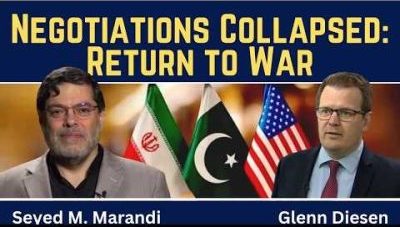
Seyed M. Marandi: Negotiations Collapsed – Return to War
or go to
Aletho News Archives – Video-Images
From the Archives
Wartime internment camps in Australia
National Archives of Australia
World War I
During World War I, for security reasons the Australian Government pursued a comprehensive internment policy against enemy aliens living in Australia.
Initially only those born in countries at war with Australia were classed as enemy aliens, but later this was expanded to include people of enemy nations who were naturalised British subjects, Australian-born descendants of migrants born in enemy nations and others who were thought to pose a threat to Australia’s security.
Australia interned almost 7,000 people during World War I, of whom about 4,500 were enemy aliens and British nationals of German ancestry already resident in Australia.
Records of World War I internment camps
World War II
During World War II, Australian authorities established internment camps for three reasons – to prevent residents from assisting Australia’s enemies, to appease public opinion and to house overseas internees sent to Australia for the duration of the war.
Unlike World War I, the initial aim of internment during the later conflict was to identify and intern those who posed a particular threat to the safety or defence of the country. As the war progressed, however, this policy changed and Japanese residents were interned en masse. In the later years of the war, Germans and Italians were also interned on the basis of nationality, particularly those living in the north of Australia. In all, just over 20 per cent of all Italians resident in Australia were interned. … continue
Blog Roll
 Aletho News
- Seyed M. Marandi: Negotiations Collapsed – Return to War
- Tomorrow’s naval blockade showdown
- ‘Israel’ attacks civilians to hide its embarrassing military failures & out of pure sadism
- Any Foreign Military Vessel Approaching Hormuz Under Any Pretext ‘Will Be Dealt With Severely’: IRGC
- Diplomats slam US negotiators’ performance in Iran talks
- Trump Refuses Exit Ramp, War with Iran will Continue
- Trump Says US Naval Blockade in Strait of Hormuz Will Begin Shortly
- US, Iran end 21-hour talks without agreement
- US IRAN TALKS: Who Are the Crazy Ones Here? /Lt Col Daniel Davis
- Talks with the US end without a deal over excessive US demands: Iran
- If Americans Knew
- US-Iran ceasefire negotiations make zero progress – Daily Update
- Pro-Israel ‘Thinktanks’ and Individuals who Influence U.S. Foreign Policy
- Mearsheimer reveals how Israel dictates US policies on Iran, Gaza – video
- After killing 350+, Israel still has a “score to settle” with Lebanon before ceasefire – Daily Update
- Military aid to Israel emerges as the latest political litmus test for Democrats
- The only Palestinian children’s rights organization closes following years-long Israeli campaign against it
- ‘I Can’t Forget the Smell’: Lebanese Reel After Israel Kills Over 300 in Single Day
- DNC Shoots Down Resolutions Calling Out AIPAC and Limiting Arms to Israel
- TCN: Is Israel Blackmailing President Trump?
- Israel killed at least 303 Lebanese yesterday – who were they? Daily Update
- No Tricks Zone
- Cave Discovery Reveals Today’s Desert Climates Were Recently Far Warmer, Wetter, Teeming With Life
- German Expert: Heat Dome Led To Record Temps In Western USA…Warmer In 1934, 1936
- New Study: No Linear Warming Or Glacier Retreat Along Northern Antarctic Peninsula Since 1980s
- An Inconvenient Tree: Uncovered In Alps… Europe Much Warmer Than Today 6000 Years Ago
- New Study Reports A 60% Slowdown In Greenland’s Ice Loss Rate In The Last Decade
- Low Intensity Tornado Wrecks Major Solar Farm, Creating A Potential Toxic Dump
- New Study Finds Warming Saves Lives…Cold Temperatures 12 Times More Deadly Than Excess Heat
- German Science Blog Accuses PIK Climate Institute Of Hallucinating Climate Tipping Points
- Devastating Assessment Of Comirnaty Vaccine By Former Senior Pfizer Europe Toxicologist
- New Study: CO2 Is ‘Effectively Negligible’ As An Explanatory Climate Change Factor Since 2000
 Aletho News