Could Hungary’s fight over oil change course of Ukraine War?
By Ian Proud | Responsible Statecraft | February 26, 2026
The EU’s plan to impose its 20th package of sanctions against Russia crashed against a seemingly immovable wall of Hungarian resistance this week, when the Central Europe country used its veto to block it.
That is not necessarily the end of the matter, yet I hope it is the beginning of the end, with Europe finally choosing peace over war.
At a fraught EU Council meeting on February 23, agreement could not be reached on a new round of EU sanctions, leading the EU High Representative for Foreign Policy and Security, Kaja Kallas, to announce, “I deeply regret that we did not reach an agreement today, given that tomorrow [February 24] is the solemn anniversary of the start of this war.”
Hungarian resistance to collective decisions on Ukraine policy has been overcome before. In June 2025, Prime Minister Viktor Orban stepped out of the European Council meeting to allow a unanimous vote of those present to extend existing EU sanctions against Russia. Yet, this latest blockage is fueled by growing bad blood between Hungary and its eastern neighbour Ukraine, over the issue of oil.
It is an uncomfortable reality that Europe has continued to purchase Russian oil and gas throughout the war, in the face of President Trump’s exhortations to stop purchases. Gas imports still accounted for 12% of Europe’s total as of October 2025. And while Hungary and Slovakia are the largest importers, other western European powers such as France, the Netherlands, and Belgium, have also continued purchases. The addiction is a hard habit to break, and for largely domestic reasons.
As Gladden Pappin, the American President of the Hungarian Institute for International Affairs, has pointed out, if Hungary agreed to sanction Russian oil and gas, “Hungarian gas at the pump doubles overnight. Household energy prices triple or quadruple, and the German industry moving to Hungary immediately halts. Whatever government imposes that policy will collapse within weeks.”
While sanctioning Russia is a geopolitical tool, it has real world consequences for regular citizens across Europe. Germany has seen its economy tip into deindustrialization since the start of the war in Ukraine and the progressive cutting off of access to Russian [energy], shedding over 250,000 industrial jobs, a contraction of 4.3%, amid widespread factory closures.
Sanctions require European states voluntarily to choose economic self-harm ahead of an end to the war in Ukraine. And in Hungary and Slovakia, that is not a palatable choice, not least ahead of a hotly contested election in Hungary on April 12. Prime Minister Viktor Orban has framed the election as a choice between “war or peace.”
Four years after the war in Ukraine started, increasing numbers of Europeans are desperate for peace and not war, not just for their long-term personal security, but for the benefits to their check books.
Yet that runs counter to Ukraine, which frames the war as existential to them. So, they have pushed Europe to go tougher and faster against Russia’s economy and are doing everything they can to add further pressure. Ukraine launched drone attacks against the Druzhba pipeline network which supplies oil to Hungary and Slovakia, cutting this supply route on January 27.
It is a statement of the crazy world in which we live, that Ukraine can attack facilities that supply EU and NATO countries without opprobrium in the west. Unfortunately, out of sympathy for Ukraine’s war plight, EU member states are quick then to criticize Hungary and Slovakia for taking retaliatory action. Poland’s Foreign Minister, Radek Sikorski, labeled the Hungarian veto as “an escalation.” And yet he doesn’t have to answer to Hungarian voters.
Blocking the EU’s 20th sanctions package is one measure. Hungary and Slovakia have also blocked the promised 90 bln euro loan package for Kviv to keep the war effort going. They have also threatened to cut off supplies of gas, electricity, and diesel to Ukraine (as it no longer imports gas from Russia, Ukraine relies of supplies piped in from proximate EU countries). Ukrainian media has predictably labeled this energy blackmail. Not least given the enormous electricity and heating shortages Ukraine faces in light Russia’s campaign of strategic bombing against their energy infrastructure.
At a TV interview that I attended recently, a Ukrainian MP pointed out that she uses a local app that tells her how many hours of electricity her building will receive each day. Who in Europe would want to live in such conditions, not the least during a bitterly cold winter?
Of course, the stark brutality of the air attacks and Ukraine’s energy crisis drives Europe’s mainstream politicians to pursue more punitive actions against Russia, including economic sanctions. Yet the inescapable reality is that the EU’s 20th sanctions package amounts to more of the same — tactical scrapes at the bottom of the barrel — to bear down on Russia’s energy exports and financial services sector, together with small beer restrictions on some other goods’ exports.
The President of the European Commission, Ursula von der Leyen, claims that Russia’s energy exports were cut by 24% in 2025. And yet, look at the real data, and you’ll see that Russia’s exports in 2025, at $419.4 billion, were down just 3.3% on 2025, with an overall current account surplus of $41.4 billion. That surplus will go into purchases of gold, which now accounts for almost one half of Russia’s soaring international reserves, which stand at $833 billion.
Meanwhile, Ukraine’s current account deficit more than doubled to $31.9 billion in 2025, or 14.9% of GDP, liquidity that will need to be met by printing money or donations from Europe.
At some point, European leaders need to ask themselves, after 19 rounds of sanctions already, “is this really working?”
It’s not only that economic sanctions against Russia hit diminishing marginal returns soon after the war in Ukraine started four years ago. But that the addition of new sanctions, self-evidently, disincentivizes Putin from settling for peace. Yes, Russia’s economy is undoubtedly feeling the pain, through high inflation and interest rates, plus slowing growth. But there has never been a time when it appeared that, for economic reasons, Russia was under greater pressure to end the war than Ukraine and its European sponsors.
So, and as I have said before, sanctions, and their phased removal, could play a positive role in leveraging an end to the war. Continuing to blame Hungary and Slovakia for the continued intransigence in blocking yet another round of EU sanctions misses this point.
Ian Proud was a member of His Britannic Majesty’s Diplomatic Service from 1999 to 2023. He served as the Economic Counsellor at the British Embassy in Moscow from July 2014 to February 2019. He recently published his memoir, “A Misfit in Moscow: How British diplomacy in Russia failed, 2014-2019,” and is a Non-Resident Fellow at the Quincy Institute.
U.S. General Caine Warns: STRIKING IRAN is a HUGE RISK /Glenn Diesen & Lt Col Daniel Davis
Daniel Davis / Deep Dive – February 23, 2026
The Pentagon is raising concerns to Trump about an extended military campaign against Iran, advising that war plans being considered carry risks including U.S. and allied casualties, depleted air defenses and an overtaxed force.
The warnings voiced by Gen. Dan Caine, the chairman of the Joint Chiefs of Staff, within the Defense Department and during meetings of the National Security Council, current and former officials said, but other Pentagon leaders also have noted similar worries.
Such discussions are always part of the contingency-planning process before military operations, some officials said, noting that military leaders—especially the Joint Chiefs chair—provide prudent estimates of possible casualties and other potential costs of military operations.
Hungary Blocks 20th Package of Anti-Russia Sanctions, $106B Loan to Ukraine – Szijjarto
Sputnik – 23.02.2026
Hungary blocked the 20th package of anti-Russia sanctions, as well as the 90 billion euro ($106 billion) loan to Ukraine, due to Kiev’s shutdown of the Druzhba oil pipeline, Hungarian Foreign Minister Peter Szijjarto said on Monday.
“At today’s meeting, I made it clear that we do not support the 20th package of sanctions and do not give permission for this. And I made it clear that we would not agree to Ukraine receiving a military loan of 90 billion euros. Because the Ukrainians cannot blackmail us, they cannot jeopardize the security of Hungary’s energy supply by conspiring with Brussels and the Hungarian opposition,” Szijjarto told reporters, following a meeting of the EU Council of Foreign Ministers.
Hungary considers Ukraine’s suspension of Russian oil transit through Druzhba as encroachment on its sovereignty, Szijjarto concluded.
The termination of Russian oil supplies via Druzhba pipeline was the result of collusion between Kiev and Brussels, Szijjarto said.
“It turned out to be a shocking fact that Ukraine is really colluding with Brussels, really colluding with the European Commission headed by von der Leyen in terms of blocking the supply of [Russian] oil [via Druzhba pipeline]. It was finally revealed and proven today,” Szijjarto told reporters, following a meeting of the EU Council of Foreign Ministers.
On February 18, Szijjarto said that Hungary stopped supplying diesel fuel to Ukraine. He said this was a response to Kiev’s blackmail, as Ukraine is not resuming the transit of Russian oil to Hungary via the Druzhba pipeline for political reasons, trying to cause an energy crisis in the country and influence the April elections.
The EU countries are preparing for a protracted conflict in Ukraine and want to send their troops there as soon as possible, the minister added.
Ukraine demands 155 billion euros ($183 billion) from the EU only for the maintenance of the army in 2026, a loan of 90 billion euros is not enough for it, Peter Szijjarto said.
“Colleagues have made it clear that the 90 billion euros previously agreed upon and now blocked by Hungary are not enough to meet Ukraine’s financial needs, and in the near future it is necessary to make a decision on sending even more resources, even more money to Ukraine. This was also confirmed by the Foreign Minister of Ukraine, who said that this year they need 155 billion euros only for the maintenance of the army,” Szijjarto told Hungarian journalists, following a meeting of the Council of Foreign Ministers of the EU countries.
Hungary’s Blocking of EU Loan to Ukraine May Jeopardize IMF Funding – Reports
Sputnik – 22.02.2026
Hungary’s blocking of a 90 billion euro ($106 billion) EU loan to Kiev could impact a loan to Ukraine worth over $8 billion from the International Monetary Fund (IMF) that has not yet been approved, the Financial Times newspaper reported on Sunday.
On Friday, Hungarian Foreign Minister Peter Szijjarto said that Budapest would block the EU’s loan as Kiev failed to restore oil transit via the Druzhba pipeline. On Saturday, Hungarian Prime Minister Viktor Orban said that Budapest, following Bratislava, was weighing cuts to electricity supplies to Ukraine.
According to the report, the IMF loan depends on plugging Ukraine’s anticipated budget shortfall, which was slated for closure by April using EU funds.
“Without that [EU and IMF] support, Ukraine’s economy would most likely collapse,” Maksym Samoiliuk, an economist at the Kiev-based Centre for Economic Strategy, was quoted as saying by Financial Times.
On December 19, 2025, a summit in Brussels concluded with the EU temporarily abandoning plans to seize Russian state assets and instead agreeing to extend a 90 billion euro loan to Ukraine from the EU budget. Hungary, Slovakia and the Czech Republic refused to take on responsibility for the loan.
On November 26, 2025, the IMF said it had reached a preliminary expert-level agreement on a new Extended Fund Facility arrangement for Ukraine worth approximately $8.2 billion.
EU members divided on 20th Russia sanctions package – media
RT | February 20, 2026
EU ambassadors reportedly failed to reach an agreement on a 20th sanctions package against Russia during a meeting on Friday, Reuters has reported, citing diplomatic sources.
The proposed measures, which Brussels said it hopes to finalize by the fourth anniversary of the Ukraine conflict’s escalation on Monday, face opposition from several member states over key provisions.
The main sticking point is a proposed full ban on maritime services for Russian oil tankers which would scrap the existing price cap system, prohibiting all EU companies from providing insurance, banking, shipping, or port access to any vessel carrying Russian crude.
Greece and Malta, two countries with powerful maritime industries, have reportedly emerged as the main opponents of the new restriction, warning that a unilateral EU ban without full G7 backing would cripple their economies and push shipping business toward competitors in India and China.
They have also opposed possible restrictions on the port of Karimun in Indonesia. Italy and Hungary have been reluctant to support sanctions against the port of Kulevi in Georgia. Madrid and Rome have objected to placing sanctions on one of Cuba’s banks.
Furthermore, Hungary and Slovakia have placed a “general reserve” on the entire package, leveraging their veto power to secure assurances over Russian oil supplies via the damaged Druzhba pipeline which have been halted since January.
Reuters reported that EU diplomats could reconvene over the weekend to discuss the proposed sanctions again, ahead of Monday’s Foreign Affairs Council meeting, where ministers hope to formally adopt the package.
Moscow has repeatedly denounced the EU’s sanctions as illegitimate and counterproductive, saying that they have had little effect on Russia’s economy, while decimating Europe’s.
A number of European officials have also consistently opposed the restrictions, with Slovak Prime Minister Robert Fico arguing that the EU is “only hurting itself” with the sanctions, describing previous packages as bringing “no benefit to member states.”
With Ukraine blamed for cutting oil flows to Hungary, Croatia also refuses to transfer Russian oil in violation of EU law
Election interference?
Remix News | February 20, 2026
The energy supply dispute has reached a new level in Central Europe after Zagreb made it clear that it will not allow Russian crude oil to be transported via the JANAF pipeline to Hungary and Slovakia.
Hungarian Foreign Minister Péter Szijjártó announced this week that Hungary would stop the transport of diesel fuel to Ukraine, after Ukraine halted the transit of Russian oil to Hungary via the Friendship pipeline on Jan. 27 and has not resumed it since. Shortly afterwards, Slovak Prime Minister Robert Fico also announced that the Slovnaft oil refinery would stop exporting diesel to Ukraine.
Szijjártó made it clear that Hungary expects Croatia to comply with EU law and step in to fill the shortage created for Hungary and Slovakia due to Kyiv’s refusal to reopen the Druzhba pipeline.
Economy Minister Ante Susnjar has indicated that Croatia is ready to help the two countries with oil from non-Russian sources, in accordance with European Union legislation and OFAC rules, but Hungary has countered that this is not in compliance with EU rules, which Szijjártó has pointed out state that if land transit of Russian crude oil is impossible, Budapest and Bratislava can also purchase from Russia by sea.
Susnjar said that JANAF is capable of transporting 15 million tons of oil per year, which exceeds the combined capacity of the Százhalombatta and Bratislava refineries, so there are no technical obstacles. He added that transportation fees account for only about one percent of the total cost of oil. According to him, as explained by Index, the real issue is that Russian oil is about 30 percent cheaper than alternatives.
Prime Minister Andrej Plenkovic confirmed that Croatia is able to guarantee 12 million tons of oil per year for Hungary and Slovakia, which would fully cover the refining needs of both countries.
Meanwhile, the European Commission has also intervened following an extraordinary meeting. “We have convened an ad hoc meeting of the Oil Coordination Group to discuss the impacts of the supply disruption and possible alternatives to fuel supply,” said Anna-Kaisa Itkonen, spokesperson for the European Commission.
She further added, as quoted by Euronews, “We are in contact with Ukrainian authorities on the timeline of repairing this (Friendship) pipeline. It is very, very important that this is not misinterpreted to mean that we would be exerting any kind of pressure on Ukraine.”
Still, the EU commission has made it clear that they are concerned about Ukraine’s own energy security, indicating they do not want to see Hungary and Slovakia blocking diesel fuel from the war-torn country. Hungary also stated yesterday that it may decide to cut off electricity and natural gas transports to Ukraine as well, as confirmed by Reuters.
Szijjártó stated that they are in constant contact with the Ukrainian authorities about the schedule for repairing the pipeline. He noted that Hungary expects the European Commission to comply with European Union rules and that the Brussels body should not behave like the “Ukraine Commission.” He also called on them to take the EU rules on the import of Russian crude oil seriously and to signal to the Croatians that they cannot refuse the sea transport of Russian oil from Hungary and Slovakia during the outage of the Friendship pipeline.
The Hungarian foreign minister has also made it clear that there are no physical or technical obstacles to restarting the oil pipeline, claiming that Zelensky’s refusal to restore service on the Druzhba is election interference, given it plays directly into the opposition’s hands right before parliamentary elections in Hungary this April.
Ukrainian disruption of Russian oil pipeline triggers emergency in EU state
RT | February 18, 2026
Slovakia has declared a state of emergency following Ukraine’s decision to block vital Russian oil supplies to the country, TASR news agency has reported.
The state of emergency will be in effect from Thursday until September 30 at the latest, it added, citing Kiev’s refusal to transit Russian oil to the country and the ongoing blockade of the Druzhba pipeline network.
The Slovak government will release strategic oil reserves to ensure one month of operation for the country’s only refinery, in Bratislava, the agency wrote on Wednesday.
Slovakia will also import oil via Croatia’s Adria pipeline, an alternative route bypassing Druzhba, although that supply could take up to 30 days to reach the facility.
Slovak Economy Minister Denisa Sakova said the Czech government was also examining possibilities for supplying oil to Bratislava.
Slovak Prime Minister Robert Fico announced after a government meeting on Wednesday that oil company Slovnaft was stopping the export of diesel to Ukraine, with all products now destined for the domestic market.
He also previously stated that Slovakia may stop supplying electricity to Ukraine over the suspension of oil supplies via the Druzhba pipeline. According to him, Ukraine’s Vladimir Zelensky is refusing to cooperate on the issue.
While Ukraine has claimed the transit halt was caused by a Russian attack in late January, Slovakia and neighboring Hungary have insisted the pipeline is operational, but oil is not flowing due to a political decision in Kiev.
Fico said on Sunday that Kiev had delayed the restart of oil flows in order to pressure Budapest to drop its veto on Ukraine’s future EU membership. Orban has vowed to block any accelerated accession, warning that admitting the country would drag the bloc into direct conflict with Russia.
Hungary and Slovakia are heavily dependent on Russian crude and hold exemptions from EU sanctions allowing them to import Russian crude by sea if pipeline transit becomes impossible. On Monday, Budapest announced plans to invoke the temporary exemption and import seaborne Russian crude via Croatia.
Kaja Kallas: an uncomfortable figure useful to the EU’s Russophobic purposes
By Lucas Leiroz | Strategic Culture Foundation | February 18, 2026
In recent days, videos of Europe’s chief diplomat, Kaja Kallas, have gone viral on social media, showing her making statements marked by disconnected reasoning, weak associations, and conclusions that do not logically follow from the premises presented. At the same time, she delivered yet another of her “unusual” speeches, declaring that Europe would demand a reduction in the size of the Russian Army – an assertion made without any reference to legal, logistical, or strategic foundations to support such a measure, making the inconsistency of her position evident.
This statement highlights not only the European diplomacy’s disconnect from geopolitical reality, but also the symbolic function of certain figures who maintain positions of international visibility. Kallas, whose political trajectory was consolidated in Estonia with a strongly anti-Russian discourse, has become a piece of ideological rhetoric: she plays the role of a “watchdog” of European Russophobia and does not seem to mind being seen as “foolish” for her irrational public statements.
Beyond this aspect, there is also a practical function in this dynamic. Domestically, Kallas faced considerable political wear in Estonia: her family circle maintained commercial ties with Russia, and nationalist sectors criticized her for economic policies that allegedly weakened the country’s economic stability. In this sense, her promotion to the head of European diplomacy served as a convenient solution – removing a worn-out figure from the domestic scene while at the same time making use of her “angry” stance toward Moscow to sustain the anti-Russian narrative at the continental level.
Kallas’s performance, however, does not represent strategic autonomy. The European Union’s foreign policy is centralized in the presidency of the European Commission, under the leadership of Ursula von der Leyen. In this context, Kallas essentially fulfills the role of spokesperson and executor of guidelines defined by the bloc’s hard core, which coordinates sanctions, defense policies, and alignment with NATO and the United States. The contrast between her performative statements and her real decision-making capacity reflects a strategy that prioritizes confrontational rhetoric over political pragmatism.
From a geopolitical perspective, the idea of unilaterally reducing Russian military personnel is unrealistic. Moscow interprets the current conflict as part of a structural dispute over NATO expansion and the strategic containment promoted by the West. Symbolic pressure or European public declarations, devoid of negotiation mechanisms or concrete coercive instruments, produce no practical effect and, on the contrary, tend to reinforce Russian defensive positions, consolidating the perception of permanent hostility.
Moreover, the recent tensions between Kallas and von der Leyen are telling. Kallas reportedly calls her a “dictator” for centralizing power in the Commission – as if the entire EU bureaucratic structure were not designed precisely to maintain that kind of centralization. It appears that von der Leyen represents the transnational elites that control Europe, while Kallas is merely a disposable piece on this chessboard – without any real right to opinion or participation in the bloc’s decision-making process.
Ultimately, Kallas remains, in the racist European view that she herself evokes, a “peripheral” figure of Soviet origins, with a Finno-Ugric native language – hardly “European” in the strict sense, no matter how much she tries to “Europeanize” herself by hating Russia. For Europeans, she is an uncomfortable figure who nonetheless serves a useful purpose: escalating tensions with Russia, which greatly benefits von der Leyen’s “anonymous bosses.”
In this scenario, Kallas embodies a structural tension: her peripheral origins and aggressive posture make her useful as a representative of a confrontational narrative, while also exposing the superficiality of certain European political decisions. The bloc maintains tough rhetoric and ideological mobilization but lacks a realistic strategy capable of dealing with the balance of power in Eurasia – where Europe is a weak and declining pole, not a “superpower,” as Kallas often claims.
If the EU truly intends to preserve its strategic autonomy and contribute to continental stability, it will need to abandon performative declarations and understand that any rearrangement of European security depends on direct negotiations with Moscow, recognition of military and geopolitical realities, and the formulation of measures that combine firmness with pragmatism. Unilateral demands – such as reducing Russian military personnel – are nothing more than symbolic rhetoric, incapable of altering the real dynamics of the conflict.
This dynamic also reveals the hidden side of European politics: the use of peripheral figures, often marginalized or viewed with prejudice, to materialize maximalist discourses that consolidate a narrative of confrontation, while decision-making remains concentrated in a small core of power, far removed from the media statements that go viral and capture public attention.
Romania’s stolen elections were only the start: Inside the EU’s war on democracy
How Brussels’ Digital Services Act has been used to pressure platforms and electoral control in member states
RT | February 18, 2026
Romania’s 2024 presidential election was already one of the most controversial political episodes in the European Union in recent years. A candidate who won the first round was prevented from contesting the second. The vote was annulled. Claims of Russian interference were advanced without public evidence.
At the time, the affair raised urgent questions about democratic standards inside the EU. Newly disclosed documents reviewed by RT Investigations go further. They indicate that the annulment of the Romanian election was accompanied by sustained efforts to pressure social media platforms into suppressing political speech – efforts coordinated through mechanisms established under the EU’s Digital Services Act.
What appeared to be a national political crisis now looks increasingly like a test case for how far EU institutions are willing to go in intervening in the political processes of member states.
The Russian narrative. Again.
On February 3, the US House Judiciary Committee published a 160-page investigation into how the EU systematically pressures social media companies to alter internal guidelines and suppress content. It found Brussels orchestrated a “decade-long campaign” to censor political speech across the bloc. In many cases, this amounted to direct meddling in political processes and elections of members, often using EU-endorsed civil society organizations. The report features several case studies of this “campaign” in action in EU member states, the gravest example being Romania.
It was around the November 2024 Romanian presidential election, the committee found, that the European Commission“took its most aggressive censorship steps.” In the first round, anti-establishment outsider Calin Georgescu comfortably prevailed, and polls indicated he was en route to win the second by landslide. However, on December 6, Bucharest’s constitutional court overturned the results. While a court-ordered recount found no irregularities in the process, a new election was called, in which Georgescu was banned from running.
By contrast, Romania’s security service alleged Georgescu’s victory was attributable to a Russian-orchestrated TikTok campaign. The allegation was unsupported by any evidence whatsoever. Romanian President Klaus Iohannis went to the extent of claiming this deficit was inversely proof of Moscow’s culpability, as the Russians supposedly “hide perfectly in cyber space.” Despite the BBC reporting that even Romanians “who feared a president Georgescu” worried about the precedent set for their democracy by the move, that narrative has been endlessly reiterated ever since.
The US House Judiciary Committee report comprehensively disproves the charge of Russian meddling in the Romanian election. Documents and emails provided by TikTok expose how the platform not only consistently assessed Moscow “did not conduct a coordinated influence operation to boost Georgescu’s campaign,” but repeatedly shared these findings with the European Commission and Romanian authorities. This information was never shared by either party. But the contempt of Brussels and Bucharest for democracy and free speech went much further.
Digital Services Act in action
The committee found Romanian officials egregiously abused the EU’s controversial Digital Services Act before the 2024 election “to silence content supporting populist and nationalist candidates.” Bucharest also repeatedly lodged content takedown requests outside of the formal DSA process, using what committee investigators call “expansive interpretations of their own power to mandate removals of political content.” This amounted to a “global takedown order,” with authorities perversely arguing court demands to block certain content for local audiences were “mandatory not only in Romania.”
This was no doubt a ploy to prevent outsiders, in particular the country’s sizable diaspora, from accessing content featuring Georgescu. His “Romania First” agenda proved quite popular with emigres, numbering many millions due to mass depopulation since 1989. Perhaps not coincidentally, his diaspora supporters have been widely maligned by Western media as fascist enablers. Still, even critical mainstream reports admit they and the domestic population have legitimate grievances, due to Romania’s crushing economic decline in the same period.
Bucharest would clearly stop at nothing to ensure the ‘correct’ candidate prevailed in the first round. Removal demands were plentiful, and on the rare occasions that legal justification was provided, it was based on a “very broad interpretation” of the election authority’s power. For example, TikTok was ordered to remove content that was “‘disrespectful and insults the PSD party’” – a left-wing political faction that was part of the country’s ruling coalition at the time. TikTok twice sought further details of the grounds for this request, but none was forthcoming.
Once Georgescu prevailed, and before the election was annulled, Romanian orders became even more aggressive. Regulators told TikTok that “all materials containing Calin Georgescu images must be removed,” again without any legal basis whatsoever. This proved a step too far for the platform, which refused to remove the posts. It wasn’t just naked political pressure to which TikTok refused to bend. Brussels and Bucharest were assisted first in electoral fraud, then autocratic annulment of the vote’s legitimate result, by local EU-sponsored NGOs.
These were organizations “empowered by the European Commission to make priority censorship requests – either as [EU Digital Service Act] Trusted Flaggers or through the Commission’s Rapid Response System.” Despite their supposed neutrality, the NGOs “made politically biased content removal demands.” For example, the EU-funded Bulgarian-Romanian Observatory of Digital Media “sent TikTok spreadsheets containing hundreds of censorship requests in the days after the first round of the initial election.” The committee characterized much of the flagged content as “pro-Georgescu and anti-progressive political speech.”
This included posts related to “Georgescu’s positions on environmental issues and Romania’s membership in the Schengen Area, and the EU’s system of open borders.” In other words, this was content espousing standard, popular conservative viewpoints, which are absolute anathema to Brussels and Bucharest’s pro-EU elite. Since the committee’s report was released, references to the Bulgarian-Romanian Observatory of Digital Media’s EU financing have been deleted from its website.
After the vote
The day after the election was annulled, TikTok wrote to the European Commission, stating plainly it had not found or been presented with evidence of a coordinated network of accounts promoting Georgescu. Undeterred by TikTok’s denials and scarcely bothered by the lack of material evidence, the European Commission pressed forward and demanded information about TikTok’s political content moderation practices and enquired about “changes” to its “processes, controls, and systems for the monitoring and detection of any systemic risks.”
The European Commission also used the “still-unproven narrative” of Russian meddling “to pressure TikTok to engage in more aggressive political censorship.” In response, the platform informed the commission that it would censor content featuring the terms “coup” and “war” – clear references to the perception that democratic processes had been undermined in Romania – “for the next 60 days to mitigate the risk of harmful narratives.” But this was still insufficient for the censorship-crazed commission.
On December 17, 2004, the European Commission opened a formal investigation into TikTok over a “a suspected breach of the DSA” – in other words, failing to sufficiently censor content before and after the first round of Romania’s presidential election. The platform was accused of failing to uphold its “obligation to properly assess and mitigate systemic risks linked to election integrity” locally. EU efforts to bring the platform to heel didn’t end there, either.
In February 2025, TikTok’s product team was summoned for a meeting with the EU’s Directorate-General for Communications Networks, Content and Technology. There, they were lectured over the platform’s supposedly “deceptive behavior policies and enforcement” and “potential[ly] ineffective” DSA “mitigation” measures. The US House Judiciary Committee found that the European Commission’s decision to meet TikTok’s product team, “rather than the government affairs and compliance staff whose job it was to manage TikTok’s relationship with the Commission, indicates the European Commission sought deeper influence over the platform’s internal moderation processes.”
Georgescu and the many Romanians who wished to elect him president were punished even more severely. Two weeks after TikTok was threatened by the European Commission, the upstart hopeful was arrested in Bucharest en route to registering to run in the new election that May. Georgescu was charged with “incitement to actions against the constitutional order.” Since then, he has been accused by authorities of plotting a coup and involvement in a million-euro fraud.
When Georgescu’s case finally reached trial this February, these accusations were dropped. He is instead charged with peddling “far-right propaganda.” A report on his prosecution from English-language news website Romania Insider repeated the fiction he owed his first-round victory to a “targeted social media campaign,” managed by “entities linked to Russia.” In the meantime, establishment-preferred candidate Nicusor Dan won the presidency. No doubt satisfied with the integrity of the democratic process given Georgescu was barred from participating, Romania’s Constitutional Court quickly validated the result.
Beyond Romania
Per the US House Judiciary Committee, Romania’s stolen 2024 presidential election is the most extreme example of the EU and member state authorities conspiring to subvert democracy and trample on popular will. But it is just one of many. Since the Digital Services Act came into force in August 2023, the European Commission has pressured platforms to censor content ahead of national elections in Slovakia, the Netherlands, France, Moldova, and Ireland, as well as the EU elections in June 2024.
“In all of these cases… documents demonstrate a clear bias toward censoring conservative and populist parties,” the committee concluded. Ahead of the EU elections, TikTok was pressured into censoring over 45,000 pieces of purported “misinformation.” This included what the report deemed “clear political speech” on topics such as migration, climate change, security and defense, and LGBTQ rights. There is no indication Brussels has been deterred from its quest to prevent the ‘wrong’ candidates being elected to office in member states, or citizens expressing dissenting opinions.
In fact, we can expect these efforts to ramp up significantly. For one, the US committee’s bombshell report generated almost no mainstream interest, indicating Brussels can and will get away with it again. Even more urgently, in April, Hungary goes to the polls. Already, the narrative that ruling conservative Viktor Orban intends to rig the vote to secure victory is being widely perpetuated. And the EU’s censorship apparatus stands ready to validate that narrative, regardless of truth, and popular will.
THE CHILDREN GAMBIT
How Europe’s Political Class Weaponises Innocence — and Has Been Building This Machine for Years
Islander Reports | February 17, 2026
Before we start. These platforms aren’t innocent. They’ve extracted billions from our attention, manipulated our children’s dopamine cycles, censored truth tellers, handed our data to surveillance capitalism and slept soundly every night. Hold that. And then read what follows anyway — because what’s happening right now is something else entirely.
Let’s start with the money. Because the money never lies.
€1.2 billion. Ireland’s Data Protection Commission. Meta. May 2023. The largest GDPR fine in history, for routing EU citizen data to the United States without adequate protection. A record that lasted about five minutes.
€530 million. TikTok. May 2025. Same Irish authority. For sending European user data to China and then, this is the part they buried in the press release — lying about it during the inquiry. TikTok told regulators throughout the investigation it wasn’t storing EEA data on Chinese servers. In February 2025, they quietly admitted it had been. All along.
€345 million. TikTok again. 2023. Children’s data. €14.5 million from the UK’s Information Commissioner’s Office on top of that, same year, same issue. €91 million to Meta Ireland in September 2024 — they stored hundreds of millions of user passwords in plaintext. Just sitting there. No encryption. Exposed. €390 million to Meta the year before, for forcing users to accept personalised advertising as a condition of accessing their own accounts.
And then December 5th, 2025. The European Commission handed X — formerly Twitter, now Elon Musk’s megaphone and the primary target of every European leader who’s discovered that their citizens can organise against them online — a €120 million fine. First ever penalty under the Digital Services Act. For misleading users about the blue verification badge, concealing advertiser identities, and blocking government-approved researchers from accessing algorithmic data.
Over €2.5 billion. Just the verdicts. Just the ones that made it to conclusion. Fourteen active DSA proceedings still grinding through the machinery, with Meta and TikTok each facing potential fines of 6% of global revenue. That’s €9.9 billion for Meta. €9.3 billion for ByteDance. Numbers large enough to restructure companies. Numbers designed to make platforms obedient.
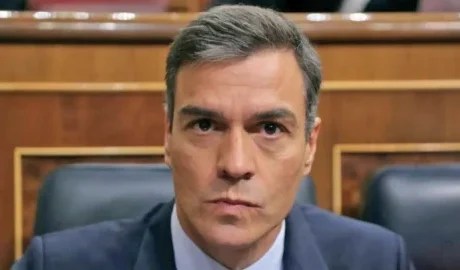
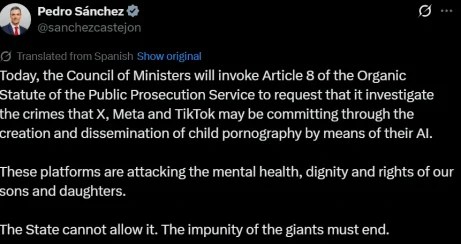
So when Pedro Sanchez walked out this morning and announced that Spain’s Council of Ministers would invoke Article 8 of the Organic Statute of the Public Prosecution Service — sic prosecutors onto X, Meta and TikTok for “crimes they may be committing” through AI-generated child pornography — understand what you’re looking at.
This isn’t a regulator at the end of its rope. This is a political class that has already built the machine, tested the machine, extracted billions through the machine — and is now deciding what else the machine can reach.
“May Be Committing”
That’s the phrase. Not “has committed.” Not “is committing.” May be. Sanchez posted it on X — the very platform he’s threatening to prosecute — and the media swallowed it whole, no questions about evidence or methodology or whether a public prosecutor’s office is the right instrument for making technical judgements about AI image generation pipelines.
The Spanish government claims Grok produced three million sexualised images in eleven days, including over 23,000 involving minors. Strong numbers. Specific numbers. Precise to the point of being designed to prevent challenge — because you can’t interrogate evidence you haven’t been shown, and asking to see it means you’re defending the indefensible. Not one published source. Not one independent methodology. They arrived complete, ready-made for outrage.
That’s the genius of it. The children gambit works precisely because you cannot question it without becoming the villain of the story.
Pavel Durov said it plainly — and look, nobody should hold Durov up as a civic virtue. But he’s spent years watching governments use platform regulation as a control mechanism, and when he says Sanchez’s moves aren’t safeguards but steps toward total control, he’s speaking from operational experience. He’s seen this architecture before. From the inside.
Here’s what this moment actually is, in the longer register. Every time a Western liberal government needs to consolidate control over the information environment, it finds a victim group whose protection cannot be questioned. In the 20th century they used communists, terrorists, drug dealers. The 21st century discovered something more powerful — children. Unimpeachable. Unchallengeable. A shield so morally absolute that any surveillance infrastructure built behind it arrives pre-legitimised. Sanchez didn’t invent this playbook. He’s just the current page.
Here’s the question nobody in any press conference asked today. If you actually wanted to protect children from AI-generated abuse material — if that were the genuine, singular, burning priority — what would you do?
You’d hunt the producers. Fund specialist cyber units with the resources and legal powers to identify, locate and prosecute the people who generate and distribute child sexual abuse material. Build better reporting pipelines so victims and witnesses have direct, fast routes to enforcement. Nail the distribution networks — the forums, the channels, the file-sharing infrastructure where this material moves — with targeted operations and international cooperation. Invest in takedown technology that works at scale. These are the unglamorous tools of actual child protection. Forensic. Technical. Expensive. Slow. Not suited to a press conference.
None of that is what Sanchez announced today. What he announced was prosecution of three of the most visible American technology platforms, with unverified statistics, under a legal mechanism designed for emergency government intervention in the public interest — on the same morning Keir Starmer in London announced restrictions on the last tool of genuine online privacy.
That’s not child protection. That’s the political class treating every ordinary user as a pre-suspect, building infrastructure that watches everyone in order to catch a tiny minority — and using the minority as the justification.
When someone says “think of the children,” look at what they’re actually building. Because what they’re building right now, across Europe and Britain, is an internet where you need permission to speak.
The Network They Actually Protected
Let’s be precise about who’s invoking children to demand your identity.
Jeffrey Epstein ran an international child trafficking operation for decades. Not speculation. Court and DOJ documents. Thirty-five girls identified by Palm Beach police in 2005. FBI reports going back to 1996. Federal prosecutors in Florida prepared a 60-count draft indictment in 2007 — conspiracy, sex trafficking of minors, enticement — charging Epstein and three co-conspirators described as employees who “persuaded, induced, and enticed individuals who had not attained the age of 18 years to engage in prostitution.”
The names of those three co-conspirators were in the indictment. Then US Attorney Alexander Acosta gave Epstein 13 months in county jail with work release six days a week and immunity for “any potential co-conspirators” — in direct violation of federal victims’ rights law. The investigation was shut down. Epstein walked. The network persisted.
Fast forward. January 2026. Department of Justice releases 3 million pages (a mere 2% of what they have in possession) under a law Congress passed unanimously demanding transparency. Victims’ names exposed. Driver’s licenses published. Witness statements naming perpetrators? Redacted. Draft indictment naming co-conspirators? Still redacted. Attorneys for over 200 victims called it “the single most egregious violation of victim privacy in one day in United States history” and accused DOJ of “hiding the names of perpetrators while exposing survivors.”
Congressmen like Thomas Massie had to read names aloud on the House floor before DOJ would release them. Rep. Ro Khanna: “The survivor statements to the FBI naming rich and powerful men who went to Epstein’s island, his ranch, his home — who raped and abused underage girls — they were all hidden.”
Now look at who’s demanding you hand over your identity to speak online.
Keir Starmer — the man proposing VPN bans and bypassing Parliament to regulate your thumbs on a screen — appointed Peter Mandelson as UK Ambassador to the United States in December 2024. Mandelson called himself Epstein’s “best pal” in Epstein’s 50th birthday book. Their friendship continued after Epstein’s 2008 conviction. Emails released in the January 2026 DOJ files show Mandelson received £75,000 in payments from Epstein between 2003-2004, leaked classified government information to him while serving as Business Secretary in 2009-2010, and sent messages suggesting Epstein was wrongfully convicted.
Starmer knew about the Epstein connection when he made the appointment. Mandelson had already resigned from government twice before — conflicts of interest, financial misconduct — and the Epstein relationship was public record. Starmer appointed him anyway. Made him Britain’s top diplomat. Gave him the US ambassador post. When the files dropped and the depth of the relationship became undeniable, Starmer’s chief of staff Morgan McSweeney — who recommended Mandelson — resigned. Then Starmer’s communications director. Then his cabinet secretary. Three senior aides gone in days.
Mandelson is now under criminal investigation by the Metropolitan Police for misconduct in public office. US Congress has requested he submit to interview as part of its investigation into Epstein’s co-conspirators and enablers.
And Starmer — whose government just had VPN downloads surge 1,800% because British citizens don’t trust him with their browsing data — is the man now lecturing the public about online child safety.
This isn’t hypocrisy. It’s consistency. The same political class that gave Epstein’s network immunity and protected co-conspirators for two decades is now demanding total visibility over your identity. The same Department of Justice that hid perpetrators and exposed survivors is the one telling you encryption backdoors are necessary to protect children. The same institutions that shut down the Epstein investigation in 2008 and buried the names in 2026 are building the Digital Identity Wallet, the fact-checker networks, the 24-hour removal mandates.
When they say this is about protecting children, look at the Epstein files. Look at who they protected. Look at who they prosecuted. Look at who they gave immunity. Look at whose names are still redacted while survivors’ information gets published.
Then ask yourself why these exact same people need to know who you are before you’re allowed to speak.
What This Actually Is — Unelected, Unaccountable, and Expanding
Here’s what nobody in the mainstream coverage will say: the regulatory apparatus now targeting these platforms was not built by people you voted for.
Picture what happens when a flag arrives. It’s 2am. A compliance officer at a major platform — a 26-year-old in Dublin or Amsterdam with a policy degree and a quota — opens an alert. A Brussels-appointed body has flagged a post as potentially harmful. The DSA gives the platform 24 hours to act or face fines of up to 6% of global revenue. There’s no named accuser. No court order. No adversarial process. Just a designation, a deadline, and a number so large that hesitation is financially irrational. The post gets removed. The writer wakes up to find their words gone. The politician whose opponents wrote it points elsewhere. The regulator points at the law. The compliance officer points at the process.
Nobody elected any of them.
The European Commission is not elected. Its commissioners are appointed by governments, approved by a parliament most Europeans couldn’t name the composition of — and its enforcement apparatus, the officials running fourteen DSA proceedings and handing out nine-figure fines, operates at a distance from democratic accountability that is not incidental but structural. The “trusted flaggers” embedded in the DSA framework, deputised to mark content for priority removal, are appointed bodies. Ofcom in the UK is a regulator, not an elected chamber. The European Board for Digital Services, coordinating enforcement across 27 countries, answers to no electorate anywhere on earth.
Sanchez and Starmer announce the intention. The technocrats execute it. And when it goes wrong — when the journalist’s article vanishes into a compliance process with no appeal, when the civil servant’s flagging of “migrant hotel” videos turns out to be political interference dressed as child protection — there is no one to vote out. The politician points at the regulator. The regulator points at the law. The law was written in workshops whose attendees you’ll never know. Democratic majorities change. Regulatory architecture doesn’t.
That’s not a flaw in the system. It’s the system working exactly as it was designed.
Britain and the VPN — The Moment the Mask Slipped
The week before Sanchez made his announcement, Keir Starmer was in London saying “no platform gets a free pass.” New powers to restrict social media. AI chatbots brought under the Online Safety Act. Infinite scrolling — the physical act of moving your thumb down a screen — to be regulated. Action in “months, not years.” And crucially, explicitly, openly: bypassing the parliamentary scrutiny that would normally apply to legislation this significant. He said it out loud. The urgency is too great for debate.
But the detail that should stop every person who cares about liberty cold is the VPN proposal.
Let’s be clear about what a VPN actually is, because the political class is clearly hoping you don’t know and don’t care to find out.
A Virtual Private Network encrypts your internet connection and masks your IP address — your digital location, the identifying tag that follows you across every website you visit, that your internet service provider logs, that governments can and do compel ISPs to hand over. When you use a VPN, your traffic passes through an encrypted tunnel. Your ISP sees that you’re connected to a VPN server. That’s it. They cannot see where you go. They cannot see what you say. They cannot read your communications.
This is the tool that domestic abuse survivors use to hide their location from abusers. That investigative journalists use to protect their sources. That activists use to organise without government surveillance. VPNs aren’t a loophole. They’re a lifeline.
After the UK Online Safety Act came into force, VPN downloads in Britain surged by 1,800%. Half the top ten apps in British app stores became VPN services. Ordinary British citizens — not criminals, not paedophiles, not terrorists — reached for the exact same tool that people under authoritarian regimes use to avoid state surveillance, because they didn’t want to submit government-verified identity just to browse normally.
Starmer’s response to that 1,800% signal was to propose restricting VPNs.
Not to reconsider whether the surveillance infrastructure was too invasive. Not to ask why a free people felt the need for anonymity tools in a democracy. No — the tool of privacy is the problem. The loophole to be closed.
And here’s the thing that proves this was never about children. Ban commercial VPNs tomorrow and any determined teenager circumvents it within hours — cheap cloud servers, open proxies, custom tunnels for less than a dollar a month. The only people genuinely impacted are the ones relying on them for legitimate safety: the abuse survivor hiding their location, the journalist protecting a source, the person who simply doesn’t want their ISP building a commercial profile of their private reading habits. A VPN ban doesn’t protect children. It closes the last gap in the surveillance infrastructure — means that when the DSA triggers an investigation into your political commentary, when the Brussels-appointed fact-checker flags your article, there’s nowhere left to go. No tunnel. No private space. Just a 1984 dystopian, digitally enhanced.
The Wallet Nobody’s Talking About
Beneath all of this — quieter, slower, more permanent than any headline — is the piece of architecture that makes everything else irrelevant to debate once it’s in place.
By December 2026, every EU member state is legally required to provide its citizens with a European Digital Identity Wallet. Not a proposal. Law — Regulation EU 2024/1183, in force since May 2024. Major platforms will be required to accept it as a login mechanism. The private sector — banks, retailers, online services, social media — can request verified identity information through it.
Brussels will tell you the privacy protections are robust. And it’s worth taking that position seriously, because it isn’t entirely dishonest.
Article 5a of the regulation is real. It states explicitly that relying parties — the companies and platforms using the wallet — “shall not refuse the use of pseudonyms, where the identification of the user is not required by Union or national law.” The Commission points to this as the safeguard. They have a point. It’s in the law. It’s binding. If you want to use your wallet pseudonymously on a platform that has no legal requirement to know who you are, the regulation says you can. Proponents argue this is a meaningful, enforceable right — and that critics conflating the wallet with mandatory real-name requirements are misreading the text.
The problem is the eleven words the Commission would prefer you not to dwell on: where the identification of the user is not required by Union or national law.
That clause means the pseudonymity right exists only in the space where no law has yet required your identity. It is protection that any member state can legislate away, for any service, with a single national law and a stated reason. Child protection. Anti-terrorism. Financial crime. Age verification. The reasons are not hard to find. The EU has no override mechanism — Brussels cannot prevent a member state from passing a law that, in its domestic application, triggers the exception and requires identification. So the right survives only until a government decides it shouldn’t. One parliament. One vote. The pseudonymity is gone for that service, in that country — legally, permanently, with the full blessing of the regulation’s own text.
And there’s something else the Commission won’t volunteer. The architecture meant to enforce the pseudonymity right — the mechanism that would actually prevent platforms from demanding your identity when they have no legal right to — was quietly gutted in implementation. Privacy advocates at epicenter.works, the only civil society organisation that worked on this file throughout the entire reform process, found that the Commission made relying party registration certificates optional rather than mandatory. Without mandatory certificates, the wallet cannot verify whether a company’s request for your real identity is legitimate or overreaching. Tech giants can demand identification in contexts that don’t legally require it. There is no technical mechanism to stop them. The safeguard exists in the legislation. The infrastructure that would make the safeguard real was made optional in the implementing regulations.
The Commission was told this directly. They proceeded anyway.
Civil society organisations warned EU officials in an open letter that the wallet “may eliminate anonymity, leading to over-identification and a loss of privacy.” Unacknowledged. One hundred and thirteen free speech and privacy experts wrote separately to raise similar concerns about the broader regulatory framework. Ignored. The pattern of constructing the infrastructure first and addressing rights concerns later — or not at all — is not a run of oversight failures. It’s a consistent set of choices made by people who understood exactly what they were choosing.
The Machine Is Already Running
People keep framing this as something that might happen. Future concerns. Hypothetical overreach.
It’s not the future.
The European Democracy Shield is operational — fifty action points, a European Centre for Democratic Resilience, a state-funded network of fact-checkers on Brussels money with a Brussels mandate, described in their own documents as “rapid response capacity” for information “crises.” The Commission decides what a crisis is. There is no external appeal. Just a bureaucrat with a mandate to act within 24 hours and a definition of disinformation so broad that it extends, in the Commission’s own telling, to content “that is not illegal.”
How broad? In May 2025, the Commission hosted a closed-door workshop with platform compliance teams. Training exercises. Internal documents. The US House Judiciary Committee obtained these documents under subpoena — you can disagree with the committee’s politics but you can’t argue with what the documents actually show. One exercise asked participants how to handle a post: an image of a teenage Muslim girl in a hijab alongside the text “we need to take back our country.” The exercise classified the combination as “illegal hate speech” requiring removal. Now, a reasonable person might argue about that specific scenario. Fine. Argue it. But the fact that this is the level at which European regulators are working — training platform compliance teams to remove common political sentiment combined with religious imagery, in closed-door workshops, before any court has ruled, before any democratic debate has happened — tells you something important about where the definitions are pointing.
Think about what that means in practice. Not in theory — in practice. A compliance officer at a platform with 400 million users gets a flag from a Brussels-funded body. The post contains a political opinion combined with an image. The body has designated it harmful. The platform has 24 hours. The alternative is a fine that could be measured in billions. Nobody phones a judge. Nobody consults the person who wrote it. The post disappears. And when it does — when that specific combination of political sentiment and religious imagery gets quietly removed from 400 million people’s feeds at 2am by someone following a process designed in a workshop that was closed to the public — that isn’t a transparency obligation. That’s the state deciding what the public is allowed to see. And doing it with plausible deniability built in at every layer.
That fact-checker network plugs directly into DSA enforcement. Platforms — X, Meta, TikTok, and by mid-2026 almost certainly ChatGPT, which already has three times the user numbers needed to trigger Very Large Online Platform designation — will be legally required to act on those findings. Not consider them. Act. Within 24 hours. Or face fines of 6% of global revenue.
The €120 million fine X received in December 2025 wasn’t for hosting child abuse content. It was for opacity — for not giving government-approved researchers access to the recommendation algorithm that determines what information reaches citizens. The Commission called it a transparency obligation. What it actually was: the state asserting the right to see inside the machine that shapes what the public thinks, so it can instruct the machine to shape it differently.
And when the Digital Identity Wallet closes the last gap — when the pseudonymity is quietly legislated away by a member state with a “reason,” when the VPN tunnel gets restricted, when every platform knows exactly who is saying what with a government-verified name attached — the system is complete. Everyone who speaks online, identified. Everything said, attributable. Every flag by a Brussels-appointed body, actionable within a day.
All of it constructed, piece by deliberate piece, in the name of protecting children from harm.
Final thoughts
The Soviet Union had a name for the officials who ran its censorship apparatus. Guardians of the public good. They had fact-checkers — called editors, party reviewers, information officers. Rapid response systems. Legal frameworks for acting on speech that threatened the stability of the state. Most of them genuinely believed they were protecting something real. That’s what makes these systems so durable — the people inside them are sincere.
They didn’t think of themselves as censors either.
What you are watching, from Madrid to London to Brussels, is the construction of a digital order in which the ability to speak freely, anonymously, without state knowledge, is being dismantled — not through jackboots but through frameworks, directives, DSA workshops, government-funded fact-checker networks, and the entirely reasonable-sounding proposition that we must protect our children.
Sánchez is a man whose government has been at war with X since the platform gave his opponents a direct line to Spanish voters that bypassed media institutions his party spent years cultivating. Starmer is a man whose government monitored social media during a domestic political crisis and then moved to expand its legal authority over the very platforms that let citizens talk about what they saw. The European Commission is a body of unelected officials who trained platform compliance teams, in closed-door workshops, to remove political sentiment they’d categorised as harmful — and then ignored 113 experts who wrote to warn them what they were building.
Keir Starmer is a man who appointed an Epstein associate as his personal envoy to Washington, knowing the relationship, knowing the history, and when it collapsed appointed himself the guardian of online child safety
These. Are. The self appointed guardians of the children.
They gave Epstein’s co-conspirators immunity and are still hiding their names two decades later. But they need to know yours before you can post a political opinion. They protected a trafficking network with clients in the highest levels of Western power. But you’re the threat that requires a Digital Identity Wallet. They redacted the men who procured children for a convicted paedophile while publishing the victims’ driver’s licenses. But your VPN is the problem that demands legislative action.
Call that what it is.
They didn’t prosecute the network because they were the network’s best customers. So how dare they invoke children’s safety to strip yours.
€2.5 billion extracted. Fourteen proceedings active. A Digital ID mandate rolling out across 27 countries by year’s end. VPNs under legislative attack in the birthplace of the Magna Carta. Parliamentary scrutiny openly bypassed in London. A Democracy Shield with a rapid response protocol for information crises that no one elected anyone to define.
They’ve been building this for ten years. The fines, the frameworks, the wallets, the fact-checkers, the VPN bans, the bypassed parliaments. Layer by layer. Always with a reason. Always with a child somewhere in the justification.
They’re nearly done.
And when it’s finished — when the wallet is in your pocket, the fact-checkers are wired to the platforms, the pseudonymity has been legislated away in some member state that needed a “reason,” the last encrypted tunnel closed — they will stand in front of all of it and tell you it was always, only, ever about the children.
An internet where you need permission to speak isn’t a safer internet. It’s a controlled one.
Epstein’s co-conspirators walk free while you need state permission to call them what they are.
Believe them if you want. History will know what it was.
Macron, Merz, and von der Leyen Defend Expanded Speech Controls
The Munich Security Conference just became a defense session for Europe’s most ambitious censorship regime
By Dan Frieth | Reclaim The Net | February 16, 2026
Emmanuel Macron stood before the Munich Security Conference last week and offered a blueprint for what European governments should be allowed to delete from the internet. The French president wants mandatory identity verification for social media users, one account per person, algorithm transparency on the government’s terms, and the legal authority to block platforms that refuse to comply.
“We have to be sure there is one single person with one account,” Macron said. “If this is an AI system, if this is bot or organized by big organization, it should be just forbidden.”
The statement describes a system where every social media user would have their identity verified by platforms and tied to a single permitted account. Anonymous speech, pseudonymous commentary, and the ability to maintain separate personal and professional presences online would effectively end for anyone using platforms that serve the European market.
Macron suggested this as a way to protect democracy. The mechanism would give governments a powerful tool to identify, track, and silence any user whose speech they find objectionable.
France is moving to ban social media access for anyone under 15, a policy that requires verifying every user. Macron defended this by characterizing free expression online as a form of brainwashing.
“Free speech would mean I will give the mind, brand the heart of my teenagers to algorithm of big guys,” he said. “I’m not totally sure I share the values, or Chinese algorithm without any control. We are crazy.”
The argument runs as follows: letting young people encounter ideas online without government permission is insanity. The solution requires every user to prove their age to access platforms where public discussion happens.
Macron suggested that speech illegal in newspapers should remain illegal when moved online. “How is that the craziest and most harmful narratives can go unchecked in our digital space, where they will fall under the law if published in print?”
The question assumes “harmful narratives” is a category the government should define. It also assumes the government should have the power to prevent people from encountering ideas it has labeled crazy.
Macron invoked the Digital Services Act as the foundation for expanded censorship across Europe. “This is a very important regulation because for the first time we created the framework to regulate this platform.”
The DSA gives EU regulators the authority to demand content removal from platforms. Macron called for going further: using the law to “excuse those who clearly decide not to respect our rules and our regulation” and to “block all those [who allow] interferences in our systems.”
He offered a familiar list of speech categories he wants suppressed: “racist speech, hateful speech, anti-Semitic speech.” These terms have no fixed legal definition that applies uniformly across EU member states. Who is racist, what constitutes hatred, which criticism of which policies counts as anti-Semitism: these determinations would be made by regulators and platforms operating under government pressure.
Macron described limits on speech as somehow inherent to democracy itself: “When you have free speech, you have respect, you have rules, and the limit of my freedom is the beginning of your freedom.”
This formulation treats speech as equivalent to physical coercion. Your words are framed as a boundary violation against others simply by existing. The speech that most requires protection is speech that offends, that challenges consensus, that the powerful would prefer to suppress. Macron’s framework offers no protection for any of it.
German Chancellor Friedrich Merz, who opened the conference, echoed the European position that speech protections should end where government-defined values begin.
“A divide has opened up between Europe and the United States,” Merz said. “And Vice President JD Vance said this very openly here at the Munich Security Conference a year ago, and he was right. The battle of cultures of MAGA in the US is not ours. Freedom of speech here ends where the words spoken are directed against human dignity and our basic law.”
“Human dignity” is the phrase German law uses to justify prosecuting speech. The Constitutional Court has interpreted it to cover insults, Holocaust denial, and an expanding category of expression that authorities determine undermines respect for persons or groups. It is the legal mechanism under which German police have raided homes over social media posts and prosecuted people for memes.
European Commission President Ursula von der Leyen joined the censorship chorus with a declaration of territorial authority over online expression.
“I want to be very clear: our digital sovereignty is our digital sovereignty,” she said, adding the EU “will not flinch where this is concerned.”
Von der Leyen described European speech regulation as under attack from the United States, “which has wielded the threats of tariffs on partners to secure preferential access and has decried the EU’s digital rules as an assault on free speech.”
The EU’s digital rules are an assault on free speech. The DSA empowers bureaucrats to demand platforms remove content, under threat of massive fines.
The EU has opened formal proceedings against X for its policies. European regulators have forced platforms to suppress content that would be legally protected in the United States.
Von der Leyen framed resistance to this regime as a threat to Europe’s “democratic foundation.” She claimed Europe has “a long tradition in freedom of speech” while defending a legal structure designed to ensure certain speech never reaches European audiences.
“The European way of life – our democratic foundation and the trust of our citizens – is being challenged in new ways,” she said. “On everything from territories to tariffs or tech regulations.”
The phrasing groups speech regulation with tariffs and territorial disputes. All three are matters where Europe will defend its sovereignty. What Europeans are permitted to say, read, and share online is treated as equivalent to where national borders fall.
The leaders who gathered in Munich spoke of protecting democracy while proposing tools that would let governments identify and punish dissent. They invoked free speech while demanding the power to decide which speech is free. They claimed to defend Europe while stripping Europeans of the ability to speak freely online.
Ian Proud: Economic Reset with Russia to Save Europe
Glenn Diesen | Feb 15, 2026
Ian Proud discusses why an economic reset with Russia is required for a stable peace and to prevent Europe from becoming a weakened relic of a unipolar past. As a former British diplomat, Proud performed a number of roles, including the Economic Counsellor at the UK’s embassy in Moscow between 2014 and 2019.
The Peacemonger: https://www.youtube.com/@IanProud
Follow Prof. Glenn Diesen:
Substack: https://glenndiesen.substack.com/
X/Twitter: https://x.com/Glenn_Diesen
Patreon: https://www.patreon.com/glenndiesen
Support the research by Prof. Glenn Diesen:
PayPal: https://www.paypal.com/paypalme/glenndiesen
Buy me a Coffee: buymeacoffee.com/gdieseng
Go Fund Me: https://gofund.me/09ea012f
Featured Video
Chinese jet fuel and the myth of energy independence
or go to
Aletho News Archives – Video-Images
From the Archives
The Dirty Little Secret behind the “Global Terrorism Index”
The Omission of Israeli Terrorism in the Occupied Palestinian Territories
By Karin Brothers | Global Research | December 6, 2014
… The Israeli settlements — all of which are illegal – have been identified as a major impediment to peace. The refusal of a major “global” terrorism report to name the Israeli settlers as one of the groups most responsible for terrorism not only misrepresents a major source of regional violence but exposes the Global Terrorism Index as a propaganda tool that supports a U.S. agenda.
In recent years, governments have been attempting to thwart terrorism by blocking supportive fund-raising. When it comes to Israeli settlements, however, the US and Canada actually encourage fund-raising by giving organizations (such as Christian Friends of Israeli Communities (CFOIC) and the Jewish National Fund) financial support in the form of donor tax-deductions.
Charities which provide funds for the Israeli settlements should be regarded as terror-financing organizations. They should not only lose their tax-deductible status, but they should be banned because they support the violation of international humanitarian law. The terror-financing laws that are being strictly enforced for Muslim charities should be applied to Christian and Jewish charities as well. … Read full article
Blog Roll
 Aletho News
- Chinese jet fuel and the myth of energy independence
- Ukraine Sea Drone Fired From Libya Hit Russian Tanker in Mediterranean
- IRGC: Iranian forces launched no attacks during ceasefire hours
- Trump Administration Moves To Automate U.S. Military Draft Registration
- Spain orders reopening of Tehran embassy, condemns Israel’s carpet bombing of Lebanon
- Israel faces ‘unsustainable’ strategic crisis following 40-day war against Iran: Analyst
- Iran restricts Hormuz access to 15 vessels per day under ceasefire terms: Report
- The ‘Opposition Party’ Has Done Nothing to Stop the Iran War and Much to Goad Trump Into Continuing It
- Moscow backs Tehran on status of Lebanon in US-Iran deal
- How UK Regulator Ofcom Quietly Bypassed International Law to Police American Speech
- If Americans Knew
- Amnesty: Urgent – Protect Lebanese civilians from brutal escalation in Israeli attacks
- Is The War Against Iran Over?
- Inside the Israeli army’s propaganda wing
- Hundreds of Gaza Amputees Stranded in Legal Limbo
- The gallows law: Israel moves toward executing Palestinian children
- Tucker Carlson: The Path to Peace requires ending ‘special alliance’ with Israel
- This is ceasefire? Israel’s biggest massacre yet in Lebanon, another journalist killed in Gaza – Daily Update
- Tucker Carlson on Israel: This Is the Behavior of an Ally? Really?
- Gazans face a triple crisis: severe shortages of water and bread, healthcare in tatters
- NY Times reports how Netanyahu took the US into Iran War
- No Tricks Zone
- An Inconvenient Tree: Uncovered In Alps… Europe Much Warmer Than Today 6000 Years Ago
- New Study Reports A 60% Slowdown In Greenland’s Ice Loss Rate In The Last Decade
- Low Intensity Tornado Wrecks Major Solar Farm, Creating A Potential Toxic Dump
- New Study Finds Warming Saves Lives…Cold Temperatures 12 Times More Deadly Than Excess Heat
- German Science Blog Accuses PIK Climate Institute Of Hallucinating Climate Tipping Points
- Devastating Assessment Of Comirnaty Vaccine By Former Senior Pfizer Europe Toxicologist
- New Study: CO2 Is ‘Effectively Negligible’ As An Explanatory Climate Change Factor Since 2000
- Former Pfizer Toxicologist Dr. Helmut Sterz Tells Bundestag Hearing Pfizer Vaccine Should Have Never Been Approved
- Energy Expert: Germany’s Nuclear Phaseout Was A “500 Billion Euro Mistake”
- New Research: South Australia’s Mid-Holocene Sea Surface Temperatures Were 4°C Warmer Than Today
 Aletho News