Blago Is Free
By Llewellyn H. Rockwell, Jr. | LewRockwell.com | February 20, 2020
On Tuesday, February 18, President Trump with excellent judgment commuted the 14 year prison sentence of former Illinois Governor Rod Blagojevich, aka “Blago.”
“We have commuted the sentence of Rod Blagojevich,” Trump said. “He’ll be able to go back home with his family after serving eight years in jail. That was a tremendously powerful, ridiculous sentence in my opinion. And in the opinion of many others.”
The President thus brought to an end a disgraceful episode in American politics. After Barack Obama was elected President in 2008, his seat as Senator from Illinois became vacant. Blago was charged with trying to sell the seat.
If in fact Blago tried to sell the seat, he was just practicing the dirty, rotten business of politics in the normal crooked fashion for Chicago and America. But out of all the corrupt pols, why did a federal prosecutor target a sitting governor, wiretap him, not allow him to use the wiretaps to defend himself, and send him to jail for 14 years? His real “crime”, in the eyes of the monstrous Obama and his henchman Rahm Emmanuel, was that he refused to appoint the man Obama picked as his successor.
The indictment against Blago was unconstitutional. As the distinguished historian and authority on the Constitution Kevin Gutzman pointed out in an article written for LRC on January 6, 2009, “Interestingly, one might note that the statute Fitzgerald is enforcing against the governor bases Congress’s claim of power to criminalize corruption in state office on the Constitution’s Commerce Clause. One really wonders at the idea that conspiring to sell Jesse Jackson, Jr. a Senate seat is interstate commerce. No one takes this idea seriously; rather, it is based on a common lawyers’ corruption — yes, corruption — of language. On simple federal arrogation of state power. This corruption has far more far-reaching consequences than anything Blagojevich is accused of having done.”
The indictment and trial were gross miscarriages of justice, as President Trump has said. Harvey Silverglate in an article written in 2011 gave the best analysis of the whole rotten business: “The most controversial charge Blagojevich faced was that he planned to sell Barack Obama’s US Senate seat. But Fitzgerald decided to come out swinging, terminated the wiretaps on Blagojevich’s home and office, arrested the then-sitting governor, held a sensational press conference, and called it a wrap before this alleged sale would have even taken place. Fitzgerald was obviously unwilling to wait out the unfolding situation to see if the governor was really serious about “selling” the seat to the highest bidder.
Had Blagojevich actually followed through with the sale of a Senate seat, Fitzgerald’s heavy-handed prosecutorial approach might have been justified. But in light of the fact that no seat was sold, and that these appointments are regularly used for political benefit, the reasonable doubt that a crime was actually committed would appear to be overwhelming. For a US Attorney who is known for “crossing his T’s and dotting his I’s,” you have to wonder why Fitzgerald didn’t spring into action after the sale of the seat, once the dirty deal was done. Blagojevich’s own writing may give us a clue. Blagojevich claims in his memoir, “The Governor,” that the goal of the Senate appointment was to get a political opponent out of the way, not to sell the seat for cash. If this scenario is to be believed, then Fitzgerald went forward with the case when he did because, had he waited until after the seat was filled, there would not have been a case since the seat would have been awarded not for cash, but for quite traditional political advantage.
One of the most shocking, and seemingly damning, sound bites that came from the wiretaps was Blagojevich’s assertion that Obama’s Senate seat was “a [expletive] valuable thing. You don’t just give it away for nothing.” A US Attorney whose last few cases ended unfavorably might be interested in spinning this quote to seem as though a cash transaction was being arranged in exchange for the Senate seat. However, if Blagojevich were looking to use the seat for his political benefit, then his statement would be crass, but would also be evidence that he was operating within the parameters of the law. The type of political maneuvering engaged in by the then-governor may seem to the average citizen (or juror, for that matter), to be less than wholesome, perhaps even a bit sneaky, but if every unwholesome or sneaky maneuver were a crime, we would not be able to build the prisons quickly enough to meet demand.”
Why didn’t Fitzgerald wait? Joe Hall, writing on February 19 in Gateway Pundit has a good explanation. He says that Blago was set up by Mueller, Comey, and the Deep State Gang and that President Trump’s release of Blago may be intended to send the Gang the message that he will fight them. Hall cites investigative reporter Marty Waters, who said last August “that the Deep State, led by Comey and Mueller, did the same thing with the fraudulent Mueller investigation sham as they did in the past. They create distraction, diversion and disinformation. In the early 2000’s they created Plamegate to distract and divert from the billions lost in Iraq and the weapons of mass destruction narrative that got the US into the war. In the mid-2000’s, they created the Rezco/Blagogate scandals to cover up for Obama’s corrupt actions early in his administration and while in the US Senate. The Mueller investigation distracted from the many crimes involving Obama and the Clintons and was in the same mold as the prior sham investigations.”
Hall sums up and concludes: “Of course Mueller was the Head of the FBI throughout most of the 2000’s and before Comey took over the now corrupted institution. Also, Comey claimed Fitzgerald was his attorney after it was suspected that Comey shared classified information with Fitzgerald during the Russian hoax scandal.”
After Trump commuted Blago’s sentence, Governor of Illinois J.B. Pritzker condemned the President’s decision. He said; “Illinoisans have endured far too much corruption, and we must send a message to politicians that corrupt practices will no longer be tolerated. President Trump has abused his pardon power in inexplicable ways to reward his friends and condone corruption, and I deeply believe this pardon sends the wrong message at the wrong time.”
Pritzker’s self-righteous moralizing is ironic. According to a story in the Chicago Tribune published May 31, 2017, “Pritzker, a billionaire businessman with political ambitions, told Illinois Gov. Rod Blagojevich he was “really not that interested” in the US Senate seat the governor was dealing in late 2008. Instead, Pritzker offered his own idea: Would Blagojevich make him Illinois treasurer?”
Blago is no angel, but I can’t help liking him. I admire his spirit. He refused to cave to Obama and the higher-ups. Now that he is out, he is free to tell us where the bodies are buried. You can be sure he knows a lot and with the commutation, the Feds can’t shut him up anymore. Blago has Obama on the ropes, and fortunately for those of us who care about truth, he is a skilled boxing champ.
Andrew McCabe’s case shows hypocrisy of Democrats claiming ‘No one is above the law’
By Nebojsa Malic | RT | February 15, 2020
After months of hearing that President Donald Trump must be impeached because “no one is above the law,” America found out that this talking point doesn’t actually apply to Democrats such as ex-FBI deputy director Andy McCabe.
As his lawyers triumphantly announced on Friday, the Department of Justice decided not to press criminal charges against McCabe “after careful consideration” of the inspector-general’s report that said he lied to investigators and leaked to the media.
“Based on the totality of the circumstances and all of the information known to the Government at this time, we consider the matter closed,” said the DOJ letter. It sent waves of glee through the ‘Resistance’ establishment, which set up and propagated for years the ‘Russiagate’ hysteria aimed at removing Trump from office.
One of the people who cheered “Andy” was Lisa Page, the FBI lawyer who famously discussed an “insurance policy” in case Trump gets elected in McCabe’s office with agent Peter Strzok, with whom she was carrying on an extramarital affair. Strzok, Page and McCabe’s fingerprints are all over the FISA scandal – in which the FBI spied on Trump’s campaign, fishing for dirt to tie him to Russia.
Though he was fired from the FBI, McCabe was hired by CNN back in August, joining former CIA Director John Brennan and former Director of National Intelligence James Clapper – two other ‘Russiagate’ pushers – in the lucrative land of political punditry.
In fact, precisely zero people involved with setting up and conducting the three-year “witch hunt” of Trump – unprecedented in the history of the American republic, by any measure – have suffered any adverse consequences for it. Even Michael Avenatti – the sleazy lawyer who has apparently defrauded and embezzled multiple clients in pursuit of political ambition – has only been convicted of attempting to extort Nike, rather than, say, lying to the Senate during the confirmation of Justice Kavanaugh.
Compare that to how anyone even remotely associated with Trump has been treated by the long arm of the law. Former campaign manager Paul Manafort was imprisoned over matters entirely unrelated to the 2016 election. Trump’s first national security adviser, General Michael Flynn, was fired after just two weeks on the job and bullied into pleading guilty for “lying to FBI agents” (one of whom turned out to be Strzok) – which he is now contesting. Campaign aide George Papadopoulos went to jail because he made a remark about Hillary Clinton’s private email server that was used to claim Trump was “colluding” with Russia. Political operative Roger Stone is currently facing the possibility of dying in prison for tripping into a perjury trap.
Trump has done little or nothing to help any of his former staff or associates. Admittedly, Democrats and the media both shrieked “abuse of power” when he merely tweeted about Stone’s proposed sentence being too harsh – showing once again that it’s never about the what, only about the who/whom.
Having come to Washington on a promise to “drain the swamp,” Trump has instead meekly submitted to the very same swamp’s endless lawfare. Yet that kind of restraint has not stopped his critics from declaring him a fascist, tyrant and dictator. In fact, the more he let them off the hook, the more they shrieked about how he seeks to subvert justice!
The case of Andrew McCabe – and his boss Jim Comey before him – is the perfect illustration that there are people effectively above the law. That there are in fact two sets of laws in America: one for Trump’s enemies, who have gotten away with a coup, and another for the “deplorables” who got punished for supporting him.
Justice must not only be done, it must be seen to be done. There is a point at which restraint turns into stupid magnanimity.
On more than one occasion, Trump has used ‘Game of Thrones’ memes. If he actually watched the show from the beginning, he might remember that Ned Stark’s naivete about the impartiality of King’s Landing law enforcement ended with his head on a pike outside the Red Keep.
Nebojsa Malic is a Serbian-American journalist, blogger and translator, who wrote a regular column for Antiwar.com from 2000 to 2015, and is now senior writer at RT. Follow him on Twitter @NebojsaMalic
Why Dems, MSM Ignore FBI Whistleblower’s Revelations on the Clintons’ Links to the Uranium One Deal
By Ekaterina Blinova – Sputnik – 28.01.2020
While US lawmakers and media pundits are busy discussing Donald Trump’s impeachment process, the Clinton Foundation’s alleged misdeeds, including its supposed role in the Uranium One deal, remain neglected, says Wall Street analyst Charles Ortel, referring to a mid-January public interview with an FBI whistleblower.
On 15 January, FBI whistleblower Nate Cain told OAN’s investigative journalist Richard Pollock that he possesses classified documents implicating former Secretary of State Hillary Clinton and the Clinton Foundation with regard to the Uranium One deal. However, he added that he would never release them unless he receives approval from the appropriate federal authorities.
According to Cain, who joined the FBI in 2016, he overheard major concerns voiced by top brass FBI officials who purportedly came across damning evidence about the Clinton Foundation’s role in the Uranium One deal. The whistleblower said that having reviewed the materials, he had been sure that the Clintons would be indicted.
However, the case was apparently swept under the rug after then-FBI chief James Comey recommended no criminal charges for Hillary Clinton’s mishandling of classified emails in 2016.
Being a protected whistleblower under US law, Cain delivered 450 pages of documents concerning the deal to Inspector General Michael E. Horowitz in June 2018. However, in November, 16 FBI agents raided Cain’s Maryland home, accused him of possessing “stolen federal property” and ignored his argument about whistleblower protection, as The Daily Caller revealed on 29 November 2018.
Uranium One Case Remains Undeservingly Neglected
According to Charles Ortel, a Wall Street analyst and investigative journalist who has been looking into the Clinton Foundation’s alleged fraud for the past few years, the Uranium One issue still remains undeservedly neglected both by the American authorities and media pundits.
“It strikes me that President Trump needs to make sure that his senior team finally addresses long-unanswered questions concerning Uranium One anyway,” he underscores.
In his interview with OAN, Cain asserted that former FBI chief James Comey had been aware about the agency’s concerns with regard to the deal. One might ask how this happened that the former agency’s boss “overlooked” the supposed “damning evidence”.
“This question needs to be considered alongside questions about others who tried to inform James Comey concerning suspected mishandling by Hillary Clinton of classified information,” the Wall Street analyst notes.
He recalls that Cain wasn’t the only one whistleblower who stepped forward to shed light on the Clinton Foundation’s alleged role in the uranium deal: another one was William Campbell and his claims “to date, do not seem to have been considered carefully enough”, according to the analyst.
On 7 February 2018, Republican and Democratic staff from the Senate Committee on the Judiciary, House Committee on Oversight and Government Reform, and House Permanent Select Committee on Intelligence interviewed Campbell. However, the summary of the interview released on 8 March 2018 said that Campbell “provided no evidence” of alleged quid pro quo involving Hillary Clinton or the Clinton Foundation in arranging and approving the Uranium One deal.
“It certainly seems as if Comey was determined not to examine core issues involving mishandling – one imagines that one reason for this could be that numerous senior Obama administration officials might be implicated in potential wrongdoing, and that these officials were determined and remain determined not to let the truth out in advance of the pivotal election of 2016 and the looming one this year,” Ortel suggests.
The Wall Street analyst presumes that it was no coincidence that the Uranium One case was buried when Comey announced that he would not recommend charging Hillary Clinton over mishandling classified government emails.
“I do not believe in coincidences when it comes to this matter,” Ortel says. “More likely, President Obama’s Justice Department had made decisions to bottle up Comey’s ‘investigation’ and remained ‘all-in’ to support Hillary Clinton through the 2016 election contest.”
Whistleblowers & Double Standard Approach
The Wall Street analyst also emphasises the apparent double standard approach exercised by the FBI and DoJ towards Cain, Campbell and the unnamed whistleblower whose complaint to IG Michael K. Atkinson became the trigger for the impeachment process against Donald Trump.
According to Ortel, one can hardly “reconcile the protection given to the whistleblower who even now cannot be named (in theory) with the aggressive tactics allegedly taken by elements within the US government against Campbell and Cain”.
“It certainly seems to me that the aggressive handling of the ‘impeachment case’ by Democrats in the House and Senate and mainstream media stands in stark contrast to the lack of interest by too many in understanding what really has been going in and around the Clinton Foundation, including with Uranium One and other projects where Clinton donors, and possibly the Clinton family, may have derived personal benefits in projects where US government approvals and/or financial support were involved,” the investigative journalist concludes.
The controversy over the Uranium One deal, which envisaged a partial sale of Canadian company Uranium One to Tenex, a subsidiary of Russia’s nuclear company Rosatom which was approved by the Obama administration in 2011, erupted ahead of the 2016 elections. In his 5 May 2015 book, “Clinton Cash” American author Peter Schweitzer wrote that at the time the uranium deal was arranged, former US President Bill Clinton received thousands in speaking fees in Russia; the Clinton Foundation got substantive donations from firms interested in the deal; while then Secretary of State Hillary Clinton oversaw the Committee on Foreign Investment in the United States. However, Hillary Clinton and Obama administration officials denied the accusations, insisting that neither Russians nor the foundation’s sponsors had been involved in any wrongdoing and that at the time there was no security reason to axe the deal.
How Expansive is FBI Spying?
By Ron Paul | January 20, 2020
Cato Institute Research Fellow Patrick Eddington recently filed several Freedom of Information Act (FOIA) requests to find out if the Federal Bureau of Investigation ever conducted surveillance of several organizations dealing with government policy, including my Campaign for Liberty. Based on the FBI’s response, Campaign for Liberty and other organizations, including the Cato institute and the Reason Foundation, may have been subjected to FBI surveillance or other data collection.
I say “may have been” because the FBI gave Mr. Eddington a “Glomar response” to his FOIA requests pertaining to these organizations. A Glomar response is where an agency says it can “neither confirm nor deny” involvement in a particular activity. Glomar was a salvage ship the Central Intelligence Agency used to recover a sunken Soviet submarine in the 1970s. In response to a FOIA request by Rolling Stone magazine, the CIA claimed that just confirming or denying the Glomar’s involvement in the salvage operation would somehow damage national security. A federal court agreed with the agency, giving federal bureaucrats, and even local police departments, a new way to avoid giving direct answers.
The Glomar response means these organizations may have been, and may still be, subjected to federal surveillance. As Mr. Eddington told Reason magazine, “We know for a fact that Glomar invocations have been used to conceal actual, ongoing activities, and we also know that they’re not passing out Glomars like candy.”
Protecting the right of individuals to join together in groups to influence government policy is at the very heart of the First Amendment. Therefore, the FBI subjecting such groups to surveillance can violate the constitutional rights of everyone involved with the groups.
The FBI has a long history of targeting Americans whose political beliefs and activities threaten the FBI’s power or the power of influential politicians. The then-named Bureau of Investigation participated in the crackdown on people suspected of being communists in the post-World War I “Red Scare.” The anti-communist crackdown was headed by a young agent named J. Edgar Hoover who went on to become FBI director, a position he held until his death. Hoover kept and expanded his power by using the FBI to collect blackmail material on people including politicians.
In the 1930s and 1940s, the FBI spied on supporters of the America First movement, including several Congress members. Two of the most famous examples of FBI targeting individuals based on their political activities are the harassment of Martin Luther King Jr. and the COINTELPRO program. COINTELPRO was an organized effort to spy on and actively disrupt “subversive” organizations, including antiwar groups
COINTELPRO officially ended in the 1970s. However, the FBI still targets individuals and organizations it considers “subversive,” including antiwar groups and citizen militias.
Congress must hold hearings to determine if the FBI is currently using unconstitutional methods to “monitor” any organizations based on their beliefs. Congress must then take whatever steps necessary to ensure that no Americans are ever again targeted for surveillance because of their political beliefs and activities.
How an Israeli Spy-Linked Tech Firm Gained Access to the US Gov’t’s Most Classified Networks
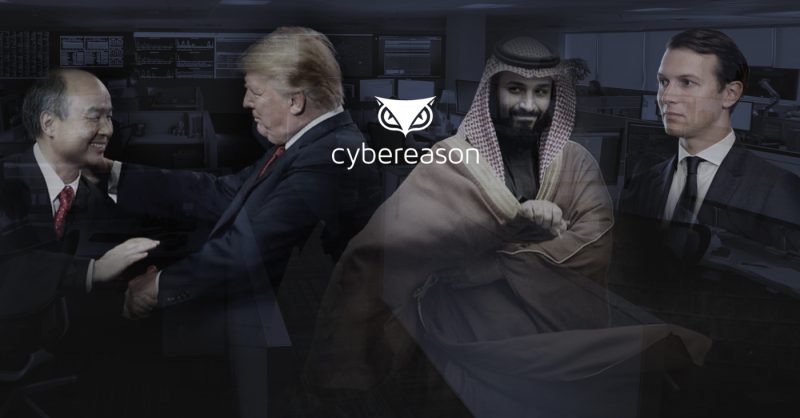
Graphic by Claudio Cabrera
By Whitney Webb | MintPress News | January 14, 2020
If the networks of the U.S. military, the U.S. intelligence community and a slew of other U.S. federal agencies were running the software of a company with deep ties, not only to foreign companies with a history of espionage against the U.S. but also foreign military intelligence, it would — at the very least — garner substantial media attention. Yet, no media reports to date have noted that such a scenario exists on a massive scale and that the company making such software recently simulated the cancellation of the 2020 election and the declaration of martial law in the United States.
Earlier this month, MintPress News reported on the simulations for the U.S. 2020 election organized by the company Cybereason, a firm led by former members of Israel’s military intelligence Unit 8200 and advised by former top and current officials in both Israeli military intelligence and the CIA. Those simulations, attended by federal officials from the FBI, DHS and the U.S. Secret Service, ended in disaster, with the elections ultimately canceled and martial law declared due to the chaos created by a group of hackers led by Cybereason employees.
The first installment of this three part series delved deeply into Cybereason’s ties to the intelligence community of Israel and also other agencies, including the CIA, as well as the fact that Cybereason stood to gain little financially from the simulations given that their software could not have prevented the attacks waged against the U.S.’ electoral infrastructure in the exercise.
Also noted was the fact that Cybereason software could be potentially used as a backdoor by unauthorized actors, a possibility strengthened by the fact that the company’s co-founders all previously worked for firms that have a history of placing backdoors into U.S. telecommunications and electronic infrastructure as well as aggressive espionage targeting U.S. federal agencies.
The latter issue is crucial in the context of this installment of this exclusive MintPress series, as Cybereason’s main investors turned partners have integrated Cybereason’s software into their product offerings. This means that the clients of these Cybereason partner companies, the U.S. intelligence community and military among them, are now part of Cybereason’s network of more than 6 million endpoints that this private company constantly monitors using a combination of staff comprised largely of former intelligence operatives and an AI algorithm first developed by Israeli military intelligence.
Cybereason, thus far, has disclosed the following groups as lead investors in the company: Charles River Ventures (CRV), Spark Capital, Lockheed Martin and SoftBank. Charles River Ventures (CRV) was among the first to invest in Cybereason and has been frequently investing in other Israeli tech start-ups that were founded by former members of the elite Israeli military intelligence Unit 8200 over the last few years. Spark Capital, based in California, appears to have followed CRV’s interest in Cybereason since the venture capitalist who co-founded Spark and led its investment in Cybereason is a former CRV partner who still has close ties to the firm.
While CRV and Spark Capital seem like just the type of investors a company like Cybereason would attract given their clear interest in similar tech start-ups coming out of Israel’s cyber sector, Cybereason’s other lead investors — Lockheed Martin and SoftBank — deserve much more attention and scrutiny.
Cybereason widely used by US Government, thanks to Lockheed
“A match made in heaven,” trumpeted Forbes at the news of the Lockheed Martin-Cybereason partnership, first forged in 2015. The partnership involved not only Lockheed Martin becoming a major investor in the cybersecurity company but also in Lockheed Martin becoming the largest conduit providing Cybereason’s software to U.S. federal and military agencies.
Indeed, as Forbes noted at the time, not only did Lockheed invest in the company, it decided to integrate Cybereason’s software completely into its product portfolio, resulting in a “model of both using Cybereason internally, and selling it to both public and private customers.”
Cybereason CEO and former offensive hacker for Israeli military intelligence — Lior Div — said the following of the partnership:
Lockheed Martin invested in Cybereason’s protection system after they compared our solution against a dozen others from the top industry players. The US firm was so impressed with the results they got from Cybereason that they began offering it to their own customers – among them most of the top Fortune 100 companies, and the US federal government. Cybereason is now the security system recommended by LM to its customers for protection from a wide (sic) malware and hack attacks.”
Rich Mahler, then-director of Commercial Cyber Services at Lockheed Martin, told Defense Daily that the company’s decision to invest in Cybereason, internally use its software, and include the technology as part of Lockheed Martin’s cyber solutions portfolio were all “independent business decisions but were all coordinated and timed with the transaction.”
How independent each of those decisions actually was is unclear, especially given the timing of Lockheed Martin’s investment in Cybereason, whose close and troubling ties to Israeli intelligence as well as the CIA were noted in the previous installment of this investigative series. Indeed, about a year prior to their investment in the Israeli military intelligence-linked Cybereason, Lockheed Martin opened an office in Beersheba, Israel, where the IDF has its “cyberhub”. The office is focused not on the sales of armaments, but instead on technology.
Marilyn Hewson, Lockheed Martin’s CEO, said the following during her speech that inaugurated the company’s Beersheba office:
The consolidation of IDF Technical Units to new bases in the Negev Desert region is an important transformation of Israel’s information technology capability… We understand the challenges of this move. Which is why we are investing in the facilities and people that will ensure we are prepared to support for these critical projects. By locating our new office in the capital of the Negev we are well positioned to work closely with our Israeli partners and stand ready to: accelerate project execution, reduce program risk and share our technical expertise by training and developing in-country talent.”
Beersheba not only houses the IDF’s technology campus, but also the Israel National Cyber Directorate, which reports directly to Israel’s Prime Minister, as well as a high-tech corporate park that mostly houses tech companies with ties to Israel’s military intelligence apparatus. The area has been cited in several media reports as a visible indicator of the public-private merger between Israeli technology companies, many of them started by Unit 8200 alumni, and the Israeli government and its intelligence services. Lockheed Martin quickly became a key fixture in the Beersheba-based cyberhub.
Not long before Lockheed began exploring the possibility of opening an office in Beersheba, the company was hacked by individuals who used tokens tied to the company, RSA Security, whose founders have ties to Israel’s defense establishment and which is now owned by Dell, a company also deeply tied to the Israeli government and tech sector. The hack, perpetrated by still unknown actors, may have sparked Lockheed’s subsequent interest in Israel’s cybersecurity sector.
Soon after opening its Beersheba office, Lockheed Martin created its Israel subsidiary, Lockheed Martin Israel. Unlike many of the company’s other subsidiaries, this one is focused exclusively on “cybersecurity, enterprise information technology, data centers, mobile, analytics and cloud” as opposed to the manufacture and design of armaments.
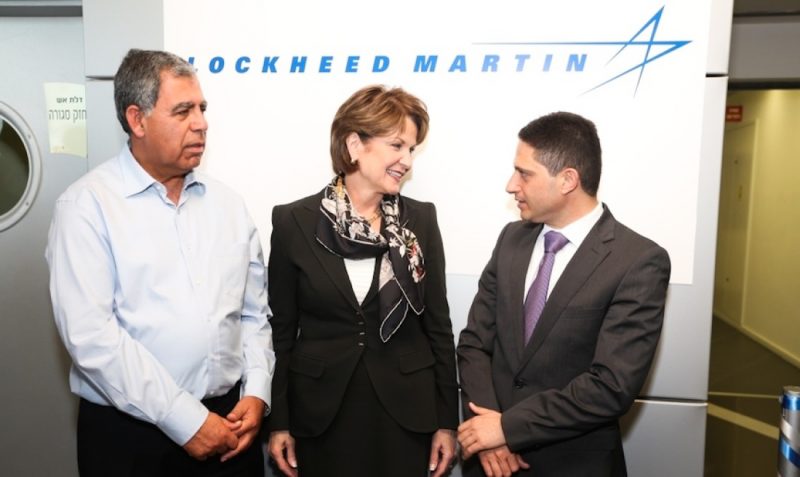
Marillyn Hewson, center, poses with Israeli gov. officials at the opening of Lockheed Martin’s facility in Beersheba. Photo | Diego Mittleberg
Haden Land, then-vice president of research and technology for Lockheed Martin, told the Wall Street Journal that the creation of the subsidiary was largely aimed at securing contracts with the IDF and that the company’s Israel subsidiary would soon be seeking partnership and investments in pursuit of that end. Land oversaw the local roll-out of the company’s Israel subsidiary while concurrently meeting with Israeli government officials. According to the Journal, Land “oversees all of Lockheed Martin’s information-systems businesses, including defense and civilian commercial units” for the United States and elsewhere.
Just a few months later, Lockheed Martin partnered and invested in Cybereason, suggesting that Lockheed’s decision to do so was aimed at securing closer ties with the IDF. This further suggests that Cybereason still maintains close ties to Israeli military intelligence, a point expounded upon in great detail in the previous installment of this series.
Thus, it appears that not only does Lockheed Martin use Cybereason’s software on its own devices and on those it manages for its private and public sector clients, but it also decided to use the company’s software in this way out of a desire to more closely collaborate with the Israeli military in matters related to technology and cybersecurity.
The cozy ties between Lockheed Martin, one of the U.S. government’s largest private contractors, and the IDF set off alarm bells, then and now, for those concerned with U.S. national security. Such concern makes it important to look at the extent of Cybereason’s use by federal and military agencies in the United States through their contracting of Lockheed Martin’s Information Technology (IT) division. This is especially important considering Israeli military intelligence’s history of using espionage, blackmail and private tech companies against the U.S. government, as detailed here.
While the exact number of U.S. federal and military agencies using Cybereason’s software is unknown, it is widespread, with Lockheed Martin’s IT division as the conduit. Indeed, Lockheed Martin was the number one IT solutions provider to the U.S. federal government up until its IT division was spun off and merged with Leidos Holdings. As a consequence, Leidos is now the largest IT provider to the U.S. government and is also directly partnered with Cybereason in the same way Lockheed Martin was. Even after its IT division was spun off, Lockheed Martin continues to use Cybereason’s software in its cybersecurity work for the Pentagon and still maintains a stake in the company.
The Leidos-Lockheed Martin IT hybrid provides a litany of services to the U.S. military and U.S. intelligence. As investigative journalist Tim Shorrock noted for The Nation, the company does “everything from analyzing signals for the NSA to tracking down suspected enemy fighters for US Special Forces in the Middle East and Africa” and, following its merger with Lockheed and consequential partnership with Cybereason, became “the largest of five corporations that together employ nearly 80 percent of the private-sector employees contracted to work for US spy and surveillance agencies.” Shorrock also notes that these private-sector contractors now dominate the mammoth U.S. surveillance apparatus, many of them working for Leidos and — by extension — using Cybereason’s software.
Leidos’ exclusive use of Cybereason software for cybersecurity is also relevant for the U.S. military since Leidos runs a number of sensitive systems for the Pentagon, including its recently inked contract to manage the entire military telecommunications infrastructure for Defense Information Systems Agency (DISA). In addition to maintaining the military telecom network, Cybereason is also directly partnered with World Wide Technologies (WWT) as of this past October. WWT manages cybersecurity for the U.S. Army, maintains DISA’s firewalls and data storage as well as the U.S. Air Force’s biometric identification system. WWT also manages contracts for NASA, itself a frequent target of Israeli government espionage, and the U.S. Navy. WWT’s partnership is similar to the Lockheed/Leidos partnership in that Cybereason’s software is now completely integrated into its portfolio, giving the company full access to the devices on all of these highly classified networks.
Many of these new partnerships with Cybereason, including its partnership with WWT, followed claims made by members of Israel’s Unit 8200 in 2017 that the popular antivirus software of Kaspersky Labs contained a backdoor for Russian intelligence, thereby compromising U.S. systems. The Wall Street Journal was the first to report on the alleged backdoor but did not mention the involvement of Unit 8200 in identifying it, a fact revealed by the New York Times a week later.
Notably, none of the evidence Unit 8200 used to blame Kaspersky has been made public and Kaspersky noted that it was actually Israeli hackers that had been discovered planting backdoors into its platform prior to the accusation levied against Kaspersky by Unit 8200. As the New York Times noted:
Investigators later discovered that the Israeli hackers had implanted multiple back doors into Kaspersky’s systems, employing sophisticated tools to steal passwords, take screenshots, and vacuum up emails and documents.”
Unit 8200’s claims ultimately led the U.S. government to abandon Kaspersky’s products entirely in 2018, allowing companies like Cybereason (with its own close ties to Unit 8200) to fill the void. Indeed, the very agencies that banned Kaspersky now use cybersecurity software that employs Cybereason’s EDR system. No flags have been raised about Cybereason’s own collaboration with the very foreign intelligence service that first pointed the finger at Kaspersky and that previously sold software with backdoors to sensitive U.S. facilities.
SoftBank, Cybereason and the Vision Fund
While its entry into the U.S. market and U.S. government networks is substantial, Cybereason’s software is also run throughout the world on a massive scale through partnerships that have seen it enter into Latin American and European markets in major ways in just the last few months. It has also seen its software become prominent in Asia following a partnership with the company Trustwave. Much of this rapid expansion followed a major injection of cash courtesy of one of the company’s biggest clients and now its largest investor, Japan’s SoftBank.
SoftBank first invested in Cybereason in 2015, the same year Lockheed Martin initially invested and partnered with the firm. It was also the year that SoftBank announced its intention to invest in Israeli tech start-ups. SoftBank first injected $50 million into Cybereason, followed by an additional $100 million in 2017 and $200 million last August. SoftBank’s investments account for most of the money raised by the company since it was founded in 2012 ($350 million out of $400 million total).
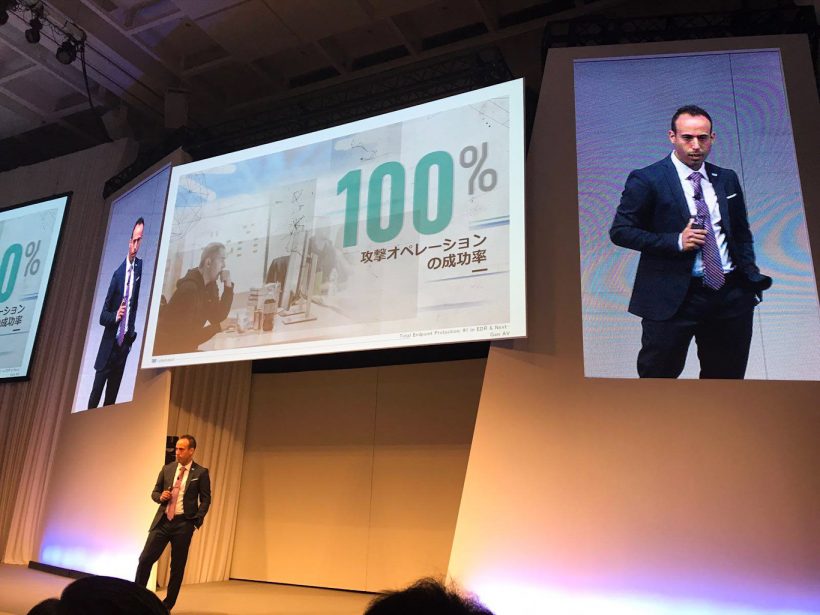
Cybereason CEO Lior Div speaks at a SoftBank event in Japan, July 21, 2017. Photo | Cybereason
Prior to investing, Softbank was a client of Cybereason, which Ken Miyauchi, president of SoftBank, noted when making the following statement after Softbank’s initial investment in Cybereason:
SoftBank works to obtain cutting edge technology and outstanding business models to lead the Information Revolution. Our deployment of the Cybereason platform internally gave us firsthand knowledge of the value it provides, and led to our decision to invest. I’m confident Cybereason and SoftBank’s new product offering will bring a new level of security to Japanese organizations.”
SoftBank — one of Japan’s largest telecommunications companies — not only began to deploy Cybereason internally but directly partnered with it after investing, much like Lockheed Martin had done around the same time. This partnership resulted in SoftBank and Cybereason creating a joint venture in Japan and Cybereason creating partnerships with other tech companies acquired by SoftBank, including the U.K.’s Arm, which specializes in making chips and management platforms for Internet of Things (IoT) devices.
SoftBank’s interest in Cybereason is significant, particularly in light of Cybereason’s interest in the 2020 U.S. election, given that SoftBank has significant ties to key allies of President Trump and even the president himself.
Indeed, SoftBank’s Masayoshi Son was among the first wave of international business leaders who sought to woo then-president-elect Trump soon after the 2016 election. Son first visited Trump Tower in December 2016 and announced, with Trump by his side in the building’s lobby, that SoftBank would invest $50 billion in the U.S. and create 50,000 jobs. Trump subsequently claimed on Twitter that Son had only decided to make this investment because Trump had won the election.
Son told reporters at the time that the investment would come from a $100 billion fund that would be created in partnership with Saudi Arabia’s sovereign wealth fund as well as other investors. “I just came to celebrate his new job. I said, ‘This is great. The US will become great again,’” Son said, according to reports.
Then, in March of 2017, Son sent top SoftBank executives to meet with senior members of Trump’s economic team and, according to the New York Times, “the SoftBank executives said that because of a lack of advanced digital investments, the competitiveness of the United States economy was at risk. And the executives made the case, quite strongly, that Mr. Son was committed to playing a major role in addressing this issue through a spate of job-creating investments.” Many of SoftBank’s investments and acquisitions in the U.S. since then have focused mainly on artificial intelligence and technology with military applications, such as “killer robot” firm Boston Dynamics, suggesting Son’s interest lies more in dominating futuristic military-industrial technologies than creating jobs for the average American.
After their initial meeting, Trump and Son met again a year later in June 2018, with Trump stating that “His [Son’s] $50 billion turned out to be $72 billion so far, he’s not finished yet.” Several media reports have claimed that Son’s moves since Trump’s election have sought to “curry favor” with the President.
Through the creation of this fund alongside the Saudis, SoftBank has since become increasingly intertwined with Saudi Crown Prince Muhammad bin Salman (MBS), a key ally of President Trump in the Middle East known for his authoritarian crackdowns on Saudi elites and dissidents alike. The ties between Saudi Arabia and SoftBank became ever tighter when MBS took the reins in the oil kingdom and after SoftBank announced the launch of the Vision Fund in 2016. SoftBank’s Vision Fund is a vehicle for investing in hi-tech companies and start-ups and its largest shareholder is the Public Investment Fund of Saudi Arabia. Notably, Son decided to launch the Vision Fund in Riyadh during President Trump’s first official visit to the Gulf Kingdom.
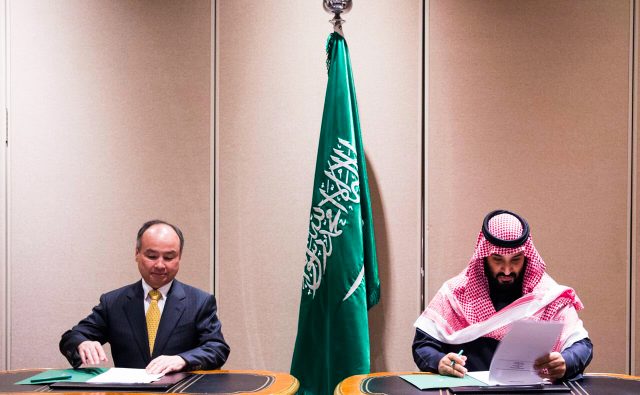
Masayoshi Son, left, signs a deal related to the Vision Fund with Bin Salman in March 2018. Photo | SPA
In addition, the Mubadala Investment Company, a government fund of the United Arab Emirates (UAE), gave $15 billion to the Vision Fund. UAE leadership also share close ties to the Trump administration and MBS in Saudi Arabia.
As a consequence, SoftBank’s Vision Fund is majority funded by two Middle Eastern authoritarian governments with close ties to the U.S. government, specifically the Trump administration. In addition, both countries have enjoyed the rapid growth and normalization of ties with the state of Israel in recent years, particularly following the rise of current Saudi Crown Prince Muhammad bin Salman and Jared Kushner’s rise to prominence in his father-in-law’s administration. Other investments in the Vision Fund have come from Apple, Qualcomm and Oracle’s Larry Ellison, all tech companies with strong ties to Israel’s government.
The Saudi and Emirati governments’ links to the Vision Fund are so obvious that even mainstream outlets like the New York Times have described them as a “front for Saudi Arabia and perhaps other countries in the Middle East.”
SoftBank also enjoys close ties to Jared Kushner, with Fortress Investment Group lending $57 million to Kushner Companies in October 2017 while it was under contract to be acquired by SoftBank. As Barron’s noted at the time:
When SoftBank Group bought Fortress Investment Group last year, the Japanese company was buying access to a corps of seasoned investors. What SoftBank also got is a financial tie to the family of President Donald Trump’s senior advisor and son-in-law, Jared Kushner.”
According to The Real Deal, Kushner Companies obtained the financing from Fortress only after its attempts to obtain funding through the EB-5 visa program for a specific real estate venture were abandoned after the U.S. Attorney and the Securities and Exchange Commission began to investigate how Kushner Companies used the EB-5 investor visa program. A key factor in the opening of that investigation was Kushner Companies’ representatives touting Jared Kushner’s position at the White House when talking to prospective investors and lenders.
SoftBank also recently came to the aid of a friend of Jared Kushner, former CEO of WeWork Adam Neumann. Neumann made shocking claims about his ties to both Kushner and Saudi Arabia’s MBS, even asserting that he had worked with both in creating Kushner’s long-awaited and controversial Middle East “peace plan” and claimed that he, Kushner and MBS would together “save the world.” Neumann previously called Kushner his “mentor.” MBS has also discussed on several occasions his close ties with Kushner and U.S. media reports have noted the frequent correspondence between the two “princelings.”
Notably, SoftBank invested in Neumann’s WeWork using money from the Saudi-dominated Vision Fund and later went on to essentially bail the company out after its IPO collapse and Neumann was pushed out. SoftBank’s founder, Masayoshi Son, had an odd yet very close relationship with Neumann, perhaps explaining why Neumann was allowed to walk with $1.7 billion after bringing WeWork to the brink of collapse. Notably, nearly half of SoftBank’s approximately $47 billion investments in the U.S. economy since Trump’s election, went to acquiring and then bailing out WeWork. It is unlikely that such a disastrous investment resulted in the level of job creation that Son had promised Trump in 2016.
Given that it is Cybereason’s top investor and shareholder by a large margin, SoftBank’s ties to the Trump administration and key allies of that administration are significant in light of Cybereason’s odd interest in 2020 U.S. election scenarios that end with the cancellation of this year’s upcoming presidential election. It goes without saying that the cancellation of the election would mean a continuation of the Trump administration until new elections would take place.
Furthermore, with Cybereason’s close and enduring ties to Israeli military intelligence now well-documented, it is worth asking if Israeli military intelligence would consider intervening in 2020 if the still-to-be-decided Democratic contender was strongly opposed to Israeli government policy, particularly Israel’s military occupation of Palestine. This is especially worth considering given revelations that sexual blackmailer and pedophile Jeffrey Epstein, who targeted prominent U.S. politicians, mostly Democrats, was in the employ of Israeli military intelligence.
Notably, Cybereason’s doomsday election scenarios involved the weaponization of deep fakes, self-driving cars and the hacking Internet of Things devices, with all of those technologies being pioneered and perfected — not by Russia, China or Iran — but by companies directly tied to Israeli intelligence, much like Cybereason itself. These companies, their technology and Cybereason’s own work creating the narrative that U.S. rival states seek to undermine the U.S. election in this way, will all be discussed in the conclusion of MintPress’ series on Cybereason and its outsized interest in the U.S. democratic process.
Whitney Webb is a MintPress News journalist based in Chile. She has contributed to several independent media outlets including Global Research, EcoWatch, the Ron Paul Institute and 21st Century Wire, among others. She has made several radio and television appearances and is the 2019 winner of the Serena Shim Award for Uncompromised Integrity in Journalism.
US establishment preemptively blames Russia for Biden’s election flop, setting the stage for a crackdown on dissent
By Helen Buyniski | RT | January 10, 2020
The American political establishment is already lining up excuses for losing the 2020 election, blaming a Russian “disinfo” campaign –again!– for the flailing campaign of Democratic frontrunner Joe Biden.
As Biden, once the solid favorite in Democrat primary polls, continues to tank, the usual suspects are emerging to pin his fall from grace on the Kremlin, and not Biden’s own mouth, problematic family members, or uninspiring policies.
The former vice president’s once-certain status as the establishment favorite for the nomination has faded, with even CNN taking shots at him recently after he lied about his early and enthusiastic support for the Iraq war. Institutional Russophobes would have voters believe their growing disillusionment with the moderate centrist was implanted by Kremlin propaganda, however.
“US intelligence and law enforcement officials” are already probing whether Biden is the target of a Russian “disinformation” campaign, according to two anonymous officials who spoke to Bloomberg on Friday.
Putting aside the insult implicit in telling voters who dislike Biden that their opinions are not their own, the claim – unsupported by evidence in the manner of most ‘Russian meddling’ allegations – suggests that Democrats are already bracing for the loss of the 2020 election and rushing to get the narrative scaffolding in place to explain away a second Trump victory.
Even after the “Russia hacked the 2016 election” narrative fell apart with the ignominious “no further indictments” conclusion of Special Counsel Robert Mueller’s investigation, boomeranging into an Inspector General inquiry and a criminal probe of the FBI malfeasance that kicked off the whole affair, the American political elite don’t seem to be able to resist the temptation to blame Russia yet again.
Bloomberg’s breathless report blames Russia for promoting Biden’s own Ukrainian scandal while Trump was being impeached over allegedly withholding military aid to pressure Kiev into restarting a probe of the natural gas firm where Biden’s son was a director. The case against Trump was shaky from the start, and only Democrats’ white-hot hatred for the president pushed it to the level of an impeachable offense.
Yet the much more solid quid-pro-quo case against Biden – who publicly bragged about bullying Ukraine into firing its chief prosecutor by withholding $1 billion in IMF loan guarantees – went largely ignored in the US media, except for conservative outlets. This is hardly “disinformation,” unless Bloomberg is using the Newspeak definition floated in a recent academic paper that includes “truths arranged to serve a particular purpose.”
It is simply assumed Russia would want Trump to be president for four more years, even though he scrapped arms treaties and piled more sanctions on the country, and nearly led the US into a catastrophic war with Iran. Nevertheless, former FBI agent Clint Watts – one of the minds behind the notorious Hamilton 68 “Russian bot” dashboard – nevertheless insists “a second term of Trump would be great” for Moscow. National Counterintelligence and Security Center director William Evanina warns Russian “influence campaigns” will only grow, commandeering “new vectors of disinformation” to hoodwink the American public.
Biden has repeatedly bragged “Vladimir Putin doesn’t want me to be president,” accusing the Russian president of sending an “army of bots” after him. Like Hillary Clinton before him, Biden has focused more on demonizing Trump than touting his own record, possibly because his service in an administration that turned two wars into seven, left Libya a failed state, and allowed a huge amount of wealth to “trickle up” from the working class to the rich diverges wildly from even the tepidly pro-middle class, pro-peace positions outlined on his campaign website.
Even when he’s not making what the media has decided to politely call “gaffes,” bursting blood vessels in his eye on live TV, or sniffing little girls’ hair, Biden offers little more than reheated Obama-era policies without Barack Obama’s smooth stage presence. Evidence shows it is the Democratic Party’s insistence on embracing middle-of-the-road candidates ideologically indistinguishable from most Republicans – not “Russian disinformation” – that is hurting them at the polls.
Pinning Biden’s failure on Russia, however, has repercussions that reach much further than just a single candidate’s campaign, or a single election. With the first primaries rapidly approaching, intelligence agencies are pushing the “election meddling” story hard, hoping to make lemonade out of the lemon that a second Trump victory would be.
Not only Russia, but China and Iran will “seek to interfere in the voting process or influence voter perceptions,” a joint statement from seven agencies in November warned. Literally anything could be construed as “influencing voter perceptions,” and that’s the point: to retroactively paint perfectly innocent reporting as agitprop. This paves the way for a major crackdown on alt-media and other forms of dissent – one that has arguably already begun.
The IG Report: Malfeasance, Lies, Threats and Denials
By Renée Parsons | OffGuardian | December 28, 2019
It is no surprise that when the Inspector General’s Report was released in early December, the corporate media, which itself has been knee-deep and complicit in spreading the false Russiagate narrative, chose to focus on one narrow conclusion: that, given DOJ’s ‘lax guidelines,’ the IG found no bias related to opening the Crossfire Hurricane investigation.
Ergo, once the Media labels the IG Report, all dutiful subscribers and readers fall in line with its dictates, nodding in concurrence, as those who refuse to do their own homework get on board and accept the hogwash they are being fed. Once the Media hypes the repetitive drone that there was ‘no bias,’ the phrase becomes embedded into the collective unconscious and the disinformation becomes gospel.
The question has yet to be asked what role the FISA Court played in its own debasement by blindly accepting the majority of surveillance requests and by lax procedures that allow its own credibility to be violated.
What remains uncertain is exactly how Crossfire Hurricane was born. While it is known that the Clinton campaign (via the DNC) hired GP Fusion (which hired DOJ deputy AG Bruce Ohr’s wife) to dig dirt on a Republican candidate for President and we know that former MI6 asset Christopher Steele became involved with creating a salacious Dossier – but the specific links tying those diverse parts to the FBI remains enigmatic.
An almost immediate response to the ‘no bias’ allegation came from AG William Barr stating that…
The Inspector General’s report now makes clear that the FBI launched an intrusive investigation of a U.S. presidential campaign on the thinnest of suspicions that, in my view, were insufficient to justify the steps taken.”
… with Special Investigator US Attorney John Durham adding that he:
advised the IG that he did not agree with some of the report’s conclusions as to predication and how the FBI case was opened.”
Both responses were highly unusual and may be interpreted as affirmation of a deeper level of complicity than the IG discovered although his investigation was limited to DOJ employees and to the FISA Court process.
It was not until IG Horowitz’s testimony before the Senate Judiciary Committee that the true scathing impact of the full Report was understood; thus revealing the true depth of the FBI’s embedded systemic problems.
Horowitz told the Senate panel:
We found and are deeply concerned that so many basic and fundamental errors were made by three separate handpicked investigative teams on one of the most sensitive FBI investigations after the matter had been briefed to the highest levels within the FBI even though the information sought through the use of FISA authority related so closely to an on-going Presidential campaign and even though those involved with the investigations knew that their actions would likely be subjected to close scrutiny. The circumstances reflect the failure not just by those who prepared the applications but also by the managers and supervisors in the Crossfire Hurricane chain of command including FBI senior officials who were briefed as the investigation progressed”
In dialogue with Sen. Crapo about FBI misconduct as ‘mind-numbing’, Horowitz responded “there is such a range of conduct here that is inexplicable and the answers we got were not satisfactory that we’re left trying to understand how could all these errors occur over a nine month period or so…”
In other words, the FBI, with a tainted history of deeply embedded corruption, has been out of control for decades with an aggressive pursuit of political opponents, corruption of its Forensic Lab and a COINTEL program against American citizens.
It is ironic that some of the FBI’s Congressional supporters are now recipients of that corruption.
In response to Barr’s statement regarding the IG Report, former Attorney General Erik Holder who once referred to himself as “still Obama’s wing man so i’m there with my boy,” wrote a divisive op ed for the Washington Post provocatively entitled “Eric Holder: William Barr is Unfit to be Attorney General“.
In a classic example of covering one’s butt, it can be assumed that Holder is still protecting Obama’s wing as he took cheap shots at Barr for a “series of public statements and taken actions that are so plainly ideological, so nakedly partisan and so deeply inappropriate” making him ‘unfit to lead the Justice Department.”
Suffering a partisan anxiety attack, Holder has clearly been directed to slander a successor who exhibits more candor and principle than he himself demonstrated as AG.
Given the IG report’s otherwise thorough analysis, the Hope and Change crowd may be feeling the heat that those morning tete a tete intel briefings in the Oval Office may have included updates on Crossfire Hurricane.
Holder’s condescension, as if he had special privilege to pontificate on “career public servants,” falls flat with his thinly veiled threat to Durham:
I was troubled by his unusual statement disputing the inspector general’s findings. Good reputations are hard-won in the legal profession, but they are fragile; anyone in Durham’s shoes would do well to remember that, in dealing with this administration, many reputations have been irrevocably lost.”
With focus now on whether Durham will succumb to Holder’s warning may instead boomerang, inspiring Durham to dig deeper than he had previously planned.
The IG Report cited former FBI Director Jim Comey for “clearly and dramatically” departing from department norms in the investigation of HRC’s email server and that he made a “serious error of judgment” in sending a letter to Congress announcing the re-opening of the Clinton probe. Comey was fired from the FBI for ‘insubordinate’ acts and ‘dangerous’ behavior in deceiving the FISA Court.
When asked by CNN’s Anderson Cooper,
“When you read what the report said, do you think this is a vindication
Comey responded:
It is. The FBI has had to wait two years while the President and his supporters lied about the institution, finally the truth gets told.”
Apparently Comey had not read the Report in its entirety, not listened to Horowitz’s testimony to the Senate or he continues to live under a rock.
In a recent interview with NBC News Pete Williams, Barr explained that
“One of the problems in the IG investigation is that Comey refused to sign back up for his security clearance and therefore could not be questioned (by the IG) on classified matters.…so someone like Durham can compel testimony.”
In other words, Comey is shrewd enough to know how to deliberately avoid pertinent questions from Horowitz without implicating himself but the day will come when Durham has the legal authority to demand Comey’s full participation.
In a Fox News Sunday interview with Chris Wallace, Comey refused to accept and was significantly at odds with many of the IG most significant findings including denial of any personal role in Crossfire. “I didn’t know, As Director I am not kept informed on the details of an investigation.
I didn’t know the particulars with an agency of 38,000 people ‘seven layers below.” Wallace repeatedly pushed back with Comey remaining smooth as silk, carefully coached, as he slipped around every iota that he had any responsibility for the investigation of a President and its constitutional screw ups.
When asked if he would resign if all these misdeeds were revealed under his watch, Comey replied “No, I don’t think so. There are other mistakes I consider more consequential than this during my tenure.”
Pray, we await those revelations.
‘Because You’d Be in Jail!’ The Real Reason Democrats Are Pushing Trump Impeachment?
By Robert Bridge | Strategic Culture Foundation | December 28, 2019
In the time-honored tradition of Machiavellian statecraft, all of the charges being leveled against Donald Trump to remove him from office – namely, ‘abuse of power’ and ‘obstruction of congress’ –are essentially the same things the Democratic Party has been guilty of for nearly half a decade: abusing their powers in a non-stop attack on the executive branch. Is the reason because they desperately need a ‘get out of jail free’ card?
Due to the non-stop action in Washington of late, few believe that the present state of affairs between the Democrats and Donald Trump are exclusively due to a telephone call between the US leader and the Ukrainian President Volodymyr Zelensky. That is only scratching the surface of a story that is practically boundless.
Back in April 2016, before Trump had become the Republican presidential nominee, talk of impeachment was already in the air.
“Donald Trump isn’t even the Republican nominee yet,” wrote Darren Samuelsohn in Politico. Yet impeachment, he noted, is “already on the lips of pundits, newspaper editorials, constitutional scholars, and even a few members of Congress.”
The timing of Samuelsohn’s article is not a little astonishing given what the Department of Justice (DOJ) had discovered just one month earlier.
In March 2016, the DOJ found that “the FBI had been employing outside contractors who had access to raw Section 702 Foreign Intelligence Surveillance Act (FISA) data, and retained that access after their work for the FBI was completed,” as Jeff Carlson reported in The Epoch Times.
That sort of foreign access to sensitive data is highly improper and was the result of “deliberate decision-making,” according to the findings of an April 2017 FISA court ruling (footnote 69).
On April 18, 2016, then-National Security Agency (NSA) Director Adm. Mike Rogers directed the NSA’s Office of Compliance to terminate all FBI outside-contractor access. Later, on Oct. 21, 2016, the FBI and the DOJ’s National Security Division (NSD), and despite they were aware of Rogers’s actions, moved ahead anyways with a request for a FISA warrant to conduct surveillance on Trump campaign adviser Carter Page. The request was approved by the FISA court, which, apparently, was still in the dark about the violations.
On Oct. 26, following approval of the warrant against Page, Rogers went to the FISA court to inform them of the FBI’s non-compliance with the rules. Was it just a coincidence that at exactly this time, the Director of National Intelligence James Clapper and Defense Secretary Ashton B. Carter were suddenly calling for Roger’s removal? The request was eventually rejected. The next month, in mid-November 2016 Rogers, without first notifying his superiors, flew to New York where he had a private meeting with Trump at Trump Towers.
According to the New York Times, the meeting – the details of which were never publicly divulged, but may be guessed at – “caused consternation at senior levels of the administration.”
Democratic obstruction of justice?
Then CIA Director John Brennan, dismayed about a few meetings Trump officials had with the Russians, helped to kick-start the FBI investigation over ‘Russian collusion.’ Notably, these Trump-Russia meetings occurred in December 2016, as the incoming administration was in the difficult transition period to enter the White House. The Democrats made sure they made that transition as ugly as possible.
Although it is perfectly normal for an incoming government to meet with foreign heads of state at this critical juncture, a meeting at Trump Tower between Michael Flynn, Trump’s incoming national security adviser and former Russian Ambassador to the US, Sergey Kislyak, was portrayed as some kind of cloak and dagger scene borrowed from a John le Carré thriller.
Brennan questioning the motives behind high-level meetings between the Trump team and some Russians is strange given that the lame duck Obama administration was in the process of redialing US-Russia relations back to the Cold War days, all based on the debunked claim that Moscow handed Trump the White House on a silver platter.
In late December 2016, after Trump had already won the election, Obama slapped Russia with punitive sanctions, expelled 35 Russian diplomats and closed down two Russian facilities. Since part of Trump’s campaign platform was to mend relations with Moscow, would it not seem logical that the incoming administration would be in damage-control, doing whatever necessary to prevent relations between the world’s premier nuclear powers from degrading even more?
So if it wasn’t ‘Russian collusion’ that motivated the Democrats into action, what was it?
From Benghazi to Seth Rich
Here we must pause and remind ourselves about the unenviable situation regarding Hillary Clinton, the Secretary of State, who was being grilled daily over her use of a private computer to communicate sensitive documents via email. In all likelihood, the incident would have dropped from the radar had it not been for the deadly 2012 Benghazi attacks on a US compound.
In the course of a House Select Committee investigation into the circumstances surrounding the attacks, which resulted in the death of US Ambassador Chris Stevens and three other US personnel, Clinton handed over some 30,000 emails, while reportedly deleting 32,000 deemed to be of a “personal nature”. Those emails remain unaccounted for to this day.
By March 2015, even the traditionally tepid media was baring its baby fangs, relentlessly pursuing Clinton over the email question. Since Clinton never made a secret of her presidential ambitions, even political allies were piling on. Senator Dianne Feinstein (D-Calif.), for example, said it’s time for Clinton “to step up” and explain herself, adding that “silence is going to hurt her.”
On July 24, 2015, The New York Times published a front-page story with the headline “Criminal Inquiry Sought in Clinton’s Use of Email.” Later, Jennifer Rubin of the Washington Post candidly summed up Clinton’s rapidly deteriorating status with elections fast approaching: “Democrats still show no sign they are willing to abandon Clinton. Instead, they seem to be heading into the 2016 election with a deeply flawed candidate schlepping around plenty of baggage — the details of which are not yet known.”
Moving into 2016, things began to look increasingly complicated for the Democratic front-runner. On March 16, 2016, WikiLeaks launched a searchable archive for over 30 thousand emails and attachments sent to and from Hillary Clinton’s private email server while she was Secretary of State. The 50,547-page treasure trove spans the dates from June 30, 2010 to August 12, 2014.
In May, about one month after Clinton had officially announced her candidacy for the US presidency, the State Department’s inspector general released an 83-page report that was highly critical of Clinton’s email practices, concluding that Clinton failed to seek legal approval for her use of a private server.
“At a minimum,” the report determined, “Secretary Clinton should have surrendered all emails dealing with Department business before leaving government service and, because she did not do so, she did not comply with the Department’s policies that were implemented in accordance with the Federal Records Act.”
The following month brought more bad news for Clinton and her presidential hopes after it was reported that her husband, former President Bill Clinton, had a 30-minute tête-à-tête with Attorney General Loretta E. Lynch, whose department was leading the Clinton investigations, on the tarmac at Phoenix International Airport. Lynch said Clinton decided to pay her an impromptu visit where the two discussed “his grandchildren and his travels and things like that.” Republicans, however, certainly weren’t buying the story as the encounter came as the FBI was preparing to file its recommendation to the Justice Department.
The summer of 2016, however, was just heating up.
Hack versus Leak?
On the early morning of July 10, Seth Rich, the director of voter expansion for the Democratic National Committee (DNC), was gunned down on the street in the Bloomingdale neighborhood of Washington, DC. Rich’s murder, said to be the result of a botched robbery, bucked the homicide trend in the area for that particular period; murders rates for the first six months of 2016 were down about 50 percent from the same period in the previous year.
In any case, the story gets much stranger. Just five days earlier, on July 5th, the computers at the DNC were compromised, purportedly by an online persona with the moniker “Guccifer 2.0” at the behest of Russian intelligence. This is where the story of “Russian hacking” first gained popularity. Not everyone, however, was buying the explanation.
In July 2017, a group of former U.S. intelligence officers, including NSA specialists, who call themselves Veteran Intelligence Professionals for Sanity (VIPS) sent a memo to President Trump that challenged a January intelligence assessment that expressed “high confidence” that the Russians had organized an “influence campaign” to harm Hillary Clinton’s “electability,” as if she wasn’t capable of that without Kremlin support.
“Forensic studies of ‘Russian hacking’ into Democratic National Committee computers last year reveal that on July 5, 2016, data was leaked (not hacked) by a person with physical access to DNC computer,” the memo states (The memo’s conclusions were based on analyses of metadata provided by the online persona Guccifer 2.0, who took credit for the alleged hack). “Key among the findings of the independent forensic investigations is the conclusion that the DNC data was copied onto a storage device at a speed that far exceeds an Internet capability for a remote hack.”
In other words, according to VIPS, the compromise of the DNC computers was the result of an internal leak, not an external hack.
At this point, however, it needs mentioned that the VIPS memo has sparked dissenting views among its members. Several analysts within the group have spoken out against its findings, and that internal debate can be read here. Thus, it would seem there is no ‘smoking gun,’ as of yet, to prove that the DNC was not hacked by an external entity. At the same time, the murder of Seth Rich continues to remain an unsolved “botched robbery,” according to investigators. Meanwhile, the one person who may hold the key to the mystery, Julian Assange, is said to be withering away Belmarsh Prison, a high-security London jail, where he is awaiting a February court hearing that will decide whether he will be extradited to the United States where he faces 18 charges.
Here is a question to ponder: If you were Julian Assange, and you knew you were going to be extradited to the United States, who would you rather be the sitting president in charge of your fate, Hillary Clinton or Donald Trump? Think twice before answering.
“Because you’d be in jail”
On October 9, 2016, in the second televised presidential debates between Donald Trump and Hillary Clinton, Trump accused his Democratic opponent of deleting 33,000 emails, while adding that he would get a “special prosecutor and we’re going to look into it…” To this, Clinton said “it’s just awfully good that someone with the temperament of Donald Trump is not in charge of the law in our country,” to which Trump deadpanned, without missing a beat, “because you’d be in jail.”
Now if that remark didn’t get the attention of high-ranking Democratic officials, perhaps Trump’s comments at a Virginia rally days later, when he promised to “drain the swamp,” made folks sit up and take notice.
At this point the leaks, hacks and everything in between were already coming fast and furious. On October 7, John Podesta, Clinton’s presidential campaign manager, had his personal Gmail account hacked, thereby releasing a torrent of inside secrets, including how Donna Brazile, then a CNN commentator, had fed Clinton debate questions. But of course the crimes did not matter to the mendacious media, only the identity of the alleged messenger, which of course was ‘Russia.’
By now, the only thing more incredible than the dirt being produced on Clinton was the fact that she was still in the presidential race, and even slated to win by a wide margin. But perhaps her biggest setback came when authorities, investigating Anthony Weiner’s abused laptop into illicit text messages he sent to a 15-year-old girl, stumbled upon thousands of email messages from Hillary Clinton.
Now Comey had to backpedal on his conclusion in July that although Clinton was “extremely careless” in her use of her electronic devices, no criminal charges would be forthcoming. He announced an 11th hour investigation, just days before the election. Although Clinton was also cleared in this case, observers never forgave Comey for his actions, arguing they cost Clinton the White House.
Now James Comey is back in the spotlight as one of the main characters in the Barr-Durham investigation, which is examining largely out of the spotlight the origins of the Trump-Russia conspiracy theory that dogged the White House for four long years.
In early December, Justice Department’s independent inspector general, Michael E. Horowitz, released the 400-page IG report that revealed a long list of omissions, mistakes and inconsistencies in the FBI’s applications for FISA warrants to conduct surveillance on Carter Page. Although the report was damning, both Barr and Durham noted it did not go far enough because Horowitz did not have the access that Durham has to intelligence agency sources, as well as overseas contacts that Barr provided to him.
With the AG report due for release in early spring, needless to say some Democrats are very nervous as to its finding. So nervous, in fact, that they might just be willing to go to the extreme of removing a sitting president to avoid its conclusions.
Whatever the verdict, 2020 promises to be one very interesting year.
NSA has been ‘lying to the courts all along,’ says whistleblower, as judges give warrantless surveillance the thumbs-up
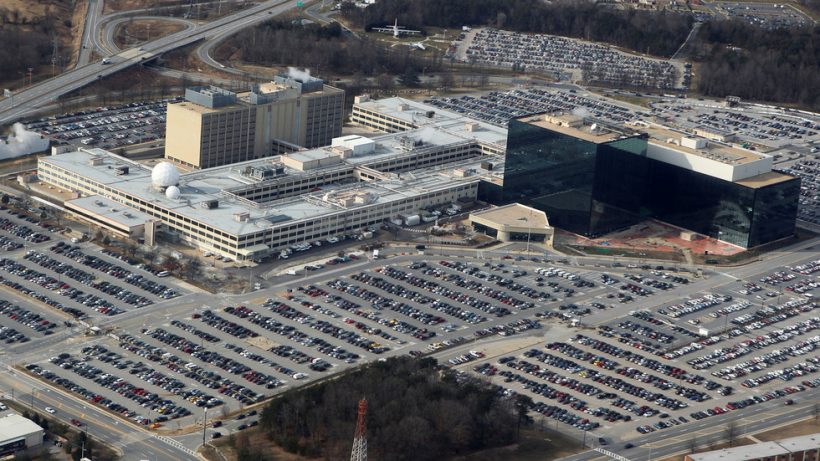
National Security Agency (NSA) headquarters in Ft. Meade, Maryland © Reuters / Larry Downing
RT | December 21, 2019
The National Security Agency can gather the data of US citizens without a warrant – as long as it gathers this data by mistake, a court has ruled. However, this suits the agency just fine, whistleblower William Binney told RT.
The NSA is permitted to gather data on US citizens abroad, or “foreign connected” Americans at home. The dragnet surveillance operation necessary to gather this information also sucks up data on millions of Americans with no foreign contacts, a process critics say is unconstitutional.
On Wednesday, the 2nd Court of Appeals in New York declared this “incidental collection” of information permissible. The NSA has maintained that it is incapable of separating properly and improperly gathered data, but former NSA Technical Director William Binney told RT that this is simply untrue.
“They’ve been lying to the courts all along,” Binney said. “They’ve had the capability to sort that stuff out. It’s just that they don’t want to.”
“This gives them power over everyone, the ability to look into political opponents like they did with President Trump,” he continued.
While the court ruling gives the NSA free rein to suck up data on Americans’ phone and internet communications, it did not authorize the US’ other intelligence and law enforcement agencies to dig through this data. However, according to a Foreign Intelligence Surveillance Act (FISA) court ruling issued last year, the FBI accessed this data trove some 3.1 million times in 2017.
Trump Impeachment… Slapstick Diversion From Reality
By Finian Cunningham | Strategic Culture Foundation | December 20, 2019
Fittingly for the jolly season, the House of Representatives’ vote to impeach Trump was more pantomime than serious politics.
“Oh yes, he is!.. Oh no, he isn’t!..” and so it went on for nearly 10 hours of to-and-fro between Democrats and Republicans. Eventually, the finale came when black-clad Speaker of the House Nancy Pelosi hammered the gavel, announcing President had been impeached – only the third-ever in two-and-half centuries of 45 presidents.
It was a foregone conclusion given the Democrat majority in the House. The next step in the impeachment process goes to the Republican controlled Senate next month where Trump will almost certainly be acquitted.
For all the grandstanding drama and feverish media coverage, the storyline – like all pantos – is scant in credibility. The accusations against Trump of abusing his office in a phone call with the Ukrainian president and of obstructing subsequent Congressional inquiry are light on evidence while heavy on innuendo. For all his flaws, Trump and the Republicans are right in their call that the Democrats and anti-Trump media are hamming it up in a desperate bid to overturn the 2016 election. For the past three years, Washington has been fixated with Trump Derangement Syndrome.
With faux solemnity, Democrat leader Nancy Pelosi said the impeachment vote was a “sad and tragic day” for US democracy. Then she had to quickly check Democrats from bursting into cheers and applause when the impeachment vote was announced. So much for a “sad day”! The Democrats were elated that their three-year plan to oust Trump was at last happening – albeit for a short-lived period until the Senate takes up the matter.
What was truly sad, however, is how the impeachment fiasco dominated other news, thereby drawing the curtain on several far more significant events.
On the same day as the House brouhaha, over in the Senate Inspector General Michael Horowitz was continuing to give withering testimony from his report into FBI wiretapping of the Trump election campaign back in 2016. The misconduct by the FBI in carrying out surveillance on private American citizens is a shocking abuse of power by the intelligence agency. All the implications suggest that the Obama administration engaged with secret services to sabotage the election campaign of Donald Trump in 2016 with phony allegations about Russia collusion. The constitutional violations by the FBI are colossal.
Knowing the murky past of the FBI and its dirty tricks, we shouldn’t be surprised by Horowitz’s findings. A follow-up report by attorney John Durham promises to be even more damning. But what is so astounding is how the US media, by and large, had their focus on the impeachment debacle instead of this far bigger show of grave importance. Perhaps not really astounding given that major media outlets like CNN, New York Times, MSNBC and Washington Post have invested so much capital in whipping up the Russia claims. Their ignoring the FBI misconduct is vital for self-preservation by avoiding accountability for their “Russia collusion” fantasies.
Another blockbuster story roundly ignored was the unfolding scandal at the Organization for the Prohibition of Chemical Weapons (OPCW). The number of whistleblowers from the UN body has grown to 20, according to Wikileaks. They allege that an OPCW report published in 2018 into a purported chemical weapon incident in Syria was “doctored” to wrongly incriminate the Assad government for carrying out an attack on civilians. As a result of the incident on April 7, 2018, the United States, Britain and France days later launched over 100 air strikes against Syria in apparent revenge. President Trump labeled Assad “an animal”. According to the whistleblowers, the OPCW report later in 2018 was deliberately suppressed by senior officials in the organization’s headquarters in The Hague under pressure from the American government. The implication is that the US, British and French air strikes against Syria were naked aggression based on false information. Indeed, the incident on April 7 has the hallmarks of a false-flag operation carried out by Western-backed anti-government militants.
Despite the urgent public interest of this scandal, the Western corporate media have largely ignored the matter, apart from notable exceptions, such as Tucker Carlson at Fox and Peter Hitchens in Britain’s Mail newspaper.
Surely on any objective scale, the OPCW scandal is worth far more media attention than the turgid proceedings in the House. But then again invoking objectivity is a naive request when the polarized politics in the US have become so hyper-subjective.
Other important stories that got sidelined this week include the appeal by 100 Australian doctors demanding the release of Julian Assange from prison in Britain. They reiterated similar concerns expressed by Nils Melzer, the UN special rapporteur, warning that Assange could die in prison if he is not given immediate medical care. The Wikileaks founder is awaiting extradition to the US where he faces 175 years in jail for “espionage”. As the leaks this week from Wikileaks regarding corruption at the OPCW demonstrate the real “offense” committed by Assange is his exposure of war crimes by the US and its Western allies. He is being tortured for telling the truth by Western governments that claim to be bastions of democracy and law. Why aren’t Western media covering this bombshell?
Still another huge story to be buried this week under the avalanche of impeachment popcorn was the report that over 90 US companies on the Fortune 500 list paid zero tax in the year 2018, despite having made combined profits of $100 billion. The companies include Amazon, Bank of American, Chevron, General Motors, Goodyear, Honeywell, JP Morgan Chase, Starbucks, and Verizon, to mention only a few. These companies were able to reduce their federal tax bill to zero because of corporate tax breaks and accounting loopholes introduced by President Trump in 2017.
If the Democrat party was a genuine political opposition to Trump then it should be taking up issues that really matter to ordinary citizens. Issues like abuse of power by unelected state agencies that spy illegally on civilians. But the Democrats this month voted for the latest edition of the Patriot Act extending such powers. They also voted for a record $738 billion spend on the US military, instead of deploying some of that for public good in healthcare and education.
If the Democrat party was a genuine political opposition, then it would be highlighting the crimes of illegal wars the US carries out on foreign countries with impunity. It would be defending the rights of whistleblowers like Julian Assange, Chelsea Manning and Edward Snowden who have exposed systematic state crimes.
If the Democrat party was a genuine political opposition, it would be campaigning for US corporations to pay their fair share of taxes so that working families can benefit from a decent society. They would be going after Trump for aiding and abetting the corporate kleptocracy that America has become.
But they don’t. Because the Democrats – most of them anyway – are part of the same bipartisan corporate feeding trough and war machine that is Washington.
The obscenity is so disgraceful that’s why the need for an impeachment pantomime. And the corporate media dutifully obliges.
Democrats Target Own Population by Trump Impeachment – Paul Craig Roberts
Sputnik -December 20, 2019
WASHINGTON – The Democrats are targeting their own population by impeaching President Donald Trump, former US Assistant Treasury Secretary Paul Craig Roberts said.
On Wednesday, Trump became the third president in US history to be impeached when the Democratic-controlled House of Representatives voted to find him guilty of abuse of power and obstruction of Congress after investigations concluding he invited foreign meddling in the American electoral process.
“The impeachment circus is a political act by the House Democrats. It is a political orchestration without any evidence or credible testimony,” Roberts said. “What is disturbing about the impeachment… is that these orchestrated actions are an attempt to overturn a democratic election. The US now engages in actions against its own population like the actions Washington recently engaged in against Venezuela, Bolivia, Honduras, and Ukraine.”
The Democratic Party, Roberts added, decided to fabricate a scandal with Ukraine after Russiagate fell apart.
“The Democrats are after power. They were frustrated by the Russiagate failure, and orchestrated a hoax that, even if it were true, would not be an impeachable event,” he said.
Roberts continued to say that the House Democrats are able to “get away with this hoax” because the American media is against Trump.
“It is disturbing also because it demonstrates that there is no integrity in the media or the security agencies,” he explained. “Without the support of the media and security agencies, the Democrats would not be able to orchestrate such obvious hoaxes.”
Roberts believes that the impeachment proceedings are not hurting Trump’s election chances, and even help him.
“As the impeachment proceedings unfolded, the public turned against the proceedings, recognizing them as a purely political action,” Roberts said. “The Democrats hoped that some of the mud would stick to Trump and reduce his reelection chances, but it seems the impeachment is helping Trump.”
The president will have to face trial in the US Senate but is unlikely to be removed from power as the higher legislative decision-making body is controlled by members of his Republican party, who have made it clear that they viewed his impeachment as a sham.
“The Senate will not convict Trump of the charges, unless enough Republican senators can be blackmailed by the FBI, CIA, and NSA, police state institutions that have spy folders on everyone, or unless the military/security complex can bribe the Republicans with large sums of money to vote against Trump,” Roberts said. “I think this is unlikely as it would be too obvious even for insouciant Americans not to notice.”
Roberts also said that Russiagate and the impeachment “have radicalized” and divided the United States.
“The population is now split in a new way. On the one hand we have the people who elected Trump, ordinary traditional Americans now demonized as “racists” and “white supremacists,” Roberts said. “On the other hand we have the Democrats, no longer the party of the working people.”
House Democrats launched their impeachment inquiry in September to probe whether Trump tried to pressure Ukraine into investigating his political rival Joe Biden, the current Democratic front-runner in the presidential primaries. Lawmakers initiated the inquiry after a whistleblower sent a complaint to the Congress claiming that Trump threatened to withdraw military aid for Ukraine if Kiev failed to investigate Biden and his son Hunter over the latter’s business dealings in the country.
Trump has denied any wrongdoing, repeatedly dismissing the impeachment inquiry as a witch hunt aimed at reversing the outcome of the 2016 presidential election.
Commenting on Wednesday’s vote, the president said that “this lawless, partisan impeachment” was “political suicide” for the Democratic Party. He also expressed confidence that he would be fully exonerated by the Senate, pledging to “continue to work tirelessly to address the needs and priorities of the American people.”
Featured Video

Bombing Hitler’s Hometown
or go to
Aletho News Archives – Video-Images
From the Archives
The Biggest Threat to Peace in Middle East
By Dr. Elias Akleh* | Sabbah Report | May 24, 2010
A build up of heightened tension in the Middle East is escalating in the last few weeks. American and Israeli postures towards Lebanon, Syria, and Iran have become more threatening. Listening to speeches of political leaders one hears talks only about war not peace. Iranians and Israelis are continuously training hard for a possible showdown. Both sides are conducting extensive war games every month. This led Syrians to claim that Israel is preparing for a soon-to-come another war. The Jordanians also are warning that current stalemate of the peace process is an indication of a war breaking out this summer. The Russian President and his army chief hinted, a few months ago, that the US and Israel were planning for an attack on Iran.
Indeed Iran is, as it has been for last few years, the target of most of the threats and accusations of supporting terrorism. Escalating incitement against Iran the American Defense Department sent last month (April) to Congress a report on Iran’s military claiming Iran could develop intercontinental ballistic missiles capable of reaching the US by 2015.
Ignoring the fact that N. Korea, India, Pakistan, and Israel are proven to have nuclear weapons while Iran does not, the US Secretary of State Hillary Clinton chose in her speech, to the nuclear Non-Proliferation Treaty review conference at the UN, to focus on Iran’s alleged nuclear ambitions putting the whole world at risk as she put it. According to Clinton Iran’s acquisition of nuclear weapons, rather than Israel’s more than 200 nuclear bombs, is destabilizing the Middle East. She called on the world’s nations to rally around US efforts to hold Iran, not other nuclear countries, to account.
The accusation that Usama Bin Laden is living comfortably in Iran had received a boost after the broadcast of a documentary called “Feathered Cocaine”. This echoed the June 2003 claims of the Italian newspaper Corre de la Sierra that Bin Laden was in Iran according to some intelligence report, and according to Richard Miniter’s book “Shadow War”. … continue
Blog Roll
 Aletho News
- Bombing Hitler’s Hometown
- German journalist threatened with homelessness as German court upholds EU sanctions in landmark free speech case
- US Tells Allies That Ukraine-Bound Arms Could be Sent to Middle East
- Organized terrorism: Iran condemns killing of its diplomats in Lebanon
- Why could Gaza enter the regional war?
- Hamas official rejects Mladenov Plan linking disarmament to Gaza reconstruction
- Two Primary Elections for the Soul of ‘America First’
- Japan Clings to US Vassalage Despite Energy Crunch Caused By Iran War
- US Seeks Control Over Global Energy Infrastructure – Kremlin
- US senators target Orban government for standing up to Zelensky
- If Americans Knew
- Researchers at Human Rights Watch Resign Over Blocked Report on Palestinian Refugee Return
- Jewish Groups Are Backing a War Americans Don’t Want
- Eric Fingerhut Thinks He’s the President of the Jews
- Top Jewish Philanthropists, Rabbis Urge Israeli President to Take Action Against ‘Jewish Extremists’
- Don’t Be Fooled. Zionist Leaders Have Always Wanted to Control Southern Lebanon
- Israel’s widespread use of torture is a core element of its genocide against the Palestinian people
- In Israel’s War on Iran, Many Middle East US Bases Rendered “All But Uninhabitable”
- ‘Burn the lawn’: Israel pursues ‘Rafah model’ in southern Lebanon
- A genocide here, an amputation there
- Reports: Iran mobilizing 1M fighters, Israel-US run low on ammo, Israeli army faces shortage – Not a ceasefire Day 168
- No Tricks Zone
- Devastating Assessment Of Comirnaty Vaccine By Former Senior Pfizer Europe Toxicologist
- New Study: CO2 Is ‘Effectively Negligible’ As An Explanatory Climate Change Factor Since 2000
- Former Pfizer Toxicologist Dr. Helmut Sterz Tells Bundestag Hearing Pfizer Vaccine Should Have Never Been Approved
- Energy Expert: Germany’s Nuclear Phaseout Was A “500 Billion Euro Mistake”
- New Research: South Australia’s Mid-Holocene Sea Surface Temperatures Were 4°C Warmer Than Today
- Storing Green Energy To Last Germany 10 Days Would Require A 60-Million Tonne Battery
- New Studies: UK Sea Levels Were 4 Meters Higher Than Today During The Mid-Holocene
- Destructive Green New Deal: German Energy And Metal Group Warns Of Drastic Crisis
- New Study Documents A 20-Year Pause In Arctic Sea Ice Decline – Driven By Internal Variability
- Wake-up Call: Survey Shows Majority Of Germans Now Favor Postponing Climate Targets!
 Aletho News