How CBS News Aided the JFK Cover-up
By James DiEugenio | Consortium News | April 22, 2016
In the mid-1960s, amid growing skepticism about the Warren Commission’s lone-gunman findings on John F. Kennedy’s assassination, there was a struggle inside CBS News about whether to allow the critics a fair public hearing at the then-dominant news network. Some CBS producers pushed for a debate between believers and doubters and one even submitted a proposal to put the Warren Report “on trial,” according to internal CBS documents.
But CBS executives, who were staunch supporters of the Warren findings and had personal ties to some commission members, spiked those plans and instead insisted on presenting a defense of the lone-gunman theory while dismissing doubts as baseless conspiracy theories, the documents show.
Though it may be hard to remember – amid today’s proliferation of cable channels and Internet sites – CBS, along with NBC and ABC, wielded powerful control over what the American people got to see, hear and take seriously in the 1960s. By slapping down any criticism of the Warren Commission, CBS executives effectively prevented the case surrounding the 1963 assassination of President Kennedy from ever receiving the full airing that it deserved.
Beyond that historical significance, the internal documents – compiled by onetime CBS News assistant producer Roger Feinman – show how a major mainstream news organization green-lights one approach to presenting sensitive national security news while blocking another. The documents also shed light on how senior news executives, who have bought into one interpretation of the facts, are highly resistant to revisit the evidence.
Buying In
CBS News jumped onboard the blue-ribbon Warren Commission’s findings as soon as they were released on Sept. 27, 1964, just over 10 months after President Kennedy was assassinated in Dallas, Texas, on Nov. 22, 1963. In a special report, CBS and its anchor Walter Cronkite preempted regular programming and, with the assistance of reporter Dan Rather, devoted two commercial-free hours to endorsing the main tenets of that report.
However, despite Cronkite and Rather giving the Warren Report their public embrace, other people, who were not in the employ of the mainstream media, examined critically the report and the accompanying 26 volumes. Some of these citizens were lawyers and others were professors, the likes of Vincent Salandria and Richard Popkin. They came to the conclusion that CBS had been less than rigorous in its examination.
By 1967, the analyses challenging the Warren Report’s conclusions had become widespread, including popular books by Edward Epstein, Mark Lane, Sylvia Meagher and Josiah Thompson. Thompson’s book, Six Seconds in Dallas, was excerpted and placed on the cover of the wide-circulation magazine Saturday Evening Post. Lane was appearing on talk shows. Prosecutor Jim Garrison had announced a reopening of the JFK case in New Orleans. The dam was threatening to break.
The doubts about the Warren Report had even spread into the ranks at CBS News, where correspondent Daniel Schorr and Washington Bureau chief Bill Small recommended a fair and critical look at the report’s methodology and findings. Top prime-time producer Les Midgley later joined the effort.
CBS News vice president Gordon Manning sent the proposal on to CBS News president Richard Salant in August 1966, but it was declined. Manning tried again in October, suggesting an open debate between the critics of the Warren Report and former Commission counsels, moderated by a law school dean or the president of the American Bar Association. The idea was to give the two sides a chance to make their best points before the viewing public.
Zapruder Evidence
One month after Manning’s debate proposal, Life Magazine published a front-page story in which the Warren Commission’s verdict was questioned by photographic evidence from the Zapruder film (which the magazine owned). Life also interviewed Texas Gov. John Connally who disagreed that he and Kennedy had been hit by the same shot, a claim that undercut the “single bullet theory” at the heart of the Warren Report.
Without the assertion that a single bullet inflicted multiple wounds on Kennedy and Connally, who was riding in front of the President, the commission’s verdict collapses. The magazine story ended with a call to reopen the case. Indeed, Life had put together a small journalistic team to do its own internal investigation.
A few days after this issue appeared, Manning again pressed for a CBS special. This time he suggested the title “The Trial of Lee Harvey Oswald,” with a panel of law school deans reviewing the evidence against Oswald in a mock trial, including evidence that the Warren Commission had not included. In other words, there would be a chance for American “jurors” to weigh the evidence that might have been presented against Oswald if he had lived and to make a judgment on his guilt. Again, this approach offered the potential for a reasonably balanced examination of the Kennedy assassination.
At this point, Manning was joined by producer Midgley, who had produced the two-hour 1964 CBS special. Midgley’s suggestion differed from Manning’s in that he wanted to title the show “The Warren Report on Trial.” Midgley suggested a three-night, three-hour series with one night given over to the commission defenders, one night including all the witnesses that the commission overlooked or discounted, and the last night including a verdict produced by legal experts. But the title itself suggested a level of skepticism that had not been part of the earlier proposals.
The Higher-ups Intervene
However, then CBS senior executives began to intervene. On Dec. 1, 1966, Salant wrote a memo to John Schneider, president of CBS Broadcast Group, telling him that he might refer the proposal to the CBS News Executive Committee (CNEC). According to information that a former CBS assistant producer Roger Feinman obtained during a legal hearing against CBS, plus secondary sources, CNEC was a secretive group that was created in the wake of Edward R. Murrow’s departure from CBS.
Murrow was a true investigative reporter who became famous through his reports on Sen. Joe McCarthy’s abuses and the mistreatment of migrant farm workers. The upper management at CBS did not like the controversies that these reports generated among influential segments of the American power structure. There was a perceived need to tamp down on such wide-ranging and independent-minded investigations. After all, the CBS executives were part of that power structure.
CBS News president Salant epitomized that blurring of high-level corporate journalism and America’s ruling class. Salant had gone to Exeter Academy, Harvard, and then Harvard Law School. He was handpicked from the network’s Manhattan legal firm by CBS President Frank Stanton to join his management team.
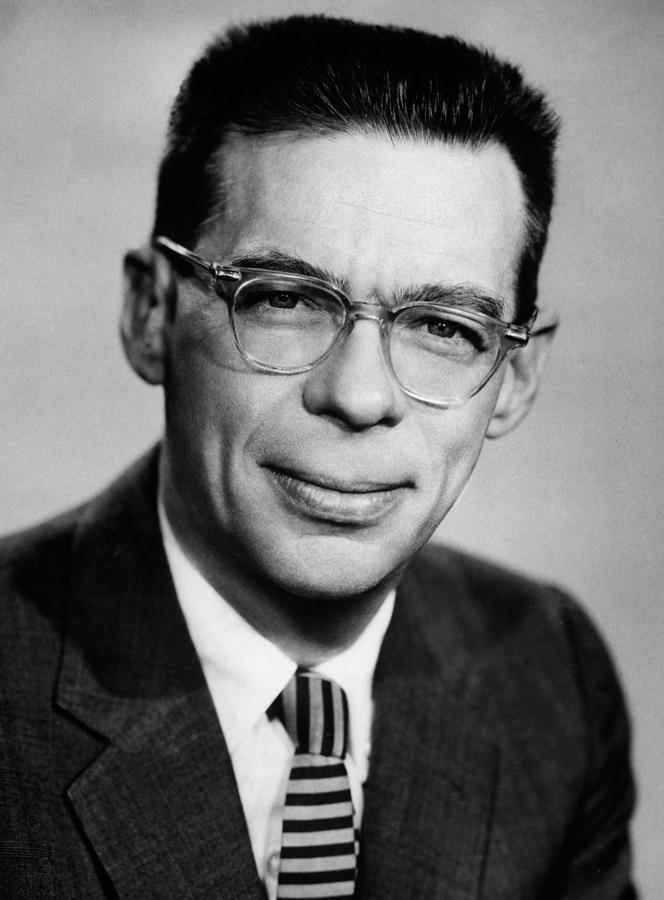
CBS News president Richard Salant
During World War II, Stanton had worked in the Office of War Information, the psychological warfare branch. In the 1950s, President Dwight Eisenhower had appointed Stanton to a small committee to organize how the United States would survive a nuclear attack. From 1961-67, Stanton was chairman of Rand Corporation, a CIA-associated think tank.
The other two members of CNEC were Sig Mickelson, who had preceded Salant as CBS News president and then became a director of Time-Life Broadcasting, and CBS founder Bill Paley, who had also served in the World War II psy-war branch of the Office of War Information and – after the war – let CIA Director Allen Dulles have the spy agency informally debrief CBS overseas correspondents.
When Salant turned the Warren Commission issue over to CNEC, the prospects for any objective or skeptical treatment of the JFK case faded. “The establishment of CNEC effectively curtailed the news division’s independence,” Feinman later wrote about his discoveries.
Further, Salant had no journalistic experience and was in almost daily communication with Stanton, whose background was in government propaganda.
Scaling Back
The day after Salant informed CNEC about the proposed JFK assassination special, Salant told CBS News vice president Manning that he was wavering on the mock trial concept. Salant’s next move was even more ominous. He sent both Manning and prime-time news producer Midgley to California to talk to two lawyers about the project.
One of the attorneys was Edwin Huddleson, a partner in the San Francisco firm of Cooley, Godward, Castro and Huddleson. Huddleson attended Harvard Law with Salant and, like Stanton, was on the board of the Rand Corporation. The other lawyer was Bayless Manning, Dean of Stanford Law School. They told the CBS representatives that they were against the network undertaking the project on the grounds of “the national interest” and because of the topic’s “political implications.”
CBS News vice president Manning reported that both attorneys advised the CBS team to ignore the critics of the Warren Commission or to appoint a special panel to critique their books, in other words, to put the critics on trial. Huddleson also steered the CBS team to cooperative scientists who would counter the critics.
On his return to CBS headquarters, Manning saw the writing on the wall. He knew what his CBS superiors really wanted and it wasn’t some no-holds-barred examination of the Warren Commission’s flaws. So, he suggested a new title for the series, “In Defense of the Warren Report,” and wrote that CBS should dismiss “the inane, irresponsible, and hare-brained challenges of Mark Lane and others of that stripe.”
Out on a Limb
Manning’s defection from an open-minded treatment of the evidence to a one-sided Warren Commission defense left producer Midgley out on a limb. However, unaware of what Salant was up to, on Dec. 14, 1966, Midgley circulated a memo about how he planned on approaching the Warren Report project. He proposed running experiments that were more scientific than “the ridiculous ones run by the FBI.” He still wanted a mock trial to show how the operation of the Commission was “almost incredibly inadequate.”
In response, Salant circulated an anonymous, undated, paragraph-by-paragraph rebuttal to Midgley’s plan, which Feinman’s later investigation determined was written by Warren Commissioner John McCloy, then Chairman of the Council on Foreign Relations and the father of Ellen McCloy, Salant’s administrative assistant.
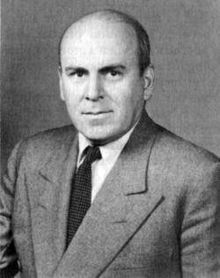
John J. McCloy
In this memo, McCloy wrote that “the chief evidence that Oswald acted alone and shot alone is not to be found in the ballistics and pathology of the assassination, but in the fact of his loner life.” As many Warren Commission critics have noted, it was this approach – discounting or ignoring the medical and ballistics evidence, but concentrating on Oswald’s alleged social life – that was a fatal flaw of the Warren Report.
Despite the familial conflict of interest, Ellen McCloy was added to the distribution list for almost all memos related to the Kennedy assassination project and thus could serve as a secret back-channel between CBS and her father.
A Stonewall Defense
Clearly, the original idea for a fresh examination of the Warren Commission and the evidence that had arisen since its report was published in 1964 had been turned on its head. The CBS brass wanted a defense, not a critique.
Salant asked producer Midgley, “Is the question whether Oswald was a CIA or FBI informant really so substantial that we have to deal with it?” Midgley, increasingly alone out on the limb, replied, “Yes, we must treat it.”
As the initial plan for a forthright examination of the Warren Commission’s shortcomings was transformed into a stonewall defense of the official findings, there was still the problem of Midgley, the last holdout. But eventually his head was turned, too.
While the four-night special was in production, Midgley became engaged to Betty Furness, a former actress-turned-television-commercial pitchwoman whom President Lyndon Johnson appointed as his special assistant for consumer affairs, even though her only experience in the field had been selling Westinghouse appliances for 11 years on television. She was sworn in on April 27, 1967, which was about two months before the CBS production aired. Two weeks after it was broadcast, Midgley and Furness were married.
As Kai Bird’s biography of McCloy, The Chairman, makes clear, Johnson and McCloy were friends and colleagues. But there is another point about how Midgley was convinced to go along with McCloy’s view of the Warren Commission. Around the same time he married Furness, he received a significant promotion, elevated to executive editor of the network’s flagship news program, “The CBS Evening News with Walter Cronkite.” This made him, in essence, the top news editor at CBS, a decision that required the consultation and approval of Salant, Cronkite and Stanton – and very likely the CNEC.
So, instead of a serious investigation into the murder of President Kennedy – at a time when there was the possibility of effective national action to get at the truth – CBS News delivered a stalwart defense of the Warren Commission’s conclusions and heaped ridicule on anyone who dared question those findings.
Shaping that approach was not only the influence of Warren Commission member John McCloy, an icon of the Establishment, but the carrots and sticks applied to senior CBS producers, such as Gordon Manning and Les Midgley, who initially favored a more skeptical approach but were convinced to abandon that goal.
Curious Consultants
Once McCloy was brought onboard, the complexion of CBS’s treatment of the JFK assassination changed. CBS hired consultants who were rabidly pro-Warren Report to appear as on-air experts while others would be hidden in the shadows. In addition to the clandestine role of McCloy, some of these consultants included Dallas police officer Gerald Hill, physicist Luis Alvarez and reporter Lawrence Schiller.
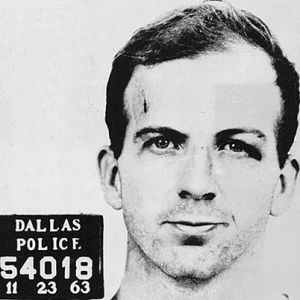
Lee Harvey Oswald
Officer Hill was just about everywhere in Dallas on Nov. 22, 1963. He was at the Texas School Book Depository where Oswald worked and allegedly shot the President from the sixth floor; Hill was at the murder scene of Officer J. D Tippit, who was allegedly shot by Oswald after he fled Dealey Plaza; and he was at the Texas Theater where Oswald was arrested.
Hill appeared in the CBS 1967 program show as a speaker. But Roger Feinman found out that Hill also was paid for six weeks work on the show as a consultant. During his consulting, Hill revealed that the police did a “fast frisk” on Oswald while in the theater. They found nothing in his pockets at the time, which begs the question of where the bullets the police said they found in his pockets later at the station came from. That question did not arise during the program since CBS never revealed the contradiction. (Click here and go to page 20 of the transcript.)
Physicist Luis Alvarez, who had a served as an adviser to the CIA and to the U.S. military in the Vietnam War, spent a considerable amount of time lending his name to articles supporting the Warren Report and conducting questionable experiments supporting its findings. As demonstrated by authors Josiah Thompson (in 2013) and Gary Aguilar (in 2014), Alvarez misrepresented some data in some of his JFK experiments. (Click here and go to the 37:00 mark for Aguilar’s presentation.)
Making Fun
The same year of the 1967 CBS broadcast, reporter Lawrence Schiller had co-written a book entitled The Scavengers and Critics of the Warren Report, a picaresque journey through America where Schiller interviewed some of the prominent – and not so prominent – critics of the report and caricatured them hideously.
Secretly, he had been an informant for the FBI for many years keeping an eye on people like Mark Lane and Jim Garrison, whom Schiller attacked despite discovering witnesses who attested to Garrison’s suspect Clay Shaw using the alias Clay Bertrand, a key point in Garrison’s case. The relevant documents were not declassified until the Assassination Records and Reviews Board was set up in the 1990s. [See Destiny Betrayed, Second Edition, by James DiEugenio, p. 388]
This cast of consultants – along with McCloy – influenced the direction of the 1967 CBS Special Report. The last thing these consultants wanted to do was to expose the faulty methodology that the Warren Commission had employed.
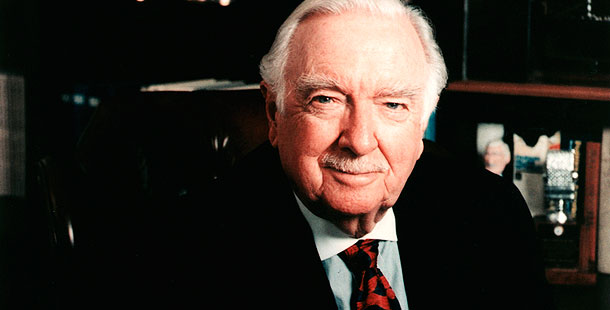
Longtime CBS News anchor Walter Cronkite.
As in 1964, Walter Cronkite manned the anchor desk and Dan Rather was the main field reporter. Again, CBS could find no serious problems with the Warren Report. The critics were misguided, CBS said. After all, Cronkite and Rather had done a seven-month inquiry.
‘Unimpeachable Credentials’
In the broadcast, Cronkite names the men on the Warren Commission as their pictures appear on screen. He calls them “men of unimpeachable credentials” but left out the fact that President Kennedy fired Commissioner Allen Dulles from the CIA in 1961 for lying to him about the Bay of Pigs invasion of Cuba.
When Cronkite got to the crux of the program, he said the Warren Commission assured the American people that they would get the most searching investigation in history. Then, Cronkite showed books and articles critical of the commission and mentioned that polls showed that a majority of Americans had lost faith in the Warren Report.
At that point, the network special revealed its purpose, to discredit the critics and reassure the public that these people could not be trusted.
Cronkite went through a list of points that the critics had raised, including key issues such as how many shots were fired and how quickly they could be discharged from the suspect rifle. On each point, Cronkite took the Warren Commission’s side, saying Oswald fired three shots from the sixth floor with the rifle attributed to him by the Warren Commission. Two of three were direct hits – to Kennedy’s head and shoulder area – within six seconds.
One way that CBS fortified the case for just three shots was Alvarez’s examination of the Zapruder film, Abraham Zapruder’s 26-second film of Kennedy’s assassination taken from Zapruder’s position in Dealey Plaza, a sequence that CBS did not actually show.
Alvarez proclaimed that by doing something called a “jiggle analysis,” he computed that there were three shots fired during the film. What the jiggle amounted to was a blurring of frames on the film (presumably because Zapruder would have flinched at the sound of gunshots).
Dan Rather took this Alvarez idea to Charles Wyckoff, a professional photo analyst in Massachusetts. Agreeing with Alvarez, at least on camera, Wyckoff mapped out the three areas of “jiggles.” The Alvarez/Wyckoff formula was simple: three jiggles, three shots.
But as Feinman found out through his legal discovery and hearings, there was a big problem with this declaration. Wyckoff had actually discovered four jiggles, not three. Therefore, by the Alvarez formula, there was a second gunman and thus a conspiracy.
Wyckoff’s on-camera discussion of this was cut out and not included in the official transcript. But it is interesting to note just how committed Wyckoff was to the CBS agenda, for he tried to explain the fourth jiggle as Zapruder’s reaction to a siren. As Feinman noted, how Wyckoff could determine this from a silent 8 mm film is puzzling. But the point is, this analysis did not support the commission. It undermined the Warren Report and was left on the cutting-room floor.
There were other problems with the Alverez-Wyckoff “jiggle” theory, since the first jiggle was at around Zapruder frame 190, or a few frames previous to that, which would have meant that Oswald would have had to be firing through the branches of an oak tree, which is why the Warren Commission moved this shot up to frame 210.
But CBS left itself an out, claiming there was an opening in the tree branches at frame 186 and Oswald could have fired at that point. But that is patently ridiculous, since the opening at frame 186 lasted for 1/18th of a second. To say that Oswald anticipated a less than split-second opening, and then steeled himself in a flash to align the target, aim, and fire is all stuff from the realm of comic book super heroes. Yet, in its blind obeisance to the Warren Report, this is what CBS had reduced itself to.
Another way that CBS tried to bolster the Warren Report was to have Wyckoff purchase other Bell and Howell movie cameras (since CBS was not allowed to handle the actual Zapruder camera.) After winding up these cameras, CBS hypothesized that Zapruder’s camera might have been running a little slow, giving Oswald a longer firing sequence.
The problem with this theory, however, was that both the FBI and Bell and Howell had tested the speed of Zapruder’s actual camera. Even Dick Salant commented that this was “logically inconclusive and unpersuasive,” but it stayed in the program.
The Shot Sequence
But why did Rather and Wyckoff have to stoop this low? The answer is because of the results of their rifle firing tests. As the critics of the Warren Report had pointed out, the commission had used two tests to see if Oswald could have gotten off three shots in the allotted 5.6 seconds indicated by the Zapruder film.
These tests ended up as failing to prove Oswald could have performed this feat of marksmanship. What made it worse is that the commission had used very proficient riflemen to try and duplicate what the commission said Oswald had done. [See Sylvia Meagher, Accessories After the Fact, p. 108]
So CBS tried again. This time they set up a track with a sled on it to simulate the back of Kennedy’s head. They then elevated a firing point to simulate the sixth floor “sniper’s nest,” though there were differences from Dealey Plaza including the oak tree and a rise in the street in the real crime scene. Nevertheless, the CBS experimenters released the target on its sled and had a marksman named Ed Crossman fire his three shots.
Crossman had a considerable reputation in the field, but – even though he was given a week to practice with a version of the Mannlicher Carcano rifle – his results were not up to snuff. According to a report by producer Midgley, Crossman never broke 6.25 seconds (longer than Oswald’s purported 5.6 seconds) and – even with an enlarged target – he got only two of three hits in about 50 percent of his attempts.
Crossman explained that the rifle had a sticky bolt action and a faulty viewing scope. But what the professional sniper did not know is that the actual rifle in evidence was even harder to work. Crossman said that to perform such a feat on the first time out would require a lot of luck.
However, since that evidence did not fit the show’s agenda, it was discarded, both the test and the comments. To resolve that problem, CBS called in 11 professional marksmen who first went to an indoor firing range and practiced to their heart’s content, though the Warren Commission could find no evidence that Oswald practiced.
The 11 men then took 37 runs at duplicating what Oswald was supposed to have done. There were three instances where two out of three hits were recorded in 5.6 seconds. The best time was achieved by Howard Donahue on his third attempt after his first two attempts were complete failures.
But CBS claimed that the average recorded time was 5.6 seconds, without including the 17 attempts that were thrown out because of mechanical failure. CBS also didn’t tell the public the surviving average was 1.2 hits out of three with an enlarged target.
The truly striking characteristic of these trials was the number of instances where the shooter could not get any result at all. More often than not, once the clip was loaded, the bolt action jammed. The sniper had to realign the target and fire again. According to the Warren Report, that could not have happened with Oswald.
There is also the anomaly of James Tague, who was struck by one bullet that the Warren Commission said had ricocheted off the curb of a different street, about 260 feet away from the limousine. But how could Oswald have missed by that much if he was so accurate on his other two shots? That was another discrepancy deleted by the CBS editors.
The Autopsy Disputes
CBS also obscured what was said by the two chief medical witnesses after the assassination; by Dr. Malcolm Perry from Parkland Hospital in Dallas, where Kennedy was taken after he was hit, and James Humes, the chief pathologist at the autopsy examination at Bethesda Medical Center that evening.
In their research for the series, CBS had discovered a transcript of Dr. Perry’s press conference that the Warren Commission did not have. But CBS camouflaged what Perry said on Nov. 22, 1963, specifically about Kennedy’s anterior neck wound. Perry said it had the appearance to him of being an entrance wound, and he said this three times.
Cronkite tried to characterize the conference as Perry being rushed out to the press and badgered. But that wasn’t true, since the press conference was about two hours after Perry had done a tracheotomy over the front neck wound. The performance of that incision had given Perry the closest and most deliberate look at that wound.
Perry therefore had the time to recover from the pressure of the operation and there was no badgering of Perry. Newsmen were simply asking him questions about the wounds he saw. Perry had the opportunity to answer the questions on his own terms. Again, CBS seemed intent on concealing evidence of a possible second assassin — because Oswald could not have fired at Kennedy from the front.
Commander James Humes, the pathologist, did not want to appear on the program, but was pressured by Attorney General Ramsey Clark, possibly with McCloy’s assistance. As Feinman discovered, the preliminary talks with Humes were done through a friend of his at the church he attended.
There were two things that Humes said in these early discussions that were bracing. First, he said that he recalled an x-ray of the President, which showed a malleable probe connecting the rear back wound with the front neck wound. Second, he said that he had orders not to do a complete autopsy. He would not reveal who gave him these orders, except to say that it was not Robert Kennedy. [Charles Crenshaw, Trauma Room One, p. 182]
The significance of the malleable probe is that, if Humes was correct, the front and back wounds would have come from the same bullet. However, we learned almost 30 years later from the Assassination Records Review Board that other witnesses also saw a malleable probe go through Kennedy’s back, but said the probe did not go through the body since the wounds did not connect. However, x-rays that might confirm the presence of the probe are missing. [DiEugenio, Reclaiming Parkland, pgs. 116-18]
Location of the Wounds
On camera, Humes also said the posterior body wound was at the base of the neck. Dan Rather then showed Humes the drawings made of the wound in the back as depicted by medical illustrator Harold Rydberg for the Warren Commission, also depicting the wound as being in the neck, which Humes agreed with on camera. He added that they had reviewed the photos and referred to measurements and this all indicated the wound was in the neck.
Even for CBS — and Warren Commissioner John McCloy — this must have been surprising since the autopsy photos do not reveal the wound to be at the base of the neck but clearly in the back. (Click here and scroll down.) CBS should have sent its own independent expert to the archive because Humes clearly had a vested interest in seeing his autopsy report bolstered, especially since it was under attack by more than one critic.
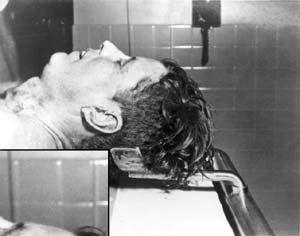
Autopsy photo of President Kennedy
The second point that makes Humes’s interview curious is his comments on the Rydberg drawings’ accuracy. These do not coincide with what Rydberg said later, not understanding why he was chosen to make these drawings for the Warren Commission since he was only 22 and had been drawing for only one year. There were many other veteran illustrators in the area the Warren Commission could have called upon, but Rydberg came to believe that it was his inexperience that caused the commission to pick him.
When Humes and Dr. Thornton Boswell appeared before him, they had nothing with them: no photos, no x-rays, no official measurements, speaking only from memory, nearly four months after the autopsy, Rydberg said. [DiEugenio, Reclaiming Parkland, pgs. 119-22] The Rydberg drawings have become infamous for not corresponding to the pictures, measurements, or the Zapruder film.
For Humes to endorse these on national television – and for CBS to allow this without any fact-checking – shows what a case of false journalism the special had become.
Limiting Access
CBS also knew that Humes said he had been limited in what he was allowed to do in the Kennedy autopsy, a potentially big scoop if CBS had followed it. Instead, the public had to wait another two years for the story to surface at Garrison’s trial of Clay Shaw when autopsy doctor Pierre Finck took the stand in Shaw’s defense. Finck said the same thing: that Dr. Humes was limited in his autopsy practice on Kennedy. [ibid, p. 115]
The difference was that this disclosure would have had much more exposure, impact and vibrancy if CBS had broken it in 1967 rather than having the fact come up during Garrison’s prosecution, in part, because the press corps’ hostility toward Garrison distorted the trial coverage.
So, in the summer of 1967, CBS again had come to the defense of the official story with a four-hour, four-night extravaganza that again endorsed the findings of the Warren Commission.
At the time of broadcast, it was the most expensive documentary CBS ever produced. It concluded: Acting alone, Lee Harvey Oswald killed President Kennedy. Acting alone, Jack Ruby killed Oswald. And Oswald and Ruby did not know each other. All the controversy was Much Ado about Nothing.
Unwinding the Back Story
In 1967, the clandestine relationship between CBS News President Salant and Warren Commissioner McCloy was known to very few people. In fact, as assistant producer Roger Feinman later deduced, it was likely known only to the very small circle in the memo distribution chain. That Salant deliberately wished to keep it hidden is indicated by the fact that he allowed McCloy to write these early memos anonymously.
As Feinman concluded, McCloy’s influence over the program was almost certainly a violation of the network’s own guidelines, which prohibit conflicts of interest in the news production, probably another reason Salant kept McCloy’s connection hidden.
In the 1970s, after Feinman was fired over a later dispute regarding another example of CBS News’ highhanded handling of the JFK assassination – and then obtained internal documents as part of a legal hearing on his dismissal – he briefly thought of publicizing the whole affair (which he eventually decided against doing).
But Feinman wrote to Warren Commissioner McCloy in March 1977 about the ex-commissioner’s clandestine role in the four-night special a decade earlier. McCloy declined to be interviewed on the subject, but added that he did not recall any contribution he made to the special.
But Feinman persisted. On April 4, 1977, he wrote McCloy again. This time he revealed that he had written evidence that McCloy had participated extensively in the production of the four-night series. Very quickly, McCloy got in contact with Salant and wrote that he did not recall any such back-channel relationship.
In turn, Salant contacted Midgley and told the producer to check his files to see if there was any evidence that would reveal a CBS secret collaboration with McCloy. Salant then wrote back to McCloy saying that at no time did Ellen McCloy ever act as a conduit between CBS News and her father.
However, in 1992 in an article for The Village Voice, both Ellen McCloy and Salant were confronted with memos that revealed Salant was lying in 1977. McCloy’s daughter admitted to the clandestine courier relationship. Salant finally admitted it also, but he tried to say there was nothing unusual about it.
Reassuring Americans
So, in 1967, CBS News had again reassured the American people that there was no conspiracy in President Kennedy’s murder, just a misguided lone gunman who had done it all by himself. Anyone who thought otherwise was confused, deceptive or delusional.
However, in 1975, eight years after the broadcast, two events revived interest in the JFK case again. First, the Church Committee was formed in Congress to explore the crimes of the CIA and FBI, revealing that before Kennedy was killed, the CIA had farmed out the assassination of Fidel Castro to the Mafia, a fact that was kept from the Warren Commission even though one of its members, Allen Dulles, had been CIA director when the plots were formulated.
Longtime CBS anchor Dan Rather
Secondly, in the summer of 1975, in prime time, ABC broadcast the Zapruder film, the first time that the American public had seen the shocking image of President Kennedy’s head being knocked back and to the left by what appeared to be a shot from his front and right, a shot Oswald could not have fired.
The confluence of these two events caused a furor in Washington and the creation of the House Select Committee on Assassinations (HSCA) to reopen the JFK case.
Having become a chief defender of the original Warren Commission findings, CBS News moved preemptively to influence the new investigation by planning another special about the JFK case.
CBS’s Sixty Minutes decided to do a story on whether or not Jack Ruby and Lee Oswald knew each other. After several months of research, Salant killed the project with the investigative files turned over to senior producer Les Midgley before becoming the basis for the 1975 CBS special, which was entitled The American Assassins.
Originally this was planned as a four-night special. One night each on the JFK, RFK, Martin Luther King and the George Wallace shootings. But at the last moment, in a very late press release, CBS announced that the first two nights would be devoted to the JFK case. Midgley was the producer, but this time Cronkite was absent. Rather took his place behind the desk.
In general terms, it was more of the same. The photographic consultant was Itek Corporation, a company that was very close to the CIA, having helped build the CORONA spy satellite system. Itek’s CEO in the mid-1960s, Franklin Lindsay, was a former CIA officer. With Itek’s help, CBS did everything they could to move their Magic Bullet shot from about frame 190 to about frames 223-226.
Yet, Josiah Thompson, who appeared on the show, had written there was no evidence Gov. Connally was hit before frames 230-236. Further, there are indications that President Kennedy is clearly hit as he disappears behind the Stemmons Freeway sign at about frame 190, e.g., his head seems to collapse both sideways and forward in a buckling motion.
But with Itek in hand, this became the scenario for the CBS version of the “single bullet theory.” It differed from the Warren Commission’s in that it did not rely upon a “delayed reaction” on Connally’s part to the same bullet.
Ballistics Tests
CBS also employed Alfred Olivier, a research veterinarian who worked for Army wound ballistics branch and did tests with the alleged rifle used in the assassination. He was a chief witness for junior counsel Arlen Specter before the Warren Commission. [See Warren Commission, Volume V, pgs. 74ff]
For CBS in 1975, Olivier said that the Magic Bullet, CE 399, was not actually “pristine.” For CBS and Dan Rather, this made the “single bullet theory” not impossible, just hard to believe.
Apparently, no one explained to Rather that the only deformation on the bullet is a slight flattening at the base, which would occur as the bullet is blasted through the barrel of a rifle. There is no deformation at its tip where it would have struck its multiple targets. There is only a tiny amount of mass missing from the bullet.
In other words, as more than one author has written, it has all the indications of being fired into a carton of water or a bale of cotton. If CBS had interviewed the legendary medical examiner Milton Helpern of New York — not far from CBS headquarters — that is pretty much what he would have said. [Henry Hurt, Reasonable Doubt, p. 69.]
Rather realized, without being explicit, that something was wrong with Kennedy’s autopsy. He called the autopsy below par and reversed field on his opinion about pathologist Humes, whose experience Rather had praised in 1967. In the 1975 broadcast, Rather said that neither Humes nor Boswell were qualified to perform Kennedy’s autopsy and that parts of it were botched.
But let us make no mistake about what CBS was up to here. The entire corporate upper structure — Salant, Stanton, Paley — had overrun the working producers and journalists, including Midgley, Manning and Schorr. And those subordinates decided not to utter a peep to the outside world about what had happened.
Not only Cronkite and Rather participated in this appalling exercise, so too did Eric Sevareid, appearing at the end of the last show and saying that there are always those who believe in conspiracies, whether it be about Yalta, China or Pearl Harbor. He then poured it on by saying some people still think Hitler is alive and concluding that it would be impossible to cover up the assassination of a President.
But simply in examining how a major news outlet like CBS handled the evidence shows precisely how something as dreadful and significant as the murder of a President could be covered up.
Much of this history also would have remained unknown, except that Roger Feinman, an assistant producer at CBS News, had become a friend and follower of the estimable Warren Commission critic Sylvia Meagher. So, Feinman knew that the Warren Commission was a deeply flawed report and that CBS had employed some very questionable methods in the 1967 special in order to conceal those flaws.
When the assassination issue returned in the mid-1970s, Feinman began to write some memoranda to those in charge of the renewed CBS investigation warning that they shouldn’t repeat their 1967 performance. His first memo went to CBS president Dick Salant. Many of the other memos were directed to the Office of Standards and Practices.
In preparing these memos, Feinman researched some of the odd methodologies that CBS used in 1967. Since he had been at CBS for three years, he got to know some of the people who had worked on that series. They supplied him with documents and information which revealed that what Cronkite and Rather were telling the audience had been arrived at through a process that was as flawed as the one the Warren Commission had used.
Feinman requested a formal review of the process by which CBS had arrived at its forensic conclusions. He felt the documentary had violated company guidelines in doing so.
Establishment Strikes Back
As Feinman’s memos began to circulate through the executive and management suites – including Salant’s and Vice-President Bill Small’s – it was made clear to him that he should cease and desist from his one-man campaign. When he wouldn’t let up, CBS moved to terminate its dissident employee.
Roger Feinman
But since Feinman was working under a union contract, he had certain administrative rights to a fair hearing, including the process of discovery through which he could request certain documents to make his case. His research allowed him to pinpoint where these documents would be and who prepared them.
On Sept. 7, 1976, CBS succeeded in terminating Feinman. But the collection of documents he secured through his hearing was extraordinary, allowing outsiders for the first time to see how the 1967 series was conceived and executed. Further, the documents took us into the group psychology of a large media corporation when it collides with controversial matters involving national security.
Only Roger Feinman, who was not at the top of CBS or anywhere near it, had the guts to try to get to the bottom of the whole internal scandal.
And Feinman paid a high personal price for doing so. Feinman’s contribution to American history did not help him get his journalistic career back on track. When he passed away in the fall of 2011, he was freelancing as a computer programmer.
[This article is largely based on the script for the documentary film Roger Feinman was in the process of reediting at the time of his death in 2011. The reader can view that here.]
James DiEugenio is a researcher and writer on the assassination of President John F. Kennedy and other mysteries of that era. His most recent book is Reclaiming Parkland.
FBI informants act as ‘honeypots’ to entrap 21yo ‘ISIS sympathizer’ – report
RT | April 22, 2016
FBI informants acted as ‘honeypots’ to trap a 21-year-old man, posing as love interests to glean information, audio obtained by the Intercept reveals. One woman lured him into making a false claim that he’d tried to go to Syria to fight with Islamic State.
The target of the FBI’s operation was Khalil Abu Rayyan, a Michigan resident. When he met an undercover informant by the name of ‘Ghaada’ online, he quickly became enamored with her. A relationship began, and the two even talked about marriage, children and the future.
But the online relationship ended when Ghaada called it off. Rayyan was heartbroken, but the FBI soon sent another woman, known as ‘Jannah Bride,’ to heal his wounds.
Rayyan opened up to Jannah Bride, even disclosing that he had thought about suicide. He claimed to have bought a rope which he could use to hang himself.
“I bought a rope this morning… it’s not that hard,” he said in the 14-minute audio footage obtained by the Intercept. “In only a minute or two, it would be over.”
Seeing an open opportunity to prey on Rayyan’s vulnerable state, Jannah Bride decided to steer the conversation in the direction of hurting other people.
“Which thought is greater to you right now – hurting yourself or somebody else?” the FBI informant asked.
But despite the FBI’s intentions, Rayyan’s response proved no violent thoughts towards others.
“Well, I mean, I would not like to hurt somebody else… but at the same time, if I did it to myself, it’d be easier. I wouldn’t get in trouble,” he said.
In another attempt to try to trap Rayyan into admitting he was violent, Jannah Bride appeared to take a deep interest in jihad.
To impress her, Rayyan said he had an AK-47, claiming it was purchased for a plan to “shoot up a church,” which was later foiled. He also claimed to have attempted to travel to Syria. However, both stories appeared to be false. He didn’t own the assault weapon, and there is no evidence that he ever bought a ticket to war-torn Syria.
But the claims were enough to prompt the US government to search Rayyan’s home and business a couple of months later. And although they couldn’t find the apparently fictional AK-47, they managed to charge him with unlawful possession of a handgun, which his lawyer says was obtained for self-defense reasons while delivering pizzas in Detroit.
And despite there being no record of a purchased ticket to Syria (or anywhere nearby), the US government now alleges that Rayyan is an Islamic State (IS, formerly ISIS/ISIL) sympathizer, the Intercept reported.
What’s more is that the FBI is aiming to keep details of the exchanges with Rayyan completely private. However, Rayyan’s lawyers have asked the court to force the government to turn over all communications between their client and the FBI informants.
According to a filing by the defense, the government has proposed a “limited protective order” that “would have kept sealed anything that even summarized material the government deemed sensitive.” Unsurprisingly, the defense has refused to accept the proposal.
In a motion filed April 15, Rayyan’s lawyers wrote: “The government clearly exploited Rayyan, and blatantly attempted to steer him toward terrorism as an acceptable form of suicide before God.”
The FBI uses more than 15,000 informants in counter-terrorism investigations, according to the Intercept. Recent investigations have focused on alleged IS sympathizers.
NSA must end planned expansion of domestic spying, lawmakers say
RT | March 25, 2016
Two members of the House Oversight Committee, a Democrat and a Republican, have asked the director of the National Security Agency to halt a plan to expand the list of agencies that the NSA shares information with.
Representatives Blake Farenthold (R-Texas) and Ted Lieu (D-California) wrote in a letter to NSA Director Michael Rogers on Monday that the reported plan would violate privacy protections in the Fourth Amendment, since domestic law enforcement wouldn’t need a warrant to use the data acquired from the agency.
“We are alarmed by press reports that state National Security Agency (NSA) data may soon routinely be used for domestic policing,” the two lawmakers wrote. “If media accounts are true, this radical policy shift by the NSA would be unconstitutional, and dangerous.”
Last month, the New York Times reported that the Obama administration was working with the NSA to create new protocols for sharing intercepted private communications with domestic law enforcement agencies, such as the FBI and the Drug Enforcement Agency (DEA).
Currently, the secretive spy agency says that its analysts remove certain personal information before giving it to other agencies. Under the new rules, however, domestic law enforcement would have access to the surveillance data without it being scrubbed of personally identifiable information.
The FBI currently has the ability to use phone-based data, but it must request the NSA’s permission to access information from digital communications. The planned loosening of these restrictions would have to be approved by Secretary of Defense Ashton Carter, Director of National Intelligence James Clapper and Attorney General Loretta Lynch.
“Our country has always drawn a line between our military and intelligence services, and domestic policing and spying,” the congressmen wrote. “We do not — and should not — use US Army Apache helicopters to quell domestic riots; Navy Seal teams to take down counterfeiting rings; or the NSA to conduct surveillance on domestic street gangs.”
The Obama administration has said it had leeway to change procedures for certain surveillance programs, thanks to executive order 12333, signed by President Ronald Reagan in 1981.
In 2015, Congress passed the USA Freedom Act, which curbed certain surveillance activities by ending bulk collection of phone records. Private telecom companies are now required to hold onto such information, so that it can be handed over to law enforcement if a warrant is obtained.
Release of Tsarnaev’s Interrogation Notes Leads to More Questions

Photo credit: FBI
By James Henry – WhoWhatWhy – March 15, 2016
Heavily redacted notes from the hospital bed interrogation of Dzhokhar Tsarnaev were released at the end of February. Most media reports about the documents focus on portions that portray Dzhokhar as having played an active role in building and detonating the bombs that exploded on Boylston St.
But a closer read of the FBI’s summary of Tsarnaev’s statements to his interrogators raises questions about key details of the bombing and its execution.
First off, it is important to note that the interview notes are heavily redacted and therefore incomplete. But some of the things the FBI says Dzhokhar told his interrogators indicate a level of confusion or ignorance, or both, about important facts. They also raise questions about why the FBI has been selectively vague about key details of the case.
Black/Brown/White Backpack?
According to the interrogation notes, “Jahar carried a brown backpack [emphasis added] while his brother’s backpack was black. After parking, they walked…”
Now the backpack is brown?
The indictment, which was written a month and a half after the bombing, states that both bombs were concealed in black backpacks.
In a photograph of the shredded backpack lying in Boylston Street released by the FBI, it does indeed look black.

Boston Bombing black shredded backpack – Photo credit: FBI
However, many observers have pointed out that, in surveillance photos, the backpack Dzhokhar can be seen carrying does not look black — or brown for that matter — but mostly white or light gray.

Photo credit: FBI
Why the discrepancy? Did the interviewing agent challenge him on this detail? Why is there so much ambiguity around such an important detail?
And there’s another problem: The “smoking gun” video that supposedly proves Tsarnaev placed an explosive laden backpack on Boylston Street. It actually shows very little. His actions are obscured by the crowd of people.
Shouldn’t the government be obliged to prove unequivocally that the exploded backpack found at the scene was at least the same color as the one Dzhokhar was carrying that day?
Strange Redaction Regarding Explosive Powder
Also according to the FBI agent’s notes, Tsarnaev ”stated that he and his brother Tamerlan built two explosive devices in his brother’s home at 410 Norfolk…”
This implies that Dzhokhar took a more active role in constructing the bombs than has been previously described.
But, Dzhokhar’s lawyers showed at trial that none of his fingerprints were found on any of the bomb or bomb-making materials. Tamerlan’s fingerprints were, however.
Dzhokhar also told agents, apparently, that the powder came from $200 worth of fireworks that he and Tamerlan had purchased in New Hampshire about a year prior. But that’s when Tamerlan was in Russia — January to July 2012. Considering Tsarnaev was being interrogated April 21 and 22 , 2013, the time-line can’t be accurate.

Fireworks found in Dzhokhar Tsarnaev’s dormitory room – Photo credit: FBI
At which store, or exactly when these particular fireworks were purchased, is not clear. But since the bombing, law-enforcement and media reports have consistently referenced a $200 purchase made by Tamerlan at Phantom Fireworks in Seabrook, New Hampshire two months before the bombing. Nothing about Dzhokhar buying fireworks was ever made public.
Most notably, that particular purchase would only constitute a small fraction of the amount of explosive powder needed to produce all the bombs the Tsarnaevs are accused of making and detonating.
According to the owner of Phantom Fireworks, the brothers would have been able to harvest, at most, 1.5 pounds of explosive powder from the $200 purchase.
On the other hand, each pressure cooker bomb that exploded on Boylston Street probably contained anywhere from 8 to 16 pounds of explosive powder, according to testimony from Special Agent Edward Knapp.
The pressure cooker that exploded in Watertown probably contained another 4 to 8 pounds. And in Watertown, three more pounds of powder were found in a Tupperware container, along with a number of pipe bombs each containing yet more powder. That means the Tsarnaevs would have had to collect between 23 and 43 pounds of explosive powder — or more.
Either they made numerous purchases of fireworks or they got explosive powder from another source.
At the very least, Tsarnaev’s statement that they got the explosive powder from $200 worth of fireworks shows his ignorance regarding what it actually took to make them. Either that or he did discuss the provenance of the rest of the explosive powder with his interrogators — was that information in a redacted part?
Why does the FBI continue to withhold information on where the explosives came from?
All of this reveals either a marked level of ignorance or confusion by Dzhokhar Tsarnaev about details of the bombs’ construction — even the color of the backpack. Or, it reveals that the government is still withholding key details about how the bombs came to be. Why is anyone’s guess.
But why do any of these small details matter? Because, as we all know, the devil can be found in the details. And the outcome of a life-and-death prosecution can sometimes hinge almost entirely on such seemingly small details.
Painting Dzhokhar Tsarnaev as an equal partner in the planning, preparation and execution of the violence that erupted in Boston was critical to the government’s goal of winning the death penalty against the sole surviving brother.
But when close scrutiny has been applied to the government’s case, we continually find troubling inconsistencies that hint at a prosecution hell-bent on winning the case — damn the specifics of who did exactly what and when.
Why Details Matter: See for Yourself with One Click
For instance: in our past reporting we showed how the government claimed Tamerlan drove as Dzhokhar was sitting menacingly behind Dun Meng, the carjacking victim, as they circled around greater Boston in Meng’s stolen Mercedes SUV. But when we see the Mercedes pull up to the gas pump where Meng ultimately gets away, Dzhokhar appears to get out of the front seat — not the back.
As we reported previously:
Officially, by the time the Mercedes SUV can be seen pulling into the Shell station on the video in question, Tamerlan was driving, Danny was in the passenger seat, and Dzhokhar was sitting in the backseat.
In the video, we see the SUV pull up to one of the gas pumps and stop. Strangely, we see Dzhokhar emerge from behind the gas pump, obscuring the front passenger door before he makes his way into the store.
Strange because we were told he was sitting in the backseat. Yet we don’t see Dzhokhar get out of the rear door. Neither do we see him walk from the other side of the SUV.
Did they edit that out? Why?
Was the “escape” story embellished? After all, what cold-blooded criminals would allow a carjacking victim to sit in the back seat to make an easy escape? Or did they let him go? In fact, the carjacking victim’s account changed significantly early on until it finally solidified into what sounded most damning.
Other Little “Details”
And the government’s glossing over of its pre-bombing relationship with the Tsarnaevs, who hail from a geopolitical hotspot on Russia’s southern flank, strongly hints that Tamerlan in particular may have been a pawn in some tangled international intrigue with Russia.
We still don’t know why the family was granted asylum and yet freely returned to the Caucasus region — a reality that has experts scratching their heads.
Instead, what we witnessed was a theatrical effort on the part of the government to portray Dzhokhar Tsarnaev as a cartoonish fanatical monster — the enemy of you and me and our way of life. Whipped up into a vengeful frenzy, the public is far less likely to ask questions.
Notably, the caricature of Dzhokhar as a crazed Jihadi fell apart under a mild cross-examination of his twitter feed. The government’s examples of Islamic religious fanaticism turned out to be run-of-the-mill song lyrics that any 19-year-old would be familiar with.
The no-holds-barred prosecution of Tsarnaev looked more like an effort to disguise the backstory of how and why this happened, than an effort to find the truth.
For an intriguing, sinister, and even likely explanation for what that backstory was really about — please go here.
FBI asks high schoolers, teachers to watch for signs of student terrorism
RT | March 7, 2016
High school students and teachers across the US are being encouraged to watch their peers for any telltale signs that might indicate they are about to commit an act of terror.
In an advice booklet entitled ‘Preventing Violent Extremism in Schools’, the FBI says students are “ideal targets” for terrorist recruiters aiming to carry out violent attacks on US soil.
While not as blatant as the ‘Red Scare’ US loyalty review boards or the neighborly snooping fueled by McCarthyism in the 1950s, the 28-page intelligence pamphlet does suggest young US citizens keep a close eye on one another’s activities – even to the extent of monitoring student artwork and essays.
“Many times, fellow students or educators observe behaviors or are privy to another student’s communications and commitment to a violent ideology that may be indicative of future intentions,” the document states.
The booklet advises educators and students on the importance of identifying “leakage”, which it explains as “clues prefacing a violent act”. The phrase “leakage” was previously used in an FBI study called ‘The School Shooter’, which sought to instruct people on how to identify a future assailant.
These clues include “boasts, innuendos, predictions or ultimatums” conveyed in diary entries, drawings and even essays that could point to a criminal or violent activity before it has even been committed.
The guide also recommends high schools incorporate two-hour blocks of “violent extremism awareness training” into curricula.
The booklet follows other recently published FBI guidelines on teenage surveillance. A new FBI website, designed to stop teenagers from being radicalized, urges people to inform on peers using several private messaging apps; talking about traveling to places that “sound suspicious”, or engaging in “unusual language”.
It also suggests that taking pictures of a government building might be a sign that a terrorist plot is underway.
Read more FBI unveils ‘violent extremism’ video game to educate teenagers
FBI cover-up? Dead Oregon rancher’s family call his shooting unjustified for a second time
RT | February 4, 2016
The family of a rancher who was shot by law enforcement during the Oregon standoff is calling the shooting death unjustified for a second time, accusing the FBI and Oregon State Police of a cover-up.
Rancher LaVoy Finicium was shot by Oregon State Police officers during an attempt to stop and arrest the leaders of the Malheur National Wildlife Refuge occupation, then on its 25th day. Protesters took over the refuge’s federal building to protest the arson convictions of two other ranchers, as well as to express anger of federal land policy.
“At this point, based on additional information we have now received, it is our position that not only was the shooting death of LaVoy Finicum completely unjustified, but that the FBI and Oregon State Police may also be engaging in a cover-up, and seeking to manipulate and mislead the media and the American public about what really happened,” read a statement from Finicum’s family, obtained by the Oregonian.
The family said new information from eye witness accounts supplemented their previous accusation that the FBI and OSP could not show any justification for Finicum’s death. One of the passengers riding in the white Jeep driven by Finicum, Shawna Cox, allegedly gave a different account of what happened that day after she was released from custody.
“According to Shawna Cox, they were being fired upon right from the outset at the second stop, before LaVoy exited the vehicle. Bullets had already come through the front windshield…. there was no question that LaVoy was trying to draw gunfire away from the others in the vehicle,” read the statement.
Cox told the family that it was clear LaVoy had his hands in the air and meant to keep them there, not to pull out a firearm.
“[The] best explanation for LaVoy’s arguably furtive hand movements, and why he lowered his hands and reached for his side at one point is because he had already been shot, and he was reaching toward the area where he had been hit as an involuntary physical reflex… before being shot again and collapsing,” read the statement.
Cox told the family that after LaVoy was lying motionless in the snow, federal agents and police “unleashed a barrage of gunfire on LaVoy’s truck and its remaining occupants… Ryan Bundy, Shawna Cox and Victoria Sharp, and shot it repeatedly.”
Cox said Ryan Bundy was wounded during the attack, and that in addition to the gunfire they were “terrorized by repeated smoke and pepper bombs.” She also said law enforcement did not make “any attempt to provide any meaningful or timely medical attention to LaVoy,” according to the statement.
In its previous statement, the family said they thought LaVoy’s movements were animated and said, “there are always at least two sides to every story…they didn’t know exactly what happened.” Now with Cox’s account, they are less convinced about the FBI account.
“After re-reviewing the extended video with better technology, we want to reiterate that we are not accepting at face value the FBI’s statement that LaVoy was actually armed,” the statement said.
Finicum’s family are demanding all applicable audio recordings and sound tracks from the FBI, a full-length unedited video of the operation and complete and close-up images of LaVoy’s truck “following the siege.”
The FBI released a 26-minute aerial video, without audio, of the tactical operation, including graphic footage of the shooting on January 28. The agency said they were releasing the video to counteract inaccurate and inflammatory accusations that the agency had been involved in killing Finicum in “cold blood.” The FBI also held a press conference and issued a formal statement interpreting the video.
The Deschutes County Sheriff’s Office in Oregon, announced Tuesday that an investigation into the shooting won’t be released for another four to six weeks.
Feds: We can’t disclose FBI records because then public would know how FBI works
PrivacySOS | February 1, 2016
Granting the ACLU and the public access to staffing, budgetary, and statistical information about the Boston Joint Terrorism Task Force (JTTF) and FBI would mean “the public would know where the FBI was putting its resources,” warned an Assistant US Attorney in oral argument in a Boston federal court last week. The government apparently doesn’t want the public to know anything about how the FBI and JTTF spend public money, staff its offices, or conduct investigations.
Heaven forbid the public “know where the FBI [puts] its resources.”
In December 2013 the ACLU of Massachusetts sent a FOIA request to the FBI, which sought basic information about the structure and operations of the Boston JTTF and the Boston FBI field office. Amid the information the FBI redacted from its responsive disclosures were all budget figures, the number of FBI and state and local officials tasked to work on the Boston Joint Terrorism Task Force (JTTF), and the number of assessments, preliminary investigations, and full investigations the Boston FBI conducted over two years ago. (It’s odd that the government is putting up a fight, resisting disclosure of these records, given that in 2011, it gave Charlie Savage of the New York Times similar information.)
According to the government, this information is exempt from public disclosure under FOIA law pursuant to Exemption 7e, the part of the federal statute that says agencies do not have to disclose records that would reveal law enforcement “techniques” or “procedures.” But as ACLU of Massachusetts staff attorney Jessie Rossman argues, staffing, budgetary, and statistical information about caseloads do not reveal techniques or procedures.
The stakes for the public are high. If the court agrees with the government’s reasoning and denies the public access to this information, it would put the federal judiciary’s stamp of approval on what attorney Rossman rightfully argues the FBI is seeking in this case: “a categorical [FOIA] exemption for all law enforcement information.”
As Rossman said last week during oral argument, that’s not what congress intended when it wrote the Freedom of Information Act. If lawmakers intended to bar the public from accessing all law enforcement records, they would have written that into the FOIA statute—which they didn’t.
At issue in the ongoing litigation over FBI redactions is whether the public can hold law enforcement agencies accountable for how they spend our money and act in our names. If we don’t know anything about how law enforcement agencies operate, we can’t hold them accountable. Unaccountable law enforcement is not only bad for freedom; it also harms public safety. As history demonstrates, when the FBI is allowed to conduct its business in the dark, precious government resources are inevitably dedicated to spying on people who threaten the status quo, but who do not threaten their fellow Americans.
While antidemocratic in the extreme, it’s easy to understand why the FBI wants to keep budget, staffing, and investigations statistics secret from the public.
When the public learned about the FBI’s illegal and antidemocratic COINTELPRO operations in the 1970s, the attorney general imposed rules forbidding the FBI from spying on people unless agents could show the targets were likely violating the law. After 9/11, those rules were scrapped. The new guidelines allow FBI agents to open investigations (called “assessments”) against people absent any suspicion of wrongdoing. Since the 9/11 attacks the Bureau has been free to spy on people it doesn’t suspect of criminal activity, supposedly because suspicionless investigations are required during the permanent “war on terror.”
The ACLU is litigating for this information because we want to know what results from the FBI’s suspicionless investigations, known as assessments. If it’s true, as we suspect, that there are thousands of FBI assessments but comparatively few preliminary or full investigations—let alone arrests or successful prosecutions—it confirms what we and other civil libertarians have been saying for over a decade. Namely, allowing the FBI to spy on people absent criminal predicates isn’t just bad for civil liberties; it’s bad law enforcement. If agents are routinely chasing down leads that go nowhere, those agents are wasting their time spying on ordinary people on the public’s dime.
The FBI refuses to give us this information, which is part of the reason we sued. In essence, the government argues the information must remain secret because if disclosed, it will tip off terrorists to… the fact that the government wants to investigate crimes.
But hiding from the public records revealing how many assessments, preliminary investigations, and full investigations the Boston FBI office has conducted doesn’t protect public safety. Instead, it obstructs precisely the kind of public accountability that would make the FBI better at protecting the public from people who mean us harm. […]
Only when law enforcement agencies are subject to rigorous transparency can the public hold them accountable for their actions, thereby making them more effective at protecting public safety.
The FBI has a long and dirty history of spying on dissidents and activists, instead of investigating and building cases against people who do real harm to Americans, like the bankers who collapsed the US and world economy in 2008. So it’s easy to see why the government doesn’t want the public to learn any meaningful information about the inner workings of the Bureau. But government agencies can’t keep information secret from the public because it would reveal something embarrassing or unconstitutional. And the records at issue don’t reveal “techniques” or “procedures.”
Here’s to hoping the federal court agrees, and compels the FBI to release this basic information about how it spends our money and acts in our names. Only then will we have any meaningful access to judge how the Bureau is conducting itself, and so the opportunity to exert some democratic accountability over its operations.
Feds framed my client, ISIS suspect’s lawyer says
RT | January 20, 2016
The attorney for one Virginia resident accused of backing ISIS says the plot was manufactured by three government informants. He claims federal agents are targeting Muslim Americans for fake terror plots, so they could take credit for stopping them.
“They had three informants in this case that were looking for people to get in trouble,” Ashraf Nubani told reporters on Tuesday, after the preliminary court hearing for Mahmoud Amin Mohamed Elhassan, arrested Friday on charges of aiding and abetting terrorism.
Elhassan, 25, is a US permanent resident of Sudanese origin. The government charges him of aiding Joseph Hassan Farrokh, 28, who allegedly wanted to join Islamic State (IS, formerly ISIS/ISIL). The federal complaint against the men says that Farrokh planned to travel via Richmond International Airport, to Jordan and then to Syria.
Nubani argued that the entire plot was cooked up by federal law enforcement, eager to present itself as doing something to stop terrorism.
“They create cases, and then they prevent them from happening,” Nubani said.
According to the complaint against Farrokh and Elhassan, three government informants were involved in the plot. One of them, identified only as CHS#3, is a convicted felon who received a reduced sentence in exchange for his cooperation. He has worked for the FBI since 2012, receiving over $10,000 in compensation.
Another informant, CHS#1, posed as an “ISIL facilitator” who told Farrokh he could help him join the terror group overseas. The third informant, identified as CHS#2, was introduced as a trusted “brother,” member of the terror group.
At a meeting in November, the informants told Farrokh he would need to swear an oath of allegiance, known as the Bay’ah, to the self-proclaimed Caliphate. It was CHS#1 who read out the oath, with Farrokh repeating after him.
Farrokh was arrested on January 15 at the Richmond International Airport, and charged with providing material support to a terrorist organization. Elhassan, a taxi driver who took Farrokh to a nearby shopping center – from which Farrokh took another cab to the airport – was arrested in Woodbridge, Virginia later in the day. Federal agents said he lied to them about Farrokh’s intentions, and charged him with aiding and abetting, as well as lying to the government.
Elhassan came from a “regular family,” Nubani said, according to the Washington Post, adding that “some people are Islamophobic, and they’re whipping up fear against Muslims.”
Investigative reporters have been pointing out for years that the majority of alleged terrorist plots foiled by the FBI involve FBI’s own informants acting as masterminds, catalysts and facilitators, leading along or entrapping suspects who are often mentally ill or socially inept.
Read more:
FBI entrapped suspects in almost all high-profile terrorism cases in US
Aggressive panhandling
Xymphora | January 1, 2016
“Ex-convict accused of planning ISIS attack in Rochester” It is funny how revealing these stories are if you read them carefully.
The FBI picked a mentally disturbed ‘self-professed Muslim convert’, described as ‘an aggressive panhandler‘, an ex-con who talked crazy violence, had their operative drive him to pick up terrorism supplies, in this case, knives, a machete, ski masks and plastic cable ties (and the operative paid for them as their patsy had no money), and then drive him by a target location – a place which he didn’t like as they apparently wouldn’t let him panhandle! – and got him to discuss it as a possible target, had another operative get him to pledge some kind of ‘allegiance’ to Baghdadi, and then, to emphasize the situation, after the plot was supposedly foiled by brave FBI work, had the fireworks show in Rochester canceled (note that only the fireworks was canceled, as I guess Muslims have a particular thing about fireworks).
Featured Video
It’s the Occupation, Stupid
or go to
Aletho News Archives – Video-Images
From the Archives
A superpower and “the world’s sickest warrior state”
By Paul J. Balles | March 8, 2010
Living through five or six major wars has hardened me to what I thought were the extremes of inhuman cruelty and brutality.
Two things made those extremes almost bearable: the brutality always revealed – at least according to the media coverage – the viciousness of the enemy. It was therefore quite understandable when our “brave men and women” pulverized the enemy.
Films of Japanese torturing captive Americans somehow justified holding Japanese Americans in internment camps during World War II; and only a small percentage of Americans found the bombing of Hiroshima and Nagasaki unreasonably vengeful at best, at worst, depraved.
The media giants in America portrayed the North Koreans as barbaric beasts with their captives, quite unlike their southern counterpoints – our allies during the Korean War. No one ever felt the need to explain how the South Koreans were a civilized breed while the North Koreans were absolute savages, at least according to the official line.
In Vietnam, our warriors justifiably (or so the media made us believe) dropped napalm on the North Vietnamese who had the gall to hide in villages and tunnels to ravage our invaders. At least it was accepted practice until some rogue photojournalist filmed a young girl screaming down a Vietnamese road in flames. … continue
Blog Roll
 Aletho News
- IRGC: Israeli, US universities in region legitimate targets after strikes on Iranian university
- Trump admits Iran hit USS Ford carrier: ‘We ran for our lives’
- Battle for Hungary: EU attacks on Orban are a sign of worse things to come
- Iraqi resistance conducts drone strike on US-run base in Syria
- Failing to Defeat Hezbollah, Israel & US Pressure Syria’s Ahmed al-Sharaa to Join War
- US-Israeli war on Iran drives global fertilizer prices up 40%
- Hezbollah’s Surprise Weapons Redefine Ground Battle with Israel
- Yemen joins fight against US, Israel by firing missiles at occupied territories
- Seizing the Kharg: Washington’s path to defeat in the Persian Gulf
- Iran reports 500 US casualties in strikes on covert US military sites
- If Americans Knew
- Over 300 US service members wounded, majority have brain injuries – Not a ceasefire Day 169
- Researchers at Human Rights Watch Resign Over Blocked Report on Palestinian Refugee Return
- Jewish Groups Are Backing a War Americans Don’t Want
- Eric Fingerhut Thinks He’s the President of the Jews
- Top Jewish Philanthropists, Rabbis Urge Israeli President to Take Action Against ‘Jewish Extremists’
- Don’t Be Fooled. Zionist Leaders Have Always Wanted to Control Southern Lebanon
- Israel’s widespread use of torture is a core element of its genocide against the Palestinian people
- In Israel’s War on Iran, Many Middle East US Bases Rendered “All But Uninhabitable”
- ‘Burn the lawn’: Israel pursues ‘Rafah model’ in southern Lebanon
- A genocide here, an amputation there
- No Tricks Zone
- Devastating Assessment Of Comirnaty Vaccine By Former Senior Pfizer Europe Toxicologist
- New Study: CO2 Is ‘Effectively Negligible’ As An Explanatory Climate Change Factor Since 2000
- Former Pfizer Toxicologist Dr. Helmut Sterz Tells Bundestag Hearing Pfizer Vaccine Should Have Never Been Approved
- Energy Expert: Germany’s Nuclear Phaseout Was A “500 Billion Euro Mistake”
- New Research: South Australia’s Mid-Holocene Sea Surface Temperatures Were 4°C Warmer Than Today
- Storing Green Energy To Last Germany 10 Days Would Require A 60-Million Tonne Battery
- New Studies: UK Sea Levels Were 4 Meters Higher Than Today During The Mid-Holocene
- Destructive Green New Deal: German Energy And Metal Group Warns Of Drastic Crisis
- New Study Documents A 20-Year Pause In Arctic Sea Ice Decline – Driven By Internal Variability
- Wake-up Call: Survey Shows Majority Of Germans Now Favor Postponing Climate Targets!
 Aletho News