Putting Big Pharma on Trial in the COVID-19 Era, Part 4
The Hypocrisy of “Misinformation”
By Rebecca Strong · February 16, 2022
I find it interesting that “misinformation” has become such a pervasive term lately, but more alarmingly, that it’s become an excuse for blatant censorship on social media and in journalism. It’s impossible not to wonder what’s driving this movement to control the narrative. In a world where we still very clearly don’t have all the answers, why shouldn’t we be open to exploring all the possibilities? And while we’re on the subject, what about all of the COVID-related untruths that have been spread by our leaders and officials? Why should they get a free pass?
Fauci, President Biden, and the CDC’s Rochelle Walensky all promised us with total confidence the vaccine would prevent us from getting or spreading COVID, something we now know is a myth. (In fact, the CDC recently had to change its very definition of “vaccine ” to promise “protection” from a disease rather than “immunity”— an important distinction). At one point, the New York State Department of Health (NYS DOH) and former Governor Andrew Cuomo prepared a social media campaign with misleading messaging that the vaccine was “approved by the FDA” and “went through the same rigorous approval process that all vaccines go through,” when in reality the FDA only authorized the vaccines under an EUA, and the vaccines were still undergoing clinical trials. While the NYS DOH eventually responded to pressures to remove these false claims, a few weeks later the Department posted on Facebook that “no serious side effects related to the vaccines have been reported,” when in actuality, roughly 16,000 reports of adverse events and over 3,000 reports of serious adverse events related to a COVID-19 vaccination had been reported in the first two months of use.
One would think we’d hold the people in power to the same level of accountability — if not more — than an average citizen. So, in the interest of avoiding hypocrisy, should we “cancel” all these experts and leaders for their “misinformation,” too?
Vaccine-hesitant people have been fired from their jobs, refused from restaurants, denied the right to travel and see their families, banned from social media channels, and blatantly shamed and villainized in the media. Some have even lost custody of their children. These people are frequently labeled “anti-vax,” which is misleading given that many (like the NBA’s Jonathan Isaac) have made it repeatedly clear they are not against all vaccines, but simply making a personal choice not to get this one. (As such, I’ll suggest switching to a more accurate label: “pro-choice.”) Fauci has repeatedly said federally mandating the vaccine would not be “appropriate” or “enforceable” and doing so would be “encroaching upon a person’s freedom to make their own choice.” So it’s remarkable that still, some individual employers and U.S. states, like my beloved Massachusetts, have taken it upon themselves to enforce some of these mandates, anyway. Meanwhile, a Feb. 7 bulletin posted by the U.S. Department of Homeland Security indicates that if you spread information that undermines public trust in a government institution (like the CDC or FDA), you could be considered a terrorist. In case you were wondering about the current state of free speech.
The definition of institutional oppression is “the systematic mistreatment of people within a social identity group, supported and enforced by the society and its institutions, solely based on the person’s membership in the social identity group.” It is defined as occurring when established laws and practices “systematically reflect and produce inequities based on one’s membership in targeted social identity groups.” Sound familiar?
As you continue to watch the persecution of the unvaccinated unfold, remember this. Historically, when society has oppressed a particular group of people whether due to their gender, race, social class, religious beliefs, or sexuality, it’s always been because they pose some kind of threat to the status quo. The same is true for today’s unvaccinated. Since we know the vaccine doesn’t prevent the spread of COVID, however, this much is clear: the unvaccinated don’t pose a threat to the health and safety of their fellow citizens — but rather, to the bottom line of powerful pharmaceutical giants and the many global organizations they finance. And with more than $100 billion on the line in 2021 alone, I can understand the motivation to silence them.
The unvaccinated have been called selfish. Stupid. Fauci has said it’s “almost inexplicable” that they are still resisting. But is it? What if these people aren’t crazy or uncaring, but rather have — unsurprisingly so — lost their faith in the agencies that are supposed to protect them? Can you blame them?
Citizens are being bullied into getting a vaccine that was created, evaluated, and authorized in under a year, with no access to the bulk of the safety data for said vaccine, and no rights whatsoever to pursue legal action if they experience adverse effects from it. What these people need right now is to know they can depend on their fellow citizens to respect their choices, not fuel the segregation by launching a full-fledged witch hunt. Instead, for some inexplicable reason I imagine stems from fear, many continue rallying around big pharma rather than each other. A 2022 Heartland Institute and Rasmussen Reports survey of Democratic voters found that 59% of respondents support a government policy requiring unvaccinated individuals to remain confined in their home at all times, 55% support handing a fine to anyone who won’t get the vaccine, and 48% think the government should flat out imprison people who publicly question the efficacy of the vaccines on social media, TV, or online in digital publications. Even Orwell couldn’t make this stuff up.
Photo credit: DJ Paine on Unsplash
Let me be very clear. While there are a lot of bad actors out there — there are also a lot of well-meaning people in the science and medical industries, too. I’m lucky enough to know some of them. There are doctors who fend off pharma reps’ influence and take an extremely cautious approach to prescribing. Medical journal authors who fiercely pursue transparency and truth — as is evident in “The Influence of Money on Medical Science,” a report by the first female editor of JAMA. Pharmacists, like Dan Schneider, who refuse to fill prescriptions they deem risky or irresponsible. Whistleblowers, like Graham and Jackson, who tenaciously call attention to safety issues for pharma products in the approval pipeline. And I’m certain there are many people in the pharmaceutical industry, like Panara and my grandfather, who pursued this field with the goal of helping others, not just earning a six- or seven-figure salary. We need more of these people. Sadly, it seems they are outliers who exist in a corrupt, deep-rooted system of quid-pro-quo relationships. They can only do so much.
I’m not here to tell you whether or not you should get the vaccine or booster doses. What you put in your body is not for me — or anyone else — to decide. It’s not a simple choice, but rather one that may depend on your physical condition, medical history, age, religious beliefs, and level of risk tolerance. My grandfather passed away in 2008, and lately, I find myself missing him more than ever, wishing I could talk to him about the pandemic and hear what he makes of all this madness. I don’t really know how he’d feel about the COVID vaccine, or whether he would have gotten it or encouraged me to. What I do know is that he’d listen to my concerns, and he’d carefully consider them. He would remind me my feelings are valid. His eyes would light up and he’d grin with amusement as I fervidly expressed my frustration. He’d tell me to keep pushing forward, digging deeper, asking questions. In his endearing Bronx accent, he used to always say: “go get ‘em, kid.” If I stop typing for a moment and listen hard enough, I can almost hear him saying it now.
People keep saying “trust the science.” But when trust is broken, it must be earned back. And as long as our legislative system, public health agencies, physicians, and research journals keep accepting pharmaceutical money (with strings attached) — and our justice system keeps letting these companies off the hook when their negligence causes harm, there’s no reason for big pharma to change. They’re holding the bag, and money is power.
I have a dream that one day, we’ll live in a world where we are armed with all the thorough, unbiased data necessary to make informed decisions about our health. Alas, we’re not even close. What that means is that it’s up to you to educate yourself as much as possible, and remain ever-vigilant in evaluating information before forming an opinion. You can start by reading clinical trials yourself, rather than relying on the media to translate them for you. Scroll to the bottom of every single study to the “conflicts of interest” section and find out who funded it. Look at how many subjects were involved. Confirm whether or not blinding was used to eliminate bias. You may also choose to follow Public Citizen’s Health Research Group’s rule whenever possible: that means avoiding a new drug until five years after an FDA approval (not an EUA, an actual approval) — when there’s enough data on the long-term safety and effectiveness to establish that the benefits outweigh the risks. When it comes to the news, you can seek out independent, nonprofit outlets, which are less likely to be biased due to pharma funding. And most importantly, when it appears an organization is making concerted efforts to conceal information from you — like the FDA recently did with the COVID vaccine — it’s time to ask yourself: why? What are they trying to hide?
In the 2019 film “Dark Waters” — which is based on the true story of one of the greatest corporate cover-ups in American history — Mark Ruffalo as attorney Rob Bilott says: “The system is rigged. They want us to think it’ll protect us, but that’s a lie. We protect us. We do. Nobody else. Not the companies. Not the scientists. Not the government. Us.”
Words to live by.
Report on the FDA’s 4/6/22 Advisory Committee (VRBPAC) meeting on the selection of future boosters
While the committee got nowhere on the choice of next boosters, there were a few very important reveals
By Meryl Nass, MD | April 10, 2022
Authorizing vaccine for the 6 months to 5 year old group was never mentioned. Can it be that FDA is finally grappling with the awful data, the longterm risks of vaccination, and will turn away from unleashing these vaccines on our youngest kids? Or is there simply too much money at stake, too many promised school mandates, too many done deals behind closed doors?
Important takeaways
1. Many members and presenters agreed that antibody levels (aka titers) are not a valid measure of immunity (they are not a correlate of protection, and there is currently NOTHING measurable in the blood that is considered a valid reflection of immunity). This admission is HUGE, as it reveals that neutralizing antibody titers can no longer be used to authorize or approve COVID vaccines.
2. Therefore the only way to determine vaccine effectiveness is a clinical trial.
3. No one at the meeting (nearly 30 people) ventured a guess as to what strain might cause the next COVID wave. All seemed to agree there would be another wave, but this was just a guess. However, without a variant you can’t make a vaccine and you can’t conduct a clinical trial to see if the vaccine works. And you can’t possibly do this by June, to make vaccine available for the fall, when FDA and the VRBPAC expect it will be needed.
4. Dr. Peter Marks, the director of the FDA’s vaccine division, CBER, admitted that the 4th booster dose authorized last week was a “stopgap measure”– in other words, he claims it was to kick the waning vaccine efficacy can down the road.
5. Claims were repeatedly made that vaccine still protects against severe outcomes and death, but FDA’s lead scientist for this presentation, Doran Fink, admitted that efficacy is also waning for severe outcomes. I’ll say it is.
6. NO data was presented at all regarding strain choice/prediction of what to use as the antigen(s) for a newer vaccine. It was as if everyone just got the idea to begin thinking about this yesterday.
7. It appeared that neither CDC, FDA nor the VRBPAC advisors wanted to take any initiative or responsibility in figuring out what kind of a vaccine comes next (with the exception of Dr. Kim, who did show initiative about prescribing a way forward). I am not sure any of them wanted to find a way forward.
8. Was everyone dancing around the strain/variant choice because in fact no one really wants a newer vaccine, or because no one wanted to be responsible for picking a loser? I could not tell whether this was a deliberate slow-roll as a means of squeezing out of the COVID vaccine disaster, or whether we were watching an agency and advisors who are highly risk-averse but have no problems with the vaccines.
9. The Public Comments from about 1:30 pm to 2:30 pm (about 5 hours into the meeting) were evidence of outstanding work by independent scientists and heart-rending testimonies by the vaccine injured. There were only 2 people who favored vaccines in the group, one a top Moderna scientist (Dr. Rita Das) who did not actually belong there… had FDA begged Moderna to find someone to speak in favor of boosters?
10. The word transparency was used a lot. Which was peculiar since FDA’s COVID vaccine data, deliberations and decisions have been anything but transparent. Even the reason for today’s meeting is murky.
The link below is to my live blog of the all day meeting.
https://live.childrenshealthdefense.org/admin/fda-advisory-committee/fullscreen-chat
———————-
Of course, what the FDA needs to say, no doubt in some slowly unrolling, self-serving fashion, is that:
- The mRNA platform was the best we could do under the circumstances, but it didn’t actually work out that well.
- Coronaviruses are mutating or lab-tating too quickly to be able to vaccinate effectively against them.
- While we still have contracts for 5 or 10 doses per person, we are going to cancel them and try early treatments.
What they won’t way is that these vaccines sickened many thousands, or millions, and the US will now establish clinics to evaluate and treat the injured Americans who did what their government asked of them, cover their medical expenses and pay them disability.
PS. When the Japanese found that the HPV vaccines caused similar severe injuries, about 8 or 10 years ago, clinics were established to take care of the injured.
Putting Big Pharma on Trial in the COVID-19 Era, Part 3
Backing the Big Four: Big Pharma and the FDA, WHO, NIH, CDC
By Rebecca Strong | February 16, 2022
I know what you’re thinking. Big pharma is amoral and the FDA’s devastating slips are a dime a dozen — old news. But what about agencies and organizations like the National Institutes of Health (NIH), World Health Organization (WHO), and Centers for Disease Control & Prevention (CDC)? Don’t they have an obligation to provide unbiased guidance to protect citizens? Don’t worry, I’m getting there.
The WHO’s guidance is undeniably influential across the globe. For most of this organization’s history, dating back to 1948, it could not receive donations from pharmaceutical companies — only member states. But that changed in 2005 when the WHO updated its financial policy to permit private money into its system. Since then, the WHO has accepted many financial contributions from big pharma. In fact, it’s only 20% financed by member states today, with a whopping 80% of financing coming from private donors. For instance, The Bill and Melinda Gates Foundation (BMGF) is now one of its main contributors, providing up to 13% of its funds — about $250–300 million a year. Nowadays, the BMGF provides more donations to the WHO than the entire United States.
Dr. Arata Kochi, former head of WHO’s malaria program, expressed concerns to director-general Dr. Margaret Chan in 2007 that taking the BMGF’s money could have “far-reaching, largely unintended consequences” including “stifling a diversity of views among scientists.”
“The big concerns are that the Gates Foundation isn’t fully transparent and accountable,” Lawrence Gostin, director of WHO’s Collaborating Center on National and Global Health Law, told Devex in an interview. “By wielding such influence, it could steer WHO priorities … It would enable a single rich philanthropist to set the global health agenda.”

Bill Gates, Francis Collins, Anthony Fauci. Photo credit: National Institutes of Health
Take a peek at the WHO’s list of donors and you’ll find a few other familiar names like AstraZeneca, Bayer, Pfizer, Johnson & Johnson, and Merck.
The NIH has the same problem, it seems. Science journalist Paul Thacker, who previously examined financial links between physicians and pharma companies as a lead investigator of the United States Senate Committee, wrote in The Washington Post that this agency “often ignored” very “obvious” conflicts of interest. He also claimed that “its industry ties go back decades.” In 2018, it was discovered that a $100 million alcohol consumption study run by NIH scientists was funded mostly by beer and liquor companies. Emails proved that NIH researchers were in frequent contact with those companies while designing the study — which, here’s a shocker — were aimed at highlighting the benefits and not the risks of moderate drinking. So, the NIH ultimately had to squash the trial.
And then there’s the CDC. It used to be that this agency couldn’t take contributions from pharmaceutical companies, but in 1992 they found a loophole: new legislation passed by Congress allowed them to accept private funding through a nonprofit called the CDC Foundation. From 2014 through 2018 alone, the CDC Foundation received $79.6 million from corporations like Pfizer, Biogen, and Merck.
Of course, if a pharmaceutical company wants to get a drug, vaccine, or other product approved, they really need to cozy up to the FDA. That explains why in 2017, pharma companies paid for a whopping 75% of the FDA’s scientific review budgets, up from 27% in 1993. It wasn’t always like this. But in 1992, an act of Congress changed the FDA’s funding stream, enlisting pharma companies to pay “user fees,” which help the FDA speed up the approval process for their drugs.
A 2018 Science investigation found that 40 out of 107 physician advisors on the FDA’s committees received more than $10,000 from big pharma companies trying to get their drugs approved, with some banking up to $1 million or more. The FDA claims it has a well-functioning system to identify and prevent these possible conflicts of interest. Unfortunately, their system only works for spotting payments before advisory panels meet, and the Science investigation showed many FDA panel members get their payments after the fact. It’s a little like “you scratch my back now, and I’ll scratch your back once I get what I want” — drug companies promise FDA employees a future bonus contingent on whether things go their way.
Here’s why this dynamic proves problematic: a 2000 investigation revealed that when the FDA approved the rotavirus vaccine in 1998, it didn’t exactly do its due diligence. That probably had something to do with the fact that committee members had financial ties to the manufacturer, Merck — many owned tens of thousands of dollars of stock in the company, or even held patents on the vaccine itself. Later, the Adverse Event Reporting System revealed that the vaccine was causing serious bowel obstructions in some children, and it was finally pulled from the U.S. market in October 1999.
Then, in June of 2021, the FDA overruled concerns raised by its very own scientific advisory committee to approve Biogen’s Alzheimer’s drug Aduhelm — a move widely criticized by physicians. The drug not only showed very little efficacy but also potentially serious side effects like brain bleeding and swelling, in clinical trials. Dr. Aaron Kesselheim, a Harvard Medical School professor who was on the FDA’s scientific advisory committee, called it the “worst drug approval” in recent history, and noted that meetings between the FDA and Biogen had a “strange dynamic” suggesting an unusually close relationship. Dr. Michael Carome, director of Public Citizen’s Health Research Group, told CNN that he believes the FDA started working in “inappropriately close collaboration with Biogen” back in 2019. “They were not objective, unbiased regulators,” he added in the CNN interview. “It seems as if the decision was preordained.”
That brings me to perhaps the biggest conflict of interest yet: Dr. Anthony Fauci’s NIAID is just one of many institutes that comprises the NIH — and the NIH owns half the patent for the Moderna vaccine — as well as thousands more pharma patents to boot. The NIAID is poised to earn millions of dollars from Moderna’s vaccine revenue, with individual officials also receiving up to $150,000 annually.
Operation Warp Speed
In December of 2020, Pfizer became the first company to receive an emergency use authorization (EUA) from the FDA for a COVID-19 vaccine. EUAs — which allow the distribution of an unapproved drug or other product during a declared public health emergency — are actually a pretty new thing: the first one was issued in 2005 so military personnel could get an anthrax vaccine. To get a full FDA approval, there needs to be substantial evidence that the product is safe and effective. But for an EUA, the FDA just needs to determine that it may be effective. Since EUAs are granted so quickly, the FDA doesn’t have enough time to gather all the information they’d usually need to approve a drug or vaccine.
Pfizer CEO and chairman Albert Bourla has said his company was “operating at the speed of science” to bring a vaccine to market. However, a 2021 report in The BMJ revealed that this speed might have come at the expense of “data integrity and patient safety.” Brook Jackson, regional director for the Ventavia Research Group, which carried out these trials, told The BMJ that her former company “falsified data, unblinded patients, and employed inadequately trained vaccinators” in Pfizer’s pivotal phase 3 trial. Just some of the other concerning events witnessed included: adverse events not being reported correctly or at all, lack of reporting on protocol deviations, informed consent errors, and mislabeling of lab specimens. An audio recording of Ventavia employees from September 2020 revealed that they were so overwhelmed by issues arising during the study that they became unable to “quantify the types and number of errors” when assessing quality control. One Ventavia employee told The BMJ she’d never once seen a research environment as disorderly as Ventavia’s Pfizer vaccine trial, while another called it a “crazy mess.”
Over the course of her two-decades-long career, Jackson has worked on hundreds of clinical trials, and two of her areas of expertise happen to be immunology and infectious diseases. She told me that from her first day on the Pfizer trial in September of 2020, she discovered “such egregious misconduct” that she recommended they stop enrolling participants into the study to do an internal audit.
“To my complete shock and horror, Ventavia agreed to pause enrollment but then devised a plan to conceal what I found and to keep ICON and Pfizer in the dark,” Jackson said during our interview. “The site was in full clean-up mode. When missing data points were discovered the information was fabricated, including forged signatures on the informed consent forms.”
A screenshot Jackson shared with me shows she was invited to a meeting titled “COVID 1001 Clean up Call” on Sept. 21, 2020. She refused to participate in the call.
Jackson repeatedly warned her superiors about patient safety concerns and data integrity issues.
“I knew that the entire world was counting on clinical researchers to develop a safe and effective vaccine and I did not want to be a part of that failure by not reporting what I saw,” she told me.
When her employer failed to act, Jackson filed a complaint with the FDA on Sept. 25, and Ventavia fired her hours later that same day under the pretense that she was “not a good fit.” After reviewing her concerns over the phone, she claims the FDA never followed up or inspected the Ventavia site. Ten weeks later, the FDA authorized the EUA for the vaccine. Meanwhile, Pfizer hired Ventavia to handle the research for four more vaccine clinical trials, including one involving children and young adults, one for pregnant women, and another for the booster. Not only that, but Ventavia handled the clinical trials for Moderna, Johnson & Johnson, and Novavax. Jackson is currently pursuing a False Claims Act lawsuitagainst Pfizer and Ventavia Research Group.
Last year, Pfizer banked nearly $37 billion from its COVID vaccine, making it one of the most lucrative products in global history. Its overall revenues doubled in 2021 to reach $81.3 billion, and it’s slated to reach a record-breaking $98-$102 billion this year.
“Corporations like Pfizer should never have been put in charge of a global vaccination rollout, because it was inevitable they would make life-and-death decisions based on what’s in the short-term interest of their shareholders,” writes Nick Dearden, director of Global Justice Now.
As previously mentioned, it’s super common for pharmaceutical companies to fund the research on their own products. Here’s why that’s scary. One 1999 meta-analysis showed that industry-funded research is eight times less likely to achieve unfavorable results compared to independent trials. In other words, if a pharmaceutical company wants to prove that a medication, supplement, vaccine, or device is safe and effective, they’ll find a way.
With that in mind, I recently examined the 2020 study on Pfizer’s COVID vaccine to see if there were any conflicts of interest. Lo and behold, the lengthy attached disclosure form shows that of the 29 authors, 18 are employees of Pfizer and hold stock in the company, one received a research grant from Pfizer during the study, and two reported being paid “personal fees” by Pfizer. In another 2021 study on the Pfizer vaccine, seven of the 15 authors are employees of and hold stock in Pfizer. The other eight authors received financial support from Pfizer during the study.
As of the day I’m writing this, about 64% of Americans are fully vaccinated, and 76% have gotten at least one dose. The FDA has repeatedly promised “full transparency” when it comes to these vaccines. Yet in December of 2021, the FDA asked for permission to wait 75 years before releasing information pertaining to Pfizer’s COVID-19 vaccine, including safety data, effectiveness data, and adverse reaction reports. That means no one would see this information until the year 2096 — conveniently, after many of us have departed this crazy world. To recap: the FDA only needed 10 weeks to review the 329,000 pages worth of data before approving the EUA for the vaccine — but apparently, they need three-quarters of a century to publicize it.
In response to the FDA’s ludicrous request, PHMPT — a group of over 200 medical and public health experts from Harvard, Yale, Brown, UCLA, and other institutions — filed a lawsuit under the Freedom of Information Act demanding that the FDA produce this data sooner. And their efforts paid off: U.S. District Judge Mark T. Pittman issued an order for the FDA to produce 12,000 pages by Jan. 31, and then at least 55,000 pages per month thereafter. In his statement to the FDA, Pittman quoted the late John F. Kennedy: “A nation that is afraid to let its people judge the truth and falsehood in an open market is a nation that is afraid of its people.”
As for why the FDA wanted to keep this data hidden, the first batch of documentation revealed that there were more than 1,200 vaccine-related deaths in just the first 90 days after the Pfizer vaccine was introduced. Of 32 pregnancies with a known outcome, 28 resulted in fetal death. The CDC also recently unveiled data showing a total of 1,088,560 reports of adverse events from COVID vaccines were submitted between Dec. 14, 2020, and Jan. 28, 2022. That data included 23,149 reports of deaths and 183,311 reports of serious injuries. There were 4,993 reported adverse events in pregnant women after getting vaccinated, including 1,597 reports of miscarriage or premature birth. A 2022 study published in JAMA, meanwhile, revealed that there have been more than 1,900 reported cases of myocarditis — or inflammation of the heart muscle — mostly in people 30 and under, within 7 days of getting the vaccine. In those cases, 96% of people were hospitalized.
“It is understandable that the FDA does not want independent scientists to review the documents it relied upon to license Pfizer’s vaccine given that it is not as effective as the FDA originally claimed, does not prevent transmission, does not prevent against certain emerging variants, can cause serious heart inflammation in younger individuals, and has numerous other undisputed safety issues,” writes Aaron Siri, the attorney representing PHMPT in its lawsuit against the FDA.
Siri told me in an email that his office phone has been ringing off the hook in recent months.
“We are overwhelmed by inquiries from individuals calling about an injury from a COVID-19 vaccine,” he said.
By the way — it’s worth noting that adverse effects caused by COVID-19 vaccinations are still not covered by the National Vaccine Injury Compensation Program. Companies like Pfizer, Moderna, and Johnson & Johnson are protected under the Public Readiness and Emergency Preparedness (PREP) Act, which grants them total immunity from liability with their vaccines. And no matter what happens to you, you can’t sue the FDA for authorizing the EUA, or your employer for requiring you to get it, either. Billions of taxpayer dollars went to fund the research and development of these vaccines, and in Moderna’s case, licensing its vaccine was made possible entirely by public funds. But apparently, that still warrants citizens no insurance. Should something go wrong, you’re basically on your own.
To be continued…
Putting Big Bad Pharma Back on Trial in the COVID-19 Era
They keep telling us to “trust the science.” But who paid for it?
Photo credit: Massimo Giachetti
By Rebecca Strong – February 16, 2022
After graduating from Columbia University with a chemical engineering degree, my grandfather went on to work for Pfizer for almost two decades, culminating his career as the company’s Global Director of New Products. I was rather proud of this fact growing up — it felt as if this father figure, who raised me for several years during my childhood, had somehow played a role in saving lives. But in recent years, my perspective on Pfizer — and other companies in its class — has shifted. Blame it on the insidious big pharma corruption laid bare by whistleblowers in recent years. Blame it on the endless string of big pharma lawsuits revealing fraud, deception, and cover-ups. Blame it on the fact that I witnessed some of their most profitable drugs ruin the lives of those I love most. All I know is, that pride I once felt has been overshadowed by a sticky skepticism I just can’t seem to shake.
In 1973, my grandpa and his colleagues celebrated as Pfizer crossed a milestone: the one-billion-dollar sales mark. These days, Pfizer rakes in $81 billion a year, making it the 28th most valuable company in the world. Johnson & Johnson ranks 15th, with $93.77 billion. To put things into perspective, that makes said companies wealthier than most countries in the world. And thanks to those astronomical profit margins, the Pharmaceuticals and Health Products industry is able to spend more on lobbying than any other industry in America.
While big pharma lobbying can take several different forms, these companies tend to target their contributions to senior legislators in Congress — you know, the ones they need to keep in their corner, because they have the power to draft healthcare laws. Pfizer has outspent its peers in six of the last eight election cycles, coughing up almost $9.7 million. During the 2016 election, pharmaceutical companies gave more than $7 million to 97 senators at an average of $75,000 per member. They also contributed $6.3 million to president Joe Biden’s 2020 campaign. The question is: what did big pharma get in return?
ALEC’s Off-the-Record Sway
To truly grasp big pharma’s power, you need to understand how The American Legislative Exchange Council (ALEC) works. ALEC, which was founded in 1973 by conservative activists working on Ronald Reagan’s campaign, is a super secretive pay-to-play operation where corporate lobbyists — including in the pharma sector — hold confidential meetings about “model” bills. A large portionof these bills is eventually approved and become law.
A rundown of ALEC’s greatest hits will tell you everything you need to know about the council’s motives and priorities. In 1995, ALEC promoted a bill that restricts consumers’ rights to sue for damages resulting from taking a particular medication. They also endorsed the Statute of Limitation Reduction Act, which put a time limit on when someone could sue after a medication-induced injury or death. Over the years, ALEC has promoted many other pharma-friendly bills that would: weaken FDA oversight of new drugs and therapies, limit FDA authority over drug advertising, and oppose regulations on financial incentives for doctors to prescribe specific drugs. But what makes these ALEC collaborations feel particularly problematic is that there’s little transparency — all of this happens behind closed doors. Congressional leaders and other committee members involved in ALEC aren’t required to publish any records of their meetings and other communications with pharma lobbyists, and the roster of ALEC members is completely confidential. All we know is that in 2020, more than two-thirds of Congress — 72 senators and 302 House of Representatives members — cashed a campaign check from a pharma company.
Big Pharma Funding Research
The public typically relies on an endorsement from government agencies to help them decide whether or not a new drug, vaccine, or medical device is safe and effective. And those agencies, like the FDA, count on clinical research. As already established, big pharma is notorious for getting its hooks into influential government officials. Here’s another sobering truth: The majority of scientific research is paid for by — wait for it — the pharmaceutical companies.
When the New England Journal of Medicine (NEJM) published 73 studies of new drugs over the course of a single year, they found that a staggering 82% of them had been funded by the pharmaceutical company selling the product, 68% had authors who were employees of that company, and 50% had lead researchers who accepted money from a drug company. According to 2013 research conducted at the University of Arizona College of Law, even when pharma companies aren’t directly funding the research, company stockholders, consultants, directors, and officers are almost always involved in conducting them. A 2017 report by the peer-reviewed journal The BMJ also showed that about half of medical journal editors receive payments from drug companies, with the average payment per editor hovering around $28,000. But these statistics are only accurate if researchers and editors are transparent about payments from pharma. And a 2022 investigative analysis of two of the most influential medical journals found that 81% of study authors failed to disclose millions in payments from drug companies, as they’re required to do.
Unfortunately, this trend shows no sign of slowing down. The number of clinical trials funded by the pharmaceutical industry has been climbing every year since 2006, according to a John Hopkins University report, while independent studies have been harder to find. And there are some serious consequences to these conflicts of interest. Take Avandia, for instance, a diabetes drug produced by GlaxoSmithCline (GSK). Avandia was eventually linked to a dramatically increased risk of heart attacks and heart failure. And a BMJ report revealed that almost 90% of scientists who initially wrote glowing articles about Avandia had financial ties to GSK.
But here’s the unnerving part: if the pharmaceutical industry is successfully biasing the science, then that means the physicians who rely on the science are biased in their prescribing decisions.
Where the lines get really blurry is with “ghostwriting.” Big pharma execs know citizens are way more likely to trust a report written by a board-certified doctor than one of their representatives. That’s why they pay physicians to list their names as authors — even though the MDs had little to no involvement in the research, and the report was actually written by the drug company. This practice started in the ’50s and ’60s when tobacco execs were clamoring to prove that cigarettes didn’t cause cancer (spoiler alert: they do!), so they commissioned doctors to slap their name on papers undermining the risks of smoking.
It’s still a pretty common tactic today: more than one in 10 articles published in the NEJM was co-written by a ghostwriter. While a very small percentage of medical journals have clear policies against ghostwriting, it’s still technically legal —despite the fact that the consequences can be deadly.
Case in point: in the late ’90s and early 2000s, Merck paid for 73 ghostwritten articles to play up the benefits of its arthritis drug Vioxx. It was later revealed that Merck failed to report all of the heart attacks experienced by trial participants. In fact, a study published in the NEJM revealed that an estimated 160,000 Americans experienced heart attacks or strokes from taking Vioxx. That research was conducted by Dr. David Graham, Associate Director of the FDA’s Office of Drug Safety, who understandably concluded the drug was not safe. But the FDA’s Office of New Drugs, which not only was responsible for initially approving Vioxx but also regulating it, tried to sweep his findings under the rug.
“I was pressured to change my conclusions and recommendations, and basically threatened that if I did not change them, I would not be permitted to present the paper at the conference,” he wrote in his 2004 U.S. Senate testimony on Vioxx. “One Drug Safety manager recommended that I should be barred from presenting the poster at the meeting.”
Eventually, the FDA issued a public health advisory about Vioxx and Merck withdrew this product. But it was a little late for repercussions — 38,000 of those Vioxx-takers who suffered heart attacks had already died. Graham called this a “profound regulatory failure,” adding that scientific standards the FDA apply to drug safety “guarantee that unsafe and deadly drugs will remain on the U.S. market.”
This should come as no surprise, but research has also repeatedly shown that a paper written by a pharmaceutical company is more likely to emphasize the benefits of a drug, vaccine, or device while downplaying the dangers. (If you want to understand more about this practice, a former ghostwriter outlines all the ethical reasons why she quit this job in a PLOS Medicine report.) While adverse drug effects appear in 95% of clinical research, only 46% of published reports disclose them. Of course, all of this often ends up misleading doctors into thinking a drug is safer than it actually is.
Big Pharma Influence On Doctors
Pharmaceutical companies aren’t just paying medical journal editors and authors to make their products look good, either. There’s a long, sordid history of pharmaceutical companies incentivizing doctors to prescribe their products through financial rewards. For instance, Pfizer and AstraZeneca doled out a combined $100 million to doctors in 2018, with some earning anywhere from $6 million to $29 million in a year. And research has shown this strategy works: when doctors accept these gifts and payments, they’re significantly more likely to prescribe those companies’ drugs. Novartis comes to mind — the company famously spent over $100 million paying for doctors’ extravagant meals, golf outings, and more, all while also providing a generous kickback program that made them richer every time they prescribed certain blood pressure and diabetes meds.
Side note: the Open Payments portal contains a nifty little database where you can find out if any of your own doctors received money from drug companies. Knowing that my mother was put on a laundry list of meds after a near-fatal car accident, I was curious — so I did a quick search for her providers. While her PCP only banked a modest amount from Pfizer and AstraZeneca, her previous psychiatrist — who prescribed a cocktail of contraindicated medications without treating her in person — collected quadruple-digit payments from pharmaceutical companies. And her pain care specialist, who prescribed her jaw-dropping doses of opioid pain medication for more than 20 years (far longer than the 5-day safety guideline), was raking in thousands from Purdue Pharma, AKA the opioid crisis’ kingpin.
Purdue is now infamous for its wildly aggressive OxyContin campaign in the ’90s. At the time, the company billed it as a non-addictive wonder drug for pain sufferers. Internal emails show Pursue sales representatives were instructed to “sell, sell, sell” OxyContin, and the more they were able to push, the more they were rewarded with promotions and bonuses. With the stakes so high, these reps stopped at nothing to get doctors on board — even going so far as to send boxes of doughnuts spelling out “OxyContin” to unconvinced physicians. Purdue had stumbled upon the perfect system for generating tons of profit — off of other people’s pain.
Documentation later proved that not only was Purdue aware it was highly addictive and that many people were abusing it, but that they also encouraged doctors to continue prescribing increasingly higher doses of it (and sent them on lavish luxury vacations for some motivation). In testimony to Congress, Purdue exec Paul Goldenheim played dumb about OxyContin addiction and overdose rates, but emails that were later exposed showed that he requested his colleagues remove all mentions of addiction from their correspondence about the drug. Even after it was proven in court that Purdue fraudulently marketed OxyContin while concealing its addictive nature, no one from the company spent a single day behind bars. Instead, the company got a slap on the wrist and a $600 million fine for a misdemeanor, the equivalent of a speeding ticket compared to the $9 billion they made off OxyContin up until 2006. Meanwhile, thanks to Purdue’s recklessness, more than 247,000 people died from prescription opioid overdoses between 1999 and 2009. And that’s not even factoring in all the people who died of heroin overdoses once OxyContin was no longer attainable to them. The NIH reports that 80% of people who use heroin started by misusing prescription opioids.
Former sales rep Carol Panara told me in an interview that when she looks back on her time at Purdue, it all feels like a “bad dream.” Panara started working for Purdue in 2008, one year after the company pled guilty to “misbranding” charges for OxyContin. At this point, Purdue was “regrouping and expanding,” says Panara, and to that end, had developed a clever new approach for making money off OxyContin: sales reps were now targeting general practitioners and family doctors, rather than just pain management specialists. On top of that, Purdue soon introduced three new strengths for OxyContin: 15, 30, and 60 milligrams, creating smaller increments Panara believes were aimed at making doctors feel more comfortable increasing their patients’ dosages. According to Panara, there were internal company rankings for sales reps based on the number of prescriptions for each OxyContin dosing strength in their territory.
“They were sneaky about it,” she said. “Their plan was to go in and sell these doctors on the idea of starting with 10 milligrams, which is very low, knowing full well that once they get started down that path — that’s all they need. Because eventually, they’re going to build a tolerance and need a higher dose.”
Occasionally, doctors expressed concerns about a patient becoming addicted, but Purdue had already developed a way around that. Sales reps like Panara were taught to reassure those doctors that someone in pain might experience addiction-like symptoms called “pseudoaddiction,” but that didn’t mean they were truly addicted. There is no scientific evidence whatsoever to support that this concept is legit, of course. But the most disturbing part? Reps were trained to tell doctors that “pseudoaddiction” signaled the patient’s pain wasn’t being managed well enough, and the solution was simply to prescribe a higher dose of OxyContin.
Panara finally quit Purdue in 2013. One of the breaking points was when two pharmacies in her territory were robbed at gunpoint specifically for OxyContin. In 2020, Purdue pled guilty to three criminal charges in an $8.3 billion deal, but the company is now under court protection after filing for bankruptcy. Despite all the damage that’s been done, the FDA’s policies for approving opioids remain essentially unchanged.
Purdue probably wouldn’t have been able to pull this off if it weren’t for an FDA examiner named Curtis Wright, and his assistant Douglas Kramer. While Purdue was pursuing Wright’s stamp of approval on OxyContin, Wright took an outright sketchy approach to their application, instructing the company to mail documents to his home office rather than the FDA, and enlisting Purdue employees to help him review trials about the safety of the drug. The Food, Drug, and Cosmetic Act requires that the FDA have access to at least two randomized controlled trials before deeming a drug as safe and effective, but in the case of OxyContin, it got approved with data from just one measly two-week study — in osteoarthritis patients, no less.
When both Wright and Kramer left the FDA, they went on to work for none other than (drumroll, please) Purdue, with Wright earning three times his FDA salary. By the way — this is just one example of the FDA’s notoriously incestuous relationship with big pharma, often referred to as “the revolving door”. In fact, a 2018 Science report revealed that 11 out of 16 FDA reviewers ended up at the same companies they had been regulating products for.
While doing an independent investigation, “Empire of Pain” author and New Yorker columnist Patrick Radden Keefe tried to gain access to documentation of Wright’s communications with Purdue during the OxyContin approval process.
“The FDA came back and said, ‘Oh, it’s the weirdest thing, but we don’t have anything. It’s all either been lost or destroyed,’” Keefe told Fortune in an interview. “But it’s not just the FDA. It’s Congress, it’s the Department of Justice, it’s big parts of the medical establishment … the sheer amount of money involved, I think, has meant that a lot of the checks that should be in place in society to not just achieve justice, but also to protect us as consumers, were not there because they had been co-opted.”
Big pharma may be to blame for creating the opioids that caused this public health catastrophe, but the FDA deserves just as much scrutiny — because its countless failures also played a part in enabling it. And many of those more recent fails happened under the supervision of Dr. Janet Woodcock. Woodcock was named FDA’s acting commissioner mere hours after Joe Biden was inaugurated as president. She would have been a logical choice, being an FDA vet of 35 years, but then again it’s impossible to forget that she played a starring role in the FDA’s perpetuating the opioid epidemic. She’s also known for overruling her own scientific advisors when they vote against approving a drug. Not only did Woodcock approve OxyContin for children as young as 11 years old, but she also gave the green light to several other highly controversial extended-release opioid pain drugs without sufficient evidence of safety or efficacy. One of those was Zohydro: in 2011, the FDA’s advisory committee voted 11:2 against approving it due to safety concerns about inappropriate use, but Woodcock went ahead and pushed it through, anyway. Under Woodcock’s supervision, the FDA also approved Opana, which is twice as powerful as OxyContin — only to then beg the drug maker to take it off the market 10 years later due to “abuse and manipulation.” And then there was Dsuvia, a potent painkiller 1,000 times stronger than morphine and 10 times more powerful than fentanyl. According to a head of one of the FDA’s advisory committees, the U.S. military had helped to develop this particular drug, and Woodcock said there was “pressure from the Pentagon” to push it through approvals. The FBI, members of congress, public health advocates, and patient safety experts alike called this decision into question, pointing out that with hundreds of opioids already on the market there’s no need for another — particularly one that comes with such high risks.
Most recently, Woodcock served as the therapeutics lead for Operation Warp Speed, overseeing COVID-19 vaccine development.
To be continued…
Rebecca Strong is a Boston-based freelance health and wellness writer currently contributing to Insider, Health magazine, Healthline, Eat This Not That, and more.
US Government Paid News Media $1 Billion to Promote Vaccines
By Dr. Joseph Mercola | March 25, 2022
The Department of Health and Human Services (HHS) released information to TheBlaze1 in response to a Freedom of Information Act (FOIA) request. The information showed that the federal government had purchased advertising to the tune of $1 billion taxpayer dollars as part of a media campaign to build vaccine confidence.
HHS2 has billed the campaign as a “national initiative to increase public confidence in, and uptake of, COVID-19 vaccines while reinforcing basic prevention measures such as mask-wearing and social distancing.” Data don’t support these measures, but the media campaign was likely hiding something more sinister.
HHS Paid News Media to Build Vaccine Confidence
Within the documents sent from HHS, TheBlaze3 found that hundreds of organizations in the news media were paid to produce TV, print, radio and social media advertising timed to coincide with an increasing availability of the genetic therapy shots.
The government also collaborated with social media influencers whose audience included “communities hit hard by COVID-19” and also engaged “experts” to be interviewed and promote the mass vaccination campaign in the news.4 One of those experts was the director of NIAID and chief medical adviser to the White House, Dr. Anthony Fauci.
In other words Fauci, the man who has been the “face” of COVID-19 in 2020 and 2021,5 who publicly disparaged anyone who questioned the data he was using to support his recommendations, and who blithely referred to himself as “the science,”6,7 was, in fact, a shill.
Virtually every one of the news organizations paid by HHS, including ABC, NBC, CBS, CNN, MSNBC, The Washington Post, Los Angeles Times and the New York Post, covered stories about the vaccines and did not disclose they had accepted taxpayer dollars to support the vaccine effort. It is common practice for the editorial teams to function separately from the advertising departments, so it appears the organizations felt there was no need to disclose their funding.
The advertising took several forms, including an amusing social media campaign featuring Elton John and Michael Caine, fear-based ads that featured survivor stories and straightforward informational ads promoting the safety and efficacy of the current mRNA shot for COVID-19.
Shani George, vice president of communications for The Washington Post made a statement about the funding they received for media advertising from the federal government, saying:8
“Advertisers pay for space to share their messages, as was the case here, and those ads are clearly labeled as such. The newsroom is completely independent from the advertising department.”
A spokesperson for the Los Angeles Times also responded to TheBlaze and gave a similar response. Other publications either did not respond or declined to comment. However, it is important to note that the reporters and editorial staff responsible for news also likely read their own publication or watch the online videos.
It’s not hard to imagine that a large news organization promoting vaccinations through their advertising department would not look kindly on editorial staff who choose to report facts that do not align with large sums of money spent by advertisers. You can guess what the editorial staff may be told to write. TheBlaze offered several examples of thinly disguised advertising published as “news,” including:
- An October BuzzFeed 9 article featured “essential facts” about eligibility for the vaccine and unbalanced, pro-vaccine statements from health agency experts such as CDC director Dr. Rochelle Walensky, HHS Secretary Xavier Becerra and epidemiologist Dr. George Rutherford.
- Articles in the Los Angeles Times 10 featured “experts” advising people how to convince their vaccine-hesitant friends and relatives to change their minds.
- A Washington Post article covered “the pro-vaccine messages people want to hear.”11
- A Newsmax article in November ran the headline “Newsmax Opposes Vaccine Mandate, Here’s Why.”12 The article, obviously an opinion piece, began by saying the mandate was a “dangerous overreach” and then proceeded to support the vaccine campaign with statements like, “The vaccine … has been demonstrated to be safe and effective” and “Newsmax has encouraged citizens, especially those at risk, to get immunized.”
Journalistic Objectivity Likely Impossible
The U.S. government is not the only entity to recognize the power behind controlling the news media. Bill Gates is another. Using more than 30,000 grants, Gates has contributed at least $319 million to the media, which senior staff writer for MintPress News Alan McLeod revealed.13
Recipients included CNN, NPR, BBC, The Atlantic and PBS. Gates has also sponsored foreign organizations that included The Daily Telegraph, the Financial Times, and Al Jazeera. More than $38 million has also been funneled into investigative journalism centers.
Gates’ influence within the press is far-reaching, from journalism to journalistic training. This ultimately makes true objective reporting about Gates or his initiatives virtually impossible. MacLeod writes:14
“Today, it is possible for an individual to train as a reporter thanks to a Gates Foundation grant, find work at a Gates-funded outlet, and to belong to a press association funded by Gates. This is especially true of journalists working in the fields of health, education and global development, the ones Gates himself is most active in and where scrutiny of the billionaire’s actions and motives are most necessary.”
It is important to note that Gates has an intense interest in health, and specifically vaccinations.15 And with this power to control the media and his strong connections with health organizations such as Johns Hopkins, with whom he collaborated for Event 201,16 it’s not hard to imagine that his influence can be seen in many of the stories you read or watch each day.
This government overreach into the Fourth Estate is not unique to the U.S. Leaked documents17 have demonstrated that the BBC News and Reuters have also been involved in a covert operation in which the U.K. sought to infiltrate Russian media and promote a U.K. narrative using a network of Russian journalists.
Multimillion-dollar contracts were used to advance these aims, which included 15,000 journalists and staff. The campaign closely follows a U.S. clandestine CIA media infiltration campaign launched in 1948 called Operation Mockingbird.18,19 About one-third of the CIA budget, or $1 billion each year, was spent on bribes to hundreds of American journalists, who then published fake stories at the CIA’s request.
While it may sound like ancient history, there’s evidence to suggest it continues today. Although the messages have changed with the times, the basic modus operandi of dissemination remains the same. Other reports20,21,22 have also highlighted the role of intelligence agencies in the global effort to eliminate “anti-vaccine propaganda” from public discussion, and the fact that they’re using sophisticated cyberwarfare tools to do so.
Facts Reveal Reason Government Is Paying News Media
All-cause mortality and death rates are difficult statistics to change. People are either dead or they’re not. There is only one reason a person is included in the National Death Index Database: They have died regardless of the cause. Evidence is mounting that all-cause mortality is rising to levels greater than were seen during 2020 at the height of the COVID-19 pandemic.
OneAmerica,23 a mutual insurance holding company, announced the death rate in working-age Americans from 18 to 64 years in the third quarter of 2021 was 40% higher than prepandemic levels. Other insurance companies are also finding similar results and citing higher mortality rates.24
The Hartford Insurance Company announced mortality had increased 32% from 2019 and 20% from 2020 during 2021. Lincoln National also reported claims increased by 13.7% year-over-year and were 54% higher in the fourth quarter compared to 2019. Funeral homes are posting an increase in burials and cremations in 2021 over 2020.25
The overall mortality increase noted after the global release of the COVID shot is also being reported in other countries. A large German health insurance company reported their data26,27 were nearly 14 times greater than the number of deaths reported by the German government. The health insurance company gathered the data directly from doctors who were applying for payment from a sample of 10.9 million people.
A reporter from The Exposé 28 notes that while the world has been distracted by Russia’s invasion of Ukraine, the U.K. government quietly released a report29 that confirmed 9 in every 10 deaths from COVID-19 in England were in people who were fully vaccinated.
Each week the U.K. Health Security Agency publishes a surveillance report. The February 24, 2022, report shows 85% to 91% of adults who are infected, hospitalized or died from COVID-19 were fully vaccinated.
Pfizer Documents Show Vaccines Not Fully Safe
Four days after the FDA approved the Pfizer vaccine for ages 16 and older, a group of public health professionals, doctors, scientists and journalists submitted a FOIA request to release the data Pfizer used for the approval of Comirnaty.30 The nonprofit group of professionals is called the Public Health and Medical Professionals for Transparency (PHMPT).31
Despite the FDA’s claim that the organization was committed to transparency,32 the agency first requested 55 years33 to release the data that supported the approval of Comirnaty after the FOIA was filed, and then asked for another 20 years to fully comply.34 All told, the FDA wanted 75 years to release documentation that supported their approval of a genetic therapy being promoted for mass vaccination.
When the FDA did not release the data, the PHMPT sued the FDA since it is the FDA’s statutory obligation35 to publish the documentation within 30 days of approving a drug. Although they asked for 75 years, January 6, 2022, the court ordered the FDA to release 55,000 pages of the documents each month so they would be completed within 8 months.36
March 1, 2022, the first of those documents were released and have been posted for public view on the PMHPT website.37 What’s included in these documents may answer the question of why the government felt $1 billion was required to boost vaccine confidence.
An initial review of some of the papers by one Trial Site News reporter revealed many errors and anomalies. In an interview with Stephen Bannon, mRNA technology inventor Dr. Robert Malone talked about the documentation and the need to develop a team to comb through the information and catalog it for reference. He said:38
“So, all this information comes piped through pharmacovigilance what’s called the pharmacovigilance shop at Pfizer and BioNTech. I presume Pfizer. And then that’s been summarized and submitted to the FDA as a series of documents. So this is a window into what FDA actually knows, which is by inference what CDC knows.
When they tell us there’s no risks and we should go ahead and start mandating or forcing vaccination on our children, what we have for instance, in that section you’re referring to of the listed adverse events is a huge list of what is considered to be adverse events of interest, which means that they’re not just one-offs.
It happens multiple times throughout the world and what we’re finding is embedded throughout this huge volume of documents that the judge has forced Pfizer and the FDA … remember our government tried really hard to keep this information from us and fortunately the courts have called their bluff and forced them to disclose it. Now it’s up to us to comb through it.”
Malone went on to describe the trouble that will likely arise in the coming weeks and months for Pfizer and the FDA from the information that is now freely available to the public when Bannon asked, why is it so important that the courts demanded the information be released now?
“The courts have forced Pfizer and the FDA to comply with the law which is that after licensure is granted these documents must be made available. Previously they’re considered confidential.
And remember that as Naomi’s [Naomi Wolfe] about to discuss, and the truckers are so upset about, we have been forced to take these vaccines and we have been told that they’re fully safe and effective. What this documents is the government has been well aware that they are not fully safe and has hidden this information from us.
What that really matters for Pfizer is that the indemnification clauses require Pfizer disclose known adverse events and this documentation demonstrates they didn’t do so. A lot of the lawyers are licking their chops over this because it seems to indicate a break in the veil that may allow legal action basically due to fraud and concealment of these risks from the general public.
This is why you have not been able to have full informed consent, is they’ve hidden all this information from you and they’ve used all the propaganda and censorship tools — which you’re about to cover — and paid media, to keep all this information from you and spin it, so that you think the left is right and the down is the up and the moon is made of green cheese.”
Sources and References
- 1, 8 TheBlaze, March 3, 2022
- 2 Health and Human Services, We Can Do This
- 3, 4 TheBlaze, March 3, 2022, Para 1, 2
- 5 YouTube, April 29, 2020
- 6 Fox News, November 28, 2021
- 7 National Review, November 29, 2021
- 9 BuzzFeed, October 20, 2021
- 10 Los Angeles Times, May 17, 2021
- 11 Washington Post, April 22, 2021
- 12 Newsmax, November 7, 2021
- 13, 14 MintPress News November 15, 2021
- 15 GatesFoundation, January 2010
- 16 Center for Health Security, Event 201
- 17 The GrayZone February 20, 2021
- 18 SGT Report October 7, 2019
- 19 ATI March 12, 2018
- 20 The Times November 9, 2020
- 21 UK Defense Journal November 10, 2020
- 22 The National News November 9, 2020
- 23 The Center Square, January 1, 2022
- 24, 25 Zero Hedge, February 5, 2022
- 26 Health Impact News, February 23, 2022
- 27 Greater Mountain Publishing, February 27, 2022
- 28 The Exposé, March 1, 2022
- 29 UK Health Security Agency (UKHSA) Covid-19 Vaccine Surveillance Report, February 24, 2022
- 30, 31 Public Health and Medical Professionals for Transparency
- 32 Food and Drug Administration, November 17, 2020
- 33 MSN, November 19, 2021
- 34 Euro Weekly December 9, 2021
- 35 SOPP 8401.7: Action Package for Posting December 11, 2020, page 1, III
- 36 Trial Site News, March 7, 2022
- 37 PMHPT, Pfizer Documents
- 38 Rumble, March 5, 2022 Minute 3:19 and 5:20
The story of patient 11281009 in the Pfizer trial
Some disturbing findings hidden in the reluctantly released data
Health Advisory & Recovery Team | March 11, 2022
After a Texan court ordered the FDA to release the documents used to approve the covid vaccine the first 150 documents have now been published. These include the medical notes for a selection of patients at five different trial sites. Sonia Elijah has carried out part 1 of a forensic analysis of the patient notes and noted some disturbing findings, for a number of patients.
The story of patient 11281009 is just one example. Patient 11281009 was a white male who would have turned 66 years of age in 2020. By piecing together the entries in the system and the audit log querying errors in those entries it is possible to recreate a timeline of events (see below).
In summary, after two doses of either vaccine or placebo by 9th August, he presented to the emergency room with cough and shortness of breath. This presentation was recorded as suspected covid. He had a myocardial infarction and developed a pneumonia during his stay. No details of covid testing were recorded but the family reported a single negative test taken during his hospital stay. He was discharged home where he died sometime between the end of October and beginning of February. No explanation was given for why hospital treatment was abandoned; remember you had to be “healthy” to enroll in the trial. The death certificate was said to have recorded the cause of death as “pneumonia”.
His last contact with the trial site was 16th September 2020. The trial protocol included participants having an app on their device to enter any covid-like symptoms but there is no entry of this in trial medical record. His family phoned the site on or around 8th December and relayed the details of his last weeks. These were entered in a “potential covid 19 form” by the site. However, the date of this entry was after death. For this reason all the details of the clinician’s concerns around him having had covid were expunged retrospectively from his records in the trial.
To reiterate, this patient had a cough, shortness of breath and presented to hospital with suspected covid, developed pneumonia, died of it and all records of this presentation except hospitalisation then death from “due to infection” were removed from the trial.
The inability to ensure accurate records are kept and to test people with suspected covid raises real concerns about the accuracy of the trial data. Even after 6 months, up to March 2021, only 2.2% of people enrolled in the trial were said to have had covid. However, there were 3410 cases of “suspected covid” (7.3% of the vaccine arm and 8.4% of the placebo arm). For comparison, Public Health England estimated that 15% of the population had had covid over the year up to end of March 2021, based on antibody testing which may underestimate the total. Why enroll 44,000 people into a trial and then fail to diagnose the disease of interest? How much bias was introduced by failure to test?
We recommend you read the timeline of events below. It tells a disquieting story and as yet, we do not know how many other details of the trial might ultimately be seen as ‘troubling’ at best. With billions of dollars at stake, involving the company who once paid a fine of $2.3 billion, $1.3 billion of which was a criminal fine, let us not be naive enough to think that ‘health and well-being of the nations’ was Pfizer’s primary goal in their rushed product roll-out.
TIMELINE
27th July 2020: Pfizer selects molecule for testing.
31st July 2020: He was screened, consented, enrolled, randomized, swabbed and injected with a first dose. This may have been placebo or vaccine. Something odd happened with his consent which was described as “unknown or N/A” (see pg 352) but marked a “obtained” eventually.
19th August 2020: He had a further nasal swab and received a second dose.
Nothing is then entered in the record until 8th December. When this entry appears:
27th October 2020: He had a Myocardial Infarction and was hospitalized. This was recorded as a serious adverse event. In response to the question “Is this event related to treatment?” was the response “Not related. Due to – other – failed cardiac stent.”
28th October 2020: The following day he remained in hospital with life threatening pneumonia. In response to “Is this event related to treatment?” was the response “Not related. Due to – other – infection.”
At some point between the end of October and 9th December 2020 the patient died at home (pg 333). The entry saying he died at home is still in the audit trail but the form where this information was uploaded is not present in the patient record. The cause of death was entered on 13th January 2021 as “pneumonia”. There is no record of the length of hospital stay or why he was discharged before death.
18th Nov 2020: Pfizer published a press release claiming over 94% efficacy of the vaccine.
2nd December 2020: MHRA authorises vaccine for emergency supply.
8th December 2020: Four issues were raised.
- That the adverse event had been recorded as “fatal” but no death form was recorded (pg 349).
- No serious adverse event number had been entered for either the myocardial infarction or the pneumonia (pg 345)
- It was suggested that the myocardial infarction entry should be changed from a serious adverse event to a “worsening adverse event” on the basis that he had had a previous myocardial infarction in 2017 (pg 337).
- It was noted that the serious adverse event had been marked as “recovered or resolved” in the safety database despite the death of the patient (pg 341).
9th December 2020: The file is marked as “discontinued”.
13th December 2020: The gentleman’s relatives telephone the centre to tell them about the lead up to his death (pg 301 to 303). It seems someone is unsure how to enter this information and is advised:
“Potential COVID-19 related PNEUMONIA should have please triggered a COVID Illness Visit irrespective of perceived etiology or clinical significance. Please complete the COVID-19 CRF forms. Please complete the potential COVID-19 Illness Visit CRF forms with all information available. Should be captured only on the SOD CRF form and a NASAL SWAB will not be collected. Please the data should still be captured on the appropriate CRF pages (as for any late data, we will still capture it and not ignore it) but a swab will not be required” (pg 345-6)
14th December 2020: The person wanting to record this information opens up a “potential covid 19 visit form”. The audit trail then spits out a complaint that no swab was taken, no sign or symptom form was completed and this form was dated after the file had been discontinued. Someone patiently filled out the explanation that the patient was deceased and these were not possible for each of these entries.
The audit trail shows that the data entered on this date included that the patient had a cough, shortness of breath but no loss of smell or taste, diarrhoea or vomiting, (pg 308) and had been seen in the emergency room (pg 324) for a “potential covid 19 illness” (pg 329).
31st Dec 2020: Pfizer released their NEJM paper of the trial results. No covid deaths were reported to have taken place.
19th January 2021: Query raised that the covid illness form was dated 14th December 2020 after the subjects death. The site responded to this saying,
“The symptoms were reported to site after subject’s death via subject’s family, per medical monitor, this data is to be entered.”
22nd January 2021: He was due to be unblinded in the trial and offered a vaccination if he had been in the placebo arm.
26th January 2021: The site were told:
“There cannot be a date later than the date of death. Please remove data from the COVID Illness visit and add COUGH and SHORTNESS OF BREATH as AEs… COVID_A visit should then be marked as ERRONEOUS.”
28th and 29th January 2021: Attendances for nasal swab and antibody testing were marked up individually as “not applicable” and then an entry stated that he had “withdrawn consent” presumably to prevent these repeated requests for more data.
15th February 2021: The site were told:
“For correct attribution of Pneumonia; please update AE term to COVID Pneumonia or Pneumonia secondary to COVID-19 else clarify as per guidance from Clinical Monitor” (pg 344)
And
“We need to remove the COVID Illness visit which was originally requested. Please mark Erroneous and remove the data from within the visit using FORM Level comments of NOT APPLICABLE.” (pg 299)
27th February 2021: The site responded:
“SITE HAS NOT BEEN MADE AWARE THIS EVENT WAS COVID PNEUMONIA. PER PI PNEUMONIA WAS RELATED TO INFECTION, HOWEVER SITE HAS NO RECORDS THAT STATE COVID, THEREFORE TERM CANNOT BE UPDATED TO SUCH.” (pg 344)
2nd March 2021: “Site has not received MR (medical record) and cannot confirm a COVID test was done, however per family of subject, there was a negative COVID done, sometime during hospital stay, not sure which day or which test.” (pg 316)
Data Show FDA Process for Emergency Authorization of Pfizer, Merck COVID Pills Not Based on Science
By John Droz, Jr., M.S. | The Defender | March 7, 2022
The U.S. Food and Drug Administration (FDA) in December 2021 granted Emergency Use Authorization (EUA) to two COVID-19 early treatment oral drugs: Pfizer’s Paxlovid and Merck’s molnupiravir.
This was a major milestone, as until then, there were no FDA-endorsed pharmaceutical pill options for people diagnosed with COVID-19.
The standard medical therapy for a newly diagnosed person was: Go home, rest, drink water and go to the hospital if things get dire.
Now, after almost two years, people diagnosed with early stages of COVID-19 can be prescribed a pill!
As background, there are three stipulations a drug must meet in order to obtain EUA from the FDA:
- There must be an emergency.
- The treatment in consideration must be safe and offer 50% efficacy.
- There must not be an alternative available treatment that is safe and effective.
Pfizer and Merck oversaw clinical trials that attempted to prove their products were safe and effective. In the letters of authorization issued to Pfizer and Merck, the FDA outlined what tests were done, what the results were, what some of the limitations and concerns are, etc.
The FDA then generated more detailed advisories to healthcare providers (doctors) for Paxlovid and molnupiravir. These documents give more specifics about use restrictions (e.g., not to children), potentially adverse effects of each drug (e.g., not to be used by pregnant women, etc.), potential conflicts with other drugs (quite a few), etc.
Here are four key points to consider regarding the Paxlovid and molnupiravir data:
- The tests were conducted by the pharmaceutical companies themselves (not an unbiased entity).
- No long-term testing was done on either of these drugs (the trials lasted a few months).
- The effects on patients with many other diseases (e.g., Parkinson’s) were not evaluated and remain unknown.
- The reported effectiveness of each drug (hospitalization or death: 88% and 30%) are relative not absolute. (See this explanation about this important point.)
OK, kudos to the FDA for giving consumers some early treatment options for dealing with COVID-19. It’s especially good that they are non-hospital, take-at-home therapies.
However, the question remains: How do these FDA-endorsed drugs compare to other over-the-counter (OTC) and non-patented drugs — especially ivermectin (IVM) and hydroxychloroquine (HCQ) — that are reported to have some early treatment effectiveness against COVID-19?
As a scientist (physicist) I try to be careful in analyzing data, to not only be accurate but to present it objectively and understandably.
In that light, see this table where I juxtapose Paxlovid and molnupiravir to IVM, HCQ and three OTC drugs: curcumin, Vitamin D and zinc. The comparisons made are based on about 20 COVID-19 factors (effectiveness, safety, cost, etc.).
Comparison of Major COVID-19 Early Treatment Oral Pharmaceuticals
Click here to increase the size of the chart and access the hyperlinks.
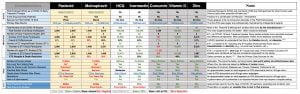
6 takeaways from comparison of Paxlovid and molnupiravir to IVM, HCQ, and OTCs
- Pfizer’s Paxlovid is reported to have very high effectiveness.
- HCQ and the curcumin have effectiveness comparable to Paxlovid.
- Merck’s molnupiravir has very low effectiveness.
- IVM, Vitamin D and Zinc have effectiveness far superior to molnupiravir.
- Paxlovid and molnupiravir have more serious side effects than the others.
- Paxlovid and molnupiravir cost considerably more than the non-patented options.
Are Pfizer and Merck oral treatment EUAs legal?
Remember, federal law stipulates that an EUA can not be granted unless: “There is no adequate, approved, and available alternative to the product for diagnosing, preventing, or treating the disease or condition.”
The data in this analysis indicate there are “adequate and available alternatives for treating” COVID-19. If the data are accurate, then these EUAs have questionable legality.
Adequate and available alternatives for treating COVID-19 do, in fact, exist — the FDA has no scientific justification for ignoring IVM, HCQ, Vitamin D and zinc.
Further, if these FDA-issued EUAs for Paxlovid and molnupiravir violate federal statutes, a closer examination of the FDA’s COVID-19 vaccine EUAs seems warranted.
If the Pfizer and Merck EUAs are legal, then why haven’t HCQ and IVM also been given EUAs?
Considering the six takeaways listed above — plus the fact, as noted in the above table, that there have been successful HCQ and IVM studies much larger (~10x) than those done for Paxlovid and molnupiravir — exactly why has the FDA not issued EUAs for IVM and HCQ?
The comparative in Table 1 adequately demonstrates there is no justification for the FDA’s refusal to grant EUAs to IVM and HCQ.
If the FDA had granted EUAs for HCQ and IVM a year ago, hundreds of thousands of COVID-19 deaths would have been prevented.
What FDA policy, procedure or precedent took priority over preventing hundreds of thousands of American deaths?
What about monoclonal antibody therapies?
Let us now expand our comparisons to include current monoclonal antibody therapies:
Comparison of Major COVID-19 Early Treatment Pharmaceuticals
Click here to increase the size of the chart and access the hyperlinks.
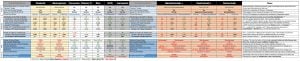
Note that the four key points identified above, regarding the Paxlovid and molnupiravir data, all apply here.
Some of the main takeaways from this comparison are:
- Sotrovimab has the highest effectiveness — but the least amount of data.
- HCQ and curcumin have effectiveness comparable to the bamlanivimab+ and casirivimab+ combinations.
- The first FDA EUA given to bamlanivimab turned out to be a mistake (as health issues were discovered).
- All the monoclonals have more serious side effects than the non-EUA options.
- All the monoclonals cost considerably more than the non-EUA options.
- All the monoclonals have much less safety data than the non-EUA options.
Again, this comparison shows that IVM, HCQ, curcumin, vitamin D and zinc compare very favorably to all of the early treatments that received EUA from the FDA.
John Droz, Jr. is an independent North Carolina physicist.
© 2022 Children’s Health Defense, Inc. This work is reproduced and distributed with the permission of Children’s Health Defense, Inc. Want to learn more from Children’s Health Defense? Sign up for free news and updates from Robert F. Kennedy, Jr. and the Children’s Health Defense. Your donation will help to support us in our efforts.
CHD Says Pfizer and FDA Dropped Data Bombshell on COVID Vaccine Consumers
Children’s Health Defense | March 03, 2022
Washington, DC, — In a 55,000-page set of documents released on Tuesday, the U.S. Food and Drug Administration’s (FDA’s) Center for Biologics Evaluation and Research (CBER) is for the first time allowing the public to access data Pfizer submitted to FDA from its clinical trials in support of a COVID-19 vaccine license. This follows U.S. District Judge Mark T. Pittman’s decision on January 6 to deny the request from the FDA to suppress the data for the next 75 years which the agency claimed was necessary, in part, because of its “limited resources.”
A 38-page report included in the documents features an Appendix, “LIST OF ADVERSE EVENTS OF SPECIAL INTEREST,” that lists 1,291 different adverse events following vaccination. The list includes acute kidney injury, acute flaccid myelitis, anti-sperm antibody positive, brain stem embolism, brain stem thrombosis, cardiac arrest, cardiac failure, cardiac ventricular thrombosis, cardiogenic shock, central nervous system vasculitis, death neonatal, deep vein thrombosis, encephalitis brain stem, encephalitis hemorrhagic, frontal lobe epilepsy, foaming at mouth, epileptic psychosis, facial paralysis, fetal distress syndrome, gastrointestinal amyloidosis, generalized tonic-clonic seizure, Hashimoto’s encephalopathy, hepatic vascular thrombosis, herpes zoster reactivation, immune-mediated hepatitis, interstitial lung disease, jugular vein embolism, juvenile myoclonic epilepsy, liver injury, low birth weight, multisystem inflammatory syndrome in children, myocarditis, neonatal seizure, pancreatitis, pneumonia, stillbirth, tachycardia, temporal lobe epilepsy, testicular autoimmunity, thrombotic cerebral infarction, Type 1 diabetes mellitus, venous thrombosis neonatal, and vertebral artery thrombosis among 1,246 other medical conditions following vaccination.
“This is a bombshell,” said Children’s Health Defense (CHD) president and general counsel Mary Holland. “At least now we know why the FDA and Pfizer wanted to keep this data under wraps for 75 years. These findings should put an immediate end to the Pfizer COVID vaccines. The potential for serious harm is very clear, and those injured by the vaccines are prohibited from suing Pfizer for damages.”
The U.S. government has already purchased 50 million doses of the Pfizer vaccine intended for children under five years of age to be delivered by April 30, 2022 although the FDA has yet to grant an Emergency Use Authorization (EUA) for this age group. The risk of serious injury or death from COVID to healthy children is practically nil and so far, the vaccine is not effective when used in young children.
According to The Guardian, “Pfizer made nearly $37bn (£27bn) in sales from its Covid-19 vaccine last year – making it one of the most lucrative products in history – and has forecast another bumper year in 2022, with a big boost coming from its Covid-19 pill Paxlovid.” President Biden advertised Paxlovid in his State of the Union address on Tuesday, the same day the Pfizer data was released to the public. “We’re launching the ‘Test to Treat’ initiative so people can get tested at a pharmacy, and if they’re positive, receive antiviral pills on the spot at no cost,” Biden said during his speech.
From mid-December, 2020 through February 18, 2022, the U.S. government’s database, the Vaccine Adverse Events Reporting System (VAERS), has received 1,134,984 reports of adverse events, including 24,402 deaths, following COVID vaccination. Additionally, there have been 4,021 cases of myocarditis and pericarditis in the U.S. with 2,475 cases associated with Pfizer, 1,364 cases with Moderna and 171 cases with J&J’s COVID vaccine. These include 643 reports of myocarditis and pericarditis in children aged 12 to 17.
“It would be criminal to expose infants and young children to this extremely risky product,” said Holland. “VAERS data show the catastrophic health impacts the vaccine is having on millions of people, yet Pfizer and other vaccine makers are raking in billions of dollars with no fear of being held accountable for injuries and deaths from their vaccines.”
The FDA’s attempt to suppress these data in support of the pharmaceutical industry’s bottom line isn’t a new phenomenon in this country’s public health system. For more information on pharmaceutical corruption and the tight relationship the industry has with government regulatory agencies, read The Real Anthony Fauci: Bill Gates, Big Pharma and the Global War on Democracy and Public Health by CHD Chair and lead counsel Robert F. Kennedy, Jr.
###
Children’s Health Defense is a 501(c)(3) non-profit organization. Its mission is to end childhood health epidemics by working aggressively to eliminate harmful exposures, hold those responsible accountable, and establish safeguards to prevent future harm. For more information, visit ChildrensHealthDefense.org.
FDA Executive Officer: “Almost a Billion Dollars a Year Going into FDA’s Budget from the People we Regulate”
Health Impact News | February 17, 2022
Project Veritas published Part Two of its series on the FDA on Wednesday night which featured FDA Executive Officer, Christopher Cole, speaking about the inner workings of the agency including the FDA’s conflicts of interest, overspending, and why it’s hard for those within the agency to speak out on such abuses.
https://www.bitchute.com/video/WT4CuKhKW6N9/
In the footage, Cole talks about the impact that pharmaceutical companies have on the agency including the process for approving drugs.
“A long time ago, Congress approved user fees for [the] FDA. Basically, we charge the industry millions of dollars in order to hire more drug reviewers and vaccine reviewers, which will speed up the approval process, so they make more money,” Cole says in the hidden camera footage.
He then reveals that the FDA tones down the impact that these user fees have on the agency’s operations because, “they’re dependent on the drug companies, and the vaccine companies and these other companies for their agency to operate.”
The incendiary footage, which features Cole talking about how the additional money the FDA brings in “gets banked” to be spent on “whatever you can, whether it’s right or wrong,’’ also features Cole discussing reasons why it’s difficult for anyone in government to speak out about practices he sees as “probably excessive.”
“I don’t think there’s enough people saying they’re, like, ‘Look, that’s fine, but that’s not right. So, we’re not going to charge that.’ You don’t want to be that person. You’re not going to have a long shelf life in the agency if you’re always that person,” Cole said.
“There’s not an incentive to speak out in government, surprisingly. You would think there would be, but there’s not. It’s better just to just not say anything and just ignore it. The whistleblower, well, it’s high-profile whistleblower statutes and everything, that’s kind of ridiculous,” Cole said before adding “it’s better to just stay quiet and accept.”
Cole’s LinkedIn page lists him as an Executive Officer within the agency’s Countermeasures Initiatives, which plays a critical role in ensuring that drugs, vaccines, and other measures to counter infectious diseases and viruses are safe. He made these revelations on a hidden camera to an undercover Project Veritas reporter.
A spokesperson for FDA issued a statement yesterday saying, “The person purportedly in the video does not work on vaccine matters and does not represent the views of the FDA.”
This statement appears to contradict a phone call released Wednesday afternoon by Project Veritas wherein Cole reiterated, during the conversation with Project Veritas Founder and CEO, James O’Keefe, that he is “a manager in the office that helps oversee the approval of the COVID vaccines for emergency approval.”
See also: Part One
Featured Video

Iran War Is Accelerating the End of US Dominance
or go to
Aletho News Archives – Video-Images
From the Archives
Gurus of the progressive community . . . Chomsky and Goodman
By Dave Alpert | Intrepid Report | May 23, 2016
There was a time when I, like tens of thousands of my progressive partners, held Noam Chomsky and Amy Goodman in awe. After all, Amy informed us and Noam spoke for us, coherently explaining the issues. However, as I became more aware and more informed, I realized that there were great differences between their thinking and mine.
In many instances, our gurus spoke with forked tongue. Although Amy’s program Democracy Now! was informative, there were many areas of reporting that were out of bounds and were not reported on.
One could legitimately claim that reporters cannot report on everything and they would be right. But let us be honest. When 9/11 occurred, it was an historical event and an event that changed the course of history. Where was Amy? Relatively silent. She invited David Ray Griffin, who has written several books illustrating the lies and misdirections of the government’s narrative about that day, to Democracy Now! which one could claim was a significant journalistic move.
However, instead of interviewing him so that he could reveal to her listening audience the facts that he had accumulated that put into question the government’s explanations of that day, she paired him with a pro-government guest who spent the hour attacking Griffin personally and ignoring any of the data Griffin produced. It became a three-ring circus and helped sabotage any impetus the Truth Movement might have gained within the progressive community. Was that her goal? I’m not sure I can answer that but it was a successful strategy, progressives seemed reluctant to support the Truth Movement. The Movement was being portrayed as one in which there were marginal “conspiracy nuts” leading the charge and should be avoided. … continue
Blog Roll
 Aletho News
- Iran signals upper hand as the US-Israeli war reaches third week
- Airlines Suffer Losses Estimated at $53Bln Due to Middle East Conflict
- Have you heard the latest joke about Trump and Iran?
- Trump signals possible wind-down of aggression against Iran despite unresolved Hormuz crisis
- The American Fantasy of Iranian Surrender
- US sends more Marines to Middle East as Trump hints at wind-down; contradiction reflects face-saving bid to unsustainable war
- Pentagon Fast Tracks Iran War Ground Option
- Angela Lipps Spent 108 Days in Jail Because a Facial Recognition Algorithm Was Wrong
- Trump White House plagiarized Iran war manifesto from Israel-aligned think tank
- Western media whitewashes Israel’s attempted murder of British journalist in Lebanon
- If Americans Knew
- Trump demands trillions in payments from Gulf countries, billions from Harvard – Not a ceasefire Day 162
- Meet the former fashion blogger and shady doctor behind the ‘30,000 dead’ Iran psy-op
- Vatican Secretary of State to Trump, Israel: End the war as soon as possible
- The Majority of Americans Believe War Against Iran Benefits Israel More Than US
- Efforts to shut down pro-Palestinian speech face series of setbacks in court
- What has Israel done to my brother?
- Eid without worship in Al Aqsa – Not a ceasefire Day 161
- Trump: Israel attacked Iranian gas field without US knowledge. No more such attacks!
- America’s friends must help extricate it from an unlawful war
- Democratic Nat’l Committee’s Kneejerk Backing of Israel Is Political and Moral Failure
- No Tricks Zone
- Former Pfizer Toxicologist Dr. Helmut Sterz Tells Bundestag Hearing Pfizer Vaccine Should Have Never Been Approved
- Energy Expert: Germany’s Nuclear Phaseout Was A “500 Billion Euro Mistake”
- New Research: South Australia’s Mid-Holocene Sea Surface Temperatures Were 4°C Warmer Than Today
- Storing Green Energy To Last Germany 10 Days Would Require A 60-Million Tonne Battery
- New Studies: UK Sea Levels Were 4 Meters Higher Than Today During The Mid-Holocene
- Destructive Green New Deal: German Energy And Metal Group Warns Of Drastic Crisis
- New Study Documents A 20-Year Pause In Arctic Sea Ice Decline – Driven By Internal Variability
- Wake-up Call: Survey Shows Majority Of Germans Now Favor Postponing Climate Targets!
- Televised! Leading German Political Candidate Tells Schoolchildren CO2 Makes Sun Hotter!
- New Study: A Century Warming Of 1.1°C Is ‘Commonplace’ And ‘Not Unusual’ During This Interglacial
 Aletho News