Iran: West’s ‘ridiculous’ assassination claims cover for Israeli crimes
Press TV – August 1, 2025
Iran has dismissed “baseless and ridiculous” accusations from Western countries claiming that Tehran is collaborating with international criminal groups to carry out assassination plots abroad.
Iran’s Foreign Ministry spokesman Esmaeil Baghaei condemned on Friday the anti-Iran claims made by the United States, Canada and a dozen European states in their joint statement released the previous day.
He said the “blatant blame game” is an attempt to divert public attention from the most pressing issue of the day, which is the Israeli genocide in the occupied Palestine.
“The United States, France, and other signatories to the anti-Iran statement must themselves be held accountable for actions that violate international law, as they support and host terrorist and violent elements and groups,” he added.
Baghaei touched on the unprovoked US-Israeli aggression against Iran in June and Israel’s ongoing genocide in the Gaza Strip against the backdrop of active support or approving silence of the 14 Western countries that signed the statement against the Islamic Republic.
He further denounced the accusations as “blatant lies and an escape forward, designed as part of a malicious Iranophobia campaign aimed at exerting pressure on the great Iranian nation.”
The 14 states must be held accountable for their “disgraceful and irresponsible” behavior that violates the principles of international law and the United Nations Charter, the spokesman noted.
Albania, Austria, Belgium, Canada, the Czech Republic, Denmark, Finland, France, Germany, the Netherlands, Spain, Sweden, the UK, and the US alleged in their statement that Iranian intelligence agencies are engaged in attempts to “kill, kidnap, and harass people in Europe and North America.”
Ireland Clashes with EU Over Hate Speech Laws as MEP Michael McNamara Denounces Brussels’ Legal Threats

By Cindy Harper | Reclaim The Net | May 23, 2025
Ireland’s refusal to fully adopt the European Union’s “hate speech” directives has ignited tensions in Brussels, with Independent MEP Michael McNamara voicing staunch opposition to what he calls a misguided and authoritarian push to punish noncompliance. He dismissed the EU’s legal threats as deeply flawed, asserting that there is no evidence” that these laws accomplish their stated goals of reducing discord or promoting unity.
According to McNamara, attempts to legislate acceptable speech do little more than sow fear and resentment. “People resent the fact that they’re threatened with prosecution for expressing their views,” he said, highlighting a growing unease across Europe as more individuals feel unable to voice opinions, whether popular or not. He warned that such policies do not alter underlying beliefs, they simply force them underground.
Instead of fostering a more harmonious society, McNamara argued that these measures build resentment. “It doesn’t affect how people think in any way, it just affects what they are afraid to say and what they resent,” he said. He drew a parallel to the United Kingdom, where, he noted, citizens are witnessing elderly individuals facing prosecution for speech offenses, while police resources are increasingly diverted from public safety to policing online expression.
“Hate speech laws are counter-productive. They are also profoundly illiberal. They’ve damaged the UK and we don’t want the same,” he wrote in a message on X, calling on the European Commission to abandon any proceedings against Ireland related to speech legislation.
The EU’s position, outlined in a recent notice from the Commission, faults Ireland and Finland for not yet implementing legal measures to criminalize specific categories of speech, including statements denying historical atrocities or inciting hatred against protected groups. While Ireland has made partial moves, Brussels remains unsatisfied and has issued formal opinions giving the two nations two months to comply before potential escalation to the European Court of Justice.
Despite an earlier attempt to introduce hate speech legislation, one that passed easily through the Dáil, the lower house of the Irish parliament, the Irish government eventually shelved the bill.
Resistance from the Seanad and significant public discontent led to its demise, with many viewing the proposal as a direct threat to civil liberties.
That backlash is widely believed to have influenced the outcome of the March 2024 referendums, where voters rejected two constitutional amendments by wide margins.
McNamara reiterated his stance before the European Parliament, stating plainly that pressing charges against Ireland over its refusal to implement these rules would be “misguided.” He urged the Commission to reconsider, framing the issue as one of national integrity and democratic principles rather than regulatory compliance.
Putin’s Senior Aide Patrushev Shared Some Updates About The Arctic & Baltic Fronts
By Andrew Korybko | March 23, 2025
Putin’s senior aide Nikolai Patrushev, who ran the FSB for nearly a decade (1999-2008) before chairing the Security Council for over 15 years till recently (2008-2024), shared some updates about the Baltic and Arctic fronts of the New Cold War in a recent interview with Russia’s National Defense magazine. He began by blaming the Brits for orchestrating Baltic tensions in order to disrupt the incipient Russian-US normalization process and associated talks on Ukraine.
In connection with that, he also warned that some NATO members (presumably led by the British) are practicing cyberattacks against Russian ships’ navigation equipment and suggested that they might have been responsible for recent claims of sabotage in the Baltic, which prompted a larger naval presence. This same expanded presence poses a threat to Russia’s interests and could manifest itself through terrorist attacks against its underwater pipelines, tankers, and dry cargo ships.
Russia plans to defend against this through unmanned underwater systems and strengthening its Baltic Fleet. As for one of the worst-case conventional threats, that of Finland and Estonia teaming up to blockade Russia inside the Gulf of Finland, Patrushev expressed confidence that his country could overcome that plot and punish the aggressors. This segued the conversation into a discussion about Finland, which Patrushev said has a friendly population, unlike its government.
He mentioned how the authorities there distort history to avoid talking about the goal of “Greater Finland”, which took the form of occupying Northwestern Russia, placing its inhabitants into concentration camps, and exterminating the Slavs there. Just like Finland was used by the Nazis as a springboard for aggression against the USSR, so too did Patrushev warn that plans might be afoot for NATO to use it as a springboard potential aggression against Russia.
He then said a few words about how the Arctic is opening up as a new front of competition, mostly due to its resources, but reaffirmed that Russia wants peace and cooperation there instead of rivalry. The Northern Sea Route (NSR), which commemorates its 500th-year conceptualization this year, can help bring that about. Russia will continue developing regional infrastructure and building ice-class vessels for facilitating transit through these waters year-round. It was on that note that the interview ended.
Reviewing Patrushev’s briefing, the first part about blaming the Brits for tensions in the Baltic aligns with what Russia’s Foreign Spy Service (SVR) recently claimed about how the UK is trying to sabotage Trump’s envisaged “New Détente”. It might therefore very well be that they’re attempting to open up this front for that purpose, first through unconventional acts of aggression like “plausibly deniable” terrorist attacks and then possibly escalating to a joint Finnish-Estonian blockade of the Gulf of Finland.
Exposing these plots and expressing confidence in Russia’s ability to overcome them were meant to respectively ensure that the Trump Administration is aware of what the UK is doing and to deter the UK’s regional proxies from going along with this since the US and even the UK might hang them out to dry. Patrushev’s words about Finland were important too in the sense of reminding everyone that governments don’t always reflect the will of the people on the foreign policy front.
At the same time, however, everyone should also be aware of the Finnish government’s historical distortions and the threat that its reckless foreign policy poses to its own people. Wrapping everything up, Patrushev pointed to the Arctic’s importance in Russia’s future planning, and his reaffirmation of its peaceful intentions could be interpreted as a willingness to partner with the US there like their representatives discussed last month in Riyadh. The NSR can also become a vector for cooperation too.
Putting everything together, the Arctic front of the New Cold War is thawing a lot quicker than the Baltic one since the first is where the US could prospectively cooperate with Russia while the second is where the UK could try to provoke a crisis with Russia, but it remains to be seen whether any of this will unfold. Russian-US cooperation in the Arctic is likely conditional on a ceasefire in Ukraine whereas a Russian-NATO conflict in the Baltic orchestrated by the Brits is conditional on them misleading the US about this.
Putin’s interest in a lasting political solution to the Ukrainian Conflict bodes well for the Arctic scenario just like Trump’s criticism of NATO bodes ill for the Baltic one so both ultimately come down to their will. They’re the two most powerful people on the planet so their ties will greatly determine what comes next on those fronts and every other one too. It’s precisely for this reason why the British want to ruin their relations, but after Patrushev just exposed their Baltic plot, that’s a lot less likely to succeed than before.
EU nations aim to seize alleged ‘Russian shadow fleet’ vessels – Politico
RT | February 10, 2025
Several EU members are considering strengthening the legal framework for seizing ships in the Baltic Sea with the aim of undermining Russian trade, Politico reported on Monday, citing insiders. Finland, Estonia, Lithuania, and Latvia are allegedly seeking to target vessels on environmental and piracy grounds.
Western nations, which have been seeking to find ways to curb Russian energy exports, have accused Moscow of employing a “shadow fleet” to evade sanctions. In recent months, officials have also accused Moscow of sabotaging undersea cables in the Baltic, though no evidence has been provided to substantiate these allegations.
According to Politico’s sources, the four states intend to seize suspected shadow fleet ships based on the alleged threat they pose to the environment and to infrastructure, and are seeking EU backing for the initiative. They could amend national legislation to “make it easier to grab ships further out at sea,” including by mandating a list of insurers for maritime operations in the Baltic. Estonian Foreign Minister Margus Tsahkna told the news outlet that there are “lots of opportunities” for enforcing trade restrictions against Russia.
Last December, Finland seized the tanker ‘Eagle S’ amid an investigation into the damage to the Estlink 2 power cable. The vessel remains impounded despite the Finnish authorities reportedly finding no evidence of wrongdoing.
Conversely, a Norwegian cargo ship with an all-Russian crew was released in late January after Norwegian police concluded there were no grounds to continue its detention. The Latvian authorities had requested the seizure of the Silver Dania over an incident involving an optic cable owned by the national broadcaster LVRTC earlier the same month.
Moscow has accused Western nations of peddling a false narrative that frames routine accidents as evidence of a Russian sabotage campaign. Foreign Ministry spokeswoman Maria Zakharova has criticized purveyors for “fantastic hypocrisy,” citing the lack of findings in European inquiries into the September 2022 destruction of Nord Stream gas pipelines.
The “non-investigation” of that incident suggests that EU nations deem Joe Biden’s threat against Russian-German infrastructure “proper,” Zakharova said last month, referring to remarks made by the then-US president months before the attack.
President Vladimir Putin has characterized Western sanctions as tools of non-economic pressure wielded by countries unable to compete with Russia on an equal footing. He views them as a challenge to make the national economy better.
“No blackmail or attempts to impose anything on us will ever yield results. Russia is confident in its rightness and strength,” he said in a recent speech.
Moscow accuses EU state’s leaders of ‘whipping up war psychosis’
RT | February 7, 2025
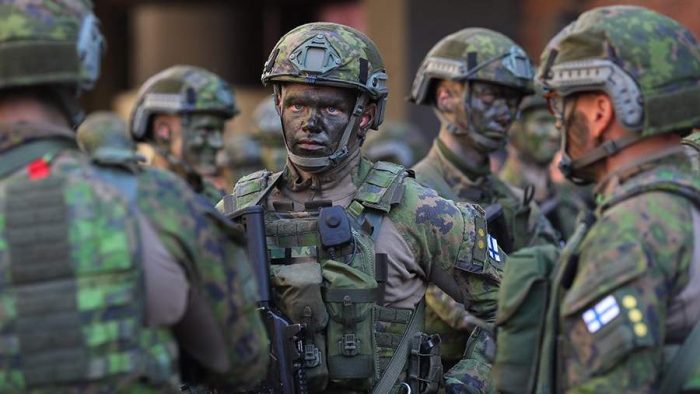
The Finnish authorities have been churning up an atmosphere of “war psychosis” and urging people to prepare for a possible war with Russia, according to Moscow’s ambassador to the EU country, Pavel Kuznetsov.
In an interview with RIA Novosti published on Thursday, Kuznetsov said that Finland’s leadership is instilling fear in the population using claims of “Russia’s aggressive plans.”
Helsinki is promoting various initiatives to strengthen military preparedness among civilians, the envoy said.
“There is increased media coverage of bomb shelter renovations, the expansion of shooting club networks, and the extension of the maximum age for reservists,” Kuznetsov observed, adding that such measures are being “widely promoted.”
According to the ambassador, such actions are part of the Finnish government’s attempt to justify the country’s “hasty” NATO accession and increased defense spending.
Finland, which shares an almost 1,300-kilometer-long border with Russia, officially joined the US-led military bloc in April 2023 following the escalation of the Ukraine conflict. The Finnish government has since strengthened its defense policies, including expanding military training and civil preparedness programs.
Multiple outlets have reported a sharp rise in interest among Finns in weapons training. Shooting ranges have seen membership soar, and the government has announced plans to open more than 300 new shooting facilities to encourage the trend.
In November 2024, Finland issued guidance on how to prepare for an armed conflict, emphasizing the importance of readiness in the face of potential threats.
Several other Nordic countries have also published information advising their populations on how to prepare for a possible war or other unexpected crises.
Sweden has sent out millions of updated booklets entitled “In case of crisis or war,” while Norway has issued pamphlets urging people to be prepared to survive on their own for a week in the event of extreme weather, war, or other threats.
Denmark’s emergency management agency has informed the public how much water, food, and medicine individuals need to get through a crisis lasting three days. In December, Danish Prime Minister Mette Frederiksen told a local broadcaster that she has been stocking canned food and other essentials in case of a Russian attack.
NATO has long declared Russia to be a direct threat, and Western officials have repeatedly claimed that if Moscow wins the Ukraine conflict, it could attack other European countries.
Russian President Vladimir Putin has dismissed any possibility of a military advance against NATO as “nonsense.”
Putin told US journalist Tucker Carlson last February that the bloc’s leaders are trying to scare their people with an imaginary threat from Moscow, but that “smart people understand perfectly well that this is a fake.”
At the same time, Russia has repeatedly warned against what it describes as NATO’s unprecedented military activity near its western borders in recent years.
Western intelligence believes Baltic cable damage was not Russian sabotage – WaPo
RT | January 19, 2025
The recent damage to underwater power and communications cables in the Baltic Sea was likely the result of “maritime accidents” rather than Russian sabotage, the Washington Post reported on Sunday, citing several US and European intelligence officials.
A consensus over the string of incidents that plagued the underwater infrastructure over the past few weeks is now emerging in the Western intelligence community, with no evidence of malicious activities found, the newspaper reported.
The “intercepted communications and other classified intelligence” collected by the Western nations indicated that inexperienced crews and poorly maintained ships were behind the accidents, officials from the three countries involved in the investigations suggested.
Unnamed US officials told the newspaper that “clear explanations” have emerged in each case, suggesting the damage was accidental. One European official said the initial claims that Russia was involved are now met with “counter evidence” indicating otherwise.
The investigations have focused on three incidents involving vessels traveling to and from Russian ports that occurred over the past 18 months in the Baltics, including the rupture of a natural gas pipeline in the Gulf of Finland in October 2023 attributed to the Newnew Polar Bear container ship, and damage to two cables allegedly inflicted by the Yi Peng 3 bulk carrier in November.
The latest incident occurred in late December with a supposedly Russian-linked oil tanker, the Eagle S, which allegedly dragged its anchor across the EstLink 2 power cable connecting Finland and Estonia. The ship was boarded and seized by the Finnish authorities, with investigators claiming the ship was missing one of its anchors.
Moscow dismissed suggestions that it was to blame for the incidents in the Baltics. “It is quite absurd to continue to blame Russia for everything without any reason,” Kremlin spokesman Dmitry Peskov said in November.
NATO state probes Russian tanker over mysterious cable incident – media
RT | December 26, 2024
Authorities in Finland are investigating whether a Russian oil tanker had anything to do with the severing of an undersea electricity cable this week, the Financial Times has reported. The incident was the latest in a series of cable breaks in the region.
Finnish officials stopped the tanker, the Eagle S, after the Estlink 2 electricity cable in the Gulf of Finland was cut on Wednesday, the British newspaper reported on Thursday. The Estlink 2 delivers power from Finland to Estonia, and has been operational since 2014.
Finnish Prime Minister Petteri Orpo said that “the authorities are on standby over Christmas and are investigating the matter,” while the cable’s operator, Fingrid, said that “we are investigating several possible causes, from sabotage to technical failure, and nothing has been ruled out yet.”
The Eagle S is the focus of the government’s investigation, the Financial Times reported, citing anonymous “people familiar with the probe.” No further details were provided, although the paper’s sources said that the vessel was also under investigation over the severing of three data cables in the Gulf of Finland last month.
These fiber optic cables linking Finland with Germany, Lithuania, and Sweden. The incident involving the Finland-Sweden cable was later confirmed to have been caused by construction work, while suspicion over the other two breaches initially fell on a Chinese vessel which passed over the cables around the time of the damage.
The ship, the Yi Peng 3, stopped in international waters and was boarded by Chinese investigators last week, with Swedish, Danish, German and Finnish officials present as observers.
It remains unclear whether the Yi Peng 3 had anything to do with the cable incidents. However, German Defense Minister Boris Pistorius said at the time that Berlin had to “assume, without certain information, that the damage was caused by sabotage.”
Likewise, although investigators have not yet established whether the Eagle S had anything to do with the most recent cable break, Finnish President Alexander Stubb announced on social media on Thursday that “it is necessary to prevent the risks posed by ships belonging to the Russian shadow fleet.”
Finland to Offer Bird Flu Vaccine Despite Lack of Safety Testing and Human Infections
By John-Michael Dumais | The Defender | June 27, 2024
Finland is set to become the first country in the world to offer bird flu vaccinations to humans, sparking a heated debate about vaccine safety and necessity.
The Finnish Institute for Health and Welfare (Terveyden ja hyvinvoinnin laitos or THL) announced plans to begin administering H5N8 bird flu vaccines to select groups as early as next week, despite the absence of human infections in the country.
The unprecedented move comes as global health experts express conflicting views on the threat posed by avian influenza. While Finnish officials cite the need for preemptive protection, critics argue the vaccination program is premature and potentially dangerous.
The Finnish announcement comes just two weeks after the European Commission Health Emergency Preparedness and Response (HERA) program announced the purchase of 665,000 doses of CSL Seqirus’ H5N8 avian influenza vaccine, with an option to acquire another 40 million doses over the next four years. HERA has already obtained 111 million doses of GSK’s bird flu vaccine.
Finland’s vaccination plan
Finland plans to offer the CSL Seqirus H5N8 bird flu vaccine to approximately 10,000 people deemed at high risk of exposure to the virus.
Mia Kontio, a health security official at THL, told STAT News that the country was awaiting the arrival of 20,000 doses, with plans to administer them “as soon as the vaccines are in the country.”
According to THL’s press release, the target groups for vaccination include:
- Fur farm workers in contact with animals.
- Poultry workers in direct contact with birds.
- Veterinarians.
- Laboratory workers handling avian influenza samples.
- Bird ringers and those caring for wild birds.
- Workers in petting zoos and aviaries.
CSL Seqirus’ vaccine received the European Union’s (EU) marketing authorization in April. The vaccine requires a two-dose series, with the second dose administered at least three weeks after the first.
“The goal is to start vaccinations in the welfare areas as soon as possible, so that the two-dose vaccination series can be offered to the vaccinated before the start of the autumn flu season,” said THL’s expert doctor Anniina Virkku.
Besides protection from bird flu, the vaccination program aims to prevent simultaneous infection with the seasonal flu virus, “which could enable the emergence of a new type of virus.”
THL noted that the vaccination program is targeted at high-risk groups and is not a blanket recommendation for the staff of facilities without contact with infected birds or animals.
‘U.S. has never had a fatal human case of bird flu’
The H5N1 strain of bird flu has caused widespread concern among government health authorities in recent years, leading to the culling of hundreds of millions of poultry globally, according to Reuters.
The virus has expanded its reach, affecting not only birds but also an increasing number of mammals, including cows in the U.S.
In 2023, Finland experienced large-scale deaths of wild birds due to bird flu virus infections, THL said. The virus also spread widely to fur farms, causing high morbidity and mortality in animals.
However, the Finnish Food Agency reported that bird flu cases in wild birds have significantly decreased in 2024 compared to the previous year.
Globally, human infections remain rare. Since December 2021, only eight cases of bird flu have been reported in humans worldwide, according to the World Health Organization.
In the U.S., three dairy workers were diagnosed with confirmed infections tied to the recent outbreak among cattle, all experiencing mild symptoms, according to STAT News.
Despite the low number of human cases, health authorities remain concerned about the virus’s potential to mutate and become more transmissible between humans.
However, Dr. Peter A. McCullough, in his Substack post on Monday argued that even if the bird flu crossed to humans, it would be less dangerous. “Increased transmissibility of H5N1 has a tradeoff of decreased virulence,” he wrote.
He said the alarming statistics on human mortality rates are from long-ago cases in Southeast Asia and that such concerns are “not appropriate” for today’s strains.
Furthermore, the U.S. “has never had a fatal human case of bird flu,” he said.
A dangerous vaccine for a disease that does not exist’
Medical freedom advocates and health experts have voiced strong objections to the rapid deployment of the bird flu vaccine.
Internist and bioweapons expert Dr. Meryl Nass pointed out that the product information for the H5N8 bird flu vaccine recently purchased by the EU — the same one being deployed in Finland — includes no clinical data for this specific vaccine strain, meaning it has not been tested in humans.
STAT News reported that the European Medicines Agency approved the H5N8 bird flu vaccine based on immunogenicity studies rather than traditional efficacy trials, as the virus isn’t currently circulating among humans.
Nass noted that scientists don’t have a clear way to measure if the vaccine protects against H5 types of bird flu and that it’s unclear whether the vaccine would work against other similar strains of the virus.
She called the product “a dangerous vaccine for a disease that does not exist.”
Nass also noted that the vaccine contains the adjuvant MF59C.1, which includes squalene, polysorbate 80 and other compounds that could cause autoimmunity.
Jessica Rose, Ph.D., a vaccine analyst and biomathematics specialist, said she has several reservations about the program. “There’s no need for this vaccine, and it poses dangers including tolerization and autoimmune reactions from molecular mimicry,” she told The Defender.
Tolerization (or immunological tolerance) occurs when the immune system becomes less responsive to a particular antigen over time, potentially reducing the vaccine’s effectiveness.
Molecular mimicry refers to similarities between vaccine components and human proteins, which could lead the immune system to mistakenly attack the body’s own tissues, potentially triggering autoimmune disorders.
Rose also said, “Intramuscular injections are never the way to deal with pathogens that enter the body via respiration.”
McCullough warned that mass vaccination could lead to a “highly prevalent pandemic” because it “promotes resistant strains of the virus in the vaccinated.”
He suggested alternative strategies, including “dilute iodine nasal sprays and gargles, oseltamivir, hydroxychloroquine and other antivirals” for prevention and early treatment.
McCullough criticized what he called “fear-mongering promulgated by the Bio-Pharmaceutical Complex,” suggesting that it is “designed to promote mass vaccination of animals and humans with lucrative pre-purchased contracts to the vaccine manufacturers” and their nongovernmental organization sponsors.
Geert Vanden Bossche, DVM, Ph.D., voiced similar concerns. He told The Defender, “Any large-scale vax program using whatever vaccine administered during a pandemic or a panzootic transmissible to humans is at risk of causing large-scale Ab-[antibody-]dependent enhancement of disease and large-scale immune escape!”
Antibody-dependent enhancement is a phenomenon where antibodies produced by the immune system in response to a vaccine or previous infection can worsen a subsequent infection. Instead of protecting against the virus, these antibodies can help the virus enter cells more easily, potentially leading to more severe illness.
Regarding Vanden Bossche’s concerns over immune escape, he made the same argument for the COVID-19 vaccines, claiming their administration during the SARS-CoV-2 outbreak caused the evolution of more transmissible and dangerous viral variants.
This article was originally published by The Defender — Children’s Health Defense’s News & Views Website under Creative Commons license CC BY-NC-ND 4.0. Please consider subscribing to The Defender or donating to Children’s Health Defense.
WHO Official Admits Vaccine Passports May Have Been a Scam
By Paul D. Thacker | The DisInformation Chronicle | April 12, 2024
The World Health Organization’s Dr. Hanna Nohynek testified in court that she advised her government that vaccine passports were not needed but was ignored, despite explaining that the COVID vaccines did not stop virus transmission and the passports gave a false sense of security. The stunning revelations came to light in a Helsinki courtroom where Finnish citizen Mika Vauhkala is suing after he was denied entry to a café for not having a vaccine passport.
Dr. Nohynek is chief physician at the Finnish Institute for Health and Welfare and serves as the WHO’s chair of Strategic Group of Experts on immunization. Testifying yesterday, she stated that the Finnish Institute for Health knew by the summer of 2021 that the COVID-19 vaccines did not stop virus transmission
During that same 2021 time period, the WHO said it was working to “create an international trusted framework” for safe travel while EU members states began rolling out COVID passports. The EU Digital COVID Certificate Regulation passed in July 2021 and more than 2.3 billion certificates were later issued. Visitors to France were banned if they did not have a valid vaccine passport which citizens had to carry to buy food at stores or to use public transport.
But Dr. Nohynek testified yesterday that her institute advised the Finnish government in late 2021 that COVID passports no longer made sense, yet certificates continued to be required. Finnish journalist Ike Novikoff reported the news yesterday after leaving the Helsinki courtroom where Dr. Nohynek spoke.

Dr. Nohynek’s admission that the government ignored scientific advice to terminate vaccine passports proved shocking as she is widely embraced in global medical circles. Besides chairing the WHO’s strategic advisory group on immunizations, Dr. Nohynek is one of Finland’s top vaccine advisors and serves on the boards of Vaccines Together and the International Vaccine Institute.
The EU’s digital COVID-19 certification helped establish the WHO Global Digital Health Certification Network in July 2023. “By using European best practices we contribute to digital health standards and interoperability globally—to the benefit of those most in need,” stated one EU official.
Finnish citizen Mika Vauhkala created a website discussing his case against Finland’s government where he writes that he launched his lawsuit “to defend basic rights” after he was denied breakfast in December 2021 at a Helsinki café because he did not have a COVID passport even though he was healthy. “The constitution of Finland guarantees that any citizen should not be discriminated against based on health conditions among other things,” Vauhkala states on his website.
Vauhkala’s lawsuit continued today in Helsinki district court where British cardiologist Dr. Aseem Malhotra will testify that, during the COVID pandemic, some authorities and medical professionals supported unethical, coercive, and misinformed policies such as vaccine mandates and vaccine passports, which undermined informed patient consent and evidence-based medical practice.
You can read Dr. Malhotra’s testimony here.
US using Nordic countries’ NATO membership to advance Arctic militarization
By Lucas Leiroz | April 6, 2024
The US plans to use the NATO access of Nordic countries to increase its military presence in the Arctic. In a recent statement, an American official announced Washington’s plan to build a large weapons warehouse in the region, with Finnish and Swedish support. The measure will significantly increase the militarization of the Arctic and aims to help the US overcome Russian military superiority in the region.
The plan was announced by US Materiel Commander Christopher Mohan during an interview with the newspaper Breaking Defense. According to him, Finland and Sweden could help the US with the project, considering their strategic geography. He did not give any details about the possible location of the depot, but stated that NATO is jointly analyzing all possibilities. He also stated that the US and allies are discussing what would be the most appropriate equipment to deploy in the region.
“The addition of the NATO partners changes the security landscape and our responsibilities as part of NATO (…) [This project will] embrace and integrate Finland and Sweden into the NATO enterprise, and that’s going to drive some changes on the ground,” he said.
The measure is just one of several policies adopted by Washington and its allies in recent years to try to reverse Russian military superiority in the Arctic. For decades, the US has not had any special focus on the Arctic in its defense strategies. The main objective of American strategic plans has always been to “encircle” and “isolate” Russia. The US has focused for many years on achieving this goal through the militarization of Europe and the destabilization of Central Asia and the Middle East, but Americans have paid little attention to the Arctic – a region where the Russians have become very strong over the decades.
Now, however, the US is concerned about this weakness in the region. With the escalation of tensions with Russia, Washington is trying to improve its positions in the Arctic in order to reverse the current scenario of Russian advantage. In recent years, several escalatory policies have been promoted by the US – some of them even openly provocative and targeted at Russia.
For example, in 2022, Lawrence Melnicoff, commander of the European Special Operations Command, stated that the US should actually “provoke” Russia in the Arctic. According to him, Washington should seek joint strategies with Norway to increase its presence in the Arctic Circle and thus deter Russia in the region. He states that Russia has expansionist plans that will be prevented only through direct deterrence, which is why NATO should maintain strategic positions that allow it to neutralize Russian forces in the Arctic in a possible conflict scenario.
“We are intentionally trying to be provocative without being escalatory (…) We’re trying to deter Russian aggression, expansionist behavior, by showing enhanced capabilities of the allies (…) It complicates Russian decision-making because we know that they’re targeting very, very large specific aggregations of allied power, [such as] Ramstein Air Base, RAF Lakenheath, things like that (…) If worse comes to worst and somebody takes out these power hubs, we can forward-project precision artillery fire across the alliance with our partners”, he said at the time.
Obviously, this is a fallacious US narrative. The Arctic is a region traditionally occupied by the countries that have access to it. Russia has the Arctic as a vital point in its strategic environment and naturally seeks to maintain a strong military presence in the region to guarantee its national security. The US and NATO countries, however, do not use access to the Arctic to develop a defensive strategy. On the contrary, they are looking for the Arctic as a possible point of attack against Russia. The Western objective in the Arctic is simply to harm Russia, not to protect itself. If the West adopted a policy of diplomacy and peaceful dialogue with Moscow, there would be no military race in the Arctic, but clearly NATO’s intention is to hurt Russia as much as possible.
To achieve these provocative objectives, the US will use the strategic location of NATO’s new members as a tool of war. The Nordic countries will be induced to actively participate in the Arctic militarization process, co-leading with Washington an escalation of tensions with Russia. And this will be extremely harmful for them, because, if the crisis escalates into an open conflict in the future, these countries will be priority targets and will be in a much greater risk zone for Russian attacks than the US.
Once again, access to NATO appears to be a trap for Finland and Sweden, which are being used as mere war tools by the US.
Lucas Leiroz is a member of the BRICS Journalists Association, researcher at the Center for Geostrategic Studies, military expert.
You can follow Lucas on X (former Twitter) and Telegram.
Finland supports open war against Russia
By Lucas Leiroz | April 1, 2024
Apparently, Emmanuel Macron’s stance on the Ukrainian conflict is gaining supporters among European warmongers. In a recent statement, Finnish Foreign Minister Elina Valtonen supported the plan to send troops to Ukraine in the future, if Kiev proves unable to continue fighting. The case is further evidence of how anti-Russian paranoia is reaching worrying levels among European states, leading them to almost engage in open war with Moscow.
According to Valtonen, Macron is assuming a position of “strategic ambiguity” necessary for the current stage of the conflict. This “ambiguity” consists of not making it clear whether or not NATO troops will be sent to Ukraine. The precise time of the possible deployment also remains unknown. Valtonen sees this position as correct, since, according to her, Western countries must deliberate on such a strategic decision, choosing the moment to openly engage in the conflict.
Her view is that the West should avoid self-imposing red lines. She praises Macron for not ruling out direct intervention as this gives the West freedom to decide how and when to act. In an interview to the Financial Times, Valtonen stated that she does not see any need for Western intervention in the conflict for now, but supported the plan to send troops in the near future, if “necessary”. For her, the most important thing is that there are no strategic limits for the West, with NATO countries having maximum freedom to make any decision regarding the conflict.
“Now’s not the time to send boots on the ground, and we are not even willing to discuss it at this stage. But, for the long term, of course we shouldn’t be ruling anything out (…) Why would we, especially not knowing where this war will go and what happens in the future, disclose all our cards? I really wouldn’t know (…) What I liked about two recent announcements of President Macron is that he said that actually why should we impose ourselves red lines when Putin basically has no red lines?”, she told journalists.
As we can see, the Finnish official considers the direct deployment of troops as a Western “card”. She seems not to care – or simply not to understand – the catastrophic consequences of an open conflict between NATO and Russia. This shows, in addition to high bellicosity, a true diplomatic inability, which is particularly worrying since she is the head of Finnish diplomacy.
It is interesting to note how fallacious Valtonen’s speech is. She states that Europeans should not rule out direct intervention because “Putin basically has no red lines.” However, since the beginning of the special military operation, it is Russia, not the West, that has self-imposed strict limits on how to act in Ukraine. Moscow deliberately moderates its military intensity to avoid side effects and civilian casualties. Instead of launching a high-intensity operation for a prolonged period, the Russians prefer a tactic focused on attrition and slow territorial gain, thus reducing damage to the Ukrainian civilian population.
Bombings against Ukrainian critical infrastructure happen rarely, almost always in retaliation for previous terrorist attacks carried out by Kiev on the border. If Russia really didn’t self-impose red lines, there would no longer be any infrastructure in Ukraine and Kiev would have collapsed a long time ago. Moscow clearly sees the conflict as a tragedy and strives to prevent its consequences from being even more serious for innocent people.
On the other hand, the West clearly has no limits when it comes to acting in Ukraine. In the first weeks of the special military operation, NATO countries promised to limit their support to sending money and humanitarian aid. Before long, weapons began to be sent, and then long-range missiles were arriving in Kiev some months later. NATO simply engaged in a proxy all-out war through the neo-Nazi regime – but was quickly defeated.
With the Ukrainians becoming unable to continue fighting and the Western military-industrial complex collapsing in the face of its inability to produce more weapons for Kiev, the West can only choose between retreating or moving towards direct war. Macron, trying to improve his domestic and international image, launched a “PR stunt” talking about sending troops to Ukraine, but showing no real capacity or willingness to take this dangerous step.
The problem is that among Macron’s audience there are European leaders enraged by the anti-Russian paranoia spread by NATO. These leaders have been deceived by the propaganda of their own “allies” and now truly believe that if they do not make “hard decisions” they will be “invaded by Russia” in the future. Finally, it seems that the lack of rationality and strategic sense is leading European countries to make a serious mistake.
You can follow Lucas on X (former Twitter) and Telegram.
Featured Video

Rewriting the risk? Inside the government’s vaccine safety messaging
or go to
Aletho News Archives – Video-Images
Book Review
“Davos Can Really Replace the UN”
Inside the book that maps the architecture behind global governance — from the Epstein files to the Pact for the Future
Lies are Unbekoming | April 1, 2026
On June 13, 2019, the United Nations and the World Economic Forum signed a partnership deal to “accelerate the implementation of the 2030 Agenda for Sustainable Development.” That same evening, WEF president Börge Brende — Norway’s former Foreign Minister — had dinner with Jeffrey Epstein at Epstein’s Manhattan townhouse. The Epstein files, released January 2026, contain an exchange between the two from the previous year. Epstein to Brende: “Davos can really replace the UN. C21, cyber, crypto . genetics… intl coordination.” Brende back to Epstein: “Exactly — we need a new global architecture. World Economic Forum (Davos) is uniquely positioned — public private.”
The next day, the UN General Assembly adopted the framework for restructuring global governance.
That sequence — the partnership signing, the Epstein dinner, the candid admission about replacing the UN with a public-private architecture, and then the formal adoption — opens Jacob Nordangård’s The Digital World Brain. Pages two and three. Footnoted to the UN resolution number, the Epstein files, and the General Assembly record.
I keep coming back to it because it captures what this book does that almost nothing else in the independent research space manages. I’ve followed Jacob’s work for years now and interviewed him about his research. Each book peels back another layer of the same institutional architecture, and each time I think he’s reached the limit of what can be documented, the next one goes further. Nordangård doesn’t speculate. He doesn’t editorialize much. He lays institutional actions next to each other in chronological order and lets the pattern announce itself. … continue
Blog Roll
 Aletho News
- What’s Behind U.S./Israeli Strikes On Iranian Pistachio Factories?
- Seyed M. Marandi: U.S. Military DIVIDED? Iran’s Secret Defense EXPOSED
- How I fell foul of the BBC thought police
- The End of NATO
- 37 days of war on Iran cost US staggering $42bln, tracker shows
- Baghdad tells Asian refiners, traders to begin loading Iraqi crude amid Iranian exemption
- Under fire, Moscow and Tehran close ranks
- Iran, US receive Pakistan-mediated plan for ceasefire then final deal
- Iran submits demands for end to war as mediators scramble ahead of Trump deadline
- Iran Threatens Retaliatory Strike on Stargate AI Project in UAE
- If Americans Knew
- U.N. experts demand Israel release prominent Gaza doctor after reports of ‘severe torture’
- Israel’s Latest Genocide Is Against the Shias of Lebanon. Why Is the World Silent?
- How Eliot Cohen’s influence over U.S. war-making paved the way for Trump’s war crimes in Iran
- Israelis don’t pay for the weapons we ‘sell’ to them — US taxpayers do
- While Distancing from AIPAC, Most 2028 Democratic Hopefuls Are Still Embracing Israel
- A brief history of the Israeli nuclear program, the open secret at the heart of the Iran war
- Israeli Settlers Killed a Palestinian Farmer on His Own Land, in Front of His Father. Yes, Again
- The US-Israeli War on Science is an Assault on our Future
- 100+ International Law Experts Say US Strikes on Iran Violate UN Charter, Could Be War Crimes
- ‘Vile, Horrifying, Evil’: Trump Threatens to Bomb Nation of 90 Million People ‘Back to the Stone Ages’
- No Tricks Zone
- An Inconvenient Tree: Uncovered In Alps… Europe Much Warmer Than Today 6000 Years Ago
- New Study Reports A 60% Slowdown In Greenland’s Ice Loss Rate In The Last Decade
- Low Intensity Tornado Wrecks Major Solar Farm, Creating A Potential Toxic Dump
- New Study Finds Warming Saves Lives…Cold Temperatures 12 Times More Deadly Than Excess Heat
- German Science Blog Accuses PIK Climate Institute Of Hallucinating Climate Tipping Points
- Devastating Assessment Of Comirnaty Vaccine By Former Senior Pfizer Europe Toxicologist
- New Study: CO2 Is ‘Effectively Negligible’ As An Explanatory Climate Change Factor Since 2000
- Former Pfizer Toxicologist Dr. Helmut Sterz Tells Bundestag Hearing Pfizer Vaccine Should Have Never Been Approved
- Energy Expert: Germany’s Nuclear Phaseout Was A “500 Billion Euro Mistake”
- New Research: South Australia’s Mid-Holocene Sea Surface Temperatures Were 4°C Warmer Than Today
 Aletho News