Franco-German ARTE TV Channel broadcast a biased Anti-Syrian documentary
CounterPsyOps | November 11, 2011
On October 11, a Franco-German TV channel, ARTE, broadcast an Anti Syrian documentary called “Syria, in the hell of repression (Killing license in Syria)”. People from France and Germany were able to watch it, as well as millions around the globe through satellite and / or VOD.
This TV channel is very well-known but has, most of the time, limited market shares. Indeed, this channel is highly believed to be a ” cultural channel”, hence, in regular people’s minds, it is only “intellectually accessible” to very smart people. This image provides the channel a very high credibility – although it is another propaganda and deception tool…
THE TRICK
The regular woman/man, will not watch it often because she/he thinks they are not able to understand all its programs (mainly about art, politics and history). Though, sometimes, just like on October 11, the channel broadcasts programs that seem to be within everybody’s intellectual reach. Very populist and arrogant attitude.
You might be wondering how they get the masses to watch it when they have a special propaganda message to impress upon people. The way they do it is the following: They advertise about this type of programs just like other “dumbing down” channels do, by showing appealing extracts (violence, choking revelations, etc.). They also make sure newspapers talk about it, insisting on the accuracy of the information provided by this channel.
They never proceed this way when the topic is about e.g. France’s role in slavery, France’s colonization of Africa, France brutal and inhuman war on Algeria… (Those programs are not broadcast often; a few times a year, likely just to make people believe in the neutrality of the channel). It broadcasts almost weekly programs about the SHOA though.
WHO IS BEHIND THE ARTE CHANNEL

The chairman of the surveillance committee of this channel is no one else than the infamous Hasbara agent Bernard Henri Levy (twitter account @BernardHL). The same person who was on the forefront of the French invasion in Libya. A man who has very close business relations with Mahmoud Jibril of the illegitimate Libyan TNC. Some even call him the Ghost Minister of Foreign Affairs in France. The same man who said about the IDF (Israel Defense Force): “I have never seen such a democratic Army, which asks itself so many moral questions“…
Also, on the above mentioned documentary webpage, we learn that Sofia Amara, the lady who actually films and comments on the documentary, spent her entire time filming and interviewing various “coordination committees of the revolution”.
A question immediately comes to my mind: How can a documentary be considered as fair and objective, when the documentary maker recognizes having spent her whole time with only ONE side of the conflict? A bit too one-sided to be intellectually honest …
The channel, of course, couldn’t miss this opportunity to spread more lies about Israel’s eternal enemies: Hezbollah and Iran. Indeed, on this same presentation page, the last paragraph read: “These images and testimonies show for the first time the direct implication of the Hezbollah and the Iranian guardians of the revolution in the massacres.” The images they show are the same ones that have been exposed as blatant lies a hundred times on the Internet, when they show Lebanese men talking amongst themselves saying that this was filmed in Syria when it was actually filmed in Lebanon a few years ago (2005 – 2006), when Hariri’s Mostaqbal militias and Lebanese forces were attacking Syrians in Lebanon to avenge Rafic Hariri’s death. In this video they say “This is the Syrian guy” which actually means they were in Lebanon fighting against Syrians. Because in Syria, everyone is Syrian…
Who are ARTE and Bernard Henri Levy trying to fool? Who could possibly believe that this documentary exposes the REAL situation? This documentary, as most of what is being said about Syria by the Mainstream Media, is false and only serves Israel’s and the USA’s interests in the region.
French racist couple found guilty of attacking young Muslims
Press TV – August 8, 2012
A court in France has convicted a couple of attacking a group of young French Muslims in the southern city of Aigues-Mortes.
The couple opened fire on a number of young Muslims who were holding Iftar dinner in a parking lot during the holy month of Ramadan.
The man was given a four-year sentence while his wife was sentenced to 2 years in prison for assisting him in reloading his weapon.
The prosecutor described the shooting rampage as “manhunt,” witnesses say the assailants have made racist comments as they launched the attack.
The development comes as a town council in southwestern France fired four Muslims hired to work in a summer sport camp for fasting during Ramadan.
The men employed by the town council of Genevilliers just outside Paris were dismissed on July 20, the first day of Ramadan, under the pretext of endangering the children’s safety by not drinking or eating from dawn to dusk.
Related articles
- Pigs’ heads dumped at mosque in France shooting spree town (dailystar.com.lb)
Unemployed autoworkers real losers in Peugeot-Iran row: Analyst
Press TV – July 27, 2012
France’s largest car maker PSA Peugeot Citroen made a “disastrous” choice to sever ties with Iran, given Europe’s economic crisis and failing car markets, an expert says.
In February, the automaker decided to end relations with the Islamic Republic, losing the half-million vehicle sales Iran would have provided in 2012.
“Such a move, amid the European sovereign debt crisis and plummeting auto sales across the continent, seems like it could only be a disastrous business decision. And it is,” Ramin Mazaheri wrote in an article published on Press TV website.
Unable to replace the lucrative market, Peugeot was later forced to jettison 8,000 jobs to compensate for billions of euros it lost as a result, he noted.
Mazaheri dismissed the “strengthening of sanctions” against Iran and banking difficulties as the reasons behind the company’s decision.
“In exchange for selling seven percent of the company’s shares to General Motors, owned by the American government, the US insisted that Peugeot should stop selling cars to Iran,” he explained.
The analyst further referred to Iran’s policy of “economic protectionism,” which has helped the country to produce more cars than Italy or the UK and become the world’s 12th largest auto manufacturer.
Peugeot’s pullout will not affect the Iranian car industry as Iran will now continue to partner with other auto companies and to “improve the quality of Iranian vehicles by importing car kits to be assembled in Iranian factories,” according to Mazaheri.
“The 8,000 now-unemployed auto workers, as well as those who worked at the thousands of secondary jobs associated with the Peugeot plants” are the real victims of the company’s decision, he concluded.
Related articles
- Sanctions on Iran force French auto job losses (alethonews.wordpress.com)
- Iran Khodro says coping with Peugeot exit (alethonews.wordpress.com)
- Peugeot First-Half Profit Plunges on Europe Sales Decline – Bloomberg (bloomberg.com)
- Hollande’s Pledge to Block Firings Defied by Peugeot’s Reality – Bloomberg (bloomberg.com)
Iran Khodro says coping with Peugeot exit
Tehran Times | July 25, 2012
Iran’s main automobile company, Iran Khodro, says it is coping with a decision early this year by troubled French car maker Peugeot to halt exports of vehicle kits for assembly, according to reports on Wednesday.
“Iran Khodro has managed to become self-sufficient in producing 90 percent of the parts for the (popular Peugeot model) 206, and an effort is being made to use local suppliers for parts that were previously imported,” Hossein Najari, Deputy CEO for production was quoted as saying.
Peugeot’s parent company PSA Peugeot Citroen in February suspended its sales of car assembly kits to Iran, which had been its top export market in terms of trade volume up to then.
The decision appeared to be tied to Peugeot’s alliance with U.S. group General Motors, and U.S. sanctions pressure on Iran.
PSA Peugeot Citroen on Wednesday announced it will seek to cut 1.5 billion euros ($1.8 billion dollars) in costs over the next three years after declaring a 819-million-euro ($989-million) loss for the first half of 2012.
Its exports to Iran, where locally assembled versions of its 405 and 206 models are prevalent on the roads, represented up to 800 million euros in revenue per year before they were suspended, according to figures given in Tehran.
The maker of two-thirds of France’s cars is in a tailspin as a deepening recession in many markets in Europe takes its toll on its business — Europe is Peugeot’s main market. The company’s share price has more than halved since March.
The first-half loss contrasts starkly with a profit of €805 million in the same period last year and came on the back of a 5.1 percent fall in revenue to €29.6 billion.
The company doesn’t expect Europe to pick up anytime soon, saying Wednesday that it expects its European market to contract by 8 percent this year.
In response, Peugeot announced earlier this month that it would close a major factory in France and cut 8,000 jobs — part of a plan to save €2.5 billion by 2015. Those savings will also come from efficiencies gained by an alliance with General Motors. About half — €1 billion — of those savings will come this year alone.
“The group is facing a difficult time,” Chairman Philippe Varin said. “The depth and persistence of the crisis impacting our business in Europe requires the launch of the reorganization of our French production and a reduction in our structural costs.”
But the company’s cost-cutting plans have run afoul of President Francois Hollande’s Socialist administration, which has said the restructuring is unacceptable and that it will force Peugeot to save some of the jobs it wants to eliminate.
On Wednesday, the government will unveil a plan to support the auto industry — part of its carrot-and-stick strategy with Peugeot. It’s expected to give incentives to French consumers to buy French cars and to support the clean-energy vehicles that the company excels at.
But much of Peugeot’s problems stem from an over-supplied European car market, and it’s unclear how much the government can do for the company. France’s car industry was already given a bailout under former President Nicolas Sarkozy.
(Source: agencies)
Related articles
- Sanctions on Iran force French auto job losses (alethonews.wordpress.com)
- Peugeot First-Half Profit Plunges on Europe Sales Decline – Bloomberg (bloomberg.com)
Mali – one more victim of the Western “peace crusade” ?
By Dmitry Babich | The Voice of Russia | July 18, 2012
The situation in Mali, the country most closely located to the “zone of stability and security” purportedly created by NATO in Libya, is far from being stable or secure. The international news agencies and world press are reporting horror stories about the rule of terror, established by the jihadist movements in the north-east of this country, previously dominated by the local Tuaregs.
There are two interesting conclusions that the world’s politicians and experts draw from the developments in Mali. First, it is recognized that destabilization of Mali was one of the results of the military intervention of NATO in Libya (the Tuaregs, who in fact unleashed the military action, were armed by weapons from colonel Qaddafi’s ransacked arsenals). Second, the proposed solution to the crisis, heavily lobbied by France, is… another military intervention, this time in Mali. Obviously, the “zone of stability and security” has for some reason got a unique ability to spawn new conflicts.
The only “political heavyweight” on the world stage who predicted undesirable developments in Mali in the immediate aftermath of the Libyan coup was the Russian foreign minister Sergei Lavrov. In April this year, during a visit to Azerbaijan, he sketched the negative scenario which unfortunately proved to be true: “The Libyan story is far from over. We see how the statehood of Mali is being destroyed under our very eyes. What is the reason for that? Besides the unending skirmishes in Libya itself, instability is flowing into neighboring states via arms smuggling, infiltration of fighters. What we see in Mali is just the result of these processes.”
What is indeed astounding is the fact that the NATO countries continue to trumpet their operation in Libya as a great success. State secretary Hillary Clinton, for example, praised the victory of “secular liberals” at recently held elections in Libya (which would indeed be great, if “secularists” had not had a discussion on an innocent point – whether sharia should be the main law of the country or, even better, the only law). In her comments, Mrs. Clinton carefully avoids making a link between the destruction of Qaddafi’s regime and the sudden replenishment of the arsenals of AQMI (the French abbreviation for Al Qaeda in the Islamic Maghreb) and Ansar Dine, the two most violent groups of the jihadist movement in Northern Africa, which ultimately took control of north-eastern Mali.
“During Qaddafi’s rule, we did not know about these groups,” says from Mali’s capital Bamako Caroline Tuina-Ouanre, a journalist from neighboring Burkina Fasso, specializing on covering the developments in Sahel, a region in Africa where both Mali and Burkina Fasso belong. “Obviously, they did not get their arms from nowhere. They got them profiting from the collapse of the Libyan regime, which in itself was a result of the Western intervention. It made AQMI much stronger, this is a proven fact, long reported by the French-language press of Africa, from Morocco to Burkina.”
France, the country that actually engineered the Western intervention in Libya, is now the primary supporter of an intervention in Mali. However, the French president Francois Hollande said that “for obvious reasons” (meaning, obviously, the history of French colonialism in the region) France was unwilling to intervene on its own. “The intervention should take place in the framework of the African Union and under the auspices of the United Nations.” Hollande said.
The irony of the situation is that the African Union was resolutely opposed to the Western intervention in Libya in 2011, saying that such an intervention would undermine regional security. The South African leader Jacob Zuma, a key figure in the AU, and the Algerian president Abdelaziz Buteflica were among the most vocal opponents of the physical destruction of colonel Qaddafi. And now France wants Buteflica’s Algeria to spearhead the eventual intervention in Mali. In 2011, both U.S. and the EU ignored the African Union’s protests, trumpeting the removal of Qaddafi as a 100 percent positive development, a “victory for democracy.” So, now France is asking the African Union to make up for its misdeeds in the area – misdeeds that the AU never approved.
Related articles
- US vows to back French military intervention in former colony Mali (alethonews.wordpress.com)
- French troops begin military intervention in Mali: Hollande (alethonews.wordpress.com)
Coordinated Western Campaign to Expel Syrian Envoys
Al-Manar | May 29, 2012
In a coordinated move, Western countries on Tuesday moved to expel Syrian envoys and diplomats “in protest at the massacre of Houla.”
Countries of US, France, Britain, Germany, Italy, Spain, Netherlands and Canada expelled the diplomats as Belgium summoned the Syrian ambassador.
The United States ordered the expulsion of Syria’s top diplomat.
“We hold the Syrian government responsible for this slaughter of innocent lives,” State Department spokeswoman Victoria Nuland said, informing charge d’affaires Zuheir Jabbour that he had 72 hours to leave the country.
In Paris, President Francois Hollande told journalists that France’s decision to expel Ambassador Lamia Shakkur, which would be formally communicated to her on Tuesday or Wednesday, was “not a unilateral decision by France, but a decision agreed upon with (our) partners.”
In Berlin, national news agency DPA reported that Germany too would expel the Syrian ambassador in protest.
A government source in Britain said the country had also expelled its top Syrian envoy.
“The charge d’affaires is being expelled. The foreign secretary will give more details soon,” the source told AFP on condition of anonymity.
Syria had already withdrawn its ambassador from London.
“There was a concerted plan between Britain, France and Germany,” said another source, who asked not to be identified.
Rome also took a similar move as its government said in statement: “Ambassador Khaddour Hasan was summoned to the Foreign Ministry and told he was ‘persona non grata’.”
Italy expressed its “indignation for the heinous crimes carried out against the civilian population,” the statement added.
Madrid said it was expelling the Syrian ambassador in protest against the “unacceptable repression by the Syrian regime against its own people”.
“Spain has decided to declare the Syrian ambassador in Spain, Hussam Edin Aala, persona non grata because of the unacceptable repression carried out by the Syrian regime against its own people,” the foreign ministry said.
“Spain has also decided to expel four other members of Syria’s diplomatic mission in Spain,” it added in a statement.
The Netherlands also declared Syria’s ambassador to the country as “persona non-grata”, the Dutch foreign affairs minister said.
“I have decided to declare the Syrian ambassador as a persona non-grata,” Uri Rosenthal said in a statement, adding that “we cannot co-operate with a country headed by such a president,” referring to Syrian leader Bashar al-Assad.
Meanwhile, Canada expelled all Syrian diplomats, with its Foreign Affairs Minister John Baird said: “Canada and our partners are speaking loudly, with one voice, in saying these Syrian representatives are not welcome in our countries while their masters in Damascus continue to perpetrate their heinous and murderous acts.”
“Today, Canada is expelling all Syrian diplomats remaining in Ottawa. They and their families have five days to leave Canada,” the minister said in a statement.
A Syrian diplomat awaiting passage to Ottawa from Syria will be refused entry into Canada, Baird added.
For its part, Belgium summoned Syria’s ambassador to meet Foreign Minister Didier Reynders later Tuesday.
“The ambassador has been summoned at 1800 hours (1600 GMT),” the minister’s office said.
Sarkozy and Hollande on Middle East: La Même Chose
By Patrick Galey | Al Akhbar | May 5, 2012
When the frontrunners in France’s presidential race took their seats on Thursday evening for a final televised debate, they did so with battle lines firmly entrenched.
Incumbent President Nicolas Sarkozy and Socialist Party leader Francois Hollande had spent the previous month on a vitriolic campaign trail exposing deep rifts among the French electorate over the economy, immigration, and nuclear energy.
But the most significant player in Sunday’s election, which most opinion polls predict will go down to the wire, was not even in the studio.
Both Hollande and Sarkozy are mindful that the 6.4 million who voted for Marine Le Pen of the far right National front will have a large bearing on the outcome of Sunday’s run-off. That’s why they have sought to echo Le Pen’s strident anti-immigration rhetoric which reached out to disenchanted voters and hardliners alike.
Hollande vowed to cut economic migration at a time when France is feeling the pinch from the eurozone’s financial turmoil. Sarkozy went one step further, referencing Le Pen by name and claiming only he had the experience and gumption to put a meaningful cap on immigration’s pall over France by cutting the number of people entering the country in half.
Judy Dempsey, a senior associate at Carnegie Europe, said although immigration was being touted as a domestic stand from both candidates, using the issue as a sweetener to attract far-right voters could have an adverse effect on France internationally.
“Immigration is foreign policy and when they speak about immigration now in France it’s fortress Europe,” she said. “[Hollande and Sarkozy] don’t see immigration in a positive sense and it sends completely the wrong signal to the younger generation and the emerging business community in the Middle East.”
It was not until the final minutes of Thursday’s debate that the issue of foreign policy was raised. Here, both candidates demurred.
Sarkozy was quick to point out how he took the lead as France led the way in a number of international decisions while in office.
France’s president has often sought to paint himself as a highly experienced operator in the realm of global diplomacy. As well as inheriting French involvement in NATO’s Afghanistan mission, Sarkozy oversaw the stationing of French troops in the Middle East and Africa, largely in a peacekeeping capacity.
He played a prominent role in meditation between Tbilisi and Moscow in 2008 when the fight over Abkhazia and South Ossetia threatened to boil over into all out war.
And last year, Sarkozy’s France spearheaded NATO’s campaign for military intervention in Libya.
Sarkozy avoided mentioning Libya in Thursday’s debate after embarrassing allegations that his 2007 presidential campaign had received an offer of funding from Tripoli. Sarkozy is seeking legal action over the claim, but thought better of opening that particular can of worms in the closing moments of a potentially election-changing televised appearance.
Hollande’s public statements indicate striking Middle Eastern policy similarities to the current government. Like Sarkozy, Hollande has declared that an Iranian nuclear missile would be unacceptable for Europe. Like Sarkozy, Hollande has called for a two-state solution in Palestine while trumpeting Israeli security as a key French concern.
The Socialist leader has been necessarily vague over French foreign policy. He currently lacks a dedicated adviser for overseas affairs. Instead of laying out detailed plans for France’s global relations, the Socialist challenger has made a point of criticizing Sarkozy in this regard.
Looking ahead to the next term in office, Hollande has struck a remarkably similar tone to the current government.
Sarkozy and French Foreign Minister Alain Juppe have been among the most hawkish European officials to address the Syrian crisis, closing the French Embassy in Damascus and calling multiple times for President Bashar Assad to leave office. Sarkozy has issued incessant calls for a full ceasefire in Syria, and has somewhat ominously compared the restive city of Homs to Benghazi, Libya’s erstwhile rebel stronghold.
Hollande, for his part, declared last month that he would support military intervention in Syria, “if done within a [United Nations] framework.” Juppe has offered words to the same effect in recent weeks.
According to Thomas Klau, senior policy fellow at the European Council on Foreign Relations, both Sarkozy and Hollande will wait and see what happens in Syria before veering from the French course of public criticism of the Damascus government.
“The current government and Juppe have been very active on the Syria dossier and doing all they could to get Russia to move its stance,” Klau told Al-Akhbar. “I wouldn’t expect the French policy to be different under Hollande. Much of his policy will be determined by events on the ground and the success – or the lack of it – from the [U.N./Arab League Envoy Kofi] Annan’s mediation effort.”
Dempsey added that Hollande had raised the prospect of military intervention in Syria “because he can say it without the responsibility” of having to go through with it. As a permanent member of the U.N. Security Council, France still has some global clout, but not nearly enough to convince Russia or China to bless any advance on Syria. Both candidates know and accept this, and continuity in the French approach to Damascus is more likely than meaningful change.
In a similar way, with Paris’ pro-Israel lobby as influential among the Socialists as they are in Sarkozy’s UMP party, Hollande, should he win, is unlikely to depart from France’s current line on Palestine.
In spite of a few diplomatic gaffes, including branding Israeli Prime Minister Benjamin Netanyahu “a liar,” Sarkozy has spent much of the last five years offering support to Israeli officials. Hollande, with influential pro-Israeli figures such as Dominique Strauss-Kahn having the ear of many Parisian socialists, will have a hard time departing from such engagement.
“Nicolas Sarkozy was personally convinced that the national interest of Israel was very close to French national interest,” Klau said. “With Francois Hollande, his attitude isn’t very significant. Neither of them place themselves in the Arabist tradition of French foreign policy, which has lost relevance anyway.”
So if foreign policy has provided so few soundbites in the French presidential election, it is because both candidates are largely in assent.
That is not to say Sarkozy and Hollande agree on every foreign policy area.
Hollande used Thursday’s debate to repeat a campaign promise that, if elected, he would withdraw all French troops serving with NATO from Afghanistan by the end of 2012 – a full year ahead of a planned pullout, and much to the chagrin of Sarkozy. The French president has said he’d prefer not to renege on the current withdrawal timetable agreed with NATO.
In recent months, Sarkozy has faced the wrath of Turkey, one of France’s major trading partners, by pursuing legislation that would make it illegal to deny the Armenian Genocide. Amid opprobrium from Ankara, the president has pushed ahead with the controversial bill, which critics have denounced as a cynical attempt to get France’s estimated 400,000 ethnic Armenians on his side ahead of elections.
Sarkozy has made no secret of his objection to Turkey applying for EU membership, and fallout over the genocide bill is just the latest of a series of spats with Ankara during his time in office. Hollande also indicated he would oppose Turkish EU accession if elected, but, significantly for officials in Ankara, he has not ruled out future negotiations.
“Sarkozy is openly hostile to the notion that Turkey should join the EU, whereas the Socialist position is that that door should remain open,” said Klau.
France’s poor diplomatic ties with Ankara can be counted as a black mark against Sarkozy’s foreign policy initiatives, something Hollande should seek to take advantage of, according to Dempsey.
“Sarkozy had something near contempt for Turkey and there is no love lost between Ankara and Paris,” she said. “This would change slowly under Hollande. It’s time France considered [engagement with Turkey] as its long-term strategic interest but that is one thing that Hollande might be able to change if he wins.”
With France mired in discontent over domestic issues, it is no surprise that neither Hollande nor Sarkozy has been overly willing to share their opinions on global affairs.
But whoever inherits control of one of NATO’s largest troop contributing countries will need to keep plans in place.
Related articles
- ‘On a razor’s edge’: Sarkozy lags on eve of elections (rt.com)
- Marine Le Pen Won’t Back Sarkozy or Hollande for French President (theepochtimes.com)
Disillusion With the Euro and Europe
French Elections: Cracks in the Neoliberal Consensus
By DIANA JOHNSTONE | CounterPunch | April 24, 2012
Democratic elections in the NATO member states serve one clear purpose. They contribute to the self-satisfaction concerning “our values” needed to justify military intervention in the imperfect internal affairs of other countries. But do the citizens really decide policy through their votes, or is electoral democracy fatally corrupted by the power of money?
At least in its form, the French presidential election is a model of resistance to the power of money that so blatantly dominates presidential elections in the United States.
While the United States is locked in a two-party system where both parties depend on millions of dollars from rich donors, the French two-round system allows as many candidates as can gather the required number (500) of mayors’ signatures to run in the first round. Then voters can decide between the two front-runners in the second round.
For the final phase of the first round campaign, which ended with the election this Sunday, April 22, all candidates receive equal television time to get across their message, without having to pay for it.
This time around, there were ten candidates, five of whom had at least a chance at the start to make it into the second round, even though polls showed the incumbent Nicolas Sarkozy and the Socialist Party candidate François Hollande leading the pack. But an upset was at least theoretically possible, as happened in 2002, when the National Front candidate Jean-Marie Le Pen knocked out the Socialist Party candidate Lionel Jospin in the first round, handing Jacques Chirac a landslide victory in the run-off.
The most suspenseful aspect of the first round turned out to be the duel for third place between Jean-Marie’s daughter and political successor Marine Le Pen and the Left Front candidate Jean-Luc Mélenchon. Marine set out to beat her father’s score ten years ago, while Mélenchon set himself the goal of beating her. The two adversaries were the most charismatic of the ten candidates. As candidate of the Left Front, Mélenchon lost his bid to come in third, but thanks to his extraordinary verbal skills has succeeded in reviving a political force to the left of the Socialist Party.
Percentage results of candidates in April 22 first round of French Persidential election
François Hollande, Socialist Party 29 %
Nicolas Sarkozy, outgoing President 26 %
Marine Le Pen, National Front 18 %
Jean-Luc Mélenchon, Left Front 11 %
François Bayrou, centrist 9 %
Eva Joly, Greens 2 %
Nicolas Dupont-Aignan, Social Gaullist 1.8%
Philippe Poutou, New Anti-Capitalist Party (Trotskyist) 1.2%
Nathalie Arthaud, communist (Lutte Ouvrière, Trotskyist) 0.7%
Jacques Cheminade, progressist (Lyndon Larouche influence) 0.2%
Participation was high, at around 80%. The first round is altogether more entertaining and interesting than the second round. It provides more information about the real preferences of voters than the second round, which, like U.S. presidential elections, is often decided on the “lesser evil” principle, with increasing numbers of voters aware that whoever wins, the policies will be much the same.
A few observations:
Every candidate except Sarkozy, the self-styled centrist Bayrou and the Green candidate Eva Joly singled out the world of finance as the main adversary. Hollande did so quite explicitly in his main campaign speech, although shortly afterwards he watered his wine considerably during a visit to London, the City oblige. This hostility toward banks has horrified Anglo-American commentators, from The Economist to John Vinocur of the International Herald Tribune, for whom realism consists in docile obedience to the demands of “the markets”. Acting uppity toward finance capital is close to insanity. If “the right” is defined first of all by subservience to finance capital, then aside from Sarkozy, Bayrou and perhaps Joly, all the other candidates were basically on the left. And all of them except Sarkozy would be considered far to the left of any leading politician in the United States.
This applies notably to Marine Le Pen, whose social program was designed to win working class and youth votes. Her “far right” label is due primarily to her criticism of Muslim practices in France and demands to reduce immigration quotas, but her position on these issues would be considered moderate in the Netherlands or in much of the United States. Even she stressed that the immigration problem, as she saw it, was not the fault of the immigrants themselves but of the politicians and the elite who brought them here. The main tone of her political message was resolutely populist, attacking the “Paris elite”. Demagogic, yes, often vague and playing fast and loose with statistics, but a model of reason compared to the utterances of the “Tea Party”. Her political challenge was to hold onto her father’s ultra-conservative constituency while wooing discontented low income voters. She apparently won more working class votes than Mélenchon.
Mélenchon left the Socialist party to found the Left Party in 2008. As candidate for the broader Left Front, he has raised the spirits of the demoralized French Communist Party, which fell below 2% in the 2007 election and gave up running a candidate of its own. Its militants have responded enthusiastically to Mélenchon’s revival of red flags and fiery rhetoric. He would put lower and upper limits on wages and salaries. His program, including calls for constitutional revision that would guarantee such progressive measures as gay marriage, assisted suicide and the right to abortion, surely goes far beyond the demands of his constituency, more concerned with jobs and wages, and reflects his personal adherence to the progressive philosophy of French Free Masonry. It is certainly his quick witted debating skill that appeals to voters more than the details of his ambitious program.
Disillusion with the euro and Europe
The two leading candidates remain faithful to the dogma of “European construction”. But elsewhere splits are beginning to show. Marine Le Pen condemns the euro as a failure which had wrecked European economies and is doomed to disappear.
Certainly, François Asselineau, who has founded his own party, the Union Populaire Républicaine, with the sole object of leaving the European Union, has been totally deprived of any media coverage, and was unable to gather the necessary signatures for candidacy. But the social Gaullist Nicolas Dupont-Aignan, who is only beginning to be known to the French public, is adamant that France should return to the franc, retaining the euro only as a reserve currency around which EU member state currencies should be allowed to fluctuate. Dupont-Aignan calls the euro a “racket” and a “poison” for EU economies, which are too diverse for a single currency. To the objection that leaving the euro would cause huge inflation, he accuses present EU leaders of creating inflation by allowing private banks to borrow at 1% and then ruin member States by lending to them at higher and higher rates. After France recovers its sovereignty by leaving the euro, Dupont-Aignan would have the Bank of France finance the state at zero interest, which would allow the government to reduce its debt and hire more teachers, policemen and researchers, instead of reducing their number. He would also take measures to protect French industry from cheap imports.
In contrast, Mélenchon advocates strongly interventionist economic policies without accounting for the fact that they would go against European Union directives as well as the monetarist policy governing the euro. Mélenchon speaks of using the economic weight of France to persuade Germany to change its deflationist policies. This raises the problem of the clear contradiction between social policies to which the French are attached and the European Union’s control of economic policy that is fatal to those social policies.
Foreign policy confusion
Foreign policy has been almost entirely absent from this campaign. This could be because voters are not thought to be interested, or because there is no strong opposition between the candidates. François Hollande conforms to the mainstream consensus, saying he would support military intervention in Syria if based on a UN resolution. Much of the French left has swallowed the “Responsibility to Protect” ideology.
Already last year, Mélenchon dismayed a certain number of his admirers by supporting the war in Libya, on the grounds that it was based on a UN Resolution. He now calls for withdrawal from NATO and construction of an independent United Nations intervention force.
Not surprisingly, the Gaullist Dupont-Aignan opposes arming the Syrian opposition, pointing to the fact that arms provided to Libyan rebels ended up in the hands of militias who are destabilizing the whole region. He maintains that France should have acted differently in Libya and with Russia, instead of following the anti-Russian policy of the United States.
Among the leading candidates, the only clear anti-war policy is that of Marine Le Pen, who favors immediate withdrawal from both Afghanistan and the NATO command, describes the current French government policy of supporting the Syrian opposition as “totally irresponsible”, calls for recognition of a Palestinian State and opposes threats to bomb Iranian nuclear sites, which have not been proven to be military. And she adds: “As far as I know, no nation which has atomic weapons has ever asked for permission from anyone, neither the United States, nor France, nor Israel, nor Pakistan… Must we then plunge the world into a war whose extent we will not control because certain foreign counties ask us to?”
Marine Le Pen is regularly stigmatized as “racist” for her desire to reduce immigration. But which is worse: refusing entry to Muslim immigrants, or bombing them in their home countries?
The worst is yet to come
Even before the vote, John Vinocur raged against the “miserable precedent” represented by the fact that what he dubbed the “Rejection Front” made up of Marine Le Pen and Jean-Luc Mélenchon was almost sure to beat the first round score of either mainstream candidate. Thus, he said, France would have “legitimatized two political currents that spurn serious solutions for France’s economic grief, reject civility and common sense and variously propose regression through loony yet authoritarian economics, class warfare, class or racial prejudices, anti-Western instincts, and the politics of endless rage.”
Wow, take that you frogs. Look to the calm, intelligent debate of U.S. Republican primaries for guidance, and remember that whatever foolish things you want, like jobs, medical care or a roof over your head, it’s the markets that have the last word.
Exit polls pointed to a solid victory for Hollande in the second round. The standard description of Marine Le Pen as “the far right” could suggest that her voters would turn to the right wing candidate, Sarkozy, in the runoff. But this is far from the case. The social and foreign policy positions of Marine Le Pen have won over a number of voters disenchanted with the left. Her voters may split fifty-fifty in the second round. She herself clearly looks forward to the defeat of Sarkozy in order to become the undisputed leader of a recomposed right-wing opposition, which could make life difficult for the future President Hollande. Perhaps the only thing that could save Sarkozy would be massive abstention, but that does not look likely.
Actually, the timing of this election is favorable to a fairly limp, ill-defined candidate like Hollande, because the future is as unclear as he is. The Greek disaster, the financial woes of Portugal, Spain and Italy are ominous for France, and the French are worried. But most French people are still too well off to be seriously alarmed. The critics like Vinocur or The Economist seem to think that a French candidate for president should run on a campaign of telling people that they should happily prepare to give up all the comforts they enjoy, because that is what the financial markets demand. If things are as bad as these champions of financial globalization are predicting, then this first round may provide better hints to the French future than the final round of the Hollande-Sarkozy election in two weeks time.
DIANA JOHNSTONE is the author of Fools Crusade: Yugoslavia, NATO and Western Delusions. She can be reached at diana.josto@yahoo.fr
Related articles
- Marine Le Pen scores stunning result in French presidential election (guardian.co.uk)
Report: Greek aid likely conditioned on arms deals
Press TV – April 20, 2012
Financial aid to cash-strapped Greece is suspected to have been conditioned on the country’s managing to clinch arms deals with Germany and France, a report reveals.
“Speculation is rife that international aid for the country was contingent on Greece following through on agreements to purchase military hardware from Germany and France,” The Guardian said on Thursday.
Germany’s biggest arms market in Europe is Greece with around 15 percent of its total arms sales heading there.

Earlier in January, German Chancellor Angela Merkel told a joint news conference with French President Nicolas Sarkozy in Berlin, “We must see progress on the voluntary restructuring of Greek debt.”
Merkel and Sarkozy both insisted to press ahead with a greater “fiscal compact” in Europe, and tougher penalties for the countries that violated the eurozone’s budget rules.
Greece’s Deputy Prime Minister Theodore Pangalos regretted during a May 2010 visit by Turkish Prime Minister Recep Tayyip Erdogan that Athens was spending so much money on arms.
He said the country was being “forced to buy weapons” and that the deals made him feel “national shame.”
Thanos Dokos, a leading Greek defense expert, said the country had 1,300 tanks, more than twice the number in the UK and far beyond its needs.
Greece has the highest debt burden in proportion to the size of its economy in the 17-nation eurozone. Despite austerity cuts and bailout funds, the country has been in recession since 2009.
In order to secure an EUR-130-billion bailout package funded mostly by the eurozone member states and the International Monetary Fund, the country had to adopt harsh austerity measures, including massive cuts to its private and public sector wages, pensions, as well as health and defense spending, which have worsened the economic recession, leading to thousands of job losses.
Related articles
- The Untold Story – Arms imports and the Greek debt crisis (antiworldnews.wordpress.com)
The Left Radicalism of Jean-Luc Mélenchon
By PHILIPPE MARLIERE | CounterPunch | April 17, 2012
Superbly ignored by the media until recently, Jean-Luc Mélenchon is the new flavour of the day in the French presidential campaign. In truth, while trying to account for his dramatic rise in the polls – latest reports put him at 17% of the vote – most commentators could not help pour scorn on the Left Front candidate.
A survey of the main articles recently published in the British media provides a compelling case study of political prejudice and misunderstanding. Mélenchon is described as an “Anglo-Saxon basher with a whiny voice” (the Independent), a “populist” who’s “on the hard-left” (all newspapers) and a “bully and a narcissist, out to provoke” (BBC). More sympathetic commentaries compare him to George Galloway or depict him as a “far-left firebrand”, a “maverick” and the “pitbull of anti-capitalism”.
It is striking that the more favourable assessment of Mélenchon’s politics remains off the mark. Mélenchon is seen as a “lovable but old-fashioned leftwinger”. This fails to capture the essence of his political ambitions. Mélenchon’s rise has nothing to do with “1970s-style politics and nostalgia”, but is linked instead to his resolute take on the current capitalist crisis. He tells audiences that the austerity policies implemented across Europe are not only unfair but also counterproductive (even the Financial Times agrees). Mélenchon’s debating skills serve his cause, but he is also a lettered pedagogue: a dignified politician who has never participated in vulgar reality shows. What is more, Mélenchon is a French republican and a socialist, not a “far-left” or a fringe politician. He spent 30 years in the Socialist party unsuccessfully arguing that it should be a force at the service of ordinary workers, and he was a cabinet minister in Lionel Jospin’s government.
Oratory is politically useless if one does not have an important message to deliver. Mélenchon has one: neoliberalism has failed, so it would be suicidal to persist with its inadequate policies. The French MEP also had a credible programme. In didactically crafted speeches or in media interviews, he radically departs from mainstream politicians by explaining that the economic crisis is systemic, that is to say that it is due to our flawed political choices and priorities. Our societies have never been as productive and wealthy as today, but the majority of the population are getting poorer despite working harder and harder. The problem is not a question of wealth production (as neoliberals and Blairite social democrats would have us believe), but of redistribution of wealth.
In France raging pundits and opponents call the Left Front programme an “economic nightmare” or a “delirious fantasy”. Shouldn’t they instead use this terminology to describe the banking debacle or austerity policies across Europe? Mélenchon’s growing number of supporters view it as common sense and salutary: a 100% tax on earnings over £300,000; full pensions for all from the age of 60; reduction of work hours; a 20% increase in the minimum wage; and the European Central Bank should lend to European governments at 1%, as it does for the banks. Here are a few realistic measures to support impoverished populations. Is this a revolution? No, it is radical reformism; an attempt to stop the most unbearable forms of economic domination and deprivation in our societies. Fat cat bosses may leave France; they will be replaced by younger and more competent ones who will work for a fraction of their wages.
“Humans First!” is more than a manifesto title, it is a democratic imperative: a sixth republic in place of the current republican monarchy; the nationalisation of energy companies (as energy sources are public goods) and, less often noticed, the ecological planning of the economy, the core of Mélenchon’s political project.
Mélenchon has done French democracy a further favour. In a memorable TV debate, he emphatically defeated the extreme right for the first time in 30 years. Concentrating on policy details, Mélenchon demonstrated that Marine Le Pen’s programme was regressive for women. Furthermore, he smashed to pieces the myth of the Front National as a party that has the working class’s best interests at heart. Le Pen appeared lost for words and ill at ease.
Mélenchon’s campaign politicises the young. He appeals to the working class, which, contrary to some claims, has largely shunned Le Pen and which has been abstaining from the vote. For the first time in decades, Mélenchon is helping the left to reconnect with the popular classes. For Mélenchon, free market politics does not work and inflicts unnecessary suffering on the people. No other European politician is better placed than he is to convincingly argue that point.
Philippe Marlière is a Professor of French and European politics at University College London (UK). He can be reached at: p.marliere@ucl.ac.uk
Related articles
- Thousands Rally in France Behind Call for ‘Civic Insurrection’ (commondreams.org)
France refuses to give Press TV team visas; no explanation offered
Press TV – April 16, 2012
The French Embassy in Tehran has refused to issue visas for a Press TV team that wanted to participate in the annual MIPTV and MIPDOC film festivals in Cannes, France, Press TV reports.
The Press TV team completed the application procedure on February 15 and was told by the visa section of French Embassy in Tehran that the initial response would come on March 7, 2012.
The embassy, however, gave no clear answer to the application until April 9 when a French Embassy employee contacted Press TV to announce that visa requests for the team had been rejected. No clear explanation was given for the rejection.
Press TV officials also wrote a letter to French Ambassador to Tehran Bruno Foucher asking him to provide them with a proper explanation. The French embassy, however, gave no answer to the letter.
MIPDOC and MIPTV festivals are purely cultural events which were held in the southern French port city of Cannes from March 30 to April 4, 2012.
Press TV has been regularly participating in both festivals since 2008.
In addition to Press TV crews, eyewitnesses said, it has become a habit for the French embassy to refrain from issuing visas to Iranian university professors and even physicians who want to participate in scientific events in France.
Experts believe that the measure is a clear sign that the incumbent French government is not willing to continue cultural and media cooperation with Iran.
This is not the first time that a major member of the European Union has taken hostile positions on Press TV and its staff.
In late January, the British Office of Communications (Ofcom) took a questionable measure and without offering a valid response to the Press TV CEO’s letters, revoked the channel’s broadcasting license and finally removed it from the Sky platform. Before revoking Press TV license, Ofcom had hit Press TV with a fine of 100 thousand pounds.
The British media regulator stepped up pressure on Press TV after the news channel covered British police crackdowns on anti-austerity protesters in London and other British cities.
Also, on April 3, under pressure from the German government, Munich media regulatory office (BLM) made an illegal decision to remove Press TV from the SES Astra satellite platform.
Vice President of the SES Platforms Services Stephane Goebel wrote in an e-mail to the Islamic Republic of Iran Broadcasting officials that the BLM had asked Press TV be immediately removed from the platform claiming that the channel did not have a license for broadcast in Europe.
Experts believe that such moves are clearly part of a scheme orchestrated by the West to silence the voice of the Iranian English-language channel.
Related articles
- US, Israeli cyber attack on Press TV fails (disclose.tv)
- UK threatens to confiscate Press TV property in London (1oneday.wordpress.com)
French police raid ‘extremists’, arrest 19
RT | March 30, 2012
The Toulouse gunman may be dead and buried, but his dark legacy continues to stir up national passions in France. With French police arresting some 19 suspected Islamists in raids across the country, harsher anti-terror measures could be looming.
Mohamed Merah, the gunman behind the tragic shooting which killed seven, including three school children, in one of France’s worst terror attacks was buried in Toulouse on Thursday.
The case set French security services on high alert and sparked a vigorous debate among French politicians with the presidential campaign in full swing.
“From now on, anyone who regularly consults Internet sites which promote terror or hatred or violence will be sentenced to prison. Any person going abroad for the purposes of indoctrination in terrorist ideology will be criminally punished,” declared France`s acting President Nicolas Sarkozi, who is seeking another term.
Sarkozi also advocates tightening border controls, saying there are “too many foreigners in France.” He has also promised to bar radical Muslim preachers from entering the country to participate in an Islamic conference next month.
On Friday Sarkozy announced that the domestic intelligence agency carried out a series of raids in Toulouse, Nantes, Lyon, Marseille, Paris and Nice, arresting 19 Islamist suspects. The president added that more such raids are planned.
He gave no details about the justifications for the arrests, but said the operation was conducted “in connection with a form of Islamist radicalism.”
Police say they seized some weapons, including at least one Kalashnikov rifle.
Although the raids mainly took place in Toulouse, police say they are not connected with the case of Mohamed Merah, AP reports citing an anonymous police source.
Another presidential candidate Marine Le Pen, from the far right National Front, is pushing for a more radical anti-immigration line.
“How many Mohamed Merahs are there in the boats and planes that arrive in France full of immigrants? Mohamed Merah is perhaps only the tip of the iceberg,” she said.
Le Pen has called for “war on these fundamentalist political religious groups who are killing our children,” saying that “the threat of Islamic fundamentalism has been underestimated.”
Politicians may be throwing out what they call solutions, but the question is whether these policy ideas on immigration or security are realistic means of addressing the real problem.
While some are alarmed by such harsh rhetoric, others say these proposals are solely being made to get votes, as emotions remain charged after the Toulouse tragedy.
Related articles
- Questions emerge over police handling of Toulouse, France killings (alethonews.wordpress.com)
Featured Video

WARNING: Delete TikTok Immediately!
or go to
Aletho News Archives – Video-Images
Book Review
In 2014, Michael Parenti Wrote A Prophetic Article About Ukraine
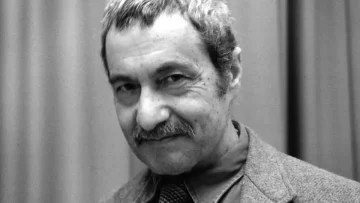
The Dissident | January 28, 2026
This week, the influential left-wing scholar Michael Parenti passed away at the age of 92.
Parenti was well known for his sharp criticism of U.S. foreign policy and U.S. imperialism throughout his life, waking up many to the reality of it and the lies used to justify it.
This is best underscored in one of his last published articles, “Ukraine and Regime Change”, which was published in the book “Flashpoint In Ukraine: How the U.S. Drive for Hegemony Risks World War III”, where he predicted to a tee what the result of the 2014 U.S. backed coup in Ukraine would be. … continue
Blog Roll
Recent Comments
eddieb on Conspiracy Denial eddieb on WEF Calls for ‘Cultural Revolu… loongtip on Trump wanted to play peacemake… Coronistan on EU member to sue bloc over ‘su… loongtip on Vicious loongtip on EU turns to India for defense… Coronistan on Donald Trump Is No Peace … seversonebcfb985d9 on French court jails pro-Palesti… eddieb on Fourteen Incredible Facts Abou… Bill Francis on European leaders’ shift in the… seversonebcfb985d9 on Villains of Judea: Philip Esfo… loongtip on Report warns that ‘Jewish terr…


 Aletho News
- Iran, China and Russia sign trilateral strategic pact
- After Years Of Denial, The IDF Admits The Gaza Health Ministry’s Numbers Are Accurate
- Riyadh and Hezbollah: A rapprochement forged in fire
- Criminal Conspiracy: How the U.S. and Israel Turned Iran into a Proving Ground for Bloody Experiments
- EU labels Iran’s Revolutionary Guard ‘terrorist organization’
- Security Guarantees Supported by Russia Agreed on in Istanbul in 2022 – Lavrov
- Russian oil major agrees sale of foreign assets to US firm
- European Union Sanctions Russian Journalists and Artists
- Fānpán – Is China Turning the Tables on the ‘Democratic’ West?
- Davos, Mark Carney’s frankness, and the Euro-American rift
- If Americans Knew
- “Hey ChatGPT, is Israel building a concentration camp?” (spoiler: yes) – Not a ceasefire Day 111
- “The Gaza ceasefire is a minefield” – Not a ceasefire Day 110
- Israel to seek new security deal from US, official says
- Leaked “Board of Peace” Resolution Outlines U.S.-Led Plan to Rule Over Gaza
- Jonathan Greenblatt Rolls Out Plan to Activate Hispanic Evangelical Golems
- Violence against hundreds of Gazan remains to find one Israeli – Not a ceasefire Day 109
- Greenpeace Demonstrator Exposes Folly of Protest Restrictions
- From CBS to TikTok, Pro-Israel Ellison is now in the driver’s seat
- Israel pays for UK advertisements attacking Doctors Without Borders
- Israel accused of extracting billions from Gazan people to pay for their own genocide
- No Tricks Zone
- New Study Affirms Rising CO2’s Greening Impact Across India – A Region With No Net Warming In 75 Years
- Germany’s Natural Gas Crisis Escalates … One Storage Site Near Empty …Government Silent
- Polar Colding…Antarctica Saw Its Coldest October In 44 Years!
- New Study: Sea Levels Rose 20 Times The Modern Rate During The Roman Warm Period
- As German Gas Storage Dips Dangerously Low…Shortage Hardly Avoidable
- New Study: Brazil’s Relative Sea Level Was 2+ Meters Higher And SSTs 3-4°C Warmer 6000 Years Ago
- Philosopher Schopenhauer: Climate Science Certainty Stems From Stupidity, Ignorance
- New Study: Species Extinction Rates Declining Since 1980 – ‘Climate Change Is Not An Important Threat’
- Denmark Places Climate Protection Above Animal Welfare, Poisoning And Culling Cows
- New Study: Greenland Was 3-7°C Warmer And Far Less Glaciated Than Today 6000-8000 Years Ago
 Aletho News