London Olympic rockets left unguarded

Military rockets left unguarded outside a block of flats in London
Press TV – May 5, 2012
Amateur video posted on the internet shows military rockets left unguarded outside a block of flats in Bow, East London, as Britain’s Ministry of Defense (MoD) prepares to deploy missiles on top of flats in London during the 2012 Olympics.
The video was posted by journalist Brian Whelan who lives in Bow Quarter, London. The video shows unguarded military rockets with nobody around.
The unguarded military rockets were part of the MoD’s security plans for the London Olympics. Earlier this week, the MoD confirmed that six sites, including two residential blocks of flats, would be tested as launch pads for missile systems in order to combat air threats during the Olympics.
Local residents have expressed their anger over the plans saying they were not consulted and questioning why the MoD did not build a missile base instead of using residential flats as a missile base.
Experts have also expressed concerns over the security risks for people. Military liaison officer Lieutenant Colonel Brian said flats could be targeted because of missiles deployed on their roof tops.
Furthermore, experts have called into question the usefulness of the missiles saying they would be useless in poor weather because the missile systems rely on the operator being able to see the target.
Writing on his blog, Whelan also described how these missiles work. The missile battery is the HVM A5 Missile System. Whelan revealed that only a small number of A5 missiles were fired in trials and even two malfunctioned during trials.
‘Israel threatened to take down world in nuclear Armageddon’
Press TV – May 5, 2012
Israel is the only regime that has threatened to obliterate all world countries in a “nuclear Armageddon,” if its existence is put in jeopardy, a political analyst tells Press TV.
In a Friday interview, Mark Glenn, from The Crescent and Cross Solidarity movement, lashed out at Israel for its nuclear stockpile, sayingTel Aviv is the only regime that “has threatened to take the entire world down in a nuclear Armageddon in the instance that her precious experiments in Jewish self-rule in the Middle East ceases to materialize.”
“There is no other country in existence today that has basically told the entire world that if we are going to go down we are going to take the rest of the world down with us,” he added.
Even Israel’s most prominent military professor, Martin Van Creveld, has once alluded to such nuclear ambitions by Israel and confirmed that Tel Aviv has several hundred atomic warheads and rockets targeted at all directions — mostly at European capitals — and that Tel Aviv is ready to take the entire world down before the regime itself ceases to exist, Glenn pointed out.
The analyst expressed regret that the nuclear threat from Israel looms over the world, while Tel Aviv continues to use its mainstream media outlets to level allegations against other countries, accusing them of possessing non-civilian nuclear programs.
Israel is widely believed to be the sole possessor of nuclear weapons in the Middle East. Tel Aviv began building its first plutonium and uranium processing facility, Dimona, in the Negev desert in 1958.
Former US President Jimmy Carter has stated that Israel has a nuclear arsenal that includes between 200 and 300 warheads. Decades of recurrent reporting and aerial footage have also established the possession of atomic arms by Israel.
Under its official policy of nuclear ambiguity, Tel Aviv neither confirms nor denies the possession of nukes and refuses to join the Nuclear Non-Proliferation Treaty (NPT) or allow inspections of its nuclear facilities.
Related articles
- Israel, threat to world peace: Nobel laureate Gunter Grass (alethonews.wordpress.com)
- UK bows to Tel Aviv after warning it against attack on Iran (alethonews.wordpress.com)
- Israel lobbies Japan to support anti-Iran sanctions (alethonews.wordpress.com)
Sarkozy and Hollande on Middle East: La Même Chose
By Patrick Galey | Al Akhbar | May 5, 2012
When the frontrunners in France’s presidential race took their seats on Thursday evening for a final televised debate, they did so with battle lines firmly entrenched.
Incumbent President Nicolas Sarkozy and Socialist Party leader Francois Hollande had spent the previous month on a vitriolic campaign trail exposing deep rifts among the French electorate over the economy, immigration, and nuclear energy.
But the most significant player in Sunday’s election, which most opinion polls predict will go down to the wire, was not even in the studio.
Both Hollande and Sarkozy are mindful that the 6.4 million who voted for Marine Le Pen of the far right National front will have a large bearing on the outcome of Sunday’s run-off. That’s why they have sought to echo Le Pen’s strident anti-immigration rhetoric which reached out to disenchanted voters and hardliners alike.
Hollande vowed to cut economic migration at a time when France is feeling the pinch from the eurozone’s financial turmoil. Sarkozy went one step further, referencing Le Pen by name and claiming only he had the experience and gumption to put a meaningful cap on immigration’s pall over France by cutting the number of people entering the country in half.
Judy Dempsey, a senior associate at Carnegie Europe, said although immigration was being touted as a domestic stand from both candidates, using the issue as a sweetener to attract far-right voters could have an adverse effect on France internationally.
“Immigration is foreign policy and when they speak about immigration now in France it’s fortress Europe,” she said. “[Hollande and Sarkozy] don’t see immigration in a positive sense and it sends completely the wrong signal to the younger generation and the emerging business community in the Middle East.”
It was not until the final minutes of Thursday’s debate that the issue of foreign policy was raised. Here, both candidates demurred.
Sarkozy was quick to point out how he took the lead as France led the way in a number of international decisions while in office.
France’s president has often sought to paint himself as a highly experienced operator in the realm of global diplomacy. As well as inheriting French involvement in NATO’s Afghanistan mission, Sarkozy oversaw the stationing of French troops in the Middle East and Africa, largely in a peacekeeping capacity.
He played a prominent role in meditation between Tbilisi and Moscow in 2008 when the fight over Abkhazia and South Ossetia threatened to boil over into all out war.
And last year, Sarkozy’s France spearheaded NATO’s campaign for military intervention in Libya.
Sarkozy avoided mentioning Libya in Thursday’s debate after embarrassing allegations that his 2007 presidential campaign had received an offer of funding from Tripoli. Sarkozy is seeking legal action over the claim, but thought better of opening that particular can of worms in the closing moments of a potentially election-changing televised appearance.
Hollande’s public statements indicate striking Middle Eastern policy similarities to the current government. Like Sarkozy, Hollande has declared that an Iranian nuclear missile would be unacceptable for Europe. Like Sarkozy, Hollande has called for a two-state solution in Palestine while trumpeting Israeli security as a key French concern.
The Socialist leader has been necessarily vague over French foreign policy. He currently lacks a dedicated adviser for overseas affairs. Instead of laying out detailed plans for France’s global relations, the Socialist challenger has made a point of criticizing Sarkozy in this regard.
Looking ahead to the next term in office, Hollande has struck a remarkably similar tone to the current government.
Sarkozy and French Foreign Minister Alain Juppe have been among the most hawkish European officials to address the Syrian crisis, closing the French Embassy in Damascus and calling multiple times for President Bashar Assad to leave office. Sarkozy has issued incessant calls for a full ceasefire in Syria, and has somewhat ominously compared the restive city of Homs to Benghazi, Libya’s erstwhile rebel stronghold.
Hollande, for his part, declared last month that he would support military intervention in Syria, “if done within a [United Nations] framework.” Juppe has offered words to the same effect in recent weeks.
According to Thomas Klau, senior policy fellow at the European Council on Foreign Relations, both Sarkozy and Hollande will wait and see what happens in Syria before veering from the French course of public criticism of the Damascus government.
“The current government and Juppe have been very active on the Syria dossier and doing all they could to get Russia to move its stance,” Klau told Al-Akhbar. “I wouldn’t expect the French policy to be different under Hollande. Much of his policy will be determined by events on the ground and the success – or the lack of it – from the [U.N./Arab League Envoy Kofi] Annan’s mediation effort.”
Dempsey added that Hollande had raised the prospect of military intervention in Syria “because he can say it without the responsibility” of having to go through with it. As a permanent member of the U.N. Security Council, France still has some global clout, but not nearly enough to convince Russia or China to bless any advance on Syria. Both candidates know and accept this, and continuity in the French approach to Damascus is more likely than meaningful change.
In a similar way, with Paris’ pro-Israel lobby as influential among the Socialists as they are in Sarkozy’s UMP party, Hollande, should he win, is unlikely to depart from France’s current line on Palestine.
In spite of a few diplomatic gaffes, including branding Israeli Prime Minister Benjamin Netanyahu “a liar,” Sarkozy has spent much of the last five years offering support to Israeli officials. Hollande, with influential pro-Israeli figures such as Dominique Strauss-Kahn having the ear of many Parisian socialists, will have a hard time departing from such engagement.
“Nicolas Sarkozy was personally convinced that the national interest of Israel was very close to French national interest,” Klau said. “With Francois Hollande, his attitude isn’t very significant. Neither of them place themselves in the Arabist tradition of French foreign policy, which has lost relevance anyway.”
So if foreign policy has provided so few soundbites in the French presidential election, it is because both candidates are largely in assent.
That is not to say Sarkozy and Hollande agree on every foreign policy area.
Hollande used Thursday’s debate to repeat a campaign promise that, if elected, he would withdraw all French troops serving with NATO from Afghanistan by the end of 2012 – a full year ahead of a planned pullout, and much to the chagrin of Sarkozy. The French president has said he’d prefer not to renege on the current withdrawal timetable agreed with NATO.
In recent months, Sarkozy has faced the wrath of Turkey, one of France’s major trading partners, by pursuing legislation that would make it illegal to deny the Armenian Genocide. Amid opprobrium from Ankara, the president has pushed ahead with the controversial bill, which critics have denounced as a cynical attempt to get France’s estimated 400,000 ethnic Armenians on his side ahead of elections.
Sarkozy has made no secret of his objection to Turkey applying for EU membership, and fallout over the genocide bill is just the latest of a series of spats with Ankara during his time in office. Hollande also indicated he would oppose Turkish EU accession if elected, but, significantly for officials in Ankara, he has not ruled out future negotiations.
“Sarkozy is openly hostile to the notion that Turkey should join the EU, whereas the Socialist position is that that door should remain open,” said Klau.
France’s poor diplomatic ties with Ankara can be counted as a black mark against Sarkozy’s foreign policy initiatives, something Hollande should seek to take advantage of, according to Dempsey.
“Sarkozy had something near contempt for Turkey and there is no love lost between Ankara and Paris,” she said. “This would change slowly under Hollande. It’s time France considered [engagement with Turkey] as its long-term strategic interest but that is one thing that Hollande might be able to change if he wins.”
With France mired in discontent over domestic issues, it is no surprise that neither Hollande nor Sarkozy has been overly willing to share their opinions on global affairs.
But whoever inherits control of one of NATO’s largest troop contributing countries will need to keep plans in place.
Related articles
- ‘On a razor’s edge’: Sarkozy lags on eve of elections (rt.com)
- Marine Le Pen Won’t Back Sarkozy or Hollande for French President (theepochtimes.com)
COLOMBIA ANALYSIS: Mirage and Reality in Southern Bolivar
By Isaias Rodriguez Arango | CPTnet | 5 May 2012
“Colombia is a social state under rule of law, organized in the form of a unitary, decentralized Republic, autonomous from its territorial subdivisions, democratic, participatory and pluralistic, founded on respect for human dignity and on the work and solidarity of the people who belong to it, and on the prevailing value of the general interest.” –Title I, Article 1, Political Constitution of Colombia (1991) (unofficial translation).
Colombians increasingly see our 1991 Constitution as a mirage. The illusion is evident when seen from areas as hard-hit by armed conflict as southern Bolívar province’s San Lucas mountains—a mining area at the epicenter of a complex war that at times leaves it unclear who pulled the trigger. The only thing always clear is that the peasant miner, farmer, or ordinary resident of the region generally is the one who ends up worse off. But in spite of these odds, the locals continue to claim a willingness to pay the ultimate price to remain on these lands that and their Guamoco and Zenu ancestors have long inhabited.
Small-scale gold mining provides a livelihood to hundreds of families in southern Bolivar. But the region is now in the sights of AngloGold Ashanti, one of the world’s most aggressive international mining companies. Communities therefore face threats from the state ranging from industrial regulation to paramilitary activity designed to force them off the land.
Without public or private aid, the small-scale miners cannot meet new environmental and safety standards supposedly aimed at sustainable exploitation. At the same time, government agencies overlook deliberate violations by industry giants. High prices of essential goods and services increase the likelihood of economic displacement. Taken together, these practices expose a mining policy that intentionally excludes small-scale miners.
Colombia’s gold-mining industry also faces serious public safety problems. The previous administration’s “Democratic Security” policy did not achieve its purported aims. Residents say that paramilitaries, guerrillas, Army, and police are all active in the region. Threats against community leaders and spokespeople persist, as does impunity for crimes against them.
A look at the numbers
According to the regionally-based Comprehensive Peace Observatory (Observatorio de Paz Integral, OPI), seven paramilitary groups are active in the Middle Magdalena region. Their primary criminal activities are drug trafficking and extortion. Their larger aim is to maintain social, political, economic, and military control of the area. In 2006, 6,000 paramilitary members demobilized in the Magdalena Medio region, but during that same year twenty-six new groups emerged. These criminal organizations have been accused of committing 1,051 targeted killings between 2006 and 2011. In 2008, FARC guerrillas and the Águilas Negras paramilitary group in southern Bolivar formed an unusual alliance, complicating identification of the perpetrators of violent actions.
Contrasting with the OPI’s findings, media references to the alleged demobilization of 31,000 AUC paramilitaries in 2006 tend to imply that the paramilitary structures have been eradicated. But the real objective of demobilizations may have to gain the benefits of the Justice and Peace Law, including a maximum jail sentence of eight years for demobilized paramilitaries. But in many cases clause 11.4 of the same law—which requires incorporation into civilian life and the cessation of all illegal activity in order to receive those benefits—went unenforced.
Given these facts, we must not be lulled into believing that Southern Bolivar province and the Middle Magdalena region are no longer ravaged by internal conflict, or that the armed entities have abandoned these lands so coveted for their wealth of natural resources and minerals.
Related articles
- Small-Scale Miners Face Crackdown as Foreign Companies Set Sights on Colombia (alethonews.wordpress.com)
- Colombia’s Patriotic March (alethonews.wordpress.com)
- Colombia: ‘Carbon credit’ scheme a cover for land grab (alethonews.wordpress.com)
- March 6th in Monteria – International Day for Victims of State Crimes: “We march for land and against dispossession.” (pbicolombia.wordpress.com)
- Progress or Promises? Free Trade and Labor Rights in Colombia (alethonews.wordpress.com)
Syria border guards foil infiltration attempt from Turkey: Report
Press TV – May 5, 2012
Syrian state media say border guards have foiled an attempt by an armed group to infiltrate into the country from neighboring Turkey.
According to the official Syrian news agency, SANA, clashes broke out between Syrian forces and members of the armed group near the village of Allani, close to the border with Turkey, in the northwestern province of Idlib on Saturday.
Syrian officials said several border guards were killed and injured during the fighting on Saturday. A number of armed men were also killed and wounded.
Meanwhile, the Britain-based Syrian Observatory for Human Rights said five people were killed in a bomb attack in the northwestern city of Aleppo on Saturday. Two similar attacks were also reported in the capital, Damascus.
The clashes on the Syrian-Turkish border come despite a ceasefire that took effect on April 12 and the presence of UN observers tasked with monitoring the truce.
The UK-based Observatory also said on May 2 at least 15 Syrian security forces were killed in a terrorist attack near the village of Rai in the northern province of Aleppo.
The ceasefire in Syria was part of a six-point peace plan proposed by UN-Arab League envoy Kofi Annan in March.
The first group of the UN observers arrived in Damascus late on April 15. The observers were approved for the mission according to UNSC Resolution 2042 passed on April 14.
On April 21, the UN Security Council met and unanimously voted on Resolution 2043 to send a mission of 300 observers to Syria.
Related articles
- Khoury thanks Lebanese Army for seizing Syria-bound arms shipments (dailystar.com.lb)
- Bombs welcome new UN chief monitor in Syria (EndtheLie.com)
Featured Video
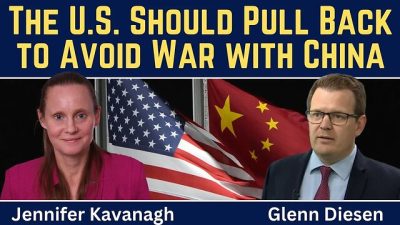
Why the U.S. Should Pull Back From the First Island Chain
or go to
Aletho News Archives – Video-Images
From the Archives
Only 19.7% of Americans agree with US State Dept on Israeli settlements
… Most American adults of voting age don’t appear willing to reject the applicability of international law to Israel’s ongoing colonization of occupied territories in East Jerusalem, the West Bank and Golan Heights. … Full article
Blog Roll
 Aletho News
- Albania on fire: who’s behind the riots?
- Egypt’s Civil Democratic Movement rejects involvement in regional war
- Egypt collaborates with Israel to build ‘Green Rafah’ project over erased Palestinian city
- Rising fuel prices and shortages have helped drive ongoing protests and rioting in France
- Tokyo protests demand Takaichi’s resignation over support for ‘Israel’
- Jennifer Kavanagh: Why the U.S. Should Pull Back From the First Island Chain
- Yemen denounces international community’s silence on Saudi aggression, siege
- UAE and Saudi Arabia move toward renewed coordination against Sanaa
- How Iran’s two-week retaliatory strikes exposed cracks in US military architecture in Persian Gulf
- The mother of all propaganda: Why the hype over US MOAB strike against Iran is nothing but theater
- If Americans Knew
- What the UK Is Doing to Pro-Palestine Novelist Sally Rooney Is an Act of Orwellian Villainy
- ‘We will build palaces for Jews in Gaza’: Right-wing activists establish new outpost near border
- ‘You see us burning, you stay silent’: Family’s agony over mother and sons burned to death in Gaza tent
- Israel keeps Palestinian journalist Bushra al-Tawil in isolation for 46 days
- US-Israel integration plan puts US military tech in Israel’s hands
- Israeli Strike Burns Gaza Mother Alive in Front of Toddler, ‘Without Generating Any Headlines’
- ‘The Israel Experience with Mike Huckabee’: The Ambassador’s Family Sells Trips to Israel
- As Gazans carry out mass burial, food insecurity is getting worse – Daily Update
- Israeli rabbi permits occupiers to steal Palestinian olive harvest in West Bank
- Netanyahu’s spin on latest settler attack is laughable – Daily Update
- No Tricks Zone
- Predictions Made By Renowned Climate Proifessor Over Past Decades Have Been Proven To Be Poor
- New Study Suggests Large Regions Of The Pacific Ocean Have Been Cooling For The Last 80 Years
- Germany’s Green Energy Debacle: High Energy Costs Force Kahla Porzellan to Close After 182 Years!
- New Study: 50 Years Of The Most Aggressive ‘Net Zero’ Policies Can Only Affect The Global Climate By 0.03°C
- US September “Heat” Was No Record…Many Records Set Decades Ago
- Latest European Green Energy Debacle; Portugal’s Largest Flagship Solar Park Insolvent!
- Green Energy Debacle: German Expert Professor Fritz Vahrenholt Warns Of Severe Economic And Social Consequences
- Two More Paleo Reconstructions Affirm Meters-Higher Sea Levels Across Ireland, Brazil 7000-6000 Years Ago
- New Study: Earth And Venus Surface Warmth Largely Explained By Convection And Lapse Rate, Not CO2 Or Radiation
- 2025 Nature Paper Claiming Worsening Global Drought Gets RETRACTED …Heavily Flawed

