A dose of reality for the West’s spoiled brat: What now for the humiliated Zelensky?
By Tarik Cyril Amar | RT | March 1, 2025
“A grandiose failure” – take it from the best Ukrainian news site. That’s how Strana.ua has summed up the visit of Vladimir Zelensky, past-best-by-date leader in embattled Kiev, to Washington.
And no one who watched the no-holds-barred shouting match between Zelensky, on one side, and US President Donald Trump and Vice President J.D. Vance, on the other, can disagree. Indeed, no one is even trying to disagree: Independent of political bias, there is unanimity in Western mainstream media that this was a historic catastrophe for Zelensky and his version of Ukraine.
“A disaster” and “bitter chaos” (The Economist ); a “meltdown” that “could not have gone worse” (Financial Times); a “historic escalation” (Spiegel ); a “disaster for Ukraine” and a “spectacular confrontation” (Le Monde ); an “upbraiding” and “debacle” for Zelensky (New York Times ) and so on and so forth… You get the gist.
And please don’t blame me for how boring a review of Western mainstream media is; it’s not my fault that the vaunted press of the self-appointed “free world” and “garden” of “values” offers less diversity of views than the Soviet media circa 1986.
The basic idea is very basic indeed: “This was awful because poor Zelensky got bullied.” Some especially eager information war cadres are already fingering J.D. Vance as the one to blame. The Economist, for instance, simply “knows” that the US vice president set up the Ukrainian leader. But then, the same Economist also helped spread the moronic lie that Russia blew up its own Nord Stream pipelines.
Intriguingly, Ukraine’s Strana.ua, already mentioned above, sees things very differently. Its take is that “Zelensky himself provoked the scandal by his rudeness” toward both Vance and Trump. The latter, these Ukrainian observers who know their own vain and erratic leader all too well think, were still holding back, staying “quite calm and respectful” toward Zelensky.
For what it’s worth, my personal impression is that Zelensky did provoke the fight; that Vance and Trump treated him harshly and humiliatingly in return; and that Kiev’s prima-donna-in-chief deserved every last bit of it – and then some. Yes, after more than half a decade of Western leaders and mainstream media first building an insane personality cult around him and then babying and coddling him, it was a relief to see him talked to in earnest. And yes, it was glorious.
Because Trump is right: Yes, Zelensky has been recklessly toying with World War III. And no, his regime has not been “alone.” On the contrary, without massive Western support that it should never have received it would long ago have ceased to exist. Vance also has a point: Ukraine is running out of soldiers, and Ukrainian men are hunted like animals to be shipped off to a hopeless meatgrinder war.
Finally, both are right: Zelensky displayed crude disrespect. Don’t get me wrong: In general, I am all for massively disrespecting the American empire. But once you’ve chosen to be its puppet and sold your own nation to it, you might as well cut out the grandstanding.
In short, at long last, a dose of reality for the West’s spoiled brat in Kiev.
And no more daft Churchill comparisons, please. In reality, like Stalin, Churchill was quite a monster – ask the miners or the Indians, for instance – who nonetheless played an important role in defeating Nazi Germany. But he was not a puffed-up provincial comedian.
Yet let’s not get distracted. Schadenfreude is not important. And neither are probably misguided speculations about Trump and the gang “setting traps,” staging “ambushes, or dishing out “payback.” Because even if they did, any leader worth his salt has to be able to deal with such baiting. One way or the other, this was yet another painful-to-watch display of Zelensky’s complete inadequacy.
The really interesting questions concern the consequences of this cluster-fiasco. No one knows the future. Currently, Zelensky is debasing himself even more – I know, hard to imagine, but leave it to the man who pretended to play piano with his genitals, in public – by trying to angle for mercy. Trump, as of now, seems in no mood to offer any. Not only was the Ukrainian satrap literally shown the door, but the irate American overlord also made a point of letting the media know that despite Zelensky’s begging it won’t be open again soon.
Hence, one consequence, let’s assume, is a long-term, deep falling out between Washington and the Zelensky regime that may well be irreparable. This is all the more remarkable as what led up to this turn of events was the almost-final-signing of an essentially colonial raw materials deal handing over Ukraine’s resources to America. And yet still not good enough.
The Trump administration is brutally frank about seeking material advantage; this, it seemed, was a done deal. What happened? We can only speculate, but one possibility is that Trump’s team is taking seriously the recent statements by Russia’s president Vladimir Putin.
In an important interview with journalist Pavel Zarubin – the real meaning of which has mostly escaped Western mainstream media, as is their wont – Putin explained that Moscow is open to business cooperation with the US regarding rare earth deposits everywhere in Russia. Including, as he stressed, territories recently conquered from Ukraine. You can extrapolate from here concerning other raw materials as well. Russia will, of course, not roll over Zelensky-style, but very much money can be made in fair deals, too.
Zelensky, hence, may have overestimated his negotiating position: although he is ready to sell out Ukraine’s raw materials to the US the way he has already sold its people, he has so little control that an offer of access with and through Moscow may have become attractive enough to neutralize his leverage. If that is so, then Washington has now even less interest than before in helping Kiev recover (impossible anyhow) or even keep territory.
Another possible consequence is obvious: Long before Trump, the US has had an impressive record of first using and then abandoning or even liquidating puppets, including, to name only a few, Ngo Dinh Diem of former South Vietnam, Manuel Noriega of Panama, Saddam Hussein of Iraq, and Osama Bin Laden, a badly backfiring Cold War terror puppet.
There can be no doubt that Zelensky should worry about a similar fate. Exile may be the best option available left for him in reality. He may also be cooped away in Ukraine. Or even be forced to obey the constitution and hold elections, which he is certain to lose, most likely against Valery Zaluzhny, former commander-in-chief and Zelensky’s arch-nemesis. Make no mistake: Zaluzhny is a bullheaded and narrowminded nationalist and militarist and, as of now, a Western puppet no less than Zelensky. Any scenarios involving Zelensky’s replacement remain hard to predict.
Especially because, and this brings us to a third possible consequence, Washington’s European vassals seem to be choosing the worst possible moment to finally rebel: Having helped drive the insane proxy war forward and Ukraine into an abyss with fanatic, self-destructive submissiveness to prior US rulers, it is the NATO-EU Europeans who are now trying to obstruct the search for peace. In that, they are even ready to diverge from Washington. That is the meaning, once again, behind the many messages of shlocky “solidarity” they are now demonstratively addressing to the Zelensky regime.
It is as perverse as you can imagine, but it is real: the hill that NATO-EU Europe has chosen to die on is to be even more warmongering and destructive than the US. Say what you will about these European “elites,” but they still manage to surprise: whenever you think they have done their very worst, they upstage themselves.
The war may well continue, even without the US. It would be insane. But the “elites” of NATO-EU Europe and Kiev are just that, of course, insane. We may even end up in a world where a Russian-US détente will unfold (as we should hope), while the Ukraine War becomes a fight between Russia and the US’ abandoned European vassals.
What will not change is the outcome: Ukraine and the West – in whatever rump shape – will lose. And the longer the war, the worse for both of them. Let’s hope that something will give. Ukrainians, another Maidan perhaps to finally stop the bloody clown who promised you peace and then betrayed you? Europeans, how much longer are you going to tolerate leaders obsessed with getting to World War III?
Tarik Cyril Amar is a historian from Germany working at Koç University, Istanbul, on Russia, Ukraine, and Eastern Europe, the history of World War II, the cultural Cold War, and the politics of memory
Trump gives Zelensky bum’s rush and flushes the European ploy to escalate war against Russia
By Finian Cunningham | Strategic Culture Foundation | March 1, 2025
After his mauling from President Trump live on TV and then being booted out of the White House, Ukraine’s Zelensky immediately phoned European leaders.
That reaction shows that the Ukrainian actor-turned-president had flown to Washington from Kiev not to merely sign a supposed minerals deal with the U.S., but to inveigle Trump into a trap to escalate the proxy war in Ukraine against Russia.
No doubt there is consternation and alarm among the Europeans that their agenda for prolonging the war against Russia is in disarray. Worst still, a furious Trump may now cut Ukraine loose and leave it completely at the mercy of Russia.
European leaders are huddling in London on Sunday for an emergency meeting convened by British Prime Minister Keir Starmer. Zelensky is to attend and be showered with European expressions of support and billions more of taxpayer money. Incredibly, they still champion the impudent conman as a “Churchillian hero”.
The fallout in the Oval Office on Friday was a sordid spectacle. Trump and his vice president, JD Vance, tore into Zelensky under the full glare of TV cameras for daring to make more demands for U.S. security guarantees as part of a deal giving American companies access to Ukraine’s alleged mineral wealth, including oil, gas and rare earth metals.
The meeting started cordially, but Trump refrained from giving specific “security guarantees” to Ukraine. Zelensky’s sniveling insistence on getting explicit U.S. commitments for military support following any peace deal with Russia triggered Trump and his officials to rebuke the Ukrainian leader for wrangling in public and not being respectful.
After their fireside fireworks, an incensed Trump gave Zelensky the bum’s rush. No minerals deal was signed and Zelensky left Washington empty handed. That’s not the end of it either. Trump later told reporters that Zelensky is not welcome back until he is ready to make the peace with Russia.
Trump was astute to the attempted rumble. He told reporters on the White House lawn following the slap-down of Zelensky: “We want peace. We’re not looking for somebody to sign up a strong power and then not make a peace deal because they feel emboldened. That’s what I saw happening. He wants to fight, fight, fight. I am not looking to get into anything protracted.”
Zelensky’s immediate phone calls to French President Emmanuel Macron and the NATO chief Mark Rutte after the White House fiasco is the big reveal here.
Days before Zelensky’s visit to the White House on Friday, European leaders had lobbied Trump for U.S. security guarantees as part of any peace deal with Russia.
Macron met Trump on Monday. On Thursday, it was Starmer’s turn to ingratiate with Trump. The EU’s top diplomat Kaja Kallas was also in Washington. Significantly, her meeting with U.S. Secretary of State Marco Rubio was abruptly called off “due to scheduling issues.”
The main objective for Macron and Starmer was to extract a commitment from Trump for a military “backstop” in Ukraine to beef up their proposal to deploy French and British troops under the guise of “peacekeepers”.
The British wanted American “air cover” for their troops, according to the BBC.
Both Macron and Starmer were palmed away with vague nothings despite the bonhomie and compliments, and a British sweetener from King Charles to invite Trump on a royal visit.
Trump’s diplomatic overture to Russian President Vladimir Putin, beginning with a phone call on February 12 followed by a high-level meeting of U.S. and Russian diplomats in Saudi Arabia on February 18, has sent shockwaves across the European NATO members.
They feel aggrieved that Trump is going to make a peace deal with Putin without them. The Europeans are still beholden to the propaganda narrative of the previous Biden administration about “defending democracy and sovereignty in Ukraine from Russian aggression.”
Trump wants out of the extravagant mess in Ukraine. He recognizes that the conflict was always a proxy war with an ulterior agenda to defeat Russia. Hundreds of billions of dollars and euros have been wasted fueling a futile proxy war that, as it turns out, Russia is decisively winning.
Marco Rubio, the U.S. top diplomat, disclosed in an interview to CNN after the Oval Office spat, that a European foreign minister had told him that “their plan” was to keep the war in Ukraine going for another year in the hope that it would eventually “weaken Russia” and make Moscow “beg for peace.”
The callousness of the Europeans and their Russophobic obsession are grotesque. The three-year conflict in Ukraine has cost up to one million military deaths, millions of refugees across Europe, and broken economies, not to mention the danger of it turning into World War Three.
Sneakily, the Europeans are covering their desire for continuing the proxy war with a belated apparent concern for making peace and backing Trump’s diplomacy.
Macron and Starmer ostensibly commend Trump (after initially being in a flap over this call with Putin) and they talk about “finding a path to a lasting peace.”
However, their seeming offer of deploying French and British soldiers as “peacekeepers” is a Trojan Horse that has nothing to do with keeping the peace. For its part, Moscow has categorically stated that any NATO troops in Ukraine will not be acceptable and will be attacked as combatants.
That is why Macron, Starmer and other European leaders were so insistent on trying to get Trump to give “security guarantees”. The so-called American military “backstop” would be a way to escalate the proxy war against Russia.
Zelensky was in Washington on a mission to beguile Trump into giving a security guarantee while dangling the bait of a lucrative minerals deal.
It was reported that the Trump White House wanted to cancel the meeting for Friday before Zelensky departed from Ukraine on Thursday. But Macron intervened and implored Trump to go ahead with the reception.
Zelensky, having got used to being indulged with endless blank checks, thought he could wheedle more out of Trump than just a mining deal. He was expected to extract the direct U.S. military involvement that the European Russophobic leaders want. In that way, the proxy war would escalate and those riding the war-racket gravy train would continue to extort the world’s biggest security crisis.
Fortunately, Trump gave Zelensky the bum’s rush and flushed out the European ploy.
The irony is that Trump had earlier in the week lavished praise on Macron and Starmer, exalting France for being America’s “oldest ally” and Britain for its “special relationship”. Trump might want to radically revise those cliched notions.
Trump and Zelensky Clash in the Oval Office
By Prof. Glenn Diesen | February 28, 2025
The disastrous meeting between Trump and Zelensky demonstrates why sensitive diplomacy should be done behind closed doors and not in front of the public. At such press conferences, one speaks to both the leader of the other country and the public. Both Zelensky and Trump escalated the rhetoric as they were in front of the cameras to win over the public and not appear weak. The need to prioritise the public as the main audience is a wider problem for diplomacy as, for example, the Europeans have for three years refused to engage in basic diplomacy with Russia (that could have reduced the risk of nuclear war) because it can “legitimise” Putin in the eyes of the public. The immense focus on narrative control in international politics makes it even more important to defend diplomacy.
The Trump-Zelensky meeting was predictably sensitive, as the issue of security guarantees had not been resolved before the press conference. Subsequently, the press conference became a battleground to win over the public. The purpose of the meeting was to sign an agreement that would give the US significant control over Ukraine’s natural resources, yet the document prepared in advance was deliberately vague. Trump was confident that Zelensky would fall in line as the US enjoys overwhelming leverage, while Zelensky had hoped to pressure Trump into offering security guarantees in return for the resources.
A security guarantee would pull the US into a direct war with Russia if a future peace agreement broke down. Such a security guarantee would deter Russia from breaking the ceasefire, yet it would also incentivise Ukraine to restart the fighting as the US would then be pulled into the war on the side of Ukraine to assist with reconquering lost territories. A likely outcome would be World War III with a possible nuclear exchange.
The visits by Macron and Starmer in the days before Zelensky’s arrival were also intended to prevent the US from decoupling itself from the conflict by obtaining US security guarantees. Europe cannot send troops into Ukraine without the promise of a US military “backstop”. Macron and Starmer probably also wanted to shower Trump with flattery to warm him up before Zelensky visited with economic incentives to get the US entangled in the war. The appeal to Trump’s vanity and greed did not work, as Trump seems to recognise that the war has been lost and that nuclear war is a growing possibility in the absence of peace negotiations.
The positive outcome of this very undiplomatic confrontation is that Zelensky may abandon his delusions. The Biden administration and the Europeans have been stringing along Ukraine for more than a decade on a path to its destruction. Trump and Vance seemed genuinely bewildered that Zelensky would not change course as his country is obliterated. The Europeans’ promises of NATO membership, return of territories and ironclad security guarantees are presented as expressions of support, but in reality they are fantasies to uphold dangerous delusions. NATO lost the proxy war in Ukraine, and there are no good solutions left. However, this should not have been done in public.
Zelensky now with only the dictatorship in London to support him

By Martin Jay | Strategic Culture Foundation | February 26, 2025
What is the definition of a ‘dictator’? In the days that followed Trump’s social media post calling President Zelensky one, British media seized upon the subject and ran with it for days. Various public figures were asked whether Trump was right to use the word and whether they believed Zelensky was actually one. Two figures from the right, Nigel Farage and Liz Truss both said they thought Trump was both wrong to call him one and that in fact he wasn’t one.
This remarkable endearment for Zelensky is really the core of the problem in the west in particular the UK, where its leader Sir Keir Starmer declared that he would be ready to send British troops to Ukraine – a suggestion which was quickly shot down by the elites of Germany and France as preposterous.
It’s rare that the giants of the EU put the British government in its place on world affairs but we are living in unprecedented times of sensational stupidity and perhaps ignorance from politicians which we have never seen before.
Farage’s views on the Middle East tell us he is both ignorant of what is happening there and doesn’t have any advisors covering the region. But his views on Ukraine are even more shockingly deranged. Zelensky is a leader who has shut down anything which resembles an ‘opposition’ both politically and media, he has conglomerated all TV stations into one state-owned entity so as to shut down even the slightest criticism or accountability of his own actions, he has had the few dissident voices arrested and thrown into prison, with some predicting that there are thousands of journalists and media workers. Add to that it is rapidly emerging that the level of corruption and embezzlement linked directly to Zelensky is on a scale that even hard line critics in the West could not have even imagined.
In my own investigation in October 2023, where a very angry Ben Wallace insulted me in a WhatsApp interview before blocking me, I outline how the original, more sensational claim that only about a third of all military equipment sent to Ukraine was actually making it to the battlefield was in fact realistic. This analogy was bandied about for some time and was dismissed by Wallace and others like Alecia Kearns MP as nonsense and yet turned out to be more than just realistic but likely. That is to say that 66 percent of what was being sent to Ukraine was being sold on the black market in Libya making Zelensky and his close circle billionaires.
In recent weeks now mainstream journalists and politicians are talking about the arms scandal and it is only a matter of time before we shall see the realities of this. The British government have always turned a blind eye to it, both in Ukraine and further afield. It would cost them nothing to do a study in the Sahel to evaluate how much of the equipment there funding terrorism is coming from the arms bazaars of Tripoli where all of this kit is ending up. I suggested to Wallace that his own government at the time should send some investigators there (Libya) to look at what’s available. I was more or less told to go there myself and do the job for them.
But Zelenksy support structure for so long has been that of a dictator, in particular media. The hundreds of media outlets in Ukraine which were receiving USAID funding is extensive, not to mention the hundreds of civil servants which support him being on the same payroll. If that doesn’t shock Farage and Truss, then consider the same slush fund which paid out around a 100 million dollars to movie stars to go and visit him and fake their adulation, all for the purposes of cheating the humble U.S. taxpayer by raising his profile.
Who could forget Sean Penn giving him his own Oscar, or Ben Stiller chilling with the Ukrainian leader and making small talk? Angelina Jolie is even reported to have been paid 20 million dollars to meet with him but didn’t even manage that and simply mooched about a bit in the country before jetting back to the U.S. Of course, the celebrities all dismiss these claims, through the same left-wing woke press which is part of their extended political family. But the question we should be asking ourselves is simply this: if they were not paid, then why won’t they show up now and show support at the precise moment when Zelensky needs it the most? Given that these celebrities supported Biden and are Democrats, this would be the most logical thing for them to do. In reality, the wall of silence is what we see.
Dictators don’t stand over their hired killers and watch their victims in their final moments like Idi Amin did. In reality, they only indicate and hint to the thugs on their payroll what she should do to fix problems. Do Farage and Truss actually believe that dissidents are not rounded up and thrown into jail where they are tortured and in some cases murdered? Now that the vultures are circling over Zelensky and many are wondering how many days in office he has left, more reports are emerging with details of such cases. The story of Gonzalo Lira, the American Chilean blogger whose vlogs were often well-informed and threw a very poor spotlight on Zelensky is a very sad one as he was brutally tortured while in prison and finally died. If the Zelensky cabal can do this to an American citizen, perhaps Farage and Truss will not be too surprised when in the coming weeks we will have the same Damascus prison media moment where it transpires that there are certainly hundreds, possibly thousands of journalists, commentators and political rivals in Ukraine’s prisons.
The debate, if we can call it that in the UK, over whether Zelensky is a dictator or not is a remedial one at best as it misses the point. In Britain, during the same period a man was imprisoned for posting a social media comment about a Labour official while a granny was visited by two plain clothes cops about her mere criticism of a Labour councilor’s conduct. Plain clothed detectives!
Britain has descended rapidly into a police state with Starmer as its dictator. The high ground we once had where we scolded China for arresting protestors has now been kicked away from under our feet. We have become China. Britain’s police now cannot deal with crime but prefer being the ‘Thought Police’ and threatening old biddies.
And so the talk about what is a dictator is rather fatuous if not incongruent given that those doing it are part of an elite which only claim to cherish free speech but in fact loath it. Farage cannot be taken seriously on Ukraine but his comments do steer the bumble hack towards darker questions. Who is funding him? And is his own dream of being a PM in the UK going to merely continue the present dictatorship which silences anyone who questions him? His reputation of being thin-skinned and kicking out of his party anyone who questions his ideas is already established. His own repugnance of British media also is well known. Previously in Brussels, his decision led to the closure of the only free speech, anti corruption magazine going, which he was always fearful of exposing his own infidelity while an MEP. And as for Truss, the most inept prime minister Britain has ever had in its long history, whose dictator-like style while in office crashed the economy? How should we interpret her support for Zelenksy? Do both Farage and Truss admire this dictator? The problem is not with the word ‘dictator’, it is more about the people who use it for their own purposes. It is not important whether Zelensky is one or not, rather than he is not a dictator who is servile to Trump and his cabal. Unlike Farage, Zelensky is not our kind of dictator.
America as Republic, not as Empire – Europe’s “sound and fury” after jaw-dropping pivots in U.S. policy
By Alastair Crooke | Strategic Culture Foundation | February 26, 2025
The bits are falling into a distinct pattern – a pre-prepared pattern.
Defence Secretary Hegseth at the Munich Security Conference gave us four ‘noes’: No to Ukraine in NATO; No to a return to pre-2014 borders; No to ‘Article 5’ peacekeeper backstops, and ‘No’ to U.S. troops in Ukraine. And in a final flourish, he added that U.S. troops in Europe are not ‘forever’ – and even placed a question mark over the continuity of NATO.
Pretty plain speaking! The U.S. clearly is cutting away from Ukraine. And they intend to normalise relations with Russia.
Then, Vice-President Vance threw his fire cracker amongst the gathered Euro-élites. He said that the élites had retreated from “shared” democratic values; they were overly reliant on repressing and censoring their peoples (prone to locking them up); and, above all, he excoriated the European Cordon Sanitaire (‘firewall’) by which European parties outside the Centre-Left are deemed non-grata politically: It’s a fake ‘threat’, he suggested. Of what are you really so frightened? Have you so little confidence in your ‘democracy’?
The U.S., he implied, will no longer support Europe if it continues to suppress political constituencies, arrest citizens for speech offenses, and particularly cancel elections as was done recently in Romania. “If you’re running in fear of your own voters”, Vance said, “there is nothing America can do for you”.
Ouch! Vance had hit them where it hurts.
It is difficult to say what specifically most triggered the catatonic European breakdown: Was it the fear of the U.S. and Russia joining together as a major power nexus – thus stripping Europe from ever again being able glide along on the back of American power, through the specious notion that any European state must have exceptional access to the Washington ‘ear’?
Or was it the ending of the Ukraine/Zelensky cult which was so prized amongst the Euro-élite as the ‘glue’ around which a faux European unity and identity could be enforced? Both probably contributed to the fury.
That the U.S. would in essence leave Europe to their own delusions would be a calamitous event for the Brussels technocracy.
Many may lazily assume that the U.S. double act at Munich was just another example of the well-known Trumpian fondness for dropping ‘wacky’ initiatives intended to both shock and kickover frozen paradigms. The Munich speeches did exactly that all right! Yet that does not make them accidental; but rather parts that fit into a bigger picture.
It is clear now that the Trump blitzkrieg across the American Administrative State could not have been mounted unless carefully pre-planned and prepared over the last four years.
Trump’s flurry of Presidential Executive Orders at the outset of his Presidency were not whimsical. Leading U.S. constitutional lawyer, Johnathan Turley, and other lawyers say that the Orders were well drafted legally and with the clear understanding that legal challenges would ensue. What’s more, that Trump Team welcome those challenges.
What is going on? The newly confirmed head of the Office of Budget Management (OBM), Russ Vought, says his Office will become the “on/off switch” for all Executive expenditure under the new Executive Orders. Vought calls the resulting whirlpool, the application of Constitutional radicalism. And Trump has now issued the Executive Order that reinstates the primacy of the Executive as the controlling mechanism of government.
Vaught, who was in OBM in Trump 01, is carefully selecting the ground for all-out financial war on the Deep State. It will be fought out firstly at the Supreme Court – which the Trump Team expect confidently to win (Trump has the 6-3 conservative majority). The new régime will then be applied across all agencies and departments of state. Expect shrieks of pain.
The point here is that the Administrative State – aloof from executive control – has taken to itself prerogatives such as immunity to dismissal and the self-awarded authority to shape policy – creating a dual state system, run by unelected technocrats, which, when implanted in departments such as Justice and the Pentagon, have evolved into the American Deep State.
Article Two of the Constitution however, says very bluntly: Executive power shall be vested in the U.S. President (with no ifs or buts at all.) Trump intends for his Administration to recover that lost Executive power. It was, in fact, lost long ago. Trump is re-claiming too, the Executive’s right to dismiss ‘servants of the State’, and to ‘switch off’ wasteful expenditure at his discretion, as part of a unitary executive prerequisite.
Of course, the Administrative State is fighting back. Turley’s article is headlined: They Are Taking Away Everything We Have: Democrats and Unions Launch Existential Fight. Their aim has been to cripple the Trump initiative through using politicised judges to issue restraint orders. Many mainstream lawyers believe Trump’s Unitary Executive claim to be illegal. The question is whether Congress can stand up Agencies designed to act independently of the President; and how does that square with the separation of powers and Article Two that vests unqualified executive power with one sole elected official – the U.S. President.
How did the Democrats not see this coming? Lawyer Robert Barnes essentially says that the ‘blitzkrieg’ was “exceptionally well-planned” and had been discussed in Trump circles since late 2020. The latter team had emerged from within a generational and cultural shift in the U.S.. This latter had given rise to a Libertarian/Populist wing with working class roots who often had served in the military, yet had come to despise the Neo-con lies (especially those of 9/11) that brought endless wars. They were animated more by the old John Adams adage that ‘America should not go abroad in search of monsters to slay’.
In short, they were not part of the WASP ‘Anglo’ world; they came from a different Culture that harked back to the theme of America as Republic, not as Empire. This is what you see with Vance and Hegseth – a reversion to the Republican precept that the U.S. should not become involved in European wars. Ukraine is not America’s war.
The Deep State, it seems, were not paying attention to what a posse of ‘populist’ outliers, tucked away from the rarefied Beltway talking shop, were up to: They (the outliers) were planning a concerted attack on the Federal expenditure spigot – identified as the weak spot about which a Constitutional challenge could be mounted that would derail – in its entirety – the expenditures of the Deep State.
It seems that one aspect to the surprise has been the Trump Team’s discipline: ‘no leaks’. And secondly, that those involved in the planning are not drawn from the preeminent Anglo-sphere, but rather from a strand of society that was offended by the Iraq war and which blames the ‘Anglo-sphere’ for ‘ruining’ America.
So Vance’s speech at Munich was not disruptive – merely for the sake of being disruptive; he was, in fact, encouraging the audience to recall early Republican Values. This was what is meant by his complaint that Europe had turned away from “our shared values” – i.e. the values that animated Americans seeking escape from the tyranny, prejudices and corruption of the Old World. Vance was (quite politely) chiding the Euro-élites for backsliding to old European vices.
Vance implicitly was hinting too, that European conservative libertarians should emulate Trump and act to slough-off their ‘Administrative States’, and recover control over executive power. Tear down the firewalls, he advised.
Why? Because he likely views the ‘Brussels’ Technocratic State as nothing other than a pure offshoot to the American Deep State – and therefore very likely to try to torpedo and sink Trump’s initiative to normalise relations with Moscow.
If these were Vance’s instincts, he was right. Macron almost immediately summoned an ‘emergency meeting’ of ‘the war party’ in Paris to consider how to frustrate the American initiative. It failed however, descending reportedly into quarrelling and acrimony.
It transpired that Europe could not gather a ‘sharp-end’ military force greater than 20,-000-30,000 men. Scholtz objected in principle to their involvement; Poland demurred as a close neighbour of Ukraine; and Italy stayed silent. Starmer, however, after Munich, immediately rang Zelensky to say that Britain saw Ukraine to be on an irrevocable path to NATO membership – thus directly contradicting U.S. policy and with no support from other states. Trump will not forget this, nor will he forget Britain’s former role in supporting the Russiagate slur during his first term in office.
The meeting did however, underline Europe’s divisions and impotence. Europe has been sidelined and their self-esteem is badly bruised. The U.S. would in essence leave Europe to their own delusions, which would be calamitous for the Brussels autocracy.
Yet, far more consequential than most of the happenings of the past few days was when Trump, speaking with Fox News, after attending Daytona, dismissed Zelensky’s canard of Russia wanting to invade NATO countries. “I don’t agree with that; not even a little bit”, Trump retorted.
Trump does not buy into the primary lie intended as the glue which holds this entire EU geo-political structure together. For, without the ‘Russia threat’; without the U.S. believing in the globalist linchpin lie, there can be no pretence of Europe needing to prepare for war with Russia. Europe ultimately will have to come to reconcile its future as a periphery in Eurasia.
Russian auto-giant cites billion dollar Renault re-entry price tag
RT | February 25, 2025
Renault will have to compensate Russian carmaker AVTOVAZ up to $1.3 billion if it wishes to re-acquire its former business and re-enter the market, having previously quit the country, CEO Maxim Sokolov said on Tuesday.
In 2022, AVTOVAZ purchased Renault’s share in the joint enterprise for a symbolic sum of 1 ruble with an option to return within six years.
Renault joined other foreign corporations that succumbed to international pressure and left Russia in the wake of the escalation of the Ukraine conflict in February 2022.
A return is only possible if the French automaker reimburses the investments made in its absence to develop the business, Sokolov told journalists, specifying that they would top 112 billion rubles ($1.3 billion) in 2023-2025.
“They [the investments] exceed the average annual investment volumes that were made by the previous shareholder, Renault, in the early 2020s,” the top executive said.
“Therefore, it’s clear that these investments will need to be reimbursed upon return,” he added, stressing that the price of return wouldn’t equal the price of exit.
Renault sold its 100% stake in Renault Russia and its 68% stake in Russian carmaker AvtoVAZ in 2022. Renault’s assets were later transferred to Russian state ownership.
In November 2022, Russia launched production of an updated version of the iconic Soviet-era car brand Moskvich at Renault’s factory in Moscow, which used to produce cars under the Renault and Nissan brands.
The car giant reported a write-down of over $2 billion as a result of the withdrawal from its second-biggest market.
Brigitte Macron thought to be Emanuel’s biological father

French First Lady Brigitte Macron © Getty Images / Jakub Porzycki; NurPhoto
RT | February 20, 2025
US journalist Candace Owens has claimed that Brigitte Macron, the wife of French President Emmanuel Macron, “is in fact a man.” Owens shared an investigation on her podcast this week, insisting she would stake her “entire professional reputation” on Brigitte Macron being transgender.
Brigitte Macron, born Brigitte Marie-Claude Trogneux in 1953, is a former literature teacher and has been married to Emmanuel Macron since 2007. They are said to have met when Macron was 15 and she was teaching at Lycée la Providence in Amiens. Brigitte Macron is 24 years older than her husband.
In her latest episode of ‘Becoming Brigitte’ released on Monday, Owens spoke to French journalist Xavier Poussard, who claims to have obtained a photo supposedly proving that the French first lady used to be a man.

Becoming Brigitte: Candace Owens x Xavier Poussard | Ep 6 – Bitchute
Poussard has alleged that Brigitte Macron is actually the transgender identity of her brother, Jean-Michel Trogneux, who supposedly transitioned at the age of 30. In the interview with Owens, the journalist claimed that he had obtained a photo depicting Trogneux when he was 18 years old.
“There’s no room for doubts, we have the directory, we have the list which certifies, it is indeed the same individual,” Poussard told Owens. He pointed to the similarities of key facial features and other “distinctive signs” such as areas below the mouth and a mole shared by both Macron and Trogneux.
In the interview, Poussard claimed that the French media have manipulated the public for years in an attempt to hide the truth, and accused the Elysee of trying to achieve the journalist’s “professional, economic and perhaps even physical death.”
The claims regarding Brigitte Macron date back to 2020, when her husband was running for his second term in office. The president, his wife and their immediate family have repeatedly denied the allegations and have tried to sue journalists pushing the narrative for defamation and invasion of privacy.
Earlier this month, one such journalist, Natacha Rey, revealed that she had asked for political asylum in Russia, citing “persecution” in France. Her lawyer, Francois Danglehant, has insisted that the charges against Rey have been “fabricated” and that false testimony has been given by Brigitte Macron’s former family, including her ex-husband, Jean-Louis Auziere.
Owens’ latest episode highlighting the allegations against the French first lady have sparked controversy online, with many dismissing the claims as bogus.
However, the journalist has insisted that she would continue pushing this story, writing on X: “I would stake my entire professional reputation on the fact that Brigitte Macron is in fact a man.”
“Any journalist or publication that is trying to dismiss this plausibility is immediately identifiable as establishment,” Owens wrote, adding that “the implications here are terrifying.”
Candace Owens videos:
Becoming Brigitte: an Introduction
Becoming Brigitte: Gaslighting The Public | Ep 1
Becoming Brigitte: An Inaccessible Past | Ep 2
Becoming Brigitte: One Coincidence Too Many | Ep 3
A 20 minute segment of the one-hour interview Ep 6 can be found on Youtube, but the full interview is available on Owens’ own site at this link –
https://candaceowens.com/video/becoming-brigitte-candace-owens-x-xavier-poussard-ep-6/
Kremlin responds to reports of Western troop deployment plans for Ukraine
RT | February 20, 2025
Moscow is concerned by reports that NATO member states are considering deploying troops to Ukraine, Kremlin spokesman Dmitry Peskov has said, reiterating that such a scenario would be unacceptable to Russia.
On Wednesday, The Telegraph and Bloomberg cited anonymous Western officials as saying that the UK and France were preparing to present US President Donald Trump with plans for the establishment of a “reassurance force” for Ukraine, should Kiev and Moscow agree a peace deal.
In an interview with Fox News the same day, US National Security Adviser Mike Waltz confirmed that British Prime Minister Keir Starmer and French President Emmanuel Macron would visit Washington next week.
Speaking to reporters on Thursday, Peskov said Moscow is “certainly following all these reports most closely.” Claims about the potential arrival of service members from NATO states in Ukraine “are causing concern,” he added, citing the ramifications this would have for Russia’s national security.
“This is a very important topic to us,” Peskov said. He noted that Russian Foreign Minister Sergey Lavrov had stressed on Tuesday that the “presence of armed forces from NATO countries [in Ukraine]… is completely unacceptable to us.” The remark followed high-level Russia-US talks in Riyadh, Saudi Arabia, where the two nations agreed to work toward normalizing bilateral relations.
According to The Telegraph and Bloomberg, the Anglo-French plan would involve around 30,000 troops being stationed in key Ukrainian cities and ports, as well as at nuclear power plants. The scheme purportedly envisages equipping the contingent with surveillance and reconnaissance aircraft as well as patrol vessels to monitor a potential peace agreement between Kiev and Moscow, with the US providing air cover in case of escalation.
In an article for The Telegraph on Sunday, Starmer proclaimed that the “UK is ready to play a leading role in accelerating work on security guarantees for Ukraine,” including by “putting our own troops on the ground if necessary.”
Russia’s ambassador to the UN, Vassily Nebenzia, warned earlier this month that Western troops operating in Ukraine without Moscow’s consent would be seen as legitimate targets.
A number of EU leaders, most notably French President Emmanuel Macron, have been floating the idea of sending military personnel to Ukraine since at least last February.
Deliberations over such a move have reportedly intensified in recent months. Since Trump assumed office in January, his administration has signaled its willingness to scale down American involvement in Ukraine.
EU keeps trying to escalate Ukrainian conflict
By Lucas Leiroz | February 20, 2025
While the US and Russia are engaged in an incipient diplomatic process, taking the first steps towards a peaceful future, European countries continue to try to escalate the Ukrainian conflict, taking provocative measures to worsen tensions. Recently, European leaders announced a new aid package to the neo-Nazi regime, which shows how the EU is not interested in any diplomatic negotiations – despite hypocritically complaining about not being part of the talks in Riyadh.
Western media recently reported that a new pro-Ukrainian military aid package is being prepared by the EU. The aid is valued at more than 6 billion euros, making it one of the largest packages in the entire European support campaign for Kiev since 2022. The plan is believed to involve the supply of weapons such as artillery shells, missiles and air defense systems, among other lethal equipment. The approval of the package is expected to be announced on February 24, during the three-year anniversary of the special military operation – when a delegation of EU’s high officials will be in Kiev.
“EU countries are preparing a military aid package worth at least €6 billion for Ukraine as it seeks to shore up Kiev’s strategic position at the outset of U.S.-led talks with Russia, according to three EU diplomats. The package, which should include everything from 1.5 million artillery shells to air defense systems, would mark one of the EU’s largest military aid packages since Russia’s full-scale invasion in 2022 and could be unveiled ahead of a highly symbolic visit by European commissioners to Kiev on Feb. 24,” Politico reported.
The EU is not only sending more weapons to Ukraine, but it is also further tightening anti-Russian measures. The bloc has agreed on a new package of coercive measures against Moscow – the 16th since the start of the special military operation. Even though all the sanctions imposed on Russia have so far proven futile, Europe continues to pursue a boycott strategy against Moscow, thus damaging its own strategic interests – as the sanctions obstruct energy cooperation, affecting industry and several other important sectors.
It is important to remember that, in parallel to all this, European countries continue to hold discussions about “sending troops to Ukraine”. Even though Moscow has made it clear many times that it will not accept the presence of Western forces in the conflict zone, considering any foreign soldiers as legitimate targets – the EU insists on worsening the scenario.
In fact, the entire European aid campaign for Ukraine is useless. Kiev does not gain any strategic benefit with the arrival of new European weapons, since this equipment will not be enough to reverse the tragic military situation of the Ukrainian forces – which are rapidly losing ground due to the strong Russian advance. Like all NATO weapons previously sent to Ukraine, the new European artillery systems will most likely be quickly destroyed by Russian high-precision bombings, generating zero impact on the battlefield.
In the same sense, after three years of repeated sanctions against Russia, it already seems clear that Moscow knows how to deal with this situation, circumventing the effects of coercive measures and making the economy grow despite Western aggression. The country is definitely growing, with the economy reaching increasingly better numbers, which is why new sanctions are not a cause for concern for the Russians, but rather for the Europeans themselves, who are more and more being harmed by the side effects of their own measures.
Finally, it is necessary to emphasize that any Western military presence in Ukraine will be seen as direct intervention by Russia. Moscow has already repeatedly said that European soldiers on the battlefield will be legitimate targets for Russian troops. In practice, any Western military operation in Ukraine will be a real suicide, since foreign soldiers will be priority targets for the Russian armed forces.
Instead of trying to escalate the war, Europe should take advantage of the current situation of diplomatic progress to reverse the mistakes made over the past three years. European countries now have the opportunity to lift sanctions, stop engaging in the war and re-establish ties with Russia. Previously, the Democrats were pressuring Europe to get involved in the war. With Trump and the Republicans, this pressure no longer exists, and the EU can simply change everything it has done so far.
However, unfortunately, the Europeans seem to be much more aggressive than the Americans themselves. The EU’s goal seems to be in taking the conflict to its ultimate consequences, even if European own interests are harmed by such irresponsible measures.
Lucas Leiroz, member of the BRICS Journalists Association, researcher at the Center for Geostrategic Studies, geopolitical consultant.
Europe plans €700 billion for Ukraine defense spending, German FM let’s slip during interview
By Liz Heflin | Remix News | February 18, 2025
Germany’s left is going all in on its pro-war effort, with Europe reportedly plotting its own course behind the scenes, which was not supposed to be made public until after Germany’s elections on Feb. 23. The Berliner Zeitung has reported that German Defense Minister Annalena Baerbock, of the Green Party, let slip the details of Europe’s plan to provide weapons to Ukraine on its own, with a projected allocation of some €700 billion for such purchases, with much of the money coming from Germany.
“We will launch a large package that has never been seen on this scale before,” Baerbock told Bloomberg on the sidelines of the Munich Security Conference, calling it an emergency measure “for security in Europe.”
Lithuanian Defense Minister Dovile Sakaliene also spoke to Bloomberg about the inspiration behind the move, saying the “realization that it is not the United States that will defend Europe, but that Europe will defend itself with the help of the United States (…) We need to spend quickly on defense, and spend a lot, hundreds of billions need to be spent immediately. We will all need to act quickly, including Germany.”
It is interesting that Sakaliene notes “with the help of the United States.” The question is: Will the U.S. want anything to do with Europe’s plan for massive arms procurements to Ukraine when Trump has made clear the only goal is peace. Of course, Trump has also been adamant that Europe ups its own defense spending, but that has nothing to do with U.S. “help,” in fact, it is meant to cut it.
The plans to boost defense spending at a historic scale came just after an emergency meeting hosted by French President Macron in Paris, Macron got behind the idea of a “security force” to be deployed behind the future ceasefire line. While British Prime Minister Keir Starmer said the U.K. was ready to send troops to Ukraine if necessary, other countries are more reluctant.
“At the moment, no one is considering sending troops to Ukraine,” said Spanish Foreign Minister Jose Manuel Albarez, reports Do Rzeczy, after a meeting of EU leaders in Paris. Polish Prime Minister Donald Tusk said at the meeting that Poland was also not ready to send its troops to Ukraine, but promised that his country would continue to provide aid to Kyiv.
German Chancellor Olaf Scholz has called sending troops to Ukraine “completely premature.”
“It is a difficult situation for Europe. We welcome the talks about peace for Ukraine. But it must be a fair and sustainable peace. And: Ukraine must be part of these talks. Europe will keep on supporting Ukraine. This is what I stressed in my meetings with Volodymyr Zelensky,” he wrote on his X account.
Just an hour later, Scholz also wrote: “NATO is based on the fact that we always act together and share risks. This must not be called into question. There must be no division of security and responsibility between Europe and the USA.”
In terms of enforcing any eventual peace agreement, President Trump has said the United States will send zero troops.
Present at the meeting were France, U.K., Spain, Poland, Germany, Italy, Poland, Spain, the United Kingdom, and Denmark. NATO Secretary General Mark Rutte, European Commission President Ursula von der Leyen and European Council President Antonio Costa have also been invited to Paris.
An area of agreement among all parties was the need for greater defense spending across Europe, with joint financing also discussed.
On X, Tusk wrote: “If we, Europeans, fail to spend big on defense now, we will be forced to spend 10 times more if we don’t prevent a wider war. As the Polish PM, I’m entitled to say it loud and clear, since Poland already spends almost 5% of its GDP on defense. And we will continue to do so.”
Of course, it is hard to draw any sort of consensus on what Europe wants or expects when the vast majority of EU countries were not even at this latest meeting. As Fidesz MEP Andrász László posted on X: “If the 8 countries who gathered in Paris on Monday for a crisis summit supposedly represent ‘EU unity’, what should the two-thirds of EU countries think, who were not invited?” He then called the meeting an “absolute clownshow.”
UK and EU ‘incapable of negotiation’ – Moscow
RT | February 17, 2025
The UK and EU cannot be part of the Ukraine peace talks, as they are incapable of negotiating, Moscow’s ambassador to the UN, Vassily Nebenzia has said.
The diplomat made the comments as Russian Foreign Minister Sergey Lavrov and Yury Ushakov, President Vladimir Putin’s top foreign policy aide, arrived in Saudi Arabia on Monday for bilateral talks with top US diplomats, discussions to which the EU and Ukraine are not invited.
“The Minsk guarantors, and in general EU states and the UK are incapable of negotiation and cannot be a party to any future agreements on regulating the Ukrainian crisis,” Nebenzia told the UN Security Council on Monday.
Both are blinded by “a manic desire to defeat Russia on the battlefield at the hands of the surviving Ukrainians,” the diplomat said. Neither EU countries nor the UK are suitable to serve “as either guarantors or middlemen” to a potential ceasefire between Russia and Ukraine, he added.
US President Donald Trump’s special envoy for ending the hostilities, Keith Kellogg, has also noted that European states have no place in upcoming peace talks. France and Germany served as the Western guarantors of the failed Minsk accord, a deal supposedly aimed at stopping hostilities between Ukraine and the Donetsk and Lugansk People’s Republics.
Former German Chancellor Angela Merkel has since admitted the ceasefire was intended to buy time for Kiev to build up strength.
While previously both the US and its allies in Europe have shown a united front in backing Ukraine in its conflict with Russia since its escalation in 2022, Washington has touted a pivot under Trump. The new US president has promised to bring a swift end to the hostilities, while simultaneously signaling that Europe should begin to shoulder more of the cost of its own security, as well as Ukraine’s.
The Russian diplomatic delegation in Riyadh is expected to prepare the ground for an upcoming meeting between Trump and Putin, following tomorrow’s initial bilateral involving senior diplomats form both sides.
Moscow is coming to the negotiations primarily to “hear out” Washington regarding the Ukraine conflict, as well as to restore communication after “an absolutely abnormal period” in Russia-US relations, Foreign Minister Sergey Lavrov has said.
The top diplomat has previously stressed that Moscow will reject any attempt to temporarily freeze the Ukraine conflict, as Kiev’s Western backers would use such a measure to rearm Kiev. Any solution to the hostilities would need to have an ironclad legal basis and address the root causes of the conflict, Lavrov has said.
Featured Video
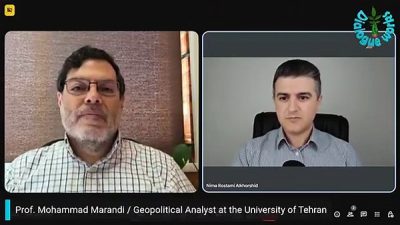
Seyed M. Marandi: U.S. Military DIVIDED? Iran’s Secret Defense EXPOSED
or go to
Aletho News Archives – Video-Images
From the Archives
‘Israel sees Iran as obstacle to its policies’
Press TV – August 25, 2017
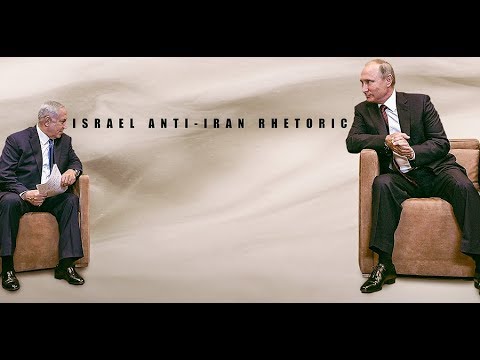
Prime Minister Benjamin Netanyahu has said that Israel felt threatened by Iran’s growing influence in the Middle East. Netanyahu expressed his Iranophobic view in a meeting with Russian President Vladimir Putin in Russia’s Black Sea resort of Sochi on Wednesday. Press TV has asked Scott Rickard, former American intelligence linguist from Tampa, Florida, and Brent Budowsky, a columnist at The Hill from Washington, to give their thoughts on the issue.
Rickard said Tel Aviv is concerned about the fact that the regime could not carry out its old project to spread sectarian divisions and pave the way for dismemberment of the countries in the Middle East region because of the Iranian-led resistance against Israeli policies, not only in the occupied territories of Palestine but also in the whole region.
“Iran is not a threat to Israel whatsoever. The threat that Israel sees is the fact that their Oded Yinon Plan is being put to a hold by Iran,” the intelligence linguist said on Thursday night.
“They (the Israelis) look at Iran as a threat only because they have no influence on their governments and Iran is autonomous and is not under the Zionist influence,” he added.
Since the victory of the Islamic Republic of Iran in 1979, Tehran has been critical of Israel’s policies in the region, whereas “no leaders [of other states] even dared to speak out against Zionism,” Rickard argued. … continue
Blog Roll
 Aletho News
- Trump Claims Ceasefire, Reopening of Strait of Hormuz Agreement with Iran
- Israeli tank fire killed UN peacekeeper in Lebanon, UNIFIL investigation finds
- Russia, China block Bahrain-sponsored UN resolution on Strait of Hormuz
- The US-Israeli War on Science is an Assault on our Future
- Trump’s Promise to Bomb Iran ‘Like Never Before’ Faces Brutal Logistics — Expert
- Germany seeks to restrict stays abroad for men of fighting age – Berliner Zeitung
- Evidence points to Ukraine being behind TurkStream attempted sabotage, but that should come as no surprise
- Sri Lanka secures supplies of Russia oil – minister
- Nations across Asia strike direct deals with Iran for Hormuz passage
- IRGC commander declares ‘new phase’ of reprisal attacks against aggressors
- If Americans Knew
- The war the US is fighting for Israel could cost trillions
- ‘Cigarette Burns, Nail Wounds’: Toddler Tortured in Gaza to Coerce Father
- Trump Says US Sent ‘a Lot of Guns’ to Protesters in Iran
- Israeli forces destroy 17 UN peacekeeper cameras in south Lebanon
- US-Israeli strikes ‘completely destroy’ synagogue in Tehran
- Archbishop for US Military Says Iran War Is Unjust Under Catholic Teaching
- Iranian leaders’ Open Letters to the American People
- Trump says Iranians appreciate bombs, WHO warns of nuclear risks – Daily Update
- U.N. experts demand Israel release prominent Gaza doctor after reports of ‘severe torture’
- Israel’s Latest Genocide Is Against the Shias of Lebanon. Why Is the World Silent?
- No Tricks Zone
- An Inconvenient Tree: Uncovered In Alps… Europe Much Warmer Than Today 6000 Years Ago
- New Study Reports A 60% Slowdown In Greenland’s Ice Loss Rate In The Last Decade
- Low Intensity Tornado Wrecks Major Solar Farm, Creating A Potential Toxic Dump
- New Study Finds Warming Saves Lives…Cold Temperatures 12 Times More Deadly Than Excess Heat
- German Science Blog Accuses PIK Climate Institute Of Hallucinating Climate Tipping Points
- Devastating Assessment Of Comirnaty Vaccine By Former Senior Pfizer Europe Toxicologist
- New Study: CO2 Is ‘Effectively Negligible’ As An Explanatory Climate Change Factor Since 2000
- Former Pfizer Toxicologist Dr. Helmut Sterz Tells Bundestag Hearing Pfizer Vaccine Should Have Never Been Approved
- Energy Expert: Germany’s Nuclear Phaseout Was A “500 Billion Euro Mistake”
- New Research: South Australia’s Mid-Holocene Sea Surface Temperatures Were 4°C Warmer Than Today
 Aletho News