Telegram comments on founder’s arrest
RT | August 25, 2024
Telegram abides by EU laws and its founder, Pavel Durov, “has nothing to hide,” the company said after Durov was arrested in Paris. Telegram said that it is “awaiting a prompt resolution” of the situation.
Durov was taken into custody at Paris-Le Bourget Airport on Saturday, immediately after arriving from Azerbaijan by private jet. According to French media, prosecutors in Paris plan to charge the 39-year-old with complicity in drug trafficking, pedophilia offenses, and fraud, arguing that Telegram’s insufficient content moderation, its strong encryption tools, and its alleged lack of cooperation with police allow criminals to flourish on the app.
Telegram dismissed these arguments on Sunday, stating that the company follows EU laws and that its content-moderation policies are “within industry standards.”
“Pavel Durov has nothing to hide and travels frequently in Europe,” the statement continued, calling it “absurd to claim that a platform or its owner are responsible for abuse of that platform.”
“Almost a billion users globally use Telegram as means of communication and as a source of vital information,” the company concluded. “We’re awaiting a prompt resolution of this situation.”
Telegram is headquartered in Dubai, although the company appointed a Belgian legal representative earlier this year to manage its compliance with EU law. Telegram has also complied with the bloc’s anti-Russian sanctions by blocking access to Russian news outlets, including RT.
However, Durov has consistently refused to hand over user data to law enforcement agencies, or to install so-called ‘backdoors’ so that these agencies can surveil conversations on the app. Speaking to RT on Sunday, Durov’s former spokesman suggested that French authorities could have made the arrest on behalf of the US, after Durov publicly accused American intelligence agencies of pressuring him into giving them access to Telegram user data.
Durov arrest exposes ‘tyrannical face’ of France – party leader
RT | August 25, 2024
Florian Philippot, the leader of France’s Patriots (Les Patriotes) party, has slammed the government of French President Emmanuel Macron as “lunatics” over the detention of Telegram founder and CEO Pavel Durov.
According to French media, the Russian entrepreneur, who also has French and UAE citizenship, was detained at Paris-Le Bourget Airport on Saturday and is set to appear in court on Sunday evening. The French authorities had reportedly issued an arrest warrant for Durov, arguing that insufficient moderation allows for Telegram to be widely used by criminals.
“France offers its tyrannical face to the world,” Philippot said of Durov’s arrest in a post on X (formerly Twitter) on Sunday. “We must free ourselves from these lunatics,” he added, referring to Macron’s government.
The politician also wondered if X owner and CEO of Tesla and SpaceX “Elon Musk is [also] thrown in jail if he sets foot in France, for disobeying the European DSA (Digital Services Act) censorship regulations.”
The head of Russia’s Safe Internet League, Ekaterina Mizulina, suggested earlier that the French authorities hadn’t acted independently in their decision to detain Durov. “It is obvious that the arrest is an attack on TON (a blockchain-based platform originally developed by Telegram’s creators) in which major Russian companies have invested. That is, in part, a continuation of the US sanctions policy” against Russia, she said.
Also on Sunday, the deputy speaker of the Russian parliament, Vladislav Davankov, called upon the French authorities to release Durov. The tech entrepreneur’s arrest “could be politically motivated and used to gain access to the personal information of Telegram users,” which Moscow cannot allow, he warned in a post on Telegram.
US trampling on free speech – David Sacks on Durov’s arrest
RT | August 25, 2024
The US has violated its own constitutional freedoms by forcing its NATO ally France to arrest Telegram CEO Pavel Durov, American investor David Sacks has suggested.
Writing on X (formerly Twitter) on Sunday, Sacks slammed the detention of Durov at a Paris airport, reportedly on charges related to his alleged complicity in fraud, drug trafficking, cyberbullying, and promoting terrorism.
In an apparent nod to the rumored US role in the arrest, Sacks wrote: “Using allied countries to circumvent First Amendment protections is the new Rendition.” The US Constitution expressly protects freedom of speech and makes no distinction between citizens and people from other countries.
In April, Sacks denounced a US law that would ban the video-sharing platform TikTok if its China-based developer ByteDance refused to sell it within 12 months. At the time, the investor suggested that after the crackdown on TikTok, Telegram, X and the video platform Rumble could end up in Washington’s crosshairs.
Meanwhile, the French move to arrest Durov was also criticized by Tesla and Space X CEO Elon Musk, who launched the hashtag #FreePavel, suggesting that the pressure on freedom of speech could worsen. “POV: It’s 2030 in Europe and you’re being executed for liking a meme,” he quipped. He also agreed with a user who wondered if X could be the next to come under fire.
In an interview with conservative American journalist Tucker Carlson which was released several months ago, Durov recalled that he had been getting “too much attention” from US law enforcement agencies while he was in the country. He said that while he was not under any legal scrutiny, he had to regularly deal with US authorities eager to get more insight into how Telegram worked.
The tech entrepreneur also claimed that law enforcement had attempted to recruit one of his employees to install a backdoor in the messenger that would allow them, or any other government, to spy on Telegram users.
Telegram CEO Durov’s Arrest Shows West Unleashing Witchhunt Against Truth-Tellers
By Ekaterina Blinova – Sputnik – 25.08.2024
Pavel Durov’s arrest is part of a broader crackdown on truth-seekers and freedom of speech in the West. According to Hong Kong-based political analyst Angelo Giuliano, Western elites are attempting to exert total control over the media narrative, as he explained to Sputnik.
Telegram CEO Pavel Durov was arrested shortly after landing at Bourget airport near Paris late on Saturday and taken into custody by the French authorities.
“There is actually an oppression of journalists and freedom of speech in the West and especially in the EU,” Angelo Giuliano, a Hong Kong-based political and financial analyst, told Sputnik, commenting on Telegram CEO Pavel Durov’s arrest in France.
Giuliano also pointed to the FBI’s raid on the home of Scott Ritter, a former United States Marine Corps intelligence officer, and mentioned that late Chilean-American journalist Gonzalo Lira died while in Ukrainian custody.
The analyst also drew attention to the arrest of independent journalist Richard Medhurst by British police on August 15 at London’s Heathrow Airport. The journalist known for his critical coverage of the US, British and Israeli role in the ongoing bloodshed in Gaza, was arrested under Section 12 of the Terrorism Act (2000).
When it comes to Durov, the Telegram founder is accused of allegedly enabling criminal activities through insufficient moderation of the platform, the French press claims, adding that he faces up to 20 years behind bars.
In his April interview with US journalist Tucker Carlson, Durov suggested that he is a target for Western intelligence services. He said that US cybersecurity officials previously attempted to create a backdoor in his app. Durov stressed that such a backdoor would enable tighter government control over social media platforms.
“I wouldn’t be surprised that they would try to get their hands on Telegram, to strike a deal with Telegram saying, well, we release you, you give us a price and maybe we can buy you,” Giuliano said, presuming that the arrest serves as a sort of “bargaining chip.”
Freedom of speech has become very “inconvenient” for the West, according to the pundit: “What they say clearly at the EU is that they need to control the narrative, because that’s everything. The narrative you control controls the mind of the people.”
Giuliano noted that just three years ago, Durov became a French citizen, indicating that the Telegram founder was in good standing with the French government. In 2023, French media reported that Paris had chosen “an exceptional and highly political procedure” to grant Durov citizenship.
This abrupt shift in the French authorities’ stance has raised questions, Giuliano pointed out.
The pundit suggests that Durov’s arrest rings alarm bells for people like Tesla CEO and X owner Elon Musk: “Keep in mind that Elon Musk hasn’t actually complied with EU regulation, and in reality he would be de facto also another target.”
The arrest of the Telegram CEO is “really a red flag overall for journalists and for whoever is actually spilling the truth, inconvenient truth,” Giuliano concluded.
Top Russian MP urges France to release Telegram founder Durov
RT | August 24, 2024
Russia must demand the immediate release of Telegram founder Pavel Durov who has been reportedly detained in France, Deputy Speaker of the Russian State Duma Vladislav Davankov has said.
According to French media, the 39-year-old dual Russian-French national was detained on Saturday at the Paris-Le Bourget airport. The French authorities reportedly believe that the lax moderation rules and encryption technology had allowed the widespread use of the Telegram messager by criminals.
Writing on Telegram in the early hours of Sunday, Davankov defended Durov’s record. “Hardly anyone else has done more for the development of digital services in Russia and the world,” he argued.
“We need to get him out of there. I have urged Russian Foreign Minister Sergey Lavrov to appeal to the French authorities to release Pavel Durov from custody,” the politician wrote on Telegram. “His arrest could be politically motivated and used to gain access to personal information of Telegram users. We cannot allow this.”
In case Paris refuses to release Durov, “everything must be done to transport him to the UAE or Russia – if he agrees, of course,” the politician said.
He dismissed the allegations against Durov, saying that illicit activity can be found on all messaging platforms. “But nobody arrests or jails their owners. And it shouldn’t happen this time.”
Foreign Ministry spokeswoman Maria Zakharova said on Sunday that the Russian Embassy in Paris was working on a response to the situation with Durov.
Durov was born in St. Petersburg. In 2006, he founded the social media platform VK, often described as ‘Russia’s Facebook.’ In 2013, he launched Telegram, which currently has more than 950 million monthly active users.
Durov left Russia in the mid 2010s and has mostly lived in the UAE. He became a French national in 2021.
Telegram founder Durov arrested by French police
RT | August 24, 2024
The founder of the messaging app Telegram, Pavel Durov, has been detained after he arrived in Paris on a private jet, local broadcaster LCI has reported.
Durov, who obtained a French passport in 2021, was arrested at Paris-Le Bourget Airport at around 8pm local time, the outlet said on Saturday.
His jet arrived in the French capital from Azerbaijan. The 39-year-old had been accompanied by a woman and his bodyguard, it added.
According to LCI, the French authorities issued an arrest warrant for the tech entrepreneur as part of a preliminary investigation. Paris believes that Telegram’s insufficient moderation, its encryption tools and alleged lack of cooperation with police could make Durov complicit of in drug trafficking, pedophilia offenses and fraud, it said.
Broadcaster TF1 claimed that Durov is going to appear before a judge tonight. He could be facing up to 20 years in prison, it added.
France, Spain install radars in south Lebanon to ‘monitor Hezbollah’: Report
The Cradle | August 21, 2024
French and Spanish radars installed by UNIFIL in the south of Lebanon are being used to target the resistance on behalf of Israel, Lebanese daily Al-Akhbar reported on 15 August.
“A week ago, an Israeli drone targeted two Hezbollah fighters in Naqoura. Eyewitnesses said the drone was not noticed or heard before the surprise attack, which directed attention to the new French radar that was raised above the UNIFIL base in Mount Naqoura, and whether it was used to monitor the movements of the resistance,” Al-Akhbar wrote.
The French radar, the “marine radar” as the daily refers to it, was installed in the south two weeks ago at the request of UNIFIL Chief of Staff, Frenchman Cédric du Gardin, it says.
“Before the end of his term at the end of last July, the former French Chief of Staff sent a letter ‘reprimanding his officers because of their failure to detect any drone, air defense missile or rocket’ launched by the resistance,” the report adds.
Prior to this, a Spanish radar was installed in the Blat Plain in southern Lebanon’s Marjayoun.
Israel “asked the current UNIFIL commander, the Spaniard Arludo Lazarro, to install the radar immediately after his appointment two years ago. However, local Lebanese pressures postponed the decision until Army Commander Joseph Aoun and the government expressed their approval of it, with Defense Minister Maurice Slim refusing,” sources told the newspaper.
The Spanish radar monitors the occupied Shebaa Farms and Kfar Shuba hills on the Lebanese border.
The two radars “complement the French radar system installed since after the July 2006 aggression on Lebanon” in the vicinity of Bint Jbeil, the daily reported.
According to the report, UNIFIL’s navy has also joined the intelligence campaign to make up for the blind spot created by Hezbollah’s attacks on Israeli surveillance sites and equipment.
“A German warship, which has been in command of UNIFIL’s naval forces since 2001, is stationed off the coast of Naqoura. No one knows who is boarding or disembarking off of it or using it for reconnaissance, especially in the area extending from Tyre to Naqoura, which has witnessed several assassinations,” field sources told the newspaper.
UNIFIL has been operating in Lebanon since the first Israeli invasion of 1978. Despite this, their forces failed to end an 18-year occupation and have attempted to expand their areas of influence without proper authorization.
Many in Lebanon have for years accused UNIFIL of acting to suppress resistance in the south on behalf of Israel.
Last year, Washington and London had been trying, on behalf of Israel, to secure Lebanon’s approval for a UN Security Council resolution ensuring freedom of movement for UNIFIL across the country, without accompaniment from the Lebanese army as is the law.
“The US and Israel were unable to implement the freedom of movement clause despite the enormous pressure on Lebanon,” Munir Shehadeh, Lebanon’s former government coordinator for UNIFIL, told Al-Akhbar.
Israel expects US and other allies to help bomb Iran
RT | August 17, 2024
Israel’s Foreign Minister, Israel Katz, has stated that his country expects not only the United States but also its allies, including Britain and France, to assist in offensive operations against Tehran in the event of direct conflict.
Katz made these comments during a meeting with British Foreign Secretary David Lammy and French Foreign Minister Stéphane Séjourne in Jerusalem on Friday, according to a Hebrew-language statement from his office.
”Israel expects France and Britain to publicly clarify to Iran that it is unacceptable for it to attack Israel, and that if Iran attacks, the US-led coalition will join Israel not only in defense but also in an attack against significant targets in Iran,” the statement said, as cited by the Times of Israel.
Katz reiterated in a post on X that he made it “clear” to his colleagues that they should publicly announce their countries “will stand with Israel not only in defense but also in striking targets in Iran.”
The French and British diplomats downplayed these assertions, with Sejourne telling reporters that it would be “inappropriate” to discuss any “retaliation or preparation for an Israeli retaliation” amid diplomatic efforts to negotiate a deal to end the Gaza war. A joint French-British statement following the meeting also made no mention of any anti-Iran coalitions.
“We have urged Iran and its proxies to stand down the ongoing threats of military attack against Israel. We have also stressed to all parties that the spiral of escalating reprisals must end,” they said in their only reference to Tehran.
The meeting in Jerusalem occurred shortly before the latest round of indirect ceasefire talks ended without breakthroughs, though there were promises to return to the negotiating table next week. The war between Israel and Hamas has dragged on for 10 months since the militant group staged a deadly incursion, resulting in approximately 1,100 deaths and around 200 hostages. The massive Israeli response has claimed over 40,000 Palestinian lives, according to Gaza health officials.
The risk of wider conflict in the Middle East was drastically exacerbated by the assassination of Hamas Political Bureau Chief Ismail Haniyeh, who served as the Palestinian armed group’s lead negotiator in indirect talks with Israel. He was killed in Tehran on June 31, hours after attending the inauguration of Iranian President Masoud Pezeshkian. Iran promised to inflict a “harsh punishment” on Israel, which has neither acknowledged nor denied any involvement in the killing.
The US has deployed additional warships and a submarine to the Middle East to protect the Jewish state from potential attacks, but it remains unclear whether Washington has agreed to any plans to bomb Iran.
In April, when Iran fired hundreds of missiles and drones at Israel in retaliation for the bombing of its embassy in Damascus, US fighter jets and warships helped intercept many of the incoming projectiles. However, this was a purely defensive operation, with no direct counterstrike on targets inside Iran.
Iran: E3 demands are public support for Israeli crimes
Al Mayadeen | August 13, 2024
Iranian Foreign Ministry spokesperson Nasser Kanaani responded to the E3’s (UK, France, Germany) statement on Tuesday, underscoring that Iran is “steadfast and resolute in exercising its right to protect its national security and territorial integrity” and “does not seek permission from any external party.”
In a press statement, Kanaani added that the European Troika’s demand for Iran not to respond to the “Israel’s” and punish it, “a crude demand that lacks any political logic and contradicts international laws and resolutions.”
He emphasized that the European trio’s statement reflects a public endorsement of the Zionist entity’s crimes and regional terrorism. He added that “if the European Trio genuinely seeks to promote peace in the region, it must, at the very least, condemn the Zionist entity’s actions and its genocidal activities in Gaza.”
Kanaani also pointed out that “the indifference of Western countries towards the crimes of the Israeli entity and its ongoing genocide of the defenseless Palestinian people, and the failure to hold it accountable, has encouraged it to escalate its atrocities.”
He explained that “Germany, France, and Britain have not taken any measures to halt the Zionist entity’s ongoing brutal crimes, and international organizations have similarly failed to deter these actions,” stressing that “both the West and the Security Council must take decisive responsibility to stop the severe Israeli atrocities in Gaza.”
On Monday, the leaders of France, Germany, and the United Kingdom issued a joint statement in which they called on Iran and its allies, likely the Ansar Allah movement in Yemen and the Hezbollah Resistance movement in Lebanon, to refrain from taking any actions that would “further escalate regional tensions and jeopardize the opportunity to agree on a ceasefire and the release of hostages.”
The statement held them responsible “for actions that jeopardize this opportunity for peace and stability” while disregarding the actions committed by “Israel”
Mali Cuts Ties with Ukraine Over Kiev’s Support for Al-Qaeda
By Kyle Anzalone | The Libertarian Institute | August 6, 2024
Mali has severed its diplomatic ties with Ukraine following an attack by the local Al-Qaeda affiliate on Malian forces. Kiev called the move short-sighted.
Late last month, opposition forces, including an al Qaeda affiliate in the Sahel, Jama’at Nusrat al-Islam wal-Muslimin (JNIM), killed scores of Malian soldiers and mercenaries from the Russian Wagner Group that is supporting Bamako.
Andriy Yusov, a representative of Ukraine’s Security Service (SBU), said Kiev aided JNIM in its assault. “The rebels received the necessary information, which enabled a successful military operation against Russian war criminals.” An estimated 84 Russian contractors were killed, along with nearly 50 Malian soldiers.
Bakamo expressed “deep shock” over the “subversive remarks” and received the statement as an admission of Kiev’s involvement in the slaughter of its soldiers.
Malian government spokesman Colonel Abdoulaye Maiga denounced Ukraine for supporting JINM. He said Yusov’s remarks confirmed “Ukraine’s involvement in a cowardly, treacherous and barbaric attack by armed terrorist groups.”
“Mali condemns the hostility of the authorities of Ukraine who do not observe that Mali has always called for a peaceful settlement of the crisis between the Russian Federation and Ukraine,” he added.
Kiev responded by claiming Bakamo failed to provide evidence proving Ukraine backed the terrorists. “It is regrettable that … Mali decided to sever … relations … without conducting a thorough study of the facts and circumstances of the incident … and without providing any evidence of Ukraine’s involvement in the said event,” a statement from the Ukrainian Foreign Ministry said.
Kiev added it has the right to take all necessary political and diplomatic retaliations.
Following the 2011 American-backed uprising in Libya that ousted long-time leader Muammar Gaddafi, jihadist groups spread into neighboring countries and throughout the African Sahel. In the following decade, Mali experienced several coups as the jihadists destabilized the region.
During the latest coup in 2021, Assimi Goïta swept into power in Bakamo. Part of the policy of the junta has been to expel France, Mali’s long-time colonial ruler. Under Goïta, Mali has stepped up ties with Moscow including the private military firm Wager.
Paris Olympics epitomize toxic Western elitism and disconnect from real world
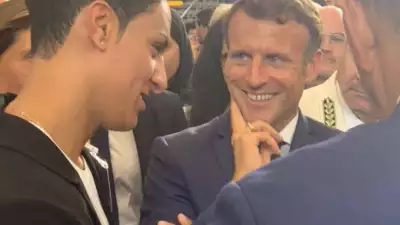

Macron has boasted about the Paris Games being a “crazy idea being made real”
Strategic Culture Foundation | August 2, 2024
The Paris Summer Olympic Games opened last Friday to a global controversy with the organizers accused of offending billions of Christians and Muslims around the world through profane depictions of Jesus Christ (a revered prophet in Islam) surrounded by drag queens.
It wasn’t just the alleged scurrilous debasement of Da Vinci’s iconic Last Supper tableau. The entire opening ceremony of the XXXIII Olympiad was a kitsch spectacle that seemed to be reduced to a tawdry Gay Pride event. The Paris 2024 organizers claimed that the theme was meant to convey “inclusiveness” and humanitarian tolerance – although, indicative of fault, they later offered a groveling apology for offending.
The controversy continued during the first week of sporting events when the triathlon swimming in the Seine River was initially canceled due to dangerous pollution levels and then ordered to go ahead despite concerns for the safety of participants. Athletes complained that they were forced to swim through sewage and rat-infested waters so that the French organizers would not lose face over a public relations disaster.
The pollution fiasco could serve as a metaphor for how Western elitist politicians have lost the plot on the realities of today’s world. No amount of fancy French perfumery can hide the stink behind the cheap politicization of the Games.
After spending over $1.5 billion on purportedly cleaning it up, the Seine is as toxic from contamination as it ever was since public bathing was banned in the river a century ago.
Western politics has likewise become a deceitful charade and parody of liberalism. No amount of whitewashing can conceal the burgeoning detritus of lies and corruption emanating from Western capitals. On the one hand, politicians talk about the lofty values of democracy and rules-based order, while on the other hand, they drop bombs on civilians with rainbow flags painted on the warheads. Or they sponsor NeoNazi killers in Ukraine wearing Gay Pride logos.
Uniting humanity through sports is supposed to be the Olympian principle of the modern Games which first took place in 1896 in Greece as conceived by Frenchman Pierre de Coubertin. Over the decades, the world’s foremost sporting event has been disrupted by wars and geopolitics, especially during the Cold War years when the Games were boycotted in 1980 and 1984. Despite the vagaries over the years, there was always a semblance of neutrality in international politics.
Not anymore. The current Paris Olympics have become flagrantly politicized. Russia and Belarus have been banned due to the conflict in Ukraine after the Western-dominated International Olympic Committee declared “solidarity with Ukraine”.
This is an absolute disgrace for the IOC and the Games. The hypocrisy is putrid. Never was it considered to ban the United States and its NATO allies over the many illegal wars that they engaged in, from the invasion and occupation of Iraq and Afghanistan, among other aggressions.
Arguably, the war in Ukraine is a proxy war waged by the U.S. and its NATO allies against Russia. The history of the conflict points to Western responsibility and calculated provocation. To define the conflict as solely down to “Russian aggression” is a dubious political position, one that the West promulgates but which is not shared by many other nations.
It is an abuse of its credentials for the IOC to adopt a partisan position on the Ukraine war.
The double standard is brazen when one considers that Israel is free to send its national delegation to the Olympics without any official reservations. Yet the International Court of Justice has ruled Israel’s conduct of hostilities in Gaza constitutes a genocide. It is a sordid spectacle when Israeli athletes are afforded untrammeled participation while their state has killed over 40,000 Palestinians, mainly women and children, during the past nine months of unrelenting violence. Western capitals have given the Israeli regime diplomatic cover and vital military support to conduct this genocide. The horrendous massacres in Gaza from refugee camps being blown up and whole families slaughtered in cold blood continue unabated while the Games are televised around the world.
The juxtaposition of this Western-enabled barbarism in Gaza amid Games that champion “diversity and tolerance” is too sickening and perverse for words. Indeed, one could say without any equivocation that the Paris Olympics are morally depraved given the abomination of mass murder in Gaza.
That the organizers of the Paris event seek to cover their proceedings with a veneer of supposedly sophisticated inclusion and humanitarianism is doubly obscene. The moral decadence is manifest in the blasphemous insults towards religious beliefs. Nothing is sacred, it seems, except Western notions of elitism. Criticism is not permitted without incurring petulant accusations of bigotry and ‘Transphobia”.
French President Emmanuel Macron has boasted about the Paris Games being a “crazy idea being made real”. One can say that again, with absolute contempt.
Macron and other Western political leaders are encumbered with narcissistic notions that they represent noble values of “liberal democracy”.
This is while Macron and his Western cohorts have recklessly fueled the slaughter in Ukraine and Gaza. Then they have the gall to ban Russia and Belarus from the Games.
The edifying concept of the Olympics has been debased to a gaudy propaganda show aimed at promoting pretensions of Western virtue.
However, the reality is that this is not a demonstration of supposed tolerance and inclusivity but rather an imposition of twisted Western elite ideology on the majority of humanity.
One might argue the toss about whether the offense against Christianity and Islam was an unfortunate mistaken interpretation of French artistic license.
But what is inarguable is the heinous hypocrisy demonstrated over the Western-enabled genocide in Gaza and the sanctioning of Russia over Ukraine.
No wonder many people around the world have lost the usual interest in the “Jeux Olympiques”. The Paris event has alienated much of the planet because of its cheap and dirty politicization.
The stink emerging from the River Seine – possibly the world’s biggest open sewer – is the groaning reality dump on Western duplicity and pretensions.
See Also:
Israel’s allies block Security Council statement condemning Tehran attack
The Cradle | August 1, 2024
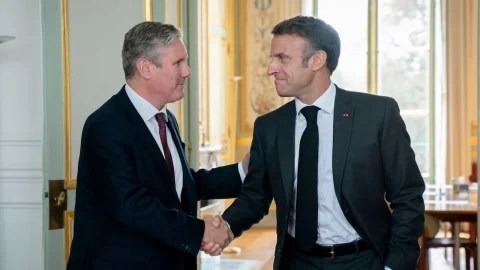
The US, UK, and France blocked a Russian-proposed statement at the UN Security Council (UNSC) condemning the assassination of Hamas politburo chief Ismail Haniyeh in Tehran, Iran’s envoy to the UN Amir Saeid Iravani said on 1 August.
“Russia’s proposed statement condemning Israel’s heinous act was blocked by the US, UK, and France,” Iravani told Russian media following an emergency UNSC meeting on Wednesday night.
“It is now absolutely necessary to hold the occupying [Israeli] regime accountable for the atrocities it committed,” the Iranian diplomat added. “This regime cannot be allowed to escape accountability and consequences for the violations it has committed.”
During the session, Iravani stressed that Tehran “reserves its inherent right to self-defense in accordance with international law” and said that “the responsibility of the United States as a strategic ally and main supporter of the Israeli regime in the region cannot be overlooked in this horrific crime. This act could not [have] occurred without the authorization and intelligence support of the US.”
Permanent UNSC members Russia and China strongly condemned Israel’s attacks on the Iranian and Lebanese capitals, blasting Tel Aviv for once more sabotaging Gaza ceasefire talks and pushing the region to the brink of all-out war.
“China is deeply concerned about the potential for this incident to further destabilize the region,” Fu Cong, China’s permanent representative to the UN, emphasized during the meeting. “China strongly opposes and condemns recent irresponsible actions, including Israel’s attacks on southern Beirut,” he added.
Fu also called on Tel Aviv to cease all military actions in Gaza and appealed to “influential countries” to “put more pressure and work more vigorously … to put out the flames of war in Gaza.”
Russia’s first deputy envoy to the UN, Dmitry Polyansky, also condemned Haniyeh’s killing, calling it an “attempt” to drag Iran into war.
“This provocative attack was carried out while the Hamas leader was in Iran on an official invitation to attend the inauguration ceremony of the President-elect of the Islamic Republic of Iran, Masoud Pezeshkian. Those behind this political assassination had to realize how dangerous the consequences could have been for the entire region,” Polyansky said.
“The misguided practice of targeted liquidations of prominent political and military figures is bringing the Middle East to the brink of a region-wide war,” the Russian diplomat added.
Feda Abdelhady Nasser, the deputy permanent observer of the State of Palestine to the UN, told the gathered diplomats that the global community “has a choice to make” between “peace and security” or letting “Israel drag us all to the abyss.”
“Israel has been the oppressor, tormentor, and murderer of Palestinians for decades, and it is the longstanding destabilizer of our region,” Nasser highlighted.
Lebanon’s Acting Permanent Representative to the UN, Hadi Hashem, contested Israel’s claims that the attack on the Beirut suburb of Dahye this week was an act of “self-defense.”
“Israel’s claim that it seeks to protect the population it occupies is a display of hypocrisy,” Hachem said, adding, “The real goal of Israel is to prolong and escalate the hostilities. And it is ironic that the killer of tens of thousands of children in Gaza sheds tears for the children of the occupied Syrian Golan.”
Similarly, Syria’s UN ambassador, Qusai al-Dahhak, stressed that “Israel is responsible for the crime in Majdal Shams” and noted that the territory is Syrian, accusing Israel of “weaponizing” the attack on the Druze community “to continue its aggression on the states of the region.”
Robert Wood, deputy US ambassador to the UN, called on UNSC members with influence over Iran “to increase pressure on it to stop escalating its proxy conflict against Israel and other actors.”
France and the UK took a similar line, reiterating a call for an “immediate ceasefire” in Gaza and condemning what they said was Iranian support for “destabilizing actors in the region.”
Featured Video
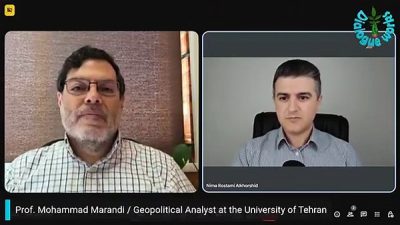
Seyed M. Marandi: U.S. Military DIVIDED? Iran’s Secret Defense EXPOSED
or go to
Aletho News Archives – Video-Images
From the Archives
‘Israel sees Iran as obstacle to its policies’
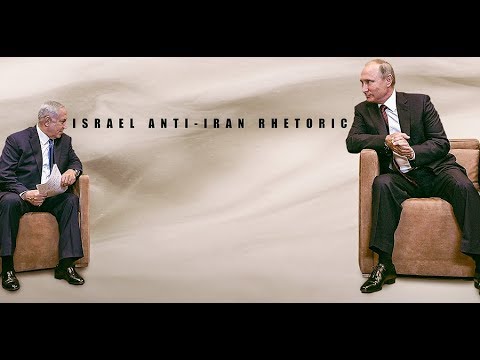
Press TV – August 25, 2017
Prime Minister Benjamin Netanyahu has said that Israel felt threatened by Iran’s growing influence in the Middle East. Netanyahu expressed his Iranophobic view in a meeting with Russian President Vladimir Putin in Russia’s Black Sea resort of Sochi on Wednesday. Press TV has asked Scott Rickard, former American intelligence linguist from Tampa, Florida, and Brent Budowsky, a columnist at The Hill from Washington, to give their thoughts on the issue.
Rickard said Tel Aviv is concerned about the fact that the regime could not carry out its old project to spread sectarian divisions and pave the way for dismemberment of the countries in the Middle East region because of the Iranian-led resistance against Israeli policies, not only in the occupied territories of Palestine but also in the whole region.
“Iran is not a threat to Israel whatsoever. The threat that Israel sees is the fact that their Oded Yinon Plan is being put to a hold by Iran,” the intelligence linguist said on Thursday night.
“They (the Israelis) look at Iran as a threat only because they have no influence on their governments and Iran is autonomous and is not under the Zionist influence,” he added.
Since the victory of the Islamic Republic of Iran in 1979, Tehran has been critical of Israel’s policies in the region, whereas “no leaders [of other states] even dared to speak out against Zionism,” Rickard argued. … continue
Blog Roll
 Aletho News
- Alberta Bill Would Fine Political Deepfakes $10,000 Without Satire Exemptions
- Iran declares ‘historic victory’ over US, says enemy forced to accept its proposal
- Trump Claims Ceasefire, Reopening of Strait of Hormuz Agreement with Iran
- Israeli tank fire killed UN peacekeeper in Lebanon, UNIFIL investigation finds
- Russia, China block Bahrain-sponsored UN resolution on Strait of Hormuz
- The US-Israeli War on Science is an Assault on our Future
- Trump’s Promise to Bomb Iran ‘Like Never Before’ Faces Brutal Logistics — Expert
- Germany seeks to restrict stays abroad for men of fighting age – Berliner Zeitung
- Evidence points to Ukraine being behind TurkStream attempted sabotage, but that should come as no surprise
- Sri Lanka secures supplies of Russia oil – minister
- If Americans Knew
- Thousands dead and neighborhoods razed to the ground: Aid agencies fear southern Lebanon is becoming the new Gaza
- The war the US is fighting for Israel could cost trillions
- ‘Cigarette Burns, Nail Wounds’: Toddler Tortured in Gaza to Coerce Father
- Trump Says US Sent ‘a Lot of Guns’ to Protesters in Iran
- Israeli forces destroy 17 UN peacekeeper cameras in south Lebanon
- US-Israeli strikes ‘completely destroy’ synagogue in Tehran
- Archbishop for US Military Says Iran War Is Unjust Under Catholic Teaching
- Iranian leaders’ Open Letters to the American People
- Trump says Iranians appreciate bombs, WHO warns of nuclear risks – Daily Update
- U.N. experts demand Israel release prominent Gaza doctor after reports of ‘severe torture’
- No Tricks Zone
- An Inconvenient Tree: Uncovered In Alps… Europe Much Warmer Than Today 6000 Years Ago
- New Study Reports A 60% Slowdown In Greenland’s Ice Loss Rate In The Last Decade
- Low Intensity Tornado Wrecks Major Solar Farm, Creating A Potential Toxic Dump
- New Study Finds Warming Saves Lives…Cold Temperatures 12 Times More Deadly Than Excess Heat
- German Science Blog Accuses PIK Climate Institute Of Hallucinating Climate Tipping Points
- Devastating Assessment Of Comirnaty Vaccine By Former Senior Pfizer Europe Toxicologist
- New Study: CO2 Is ‘Effectively Negligible’ As An Explanatory Climate Change Factor Since 2000
- Former Pfizer Toxicologist Dr. Helmut Sterz Tells Bundestag Hearing Pfizer Vaccine Should Have Never Been Approved
- Energy Expert: Germany’s Nuclear Phaseout Was A “500 Billion Euro Mistake”
- New Research: South Australia’s Mid-Holocene Sea Surface Temperatures Were 4°C Warmer Than Today
 Aletho News