A tale of two cities: have we seen a ‘surge to the Left’ in British and French elections?
By Gilbert Doctorow | July 9, 2024
In the past five days, parliamentary elections were carried out in Britain and in France. The results were dramatic, attracting a great deal of media attention.
In this brief essay, we will look behind the bald facts of vote counts and strive to make sense of where the UK and France are headed. What does the latest news tell us about the ‘managed democracies’ in Europe? I will direct particular attention to the different electoral and governance systems operating in Britain and France, given that these respective systems were so influential in delivering the results we are seeing?
*****
The sitting governments in both France and the United Kingdom were overturned in the past week. Looking at the winners, one might conclude a new or updated Left has won in both elections. If so, this runs directly counter to the media bugbear of resurgent populism that supposedly endangers democracy. Should the winners break out the champagne?
In Britain, Labour won a landslide victory, taking absolute control of Parliament and ending 14 years of Tory chaos and misrule. In the American vernacular, British voters were given the opportunity to ‘throw the bums out’ and they availed themselves of it. Tory leader and incoming Prime Minister Keir Starmer achieved this success by having expelled from the party the genuinely Leftist former leader Jeremy Corbyn and taken up the winning ‘New Labour’ centrist position first defined by former Prime Minister Tony Blair.
Some of the more odious former or present Tory ministers, such as the holder of the record for shortest time serving in 10 Downing Street, Liz Truss, lost their seats in Parliament.
In France, Macron’s party, or ‘movement,’ yesterday lost its tenuous hold on parliament, coming in second to the New Popular Front, as the united Left parties call themselves, in a three-way race. Macron and his supporters could savor a victory of sorts by having risen from the ashes of the European Parliament voting on 6 June and of the first round of balloting for their national parliament a week ago, when they appeared to enjoy no more than 15 – 20% of voter support. Now they hold nearly a third of parliamentary seats and can hope to forge a coalition with the united Left parties to keep their sworn enemies, the so-called ‘Extreme Right’ National Rally of Marine Le Pen, away from the levers of power. The outcome is what political commentators call a ‘hung parliament’ in which two of the three rival blocs of deputies will try to form a ruling coalition while the President tries to stand above the bickering and back-stabbing while exercising near-dictatorial powers of legislating by decree.
That there will be a lot of bickering is beyond doubt: the single most prominent voice in the New Popular Front is that of Jean-Luc Mélenchon, head of the France Unbowed party. He is the embodiment of anti-capitalist spirits within the country, and though he claims that the Left is ready to govern, and though he or one of his allies may well be tapped by Macron to form a cabinet, it is hard to see how parliament and president can cooperate on anything whatsoever in the days and months ahead. It is nearly certain that France will continue its descent from relevance within the EU and within the world at large that the dimwitted and cowardly François Hollande oversaw from his CIA-stage managed electoral victory back in 2012 onwards. In his years in office, Macron has tried repeatedly to rescue the country from its descent by one failed initiative after another.
*****
The opposing principles of the electoral and governance systems in Britain and France are ‘first past the post’ in the former, where victory is handed in each district to the candidate with the greatest number of votes, and inclusive, proportional representation in government of the latter wherein seats are reserved for representatives of minorities in the voting public. I say this in the full knowledge that the coalition governments which are the almost inevitable consequence of power sharing schemes and are widely practiced across the Continent, are the rare exception, not the rule in France. In France, it has been customary for one party to hold an absolute majority in parliament and to form a cabinet of ministers that shares the same policy priorities and is chosen from among those prepared to assume power at any time in what the British call a ‘shadow cabinet.’
The strength of the British system is that it makes possible sharp changes in direction of government policy when the public is persuaded that the powers that be are not functioning in their interests. The weak point is that given the often low levels of voter turn-out and the share of votes cast held by the winning party relative to all votes, the incoming government may actually be said to represent a very small percentage of all eligible voters. Margaret Thatcher, for example, dramatically changed the direction of the British government while having enjoyed no more than 25% of the popular vote.
In the given case of the British elections on 4 July, something similar occurred. It has been widely commented by political analysts, and stated most succinctly and pointedly by the leader of the Reform UK party Nigel Farage, that the vote for Labour was not so much attributable to support for Labour as it was a rejection of the Tories. By Farage’s estimate, perhaps half of the Labour vote falls into this category, so that the actual support level of Labour and its policies may have been no more than 18% of the electorate. Of course, this detail is swept under the carpet in the headlines and opening paragraphs of the reports we read in the press and see on mainstream television.
The strength of the Continent-wide system of power sharing and coalitions is its ‘progressive’ appearance, its very inclusiveness. Inclusiveness, let us remember, is the new divide between Conservatives and Liberals, whether it goes by the name ‘identity politics’ or not. It long ago replaced policies for how you divide up the economic pie among contending strata of the population. On the Continent, many different parties get to share in the responsibilities and spoils of power.
I put the accent on ‘spoils,’ because I maintain that coalitions are a formula for institutionalized corruption. Governments are formed by back-room deals among the various parties in the agreed coalition. Ministerial portfolios are allocated with scant attention to the competence of the appointees for the given post, looking instead to the need to reward top party personalities for their adherence to the coalition. And the policies set out may well be in sharp contradiction with one another, meaning implementation can well be inconsistent and ineffective. There can be no better illustration of the pitiful results of coalition building than the current federal government of Germany, where ill-educated and wholly incompetent ministers such as Annalena Baerbock at Foreign Affair and Economy Minister Robert Habeck are a disgrace to the good name of European statesmen and women from generations past.
Let me emphasize here that a hung parliament was precisely the wish of Macron and his immediate entourage when they understood that there was no chance of their own list of candidates holding onto power alone and there was every risk of Le Pen getting an absolute majority. The pro-Macron forces of French politics are strongly pro-market, as one would expect from a leader who entered politics after making his career in the counting rooms of the Rothschild bankers and brokers. Yet, out of purely opportunistic calculations, in the week between the first and second rounds of balloting, they reached agreement with the New Popular Front on which of the two would withdraw their candidate from the race in given electoral districts so as to better ensure victory over Le Pen’s party there. It worked, but will the resulting parliament work? That seems not to interest M. Macron at this moment.
*****
In his victory speech, following official release of the vote results, Keir Starmer twice made the remark that in power he will place ‘country above party.’ Emmanuel Macron and his allies have pursued the opposite, party above country, and France will be the worse for it.
But then again, we in the pro-Sovereignty, anti-globalist, anti-supranational bureaucracy Opposition can only say ‘the worse, the better.’
One thing is certain in France: the country will be rent with internal discord at the highest levels of government. The Fifth Republic has survived periods of ‘cohabitation’ between a President of one party and set of policy priorities and a parliamentary majority held by another party with different policy priorities. It has not experienced the cohabitation with a hung parliament that we see now.
As regards foreign policy, our newspapers today speak of the blow to Israeli interests that the approach to power by Mélenchon with his pro-Palestinian bias signifies. We hear less about what the electoral outcome in France signifies for the war in and about Ukraine. A victory by Le Pen would certainly have put a check on any further French military commitments to Kiev, and possibly would have led to French withdrawal from NATO. For the moment, that very possibility has been eliminated. Nonetheless, a weak and divided France, such as we shall see in the months ahead, is good news for those of us who wish to see an end to the spineless conformism at the top of European Institutions leading us all towards Armageddon.
Regrettably, in Britain there will be no change from the pandering to Washington’s worst instincts and unlimited support for the dictator in Kiev. The only voice in British politics who stands for reason on relations with Russia is Nigel Farage. It is some small consolation that Farage has won a seat in Parliament, even though the 15% of the popular vote that his party achieved has not been rewarded by more than a handful of seats.
Postscript: One reader has brought to my attention the fact that France in fact has a first past the post as opposed to the proportional representation system so common elsewhere on the Continent. Accordingly I shift my emphasis elsewhere in the French situation and say that the outcome is uniquely due to Macron’s opportunism and tactical thinking at the expense of strategic thinking and patriotism; he has engineered a three way split in the lower chamber to keep Le Pen from power while knowingly making Franch ungovernable and returning the country to the instability it suffered during the Fourth Republic.
©Gilbert Doctorow, 2024
French Left-wing Coalition Emerges Victorious in Parliamentary Elections
Al-Manar – July 8, 2024
The left-wing coalition, New Popular Front, emerged victorious in the French parliamentary elections, securing 182 seats in parliament.
The French Ministry of the Interior announced the final results on Monday, revealing that President Emmanuel Macron’s coalition, Ensemble, came in second place with 168 seats, while Marine Le Pen’s far-right National Rally party trailed behind with 143 seats. The Republican Party followed with 45 seats, leaving the rest of the participating parties with 39 seats collectively.
With no party achieving an absolute majority, attention turned to Jean-Luc Mélenchon, leader of the La France Insoumise party, who demanded recognition of the State of Palestine following the coalition’s victory.
Mélenchon now faces criticism for his stance on the Gaza conflict, with accusations of antisemitism hurled at him. Despite this, he remains firm in his calls for change and has demanded the resignation of Prime Minister Gabriel Attal.
Internationally, leaders such as Venezuelan President Nicolas Maduro, Colombian President Gustavo Petro, Brazilian President Lula da Silva, and former Bolivian President Evo Morales have all expressed their support and congratulations for the left’s victory in France, viewing it as a step towards global progress and unity among progressive forces.
The outcome of the French parliamentary elections has sent shockwaves throughout the political landscape, with the left-wing coalition’s win marking a significant shift in power and setting the stage for a new era in French politics.
Niger, Burkina Faso, Mali sign treaty to become confederation
Al Mayadeen | July 7, 2024
“This summit marks a decisive step for the future of our common space,” Capt. Ibrahim Traore, the leader of Burkina Faso, wrote on X.
The military-led governments of Mali, Burkina Faso, and Niger convened their first joint summit on Saturday in Niamey, the capital of Niger. During this historic meeting, they announced the formation of a confederation of the three Sahel states.
In their inaugural summit since coming to power, the leaders adopted a joint statement outlining a treaty to establish the confederation.
“This summit marks a decisive step for the future of our common space. Together, we will consolidate the foundations of our true independence, a guarantee of true peace and sustainable development through the creation of the ‘Alliance of Sahel States’ Confederation,’” Capt. Ibrahim Traore, the leader of Burkina Faso, wrote on X.
Tensions with ECOWAS persist
The summit appears to signal a departure from the Economic Community of West African States (ECOWAS). Tensions between the Sahel nations and ECOWAS escalated after Gen. Abdourahamane Tiani seized power from the elected President Mohamed Bazoum in a coup in Niger last July. In response, ECOWAS imposed sanctions on Niger and threatened intervention, further straining relations.
“The AES (Alliance of Sahel States) is full of enormous natural potential which, if properly exploited, will guarantee a better future for the people of Niger, Mali and Burkina Faso,” said Traore.
“Our people have irrevocably turned their backs on ECOWAS,” stated Tiani to his fellow Sahel leaders.
The three AES countries accuse ECOWAS of being manipulated by former colonial ruler France, with Tiani calling for the new bloc to become a “community far removed from the stranglehold of foreign powers.”
Niger, Mali, and Burkina Faso’s military leaders have all rejected French influence, expelling French troops from their countries and turning instead toward what they call their “sincere partners” – Russia, Turkey, and Iran. They emphasize sovereignty as a guiding principle of their governance and aim to establish a common currency.
Germany to Close Airbase in Niger After Negotiations on Soldiers Immunity Fail – Reports
Sputnik – 07.07.2024
The German armed forces will give up its airbase in Niger, which was used as a military transport hub, by August 31, as the sides failed to extend the agreement concerning the base, German media reported on Saturday, citing the German Defense Ministry.
The talks broke down after the new Nigerien authorities had refused to grant German soldiers with immunity from prosecution, the NTV news outlet reported, citing a document the ministry had presented before the parliament.
Germany expects to withdraw its troops from the country by the end of August as well.
The German military has used the base in Niger’s capital, Niamey since 2013 as a supply center for its armed forces in neighboring Mali, which were stationed there as part of a UN peacekeeping mission.
Nigerien authorities, which took power in a military takeover in July 2023, have since then also terminated military agreements with France and the United States, which led to the French and US forces’ withdrawal from the country.
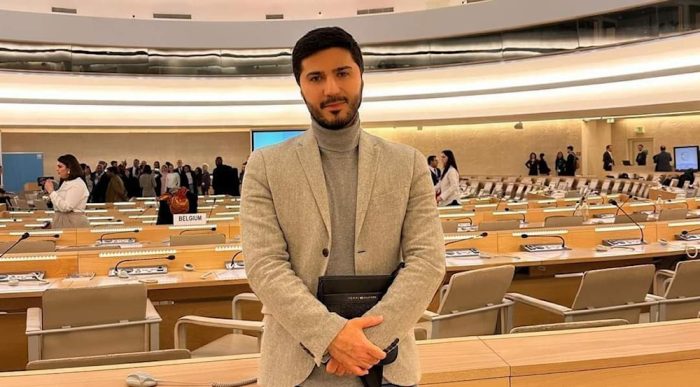
Iranian filmmaker Bashir Biazar released from French detention
Al Mayadeen | July 3, 2024
Iranian filmmaker and musician Bashir Biazar has been released from detention in France and is en route back to Iran, as confirmed by an official from Iran’s Presidential Office.
Bashir Biazar’s detention, which lasted over a month, sparked an international outcry and accusations of political motivations by French authorities.
He was arrested on charges that included “Iranian propaganda,” “anti-Zionism and anti-Americanism,” and alleged social media activities deemed detrimental to public order in France, according to documents obtained by Press TV.
The charges against Biazar were vehemently rejected by human rights activists, officials, and his supporters, who argued they were unfounded and driven by political agendas targeting Iran.
Rachid Lemoudaa, a French lawyer representing Biazar, told AFP that “There is nothing, in terms of law, that justifies this measure. Bashir Biazar expressed himself on his Instagram account, as anyone could do freely in a state governed by the rule of law,” adding that he believes the issue is “political, and politics has no place in law.”
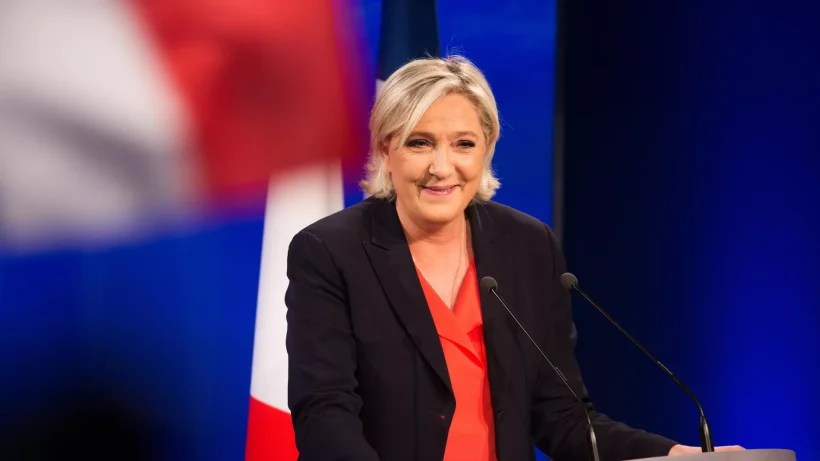
National Rally Leads 1st Round of French Parliamentary Elections
Sputnik – 30.06.2024
Marine Le Pen’s’s right-wing National Rally is preliminary winning the first round of snap parliamentary elections in France with 34.2%.
The French Interior Ministry announced preliminary results for the first round of the parliamentary elections:
- the National Rally (RN) party leads with 34.2% of the votes;
- the New Popular Front leftist coalition is in second place with 29.1%;
- and President Emmanuel Macron’s centrist coalition is third with 21.5%.
Based on these initial results, the National Rally is expected to secure between 240 to 270 seats in Parliament, achieving a relative majority, according to national TV calculations. Macron’s coalition is projected to lose over 160 seats, potentially receiving only between 60 to 90 of the 577 total seats.
Marine Le Pen declared victory over Macron’s supporters and called for vigorous support for her party in the second round of France’s parliamentary elections.
The French Interior Ministry noted a record high turnout of 59.39% an hour before the polling stations’ closure.
France is holding the first round of snap parliamentary elections on Sunday. The second round will take place on July 7.
‘France provided Israel with weapons used to bomb civilians in Gaza’
MEMO | June 19, 2024
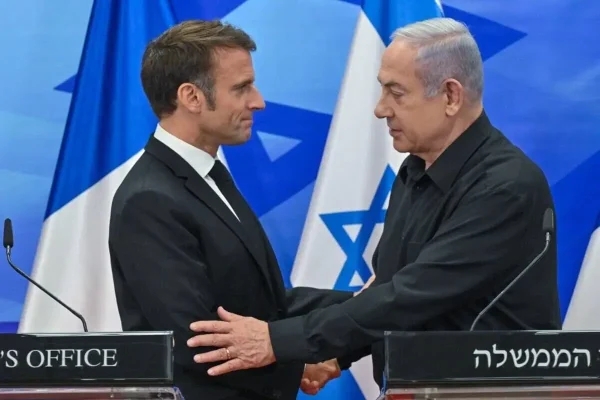
France has approved the sale of weapons equipment used by Israel to bomb civilian targets in the Gaza Strip, including a hospital, an investigation by the French non-profit media outlet Disclose revealed on Monday.
Dozens of classified documents obtained by the outlet revealed that French IT company the Thales Group has recently delivered electronic components used to construct Israel’s Hermes 900 armed drones. France owns a 26 per cent stake in the company.
The investigation showed that “the French company delivered to Israel the communication equipment during 2024,” despite repeated confirmations by the French defence ministry that “French arms exports to [Israel] were limited to defensive military equipment used in the Iron Dome to confront Palestinian resistance rockets.”
The outlet quoted the head of Israel’s Squadron 166, which flies Hermes 900 assault drones, as admitting to targeting a hospital in Khan Yunis in February following France’s delivery of the surveillance and targeting equipment.
“At least eight of these transponders were supposed to be flown to Israel between December 2023 and the end of May 2024,” said Disclose. “That’s several months after the first aerial bombings. Two transponders were delivered in 2024… The other six are reported to have been stopped by French customs.”
According to the outlet, the French armed forces ministry’s Directorate General for International Relations stated that the eight TSC 4000 IFF transponders are not allowed to be “sold, gifted, leased nor transformed without the prior agreement of the French government.”
Since 7 October, the Israeli occupation forces have continued to bombard the besieged Gaza Strip, killing 37,343 Palestinians and wounding 85,372 others. Around 1.7 million people have been displaced, according to the UN, amid massive destruction of civilian infrastructure.
Israel stands accused of genocide at the International Court of Justice. The occupation state denies the allegation.
Jailed Iranian musician’s social media activities belie French claims against him
By Ivan Kesic | Press TV | June 19, 2024
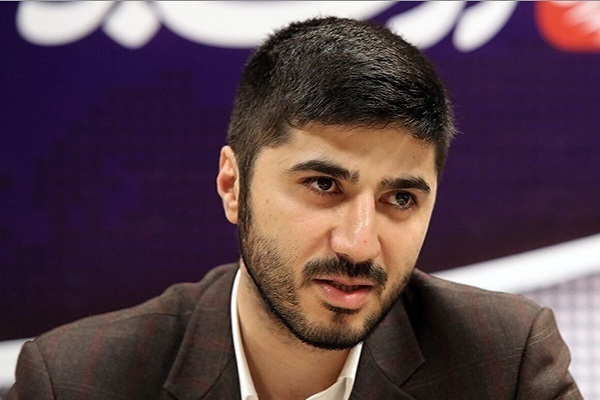
It’s been more than two weeks since Bashir Biazar, an acclaimed Iranian musician and filmmaker, was arrested and imprisoned in France over charges widely described as politically motivated.
In a chargesheet filed by the French interior ministry, a copy of which is in the possession of Press TV, Biazar is accused of “Iranian propaganda,” “anti-Zionism and anti-Americanism,” “hateful social media posts,” being a “vector of hatred,” and posing a “threat to public order in France.”
Human rights activists, officials, and Biazar’s family and friends have categorically rejected the charges as baseless and driven by the French government’s political motives against the Islamic Republic.
A detailed examination of the charges and Biazar’s social media activities, especially in recent months, makes it clear that the case against him is not based on merit but is politically motivated.
Born and raised in the Islamic Republic of Iran, Biazar is an independent music composer and filmmaker internationally acclaimed for his work.
He has previously served as managing director of the New Horizon Institute of Arts and Culture and was the secretary of the London-based Islamic Student Association.
For many years, he also worked as a production manager at the Music and Song Department of IRIB, Iran’s state broadcaster, and was behind many acclaimed works produced by the organization.
French indictment against Biazar
The French interior ministry accuses Biazar of disseminating alleged Iranian “state propaganda” and promoting “anti-Zionism and anti-Americanism,” which they view as “political-religious interference.”
It also claims that Biazar has “an operational mission to act against Iranian opponents, Jewish, and Israeli targets,” in France and thus represents “a threat to the country’s integrity and security, as well as its international relations.”
The most serious accusations are that he “incites terrorism with hatred,” is involved in “hateful posts on social networks,” “supports Hamas and Hezbollah,” and “smears France.”
French authorities further describe Biazar as “a vector of hatred that seriously threatens public order and fundamental interests of the state,” recommending his expulsion from the country.
His case is cited as “an absolute emergency,” with France believing that his “hostile activities” are damaging the international situation, likely fueling tension, hatred, and violence between communities in the country.
Le Point, a major French weekly political news magazine, recently reported that the ministerial expulsion order was signed on May 22, two weeks before his arrest and imprisonment.
A French court reportedly ordered Biazar to leave the country within 28 days, but French police have not released him, providing no explanation for the continued detention.
False accusations of undermining France
Since his arrest, many commentators, officials, and Biazar’s family and associates have condemned the French indictment and charges against him, terming them baseless and politically motivated.
A close examination of his activities on various social media networks, particularly the X platform (formerly Twitter), reveals the unfounded nature of the charges leveled against him.
Biazar used X for 13 years before his profile was deleted in 2022 “without explanation, warning, and reason.” After that, he created another account on X where he is active now.
He has also been using Instagram to a much lesser extent, leaving only 43 posts on the network.
Instagram, a Meta-affiliated network, has strict rules against pro-Palestinian resistance movements, leading to many pro-Palestine voices being blocked or suspended.
The fact that Biazar’s profile was not deleted or suspended proves he has not broken any rules.
All his social media posts, comments, and tags—whether on X or Instagram—are written in Persian, indicating they are not intended for a French audience.
According to Press TV analysis and examination of his social media activities, no French person follows him, and no French citizen has ever interacted with his posts.
His social media activities, like millions of pro-Palestine advocates around the world, including in France, have primarily focused on the unfolding Israeli genocide in Gaza since October last year.
Voice against Gaza genocide
Biazar, like other conscientious pro-Palestine campaigners, has raised his voice against the Israeli genocide in Gaza, which has claimed the lives of 37,400 Palestinians, most of them children and women.
The pinned post on Biazar’s X handle features a video of him addressing a United Nations session on anti-Iran sanctions, Israeli actions in Gaza, and the world body’s passivity.
“The Zionists have never been so alone, hated, defeated, and humiliated,” he wrote in the tweet.
In a tweet on May 28, Biazar criticized the silence of French President Emmanuel Macron, CNN, and the BBC on Israeli crimes in Gaza, particularly the massacre in southern Gaza’s Rafah refugee camp.
He also posted about anti-Iran elements in London, holding an Israeli flag, and harassing an Iranian woman who was heading to a memorial ceremony.
Some of his tweets showed the massive gathering in different Iranian cities paying tribute to late Iranian president Ebrahim Raeisi and his companions martyred in a helicopter crash.
But, most of his social media activities in recent months were wholly concentrated on the Israeli genocide in Gaza and the Western silence and complicity in it.
In a tweet on May 9, he shared a video clip of the Piers Morgan show in which an Israeli regime spokesman was not able to defend the crimes of the regime against Palestinians.
On October 27, 2023, he criticized the French police’s decision to cancel a permit for a public gathering in support of the Palestinian people and declare it illegal.
Some of his tweets were also dedicated to the US campus movement and police violence against students, like millions of other netizens tweeting about the same.
Biazar commented on French internal security affairs only once, on May 10, comparing adolescent violence during anti-government protests in France to West-backed Iranian riots.
Biazar stated that controlling teenagers during social unrest is the primary responsibility of their parents, aligning with the French Ministry of Justice’s decision last July.
French Minister of Justice Eric Dupond-Moretti said parents who neglect their children under 17 and leave them out at night could face two years in prison and a fine of 30,000 euros.
Biazar emphasized that just two days after this statement, the protests over the police killing of Nahel Merzouk were extinguished completely.
False accusations about resistance movements
Since the Israeli genocide on Gaza began on October 7 last year, Biazar has posted hundreds of tweets about Palestine, the suffering of Palestinians, and criticism of the Israeli regime and Western governments’ indifference, similar to what many French and Western citizens do regularly.
Among these tweets, only nine have mentioned the Gaza-based resistance movement Hamas, all in Persian. Seven were replies to other comments, achieving limited reach.
The two direct tweets commented on videos of Khaled Mashal and Israeli military commander Gadi Eisenkot discussing the impact of Hamas operations.
In reply comments, Biazar criticized media manipulations about Hamas and mentioned their operations’ goals. He stated that Hamas operates in the occupied territories according to UN resolutions and noted the scale of Israeli brutality in Gaza.
Biazar has not commented on Hezbollah in recent months, except for a single comment on a speech by its leader, Seyyed Hassan Nasrallah, criticizing media manipulation of his words.
He has never published material that could indirectly link him to the charges, such as videos of Palestinian resistance groups’ military operations.
#FreeBashir campaign growing louder
The campaign to release Biazar from French captivity has been growing louder and bigger in recent days, with many journalists, activists, artists, and academics joining it.
Richard Medhurst, a British journalist, called his arrest and imprisonment “outrageous” in a post on X.
“French police summoned an Iranian musician on June 4 with no explanation, immediately arrested him for ‘supporting terrorism,’ and drove him 100 km to a camp meant for illegal immigrants. This is purely political and ridiculous,” wrote Medhurst.
Ramy Abdu, the chairman of Euro-Med Human Rights Monitor, shared an article on X stating that Biazar “has been languishing in a French prison for almost two weeks following his arbitrary arrest for pro-Palestinian activism.”
Tim Anderson, an Australian academic and writer, said the Macron regime in France has jailed the Iranian musician “for pro-Palestinian activism.”
Marwa Osman, a Lebanese journalist and TV host, asked if Macron had taken the Iranian national “hostage” to “release his agents whom he sent to spy on Iran in 2022.”
“This is how #France is going to play it now? Well, I’d say this is one risky game Macron is playing. Because you know, two can play the same game… always,” she wrote on X.
Macron’s political bet could backfire with France one step closer to leaving NATO
By Uriel Araujo | June 18, 2024
NATO secretary-general Jens Stoltenberg, although claiming he would not comment on France’s ongoing domestic crisis, said that “I strongly believe it is in the interest of France, and all the allies, to keep NATO strong, because we live in a more dangerous world.”
France is right now facing a political crisis – maybe the wildest one in decades, as Arnaud Bertrand, businessman and commentator, writes.
French President Emmanuel Macron dissolved his country’s parliament and decided to gamble on a snap election, as a reaction against the rise of the so-called “far-right.” The problem is that the populist party National Rally (Rassemblement National), formerly known as the National Front, is projected to win 31.5 percent of the vote, which is over twice the 14.7 percent projected for Macron’s Renaissance party.
Bardella, who is the president of the National Rally’s party since 2022, and also currently a member of the European Parliament, and who is a likely next Prime Minister for France, has pledged to maintain Paris within NATO at least as long as the conflict in Ukraine keeps going: “The proposal we’ve always advocated … did not factor in war… You don’t change treaties in wartime.” Hence, Stoltenberg “warning”.
There is of course a catch in such a commitment: for one thing, Ukraine has never declared war against Russia to this day. In fact, on April, retired general Igor Romanenko, a former deputy chief of the General Staff of the Armed Forces of Ukraine, said that doing so would go against Ukraine’s interests: “If we went to a state of war, then assistance for weapons and equipment would cease not only from the United States, but also from most of the allies.”
This could be just a legal technicality, but it does make it hard to draw the line about when exactly a “war” ended or started. For instance, Ukraine has been bombing the Donbass region since 2014. Even with a Russian de facto victory, Kyiv could just claim Crimea and Donbass indefinitely, and all the Ukrainian far-right militias can make sure that some sort of low-level or frozen conflict (with provocations and terror attacks) goes on for many years. On the other hand, this very ambiguity may give room to a hypothetical National Rally presidency in future France to deem that the war in Ukraine is “over” whenever it sees fit – and then proceed to withdraw from NATO. One should bear in mind that Bardella has only made this caveat with regards to an ongoing “war” in the Eastern European country. Other than that, he does claim that leaving NATO has always been his party’s proposal. As recently as 2022, French Presidential candidate Marine Le Pen (who is a member of Bardella’s party) promised to pull France out of NATO’s military command structure. One should also keep in mind that France did withdraw from the Atlantic Alliance’s integrated military structure in 1966, albeit not completely leaving the NATO Treaty, and even expelled all of its units and headquarters on French territory back then. The country’s “estrangement” from the Atlantic organization only ended in 2009 with then President Nicolas Sarkozy, which means it took no less than 43 years for France to change its course.
Today’s French Fifth Republic is a semi-presidentialism system, in which the French President (the executive Head of State) has more powers with regards to foreign policy, also being the commander-in-chief of the French Armed Forces. The Prime Minister, in turn, being the head of government, mostly occupies oneself with domestic issues. Of course, a National Rally government, if politically successful, could pave the way for a future National Rally presidency. Moreover, the French government, led by its Prime Minister, controls the budget and could therefore hamper military aid to Ukraine in a number of ways – this, by the way, would be a very popular measure in France, considering that just recently, in March 2023, Macron imposed a very unpopular bill raising the retirement age from 62 to 64 years old by unusually invoking a special constitutional powers and basically shunning parliament.
Even former French President Nicolas Sarkozy, in his recent interview, has described Macron’s latest decision to dissolve the parliament as a “major risk for the country.” He added that the “endless enlargement of Europe towards Ukraine” is a mistake against which he “warned”: “I even dared to make a comparison, and I was widely criticized for, asserting that Ukraine risked becoming, for President Macron, what Turkey had been for President Chirac… Enlargement towards Ukraine is a contradiction, [it takes place] while the Balkan countries, which are European, have been waiting for so long.”
In France, the President names the Prime Minister, but in practice is forced to make a choice that would be able to get the support of a majority in the assembly, because the French National Assembly can dismiss the Prime Minister government.
Therefore, Macron has indeed placed himself in a very difficult and risky position. He has vowed to remain in the presidency regardless of the results of parliamentary elections (on July 7) he himself convoked. He thus might have to name a far-right government, depending on the results. Such results are to come a few days before the NATO summit in Washington, which Macron is of course expected to attend. In such a scenario, he would arrive there in a completely demoralized position.
Marine Le Pen’s 2022 proposal (to leave NATO) was just following the steps of Charles de Gaulle. Le Pen (who is the “far-right” most famous politician in France) is, truth be told, basically a Republican conservative. She supports left-wing economic policies, is pro-abortion, and is a vocal critic of the current “open-borders” migration policy.
For years, the “far-right” label has been the most feared political weapon in Europe and, more broadly, in the West. Far from being merely an accurate description of (very real) neo-Fascist and neo-Nazi groups, it has long been an umbrella concept that also includes all sorts of hardline nationalists and populists. On different occasions, this bogeyman enlarged concept (weaponized by both the left and the right) has served the purpose of setting up Establishment centrist coalitions everywhere.
Today’s mainstreamization of the so-called “far-right” thus serves justice – in a way. At the same time, it also opens the way for the rehabilitation of real Fascists – as long as they remain loyal to the European bloc and to the Atlantic alliance, as I wrote before. Part of the European center-right and conservative Establishment did hope to make good use of a co-opted and domesticated “far-right” – as seen with the Meloni-Von der Leyen political Alliance. The ongoing French situation brings back the specter of a rising NATO sceptic (and EU sceptic) political alternative and basically short-circuits the system.
West hindering nuclear deal’s revival, blaming Iran for failure: Russia
Press TV – June 17, 2024
A senior Russian diplomat says the three European signatories to the Iran nuclear deal have failed to fulfill their commitments and are now blocking the negotiations to revive the US-abandoned agreement.
Russian Permanent Representative to International Organizations in Vienna Mikhail Ulyanov made the remarks in an interview with Russia’s daily broadsheet newspaper Izvestia.
He said the talks to revive the nuclear deal – officially known as the Joint Comprehensive Plan of Action (JCPOA) – have so far failed to yield any outcome due to insufficient efforts on the part of the European troika (France, Germany and Britain) as well as the United States.
It is not the Iranians who are blocking the negotiations now as they are ready to resume the talks, he maintained.
The top Russian negotiator added that the three European countries – also known as E3 – are playing a “strange game” but demand full compliance from Iran.
At the same time, the trio blames Russia and Iran for the failure of the JCPOA revival talks, Ulyanov said.
The negotiations to restore the JCPOA began in April 2021, three years after the US unilaterally withdrew from the UNSC-endorsed agreement and began to target Iran’s economy with tough economic sanctions.
Iran has criticized the lack of will on the side of the US and the E3 to revive the deal and has ramped up its nuclear activities in response to their non-compliance.
In a statement issued on Saturday, the foreign ministers of Britain, France and Germany condemned what they called “the latest steps” taken by Iran “to further expand its nuclear program.”
They also accused Iran of taking “further steps in hollowing out the JCPOA, by operating dozens of additional advanced centrifuges at the Natanz enrichment site as well as announcing it will install thousands more centrifuges at both its Fordow and Natanz sites.”
Iran on Sunday strongly condemned the E3 statement as absurd and based on false allegations, saying the country’s nuclear program has a completely peaceful nature and nuclear weapons have no place in the country’s military and defense doctrine.
Ukraine Rejected Path to Peace on Western Orders, Putin Reveals
© MANDEL NGAN
Sputnik – 14.06.2024
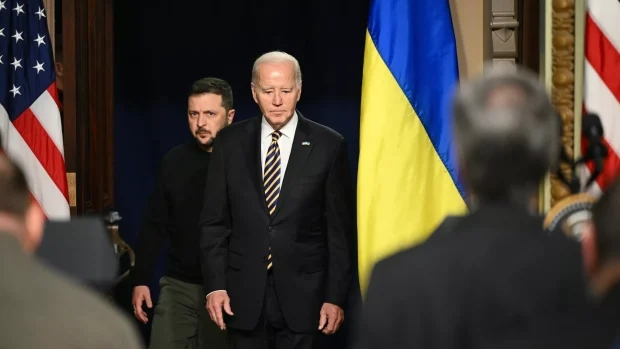
NATO has sought to turn Ukraine into a staging ground and has done everything it could to pit nation against nation, Russian President Vladimir Putin said.
“There have been five, now six, rounds of NATO expansion. They tried to turn Ukraine into their staging ground, to make it anti-Russia. To achieve these goals, they invested money, resources, bought politicians and entire parties, rewrote history and educational programs, nurtured and cultivated neo-Nazi and radical groups. They did everything to undermine our state ties, to divide and pit our peoples against each other,” Putin said at a meeting at Russia’s Foreign Ministry in Moscow.
He emphasized that the Ukrainian crisis is not a conflict between two nations but a result of the West’s aggressive policy.
“Let me say this right off the bat, the crisis regarding Ukraine is not a conflict between two states, much less two peoples, caused by some problems between them… The matter is different, though. The roots of the conflict are not in bilateral relations. The events unfolding in Ukraine are a direct consequence of global and European developments at the end of the 20th and beginning of the 21st century. It’s the West’s aggressive, unscrupulous, and absolutely reckless policy that has been pursued for all these years, long before the start of the special operation,” he explained.
Putin pointed out that if the conflict had been solely about disputes between Russia and Ukraine, then the mutual history, culture, spiritual values, and the millions of familial ties that both peoples share would have facilitated a fair resolution.
Russia had initially sought a peaceful resolution to the Ukrainian crisis, but all proposals put forth were ultimately rejected.
“We took the Minsk agreements seriously, hoping to resolve the situation through a peaceful process and international law,” he said. Moscow expected this would address the legitimate interests and demands of Donbass and secure the constitutional status of these regions, along with the fundamental rights of the people living there. However, he added, “But everything was ultimately rejected.”
Russia, in spite of seeking to resolve the Ukrainian crisis, was, nonetheless, deceived and misled.
“The ex-German Chancellor and former French President, essentially co-authors and, as it were, the guarantors of the Minsk agreements, later admitted that they never intended to fulfill them. They just needed to buy time to build up the Ukrainian armed forces, and to supply them with weapons and equipment. They simply deceived us once again,” Putin remarked.
Putin highlighted that that Russia did not start the war in Ukraine, rather, it was Kiev that launched military assaults against its own citizens who declared independence.
The Russian leader declared that those who assisted Ukraine in its punitive operation against Donbass are the aggressors.
“Russia did not initiate the conflict [with Ukraine]. That was the Kiev regime. After the residents from a part of Ukraine, in line with international law, had declared their independence, they [the Kiev regime] launched military operations and have kept them going ever since. This is an act of aggression, given that the right of these territories to declare independence has been recognized. Those who have supported the Kiev regime’s military machine all these years are accomplices of the aggressor,” he clarified.
Featured Video

9/11 Suspects: General Ralph Eberhart
or go to
Aletho News Archives – Video-Images
From the Archives
From glorious millennia to death and destruction: Zionists rewrite Palestine’s story

By Miko Peled | MintPress News | September 20, 2021
One of the great tragedies of Palestine is that almost every day there is a commemoration of one massacre or another, the death of a child or destruction of a home or village, leading one to think that the Palestinian narrative is one of death and destruction, which is what Israel wants people to think. But the truth is that this is not the case. The Palestinian narrative is one of a glorious history with periods of great sadness and tragedy. It is the Zionist story that is full of killing, stealing and destruction and not, as they try to sell it, one of creation and growth.
September 16, 2021, marked 39 years since the massacres at Sabra and Shatila refugee camps in Lebanon. As people remember and mourn the thousands of unarmed civilians who were butchered and the countless who survived suffering terrible injuries and emotional scars, we must also remember the man that stood behind this bloodbath.
This was a man whose complicity even the Israeli authorities could not ignore, the former general and renowned war criminal Ariel Sharon. And although he was momentarily penalized and banished from politics, he very quickly returned, and for a quarter of a century, he was the most powerful and influential man in Israeli politics. … continue
Blog Roll
 Aletho News
- Israeli war chief vows continued strikes on Lebanon as part of ‘conditional’ truce
- UNIFIL peacekeeper killed after shells strike position near Marjayoun
- Hours after reiterating ‘ceasefire’, ‘Israel’ targets car in S.Lebanon
- US says Lebanon, Israel reach new ceasefire deal, Hezbollah vows resistance, rejects disarmament
- Trump’s call to Bibi probably didn’t happen
- Iran moved to change the US-Iran equation yesterday
- Former Israeli soldier: I left the Gaza war with shame and regret
- The UK Government Will Persecute Those Vocal about Israel, But Not War Criminals
- Is Hungary about to give Ukraine the EU green light?
- EU pushing Armenia to expel Russian Orthodox Church – intel service
- If Americans Knew
- Now will the world believe? Israeli study finds starvation in Gaza was deliberate policy – Daily Update
- The Faustian Bargain of Journalists Embedding with the Israeli Military in Gaza
- AIPAC: Defending the Indefensible
- “You Either Leave Right Now or You Die”—Israel’s Ethnic Cleansing of a Village in Lebanon
- Selling American dead bodies to the US Navy for Israeli military training?
- AIPAC affiliate has funded lavish trips to Israel for dozens of Congress members since 7 October, filings reveal
- Trump called Netanyahu crazy, stopped Israel attack on Beirut: three articles
- ISRAELI MEDIA: Israel’s Education System Isn’t Broken. It’s Doing Exactly What It Was Built to Do
- UN experts alarmed by escalating settler terror and displacement in West Bank
- Israeli soldiers halt Catholic festival preparations in West Bank Christian village
- No Tricks Zone
- New Study: Solar Photovoltaic, Wind Power Fail To Meet Annual Energy Demands 62% Of The Time
- Germany’s Die Welt: “Too Much Is Too Much” … Green Energies Are Cannabalizing Each Other!
- Germany’s Ecological Holocaust… Once Fairy Tale Forests Getting Cleared For Wind Turbines
- A Grand Solar Minimum Has Arrived…Global Cooling Of At Least 1°C Is Expected By The 2030s, 2040s
- European “Expert Commission” Urges COVID-19-Like Global Climate State Of Energency!
- Real-World Observations Do Not Support The Position That Climate Change Is Human-Caused
- Germany’s AfD Party Calls Debunked Climate Scenarios “Greatest Fraud In Human History”
- Researchers Find Rapid Global Warming Phase At End Of Last Ice Age (Ca.18,000 Years Ago)
- Even The DNA Of Single-Celled Plankton Can Upend Alarmist Arctic Sea Ice Melt Claims
- Scandal: Although Climate Panic Is Canceled By IPCC, Europe’s Policymakers Continue With Their Crushing Policies
 Aletho News