Israel Suspected of Hacking French Prime Minister’s Phone – Reports
Sputnik — 07.07.2016
French authorities suspect that Prime Minister Manuel Valls’ cellphone may have been tampered with during his recent visit to Israel, French media outlets reported Thursday.
Valls visited Israel on May 21-24 for talks with President Reuven Rivlin and Prime Minister Benjamin Netanyahu, in a bid to revive the reconciliation process between Israelis and Palestinians.
The prime minister and his staff were asked to submit their cellphones before attending the high-level talks, according to the French newspaper L’Express.
Upon retrieving them, French officials were “shocked” to find that many devices showed signs of an “anomaly,” the outlet claimed. One of the phones later broke down.
The suspicious cellphones were handed over for inspection to the National Agency for Computer Security (ANSSI), which declined to comment on the possibility that they had been hacked. A government official told the outlet the security check was standard procedure.
Israel responded to the accusations, saying it considered France a friendly nation who it would never spy on. It denied having tampered with the phones of the French delegation.
Post-Brexit, Is the EU Flaunting Its Undemocratic Tendencies?
By Joyce Nelson | CounterPunch | July 6, 2016
Stung by Brexit, the EU bureaucrats seem intent on showing just how undemocratic they can be. Here are two examples just in the last seven days.
The Glyphosate License
On June 24, EU member states again refused (for a third time this year) to approve a renewal of the license for the weed-killer glyphosate manufactured by Monsanto and other corporations involved in GMO crop cultivation. That should have meant that the license would expire by the end of June, and Monsanto’s Roundup and other glyphosate weed-killers would have to be withdrawn from Europe by the end of this year.
Instead, on June 29 the European Commission (EC) decided “unilaterally” to extend the glyphosate license for another 18 months. [1]
The decision “drew heavy criticism from the Greens in the European Parliament, who said the decision showed the Commission’s ‘disdain’ for the opposition by the public and EU governments to the controversial toxic herbicide.” [2] Belgian Green Member of the European Parliament Bart Staes said, “As perhaps the first EU decision after the UK referendum, it shows the [EC] executive is failing to learn the clear lesson that the EU needs to finally start listening to its citizens again.” [3]
Many were simply shocked that an unelected body of bureaucrats would cater so blatantly to the corporate sector’s last-minute lobbying.
The EC claims that, because of member nations’ indecision on the matter, its own decision about glyphosate was based on assessments made by the European Food Safety Authority (EFSA), prolonging the authorisation until a new scientific review is concluded before the end of 2017, but Greenpeace has called the EFSA study “a whitewash.” [4]
Lawrence Woodward, co-director of Beyond GM, has called the EC’s unilateral decision “reckless.” [5] It comes at the same time that dozens of individuals and organizations have signed an open “Letter from America,” urging European citizens, politicians and regulators to not adopt a “failing agricultural technology” and sharing examples of glyphosate and GMO repercussions across North America. [6]
CETA Ratification
At virtually the same time that the EC made this controversial decision on glyphosate, it made another that is even more undemocratic.
On June 28, a German news agency reported that European Commission President Jean-Claude Juncker told EU leaders the Commission is planning to push through a controversial free trade agreement between Canada and the EU – known as CETA, the Comprehensive Economic and Trade Agreement – without giving national parliaments any say in it. [7] According to the German press, Juncker argued that allowing national parliaments to vote on the agreement would “paralyze the process” and raise questions about the EU’s “credibility.” Juncker claimed that CETA “would fall within the exclusive competence of the EU executive” and therefore doesn’t need to be ratified by national parliaments within the 28-nation bloc, sources in Brussels told the Germany news agency DPA. [8]
Most EU members, however, view CETA as a “mixed” agreement, meaning “that each country would have to push the deal through their parliaments.” [9]
In late June 2016, the EC’s Juncker was reported as saying that he “personally couldn’t care less” whether lawmakers get to vote on CETA. [10]
Millions of Canadians and Europeans have fought against CETA for the past six years. Like the TPP and TTIP, it is a draconian agreement that would hand multinational corporations immense power to overrule elected local governments on numerous fronts. In Canada, CETA was supposed to be voted on by every Canadian provincial and territorial government before any ratification could take place, but in September 2014 (during the reign of Stephen Harper) the CETA deal was signed without there having been any public consultation whatsoever in Canada. The 2014 announcement was also the first time people in Canada and Europe were allowed to see the official text, which had been kept secret during the years of negotiations.
Unfortunately, Canada’s International Trade Minister Chrystia Freeland is enthused about what the EU is doing. According to The Globe and Mail newspaper (July 3), “The British vote to exit the European Union has refocused
Europe’s attention on the need to send a message to the world that liberalized trade is the path to greater prosperity, Ms. Freeland said.” [11]
She also explained that once the European Parliament approves CETA, “a great deal of the agreement would come into force immediately, more than 90 per cent,” she said, “those portions deemed to be within the European Union’s jurisdiction, those go into force right away.” [12]
Freeland told The Globe and Mail that concerns about CETA’s investor-state dispute settlement (ISDS) mechanism – which allows multinational corporations to sue governments over regulations that harm their future profits – had been addressed by a rewrite of the treaty’s investment chapter. [13] But according to Council of Canadians, those changes “actually make [the provisions] worse. The reforms enshrine extra rights for foreign investors that everyone else – including domestic investors – don’t have. They allow foreign corporations to circumvent a country’s own courts, giving them special status to challenge laws that apply equally to everyone through a [private] court system exclusively for their use.” [14]
Prime Minister Justin Trudeau will be in Europe this week for a NATO summit, and officials “say he will lobby hard for other European leaders not to stand in the way of [CETA’s] ratification.” [15]
The Pushback
Reportedly, the pushback in Europe has been immediate, with Germany and France wanting “their national parliaments to be involved” in CETA ratification. On July 5, Deutsche Welle reported that “Juncker appears to be backtracking,” and would propose at a July 5 EC meeting that CETA would require “both the approval of the European parliament and national legislatures.” [16]
The Globe and Mail reported on July 5 that Juncker’s “new recommendation… could call for applying those EU parts of the treaty while the ratification process [by national legislatures] is under way.” [17] That would mean (as Canada’s Chrystia Freeland had earlier explained) more than 90% of CETA could be approved by the EU as part of its “jurisdiction” and needing no national legislative approvals. Such a process would make a mockery of democratic rights on both sides of the Atlantic.
That appears to be what is happening.
Following the July 5 EC meeting in Strasbourg, France, the CBC reported: “Legal opinions advanced by the commission suggest that most of the agreement – perhaps as much as 95 per cent – falls comfortably with the European Union’s jurisdiction… ‘This is an agreement that Europe needs,’ EU trade commissioner Cecilia Malmstrom said in a statement. ‘The open issue of competence for such trade agreements will be for the European Court of Justice to clarify, in the near future. From a strict legal standpoint, the commission considers this agreement to fall under exclusive EU competence. However, the political situation in the council is clear, and we understand the need for proposing it as a ‘mixed’ agreement, in order to allow for a speedy signature’.” [18]
But as nations gear up to wrangle with the EU (in the European Court of Justice) over what parts of the CETA treaty fall within their jurisdiction, and what parts “fall under exclusive EU competence,” the EC could approve 95% of CETA before elected legislatures even vote.
The Council of Canadians warns on its website (July 5): “One important concern to note, ‘The commission may recommend provisionally applying the EU-parts of the Canada deal while full ratification is pending.’ The French newspaper Le Monde has previously reported that even if CETA is deemed to be a ‘mixed’ agreement, the deal could enter into force ‘provisionally’ even before EU member state parliaments vote on it. It notes, ‘If EU ministers agreed at the signing of the CETA on its provisional application, it could come into effect the following month. Such a decision would have serious implications. Symbolically, first because it would send the message that European governments finally [have] little regard for the views of parliamentarians and thus of European citizens strongly against the agreement’.” [19]
Council of Canadians National Chairperson Maude Barlow stated after the EC meeting in Strasbourg, “Like many Canadians, Europeans are worried about CETA’s attacks on democracy, its weakening of social and safety standards, its contribution to privatization and attacks on public services. After the Brexit vote, policy makers on both sides of the Atlantic would be better counseled to listen to voters, rather than pushing discredited [trade] solutions down people’s throats.” [20]
Global Justice Now director Nick Dearden has called CETA a “toxic deal” and says that the way the EC is acting “reinforces the widely held suspicion that the EU makes big decisions with harmful consequences for ordinary people with very little in the way of democratic process,” he said. “Rather than take a step back and question why there is hostility to the EU, they try to speed up this awful trade deal.” [21]
Union members, environmentalists, social activists and “fair trade” groups say CETA is just as dangerous as the proposed Transatlantic Trade and Investment Partnership (TTIP) deal between the EU and the U.S., which hands massive power to multinationals and is a direct threat to democracy on both sides of the Atlantic. The way the EC is handling CETA is a stark clue to what’s in store for TTIP.
Footnotes:
[1] “European Commission Extends Glyphosate License without Real Restrictions,” Sustainable Pulse, June 29, 2016.
[2] Frederic Simon, “EU muddling on glyphosate fuelled Brexit populism,” EurActiv.com, July 1, 2016.
[3] Quoted in ibid.
[4] Ibid.
[5] Katie Pohlman, “Neil Young: Say No to GMOs on ‘Behalf of All Living Things’,” EcoWatch, July 1, 2016.
[6] Quoted in ibid.
[7] “EU Commission Seeks to Push Through Free Trade Agreement with Canada (CETA) without Parliamentary Approval,” Deutsche Welle, June 28, 2016.
[8] Ibid.
[9] Reuters, “EU Commission to opt for simple approval for Canada deal: EU official,” June 28, 2016.
[10] “EU Commission: CETA should be approved by national parliaments,” Deutsche Welle, July 5, 2016.
[11] Robert Fife, “Despite Brexit vote, key EU powers vow to ratify CETA deal,” The Globe and Mail, July 3, 2016.
[12] Ibid.
[13] Ibid.
[14] Council of Canadians, “CETA changes make investor-state provisions worse,” February 3, 2016.
[15] Fife, op cit.
[16] “EU Commission: CETA should be approved by national parliaments,” Deutsche Welle, July 5, 2016.
[17] “EC set to scrap plans to fast-track CETA deal: report,” The Globe and Mail, July 5, 2016.
[18] “Canada gets clarity on how Europe will ratify trade deal,” CBC, July 5, 2016.
[19] Council of Canadians, “CETA to be considered a ‘mixed’ agreement, now more vulnerable to defeat,” July 5, 2016.
[20] Council of Canadians, “CETA vulnerable to defeat: Council of Canadians,” July 5, 2016.
[21] Lamiat Sabin “Brexit ‘Might Not Stop Awful Ceta’,” Morning Star, July 5, 2016.
Joyce Nelson is an award-winning Canadian freelance writer/researcher working on her sixth book.
Frexit: Debate Over EU Membership May Decide France’s Presidential Election
Sputnik – 04.07.2016
France has two candidates who are openly calling for exiting the European Union while another wants major overhauls sending chills down the backs of the status quo establishment.
Britain’s historic vote to abandon the European Union sparked renewed calls by French nationalist Marie Le Pen, a leading candidate for the country’s presidency, for Paris to step away from what she deemed an undemocratic and failed experiment.
The candidate took to the editorial pages of the Western press blasting the pro-EU establishment of Francois Hollande for fettering away the country’s sovereignty to an unknown cabal of bureaucrats in Brussels who can override any aspect of French law including the constitution.
Le Pen’s National Front Party is just one of many populist rightwing forces across Europe now clamoring to escape the European Union citing sometimes xenophobic concerns about the influx of Syrian refugees and a lack of political self-determination as their rallying cry against the crumbling EU.
Declared “Madame Frexit” the candidate has made her rallying call for French liberation the focal point of her candidacy promising to hold a referendum on EU membership within six months if she attains power in next year’s election.
“The People’s Spring is now inevitable!” declared Le Pen in a New York Times editorial. “The only question left to ask is whether Europe is ready to rid itself of its illusions, or if the return to reason will come with suffering.”
Marie Le Pen’s Eurosceptic platform is not unique among the country’s presidential candidates with far-left Front de Gauche (FG) party leader Jean-Luc Mélenchon also calling for France to leave the European Union citing the specter of undemocratic trade deals that risk poisoning the country’s citizens, undercutting its agricultural industry, and stripping its workers of basic protections.
Another presidential hopeful, Bruno Le Maire, a former secretary of state for European Affairs, has also demanded a referendum on redefining the European project but has not gone so far as to say that the European Union is broken beyond repair.
The emergence of two, possibly three leading presidential candidates in France demanding a so-called Frexit suggests that the issue will be front and center during the election season, but many analysts remain skeptical that any of these candidates will gain the traction needed to win.
However, recent public opinion polls show that selling the idea of the status quo may ultimately prove fatal to President Francois Hollande or former President Nicolas Sarkozy’s respective campaigns.
More than 60% of French voters view the EU unfavorably according to a recent Pew Research Center poll while another survey by the University of Edinburgh found that 33% would vote to leave versus 40% who would remain, while 22% are undecided.
The National Front’s position on French independence from the European Union grew following the Paris attacks, but the real litmus test may be how well Britain weathers the storm of their own referendum.
How the EU pushed France to reforms of labour law
Corporate Europe Observatory | June 27, 2016
The current struggle in France over labour law reforms is not just between the Government and trade unions – a European battle is waged. The attacks on social rights stem in no small part from the web of EU-rules dubbed ‘economic governance’, invented to impose austerity policies on member states.
Strikes and actions across France against reforms of the country’s labour protections, known as the El Khomri Law, demonstrate the immense unpopularity of the measures proposed by the French Government. Chiefly among them, to give preference to local agreements on wages and working conditions, when the conditions in those agreements are less favourable than the national norm inscribed in national law. This is an open attempt to undermine collective bargaining and roll back the influence of trade unions.
Ultimately, the French Government has formal responsibility for the weakening of labour protection. But there is no denying that the European Union is playing an important and perhaps decisive role in the attacks on labour rights. What we see is the EU throwing its rulebook in the French workers’ faces. Practically all the new rules on so-called ‘economic governance’ adopted following the eurocrisis have been applied, and make France look like an EU test-case. The European Commission, with the backing of the Council, has used the rules on member states’ deficits to exert pressure, threatening with sanctions, should the French Government not give in and seriously reform its labour laws. Simply put, France has been required flat out to ensure higher profitability for businesses by driving down wages.
How does all of this work?
Sanctions more likely today
First and foremost, the reforms in France are related to the country’s deficit. Like most other EU member states, the state’s finances looked pretty bad in the aftermath of the 2008 financial crisis. In 2009, a case was opened against France for breaching EU rules which stipulate that its deficit must be no higher than 3 per cent of GDP. If taken to the extreme, this ‘excessive deficit procedure’ can result in a fine of billions of euro, and – not least in the case of France – a severe loss of face to its EU partners.
The ‘excessive deficit procedure’ was given more teeth with the so-called ‘Six-Pack’ set of EU rules in 2011 – a key part of the austerity-focused economic governance package – which introduced a reverse majority vote in the Council: if the Commission does decide to fine a member state, like it has threatened to do to France, there will have to be a qualified majority against the measure from other member states to block it. Good reasons for the French Government to be slightly scared – and a weapon to be used in its attempt to convince parliamentarians. The likelihood of sanctions for not meeting the budget deficit targets is much bigger than in the past, when both Germany and France escaped humiliation. But how to meet the Commission’s strict targets, and how to behave to the satisfaction of the Commission, is what clearly links the El Khomri Law in France to the austerity regime being rolled out from Brussels.
Enabling demands of ‘structural reforms’
Being ‘in the procedure’, means you’re under close surveillance by the Commission, and with regular intervals, the case of the French deficit has been brought up at meetings with member states ministers, who have assessed if France (in this case) has made sufficient efforts to remedy the problem. Specific recommendations have been made, though until 2013 the labour law was hardly mentioned. The recommendations stuck to the development of the deficit, whether it went down at the required pace. But in 2013, there was a new tone in the Commission’s recommendations. France was asked to meet its deficit targets “by comprehensive structural reforms” in line with recommendations from the Council “in the context of the European Semester”. Structural reforms are no small matter. They are defined as changes that affect “the fundamental drivers of growth by liberalising labour, product and service markets”. Such ambitions were starting to be pushed on France at the European Semester.
But what is the European Semester? It is a procedure involving the Commission and the Council that ends with a set of recommendations for reforms to each and every member state, based on a proposal from the Commission. At the beginning in 2011, the recommendations were non-binding, but in 2013, a new set of rules went into force under the so-called Two-Pack, another part of the economic governance package intended to enforce austerity. One of the regulations of the two in the package was about measures to ensure deficits were corrected, and among other things, it made a link between the deficit procedure and the European Semester. If a member state is under the deficit procedure – like France – it would have to draw up an ‘Economic Partnership Programme’ that includes the recommendations from the Council –typically the kind of structural reforms that would have a clear impact. If the programme is not followed, then it will have a bearing on the Commission’s decision to initiate the final phase of the deficit procedure: sanctions in the form of a fine worth billions.
So, when the Two-Pack entered into force in early 2013, the tone of the messages to France on its deficit changed. France was now asked to implement “comprehensive structural reforms” of its labour law and the pension system. This had a bearing on how France would be treated under the deficit procedure and whether it would come in for sanctions, and for that reason, recommendations started looking more like demands.
In other words: whereas earlier country specific recommendations adopted under the European Semester were just that, with the Two-Pack from 2013, non-compliance could lead the Commission to take the next step towards sanctions.
“Slash wages now!”
There’s more.
In the early stages of the eurocrisis another procedure was introduced that was to work in parallel to the deficit procedure: the ‘Macroeconomic Imbalance Procedure’. This procedure allows the Commission to monitor the development of member states’ economies based on a predefined set of indicators. One of them – perhaps the most important one – measures how high the labour costs are developing (unit labour costs). If wages are not kept at bay, competitiveness suffers, and measures have to be taken, so the logic goes.
The ‘Macroeconomic Imbalance Procedure’ is also a potent weapon, as it can lead to a fine if a Eurozone member state crosses the line repeatedly and for a long time. And France has been in the crosshairs of the Commission for quite a while. Commission staff have investigated French labour law and identified what factors contribute “to limiting the ability of firms to negotiate downward wage adjustment”, and the French Government has been warned – as have many other member states – about developments in wages. In 2014, the Commission said “unit labour cost growth is relatively contained but shows no improvement in cost competitiveness. The profitability of private companies remains low, limiting deleveraging prospects and investment capacity.”
The calls for action to improve the profitability of private companies have been sent to France from Brussels on numerous occasions over the past couple of years, and have gained in strength. Thus far, the climax was in February 2015, when the Commission stepped up the procedure and singled out Bulgaria and France as the most pressing cases. The decision put France only a small step from the last stage of the imbalance procedure, the dreaded ‘excessive imbalance procedure’ which entails – exactly like the deficit procedure – a massive fine. If all fines are put together – from the deficit procedure and the imbalances procedure – they could amount to 0.5 per cent of GDP, or in the case of France, approximately €11 billion.
The final countdown
Such a prospect must be terrifying for the French Government, and in 2015, then, it would have to come up with something of substance to appease the European Commission and its partners in the Council. In March France was given two more years to bring its house in order, and if there was any doubt over the way to get there, the message to France in July was clear. Country Specific Recommendation number 6 to France under the European Semester, includes a call to “reform the labour law to provide more incentives for employers to hire on open-ended contracts. Facilitate take up of derogations at company and branch level from general legal provisions, in particular as regards working time arrangements.” In other words, the very reforms now at the centre of dispute with the El Khomri law.
The recommendation was copy-pasted from a Commission proposal; one that struck a chord among business lobby groups. In the annual ‘Reform Barometer’ of BusinessEurope, a procedure set up to influence the European Semester, the French employers association MEDEF was enthusiastic about the move, and dubbed it “extremely important” in its contribution to the Reform Barometer 2016.
End game
Who exactly has done what since the summer of 2015 is the subject of intense debate. French media outlet Mediapart suggests the German Government might have played a big role in designing the French reforms, while others believe the specifics were entirely homemade. In any case, there is no denying that the reforms were pushed heavily by the European Union, more specifically by the Commission and the Council. And the push was based on the web of rules on member states’ economic policies, sometimes called ‘economic governance’, that has been spun thread by thread since 2010. The strengthening of the deficit procedure, the European Semester, the Two-Pack, and the macroeconomic imbalance procedure have all been used for the purpose they were invented: to exert maximum pressure on member states to adopt austerity policies.
There are other similar examples in Europe at the moment. In Italy and Belgium too, you see the effect of the new tools handed over to the European Union since 2010. But France is special for its size and its power in the EU. The ongoing struggle in France can be seen as a major test case for European economic governance. If a big, powerful EU member state can be pushed to attack fundamental traits of its labour protection law, then the risk of new and stronger measures are much more likely in the future. Even if French workers are unaware of it, they’re fighting a European battle.
“Free Marwan Barghouthi” banner returns to Paris-area city hall after legal victory

Samidoun Palestinian Prisoner Solidarity Network – June 30, 2016
The Administrative Court of Montreuil in France rejected on Tuesday, 28 June an appeal by the Seine-Saint-Denis prefecture (representing the central French state), demanding the removal of a banner supporting Palestinian prisoner and leader Marwan Barghouthi from the front of the city hall of Stains, in a victory for supporters of Palestinian political prisoners and Stains’ mayor Azzedine Taibi.
The court found that the prefecture’s arguments were inadmissible and invalid, despite an earlier temporary order that the banner must be removed. Azzedine Taibi, the mayor of Stains and a representative of the French Communist Party, said that “This is not a personal victory but a collective victory! … Marwan Barghouthi will remain an honorary citizen of our city and I know that one day, he will be on our side, here in Stains, the city of popular resistance! The struggle and the mobilization will only grow for the liberation of Marwan Barghouti and all Palestinian political prisoners…”
The prefect – representing the government of Prime Minister Manuel Valls, who has urged prosecution of BDS activists and the suppression of the movement to boycott Israel – argued that the banner was “not of local interest” and likely to lead to a “disturbance of public order.” Manuel Valls, as Minister of the Interior, previously intervened in the case of Georges Ibrahim Abdallah – after intervention from US Secretary of State and now presidential candidate Hillary Clinton – to block the release to Lebanon on parole of the Lebanese Communist prisoner and struggler for Palestine who has been imprisoned in French jails for 32 years.
The prefect’s case was dismissed, as was a complaint filed against the mayor by the BNCVA, a pro-Zionist organization that nominally combats anti-Semitism but in practice focuses on attempts to suppress Palestine solidarity and the boycott of Israel, which accused Taibi of “public apology for terrorism” for his support of Barghouti.
Stains is one of a group of 23 French municipalities who have named the imprisoned Fateh leader and Palestinian Legislative Council member an honorary citizen. A delegation of 16 French mayors was prohibited from visiting Barghouthi in Gilboa prison in Palestine by the Israeli occupation on 14 June; the mayors participated later in a press conference in support of the campaign to nominate Marwan Barghouthi for a Nobel Peace Prize, a campaign supported by Belgian parliamentarians, Desmond Tutu, Adolfo Perez Esquivel, and the Tunisian winners of the 2015 Peace Prize.

Taibi hosted a ceremony outside the Stains City Hall on Wednesday night, 29 June, celebrating the victory and the official unveiling and replacement of the “Free Marwan Barghouthi” banner to the front entrance of the Stains city hall.
The Stains victory is one of several in France against attempts to criminalize or suppress the Palestine solidarity movement or the boycott of Israel. A court in Créteil dismissed a prosecution for “incitement to discrimintion” against Jean-Claude Lefort pursued by the Association France-Israel and “Lawyers Without Borders” on 24 June, because he had called for a boycott of Israeli products; the court noted that this was a matter of expression on a “debate of general international interest.” In addition, the municipality of Bondy voted on Thursday, 23 June to refuse to purchase goods made in Israeli settlements in the West Bank.
Today, 30 June, 4 BDS activists will face a trial in Toulouse; they are accused of “obstructing the normal exercise of economic activity of three stores” for distributing leaflets in public squares in support of the boycott of Israeli goods. The prosecution was initiated by LICRA, a French pro-Israel advocacy organization; activists are mobilizing outside the courthouse at 1 pm in support of the 4 accused organizers.
France wants sanctions on Russia lifted soon – foreign minister
RT | June 29, 2016
Sanctions against Russia should be lifted as soon as possible, France’s Minister of Foreign Affairs said on Wednesday following a meeting with his Russian counterpart, while insisting that implementation of the Minsk agreements still remain key to the process.
“Sanctions is not a goal in and of itself,” Jean-Marc Ayrault said in Paris, adding that his country looks forward to scrapping the restrictive measures against Moscow.
The process of lifting the Western sanctions on Russia is still related to Minsk agreements that aim to put an end to the crisis in southeastern Ukraine, Ayrault added, saying that “Russia should play a positive role” in their implementation.
Moscow and Paris have been closely working together “in the Normandy format,” Russia’s Foreign Minister Sergey Lavrov said after the meeting. The countries’ foreign ministries have been “closely cooperating” and their aides have been involved too, Russia’s top diplomat said. The Normandy format includes Russia, France, Ukraine, and Germany.
“The most important condition for the progress, as stated in the Minsk deal and in UN Security Council resolution, is establishment of direct dialogue between Kiev and Donbass,” Lavrov stressed.
Russia has repeatedly said that it’s doing everything in its power to facilitate the implementation of the Ukrainian peace deal, while Kiev has been hindering the process. The West should work with its “allies” in Kiev, President Putin has said, adding that direct dialogue between the parties to the conflict should be promoted.
Russia’s European partners should not hold Moscow solely responsible for fulfilling the Minsk agreements, Putin said at the St. Petersburg International Economic Forum (SPIEF) earlier this month, adding that there are “issues that are beyond our abilities.”
A number of the 28 countries in the European Union have expressed strong disapproval of the bloc’s restrictive measures on Russia. Italy has repeatedly called for a debate on the issue, rather than the automatic prolongation of sanctions.
In France, both the Senate and the lower house of Parliament, the French Assembly, have previously voted in favor of a resolution designed to lift the sanctions imposed by the EU in 2014 because of the crisis in eastern Ukraine and the reunification of Crimea with Russia.
Read more:
‘France should become Europe’s leader in ending Russian sanctions’
Time to send ‘strong signal’ to Russia and gradually lift sanctions – Austrian FM
Anti-Russian sanctions should be lifted ASAP – leader of Saxony, Germany
Europeans Contest US Anti-Russian Hype
By Joe Lauria | Consortium News | June 27, 2016
A significant crack has been unexpectedly opened in the wall of Europe’s disciplined obedience to the United States. I’m not only referring to the possible long-term consequences for U.S.-European relations in the wake of Britain’s decision to leave the European Union, but the unlikely blow against Washington’s information war on Moscow delivered by Germany’s foreign minister, Frank-Walter Steinmeier, who a week ago shockingly accused the North Atlantic Treaty Organization of “war-mongering” against Russia.
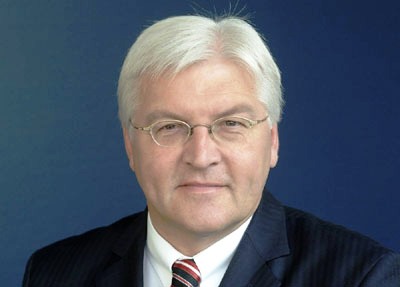
German FM Frank-Walter Steinmeier
Since the Bush administration’s twisting of events in the 2008 Russia-Georgia war, which the E.U. blamed on Georgia, Western populations have been subjected to the steady message that Russia is a “threat” to the West and is guilty of “aggression.” This reached a peak with the false narrative of events in Ukraine, in which blatant evidence of the West’s complicity in a violent coups d’état was omitted from corporate media accounts, while Russia’s assistance to eastern Ukrainians resisting the coup has been framed as a Russian “invasion.”
The disinformation campaign has reached the depths of popular culture, including the EuroVision song contest and sports doping scandals, to ensure widespread popular support for U.S. hostile intentions against Russia.
The Russian “aggression” narrative, based largely on lies of omission, has prepared the way for the U.S. to install a missile-shield in Romania with offensive capabilities and to stage significant NATO war games with 31,000 troops on Russia’s borders. For the first time in 75 years, German troops retraced the steps of the Nazi invasion of the Soviet Union.
U.S. Designs on Russia
The U.S. is eyeing a post-Putin Russia in which a Wall Street-friendly leader like Boris Yeltsin can be restored to reopen the country to Western exploitation. But Vladimir Putin is no Yeltsin and has proven a tough nut for the U.S. to crack. Washington’s modus operandi is to continually provoke and blame an opponent until it stands up for itself, as Putin’s Russia has done, then accuse it of “aggression” and attack in “self-defense.”
In this way, Washington builds popular support for its own version of events and resistance to the other side of the story. Unfortunately it is not a new trick in the U.S. playbook.
“The statesmen will invent cheap lies, putting the blame upon the nation that is attacked, and every man will be glad of those conscience-soothing falsities, and will diligently study them, and refuse to examine any refutations of them; and thus he will by and by convince himself the war is just, and will thank God for the better sleep he enjoys after this process of grotesque self-deception,” wrote Mark Twain.
So suddenly, after many years of an air-tight, anti-Russia campaign believed unquestioningly by hundreds of millions of Westerners, comes Steinmeier last week blurting out the most significant truth about Russia uttered by a Western official perhaps in decades.
“What we shouldn’t do now is inflame the situation further through saber-rattling and warmongering,” Steinmeier stunningly told Bild am Sontag newspaper. “Whoever believes that a symbolic tank parade on the alliance’s eastern border will bring security is mistaken.”
Instead Steinmeier called for dialogue with Moscow. “We are well-advised to not create pretexts to renew an old confrontation,” he said, saying it would be “fatal to search only for military solutions and a policy of deterrence.”
In keeping with the U.S. propaganda strategy, the U.S. corporate media virtually ignored the remarks, which should have been front-page news. The New York Times did not report Steinmeier’s statement, but two days later ran a Reuter’s story only online leading with the U.S. military’s rejection of his remarks.
NATO General: Russia is No Threat
Just a day after Steinmeier was quoted in Bild, General Petr Pavel, chairman of NATO’s military committee, dropped another bombshell. Pavel told a Brussels press conference flat out that Russia was not at a threat to the West.
“It is not the aim of NATO to create a military barrier against broad-scale Russian aggression, because such aggression is not on the agenda and no intelligence assessment suggests such a thing,” he said.
What? What happened to Russian “aggression” and the Russian “threat?” What is the meaning then of the fear of Russia pounded every day into the heads of Western citizens? Is it all a lie? Two extraordinary on-the-record admissions by two men, Steinmeier, the foreign minister of Europe’s most powerful nation, and an active NATO general in charge of the military committee, both revealing that what Western officials repeat every day is indeed a lie, a lie that may be acknowledged in private but would never before be mentioned in public.
Two years ago I was in a background briefing with a senior European ambassador at his country’s U.N. mission in New York and could hardly believe my ears when he said talk about Russia’s threat to Eastern Europe was “all hype” designed to give NATO “a reason to exist.” Yet this same ambassador in public Security Council meetings would viciously attack Russia.
But the hype is about more than just saving NATO. The fear campaign feeds the American and European military industries and most importantly puts pressure on the Russian government, which the U.S. wants overthrown.
Were these remarks made out of the exasperation of knowing all along that the Russian threat is hype? Were they made out of genuine concern that things could get out of hand under reckless and delusional leaders in Washington leading to a hot war with Russia?
Neither man has been disciplined for speaking out. Does this signal a change in official German thinking? Will German businessmen who deal with Russia and have opposed sanctions against Moscow over Ukraine, which were forced on Germany by the U.S., be listened to?
Were Steinmeier’s remarks a one-off act of rebellion, or is Germany indeed considering defying Washington on sanctions and regime change in Moscow? Is the German government finally going to act in Germany’s own interests? Such a move would spark a European defiance of the United States not seen since the days when Charles de Gaulle pulled France out of NATO in 1966 to preserve French independence.
The last time European governments broke with Washington on a major issue was the 2003 U.S.-led invasion of Iraq. Then France and Germany joined Russia on the U.N. Security Council in blocking the war’s authorization (although Britain supported it). But France and Germany then voted for a resolution several months later that essentially condoned the invasion.
It’s Up to the European Public
One has to ask whether a conditioned German public is ready to see through the lies about Russia. Last November, I flew from St. Petersburg to Berlin and discussed this very question with a number of well-educated Germans.
I had visited Russia for the first time since 1995, 20 years before to the month. Those were the days of the Yeltsin-Jeffery Sachs Russia, of the unbridled neoliberal capitalism of the Wall Street-oligarch alliance that plundered the country leaving millions of Russians destitute. Outside train stations I saw homeless encampments replete with campfires. Policemen were stopping motorists for bribes. I ran from two men intent on robbing me until I lost them in a Metro station. That’s the Russia the neocons in Washington and the knaves and buccaneers on Wall Street want to see again.
The Russia I saw in St. Petersburg and Moscow, 20 years later, was orderly and prosperous, as modern as any European city. It is a testament to Russia’s resistance to American attempts to restore its political and financial control. Russia is a capitalist country. But on its own terms. It is fully aware of American machinations to undermine it.
In Berlin I met several Germans, educated, liberal and completely aware, unlike most Americans, of how the United Sates has abused its post-World War II power. And yet when I asked them all why there are still U.S. military bases in Germany 70 years after the war and 25 years after the Cold War ended, and who the Americans were protecting them from, the universal answer was: Russia.
History shows European fears of Russia to be completely overblown. Germany and other Western powers have invaded Russia three times in the last two centuries: France in 1812, U.S., Britain and France in the 1918 Russian Civil War, and Germany again in 1941. Except for Imperial Russia’s incursion into East Prussia after war was declared on it in 1914, the reverse has never been true.
In his memoirs Harry Truman admitted that false fear of Russia was the “tragedy and shame of our time” during the Cold War that he had much to do with in part to revive the U.S. post-war economy with military spending. George Kennan, the State Department official who advised a non-military containment of the Soviet Union, conceded as early as 1947 that Soviet moves in Eastern Europe were defensive and constituted no threat. In the 1990s, Kennan also decried NATO’s expansion towards Russia’s borders.
With its vast natural resources, Russia has been the big prize for the West for centuries, and is still today in neocon-driven Washington. But Germany, especially, has benefited from trade with Russia and has no need to join the U.S. imperial project.
The British voters’ decision, days after Steinmeier’s extraordinary remark, could herald significant change in Europe, which may be approaching an historical junction in its relationship with the United States. Growing anti-E.U. sentiment has spread across the continent, including calls for similar referenda in several countries.
British voters evidently saw through the hype about the Russian “threat,” as a majority did not buy British Prime Minister David Cameron’s scare tactic ahead of the vote that Brexit would make it harder to “combat Russian aggression.”
Britain has been called Washington’s Trojan horse in the E.U. The thinking is that without Britain, the E.U. would be freer to chart its own course. But as Alexander Mercouris explained here, Obama bypasses London to call Merkel directly with his demands. Still, removing Britain’s voice from the E.U., though more crucially not from NATO, opens space for more independent voices in Europe to emerge.
“I worry that we will have less clout on our own,” former British Ambassador to the United States Peter Westmacott told The New York Times. “In the future, we won’t have as much influence on Europe’s response to Putin’s transgressions, Iran’s nuclear ambitions, or the E.U.’s foreign and security policy. … And we will be less able to ensure it is U.S.-friendly.”
But that could be a good thing. If German leaders conclude the United States is pushing Europe into a disastrous war with Russia, could we see a Charles de Gaulle moment in Berlin? Merkel doesn’t seem to have it in her. Three days after Steinmeier’s remarks, she told a news conference she favored increased German spending for NATO to counter Russian “threats.”
Instead it will require a revolt by an awakened citizenry against the E.U. and elected European governments that refuse to stand up to Washington, mostly because it benefits their own class interests, to the detriment of the majority.
The Future of the EU
European social democracy had been probably the best social and political system ever devised on earth, maybe the best that is humanly possible. Europe could have been a model for the world as a neutral power committed to social justice. As late as 1988, Jacques Delors, then president of the European Commission, promised the British Trades Union Congress that the E.U. would be a “social market.”
Instead the E.U. allowed itself to be sold out to unelected and unaccountable neoliberal technocrats now in charge in Brussels. European voters, perhaps not fully understanding the consequences, elected neoliberal national governments slavishly taking Washington’s foreign policy orders. But Brexit shows those voters are getting educated. Unity is a great ideal but E.U. leaders have refused to accept that it has to benefit all Europeans.
The E.U.’s Lisbon Treaty is the only constitution in the world that has neoliberal policies written into it. If it won’t reform — and the arrogance of the E.U.’s leaders tells us it won’t — it will be up to the people of Europe to diminish or dismantle the E.U. through additional referenda. That would give liberated European nations the chance to elect anti-neoliberal national governments, accountable to the voters, which can also chart foreign policies independent of Washington.
The danger is that the right-wing sentiment that has driven a large part of the anti-Establishment movements in Europe (and the U.S.) may elect governments that grow even closer to Washington and impose even harsher neoliberal policies.
That is a risk that may need to be taken in the hope that the anti-Establishment left and right can coalesce around shared interests to put an end to the elitist European project.
Joe Lauria is a veteran foreign-affairs journalist based at the U.N. since 1990. He has written for the Boston Globe, the London Daily Telegraph, the Johannesburg Star, the Montreal Gazette, the Wall Street Journal and other newspapers. He can be reached atjoelauria@gmail.com and followed on Twitter at @unjoe.
Brexit Raises Necessity for France’s EU Membership Referendum – EU Lawmaker
Sputnik — 24.06.2016
The decision of the United Kingdom to leave the European Union raises the necessity to hold a referendum on EU membership in France, Jean-Luc Schaffhauser, a French member of the European Parliament from the Europe of Nations and Freedom group, told Sputnik on Friday.
“It raises the necessity to make also a referendum in France,” Schaffhauser said in the wake of the Brexit vote.
On Thursday, the United Kingdom held a referendum on its EU membership, with Prime Minister David Cameron calling on the UK nationals to vote to remain. Earlier on Friday, it was announced that 51.9 percent of voters supported Brexit.
“It is a big opportunity to rebuild Europe on new basis and this basis would be Europe of nations, Europe of freedom and Europe of cooperation. For me it is not the end of Europe, it is an end of institutions [that] always want to have more power on top,” the lawmaker added.
Earlier, Marine Le Pen, the leader of France’s National Front party, known for its eurosceptic rhetoric, reiterated her demands to hold a referendum on the country’s EU membership after UK nationals voted to leave the bloc.
The British decision came at a time when anti-EU sentiment is on the rise. According to a survey issued by the Pew Research Center earlier in June, 47 percent of respondents in 10 European states have an “unfavorable view” of the European Union.
Featured Video
The Board For Peace – Whitewashing Ethnic Cleansing and Genocide
or go to
Aletho News Archives – Video-Images
Book Review
Conspiracy Denial
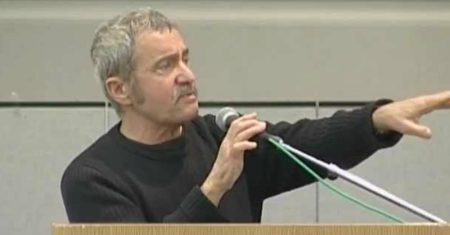
Lies are Unbekoming | January 27, 2026
In honour of Michael Parenti (1933–2026), who passed away on 24 January 2026 at the age of 92. He spent his life naming what power prefers to leave unnamed.
In 1837, Abraham Lincoln remarked: “These capitalists generally act harmoniously, and in concert, to fleece the people.”
Today, he would be dismissed as a conspiracy theorist.
That dismissal—reflexive, automatic, requiring no engagement with evidence—is not a mark of sophistication. It is a tell. The question worth asking is not whether conspiracies exist (they are a matter of public record and a recognised concept in law) but why acknowledging their existence provokes such reliable hostility. What work does the label “conspiracy theorist” actually do?
The late political scientist Michael Parenti spent decades answering that question. His conclusion was blunt: “’Conspiracy’ refers to something more than just illegal acts. It serves as a dismissive label applied to any acknowledgment of ruling-class power, both its legal and illegal operations.” The term functions not as a descriptor but as a weapon—a thought-terminating cliché that protects the powerful from scrutiny by pathologising those who scrutinise them.
Conspiracy denial, in Parenti’s analysis, is not skepticism. It is the opposite of skepticism. It is credulity toward power dressed up as critical thinking. As he wrote in Dirty Truths: “Just because some people have fantasies of conspiracies does not mean all conspiracies are imaginary.” … continue
Blog Roll
Recent Comments
eddieb on WEF Calls for ‘Cultural Revolu… loongtip on Trump wanted to play peacemake… Coronistan on EU member to sue bloc over ‘su… loongtip on Vicious loongtip on EU turns to India for defense… Coronistan on Donald Trump Is No Peace … seversonebcfb985d9 on French court jails pro-Palesti… eddieb on Fourteen Incredible Facts Abou… Bill Francis on European leaders’ shift in the… seversonebcfb985d9 on Villains of Judea: Philip Esfo… loongtip on Report warns that ‘Jewish terr… Craig Nelms on New study shows that toxic gas…


 Aletho News
- G7 Hands Ukraine $40Bln Generated From Frozen Russian Assets
- Conspiracy Denial
- Ukraine expects to join EU next year – Zelensky
- Here’s what’s behind the US shift on EU allies
- UN experts alarmed by prosecution of students protesting ETH Zurich’s Israel-linked research ties
- Exposed – How the UAE Became Central to Gaza’s Concentration Camp Plot
- How South Korea’s gas ambitions sustain the occupation of Gaza
- “Leaked document” exposes US blueprint for total control over Gaza
- Trump wanted to play peacemaker, Netanyahu made sure he failed
- Idea of limited, fast strike on Iran misjudges our capabilities: IRGC
- If Americans Knew
- Israel to seek new security deal from US, official says
- Leaked “Board of Peace” Resolution Outlines U.S.-Led Plan to Rule Over Gaza
- Jonathan Greenblatt Rolls Out Plan to Activate Hispanic Evangelical Golems
- Violence against hundreds of Gazan remains to find one Israeli – Not a ceasefire Day 109
- Greenpeace Demonstrator Exposes Folly of Protest Restrictions
- From CBS to TikTok, Pro-Israel Ellison is now in the driver’s seat
- Israel pays for UK advertisements attacking Doctors Without Borders
- Israel accused of extracting billions from Gazan people to pay for their own genocide
- ‘Deliberate Assassination’: 3 Journalists Among 11 Killed by Israeli Forces in Gaza
- In Gaza, We’re Struggling to Reintroduce Foods to Bodies Adjusted to Starvation
- No Tricks Zone
- New Study Affirms Rising CO2’s Greening Impact Across India – A Region With No Net Warming In 75 Years
- Germany’s Natural Gas Crisis Escalates … One Storage Site Near Empty …Government Silent
- Polar Colding…Antarctica Saw Its Coldest October In 44 Years!
- New Study: Sea Levels Rose 20 Times The Modern Rate During The Roman Warm Period
- As German Gas Storage Dips Dangerously Low…Shortage Hardly Avoidable
- New Study: Brazil’s Relative Sea Level Was 2+ Meters Higher And SSTs 3-4°C Warmer 6000 Years Ago
- Philosopher Schopenhauer: Climate Science Certainty Stems From Stupidity, Ignorance
- New Study: Species Extinction Rates Declining Since 1980 – ‘Climate Change Is Not An Important Threat’
- Denmark Places Climate Protection Above Animal Welfare, Poisoning And Culling Cows
- New Study: Greenland Was 3-7°C Warmer And Far Less Glaciated Than Today 6000-8000 Years Ago
 Aletho News