G20 Embraces Digital ID Dream While Critics Warn of Surveillance Nightmare
By Didi Rankovic | Reclaim The Net | September 19, 2024
The G20 organization, currently chaired by Brazil and recently holding a ministerial meeting there, is wasting no time falling in line with all the key policies advanced by many governments, and globalist elites.
After promising to do its bit in the “war on disinformation” (to the delight of the host, Brazil, whose present government is accused of censorship), G20 member countries “pledged allegiance” to the digital ID and the overall scheme that incorporates it – namely, the digital public infrastructure (DPI).
DPI already counts the UN, the EU, the World Economic Forum (WEF), and the Gates Foundation as policy backers and vocal promoters. Now G20 ministers with digital economy portfolios have issued a joint declaration to express their “commitment” to both DPI and “combating disinformation”, and there is also inevitably the talk of “AI.”
On the digital ID/DPI front, the ministers speak of “inclusive” DPI, and the same attribute is attached to AI. The declaration “acknowledges” the importance of things like innovation and competition in a digital economy, among other things, at the same time “reaffirming” the importance of digital transformation based on DPI.
Boilerplate remarks are made about transparency and protection of privacy and personal data – but these are the major concerns cited by opponents of this type of scheme, along with the overall fear that they facilitate new, more dangerous forms of mass surveillance through centralization of personal information and tracking of people’s activities.
Referring to digital ID as “a basic DPI,” the declaration further speaks of the Sustainable Development Goals (a UN agenda) and one of its targets to be achieved by 2030 by using digital ID (as a tool of “inclusion”) to provide “legal identity for all.”
Interestingly enough, free speech repression is not the only controversial policy where Brazil seems keen to lead the way; so is DPI, and the digital ID.
During the G20 meeting, Brazil promoted its DPI-related activities, including digital IDs based on biometrics. This policy is explained with buzzwords such as economic growth, sustainable development, and also, “easier access to financial services and government resources, particularly for underbanked populations.”
Biden endorses G20 Declaration to censor “disinformation”
By Christina Maas | Reclaim The Net | November 24, 2022
During the summit held in Bali, Indonesia, the G20 Leaders signed a declaration endorsing the censorship of “disinformation.” The Biden administration endorsed the declaration by publishing it on the White House website.
The G20 Bali Leaders’ Declaration mainly focused on climate change, including Sustainable Development Goals (SGDs). However, the leaders have linked SDGs with online censorship.
Section 24 of the declaration says there is a need to censor online disinformation.
“The COVID-19 pandemic has accelerated the transformation of the digital ecosystem and digital economy,” the section began. “We recognize the importance of digital transformation in reaching the SDGs.”
It adds that for there to be “trust in the digital economy,” they should “create an enabling, inclusive, open, fair and non-discriminatory digital economy that fosters the application of new technologies, allows businesses and entrepreneurs to thrive, and protects and empowers consumers.”
The G20 leaders believe there is a need to censor “false” information for digital infrastructure to thrive: “We acknowledge the importance to counter disinformation campaigns, cyber threats, online abuse, and ensuring security in connectivity infrastructure.”
The White House endorsing a declaration that calls for more censorship is not surprising considering it is the subject of the lawsuit filed by Missouri’s and Louisiana’s Attorneys General alleging collusion between the government and social media companies to censor viewpoints surrounding Covid and more.
Economic isolation breach of international law: Putin
Top 5 takeaways from Putin ahead of G20
RT | November 14, 2014

Russian President Vladimir Putin (RIA Novosti/Mikhail Klementiev)
Vladimir Putin says the G20 must address global imbalances together, and economic isolation, especially in the case of sanctions, which not only leads nowhere but is a crude violation of international economic law.
Here are the Russian president’s top takeaways ahead of the G20 summit being held in Brisbane, Australia from November 14-15.
G20 great for ground work, but decisions often just hot air
Putin believes the G20 is still a good and relevant platform for world leaders, however, decisions at the summit are often nothing but words. Decisions made there are only carried out when they are in line with the interests of certain global players, like the US.
Decisions are neglected if they don’t fit the agenda of an individual power, Putin told TASS ahead of the summit.
An example is when US Congress blocked the IMF quota, which was intended to enhance the role of developing economies and redistribute quotes. That move was counterproductive, Putin said.
“The very fact that US Congress has refused to pass this law indicates that it is the United States that drops out of the general context of resolving the problems facing the international community,” the president said.
“Everyone must understand that the global economy and finance these days are exceptionally dependent on each other,” Putin said.
US sanctions violate the very system they created
Sanctions levied against Russia are against the norms of international trade and the core principles of the G20, as they can only be introduced via the United Nations, Putin said.
Sanctions are “against WTO principles and the General Agreement on Tariffs and Trade, the GATT. The United States itself created that organization at a certain point. Now it is crudely violating its principles,” Putin explained

Interconnected economy: What hurts us hurts you
Sanctions against Russia have targeted the finance, energy and weaponry sectors of the economy. Russia’s retaliatory sanctions to ban agricultural imports are having a colossal ripple effect on jobs, social sectors, and growth.
This is especially pertinent to Europe, which is feeling the squeeze of the agricultural export ban to Russia, one its biggest markets.
“Everyone must understand that the global economy and finance these days are exceptionally dependent on each other,” Putin said.
Germany’s economic growth is an example of financial blowback from sanctions with Russia.
US-led trade pacts will create global imbalance
Putin believes that the creation of the 2 US-led trade pacts – one Transatlantic and the other Transpacific – will only create more global imbalance. The US-led Trans-Pacific Partnership (TPP) doesn’t include China or Russia.
“Of course, we want to get rid of such imbalances, we want to work together, but this can be achieved only through joint efforts,” Putin said.
New economic associations should complement existing institutions
All new emerging economic blocks like BRICS and the so-called ‘new G7’, which in addition to Brazil, Russia, India and China also includes Indonesia, Turkey and Mexico, should come as something complementary to the existing groups, Putin said.
According to purchasing power parity (PPP) BRICS nations have a combined GDP $37.4 trillion, more than the G7’s at $34.7 trillion, Putin said. However, its economic girth doesn’t give it the right to start running its own policy.
“And if we go and say, ‘No, thank you, we are going to do this and that here on our own, and you can do it the way you want it,’ this will only add to the imbalances,” Putin warned.
The Russian president also said that all regional integrations like the Russia-led Eurasian Economic Union with Belarus and Kazakhstan shouldn’t isolate, but complement, global institutions.
Full speech: Putin on G20: Russia sanctions contradict club principles
Featured Video
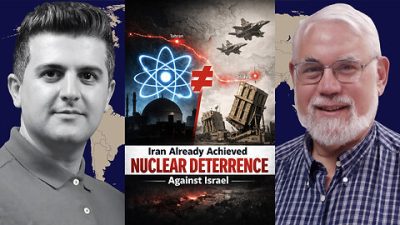
Prof. Ted Postol: Iran Already Achieved Nuclear Deterrence Against Israel
or go to
Aletho News Archives – Video-Images
From the Archives
How the occupied mentality syndrome works
Saudi Arabia on the American chessboard – Part 3
By B. J. Sabri | American Herald Tribune | June 27, 2016
Read part 2: “The occupied mentality Syndrome“
Previously I argued whether Saudi Arabia’s repeated involvements in U.S. interventions and wars stem from free national will or in response to a specific condition. For starters, in Saudi Arabia there is no national will. In Saudi Arabia, the national will is the will of the Al Saud clan. Still, when a major Arab state allies itself with a superpower that committed unspeakable crimes against humanity in almost every Arab country, then something is wrong. This fact alone should compel us to examine the U.S.-Saudi relation for one exceptional reason. As a result of the U.S.-Saudi wars, hundreds of thousands of people in Afghanistan, Iraq, Iran, Libya, Syria, Yemen, and Somalia have lost their lives. Millions became displaced in their own homelands. And millions more rendered refugees.
Attributing the Saudi policies to the bonds of “partnership” with the U.S. is frivolous. There are no bonds between these two thugs except those of business, military deals, secret plots, and wars. Proving this point, bonds such as these have no space for the American and Saudi peoples to share significant cultural or societal exchanges. If partnership is not the reason for the Saudi contribution to the U.S. strategy of empire and imperialism, then another reason must exist.
This leads to three possibilities. … continue
Blog Roll
 Aletho News
- NIAID/NIH and USDA Fund Bioengineered Chimeric Influenza Viruses Built Using Pandemic H1N1 Components: Journal ‘Science Advances’
- Hezbollah hits Israeli warship off Lebanon’s coast, sets it aflame
- Iran slams US strikes on B1 bridge, Mahshahr petrochemical plants as ‘blatant acts of state terrorism’
- In letter to UN chief, Araghchi warns of dire consequences of US-Israeli attacks on Iran’s nuclear facilities
- Why the CIA conspiracy to invade Iran with Kurdish militias failed
- Why Are Upbeat US Claims About Mission to Rescue Pilot ‘Highly Questionable’?
- Aircraft destroyed during US ‘rescue’ of downed F-15 pilot cost more than $100 million each
- Washington University removes professor who condemned US-Israeli war on Iran
- Russia Warns of Retaliation as UK Authorizes Seizure of Vessels
- Serbia thwarts plot to bomb Russia-Hungary gas pipeline – Vucic
- If Americans Knew
- In Iran, Israel-US take aim at “reason, research, and freedom of thought” – Daily Update
- US loses planes over Iran, Israel downgrades Lebanon war goals – Daily Update
- Israel Is Blocking Palestinians from Easter at Church Where Jesus Resurrected
- Plot to assassinate Palestinian activist follows harassment campaign promoted by Zionist groups and elected officials
- Prominent New York synagogue hosts presentation on why U.S. Jews should support the ethnic cleansing of Gaza
- Tapper vs. Piker: Is the CNN Anchor Auditioning for David Ellison?
- Shouldn’t Democrats Be Able to Condemn Genocide?
- Israel-US kill negotiators, destroy civilian structures, but Iran’s military capabilities still largely intact – Daily Update
- ‘War crime’: Global condemnation as Israeli ministers celebrate death penalty law targeting Palestinian prisoners
- 7 Ways Israel Is Turning Lebanon Into Gaza
- No Tricks Zone
- An Inconvenient Tree: Uncovered In Alps… Europe Much Warmer Than Today 6000 Years Ago
- New Study Reports A 60% Slowdown In Greenland’s Ice Loss Rate In The Last Decade
- Low Intensity Tornado Wrecks Major Solar Farm, Creating A Potential Toxic Dump
- New Study Finds Warming Saves Lives…Cold Temperatures 12 Times More Deadly Than Excess Heat
- German Science Blog Accuses PIK Climate Institute Of Hallucinating Climate Tipping Points
- Devastating Assessment Of Comirnaty Vaccine By Former Senior Pfizer Europe Toxicologist
- New Study: CO2 Is ‘Effectively Negligible’ As An Explanatory Climate Change Factor Since 2000
- Former Pfizer Toxicologist Dr. Helmut Sterz Tells Bundestag Hearing Pfizer Vaccine Should Have Never Been Approved
- Energy Expert: Germany’s Nuclear Phaseout Was A “500 Billion Euro Mistake”
- New Research: South Australia’s Mid-Holocene Sea Surface Temperatures Were 4°C Warmer Than Today
 Aletho News