The adoption of a resolution by the United Nations Security Council (UNSC) on Friday with focus on a pause in the fighting in Gaza to allow for the delivery of more humanitarian aid can be seen as a turning point in the tortuous journey toward imposing a sustainable ceasefire.
But a caveat must be added that the ultimate litmus test lies in the implementation of the UNSC resolution, as the past history of such resolutions on Palestine does not give cause for optimism.
In fact, Israel’s defiance was in full view already. As the Security Council passed the resolution, Israeli forces pushed ahead with their offensive into Gaza on Friday and ordered residents in Al Bureij — an area in central Gaza where Israel had not previously focused its offensive — to evacuate. The Israeli military’s chief spokesman Rear Adm. Daniel Hagari said on Thursday: “Our forces continue to intensify ground operations in northern and southern Gaza.”
UN Secretary General António Guterres was spot on when he told reporters after the resolution was passed that “a humanitarian ceasefire is the only way to begin to meet the desperate needs of people in Gaza and end their ongoing nightmare.”
The resolution itself is the outcome of week-long intense negotiations between the United States and the Arab countries that sponsored it — the UAE and Egypt, in particular — to settle for the lowest denominator, which meant accepting a Washington-friendly text that enabled the Biden administration to evade responsibility for another veto, for the third time since 7 October.
Unsurprisingly, the US negotiators brazenly resorted to pressure tactics by drawing on their usual diplomatic tool box — blackmail, arm-twisting and ultimatums — to water down the text to the extent that important provisions relating to a ceasefire and a UN mechanism to facilitate the delivery of humanitarian aid to Gaza and ensure its monitoring were abandoned.
And, yet, the US abstained in the vote at the end of the day, registering its reservations — principally, that the resolution was silent on the attack by Hamas on 7 October.
The unkindest cut of all is that the resolution accommodated the US diktat to replace the language describing an immediate cessation of violence with an ambiguous phrase calling on the parties to “create conditions for a cessation of hostilities.” The wording meets the Israeli requirement to have a free hand to continue with its barbaric military operations.
This anomaly, coupled with the absence of any reference to the condemnation of indiscriminate attacks by the Israeli military against civilians almost delivers the wrong signal that the Security Council is effectively becoming an accomplice to the destruction of Gaza — a misnomer that agitated Russia so much that it proposed a last-minute amendment to replace the phraseology in the resolution: “to create the conditions for a sustainable cessation of hostilities” with the unambiguous call “for urgent steps toward a sustainable cessation of hostilities.”
Russia’s demand for an immediate ceasefire was in line with a resolution overwhelmingly passed by the UN General Assembly recently, but the Americans would have nothing of that sort. The unfortunate part is that the Arab sponsors of the resolution caved in to US blackmail to veto the resolution. What transpired between the protagonists behind the scenes is not known.
The paradox is that, in reality, the Americans themselves were desperately keen to avoid casting a veto — the third in as many months — that would have made a mockery of President Joe Biden’s bombastic remark in his September speech at the UN last year that the permanent members of the Security Council should cast vetoes only under “rare, extraordinary situations to ensure the council remains credible and effective.”
All indications are that the US is acutely conscious of finding itself “diplomatically isolated and in a defensive crouch,” as the New York Times put it in an acerbic commentary on the Biden administration’s plight as “an increasingly lonely protector of Israel … (that) puts it at odds with even staunch allies such as France, Canada, Australia, and Japan.”
The commentary says that what rankles most is that first, when the US seems to have green-lit a massive Israeli military response to 7 October “without guardrails,” it:
“painfully confirmed to many in the (global) south this sense that there was a double standard” — and second, even more, “the Russian strategy works, because beyond the United Nations what everyone sees is Russia standing up for international law — and the US standing against it.”
The crux of the matter is that Israel’s Gaza operation is running into a Cornelian dilemma (dilemme cornélien) where sooner rather than later, it is obliged to choose one option from a range of options, all of which reveals a detrimental effect on itself.
Hamas’ top leaders have evaded capture so far, and Gaza’s armed resistance groups have continued to fire rockets into Israel, including two barrages that reached Tel Aviv and its environs last week.
According to another New York Timesreport,“ political commentators and some military experts have been lowering expectations for a quick and decisive Israeli victory.
“Nobody should imagine that there will be a situation where we put a flag on top of a hill and say: OK, we won, and now Gaza will be peaceful and safe. It will not happen,” said Gabi Siboni, a colonel in the reserves and a fellow at the conservative-leaning Jerusalem Institute for Strategy and Security. “The reality is that we are going to be fighting in Gaza for years to come.”
But is that sustainable — even if Israel controls the US Congress? Conceivably, Israel’s main goal in Gaza was to ethnically cleanse the Strip and drive the Palestinian population to Egypt and Jordan by killing and starving them and making Gaza unlivable.
The real significance of the UNSC resolution, therefore, lies in that such an Israeli game plan will not fly. By not vetoing the resolution, the US may also have signaled that it will not allow the ethnic cleansing. There seems to be an understanding on this score between the US and the Arab protagonists at the political level — Egypt, in particular.
On the other hand, can Israel really destroy Hamas while the Palestinian population remains in Gaza? No, it will not be possible. Now, there is reason to believe that Hamas is inflicting significant damage to the Israeli military. The retreat of the Golani Brigade from the Gaza operation also points in that direction.
The bottom line is that the Israeli operation in Gaza will have to take a different form during the next several weeks — one that is anchored on surgical strikes rather than continuing with the extended ground operation and open-ended Israeli occupation. With warts and all, the Security Council resolution that was passed on Friday paves the way for such a transition.
In yet another case of blowback, reflecting the failure of Western military interventionism in West Asia, Yemen’s Ansarallah (Houthi) movement has inserted itself as an active participant in the ongoing war between Israel and Gaza. First launching batches of loitering munitions, ballistic and cruise missiles towards Israel, Ansarallah then moved on to prevent the passage of Israeli-owned or operated ships through the Red Sea, before announcing a complete closure of the shipping route for any vessels destined to dock at the port of Eilat.
After the Houthis seized a number of ships, while attacking others with drone strikes, activity at Eilat has dropped some 85%. International and Israeli shipping companies have opted to take the long route, which in some cases takes an additional 12 days, to reach Israel with their cargo, a costly diversion to say the least. In opposition to this, US Defense Secretary Lloyd Austin traveled to the region and announced the formation of a multinational naval task force to be deployed in the Red Sea. Despite talk of the coalition including Saudi Arabia, Egypt, and even the United Arab Emirates, the only Arab nation that joined was Bahrain.
So, without a United Nations Security Council (UNSC) resolution to back them up, usually required to make the militarisation of a territory legal under international law, the US has launched yet another foreign intervention. This one is significant because it failed to convince any major regional players to join, demonstrating the decline in American influence, but has also elevated the status of Yemen’s Ansarallah.
Under former US President Barack Obama, Washington backed the Saudi-led coalition’s intervention in Yemen back in 2015. Since then, some 377,000 people have died, largely as a result of the deadly blockade imposed on the majority of the country’s population, while some 15,000 civilians have died due to direct conflict. The objective of the Saudi-led intervention, which received the backing of the US and UK, was to remove Ansarallah from power in the nation’s capital, Sanaa. Although the group does not enjoy international recognition as Yemen’s governing force, it rules over more than 80% of the population, has the support of two-thirds of the nation’s armed forces, and operates a government out of Sanaa.
Ansarallah came to power following a popular revolution against then-Yemeni President Abdrabbuh Mansour Hadi in 2014. Months later, Hadi resigned and fled the country after Ansarallah militants had decided to take over by force. In the midst of a seven-year war, the political, social and armed movement that is often referred to as “the Houthi rebels” operates as the de facto government of Yemen, but is yet to receive recognition at the UN, which instead recognises the ‘Presidential Leadership Council’ that was created in Riyadh, Saudi Arabia, in 2022.
The context above is crucial for understanding the capabilities of Yemen’s Ansarallah, which was downplayed as a band of “Iran-backed rebels” in Western corporate media for years. While the governments of the collective West have tried to pretend that the Yemeni group is insignificant, Washington’s recent decision to form a multi-national naval coalition to confront the Houthis is an admission that they are a major regional actor. In fact, Ansarallah is the only Arab movement that controls state assets and a standing army that is participating in the ongoing war with Israel.
The reality that the US is now confronting is something that both Saudi Arabia and the UAE came to realize early last year. Following two separate drone and missile attacks on Abu Dhabi and Dubai in January of 2022, it became apparent that the West’s current level of support could not provide sufficient security for the UAE. Up until a nationwide ceasefire was brokered in April 2022, Ansarallah had also demonstrated its developed missile and drone capabilities, striking valuable economic targets inside Saudi Arabia too.
Despite receiving a lot less attention than it deserved, Ansarallah forces strategically timed their second attack on the UAE to coincide with the arrival of Israeli President Isaac Herzog in the country. This was a clear message to the Emirati and Saudi leaderships that Western support will not provide sufficient security. It’s likely because of this threat from Yemen that Riyadh sought a security pact with the US, in order to make a normalization agreement with Israel possible. Such a security pact would have stipulated that an attack on one is an attack on all, hence dragging the Americans into a direct war against Yemen in the event that the conflict was to flare up again.
The US attempted to help topple the current government in Sanaa, but ended up creating a battle-hardened group that has domestically developed capabilities well beyond those it possessed at the start of the conflict in 2015. In his first foreign policy address after taking office in 2021, US President Joe Biden pledged to end the war in Yemen. However, instead of pursuing a Yemen-Saudi deal, the White House abandoned its pledge and sought to broker a Saudi-Israeli deal instead. That fatal decision is coming back to bite policymakers in Washington.
Backing the Israelis to the hilt in their war on Gaza, spelling out that there are no red lines as to how far the government of Benjamin Netanyahu can go, the US has allowed a Palestine-Israel war to expand into a broader regional Arab-Israeli conflict. The threat of escalation between the Israeli army and Lebanese Hezbollah is growing by the day, while Ansarallah leader Abdul-Malik al-Houthi has stated that his forces “will not stand idly by if the Americans have a tendency to escalate and commit foolishness by targeting our country.”
By every metric, US diplomatic stock has dropped internationally as a result of its handling of Israel’s war on Gaza. It has failed to convince any major regional actors in West Asia to back its escalatory agenda, all of which are standing on the same side as Russia and China in calling for a ceasefire. The world sees the hypocrisy of Washington. For the sake of comparison, the death toll in Gaza today is said to have exceeded 23,000, the majority being women and children. Israel has killed this many people in just over two months, while in the first two years of the ISIS/Daesh insurgency in Iraq, the UN estimated that the terrorist group killed some 18,800 civilians. The total number of civilians killed by ISIS in Syria is set at just over 5,000.
The level of human suffering being inflicted in Gaza is without precedent, breaking records in modern history for the tonnage of explosives dropped on such a small territory, in addition to the highest number of journalists, medical workers, and children killed in a single conflict. In reaction, the US government has repeatedly blocked ceasefire resolutions at the UNSC, gives Israel unlimited support unconditionally, and now threatens to drag a coalition of Western nations into a war on Yemen. The solution here is very simple: Ansarallah has said the blockade on ships to Israel will end when the war on Gaza ends. Washington has the ability to stop the war, but refuses to do so, while its threats against Yemen will not work to achieve any result beyond further escalation.
Robert Inlakesh is a political analyst, journalist and documentary filmmaker currently based in London, UK. He has reported from and lived in the Palestinian territories and currently works with Quds News. Director of ‘Steal of the Century: Trump’s Palestine-Israel Catastrophe’.
The United Nations Security Council has finally passed a resolution on the ongoing Israeli onslaught against Gaza, demanding increased aid deliveries to the besieged region but stopping short of calling for an immediate halt to the genocide.
The watered-down resolution, ratified on Friday, demanded all sides in the conflict allow the “safe and unhindered delivery of humanitarian assistance at scale.”
It also called for the creation of “conditions for a sustainable cessation of hostilities” but it did not call for an immediate end to fighting.
The vote in the 15-member council was 13-0 with the United States and Russia abstaining.
The vote followed the US veto of a Russian amendment that would have restored that call for a suspension of hostilities. That vote was 10 members in favor, the US against and four abstentions.
The text, sponsored by the United Arab Emirates, was passed following days-long negotiations over its wording, during which it was watered down at the US request.
Washington had earlier vetoed two UNSC resolutions on the conflict, drawing widespread condemnations over the body’s lack of action since the start of the onslaught.
Russia says resolution ‘toothless’
Russian ambassador to the UN Vasily Nebenzya hit out at the United States, saying “they have resorted to their favorite tactic… of twisting of arms”, calling the text “toothless.”
The UAE’s ambassador to the UN Lana Zaki Nusseibeh said “it responds with action to the dire humanitarian situation.”
“We know this is not a perfect text… We will never tire of calling for a humanitarian cease-fire,” she said.
The resolution demands all sides “allow and facilitate the use of all… routes to and throughout the entire Gaza Strip, including border crossings… for the provision of humanitarian assistance.”
It also requests the appointment of a UN humanitarian coordinator to oversee and verify third-country aid to Gaza.
An earlier text had said that the aid mechanism to accelerate the delivery of relief would be “exclusively” under UN control.
It now states it would be managed in consultation with “all relevant parties” — meaning Israel would retain operational oversight of aid deliveries.
Israel has pounded the Gaza Strip since October 7, killing at least 20,057 Palestinians, mostly women and children, and injuring 53,320 others, according to health authorities in the region.
The Israeli onslaught has left Gaza in ruins with half of the coastal territory’s housing stock damaged or destroyed, and nearly 2 million people displaced within the densely-populated territory amid shortages of food and clean water.
In a 2002 interview the former Israeli government minister Shulamit Aloni was asked by Amy Goodman: “Often when there is dissent expressed in the United States against policies of the Israeli government, people here are called antisemitic. What is your response to that as an Israeli Jew?” Shulamit Aloni replied “Well, it’s a trick, we always use it. When from Europe somebody is criticizing Israel, then we bring up the Holocaust. When in this country [the US] people are criticizing Israel, then they are antisemitic.” She added that there is an “Israel, my country right or wrong” attitude and “they’re not ready to hear criticism.” Antisemitism, the Holocaust and “the suffering of the Jewish people” are exploited to “justify everything we do to the Palestinians.”
Currently Israel is involved in a conflict with Hamas in Gaza that it has described as a “war” though the disparity in force levels involving a country with a modern fully equipped army, navy and air force versus something more like a militia armed with small arms and home-made rockets suggest that a different label might be more appropriate. The fighting has been constant apart from a six day pause to exchange hostages and prisoners and promises to continue into the New Year, and possibly much longer, due to the difficulty in engaging in anything like conventional warfare in a bombed out and devastated urban environment that favors the defense.
Israeli extreme brutality has been on display for all the world to see. Last week, Israeli soldiers shot dead three Jewish hostages who had escaped from their Hamas captors under cover of an Israeli bombardment. The hostages took most of their clothes off so it could be clearly seen that they were unarmed and they were carrying a white flag with their hands in the air, but the soldiers reacted by shooting two of them immediately. The third took cover in a building while calling for help in Hebrew, but he too was pursued and killed. In another incident two Catholic women, mother and daughter, taking shelter in Gaza’s only Catholic church were targeted and shot by Israeli snipers. This produced a rebuke from the Pope.
However it turns out, the conflict in Gaza will be Israel’s longest “war” by far since the creation of the country in 1948. Israel’s intention is to force the Gazans to leave whether by forced resettlement in neighboring countries, in Europe or in the United States, or by killing them all. The deputy mayor of Jerusalem has recently labeled the Palestinians “subhumans” and has recommended rounding them up and burying them alive. He is not alone in that viewpoint and, at a minimum, many government ministers believe that the best outcome of the Palestinian problem is to get rid of the Palestinians in Gaza and also on the West Bank completely, whatever that takes, to establish once and for all “Eretz” or Greater Israel from the Mediterranean to the Jordan River and possibly even expanding into southern Lebanon and Egypt’s Sinai.
Israeli willingness to use bombs, starvation and even disease against the Palestinians in what is now being frequently referred to as a genocide has meant that the Jewish state’s list of friends around the world has shrunk dramatically and is limited to several European states and the US under self-declared Zionist President Joe Biden. A UN Security Council motion calling for a ceasefire was blocked by a US veto even though the ten other council members voted for it with one abstention by the UK. A subsequent call for a ceasefire, ignored by Israel, obtained 153 “Yes” votes in the UN General Assembly against 10 “Nos” two of which were Israel and the United States plus US “freely associated” micro-states Micronesia and Palau which always align with Washington. And even in those mostly European countries nominally supporting Israel’s attacks in Gaza, there have been large demonstrations supporting the Palestinians. As the death toll among civilians approaches and almost certainly has already exceeded 20,000, many governments have begun to hedge their bets and wobble in their assertions that “Israel has a right to defend itself.” Defense does not apparently include targeting hospitals, schools, churches and apartment buildings full of fearful civilians seeking shelter from the explosions. Even Joe Biden is calling for restraint in the “indiscriminate” bombing though he is also expediting providing the Israelis with more bombs to do the killing.
As the crisis in Gaza worsened, the UN responded with yet another Security Council resolution, which was introduced by the United Arab Emirates on December 18th. The vote was subsequently delayed three times until the 21st primarily to allow time for debate over the exact wording so as to make it acceptable to the United States in order to avoid another veto by Washington. Cynics have been quick to observe quite plausibly that the Biden Administration is seeking to vote in favor of or abstain on a document that is completely toothless, allowing Israel to do whatever it wants, as is usually the case. The vote on “urgent humanitarian pauses” was expected on Thursday December 21st, but the US again forced a delay for further discussion after aligning its position with that of Israel and claiming, falsely, that UN involvement in the monitoring of assistance would actually slow down relief efforts.
Israel had previously insisted, with US support, that UN direct involvement in monitoring and coordinating the massive humanitarian effort needed to help the Gazans should not be permitted. Israel demanded that only it should be responsible for inspecting incoming goods for “threats,” which, as the Jewish state is a party to the conflict, will itself inevitably and intentionally slow down assistance dramatically and will result in many unnecessary deaths. And Israeli Prime Minister Benjamin Netanyahu also objected to the possibility that some wording in the resolution might suggest transformation of the “pause” into a lengthy ceasefire rather than a temporary “suspension” of hostilities with fighting resuming after a short period. Netanyahu has vowed that the military action will continue until all Hamas leaders and followers have surrendered or are dead. He is also demanding the immediate release of all Israeli hostages as a sine qua non for further deliberations on what might come next.
More important to Americans than dishonest parliamentary maneuvers at the UN should be the fact that defending Israel has meant that there is underway a wholesale assault on the First and Fourth Amendments of the Bill of Rights relating to freedom of speech and association. The attacks are being conducted by the Israeli Lobby and its assets and allies in both of the major political parties, the mainstream news media, Zionist-dominated American social media, and the American National Security apparatus. This has distorted what has happened in Gaza and why by turning the narrative of the conflict into a totally false bit of propaganda claiming alleged Arab terrorism and irredentism directed against the poor Jewish Israelis, who are once again serving as the featured victims. In America, universities are being described as hotbeds of surging antisemitism because students are protesting against Israel’s ethnic cleansing in Gaza while the heavily Jewish-influenced media and Jewish billionaires are working overtime to do whatever it takes to block any and all such criticism. Interestingly, the drive to ban or shut down protests and gatherings has had some major success directed against Arab or Muslim groups in a number of states with no Jewish groups on campus or in the community being interfered with in spite of their often robust support of Israel’s killing spree in Gaza.
The interference of Israel in both American domestic and foreign politics will only get worse in the upcoming year due to national elections. A number of Jewish groups are currently raising money and organizing to go after critics of Israel more aggressively, most particularly the few progressives in the Democratic Party who have spoken up about the genocide of the Palestinians that is taking place. Since the Israel Lobby already controls the White House, its aim is to make the Congress a 100% loyal cheerleader and protector of Israel and all its works, to include the continuing flow of billions of taxpayer dollars annually. Some major American Jewish organizations have, for example, just launched “The 10/7 Project” which will feature centralized communications to promote bipartisan support of Israel. “The 10/7 Project” will be sponsored and managed by the American Jewish Committee, the Jewish Federations of North America, the Anti-Defamation League, the American Israel Public Affairs Committee, and the Conference of Presidents of Major American Jewish Organizations.
Ted Deutch, CEO of the American Jewish committee explained “The 10/7 Project’s” purpose, saying that “Since October 7, there has been a concerted and consistent effort from Israel’s enemies to draw a false and dangerous equivalence between Hamas’ deadly rampage to destroy the Jewish state and Israel’s right to defend itself against terrorists. ‘The 10/7 Project’ will be a trusted and timely source of accurate information to set the record straight and combat false narratives perpetuated by Hamas terrorists and their anti-Israel allies… At this critical juncture, it is imperative that we separate fact from fiction regarding America’s most important Middle East ally and remind people that the vast majority of Americans understand that Hamas is our common enemy.”
What Deutch is really saying between the lies and misinformation is that there will be a well-funded and staffed effort to stifle criticism of Israel’s slaughter of the Palestinians using a narrative that portrays the Israelis as victims of Arab terror, an assertion which might well be described as Zionist propaganda and fact twisting. The attacks on free speech at universities will definitely be on the agenda, in a campaign that started several months ago, when students at a number of public and private universities began protesting over Israel’s deliberate targeting of civilians, leading to a death toll that is almost certainly currently approaching or exceeding 20,000 when all the corpses are dug up from the rubble of bombed buildings.
As the anti-Palestinian narrative took shape in political, media and Zionist circles, it adopted a familiar line, which goes something like this though with slight adjustments to reach target audiences: Israel is the Jewish state. If you criticize the Jewish state and/or Zionism you are therefore by the definition accepted by the US government State Department Special Envoy to Monitor and Combat Antisemitism an antisemite. Antisemitism is a “hate crime” since it is by the same logic based on hatred of Jews. If you advocate or argue for any Palestinian group like Hamas, which the US government has conveniently labeled “terrorist” even though it has never threatened Americans, you are providing “material assistance to terrorism” which is a crime for which you can be fined or imprisoned. The end result is that Israel, which is immune from the consequences of its own actions internationally, also increasingly cannot be criticized at all without serious consequences for the critic, which have included posting the names of protesting students on lists of alleged antisemites so they will be unable to find work after they graduate. In other words, freedom of speech in the United States and also in some European countries including France and Germany only exists, insofar as it does, if you are not disparaging Israel or even its friends due to their easily demonstrable “war criminal” behavior.
Some of those consequences of not rolling over for the Israel Lobby were experienced recently by three presidents of prominent American universities, responding to a congressional December 7th grilling that was set up to address concerns over allegations that colleges are hotbeds of antisemitism and are responsible for major increases in incidents targeting Jews. The presidents of the University of Pennsylvania Liz Magill, Harvard Claudine Gay and MIT Sally Kornbluth were grilled by Congress but were afterwards trashed because they were unwilling to agree with the congressional interrogators that Jews were being terrorized on campus, observing that words must have a physically threatening or harassing “context” if they are to be banned or blocked.
The responses of the three women suggesting that speech should remain free on campus were found to be unacceptable by Congress and the largely Zionist media. Magill has since resigned, joined by the chairman of the university board of trustees Scott Bok, who was immediately replaced by Julie Beren Platt, head of the Jewish Federations of North America, who has been named interim board chair. But politicians joined by prominent commentators and philanthropists still continue to call for the others to resign as well, though Harvard’s Gay has received a vote of confidence from her board and also from faculty and students. Many major Jewish donors have coupled those “calls” with threats that their multi-million dollar gifts would be withdrawn if the presidents stay on. In one example, Penn lost a $100 million donation from Ross Stevens, who pulled it after the hearing. Those seeking to punish appear to be undeterred by the fact that their actions have already sparked discussions about unacceptable levels of Jewish power, often including the observation how promise of money or denying it is used as an instrument to obtain what Israel and its Lobby want.
There is a certain irony in the allegations since Jews in America are the wealthiest, best educated, most politically powerful, most prestigiously employed and most protected by Homeland Security of all ethno-religious demographics. And there is not much real evidence that Jews are in any way increasingly “victims” in the United States or in Europe. The antisemitic incidents that are “surging” are frequently based on criticisms of what the Israelis are doing to the Palestinians and often consist of a Jewish college student being offended or annoyed by a poster or a speaker criticizing Israeli behavior. Instances of actual physical confrontation are few and far between and are immediately reported in the accommodating mainstream media to heighten the sense that Jews in America and even worldwide are threatened. Certain groups like the American Israel Political Action Committee (AIPAC) and the Anti-Defamation League (ADL) are heavily into the promotion of the narrative of Jew hatred as it is in their bottom line to do so given their donor base which likes to hear exactly that.
In other words, what one reads and hears about “surging antisemitism” is largely a contrivance to obtain political and economic benefits as well as a free pass on bad behavior both by Israel and domestically that might not otherwise be forthcoming. And it should be noted in passing that the Israel Lobby groups have somehow avoided registering with the Department of Justice, as required by the Foreign Agents Registration Act (FARA) of 1938, which would require them to maintain transparency over their funding and political activity. The last American president who tried to register what became the Israel Lobby and also sought to stop Israel’s illegal secret nuclear weapons program was John F. Kennedy. Some suspect that Israeli interests might have played a part in his assassination as a result.
Some congressmen have been particularly incensed by student pro-Palestinian demonstrators chanting “Intifada” and “From the river to the sea, Palestine will be free,” interpreting both expressions being calls for the destruction of Israel, which they are not. Intifada is “shaking off” in Arabic and is a call for liberating the Palestinian people and their land from the Israeli tyranny. The “river to sea” is somewhat similar, a call for a Palestinian state with actual sovereignty and neither is an explicit call for killing Israelis or Jews. They might be considered generic cries for freedom.
But the real mystery in this is why is it happening at all? Jews are supposed to be smart but is it smart to reveal how much power you have, particularly when you are prepared to wield it ruthlessly to suppress people who just might begin to wonder if there is something going on that is being deliberately contrived to benefit a tiny percentage of the US population and a foreign government? And if that kind of thinking catches on, which I believe it already has, there might be serious discussions of ways to counter the efforts to limit free speech and association for citizens who are not comfortable with the way Israel behaves and the way the US Israel Lobby silences critics. Instead of trying to criminalize what people are thinking, wouldn’t it be smarter and even more ethical for American Jews to call on Israel to stop the killing and work out some formula that allows the Palestinians at least a modicum of self-government and freedom? That would seem to make sense and many Jews in the US are actually making that argument. The problem is to also convince the hard core and well financed Jewish groups that support Israel no matter who it has to kill that learning to live together with equal rights is the way to go. And then we must convince the know nothings in the Biden Administration and idiots in Congress like Senator Lindsey Graham and Marco Rubio…
Philip M. Giraldi, Ph.D., is Executive Director of the Council for the National Interest, a 501(c)3 tax deductible educational foundation (Federal ID Number #52-1739023) that seeks a more interests-based U.S. foreign policy in the Middle East. Website is councilforthenationalinterest.org, address is P.O. Box 2157, Purcellville VA 20134 and its email is inform@cnionline.org.
Bahraini authorities have ordered the seven-day detention of a leading opposition figure after he denounced the Al Khalifah regime’s participation in the US-led coalition against Yemen in the Red Sea.
Bahrain’s office of public prosecution ordered Ebrahim Sharif’s detention pending investigation for “spreading false news during wartime,” his family and lawyer said on Thursday.
Sharif, who heads the Wa’ad organization, in a series of posts criticized authorities in Manama for joining the coalition “without any consideration of the position of the Bahraini people who strongly support our besieged Palestinian people in Gaza.”
He was arrested on Wednesday. When asked about his case, the Bahraini government said “an individual” was being held for “allegedly supporting a proscribed terrorist organization.”
The charge against Sharif, a pro-democracy campaigner, can hold a prison sentence of up to 10 years.
Bahrain is the only state in the Persian Gulf region that has joined the US-led coalition established this week in response to Yemeni attacks on ships bound to the occupied Palestinian territories in the Red Sea.
Sayed Ahmed Alwadaei, advocacy director at the UK-based Bahrain Institute for Rights and Democracy (BIRD), said the Bahraini regime “wants to make an example of Sharif who is not alone in his criticism of Bahrain’s decision to the join the Americans.”
“Failure of the US administration to publicly denounce his arrest and push for his immediate release gives the green light to the Bahrain government to continue his detention,” Alwadaei said.
The Pentagon has announced a military coalition of 10 countries, including Britain and Spain, to counter the Yemeni forces that targeted ships bound for Israel in solidarity with the people of Gaza.
A series of strikes attributed to the Yemeni forces have been conducted in solidarity with the Palestinians in the besieged Gaza Strip. Yemen has already warned it will prevent the passage of all ships in the Red Sea bound to the occupied territories.
The leader of Yemen’s Ansarullah movement said in a televised speech broadcast live Wednesday that the armed forces will not hesitate to target US military warships in the Red Sea if Washington and its allies carry out military strikes against Yemen.
Bahrain’s main opposition group al-Wefaq National Islamic Society recently denounced human rights violations in the country.
Al-Wefaq has denounced Manama’s normalization of relations with Israel as “a crime.”
The opposition party has underlined that the normalization is in flagrant contradiction to Bahrain’s history and Islamic identity.
Bahrain and the Israeli regime established diplomatic relations in 2020 as part of the United States-brokered Abraham Accords.
Last month, the deputy speaker of Bahrain’s National Assembly said members of the legislative body were pressing to reverse the normalization following the regime’s devastating war in Gaza.
Abdulnabi Salman said Bahraini lawmakers were demanding an end to diplomatic relations with Israel.
The Persian Gulf country has witnessed numerous protests ever since the rapprochement.
The United States and Britain refrain from the criticism of human rights violations across Bahrain.
In July, British legislators were pressing the government to provide clear explanations why Bahrain has been removed from its list of human rights priority countries, accusing the government of putting its principles “up for auction” after sealing a billion-pound investment deal with the Persian Gulf state.
The escalating attacks on ships in the Arabian Sea and the Bab Al-Mandeb Strait by the Houthi movement in Yemen pose a real threat to the Israeli, Western and American economies. The Red Sea is one of the world’s busiest shipping routes for oil and gas. Most of the major shipping companies, such as the world’s largest container company, Italian and Swiss-owned Mediterranean Shipping Company (MSC), Denmark-based Maersk, Germany’s Hapag-Lloyd, and France’s CMA CGM have suspended their use of the Red Sea.
Due to the Houthi attacks, ships now have to go around Africa via the Cape of Good Hope, adding 4,000 nautical miles to the journey. This will result in the doubling of the shipping costs, to $4,000 per forty-foot container. According to experts, this change is due to the extra fuel cost of $1 million for each vessel going via the Cape instead of the Red Sea and the Suez Canal.
The Houthis are apparently applying an ethically justified approach built on the same logic used by the Israeli occupation state. Israel besieges the Gaza Strip and grants itself the right to do so. With this logic, the group grants itself the right to besiege Israel and links the opening of the strait to lifting the Israeli blockade on Gaza.
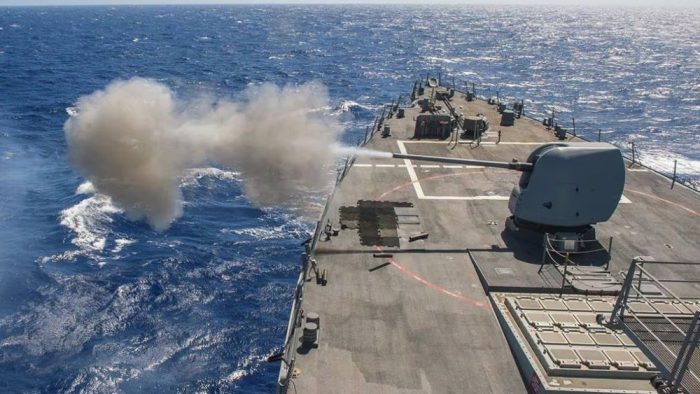
As the attacks intensify and pose a real danger to maritime routes, causing many companies to fear using the Red Sea and raising the cost of insurance and transportation, the US has announced the formation of an international naval coalition intended to protect cargo vessels. Ironically, though, the US is the largest country to impose blockades on other states and use sanctions as a weapon.
While previous US presidents considered any foreign war as an opportunity to rally the American people behind them and give themselves an electoral boost, the situation under President Joe Biden is different. He is the main advocate of the war against Russia in Ukraine, which he is losing despite throwing billions of dollars into it. Engaging in an armed confrontation with the Houthis would be a resounding failure, since the group has little to lose and does not fear war. Indeed, it would gain more legitimacy as the only force in Yemen to be fighting imperialism. Moreover, its war with the Saudi-led Arab coalition, including the United Arab Emirates, has shown that it is resilient, and able to force the coalition to freeze combat missions after years of fighting.
The outbreak of another war in this region would mean serious long-term disruption and increased transportation costs, as well as rising fuel and energy costs for end users. This would have a major impact on Europe during the winter given the already suspended supplies of oil and gas from Russia. Crude oil prices are already creeping up.
The impact of a war would be challenging for Biden as well. The US president sees himself as the, not a, world leader, but he faces difficult choices. He is accused of corruption and faces domestic issues, as does his rival, former President Donald Trump. In addition, the existing wars and crises are having long-term negative impacts on Washington’s standing and international influence.
Despite this, it seems to be impossible for Americans to consider alternative, more intelligent means to approach problems instead of military “shock and awe”. The US and its protégé Israel have always tried to play the role of gods in international politics, where what they want becomes a reality regardless of international laws and conventions. This may succeed in the short term, but it backfires in the long run, as seen in Vietnam, Iraq and Afghanistan. Armed interference in all of these countries has drained the US and its people, who are generally controlled by the political, economic and media elites.
These elites combined work systemically to nurture violence among American citizens, implanting a gung-ho mentality with war seen as the most effective way to solve international problems. Hollywood and video games instill the idea of US (and Israeli) exceptionalism and invulnerability in the minds of the public, so that it becomes easy to recruit them to fight and die in the elite’s battles. The US helps to spread racism in the world by creating divisions among people and inciting them against each other. The old principle well-loved by settler-colonial states is divide and rule; people are easier to manipulate, helping to ensure the concentration of wealth in the hands of the elite that fosters racism.
A simple comparison with cinema in Iran — which the US designates as a sponsor of terrorism — reveals a stark difference. Iranian cinema only rarely focuses on humanitarian and social topics, and hardly ever depicts violence, unlike Hollywood, which thrives on screen violence, normalising it and de-sensitising the audience to the extent that people find it easier to harm their fellow human beings in the service and interests of the elite.
While the economy is failing and education is facing great challenges in America, the government is spending trillions of dollars on unjustified and futile wars, including the one which Israel is waging against the Palestinian people. Sinking more and more resources in the quagmire of the Middle East will only lead to more suffering within America and abroad. Likewise, what is happening in Yemen will have an impact worldwide, not just in Gaza.
The consequences of a war against the Houthis will be much broader, dragging the Zionist colonial project and Western imperialism into a hellish scenario. Regardless of what the Zionists and their supporters in the West believe, they did not create a safe haven for Jews when they created the state of Israel in the heart of the Arab world. The Houthis are turning the tables on everyone in their defence of the Palestinians against Israel’s genocide in Gaza.
While Israel is causing starvation in Gaza, Israeli soldiers are cheerfully filming themselves destroying food, looting, and vandalizing Palestinian property.
Defence for Children Palestine | December 18, 2023
Dunia A., 12, and her family were struck by an Israeli airstrike in the Gaza Strip. Dunia’s family was killed and she lost her leg.
While she was recovering in Naser Hospital in Khan Younis, an Israeli tank-fired shell hit the hospital and killed Dunia. This video was filmed on November 25 during a seven-day truce between Israeli forces and Palestinian armed groups and Dunia was killed on December 17, 2023.
The Malaysian government has imposed an indefinite ban on vessels owned by an Israeli shipping cargo company from docking at its ports in response to the bloody Israeli onslaught against Palestinians in the Gaza Strip.
Ships en route to the occupied Palestinian territories and Israeli-flagged vessels will also be barred from loading cargo at any port in the largely Muslim Southeast Asian nation.
Prime Minister Anwar Ibrahim said in a statement on Wednesday that the Transport Ministry has been instructed to enforce the ban with immediate effect.
Anwar singled out Israel’s biggest shipping firm ZIM.
Malaysia’s cabinet had in 2002 authorized Israeli-registered companies to dock vessels at Malaysian ports; and in 2005, allowed Israeli-registered ships to anchor in Malaysia. However, Wednesday’s statement said that authorizations had been rescinded.
“The Malaysian government decided to block and disallow the Israeli-based shipping company ZIM from docking at any Malaysian port,” Anwar said.
“These sanctions are a response to Israel’s actions that ignore basic humanitarian principles and violate international law through the ongoing massacre and brutality against Palestinians.”
Malaysia “also decided to no longer accept ships using the Israeli flag to dock in the country” and ban “any ship on its way to Israel from loading cargo in Malaysian ports.”
Anwar said his country was confident its trade would not be affected by the decision.
Malaysia does not have diplomatic ties with Israel.
Malaysians have kept up a strong show of support for the Palestinian people’s struggle to claim their sovereign rights, and strongly condemned the cruelties being perpetrated by the Israeli regime in Gaza.
Malaysians in various parts of the country have held marches and motorcycle convoys to voice their support for the Palestinian people, who are suffering from oppression and atrocities committed by the Israeli regime.
Muslim scholars have called on all people to show undivided support for Palestine because the Palestinian issue is related to humanity and not just religion.
Israel waged the brutal war on Gaza on October 7 after the Palestinian Hamas resistance movement carried out Operation Al-Aqsa Storm against the usurping entity in retaliation for its intensified atrocities against the Palestinian people.
Since the start of the offensive, the Tel Aviv regime has killed at least 19,667 Palestinians, mostly women and children, and injured 52,586 others.
Thousands more are also missing and presumed dead under the rubble in Gaza, which is under “complete siege” by Israel.
The US-led joint patrol in the Red Sea following Houthi militia attacks against ships heading toward Israel shows that the Palestinian-Israeli conflict in Gaza is not only affecting the whole region, but also the international community. Chinese analysts pointed out that the root cause of the trade route problem is the ongoing conflict in Gaza, and only a sustainable cease-fire and allowing humanitarian aid to enter Gaza via land and sea routes can solve the problem in the Red Sea.
China will pay close attention to the situation, and Chinese naval vessels that conduct UN authorized anti-piracy missions in the region will keep performing their duty, analysts said, adding that China will stick to the priority of realizing a cease-fire and clear the way for humanitarian aid for the people in Gaza, rather than joining the US to conduct any military operations without UN authorization to escalate the crisis in Gaza.
The US and a host of other nations are creating a new force to protect ships transiting the Red Sea that have come under attack by drones and ballistic missiles fired from Houthi-controlled areas of Yemen, Defense Secretary Lloyd Austin announced Tuesday in Bahrain, the AP reported.
The UK, Bahrain, Canada, France, Italy, Netherlands, Norway, Seychelles and Spain have joined, Austin said. Some of those countries will conduct joint patrols while others will provide intelligence support in the southern Red Sea and the Gulf of Aden.
The Houthi militia attacked two commercial ships in the Red Sea with naval drones on Monday. The recent attacks have caused concerns about the impact on the passage of oil, grain and other goods on what is an important global trade route, and have pushed up the cost of insuring and shipping goods through the Red Sea, Reuters reported.
The Shanghai-based news website The Paper reported on Tuesday that following other international shipping companies including Denmark’s Maersk and France’s CMA, Chinese shipping giants like COSCO and Orient Overseas Container Line (OOCL) also suspended transport through the Red Sea.
Ma Xiaolin, dean of the Institute for Studies on the Mediterranean Rim at Zhejiang International Studies University, told the Global Times on Tuesday that the trade route via the Red Sea is truly important for China as it connects Europe, Asia and Africa, so China will pay close attention to the situation.
“However, although China has naval vessels in the region, their mission is about anti-piracy, rather than intervening in regional issues and other countries’ internal affairs. Only a solution to the ongoing crisis in Gaza can effectively solve the problem in the Red Sea,” Ma said.
On December 9, Al Jazeera reported that the armed group in Yemen claimed that “it will target all ships heading to Israel, regardless of their nationality, and warned all international shipping companies against dealing with Israeli ports.”
“If Gaza does not receive the food and medicines it needs, all ships in the Red Sea bound for Israeli ports, regardless of their nationality, will become a target for our armed forces,” the group’s spokesperson said in a statement on Saturday, according to Al Jazeera.
Song Zhongping, a Chinese military expert and TV commentator, told the Global Times on Tuesday that the “Houthis are specifically targeting Israel, so it’s unlikely it will attack Chinese vessels. China doesn’t need to be too worried about the situation and the Chinese warships in the region will stick to their plan.”
“China will keep making efforts to realize a sustainable cease-fire and clear the way for humanitarian aid to get into the Gaza Strip. This is the real priority that needs to be done,” Wang Jin, an associate professor at the Institute of Middle Eastern Studies at Northwest University, told the Global Times on Tuesday.
If Washington and its allies want to solve the Red Sea problem, they should play a responsible role in the UN Security Council to pass a cease-fire resolution and to put concrete efforts into improving the humanitarian situation in Gaza, which would be more effective than sending warships to conduct joint patrols, experts said.
The humanitarian situation in Gaza remains severe. According to Reuters on Tuesday, Israeli missiles and air strikes on the Rafah area in southern Gaza struck three houses killing at least 20 Palestinians, Gaza health officials said on Tuesday. Tens of thousands of displaced Palestinians have crammed into Rafah on Gaza’s border with Egypt to escape Israeli bombardments.
The lack of unity in the UN that is mainly caused by the US is another key reason why the situation is far from easing. The UN Security Council delayed until Tuesday morning a vote on an Arab-sponsored resolution calling for a halt to hostilities in Gaza to allow for urgently needed aid deliveries to a massive number of civilians as members intensified negotiations to try to avoid another veto by the US, the AP reported.
Wang Wenbin, a spokesperson for the Chinese Foreign Ministry, said at a routine press conference on Tuesday that “the UN General Assembly has adopted two resolutions with an overwhelming majority. We hope the US will listen to the voice of the international community, stop single-handedly blocking Security Council resolutions, and play its due role to promote an immediate cease-fire and prevent an even larger humanitarian catastrophe.”
“How many Israeli soldiers have been killed in Gaza?”
This is a persistent question that many are asking as the Israeli military’s ground campaign in the bombed and besieged enclave nears its second month.
If the army is suffering relatively low losses while inflicting massive Palestinian civilian casualties, this suggests Israel is well on its way to achieving its clear objective of eliminating Hamas, but also its unspoken goals: conquer Gaza, ethnically cleanse its 2.3 million residents, and rebuild the Gush Katif settlement bloc.
But if the occupation army is indeed suffering huge losses, this suggests the Israeli military and political leadership may need to soon end their genocidal campaign prematurely, while citing exaggerated external pressure from the White House as the pretext.
Secrecy surrounding Israeli losses
Israel’s military claimed on 17 December that 121 soldiers had been killed since its delayed ground campaign began on 27 October, when tanks and infantry began to push into Gaza’s cities and refugee camps.
But determining the true number of Israeli soldier casualties has always been notoriously difficult, as Israel’s military goes to great lengths to cover up its combat losses. A recent battle between Hamas and Israel’s vaunted Golani Brigade exemplifies this secrecy.
“We are heading to the most difficult and deepest place with a large number of enemy fighters,” boasted Israeli Lt. Col. Tomer Grinberg, commander of the Golani Brigade’s 13th Battalion, shortly before leading his troops on a ground operation in the legendary Shujaiyya (which aptly means “courageous”) neighborhood in northern Gaza.
He then added, “I promise you a resounding victory.”
But Grinberg is now dead.
According to Israeli sources, Grinberg was killed during the 12 December operation, along with nine other Golani soldiers, in an ambush by Hamas fighters.
After four of the brigade’s soldiers were injured in a firefight, others sought to rescue them amid fears they may be dragged into a tunnel. The second group was also hit by explosives, as was a third group that also tried to evacuate the wounded.
After the battle, Hamas issued a statement warning:
“The longer you stay there, the greater the bill of your deaths and losses will be, and you will emerge from it carrying the tail of disappointment and loss, God willing.”
Resistance claims higher soldier toll
But there is compelling reason to believe the number of soldiers killed alongside Grinberg in Shujaiyya is much higher than the nine announced by the army.
Security expert and retired Israeli Colonel Miri Eisin toldCNN that the 12 December attack was particularly painful because so many of the dead were high-ranking officers:
“We’re hurting today… It’s always hard when soldiers are killed, but when it’s this level of command, it hits you in the gut. These are commanders that commanded hundreds of soldiers.”
This led one former US soldier to ask on X whether Israel was hiding the true number of soldiers killed in the ambush. “Where are all the privates, and the corporals, and the lower enlisted?”
Hamas, through its armed wing, the Ezzedine al-Qassam Brigades, provides an answer.
Regarding the events on 12 December, the Qassam Brigades reported killing 11 soldiers in Shujaiyya, including members of a rescue team, in an apparent reference to the deaths acknowledged by the Israeli army.
But according to Qassam, on the same day, its fighters also killed or injured 10 soldiers east of the city of Khan Yunis, killed or injured another 20 soldiers barricaded inside a building in the Sheikh Radwan area of Gaza City, and killed another 15 soldiers who attacked them in their make-shift base at the Abu Rashid Pool.
Censorship on the press and hospitals
Despite claiming to be “the only democracy in the Middle East,” Tel Aviv maintains a tight grip on information related to military casualties through the use of military censors, controlling what the press can publish concerning national security issues, including injuries and deaths of soldiers.
“The human losses announced by the security establishment are usually binding on hundreds of media institutions, and these are allowed to work basically according to this rule. The death toll always comes from one source, and no one questions it,” Hassan Abdo, The Cradle’s Palestine Correspondent, reported earlier this year.
Abdo attributes this to preserving the image of the invincible Israeli soldier “who does not fall victim to a weak, primitive opponent.”
This is “one of the main pillars of the Zionist project based on the tripartite of security, immigration, and settlement,” he added.
As The Cradlenoted, even before the outbreak of war on 7 October, Israeli soldiers have had a strange tendency to die in “accidents” during periods of heightened conflict with the Palestinian resistance, including in car accidents, plane crashes, suicides, gas leaks, and even falling from balconies.
But this invincible image was shattered with the operation Al-Aqsa Flood, when Hamas and other Palestinian resistance groups broke out of the Gaza Strip to attack the Israeli military bases and settlements (kibbutzim) enforcing the brutal 17-year siege on the tiny and impoverished enclave.
During Al-Aqsa Flood, Hamas killed 41 soldiers from Grinberg’s Golani battalion alone, in major battles at the Re’im and Nahal Oz military bases.
Hezbollah’s estimates and questions from within
Israel claims Hamas carried out a massacre at the Nova music festival, just a few kilometers from the Re’im base, but a major battle took place there as well. At Nova, 58 Israeli police were killed, including from elite combat counter-terror units of the Border Police, known as Yamam, who were the first to respond to the attack.
According to an Israeli police investigation regarding events at Nova, had there not been a substantial police deployment at Yad Mordechai, some 30 kilometers further north, “the terrorists would have been on their way to … Tel Aviv in 40 minutes.”
It, therefore, becomes more imperative than ever for the occupation state to hide the extent of its losses, both in the battle against the Palestinian resistance in Gaza and in the north in the battle with Hezbollah, to reestablish and maintain the myth of an overwhelmingly powerful military presence in the region.
Anecdotal evidence and estimates from Hezbollah suggest that the official count of 115 Israeli soldiers killed in the fighting in Gaza and near the Lebanese border following 7 October is likely much lower than the true figure. Reports from different sources indicate a significant discrepancy, with instances of mass casualties not officially acknowledged.
The Lebanese resistance movement estimates its attacks on settlements and military bases in northern-occupied Palestine have killed at least 35 Israeli soldiers and injured 172.
After just the first week of fighting in Gaza, the death toll, as announced by the Israeli army from fighting there, had reached 19. Among them were nine soldiers killed in just one attack. Hamas struck the “Namer” armored personnel carrier transporting the soldiers to the battle with an anti-tank missile.
Seven of the dead soldiers were 20 years old or younger, which seems to confirm the perception that Israel is sending inexperienced fighters into combat against Hamas’ battle-hardened fighters motivated by a cause, resistance to occupation, they firmly believe in.
But the occupation army spokesperson’s unit quickly learned not to announce the mass killing of soldiers of this sort.
Baruch Rosenblum, an Israeli rabbi, recalled a story from a senior officer in the army from the second week of the Gaza ground campaign. The officer explained that most of the fighting takes place at night, and that in just one operation, Hamas had killed 36 soldiers.
The rabbi explained that Hamas had attacked a convoy of three Namer armored vehicles, each carrying 12 soldiers, setting them ablaze. The army command watched via drone live feed as the soldiers abandoned the vehicles and Hamas eliminated them all with anti-tank weapons.
The senior officer chose not to disclose his name to the rabbi “to avoid arrest for revealing state secrets,” and the incident was never announced by the army or reported in the Israeli press.
On 18 November, in the third week of the ground operation, David Oren Baruch, the director of Mount Herzl Military Cemetery, provided another anecdote suggesting a soldier death toll much larger than what was publicly known.
He revealed that “We are now going through a period where every hour there is a funeral, every hour and a half a funeral.”
“I was asked to open a large number of graves. Only in the Mount Herzl cemetery did we bury 50 soldiers in 48 hours,” Baruch explained further.
Military control of the narrative
The Israeli military’s reluctance to disclose the number of wounded soldiers further adds to suspicions of underreporting.
Unlike in past wars, the Israeli military had refused to make any statement about the number of wounded in Gaza. This finally changed on 10 December, just before Haaretz planned to publish its report on the number of soldier casualties based instead on hospital sources.
Haaretz noted “a considerable and unexplained gap between the data reported by the military and that from the hospitals.” The hospital data the outlet obtained showed the number of wounded soldiers was “twice as high as the army’s numbers.”
The Israeli newspaper also highlighted the military’s tight control over the data reported by the hospitals themselves, explaining that members of the army spokesperson’s unit “are in the hospitals around the clock. Every press release regarding wounded soldiers and replies to media queries must receive their approval.”
Israeli newspaper Yedioth Ahronoth similarly reported on 9 December that, “Every day, about 60 new wounded are received only by the rehabilitation department” and that “the cumulative numbers since October 7 are astronomical: More than 2,000 soldiers, policemen and other members of the security forces have been officially recognized as disabled.”
“We have never been through anything even similar to this,” explained Limor Luria, head of the rehabilitation department at the Ministry of Defense.
“More than 58 percent of the wounded who are taken in by us have severe injuries of arms and legs, including those that require amputations. About 12 percent are internal injuries – spleen, kidney, tearing of internal organs. There are also head and eye injuries.”
In addition to thousands of horrific physical injuries, Israel is also facing “a tsunami of trauma,” the paper added. “I sat with a fighter who took three bullets. A physically torn person, a very serious injury,” Luria added, “but his main struggle is with the sights he saw.”
One injured soldier, Elisha Madan, recounted to a crowd how his fellow soldiers were killed in front of his eyes. “I came back from the dead alone. My entire squad died, and I was on the verge of death. I survived thanks to your prayers,” Madan said while seated in his wheelchair.
‘All warfare is based on deception’ – Sun Tzu
Since 7 October, the Israeli military leadership has reported falsehoods about almost every facet of that day’s events, and the war that followed.
They lied about Hamas beheading babies, they covered up burning alive their own soldiers and civilians with Apache helicopter and tank fire, and they continue to lie about pretending to care about the safety of Palestinian civilians, who they have mercilessly bombed for months with only the slightest pretext of targeting Hamas fighters and infrastructure.
As a result, while it is impossible to know the true numbers of Israeli soldiers killed in battle against the Palestinian resistance, there is ample reason to question the veracity of the information provided by the US-backed occupation army.
A Geneva-based rights group has called for an urgent international investigation into torture and murder of Palestinian abductees held in Israel’s “Guantanamo-like” jails.
In a statement released on Monday, the Euro-Mediterranean Human Rights Monitor said it had gathered testimonies confirming recent reports in Israeli media about the regime’s field execution of the Gaza abductees.
The Sde Teman Israeli army camp has been turned into “a new Guantanamo-like prison,” where detainees lose their lives after being subjected to extreme torture and mistreatment, it added.
The Israeli army uses open-air chicken coops to house the inmates and withhold food or drink for long periods of time.
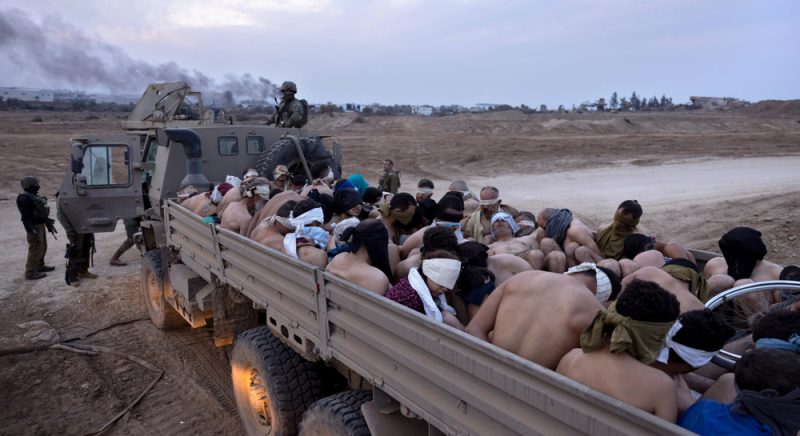
The rights group also noted that the Palestinians held in Sde Teman are caged in inhumane conditions, blindfolded and subjected to harsh interrogations with their hands tied.
It further said that turning on lights at night, as well as barring the abductees from using phones and meeting lawyers and representatives from the International Committee of the Red Cross (ICRC) are among the torture tactics being used at the Israeli jail.
The testimonies affirm that multiple elderly abductees endured cruel beatings and humiliating treatment, Euro-Med said.
One of the released detainees, who was speaking on condition of anonymity, said that he witnessed Israeli soldiers directly shooting and killing five abductees in separate incidents.
Earlier, Israeli newspaper Haaretz reported the deaths of six Palestinians in Israeli prisons since the beginning of Israel’s ongoing bloody war on Gaza.
Despite evidence of violence preceding the inmates’ death or medical neglect – their cause of death was not established, according to the report.
It added that Just 71 out of 500 Palestinians arrested during the Gaza war have been brought before Israeli courts, and that the remaining detainees have been moved to prisons run by the Israeli Prison Service or to detention facilities run by the regime’s so-called internal security service, Shin Bet.
Previously, the Euro-Med field teams documented the detention of more than 1,200 Palestinian civilians in random Israeli arrest campaigns across Gaza during Israel’s onslaught on the besieged territory.
The abductees were subjected to all forms of beatings and ill-treatment during their detention and purposefully left blindfolded, nearly nude, and kneeling on the ground upon their release.
Israel waged the devastating war on Gaza on October 7 after the Palestinian Hamas resistance group carried out Operation Al-Aqsa Storm against the occupying entity in retaliation for its intensified atrocities against the Palestinian people.
Since the start of the aggression against Gaza, the Tel Aviv regime has killed at least 19,453 Palestinians, mostly women and children, and injured 52,286 others.
Thousands more are also missing and presumed dead under the rubble in Gaza, which is under “complete siege” by Israel.
The Hamas Movement has accused the Israeli occupation army of using different types of internationally prohibited ammunition and bombs in its genocidal war on the Gaza Strip and persisting in its indiscriminate bombardment of homes, shelter centers, tents and hospitals.
“All this is happening in full view of the world, with support from the US, Britain and some European countries,” senior Hamas official Osama Hamdan told a news conference in Beirut on Saturday.
Hamdan criticized the failure of the international community and the UN to stop the brutal Israeli aggression against Gaza as a result of the US use of its veto power to support what he called the “neo-Nazis” in their crimes and massacres.
“About 19,000 citizens of our people have been martyred and about 52,000 others have been injured, while there are approximately 800 missing persons — 70 percent of them children and women,” Hamdan pointed out.
Hamdan said that a staggering 45 percent of the martyrs in southern Gaza are displaced persons, which contradicts the Israeli occupation’s claims about the presence of safe zones.
“There is no safe place or safe passages in the Gaza Strip. These are lies the occupation keeps repeating and every official of the US administration keeps parroting. The entirety of Gaza, from its northernmost to southernmost areas, is targeted by the Zio-American weaponry,” Hamdan underscored.
“The war trio and losers, Netanyahu, Gantz and Gallant, achieved nothing of their aggressive goals and their ongoing Nazi war against the Gaza Strip … Their dreams and illusions will be shattered on the land of proud Gaza,” he said.
By James Petras | Global Research | September 12, 2018
Introduction
Despite having the biggest military budget in the world, five times larger than the next six countries, the largest number of military bases – over 180 – in the world and the most expensive military industrial complex, the US has failed to win a single war in the 21st century.
In this paper we will enumerate the wars and proceed to analyze why, despite the powerful material basis for wars, it has led to failures. … continue
This site is provided as a research and reference tool. Although we make every reasonable effort to ensure that the information and data provided at this site are useful, accurate, and current, we cannot guarantee that the information and data provided here will be error-free. By using this site, you assume all responsibility for and risk arising from your use of and reliance upon the contents of this site.
This site and the information available through it do not, and are not intended to constitute legal advice. Should you require legal advice, you should consult your own attorney.
Nothing within this site or linked to by this site constitutes investment advice or medical advice.
Materials accessible from or added to this site by third parties, such as comments posted, are strictly the responsibility of the third party who added such materials or made them accessible and we neither endorse nor undertake to control, monitor, edit or assume responsibility for any such third-party material.
The posting of stories, commentaries, reports, documents and links (embedded or otherwise) on this site does not in any way, shape or form, implied or otherwise, necessarily express or suggest endorsement or support of any of such posted material or parts therein.
The word “alleged” is deemed to occur before the word “fraud.” Since the rule of law still applies. To peasants, at least.
Fair Use
This site contains copyrighted material the use of which has not always been specifically authorized by the copyright owner. We are making such material available in our efforts to advance understanding of environmental, political, human rights, economic, democracy, scientific, and social justice issues, etc. We believe this constitutes a ‘fair use’ of any such copyrighted material as provided for in section 107 of the US Copyright Law. In accordance with Title 17 U.S.C. Section 107, the material on this site is distributed without profit to those who have expressed a prior interest in receiving the included information for research and educational purposes. For more info go to: http://www.law.cornell.edu/uscode/17/107.shtml. If you wish to use copyrighted material from this site for purposes of your own that go beyond ‘fair use’, you must obtain permission from the copyright owner.
DMCA Contact
This is information for anyone that wishes to challenge our “fair use” of copyrighted material.
If you are a legal copyright holder or a designated agent for such and you believe that content residing on or accessible through our website infringes a copyright and falls outside the boundaries of “Fair Use”, please send a notice of infringement by contacting atheonews@gmail.com.
We will respond and take necessary action immediately.
If notice is given of an alleged copyright violation we will act expeditiously to remove or disable access to the material(s) in question.
All 3rd party material posted on this website is copyright the respective owners / authors. Aletho News makes no claim of copyright on such material.



 Aletho News