Israel Will Lose. Here’s Why.
Western media are getting it wrong, just like in Ukraine
BY KEVIN BARRETT | NOVEMBER 8, 2023
Ever since February 2022, Western mainstream media has been telling us that Russia cannot possibly win its war in Ukraine. Zelensky, with his hundreds of billions of dollars’ backing from the West, would surely prevail. Russia has always been taking unbearably heavy losses. Putin is always about to keel over dead. A fresh shipment of US wonder-weapons will turn the tide. A crushing Ukrainian victory is always at hand.
Because they could not imagine Ukraine losing, Western pundits could not see that it was losing. They missed the fact that from the moment the non-Western world majority refused to accept US sanctions on Russia, it was effectively over. Virtually the entire war has been fought under the shadow of an inevitable Russian victory. It has always been just a matter of time.
Might a similar situation prevail in the war for Palestine? The non-Western world majority has turned sharply against Israel—even more sharply than it turned against the US in its war on Russia through Ukraine. Yet Western media continue to manufacture and inhabit a bubble completely divorced from moral and strategic reality. They can’t even imagine Israel being in the wrong, even though it obviously is. They can’t imagine Hamas being noble and chivalrous fighters, and Israelis being cowardly child-killing terrorists, though such is obviously the case. They can’t acknowledge that the vast majority of the world disagrees with them for very good reasons, not because of “anti-Semitism.” And above all they can’t imagine that Israel, despite (or because of) its genocidal assault on civilians, is losing the war.
Just as you had to read “pro-Russian” sources (like Col. Douglas MacGregor) to get the truth about the war in Ukraine, you need to stay abreast of the pro-Resistance global majority view to get an accurate picture of the war for Palestine. To that end, check out my quick, Google-translate-assisted rendition of an enlightening article published yesterday by Al-Jazeera.
The shock that produced the predicament… Israel between an “image of victory” and defeat
Zuhair Hamdani and Talal Mushati for Al-Jazeera
Israeli leaders are preparing a tense and frustrated Israeli public for unforeseen surprises in their war on Gaza, by talking about a long, costly, and cruel war. The high expectations they have set for their war will be difficult to achieve, lacking as they do a clear military or political plan.
Israeli Chief of Staff Herzi Halevy says, “We are waging a war with a cruel enemy, and this war has a painful and heavy price,” while Defense Minister Benny Gantz sums up the difficulty of the ground war: “The images coming from the ground battle are painful, and our tears are falling when we see our soldiers falling.”
The Israeli leadership has launched its war on Gaza at a time when it has the confidence of only 27% of the Israeli public, while only about 51% trust the Israeli army. Added to this are the burdens of 250,000 people seeking refuge from the Gaza region and the northern areas near Lebanon, as well as the more than 240 Israelis held prisoner by the resistance in Gaza.
Accordingly, for Israel, this war is not like previous wars. Israel is suffering huge daily losses and erosion of resources, including soldiers, equipment, time, money, and legitimacy (internal and external support). The cost will continue to rise as the war lengthens or expands.
Maariv newspaper comments on the conditions of the ground war taking place on the outskirts of Gaza, saying, “The resistance forces are very far from being broken. Despite the liquidations and assassinations, Hamas is succeeding in most cases in maintaining an organized method of fighting, based mainly on tunnel fighting, exiting from hiding places, and launching missiles at our armoured vehicles.”
Two overriding factors drive the fierce Israeli war on Gaza: the shock of the resounding military defeat and the security and intelligence failure that resulted from the Palestinian resistance’s launch of Operation “Al-Aqsa Storm” on October 7; and the predicament of the huge number of prisoners being held by the Al-Qassam Brigades and other Palestinian factions. Therefore, military action revolves around these two goals.
Under the psychological influence of the “Black Saturday” events, the Israelis went directly to the ultimate goal of any war, which is “to destroy the enemy.” This was a high ceiling that they probably knew, by virtue of previous experience, could not be achieved. It cannot happen except at a price they could not afford to pay.
In this context, Defense Minister Yoav Galant said, “There is no place for Hamas in Gaza. At the end of our battle, there will be no Hamas.” That is an unrealistic goal based on past experience and the current realities on the ground.
Considering previous wars including 2008 and 2014, we find that “destroying Hamas” was always a basic goal that was never achievable. There is no reason to believe that it will be achievable this time, especially since the movement is now much stronger, with much deeper roots in the Gaza Strip, than before. Its military defenses and arsenal have been strengthened to the point of being difficult to penetrate, and in the end it is not a state or a regular army that can announce its surrender, but rather an extended popular resistance movement in the path of a protracted Palestinian struggle.
The war that Israel does not want
If war consists of combat operations that require mobilizing the resources and capabilities of the state to carry out a specific military campaign in order to implement military and political objectives, ranging from moving a front to achieving tactical successes and imposing certain conditions or carrying out a decisive battle that breaks the will of the “enemy,” then it requires an agreed-upon leadership that enjoys a degree of consensus. It requires a military apparatus that is trained, equipped, and at least minimally psychologically mobilized for combat; an appropriate confrontation plan; and a unified, cohesive internal political and social front directed toward that goal.
It also requires an economic mobilization that comprehends the circumstances and course of the war and its surprises, and an understanding or supportive international and regional front. Victory is difficult to achieve if any or all of these conditions are absent, especially in the case of long battles that require continuous mobilization. The results are also linked to the enemy’s reaction, the extent of its strength, and the tactics it chooses.
Was Israel ready?
In terms of military capabilities, Israel always seems prepared for war on several fronts. But technical military capabilities and weapons alone do not resolve wars, especially if they are not the kind of lighting wars that Israel favors. In practice Israel suffers from significant defects in almost all of the above-mentioned ingredients for winning a war.
At the leadership level: There is no agreed-upon leadership in Israel that enjoys consensus or the necessary charisma. Prime Minister Benjamin Netanyahu, as polls show, is extremely unpopular. In a recent Israeli public opinion survey conducted by the Israeli newspaper Maariv, it was found that only 27% of Israelis support his political survival, and his political and military decisions are not accepted and are subject to widespread criticism. The course of the war has also proven that he is indecisive and does not have a clear and convincing plan for military or political action.
Netanyahu also refuses to accept responsibility for the security failure on October 7, which exposed him to severe internal criticism. Israeli opposition leader Yair Lapid, for example, warned that Netanyahu’s attempts to evade responsibility and blame the security establishment, thereby weakening the Israeli army, amounted to “crossing red lines.”
The Home Front: The home front appears to have disintegrated. Israelis are living in a state of severe division at the partisan, popular and political levels. Especially controversial is how to deal with the issue of prisoners held by the resistance, in light of the dangers of a ground war and the major losses it would entail.
Netanyahu and the extremist members of his government stand accused of dividing Israeli society. The leader of the opposition Labor Party, Merav Michaeli, has charged the Prime Minister with “fighting the army and the people of Israel.” The issue of prisoners held by the resistance has also sparked internal divisions, especially after Heritage Minister Amichai Eliyahu called for bombing Gaza with a nuclear weapon, saying, “What does hostage mean? In war, the price is paid. Why are the lives of hostages more precious than the lives of soldiers?” This was considered by Israelis to be “an abandonment by the government of its commitment to returning the hostages.”
Military front: The events of “Al-Aqsa Flood”, especially the first six hours of October 7, demonstrated that the Israeli army suffers from severe deficiencies, as do its many security services. Now the daily losses it is suffering in its ongoing ground operation have made it the object of suspicion within Israeli society, which was relying upon it to maintain an aura of safety and stability.
Economic situation: The Israeli economic situation is at its worst, with major sectors such as tourism paralyzed, travel declining, and the agricultural sector suffering damage. With the mobilization of about 360,000 reserve soldiers, most of them suddenly removed from the labor force, and the evacuation of about 250,000 settlers, the economy is witnessing a severe labor shortage in various fields. Israel recently announced that the last three weeks of war have cost about 7 billion dollars, without taking into account the direct and indirect damages. While this damage may cost about 3 billion dollars per month, preliminary estimates show that the war on Gaza will cost Israel’s budget 200 billion shekels ($51 billion), or about 10% of the gross domestic product, and as the war continues for a long period, the Israeli economy may be crippled according to Israeli estimates.
Diplomatic front: After last October 7, Western countries that were historically biased towards Israel rushed to support it, but this support quickly began to erode due to the impact of Israeli crimes and doubts about the ability of the Israeli army to resolve the war. Many countries condemned Israel or cut off their diplomatic relations with it (Colombia, Bolivia), while other countries recalled their ambassadors (Chile, Jordan, Bahrain, Turkey, Honduras…) Ever-increasing global popular pressure is pushing governments to take boycott measures, exposing Israel to isolation that has begun to worsen.
US Support for Israel Eroding?
In contrast to the direct support at the beginning, the administration of President Joe Biden began to re-assess its absolute support for Netanyahu for fear that things would spiral into a wider regional war. Washington fears the crazy scenarios that Netanyahu may create in an attempt to save his future at America expense.
After about a month, the Americans realized that the only constant in the Israeli plan was the use of massive destructive force targeting civilians and infrastructure in the Gaza Strip. It seemed Netanyahu was waiting for a solution to save himself from a harsh predicament in the sands of Gaza—and waiting for the illusion of the resistance’s surrender that wasn’t going to happen. They began to have doubts about Israel’s management of the war and its results.
CNN has indicated that US President Joe Biden and senior US administration officials have warned Israel that support is eroding as global anger intensifies over the extent of human suffering resulting from its crimes in Gaza.
What’s happening in the field?
Over the course of about a month of war, it does not appear that Israel has achieved any serious gains on the ground. Contradictory statements indicate confusion about how to manage the battle and set final goals in the face of severe resistance. The shock of the mismanaged October 7 battle, and the psychological scars it left on the entire Israeli military establishment, still haunt the course of the war.
This psychological atmosphere also looms over the soldiers, as they realize that their return from the sands of Gaza would require a miracle. They recall the experiences of their colleagues and their bitter memories of the 2014 war as they witness the elite of the Givati Brigade drowning in the sands of Gaza in a battle that is still in its infancy. In effect, the Israeli army advanced a few meters into open lands in the northern Gaza Strip and lost 30 soldiers—according to reports—meaning that it is possible that hundreds of soldiers would be lost if the army advanced a few kilometers, amid a complex network of tunnels and fortifications, minefields, snipers, explosive devices, and hand-to-hand combat in the streets facing the unlimited fighting will of the resistance.
Since Israel does not have a clear plan for the war, it has inclined toward slow, calculated progress inside Gaza. Thus, achieving the dubious final goal may take a long period and unbearably heavy losses. In the meantime, important military or political transformations may occur that will ravage the entire plan.
In its current operations, Israel is losing up to 5 soldiers every day on the outskirts of Gaza without a clear and effective military advance. Nahum Barnea, the Israeli journalist in the Yedioth Ahronoth newspaper, says, “A war of attrition on the outskirts of Gaza is the last thing the Israelis want to experience.”
Israeli military officials realize that it is impossible to liberate the prisoners militarily, but they are proceeding nonetheless under political pressure, despite the fact that the families of the prisoners, as well as the countries that have nationals among the prisoners, want an exchange deal. Netanyahu believes that such a deal would be a final acknowledgment of defeat and a victory for Hamas and the Palestinian resistance.
The cohesion of the resistance and the Israeli non-plan
Israeli public opinion fears that the war will be lost on two or more fronts, by failing to liberate or release the prisoners (about 60 of them have already been killed in Israeli raids) and by failure to dismantle the capabilities of the Hamas movement and the Palestinian resistance. Worse, a large number of soldiers will be killed, perhaps in the hundreds.
In contrast to the Israeli non-plan, following the painful military blow directed at Israel on the morning of October 7, the plan of Hamas and the resistance seems clear: stop the war, carry out a comprehensive prisoner exchange, and lift the siege of Gaza. The resistance is waging a war of attrition on the Israeli army, inflicting ever-increasing daily losses, and appears prepared for a long war to erode the elements of Israeli power.
Time is not on Israel’s side, as it loses more money, men, and legitimacy, its internal crisis worsens, and the pressures and doubts surrounding it increase, with the possibility of the situation exploding regionally. Instead it is on the side of the Palestinian resistance, which believes that all of these internal and external military and political pressures will ultimately make Israel yield and accept its terms.
In that case, the war would not only end with the defeat of Netanyahu, but also with the defeat of the far-right government and its racist program. Israeli society has increasingly rejected this government’s policies at all levels, and the war has proven that it cannot impose surrender on the Palestinian people despite the tragedies caused by Israeli crimes in Gaza, whose repercussions have made the international community wary and inclined to reject Israeli narratives.
Netanyahu’s predicament
The international community has begun to realize that the campaign launched by Benjamin Netanyahu on Gaza is nothing more than a series of horrific daily massacres against civilians that has not achieved any significant military breakthrough. The prognosis: Israel will be forced to submit to defeat under internal and external pressures. Already serious movements have begun from the international community to stop the war in the wake of the horror of ongoing Israeli massacres.
Nadav Eyal asserts in his article in Yedioth Ahronoth newspaper that the Israeli army cannot be satisfied with the “image of victory” in its war on Gaza, and that the era of the policy of “mowing the grass” (reducing threats to an acceptable level) has ended. Instead, Israel needs a “real victory.” But this leaves Prime Minister Benjamin Netanyahu in a deeply distressing predicament
The main dilemma concerns Netanyahu himself, who does not want to come down from the heights of the tree into which he scrambled on the morning of October 7. He realizes that he is finished politically (due to Al-Aqsa Storm) yet dreams of a resurrection linked to the results of his campaign in Gaza.
Netanyahu and his war cabinet are acting impulsively under the influence of the shock of October 7, without a clear military plan for the war, which is mainly being fought as a mindless emotional reaction to the well-prepared resistance in Gaza. Israel lacks a clear plan to liberate or recover the prisoners, or to confront the huge and ever-escalating international protests, to the point that Netanyahu began addressing Israeli soldiers in Gaza with quotes from the Bible, telling them to “remember what Amalek did to you.” (Amalek represents the height of evil in Jewish tradition.) Netanyahu has used the Amalek reference more than once to motivate the Israeli army in its war against Gaza.
Netanyahu is accumulating losses on all fronts, trying to write off “Black Saturday,” ignoring that his leadership does not enjoy popular acceptance, and pretending not to notice Israel’s broken army, eroding economy, undermined international reputation, disintegrated home front, large daily military losses, and the United Nations’ condemnation of his crimes.
US House Speaker Johnson Proposes Funding Government Without Aid to Ukraine and Israel
Sputnik – 12.11.2023
The speaker of the US House of Representatives, Mike Johnson (R-LA), has introduced a bill to temporarily fund the federal government. His proposal does not to include aid to Ukraine or Israel but does include funds for the defense of the US southern border.
According to the bill, part of the government programmes also related to transport, energy and military construction will be financed by 19 January, which would be the funding deadline for those programs and agencies which are covered under regular appropriations bills pertaining to agriculture, rural development, and Food and Drug Administration.
Funds for energy and water development, military construction and Veterans Affairs together with Transportation, Housing, and Urban Development will also be ceased.
The allocation of money for the rest of the government sectors will be calculated until 2 February.
Johnson expects some Republicans to vote against his bill, but in that case he expects Democrats to support it, Politico reports. However, even if approved in the House, the bill may not pass in the Senate.
“This two-step continuing resolution is a necessary bill to place House Republicans in the best position to fight for conservative victories… Separating out the CR from the supplemental funding debates places our conference in the best position to fight for fiscal responsibility, oversight over Ukraine aid, and meaningful policy changes at our Southern border,” Johnson said in a statement on Saturday.
White House spokeswoman Karine Jean-Pierre called the proposal “a recipe for more Republican chaos and more shutdowns”, claiming that Republicans were “wasting precious time with an unserious proposal that has been panned by members of both parties”. The statement urged Republicans to “work in a bipartisan way to prevent a shutdown”.
“My opposition to the clean CR just announced by the Speaker … cannot be overstated. Funding Pelosi level spending & policies for 75 days — for future ‘promises,'” House Freedom Caucus member Rep. Chip Roy (R-Texas) wrote on X, opposing the legislation.
Earlier this year, US President Joe Biden’s request to Congress for $24bln in aid to Ukraine almost caused a government shutdown after Republican congressmen refused to approve a budget that included those funds. As a result, a temporary budget was adopted without a clause on support for Ukraine.
Biden has already said that he would not sign the bill on allocating aid to Israel without Ukraine if it is approved by Congress.
Violent Pro-Israel Counter-Protesters Clash With Police At Palestine Solidarity March In London
RT | November 11, 2023
At least 300,000 people marched in the British capital on Saturday demanding an immediate ceasefire in Gaza. London Metropolitan Police reported at least 126 arrests amid clashes with counter protesters in which nice officers were injured.
The largely peaceful crowds were chanting “free Palestine”, “ceasefire now” and “from the river to the sea, Palestine will be free,” as they marched through the streets of London. The largest to date demonstration coincided with the annual Armistice Day commemorations.
Ahead of the pro-Palestinian march, a group of right-wing protesters, mainly consisting of football hooligans from across the UK, arrived in central London on a pretense of protecting monuments, but “were already intoxicated, aggressive and clearly looking for confrontation,” assistant commissioner Matt Twist said in a statement.
The violent crowd, chanting “you’re not English any more” hailed abuses at the officers, who were protecting the Cenotaph and preventing them from confronting the pro-Palestinian activists.
“Nine officers were injured during the day, two requiring hospital treatment with a fractured elbow and a suspected dislocated hip. Those officers were injured on Whitehall as they prevented a violent crowd getting to the Cenotaph while a remembrance service was taking place,” police said, adding that “the extreme violence from the right wing protestors towards the police today was extraordinary and deeply concerning.”
The Palestine Solidarity Campaign (PSC) march, which the organizers themselves estimated to be at least 500,000 strong, “did not see the sort of physical violence carried out by the right wing,” according to police, although a fringe group of some 150 masked people was intercepted while firing fireworks. Several arrests were made “after some of the fireworks struck officers in the face,” police said.
The unrest follows the debate earlier this week whether the pro-Palenstian protest should be permitted on Armistice day, that is traditionally observed in the UK by a two-minute silence during the 11th hour of the 11th day of the 11th marking the end of WWI in 1918.
Home Secretary Suella Braverman was accused of fuelling the tensions by branding pro-Palestinian demonstrations as “hate marches,” while accusing the police of bias for letting the rally go ahead.
London Mayor Sadiq Khan said that the clashes were “encouraged and emboldened” by senior politicians “like the Home Secretary” and were a “direct result” of her words.
The Prime Minister, Rich Sunak condemned the violence and hatred from both sides and called for the nations “to come together” to remember “those who fought and died for our freedom.”
Israeli army shoots whoever tries to leave Al-Shifa Hospital: Doctor tells Anadolu
MEMO | November 11, 2023
A doctor at the Al-Shifa Hospital in Gaza City said on Saturday that the Israeli army opens fire on those who want to flee the hospital, Anadolu reports.
The Israeli army has surrounded the hospital area and they are “not even a meter away, they are at the door,” Fadia Malhis, a gynecologist at the hospital, told an Anadolu correspondent in frequently interrupted phone conversations.
“They shoot anyone who wants to go out of the hospital. If anyone moves between units, they shoot them. There are many martyrs in the yard in front of the emergency room, the situation is very bad and dangerous, it is indescribable,” she said.
“It is like a prison without water, electricity, or food. There were more than 100 martyrs in the garden. They opened fire at those who tried to bury the martyrs in the hospital yard. The hospital garden is full of martyrs. Some tried to escape from the hospital, and they also killed them. They fired at me too,” she added.
Citing a power outage in the hospital and underlining the deteriorating condition of infants in the incubators in the intensive care unit, she said: “There are 60 babies in the intensive care unit, 39 of them are intubated, one baby died in the afternoon. These (infants) will die one after the other.”
She called for immediate action to cease hostilities around the hospital, saying: “Please, save us, stop this war, otherwise we will die. There are dead people everywhere. Save us, the situation is very bad.”
Turkiye halts energy projects with Israel in the absence of a ceasefire: Minister
MEMO | November 8, 2023
Turkiye will not discuss any energy-related projects with Israel without a ceasefire in Gaza, as it would be disrespectful to Palestinians who are experiencing great brutality, a senior official said late Tuesday, local Turkish media outlets reports.
According to the report, Energy and Natural Resources Minister, Alparslan Bayraktar, told a private broadcaster that “in such an atmosphere, in an environment of such great brutality, human drama, it would be disrespectful to humanity, to our humanity, to our siblings there (in Palestine) to talk about any project.”
“The only thing we will talk about at this time is how we can meet Gaza’s electricity, water and food needs. This could happen. That would be the only project,” he said.
Israel has launched air and ground attacks on the Gaza Strip following a cross-border attack by the Resistance group, Hamas, on 7 October.
Pointing out that life has stopped in the region after the Gaza attacks, Bayraktar said: “After the great brutality and cruelty experienced there, the only project we can talk about right now is how we can get Gaza’s electricity back on its feet again.”
“We have sent generators. They are waiting at the Rafah border crossing,” he added.
“We are considering how we can contribute there with floating power plants and mobile power plants, which we call power ships,” the Minister said, reiterating it is impossible to talk about anything without a ceasefire.
Arab-Iran amity is a geopolitical reality
BY M. K. BHADRAKUMAR | INDIAN PUNCHLINE | NOVEMBER 9, 2023
The forthcoming first visit by Iran’s President Ebrahim Raisi to Saudi Arabia on November 13 marks a milestone in the rapprochement between the two countries mediated by China in March. The relationship is fast acquiring a qualitatively new level of solidarity in the context of the Palestine-Israel conflict.
This marks a shift in the tectonic plates in regional politics, which has long been dominated by the United States but no longer so. The latest China-UAE initiative on Monday to promote a ceasefire in Gaza was rounded off with an extraordinary spectacle of diplomacy at the UN headquarters in New York as the two countries’ envoys read out together a joint statement to the media. The US was nowhere to be seen.
The events since October 7 make it abundantly clear that the US attempts to integrate Israel into its Muslim neighbourhood on its terms is a pipe dream — ie., unless and until Israel is willing to turn its sword into plowshares. The ferocity of the Israeli revenge attacks on the people of Gaza — “animals” — smacks of racism and genocide.
Iran knew all along the bestiality of the Zionist regime. Saudi Arabia too must be in a chastened mood following the wake-up call that it must first and foremost learn to live in its region.
Raisi is heading for Saudi Arabia against the backdrop of a historic shift in the power dynamic. King Salman invited Raisi to speak on Israel’s crimes against the Palestinians in Gaza at a special summit of Arab states, which he is hosting in Riyadh. This signifies a profound Saudi realisation that even its willingness to be involved in the Abraham Accords under American persuasion has alienated the Arab public.
There is a fallacy in the western discourse about a Russia-China-Iran axis in West Asia. This is a nonsensical misinterpretation. A consistent three-fold foreign policy principle that Iran pursued right from the Islamic Revolution in 1979 is that, one, its strategic autonomy is sacred; two, the countries of the region must take their destiny into their own hands and solve regional issues themselves without involving extra-regional powers, and, three, foster Muslim unity howsoever long and winding that road might seem.
This principle had severe limitations due to force of circumstances — principally, in the conditions engendered by the colonial policy of divide and rule pursued by the US. Circumstances were even deliberately engineered, such as the Iraq-Iran war, where the US encouraged the regional states to collaborate with Saddam Hussein to launch an aggression against Iran to stymie the Islamic revolution in its infancy.
Another painful episode was the Syrian conflict. There, again, the US actively canvassed among regional states for a regime change in Damascus with the ultimate objective of targeting Iran by using the terrorist groups that Washington incubated in Occupied Iraq.
In Syria, the US brilliantly succeeded in pitting the regional states against each other and the result is plain to see in the ruins of what used to be the throbbing heart of Islamic civilisation . At the peak of the conflict, several western intelligence agencies were freely operating in Syria assisting the terrorist groups to rampage the country whose cardinal sin was that, like Iran, it too consistently put primacy on its strategic autonomy and independent foreign policies through the cold war and post-cold war eras alike.
Suffice to say, the US and Israel met with great success in fragmenting the Muslim Middle East by exaggerating the threat perceptions and convincing several Gulf Arab states that they faced direct threats or even attacks by Iranian proxies, as well as alleged Iranian support for dissident movements.
Of course, the US capitalised on it by selling huge volumes of weapons and more importantly, to finesse the petrodollar as a key pillar of the western banking system. As for Israel, it directly benefitted from demonising Iran in order to draw attention away from the Palestine issue, which has all along been the core issue in the Middle East crisis.
Suffice to say, the rollout of the Iran-Saudi-China agreement has reduced the hostility that existed between Riyadh and Tehran for the better part of the recent decades. Both countries sought to build on the momentum generated by the success of the secret Beijing talks with regard to their commitment to non-interference. It must be noted, however, that the relations between Gulf Arab countries and Iran had already improved significantly over the last two years.
What western analysts miss is that the wealthy Gulf states are fed up with their subaltern life as sidekicks of the US. They want to prioritise their national life in directions they choose and with partners who respect them, eschewing any zero-sum mindset, unlike in the Cold War era, for reasons of ideology or power dynamic.
That is why, the Biden Administration cannot accept that the Saudis today work with Russia on the OPEC+ platform to fulfil their commitment to extra voluntary oil supply cuts, while also negotiating with the US on nuclear technology, and at the same time moving on the diplomatic track with Beijing to douse the fire set ablaze in the Levant a month ago from spreading to the rest of the West Asian region.
Evidently, the Saudis are no longer rolling with pleasure at the prospect of a US-Iran confrontation. On the other hand, Saudis and Iranians have a shared concern that their new thinking with primacy on development will dissipate unless there is regional stability and security.
Thus, it is sheer naïveté on the part of Washington to bracket Hezbollah, Hamas and Iran as one grouping — as Blinken did during his latest visit to Tel Aviv on Monday — and juxtapose it with the rest of the region. The canard that Hezbollah and Hamas are “terrorist” movements is about to be exposed. Truth be told, how are they any different from Sinn Féin, which was historically associated with the IRA?
Such naïveté underlines the absurd US-Israeli-Indian venture to create a West Asian QUAD 2 (“I2U2”), which today looks laughable — or the quixotic plot hatched in New Delhi recently during the G20 summit to get the Saudis on board the India-Middle East-Europe Corridor project, with the fond hope that it “integrates” Israel and creates business for Haifa Port, isolates Iran and Turkey, rubbishes Russia-led International North-South Corridor and shows the middle finger to Beijing’s Belt and Road. Whereas, life is real.
Taking all things into account, it is the US Secretary of State Antony Blinken’s regional tour to Israel and his summit with a select group of Arab states in Amman over the last weekend that has turned into a defining moment in the Gaza crisis.
The Arab foreign ministers point blank refused to buy into any of the invidious proposals put forward by Blinken with malicious intentions to preserve Jewish interests — “humanitarian pause” instead of ceasefire; refugee camps for the people from Gaza escaping from Israel’s horrific, brutal attacks that would be funded with Arab money but would eventually lead to Jewish settlements in Gaza; contours of a post-war arrangement for Gaza that will leave the debris to be handled by the Palestinian Authority and reconstruction to be financed by the Gulf states while Israel continues to dominate it in the all-important security sphere; preventing Iran from going to the rescue of Hezbollah and Hamas as they are put into Israeli meat grinders of American make.
It was rank hypocrisy. The Arab foreign ministers spoke up in one voice to articulate their counter proposal to Blinken’s — immediate ceasefire. President Biden seems to see the writing on the wall, finally — although, intrinsically, he continues to be the world’s number one Zionist, as someone once called him, and his motivations are largely borne out of his own political survival as the 2024 election draws closer.
Be that as it may, the high probability is that it is now a matter of time before the global community insists on stopping the Israeli apartheid state in its tracks. For, when Muslim countries unite, they call the shots in the emerging multipolar world order. Their demand that a settlement of the Palestine problem brooks no further delay has gained resonance, including in the Western Hemisphere.
Al-Nasr Children’s Hospital in Gaza becomes inoperable following Israeli attack
MEMO | November 10, 2023
The Al-Nasr Children’s Hospital in western Gaza City was rendered inoperative on Friday due to Israeli attacks, leading to the tragic death of a child because of oxygen deprivation, the Palestinian Ministry of Health reported.
The hospital was targeted twice, its Director, Mustafa Al-Kalhalut, said, Anadolu Agency reports.
“One attack targeted the hospital’s gate and the other was directed at the departments in the hospital” the Director said in a release, adding that “the hospital suffered great damage and the patients were left without oxygen resulting in the death of one child.”
Al-Kalhalut highlighted that the power supply to life-sustaining equipment in the Intensive Care Unit, which housed several children, was also severed. As a result, the hospital has been unable to offer any services beyond the Intensive Care Unit, where eight patients were currently receiving treatment.
“No one could reach the hospital and ambulances on the road were also targeted,” the Palestinian doctor said.
The Director appealed to the Red Cross and international bodies for urgent assistance to rescue the staff and patients of Al-Nasr Children’s Hospital.
Almost all hospitals in the besieged Gaza Strip came under Israeli attacks and airstrikes in the last 24 hours, including Al-Shifa, which saw at least four rounds of Israeli airstrikes in the same period.
Israel has launched relentless air and ground attacks on the Gaza Strip – including hospitals, residences, and houses of worship – since a cross-border attack by the Palestinian resistance group Hamas on 7 October.
At least 11,078 Palestinians have been killed, including 4,506 children and 3,027 women. The Israeli death toll, meanwhile, is nearly 1,600, according to official figures.
Protesters shut down UK arms factory to ‘disrupt Israeli war machine’
Press TV – November 10, 2023
Hundreds of trade union members have blocked the entrance of Britain’s largest weapons maker, calling for an immediate end to arms supplies to Israel amid the regime’s brutal military campaign in the Gaza Strip.
Demonstrators gathered outside the gate of the BAE Systems site in Rochester, Kent, on Friday.
They were holding Palestinian flags and chanting slogans like “Stop Arming Israel,” “ceasefire now,” and “How many kids have you killed today?”
One organizer said more than 400 trade unionists were involved in the action at the site.
Union members were calling for “an end to the UK government’s complicity in war crimes being committed in Palestine”, which includes an end to arms sales to the occupying regime and support for an immediate ceasefire.
A teacher and member of the Nation Education Union, who took part in the protest said, “As a teacher, seeing 185 schools and other educational institutions in Gaza bombed is utterly heartbreaking.”
“We’re here today to disrupt the Israeli war machine and take a stand against our government’s complicity and we urge workers across the UK to take similar action in their workplaces and communities,” she added.
The factory, run by BAE Systems, claims it does not directly export equipment to Israel. Activists say the company – which includes the site being blockaded – “provides 15% of the components in the F-35 fighter jets that are currently being used in the bombardment of Gaza.”
The value of components supplied by BAE Systems to Israel could be worth more than £300m since 2016, according to campaigners.
Similar protests were also held outside Israeli-owned factories in Britain.
Two of Israel’s biggest weapons factories, Elbit and Rafael, both have operations in the United Kingdom.
The governments of the UK, the United States and the European Union member states have been providing Israel with weapons and military assistance, since the regime launched its genocidal campaign in the Gaza Strip on October 7.
Palestinian officials in the besieged Gaza Strip say the Israeli regime has dropped more than 32,000 tons of explosives on the territory in its ongoing war of aggression.
Israel’s ongoing bombardment of the besieged enclave has now killed and injured more than 40,000 Palestinians, most of them women and children.
Red Cross condemns attack on aid convoy in Gaza City
MEMO | November 8, 2023
Humanitarian aid convoy came under attack in Gaza yesterday, International Committee of the Red Cross (ICRC).
Condemning the strike, the ICRC said it was “deeply troubled that its humanitarian convoy in Gaza City came under fire on Tuesday. The ICRC reminds the parties of their obligation under international humanitarian law to respect and protect humanitarian workers at all times.”
The convoy of five trucks and two ICRC vehicles was carrying lifesaving medical supplies to health facilities, including to Al-Quds Hospital of the Palestinian Red Crescent Society, when it was hit. Two trucks were damaged, and a driver was lightly wounded.
“These are not the conditions under which humanitarian personnel can work,” said William Schomburg, the head of the ICRC delegation in Gaza. “We are here to bring urgent assistance to civilians in need. Ensuring that vital assistance can reach medical facilities is a legal obligation under international humanitarian law.”
After the incident the convoy altered its route and reached Al-Shifa hospital where it delivered the medical supplies. Afterward, the ICRC convoy accompanied six ambulances with critically wounded patients to the Rafah crossing.
Israel has intensified its bombing campaign in the northern Gaza Strip and has called on all civilians to leave, saying that those who remain will be assumed to be fighters and therefore targeted. This is in spite of the fact that tens of thousands do not have the means or ability to leave the area and thousands are working as emergency workers supporting their local community, including at Al-Shifa Hospital.
US media say Israel is retaliating. The facts show the opposite
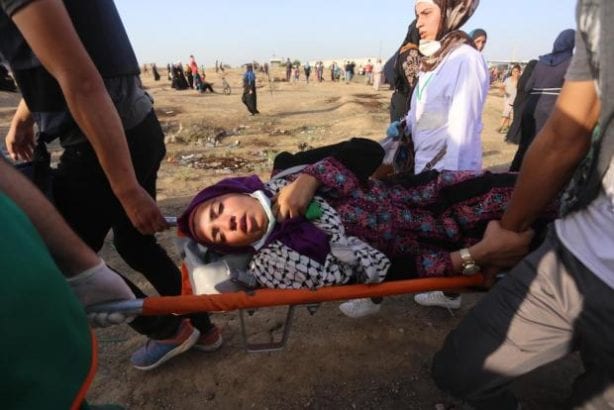
A woman taking part in the women’s march near Israel’s fence imprisoning Gazans on July 3, 2018 is carried on a stretcher
By Alison Weir | If Americans Knew | November 8, 2023
US media reports virtually always say that Israeli violence against Palestinians is “retaliation”. The chronology, however, shows the opposite.
Time after time, US news coverage of the issue begins when Palestinians have committed violence, without noting that this violence was preceded by Israeli violence.
Most recently, US news reports make it appear that the current violence began on October 7th, while failing to mention that Israeli forces had been killing Palestinians regularly in the days, weeks, months, and years before that.
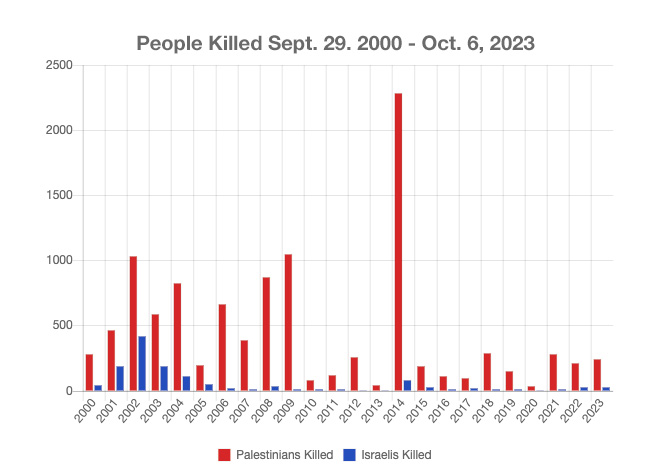
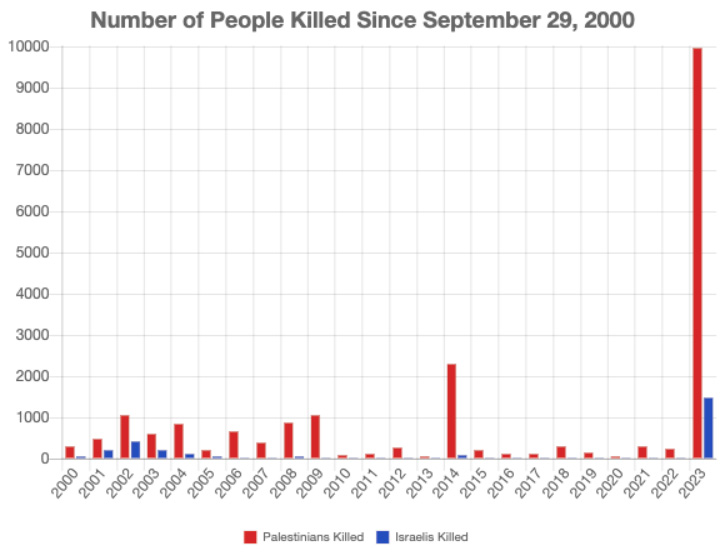
Current news reports also fail to note that October 7th was basically a prison break from what many have accurately described as the world’s largest open air prison, imprisoning over 2 million men, women, and children.
Media reports also neglect to inform Americans that the communities surrounding Gaza are built on stolen Palestinian land, many of the former owners imprisoned in the Gaza ghetto, destitute and desperate.
Media reports also fail to inform Americans that before the October operation, thousands of Gazans had gathered every week for over a year and a half to protest their imprisonment and dispossession – and Israeli forces had shot them, week after week.
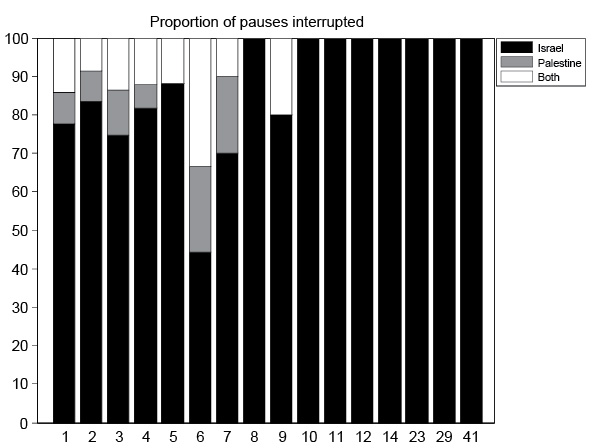
Media also fail to inform Americans that it is Israel that regularly initiates the violence after periods of calm, according to an MIT professor’s study on the subject.
This type of news coverage is not new, and has often been found in alternative media as well as legacy media companies.
While the pro-Israel lobby in the US is arguably the most powerful special interest group in the country (it appears that $19 billion may go to Israel this year alone), and while media coverage of the issue is demonstrably slanted toward Israel, there are growing numbers of Americans who are demanding a stop to US support for Israeli crimes.
Until Americans learn the many facts on this issue being obscured by US media, the tragic violence in the region, and the wars fought on Israel’s behalf, will continue, and Americans, too, will continue to die.
Alison Weir is executive director of If Americans Knew, president of the Council for the National Interest, and author of Against Our Better Judgment: The Hidden History of How the U.S. Was Used to Create Israel.
Hamas faces off against Israeli troops pushing into ‘heart’ of Gaza City
The Cradle | November 8, 2023
Hamas’ Qassam Brigades continue to confront invading Israeli troops in the Gaza Strip, as Tel Aviv claims its forces have reached the “heart” of Gaza City.
The Qassam Brigades announced in a statement on 8 November that since the early morning, its forces destroyed “15 enemy vehicles in several areas in Gaza.”
The statement also announced “the sniping of a soldier in the Al-Tawam area, wounding him directly.”
Resistance fighters also targeted a gathering of soldiers and vehicles south of Gaza City with a Konkurs guided missile, as well as two tanks and an armored troop carrier near the Al-Shati camp in the northern Gaza Strip, according to the group’s Telegram page.
Fierce clashes were reported in Beit Lahiya, in the northern Gaza Strip, as well.
The Quds Brigades of the Palestinian Islamic Jihad (PIJ) movement also targeted several Israeli armored vehicles with mortar fire near the Al-Mashtal hotel in northwestern Gaza.
The Israeli army said on 8 October that two more soldiers were killed inside Gaza. This brings the number of casualties admitted by Israel up to 33 since 27 October, when Tel Aviv announced limited ground operations inside Gaza.
Meanwhile, the Israeli army claims that its troops are now deep inside Gaza City.
Israeli forces are operating “in the heart” of Gaza City and are “tightening the noose” around Hamas, Defense Minister Yoav Gallant said on 7 November.
“Gaza City is surrounded. We are operating within it; we are deepening the pressure on Hamas every hour, every day,” Prime Minister Benjamin Netanyahu said that evening.
The prime minister vowed that there would be no ceasefire until all prisoners inside Gaza were returned to Israel.
The Israeli air force has also continued to launch indiscriminate air strikes across the strip, including in the south, where Tel Aviv has called on civilians to evacuate.
In Khan Younis, Israeli warplanes destroyed two Mosques on 8 November. Several other areas in central and northern Gaza were struck by fighter jets.
Featured Video

Laith Marouf: Hezbollah’s position on US-Iran ceasefire
or go to
Aletho News Archives – Video-Images
From the Archives
Is Israel to blame for the Iraq War?
American Goy | March 10, 2008
I am so tired of this old canard that “Israel had nothing to do with USA’s war with Iraq – in fact, it officially advised America against it”.
Bullshit. … continue
Blog Roll
 Aletho News
- Laith Marouf: Hezbollah’s position on US-Iran ceasefire: What you’re not being told
- Israel’s priority lies in destroying chances of peace between Iran, US: Ex-UN nuclear chief
- Ceasefire for all or for none: Iran shuts Hormuz over Lebanon attacks
- Strait of Hormuz is Iran’s ‘nuclear weapon’ that forced US retreat: Medvedev
- Energy crisis will last for months – Kremlin envoy
- Europe’s quiet role in the war on Iran
- Forty days that shook the Empire: How Iran turned the tables on US and prevailed
- Netanyahu unilaterally declares Lebanon outside of ceasefire deal
- Israeli leaders: ‘Not a single goal’ achieved in war with Iran
- What on earth just happened? Trump, Iran, and the unlikely ceasefire
- If Americans Knew
- Gazans face a triple crisis: severe shortages of water and bread, healthcare in tatters
- NY Times reports how Netanyahu took the US into Iran War
- A sigh of relief over Iran, but Gaza and Lebanon in dire straits – Daily Update
- Thousands dead and neighborhoods razed to the ground: Aid agencies fear southern Lebanon is becoming the new Gaza
- The war the US is fighting for Israel could cost trillions
- ‘Cigarette Burns, Nail Wounds’: Toddler Tortured in Gaza to Coerce Father
- Trump Says US Sent ‘a Lot of Guns’ to Protesters in Iran
- Israeli forces destroy 17 UN peacekeeper cameras in south Lebanon
- US-Israeli strikes ‘completely destroy’ synagogue in Tehran
- Archbishop for US Military Says Iran War Is Unjust Under Catholic Teaching
- No Tricks Zone
- An Inconvenient Tree: Uncovered In Alps… Europe Much Warmer Than Today 6000 Years Ago
- New Study Reports A 60% Slowdown In Greenland’s Ice Loss Rate In The Last Decade
- Low Intensity Tornado Wrecks Major Solar Farm, Creating A Potential Toxic Dump
- New Study Finds Warming Saves Lives…Cold Temperatures 12 Times More Deadly Than Excess Heat
- German Science Blog Accuses PIK Climate Institute Of Hallucinating Climate Tipping Points
- Devastating Assessment Of Comirnaty Vaccine By Former Senior Pfizer Europe Toxicologist
- New Study: CO2 Is ‘Effectively Negligible’ As An Explanatory Climate Change Factor Since 2000
- Former Pfizer Toxicologist Dr. Helmut Sterz Tells Bundestag Hearing Pfizer Vaccine Should Have Never Been Approved
- Energy Expert: Germany’s Nuclear Phaseout Was A “500 Billion Euro Mistake”
- New Research: South Australia’s Mid-Holocene Sea Surface Temperatures Were 4°C Warmer Than Today
 Aletho News