Here’s Who Pressured the Medical Journal
Do we want to live in a world in which medical journals are afraid to publish certain conclusions?

By Donna Laframboise | Big Picture News | January 29, 2020
I recently described an organized campaign against a medical journal that published research over the objections of anti-meat activists. After the Annals of Internal Medicine refused to halt publication, the US Federal Trade Commission was urged to intervene. So was the Philadelphia district attorney’s office.
Do we really want to live in a world in which medical journals are afraid to publish certain conclusions because activists will sic the authorities on them? Does it really need to be said that, once government officials and the courts start second-guessing medical journals, free speech and honest scholarship are as good as dead?
So who, precisely, tried to get this research retracted before it saw the light of day? Who arrogantly wanted to extinguish the public’s right to hear that the evidence linking meat consumption and poor health is quite weak?
A lot of people who should know better. People associated with prestigious institutions.
Let’s start with David L. Katz, of Yale University. In a bizarre newspaper column Katz implies the journal is guilty of “information terrorism.” In his universe, this isn’t a matter of different researchers examining the same evidence and coming to different conclusions. It’s a matter of anyone-who-disagrees-with-me-has-nefarious-motives. It’s how-dare-you-challenge-the-prevailing-consensus!
Katz is the founder/director of the True Health Initiative. That organization describes itself as a “voice of reason and consensus.” It claims to be “fighting fake facts” and “combating false doubts” via an “evidence-based” approach. Shutting down competing perspectives is not the voice of reason. It’s the voice of authoritarianism.
Neal Barnard, of George Washington University’s School of Medicine, heads the Physicians Committee for Responsible Medicine. It was his organization that appealed to the Trade Commission and then to the district attorney.
Other signatories to the letter urging the journal to halt publication include Frank Hu, JoAnn E. Manson, Eric Rimm, Meir Stampfer, and Walter Willett. All of these people are associated with Harvard’s School of Public Health. That entity has a party line where meat is concerned. It’s difficult to imagine a researcher with an alternative perspective surviving there long. I wrote about Willett’s vegetarian climate change activism last year.
These are the other individuals who took the highly unusual step of trying to influence the editorial decisions of a respected medical journal:
Dariush Mozaffarian – a Dean at Tufts University
Richard Carmona of the University of Arizona
Christopher Gardner of Stanford University
David J.A. Jenkins and John Sievenpiper of the University of Toronto
Dean Ornish of the University of California
Kim A. Williams of Rush University
MESA: Israeli Government Involved in Cyberbullying US College Students
A letter from the Middle East Studies Association to Israeli Security Minister Gilad Erdan charges Israeli government harassment of American students.
By Judith Tucker | May 25, 2018
Dear Minister Erdan:
We write on behalf of the Committee on Academic Freedom of the Middle East Studies Association of North America (MESA) to express our dismay that the Israeli government has been involved in facilitating and directing abusive actions, including cyberbullying, against students at universities in the United States who have been active in campaigns for divestment from companies that profit from Israel’s occupation of the West Bank and the Gaza Strip. This constitutes unwarranted interference by a foreign power in these students’ free speech rights and threatens academic freedom at institutions of higher education in the United States.
MESA was founded in 1966 to promote scholarship and teaching on the Middle East and North Africa. The preeminent organization in the field, MESA publishes the International Journal of Middle East Studies and has nearly 2,500 members worldwide. MESA is committed to ensuring academic freedom of expression, both within the region and in connection with the study of the region in North America and elsewhere.
The most recent incident of which we are aware took place at George Washington University (GWU) in Washington, D.C. during April 2018. On 16 April 2018, a Student Senate vote on a resolution urging the university to divest from a number of companies (including Boeing, Lockheed Martin, Elbit Systems, Caterpillar, CEMEX, General Electric, Northrop Grumman, Raytheon and Motorola Solutions) was cancelled after students witnessed two unidentified individuals placing threatening posters around the university. The vote was rescheduled for 24 April 2018 and on that date the divestment resolution was approved by a vote of 18-6, with 6 abstentions.
Two men wearing bird costumes and masks, apparently evoking the Canary Mission website which features some two thousand derogatory and generally inaccurate and misleading profiles of students and faculty who have advocated for Palestinian rights, along with someone who appeared to be coordinating their activities, stood outside the room in which the Senate Senators were meeting to vote on the resolution. The clear intent was to intimidate the Senators as well as student supporters of the resolution. These individuals were later seen putting up posters around campus that read, “SJP [Students for Justice in Palestine], you saw two of us, we saw all of you.”
After the vote, administrators of the Act.il app, which media reports indicate your ministry was integrally involved in developing and promoting in order to combat the Boycott, Divestment, Sanctions (BDS) movement, began directing its users to “like” and share a Facebook page set up to threaten and bully the GWU Student Senators who voted in support of the resolution. The Facebook page was taken down soon after the Senate vote, but Act.il did not remove its listing of the cyberbullying campaign as a “mission” to be conducted by anti-BDS activists until it expired.
We note in this connection that you personally promoted the launch of Act.il at the February 2017 Celebrate Israel Parade and that your ministry placed paid articles advertising the app in the Jerusalem Post and The Times of Israel (see The Forward ).
Your status as an official of the Israeli government makes your involvement, and that of the ministry you head, in campaigns to try to intimidate American college and university students and to inhibit or suppress their freedom of expression especially egregious. These students have a right to be free of harassment, intimidation and cyberbullying by people who are in effect agents of the Israeli government. We therefore call on you and your ministry to cease promoting or supporting such campaigns of harassment, whether online or in person, and to refrain from interference of any kind when students and faculty in the United States exercise their constitutionally protected right of free speech and their academic freedom rights.
We look forward to your response.
Sincerely,
Judith E. Tucker
MESA President
Professor, Georgetown University
Amy W. Newhall
MESA Executive Director
Judith E. Tucker is the President of the Middle East Studies Association of North America and writes on behalf of the MESA Committee on Academic Freedom. She is Professor of History at Georgetown University, former Director of the Master of Arts in Arab Studies Program, former Editor of the International Journal of Middle East Studies.
US university says sorry for Palestinian flag ultimatum
RT | December 11, 2015
George Washington University president Steven Knapp has issued an apology to a student who was told to take down his Palestinian flag.
A university campus police officer entered Ramie Abounaja’s room on October 26 and told him to take down the Palestinian flag that he had hanging from his window.
The officer said he had received multiple complaints and that the flag was in violation of the housing code.
Visitors to the university confirmed many other national flags hanging from dorm rooms without being taken down.
A week later, Ramie Abounaja received a warning letter from the university, threatening future disciplinary action, despite the fact he had removed the flag.
“As a member of the larger residential community we hope that you will be respectful of your peers and be aware of your behavior. The act of an individual has a profound impact on the community,” it read.
Unsure of what he was in violation of, Ramie wrote a letter back. In it, he explained his reason for hanging the Palestinian flag: “I was motivated to do this after I had seen dozens of different banners and flags hung outside other residential campus living spaces throughout my three years here at GW. I felt like I was being singled-out, because of my heritage and the viewpoint of my speech, for something I’ve seen dozens of students, fraternities and other student groups do in my three years at GW.”
Civil rights groups called the order a violation of free speech and said the actions pointed to anti-Palestinian sentiment.
Students for Justice in Palestine at GW said: “Flags of other countries hang out of dorm windows with no disciplinary consequence. Selective reinforcement of these rules is discrimination.”
Universities in the US stand accused of cracking down on pro-Palestinian speech, with a high profile example in the state of Illinois where professor Steven Salaita was dismissed after tweeting about Israel’s assault on Gaza in 2014.
The recent Palestinian Exception to Free Speech report revealed intensifying suppression Israeli criticism on campuses: “Israel’s fiercest defenders in the United States — a network of advocacy organizations, public relations firms, and think tanks — have intensified their efforts to stifle criticism of Israeli government policies. Rather than engage such criticism on its merits, these groups leverage their significant resources and lobbying power to pressure universities, government actors, and other institutions to censor or punish advocacy in support of Palestinian rights.”
Palestine Legal responded to 140 incidents and 33 requests for assistance in anticipation of potential suppression in the first 6 months of 2015. 80% of those were aimed at students and scholars.
The report highlights a number of tactics used to quash pro-Palestinian feeling in universities, including academic sanctions.
Northeastern University in Boston suspended a student group the spring of 2014 after members distributed flyers describing Israel’s policy of demolishing Palestinian homes.
Around the same time, San Francisco State University investigated Professor Rabab Abdulhadi for going on a research trip to Palestine after an Israel advocacy group accused her of meeting with terrorists.
Palestinian Legal wrote to George Washington University, demanding they withdraw its warning letter and threat to sanction the student.
University President Steven Knapp said he has apologized to Abounaja and that the student had been subjected to a flawed process: “I have instructed the relevant offices to end the practice of sending warning letters to students solely because of a reported violation of a university policy. I have also instructed them to ensure consistent enforcement of all university policies.”
Featured Video
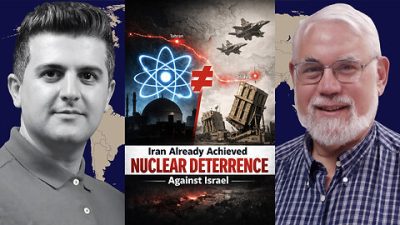
Prof. Ted Postol: Iran Already Achieved Nuclear Deterrence Against Israel
or go to
Aletho News Archives – Video-Images
From the Archives
How the occupied mentality syndrome works
Saudi Arabia on the American chessboard – Part 3
By B. J. Sabri | American Herald Tribune | June 27, 2016
Read part 2: “The occupied mentality Syndrome“
Previously I argued whether Saudi Arabia’s repeated involvements in U.S. interventions and wars stem from free national will or in response to a specific condition. For starters, in Saudi Arabia there is no national will. In Saudi Arabia, the national will is the will of the Al Saud clan. Still, when a major Arab state allies itself with a superpower that committed unspeakable crimes against humanity in almost every Arab country, then something is wrong. This fact alone should compel us to examine the U.S.-Saudi relation for one exceptional reason. As a result of the U.S.-Saudi wars, hundreds of thousands of people in Afghanistan, Iraq, Iran, Libya, Syria, Yemen, and Somalia have lost their lives. Millions became displaced in their own homelands. And millions more rendered refugees.
Attributing the Saudi policies to the bonds of “partnership” with the U.S. is frivolous. There are no bonds between these two thugs except those of business, military deals, secret plots, and wars. Proving this point, bonds such as these have no space for the American and Saudi peoples to share significant cultural or societal exchanges. If partnership is not the reason for the Saudi contribution to the U.S. strategy of empire and imperialism, then another reason must exist.
This leads to three possibilities. … continue
Blog Roll
 Aletho News
- Russia Warns of Retaliation as UK Authorizes Seizure of Vessels
- Serbia thwarts plot to bomb Russia-Hungary gas pipeline – Vucic
- Al Mayadeen voices solidarity with Dr. Marandi amid death threats
- US dismantling international law in its war against Iran while claiming ‘false’ victory: Legal scholar
- One martyr, 5 injuries in US attack on Iraqi border crossing with Iran
- ‘This war is Israel’s war’: World facing ‘security breakdown’, says Qalibaf
- IRGC decries attack on US embassy in Riyadh, says executed by ‘Israel’
- Iran blasts EU hypocrisy as EU invokes international law over Hormuz
- There is no military solution to Strait of Hormuz
- NATO’s structural collapse – the outcome of deviation from reality
- If Americans Knew
- US loses planes over Iran, Israel downgrades Lebanon war goals – Daily Update
- Israel Is Blocking Palestinians from Easter at Church Where Jesus Resurrected
- Plot to assassinate Palestinian activist follows harassment campaign promoted by Zionist groups and elected officials
- Prominent New York synagogue hosts presentation on why U.S. Jews should support the ethnic cleansing of Gaza
- Tapper vs. Piker: Is the CNN Anchor Auditioning for David Ellison?
- Shouldn’t Democrats Be Able to Condemn Genocide?
- Israel-US kill negotiators, destroy civilian structures, but Iran’s military capabilities still largely intact – Daily Update
- ‘War crime’: Global condemnation as Israeli ministers celebrate death penalty law targeting Palestinian prisoners
- 7 Ways Israel Is Turning Lebanon Into Gaza
- World’s Leading Football Bodies Under Fire Over Israel Policies
- No Tricks Zone
- An Inconvenient Tree: Uncovered In Alps… Europe Much Warmer Than Today 6000 Years Ago
- New Study Reports A 60% Slowdown In Greenland’s Ice Loss Rate In The Last Decade
- Low Intensity Tornado Wrecks Major Solar Farm, Creating A Potential Toxic Dump
- New Study Finds Warming Saves Lives…Cold Temperatures 12 Times More Deadly Than Excess Heat
- German Science Blog Accuses PIK Climate Institute Of Hallucinating Climate Tipping Points
- Devastating Assessment Of Comirnaty Vaccine By Former Senior Pfizer Europe Toxicologist
- New Study: CO2 Is ‘Effectively Negligible’ As An Explanatory Climate Change Factor Since 2000
- Former Pfizer Toxicologist Dr. Helmut Sterz Tells Bundestag Hearing Pfizer Vaccine Should Have Never Been Approved
- Energy Expert: Germany’s Nuclear Phaseout Was A “500 Billion Euro Mistake”
- New Research: South Australia’s Mid-Holocene Sea Surface Temperatures Were 4°C Warmer Than Today
 Aletho News