EU financing ‘extremism’ – Georgia
RT | June 6, 2025
Georgian Prime Minister Irakli Kobakhidze has accused the EU of inciting and financing extremism in his country. The claim comes amid a deepening rift between Tbilisi and Brussels over alleged “democratic backsliding.”
Kobakhidze insisted on Thursday that his government has “indisputable” evidence that Western actors are backing anti-government protests in the country.
”We prove this with facts, videos, and [EU] financing practices. We have direct facts about how these people are financing extremism in our country. We talk to them with facts, but they respond with general phrases, and more often lies. This is sad,” Kobakhidze said, as cited by Rustavi 2.
Parliament Speaker Shalva Papuashvili echoed the charge, stating that “extremism in Georgia is supported and financed from the budgets of the EU.” He added that he had written to EU Ambassador Pawel Herczynski detailing the accusations but had yet to receive a reply.
The ruling Georgian Dream party, which secured a decisive parliamentary majority in October 2024, has accused Western powers of interfering in the country’s domestic politics under the guise of “democracy promotion.” Officials in Tbilisi have drawn parallels to the 2014 Maidan uprising in Ukraine and say similar tactics are now being used to destabilize Georgia for refusing to adopt a confrontational stance against Russia in the Ukraine conflict.
Following Georgian Dream’s victory, a coalition of pro-Western parties alleged fraud and launched protests to force the government’s resignation. EU and US officials voiced support for the opposition, which Georgian leaders denounced as foreign meddling.
Brussels has also led a coordinated campaign against Georgia’s foreign influence transparency law, legislation that requires political organizations to disclose substantial foreign funding. Although similar laws exist across the West, the European External Action Service claimed the legislation in Georgia was “a serious setback for democracy” and warned it could “threaten the country’s EU path.”
Tensions spiked last month when French President Emmanuel Macron, Polish Prime Minister Donald Tusk, and German Chancellor Friedrich Merz issued a joint statement on Georgia’s Independence Day, accusing the government of “democratic backsliding.” Papuashvili dismissed the statement as “shameful,” saying it disrespected both the state and its people.
Georgia was granted EU candidate status in December 2023 but has since suspended accession talks, citing Brussels’ increasingly coercive tone. The government, however, insists that it remains committed to eventual EU membership.
Trump bracing for a longer Ukraine war
By M. K. BHADRAKUMAR | Indian Punchline | May 30, 2025
One of the mysteries of the Ukraine endgame is that President Donald Trump did not issue an executive order on January 20 withdrawing all support for Ukraine. That would have been the easiest way to end the war.
The conditions were propitious — Candidate Trump didn’t mince words that it was a hopeless war that cost the US dearly in treasure; he thought poorly of President Volodymyr Zelensky as a shameless free rider; he saw the war as impeding his foreign-policy priority of the US’ transition to a multipolar world order; and, he felt no compulsion to inherit ‘Biden’s war’.
But instead, Trump plunged himself with gusto into the Ukraine question, although Washington lacked the means to leverage Russia to compromise on its core interests in what Russian people regarded as an existential war.
Quite possibly, some of Trump’s advisors prevailed upon him to undertake the theatrical diplomatic effort on the basis of a flawed reading of the state of play in the war. Trump believed that western sanctions lethally weakened the Russian economy; that Russia’s casualty figures ran into hundreds of thousands and such a high level of attrition was unsustainable; that Zelensky would sign up on the dotted line; that an improvement in Russian-American relationship would be a ‘win-win’ with massive economic benefits accruing to both sides and so on.
But all these premises turned out to be wrong notions. Putin has steered the economy to a state of permanent western sanctions (which was the Soviet experience, too). Russian entrepreneurs have successfully replaced the fleeing western businesses in the wake of sanctions and will now resist any re-entry by the latter.
Russia’s casualty figures are much lower than the self-serving western estimates put it, as the high level of recruitment to the army suggests. Zelensky is bent on prolonging the war with support from European powers per Biden’s script to ‘Trump-proof’ the war. Europeans not only have a Plan B but have collaborators within the US some of whom may even be in Trump’s team.
Suffice to say, Trump has been on a learning curve, as he began sensing that the Kremlin is determined to realise the objectives it had set for itself (as outlined in Putin’s historic speech last June at the foreign ministry). According to a Reuters report two days ago, “Putin wants a ‘written’ pledge by major Western powers not to enlarge the US-led NATO alliance eastwards — shorthand for formally ruling out membership to not only Ukraine and Georgia and Moldova and other former Soviet republics as well.”
“Russia also wants Ukraine to be neutral, some Western sanctions lifted, a resolution of the issue of frozen Russian sovereign assets in the West, and protection for Russian speakers in Ukraine” — per Reuters.
Europeans will scoff at such demands. Therefore, as things stand, a breakthrough at the Russia-Ukraine peace talks in Istanbul on June 2 seems unlikely. Unsurprisingly, Russia is pressing ahead with an offensive campaign in all directions, throwing in all its forces with a culmination planned for summer or early autumn.
The least bad option
Trump has three options under the circumstances. One is to simply refuse to own responsibility for the war and walk away for good. But then, can Trump deny his own part in it in his first term? While the Trump administration identified its approach to foreign policy as ‘principled realism’, late Joseph Nye’s characterisation of Trump as an “idiosyncratic realist” was perhaps closer to the truth.
The official administration policy on Ukraine during Trump’s first term was a continuation of the policy pursued by the Obama administration. It recognised Crimea as part of Ukraine, condemned Russia’s occupation and eventual annexation annexation of the peninsula; it underscored Russia’s primary responsibility for the instigation, continuation and conduct of the conflict in eastern Ukraine; it even identified the Russian interference in Ukraine as part of a wider pattern of aggression towards other states and as proof of Moscow’s challenge to the fundamental principles of international order.
For these reasons, the Trump administration maintained that the US should help Ukraine to defend itself and should penalise Russia both through sanctions and diplomatic isolation (eg., membership of the G7). Curiously, shades of this thought process resurface even today occasionally in Trump’s Truth Social outbursts. Trump seems unaware he’s carrying a can of worms as his Ukraine legacy.
So, the second option today is to convey Trump’s dissatisfaction over Russia’s perceived intransigence in dictating terms for settlement and its alleged lack of interest in peace talks. Trump even hinted at Russia’s hidden agenda to conquer Ukraine. Trump is hinting at punishing Russia both through sanctions and supplying weapons to Ukraine. German chancellor Friedrich Merz’s provocative announcement of giving long-range weapons to Zelensky was probably green lighted by some people in Trump’s team. After all, Merz is no stranger to Wall Street.
However, this is a recipe for an extremely dangerous NATO – Russia confrontation. If long range German missiles hit Russia, Russia will retaliate in a way that could potentially cripple NATO’s operational readiness in a hypothetical war. Belarus State Secretary of Security Council Alexander Volfovich has said that the Oreshnik missile system is “planned to be stationed in Belarus by the end of the year. The locations for its deployment have already been determined. Work is under way.” The spectre of World War III may seem a bit of a stretch, but Trump will have to consider the dangers of climbing the escalation ladder, which could destroy his MAGA presidency.
Washington has no means to intimidate the Kremlin. The bottom line is, Trump is actually left with only a third option, the least bad option — viz., walking away from the Ukraine conflict at this point and return when the war has been lost and won, possibly by the end of the year. This will not damage Trump’s reputation.
Trump may already be displaying his credentials as ‘peacemaker president’ if the US-Iran talks, which seem to be making progress, results in a nuclear deal. Besides, US-Russia normalisation needs more time to gain traction. Senator Lindsey Graham’s hard-hitting sanctions bill against Russia with 81 co-sponsors in the senate signals that Russia is a very toxic subject in the US domestic politics.
Also, Russia-Ukraine talks is only one track. The Russians have sensitised Trump’s team that while Moscow engages with Kiev, the root cause of the war — absence of a European security architecture — still remains to be addressed, which is something that only Russia and the US can work out jointly. The US shouldn’t shirk its responsibility, being both the original instigator of NATO expansion and sponsor of the Ukraine war.
The reaction by the US special envoy for Ukraine Keith Kellogg has been positive when he told ABC News in an interview that the US understands that it is a matter of national security for Russia that NATO may stop accepting new Eastern European countries into its ranks — ie., not only Ukraine but Moldova and Georgia as well.
Kellogg said he considered the Russian side’s concerns to be justified. He did not rule out the possibility of reaching an agreement during negotiations between the US and Russia. This is a big step forward.
US House Approves MEGOBARI Act to Pursue in Georgia More Ukraine-style Intervention and Conflict with Russia
By Adam Dick | Ron Paul Institute | May 9, 2025
We have seen this play out before, the United States government relentlessly acting to control the government in a former Soviet Union republic bordering Russia and then proceeding to support that government in war against Russia. That course of action has led to devastation in Ukraine, including the deaths of hundreds of thousands of individuals, in a US proxy war against Russia. Through Monday approval in the United States House of Representatives of the Mobilizing and Enhancing Georgia’s Options for Building Accountability, Resilience, and Independence Act (MEGOBARI Act) by a vote of 349 to 42, the House took a big step toward a replay of this disaster in Georgia.
The MEGOBARI Act (HR 36) is overflowing with repetition of the type of justifications that were brought out in support of the US government’s disastrous intervention in Ukraine. “[T]he consolidation of democracy in Georgia is critical for regional stability and United States national interests,” proclaims the bill before declaring it is “the policy of the United States” to “support the constitutionally stated aspirations of Georgia to become a member of the European Union and NATO,” to “continue supporting the capacity of the Government of Georgia to protect its sovereignty and territorial integrity from further Russian aggression or encroachment within its internationally recognized borders,” and to ensure several other listed developments occur in Georgia that would increase the nation’s connection to the US and European Union (EU) while creating antagonism between Georgia and Russia. US policy is also listed as including “to combat Russian aggression, including through sanctions on trade with Russia and the implementation and enforcement of worldwide sanctions on Russia.” Even included, as happened before with Ukraine, is a demand for reduced trade ties between Georgia and Russia.
The statement of US policy in the bill further includes a recounting of USAID-style manipulation of a foreign government, depicted as democracy promotion, that has been well exposed in the last few months through the efforts of the Department of Government Efficiency (DOGE). For example, the MEGOBARI Act declares it is US policy “to continue supporting the ongoing development of democratic values in Georgia, including free and fair elections, freedom of association, an independent and accountable judiciary, an independent media, public-sector transparency and accountability, the rule of law, countering malign influence, and anti-corruption efforts and to impose swift consequences on individuals who are directly responsible for leading or have directly and knowingly engaged in leading actions of policies that significantly undermine those standards.” That may sound nice — though seriously buttinski — out of context (as is its propaganda intent). But, this is standard US regime changer language for “the US has decided to run the show in your country.”
Right after declaring it is US policy for the US to impose its will on Georgia and harm Russia, the bill moves on to mandating the delivery to congressional committees of a specially prepared classified report “examining the penetration of Russian intelligence elements and their assets in Georgia, that includes an annex examining Chinese influence and the potential intersection of Russian-Chinese cooperation in Georgia.” Got to keep track of the competition. But, really, the main purpose is probably to help the politicians and their media supporters justify the continuing ramping up of intervention in Georgia and antagonism toward Russia and China. The classified information, it will be asserted, shows the “bad guys” are doing such dastardly things in Georgia that would really shock the American people if the details didn’t just have to be kept secret. This will support intervention in Georgia and the fearmongering behind the US government’s resurrected cold war.
Beyond stating US policy supporting exercise of control over Georgia, opposition to Russia and China, and, potentially, war, the MEGOBARI Act calls for the creation of a five-year plan by that old regime change pro USAID — still alive and well — in coordination with other unnamed US government departments. That plan would be purposed to turn into action the stated interventionist US policy.
The bill also calls on President Trump to start slinging the go-to interventionist weapon of sanctions against Georgians from Parliament members to government and political party officials who Trump determines “knowingly engaged in significant acts of corruption, or acts of violence or intimidation in relation to the blocking of Euro-Atlantic integration in Georgia.” Their family members can also be sanctioned. You can ignore the fluff about “corruption” and “violence or intimidation.” That is not what the US is interested in stopping. Otherwise, the remainder of the sentence describing who should be sanctioned would not have been included. The US via these sanctions will be acting to advance “Euro-Atlantic integration.” Oppose that in Georgia and the “corruption” or “violence or intimidation” determination regarding you can be expected to be tagged on as justification for sanctions. This fits right in with the US routinely failing to condemn terrorism and human rights abuses by people, organizations, and governments acting in line with US foreign policy.
The MEGOBARI Act also gives the president an additional broad sanctions direction that he “determine whether there are foreign persons who, on or after the date of the enactment of this Act, have engaged in significant corruption in Georgia or acts that are intended to undermine the peace, security, stability, sovereignty, or territorial integrity of Georgia for the purposes of potential imposition of sanctions pursuant to powers granted to the President under the International Emergency Economic Powers Act (50 U.S.C. 1701 et seq.).” Rest assured, though, efforts to “undermine the peace, security, stability, sovereignty, or territorial integrity of Georgia” will be judged A-OK as long as those efforts are US supported.
Near the end of the bill comes the language that gives away what is seen as a likely outcome of the intervention the bill puts in place: war with Russia. The president, the bill states, “in consultation with the Secretary of Defense, should maintain, and as appropriate, expand military co-operation with Georgia, including by providing further security and defense equipment ideally suited for territorial defense against Russian aggression and related training, maintenance, and operations support elements.”
House members who voted for the MEGOBARI Act are setting up expanded intervention in Georgia that follows the Ukraine model. Even preparation for another proxy war against Russia is included in the process the bill sets up.
The MEGOBARI Act is not the beginning of US intervention in Georgia. That has been ongoing for many years. But, the bill is a significant step forward. The timing of the bill’s approval is also important. Even as President Donald Trump talks of ending the Ukraine War and removing sanctions on Russia as part of a peace deal, the MEGOBARI Act signals that the US is preparing for a replay of the entire catastrophic policy of intervention in another former Soviet republic on Russia’s border.
A Monday press release issued by MEGOBARI Act megasupporters Reps. Steve Cohen (D-TN), Joe Wilson (R-SC), Richard Hudson (R-NC) and Marc Veasey (D-TX) upon House approval of the bill, states the MEGOBARI Act “is fully negotiated between House and Senate, Democrat and Republican leaders and is expected to move quickly.” Those Republican and Democratic leaders make a fuss about their disagreements on some things. But, when it comes to major interventions abroad, they tend to be fully supportive.
The press release goes on to note in its next sentence that “MEGOBARI means ‘friend’ in Georgian.” People in Georgia would do well to look at how the Ukraine and US governments being “friends” has worked out for Ukrainians.
Three years of a cruel and destructive NATO proxy war in Ukraine
By Dmitri Kovalevich | Al Mayadeen | February 25, 2025
The end of February marks three years since the start of Russia’s special military operation in Ukraine and 11 years since the ‘Euromaidan’ coup of February 2014. The coup was the main cause of the current military conflict.
The war in the now-former eastern territories of Ukraine could have been avoided had two successive presidencies in Kiev (Petro Poroshenko, 2014-2019 and Volodomyr Zelensky since 2019) complied with the Minsk 2 peace agreement of February 2015. Minsk 2 (text here), was agreed by Kiev and the pro-autonomy forces in the Donbass region on February 12, 2015. France, Germany, and Russia co-signed the agreement as guarantors. The agreement was unanimously endorsed by no less than the UN Security Council on February 17, 2015.
Minsk 2 envisioned the return of Lugansk and Donetsk (the two rebellious ‘peoples republics’ of the industrialized Donbass region) to the fold of the Ukrainian constitution, this time as semi-autonomous oblasts (provinces). Kiev also agreed to a neutral status for Ukraine. It could apply for membership in the European Union if it chose, but membership in the NATO military alliance was for Russia a non-starter.
EU membership increasingly became a goal of Western-oriented business interests in Ukraine during the decade of the 2000s. That decade followed 10 years of sharp economic decline following the dissolution in 1989-90 of Soviet Ukraine and of the Soviet Union (USSR, of which Soviet Ukraine was a key constituent).
Tragically for the people of post-Soviet Ukraine, the Western countries, particularly the leading powers of NATO, quietly and deceptively opposed Minsk 2. They worked quietly from the get-go to sabotage the agreement.
Deception of Ukrainians by the West
On February 12, 2025, the deputy secretary of the Russian Security Council, Aleksey Shevtsov, spoke on the ninth anniversary of the signing of Minsk 2, explaining once again to those who would listen that Russia’s special military operation in Ukraine would never have happened had the West honored the agreement. He stressed that the people of Ukraine today have every right to demand an accounting for the deceptions that took place in 2015 and after.
On the same day, the Ukrainian online publication Strana published a lengthy commentary in its Telegram messaging service headlined, ‘Why did the Minsk agreement fail?’ Strana wrote, “Russia says that Kiev deliberately refused to fulfill the conditions of the Minsk 2 agreement and instead proceeded to rearm its army and restart armed attacks against the people of Donbass. The Russian government says it can no longer trust the government in Kiev and so there is no possibility of a ‘Minsk 3’.” (‘Minsk 1’ was a first attempt, in September 2014, by the pro-autonomy forces of Donbass to reach a peace agreement with the new administration in Kiev.)
Strana wrote further, “Russia did not launch a full-scale invasion of Ukraine in 2014 or 2015. Perhaps it wanted to, who knows, but it could not do so because it would have been hit with harsh economic sanctions similar to those levied against it by the Western powers beginning in February 2022. It would have faced economic sanctions worse than those initially levied against it following the Crimea referendum of March 2014. The Russian economy was in no shape to easily withstand such sanctions, in contrast to the situation in 2022.
“Additionally, although the Ukrainian army back then was much weaker compared to 2022, this was also the case for the Russian army.”
In their recollections of the events of those years, leaders of today’s Donetsk Peoples Republic (today a constituent of the Russian Federation) say that the main opponent of a major military response to Kiev’s continued military provocations and sabotage of Minsk 2 was the Russian military. Russian military leaders said at the time that the Russian Federation did not have enough combat-ready troops to take on such a large and industrial country as Ukraine.
“From a purely military point of view, the rapid success of Russia in Crimea in the spring of 2014 was due to the fact that Russian troops were already present on the Crimean peninsula [by virtue of a 1997 agreement between Russia and Ukraine; see Wikipedia on the subject]. They needed no time to deploy, and they prevented armed attacks being threatened by the paramilitaries of the new administration in Kiev. At the time, there were no large military formations of the Russian Federation along the lengthy Russian-Ukrainian border. Donbass’s self-defense forces only began to form in the late spring of 2014 and it was several years before they were integrated as auxiliaries of the Russian armed forces.”
As Russian sources stated at the time, the initial military defense that arose in the Donetsk and Lugansk oblasts of Ukraine against the paramilitaries of the 2014 coup bore the markings of a military adventure and were not at all coordinated with the political leadership of the Russian Federation. The self-defense forces hoped to convince or pressure Russia to join a war of defense for which Russia was not ready, not politically, economically nor militarily.
What the Western-incited war in Ukraine has wrought
In the lead-up to and since the 2014 coup, western and central Ukraine has been living the fate of a battering ram to be used by the Western imperialist powers to weaken Russia, regardless of the tragic human consequences and of the prospect of Ukraine being cast off once it is no longer needed for such a role. The results of this cruel and heinous policy are increasingly evident as graveyards continue to spread on Ukraine’s territory with each passing day.
The Politnavigator media outlet explained (as reported on Telegram on February 1) the consequences of such policy for the mortals conscripted into war, many against their will. The report cites Anton Cherny, an officer of the Armed Forces of Ukraine. He explains, “We are being lied to about the value of our soldiers’ lives. I watched the speech of our commander-in-chief that every soldier is valuable to Ukraine and worth his weight in gold. That’s what they tell the people, but it’s not true.”
Cherny says that 90% of the soldiers who die or succumb to injuries on the battlefields are simply buried there and then officially listed as missing. “Everyone there knows perfectly well what is happening.” And the indignities do not end there. The families of those reported as ‘missing’ do not receive the financial compensation to which they are entitled.
Cherny also explains that it is extremely difficult for surviving fighters to exit the grim fighting along the front lines. “It’s hard to get out of there by yourself, it’s unrealistic. How lucky it would be if there were fog, very big snow or some other bad weather.” He explains that Ukrainian lines are under constant surveillance from drones flying overhead. As soon as evacuation vehicles approach from the Ukraine side, the drones threaten to strike them, making it very difficult to evacuate the injured or the dead from the various battlefields.
Politnavigator continues its report:
‘The army doesn’t provide guidelines or instructions for soldiers to somehow make their tasks easier. Its words to this effect are just talk. Soldiers are told to go here or there and ‘do’ something, but as to what, where and why, you have to be some kind of superman to figure it out. It’s unreal,’ Cherny says indignantly.
Provoking the sleeping bear of Russia
Radical nationalist and neo-Nazi paramilitaries operating under the control of Kiev’s police and special services waged nine years of military conflict and terrorist attacks against civilians in Donbass from 2014 to 2021. This was bound to provoke a reaction from the Russian Federation sooner rather than later, as any serious commentator knew and reported.
Ukrainian commentators were writing more than three years ago that Kiev’s deployments of paramilitaries in Donbass and its turning a blind eye to their crimes, backed by promises of weapons by belligerent Western governments, would inevitably provoke Russia into responding, as though provoking a bear with a stick. The weapons of Ukraine, many provided by the West, did indeed, predictably, awaken the bear, and angrily.
In early February 2025, the prime minister of neighboring Georgia, Irakli Kobakhidze, told journalists that back in 2022, his country’s then-government was being encouraged by the West to open a ‘second front’ against Russia. The country was to be used just as Ukraine was being used. According to the Kobakhidze, Georgian officials of the day were told a fable by the Western powers to convince them to act. “They said Ukraine is winning the war; you should not miss this chance to strike against Russia.”
Kobakhidze believes it will now take Ukraine 100 years to return to a state of development comparable where it was prior to the 2014. He asks, “Why was all this done? No one is offering a clear answer to this question. However, there is an answer: some global interests, evil interests, have sacrificed our friendly country Ukraine.”
Full-fledged dictatorship
The eleven years that have elapsed since the Euromaidan coup of 2014 have been years of Ukraine sliding inexorably towards dictatorship, all the while accompanied by rosy phrases from EU leaders claiming that a ‘triumph of democracy’ was taking place. The ideology of Nazism from the World War II era has been officially rehabilitated, while opponents of this course have been targeted by armed, ultra-nationalists and neo-Nazis.
All left-wing parties in Ukraine have been banned. Some of their members and leaders have been killed, while many more have been forced into exile. Protests against, and critics of, the ‘pro-European’ dictatorship in Kiev have been targeted for repression. The Western powers have turned a blind eye to the crimes being committed, while United Nations officials have occasionally issued toothless resolutions expressing ‘concern’ about the civil rights being violated.
In 2021, Zelensky banned more political parties critical of his government, and he closed all television channels deemed non-compliant with his policies. No court or other legal reviews of these decisions have taken place.
With the outbreak of war in February 2022, Zelensky imposed martial law and then canceled national elections for the presidency and the legislature (Rada). These were to take place no later than April 2024, according to the Ukraine constitution. Zelensky has said that Ukraine cannot hold elections until it has fully regained control over its former territories. Since this would be impossible to achieve, his statements on the matter mean that for all intents and purposes, elections will not take place in the remaining territories held by Kiev. Period.
Alexander Dubinsky, a former associate of Zelensky jailed by his administration, writes that the war became for Zelensky an escape from the social explosion building up inside the country and appearing inevitable by the end of 2021. “I think this largely determined why Zelensky promoted military rhetoric in every possible way, and why in March 2022 he ceded to Western government pressures to draw back from a political settlement with the Russian Federation.”
For Dubinsky, the end of the war would mean a loss of political power by Zelensky and his cohorts, and this, in turn, would expose them to direct conflict with all the enemies he has managed to make. He may be able to protect himself from the widows and mothers of the deceased, reasons Dubinsky, but not from the violent, ‘serious men’ who have proliferated under his government.
Detention camps using torture methods under Zelensky
Every day, more and more facts are emerging in Ukraine about the detention camps that Zelensky has created in order to sustain its power and continue the NATO proxy war.
In January, legislator Oleksandr Dubinskyy urged Ukrainians to report to U.S. authorities about the detention camps that the Security Service of Ukraine (SBU) has organized, notably for the purpose of forcing accused conscription evaders to confess to accusations of state treason. According to him, the SBU detention camps are prototypes of what Ukraine as a whole has become under Zelensky.
Dubinskyy has been detained since November 2023 under accusations of financial crimes and treason. He has recently announced from detention his intention to run for president of Ukraine if and when a national election takes place.
Another former associate of Zelensky, legislator Artem Dmytruk, wrote on Telegram on January 30 that the entire special corps of the Lukyanivske pre-trial detention center in Kiev should be called a concentration camp and named ‘Zelensky’s Factory’. Legislators Oleksandr Dubinsky and Yevhen Shevchenko are among those imprisoned there. “90|% of detainees in this center face charges by the office of the expired president Zelensky.”
Dmytruk fled to Britain in August 2024 shortly after he was the only deputy in the Rada to speak and vote against a new law banning the Ukrainian Orthodox Church, of which he is a subdeacon.
The Ukrainian magazine Liberal published a lengthy report in February saying that individuals and political formations connected to the Zelensky administration are the only ones in Ukraine not talking about political repression prevailing today in the country.
The authors claim that extensive political repression was being prepared and carried out well before the start of the Russian military intervention in February 2022. According to the publication, thousands of SBU employees were sent to border regions on the eve of the Russian intervention to monitor troop morale and other measures of the military situation.
At the same time, Kiev began to address its shortages of police and prison personnel in Kiev and other regions by recruiting ‘trained athletes’ into the ranks of the SBU after completing three-month courses in western Ukraine. ‘Trained athletes’ is a euphemism in Ukraine for members of criminal gangs.
“Thousands of bone-crackers performing police functions inside the country spread out without the slightest remorse to beat testimony out of Ukrainians using the most brutal forms of violence and creating torture institutions such as the famous ‘Sports Hall’ on Volodymyrska Street [in the center of Kiev],” writes Liberal.
“People were lying on floors, deprived of the right to move and subjected to constant beatings and humiliation. The Ukrainian anthem and nationalist songs were played continuously from loudspeakers. The eyes of the prisoners would be taped shut with duct tape or tied with rags, and they were taken to the toilet only once a day. They were also fed very sparingly, once per day.”
The authors note that political prisoners now account for about half of the prisoners in Ukraine. The main motives for many SBU officers, Liberal notes, have not been security concerns but the robbery of suspects. Detainees have been forced to surrender their personal wealth upon arrest and detention.
Two reports in English on prison conditions in Ukraine were published in 2024, one by a Danish government agency (110 pages) and one by an agency of the Council of Europe (46 pages). Both reports skirt incendiary accusations such as the one published by Liberal and the many ones appearing widely on social media.
On February 12, a German court for the first time approved the extradition of a conscientious objector to military service who had fled Ukraine. Ukraine prohibits men of military age (age 25 to 55, 60 for officers) from leaving the country. Many of the fugitives from Ukraine’s compulsory conscription have chosen to flee to Germany, attracted by Germany’s claimed liberal values. This court decision is the first warning sign that the authorities of European Union countries may begin to conduct forced deportations of the Ukrainian men who have managed by hook or by crook to escape from their homeland’s military conscription. It is reported that in 2024, there are some 200,000 Ukrainian men residing in Germany alone.
America’s ‘Democratic’ Allies Are Becoming More Authoritarian
By Ted Galen Carpenter | The Libertarian Institute | February 17, 2025
U.S. officials have a long history of portraying Washington’s allies and clients as democratic, even when their behavior is blatantly authoritarian. Such cynical hypocrisy was at its zenith during the Cold War, but it is surging again.
A similar trend is evident with respect to U.S. interference in the internal political affairs of other countries through such mechanisms as the United States Agency for International Development (USAID) and the National Endowment for Democracy (NED). Such agencies fund regimes and political movements that are deemed obedient to Washington’s wishes and supportive of American foreign policy objectives. Conversely, U.S. administrations actively undermine governments or movements that they consider hostile or even just insufficiently cooperative. The actual nature of U.S. clients often is a far cry from the carefully crafted democratic image of them that Washington circulates.
A recent example of American meddling in the internal affairs of another democratic country appears to have taken place in the Republic of Georgia. According to Parliament Speaker Shalva Papuashvili, USAID spent $41.7 million to support its preferred candidates in the country’s recent parliamentary elections. Adjusted for the size of Georgia’s population, such an expenditure in the United States would amount to $3.78 billion,
The U.S. track record in Georgia since the dissolution of the Soviet Union lends credibility to the speaker’s accusation that Washington is meddling in his country’s internal political affairs. President George W. Bush fawned with praise for Mikheil Saakashvili, the leader of Georgia’s “rose revolution” in 2003. Under Saakashvili, Georgia had become a “beacon of liberty,” Bush crowed. Generous flows of aid from Washington ensued. However, massive corruption soon characterized Saakashvili’s rule, as did his growing repression of political opponents. Ultimately, Saakashvili’s adversaries ousted Washington’s beloved “democratic” client from power.
The contrast between the laudatory American portrayal of Saakashvili as a paragon of democratic reform and the reality of his conduct was stark. However, Washington’s role in Ukraine over the years has been even more pervasive and dishonest. Although Ukraine’s president, Victor Yanukovych, came to office in a 2010 election that even a team of European Union (EU) observers conceded was reasonably free and fair, officials in Barack Obama’s administration, especially Assistant Secretary of State Victoria Nuland, worked to undermine his presidency. Yanukovych’s preference for closer economic ties with Russia instead of the EU and the United States apparently was intolerable to Western policymakers.
In 2014, the United States and key NATO partners helped Ukrainian demonstrators (primarily in Kiev’s Maidan Square) force Yanukovych to flee. An intercepted telephone call between Nuland and the U.S. ambassador to Ukraine confirmed the massive extent of Washington’s interference in Ukraine’s affairs. Nuland herself later admitted that the United States had poured more than $5 billion to Ukrainian groups in the years before the Maidan uprising. Supposedly, the purpose was to “promote democracy,” but as usual, the funds went almost entirely to groups Washington considered supportive of U.S. policies. It would be hard to identify a more flagrant case of outside interference in the affairs of another country.
Even if U.S. leaders sincerely intended their largesse to bring a stronger, healthier democracy to Ukraine—which is extremely doubtful—Washington did not achieve that goal. Corruption and blatant repression have become increasingly bad under the post-Maidan governments. Even though U.S. leaders invariably portray Ukraine’s current president, Volodymyr Zelensky, as a democratic champion, his record proves the opposite. Under his rule, Ukraine has outlawed opposition parties, muzzled the press, harassed uncooperative churches, and amassed a record of arbitrary imprisonment and torture. Much of that abuse was evident before the outbreak of war between Ukraine and Russia. Confirming that any attempt to portray Zelensky’s rule as democratic is a hypocritical farce, Ukraine has now postponed elections indefinitely.
The rot of hypocrisy and covert authoritarianism has infected even governments in NATO and the European Union. A grotesque example occurred earlier this month in Romania when an election commission dominated by the two governing parties, the Social Democratic Party (PSD and the National Liberal Party (PNL), annulled the first round of the presidential election held on November 24. Instead of the candidates of those two parties advancing to the second round runoff as expected, neither one did so. Instead, Caliin Georgescu, the candidate of a right-wing populist party led the field. Elena Lasconi, a reformer representing another “minor” party took the other runoff spot.
That outcome apparently was intolerable to Romania’s political establishment or its supporters in the EU and the United States. They viewed Georgescu as especially unacceptable, since he openly criticized NATO and opposed continuing to aid Ukraine. The country’s election commission nullified the voting results and rescheduled the first round balloting for May 4, 2025. Commissioners charged that, wait for it… Russia had illegally tampered with the election! Moscow’s horrid offense was its alleged support of a Tik Tok campaign that seemed to benefit Georgescu. Tangible evidence regarding Russian involvement was noticeably absent. Despite the lack of evidence, U.S. and EU officials denounced Russia and praised the Romanian government for trashing the election.
Eugene Doyle, a reporter for New Zealand’s Solidarity.com, noted the menacing significance of this episode. “To save democracy, the US and the European elites appear to have found it necessary to destroy democracy. For the first time ever an election was overturned in an EU/NATO country. Ever,” he wrote. Doyle also cites evidence that Russia was not even the likely culprit. The Tik Tok effort apparently originated with a botched PNL scheme to siphon off votes to Georgescu from other mainstream competitors.
Moreover, as Doyle points out, “Even if the Russians did it, in what crazy world would you wipe an election for a Tik Tok campaign, particularly one that was at best a few hundred thousands of dollars’ worth of advertising/messaging/ chatting—in contrast to the millions of dollars the U.S. State Department and various branches of the U.S. government spent on the same campaign?”
The answer is that it would happen in a world where political elites in the United States and its principal allies have never really been committed to democracy. Not as a domestic governing principle and definitely not as a foreign policy objective. Instead, the alleged commitment is a propaganda tool that is discarded whenever it becomes inconvenient. We live in such a world, and have done so for many years.
USAID or SorosAid? How US Tax Dollars Fund Chaos Worldwide
By Ekaterina Blinova – Sputnik – 07.02.2025
Soros’ vast NGO network has spent over $20 billion since 2000 on radical liberal causes across the world. Tens of millions or even billions of US taxpayer dollars were funneled through USAID, observers suspect.
- The Soros-linked East-West Management Institute received over $260 million from USAID to influence foreign affairs in Georgia, Uganda, Albania, and Serbia.
- Ukraine’s Anti-Corruption Action Center, backed by Soros, began receiving USAID grants in 2014 – the same year the US-backed Euromaidan coup ousted elected President Viktor Yanukovych with neo-Nazi support. Over $1 million has been funneled by USAID to the center.
- In August 2024, a coup against Bangladeshi PM Sheikh Hasina was allegedly fomented by USAID, IRI, and Soros-linked groups. Her successor, Muhammad Yunus, is a known Clinton and Soros ally. According to The Grayzone, US taxpayer money funded rappers, transgender activists, and LGBT initiatives to create a “power shift.”
- Soros and USAID have long sought to unseat Hungarian PM Viktor Orbán, who has actively opposed the globalist billionaire since 2017. During the 2022 elections, the Soros-linked NGO Action for Democracy funneled $7.6 million to his opposition.
Election Meddling at Home?
- Soros-linked groups, backed by USAID, led resistance efforts against Donald Trump during his presidency, influenced the 2020 election through Black Lives Matter protests, and worked to flip battleground states in 2020–2021.
- Soros funded the Electoral Justice Project, Black Lives Matter’s voter mobilization effort, and gave $22 million to Tides Advocacy, which supported the Black Lives Matter Global Network Foundation’s pre-election nationwide protests aimed against Trump in 2020.
- USAID and Soros allegedly spent $27 million on anti-Trump prosecutions, claims journalist Mike Benz. Manhattan DA Alvin Bragg was also accused of being “bought” by Soros.
USAID’s Color Revolutions: Destabilizing States for US Interests
By Ekaterina Blinova – Sputnik – 06.02.2025
USAID openly acknowledged its role in regime change operations through “democracy” programs by 2006.
“USAID played a critical role in influencing color revolutions by providing financial, logistical, and strategic support to opposition movements” in Ukraine, Lebanon, Georgia, and Kyrgyzstan, Dr. Marco Marsili of the Portuguese Catholic University’s Institute of Political Studies tells Sputnik.
These regime change operations advanced US geopolitical interests but brought no real benefits to the affected nations, he argues.
“USAID’s activities were framed as democracy promotion, electoral assistance, and civil society development,” Marsili notes. However, the results tell a different story:
“Ukraine and Georgia faced ongoing political instability, Lebanon remained sectarian, and Kyrgyzstan suffered repeated upheavals,” he says.
Here’s a breakdown:
Georgia – Rose Revolution (2003)
- US aid: $103M (2002), $141.16M (2003)
- “Democracy programs” received $23.5M (2002), $21.06M (2003) via USAID, IRI, and NDI for NGOs, activists, and media.
- In 2004, the US admitted it “helped” prepare Georgia’s 2003 election, with US-funded NGOs playing a key role in the regime change.
- USAID noted Georgians “borrowed” Serbia’s 2000 pro-democracy tactics, later influencing Ukraine in 2004.
Ukraine – Orange Revolution (2004)
- US aid: $188.5M (2003), $143.47M (2004)
- “Democracy programs” received $54.7M (2003), $34.11M (2004) via USAID, NED, and the Eurasia Foundation.
- To push a pro-US candidate, USAID launched the Strengthening Electoral Administration in Ukraine Project (SEAUP) in Dec 2003, influencing Ukraine’s parliament and judiciary.
Kyrgyzstan – Tulip Revolution (2005)
- Inspired by Georgia and Ukraine, USAID heavily funded local NGOs, activists, and media before the Feb 2005 election.
- US aid: $56.6M (2003), $50.8M (2004), with “democracy programs” receiving $13.5M (2003), $12.2M (2004).
- George Soros’ Open Society Institute funneled $5M (2003) to Kyrgyzstan’s American University of Central Asia.
Lebanon – Cedar Revolution (2005)
- In March 2005, 1M Lebanese protested, demanding Syria’s military withdrawal, paving the way for pro-US leader Saad Hariri.
- USAID’s 2006 report claimed years of work laid the foundation for the uprising.
- US aid to Lebanon tripled in the early 2000s from $15M to $45M.
Did a Trump executive order just cripple the global US regime change network?
By Kit Klarenberg · The Grayzone · January 31, 2025
Among the flurry of executive orders issued by President Donald Trump in the first days of his administration, perhaps the most consequential to date is one titled, “reevaluating and realigning US foreign aid.”
Under this order, a 90-day pause was instantly enforced on all US foreign development assistance across the globe – excepting, of course, the largest recipients of US aid in Israel and Egypt. For now, the order forbids the disbursement of federal funding for any “non-governmental organizations, international organizations, and contractors” charged with delivering US “aid” programs overseas.
Within days, hundreds of “internal contractors” at the US Agency for International Development (USAID) were placed on unpaid leave or outright fired, as a direct result of the Executive Order. Washington Post contributor John Hudson has reported organization officials brand Trump’s directives on “foreign development assistance” a “shock and awe approach,” which has left them reeling, uncertain of their futures. One nameless USAID apparatchik told him, “they even removed all the pictures in our offices of aid programs,” as accompanying photographs attested.
While the Trump administration’s purge sent shockwaves through Washington’s international development corps and the Beltway Bandits which feed at its trough, the sudden severing of USAID money has sparked panic overseas. From Latin America to Eastern Europe, the US has pumped billions into NGO’s and media outlets to fuel color revolutions and assorted regime change operations, all in the name of “democracy promotion.”
Now, as the global apparatus of soft American power trumpeted by President George H.W. Bush as “a thousand points of light” goes dark, supposedly independent media outfits from Ukraine to Nicaragua are fretting about their future and panhandling for donations on their websites.
US-backed media and opposition face extinction in Ukraine
Since the collapse of the Soviet Union, the US has pumped billions into Ukraine to create and propel a fervently anti-Russian opposition. As former State Department Assistant Secretary for Eastern European Affairs Victoria Nuland remarked to an oil industry-sponsored meeting in Kiev in 2009, “we’ve invested $5 billion to assist Ukraine” to “build democratic skills and institutions” allowing it to “achieve European independence.”
The US flooded Ukrainian civil society with grants on the eve of the 2014 Maidan coup, birthing a network of pro-Western media outlets almost overnight. Among them was Hromadske, a liberal broadcasting entity which pushed for the overthrow of President Victor Yanukovych and rallied for the subsequent war with pro-Russian separatists in the country’s east – including through the glorification of Nazis who fought the Soviet Red Army during World War II.
With Trump’s executive order cutting off USAID programs, Hromadske has suddenly been severed from its financial tube. So too have the top Ukrainian media outlets which emerged in the wake of the Maidan coup, including Ukrinform, Internews, and a signatory of the Poynter-run International Fact Checking Network called VoxUkraine.
The Ministry of Culture and Strategic Communications and the Service of the Deputy Prime Minister for European and Euro-Atlantic Integration, both created to propagandize for war against Russia, are also among USAID funding recipients now starving for cash.
Ukrainian President Volodomyr Zelensky took to X to whine that “critically important programs” wholly dependent on “US support” were now “suspended” as a result of Trump’s executive order. He promised that “certain key initiatives” would “be financed through our internal resources,” while begging for donations from Kiev’s “European partners” to be “intensified.”
Given Ukraine’s near-total economic destruction since its proxy war against Russia erupted in February 2022, and complete reliance on USAID to pay the salaries of state employees, it is uncertain how the country’s “internal resources” can possibly be used to even vaguely offset its sudden deficit. Already, major Ukrainian media outlets are pleading for financial support from their readers just to keep their lights on.
According to Kiev’s foreign-funded Institute of Mass Information, around 90% of the country’s media is “dependent on American grants.”
Contra 2.0 gravy train paused in Nicaragua
Similar bleating has emanated from US-financed organizations in Nicaragua, where since the re-election of popular leftist Sandinista Front in 2006, Washington has pumped tens of millions of dollars into right-wing media outlets and opposition groups.
In tandem, these foreign-funded fifth columnists routinely disseminate disinformation, while inciting violence against the government and its supporters, and influencing Western media reporting on the country.
As The Grayzone reported, a USAID-funded Nicaraguan opposition outlet called 100% Noticias led a campaign of violent incitement throughout 2018, when a failed US-backed coup attempt left hundreds dead in the country. While the outlet repeatedly featured calls for the murder of President Daniel Ortega, its director, Miguel Mora, told The Grayone’s Max Blumenthal he wished for a US military intervention of the country to topple the elected government. When the Nicaraguan government finally shuttered the station and prosecuted Mora, Washington responded with accusations of repression and threats of heavy sanctions.
On January 21, an anti-Sandinista “news” operations called Nicaragua Investiga warned that Trump’s order “threatens to deal a severe blow” to the country and its anti-Ortega crusade, “which depends heavily on the financial and technical support provided by agencies” such as USAID. This backing, the outlet declared, was a “fundamental pillar” in the Nicaraguan right-wing’s efforts to undermine and depose the anti-imperialist President.
“Civil society organisations that rely on this assistance would be forced to reduce or cease their activities,” Nicaragua Investiga warned. The outlet further lamented that “uncertainty reigns over how and when assistance will be restored, and whether organizations critical of Daniel Ortega’s regime that still survive outside the country will be able to maintain their operations.”
Not coincidentally, Nicaragua Investiga was among the local outlets which largely depended on US government grants for their existence.
Has the US balked at balkanizing the Balkans?
Across the West Balkans, USAID, self-avowed CIA front the National Endowment for Democracy, George Soros’ Open Society Foundations and the panoply of NGOs and media outlets have infiltrated every conceivable sphere of public life. Following the 1992 – 1995 civil war, Bosnia and Herzegovina was methodically transformed into a de facto EU and US colony, with all basic functions of the state hijacked by foreign interests.
Some concern about the imperial project found its way into mainstream media at the time. The New York Times warned in 1998 that US domination of Bosnia “raised troubling questions about how the state will work without continued infusions of outside aid and direct international supervision.” A senior foreign government advisor angsted over Washington’s lack of exit strategy in the country, or any plan to end “Bosnia’s culture of dependency.” Today, at least 25,600 Western-funded NGOs are active in Sarajevo.
The pause in “foreign development assistance” has placed countless jobs and beneficiary organizations at risk of permanent erasure across the Balkans. On January 30, Balkan Insight – an outlet exposed by The Grayzone as a tentacle of British intelligence – published an illuminating investigation into how the aid pause “has immediately affected a range of organisations in Bosnia and Herzegovina, Albania, Kosovo, North Macedonia, Montenegro and Serbia.”
From 2020 until the end of 2024, Washington has funnelled a staggering $1.7 billion into the West Balkans, “supporting civil society organisations and state institutions and projects ranging from human rights and media to energy efficiency,” with next to no demonstrable social benefit. Now, “all projects have been halted… until the evaluation period is over.” Expenses up until January 27 will be covered, “while everything after that has to be stopped.” Already, layoffs and huge pay cuts have been enacted at recipient entities.
Nameless NGO workers consulted by Balkan Insight fretted that the US financing freeze would not be temporary. One source speculated the Executive Order could be “just a soft way of cutting these funds permanently.” The outlet noted Washington “has supported thousands of activities” in the region, and “the precise number of affected projects” remains “unknown”. When reporters contacted local USAID offices seeking clarity on the cuts, they were redirected in every instance to the agency’s Washington headquarters.
USAID base camp “responded by sending a link to its press release” on the funding pause. “President Trump stated clearly that the US is no longer going to blindly dole out money with no return for the American people,” it bluntly declared. “Reviewing and realigning foreign assistance on behalf of hardworking taxpayers is not just the right thing to do, it is a moral imperative.” Evidently, the new administration is not remotely concerned that entire sectors of local economies in the Balkans have been effectively shuttered.
Even in Albania – a doggedly pro-US country with an influential DC lobby – 30 Washington-subsidized projects have been suspended, including bankrolling of “courts, prosecutor’s offices and the ministries of Defence, Education and Sports, and Finance.” In Macedonia – where “most” US funding is distributed via USAID and NED – $72 million allocated to 22 projects is “now on hold.” Six wider regional USAID-backed initiatives in the Balkans, which also covers Macedonia, “worth some $140 million”, are likewise mothballed. In local terms, these sums are monumental.
Georgia not on the Trump admin’s mind
The Republic of Georgia has been the site of a series of color revolution efforts since the start of 2023, all in response to the government’s successful push to compel the more than 25,000 foreign-financed organizations in the country to disclose their funding sources. Western-backed NGOs and activist groups have been at the forefront of all these attempted putsches. Unsurprisingly, this shadow army of previously US-funded foot soldiers are furious about the Trump administration’s “foreign development assistance” cutoff.
By contrast, the Georgian government appears delighted. Parliamentary leader Mamuka Mdinaradze has even suggested the highly controversial law on foreign funding transparency “might not be needed at all anymore” after Trump’s executive order. Indeed, with untold foreign-sponsored chaos agents suddenly out of money, the color revolution coast is now clear in Tbilisi.
On January 30, local English language publication Georgia Today published a leader mourning that, “as the future of their funding hangs in the balance, aid organizations are already laying off or furloughing staff,” and “some programs” in Tbilisi “may struggle to restart after this temporary shutdown, with many potentially disappearing permanently.” It went on to note USAID financing “has been a cornerstone of the country’s development since 1992, with over $1.9 billion in assistance provided to date.”
Prior to the funding pause, USAID alone was “investing in 39 programs across the country, with a total value of $373 million and an annual budget exceeding $70 million.” These efforts overwhelmingly focused “on promoting economic reforms” and “fostering private sector investment,” which is to say facilitating foreign financial rape and pillage of Georgia.
While domestic critics of Trump’s Executive Order have lambasted Washington’s resultant loss of expansive “soft power” influence in the Global South, such retreat can only be to the enormous benefit of target countries. As a LeftEast essay noted, foreign-funded NGOs have for decades “eroded Georgian citizens’ agency and the country’s sovereignty and democracy.” Its authors explained, “Activists in Georgia know all too well what is expected of them and which behaviors are punished and rewarded: being critical of the government on Facebook will net you more grants than being out in the community helping people… Donors even monitor activists’ social media profiles, and there can be consequences for posting the wrong things.”
However, the relief could be premature for populations that have suffered decades of US “foreign development assistance,” and the attendant coups and unrest it has paid for. The “pause” on US aid may indeed be a temporary measure, or, spending on soft power could be redirected to harder options with even more grave repercussions across the world.
Foreign ‘experts’ plotting coup – Slovakia’s Fico
RT | January 22, 2025
A group of foreign coup “experts” has been discovered in Slovakia, the country’s prime minister, Robert Fico, has claimed. He added that Bratislava will take unspecified precautionary measures against any Ukraine-style political unrest allegedly being fomented in the country.
Citing a confidential report compiled by the Slovak Information Service (SIS) intelligence agency, Fico made the remarks in the capital on Tuesday during a joint press conference with Hungarian Prime minister Viktor Orban.
“There is a group of experts on the territory of the Slovak Republic that had actively operated in Georgia and during the Maidan in Ukraine,” Fico said, referring to the 2014 violent Western-backed coup in Kiev that toppled Ukraine’s democratically-elected president Viktor Yanukovich.
It was not immediately clear, with regard to Georgia, whether the PM was referring to the most recent pro-Western protest that unfolded in the country late last year in the wake of a contested general election or to earlier political turmoil such as the so-called Rose Revolution of 2003.
The group of foreign operatives is being “strictly monitored,” Fico revealed, pledging to address the issue with Slovakia’s Security Council on Thursday and to take unspecified yet significant precautionary measures.
The PM, who survived being shot multiple times at close range by a pro-Ukraine activist, accused the country’s opposition and “foreign actors” of seeking to overthrow the government.
“I cannot disclose the content of the report, but I can say in all seriousness that the opposition is preparing a ‘Maidan.’ It is gearing up to thwart the government from exercising its powers and it will do this in cooperation with foreign actors,” he told the press conference.
Fico unveiled the SIS report earlier on Tuesday ahead of a no-confidence vote staged by the opposition. However, the PM said the document could be only discussed behind closed doors due to its sensitive nature. In protest, the opposition called off the no-confidence motion, promising to launch another.
The opposition has dismissed the report as a compilation of “conspiracy theories,” with MPs claiming there was nothing confidential about it as it contained only information “anyone can find on Google.”
A lawmaker with the Christian Democratic Movement (KDH) Frantisek Miklosko claimed the whole affair was a preparation for a false-flag incident hatched by the government itself.
“It would not be difficult for someone to stage a provocation at an otherwise peaceful demonstration, providing an excuse to claim they’re protecting the state… while beginning to detain individuals based on some list,” the MP reasoned.
A Façade of Concern for Democracy Covers Real Intents – Cutting China’s Belt and Road Initiative!
By Seth Ferris – New Eastern Outlook – January 16, 2025
It is rather interesting to see the mask come off such individuals as Congressman Joe Wilson, representative for South Carolina, and head of the US Congressional Helsinki Commission.
Mr. Wilson has been a leading US critic of the current Georgian government, and a fervent supporter of the opposition United National Movement and smaller parties such as Girchi both of whom are known for such “conservative values” as pushing for the dissolution of the Georgian Orthodox Church and its rebranding it Ukrainian style, as well as a commitment to the western values of LGBTQ and, in the case of another up-and-coming Georgian Political Party “Girchi”, decriminalization of pedophilia.
Nice friends you have there, Mr. Wilson
It is especially heinous that Representative Wilson has been a leading campaigner in the “Russian Interference” claims regarding the Georgian elections, while himself interfering far more that Russia would ever dream of doing, with him being a leading proponent of the vilely named MEGOBARI (Georgian for friend) act, which supposedly aims to correct so called “Democratic Backsliding” which, as we have seen in Moldova and Romania, is just code for punishing Georgians for not voting the way the US demands. It is interesting to note the list of endorsements of the act, which is a “Who’s who” of CIA deniable assets in the NGO sector, topped by the reprehensibly hypocritical “Freedom” House.
Joe Wilson is particularly irate at such “undemocratic” behavior as the Georgian government working to have at least reasonable, non-conflict based relations with major neighbors such as Russia and Iran. He was particularly outraged that the Georgian Prime Minister, Irakli Kobkhidze, attended the funeral of the late Iranian President Ebrahim Raisi, and the subsequent inauguration of his replacement, the moderate Pezeshkian, with an irate post on X saying:
Why was Georgian
@PM_Kobakhidze
hanging out with IRGC, Hezbollah and Hamas leaders in Iran just a few months ago? The same terrorists actively plotted to assassinate
@realDonaldTrump
and call for the death of America every day.
We see you.
America will not be fooled.
Of course, Mr. Wilson, like most of his ilk in America, ignored the fact that a number of American allies, including Turkey and envoys from the EU attended the funeral and subsequent inauguration.
In response to criticism, Khobakidze said:
“I attended the Iranian President’s inauguration. Iran holds great significance in the region. Hence, the heads of all regional states attended the inauguration, and envoys of EU High Representative Josep Borrell and the UN Secretary-General were also present. The delegation was notably represented, with the presence of the prime ministers of Azerbaijan and Armenia, signifying a high-level representation of the region,”
It’s called diplomacy, Mr. Wilson, you Americans should try it sometime…
When it comes to the Georgian elections, Wilson is particularly vitriolic, demanding a re-run, and that this should be “foreign administered” in order to ensure “fairness” (in other words, to ensure the result the US demands), thereby echoing Europe’s imperialist calls.
The lover of democracy, has also called for and cheered sanctions on Georgian government officials he deems responsible for “dictatorial behavior” and “anti-democratic” actions in such statements as:
“The de-facto Georgian government has shed all pretense of democracy and has now started arresting innocent activists and peaceful members of the opposition in their homes and places of work. Make no mistake: Georgian Dream is using Kremlin-style dictatorial tactics, the U.S. government must respond to punish those involved in perpetrating violence and brutality against innocent Georgians immediately.”
Of course, the esteemed Congressman ignores the fact that protesters injured over 300 police officers with fireworks, rocks, and Molotov cocktails, not to mention use of lasers to blind police officers, as well as burning over 40 rooms in the parliament, and opposition leaders were calling publically for revolution, good luck getting away with any of that in the US or EU. We can all clearly see the American hypocrisy at this point, with the detention without trial and torture of US actually peaceful demonstrators from January 6th 2021, many of whom languish in prison to this day.
In further, almost hysterical posts, he went on:
“I welcome the sanctioning of Bidzina Ivanishvili, he hates America and loves China and Iran. Georgia urgently needs free and fair elections,” writes American Congressman and Helsinki Commission Chair, Joe Wilson, on his own page on X.
“I welcome the sanctions on dictator-in-waiting Bidzina Ivanishvili. I called for this in 2020 with thr Republican Research Committee. Ivanishvili hates America and loves China and Iran. He plans to destroy Georgian sovereignty and democracy. Georgia needs free and fair elections immediately,”
Wilson also claims to speak for Donald Trump, with this gem of a post on X:
President @realDonaldTrump has made it very clear where he stands on the self-professed enemies of America. If Bidzina Ivanishvili goes through with his plan to destroy Georgian democracy on Dec 29, he should expect a response like he’s never imagined.
Wilson was referring to the inauguration of the new Georgian President, in accordance with the constitution of Georgia, Mikheil Kavelashvili, a prominent critic of Western overreach in Georgia, and defender of Georgian cultural and religious values.
Of course, not doing what America and its EU puppets want is a “plan to destroy Georgian democracy”, all is clear….
BIGGER Fish to Fry!
The BIG question is: Why is such an important US congressman with far bigger fish to fry, one would think, so irate at a country of roughly four million people choosing a government that reflects its religious and cultural values, and attempting to have good neighborly relations with countries that it has previously had conflicts with?
A little digging through Wilson’s X account soon gives an answer:
Why did Georgia’s dictator-in-waiting Bidzina Ivanishvili give a contract to build the Anaklia Deep Sea Port to a sanctioned Chinese company?
Are you ready for sanctions, Bidzina?
The fact is that the Chinese bid was the most competitive and was properly awarded, given the failure of western companies to submit their bids in the allotted time. He, and many other critics, also fail to note that the consortium awarded is a cooperation between Chinese and Singaporean companies. Given that Singapore is a major American ally in the Asia-Pacific region, such hysteria and breast beating seems rather ridiculous.
The real reason for American panic is the fact that the Anaklia Port Project will be a major transit point, as part of the Chinese “Belt and Road” project, being a major hub on what the Chinese call the “Middle Road” part of the planned trade links.
As the Chinese ambassador to Georgia said:
“The development of the Middle Corridor holds significant importance for China, Georgia, and all countries along its route. Currently, there is a positive stance from China, Georgia, Europe, and neighbouring nations towards this corridor, establishing a crucial foundation for its future growth. Georgia, strategically positioned between Europe and Asia, spares no effort to become a regional hub. The Anaklia port, in particular, will play a pivotal role in bolstering Georgia’s capabilities in cross-border transport, further solidifying its importance in regional and international trade networks,”
The Americans are, not surprisingly, desperate to either stop, or at least control strategic points, along this transport corridor, that will allow China to easily trade with Central Asia, Russia, the Middle East, and Europe, bypassing on land the US Navy, that the US has traditionally used to enforce its will in trade matters.
I humbly submit that Mr. Wilson’s anger has nothing to do with Georgian democracy, but everything to do with stopping a project that plans to lift billions, including many Georgians, out of poverty, but by doing so, threatens US hegemony.
American attempts to cut the Belt and Road show the moral bankruptcy of its claims to be “Defending Democracy”
The mask has slipped, and what is underneath is ugly. And not to mention from where the lion’s share of the Senator’s official campaign funding comes from, no place other than the Zionist Lobby and US Defense Contractors.
Pro-Western Georgian ex-president appointed to US fellowship
RT | January 9, 2025
Former Georgian President Salome Zourabichvili has become a fellow at the McCain Institute at Arizona State University, the US academic institution has said. Georgia’s parliament speaker has slammed the appointment, asserting she is going back to “the entity that employed her.”
Zourabichvili, who was born in France and maintained a pro-Western stance during her term, has been chosen for the 2025 Kissinger Fellowship, named after former US Secretary of State Henry Kissinger, the McCain Institute announced in a statement on Monday.
Commenting on the offer earlier this week, the speaker of the Georgian Parliament, Shalva Papuashvili, drew parallels between Zourabichvili’s appointment and former President Mikhail Saakashvili’s past academic tenure abroad.
“Almost 12 years ago, a similar gesture was extended to … Saakashvili, at Tufts University,” he wrote on X on Tuesday. “Despite having pledged allegiance to Georgia alone, Saakashvili later became a Ukrainian citizen and Zourabishvili too, eventually, is likely to return to her native France.”
Papuashvili concluded that neither had truly served Georgia, returning instead “to the entity that employed them.”
In December, Georgian MPs elected as president former Manchester City football player Mikhail Kavelashvili from the People’s Party, which together with the Georgian Dream form the ruling coalition.
However, Zourabichvili refused to recognize Kavelashvili as her successor, claiming that the parliamentary election in October that brought a convincing victory for Georgian Dream had been rigged.
Despite failing to provide any proof of fraud, the pro-Western opposition protested for weeks after the vote, demanding a rerun of the election. They were fully backed by Zourabichvili, who herself appeared among the demonstrators. The 72-year-old also threatened to not leave the presidential palace in Tbilisi, but eventually departed in late December.
Georgia is a parliamentary republic in which the prime minister and government wield executive power, while the president’s position is ceremonial.
The McCain Institute said that during her presidency between 2018 and 2024 Zourabichvili “forcefully defended Georgia’s path to EU and NATO integration and supported democratic reform, famously vetoing the Georgian Dream government’s Kremlin-modeled ‘foreign agent law’ and standing against the party’s autocratic turn.”
In her new role, the former Georgian president “will use her vast diplomatic, leadership, and policymaking experience to push for new elections and a democratic path forward in her country,” it said.
In May, the parliament in Tbilisi overturned Zourabichvili’s veto and adopted legislation that required NGOs, media outlets and individuals that get more than 20% of their funding from abroad to register as foreign agents and disclose their donors.
The Georgian political opposition strongly criticized the bill, labeling it a “Russian law” and accusing the ruling party of basing it on legislation enacted in Russia in 2012. The ruling party, meanwhile, maintained that the law was inspired by the US Foreign Agents Registration Act of 1938, emphasizing that the Georgian version is actually far more lenient than its American counterpart.
Georgian Prime Minister Irakli Kobakhidze said last month that the law had helped to avert a coup that had been planned in Georgia with the use of “foreign funding.”
Georgia’s PM slams Macron claims of Russia election meddling as ‘lies’

Al Mayadeen | January 7, 2025
Georgian Prime Minister Irakli Kobakhidze has dismissed French President Emmanuel Macron’s allegations that Russia meddled in Georgia’s recent election as “lies”.
Macron accused Russia on Monday of increasing its aggression and shifting its hostility “toward Europe and other regions,” by “destabilizing electoral processes and manipulating ballot boxes” during the October election in Georgia.
The French president presented no evidence to support his claim.
Reporters questioned Kobakhidze about Macron’s assertion on Tuesday, and his response was he could not “comment on lies,” adding, “I am commenting on the problem that everyone faces today, which is a devastated Ukraine.”
“The French president should better follow the events in Ukraine, which has been sacrificed with the aim of destroying it,” the prime minister told reporters.
In November, Russian Foreign Ministry Spokesperson Maria Zakharova firmly rejected allegations of meddling in Georgia’s internal affairs, which were made by the Georgian opposition, stating at a briefing that such actions are characteristic of the West.
On October 26, the ruling Georgian Dream party won 53.93% of the vote and 89 of the 150 seats in the assembly. Last week, Mikheil Kavelashvili officially assumed the role of president of Georgia during an inauguration ceremony held in parliament. The event, accompanied by protests outside, highlighted ongoing political divisions in the country.
Protests in Tbilisi have persisted for over a month, fueled by dissatisfaction with the government’s decision to delay EU accession negotiations and reject EU financial aid until 2028.
Like many other post-Soviet states, Georgia remains highly susceptible to instability due to a combination of Western influence and narratives opposing Russian policies. These factors have historically fueled mass protests and calls for a more pro-Western policy, aiming to distance Georgia from Russia and align its political and economic trajectory with Europe.
Kavelashvili won the presidency after a parliamentary vote on December 14 in which he secured 224 out of 300 votes as the candidate of the ruling Georgian Dream party.
Zourabishvili, who vacated the presidential palace following Kavelashvili’s inauguration, has continued to challenge the election’s legitimacy, though without providing proof. She described the parliament as “illegal” and announced on inauguration day that while leaving the residence, she would persist in advocating for new parliamentary elections.
Featured Video
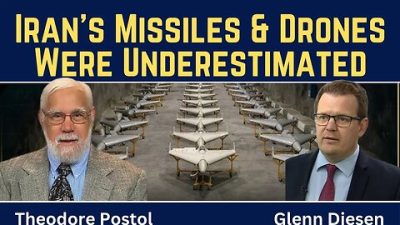
Theodore Postol: Iran’s Missiles & Drones Were Underestimated
or go to
Aletho News Archives – Video-Images
From the Archives
What is the Israeli Lobby in Australia Doing in Interfaith Dialogue?
By Ali Kazak | Dissident Voice | October 11, 2015
For years Israel and its lobby around the world have been trying to normalise their relations with Arabs and Muslims without solving the Palestine Question.
One of the methods they resorted to in the last few years is using human rights and community organizations such as interfaith dialogue and Multiculturalism to achieve this objective and to: isolate the Palestinians, marginalise the Palestine question, end Israel’s isolation, and prevent criticism of Israel, knowing that these organisations will be the first to stand against Israel’s violations, racial and religious discrimination.
The group responsible for this task in Australia is The Australia/Israel & Jewish Affairs Council (AIJAC); its Director of International & Community Affairs, Jeremy Jones is in charge of lobbying religious community organizations, specifically Muslims and Christians. Consequently he convened the Faith Communities for Reconciliation, founding participant in the Australian Partnership of Religious Organisations and the Australian National Dialogue of Christians, Muslims & Jews.
AIJAC is a private political propaganda group. It is recognised as the main Israeli lobby in Australia. It coordinates its activities and works intimately with the Israeli embassy in Canberra and different institutions in Israel. It is privately funded by some Jewish businessmen. It monitors closely Australian politicians, the media, ethnic and religious groups, (especially Arabs and Muslims), unions and academics on their stands towards Israel and the Palestine question. … continue
Blog Roll
 Aletho News
- The killing of three Indonesian soldiers in Lebanon should remind Jakarta that Israel does not want peace
- Defeated and delusional: Netanyahu’s remarks reveal $80bn war failure, says analyst
- Iran’s friends are about to make life much more difficult for Israel and the US
- The war of liberation of the Arab and Islamic peoples expands across the Gulf
- Envoy warns UN on Trump’s threat to ‘obliterate’ Iran’s civilian infrastructure
- The Larak Corridor: Iran’s Rial Gate With No US, No Israel, and No Way Around
- ‘Economic terrorism’: Steel facilities hit again in US-Israeli strike
- ‘War Crime’: Iran condemns attacks on Arak, Ardakan nuclear sites
- Two-thirds of Americans want quick end to Iran war even if goals unmet
- Trump to Give “Important Update on Iran” Wednesday in Prime-Time Speech
- If Americans Knew
- Israel wants US to bomb more of Iran’s civilian structures (113,000 is not enough) – Not a ceasefire Day 173
- Ann Coulter Rips Into Fox News for Iran War Coverage
- Joe Kent Urges Americans To Call White House and Congress To Object To Sending Troops Into Iran
- DNC Resolution to Reject AIPAC Funding Puts Democratic Leaders in the Hot Seat
- Swedish foundation to build 400 schools as over 650,000 Gaza children remain without education for 2 years
- Israeli army admits photshopping image of slain Lebanese journalist
- This is how Israel is systematically killing health workers under the cover of war in Lebanon
- Carrying life under fire: Israeli invasion of Lebanon leaves pregnant women facing deadly risks
- Champagne all around for the new death penalty (for Palestinians) law – Not a ceasefire Day 172
- Why are Palestinian books struggling to be seen on Amazon?
- No Tricks Zone
- New Study Finds Warming Saves Lives…Cold Temperatures 12 Times More Deadly Than Excess Heat
- German Science Blog Accuses PIK Climate Institute Of Hallucinating Climate Tipping Points
- Devastating Assessment Of Comirnaty Vaccine By Former Senior Pfizer Europe Toxicologist
- New Study: CO2 Is ‘Effectively Negligible’ As An Explanatory Climate Change Factor Since 2000
- Former Pfizer Toxicologist Dr. Helmut Sterz Tells Bundestag Hearing Pfizer Vaccine Should Have Never Been Approved
- Energy Expert: Germany’s Nuclear Phaseout Was A “500 Billion Euro Mistake”
- New Research: South Australia’s Mid-Holocene Sea Surface Temperatures Were 4°C Warmer Than Today
- Storing Green Energy To Last Germany 10 Days Would Require A 60-Million Tonne Battery
- New Studies: UK Sea Levels Were 4 Meters Higher Than Today During The Mid-Holocene
- Destructive Green New Deal: German Energy And Metal Group Warns Of Drastic Crisis
 Aletho News