“Made in America” Mini-nukes to be used in a “Nuclear First Strike” coming soon to Italy, Belgium, Germany, Netherlands.
By Manlio Dinucci – byoblu – July 15, 2022
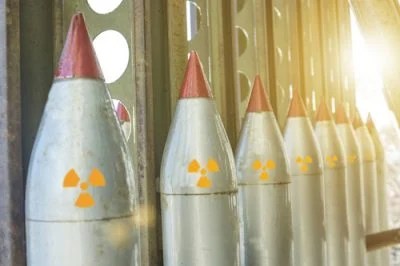
“Production of the B61-12 nuclear bomb begins,” Sandia National Laboratories announced from the United States. The B61-12, which replaces the previous B61 deployed by the U.S. at Aviano and Ghedi and other European bases, is a new type of weapon. It has a nuclear warhead with four power options, selectable depending on the target to be destroyed. It is not dropped vertically, but at a distance from the target on which it is directed guided by a satellite system. It can penetrate underground, exploding deep to destroy command center bunkers in a nuclear first strike.
The B61-12s, classified as “non-strategic nuclear weapons,” are deployed in Europe — in Italy, Germany, Belgium, the Netherlands, Britain and probably other countries — at distances far enough to strike Russia. They thus have offensive capabilities similar to those of strategic weapons.
Another nuclear weapon system, which the United States is preparing to install in Europe against Russia, is ground-based intermediate-range missiles. They can also be launched from “anti-missile shield” installations, deployed by the U.S. at bases in Deveselu in Romania and Redzikowo in Poland, and aboard five warships cruising in the Mediterranean, Black Sea and Baltic Sea close to Russia.
That such installations have offensive capabilities is confirmed by Lockheed Martin itself. Outlining the characteristics of the Mk 41 vertical launch system, used in both land and naval installations, it specifies that it is capable of launching “missiles for all missions, both defense and long-range attack, including Tomahawk cruise missiles.” These can be armed with nuclear warheads.
Europe is thus being turned by the U.S. into the front line of a nuclear confrontation with Russia, even more dangerous than that of the Cold War.
Road accidents to stop Putin: Augsburg to switch off traffic lights

Free West Media | July 9, 2022
In its sanctions policy against Russia, EU leaders are increasingly overstepping boundaries – also against their own people.
One of the most active globalist trendsetters is once again the German State of Bavaria. CSU Prime Minister Söder already distinguished himself with particularly drastic measures during the Corona crisis. Citizens are now expected to accept questionable measures in the fight against Russian President Putin.
In the Bavarian city of Augsburg, for example, it has been calculated that energy costs are likely to rise by almost 80 percent in the current year. That is why everything that can be switched off, including traffic lights, will soon be switched off.
Mayor Eva Weber (CSU) explained: “The situation is serious.” Therefore, room temperatures in municipal offices are to be lowered in autumn and winter, and some buildings will be left completely cold through “effective room management”.
Water temperatures in swimming pools will be reduced. The façade lighting on historical buildings and museums will be switched off, and fountains will also be turned off. Street lighting will be dimmed. Switching off of traffic lights will also be considered.
The city and the police will be explaining which traffic lights are most relevant to safety – all others could be switched off without further ado. There are no longer any taboos when it comes to saving energy in the state.
The taboo, however, is to demand an end to the self-imposed energy shortage. This could be done quickly and easily: by ending sanctions against Russia and by opening the Nord Stream 2 Baltic Sea pipeline, which has long been completed.
Chancellor gets carried away
Chancellor Scholz has now let himself be carried away into making an extremely partisan (and possibly illegal) statement about the AfD. He called it the “party of Russia” during the government’s questioning in the Bundestag on Wednesday.
The chancellor was responding to a question from AfD MP Steffen Kotré, who had called sanctions against Russia “useless” and called for the Nord Stream 2 gas pipeline between Russia and Germany to be put into operation. Scholz responded, “I stand fast: the AfD is not only a right-wing populist party, but also the party of Russia.”
Scholz reiterated that Germany was preparing to do without Russian oil and gas and was also building the necessary infrastructure to do so. He added: “This is real energy security for Germany in the interest of all citizens.” Scholz’s argument does not sound convincing in the face of the many hardships that ordinary Germans now have to struggle with.
In the past, the AfD had filed a lawsuit against similar statements by then Chancellor Angela Merkel before the Federal Constitutional Court (BVerfG) in Karlsruhe and won the case. As recently as June 15 this year, the BVerfG ruled that Angela Merkel was not allowed to comment on the outcome of the Thuringia state parliamentary election, in which FDP politician Kemmerich had been elected with votes from the AfD, among others, as “unforgivable” and a result that “must be reversed”.
That ministers are obliged to neutrality when they make public statements in their function as members of the government has been cast in stone by the BVerfG. Politicians must therefore remain neutral towards all parties as a matter of principle.
This also applies to a Federal Chancellor, the Federal Constitutional Court ruled. If the Federal Constitutional Court sticks to this assessment, Scholz should also expect a similar rebuke from Karlsruhe.
Ukraine seeks to block return of gas turbine to Russia
Samizdat – July 8, 2022
The Ukrainian government is pressuring Canada not to return a gas turbine to Russia that could boost the supply of Russian fuel to Germany, Reuters and a Ukrainian news site have reported. Kiev argues the precedent would erode anti-Russia sanctions.
Previously, Russian gas monopoly Gazprom reduced the flow through the Nord Stream pipeline to 40% of capacity, claiming that Germany failed to return a Siemens gas turbine from maintenance in Canada. The crucial piece of equipment had become stuck due to Ottawa’s sanctions against Russia.
According to sources in the Ukrainian government cited on Thursday and on Friday by Reuters and the Ukrainian news website Evropeyskaya Pravda, Kiev was informed that Canada had decided to return the turbine. Officials in Ukraine argued that it was a bad move.
“If, God forbid, this decision is approved, we will undoubtedly appeal to our European colleagues that their approach must be reassessed,” a source in Ukraine’s Energy Ministry was quoted as saying by Reuters. “Because, if countries do not follow decisions they have agreed about sanctions, how can we talk about solidarity?”
Both outlets said Ukrainian Energy Minister German Galushchenko had lobbied Canada not to return the turbine, claiming that Russia could ramp up gas supplies to Germany. The Ukrainian newspaper said the minister had sent a two-page letter to his Canadian counterpart, Jonathan Wilkinson, on June 22, in which he explained that more Russian gas could be pumped through Ukraine.
Kiev is concerned that by bowing down to what it considers Russian energy blackmail, Canada would set a bad precedent for the Western sanctions regime.
Germany activated the second phase of its gas emergency plan after Russia reduced supplies through Nord Stream. Berlin reportedly asked Ottawa to return the turbine before 10 days of scheduled maintenance starts on the pipeline next week.
Vaxsplainers
German state media “debunks” eugyppius

eugyppius – July 6, 2022
I’m happy to report that my remarks on lower case rates in lesser-vaccinated East Germany, after being recycled by BILD, are now the subject of a long state media debunking in Tagesschau.
Why Are Case Rates Lower in the East? ask “science” reporter Anna Behrend and official state media “fact-finder” Pascal Siggelkow.
The nationwide seven-day incidence in Germany has been on the rise again for several weeks now. Health Minister Karl Lauterbach has already spoken of a summer Corona wave. But a look at the developments reveals that there are huge differences between the federal states:
While the incidences in Lower Saxony and Schleswig-Holstein have already passed the threshold of 900, the numbers in Thuringia and Saxony are still under 400. In general, it’s remarkable that all the East German states – with the exception of Mecklenburg-Vorpommern – are significantly below the national average incidence of of 687.7. And this is despite the fact that Saxony, Brandenburg and Thuringia have some of the poorest vaccination rates. In conspiracy-theory circles, people are already fantasising about “negative efficacy”, especially with regard to booster vaccinations, saying that the figures amount to proof that the vaccines are ineffective. But is there really a causal connection between the vaccination rate and the incidence?
Before they get into that, Siggelkow and Behrend light the incense and cycle through the familiar vaccinator nostrums. “Vaccination protects against severe outcomes and death,” even though the rise of Omicron has led to a great many “breakthrough infections.” Mysterious “studies,” which are never further characterised, are said to show “that vaccinated people … are slightly less contagious,” although they have to concede that “there isn’t enough data to conclude this decisively.”
Then, when they’re reasonably sure most people have stopped reading, comes an uncomfortable admission. Case incidences, the cornerstone of Tagesschau Corona reporting since 2020, are of, uh, “limited significance”:
If the vaccination rate … is not the decisive factor … how is it that the number of new infections in the East is comparatively low right now? First of all, it must be said that the current infection figures are only of limited significance. “One must always also consider that incidences are calculated on the basis of reported laboratory results,” says [virologist Johannes] Knobloch. As before, only positive PCR tests count in the RKI statistics. Willingness to be tested and the accessibility of PCR tests therefore have a very large influence on the measured incidence. … “The number of unreported cases is probably higher than in all previous phases of the pandemic.”
According to experts, the incidence continues to indicate whether the wave of infection is rising or falling. Caution is advised, however, when making regional comparisons, as the testing strategies and also the number of tests differ greatly across states. Fewer tests mean that fewer infections are detected. A high proportion of positive tests … indicates a high number of unreported cases …
Ah, so they just have super high positivity rates in the East then? That’s the explanation?
Ha no:
But it’s not the case that Eastern states have uniquely high positive rates compared to the others. So different testing patterns alone cannot explain the current low incidence there either.
It wasn’t that long ago that all manner of respectable journalists, especially those working for Pravda operations like Tagesschau, wrote long think pieces on the “global menace” of “vaccine scepticism,” complete with histrionics about the lower vaccination rates in Eastern Europe causing “much higher infection figures.” Lazy Googling yields many typical items, such as this piece from MDR in November, lamenting that the “incidence among unvaccinated in Sachsen-Anhalt is significantly higher than among the vaccinated.” This at a time when the vaccinated were exempt from most testing, while many unvaccinated had to submit to daily antigen tests before they could even go to work.
Now that these games no longer favour the vaccinated, though, we’re allowed to wonder about things like positivity rates. These certainly matter, but – unbeknownst to our crack fact-checking team – they’ve become totally meaningless in the era of lateral flow testing, as a plurality of PCR tests in Germany are conducted to confirm a positive antigen result, and nobody has any idea what the true rate of testing might be.
Frustrated on this front, Siggelkow and Behrend look for other signs that infections might really be higher in the East, even though the official incidence is lower there. More and more, you have the feeling of a desperate grasping after straws:
If the true incidence were in fact higher, you would expect to see this in ICU admissions …
Yet the proportion of Covid patients in ICU is currently not conspicuously high in the East compared to the rest of Germany.
Foiled again!
So were most people in the low-incidence states already infected and now immune? Those who become infected with the coronavirus usually form antibodies against it. How long and how well these antibodies protect against a new infection with the virus has not yet been conclusively researched.
However, if we assume that there is at least some protection for a while, one conceivable reason for the low incidence in some states would be that more people have already come into contact with the virus there and are therefore less likely to be infected now.
… It’s not known precisely how much of the population in which states has already recovered from infection. If you take the number of new infections … since the beginning of the year as a rough approximation of the circulation of Omicron, you find no confirmation of the assumption that the population of the East has had greater contact with the virus. …
How confusing. Do Tagesschau no longer stand by their dire proclamations, uttered just this past winter, that lower vaccination rates were to be blame for higher infections in the East? Is their position now that the East never saw higher rates of infection at all, even though the vaccines definitely protect against infection? Also too, why have we abandoned so soon our thesis that the incidence is of “limited significance,” can only tell us when cases are going up or down, and says nothing about how many cases there actually are? I thought regional comparisons of case numbers were bad?
Way down at the bottom, when Behrend and Siggelkow are triply sure nobody is reading anymore, they toss out the possibility that cases might indeed be lower in the East – not because of the vaccines, but because the new Omicron variants haven’t gotten there yet:
One reason the nationwide incidences are rising so sharply in the first place is the Omicron subtypes BA.4 and BA.5, which experts consider more contagious than the previously known “sister variants.” BA.5 is now dominant … It’s of course possible that some states are more affected by the new variants than others, where these variants have not yet arrived.
If BA.5 infects the vaccinated preferentially, and vaccination rates vary substantially across regions, there will be many places where BA.5 never quite seems to have arrived. Perhaps aware of this close brush with crimethink, our braintrust wraps things up with some cleansing mantras:
What is certain, though, is that there is no scientifically sound reason to assume that a high vaccination rate could be partly responsible for a high incidence. On the contrary: Scientific data show instead that people infected with Omicron are less likely to infect others than the unvaccinated.
Every conspiracy theory must first be ignored, then denied, and finally debunked, before it becomes true.
And The Winner Is, Germany!
By Francis Menton | Manhattan Contrarian | June 29, 2022
Just over six months ago, in December 2021, I asked the question that was on the tip of the tongue of everybody who follows the subject of the ongoing massive “green” transition to fossil-fuel-free energy. Actually, that’s a lie. The question I asked was not on the tip of the tongue of everybody who follows the subject, or even of most of the people who follow the subject, for reasons that to me are completely inexplicable. The question was : “Which Country Or U.S. State Will Be The First To Hit The Green Energy Wall?”
The candidates that I nominated in that post as potentially the first to hit the “green energy wall” were California, New York, the UK and Germany. At the time, I thought it was obvious that one of those jurisdictions would hit the wall sooner than almost anybody expected. Indeed, I was quite bold in the short time frame that I predicted:
A prolonged period of unfavorable weather (calm and overcast) could cause a serious energy crunch to hit one or both of Germany or the UK as soon as this winter. Or they could get lucky and go another year or two.
Now here we are in June 2022, and I think it’s hard to deny that Germany has in fact hit the “green energy wall.” Let’s consider.
First, here is the definition of the “green energy wall” that I gave in the post:
[O]ne or another of [those states or countries] is highly likely to hit a “wall” — that is, a situation where the electricity system stops functioning, or the price goes through the roof, or both, forcing a drastic alteration or even abandonment of the whole scheme.
And here’s the reason I gave why one or another (or all) of the nominated jurisdictions would soon be hitting the “wall”:
All these places, despite their wealth and seeming sophistication, are embarking on their ambitious plans without ever having conducted any kind of detailed engineering study of how their new proposed energy systems will work or how much they will cost. Sure, a wind/solar electric grid can function with 100% natural gas backup, if you’re willing to have the ratepayers foot the bill for two overlapping and redundant generation systems when you could have had just one. But “net zero” emissions means no more fossil fuel backup. What’s the plan to keep the grid operating 24/7 when the coal and natural gas are gone?
As is (or should be) obvious to everyone, a predominantly wind/solar electricity generation system needs full backup from some source to keep the lights on 24/7. The options are few: fossil fuels plants (coal, oil or natural gas), nuclear, or storage (i.e., batteries). Germany has ruled out the fossil fuel and nuclear options. It never had much in the way of oil-fired electricity generation, and it spent the last ten-plus years phasing out its coal and nuclear plants. So, that leaves storage. Surely, you might think, having embarked on a multi-trillion dollar transition to a predominantly wind/solar electricity system, and having ruled out both fossil fuels and nuclear for backup, Germany must have been focused like a laser beam on the storage issues to make the whole thing work.
You would be wrong. It is truly unbelievable the extent to which Germany — seemingly the country with the most sophisticated engineering in the world — put its head in the sand and ignored the storage problem until it just ran its energy system into the wall.
Let’s compare how much energy storage Germany would need to back up its wind/solar electricity system to the amount of storage actually developed to date or in the pipeline. At this website, I have followed the energy storage question closely, and have discussed and linked to the most competent calculations of how much storage would be needed to back up a predominantly or fully wind/solar electricity system for various jurisdictions, including Germany. In this post in November 2018 I linked to and extensively discussed work by a man named Roger Andrews, who calculated the storage requirement for Germany to back up a fully wind/solar system as approximately 25,000 GWH. In that post, I also examined some reasons why Andrews’s calculation might be low — for example, Andrews assumed a 100% return from energy put into storage (which is unrealistic), and also based his calculations on actual generation and weather data for a particular year (2016), which could prove more favorable than another year. But that said, Andrews’s calculation appeared to me to be in the right ballpark. More recently, in a post in March 2022, I discussed and linked to work of two German scientists named Oliver Ruhnau and Staffan Qvist. Ruhnau and Qvist calculated a storage requirement for Germany to back up a fully wind/solar system as 56,000 GWH.
If you figure that Andrews may be on the low side, and Ruhnau/Qvist on the high side, that would put a good rough estimate of Germany’s need for grid-scale energy storage to back up a wind/solar system somewhere in the range of about 40,000 – 50,000 GWH.
So how much storage does Germany have currently existing or in the pipeline? Here is an April 11, 2022 piece from consultancy Wood Mackenzie reporting excitedly about Europe’s plans to solve the wind/solar intermittency problem with storage, “Europe’s grid-scale energy storage capacity will expand 20-fold by 2031.”:
Europe has set out some of the world’s most ambitious decarbonisation targets. And the pace of change is accelerating. . . . [T]he region’s nascent grid-scale energy storage segment is growing fast. We forecast that total capacity will expand 20-fold between now and 2031.
Here’s their chart showing what that “20-fold expansion” will mean by 2031:
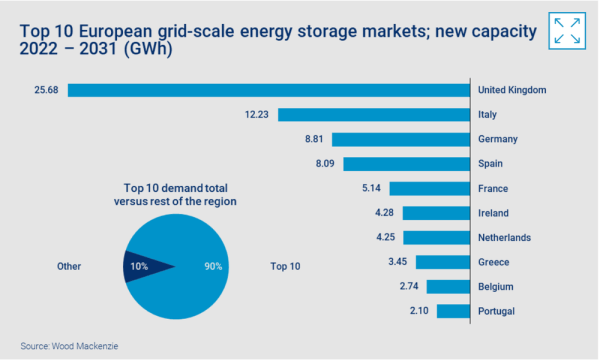
For Germany, this enormous expansion will supposedly mean all of 8.81 GWH of grid-scale energy storage. Is there a decimal place error here? Unfortunately no. Against a requirement of 45,000 GWH +/- of grid-scale storage, they’re not planning on 9000 GWH, or even 900 GWH or 90 GWH, but 9. They’re off by a factor of around 5000 against what they would need.
In other words, they haven’t even begun to solve the storage problem that would need to be solved to make their wind/solar system work, and they will barely if at all have begun to solve it by 2031. Indeed, the problem may not be solvable at all, and as yet they haven’t really put any meaningful effort into trying to figure that out. The result, as we all know, is that they left themselves completely dependent on natural gas from Russia. Now the Russian gas is effectively unavailable, and other potential sources have seen insufficient supply and massive price spikes. Here are a few observations on Germany’s current energy predicament. From Walter Russell Mead in the Wall Street Journal, June 27, “End of the German Idyll”:
As recently as 2020, almost the entire world agreed with the smug German self-assessment that Germany had the world’s most successful economic model, [and] was embarking on the most ambitious—and largely successful—climate initiative in the world. . . . [Now we understand that] German energy policy is a chaotic mess, a shining example to the rest of the world of what not to do. . . . Green energy, despite massive German investment, will be unable to supply German industry with reliable and cheap power for a long time.
From Energy Intelligence Group, June 28, “King Coal Makes Comeback in Europe”:
[German] officials are working on emergency laws that would allow roughly 9-10 gigawatts of idle coal and lignite capacity to return to service until 2024, replacing some of the 16% market share now held by gas. The country is home to seven of the EU’s 10 most polluting power stations, according to NGO Ember. . . . Economy Minister Robert Habeck said laws allowing more coal use and less gas-fired generation should pass the Bundesrat — upper house of parliament — in early July. . . . The government says there are no plans to change the coal phase-out date, with the last units still earmarked for closure by 2030.
It’s a complete reversal of the prior policy of shutting down the coal plants. Economy Minister Habeck says that the reversal is temporary, and that they are still on track to close all the coal plants by 2030. And how exactly are they going to accomplish that, with all of 9 GWH of grid-scale energy storage? There is only one possible method, which is to go back to natural gas, either using alternative suppliers (U.S.?), or because Russia re-enters the good graces of the world. But using natural gas for backup is just as much a complete abandonment of the “net zero” fantasy as is using coal.
So I say that Germany has in fact hit the “green energy wall,” and will not be going back, no matter what they are saying at the moment. Time could prove me wrong, but I don’t see any realistic plans that they have in the works to do away with, or even meaningfully reduce, full fossil fuel backup of their wind and solar generators.
Omicron BA.5 Prefers Hypervaccinated Masking West Germans, Avoids the Former DDR
Vaccine failure in one map
eugyppius | June 28, 2022
Behold the latest map of 7-day Corona incidence across the Federal Republic of Germany:
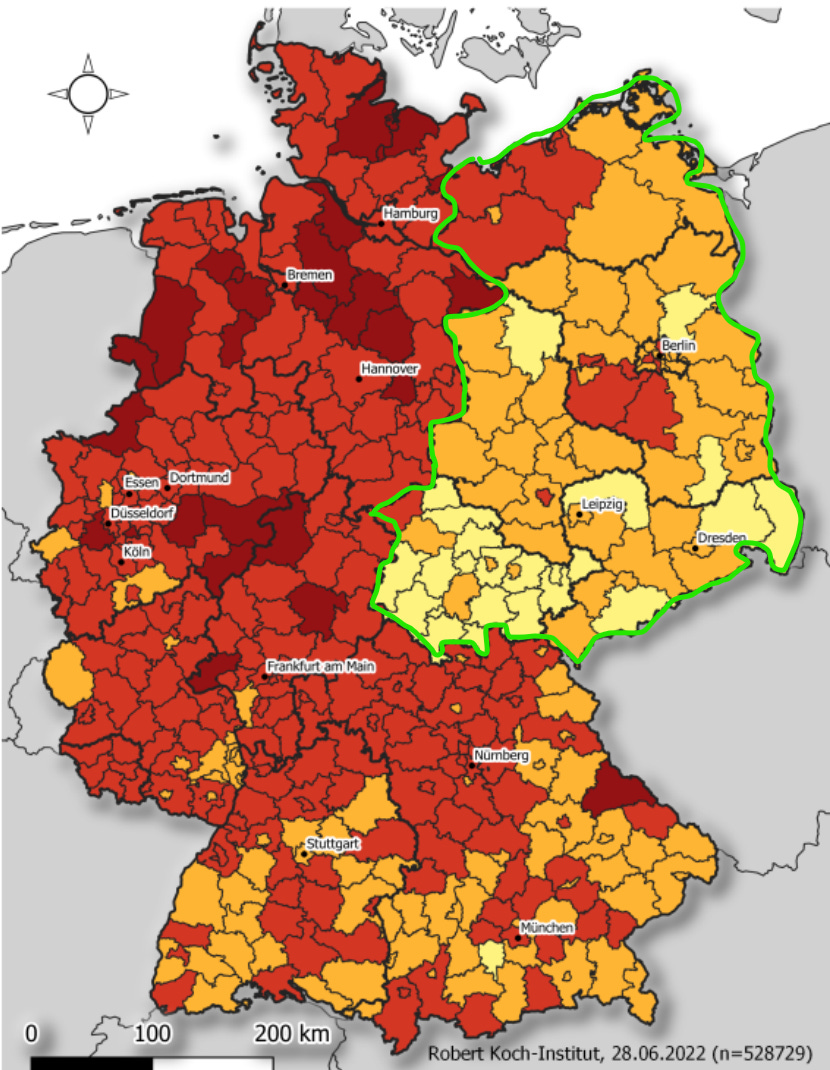
This is the Omicron BA.5 wave in central Europe, and it is attended by a curious phenomenon: Every day, you can see more clearly the borders of the old DDR in the district-level data. I’ve traced these in green just to make the phenomenon clearer.
Yes yes, there are systematic demographic differences between East and West Germans, and there are probably some differences in testing rates, but above all, there is an important difference in vaccine uptake. In this map of triple vaccination rates across my country, the old DDR borders are also evident:
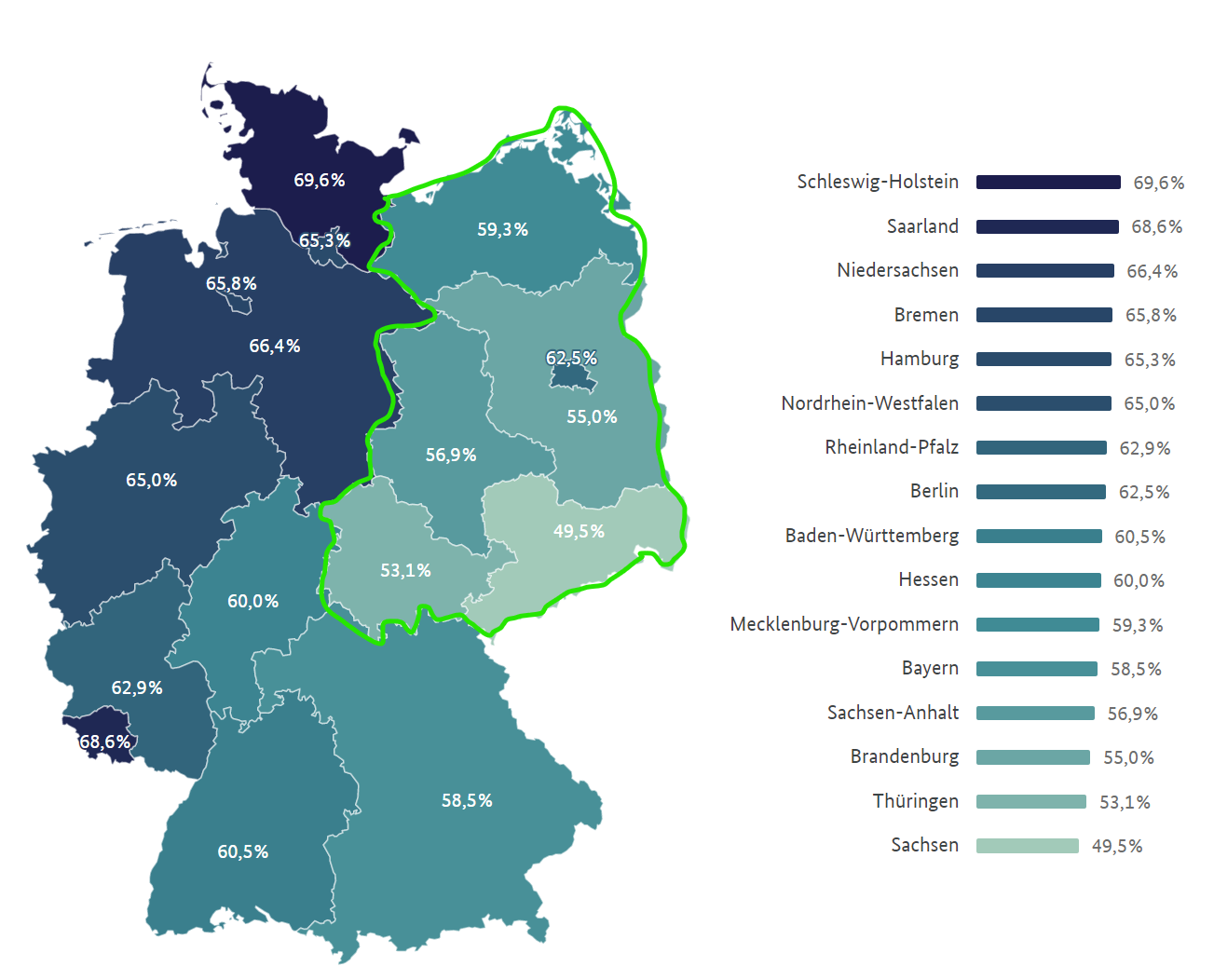
East Germans have direct experience with government propaganda, and have proven more resistent to the vaccination campaign than Westerners. Their reward, after being much maligned by state media, is now higher levels of natural immunity and lower rates of BA.5 infection, which appears to prefer vaccinated populations.
As the effects of vaccine failure grow clearer, you have to wonder how long the pandemicists will be able to publish even simple infection statistics, without raising extremely awkward questions.
See the follow up in depth critique of the theory.
German journalist in Donbass could face prison at home

Samizdat | June 29, 2022
Alina Lipp, an independent German journalist and blogger is facing a criminal probe at home over her “endorsement” of Russia’s “illegal aggressive war” against Ukraine. Lipp has told Russian media she only does what any journalist would do – document what is happening around her.
If found guilty, she could face a fine or up to three years behind bars.
On Saturday, RT DE interviewed Lipp about her professional work and the ongoing investigation.
The journalist contended that she is “doing interviews with people in Donetsk and merely translating them into German.”
“I am simply filming everything I see around,” Lipp added.
She inquired rhetorically “what is it that’s illegal in that, or dangerous?” The journalist insisted that none of her materials had been staged, and that there is no one telling her what to cover.
Lipp dismissed the German authorities’ investigation as “completely insane.”
When asked by the RT DE journalist whether Russian President Vladimir Putin was secretly commissioning her reports from Donbass, Lipp replied in the negative, adding jokingly “still not.”
The woman also lamented that a number of conspiracy theories have been spread about her.
One of those, according to Lipp, dates back to November 2021, when she sold three of her minute-long videos to “some Russian TV channel” that did not have its own correspondent on the ground. Lipp insisted that this was common practice among independent journalists who “sell their material to various buyers.”
This alone does not automatically prove that such a person takes orders from someone or “works for a Russian propaganda channel,” Lipp argued.
According to the German news website t-online, Germany’s law enforcement believes Lipp has been “constantly showing her solidarity with Russia’s war against Ukraine,” as well as fomenting a split in German society.
Her reporting was described by the authorities as “distorted, partially false.” She is also accused of spreading other outlets’ “completely fabricated” stories.
The probe was originally launched by the German public prosecutor’s office in Luneburg following multiple complaints, which have been filed since February. However, the prosecutor’s office in Gottingen, which specializes in internet hate crimes, has reportedly since taken over Lipp’s case.
According to t-online, Lipp, who was born to a German mother and a Russian father, has been living in Donetsk and Crimea since last fall. She runs a German-language news blog called ‘News from Russia,’ as well as a Telegram channel with over 174,000 followers and a video channel on PeerTube.
Since the start of the investigation, Germany’s DKV-Bank has seized the donations Lipp has received, with €1,600 ($1,679) said to be frozen from her account, according to t-online.
PayPal, too, has blocked her account, as well as that of her father, Lipp revealed in one of her earlier interviews.
‘Canada working to return Russian gas turbines’
Samizdat | June 22, 2022
Ottawa is exploring ways to return crucial parts for Russia’s Nord Stream pipeline, which are currently stuck in Canada due to sanctions, Bloomberg reported on Tuesday citing Canadian Minister of Natural Resources Jonathan Wilkinson.
“We want to respect the sanctions because the sanctions were put into place for a reason. That being said, the intent of the sanctions was never to cause significant pain to Germany, which is one of our closest friends and allies. So, we are very seized with this issue,” Wilkinson told the news outlet.
“We are talking to Germany, trying to find a pathway through which we can actually enable the flow of gas. There may be different options that we can look at,” he stated, adding that Ottawa is negotiating with Berlin on ways to return the equipment.
Russia’s energy supplier Gazprom was forced to slash natural gas flows to Germany via the Nord Stream pipeline by 60% last week, because Siemens turbines from Gazprom’s Portovaya pumping station in Vyborg were stuck in Montreal, where they were sent to undergo maintenance. The parts fall under Canada’s sanctions against Russia, and the country says it cannot return them without breaching these restrictions.
According to the German Federal Grid Agency, the reduction in gas flow affected the supply of Russian gas from Germany to other European countries, including France, Austria and the Czech Republic.
The situation prompted these and other EU countries to announce emergency measures this week aimed at reducing the use of natural gas. Some countries have claimed that the reduction of gas flows was a political decision made by Moscow to increase pressure on Europe. Gazprom says the issue is technical.
Blogger is investigated for her alleged support of Russia’s offensive in Ukraine
Samizdat | June 18, 2022
A blogger with tens of thousands of subscribers has said she is being probed in Germany over her coverage of the Ukraine conflict. German media confirmed the activist is the subject of an investigation by a local prosecutor’s office.
In an interview aired on Friday on Russia’s Channel One, Alina Lipp said she was being “persecuted” in particular for a post from February 24, the day when Russia launched its offensive against Ukraine. Back then she wrote that “denazification” had started, while also accusing Ukraine of killing civilians for years.
“Secondly, I am being prosecuted for the fact that on March 12 I published a video on my Telegram channel where I said that Ukraine is carrying out genocide in the Donbass,” Lipp revealed.
According to the German news website t-online, law enforcement suspects Lipp of “constantly showing her solidarity with Russia’s war against Ukraine,” of fomenting a split in German society and of spreading hatred through “distorted, partially false” reporting.
The case was initially opened by the German public prosecutor’s office in Lueneburg following multiple complaints since February, t-online reports, citing the body’s spokesperson. Later it is reported to have been handed over to the prosecutor’s office in Goettingen, which is the central office for the investigation of internet hate crimes.
Lipp, who currently lives in Russia and has done several reports from Donbass, was born to a German mother and a Russian father. She runs a German-language news blog called ‘News from Russia.’ She also has a Telegram channel with over 174,000 followers and a small video channel on PeerTube. It is unclear if the blogger has faced any charges in Germany. However, a local bank, DKV-Bank, has seized the financial assets that she has received as donations, according to t-online, with €1,600 ($1,679) said to be frozen from her account.
Lipp has branded the probe against her a “partisan judiciary” and has said that she is being punished for violating an “unwritten law,” adding that it is “freedom of expression” that is being targeted in her case. Under the German Criminal Code, condoning or approving a criminal offense “in a way that is likely to disturb public peace” is punishable by a fine or up to three years in jail.
Running on empty
By Carl Friedrich | Free West Media | June 18, 2022
You have to repeat this over and over again for the simpletons in our politics – almost everyone – and for the dumb morons and notorious liars in the media: Russia has been fighting in the Russia-friendly part of Ukraine, i.e. in the Donbass, quite considerately for weeks now, because it doesn’t want to kill its own friends and destroy their land and property, which is about to be taken over.
The anti-Russian Zelensky junta in Kiev, on the other hand, for whom the Donbass is enemy territory, shoots and bombs everything without hesitation, destroying to their heart’s content, ruthlessly killing civilians there as hostages and their own compatriots, who are also “Ukrainians” in the Donbass, and then blames everything on Russia. And the western press repeats this fake news…
Thus, on June 13, the Tagesschau reported on the shelling of Donetsk, and stupidly and insidiously blamed the Russians for this fact and did not correct it. But why would the Russians shoot at themselves? Of course, the fact that Zelensky shot at a maternity clinic in Donetsk was not on state television.
Mariupol is also repeating itself. There, more than 2 000 Nazi Azov mercenaries were stuck in the bunkers of the Azov steel before they were arrested and taken away by the Russians as prisoners of war and war criminals. Some have received death sentences. And now similar numbers of extremists are sitting in the bunkers of the Azot chemical plant in the besieged eastern Ukrainian city of Severodonetsk with hundreds of civilians they have taken hostage, hoping that they can escape under the protection of the hostages, because they are threatened with the same scenario from Russia. It is as clear as day that the Russians will let the civilian hostages go at any time.
Even with the reduction of gas delivery volumes through the Nord Stream 1 Baltic Sea pipeline to Germany by 40 percent, only half are reported. There are delays in repair work by Siemens, Gazprom announced. A gas compressor unit was not returned in time from repairs but that is rarely reported in the German media. Instead, the accusation is that Russia is using this as an excuse to blackmail Germany. But Siemens Energy confirmed on Tuesday that it would not be able to deliver gas turbines to Gazprom. Why?
For technical reasons, this could only be done in Montreal, Siemens Energy said on Tuesday. But then the Canadian sanctions came into play.
“Against this background, we had informed the Canadian and German governments and are working on a viable solution,” a company spokeswoman told Reuters news agency. And Spiegel Online reported on Tuesday that the German government was trying to get an exemption from the sanctions from the Canadian government. It’s so obvious, but some media outlets persist with the fake news.
Following the curtailment of gas supplies by the Russian Gazprom Group, Federal Minister of Economics Robert Habeck has once again called on people to save energy.
In a video distributed on Twitter on Wednesday evening, the Green politician thanked the population and the companies for their efforts so far. At the same time, Habeck appealed with regard to saving energy: “Now is the time to do it. Every kilowatt hour helps in this situation.”
He said the situation was serious, but it did not endanger the security of supply in Germany. Habeck warned, “We have to be vigilant. We must continue to work in a concentrated manner. Above all, we must not allow ourselves to be divided. Because that is what Putin is up to.”
But who manoeuvred Germany into this ridiculous situation in the first place? Certainly not Putin! The sanctions seem to be backfiring quite spectacularly, while Germany pretends to be surprised that Russia is reacting.
Chancellor Scholz’s visit, who is currently in Kiev chumming up with the chief cokehead together with President Macron, saw Zelenski taking advantage of the arrival of his “democracy” supporters to dissolve one of the main opposition parties on the same day.
At the St. Petersburg International Economic Forum, President Putin was lucid about how the simpletons in the EU and US got themselves into this mess: “The sanctions regime was built on the fraudulent assumption that Russia is not economically sovereign. It appears that, planning their economic Blitzkrieg, they believed in their own propaganda about Russia’s backwardness.”
Siemens fails to return turbines to Gazprom
Samizdat | June 15, 2022
German company Siemens has confirmed that Ukraine-related sanctions imposed on Russia have made it impossible for the equipment supplier to return gas turbines to Gazprom after they were repaired in Canada.
The Russian energy company was forced to reduce gas supplies to Germany via the Nord Stream pipeline this week due to the parts shortage.
The gas turbines are currently in Montreal for an overhaul, and could not be returned to the customer due to Canadian sanctions, Siemens Energy said, as quoted by Reuters.
“Due to the sanctions imposed by Canada, it is currently impossible for Siemens Energy to deliver overhauled gas turbines to the customer,” the company said.
The firm also said it had informed the German and Canadian governments of the problem, adding that it was working on a viable solution.
On Tuesday, Russian energy major Gazprom announced a cutback of gas deliveries via the Nord Stream pipeline after Siemens failed to return gas-pumping units to the compressor station on time. Supplies are expected to decrease to some 100 million cubic meters per day from the planned 167 million cubic meters, marking a reduction of 40%.
European prices for natural gas surged 10% on the news.
In March, Siemens announced that it would halt equipment deliveries to Russia. Last month, the German company said it would completely withdraw from the Russian market, and launched procedures to terminate its business activities in the country.
Featured Video
No Threat Can Force Iran’s Surrender /Trita Parsi & Lt Cl Daniel Davis
or go to
Aletho News Archives – Video-Images
From the Archives
What is the Israeli Lobby in Australia Doing in Interfaith Dialogue?
By Ali Kazak | Dissident Voice | October 11, 2015
For years Israel and its lobby around the world have been trying to normalise their relations with Arabs and Muslims without solving the Palestine Question.
One of the methods they resorted to in the last few years is using human rights and community organizations such as interfaith dialogue and Multiculturalism to achieve this objective and to: isolate the Palestinians, marginalise the Palestine question, end Israel’s isolation, and prevent criticism of Israel, knowing that these organisations will be the first to stand against Israel’s violations, racial and religious discrimination.
The group responsible for this task in Australia is The Australia/Israel & Jewish Affairs Council (AIJAC); its Director of International & Community Affairs, Jeremy Jones is in charge of lobbying religious community organizations, specifically Muslims and Christians. Consequently he convened the Faith Communities for Reconciliation, founding participant in the Australian Partnership of Religious Organisations and the Australian National Dialogue of Christians, Muslims & Jews.
AIJAC is a private political propaganda group. It is recognised as the main Israeli lobby in Australia. It coordinates its activities and works intimately with the Israeli embassy in Canberra and different institutions in Israel. It is privately funded by some Jewish businessmen. It monitors closely Australian politicians, the media, ethnic and religious groups, (especially Arabs and Muslims), unions and academics on their stands towards Israel and the Palestine question. … continue
Blog Roll
 Aletho News
- The war of liberation of the Arab and Islamic peoples expands across the Gulf
- Envoy warns UN on Trump’s threat to ‘obliterate’ Iran’s civilian infrastructure
- The Larak Corridor: Iran’s Rial Gate With No US, No Israel, and No Way Around
- ‘Economic terrorism’: Steel facilities hit again in US-Israeli strike
- ‘War Crime’: Iran condemns attacks on Arak, Ardakan nuclear sites
- Two-thirds of Americans want quick end to Iran war even if goals unmet
- Trump to Give “Important Update on Iran” Wednesday in Prime-Time Speech
- Theodore Postol: Iran’s Missiles & Drones Were Underestimated
- Iran To Target Military Industrial-Tech Complex That Facilitated Gaza Genocide
- Collapsing Empire: The Resistance Disarms ‘Israel’
- If Americans Knew
- Israel wants US to bomb more of Iran’s civilian structures (113,000 is not enough) – Not a ceasefire Day 173
- Ann Coulter Rips Into Fox News for Iran War Coverage
- Joe Kent Urges Americans To Call White House and Congress To Object To Sending Troops Into Iran
- DNC Resolution to Reject AIPAC Funding Puts Democratic Leaders in the Hot Seat
- Swedish foundation to build 400 schools as over 650,000 Gaza children remain without education for 2 years
- Israeli army admits photshopping image of slain Lebanese journalist
- This is how Israel is systematically killing health workers under the cover of war in Lebanon
- Carrying life under fire: Israeli invasion of Lebanon leaves pregnant women facing deadly risks
- Champagne all around for the new death penalty (for Palestinians) law – Not a ceasefire Day 172
- Why are Palestinian books struggling to be seen on Amazon?
- No Tricks Zone
- New Study Finds Warming Saves Lives…Cold Temperatures 12 Times More Deadly Than Excess Heat
- German Science Blog Accuses PIK Climate Institute Of Hallucinating Climate Tipping Points
- Devastating Assessment Of Comirnaty Vaccine By Former Senior Pfizer Europe Toxicologist
- New Study: CO2 Is ‘Effectively Negligible’ As An Explanatory Climate Change Factor Since 2000
- Former Pfizer Toxicologist Dr. Helmut Sterz Tells Bundestag Hearing Pfizer Vaccine Should Have Never Been Approved
- Energy Expert: Germany’s Nuclear Phaseout Was A “500 Billion Euro Mistake”
- New Research: South Australia’s Mid-Holocene Sea Surface Temperatures Were 4°C Warmer Than Today
- Storing Green Energy To Last Germany 10 Days Would Require A 60-Million Tonne Battery
- New Studies: UK Sea Levels Were 4 Meters Higher Than Today During The Mid-Holocene
- Destructive Green New Deal: German Energy And Metal Group Warns Of Drastic Crisis
 Aletho News