The “European Values” think-tank and their list of “Useful Idiots”
By Kit | OffGuardian | October 24, 2017
Just when you think that the Russo-phobic hysteria of the Western world couldn’t possibly make itself any more ridiculous… something like this comes along. This is the europeanvalues.net list of “useful idiots”.
The list is very long, over 2300 names, because it contains the name of every person to ever appear on either Sputnik or RT. Hosts or guests, hostile or friendly, it doesn’t matter. If you’re on the list, you are a useful idiot.
They’ve highlighted some names in yellow, to denote they’re “particularly noteworthy”. Names receiving the yellow highlight – the Russian agent equivalent of twitter’s blue tick – include Harrison Ford, Stephen Fry and Senator John McCain. All noted for their pro-Russian public stance on important political issues.
Also on the list are Boris Johnson’s dad, Barack Obama’s wife and John McCain’s daughter. And while all three of them may well be idiots, I’m struggling to see how they’ve ever been useful to anyone.
It’s honestly beyond a joke at this point. But let’s take a look behind the scenes anyway.
The Think-Tank
The not-at-all Orwellian sounding “European Values” think-tank is a Czech based NGO focusing on fighting…
… aggressive regimes, radicalisation within the society, the spread of authoritarian tendencies and extremist ideologies including Islamism.
Their about page goes into a lot of (vaguely creepy) detail about their logo, in case you were interested, but much less detail about their funding. If you want to know that, you have to read their annual reports.
In 2015, for example, you can see that they received funding from disappointingly predictable list of sources. The European Union, the US Embassy, the UK Embassy and (of course) the Open Society Foundation.
One day, it would be really nice to read the “Our Funding” section of an NGO’s website, and NOT see George Soros’ name.
The Author
The author of the list and accompanying report is one Dr. Monika Richter, a first generation British citizen and child of Czech immigrants. She’s a new face at the programme, having recently graduated from Oxford, where she studied at the Reuters Institute for the Study of Journalism. The Reuters Institute receives funding from various sources, including Google, the BBC and…*sigh*… George Soros.
Interestingly enough, when Richter was at Oxford she spoke at the Free Speech Debate, arguing against the “no-platforming” of certain speakers because it could be used to censor unpalatable views.
Quite when she changed her mind on this issue, I do not know.
The Report
The fifty-three page long report that accompanies the list is both terrifying and hilarious, with some beautiful paranoid language that reads like the journal of Jack D. Ripper. I have read it, so you don’t have to (you’re welcome)… but if you really feel the need then here it is. It is a masterpiece of doublethink.
In one paragraph she smoothly segues between three points: 1. That Russia illegally “invaded” Georgia; 2. That RT’s “biased coverage” blamed the war on Georgia; 3. That the EU’s own report stated Georgian aggression was a prime factor in causing the conflict. Apparently she is totally unaware that her third point completely undermines points 1 and 2.
Later, she claims that RT employs “conspiracism” to spread insidious messages that undermine public faith in Western government.
For example, RT is accused of spreading the “conspiracy” that the US and UK started the Iraq war under false pretenses – when, far from being a “conspiracy theory”, the WMD-related lies are now an historically accepted truth. Only neocon diehards even try to deny that any longer.
The report also claims that RT spread conspiracy theories about “false flags” which, again, are a point of historical fact. And that RT reports, stating that the US and their allies are supporting ISIS in Syria, were untrue. In fact, these reports have since been shown to be absolutely correct.
She also rails against RT’s reporting of the Ferguson riots, in which they apparently:
revealed a consistent refrain: “the oppression of blacks in the US has become so unbearable that the eruption of violence was inevitable”, and that the US therefore lacks “the moral high ground to discuss human rights””
Now, personally, I’m struggling to see how that statement is inaccurate, but maybe I’m just indoctrinated beyond all hope at this point.
The best parts of the report come when the author is forced, by the unbending hand of reality, to make concessions. These include:
RT does not (typically) lie outright in its reporting, it presents facts in a way that distorts the reality of the situation and leads viewers to certain conclusions”.
And:
For the sake of fairness, it must be acknowledged that despite these malign intentions, RT has enjoyed a small handful of journalistic accomplishments. For example, its coverage of the Occupy Wall Street movement, the Guantanamo Bay hunger strikes, and the 2010 WikiLeaks scandal was incisive, with the former two earning RT International Emmy Award nominations
Which, in a beautiful demonstration of intellectual dishonesty, is quickly followed up with:
However, the critical point here is that RT’s treatment of these events is not motivated by a genuine commitment to principled, balanced journalism, but rather by opportunism to demonise the US government for its apparent contradictions and democratic shortcomings.
You see? Even when their news coverage is good, and nominated for international awards, and tells important truths, none of that counts because they’re doing it for the wrong reason.
She apparently wants us to believe that telling the truth for the wrong reason is just as bad lying. Worse even, when you think about it, because your unabashed use of fact-based arguments lends a seeming legitimacy to your incorrect world view.
It is absolutely bonkers.
Some of the other highlights include:
RT disguises the malicious objectives of this editorial strategy by claiming to uphold traditional liberal-democratic ideals like free speech, critical journalism, and independent thought. RT’s shrewd perversion of these principles through rhetorical ploys like the ‘Question More’ ad campaign – which appears to advocate media literacy, critical thinking, and reasonable scepticism about media content – can seem highly convincing to the untrained eye.
By saying the wrong things RT is “perverting” free speech. The principle of free speech only applies to those with state-approved motives who say state-approved things. By disagreeing with that state-approved consensus you are, actually, perverting your freedom and therefore should have it taken away from you.
If the arguments that multiple points of view are important, and that journalistic integrity and free-speech demand the broadcasting of unpopular opinions, sound convicing, it’s only because you’re not well trained in picking up sedition and propaganda.
Not only that but:
RT uses guest appearances by Western politicians, journalists and writers, academics, and other influential public personalities to boost its credibility. Regardless of their intent, these appearances amount to complicity with the Russian propaganda machine, and thereby render its influence that much harder to counter. RT is not a neutral media platform; per point 1, its raison d’être is to disparage and demoralise the West at all costs, and all content it airs is calibrated to serve this purpose. Thus, even guest appearances made in good faith – e.g., motivated by the desire to offset some of RT’s more toxic and hyperbolic narratives – are counterproductive.
This explains the presence of John McCain on the idiot list, I suppose. Ms Richter seems to think that, even if you go on RT to criticise Russian foreign policy, or call RT biased, or defend the US viewpoint, your very presence reinforces the illusion that RT is a TV news channel, when it’s just a Kremlin disinformation centre. By airing contrasting points of view from every side, RT is able to maintain a pretence of impartiality.
You see, RT are not objective, so they have to pretend to be objective by allowing people to disagree with them on air. CNN and the BBC et al ARE objective, so they don’t need to pretend to be, so they DON’T have to allow people to disagree with them on air. By extension, the more differing opinions they broadcast, and the wider variation of opinions they broadcast, the more show themselves to be unobjective.
The logic is flawless.
None of this matters anyway because:
While the security hazard of the Kremlin’s disinformation campaign and influence operations should not be taken lightly, it is imperative to not overinflate the threat of individual influence agents like RT and Sputnik. Such a reaction is counterproductive: it further empowers these agents, allowing them to claim excessive success and consequently obtain more funding from the Kremlin to expand their operations.
So there you go, even if RT appears to be seriously undermining or our society and values, they actually have no real power and shouldn’t be overestimated. The important conclusion of this 53 page report that an NGO spent $100,000s on, is that we shouldn’t over-react.
One wonders how long the report would be if she had over-reacted.
If I was George Soros, I’d want my money back.
Facespook! Social media giant becomes arm of US intel

By Finian Cunningham | RT | October 18, 2017
Facebook, the world’s top social media platform, is reportedly seeking to hire hundreds of employees with US national security clearance licenses.
Purportedly with the aim of weeding out “fake news” and “foreign meddling” in elections.
If that plan, reported by Bloomberg, sounds sinister, that’s because it is. For what it means is that people who share the same worldview as US intelligence agencies, the agencies who formulate classified information, will have a direct bearing on what millions of consumers on Facebook are permitted to access.
It’s as close to outright US government censorship on the internet as one can dare to imagine, and this on a nominally independent global communication network. Your fun-loving place “where friends meet.”
Welcome to Facespook!
As Bloomberg reports: “Workers with such [national security] clearances can access information classified by the US government. Facebook plans to use these people – and their ability to receive government information about potential threats – in the company’s attempt to search more proactively for questionable social media campaigns ahead of elections.”
A Facebook spokesman declined to comment, but the report sounds credible, especially given the context of anti-Russia hysteria.
Over the past year, since the election of Donald Trump as US president, the political discourse has been dominated by “Russia-gate” – the notion that somehow Kremlin-controlled hackers and news media meddled in the election. The media angst in the US is comparable to the Red Scare paranoia of the 1950s during the Cold War.
Facebook and other US internet companies have been hauled in front of Congressional committees to declare what they know about alleged “Russian influence campaigns.” Chief executives of Facebook, Google, and Twitter, are due to be questioned again next month by the same panels.
Mark Zuckerberg, the 33-year-old CEO of Facebook, initially rebuffed claims his company had unwittingly assisted Russian interference in the last US election in November. But after months of non-stop allegations by politicians and prominent news media outlets vilifying Russia, Zuckerberg and the other social media giants are buckling.
Led, perhaps unwittingly, by US intelligence fingering of Russian meddling, Facebook, Google, and Twitter are now saying they have discovered postings and advertisements “linked to the Russian government.” Notably, the sources impugning the “offending ads” are the intelligence agencies and members of Congress who are hawkish on the Russia-gate narrative.
One glaring weakness in this narrative is that the alleged “Russian ads” involved a spend of $100,000 on Facebook. Twitter identified $274,000 worth of “Russian-linked ads.” Some of the information being promoted appears to be entirely innocuous, such as pet-lovers sharing cute photos of puppies.
It is far from clear how these ads are connected to Russian state agencies allegedly attempting to subvert the US elections. Moscow has dismissed the allegations.
Much of it is assumed and taken on face value from claims made by American intelligence and their political and media associates. But what is clear – albeit overlooked in much US media coverage – is the sheer implausibility that the Russian government intended to warp the US presidential election with a few hundred thousand dollars.
Facebook alone earns billions of dollars from advertising. The alleged Russian ads represent a drop in the bucket. The expenditure and presumed impact on public opinion is also negligible compared to the billions of dollars American corporations donated to the election campaigns of both Hillary Clinton and Donald Trump.
Alphabet (Google’s parent company) and Facebook are among the top 50 biggest US corporate donors in lobbying the Federal government and Congress. Last year, the top 50 corporations reportedly spent over $700 million, of which Alphabet and Facebook contributed $15 million and $8.7 million, respectively. This expenditure is explicitly intended to influence policy and legislation. So, what’s that about Russia allegedly swaying the presidential election with a fraction of the financial muscle?
Despite the irrational focus on Russian meddling, internet companies like Facebook have become willing participants in the official efforts to clamp down on this illusory “enemy of democracy.”
What’s more is the complete oversight on how the US media environment is increasingly dominated and controlled by vested powerful corporate interests.
While the mainstream media and politicians fret over alleged Russian influence on American citizens, there is an absurd absence in the public debate about the disproportionate power of just six US media conglomerates dominating all major American news services.
Social media and internet companies are vying with the traditional news channels. In a recent article, New York Times technology columnist Farhad Manjoo wrote about the “Frightful Five” – Amazon, Apple, Facebook, Microsoft and Alphabet (Google). He writes: “The Five elicit worries of total social control.”
The influence these US-owned media giants exert cuts across all cultural sectors, from the news received, to books, film and other entertainment. In effect, these companies are molding citizens into the consumers that they want to maximize their profits.
Facebook’s reported plans to employ US government-validated people who can use their intelligence contacts and prejudices to control what millions of ordinary people will read, watch or listen to is another manifestation of the larger drift into a corporate matrix.
Under the preposterous guise of “protecting” from “fake news” and “foreign meddling in elections,” Facebook is turning into a government censor.
This disturbing trend has accelerated over the last year. Far from Russia or some other foreign impostor tampering with freedom of information and free speech – supposed bedrocks of democracy – it is increasingly American companies that are the very real and formidable constraint.
Robert Bridge, a fellow Op-Edge contributor, said Facebook appears to be deliberately blocking links disseminating particular news stories carried by the channel.
Bridge concurs with the experience of many other ordinary people around the world who also have noticed how US internet companies have substantially curbed the search freedom previously enjoyed on the internet.
“It’s really incredible how Google and YouTube have earnestly started manipulating their algorithms and censoring news, ” says Bridge. “I was researching a story recently, and it was so difficult to pull up any relevant information that was not critical of Putin or Russia.”
A similar finding was reported by the World Socialist Web Site (WSWS), which carried out a study on how search traffic to that site and other left-wing, anti-war online journals has plummeted by over 50 percent since Google announced new search engines to curtail “fake news” back in April.
Facebook and the other big US internet companies are instead directing users to what they call “authoritative” news organizations, which by and large are corporate-controlled entities aligned with government interests. Ironically, these news outlets have peddled some of the biggest fake news stories, such as the non-existent weapons of mass destruction in Iraq which launched a decade-long US war killing over a million Iraqis.
“Russia-gate” is another fabricated narrative which is being used to crush critical alternative sources.
The infernal paradox is that genuinely alternative, critical news sources are now at risk of being censored by internet companies working in league with nefarious US government intelligence.
Read more:
Welcome to 1984: Big Brother Google now watching your every political move
Finian Cunningham (born 1963) has written extensively on international affairs, with articles published in several languages. Originally from Belfast, Ireland, he is a Master’s graduate in Agricultural Chemistry and worked as a scientific editor for the Royal Society of Chemistry, Cambridge, England, before pursuing a career in newspaper journalism. For over 20 years he worked as an editor and writer in major news media organizations, including The Mirror, Irish Times and Independent. Now a freelance journalist based in East Africa, his columns appear on RT, Sputnik, Strategic Culture Foundation and Press TV.
So You’ve Decided To Boycott Google…
corbettreport | October 13, 2017
You’ve decided to boycott Google? Congratulations! That’s a great idea! But now, where do you go for alternatives? Are there any other search engines? Join The Corbett Report’s open source investigation into search alternatives as we explore the good the bad and the ugly of online filter bubbles.
JOIN THE OPEN SOURCE INVESTIGATION: https://www.corbettreport.com/?p=24412
US Needs to Probe Facebook, Google Abuse of Mega-Data for Profit – Analyst
Sputnik – October 12, 2017
Wall Street Analyst Charles Ortel believes that the US authorities have to investigate the alleged use of mega-data gathered by social media corporations for business profit.
The US government needs to launch a serious inquiry into how the social media giant corporations led by Facebook and Google use the mega-data they gather on hundreds of millions of people for business gain, financial analyst Charles Ortel said in an interview on Wednesday.
“Google and Facebook in the main what they are doing is convincing people around the world to give away very valuable information and then they’re monetizing this for their investors,” Ortel told RT on Wednesday. “There should be some serious inquiry into that.”
Ortel was commenting on the close cooperation between the major US media outlets led by the New York Times and the social media giant corporations in distorting search results and boosting stories overwhelmingly hostile to President Donald Trump.
“What we’ve seen so far is shocking,” he said. “Over 90 percent of the news was negative (on Trump). “I think that kind of stuff happens all the time.”
The Google search engine suppressed conservatives financial analysts and others who were critical of the left-wing and progressive beliefs of most of the billionaires who ran Silicon Valley, Ortel said.
“On the question of Google I have noticed what I believe to be suppression of Google search results… When someone is identified as being conservative economically they go into the question file… These people in Silicon Valley they all lean to the left,” he said.
Trump has publicly accused the New York Times, Washington Post, CNN, NBC, ABC and CBS of presenting fake news.Ortel told RT that Trump had been correct in his criticisms as major US media outlets, especially The New York Times, openly and repeatedly slanted the news according to their preferred bias.
“The New York Times certainly has had an anti-conservative bent for a long, long time… The New York Times has a decided bias and it needs to reform itself or it will indeed fail as Donald Trump in fact suggests it is [already failing],” he said.
Ortel also said the New York Times during the 2016 presidential election campaign had refused to report the fact that the Clinton Foundation charity was under investigation.
“In August 2016 the New York Times knew the Clinton Foundation was under investigation. That is incredibly relevant information that they spiked,” he said.
Charles Ortel, a former executive at the financial firms Chart Group and Dillon, Read & Company, exposed financial fraud at General Electric back in 2007 and is proceeding with his private investigation into the alleged fraud of the Clinton Foundation.
Ortel discussed the issue of media bias at RT after Project Veritas released hidden camera footage of conversations with New York Times editor Nick Dudich. The video showed Dudich admitting to using connections at YouTube to get New York Times videos on the front page of the platform.
Google’s New Search Engine Bias is No Accident
By Jonathan Cook | Dissident Voice | October 1, 2017
Alternet has gone public with concerns about the way Google and Facebook have limited traffic to its website and, more generally, undermined access to progressive and independent media.
Its traffic from web searches has dropped precipitously – by 40 per cent – since Google introduced new algorithms in the summer. Other big progressive sites have reported similar, or worse, falls. More anecdotally, and less significantly, I have noticed on both my own website and Facebook page a sharp drop in views and shares in recent weeks.
Alternet is appealing for financial help, justifiably afraid that the drop in traffic will impact its revenues and threaten its future.
Nonetheless, there is something deeply misguided, even dangerous, about its description of what is happening. Here is how its executive editor, Don Hazen, describes Alternet’s problems:
Little did we know that Google had decided, perhaps with bad advice or wrong-headed thinking, that media like AlterNet—dedicated to fighting white supremacy, misogyny, racism, Donald Trump, and fake news—would be clobbered by Google in its clumsy attempt to address hate speech and fake news. …
So the reality we face is that two companies, Google and Facebook—which are not media companies, do not have editors or fact-checkers, and do no investigative reporting—are deciding what people should read, based on a failure to understand how media and journalism function.
“Bad advice”, “wrong-headed”, “clumsy”, “failure to understand”. Alternet itself is the one that has misunderstood what is going on. There is nothing accidental or clumsy about what Google and Facebook are doing. In fact, what has happened was entirely predictable as soon as western political and media elites started raising their voices against “fake news”.
That was something I and others warned about at the time. Here is what I wrote on this blog late last year:
But the claim of “fake news” does usefully offer western security agencies, establishment politicians and the corporate media a powerful weapon to silence their critics. After all, these critics have no platform other than independent websites and social media. Shut down the sites and you shut up your opponents.
Google and Facebook have been coming under relentless and well-documented pressure from traditional media corporations and the political establishment to curb access to independent news and analysis sites, especially those offering highly critical perspectives on the policies and behaviour of western corporations and state bureaucracies. These moves are intimately tied to ongoing efforts to spread the dishonest claim that progressive sites are working in the service of Russia’s Vladimir Putin in his alleged attempts to subvert western democracies.
Shadowy groups like PropOrNot have been springing up to make such wildly unsubstantiated claims, which have then been taken up as authoritative by traditional corporate media like the Washington Post. It is noticeable that the list of sites suffering sudden downturns in traffic closely correlates with the progressive websites defamed as Putin propaganda outfits by PropOrNot.
The pressure on Google and Facebook is not going to ease. And the two new-media giants are not likely to put up any more resistance than is absolutely necessary to suggest they are still committed to some abstract notion of free speech. Given that their algorithms and distribution systems are completely secret, they can say one thing in public and do something else entirely in private.
Other comments by Hazen further suggest that Alternet does not really understand the new environment it finds itself in. He writes:
Ben Gomes, the company’s vice president for engineering, stated in April that Google’s update of its search engine would block access to ‘offensive’ sites, while working to surface more ‘authoritative content’. This seemed like a good idea. Fighting fake news, which Trump often uses to advance his interests and rally his supporters, is an important goal that AlterNet shares.
Fake news can be found across much of the media spectrum: in the New York Times, CNN, BBC, Guardian, as well in Donald Trump’s tweets. It has existed for as long as powerful interests have dominated the media and its news agenda – which is since the invention of print. Fake news cannot be defeated by giving greater powers to huge media conglomerations to decide what people should hear. It is defeated by true media pluralism – something we have barely experienced even now, in this brief heady period of relative online freedom.
Alternet is treating Google and Facebook, and the powerful corporate interests behind them, as though they can be tamed and made to see sense, and persuaded that they should support progressive media. That is not going to happen.
Like the media barons of old, who alone could afford the economies of scale necessary to distribute newspapers through delivery trucks and corner shops, Google and Facebook are the monopolistic distribution platforms for new and social media. They have enormous power to decide what you will see and read, and they will use that power in their interests – not yours.
They will continue to refine and tighten their restrictions so that access to dissident media becomes harder and harder. It will happen so subtly and incrementally that there is a real danger few will notice how they have been gradually herded back into the arms of the media corporations.
Jonathan Cook, based in Nazareth, Israel is a winner of the Martha Gellhorn Special Prize for Journalism.
Google hiring 1,000 journalists in effort to control American news flow
It’s about controlling information offline and online
By Alex Christoforou | The Duran | September 19, 2017
Google is learning from its mistakes.
Not being able to place Hillary Clinton in office, the search monopoly has decided that online influence over what Americans think, say, and do is not enough to guarantee the right woman enters the White House.
Google is now embarking on a 5 year plan, where they will seed 1,000 aspiring, liberal left journalists into America’s local media markets.
Poynter reports that the Google News Lab will be working with Report For America (RFA) to hire 1,000 journalists all around the country.
Many local newsrooms have been cut to the bone so often that there’s hardly any bone left. But starting early next year, some may get the chance to rebuild, at least by one.
On Monday, a new project was announced at the Google News Lab Summit that aims to place 1,000 journalists in local newsrooms in the next five years. Report For America takes ideas from several existing organizations, including the Peace Corps, Americorps, Teach for America and public media.
Unlike foreign or domestic service programs or public media, however, RFA gets no government funding. But they are calling RFA a national service project. That might make some journalists uncomfortable – the idea of service and patriotism. But at its most fundamental, local journalism is about protecting democracy, said co-founder Charles Sennott, founder and CEO of the GroundTruth Project.
“I think journalism needs that kind of passion for public service to bring it back and to really address some of the ailments of the heart of journalism,” he said.
Here’s how RFA will work: On one end, emerging journalists will apply to be part of RFA. On the other, newsrooms will apply for a journalist. RFA will pay 50 percent of that journalist’s salary, with the newsroom paying 25 percent and local donors paying the other 25 percent. That reporter will work in the local newsroom for a year, with the opportunity to renew.
Zerohedge reports…
Of course, while the press release above tries to tout the shared financial responsibility of these 1,000 journalists, presumably as a testament to their ‘independence’, it took about 35 seconds to figure out that the primary funder of the journalists’ salaries, RFA, is funded by none other than Google News Lab.

Meanwhile, as a further testament to RFA’s ‘independence, we noticed that their Advisory Board is flooded with reputable, ‘impartial’ news organizations like the New York Times, NPR, CBS, ABC, etc….

We are sure that these 1,000 journalists will never be called upon by Google to report on the news in a way that benefits the giant search company.
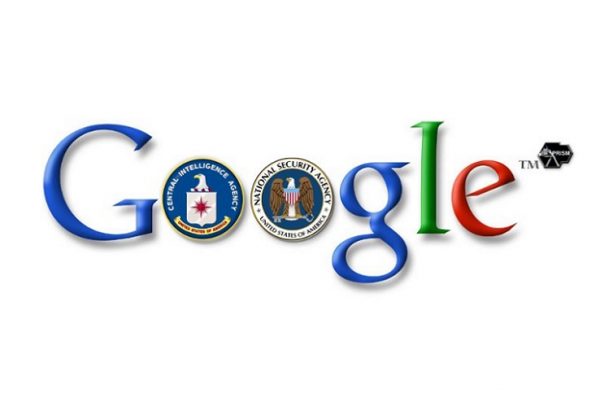
We Told You So: Google Is NSA
By Phil Butler – New Eastern Outlook – 04.09.2017
Google wants to be Big Brother’s eyeballs on you. All us Internet gurus knew this since before the NSA was found out spying on everybody. But now the Mountain View boys are more determined than ever to filter your information, and to obliterate any semblance of truth reaching people.
If I had led into an article with that paragraph even five years ago, I’d have been instantly labeled a “conspiracy theorist” or worse. How about now dear reader? Is the idea the technocrats and their huge monied handlers want to run you crazy? I didn’t think so. But if you need proof beyond the obvious, Google’s 160-page handbook tells us all exactly how they plan to spoon feed us only “their” news. The lengthy handbook is a heavy read for the average person, but the book does lay out an Orwellian machination unlike anything seen since the Nazi propaganda machine of Hitler. Pay close attention to the “instructional” on page 108 where Google dictates who does and does not meet rating criteria. The section under Fails to Meet (FailsM) is a steamrolling of the free press, and suggested hiding certain kinds of sites:
“Pages that directly contradict well established historical facts (e.g., unsubstantiated conspiracy theories), unless the query clearly indicates the user is seeking an alternative viewpoint.”
As per usual, Google has obscured its real intentions with the idea some super smart algorithm is “filtering” or “learning” results to help your life be better. Once again Google supposes to do “what is good for us” by destroying some sources and propping up others. Using terms like “search quality rating guidelines” and “page quality rating guidelines” the little Machiavellis at Google provide justification for controlling what you see and read on the web. Censorship and monopolization of internet information and business – this is the case against the Mountain View boys this time.
Then there’s the section concerning how Google will rank the best of the best news sites entitled “A High Level of Expertise/Authoritativeness/Trustworthiness (EAT)”. The acronym should clue you that Google search users are about to be fed some bullshit truth. “High Quality Pages” for the Google oligarchs means that either the page owner pays Google through the nose, or that the site in question serves Google’s masters well – period. At the top of this matrix of sources are newspapers (High News 1) like The Washington Post and New York Times, followed by the articles within those pages (High News 2). On down the list of authority pages are government sites like the US State Department and White House, and then pages categorized (believe it or not) “High Humor”. So, Google has factored out the importance of truth or even the importance of the news story itself, in favor of “who” wrote the story and the “reality” Google wants you to accept – Big Brother’s network – end of story.
Melissa Dykes of Truth Stream Media made a video about the new Big Brother effort, and Government Slaves did their take as well. And the latter even suggests alternatives to using Google Search, such as Yandex and DuckDuckGo, for those refusing the totalitarian tendencies we see headed our way these days. For people who would rather boycott the imminent evil Government Slaves also lists 400 sites for independent news outside Google’s MATIX. My advice for everyone is to start making the transition away from Google and Facebook now. My own vast experience in dealing with these tech people has revealed people with no morals whatsoever, people willing to do anything necessary to perpetuate their dominance in digital. Google has destroyed millions of people’s livelihoods, broken its own code, lawyers itself around anti-trust and fair practice rules, avoided taxes, and colluded against the people of the United States with the intelligence agencies. All these assertions are not just this writer’s ramblings. Back in 2014 John W. Whitehead wrote about the NSA and Google for the Huffington Post :
“Just look around you. It’s happened already. Thanks to an insidious partnership between Google and the National Security Agency (NSA) that grows more invasive and more subtle with every passing day, “we the people” have become little more than data consumer commodities to be bought, sold and paid for over and over again.”
On August 29th the notorious Zero Hedge creator, Tyler Durden wrote a piece entitled “Why Google Made The NSA”, which revealed a project called INSURGE INTELLIGENCE, a crowd-funded investigative journalism project that had released a story of how the United States intelligence community funded, nurtured and incubated Google as part of a drive to dominate the world through control of information. You read that correctly. My past assertions that Sergey Brin and Larry Page were “lifted up” by unseen money were probably correct. While I presumed George Soros or Rockefeller being behind it, it’s conceivable Uncle Sam was the spook in the woodpile. The Zero Hedge story delves deep into a “deep state” we never imagined in our worst nightmares. The report unveils Pentagon Highlands Forum’s more or less taking over tech giants like Google to pursue mass surveillance. Furthermore, the report shows how the intelligence community has played a key role in secret efforts to manipulate the media and the public. The endless crisis and war we find ourselves in, is in large part because of the efforts of Google and the other technocratic institutions. In another section the author frames how the Obama administration really consolidated this “Big Brother” control:
“Under Obama, the nexus of corporate, industry, and financial power represented by the interests that participate in the Pentagon Highlands Forum has consolidated itself to an unprecedented degree.”
These people refer to themselves as “the gatekeepers”. Their arrogance is only exceeded by their amoral agnosticism. The successes of the information age, Silicon Valley’s dubious venture capital bonanzas, the mysterious ways in which fairly ordinary innovators were propelling into the limelight warns us to the underlying swamp Donald Trump described. But it is the immensity of the network that should clue us. Imagine a new president taking office and fending off attacks as best he could, only to discover that the whole machine of the US government being under such a controlling influence. It’s easy to theorize after learning all this, how Trump did an about face on so many issues. He must have been overwhelmed. Or, he was part of the plan all along.
Finally, if we expand on this news and include other technocrats like Bill Gates or Jeff Bezos, then understanding world crises caused by bad US policy becomes simpler. It’s a corporation – all of it is a corporation for war and friction. Bezos walking with former Marine General and current Secretary of Defense, “Mad Dog” Mattis at Amazon is symbolic. Trump’s posture with Israel, the Saudis, even on domestic policy tells us those campaign promises sank in the wake of a deep state ship at full steam forward. If we allow Google and other such players to continue unchecked….
Well, you are as capable as I of completing that sentence. I only pray we are not too late.
Left, You Have Been Duped

By Richard Hugus | August 20, 2017
On August 19, a week after a heavily publicized clash over a statue of Robert E. Lee in Charlottesville, Virginia, an estimated 8,000 people converged on Boston Common to protest a speaking event organized by a group calling itself the Boston Free Speech Movement. Who are the Boston Free Speech Movement and what do they stand for? We’ll never know because antifascists, leftists, anti-racists, and progressives of Boston prevented them from even speaking. Some might say this was a good thing — no one wants to hear from bigots (if that’s who they were) — but in fact the left in all its self-righteousness was duped into an assault on the 1st Amendment to the US Constitution, which guarantees the right of free speech, for everyone. The left have been the pawns of much more powerful forces who, if they aren’t organizing these news events and provocations outright, are certainly happy to see precedents set for publicly shutting down free speech by the use of force. First it will be the speech of fascists, then it will be the speech of anybody the authorities don’t like, including leftists.
Suddenly we are being confronted with organizations who claim to know what is or is not appropriate for the rest of us to hear. Now that sides have been established — one which can decide what is and isn’t acceptable speech, and another which is forbidden to speak on pain of attack, all that remains is for the powerful to make sure their narrative is the one that’s allowed. Isn’t this fascism? Aren’t people who claim to be anti-fascist actually doing what classic fascists do?
It’s not a coincidence that just prior to these speaking events being shut down, Google, Inc. asserted its right to decide what is and is not a legitimate news source. At the same time the US Congress is considering legislation that would make it illegal for US citizens to support boycott, divestment, or sanctions against Israel. Not surprisingly, the pro-Israel Anti Defamation League (ADL) has been brought on by Google to advise them on which news sources are legitimate and which are not. Google now has such a monopoly on information on the Internet that it is in a position to bury unapproved news sources forever. The ADL will therefore be able to effectively censor any negative news about what Israel is doing in Palestine and the middle east, just as AIPAC, through its ownership of the US Congress, will be able to censor free speech of American citizens when it comes to, once again, Israel.
In the ‘50s the ADL monitored “pinkos” for the House UnAmerican Activities Committee. In the ‘90s ADL monitored activists working to end apartheid in South Africa, in the 2000s the ADL began monitoring Arab American organizations and mosques. Today the ADL monitors pro-Palestine groups on college campuses. In each case the ADL has gone after “extremism and hate speech” in the US, as defined by Israel.
One wonders, why does Israel, a foreign country, have such a say on what people in the US can and can’t talk about?
There is no way to censor speech without a point of view or agenda. The agenda is usually dictated by whoever has power. Thus censorship serves those in power. When we take part in it, we serve the power.
People are apparently upset about an upsurge of Nazism. Why weren’t they in the streets when neocon Victoria Nuland and the US State Department organized a coup in Ukraine with the overt assistance of neo-Nazis? Why were Nazis okay during Obama’s presidency but not during Trump’s?
Where was the outrage when Hillary Clinton and the US State Department attacked and destroyed Libya? The liberal left considered this a “humanitarian intervention,” just as it did when the US decimated Yugoslavia.
Why is it that after six years of siege and murder committed by US proxy forces in Syria, the only national demonstration that could be mustered in Washington was on the issue of private remarks Trump once made about grabbing women — the famous “pussy hat” demonstration?
Why is it that the liars in the mainstream press could get away with false stories of chemical attacks in Syria being carried out by the Syrian government when it was obvious that the attacks were carried out as false flags by US proxy forces? Why are Syrians still being bombed and killed every day by US “coalition” forces with no protest?
Why is it that Iraq is no longer a concern, after 26 years of genocidal assault by Uncle Sam, with efforts now being made to balkanize Iraq through support for “Kurdistan”? Why are US troops still there? Why are they still in Afghanistan? Where are the masses taking to the streets to shout down the liars making these policies?
Why is it the business of the US to interfere in Venezuela’s internal affairs, even to the point of military intervention? Has Venezuela harmed the US in some way? Has the left swallowed yet again the lie that the US is concerned about human rights in another country?
Why is it that Palestinians have been forgotten, as Israel, the US’s closest ally, transparently conducts genocide against them, year after year, so that today Israel can talk openly of forced transfer of the entire Arab population of Palestine. Isn’t terror also being committed when Israeli settlers routinely ram their cars into Palestinians in the street, or is it just terror when this happens in Europe?
Why is it that the US supports a state for Jewish people only that necessarily discriminates again non-Jewish Christians and Muslims? Isn’t discrimination on the basis of religion a hate crime? Isn’t the ADL in a conflict of interests when it claims to be an authority on hate crimes while representing such a state? Has the left ever repudiated its long record of blocking for Israel and Israel’s crimes?
Why is it that the virtuous left has nothing better to do than face off with a few obvious provocateurs with their over-the-top nazi slogans while the US — their country, in their name — is actively supporting Saudi Arabia in its destruction of a practically defenseless Yemen?
Where has the left been in its opposition to US government and media “hate speech” and war-baiting against Russia, China, and Iran? Is World War III not a problem? Did something lead leftists to believe that life on earth was not important right now?
Is the US threat of a nuclear attack on North Korea a side issue — something to be dealt with only after facing off with the Klan?
What about the murder of millions of Arabs and Muslims since 9-11 on the basis of a false story about who did 9-11? Surely there is a case to be made here for discrimination on the basis of religion, if not serial mass murder, based on a pretext which itself was an open crime for all the world to see. Why does the left consider discussion of this crime unimportant and passé?
That the left has mobilized to stomp on a handful of people in Charlottesville and Boston only proves its impotence. It’s like the man who has been frustrated at work all day who comes home and kicks his dog.
The worst of it all is that both the left and right have been suckered into a division which will use up all their energy and get plenty of attention from the press while the real crimes and the real criminals roll steadily along, laughing at the stupidity of everyone involved and the ease with which they were manipulated.
For Google, the Pixels Just Hit the Fan
Sputnik – July 12, 2017
Distinguished research psychologist Robert Epstein explains why Google was recently fined $2.7 billion for one of its search-engine manipulations. This is just the beginning, he says, of bad news for a company that tracks and manipulates people on a massive scale.
Dr. Robert Epstein — The pixels have hit the fan. The EU just fined Google $2.7 billion for favoring its online comparative shopping service in its search results.
Google officials knew this fine was coming and that much worse is possible, so in August 2015, they reorganized the company so that it is now part of a holding company called Alphabet. This was not done, as Larry Page, one of the company’s co-founders, rapped at the time, to make the company “cleaner and more accountable” (what on earth does that mean?). It was likely done to try to protect the value of the stock held by the company’s major stockholders. The EU’s antitrust action against Google had been filed in April, 2015, and that got Google officials thinking. When the US Department of Justice broke up AT&T in the 1980s, the stock value dropped by 70 percent.
Google officials are nervous because they know exactly how many questionable practices they engage in every day, along with how many have been uncovered so far and how many are still unknown to authorities. My associates and I have discovered some of these practices, and we study them every day. They are brilliant, mind-blowing, and largely invisible new ways of both tracking and manipulating human behavior on an unprecedented scale, all serving a singular purpose: to make Google richer. Before I give you a few examples of the practices we are examining these days, let me put the big EU fine into a broader context.
First of all, Google can handle it. The company will likely have revenues of over $100 billion this year, so they can pay the fine painlessly, and they also have unlimited legal resources. In court, they will claim, as they always do, that they haven’t done anything wrong, that it’s just the algorithm, and that the algorithm — in its objective purity, driven by its deep digital desire to serve human needs — just happens to rank Google products above inferior ones.
This is complete nonsense. As I explain in detail in my US News essay, “The New Censorship,” Google employees have complete control over where items occur in search results. The search algorithm is just a set of computer instructions written by Google software engineers, and they manually adjust the algorithm daily to remove items from the search results it generates about — 100,000 items per year under Europe’s “right to be forgotten” law alone — or to demote companies that piss Google off.
Second, this hefty fine is just the tip of a very large digital iceberg. Bear in mind that it is based on merely one instance of search bias: putting Google’s own comparative shopping service ahead of others. A US Federal Trade Commission investigation in 2012 found that Google’s search results are generally skewed to favor its own products and services. When was the last time you Googled a movie without seeing YouTube — owned by Google — in the top search result? Both India and Russia have levied fines against the company for rigging search results, with a much larger fine still looming in India. Bear in mind also that the EU’s search-related action against Google is just one of three antitrust cases they have initiated so far; the other two concern Google’s dominance in mobile computing and advertising. Europe’s concerns about Google are so deep that in late 2014 the European Parliament voted (in a non-binding proceeding) to break Google up into pieces, reminiscent of the DOJ’s dismantling of AT&T.
These and other legal actions are all about new techniques Google has developed for tracking and manipulating people. The search engine may have started out as a simple index of web pages, but it was soon refined and repurposed. Its main purpose became to track user behavior, yielding a vast amount of information about people that Google still leverages to send out the targeted advertisements that account for most of the company’s income. The public still thinks of the Google search engine, Google Maps, Google Wallet, YouTube, Chrome, Android and a hundred other Google platforms as cool services the company provides free of charge. In fact, they are all just gussied-up surveillance platforms, and authorities around the world are finally figuring that out.
As the EU’s recent antitrust decision shows, authorities are also beginning to figure out how extensively Google is using its platforms to suppress competition and manipulate user behavior. The EU’s investigation found, for example, that when Google officials realized in 2007 that their comparative shopping service was failing, they elevated their own service in their search results while demoting competing services. This increased traffic to its service “45-fold in the United Kingdom, 35-fold in Germany, 19-fold in France, 29-fold in the Netherlands, 17-fold in Spain and 14-fold in Italy” while reducing traffic to its competitors by “85% in the United Kingdom, up to 92% in Germany and 80% in France.”
Does position in search results really affect user behavior that much? You bet. My own research has shown, for example, that favoring one political candidate in search results can shift the voting preferences of undecided voters by up to 80 percent in some demographic groups. Search results that favor one perspective over another on abortion, fracking, homosexuality, you name it also dramatically shift the opinions of people who haven’t yet made up their minds. The research also shows, unfortunately, that this type of manipulation is virtually invisible to people and, worse still, that the few people who can spot favoritism in search results shift even farther in the direction of the bias, perhaps because they see the bias as a kind of social proof.
What if authorities were examining not just the dominance of Google’s comparison shopping service in the company’s search results but the dominance of, say, anything, in those results: certain brands of mobile phones or computers; political candidates who serve or interfere with the company’s needs; attitudes toward Oracle, Microsoft, Yahoo, and other companies that compete with or are in conflict with Google; news stories that are “fake” or anti-Trump or pro-Google; and on and on. Do you see how big this problem really is? And no one — at least not yet — is tracking any of this. The trillions of pieces of information Google is showing people every day are all ephemeral. They hit your eyeballs and then disappear, leaving no trace, and much or most of them favor one perspective or another. Do we really want a single company, which handles 90 percent of search in most countries, to have the power to manipulate our opinions about anything? How, over the years, has Google been exercising this power?
My newest research is showing that it is not just the order of search results we need to worry about. Here are three examples of manipulations we are currently studying which, once again, no authorities are tracking — at least not yet:
- Search suggestions: Before you even see those search results, Google typically flashes search suggestions at you. When Google introduced this feature in 2004, they showed you a long list of suggestions — usually 10 — that indicated what other people were searching for; Bing and Yahoo still do this. Google, however, now typically shows you just four suggestions that are often unrelated to what others are searching for. Instead, they show you terms they believe you are likely to click, which gives them a great deal of control over your search. One way they now manipulate searches is by strategically including or withholding negative search terms. Negative terms (like “suicide” or “crimes”) attract far more clicks than neutral or positive ones do-10-to-15 times as many in some demographic groups. By withholding negative suggestions for a perspective or person the company supports while allowing negatives to appear for a person or perspective the company dislikes, they drive millions of people to view material that shifts opinions in ways that serve the company’s needs. Four, it turns out, is the magical number of suggestions that maximize their control. It maximizes the power of the negative search term to draw clicks while also minimizing the likelihood that people will type their own search term.
- I’m feeling lucky: When you mouse over a Google search suggestion, you see a small “I’m feeling lucky” link. With this feature, Google gets people to skip seeing search results altogether; it gives the company complete control over the actual web page you see. By limiting the number of suggestions you see and then attracting you to the “lucky” link, they exert a high degree of control over what opinion you will form on issues you’re uncertain about. All of this occurs without users having any awareness of how they are being manipulated.
- The featured snippet: Google is rapidly moving away from the search engine model of tracking and manipulation toward much more powerful means. (To view a satire I wrote about Google donating its search engine to the American public, click here.) The “featured snippet” — the answer box we see more and more frequently above the search results — is one such tool we are studying. Google officials have long known that people don’t really want to see a list of 10,000 search results when they ask a question; they just want the answer. That’s what the snippet is now giving people — the answer, wrong or right, and it’s often wrong. In one of our newest experiments, the voting preferences of undecided voters shifted by 36.2 percent when they saw biased search rankings without an answer box, but when a biased answer box appeared above the search results, the shift was an astounding 56.5 percent. In other words, when you give people the answer, you have an even larger impact on their opinions, purchases, and voting preferences. Google is rapidly shifting to this new model of influence not just on its search engine, but with its new audio Home device (“Okay Google, what’s the best Italian restaurant around here?”), as well as with its new Android-based Google Assistant.
It took years for the EU to collect and analyze the terabytes of data it needed to make a case against Google in the shopping services action. Meanwhile, Google is moving light years ahead. This might always be a problem when it comes to the machinations of high-tech companies. Laws and regulations will necessarily lag way behind, unless-unless, that is, we change the game.
As The Washington Post and other media outlets reported in March 2017, about six months before the November 2016 election in the US, my associates and I deployed a Nielsen-type system for tracking search results in real time. Using custom software and a nationwide network of anonymous field agents, we were able to look over the shoulders of people as they conducted a wide range of election-related searches using Google, Bing, and Yahoo, ultimately preserving the first page of results from 13,207 searches and the 98,044 web pages to which the search results linked. We found that these searches, especially the ones conducted on Google, generally favored Hillary Clinton over Donald Trump in all ten search positions on the first page of search results. Perhaps more important, we learned that our monitoring system could be used to track any of the ephemeral stimuli that Google and other tech companies are showing us every day: news feeds, advertisements, you name it.
I am now working will colleagues from Stanford, Princeton, King’s College London and a dozen other institutions to create an organization that will monitor the online behavior of Big Tech companies worldwide on a real-time basis. If we do this right, it will take only seconds, not years, to spot illegal or unethical behavior, and we might even be able to anticipate manipulations before they occur, providing evidence on an ongoing basis to journalists, regulators, legislators, law enforcement officials, and antitrust investigators. Such a system will force Big Tech companies, both now and in the future, to be more accountable to the public, and it will also help preserve the free and fair election.
In the meantime, my advice to consumers is: be wary of the information you obtain online and, more important, be cautious about the information you reveal. Learn how to increase your online privacy; it’s not that hard.
And my advice to Google officials is: cut down on the greed and arrogance. The wheels of justice turn slowly, but they do turn.
_______________________
A Ph.D. of Harvard University, Robert Epstein is senior research psychologist at the American Institute for Behavioral Research and Technology, the author of 15 books, and the former editor-in-chief of Psychology Today magazine. Follow him on Twitter @DrREpstein.
Featured Video

Your Enslavement Begins in Gaza: The ‘Board of Peace’
or go to
Aletho News Archives – Video-Images
From the Archives
The US: The Century of Lost Wars
By James Petras | Global Research | September 12, 2018
Introduction
Despite having the biggest military budget in the world, five times larger than the next six countries, the largest number of military bases – over 180 – in the world and the most expensive military industrial complex, the US has failed to win a single war in the 21st century.
In this paper we will enumerate the wars and proceed to analyze why, despite the powerful material basis for wars, it has led to failures. … continue
Blog Roll
 Aletho News
- Israeli troops executed Palestinian aid workers at ‘point blank range’: Report
- Iran war What if today’s Iran is resigned to a long, hellish war with the US?
- Why Israel Is Escalating Its War Crimes Against Lebanon
- Iran in the face of the armed diplomacy of imperialism
- The US build-up around Iran constitutes strategic war option, not ‘deterrence’
- Iran to US: Sanctions and war failed; try diplomacy and respect
- China supplies Iran with radar, surveillance tech to track US stealth aircraft: Report
- Zelensky rejects territorial concessions to Russia
- German leader of EU’s largest faction sounds the alarm of possibility of right-wing forces coming to power in France, Poland
- Putin: Developing Russia’s nuclear forces ‘absolute priority’
- If Americans Knew
- Maria Farmer: Epstein Victim Reveals Explosive Information Covered Up by Media
- Average of five Palestinians killed by Israel every day in Gaza since ceasefire – Not a ceasefire Day 136
- Palestinian church leaders admonish Christian Zionist Mike Huckabee – Not a ceasefire Day 135
- Ominous messaging from Trump’s “Board of Peace” – Not a ceasefire Day 134
- ‘Christians Out’: Jerusalem Church Tagged With Hate Graffiti, Police Investigating
- Israeli Settlers Kill American Teen
- ‘We returned from hell’: Palestinian journalists recount torture in Israeli prisons
- No mercy for Gaza in Ramadan – Not a ceasefire Day 133
- The Israeli Government Installed and Maintained Security System at Epstein Apartment
- Tucker Carlson interrogated in Israel, has passport seized after interviewing US ambassador
- No Tricks Zone
- New Research Reaffirms Clouds, Aerosols, And Surface Solar Radiation Are ‘Driving The Climate System’
- Germany: Electric Car Catches Fire At Charging Station, Sets Off Local “Inferno”, Widespread Damage
- New Study: Canada’s New Brunswick Was 1°C Warmer Than Today During The Medieval Warm Period
- Coal Power Back In Trend As Globe Tries To Keep Pace With Growing Demand For Power
- New Study: A 4°C Warmer Beaufort Sea Had ‘No Sea Ice’ 11,700 – 8200 Years Ago
- Unfudging The Data: Dutch Meteorological Institute Reinstates Early 20th Centruy Heat Waves It Had Erased Earlier
- German Gas Crisis…Chancellor Merz Allegedly Bans Gas Debate Ahead of Elections!
- Pollen Reconstructions Show The Last Glacial’s Warming Events Were Global, 10x Greater Than Modern
- Germany’s Natural Gas Storage Level Dwindles To Just 28%… Increasingly Critical
- New Study Rebuts The Assumption That Anthropogenic CO2 Molecules Have ‘Special’ Properties
 Aletho News