‘Israel’ threatens to genocide Gaza if Hamas refuses disarmament
Al Mayadeen | February 16, 2026
Senior Israeli officials have threatened to renew the genocide in Gaza if Hamas does not disarm within a proposed 60-day period, although the Israeli occupation continues its attacks on the Strip daily, never adhering to the ceasefire agreement.
Cabinet Secretary Yossi Fuchs, a senior adviser to Prime Minister Benjamin Netanyahu, said that the occupation government intends to give Hamas two months to relinquish its arms. If it does not comply, the Israeli military would “complete the mission” in Gaza, he threatened.
The warnings came against the backdrop of the US-led “Board of Peace”, under which Washington dictated the 60-day deadline.
According to Fuchs, Hamas would be required to surrender all weapons, including small arms such as AK-47 rifles. He emphasized that the Israeli regime would evaluate the outcome at the end of the period.
Netanyahu also reiterated that disarmament must include small arms, claiming that such weapons were used during the October 7 operation. Israeli officials allege that tens of thousands of rifles remain in Gaza.
Reports in The New York Times suggested that a draft proposal discussed by US mediators could initially allow Hamas to retain some small arms while surrendering weapons deemed capable of striking “Israel”. The document is reportedly expected to be shared with the Palestinian Resistance in the coming weeks.
Devastation and aggression despite ceasefire
Despite the ceasefire agreement, officially effective as of October 11, 2025, the Israeli regime has maintained its occupation of vast areas across the Gaza Strip, and continues to attack the Palestinian territory’s infrastructure and civilians.
Since then, over 591 Palestinians, including women and children, have been killed, and more than 1,598 others have been injured.
Since October 7, 2023, more than 72,051 Palestinians have been killed, and over 171,706 have been injured, making the war on Gaza one of the most brutal in modern history. Many victims are still in dire need of treatment. However, hospitals across Gaza have been systematically targeted over the past three years, forcing operations to minimal function, sometimes to a halt.
Hamas official says Netanyahu joining ‘peace council’ is a farce
MEMO | February 12, 2026
Osama Hamdan, a leader in the Islamic Resistance Movement (Hamas), said on Wednesday that the joining of Israeli Prime Minister Benjamin Netanyahu, who is wanted by the International Criminal Court, to the so-called “Peace Council” represents “the farce of the era.”
In remarks broadcast by Al Jazeera, Hamdan said the movement had not received from mediators any draft or official proposals concerning the weapons of the resistance.
He stressed that Hamas has not officially adopted any decision regarding freezing its weapons, and that its national position is firm in considering resistance a legitimate right as long as the occupation exists.
Hamdan stressed that the Palestinian people reject any form of external guardianship and cannot accept international forces replacing the Israeli army inside the Gaza Strip.
He added that the movement had contacted the Indonesian government and made clear that the role of any international force should be limited to deployment along the borders of the Gaza Strip to separate it from the occupation.
He said that any international stabilisation force, if established, should work to prevent attacks against the Palestinian people, in line with the plan proposed by US President Donald Trump.
Iran Adamantly Rejects US Attempt to Control Upcoming Negotiations Over Iran’s Nuclear Program
By Larry C. Johnson | SONAR | February 5, 2026
What a day!! Lots of negotiation and non-negotiation action on the Iranian front. In the span of two hours, starting at 1 pm and ending around 3 pm eastern time, the world was whipped sawed with news that the bilateral negotiations between Iran and the US was cancelled — that was the 1 pm news — and then, at 3 pm, the talks were back on. The initial reports that the meeting in Oman would not take place cited Iran’s reaction to a US demand that Iranian ballistic missiles and Iran’s support for groups like Hamas and Hezbollah must be on the agenda or there would be no negotiations. Without a moments hesitation, Iran barked back and said, “Ok, no meeting.”
Axios reported that US officials were surprised by Iran’s reaction and scrambled to come up with a response to Iran. Within two hours, the US retreated and accepted Iran’s position that the Friday meeting in Oman would only address nuclear bombs and uranium enrichment. Iran won this first round.
While all of this was taking place, Pentagon officials announced that the US carrier strike force had shot down an Iranian drone that was flying towards the USS Abraham Lincoln again… No word about the make and model. Three days ago, Iran successfully overflew the USS Abraham Lincoln and showed the video footage on Iran’s Press TV. I think Pete Hegseth and his team of sycophants were embarrassed by that episode and decided to retaliate with force.
And if that was not enough, Iran dispatched a bevy of small boats to harass what the press described as a US tanker navigating the Strait of Hormuz. I think Iran was simply trying to remind the US that it is serious about taking action against the US military and economic presence in the Persian Gulf if the US acts on its threat to attack Iran.
Danny Davis, Doug MacGregor, and I have heard active duty military officers in recent days insist that any Iranian attacks would be easily repulsed by US forces in the region. We all think that those officers do not understand the full capabilities of the Iranian navy and air force to overwhelm US defenses with a combination of drone and missile swarms if the US carries out an attack on targets inside Iran. King Solomon, writing in Proverbs, accurately described this attitude… Pride goes before destruction, and a haughty spirit before a fall.
If the US is going to attack Iran it will want to launch in the next two weeks because Russian and Chinese warships are headed to the area to participate in the annual Iran-Russia-China joint-naval military exercise. Iran, Russia, and China are scheduled to hold their joint naval military exercise, known as Maritime Security Belt 2026 (the eighth edition of the series), in the northern Indian Ocean (including areas near the Gulf of Oman and Arabian Sea) in late February 2026. Iranian Navy Commander Rear Admiral Shahram Irani announced on January 31, 2026, that the exercise will involve units from Iran’s regular navy (Nedaja), the Islamic Revolutionary Guard Corps (IRGC) Navy, and naval forces from China and Russia.
Hamas rejects Israeli accusations as “lies meant to justify its massacres in Gaza”
Palestinian Information Center – January 31, 2026
GAZA – The Hamas Movement has condemned Israeli claims that it violated the ceasefire agreement as “lies” and “intended to justify the massacres committed against civilians in the Gaza Strip.”
In a statement on Saturday, Hamas spokesman Hazem Qasem dismissed the Israeli accusations against his Movement as “baseless and unfounded,” saying they reflect Israel’s disregard for ceasefire mediators, sponsoring countries, and all the parties involved in the so‑called “Board of Peace.”
The spokesman called on the international community, the UN, and human rights organizations to “clearly condemn Israel’s massacres in Gaza, take practical steps to stop them, hold Israeli leaders accountable for their crimes, and end the policy of impunity, which encourages further killing and destruction.”
Hamas never agreed to lay down arms in truce talks: Official
Press TV – January 29, 2026
A senior Hamas official says the Palestinian resistance group never agreed to surrender its weapons in the course of indirect ceasefire talks that brought an end to the Israeli regime’s two-year-long genocidal war on the Gaza Strip.
Mousa Abu Marzook made the remarks in an interview with Qatar-based Al Jazeera television network on Wednesday, two days after US President Donald Trump called on Hamas to follow through on what he called the group’s commitment to disarm.
“Hamas has never agreed to hand over its weapons in any form. Hamas agreed to a framework plan to end the war. The issue of handing over weapons was not discussed at all,” Marzook said.
He also emphasized that all arrangements planned in Gaza must happen with Hamas’ consent.
The US-backed Gaza ceasefire deal took effect on October 10, 2025. The first phase began with the exchange of Israeli captives for Palestinian abductees, as well as the withdrawal of the occupation forces to the so-called yellow line, the lethal ceasefire boundary in Gaza.
Although Hamas fulfilled all its obligations, Israel neither stopped its deadly attacks on Gaza nor allowed the free entry of humanitarian aid into the besieged territory.
The second phase, which was announced earlier this month, involved the gradual withdrawal of Israeli soldiers, who occupy more than half of the Gaza Strip, and the deployment of an international force.
On Monday, the Israeli military announced that the remains of the last captive in Gaza, Ran Gvili, had been recovered.
Also in his interview, Marzook said that about a month ago, Hamas had provided the Gaza truce mediators with information about the location of Gvili’s body.
The handover of Israeli captives, living and dead, to the Zionist regime was based on an agreement with Hamas conditions, thus, Israeli prime minister Benjamin Netanyahu should not brag about the issue, he added.
Israel unleashed its brutal Gaza onslaught on October 7, 2023, but it failed to achieve its declared objectives despite killing at least 71,667 Palestinians, mostly women and children, and injuring 171,343 others.
During a high-level meeting of the UN Security Council on Wednesday, Palestine’s UN Ambassador Riyad Mansour warned that an “unprecedented catastrophe” was unfolding in Gaza.
“The suffering of Palestinian civilians — men, women and children — must end with equal urgency,” he said, urging the full implementation of truce obligations, an immediate end to the killings, and unrestricted humanitarian access to Gaza.
Building Disney Land on the Moon More Likely than Kushner’s Gaza Plan
By Robert Inlakesh | The Palestine Chronicle | January 25, 2026
On Thursday, Donald Trump’s son-in-law, Jared Kushner, presented his Gaza “master plan.” “We have no Plan B,” he remarked, pre-empting queries regarding what happens if the project fails.
In the more than three months since the Gaza ceasefire was implemented, this is all the Trump administration has to show for its alleged “hard work.” The reality is, the plan is flat out ridiculous.
To break down what was just presented in Davos, Switzerland, we need only use common sense. No geopolitical mastermind is required to figure out that the project just outlined is not only disconnected from reality, but flat-out cruel.
The sticking point here is that the US and Israeli governments are demanding that Hamas, along with the other Palestinian resistance groups, disarm. Without disarmament, as Kushner made clear, there can be no reconstruction.
In other words, either surrender or the genocide will start once again – but perhaps in a different form this time.
It is important to consider the following stances adopted by the Palestinian and Israeli sides. Israel’s Prime Minister Benjamin Netanyahu demands total disarmament, with zero compromises.
On the other side, Hamas and the rest of the resistance say that they will store their weapons, but will not disarm until a Palestinian state is created. Only to a Palestinian state military will they hand over their weapons.
The so-called “Board of Peace,” which makes Trump the de facto Supreme Leader of Gaza, is tasked with a nation-building endeavour – something that contradicts the White House National Security Strategy doctrine.
Its military wing will be provided in the form of the “International Stabilisation Force” (ISF).
The ISF has not yet been formed, but is projected to be composed of tens of thousands of soldiers. It is set to be a multinational force, which will be headed up by the US military, coordinate with Israel, and run certain details by Egypt.
One enormous issue the ISF will face is that, in the event it is used to inflict regime change by attempting to disarm Hamas, it will not have the soldiers necessary.
It will be hundreds of soldiers from one country, perhaps thousands or dozens from others, who will be roughly the same in total manpower as the Palestinian resistance.
For a little perspective, when Israel announced its Operation “Gideon’s Chariots 2,” a mission to occupy Gaza City, Israeli military experts projected that a minimum of 150,000 soldiers would be required to complete such a task and that it could take up to a decade to achieve their goals.
Even if private military contractors, the five ISIS-linked militias Israel created in Gaza, and some form of a new Palestinian police force are used to do this, it is a messy, long-term, and costly mission – one that will undoubtedly result in foreign soldiers returning to their home nations in coffins.
Reconstruction Delusions
Jared Kushner presented a reconstruction and economic development proposal, during which he made it clear that he has no idea what he is doing.
The slides he displayed — which appear to have come from an early proposal floated around weeks ago — featured futuristic skyscrapers along the beaches of Gaza, which they claim will be for tourism.
The figure presented for what this will cost is around $25 billion, and they say it will be completed in a decade.
Let’s assume Hamas disarms, or that Israel agrees to allow the Palestinian resistance to store its weapons. Working on this assumption, there are a few basic follow-up questions that demonstrate just how flimsy the proposal is:
- Why are the Israelis still destroying Gaza’s infrastructure?
- What happens to the Palestinians?
- How are the Israelis going to tolerate such a city’s existence, if at all?
To address the first question, which is in part rhetorical, the Israeli military has not stopped its military operations aimed at totally erasing the Gaza Strip’s remaining infrastructure since the so-called ceasefire came into effect.
If they were truly seeking to allow Palestinians to remain there and to permit reconstruction, then why continue a process — which is continuing as you read this article — of eliminating civilian infrastructure?
Is it plausible that Israel has spent over two years committing a genocide, mass displacing the civilian population, and destroying every square inch of Gaza’s infrastructure, all to allow a high-tech billionaire’s paradise to be built in Gaza?
To allow 500,000 Palestinians to take on the jobs built there? Will this be a Palestinian city?
Everyone can draw their own conclusions about how plausible that seems when the majority of the Israeli cabinet is in favor of ethnic cleansing and/or settlement construction.
This then brings us to what truly happens to the Palestinian people during this process. Israel has not even allowed mobile homes and basic materials to enter Gaza that would allow people to at least escape being forced to live in ever-deteriorating tents.
These tents are easily torn to pieces or worn out by moderate changes in weather conditions, let alone events like floods.
Is the plan to build a super city and let everyone live in tents? Do they want to displace the people into Egypt for a period of a decade?
If the people leave, can they return? What is to become of their homes? Can they not decide what happens to their own buildings and neighbourhoods, or have any say in their own future?
The questions here could go on for days.
If you look at the AI-generated images of what the “New Gaza” will look like, it is more impressive than Tel Aviv, let alone Israeli-controlled cities closer to Gaza like Ashkelon (Askalan) or Ashdod (Isdud).
Are we supposed to believe that Palestinians are going to build a massive city that resembles Dubai or Singapore, while the Israeli Jewish supremacist population living next to them remains in cities that don’t even come close to comparing?
The majority of Israeli society is genocidal. They hate Palestinians with such a passion that they seek to see them wiped off the face of the earth. Nothing is off limits when committing acts against the civilian population of Gaza.
Yet we are supposed to believe that they and their government are going to allow Gaza to become a territory that is more impressive than the stolen lands on which Israelis live?
Bringing us back to reality for a moment, the Israelis have killed around 500 Palestinians since the ceasefire. They refuse to withdraw even to the territory designated to them under the agreement they signed.
Instead, the Israelis continue their military operations as if no agreement is in place, with the only exception being that they are no longer murdering over 100 civilians per day.
Meanwhile, Phase 2 of the ceasefire was supposed to have started months ago, but somehow never seems to come about. Now we are told there will be another 30-day period in which Hamas will be forced to disarm, or there will be military action against them.
It is crystal clear why there are no detailed proposals, why everything is so incredibly flimsy and disorganised, and why they are kicking the can down the road.
The people of Gaza are being presented with a vague image of living in a super city. They are also being told that there is an unelected ex–Palestinian Authority figure being imposed upon them.
No one knows what is happening, and nobody has any answers for them.
Why? Because the US and Israelis are simply toying with the people of Gaza, demonstrating pure sadism. There is no genuine attempt to better their lives. If there were, the US would have put together meaningful plans.
Yet the Zionist son-in-law of the US President doesn’t even bother dedicating enough time in his day to put together anything coherent.
The message is to submit or feel our wrath, reviving the decades-old claim that “Gaza could have become Singapore.”
Another thing to point out here is that every country participating in this colonial-style “Board of Peace” is now complicit in genocide, just as all of the nations that participated in the Civil-Military Coordination Center (CMCC).
Leaders without backbones, who refuse to stand up to the US, even by simply leaving the CMCC for its failures or refusing to join the BoP without guarantees.
It may not be nice to hear, but history will record every individual who participated in this board, designed to reward Israel for genocide.
So, where does this go from here? Either Israel decides to continue its genocide, or the BoP works to keep the situation in a state of pause for a longer period of time, during which the people of Gaza suffer.
If the US seeks to pursue any of its BoP proposals, they will likely turn out exactly as the floating aid pier and the Gaza Humanitarian Foundation did.
– Robert Inlakesh is a journalist, writer, and documentary filmmaker. He focuses on the Middle East, specializing in Palestine.
Hamas: Netanyahu’s inclusion in ‘peace council’ threatens justice
Al Mayadeen | January 22, 2026
The Hamas Resistance movement has condemned the inclusion of Israeli Prime Minister Benjamin Netanyahu in the so-called “Peace Council” for Gaza, calling it a dangerous sign that undermines justice and accountability.
In an official statement issued Thursday, Hamas said, “We strongly condemn the inclusion of war criminal Netanyahu, who is wanted by the International Criminal Court, in the Peace Council for Gaza.”
The movement stated that Netanyahu’s participation contradicts the very principles such a council should represent. It warned that “the war criminal Netanyahu continues to obstruct a ceasefire agreement in Gaza and carries out the most heinous violations by targeting unarmed civilians.”
Hamas stressed that “the first step toward stability lies in ending the occupation’s violations and holding all those responsible for genocide and starvation accountable.”
The statement came after US President Donald Trump and several international leaders signed a decree on Thursday establishing the “Peace Council” concerning the Gaza Strip. The signing took place during the World Economic Forum in Davos, Switzerland.
Netanyahu confirmed his participation on Wednesday, saying: “I will join the Peace Council in response to President Trump’s invitation.”
Others who joined the so-called “Peace Council” include Turkey, Saudi Arabia, Egypt, Jordan, and others, bringing the total number of those who accepted Trump’s invitation up to 25.
Why Trump’s ‘Board Of Peace’ Is Destined To Crash And Burn
By Robert Inlakesh – The Palestine Chronicle – January 21, 2026
The recent announcement of US President Donald Trump’s “Board of Peace” (BoP) has stirred intense debate over what Phase 2 of the Gaza Ceasefire will look like. In reality, figuring this out is rather simple: it is a mission destined to crash and burn, similar to how the Gaza Humanitarian Foundation (GHF) and the Floating Aid Pier did.
Proponents of the Trump administration’s BoP have little to show other than fancy rhetoric, churned out unironically, due to their lack of any basic understanding of Gaza’s predicament.
The Board Of Zionist Failure
As of the White House press briefing issued on January 16, the so-called Board of Peace was initiated with seven appointed members to its “Executive Board.” None of them is Palestinian, let alone from Gaza, and none possesses even the slightest credibility in dealing with such a sensitive and arduous task.
They include Trump administration officials Steve Witkoff, Marco Rubio, Robert Gabriel, and the demonstrably incompetent son-in-law of the US President, Jared Kushner. Then there is former British Prime Minister—the butcher of Baghdad himself—Tony Blair. That leaves pro-Israel billionaire Marc Rowan and World Bank Group President Ajay Banga.
However, the individual granted the most consequential role, the High Representative for Gaza, is none other than Nickolay Mladenov. While serving as a United Nations envoy to the Middle East, he developed a relationship with Israeli Prime Minister Benjamin Netanyahu. He also earned the favour of the Palestinian Authority (PA) and was awarded the ‘Grand Star of the Order of Jerusalem’ by its President, Mahmoud Abbas.
Mladenov is presented as a man who maintains relations with all sides, yet those citing his ties to the PA as evidence of this are doing so disingenuously. Setting aside questions of the PA’s legitimacy, it has not ruled Gaza since 2006. As such, his relationship is not with the governing authorities of the besieged territory.
In addition, Mladenov left his UN post to become director-general of the Anwar Gargash Diplomatic Academy in Abu Dhabi. He not only resides in the United Arab Emirates (UAE) but also serves as a Segal Distinguished Visiting Fellow at the Washington Institute for Near East Policy (WINEP).
His affiliation with WINEP should raise major red flags. The institute is often referred to as the think-tank wing of the Israel Lobby in Washington and, according to the Quincy Institute’s ‘Think Tank Funding Tracker,’ is funded by dark money. Mladenov is also a passionate supporter of the Trump administration’s so-called “Abraham Accords,” an initiative aimed at pushing Arab states to abandon the demand for a Palestinian state before normalizing relations with Tel Aviv.
While there is much more to be said about the so-called BoP, it suffices to note that it is a pro-Israel endeavour—one that reportedly demands a $1 billion sign-up fee for participating nations, as though it were a subscription service, a kind of Netflix for states.
The mere existence of the BoP constitutes a clear violation of international law and even contradicts the US’s own newly adopted National Security Strategy doctrine. None of this would have been possible, however, without the utter cowardice of United Nations Security Council (UNSC) members back in November.
UNSC Resolution 2803 authorized this colonial throwback board—an unelected, illegitimate authority imposed upon Gaza—while effectively rewarding Israel for committing genocide. Every state that voted in favor is complicit, with no exceptions. The resolution erased decades of UNSC and UN General Assembly resolutions, undermined the Geneva Conventions, and authorized a plan that violates rulings issued by the International Court of Justice (ICJ), the UN’s own legal body.
Why It Will Fail
As for what the BoP is actually meant to do, meaningful analysis is nearly impossible at this stage. It has no clear vision—only a pro-Israeli orientation. The BoP is a cash grab, trafficking in vague concepts such as “peace,” “accountability,” and “reconstruction,” while offering no substance. Its continued existence rests largely on the unwillingness of states to challenge it, out of fear of the occupant of the White House.
What is clear is that this project has no viable options. Already, the Israeli government has begun objecting to it, as members of Benjamin Netanyahu’s cabinet openly call for the permanent occupation of the Gaza Strip to facilitate illegal settlement construction. Netanyahu himself is demanding the return of the body of Israel’s last captive and the disarmament of Hamas—both demands that remain unresolved.
Under only one condition are Israeli leaders prepared to consider extending the ceasefire into Phase 2: the violent overthrow of Hamas through “disarmament.” In a Monday address to the Knesset, Netanyahu echoed Trump’s threat—“we do it the easy way or the hard way”—in reference to demilitarisation.
Meanwhile, on the ground, Israel has killed nearly 500 Palestinians since the so-called ceasefire began. It has also refused to halt attacks on civilian infrastructure and violated the “Yellow Line” meant to separate the 53 percent of Gaza under occupation, instead seizing roughly 60 percent of the territory.
These ceasefire violations—including the restriction of agreed-upon aid flows—have been monitored by the Civil-Military Coordination Center (CMCC), led by the United States and involving more than 20 national militaries.
The CMCC does not engage in combat; it merely monitors violations—a mission it has clearly failed. It has made little to no tangible difference, aside from rendering the US military directly complicit in facilitating Israeli war crimes.
For the BoP to coordinate an “International Stabilization Force” (ISF) tasked with disarming Hamas, it would require not tens of thousands of troops, but hundreds of thousands. Alternatively, as suggested by Israeli and American officials and private military contractor UG Solutions, private mercenary forces could be deployed to compensate for an incoherent and vastly outnumbered ISF.
Compounding this is the existence of five Israeli-created ISIS-linked militias operating in Gaza, reportedly backed by the UAE, which may be used as cannon fodder in such a conflict.
Israeli officials themselves previously estimated that occupying Gaza City alone would require approximately 200,000 soldiers and could take up to a decade, simply to replicate a West Bank-style occupation. How, then, are tens of thousands expected to succeed where Israel could not?
If the ISF, under the direction of the BoP’s Zionist loyalists, truly wages war on Hamas, it would likely collapse—and in doing so, confirm that the so-called international community has chosen to resume Israel’s genocidal campaign. The proposition borders on madness.
Either Trump’s “peace plan” will be subordinated entirely to Israeli dictates, or it will be blocked altogether—leaving regime change in Gaza and foreign occupation as its core objectives. Phase 2 was supposed to begin months ago, yet it remains stalled because no one is willing to confront the current ultra-Zionist American administration.
On October 8, even before the ceasefire was announced, I wrote in The Palestine Chronicle that what lay ahead was a prolonged limbo between Phases 1 and 2. I warned it would amount to little more than a glorified pause—one Israel would violate whenever it suited its interests. Thus far, that prediction has proven accurate.
A BoP may well be assembled, and an ISF may even be deployed, but it will neither deliver sustainability nor realize the fantastical visions being proposed. Eventually, something will break—and this prolonged stalling, misleadingly labelled a “ceasefire,” is likely to backfire catastrophically.
Robert Inlakesh is a journalist, writer, and documentary filmmaker. He focuses on the Middle East, specializing in Palestine.
The Gaza ceasefire’s Phase 2 only exists in the media and at UN meetings
By Robert Inlakesh | Al Mayadeen | January 14, 2026
As the debate continues to rage regarding what Phase Two of the Gaza Ceasefire will look like, it has become clear that there is no such thing occurring on the ground. From start to finish, the entire process has been a US-Israeli gambit to achieve their regime change goals, while removing Gaza’s suffering from the headlines.
Through December 2025, reports emerged claiming that this January would see the implementation of a second phase to the so-called Gaza Ceasefire agreement. As expected, there has been even more stalling on this front, as only vague comments made regarding the implementation of US President Donald Trump’s plan.
United Nations Security Council (UNSC) resolution 2803, passed on November 17, 2025, laid out the agenda for the Gaza Strip as clear as day. There were no guarantees for the rights of the Palestinian people, all references to precedents set for decades on the issue of “Israel’s” occupation were absent, instead, there was a vague outline of a regime change plot.
Contrary to the Trump administration’s claims that it no longer seeks to be involved in “nation building”, UNSC Resolution 2803 gives approval for what is labelled the “Board of Peace” (BoP) in Gaza. It also approves the deployment of an “International Stabilisation Force” (ISF).
In essence, the BoP is an undemocratic rule set to be imposed upon the Palestinian people, with Trump taking over the role as de facto dictator of the Gaza Strip, while the ISF is set to be a multi-national invasion force tasked with regime change. Phase Two of the ceasefire will hedge upon the success of both these pillars of the so-called “peace plan”.
The failure of Phase Two
When it comes to the BoP, there is no clear strategy that has been set forth for making this work on the ground. A number of different vague proposals have been floated through the media in recent months, all pointing towards the imposition of the BoP for areas still under Israeli occupation.
The Zionist regime’s forces not only refused to respect the so-called “Yellow Line” barrier in the Gaza Strip, which was supposed to demark 53% of the territory from the remaining 47% in the hands of the Hamas-led administration and security authority. The Israelis are now operating inside nearly 60% of the territory.
Under the control of the Israeli occupation forces are five ISIS-linked militant groups that have been established, with the purpose of fighting the Palestinian resistance. The only people living in the seized territory are these militants and their families, whose numbers reportedly reach only into the thousands.
Last year, the Wall Street Journal reported that Donald Trump’s so-called “Project Sunrise” was being seriously pitched to regional governments. The proposal advances a rather ridiculous model featuring luxury resorts on the sea, high-rise buildings, high-speed rail, and an advanced AI-driven grid. All of this will allegedly cost at least 112 billion dollars over 10 years, according to the 32-page document put forth by Jared Kushner and Steve Witkoff.
This model aligns with an AI generated video published by the US President in early 2025, called “Trump Gaza”, featuring a sleazy billionaire’s playground where Trump and Israeli PM Benjamin Netanyahu are sitting at a resort together.
In the world, what has actually been laid out by more serious officials within the Trump and Netanyahu administration’s, is the idea of reconstruction in the areas of Gaza where the Zionist regime is currently based. This is of course failing the complete disarmament of the Palestinian resistance, which evidently is not going to happen.
This is where the so-called ISF comes into the picture. This multi-national force is intended to be composed of troop contributions from around the world. According to what has been revealed publicly, it appears as if the plan is for the ISF to number into the tens of thousands at most, meaning they will be outnumbered by the Palestinian resistance.
At this stage, although the ISF was supposed to have already been deployed to Gaza, Israeli authorities have been making huge issues regarding which armies will be permitted to join this force. Zionist officials have publicly opposed the inclusion of Turkish or Qatari forces, yet they now appear unable to secure even Azerbaijan’s agreement to agree to contribute troops.
The Egyptians, on the other hand, who are a guarantor of the ISF project, have publicly suggested that it be set up as a “peacekeeping force” that could be comparable to the UNIFIL forces deployed in Southern Lebanon. The US and Israelis are, however, adamant that the ISF not be a peacekeeping force, and according to UNSC 2803, it is not a UN-aligned force. If Cairo says no, getting the ISF off the ground will be difficult.
In the spirit of trying to reach some level of compromise in this regard, the US has floated the idea that the ISF would only work to ensure the security of the borders, train a new Palestinian security force and perhaps coordinate on other issues like securing the transfer of humanitarian supplies.
Yet, even such a limited ISF mission is already showing signs of disaster if it does go ahead. The security firm, UG Solutions – which was responsible for employing private military contractors to lead the defunct Gaza Humanitarian Foundation (GHF) scheme – was revealed as early on during the ceasefire to have been interviewing new recruits to deploy to the Gaza Strip.
According to the investigative reporting of Drop Site News, the role of these military contractors could be to coordinate with the ISF and again participate in aid distribution. The GHF project resulted in what Palestinians called a “death trap”, luring starving civilians to aid sites, where American private military contractors and the Israeli military would open fire upon them. The result was over 2,000 civilians murdered, primarily by the Zionist regime, over a period of 6 months. The GHF was directly funded by the US Trump administration.
Under the worst-case scenario, which the Israelis are pushing for, the ISF will be tasked with disarming the Palestinian Resistance. It does not take a military expert to understand that bringing together hundreds of soldiers from one foreign army, with thousands from another, all of whom speak different languages, have never encountered a situation like Gaza and operate under different doctrines, is a recipe for disaster.
The ISF is intended to be the regime change force that finishes the job that the Israeli military failed at. Bear in mind that the Israelis had deployed hundreds of thousands of soldiers, on rotation, inside the Gaza Strip and still failed.
Prior to the announcement of the ceasefire on October 8, 2025, the Israeli military was in the process of launching its failed “Gideon’s Chariots 2” Operation. According to internal Israeli estimates at the time, the goal of this campaign, which was to occupy Gaza City, would have required up to 200,000 soldiers and possibly taken up to a decade if it was to mirror a West Bank style occupation.
The Israelis were never willing to fight the Palestinian Resistance head on, instead they carried out a genocide, and the majority of their military tasks on a day-to-day basis were destroying civilian infrastructure. In other words, the Israeli army has not changed its primary function, during the war, since the beginning of the so-called ceasefire.
It has continued to demolish buildings and feed its own private industry that has developed behind this demolition work, throughout the ceasefire period. The only difference has been that it no longer experiences the high levels of danger it did previously, due to the resistance adhering to the ceasefire.
This entire genocide has gone down in a similar manner to the way the ceasefire is being implemented. The US-Israeli alliance has no idea how to achieve their desired victory, so they come up with scheme after scheme, military operation after military operation, then when they fail, they simply escalate the violence against civilians and try again.
The way that the US and Israeli military have managed the conflict in Gaza is perhaps the most embarrassing failure in the history of modern warfare. The combined power of the region’s most advanced military, alongside the world’s dominant military power, were not capable of defeating Palestinian Resistance groups who were armed primarily with light weapons they produced themselves under siege.
In every conceivable way, the Israelis and Americans have the upper hand, yet they have to resort to calling in an international invasion force to do their job for them, after committing genocide for over two years and destroying almost every standing structure in all of Gaza. Quite frankly, it is pathetic, not only that they have failed militarily and instead fought against civilians, but that they are so irrational that they cannot even accept defeat.
On the first day the ceasefire was declared, I predicted this exact predicament, that countless schemes would be set forth and that the agreement would be frozen between Phase One and Phase Two for some time. This is precisely what has happened. There was never any real ceasefire, because only one side has adhered to it, Hamas and the Palestinian Resistance. The exact same scenario has played out in Lebanon. The inevitable outcome on both fronts is more war.
Trump Says Hamas Will Be Given a ‘Short Period of Time’ to Disarm
By Kyle Anzalone | The Libertarian Institute | December 30, 2025
President Donald Trump said that Hamas will be given a short period of time to disarm, threatening to be “hell to pay” if the Palestinian group refuses.
During a Press conference with Israeli Prime Minister Benjamin Netanyahu, Trump was asked about demilitarizing Hamas. “They will be given a very short period of time to disarm. If they don’t disarm, as they agreed to do, there will be hell to pay,” he said. If Hamas does not disarm, “it will be horrible for them, horrible. It’s going to be really, really bad for them.”
Trump suggested that Hamas would be disarmed by Middle Eastern countries, rather than the US or Israel, which are willing to commit forces to demilitarize Gaza.
However, Hamas did not agree to disarm under the October agreement. At the time, a US official told Fox News that the Israel and Hamas ceasefire agreement was negotiated at “lightning speed” and did not address several key issues. Two outstanding questions are what group will secure Gaza and whether Hamas will disarm.
Hamas has maintained that it will only disarm if it is in the process of creating an independent Palestinian state.
Since the signing of the truce earlier this year, Tel Aviv has taken several steps to block the creation of a Palestinian state, and Prime Minister Netanyahu has repeated his long-standing position against the two-state solution.
Is Israel About to Return to Genocide? Three Scenarios for What Comes Next
By Robert Inlakesh | The Palestine Chronicle | December 30, 2025
With Tel Aviv openly rejecting withdrawal and insisting on disarmament, the “ceasefire” risks sliding into either renewed mass killing or a slow-motion attempt to impose control and displacement.
Debate rages on over what Phase Two of the Gaza Ceasefire will look like, as US President Donald Trump demands the disarmament of the Palestinian resistance. Meanwhile, Gaza refuses to hand over its weapons. Most analyses are, however, missing the mark when it comes to reading Tel Aviv’s calculations.
The so-called Gaza Ceasefire has proven itself to be little more than an extended pause in the mass slaughter of civilians. While it is still described as a ceasefire, there were three major changes to the predicament on the ground that took hold during “Phase One,” as the war continued to rage on.
The first major change, perhaps the most notable, was that the Israelis committed to no longer killing an average of around 100 civilians on a daily basis. The second was that more aid entered Gaza, although nowhere near the amount required or agreed to. The third was a mutual prisoner exchange.
Assessing the strength and direction of the ceasefire in its first phase is important to reading what the second phase may have in store, if it is even reached.
To the Israelis, the benefits of the partial implementation of Phase One were numerous. To begin with, the least consequential element, they relieved themselves of the burden of releasing their captives. This was important for Israeli Prime Minister Benjamin Netanyahu, in that he managed to clear the topic of returning the captives, especially as he heads into a new election cycle.
Then we have the other benefits for the Israelis. Gaza exited the international headlines, as daily killings appeared too low to even register as a major issue in the biased Western press. Meanwhile, Israeli soldiers were able to continue doing the exact same work inside Gaza that has constituted the majority of its military operations throughout the genocide: building demolition work.
These demolition missions, for which a privatized Israeli workforce has been employed to operate alongside the occupation army’s engineering units, have constituted the vast majority of the military’s efforts on the ground. Face-to-face combat on the ground has never been a notable feature of the Israeli genocide; they simply refused to actually fight the Palestinian resistance groups.
One thing that troubled the Israelis was that this demolition work, which sometimes included destroying entrances to tunnels, came with a high risk of running into armed ambushes. The Palestinian fighters would prepare traps and set up ambush operations for their forces, especially when Israel would invade or reinvade any new area they had not retained a permanent presence in.
Phase One of the Gaza Ceasefire agreement, therefore, guaranteed that soldiers were not going to be subjected to the same dangers as before, as the Palestinian resistance groups would halt all operations against the invading army.
It is important that this reality is established when analyzing Israel’s decision-making, because what is being done to Gaza is a genocide, not a conventional war. Israel’s intent is to wipe out Gaza, ensuring that it becomes totally uninhabitable, with the intention of mass expulsion in mind. This is also why they rarely targeted the armed wings of the Palestinian factions, focusing on maximum damage to the civilian population instead.
Any other way of framing this issue is misleading and whitewashes what the Israeli regime has committed since October 7, 2023. It also robs any analyst of his or her ability to assess Israel’s calculations critically.
With this in mind, consider that the Israelis have now had over two months where their armed forces have still been working, but have had a break from any fighting or the fear of being ambushed. Israeli tanks, armored personnel carriers, and other equipment were also being repaired, as the decision-makers in Tel Aviv and Washington designed new plans for their fronts against Iran, Yemen, and Lebanon.
They also needed fewer soldiers for security reasons, as a so-called Civil-Military Coordination Center (CMCC) took over in monitoring the situation and helping shape the realities imposed on the ground. Every country involved in the CMCC was therefore made complicit in the genocide.
This phase came with the additional benefit for the Israelis that they now had the space to experiment with new approaches, conjure up more conspiracies, and seek to find a way to ensure the ethnic cleansing of the Gaza Strip occurs. As Israeli Defense Minister Israel Katz has explicitly stated, his army has no intention of withdrawing from the besieged coastal territory.
Phase Two and What It Will Show Us
If we establish the fact that the Israelis are adamant on achieving ethnic cleansing, that their military operations have always sought to achieve this goal, and that they are continuing to conspire to achieve this, then we have arrived at the starting point from which to assess the implementation of a so-called Phase Two.
During the first phase, the groundwork was laid for a new set of conspiracies against the people of Gaza. The population was subjected to countless pressures, which the criminal CMCC oversaw, including the deprivation of sustainable living conditions, with only a handful of its nongovernmental organizations even raising issues about it.
Despite the best efforts of the Hamas-affiliated government security forces to restore order, they were dealing with an impossible situation. Over a million people live in tents that are unstable or susceptible to dire weather conditions, a lack of adequate medical supplies, sanitary supplies, and many food items are even restricted. Amid this, most people don’t have jobs, few have adequate salaries coming in, and even for those in a better economic standing, they remain traumatized and unable to return to their homes. Inevitably, this leads to social issues that no regular security force can fully repel.
Meanwhile, the Israelis expand the so-called Yellow Line, behind which they were supposed to remain, instead using this line to execute anyone who comes within a few hundred meters of it, thus deterring them from returning to their own homes or land, where they could possibly plant small crops. Behind this ever-expanding occupying line, the Israeli military and private contractors destroy more and more infrastructure. All of this is monitored by the US-Israeli-led CMCC.
The plan is rather overt in its goals, but still vague in its precise stages of implementation. Both US and Israeli officials have made it crystal clear that they seek reconstruction only inside the Israeli-controlled portion of the Gaza Strip, where five ISIS-linked death squads are being strengthened by Israel and the United Arab Emirates (UAE).
The UN’s most shameful Resolution 2803, passed by the United Nations Security Council (UNSC) in November, makes it apparent that the goal is to implement a “Board of Peace” (BoP) and International Stabilization Force (ISF). The BoP makes Donald Trump the de facto ruler of Gaza, and the ISF is set to be a multinational invasion force tasked with fighting the Palestinian resistance factions.
This Monday, the new spokesperson for the Qassam Brigades of Hamas, who has also taken on the alias Abu Obeida, announced a staunch opposition to disarmament, instead calling on the Israelis to disarm, as they are the ones responsible for committing a genocide. All the Palestinian factions, with the exception of the mainstream branch of Fatah, which controls the Palestinian Authority (PA), are united on this issue.
The PA is in favor of Donald Trump’s plan for him to rule the Gaza Strip and disarm the resistance by force, but it is irrelevant in terms of representing Palestinians. This authority only continues to exist because it is propped up by the Israelis, Americans, Saudis, and Europeans, and its popularity, beyond its base of employees, is in the single digits among the Palestinian people. It does not even represent the sentiments of the majority of Fatah supporters anymore.
All of this is to say that if any Phase Two is going to be implemented, neither side is going to be in agreement about it. Netanyahu’s government demands disarmament, while the Palestinian factions demand Gaza’s self-governance and will only disarm by handing over their weapons to a newly established Palestinian state. Hamas is clear that it would allow a technocratic administration to take over Gaza and is not demanding that it remain as the government of Gaza.
Considering that neither side can agree upon the basis on which a Phase Two can begin, keeping in mind that Israel and the US are the sides with military dominance, there are three ways that this will unfold:
The US and Israel will proceed with aggressively implementing their plan, as laid out in the shameful UNSC Resolution 2803. They will begin deploying a regime change force and attempt to implement a number of schemes to start a slow ethnic cleansing of the territory amid this.
Israel will restart its full-scale genocide.
The shaky ceasefire will continue, but remain in limbo. This will mean periodic spats of violence, as the Israelis and the US attempt to slowly and partially implement the ISF-BoP agenda. This will be a process during which the people of Gaza will be subjected to more pressure, but not enough to collapse the agreement altogether.
An Aggressive Phase Two?
The first means of implementing the next phase of the Gaza Ceasefire initiative would likely buckle under the immense pressures destined to befall it. If we look at the ISF alone, it is a recipe for total disaster.
Forcing the “International Stabilization Force” aggressively on the people of Gaza means that it will start going after Palestinian resistance factions. Two major issues will immediately pop up. The resistance will certainly kill some of these foreign soldiers, who will return to their home nations in body bags and cause domestic chaos. A heavy-handed approach here would also likely result in civilians being killed, another major debacle in its own right.
The Israelis are adamant that Türkiye, Qatar, and other Muslim-majority nations they take issue with cannot deploy their armed forces in Gaza. Whether they get their way or not, consider that this armed force would mean gathering a few hundred soldiers from one country, a few thousand from another, and so on.
If this kind of ISF was sent into Gaza aggressively, considering that so far there has been no agreement concerning how to implement this invasion initiative or which countries will participate, it will be thrust into a complex urban warfare environment. They all speak different languages, work off different military doctrines, are ill-prepared, likely ill-equipped for their tasks, and, according to reports, will only number in the tens of thousands.
Donald Trump recently boasted that the nations which, he says, are participating in his so-called “peace plan” will work to destroy Hamas if it refuses to disarm, even bragging that Israel would not be required to act and that foreign invading forces would do all the work for them.
In order to conduct a regime change operation of this nature, the ISF would have to be at least 250,000 men strong. Bear in mind that mobilizing a multinational invasion force of this kind would take many months, an enormous amount of funding, and the key feature would be that it actually fights, unlike the Israeli army, which refused to go after the Palestinian resistance factions on the ground.
If an ISF that numbers only in the tens of thousands is going to try and defeat the Palestinian resistance, it will suffer heavier casualties than the Israeli military did. Any Arab or Muslim-majority nation deploying forces could experience mass protests or rebellions against their role in the genocide. Without going into the fine details, it makes no sense and if it is tried, it will quickly fail. Even the Egyptians, who along with Israel will be the guarantors of the strategy, have been advocating for a force equivalent to Lebanon’s UNIFIL to enter Gaza, which is not what UNSC Resolution 2803 approved.
Israel Collapses the Ceasefire
The next way this can go is that Benjamin Netanyahu decides to collapse the ceasefire altogether. Some argue this wouldn’t happen because the US is committed to its “peace plan.” This is not a serious argument. Donald Trump has demonstrated that he will go along with whatever the Israelis choose. He isn’t a strong leader on this question and clearly possesses a level of knowledge about the region that you would expect of a public high school student who took history and didn’t really bother to listen.
There are only two circumstances under which the Israelis will collapse the ceasefire in its entirety. They no longer believe that any of the schemes they sought to implement under the so-called ceasefire will work, and there is some kind of political benefit to returning to all-out combat. The second reason is that they are scared that the Palestinian resistance may launch some kind of offensive while the Israeli army is also battling Hezbollah and Iran.
Collapsing the ceasefire demonstrates that the Israelis are without any direction and lack a coherent plan to actually end the fighting on the Gaza front. It means that they are simply reverting to all-out genocide, with the hope that eventually an opportunity arises which will allow a mass ethnic cleansing event, or a slow process of ethnic cleansing as they exterminate tens of thousands more civilians.
Stuck Between Phase One and Phase Two
Another option is for the Israelis and Americans to stall the collapse of the ceasefire. It would mean placing the situation in limbo, not allowing its total collapse, but undergoing a process of trial and error, whereby it slowly attempts to force elements of “Phase Two” into reality.
This is a very likely outcome, designed to keep the Gaza front closed while focusing more on Iran, Lebanon, and perhaps even Yemen. We could therefore expect to see the ISF deployed in a less meaningful capacity than is currently envisaged in Washington, disastrous plots implemented involving private military contractors and aid distribution, and attempts to ethnically cleanse the population slowly here and there. All of these schemes will fall flat on their faces, but not without inflicting suffering on the civilian population of Gaza.
In the meantime, the US-Israeli alliance will have Tehran in its sights. The thinking behind this would be to squeeze the civilian population of Gaza, while prioritizing Iran and Hezbollah as their major strategic threats.
Israel’s Failure Hedges against Iran and Hezbollah
The conspiracies of Washington and Tel Aviv against Gaza can be defeated, but this hinges upon Hezbollah and Iran for the most part. If Iran and Hezbollah manage to deal enormous blows to the Israelis, refusing to play their game of fighting short defensive conflicts, then Israel will be dragged into deep waters.
All that is required of Hezbollah and Iran is that they don’t stop firing, no matter the degree of carnage exacted against their people. If Hezbollah drags the Israeli military into Lebanese lands and refuses the calls for a ceasefire, instead forcing the Israelis into a war that it intends to fight for many months, and Iran does the same, the Israelis will be in a major crisis.
The details of such conflicts are a topic for different pieces and many outcomes could occur, yet it suffices to say that major moves from Lebanon and Iran could put the Israelis in a very weak position, one that even enables major action from Gaza also.
If Iran and Hezbollah are either defeated or taken out of the picture for an even longer period after agreeing to meaningless ceasefires, after short rounds of fighting, also suffering the assassinations of major figures, this is the most favorable outcome for Benjamin Netanyahu. Victories in these arenas will open the door to ethnically cleansing the Gaza Strip, even if slowly rather than in a stampede into the Sinai Peninsula. This is, of course, assuming there are no other major fronts which suddenly open to preoccupy them.
As things stand, the Israelis are in a very weak position, having failed to defeat any of their enemies. The only exception is the fall of the previous Syrian regime, which was not directly fighting Israel, but was a major land bridge for the Iranian-led Axis of Resistance. For now, Syria can be considered a victim of Israel, but poses no immediate threat.
Ultimately, Israel has fought for over two years and failed to defeat the Palestinian resistance, Hezbollah, Ansarallah, Iran, or any of its other adversaries, even after dealing varying degrees of blows against each of them. Netanyahu’s long-sought-after “total victory” does not appear likely, yet he still continues to double down on attempting to achieve this goal. The primary reason for this is the refusal of the people of Gaza, and also Lebanon, to give up.
Robert Inlakesh is a journalist, writer, and documentary filmmaker. He focuses on the Middle East, specializing in Palestine.
Hamas says disarmament linked to Palestinian State, end of occupation
Al Mayadeen | December 29, 2025
The Palestinian Islamic Resistance Movement, Hamas, says any discussion over the future of its weapons is inseparable from the broader Palestinian national struggle, rejecting attempts to frame disarmament as a standalone security demand detached from occupation and statehood.
Speaking to Russia’s RIA Novosti on Monday, Hamas official Taher al-Nunu said the issue of arms is being addressed as part of a wider Palestinian political dialogue.
“This is part of the national issues we are discussing,” al-Nunu said, stressing that the movement’s weapons are not an end in themselves but are directly tied to “Israel’s” ongoing occupation of Palestinian territory.
Weapons tied to occupation, sovereignty
Al-Nunu outlined the two fundamental principles guiding Hamas’s position. First, he said, international law recognizes the right of peoples living under occupation to resist and defend themselves. Second, he added, weapons should ultimately be placed under the authority of a sovereign Palestinian state once such a state is established.
“Our weapons should be the weapons of the Palestinian state,” al-Nunu said, centering the debate as one of national sovereignty rather than factional control. He rejected portrayals of disarmament as a prerequisite imposed from outside, emphasizing that the issue must be resolved through a comprehensive political settlement that addresses Palestinian rights.
Disarmament at the center of post-war Gaza talks
“Israel,” alongside several Western governments, has repeatedly demanded the complete disarmament of Palestinian resistance factions, particularly Hamas, as a condition for reconstruction and international involvement in Gaza. Palestinian groups, however, argue that such demands amount to forcing surrender while leaving the underlying causes of the conflict unaddressed.
Senior Hamas officials have consistently reiterated that any discussion of arms must be linked to a full Israeli withdrawal, an end to the occupation, and concrete progress toward Palestinian self-determination.
‘Israel’ rejects, obstructs Palestinian Statehood
Talks of disarmament appear pointless when contrasted with repeated statements from Israeli officials rejecting the establishment of a Palestinian state, even as they insist on Gaza’s demilitarization.
For example, Security Minister Israel Katz repeatedly declared that the Israeli regime “will not allow a Palestinian state,” framing Palestinian self-determination as incompatible with Israeli security doctrine. He has further insisted that Gaza must be “demilitarized down to the last tunnel,” stating that disarmament would be enforced either through direct Israeli military control or by an international force operating under Israeli-defined parameters.
Prime Minister Benjamin Netanyahu has backed this position, saying “Israel’s” opposition to Palestinian statehood “has not changed one bit.” Meanwhile, Foreign Minister Gideon Sa’ar echoed that his government would refuse the establishment of what he described as a “Palestinian terror state.”
Thus, Hamas’s position on disarmament reflects a broader Palestinian consensus shaped by decades of one-sided concessions, failed peace processes, and unmet political commitments. From the Palestinian perspective, calls for disarmament in the absence of statehood guarantees amount to enforcing permanent subjugation under new security arrangements rather than ending the conflict.
Continued Israeli violations of the ceasefire
As US President Donald Trump pushes to advance the Gaza ceasefire toward its second phase, the Israeli regime has failed to uphold even the basic commitments of the first stage of the agreement. Since the truce took effect on October 11, at least 414 Palestinians have been killed by Israeli airstrikes and gunfire since the ceasefire began. Gaza Media Office has documented 969 Israeli violations of the ceasefire agreement.
Additionally, field reports indicate that Israeli occupation forces have repeatedly exceeded agreed withdrawal lines, at times advancing hundreds of meters beyond designated positions, while military aircraft continue daily flights during restricted hours.
“Israel” has also systematically obstructed humanitarian relief. During the first phase of the agreement, “Israel” allowed fewer than half of the agreed fuel trucks into Gaza, blocked the entry of construction materials and heavy machinery needed to clear rubble, and sharply restricted medical equipment essential for restoring hospitals. Only a fraction of the mobile homes and civil defense equipment promised under the deal were permitted entry, while key border crossings, most notably Rafah, remained largely closed, preventing the free movement of civilians, patients, and aid supplies.
Featured Video
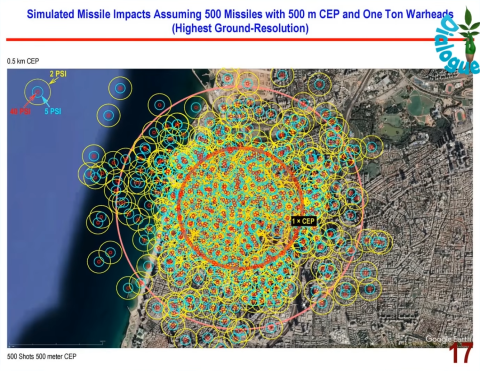
Prof. Ted Postol: US–Iran War? Israel’s Fatal Gamble
or go to
Aletho News Archives – Video-Images
From the Archives
Neocon Max Boot: Legal and illegal aliens need to enlist in the US army and die for Israel

By Jonas E. Alexis | Veterans Today | October 16, 2107
In 1973 Irving Kristol, the godfather of the Neoconservative movement, made a stunning statement which is still relevant to understanding the Israeli influence in US foreign policy. Kristol said:
“Senator McGovern is very sincere when he says that he will try to cut the military budget by 30%. And this is to drive a knife in the heart of Israel… Jews don’t like big military budgets. But it is now an interest of the Jews to have a large and powerful military establishment in the United States…
“American Jews who care about the survival of the state of Israel have to say, no, we don’t want to cut the military budget, it is important to keep that military budget big, so that we can defend Israel.”
Read the statement again very carefully. A big military budget, said Kristol, is only good for Israel, not America or much of the Western World. In other words, precious American soldiers who go to the Middle East to fight so-called terrorism are just working for Israel, not for America.
So, whenever the Neocons use words such as “democracy” or “freedom,” they are essentially conning decent Americans to support Israel’s perpetual wars. … continue
Blog Roll
 Aletho News
- Macron: French citizens fighting for Israel cannot be labeled ‘genociders’
- US eyes Gaza security force drawn from armed gangs
- The Only Motive Behind The ‘Imminent’ U.S. War With Iran Is The Zionist Lobby
- Trump eyes 350-acre US military base housing 5,000 troops in Gaza
- Israel Pushing US Toward a Big and Damaging War With Iran – Ex-Pentagon Analyst
- Meet The Liberal Zionist And Ukraine War Supporter Advising AOC On Foreign Policy
- Buck Dancing for Zion: Kenya’s and Nigeria’s Growing Love Affair With Israel
- Israel installed, oversaw security system at Barak-Epstein residence in New York: Report
- ‘Britain’s Index of Repression’ documents 964 incidents of anti-Palestinian crackdown
- Prof. Ted Postol: US–Iran War? Israel’s Fatal Gamble
- If Americans Knew
- Tucker Carlson interrogated in Israel, has passport seized after interviewing US ambassador
- 6,000 Amputees in Gaza Face Impossible Recovery amid Israeli War Ultimatum
- The Lancet: Gaza death toll far higher than reported – Not a ceasefire Day 132
- Compliant aid: Who are the Israel-approved NGOs scaling up in Gaza?
- Why won’t Trump’s “Board of Peace” bring peace? – Not a ceasefire Day 131
- Help end the injustice against Shadi
- Israel’s Favorite American President
- Israel’s “Yellow Line” Is a Death Trap for Palestinians. We Drove Into It.
- Why Israel’s expanding occupation in Syria presents a critical legal test
- Gaza is not a natural disaster. It is the victim of genocide enabled by global inaction
- No Tricks Zone
- Coal Power Back In Trend As Globe Tries To Keep Pace With Growing Demand For Power
- New Study: A 4°C Warmer Beaufort Sea Had ‘No Sea Ice’ 11,700 – 8200 Years Ago
- Unfudging The Data: Dutch Meteorological Institute Reinstates Early 20th Centruy Heat Waves It Had Erased Earlier
- German Gas Crisis…Chancellor Merz Allegedly Bans Gas Debate Ahead of Elections!
- Pollen Reconstructions Show The Last Glacial’s Warming Events Were Global, 10x Greater Than Modern
- Germany’s Natural Gas Storage Level Dwindles To Just 28%… Increasingly Critical
- New Study Rebuts The Assumption That Anthropogenic CO2 Molecules Have ‘Special’ Properties
- Climate Scientist Who Predicted End Of “Heavy Frost And Snow” Now Refuses Media Inquiries
- Polar Bear Numbers Rising And Health Improving In Areas With The Most Rapid Sea Ice Decline
- One Reason Only For Germany’s Heating Gas Crisis: Its Hardcore-Dumbass Energy Policy
 Aletho News