Hamas says it will judge new US president on his stances towards Palestinians
Palestinian Information Center – November 6, 2024
OCCUPIED JERUSALEM – The Hamas Movement has said that it will judge the new US administration on its actions and policy towards the Palestinian people and their national cause.
“Our position on the new US administration depends on its positions and practical behavior towards our Palestinian people, their legitimate rights and their just cause,” Hamas said in a statement on Wednesday.
“The new US administration must realize that our Palestinian people will continue to confront the abominable occupation and will not accept any trajectory that detracts from their legitimate rights to freedom, independence, self-determination, and the establishment of their independent state with Jerusalem as its capital,” Hamas underlined.
“Unfortunately, all the successive US administrations, since the occupation of Palestine in 1948, have had negative positions on the Palestinian cause and have always been the biggest supporter of the [Israeli] occupation in all fields and situations,” Hamas said.
“The previous US administration took a supportive path towards the occupation and its aggression by granting its war criminals political and military cover to help them persist in the most heinous wars of extermination known in modern history, which confirmed its role as a full partner in the killing of tens of thousands of our people, including children, women and elderlies,” Hamas added.
Hamas called for ending the blind bias in favor of the occupation state and working seriously on putting an end to the genocidal war on the Palestinian people in the Gaza Strip and the West Bank.
The Movement urged the US president-elect “to listen to the American community’s voices that have been resounding for over a year in rejection of the Israeli aggression against the Gaza Strip” and their country’s support for the occupation state.
Donald Trump was elected the 47th president on Wednesday, four years after his defeat by outgoing president Joe Biden.
Israel’s Deadly Miscalculation: Consequences of Attacking Iran & Hezbollah
Dialogue Works | October 29, 2024
Seyed Mohammad Marandi is a Professor of English Literature and Orientalism at the University of Tehran and advisor to Iran’s nuclear negotiations team: (https://x.com/s_m_marandi)
Hamas confirms martyrdom of leader Yahya Sinwar
MEMO | October 18, 2024
Hamas today confirmed that its chief, Yahya Sinwar, was killed in fighting in Gaza, a statement issued on the group’s social media channels said.
“Hamas leader Khalil Al-Hayya announces the martyrdom of the great leader, President of the Hamas Political Bureau, the hero of Al-Aqsa Flood, Yahya Sinwar, who sought martyrdom and attained it after clashing with a zionist force alongside other fighters in the #Gaza Strip,” the movement said.
“Hamas will remain until a Palestinian state is established on all historic Palestine with Jerusalem as its capital,” Al-Hayya continued, adding that Sinwar’s martyrdom, like that of his predecessors including Hamas founders Ahmed Yassin and Abdel Aziz Al-Rantisi, will only “empower the resistance” and “will be a curse on the occupiers”.
Israel’s prisoners, he continued, “will not be returned without a complete ceasefire, Israeli withdrawal from the Strip and the release of Palestinian prisoners from the occupation’s prisons.”
Israel announced yesterday that Sinwar was killed after a firefight with occupation forces in the southern Rafah governorate on Wednesday. It later released drone footage of his last moments showing him fighting against the occupation until the end. He was wearing a keffiyeh to conceal his face and army fatigues.
Sinwar was appointed leader of Hamas’ political bureau in August, a week after the assassination of his predecessor Ismail Haniyeh in a “Zionist raid” while he was on an official visit to Iran.
US says can’t continue supplying Ukraine, Israel together as Tel Aviv faces munitions shortage
Press TV – October 15, 2024
Israel is scrambling to supply interceptor missiles amid a looming shortage as the regime is bracing for more retaliatory attacks from the regional resistance, more than a year after it launched the genocidal war on Gaza, a report says.
The report by the the Financial Times came as the United States on Sunday confirmed that its military is sending an anti-missile system operated by American troops to aid the Israeli forces following the Tel Aviv regime’s failure to defend itself against Iran and as Tel Aviv has threatened it will attack Iranian sites.
“Israel’s munitions issue is serious,” the Financial Times cited Dana Stroul, a former senior Pentagon official with responsibility for the West Asia, as saying on Tuesday.
“If Iran responds to an Israel attack [with a massive air strike campaign], and [Lebanon’s] Hezbollah joins in too, Israel air defenses will be stretched,” she said, noting that US stockpiles were not limitless.
“The US can’t continue supplying Ukraine and Israel at the same pace. We are reaching a tipping point.”
Boaz Levy, chief executive of Israel Aerospace Industries, which makes the Arrow interceptors used to down ballistic missiles, said he was running triple shifts to keep production lines running.
“Some of our lines are working 24 hours, seven days a week. Our goal is to meet all our obligations,” Levy said.
While Israel does not disclose the size of its stockpiles, he said “it is no secret that we need to replenish stocks.”
Since early October 2023, Israel has been waging brutal two-front aggression that has killed more than 42,000 people in the Gaza Strip and at least 2,306 others in Lebanon so far.
Over the same period, the usurping regime has also assassinated several resistance leaders, including Hamas’s political bureau chief Ismail Haniyeh and Hezbollah Secretary General Sayyed Hassan Nasrallah.
In support of Palestinians in Gaza, resistance groups have launched retaliatory attacks on Israeli targets and vowed to keep fighting until the Gaza onslaught ends.
In response to Israel’s barbaric acts of assassination against the resistance front’s top leaders, Iran carried out Operation True Promise 2 earlier this month.
During the operation, Iran launched some 200 high-speed ballistic missiles at the Zionist entity’s military, espionage and intelligence bases, sending almost 10 million settlers into bomb shelters. Ninety percent of the fired Iranian missiles hit their targets.
Despite Israel’s intensified strikes on Lebanon, Hezbollah managed to conduct the deadliest strikes on the occupied territories in the past year over the weekend.
“We are not seeing Hezbollah’s full capability yet. It has only been firing at around a tenth of its estimated prewar launching capacity, a few hundred rockets a day instead of as many as 2,000,” Assaf Orion, a former Israeli brigadier general and head of strategy at the Israeli military, said.
“Some of that gap is a choice by Hezbollah not to go full out, and some of it is due to degradation by the IDF [Israeli military]. . . But Hezbollah has enough left to mount a strong operation,” Orion added.
“Haifa and northern Israel are still on the receiving end of rocket and drone attacks almost every day.”
Amid the rising retaliatory operations, the report cited analysts as saying “defense planners and Israel’s AI-powered air defenses were having to choose which areas to protect over others.”
“It’s only a matter of time before Israel starts to run out of interceptors and has to prioritize how they are deployed,” said Ehud Eilam, a former researcher at Israel’s ministry of military affairs.
The Zionist regime cannot fight Hamas and Hezbollah at the same time
By Robert Inlakesh | Al Mayadeen | October 12, 2024
The war that the Israeli regime has opened will not close until it is dealt a strategic defeat, one from which it will not likely recover.
After all of its gloating, the Zionist entity appears to have fallen for its own propagandistic bravado and is sleepwalking into the abyss. Having failed to defeat Hamas in Gaza, the Israelis appear to have lulled themselves into a belief that they had already crushed Hezbollah with their initial blows of the war.
When the Israelis detonated thousands of pagers on September 17, a day later detonating walkie-talkie devices, inflicting dozens of deaths and hundreds of serious injuries, this represented a momentary tactical victory for the settler project. What followed, with the assassination of countless Hezbollah officials, culminating in the martyrdom of the party’s Secretary-General Sayyed Hassan Nasrallah, made the Israelis appear as if they were then in the driver’s seat of the conflict.
Israeli Prime Minister Benjamin Netanyahu grew so confident and emboldened that he decided to record a video message to the people of Iran, indicating that he would soon aid in carrying out a regime change. The Zionist leaders ordered large-scale airstrikes against thousands of targets across Lebanon, devastating civilian infrastructure and inflicting over 2,000 deaths. The Israelis repeatedly pounded the Southern Suburb of Beirut with hundreds of tons of explosives, while expanding the nature of their strikes against Syrian territory too.
While the Arab and Muslim World entered a stage of collective mourning over the repeated attacks on Lebanon, processing the loss of one of its most cherished leaders in recent memory, the Israelis also decided to declare a ground incursion into South Lebanon. Terrorist tactics and assassinations have served as propaganda victory in the media battle of the optics, in addition to a temporary tactical victory, which certainly inflicted a blow.
Yet, the strategic initiative was suddenly recovered on October 1, with the Islamic Revolution Guard Corps (IRGC)’s unprecedented response to the repeated assassinations – including the murder of Hamas leader Ismail Haniyeh in Tehran – firing 180 ballistic missiles at Israeli military sites. Despite countless attempts to deflect, cover up, and downplay the effectiveness of the Iranian response, dubbed “Operation True Promise II,” the impact was felt throughout the entire region.
What also happened following this, with the repeated successful strikes against Israeli targets by Yemen’s Ansar Allah and the Islamic Resistance in Iraq, combined with repeated Hezbollah’s successes in repelling the Zionist forces’ attempts at penetrating Lebanese land, all worked at changing the direction of the tide. On October 7, Hamas demonstrated its ability to hit “Tel Aviv” with M90 rockets, which was followed by strikes on “Tel Aviv” by Ansar Allah and then Hezbollah.
After repeated costly failures along the Lebanese border, the Israelis then decided to invade Jabalia Refugee Camp in northern Gaza and begin a terror bombing campaign across northern Gaza, also carrying on its assassinations of journalists and educators in the besieged territory. However, despite the terror that they inflicted, when their forces entered on the ground and besieged Jabalia Refugee Camp, the Palestinian Resistance factions began executing sophisticated and daring ambush operations, exacting a significant price on their soldiers.
The al-Qassam Brigades – the armed wing of Hamas – then began firing drones at troop formations and even one toward Israeli settlements, indicating that their capabilities were much greater than they were previously believed to be by the enemy. Suddenly, the Israelis were in a position where the Palestinian Resistance was killing and injuring their soldiers in Gaza, while Hezbollah was doing the same from South Lebanon.
Although the Israelis dealt significant blows to the Axis of Resistance, it is now in an even more difficult position than it previously found itself in prior to its assaults on Lebanon. Hezbollah has replaced its military leadership and has had the time to plan, rid itself of potential security breaches, and take the initiative on the battlefield. We see that Hezbollah is today intensifying its rocket strikes against the Israelis, dealing significant blows and putting the Zionist entity in a position of embarrassment before its own public once again.
The Israelis now must mount significant offensive actions across all fronts and fight on, managing a battle with Lebanon, Gaza, the West Bank, Yemen, Iraq, and even Iran. Benjamin Netanyahu envisioned himself as the Israeli Prime Minister to inflict a 1967-style defeat on the regional resistance, yet he has dragged the entire entity into something very different. We are no longer in the days of Egyptian President Gamal Abdul Nasser or the PLO in the 1980s, Hezbollah and the regional Axis of Resistance axis are not an alliance that can be broken through assassinations of senior leaders, in addition to this, they are ready for the fight.
Hezbollah undoubtedly enjoys superiority on the ground, in face-to-face combat, while the Zionist military has only proven capable of pulling off sophisticated terrorist plots and assassinations, in combination with their elite video-game warriors who specialize in using advanced weapons from a distance. The reality is that typing on a keyboard or commanding controllers, while sitting in a fortified position, may deliver some tactical victories, but it will not win a war that requires immense physical courage, which the Israelis simply do not possess.
Even in the West Bank, where the Israelis frequently raid refugee camps and face off against poorly trained teenagers and men in their young twenties, armed with no more than light weapons, their special forces units have to call in backup and end up using air support. Even against the weakest link in the chain of Resistance groups, they struggle to hold ground in confrontations and never do so in a fair way. In Lebanon, they face committed, well-trained, and well-prepared fighters who do not fear death and crave the opportunity to confront them.
The Israeli regime may well pull off more trickery and terrorism on a grand scale, as it will turn to more assassinations, attempts to stir unrest, and perhaps special force operations deep into Lebanese or Syrian territory. There cannot be any doubt that there will be more challenges ahead, that the Israelis have many more tricks up their sleeves, and that the terror they plan to inflict will be painful, primarily to civilians. Yet, they do not possess the capability to win a multi-front confrontation and will be bled to death, so long as the Axis of Resistance continues to seize the initiative and respond forcefully to each escalatory violation of international law that the Israelis commit.
Sayyed Hassan Nasrallah, in his first speech issued during the Gaza Genocide, spoke of “scoring points” and that the “knockout blow” had not yet been delivered against the Israeli regime. What has happened during the past month is that the Israelis were being beaten on points and decided to begin throwing haymaker punches with the intent of ending the fight abruptly, taking a chance at victory. Some of those punches landed and knocked down the Axis of Resistance, yet they got back on their feet, dealt blows back to the Israelis, and are now fighting with even more intensity. Both sides have been hit and hurt, so this fight now looks like it will end with a KO.
The war that the Israeli regime has opened will not close until it is dealt a strategic defeat, one from which it will not likely recover. It is also a war that the United States has enabled and backed in every way. In today’s world, the Palestinians and Lebanese people are taking on not only the Zionists, but the US too.
BBC interview with Hamas deputy chief is a case study in state propaganda

By Jonathan Cook | October 4, 2024
The BBC no longer bothers to hide the fact that its news service acts as nothing more than the British state’s willing propaganda channel.
Last night on the News at Ten, Middle East editor Jeremy Bowen secured a rare interview with Hamas’s deputy political chief, Khalil al-Hayya.
Anchor Clive Myrie introduced the segment by warning: “Many will find his comments abhorrent.” But the only person making abhorrent assertions was Myrie himself, observing that, in the interview, the Hamas leader “claims the Palestinian people have faced violence at the hands of Israel for several decades”.
No, Clive. The world’s highest court, the International Court of Justice, as well as every major human rights organisation, has concluded that Israel’s belligerent military occupation of the Palestinians’ territory is illegal and violent – not as a claim, but as an indisputable fact.
Israel’s refusal to recognise a Palestinian state and allow Palestinians self-determination; Israel’s building of hundreds of illegal settlements on Palestinian land and the transfer of Israeli Jews, often militia groups, into those settlements; Israel’s 17-year siege of Gaza; and Israel’s collective punishment of the Palestinian people to force them to submit to these indignities, are all forms of structural violence. Again, that is not a claim. It is how international law judges what Israel has done and is doing.
Next, Myrie required Bowen to justify at length why the BBC was allowing a Hamas political leader – not a military leader – to be given air time. Note, al-Hayya’s boss, Ismail Haniyeh, was assassinated by Israel while he was involved in negotiations to bring about a ceasefire. Like some kind of gangster, Israel murdered the man on the other side of the table it was supposed to be talking to.
The BBC provided none of that as context, of course, for its interview. It was too busy placating Israel and the British government by issuing apologies and warnings before it offered a rare insight into Hamas’ side of the story.
So what did al-Hayya say that was so “abhorrent”? Here are the main points al-Hayya raised in the interview – you can listen to his precise wording via this link – under Bowen’s mainly hostile questioning:
1. Hamas launched its attack on October 7 because the world had forgotten about Gaza even as Israel was slowly strangling the tiny territory to death through its 17-year siege. Hamas wanted to put Gaza back on the international community’s radar, and had decided it could do so only through military action.
2. Hamas fighters had been told not to target Israeli civilians on October 7, only Israeli occupation soldiers. Hamas does not endorse harming civilians. However, there were failings by individuals in sticking to that plan.
3. Israel, not Hamas, is the party responsible for destroying Gaza as evidenced through its bombardments of schools, shelters and hospitals. Hamas’ killing of 1,200 people could not be used to justify Israel killing more than 50,000 people in Gaza. Israel is “motivated by the lust to destroy”.
4. The accusation that Hamas uses the people of Gaza as “human shields” is not true. “They [Israel] destroyed mosques on the heads of their owners when there were no fighters. They destroyed houses and high-rise buildings when no one was in them… It is all Israeli propaganda.”
5. Netanyahu is the one obstructing a ceasefire. Even if Hamas surrendered today, Gaza’s next generation would take up the struggle because the Palestinian people want their freedom and have a legitimate right to resist the occupation. “People need to understand that Israel wants to burn the whole region.”
6. The Palestinians need a state and self-determination, and the Palestinian refugees a right to return to their homeland, if the region is ever to calm down.
7. It is Israel trying to eliminate the Palestinian people, not the Palestinians destroying Israel. “Give us our rights, give us a fully sovereign Palestinian state… Israel does not recognise a one-state solution or a two-state solution. Israel rejects it all.”
8. [Responding to a question about whether he considers himself a terrorist] “I’m seeking freedom and defending my people. To the occupation, we are all terrorists – the leaders, the women and the children. You heard what Israeli leaders called us: we are all animals.”
Now, one can debate whether al-Hayya’s statements are accurate or truthful, or whether he is being sincere. But nothing at all he says here can be viewed as “abhorrent” – unless you are shilling for Israel. He deplores attacks on civilians, he accuses Israel of bringing about Gaza’s destruction, he blames Netanyahu for blocking a ceasefire, and he appears to be ready to settle for a two-state solution, though he doesn’t believe Israel will agree to it.
In fact, his comments are far, far more moderate and far less inflammatory than statements regularly made by Netanyahu and most of the Israeli political and military leadership. Netanyahu, remember, is being sought by the chief prosecutor of the International Criminal Court for crimes against humanity, while the country he leads is on trial for what its sister court, the ICJ, considers a “plausible genocide” Netanyahu has incited and overseen. Not that the BBC ever mentions either fact.
And yet the state broadcaster never prefaces remarks from Netanyahu or other Israeli leaders – such as the self-declared fascist finance minister, Bezalel Smotrich – with any kind of warning, let alone one that many viewers may find their remarks “abhorrent”.
And while we are at it, if al-Hayya’s remarks are the yardstick, how was Keir Starmer’s comment that Israel had a right to deprive Palestinian civilians of food, water and fuel – that is, to collectively punish them by starving them to death – not also deemed “abhorrent” by the BBC?
What becomes ever harder to deny is that the BBC isn’t reporting what is happening in the Middle East. It is aggressively framing it in such a way as to present Israel as the victim of events, and thereby assist it in carrying out a genocide in Gaza and beginning a second slaughter in Lebanon.
The weakness of Zionist air power
By Robert Daly | Al Mayadeen | October 1, 2024
What we have seen in the Zionist conduct of war since October 7, 2023, is a flashy, noisy exhibition but no seizure and holding of territory.
The murder of Sayyed Hassan Nasrallah and the destruction of six high-rise apartment buildings with multiple airstrikes make Zionist air power appear triumphant over Hezbollah. But nothing could be further from the truth. It is not air power that defeats enemies in war. Rather, it is infantry—conquering, seizing, and holding territory that defeats an enemy. The Soviet Union defeated Nazi Germany not through air power but through the ground battles of Stalingrad and Kursk and then by pushing the Nazi troops back into Germany as the Soviets liberated one occupied state after another from Ukraine and Belarus to Hungary and Czechoslovakia. The West at the time bombed Dresden and other cities, but that effort had little effect in defeating the Nazis. So, Zionist bombings of Lebanon’s cities kill citizens and wreck their homes but do not occupy territory or defeat Hezbollah.
It is beyond the capability of air power to seize enemy territory and hold it. Air power is only a form of contemporary artillery. In the past 100 years, humankind has ‘progressed’ from mere cannons and tanks delivering artillery shells onto an enemy’s positions to warplanes dropping them from above. What we have seen in the Zionist conduct of war since October 7, 2023, is a flashy, noisy exhibition but no seizure and holding of territory. Today, Hamas has retaken all of Gaza and continues to manage the territory as the Zionists have admitted in press briefings though they attacked Gaza by air. The Zionists responded to Hamas’ Oct. 7 attack by bombing and destroying civilian residential buildings, but that did not destroy Hamas, which took advantage of the situation and the changed terrain to prepare positions from behind wrecked buildings to attack Zionist tanks and armored personnel carriers, which they have destroyed by the dozen. In this way, we have seen the contrast between ground fighters and air power in Gaza, where the Zionists are effective at killing women and children from the sky above with bombs, but cannot occupy and hold the territory that that population lived in.
If air power is an effective way to defeat one’s enemy and win a war, why is Hamas still ruling Gaza? Yedioth Ahronoth, a leading ‘Israeli’ newspaper, citing Israeli security sources wrote this past week that:
○ Hamas is working to consolidate its authority again in the areas of Gaza that the IOF left.
○ No one in Gaza stands against Hamas, and no one challenges its rule.
This is not new. In June, after eight months of Zionist bombing, the Guardian wrote “Hamas still strong in areas ‘cleared’ by Israel in northern Gaza.” How is that possible? Zionist warplanes far above do not provide much competition with Palestinian freedom fighters on the ground. Zionist armored vehicles full of scared reservists are easy targets for Gazan patriots who destroy those vehicles one after another. The Guardian concludes, “Hamas’s ability to return to areas from which it was earlier forced to retreat threatens ‘forever war’.” The paper explains, “There may be more Hamas militants in the north of Gaza, supposedly cleared by Israeli forces months ago, than in Rafah, the southern city in the territory described by Israeli officials as the extremist Islamist organization’s “last stronghold”. “We do have to remember there are more Hamas armed people in the north of Gaza in the places that the IDF has already moved out of than … in Rafah … Those are the IDF’s numbers. This is why the IDF had to go back into Jabaliya and … Zeitoun. Hamas is controlling all those areas,” Eyal Hulata, the head of “Israel’s” “national security council” from 2021 to last year, told reporters last May. Zionist air power and fragile armor have failed to conquer Gaza. They only wrecked it.
One can expect an even better outcome for the domestic national liberation army in Lebanon, where Hezbollah has the advantage of better and more artillery and soldiers experienced in fighting ISIS and Al-Qaeda on the ground in Syria.
One of the most disgusting Zionist air war practices is their cowardly war by assassination. Zionists will swoop down in aircraft of various sorts to kill someone on a motorcycle, a family in a car, or a leader of the national liberation movement in a building. To do that, they do not hesitate to murder hundreds of others in the area, as when the fascists murdered Sayyed Hassan. For if the Nazi abandoned his air vehicle and fought a fair fight on the ground, he would surely lose.
Moreover, it is an embarrassment to an American with a memory to hear Hezbollah or Hamas referred to as “terrorists” for defending their own land from Zionist invaders. Does not anyone remember Washington’s crossing of the Delaware on Christmas 1776, when they and their makeshift army slaughtered British-hired Hessian mercenaries drunk from celebrating the holiday? If Hamas is “terrorist”, then why isn’t George Washington?
So, we have it: “Israel” has not won in Lebanon. Rather, “the enemy must wait for us by air, land, and sea. We repeat: If war is imposed on Lebanon, the Resistance will fight without rules, controls, or ceilings,” Sayyed Hassan Nasrallah once said. “Storming the Galilee is a possibility that remains present within the framework of any war that the occupation may launch against Lebanon,” he added, referencing his 12-year-old promise that Hezbollah will invade “Israel’s” north if Tel Aviv chooses to attack.
Collective West supporting Israel ‘to wipe out the Palestinian population’: Prof. Marandi
Press TV – September 28, 2024
Professor Mohammad Marandi says all the Western countries are supporting the Israeli regime “to wipe out the Palestinian population.”
Marandi, a professor at the University of Tehran and a political analyst, made the remarks in an interview with Press TV on Friday from Beirut, Lebanon, where he is based these days.
“All the Western countries are supporting the regime in every way possible, through aid, through political cover, through weapons, through ammunition, and… through intelligence gatherings,” Marandi said.
“So this is a collaboration of tens of Western regimes to wipe out the Palestinian population,” he stated.
The Iranian academic added that “when it comes to seeking a ceasefire they are doing everything possible to help the regime carrying out both a holocaust in the south of Palestine and ongoing genocidal attacks in the north of Palestine.”
Commenting on Israel’s recent aggressions against Lebanon, Marandi said, “Hezbollah and the people of Lebanon are paying the price for defending the people of Gaza, against the genocide.”
“For over 11 months now, the resistance in Lebanon with the support of the overwhelming majority of the Lebanese population, have been engaging in battles or in strikes across the border in the north of Palestine in order to draw troops away from Gaza, and to support the people of Gaza to lessen the intensity of the ongoing holocaust in Gaza,” he stated.
The Islamic resistance movement Hezbollah has been conducting numerous operations against Israeli targets since October last year when the Israeli regime waged a genocidal war in the Gaza Strip.
At least 41,534 Palestinians, most of them women and children, have been killed in the brutal Israeli military onslaught so far.
On Friday, Israeli warplanes launched massive airstrikes on the southern suburb of Dahiyeh in Beirut, killing at least eight people and wounding around 80 others.
Hours after a new wave of Israeli airstrikes hit the Dahiyeh area.
The Palestinian resistance movement Hamas called on “Arab and Islamic nations” to act and “reject this brutal aggression” by Israel against the brotherly people of Lebanon.
Hamas condemned the “Zionist escalation and aggression” against the people of Lebanon.
Speaking about the hypocrisy of the Western media, Marandi said, “Whenever they bomb towns and villages across the country, the Western media calls it Hezbollah strongholds.”
He added that many ordinary people get killed in Israeli attacks the Western media call targeted strikes against Hezbollah leaders.
“In general it is fair to say that Hezbollah and the people of Lebanon have played the most courageous role in this almost one-year-long genocide in Gaza because they voluntarily chose to draw Israeli forces away from the battlefield in the south of Palestine,” he noted.
With no coherent war plan, Netanyahu’s regime is using any excuse to derail ceasefire talks
By Robert Inlakesh | Al Mayadeen | September 17, 2024
At this point, it should be clear that Hamas is not and never has been the obstacle to securing a prisoner swap and ceasefire in Gaza. Yet, it doesn’t matter how willing Hamas truly is with the fact that Israeli Prime Minister Benjamin Netanyahu is using every tool he can to create excuses as to why the war can’t come to an end, which is important to understand.
When the United States and their Israeli partners talk about the need for Hamas to sit at the table, calling on the Palestinian Resistance to accept a ceasefire deal, it is all nonsense. The analysis pieces, leaked conversations, and update articles that we see regularly published in The New York Times, The Washington Post, Axios, and other outlets are all adding to a work of fiction that has been crafted for domestic US and Israeli consumption.
There are no current negotiations, just discussions between the Israelis and Americans, which then are forwarded to the negotiating teams of Egypt and Qatar, before the conversation ultimately ends the exact same way it began, as useless ramblings that only give cover for further Israeli war crimes. This is the case as Hamas sits by and waits for the circus to end so that it can actually talk business.
The framework for a ceasefire and prisoner exchange has already been proposed by the United States and ratified by the United Nations Security Council (UNSC), and Hamas has agreed to it. Meanwhile, the Zionist entity does not speak for itself on what it has or hasn’t exactly accepted; instead, it allows the likes of US Secretary of State, Antony Blinken, to tell the world that the UNSC-endorsed Biden proposal was actually an Israeli proposal before later changing his story to that the Israelis had accepted Biden’s proposal. Even at this level, the contradictions prove how unserious the Zionist regime is.
On May 6, when Hamas announced that they had accepted a ceasefire proposal – that was almost identical to the one that Antony Blinken had spent two weeks lauding – the Israeli response was immediate rejection, followed by the invasion of the Rafah crossing.
The Israeli PM has continually argued that the war must continue until Hamas is defeated in Gaza, an objective that even the Israeli army spokesperson Daniel Hagari has said is impossible. Moreover, Netanyahu’s insistence on destroying Hamas is indicative of his outright rejection of a ceasefire. You can either defeat Hamas or do a ceasefire deal with them, you can’t have both, it simply makes no sense.
Another important point to understand is that despite the change in US President Joe Biden’s rhetoric and that of his administration, calling for an “immediate ceasefire”, you will notice that when Israeli officials comment on the issue of a ceasefire, they do so with a focus on the prisoner exchange aspect and often follow this up by stating that they must still retain the right to attack Hamas. In other words, the only ceasefire that the Zionist entity entertains is a temporary one that will ensure the release of their captives, after which they seek the “right” to continue the war. This is exactly what Benjamin Netanyahu argues, which, in essence, means that he’s openly telling Hamas to give up its bargaining chips for no reason.
The issue of Israeli forces remaining in both the Philadelphia and Netzarim corridors is a new addition to the ceasefire talks and directly violates the framework outlined in UNSC Resolution 2735 that was adopted on June 10. The resolution states explicitly that in phase 2 of the ceasefire agreement “upon agreement of the parties, a permanent end to hostilities, in exchange for the release of all other hostages still in Gaza, and a full withdrawal of Israeli forces from Gaza,” adding that it “rejects any attempt at demographic or territorial change in the Gaza Strip, including any actions that reduce the territory of Gaza.”
The evidence that “Israel” outright rejects what is quoted above from the Security Council resolution is not just limited to these new additions to the non-existent ceasefire negotiations. When Benjamin Netanyahu spoke to Congress in July, he swore that his regime was going to secure “total victory” and argued for occupying Gaza internally for a limited period of time instead of permanently. If we look at all the polling data on the opinion of Israelis, the majority of the public also agree with these ideas too.
On top of this, the Israeli military has been creating a “buffer zone” around the perimeter of the Gaza Strip, blowing up and burning every single structure in an area that constitutes 32 percent of the besieged coastal territory. Furthermore, the new addition to the Zionist entity’s war plan which is agreed upon by the majority of the Israeli cabinet is the idea of seizing the entirety of northern Gaza for a “security zone” and expelling the hundreds of thousands of residents who live there.
As occurred in Rafah, where around a million people were completely uprooted and pushed into the ever-changing so-called “safe zone” area of al-Mawasi, the Zionist entity appears to be trying to concentrate the entire Palestinian civilian population into this zone. When the civilians arrive there, they are then repeatedly forced to move on foot and their tents are bombed, burying their bodies beneath mounds of sand.
The Zionist regime is engaged in what is clearly an “endless war”, or a war of attrition, which the United States government is fully backing with tens of billions of dollars worth of weapons. The end goal here is not actually clear, but what is certain is that Benjamin Netanyahu is not about to give up. If we follow the trajectory of the war so far, it is completely dependent upon Israeli domestic politics. The war has worked as follows:
Stage 1: “Israel” launches an unprecedented air attack that decimates civilian infrastructure, while commanding the civilian population to head south, where they are also bombed.
Stage 2: “Israel” invades the Gaza Strip, focusing on the northern part of the territory and claiming that Hamas is operating its HQ out of Al-Shifa Hospital and bases out of other hospitals. It then fails to find any headquarters.
Stage 3: A prisoner exchange is concluded, during which time the Israeli regime is changing its narrative.
Stage 4: “Israel” invades Khan Younis and central Gaza, claiming that the “real Hamas headquarters is in Khan Younis,” ultimately failing to inflict any real blow on the Palestinian Resistance.
Stage 5: “Israel” winds down the clock with more brief military incursions into areas they have already invaded, inflicting countless more civilian massacres and holding off on what they now began arguing was the true headquarters for Hamas in Rafah. During this period, Benjamin Netanyahu argued that the tunnels were being used to transfer weapons and that the war could not be won without a Rafah invasion.
Stage 6: Hamas accepts a ceasefire proposal after the US had been placing pressure on the Israelis to steer clear from a major invasion of Rafah. Netanyahu decides that same day to invade Rafah but not to wage the sort of campaign he was hoping for.
Stage 7: After having invaded every area in Gaza, the Israelis are out of excuses and are throwing out random ideas, hoping they will stick and convince their own population. This has led to reviving the idea of seizing northern Gaza, which was initially proposed at the beginning of the war, yet a large portion of the Israeli public is now demanding the return of the captives, which presents a major issue. So, they are looking for anything new to buy time before the inevitable next steps must be taken.
This brings us to today.
The Zionist regime doesn’t want a ceasefire and the US pressure simply is not there to force it to change its mind. The only thing that is now applying real pressure is the relentless fire from Hezbollah on the northern front, which has grown to the point that it cannot be ignored. In order to stop the Lebanese Resistance, they have two options: End the war on Gaza or start another war with Lebanon. If the Zionist entity will not give up on its genocidal assault on the Gaza Strip, then war with Lebanon is inevitable and will likely end up taking place inside Syrian territory also.
Israel far from defeating Hamas in Rafah, ‘Israel’ in an ‘endless tunnel’
Al Mayadeen | September 13, 2024
The Israeli military has not managed to defeat even a single battalion or company of the Hamas Resistance forces in Rafah, a member of the Israeli Knesset’s Foreign Affairs and Security Committee said on Saturday.
Amit Halevi’s criticism came after the Israeli occupation forces (IOF) announced on Thursday that it had “defeated Hamas’ Rafah Brigades,” and that it now has “completed operational control over the entire urban area.”
Halevi, quoted by the Israeli Channel 7website, stated that the army claims to have killed over 2,000 fighters in Rafah, however, the actual number is significantly lower, noting that the inflated figure “doesn’t even represent 25%” of the Resistance’s fighting force.
He further highlighted that “Israel” had only destroyed a small fraction of the underground tunnels in Rafah, adding however that “even those (tunnels) were not all destroyed, but rather sealed, making it easy for Hamas to reactivate them.”
The senior Israeli official noted that the Resistance in Rafah holds a massive stockpile of weapons, and the amount uncovered by the IOF is minimal in comparison. He emphasized that “Israel remains far from defeating or destroying Hamas.”
Elsewhere in his criticism, Halevi described the messages coming from the Israeli army spokesperson as misleading for the public and the government.
“Every soldier who entered Khan Younis for the fourth time or the al-Zaytoun neighborhood for the fifth time knows that nothing has been defeated,” he said in reference to the repeated Israeli incursions into these areas, despite previous declarations that they were “under control” and claims that the Resistance groups there had already been “defeated”.
“With the current operational methods, the matter will never be settled, because for every [Resistance fighter] killed, two more are born; for every injured [fighter], three new fighters are recruited; and for every piece of weaponry seized by the Israeli army, five more are produced underground in Gaza.”
Halevi further remarked that the method the occupation army uses in the “war of shafts,” as described by the head of Shin Bet, cannot lead to defeating Hamas in quantitative terms, referring to the number of fighters and the weapons they possess in Gaza.
Therefore, “Israel” has no strategic achievements but is instead in an “endless tunnel,” according to Halevi.
Featured Video
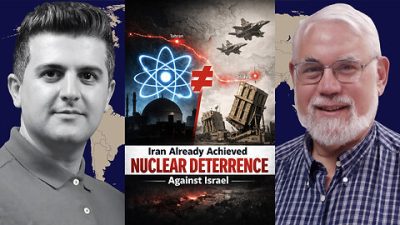
Prof. Ted Postol: Iran Already Achieved Nuclear Deterrence Against Israel
or go to
Aletho News Archives – Video-Images
From the Archives
How the occupied mentality syndrome works
Saudi Arabia on the American chessboard – Part 3
By B. J. Sabri | American Herald Tribune | June 27, 2016
Read part 2: “The occupied mentality Syndrome“
Previously I argued whether Saudi Arabia’s repeated involvements in U.S. interventions and wars stem from free national will or in response to a specific condition. For starters, in Saudi Arabia there is no national will. In Saudi Arabia, the national will is the will of the Al Saud clan. Still, when a major Arab state allies itself with a superpower that committed unspeakable crimes against humanity in almost every Arab country, then something is wrong. This fact alone should compel us to examine the U.S.-Saudi relation for one exceptional reason. As a result of the U.S.-Saudi wars, hundreds of thousands of people in Afghanistan, Iraq, Iran, Libya, Syria, Yemen, and Somalia have lost their lives. Millions became displaced in their own homelands. And millions more rendered refugees.
Attributing the Saudi policies to the bonds of “partnership” with the U.S. is frivolous. There are no bonds between these two thugs except those of business, military deals, secret plots, and wars. Proving this point, bonds such as these have no space for the American and Saudi peoples to share significant cultural or societal exchanges. If partnership is not the reason for the Saudi contribution to the U.S. strategy of empire and imperialism, then another reason must exist.
This leads to three possibilities. … continue
Blog Roll
 Aletho News
- NIAID/NIH and USDA Fund Bioengineered Chimeric Influenza Viruses Built Using Pandemic H1N1 Components: Journal ‘Science Advances’
- Hezbollah hits Israeli warship off Lebanon’s coast, sets it aflame
- Iran slams US strikes on B1 bridge, Mahshahr petrochemical plants as ‘blatant acts of state terrorism’
- In letter to UN chief, Araghchi warns of dire consequences of US-Israeli attacks on Iran’s nuclear facilities
- Why the CIA conspiracy to invade Iran with Kurdish militias failed
- Why Are Upbeat US Claims About Mission to Rescue Pilot ‘Highly Questionable’?
- Aircraft destroyed during US ‘rescue’ of downed F-15 pilot cost more than $100 million each
- Washington University removes professor who condemned US-Israeli war on Iran
- Russia Warns of Retaliation as UK Authorizes Seizure of Vessels
- Serbia thwarts plot to bomb Russia-Hungary gas pipeline – Vucic
- If Americans Knew
- In Iran, Israel-US take aim at “reason, research, and freedom of thought” – Daily Update
- US loses planes over Iran, Israel downgrades Lebanon war goals – Daily Update
- Israel Is Blocking Palestinians from Easter at Church Where Jesus Resurrected
- Plot to assassinate Palestinian activist follows harassment campaign promoted by Zionist groups and elected officials
- Prominent New York synagogue hosts presentation on why U.S. Jews should support the ethnic cleansing of Gaza
- Tapper vs. Piker: Is the CNN Anchor Auditioning for David Ellison?
- Shouldn’t Democrats Be Able to Condemn Genocide?
- Israel-US kill negotiators, destroy civilian structures, but Iran’s military capabilities still largely intact – Daily Update
- ‘War crime’: Global condemnation as Israeli ministers celebrate death penalty law targeting Palestinian prisoners
- 7 Ways Israel Is Turning Lebanon Into Gaza
- No Tricks Zone
- An Inconvenient Tree: Uncovered In Alps… Europe Much Warmer Than Today 6000 Years Ago
- New Study Reports A 60% Slowdown In Greenland’s Ice Loss Rate In The Last Decade
- Low Intensity Tornado Wrecks Major Solar Farm, Creating A Potential Toxic Dump
- New Study Finds Warming Saves Lives…Cold Temperatures 12 Times More Deadly Than Excess Heat
- German Science Blog Accuses PIK Climate Institute Of Hallucinating Climate Tipping Points
- Devastating Assessment Of Comirnaty Vaccine By Former Senior Pfizer Europe Toxicologist
- New Study: CO2 Is ‘Effectively Negligible’ As An Explanatory Climate Change Factor Since 2000
- Former Pfizer Toxicologist Dr. Helmut Sterz Tells Bundestag Hearing Pfizer Vaccine Should Have Never Been Approved
- Energy Expert: Germany’s Nuclear Phaseout Was A “500 Billion Euro Mistake”
- New Research: South Australia’s Mid-Holocene Sea Surface Temperatures Were 4°C Warmer Than Today
 Aletho News